
INDIAN JOURNAL OF PLASTIC SURGERY
|
|
|
- Calvin Gardner
- 10 years ago
- Views:
Transcription
1 PLASTIC THE ASSOCIATION OF INDIA SURGEONS OF INDIAN JOURNAL OF PLASTIC SURGERY ISSN: OFFICIAL ORGAN OF THE ASSOCIATION OF PLASTIC SURGEONS OF INDIA Indian Journal of Plastic Surgery is indexed/listed with Health and Wellness Research Center, Health Reference Center Academic, InfoTrac One File, Expanded Academic ASAP, SCOPUS, SIIC Database, INIST-CNRS, IndMed, Indian Science Abstracts and PubList. Dr. Milind Wagh, Mumbai Dr. Mukund Thatte Editor DEPUTY EDITORS Dr. K. Srikanth, Hyderabad Dr. Wolfgang Huber, Austria ADVISORY BOARD All the rights are reserved. Apart from any fair dealing for the purposes of research or private study, or criticism or review, no part of the publication can be reproduced, stored, or transmitted, in any form or by any means, without the prior permission of the Editor, Indian Journal of Plastic Surgery. The information and opinions presented in the Journal reß ect the views of the authors and not of the Indian Journal of Plastic Surgery Trust or the Editorial Board. Publication does not constitute endorsement by the journal. Indian Journal of Plastic Surgery and/or its publisher cannot be held responsible for errors or for any consequences arising from the use of the information contained in this journal. The appearance of advertising or product information in the various sections in the journal does not constitute an endorsement or approval by the journal and/or its publisher of the quality or value of the said product or of claims made for it by its manufacturer. The Journal is printed on acid free paper. EDITORIAL OFFICE Dr. Mukund Thatte, Editor, Indian Journal of Plastic Surgery, 4th Floor, 770 Vimal Smruti, Ghanti Road, Parsi Colony, Dadar, Mumbai , India. Tel: [email protected] PUBLISHED BY Medknow Publications A-109, Kanara Business Centre, Off Link Road, Ghatkopar (E), Mumbai , India. Phone: /1816, Fax: , Web: Prof. Sasanka S. Chatterjee, Kolkata Prof. Mukund Jagannath, Mumbai Prof. P. Jain, Varanasi Prof. U. Nandakumar, Kerala Prof. Ramesh Sharma, Chandigarh Dr. Ajay Singh, Jharkhand Dr. R. P. Usgaocar, Goa INTERNATIONAL ADVISORY BOARD Philip KT Chen David Elliot IT Jackson Taipei Taiwan England UK Michigan USA C Thomas ACH Watson Robert M. Goldwyn Muscat Oman Scotland UK USA JPA Nicolai Netherlands Andrew Burd Hong Kong ASSOCIATION OF PLASTIC SURGEONS OF INDIA EXECUTIVE COMMITTEE President : Lt. Gen. Dr. L. P. Sadhotra Secretary : Dr. Arun. K. Singh Treasurer : Dr. Lokesh Kumar Imm. Past President : Dr. Mukunda Reddy President Elect : Prof. V. Bhattacharya Editor : Dr. Mukund Thatte EXECUTIVE MEMBERS Dr. R. K. Sharma Dr. S. Bhattacharya Dr. J. Murthy Dr. Prabhat Srivastava Dr. S. P. Bajaj Dr. Mukund Jaganathan Dr. J. R. Jaju Dr. N. Pandeya TRUSTEES Dr. B. M. Daver Dr. K. S. Shekhar Dr. Sam C. Bose CMYK 247

2 PLASTIC THE ASSOCIATION OF INDIA SURGEONS OF INDIAN JOURNAL OF PLASTIC SURGERY ISSN: July-December 2007 Vol. 40, Issue 2 OFFICIAL ORGAN OF THE ASSOCIATION OF PLASTIC SURGEONS OF INDIA C o n t e n t s EDITORIAL A point regarding case reports Mukund Thatte 111 ORIGINAL ARTICLES CASE REPORTS The use of Sanskrit, an ancient language, as a tool to evaluate cleft palate speech problems Kalpesh Gajiwala 112 Speech understandability of repaired cleft palate patients pre and post caregiver training Jobe Andrea L, D Mello Joan, Sanjay Kumar 122 Effects of botulinum toxin type A on healing of injured skeletal muscles Ramin A. Shokravi, Mohammad Moshref, Behnam Eslami, Farhad Aghmasheh 129 A comparative study of the efficacy of topical negative pressure moist dressings and conventional moist dressings in chronic wounds Leo Francis Tauro, J. Ravikrishnan, B. S. Satish Rao, H. Divakar Shenoy, S. R. Shetty, Leo T. Menezes 133 Microsurgical free tissue transfer as a valuable reconstructive procedure in foot reconstruction Mohamed El-Shazly, Mohamed Makboul 141 Comparison of four surgical methods for eyebrow reconstruction Mahmood Omranifard, A. Mehrabi Koushki 147 An epidemiological study of 500 paediatric burn patients in Mumbai, India S. S. Verma, S. Srinivasan, A. M. Vartak 153 Epidemiological and socio-cultural study of burn patients in M. Y. Hospital, Indore, India Ashish K. Jaiswal, Himanshu Aggarwal, Pooja Solanki, P. S. Lubana, R. K. Mathur, Sudarshan Odiya 158 Early experience with the use of prosthetic mesh as fascia replacement in structural abdominal wall reconstruction I. A. Adigun, J. K. Olabanji, A. O. Oladele, O. O. Lawal, G. H. Alabi 164 Soft tissue reinforcement interposition flaps in hypospadias repair R. B. Singh, S. Dalal, N. M. Pavithran, B. D. Sharma 170 Facial aging: A clinical classification Melvin A. Shiffman 178 What is the best choice for repair of distal penile hypospadias: The tubularized incised plate urethroplasty or anterior urethral advancement technique? Mohamed M. S. Awad, Adel M. Tolba, Khaled M. Saad, Mahmoud R. Zaghlol, Ahmed Ezzat Rozigque, Osama H. Gharib, Saalim A. Khalil 182 Rhabdomyosarcoma of thumb: A case report with review of literature S. Raja Sabapathy, Hari Venkatramani, S. Udhaya Shankar, Sanjai Ramkumar CMYK

3 Munchausen s syndrome in plastic surgery practice: A bewildering situation! D. Nardella, M. S. Sohawon, O. Heymans 194 Familial distichiasis Siti Roy Chowdhury, Shamita Chatterjee 199 Trismus: An unusual presentation following road accident Jagdeep S. Thakur, C. G. S. Chauhan, Vijay K. Diwana, Dayal C. Chauhan 202 Unusual case of cleft hand Parag B. Sahasrabudhe, Madhuri D. Kulkarni 205 Squamous cell carcinoma of lower lip in very young brothers of xeroderma pigmentosa Hemant A. Saraiya, Mukul Trivedi, Jayesh Patel, J. T. Jhala 209 Dental sinus with parotid duct fistula: An unusual presentation Naren Shetty, Ashok Pandey, Nitin Mokal 213 IMAGES A typical case of divided nevus of the eyelid Sun Zhi-Yong, Zan Tao, Sheng Guo-Xiong, Li Qing-Feng YEARS AGO Problems of skin cover in injuries of lower limb with tissue loss A Ganguli 218 CME Anatomy of aging face Rakesh Khazanchi, Aditya Aggarwal, Manoj Johar 223 Reconstruction of nose in leprosy S. Husain 230 LETTERS TO EDITOR A simple method to make marking ink indelible Maksud Devale, Mukund Jagannathan 237 Regarding ethical issues in clinical research Venkata Ramana Vollala, Bhagath Kumar Potu 238 Access to scientific research papers Vinita Puri, Sanjay Mahendru 238 Suction diathermy Samuel Chow Man Wai, Ringo Chu Wing Hong, Andrew Burd 239 OBITUARIES Dr. Noshir Hormasji Antia Behman M. Daver 241 Dr. Manohar Hariram Keswani H. S. Adenwalla 242 The copies of the journal to members of the association are sent by ordinary post. The editorial board, association or publisher will not be responsible for non-receipt of copies. If any of the members wish to receive the copies by registered post or courier, kindly contact the journal s/ publisher s ofþ ce. If a copy returns due to incomplete, incorrect or changed address of a member on two consecutive occasions, the names of such members will be deleted from the mailing list of the journal. Providing complete, correct and up-to-date address is the responsibility of the members. Copies are sent to subscribers and members directly from the publisher s address; it is illegal to acquire copies from any other source. If a copy is received for personal use as a member of the association/society, one cannot resale or give-away the copy for commercial or library use. 249 CMYK 249

4 Free full text on CME Anatomy of aging face Rakesh Khazanchi, Aditya Aggarwal, Manoj Johar 1 Department of Plastic and Cosmetic Surgery, Sir Ganga Ram Hospital, New Delhi , 1 Fortis Hospital, Noida, UP, India Address for correspondence: Dr. Rakesh Khazanchi, Department of Plastic and Cosmetic Surgery, Sir Ganga Ram Hospital, New Delhi , India. [email protected] Rejuvenation of the face is evolving into a common procedure in India. This may be attempted by either surgical or non surgical means. Surgical rejuvenation of face includes a large variety of procedures to revert the changes of aging. In the past, face lift operation was done to simply lift the sagging skin rather than shaping the face. However it often ended up in giving the patient an operated on look producing tight appearing face. The surgeons have now learnt that aging process is a complex process that involves soft tissues as well as skeleton of face and is not just sagging of skin. Therefore in order to get a good result after surgical facial rejuvenation, it is paramount to understand these anatomical structures and the effect of aging process on them. The proportion in which these changes occur in different individuals also varies and the surgical procedure needs to be designed according to specific needs of each patient. Surgical rejuvenation of face has evolved from a simple face lift operation to a combination of procedures such as: a) Excision of skin and subcutaneous of tissues b) Tightening of lax structures c) Remodeling of skin with lasers, mesotherapy d) Building of tissues with fat or synthetic fillers e) Building up of bony deficiencies Why do changes occur with aging? This happens due to a variety of reasons. These are a) Constant effect of gravity on soft tissue results in their sagging over the facial skeleton b) Sun damage to skin c) Hormonal changes in women around menopause d) Decreased skin blood flow associated with aging e) Weight gain due to slow down of metabolism and fat deposition in regions of body called depots f) Fascial and ligament laxity g) Shrinkage of glandular tissue (Salivary glands) h) Skeletal resorption Facial soft tissues are arranged in concentric layers. Skin is the outermost layer and then the basic building blocks-fat, superficial fascia also known as superficial musculoaponeurotic system (SMAS), deep fascia and the periosteum that covers the facial skeleton. Interspersed in these layers are vessels, nerves, facial muscles and retaining ligaments. Knowledge of these layers allows the surgeon to dissect in a given anatomic plane without damaging important structures. Knowledge of the changes that occur with aging allows the surgeon to make changes such as excision, tightening, addition or remodeling in order to restore youthful appearance to face. This article reviews the basic anatomy of the face in a simple manner and covers each layer individually along with the changes that occur with aging. Skin: Skin is the investing layer of facial soft tissues and skeleton. Youthful skin is smooth, firm, uniform in colour, texture and without creases and wrinkles. Histologically skin consists of epidermis and dermis. Dermis is composed primarily of collagen, elastic fibers and ground substance. It can be divided into superficial papillary dermis and deeper reticular dermis. The papillary layer consists of collagen bundles, elastic fibers, fibrocystic and ground substances and has highly developed microcirculation. The ground substance found in papillary dermis is composed of mucopolysaccharides, hyaluronic acid and chondroitin sulphate. The reticular dermis is composed of thick bundles of coarse collagen with interspersed elastic fibers. Ground substance tends to have a gel like consistency 223 CMYK 223

5 Khazanchi et al. giving a youthful look to the skin. Cutaneous aging is a complex process consisting of two components; intrinsic aging which is genetically determined and extrinsic aging caused by environmental exposure, primarily U-V light. Sun induced actinic damage or solar elastosis is the most important reason of earliest skin changes. These changes may appear as early as mid- 20s but are usually apparent by mid-30s. Smoking further contributes to skin damage. The dermis begins to loose collagen and elastin. Ground substance begins to decrease and get replaced by fibrous tissue. By the fourth decade of life, the rate of cell renewal of decreases. This causes the epidermis to become loose and skin creases become evident in a pattern that is perpendicular to the direction of muscle action. In women, the estrogen levels decrease at menopause, which causes further thinning of the dermis, irregularity of the epidermis and atrophy of fat. Blood supply to skin decreases and causes loosening of the epidermis and rough texture of skin. There is decrease in sebaceous gland activity leading to dry skin. Hyperpigmentation is another prominent feature of aging skin. It occurs because of increased melanin in the epidermis, the dermis or both. Textural changes of the skin start with fine superficial lines in the skin - wrinkles. With time the lines increase and get organized. Those due to facial muscle contractions, known as MIMETIC LINES get added. With repeated muscular contractions these mimetic lines extend into the dermis causing SKIN FURROWS and later, when skin becomes redundant and over lapping, SKIN FOLDS become apparent [Figure 1]. Wrinkles over the face which are commonly seen are worry lines - transverse lines in the forehead perpendicular to frontalis; frown lines - oblique lines in the glabellar region perpendicular to corrugator; Crow s feet - lateral periorbital lines perpendicular to orbicularis occuli; smile line or the nasolabial line perpendicular to zygomaticus muscle and lines from corner of mouth to jowls is known as marionette lines. Other commonly seen lines on the face are cheek lines, chin lines, commissural lines and transverse neck lines and are all perpendicular to the underlying muscles. The net effects of all these changes on skin are dullness, irregular texture, irregular pigmentation, dryness, thinning, mimetic lines, furrows, folds and sagging. Clinically, it is important to differentiate these mimetic lines and furrows from skin folds. Mimetic lines and furrows respond well to multi modality therapy such as injectable fillers, botulinum toxin and or laser resurfacing. Skin folds on the other hand require surgical tightening procedures like brow lift, blepharoplasty and face lift etc. Since mimetic lines, furrows and folds are all present simultaneously in patients seeking facial rejuvenation, a combination of surgical and non surgical methods is required in most patients to get optimal results. Fat: Fat, along-with superficial fascia, forms the basis of facial volume and contour. This fact is obvious in patients suffering from facial lipodystrophy [Figure 2]. Subcutaneous fat in the face is divided into superficial and deep layers by the superficial fascia which in the face is called Superficial Musculo Aponeurotic System (SMAS). Superficial fat is a continuous layer of fat that is not uniform. It is arranged as small yellow lobules interwoven with fibrous septa that connect SMAS to dermis. This superficial fat is densest in the cheek, nasolabial fold, jaws, anterior neck and pre mental areas. It is sparse in the forehead, temporal orbital, perioral and posterior neck triangle regions [Figure 3]. The deep layer of fat is below the SMAS. It is discontinuous and arranged as large white lobules with sparse network of thin fibrous septa. It is most dense in temporal, periocular, anterior and middle cheek and submental region. In temporal region the deep fat consists of temporal fat pad and the deep temporal extension of fat pad known as fat pad of Bichat. In the periocular region the fat pad deep to the orbital septum is called periorbital fat pad and that deep to the orbicularis oculi pad is known as suborbicularis oculi fat pad (SOOF) [Figure 4]. With aging, changes that occur in the two layers of the facial fat are different. There is loss of superficial subcutaneous fat due to decreased vascularity. On the other hand, there is increased accumulation of fat in the deep fat layer, the so called depots. This is due to slowing down of metabolism after the 4 th decade of life. In women, decreasing estrogen level after the age of 50 further contributes to increased fat in deep depots and paradoxical loss of superficial subcutaneous fat. Superficial fascia (superficial musculo aponeurotic system -SMAS) The superficial fascia in the face is called the SMAS. In the CMYK

6 Anatomy of aging face past SMAS was thought to be a fibromuscular network between the subdermal fat and the facial nerve branches, located above the platysma musculature and below the superficial temporal musculature. However recent research has shown SMAS to be composed of several layers that split to invest facial muscles. Facial nerve lies deep to SMAS in its lateral part and pierces its deep layers in its central part to innervate the facial muscles. SMAS is Figure 1: Textural changes in skin in a post menopausal patient showing mimetic lines, wrinkles, furrows and folds Figure 4: Deep fat distribution Figure 2: Loss of facial contours seen in a patient with facial lipodystrophy Figure 5: SMAS as seen after lifting the skin ß ap with superþ cial fat in patient undergoing surgery for a vascular malformation Figure 3: SuperÞ cial fat distribution 225 Figure 6: SMAS and superþ cial temporal fascia following elevation of skin ßap in a patient undergoing face lift CMYK 225

7 Khazanchi et al. the most important structure that is used to lift the facial skin, fat, platysma and muscles since it is attached to all these structures [Figure 5]. In the region of parotid gland and masseter muscle, SMAS is thick and uniform [Figure 6]. It is densely adherent to the capsule of parotid gland. It thins out in the anterior cheek region. In this region, the SMAS forms facial mimetic and platysma musculature. It actually splits to invest these muscles in between these two layers In the temporoparietal region the superficial fascia is called temporoparietal fascia and in the scalp it is called galea. The frontal branch of facial nerve pierces the deep layer of temporo parietal fascia after it crosses the mid portion of zygomatic arch. It then travels within this fascia to innervate the forehead muscles. Deep facial fascia: On lifting the SMAS and temporoparietal fascia the deep facial fascia can be seen [Figure 7]. In the temporal region it is called the deep temporal fascia and is made of two layers-superficial and deep. The temporal fat pad is situated between the superficial and deep layers of deep temporal fascia. Deep to the deep layer is the temporalis muscle and in the same plane just above the zygomatic arch is the temporal component of fat pad of Bichat also known as the deep temporal fat pad [Figure 4]. Below the zygomatic arch, the deep fascia is a thin translucent layer covering the masseter muscle, facial nerve, facial artery, vein and parotid duct. This is the parotido masseteric fascia. More anteriorly, the buccal fat pad of Bichat lies deep to this fascia. The parotido massetric fascia is thin and fragile. Great care must be taken while dissecting the SMAS off the thin layer, particularly as one proceeds more anteriorly as the facial nerve branches pierce this fascia to innervate the superficial facial mimetic muscles. In the upper mid face a pad of fat is seen deep to orbicularis Oculi- known as the sub orbicularis oculi fat (SOOF). The SOOF is responsible for malar bags which are situated inferolateral to lower eyelid bags. Following the dissection of deep facial fascia (deep temporal fascia and parotido masseteric fascia), the deep facial structures become evident. These are the temporalis muscle and deep temporal fat pad above the zygomatic arch, masseter muscle, buccal fat pad, deep facial mimetic muscles (levator anguli oris, buccinator and mentalis), branches of facial nerve, facial artery and vein and parotid duct. The facial nerve branches lie superficial to branches of facial artery and vein, parotid duct and buccal fat pad and they innervate the deep facial mimetic muscles from their superficial surface [Figure 8]. The retaining ligaments: These are aponeurotic condensations of fibrous tissue that run from deeper structures to overlying dermis and help to anchor the skin and mobile soft tissues to the underlying skeleton. There are two types of retaining ligaments- true and false. True retaining ligaments are short and stout fibrous bands that run from periosteum to dermis. They are found in four locations- orbital, zygomatic, mandibular and buccal maxillary [Figure 9]. The orbital ligaments are located over zygomaticofrontal suture. The zygomatic ligaments attach the fat to the underlying zygomatic eminence. The mandibular ligaments attach the parasymphyseal dermis to the underlying bone and help support the chin pad to the underlying bone. The buccal maxillary ligaments have both true and false components. The true components attach the skin to zygomatico maxillary suture. The false retaining ligaments fix the superficial fascia (SMAS) to the deep fascia and function like sheets of Velcro to prevent gravitational descent. They are located in three regions and are accordingly named platysma auricular ligaments, masseteric ligaments and buccal maxillary ligaments [Figure 9]. The platysma-auricular ligaments form a thick fascial aponeurosis that attaches the postero- superior border of platysma to the lobule of ear. They provide a dissection plane in the subcutaneous preauricular region that leads directly to external surface of platysma. Tissues of medial cheek are supported by a series of fibrous bands that extend between the skin and anterior border of masseter called the masseteric ligaments. When SMAS is elevated anterior to the parotido masseteric fascia, one enters a loose areolar tissue plane that leads to masseteric ligaments. Laxity of these ligaments leads to the characteristic submalar hollow in the aging face. The soft tissues of the anterior cheek are supported by buccal maxillary ligaments situated adjacent to the nasolabial folds. They are weakest of retaining ligaments making the anterior cheek more susceptible to sagging with aging CMYK

8 Anatomy of aging face Retaining ligaments are taut in youth keeping the mobile superficial face tissues firmly anchored to underlying skeleton or deep fascia. Years of muscular activity and gravity result in fascial and ligamentous laxity which in combination with dermal elastosis and increased fat in deep compartment results in descent of all elements of soft tissues. The malar soft tissues are suspended from the zygomatic eminence and maxilla by the zygomatic ligaments laterally and buccal maxillary ligaments medially. With aging, as these ligaments become lax, there is inferior migration of malar tissues. This soft tissue ptosis occurs adjacent to line of fixation along the nasolabial fold. This leads to the prominent nasolabial fold with aging. The attenuation of masseteric ligaments leads to descent of cheek soft tissues below the mandibular border and formation of jowls. The anterior border of jowls is formed by mandibular ligaments and posterior border by masseteric ligaments. THE FACIAL NERVE Figure 7: Parotido-masseteric fascia seen after lifting the SMAS ß ap Injury to one of the branches of the facial nerve is the most feared complication of surgical facial rejuvenation. However a thorough knowledge of anatomy makes such Figure 8: Facial nerve and vessels seen over the masseter muscle after lifting of skin, SMAS and deep fascia and removal of superþ cial lobe of parotid gland a Figure 10: (a-b) Pre and 6 months post operative pictures of a 50 years old woman requesting facial rejuvenation. She was treated by a comprehensive face lift, followed by cream programme and IPL photo rejuvenation b Figure 9: True and False retaining ligaments 227 a Figure 11: (a-b) Pre and 4 months post operative pictures of a 35 year old woman requesting facial rejuvenation following loss of facial contours due to weight loss. She was treated by fat injections b CMYK 227

9 Khazanchi et al. an eventuality very rare. The facial nerve travels within the substance of parotid gland where it bifurcates into upper temporal and lower cervical divisions. These divisions exit the parotid gland to lie on the superficial surface of masseter muscle deep to the parotidomasseteric fascia [Figure 8]. The divisions then branch further as they pass over the masseter muscle. Anterior to the masseter muscle, the branches pierce the deep layer of SMAS to innervate the facial muscles. The temporal division divides into five to seven branches to supply muscles in frontal orbital, zygomatic and buccal region. All branches except the frontal have many interconnections amongst themselves. Frontal branch is also the smallest and being a terminal branch, its injury causes significant motor deficit in the frontal region. It crosses the zygomatic arch at its midpoint and then pierces the deep layer of temporoparietal fascia. The key to save this nerve from injury is to dissect deep to the temporoparietal fascia in the temporal region above the zygomatic arch and superficial to parotidomasseteric fascia below the zygomatic arch, thus creating a mesentery in the zygomatic arch area called the meso-temporalis. Because of interconnections amongst the rest of the branches of upper division, any injury to one or two of these branches is unlikely to result in any facial motor deficit. The cervical division is the smaller of two and divides into three to five branches- to buccal, mandibular and cervical regions. Like the frontal branch of the upper division, the marginal mandibular branch of the lower division is a terminal branch and is most liable to injury. Its injury causes obvious clinical deficit due to paralysis of depressor labii inferioris muscle. It enters the platysma muscle along its deep surface and is liable to injury in operations requiring elevation and division of platysma in the upper neck. Marginal mandibular nerve descends inferior to mandible in the region posterior to the facial artery lying 1-2 cm inferior to its lower border. In older individuals and with extension of neck it may lie even lower. In 10-15% of patients there are connections between this nerve and the buccal branches. In these patients considerable recovery of function will take place even if this nerve is transected. THE FACIAL MUSCLES An intimate knowledge of facial muscles is essential to surgeons performing facial rejuvenation procedures. There are numerous facial muscles, which are sandwiched between two layers of facial SMAS. The SMAS has connections with the dermis through fibrous strands. The facial muscles working in groups through these fibrous strands cause multiple and complex facial movements resulting in a variety of facial expressions. Repeated action of these muscles on the skin, results in mimetic wrinkles and furrows. Grossly the facial muscles are divided into two groups- the periocular and the perioral muscles. Of the periocular muscles, the frontalis muscle is responsible for transverse forehead lines, the corrugator supercilii are responsible for vertical glabellar furrows and procerus muscle causes transverse lines at the root of nose and glabella. The frontalis muscle is elevator of the brow and the orbicularis oculi antagonises its action and is depressor of brow. Along with corrugator supercilii, it is responsible for brow ptosis. The perioral muscles are responsible for the movement of upper and lower lips and the angles of mouth. They are situated in two planes- superficial and deep. The SMAS splits to invest the superficial muscles (zygomaticus major and minor, platysma, risorius, depressor anguli oris and superficial head of orbicularis oris). The facial nerve branches innervate them along their deep surface. The zygomaticus major and minor which are the predominant muscles of smile can be injured during face lift surgery. The deep perioral muscles (levator labii superioris, levator anguli oris, buccinator, mentalis, depressor labii inferioris and deep portion or orbicularis oris are innervated by branches of facial nerve along their superficial surface. The buccal fat pad is situated deep to buccinators. This accounts for safety of facial muscles and nerves during excision of buccal fat pad through the buccal mucosa. The lip elevators are responsible for the naso labial crease and lip depressors (depressor anguli oris) for labio mandibular crease. BLOOD SUPPLY Skin of the face has a rich arterial supply through a network of fasciocutaneous perforating arteries. The peripheral zone of face is supplied predominantly by branches of superficial temporal artery (transverse facial, zygomatic-orbital and frontal). The central zone is supplied predominantly by branches of facial artery along with supraorbital and infraorbital arteries and submental artery. In commonly performed face lift operation, the lifting of preauricular and neck skin flap results in division of contributions from the branches of superficial temporal CMYK

10 Anatomy of aging face artery. The flap thus raised is supplied by branches of facial artery which ensures the flap survival provided it is not too thin. The facial artery is situated under the deep fascia and should never be ligated. In patients who are smokers or have had facial artery ligation in a previous surgery, the flap undermining should be conservative. NERVE SUPPLY The sensory nerve supply of the face is by branches of the three divisions of trigeminal nerve and by the branches of cervical plexus. Raising of the face lift flap results in its denervation. However the rich networks of sensory nerves regenerate to a completely new network within a few months. The delay in sensory recovery is most commonly seen in the lateral cheek. This region is a watershed zone between the trigeminal nerve and cervical plexus nerve territories. Sensory return in this region therefore takes the longest. Knowledge of anatomy of greater auricular nerve is important as it can get injured during face lift surgery. It is located 6.5 cm inferior to the external auditory meatus crossing the sternocleidomastoid muscle. It is located deep to the superficial cervical fascia which is a continuation of SMAS in the neck. As long as the subcutaneous undermining of the lateral neck flap does not violate this fascia, this nerve is safe. If injured, this nerve should be repaired to avoid loss of sensation to the lobule and posterior auricle. CONCLUSIONS The facial soft tissues are made of concentric layers with skin outside, skeleton on the inside and fat, muscles and fascia in between. The retaining ligaments fix the facial soft tissues to each other and underlying skeleton. With aging, changes occur in all these structures under the influence of sun induced damage, gravity, hormonal changes in women, decreased blood supply and facial muscle activity. A thorough knowledge of these changes helps the facial plastic surgeon to choose the best protocol of rejuvenating the aging face by a combination of a variety of face lift operations, thread-lift injection of fat or fillers, botulinum toxin, lasers and mesotherapy to get an optimum result [Figures 10 and 11]. SUGGESTED READING 1. Aiache A, Ramirez O. The suborbicularis oculi fat pads: Anatomic and clinical study. Plast Reconstr Surg 1995;95: Baker DC, Conley J. Avoiding facial nerve injuries in rhytidectomy. Plast Reconstr Surg 1979;64: Barton F, Gyimesi I. Anatomy of the nasolabial fold. Plast Reconstr Surg 1997;100: Furnas D. The retaining ligaments of the face. Plast Reconstr Surg 1989;83: Fisher G, Wang Z. Pathophysiology of premature skin aging induced by ultraviolet light. N Engl J Med 1997;13;337: Guinot C, Malvy DJ, Ambroisine L, Latreille J, Mauger E, Tenenhaus M, et al. Relative contribution of Intrinsic vs Extrinsic factors to skin aging as determined by a validated skin age score. Arch Dermatol 2002;138: Hendi A, Brodland DG. Melanocytes in long-standing sun-exposed skin: Quantitative analysis using the MART-1 immunostain. Arch Dermatol 2006;142: Knize D. An anatomically based study of the mechanism of eyebrow ptosis. Plast Reconstr Surg 1996;97: LaTrenta G. The aesthetic anatomy of the face. Atlas of aesthetic face and neck surgery. WB Saunders: Philadelphia; p LaTrenta G. The aging face. Atlas of aesthetic face and neck surgery. WB Saunders: Philadelphia; p Lemperle G, Holmes RE, Cohen SR, Lemperle S. A classiþ cation of facial wrinkles. Plast Reconstr Surg 2001;108: Mitz V, Peyronie M. The superþ cial musculoaponeurotic system (SMAS) in the parotid and cheek area. Plast Reconstr Surg 1976;58: Pessa JE, Garza PA, Love VM, Zadoo VP, Garza JR. The anatomy of the labiomandibular fold. Plast Reconstr Surg 1998;101: Pessa JE. An algorithm of facial aging. Plast Reconstr Surg 2000;106: Rubin LR. The anatomy of the nasolabial fold: The keystone of the smiling mechanism. Plast Reconstr Surg 1999;103: Stuzin JM, Baker TJ, Gordon HL. The relationship of the superþ cial and deep facial fascias: Relevance to rhytidectomy and aging. Plast Reconstr Surg 1992;89: Stuzin JM, Wagstrom L, Kawamoto HK, Wolfe SA. Anatomy of the frontal branch of the facial nerve: The signiþ cance of the temporal fat pad. Plast Reconstr Surg 1989;83: Stuzin J, Baker T. Aging face and neck. In: Mathes SJ, editor. Plastic surgery. Vol 2, WB Saunders: Philadelphia; p Stuzin J, Baker T, Gordon H. The relationship of the superþ cial and deep facial fascias. Relevance to rhytidectomy and aging. Plast Reconstr Surg 1992;89: Trautinger F. Mechanisms of photodamage of the skin and its functional consequences for skin ageing. Clin Exp Dermatol 2001;26: Yousif NJ, Gosain A, Matloub HS, Sanger JR, Madiedo G, Larson DL. The nasolabial fold: An anatomic and histologic reappraisal. Plast Reconstr Surg 1994;93:60-9. Source of Support: Nil, Conflict of Interest: None declared. 229 CMYK 229

How To Harvest Fat From The Infratemporal Fossila
 Techniques in Cosmetic Surgery Harvesting Fat from the Infratemporal Fossa Bahman Guyuron, M.D., and Kevin Rose, M.D. Cleveland, Ohio As part of forehead rejuvenation and surgical treatment of migraine
OPEN ACCESS ATLAS OF OTOLARYNGOLOGY, HEAD & NECK OPERATIVE SURGERY
 OPEN ACCESS ATLAS OF OTOLARYNGOLOGY, HEAD & NECK OPERATIVE SURGERY NASOLABIAL FLAP FOR ORAL CAVITY RECONSTRUCTION Harry Wright, Scott Stephan, James Netterville Designed as a true myocutaneous flap pedicled
S UPPLEMENT. The Anatomy of the Aging Face: Volume Loss and Changes in 3-Dimensional Topography
 The Anatomy of the Aging Face: Volume Loss and Changes in 3-Dimensional Topography Sydney R. Coleman, MD; Rajiv Grover, BSc, MB BS, MD, FRCS (Plast) Dr. Coleman is Assistant Professor of Plastic Surgery
Blepharoplasty & Cosmetic eyelid surgery
 Our cosmetic surgery team at The USF Eye Institute offers a wide variety of cosmetic procedures of the eyelids and face with the goal of obtaining a natural and rejuvenated appearance. Dr.Leyngold has
Evaluation of the Cosmetic Patient
 APC Ophthalmology Conference Evaluation of the Cosmetic Patient David K. Isaacs, M.D. Clinical instructor Loma Linda University Clinial Staff Attending UCLA/Jules Stein Eye Institute Lecture Agenda Review
Light Facial Rejuvenation
 Light Facial Rejuvenation Clínica Naturale 2008 Autor Prof. Dr. Miguel Francischelli Neto Clínica Naturale Av. Moema, 87 cj 51-52, Moema, São Paulo - SP, Brasil Fone 11 50511075 The Light Facial Rejuvenation
Give us a table of facelift complications. How would you treat each? Answers from Cummings:
 Give us a table of facelift complications. How would you treat each? Answers from Cummings: Hematoma The most common perioperative complication of rhytidectomy is hematoma, which occurs in 1% to 10% of
Facial Nerve Paralysis: Management of the Eye
 Facial Nerve Paralysis: Management of the Eye Facial Nerve Paralysis: Management of the Eye Introduction Anatomy Options Discussion of Literature Introduction-Facial Nerve Paralysis Functional and cosmetic
How To Improve Your Looks with Plastic Surgery
 How To Improve Your Looks with Plastic Surgery By Daniel Becker Plastic surgery is a special type of surgery that involves both a person's appearance and his or her ability to function. Plastic surgeons
5 Upper eyelid blepharoplasty
 5 Upper eyelid blepharoplasty INSTRUMENTS Marking pen No. 15 scalpel blade Blade handle Castroviejo needle holder Castroviejo calipers 0.5 fixation forceps Westcott scissors 6-0 prolene suture Bovie cautery
ANATOMY AND PHYSIOLOGY Date: Rating: Text pages: 58 95
 4 ANATOMY AND PHYSIOLOGY Date: Rating: Text pages: 58 95 TOPIC 1: CELLS 1 The study of the functions and activities performed by the body structures is (physiology) 2 The study of body structures that
Traumatic Primary Eyelid and Facial Laceration Repair. Riva Lee Asbell Philadelphia, PA
 Traumatic Primary Eyelid and Facial Laceration Repair Riva Lee Asbell Philadelphia, PA I INTRODUCTION I always have to work a little harder when coding for traumatic eyelid and facial repairs. There is
Claims submission simplified for emergency dental procedure codes
 January 2002 No. 2002-02 PHC 1844 To: Dentists HMOs and Other Managed Care Programs Claims submission simplified for emergency dental procedure codes Effective immediately, both electronic and paper claims
The Purse-String Reinforced SMASectomy Short Scar Facelift. Berend van der Lei, MD, PhD; Michel Cromheecke, MD, PhD; and Stefan O. P.
 Facial Surgery The Purse-String Reinforced SMASectomy Short Scar Facelift Berend van der Lei, MD, PhD; Michel romheecke, MD, PhD; and Stefan O. P. Hofer, MD, PhD Background: Over the last two decades,
Raising the suborbicularis oculi fat (SOOF): its role in chronic facial palsy
 Br J Ophthalmol 2;84:141 146 141 Raising the suborbicularis oculi fat (SOOF): its role in chronic facial palsy Jane M Olver Western Eye Hospital, Marylebone Road, London NW1 5YE and Eye Department, Charing
Lid Surgery (Blepharoplasty)
 Lid Surgery (Blepharoplasty) Blepharoplasty Blepharoplasty surgery involves the removal or redistribution of eyelid tissue. These tissues include skin, muscle and fat, all of which undergo changes with
SUBCUTANEOUS DISSECTION AND
 eep-plane Face-lift vs Superficial Musculoaponeurotic System Plication Face-lift A omparative Study Ferdinand F. ecker, M; enjamin A. assichis, M ORIGINAL ARTILE Objective: To evaluate deep-plane face-lift
F ORUM. Special Topic. Facial Reshaping Using Minimally Invasive Methods
 Special Topic Facial Reshaping Using Minimally Invasive Methods Q1 Richard Ellenbogen, MD; Gary Motykie, MD; nthony Youn, MD; Steven Svehlak, MD; and Dan Yamini, MD Dr. Ellenbogen, Dr. Motykie, Dr. Yamini,
Lip Cancer: Treatment & Reconstruction
 Lip Cancer: Treatment & Reconstruction GBMC - Head & Neck Cancer Grand Rounds Elizabeth E. Redd, M.D. With the assistance of Ira Papel, M.D. Patrick Byrne, M.D. Lip Cancer: Treatment & Reconstruction Anatomic
Cosmetic Laser Procedures and Facial Contouring with Injectables. 2009, American Society for Aesthetic Plastic Surgery
 Cosmetic Laser Procedures and Facial Contouring with Injectables Stuart B. Kincaid, MD, F.A.C.S. San Diego/La Jolla Office 8929 University Center Lane, Ste. 201 San Diego, California 92122 Phone: 858-450-4199
Muscular System. Student Learning Objectives: Identify the major muscles of the body Identify the action of major muscles of the body
 Muscular System Student Learning Objectives: Identify the major muscles of the body Identify the action of major muscles of the body Structures to be identified: Muscle actions: Extension Flexion Abduction
The Anatomy of the Greater Occipital Nerve: Implications for the Etiology of Migraine Headaches
 Cosmetic The Anatomy of the Greater Occipital Nerve: Implications for the Etiology of Migraine Headaches Scott W. Mosser, M.D., Bahman Guyuron, M.D., Jeffrey E. Janis, M.D., and Rod J. Rohrich, M.D. Cleveland,
Objectives AXIAL SKELETON. 1. Frontal Bone. 2. Parietal Bones. 3. Temporal Bones. CRANIAL BONES (8 total flat bones w/ 2 paired)
 Objectives AXIAL SKELETON SKULL 1. On a skull or diagram, identify and name the bones of the skull 2. Identify the structure and function of the bones of the skull 3. Describe how a fetal skull differs
UNMH Oral and Maxillofacial Surgery Clinical Privileges
 All new applicants must meet the following requirements as approved by the UNMH Board of Trustees effective: 09/26/2014 INSTRUCTIONS Applicant: Check off the "Requested" box for each privilege requested.
Dermatochalasis is the crepey, wrinkled, Surgical Treatment Options for Lower Eyelid Aging. Cosmetic Technique. Joe Niamtu III, DMD
 Cosmetic Technique Surgical Treatment Options for Lower Eyelid Aging Joe Niamtu III, DMD The lower eyelid and associated anatomy represent a complex structure that is key in facial aging and rejuvenation.
FUNCTIONS OF THE SKIN
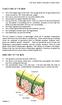 FUNCTIONS OF THE SKIN Skin is the largest organ of the body. The average adult has 18 square feet of skin which account for 16% of the total body weight. Skin acts as a physical barrier for you to the
Two main classes: Epithelial Connective (synovial) Epithelial. Cutaneous Mucous Serous
 Two main classes: Epithelial Connective (synovial) Epithelial Cutaneous Mucous Serous Epithelial Membranes = sheet of epithelia + connective tissue base 1. Cutaneous membrane: outer skin layer (stratified
Blepharoplasty - Eyelid Surgery
 Blepharoplasty - Eyelid Surgery Introduction Eyelid surgery repairs sagging or drooping eyelids. The surgery is also known as blepharoplasty, or an eyelid lift. Sagging or drooping eyelids happen naturally
Some individuals appear older than their COSMETIC. Facial Changes Caused by Smoking: A Comparison between Smoking and Nonsmoking Identical Twins
 COSMETIC Facial Changes Caused by Smoking: A Comparison between Smoking and Nonsmoking Identical Twins Haruko C. Okada, M.D. Brendan Alleyne, B.S. Kaveh Varghai Kimberly Kinder, M.D. Bahman Guyuron, M.D.
SECTION 2. Oral Maxillofacial Surgeon Services. Table of Contents
 SECTION 2 Table of Contents Table of Contents 1. GENERAL POLICY (Updated 4/1/12)... 3 1-1 Credentials... 3 1-2 Clients Enrolled in a Managed Care Plan... 3 1-3 Clients NOT Enrolled in a Managed Care Plan...
(970) 663-6878 WWW. REYNOLDSORALFACIAL. COM
 (970) 663-6878 WWW. REYNOLDSORALFACIAL. COM Glossary Anterior-Posterior - Front-back Class I - Normal relationship of teeth Class II - Distal (posterior) relationship of mandibular teeth to maxillary teeth.
Physicians as Assistants at Surgery: 2013 Study Participating Organizations:
 Physicians as Assistants at Surgery: 2013 Study Participating Organizations: American College of Surgeons American Academy of Ophthalmology American Academy of Orthopaedic Surgeons American Academy of
Laser and Cosmetic Center
 Laser and Cosmetic Center A Patient s Guide to Cosmetic Dermatology WELCOME Experts You Can Trust The Massachusetts General Hospital Dermatology Laser and Cosmetic Center s depth of experience is unmatched.
Corporate Medical Policy Reconstructive Eyelid Surgery and Brow Lift
 Corporate Medical Policy Reconstructive Eyelid Surgery and Brow Lift File Name: Origination: Last CAP Review: Next CAP Review: Last Review: reconstructive_eyelid_surgery_and_brow_lift 1/2000 9/2015 9/2016
Open and Endoscopic Forehead Lift. Plastic Surgery. For All Brow and Forehead Lift Procedures. Revolutionizing. Soft-Tissue Fixation
 Plastic Surgery Open and Endoscopic Forehead Lift For All Brow and Forehead Lift Procedures Revolutionizing Soft-Tissue Fixation DESIGNED FOR SIMPLICITY AND PREDICTABILITY The versatile design can be applied
IV. DEFINITION OF LYMPH NODE GROUPS (FIGURE 1) Level IA: Submental Group
 IV. DEFINITION OF LYMPH NODE GROUPS (FIGURE 1) Fig. 1 The level system is used for describing the location of lymph nodes in the neck: Level I, submental and submandibular group; Level II, upper jugular
Anatomy & Physiology 120. Lab #7 Muscle Tissue and Skeletal Muscles
 Anatomy & Physiology 120 Lab #7 Muscle Tissue and Skeletal Muscles What you Need to Know Look briefly at the Structure of: 1) Skeletal, 2) Smooth & 3) Cardiac Muscle Naming, Identification, Functions You
SKIN CARE menu of services
 SKIN CARE menu of services your best you. There s no denying the confidence you can possess when you look as good as you feel. Allow the skin health specialists and staff at C H A R L O T T E P L A S T
Introduction to Dental Anatomy
 Introduction to Dental Anatomy Vickie P. Overman, RDH, MEd Continuing Education Units: N/A This continuing education course is intended for dental students and dental hygiene students. Maintaining the
SUMMARY A. GROSS ANATOMY OF SUPERFICIAL FASCIA AND
 SUMMARY A. GROSS ANATOMY OF SUPERFICIAL FASCIA AND SUBCUTANEOUS FAT 1. Anatomy of Superficial Fascia: In this study, we observed that the superficial fascia of the abdomen was multilayered in the midline.
Anatomy and Physiology 121: Muscles of the Human Body
 Epicranius Anatomy and Physiology 121: Muscles of the Human Body Covers upper cranium Raises eyebrows, surprise, headaches Parts Frontalis Occipitalis Epicranial aponeurosis Orbicularis oculi Ring (sphincter)
Cosmetic Surgery Procedures
 Last Review Date: July 20, 2015 Number: MG.MM.AD.07cC2 Medical Guideline Disclaimer Property of EmblemHealth. All rights reserved. The treating physician or primary care provider must submit to EmblemHealth
Selinsgrove, Pennsylvania
 Selinsgrove, Pennsylvania Skin Care at FPC offers patients a wide array of aesthetic services and products in a relaxing and serene environment. Body Contouring Treatments Now you can have the body you
The Axial Skeleton Eighty bones segregated into three regions
 The Axial Skeleton Eighty bones segregated into three regions Skull Vertebral column Bony thorax Bones of the Axial Skeleton Figure 7.1 The Skull The skull, the body s most complex bony structure, is formed
How To Use A Botox
 BTFR-04(17-28) 7/23/03 5:43 PM Page 17 4 Preparation,storage and injection technique NEVER handle botulinum toxin without surgical gloves. PRESENTATION Botox Botox is delivered in an insulated container.
ENCYCLOPEDIA OF BIOMETRICS
 ENCYCLOPEDIA OF BIOMETRICS Anatomy of the Face Anne M. Burrows 1 and Jeffrey F. Cohn 2 1 Duquesne University, Pittsburgh, PA 15282, USA 2 University of Pittsburgh, Pittsburgh, PA 15260, USA SYNONYMS Anatomic,
Anatomy PHL 212. By Dr Tajdar Husain Khan
 Anatomy PHL 212 By Dr Tajdar Husain Khan Overview of Anatomy Anatomy(from the Greek word anatome,"dissection") is a branch of natural science dealing with the structural organization of living things The
fascial structure by Joseph E. Muscolino body mechanics
 by Joseph E. Muscolino body mechanics fascial structure Fascia is a fibrous connective tissue whose importance has long been neglected. However, as our body of research has expanded, it is now understood
Upper Eyelid Gold Weight Implantation in the Asian Patient with Facial Paralysis
 Upper Eyelid Gold Weight Implantation in the Asian Patient with Facial Paralysis Phillip H. Choo, M.D., Susan R. Carter, M.D., and Stuart R. Seiff, M.D. Sacramento and San Francisco, Calif. Patients with
Abdominal Pedicle Flaps To The Hand And Forearm John C. Kelleher M.D., F.A.C.S.
 Abdominal Pedicle Flaps To The Hand And Forearm John C. Kelleher M.D., F.A.C.S. Global-HELP Publications Chapter Eight: TECHNICAL REQUIREMENTS FOR FORMATION OF A TUBED PEDICLE FLAP Creating a tube pedicle
Cranial Nerve I Name: Foramen: Fiber Type: Function: Branches: Embryo:
 Cranial Nerve I Olfactory nerve Cribiform plate Special sensory Olfactory bulbs, Smell Olfactory filaments CNS (ectoderm) cribiform plate sensory = Cranial Nerve II Other: Optic nerve Optic canal Special
ABDOMINOPLASTY - FREQUENTLY ASKED QUESTIONS (FAQs)
 Executive Level E1, Excen Centre, 119 Willoughby Road, Crows Nest 2065 Tel: 02 9817 7585 www.mycosmeticclinic.net AFFORDABILITY WITH EXCELLENCE Liposuction Breast Augmentation Abdominoplasty Eyelids Surgery
Physicians as Assistants at Surgery: 2016 Update Participating Organizations:
 Physicians as Assistants at Surgery: 2016 Update Participating Organizations: American College of Surgeons American Academy of Ophthalmology American Academy of Orthopaedic Surgeons American Academy of
Anatomy of Human Muscles
 Anatomy of Human Muscles PURPOSE: To develop skill in identifying muscle names and locations relative to other regional structures. To determine origin, insertion and principle action of muscles through
WEIGHT LOSS. ThePlasticDoc.com
 WEIGHT LOSS ThePlasticDoc.com The brochure you have been provided contains nudity. If you are offended by such material or are not at least 18 years of age, please do not read further. WEIGHT LOSS SURGERY
The Integumentary System Dr. Ali Ebneshahidi
 The Integumentary System Dr. Ali Ebneshahidi The Skin The integument system consists of the skin (cutaneous membrane) and its accessory organs. The skin is composed of three layers of tissue: the outer
MEDICAL MANAGEMENT POLICY
 TITLE: Scar Revision/Keloid PAGE: 1of 9 This Medical policy is not a guarantee of benefits or coverage, nor should it be deemed as medical advice. In the event of any conflict concerning benefit coverage,
Skin rejuvenation with laser and other techniques
 Skin rejuvenation with laser and other techniques Sabine Stangl, Wolfgang Kimmig Kopf- und Hautzentrum Klinik und Poliklinik für Dermatologie und Venerologie Universitätsklinik Hamburg-Eppendorf Direktorin:
DEVELOPMENT AND GROWTH OF THE MANDIBLE
 2012-2013 ORAL BIOLOGY DEVELOPMENT AND GROWTH OF THE MANDIBLE Ass. Prof. Dr. Heba M. Elsabaa Development and Growth of the Mandible DEVELOPMENT OF THE MANDIBLE The Mandible Is the largest and strongest
Pearls in Cosmetic Oculofacial Plastic Surgery
 Chapter 2 Pearls in Cosmetic Oculofacial Plastic Surgery Jonathan A. Hoenig 2 Core Messages Analyze the Face in Layers: Aging occurs in the skin, muscle, fat, and bony layers. The key for successful and
Chapter 33. Nerve Physiology
 Chapter 33 NERVE AND VASCULAR INJURIES OF THE HAND KEY FIGURES: Digital nerve location on finger Epineurial repair Nerves and blood vessels of the hand and fingers usually are quite delicate, and some
Preparing to Suture. 6 th Annual Pediatric Advanced Practice Conference Tuesday, February 9, 2016 1:30 pm. Workshop B: Suturing for Beginners
 Preparing to Suture Kristen Devick, MPAS, PA-C University of Colorado Department of Emergency Medicine NONE! Skin Anatomy Trott, 2012, p.11 Preparing to suture Initial evaluation Hemostasis Anesthesia
NORCOM COMMISSIONING POLICY. Specialist Plastic Surgery Procedures
 NORCOM North Derbyshire, South Yorkshire and Bassetlaw Commissioning Consortium NORCOM COMMISSIONING POLICY Specialist Plastic Surgery Procedures January 2007 Review Date: January 2009 Prepared by Rotherham
CHAPTER 6: INTEGUMENTARY SYSTEM. 1. Explain why the skin is called the cutaneous membrane.
 OBJECTIVES: 1. Explain why the skin is called the cutaneous membrane. 2. Name the layers of the skin, describe the structure (tissues) of each, and name a general function of each. 3. Discuss the four
SERVICES. Cosmetic and Laser Surgery
 SERVICES Cosmetic and Laser Surgery Cosmetic and Laser Surgery at Lahey Outpatient Center, Lexington, uses the most advanced anti-aging treatments and technologies to restore the younger, more vibrant
THE SURGICAL ART OF FACIAL MAKEOVER
 THE SURGICAL ART OF FACIAL MAKEOVER SHOWCASE Maurice Y. Mommaerts INDEX Key words Procedures Problem list orthodontic classification 13 Class III, crossbite, crowding TPD, pterygoid dysjunction Occlusal
Maxillary Sinus. (Antrum of Higmore)
 Maxillary Sinus (Antrum of Higmore) The maxillary sinus is a pneumatic space. It is the largest bilateral air sinus located in the body of the maxilla and opens in the middle nasal meatus of the nasal
Thyroid eye disease (TED) Synonyms: Graves ophthalmopathy, thyroid ophthalmopathy, thyroid associated ophthalmopathy
 Thyroid eye disease (TED) Synonyms: Graves ophthalmopathy, thyroid ophthalmopathy, thyroid associated ophthalmopathy This information leaflet briefly covers the following issues in TED: What is TED? When
Plastic Surgery Jewish General Hospital / Montreal General Hospital
 Plastic Surgery Jewish General Hospital / Montreal General Hospital Structure of the Rotation Duration: Two weeks. Activities: Emergency Department consults Minor surgery Major surgery Plastics clinic
Section B: Epithelial Tissue 1. Where are epithelial tissues found within the body? 2. What are the functions of the epithelial tissues?
 Tissue worksheet Name Section A: Intro to Histology Cells are the smallest units of life. In complex organisms, cells group together with one another based on similar structure and function to form tissues.
Heel Pain Syndromes DELLON INSTITUTES FOR PERIPHERAL NERVE SURGERY
 Heel Pain s 5 3333 N CALVERT ST, SUITE 370, BALTIMORE, MD 21218 T410 467 5400 F410 366 9826 delloninstitutes.com your complaints are Pain, numbness or burning in your heel. The timing of this pain and
a guide to understanding moebius syndrome a publication of children s craniofacial association
 a guide to understanding moebius syndrome a publication of children s craniofacial association a guide to understanding moebius syndrome this parent s guide to Moebius syndrome is designed to answer questions
Thyroid eye disease (TED)
 Thyroid eye disease (TED) Mr David H Verity, MD MA FRCOphth Consultant Ophthalmic Surgeon Synonyms: Graves ophthalmopathy, thyroid ophthalmopathy, thyroid associated ophthalmopathy This information leaflet
The Abdominal Wall And Hernias. Stanley Kurek, DO, FACS Associate Professor of Surgery UTMCK
 The Abdominal Wall And Hernias Stanley Kurek, DO, FACS Associate Professor of Surgery UTMCK The Abdominal Wall The structure of the abdominal wall is similar in principle to the thoracic wall. There are
by joseph e. muscolino, DO photography by yanik chauvin
 by joseph e. muscolino, DO photography by yanik chauvin body mechanics palpation of the anterior neck ESOUCES For more information go to www.medlineplus.gov and search under anterior neck. The anterior
Liposculpture of the Face
 Egypt, J. Plast. Reconstr. Surg., Vol. 33, No. 1, January: 7-14, 2009 Liposculpture of the Face HEBA HUSSEIN, M.D. The Department of Plastic and Reconstructive Surgery, Faculty of Medicine, Ain Shams University.
Navigating Anorectal Anatomy: Terms, Planes, Spaces, Structures
 Navigating Anorectal Anatomy: Terms, Planes, Spaces, Structures Lawrence M. Witmer, PhD Lawrence M. Witmer, PhD Department of Biomedical Sciences College of Osteopathic Medicine Ohio University Athens,
INTERNATIONAL MEDICAL COLLEGE
 INTERNATIONAL MEDICAL COLLEGE Joint Degree Master Program: Implantology and Dental Surgery (M.Sc.) Basic modules: List of individual modules Basic Module 1 Basic principles of general and dental medicine
Thyroid Eye Disease. Anatomy: There are 6 muscles that move your eye.
 Thyroid Eye Disease Your doctor thinks you have thyroid orbitopathy. This is an autoimmune condition where your body's immune system is producing factors that stimulate enlargement of the muscles that
Love the Skin You re In. Emily Lambert, MD Sara Drew, ANP
 Love the Skin You re In Emily Lambert, MD Sara Drew, ANP Conditions Treated Unwanted Hair Sun Spots Wrinkles Redness Blood Vessels Spider Veins Scarring Aging Skin Melasma pregnancy mask Sun-damage Pre-cancers
CHAPTER 9 BODY ORGANIZATION
 CHAPTER 9 BODY ORGANIZATION Objectives Identify the meaning of 10 or more terms relating to the organization of the body Describe the properties of life Describe the function for the structures of the
Chapter 11. What are the functions of the skeletal system? More detail on bone
 Skeletal System Chapter 11 11.1 Overview of the skeletal system What are the functions of the skeletal system? 1. Supports the body 2. Protects the soft body parts 3. Produces blood cells 4. Stores minerals
Fellowship in Anti-Aging and Aesthetic Medicine
 Fellowship in Anti-Aging and Aesthetic Medicine What is Aesthetic Medicine? Aesthetic Medicine is a developing clinical subspecialty and field in scientific research aimed at the use of minimally invasive
Basal Cell Carcinoma Affecting the Eye Your Treatment Explained
 Basal Cell Carcinoma Affecting the Eye Your Treatment Explained Patient Information Introduction This booklet is designed to give you information about having a Basal Cell Carcinoma near your eye and the
VARICOSE VEINS. Information Leaflet. Your Health. Our Priority. VTE Ambulatory Clinic Stepping Hill Hospital
 VARICOSE VEINS Information Leaflet Your Health. Our Priority. Page 2 of 7 Varicose Veins There are no accurate figures for the number of people with varicose veins. Some studies suggest that 3 in 100 people
A. function: supplies body with oxygen and removes carbon dioxide. a. O2 diffuses from air into pulmonary capillary blood
 A. function: supplies body with oxygen and removes carbon dioxide 1. ventilation = movement of air into and out of lungs 2. diffusion: B. organization a. O2 diffuses from air into pulmonary capillary blood
Chapter 24. Evolution of Procedures
 Chapter 24 BREAST SURGERY KEY FIGURES: Saline implant reconstruction Latissimus dorsi reconstruction Free TRAM reconstruction In the developed world, breast reconstruction after mastectomy and breast reduction
GUIDELINES ON AESTHETIC FACIAL PROCEDURES FOR DENTAL PRACTITIONERS
 GUIDELINES ON AESTHETIC FACIAL PROCEDURES FOR DENTAL PRACTITIONERS INTRODUCTION 1. This document serves as a guideline on aesthetic facial procedures for dental practitioners. It does not include aesthetic
Daman Published Rates
 Daman Published Rates Non-Network Services Price List Daman Published Rates as applicable for covered Health Services in Non-Network Providers TABLE OF CONTENTS WELCOME... 3 HOW TO READ THE PRICE LIST?...
Integumentary System Digestive System. Outline. Integumentary System 11/4/2008. Week 11 BA & BP November 4, 2008 Nadia Arora, ND
 Integumentary System Digestive System Week 11 BA & BP November 4, 2008 Nadia Arora, ND Outline Integumentary system and body membranes Types of body membranes and their function General structure and main
Upper blepharoplasty is one of the most common cosmetic. The Sigmoid Upper Eyelid Blepharoplasty: Redefining Beauty. John P. Fezza, M.D.
 SURGICAL TECHNIQUE The Sigmoid Upper Eyelid Blepharoplasty: Redefining Beauty John P. Fezza, M.D. * *Center for Sight, Sarasota; and Department of Ophthalmology, University of South Florida, Tampa, Florida,
Page 1 of 10 BDS FINAL PROFESSIONAL EXAMINATION 2007 Prosthodontics (MCQs) Model Paper SECTION I
 Page 1 of 10 COMPLETE DENTURES ANATOMICAL LANDMARKS SECTION I 1. There are many landmarks in the oral cavity which helps in designing complete dentures. One of the important landmarks is fovea palatini.
PHaSES: Practical Hands-on Surgical Education System
 U.S. Toll Free 866-GOLIMBS PHaSES Range PHaSES: Practical Hands-on Surgical Education System Limbs & Things is pleased to introduce the PHaSES Range. The range is based upon our well known basic & general
LUMBAR LAMINECTOMY AND DISCECTOMY. Basic Anatomical Landmarks: Posterior View Lumbar Spine
 Lumbar Relating to the loins or the section of the back and sides between the ribs and the pelvis. In the spinal column, the last five vertebrae (from superior to inferior, L1-L5) Laminectomy Surgical
ORIGINAL ARTICLE. Transconjunctival Lower Blepharoplasty. A Retrospective Comparison of Transposing Fat to the Subperiosteal vs Supraperiosteal Planes
 ORIGINAL ARTICLE Transconjunctival Lower Blepharoplasty With Fat Repositioning A Retrospective Comparison of Transposing Fat to the Subperiosteal vs Supraperiosteal Planes Donald B. Yoo, MD; Grace Lee
LED Light Photo - Therapy
 LED Light Photo - Therapy What are the Benefits of LED? Skin Unique s Multi-light LED Panels. Hand held system see below. Activates fibroblast cells which create collagen and elastin Restores skin s natural
Price List CELEBRATING 17 YEARS OF SAFE MEDICAL AESTHETIC PRACTICE. Gillian Graham
 Est 2001 CELEBRATING 17 YEARS OF SAFE MEDICAL AESTHETIC PRACTICE Price List Gillian Graham RGN, ENB 100 (Intensive Care) ENB 998 (Teaching) and Independent Prescriber 10 Harley Street, London, W1G 9PF