
The Effect of Different Standing and Sitting Postures on Trunk Muscle Activity in a Pain-Free Population
|
|
|
- Roger Palmer
- 10 years ago
- Views:
Transcription
1 The Effect of Different Standing and Sitting Postures on Trunk Muscle Activity in a Pain-Free Population SPINE Volume 27, Number 11, pp , Lippincott Williams & Wilkins, Inc. Peter B. O Sullivan, PhD,* Kirsty M. Grahamslaw, M Manip Ther, PT, Michelle Kendell, M Manip Ther, PT, Shaun C. Lapenskie, M Manip Ther, PT, FCAMT, Nina E. Möller, M Manip Ther, PT, and Karen V. Richards, M Manip Ther, PT Study Design. A normative, single-group study was conducted. Objective. To determine whether there is a difference in electromyographic activation of specific lumbopelvic muscles with the adoption of common postures in a painfree population. Summary of Background Data. Clinical observations indicate that adopting passive postures such as sway standing and slump sitting can exacerbate pain in individuals with low back pain. These individuals often present with poor activation of the lumbopelvic stabilizing musculature. At this writing, little empirical evidence exists to document that function of the trunk and lumbopelvic musculature are related to the adoption of standardized standing and sitting postures. Methods. This study included 20 healthy adults, with equal representation of the genders. Surface electromyography was used to measure activity in the superficial lumbar multifidus, internal oblique, rectus abdominis, external oblique, and thoracic erector spinae muscles for four standardized standing and sitting postures. Results. The internal oblique, superficial lumbar multifidus, and thoracic erector spinae muscles showed a significant decrease in activity during sway standing (P 0.027, P 0.002, and P 0.003, respectively) and slump sitting (P 0.007, P 0.012, and P 0.003, respectively), as compared with erect postures. Rectus abdominis activity increased significantly in sway standing, as compared with erect standing (P 0.005). Conclusions. The findings show that the lumbopelvic stabilizing musculature is active in maintaining optimally aligned, erect postures, and that these muscles are less active during the adoption of passive postures. The results of this study lend credence to the practice of postural retraining when facilitation of the lumbopelvic stabilizing musculature is indicated in the management of specific spinal pain conditions. [Key words: abdominal muscles, back muscles, electromyography, lumbar spine, posture, sacroiliac joint, stability] Spine 2002;27: From the *School of Physiotherapy, Curtin University of Technology, Shenton Park, Western Australia, the Taylor Physiotherapy and Sports Injury Clinic, Edinburgh, Scotland, United Kingdom, SportsMed Murdoch, Murdoch, Western Australia, D. Freer and Associates Physiotherapy, Barrie, Ontario, Canada, the Haukeland University Hospital, Bergen, Norway, Ruth Jones Physiotherapy, Southampton, Hampshire, United Kingdom. Acknowledgment date: May 15, First revision date: September 17, Acceptance date: October 24, The manuscript submitted does not contain information about medical devices or drugs. No funds were received in support of this work. No benefits in any form have been or will be received from a commercial party related directly or indirectly to the subject of this manuscript. Postural retraining has traditionally been an integral part of physiotherapeutic intervention in the treatment of low back pain (LBP). However, the relation between posture and LBP is largely unknown. 11 It has been proposed that different postures that superficially appear similar may lead to altered muscle activation. This results in the generation of very different forces in the skeletal system. 5 Postural training works on the assumption that an optimally aligned skeletal system reduces stress in its structures. Commonly adopted relaxed postures often are passive in nature, with a predisposition toward sway standing and slump sitting. 15 It is proposed that these postures rely on the passive lumbopelvic structures for the maintenance of an upright position against gravity. As a result, the requirement for muscle activity is diminished. It has been reported clinically that these passive postures frequently exacerbate LBP, 27,38 and that the adoption of these postures is associated commonly with motor dysfunction of spine-stabilizing muscles such as the lumbar multifidus muscle and the deep abdominal musculature. 27 Bergmark 9 proposed that the muscles controlling the trunk could be classified into two groups. The first group includes muscles attached directly to the lumbar vertebrae that can provide spine segmental stability. The lumbar multifidus, transversus abdominis, and internal oblique muscles are part of this group. The second group consists of large torque-producing muscles with no segmental attachment to the lumbar spine. These muscles control gross trunk movement and provide general trunk stability. They include the rectus abdominis, external oblique, and thoracic erector spinae muscles. It is recognized that cocontraction of spine-stabilizing muscles, specifically the lumbar multifidus, transversus abdominis, and internal oblique muscles, has the ability to enhance lumbopelvic stability. The lumbar multifidus muscle is unique in its ability to enhance lumbar segmental stability 14,41 while dynamically stabilizing the sacroiliac joint through its control of sacral nutation. 36 The transversus abdominis and internal oblique muscles provide a stabilizing influence on the lumbar spine via the thoracolumbar fascia and control of intraabdominal pressure. 13,20,39 The anteroinferior portion of the internal oblique and transversus abdominis muscles is capable of generating compression and hence of increasing the stability of the sacroiliac joints. 32,

2 Effect of Different Postures O Sullivan et al 1239 At this writing, no empirical evidence exists to document that the function of the stabilizing and torqueproducing muscles in the lumbopelvic region is related to the adoption of standardized standing and sitting postures in subjects with or without LBP. The function of the lumbar spine muscles during standing and sitting has been examined previously using electromyography (EMG), but there has been an overwhelming focus on the erector spinae muscle group to the exclusion of the stabilizing musculature. 1,15,40 The methods used to analyze posture in the existing literature often are found to be complex and difficult to reproduce in a clinical setting, 17,42 and in other studies, postural standardization has not been quantified. 35,37,38 The comparability and clinical application of these studies is reduced by the lack of postural standardization. In light of these limitations, this study was performed to determine whether a relation existed between activation of specific lumbopelvic muscles and the adoption of common standing and sitting postures in subjects without LBP. It was hypothesized that the internal oblique and superficial lumbar multifidus muscles acting as stabilizers of the lumbopelvic region would show greater activation in active postures (erect standing and sitting) than in passive postures (sway standing and slump sitting). Methods Participants. This study recruited 20 adult subjects (10 men and 10 women) from the Perth metropolitan region. Their mean age was 27.8 years (range, years), mean height 174 cm (range, cm), and mean weight 67.7 kg (range, kg). Ethical approval and written informed consent were obtained. Subjects were excluded if they were pregnant, had a body mass index greater than 30, had any reports of LBP (requiring medication or consultation with a health professional) in the preceding 6 months, had any known spine disorders, or experienced pain in the test postures. Equipment and Procedures. Markers were placed on the right lateral tip of the acromion, the midpoint of the greater trochanter, the tip of the lateral malleolus, and the L1 spinous process by the same investigator. The skin was prepared to reduce skin impedance below 5 k. Two Ag/AgCl surface electrodes (3M Health Care Products, London, Canada) were placed unilaterally 25 mm apart and parallel to the muscle fibers over the following muscles: rectus abdominis (5 cm inferior to the xiphoid process and 3 cm lateral to midline), external oblique (lower edge of eighth rib), thoracic erector spinae (5 cm lateral to T9 spinous process), internal oblique (medial to the anterior superior iliac spine), 26 and superficial lumbar multifidus (2 cm lateral to midline at the L4 L5 interspinous space). 33 The internal oblique electrode also may have picked up activity of the transversus abdominis muscle, which lies directly beneath it. A common earth electrode was placed over the iliac crest. The EMG equipment consisted of a Bortec (Bortec Electronics, Calgary, Canada) and a Medelec amplifier (Oxford Instruments, Surrey, UK) connected to a Power Macintosh computer Figure 1. Erect standing posture: 177 angle between markers. (Apple Computer, Cupertino, CA). The gain setting was 3 K, and the signal was sampled at 1000 Hz. Data were processed and stored on Labview 5.1 Virtual Instruments Software (National Instruments, Austin, TX). Raw data were demeaned and band-pass filtered at 6 to 400 Hz) using a fourth order zero lag Butterworth filter (National Instruments, Austin, TX). The use of two EMG amplifiers had no effect on the outcome analysis because the comparison was made only of individual muscle activation between postural conditions. Electromyographic recordings of thoracic erector spinae muscles were acquired for 15 subjects because of missing data. During data collection, the study participants were barefoot with arms relaxed and lightly clasped in front of their body and feet positioned 20 cm apart. They were instructed to focus straight ahead at a designated point. An adjustable height treatment table was used for all the sitting positions. The hips and knees were flexed to 90. Using standardized instructions, the participants were positioned by the same investigator for all the trials. Four standardized postures were examined: erect standing, sway standing, erect sitting, and slump sitting. The ability to reliably position subjects in the test postures was determined in a pilot study using five subjects undergoing two trials. Intraclass correlation values were between 0.86 and 0.94, showing excellent reliability. Erect standing was defined as a position in which the markers on the acromion, greater trochanter, and lateral malleolus lined up to form an angle of approximately 180 (Figure 1). To move into sway standing, the participants relaxed and let the pelvis translate anteriorly relative to the trunk (Figure 2). The angle between the markers then was remeasured. In this study, it was deemed necessary for the angle between erect and sway standing to differ by a minimum of 15.

3 1240 Spine Volume 27 Number Figure 2. Sway standing posture: 151 angle between markers. Figure 3. Erect sitting: 132 angle between markers. Figure 4. Slump sitting: 93 angle between markers. Erect sitting was defined as a position in which the subject had a neutral pelvic tilt, neutral lumbar lordosis, and neutral thoracic kyphosis (Figure 3). To move into slump sitting, the trunk was relaxed into flexion and the pelvis rotated posteriorly (Figure 4). The angle between the acromion, L1 spinous process, and greater trochanter was measured. In this study it was deemed necessary for the angle between erect and slump sitting to differ by a minimum of 20. To measure the postures objectively, a digital camera (Intel, Santa Clara, CA) was placed perpendicularly to the participant 275 cm from the proximal foot for the standing postures and 200 cm for the sitting postures. The same investigator took a digital photograph, which was imported into an IBM 1460i laptop computer (IBM, New York, NY) running Scion Image (Scion, Fredrick, MD), an image-processing program that measures angles between manually marked positions on a digital image. Surface EMG measurements were amplitude normalized to two standardized activities designed to elicit a stable submaximal voluntary contraction. This was performed because normalization to a maximal voluntary contraction reportedly is unreliable, 23 reducing the ability to detect small changes in levels of motor activity during the performance of postural tasks. 38 The first standardized activity was the crook-lying bilateral leg raise, in which the heels were held 5 cm above the plinth, during which activity of the internal oblique, rectus abdominis, and external oblique muscles was measured for 3 seconds. The second activity was prone-lying bilateral active knee flexion, in which the dorsum of the feet was held 5 cm above the plinth, during which the activity of thoracic erector spinae and superficial lumbar multifidus muscles was measured for 3 seconds. The positions were tested in the following order: supine lying (used as a reference position), crook-lying bilateral leg raise, prone-lying bilateral active knee flexion, erect standing, sway standing, erect sitting, and slump sitting. After a 15-

4 Effect of Different Postures O Sullivan et al 1241 Figure 5. Error bars indicate standard deviation. SLM superficial lumbar multifidus; IO internal oblique; EO external oblique; RA rectus abdominis; TES thoracic erector spinae second delay to ensure stable conditions, three 3-second trials were recorded for each position. A rest period of 1 minute was given between test postures to eliminate fatigue. The EMG data of the three trials were visually inspected. To reduce the effects of postural sway, the trial with the least number of spikes was selected for analysis. In the case of three consistent traces, the first trace was chosen to avoid bias. The electrocardiographic artifact then was extracted and the root mean square of the EMG data calculated. Statistical Analysis. A sample of 20 subjects was determined to be sufficient for detecting an effect of moderate size with an alpha level of 0.05 and a power level of 80%. Statistical analysis was performed using SPSS statistical analysis software, Version 10.0 (SPSS, Chicago, IL). Data were analyzed for normality, and parametric analysis was performed. A paired t test was used to detect a difference in muscle activation between erect and sway standing for all five muscles. The test was repeated to detect a difference in muscle activation between erect and slump sitting. Results The mean and standard deviation of muscle activities (expressed as a percentage of submaximal voluntary contraction) for erect versus sway standing and erect versus slumped sitting are presented in Figures 5 and 6, respectively. Standing Postures There was a significant decrease in superficial lumbar multifidus (t[19] 3.631; P 0.002), internal oblique (t[19] 2.400; P 0.027), and thoracic erector spinae (t[14] 3.526; P 0.003) activation as subjects moved from erect standing into sway standing. Conversely, the rectus abdominis muscle (t[19] 3.142; P 0.005) Figure 6. Error bars indicate standard deviation. SLM superficial lumbar multifidus; IO internal oblique; EO external oblique; RA rectus abdominis; TES thoracic erector spinae

5 1242 Spine Volume 27 Number was significantly more active, and the external oblique muscle (t[19] 1.490; P 0.153) showed a trend toward increased activity in the sway standing position, but the latter was not statistically significant. Sitting Postures There was a significant decrease in superficial lumbar multifidus (t[19] 2.796; P 0.012), internal oblique (t[19] ; P 0.007), and thoracic erector spinae (t[14] 3.634; P 0.003) activation as the participants moved from erect sitting into slump sitting. Neither the rectus abdominis muscle (t[19] 0.436, P 0.668) nor the external oblique muscle (t[19] 0.842; P 0.410) showed any significant difference in activity between the two sitting postures. Discussion The results of this study show there is a relation between the activity of specific muscles in the lumbopelvic region and the adoption of common standing and sitting postures. Specifically, activation of the superficial lumbar multifidus, internal oblique, and thoracic erector spinae muscles decreased in passive sitting and standing postures, but increased in erect postures, indicating a postural stabilizing role for these muscles. An early objective of this study was to devise a method of standardizing postural alignment and measurement. The standardized postures in this study closely represent commonly observed postures and were found to be reliable, quantifiable, and capable of being reproduced in a clinical setting. Standing Postures A key finding of this study was the decrease in activation of the superficial lumbar multifidus, internal oblique, and thoracic erector spinae muscles and the concurrent increase in rectus abdominis activation observed during sway standing as compared with erect standing. It has been proposed that as the pelvis shifts anteriorly to the thorax when the subject moves from erect to sway standing, the line of gravity moves posteriorly to the lumbar vertebral bodies. The result is extension of the low lumbar spine and lumbosacral junction. 4 Maintenance of an upright position during sway standing then is achieved mainly through activation of the anterior abdominal musculature. 4 This was demonstrated in the current study by the significantly increased activation of the rectus abdominis muscle in the sway standing posture. The decrease in superficial lumbar multifidus and thoracic erector spinae activity likely resulted from a lumbar extensor moment acting through the trunk in the sway standing posture, resulting in trunk flexor activation. Interestingly, an increase in rectus abdominis activity was associated with a decrease in internal oblique muscle activity. Individual muscles of the abdominal wall have different functions with regard to supporting upright postures, highlighting the fact that these muscles do not act as a homogeneous group. This notion is supported by previous research reporting regional differences in the function of the external oblique muscle. 22 Perhaps the internal oblique muscle functions more to support erect postures through its influence on the lumbar spine via its control of intraabdominal pressure and its attachment to the thoracolumbar fascia, 13,39 and to provide stability to the sacroiliac joint in weightbearing through the force closure mechanism. 37 Increased activation of the thoracic erector spinae muscle during erect standing is in agreement with previous findings, 1 reflecting the muscle activity required to maintain the thoracic spine in a neutral kyphosis against gravity. It has been previously reported that the back muscles show slight to continuous activity, 2,16,40 moderate levels of activity, 1,40 or no activity 16 in erect positions. The inconsistency in these previous findings may reflect variance in subjects natural posture and the lack of postural standardization within the study design. Sitting Postures Electromyographic activity of the superficial lumbar multifidus, internal oblique, and thoracic erector spinae muscles was significantly lower during slump sitting than during erect sitting. A reduction in EMG activity of the erector spinae during slump sitting has been reported consistently in the literature, indicating a flexion relaxation response of the back muscles. 1 3,15,35 It appears that postural muscle activity decreases as the lumbopelvic region becomes dependent on its passive structures to maintain the position against gravity at end-range spine flexion. Snijders et al 38 also documented this relaxation phenomenon in the internal oblique muscle when comparing supported upright sitting with crossed leg sitting. It was proposed that the reduced activity of the internal oblique muscle observed in the crossed leg posture reflected enhanced passive system stability in the sacroiliac joints, with less need for the dynamic stability provided by the internal oblique muscle. 38 In the current study, the activity levels of the external oblique and rectus abdominis muscles did not differ significantly between the two sitting postures, demonstrating the limited role that these muscles play in lumbopelvic stability under low load conditions such as sitting. Clinical Relevance The current findings clearly show a link between activity of the lumbopelvic postural stabilizing muscles and the maintenance of erect upright postures. These findings suggest a close relation between the adoption of passive postures and reduction in activity of the lumbo-pelvic stabilizing muscles. The authors speculate that the neural control system may adjust levels of motor activity in the lumbopelvic stabilizing muscles, depending on posture and degree of load sharing with the passive lumbopelvic structures. This speculation warrants further investigation. The authors also speculate that individuals who habitually adopt passive postures deactivate and potentially decondition the stabilizing muscles of the lumbopelvic region. A decrease in trunk muscle efficiency has
![Sitting Postures There was a significant decrease in superficial lumbar multifidus (t[19] 2.796; P 0.012), internal oblique (t[19] 3.0460; P 0.007), and thoracic erector spinae (t[14] 3.634; P 0.](/docs-images/45/6744364/images/page_5.jpg "003) activation as the participants moved from erect sitting into slump sitting. Neither the rectus abdominis muscle (t[19] 0.436, P 0.668) nor the external oblique muscle (t[19] 0.842; P 0.")
6 Effect of Different Postures O Sullivan et al 1243 been shown to increase load on the lumbar discs and ligaments. 18 This may leave the lumbopelvic region vulnerable to strain, instability, or injury. 12 A positive correlation has been shown between the presence of LBP and time spent watching television in large studies conducted with adolescents. 6 8 The authors of these studies proposed that this association might be the result of prolonged sitting as well as poor posture or physical inactivity. Clearly, further research is required to clarify the relation between sustained passive postures, muscle activity, and back pain. Cholewicki and McGill 12 reported that lumbar multifidus activity comprising no more than 3% of maximal voluntary contraction was sufficient to ensure segmental stability of the lumbar spine, with lower levels potentially compromising this stability. In the current study, the change in superficial lumbar multifidus activity observed between erect and passive postures was slightly less than 35% of submaximal voluntary contraction. Although a direct comparison cannot be made between the two studies, the authors speculate that the changes in muscle activity observed between erect and passive postures in the current study reflect a substantial change in motor activity that may have clinical significance. The relation of posture to trunk muscle activity in upright postures, and LBP is not well established. 10,25,30 One reason for this may be previous lack of postural standardization and classification of back pain conditions in the literature. It is recognized that postural stabilizing muscles such as the lumbar multifidus, internal oblique, and transversus abdominis muscles have an important stabilizing influence on the lumbopelvic region, 32,39,41 reducing stress on the passive structures. 18 Specific motor dysfunction of these muscles in the presence of chronic LBP also is well documented. 19,21,29,31 Further investigation is required to determine whether a relation exists between an individual s habitual adoption of passive postures and dysfunction of these muscles. With LBP, in which the passive structures of the lumbopelvic region already are sensitized, the authors speculate that adopting passive postures may result in exacerbation of pain. Adopting erect postures, which facilitate key lumbopelvic stabilizing muscles, may result in more effective load sharing with the active system, reducing focal end range stress on the sensitized passive structures. Conversely, if a pain disorder is related to increased extensor muscle activity, adopting more passive postures may relieve pain. These hypotheses are the focus of ongoing research. The results of this study also may have implications for motor retraining among individuals with specific lumbopelvic pain syndromes. Historically, considerable emphasis has been placed on muscle retraining in nonweightbearing or nonfunctional positions. 24,34 This study showed that erect postural alignment in weightbearing positions facilitates the stabilizing musculature of the lumbopelvic region. In contrast, facilitation of muscle activity in nonweightbearing or poorly aligned positions may hinder the transfer of improved lumbopelvic muscle function into everyday activities. This supports specific retraining of the stabilizing musculature, with concurrent postural reeducation, in the treatment of specific LBP conditions In the current study, commonly expressed postures observed in clinical practice were studied to verify whether postural change leads to different patterns of motor activity. The findings support the conclusion that the lumbopelvic stabilizing musculature is active in maintaining erect postures, and that these muscles are less active during the adoption of passive postures. Key Points The superficial thoracic erector spinae muscle and the anteroinferior portion of the internal oblique muscle are preferentially activated in erect standing and sitting postures and less active in passive trunk postures. The neural control system appears to adjust the levels of motor activity in the lumbopelvic stabilizing muscles, depending on trunk posture. The findings support the conclusion that adopting passive postures during standing and sitting has an inhibitory affect on the key stabilizing muscles in the lumbopelvic region. The findings support the conclusion that training of erect standing and sitting postures has a facilitatory affect on the key stabilizing muscles in the lumbopelvic region. Acknowledgments The authors acknowledge with appreciation the valuable contributions of Dr. Marie Blackmore (statistician), Geoff Strauss (senior lecturer), Dr. Kathy Henderson (senior lecturer), and Paul Davey (research assistant) of the Curtin University of Technology. References 1. Andersson B, Jonsson B, Ortengren R. Myoelectric activity in individual lumbar erector spinae muscles in sitting: A study with surface and wire electrodes. Scand J Rehabil Med Suppl 1974;3: Andersson B, Ortengren R, Nachemson AL, et al. The sitting posture: An electromyographic and discometric study. Orthop Clin North Am 1975;6: Andersson E, Oddsson L, Grundstrom H, et al. EMG activities of the quadratus lumborum and erector spinae muscles during flexion relaxation and other motor tasks. Clin Biomech 1996;11: Asmussen E, Klausen K. Form and function of the erect human spine. Clin Orthop 1962;25: Aspden R. Review of the functional anatomy of the spinal ligaments and the lumbar erector spinae muscles. Clin Anat 1992;372 87: 6. Balague F, Dutoit G, Waldburger M. Low back pain in school children: An epidemiological study. Scand J Rehabil Med 1988;20: Balague F, Nordin M, Skovron M, et al. Nonspecific low back pain among school children: A field survey with analysis of some associated factors. J Spinal Disord 1994;7: Balague F, Troussier B, Salminen J. Nonspecific low back pain in children and adolescents: Risk factors. Eur Spine J 1999;8: Bergmark A. Stability of the lumbar spine: A study in mechanical engineering. Acta Orthop Scand 1989;230:20 4.

7 10. Bullock-Saxton J. Normal and abnormal postures in the sagittal plane and their relationship to low back pain. Physiother Pract 1988;4: Bullock-Saxton J. Postural alignment in standing: A repeatability study. Aust J Physiother 1993;39: Cholewicki J, McGill S. Mechanical stability of the in vivo lumbar spine: Implications for injury and chronic low back pain. Clin Biomech 1996;11: Cresswell A, Grundstrom H, Thorstensson A. Observations on intraabdominal pressure and patterns of abdominal intramuscular activity in man. Acta Physiol Scand 1992;144: Crisco J, Panjabi M. The intersegmental and multisegmental muscles of the lumbar spine. Spine 1991;16: Dolan P, Adams M, Hutton W. Commonly adopted postures and their effect on the lumbar spine. Spine 1988;13: Donisch E, Basmajian J. Electromyography in the deep back muscles in man. Am J Anat 1972;133: During J, Goudfrooij H, Keessen W, et al. Toward standards for posture: Postural characteristics of the lower back system in normal and pathological conditions. Spine 1985;10: Goel V, Kong W, Han J, et al. A combined finite-element and optimization investigation of lumbar spine mechanics with and without muscles. Spine 1993;18: Hides J, Stokes M, Saide M, et al. Evidence of lumbar multifidus muscle wasting ipsilateral to symptoms in patients with acute/subacute low back pain. Spine 1994;19: Hodges PW. Is there a role for transversus abdominis in lumbopelvic stability? Manual Ther 1999;4: Hodges PW, Richardson CA. Inefficient muscular stabilization of the lumbar spine associated with low back pain: A motor control evaluation of transversus abdominis. Spine 1996;21: Landin Z, Murthy K, DeLuca C. Mechanical recruitment of low back muscles: Theoretical predictions and experimental validation. Spine 1988;14: McGill S. Electromyographic activity of the abdominal and low back musculature during the generation of isometric and dynamic axial trunk torque: Implications for lumbar mechanics. J Orthop Res 1991;9: McGill S. Low back stability: From description to issues for performance and rehabilitation. Exerc Sports Sci Rev 2000;29: Mulhearn S, George K. Abdominal muscle endurance and its association with posture and low back pain: An initial investigation in male and female elite gymnasts. Physiotherapy 1999;85: Ng JK, Richardson CA. Reliability of electromyographic power spectral analysis of back muscle endurance in healthy subjects. Arch Phys Med Rehabil 1996;77: O Sullivan P. Lumbar segmental instability : Clinical presentation and specific stabilizing exercise management. Manual Ther 2000;5: O Sullivan P, Twomey L, Allison G. Dynamic stabilisation of the lumbar spine. Crit Rev Phys Rehabil Med 1997;9: O Sullivan PB, Twomey L, Allison GT. Altered abdominal muscle recruitment in patients with chronic back pain following a specific exercise intervention. J Orthop Sports Phys Ther 1998;27: Raine S. Variations of a Series of Physical Characteristics Related to the Comfortable Erect Standing Posture and How These Are Affected by Age, Gender, Back Pain, and Physical Activity. Curtin University of Technology, Perth, Australia, 1995.

 Low Back Pain Mansour Dib MD Physical Medicine and Rehabilitation Pain generators Disc Posterior elements Sacro-iliac joint Education - Spine Positioning Neutral Extension Flexion Disc disease Discogenic
ABDOMINAL MUSCLE ACTIVATION IN LOW BACK PAIN PATIENTS: A SURFACE EMG STUDY.
 ABDOMINAL MUSCLE ACTIVATION IN LOW BACK PAIN PATIENTS: A SURFACE EMG STUDY. Swati Limaye* Deepak Anap**. ABSTRACT: Introduction : Activation of abdominal muscles is essential for ensuring good sacroiliac
PHYSIOLOGY AND MAINTENANCE Vol. IV - Lumbar Muscle Function and Dysfunction in Low Back Pain - Markku Kankaanpää
 LUMBAR MUSCLE FUNCTION AND DYSFUNCTION IN LOW BACK PAIN Markku Department of Physical Medicine and Rehabilitation, Kuopio University Hospital, and Department of Physiology, University of Kuopio, Finland
The One-Leg Standing Test and the Active Straight Leg Raise Test: A Clinical Interpretation of Two Tests of Load Transfer through the Pelvic Girdle
 Diane Lee BSR, FCAMT, CGIMS Published in the Orthopaedic Division Review 2005 I read with interest and some concern the discussion in the last issue of the Orthopaedic Division Review on evidence based
The Importance of Developing a Primary Core Stability Protocol
 The Importance of Developing a Primary Core Stability Protocol Angela M. Homan, SPT Duke University Doctor of Physical Therapy Intern SportsMedicine of Atlanta Dr Robert E DuVall PT, DHSc, MMSc, ATC, OCS,
Stability of the spine modelled as an arch
 Loughborough University Institutional Repository Stability of the spine modelled as an arch This item was submitted to Loughborough University's Institutional Repository by the/an author. Citation: XIAO,
Mechanics of the Human Spine Lifting and Spinal Compression
 Mechanics of the Human Spine Lifting and Spinal Compression Hamill and Knutzen: Chapter 7 Nordin and Frankel: Ch. 10 by Margareta Lindh Hall: Ch. 9 (more muscle anatomy detail than required) Low Back Pain
Sit stand desks and musculo skeletal health. Katharine Metters
 Sit stand desks and musculo skeletal health Katharine Metters Topics Sitting Standing Movement and activity Work and human change Sitting uses less energy Sitting provides support for the body to reduce
Pilates Based Treatment For Low Back Pain with Contradicting Precautions : A Case Study
 Pilates Based Treatment For Low Back Pain with Contradicting Precautions : A Case Study Kerry Susser, DPT January 27, 2013 Body Arts and Science International Comprehensive Teacher Training Program 2013
Biomechanical Analysis of the Deadlift (aka Spinal Mechanics for Lifters) Tony Leyland
 Biomechanical Analysis of the Deadlift (aka Spinal Mechanics for Lifters) Tony Leyland Mechanical terminology The three directions in which forces are applied to human tissues are compression, tension,
Basic techniques of pulmonary physical therapy (I) 100/04/24
 Basic techniques of pulmonary physical therapy (I) 100/04/24 Evaluation of breathing function Chart review History Chest X ray Blood test Observation/palpation Chest mobility Shape of chest wall Accessory
Stabilizing the Pelvis With Exercise
 Stabilizing the Pelvis With Exercise (Relatively) Simple Rehab Strategies I thought I was finished with this rehab series. After months of intensive rehab study, I had reached the burnout stage: Rehab
American Osteopathic Academy of Sports Medicine James McCrossin MS ATC, CSCS Philadelphia Flyers April 23 rd, 2015
 American Osteopathic Academy of Sports Medicine James McCrossin MS ATC, CSCS Philadelphia Flyers April 23 rd, 2015 Coming together is a beginning; keeping together is progress; working together is success.
Biomechanics of Lifting and Lower Back Pain S.N. Robinovitch
 Biomechanics of Lifting and Lower Back Pain S.N. Robinovitch Outline Epidemiology of lower back pain Strength of spinal segments Lifting models: muscle and intervertebral joint forces (compression and
Current Concepts of Low Back Pain. Terry L. Grindstaff, PhD, PT, ATC, SCS, CSCS
 Current Concepts of Low Back Pain Terry L. Grindstaff, PhD, PT, ATC, SCS, CSCS 28% population reports LBP in past 3 months (CDC 2010) 60% recurrence rate (Turner et al, 1992) Low Back Pain Low Back Pain
Low back pain in athletes requires unique rehab approach
 UBM logo BioMechanics November 2004 spacer Printable Version spacer Low back pain in athletes requires unique rehab approach By: Michael Higgins, PhD, ATC, PT Many athletes sustain low back injuries that
Evidence of Altered Lumbopelvic Muscle Recruitment in the Presence of Sacroiliac Joint Pain
 Evidence of Altered Lumbopelvic Muscle Recruitment in the Presence of Sacroiliac Joint Pain Barbara Hungerford, PhD,* Wendy Gilleard, PhD, and Paul Hodges, PhD SPINE Volume 28, Number 14, pp 1593 1600
Body posture or posture control in back pain patients
 Body posture or posture control in back pain patients André Ljutow Centre for Pain Medicine, Nottwil What is this lecture about? Due to the possibility to measure human posture questions like «What is
Understanding back pain 1 The anatomy & physiology of back pain
 Understanding back pain 1 The anatomy & physiology of back pain Dr James Tang, MBA, BDS, LDS RCS General Dental Practitioner, Level 3 Personal Trainer (REP registration no R1045463), Sports Nutritionist
The Relation Between the Transversus Abdominis Muscles, Sacroiliac Joint Mechanics, and Low Back Pain
 The Relation Between the Transversus Abdominis Muscles, Sacroiliac Joint Mechanics, and Low Back Pain SPINE Volume 27, Number 4, pp 399 405 2002, Lippincott Williams & Wilkins, Inc. Carolyn A. Richardson,
Trunk muscle recruitment patterns in specific chronic low back pain populations
 Clinical Biomechanics 20 (2005) 465 473 www.elsevier.com/locate/clinbiomech Trunk muscle recruitment patterns in specific chronic low back pain populations Sheri P. Silfies a, *, Dawn Squillante b, Philip
OPTIMAL CORE TRAINING FOR FUNCTIONAL GAINS AND PEAK PERFORMANCE: CXWORX
 OPTIMAL CORE TRAINING FOR FUNCTIONAL GAINS AND PEAK PERFORMANCE: CXWORX Jinger S. Gottschall 1, Jackie Mills 2, and Bryce Hastings 2 1 The Pennsylvania State University, University Park, USA 2 Les Mills
THE BENJAMIN INSTITUTE PRESENTS. Excerpt from Listen To Your Pain. Assessment & Treatment of. Low Back Pain. Ben E. Benjamin, Ph.D.
 THE BENJAMIN INSTITUTE PRESENTS Excerpt from Listen To Your Pain Assessment & Treatment of Low Back Pain A B E N J A M I N I N S T I T U T E E B O O K Ben E. Benjamin, Ph.D. 2 THERAPIST/CLIENT MANUAL The
HELPFUL HINTS FOR A HEALTHY BACK
 HELPFUL HINTS FOR A HEALTHY BACK 1. Standing and Walking For correct posture, balance your head above your shoulders, eyes straight ahead, everything else falls into place. Try to point toes straight ahead
SPINE. Postural Malalignments 4/9/2015. Cervical Spine Evaluation. Thoracic Spine Evaluation. Observations. Assess position of head and neck
 SPINE Observations Body type Postural alignments and asymmetries should be observed from all views Assess height differences between anatomical landmarks Figure 25-9 Figure 25-10 Figure 25-11 & 12 Postural
Today s session. Common Problems in Rehab. www.physiofitness.com.au/filex.htm LOWER BODY REHAB ESSENTIALS TIM KEELEY FILEX 2012
 Tim Keeley B.Phty, Cred.MDT, APA Principal Physiotherapist physiofitness.com.au facebook.com/physiofitness Today s session Essential list for the lower body Rehab starting point Focussing on activation,
MD 2016. Back Muscles & Movements Applied Anatomy. A/Prof Chris Briggs Anatomy & Neuroscience
 MD 2016 Back Muscles & Movements Applied Anatomy A/Prof Chris Briggs Anatomy & Neuroscience WARNING This material has been provided to you pursuant to section 49 of the Copyright Act 1968 (the Act) for
External torque as a factor to modify load in abdominal curl-up exercises
 Original Paper Biomedical Human Kinetics, 7, 16 22, 2015 DOI: 10.1515/bhk-2015-0003 External torque as a factor to modify load in abdominal curl-up exercises Alicja Rutkowska-Kucharska, Agnieszka Szpala
he American Physical Therapy Association would like to share a secret with you. It can help you do more with less effort breathe easier feel great.
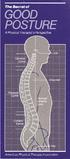 The Secret... T he American Physical Therapy Association would like to share a secret with you. It can help you do more with less effort breathe easier feel great. The secret is about good posture, which
Structure and Function of the Hip
 Structure and Function of the Hip Objectives Identify the bones and bony landmarks of the hip and pelvis Identify and describe the supporting structures of the hip joint Describe the kinematics of the
Spinal Exercise Program/Core Stabilization Program Adapted from The Spine in Sports: Robert G. Watkins
 Spinal Exercise Program/Core Stabilization Program Adapted from The Spine in Sports: Robert G. Watkins Below is a description of a Core Stability Program, designed to improve the strength and coordination
CHAPTER 3: BACK & ABDOMINAL STRETCHES. Standing Quad Stretch Athletic Edge - www.athleticedge.biz - (650) 815-6552
 CHAPTER : BACK & ABDOMINAL STRETCHES Standing Quad Stretch ) Stand and grasp right ankle with same hand, use a wall or chair to Lower maintain Back balance with left hand. Maintain an upright Stretches
PILATES Fatigue Posture and the Medical Technology Field
 PILATES Fatigue Posture and the Medical Technology Field Marybeth Kane May 2014 Course: 2014, Pacific Palisades, CA 1 ABSTRACT A medical laboratory scientist (MLS) (also referred to as a medical technologist
CORE STABILITY: PRIORITIES IN REHABILITATION OF THE ATHLETE REHABILITATION. www.sportex.net 15
 REHABILITATION CORE STABILITY: PRIORITIES IN REHABILITATION OF THE ATHLETE By Mark Comerford, MCSP The development of strength and stability training programmes for sport has been a priority in the attempt
Hip and Trunk Exercise Program
 Hip and Trunk Exercise Program Hip and Pelvis Exercise Program Gluteus Medius and Minimus (Hip Abductors) Page 2 Lateral Hip Rotators Page 6 Tensor Fascia Lata (TFL) and Illiotibial Band (ITB) Page 7 Lower
The Correlation between Hamstring Tightness and Low Back Pain in Seated Workers Ahmed Radwan PT, DPT, PhD Thomas A. Crist, PhD
 The Correlation between Hamstring Tightness and Low Back Pain in Seated Workers Ahmed Radwan PT, DPT, PhD Thomas A. Crist, PhD Ahmed Radwan, PT, DPT, Ph.D. Associate Professor Physical Therapy Program
International Standards for the Classification of Spinal Cord Injury Motor Exam Guide
 C5 Elbow Flexors Biceps Brachii, Brachialis Patient Position: The shoulder is in neutral rotation, neutral flexion/extension, and adducted. The elbow is fully extended, with the forearm in full supination.
Movement in the human body occurs at joint
 Biomechanics of The Spine Richard A. Banton, DPT, OCS, CMPT, ATC Movement in the human body occurs at joint surfaces; movement occurs with bones; movement of muscles moves the bones; coordinated movements
TSI Summit 2008: Session #606 The Mechanics of Low Back Pain and Corrective Solutions
 TSI Summit 2008: Session #606 The Mechanics of Low Back Pain and Corrective Solutions Eric Beard Senior Master Instructor National Academy of Sports Medicine [email protected] www.nasm.org Description
Injury Prevention for the Back and Neck
 Injury Prevention for the Back and Neck www.csmr.org We have created this brochure to provide you with information regarding: Common Causes of Back and Neck Injuries and Pain Tips for Avoiding Neck and
by Ellen Saltonstall and Dr. Loren Fishman
 10 Yoga Poses for Low Back Pain Prevention by Ellen Saltonstall and Dr. Loren Fishman Introduction This series of poses is designed to prevent future back pain and also to relieve back pain that you may
Flat foot and lower back pain
 Flat foot and lower back pain Dr James Tang, MBA, BDS, LDS RCS General Dental Practitioner, NASM Corrective Exercise Specialist with special interest in postural dysfunction & lower back problems, Level
NETWORK FITNESS FACTS THE HIP
 NETWORK FITNESS FACTS THE HIP The Hip Joint ANATOMY OF THE HIP The hip bones are divided into 5 areas, which are: Image: www.health.com/health/static/hw/media/medical/hw/ hwkb17_042.jpg The hip joint is
Anatomy and Pathomechanics of the Sacrum and Pelvis. Charles R. Thompson Head Athletic Trainer Princeton University
 Anatomy and Pathomechanics of the Sacrum and Pelvis Charles R. Thompson Head Athletic Trainer Princeton University Simplify Everything There are actually only three bones: Two innominates, one sacrum.
Breakout 2 - OMT for the Lumbar Spine and Sacrum Gretta A. Gross, DO
 Breakout 2 - OMT for the Lumbar Spine and Sacrum Gretta A. Gross, DO Osteopathic Diagnosis and Treatment of the Lumbar Spine and Sacrum Gretta A. Gross, DO, MMedEd, FACOFP DOME/PD Houston Healthcare Family
Manual Therapy. The effect of chronic low back pain on size and contraction of the lumbar multifidus muscle q
 Manual Therapy 14 (2009) 496 500 Contents lists available at ScienceDirect Manual Therapy journal homepage: www.elsevier.com/math Original Article The effect of chronic low back pain on size and contraction
Intervertebral Stiffness of the Spine Is Increased by Evoked Contraction of Transversus Abdominis and the Diaphragm: In Vivo Porcine Studies
 Intervertebral Stiffness of the Spine Is Increased by Evoked Contraction of Transversus Abdominis and the Diaphragm: In Vivo Porcine Studies SPINE Volume 28, Number 23, pp 2594 2601 2003, Lippincott Williams
LOW BACK PAIN EXAMINATION
 LOW BACK PAIN EXAMINATION John Petty, M.D. Medical Director Department of Physical Medicine & Rehabilitation Kettering Medical Center February 8, 2014 PRE-TEST QUESTION What part of the low back physical
How to Get and Keep a Healthy Back. Amy Eisenson, B.S. Exercise Physiologist
 How to Get and Keep a Healthy Back Amy Eisenson, B.S. Exercise Physiologist Lesson Objectives Statistics of Back Pain Anatomy of the Spine Causes of Back Pain Four Work Factors Core Muscles Connection
Movement Pa+ern Analysis and Training in Athletes 02/13/2016
 Objec:ves Movement Pa+ern Analysis and Training in Athletes Department of Physical Therapy and Human Movement Sciences Appreciate the importance of movement pa+ern analysis and training in treahng athletes
Hip Arthroscopy Post-operative Rehabilitation Protocol
 Hip Arthroscopy Post-operative Rehabilitation Protocol Introduction Since the early 20 th century, when hip arthroscopy was regarded as being almost impossible to undertake, the procedure has developed
Stretching the Major Muscle Groups of the Lower Limb
 2 Stretching the Major Muscle Groups of the Lower Limb In this chapter, we present appropriate stretching exercises for the major muscle groups of the lower limb. All four methods (3S, yoga, slow/static,
Coaching the Injury Prone Athlete. www.englandathletics.org www.englandathletics.org/east
 Coaching the Injury Prone Athlete Injury! The Causes? Frequently the consequence of poor physical preparation ( accidents excluded) Exceeding training loads the athlete can handle at that time Volume,
Addressing Pelvic Rotation
 1 of 5 4/20/2008 10:31 AM http://www.strengthcoach.com Addressing Pelvic Rotation Aaron Brooks of Perfect Postures When trying to address your athlete's or client's limitations due to pain or joint restriction,
FINDING NEUTRAL SPINE POSITION
 FINDING NEUTRAL SPINE POSITION It seems everywhere you look people are talking about the benefits of being able to achieve and maintain a neutral spinal alignment. Most exercise regimes and especially
Understand Your Back & Pelvic Girdle Pain
 Understand Your Back & Pelvic Girdle Pain Written by Diane Lee Physiotherapist Updated January 2011! Introduction Back pain happens to everyone and, for some, is a life-changing occurrence. The causes
HYPERLORDOSIS & PILATES TREATMENT
 HYPERLORDOSIS & PILATES TREATMENT Grace Tiangco 3/18/15 2012-2013 Abstract Sacramento/Mountain View Lordosis or Hyperlordosis is defined as a postural type in which the natural curves of the spine are
Lumbar/Core Strength and Stability Exercises
 Athletic Medicine Lumbar/Core Strength and Stability Exercises Introduction Low back pain can be the result of many different things. Pain can be triggered by some combination of overuse, muscle strain,
The Pilates Studio of Los Angeles / PilatesCertificationOnline.com
 Anatomy Review Part I Anatomical Terminology and Review Questions (through pg. 80) Define the following: 1. Sagittal Plane 2. Frontal or Coronal Plane 3. Horizontal Plane 4. Superior 5. Inferior 6. Anterior
What is the Hip? Femur pull-back prone stabilize pelvis and pull the femur up at the top
 Spinning the Hip Dr. George Russell 1133 Broadway, #1125 New York, NY 10010 [email protected] georgerusselldc.com Copyright George Russell 2014 What is the Hip? Front bone of the pelvis Anterior
Rehabilitation after lumbar discectomy, microdiscectomy and decompressive laminectomy. Information for patients
 Rehabilitation after lumbar discectomy, microdiscectomy and decompressive laminectomy Information for patients You have just had surgery on your lumbar spine. Below are some common questions with answers,
Hip Rehab: Things to Consider. Sue Torrence, MS, PT, ATC Lead Physical Therapist
 Hip Rehab: Things to Consider Sue Torrence, MS, PT, ATC Lead Physical Therapist Where to Start? Objectives: Discuss injuries related to hip dysfunction Review commonly used functional tests for posteriolateral
Decrease in Trunk Muscular Response to Perturbation With Preactivation of Lumbar Spinal Musculature
 Decrease in Trunk Muscular Response to Perturbation With Preactivation of Lumbar Spinal Musculature SPINE Volume 25, Number 15, pp 1957 1964 2000, Lippincott Williams & Wilkins, Inc. Ian A.F. Stokes, PhD,*
What is Pilates? Pilates for Horses?
 What is Pilates? Pilates is a conditioning system that increases core stability, strength and body awareness; redresses imbalances, and re aligns the body from the inside out. It can improve posture, achieve
Self-mobilization methods
 Self-mobilization methods 5 Muscle energy techniques, as outlined in previous chapters, provide us with an excellent series of methods for relaxation and stretching of specific tight, shortened, contracted
A Thesis. Entitled. The Effects of Core Stability Training on Star Excursion Balance. Test and Global Core Muscular Endurance.
 A Thesis Entitled The Effects of Core Stability Training on Star Excursion Balance Test and Global Core Muscular Endurance By Alex McCaskey Submitted to the Graduate faculty as partial fulfillment of the
Clinical Biomechanics
 Clinical Biomechanics 25 (2010) 859 866 Contents lists available at ScienceDirect Clinical Biomechanics journal homepage: www.elsevier.com/locate/clinbiomech Intra-abdominal pressure and abdominal wall
Mike s Top Ten Tips for Reducing Back Pain
 Mike s Top Ten Tips for Reducing Back Pain The following article explains ways of preventing, reducing or eliminating back pain. I have found them to be very useful to myself, my clients and my patients.
Ron Schenk PT, PhD 1
 Ron Schenk PT, PhD 1 Objectives Describe the anatomy of the neck (cervical spine) and low back (lumbar spine) Describe the risk factors associated with neck and low back injury Describe physical therapy
Core training protocol for aspecific chronic. low back pain
 Core training protocol for aspecific chronic low back pain Protocol for core training for a-specific chronic low back pain. Introduction This protocol was made on request by the physiotherapy and orthopaedic
THE INFLUENCE OF WALL PAINTING ON SHOULDER MUSCLE ACTIVITY AND HORIZONTAL PUSH FORCE
 THE INFLUENCE OF WALL PAINTING ON SHOULDER MUSCLE ACTIVITY AND HORIZONTAL PUSH FORCE Background: Patricia M. Rosati and Clark R. Dickerson Department of Kinesiology, University of Waterloo, Waterloo, ON
Rehabilitation after ACL Reconstruction: From the OR to the Playing Field. Mark V. Paterno PT, PhD, MBA, SCS, ATC
 Objectives Rehabilitation after ACL Reconstruction: From the OR to the Playing Field Mark V. Paterno PT, PhD, MBA, SCS, ATC Coordinator of Orthopaedic and Sports Physical Therapy Cincinnati Children s
Stress Urinary Incontinence & The Pelvis
 Stress Urinary Incontinence & The Pelvis Updated January 2011 by Diane Lee Introduction The research in the last decade has led to a clearer understanding of how load is transferred through the low back
Low Back: Sacroiliac Dysfunction. Presented by Dr. Ben Benjamin
 Debilitating Orthopedic Injury Sampler #1 Low Back: Sacroiliac Dysfunction Presented by Dr. Ben Benjamin 1 Instructor: Ben Benjamin, Ph.D. 2 Instructor: Ben Benjamin, Ph.D. [email protected] 3 1 Thank
Evaluation, Treatment, and Exercise Rx for Muscle Imbalance in the Lower Extremities April 5, 2014 AOCPMR Midyear Meetingr Rebecca Fishman, D.O.
 Evaluation, Treatment, and Exercise Rx for Muscle Imbalance in the Lower Extremities April 5, 2014 AOCPMR Midyear Meetingr Rebecca Fishman, D.O. Biomechanics of the Lumbar Spine and Lower Extremities Lower
Riding position and lumbar spine angle in recreational cyclists: A pilot study
 Original Research Riding position and lumbar spine angle in recreational cyclists: A pilot study SAMANTHA J. SCHULZ* and SUSAN J. GORDON School of Public Health, Tropical Medicine and Rehabilitation Sciences,
Classification of Sagittal Thoraco-Lumbo-Pelvic Alignment of the Adolescent Spine in Standing and Its Relationship to Low Back Pain
 Classification of Sagittal Thoraco-Lumbo-Pelvic Alignment of the Adolescent Spine in Standing and Its Relationship to Low Back Pain SPINE Volume 33, Number 19, pp 2101 2107 2008, Lippincott Williams &
Correlation Between the MRI Changes in the Lumbar Multifidus Muscles and Leg Pain
 Clinical Radiology (2000) 55, 145 149 doi:10.1053/crad.1999.0340, available online at http://www.idealibrary.com on Correlation Between the MRI Changes in the Lumbar Multifidus Muscles and Leg Pain D.
No Equipment Agility/Core/Strength Program for Full Body No Equip Trainer: Rick Coe
 No Equipment Agility/Core/Strength Program for Full Body No Equip Trainer: Rick Coe Introduction Program designed to be performed in a circuit. Perform exercises in sequence without rest 2-3 times. Increase
Pilates for Kyphosis A BASI Pilates program designed to help correct thoracic kyphosis
 Pilates for Kyphosis A BASI Pilates program designed to help correct thoracic kyphosis 1 Lucy Penrose 19/01/2014 Wimbledon UK, April 2013 Abstract Kyphosis refers to an exaggerated curve in the thoracic
2002 Functional Design Systems
 1. Proprioceptive sensitivity has to do with not being too sensitive but being sensitive enough. 2. The hammies have a lot to do with all three planes of function. 3. In upright function, knee flexion
Flexibility Assessment and Improvement Compiled and Adapted by Josh Thompson
 Flexibility Assessment and Improvement Compiled and Adapted by Josh Thompson Muscles must have a full and normal range of motion in order for joints and skeletal structure to function properly. Flexibility
Treatment of Sacroiliac Joint Dysfunction. Movement of sacrum on ilium
 Treatment of Sacroiliac Joint Dysfunction Movement of sacrum on ilium Sacroiliac Joint Axes Superior Middle Inferior Right Oblique Left Oblique Sacroiliac Joint Movement Nutation: : Anterior nutation or
Fact sheet Exercises for older adults undergoing rehabilitation
 Fact sheet Exercises for older adults undergoing rehabilitation Flexibility refers to the amount of movement possible around a joint and is necessary for normal activities of daily living such as stretching,
Abdominal muscle recruitment during a range ofvoluntary exercises
 Manual Therapy 10 (2005) 144 153 Original article Abdominal muscle recruitment during a range ofvoluntary exercises Donna M. Urquhart a,b,, Paul W. Hodges c,d, Trevor J. Allen b, Ian H. Story b a Department
are you reaching your full potential...
 T h e r e s n o s u c h t h i n g a s b a d e x e r c i s e - j u s t e x e r c i s e d o n e b a d l y FIT for sport are you reaching your full potential... These tests are a series of exercises designed
Selkäkipu ajoissa hallintaan kliiniset testit terapian perustana
 Selkäkipu ajoissa hallintaan kliiniset testit terapian perustana Markku Paatelma Auron OMT Keskus Helsinki, Finland What is a clinical reasoning? With the expanding roles of physiotherapists and greater
Human Anatomy & Physiology
 PowerPoint Lecture Slides prepared by Barbara Heard, Atlantic Cape Community College Ninth Edition Human Anatomy & Physiology C H A P T E R 7 The Skeleton: Part B Annie Leibovitz/Contact Press Images Vertebral
Core stability training program
 Core stability training program The structure of the lumbar region is inheriently unstable. In practical term this means the lumbar spine relies upon sufficent support from the muscles that actively suport
Safe Lifting/Back Safety Training. Presented by Rita Gagnon Occupational Health Outreach Coordinator Benefis Health Systems 406-731-8328
 Safe Lifting/Back Safety Training Presented by Rita Gagnon Occupational Health Outreach Coordinator Benefis Health Systems 406-731-8328 Risk Factors Involved with Manual Handling Tasks: Bending at Trunk
Functional load abdominal training: part 2
 Masterclass Functional load abdominal training: part 2 C. M. Norris This article discusses current abdominal training by analysing the sit-up and leg-raise actions, and body segment alignment is emphasized
Clinical Movement Analysis to Identify Muscle Imbalances and Guide Exercise
 CLINICAL EVALUATION & TESTING Darin A. Padua, PhD, ATC, Column Editor Clinical Movement Analysis to Identify Muscle Imbalances and Guide Exercise Christopher J. Hirth, MS, ATC, PT, PES University of rth
Core Training: Stabilizing the Confusion Mark D.Faries and Mike Greenwood, PhD, CSCS,* D; FNSCA Baylor University,Waco,Texas
 National Strength and Conditioning Association Volume 29, Number 2, pages 10 25 Keywords: core; core musculature; core strength; core stability; lumbo-pelvic-hip complex; spinal stability; functional training;
Chapter 12 The Trunk and Spinal Column
 Chapter 12 The Trunk and Spinal Column Manual of Structural Kinesiology R.T. Floyd, EdD, ATC, CSCS Vertebral Abdominal 24 31 most column complex some intricate & complex articulating vertebrae do pairs
I tro r duct c io i n t o Exercise Technique
 Introduction to Exercise Technique Is Exercise Technique Important? It is the actual technique used for a resistance training exercise that determines; The precise movement pattern the body will be attempting
Real Time Ultrasound (RTUS) imaging of the stabilizing muscles of the spine and torso is now available at Marda Loop Sport Physiotherapy.
 Real Time Ultrasound (RTUS) imaging of the stabilizing muscles of the spine and torso is now available at Marda Loop Sport Physiotherapy. Stabilizing Muscles of the Spine & Torso Core muscles that are
Body Mechanics. Psoas Major Function
 Expert Content ody Mechanics by Joseph E. Muscolino illustrations by Giovanni Rimasti Perhaps no muscles are more misunderstood and have more dysfunction attributed to them than the psoas muscles. Looking
Long-Term Effects of Specific Stabilizing Exercises for First-Episode Low Back Pain
 Long-Term Effects of Specific Stabilizing Exercises for First-Episode Low Back Pain SPINE Volume 26, Number 11, pp E243 E248 2001, Lippincott Williams & Wilkins, Inc. Julie A. Hides, PhD, MPhtySt, BPhty,*
Cervical Spondylotic Myelopathy Associated with Kyphosis or Sagittal Sigmoid Alignment: Outcome after Anterior or Posterior Decompression
 Cervical Spondylotic Myelopathy Associated with Kyphosis or Sagittal Sigmoid Alignment: Outcome after Anterior or Posterior Decompression 1 Journal of Neurosurgery: Spine November 2009, Volume 11, pp.