
Functional load abdominal training: part 2
|
|
|
- Jeffrey Woods
- 10 years ago
- Views:
Transcription
1 Masterclass Functional load abdominal training: part 2 C. M. Norris This article discusses current abdominal training by analysing the sit-up and leg-raise actions, and body segment alignment is emphasized with reference to the lumbar spine. A new approach to abdominal training based on the principles of spinal stabilization is proposed, consisting of three overlapping stages. In stage one, the stabilizing function of the deep abdominal muscles is reeducated, and several practical suggestions are made to assist this process. In stage two, static stability is built emphasizing isometric control of the lumbar spine neutral position. In stage three, apparatus is introduced for traditional exercises that are appropriate to functional training of the trunk. *c 2001 Harcourt Publishers Ltd Christopher Norris, MSc MCSP Correspondence to: Christopher Norris, 1 Barkers Lane, SALE, Cheshire, M33 6RP, UK. Tel.: 44 (0) ; cnorris500@aol. COMs Analysis of current abdominal exercise technique To be able to develop more appropriate exercises for the trunk it is essential to rstly understand what the traditional exercises for this region actually achieve. To this end the two major categories of abdominal exercises, the `sit-up' and `leg-raise' will be brie y analysed (Norris 1994). The sit-up The sit-up is essentially an action where the subject moves from a supine lying position to a long-sitting position by performing hip exion (trunk moving on a xed leg), usually with trunk exion. There are several modi cations of this action, which will be dealt with below. In a classic sit-up, as soon as the head lifts, activity is seen in the rectus abdominis (Walters & Partridge 1957), and as a consequence the rib cage is depressed anteriorly. The rectus is acting here to stabilize the ribcage and hold it down against the pull of the neck exors attempting to lift the head. The initial period of trunk exion emphasizes the supra-umbilical portion of the rectus, the infra-umbilical portion and the internal oblique contracting later in the movement (Kendall & McCreary 1993). As the internal oblique contracts, it pulls on the lower ribs, causing the ribs to are out and so increasing the infrasternal angle. One of the problems poorly toned individuals face is `bow stringing' of the abdominals, which is often seen at the initiation of the sit-up action. For rectus abdominis to pull at, the deep abdominals (transversus abdominis and internal oblique) must be able to pull on the rectus sheath to hold the abdominal wall down. This movement demands a coordinated action of both the super cial and deep abdominals, which is often lost. Where an imbalance exists with the deep abdominal muscles poorly recruited and the rectus abdominis lengthened, the abdominal wall will be seen to dome and the pelvis to anteriorly tilt. As a consequence the athlete may lift the trunk with the lumbar spine extended or at rather than exed. Fixation of the pelvis is provided by the hip exors, especially iliacus through its attachment to the pelvic rim. The strong pull of hip exors is partially counteracted by the pull of the lateral bres of external oblique and the infraumbilical portion of the rectus abdominis which tend to tilt the pelvic posteriorly. Action of the external oblique, if powerful enough, will compress the ribs and reduce the infrasternal angle once more (Kendall et al. 1993). In a poorly conditioned subject exercising at speed, the initial movement in a sit-up may be a *c 2001 Harcourt Publishers Ltd Physical Therapy In Sport (2001) 2, 149± doi: /ptsp , available online at on

2 Physical Therapy in Sport momentary posterior tilting of the pelvis by action of the hip extensors. This will pre-stretch the hip exors, giving them a mechanical advantage before hip exion occurs (Ricci et al. 1981). Effects of foot xation If the sit-up action is attempted from the supine lying position without allowing trunk exion, there is a tendency for the legs to lift up from the supporting surface. This occurs because the legs constitute roughly one-third of the bodyweight and the trunk two-thirds. As the abdominal muscles ex the spine, the centre of gravity of the upper body is moved caudally. Movement of the centre of gravity in this fashion reduces the lever arm of the trunk enabling the subject to sit up without the legs lifting (Fig. 1). sit-up is performed from the crook lying starting position, with the knees exed to 908 and hips exed to 458. The action is one of the trunk exion followed by, or performed with, hip exion. The trunk curl is performed from the same starting position, but no hip exion occurs, the lumbar spine remaining in contact with the supporting surface. The bench-curl (`crunch' exercise) is performed from a starting position of 908 hip exion and 908 knee exion, the shin being supported on a bench or chair. Bending the knees and hips to alter the starting position of the sit-up will affect both the passive and the active actions of the hip exors, and the biomechanics of the lumbar spine. In supine lying, the iliopsoas is on stretch, and aligned with the horizontal (Fig. 2). In this position, vertebral compression is at its greatest as the muscle contracts, and trunk lifting is at a mechanical disadvantage. The ratio of lifting to compression is, therefore, approximately 1 : 10 (Watson 1983). As the knees are exed, the iliopsoas is pulled more vertically and so the ratio of trunk lifting to vertebral compression reduced to 2 : 5 in crook lying and 1 : 1 in bench lying. Fig. 1 Movement of the centre of gravity of the upper body during a sit-up exercise. In cases where the abdominal muscles are weak and lengthened, maximum spinal exion will not occur because the muscles are unable to pull the lumbar spine into full inner range. In this case the lever arm of the trunk remains long and the legs are seen to lift. The exact point at which this occurs in the movement will depend on a subject's bodyweight and stature. If the feet are xed, the hip exors can now pull powerfully without causing the legs to lift. In addition, the act of foot xation itself may facilitate the iliopsoas (Janda & Schmid 1980). Foot xation requires the subject to pull against the xation point by active dorsi exion. This process stimulates the gait pattern at heel contact increasing activity in the tibialis anterior, quadriceps and iliopsoas, a pattern known as exor synergy (Atkinson 1986). Modi cations of the sit-up include the bent knee sit-up and the trunk curl. The bent knee Pull of psoas Trunk lifting 1:10 Vertical 3.3:3.3 compression 2:5 Fig. 2 Ratio of trunk lifting to vertebral compression forces due to the pull of iliopsoas in a sit-up. With 458 hip exion, tension development in the iliopsoas has been shown to be 70±80% of its maximum, while with the hips and knees exed to 908 this gure reduces to between 40% and 50% (Johnson & Reid 1991). However, passive tension developed by the iliopsoas due to elastic recoil must also be considered. If the hips are exed, the iliopsoas will not be fully stretched, and will not be able to 150 Physical Therapy in Sport (2001) 2, 149±156 *c 2001 Harcourt Publishers Ltd

3 Functional load abdominal training: part 2 passively limit the posterior tilt of the pelvis. Instead, to x the pelvis and provide a stable base for the abdominals to pull on, the hip exors will contract earlier in the sit-up action. This contraction although occurring earlier, will be of reduced intensity (Walters & Partridge 1957) due to the length±tension relationship of the muscle. With the legs straight in the traditional sit-up position, the iliopsoas is stretched, and can passively limit posterior tilting of the pelvis. However, in this stretched position, the iliopsoas is capable of exerting greater force during hip exion. If the abdominal muscles are too weak to maintain the position of the pelvis to tilt anteriorly, lengthening the abdominals, and hyperextending the lumbar spine. This type of action is, therefore, unsuitable for postural re-education if the aim is to shorten posturally lengthened abdominal muscles. Straight leg raising The bilateral straight leg raise has been shown to create only slight activity in the upper rectus, although the lower rectus contributes a greater proportion of the total abdominal work than with the sit-up (Lipetz & Gutin 1970). The rectus works isometrically to x the pelvis against the strong pull of iliopsoas (Silvermetz 1990). The force of contraction of the iliopsoas is maximum when the lever arm of the leg is greatest, near the horizontal, and reduces as the leg is lifted towards the vertical. In subjects with weaker abdominals, the pelvis will tilt and the lumbar spine hyperextend. This forced hyperextension will dramatically increase stress on the facet joints in the lumbar spine. The movement is likely to be limited by impaction of the inferior articular processes on the laminae of the vertebrae below, or in some cases by contact between the spinous processes (Twomey & Taylor 1987). Where this action occurs rapidly, damage may result to the facet joint structures. Once contact has occurred between the facet and lamina, further loading will cause axial rotation of the superior vertebrae (Yang & King 1984). The superior vertebra pivots, causing the inferior articular process to move backwards overstretching the joint capsule. Abdominal training based on spinal stabilization principles Because one of the prime functions of the trunk is stability, the Functional Load Abdominal Training (FLAT) programme follows an exercise progression based on spinal stabilization principles (Norris 1995). Initially the stabilizing function of the deep abdominal muscles is reeducated. Once this has been achieved, the endurance of these muscles is built up and static stability is enhanced. Only when these two aims have been achieved are exercises used to enhance the performance of the trunk mobilisor muscles and complex multijoint movements are begun. The rst action to be mastered in the back stability process is abdominal hollowing, a technique which has been shown to be especially useful in the early stages of stability control (Richardson et al. 1992). This movement emphasizes the internal oblique and transversus abdominis muscle (Lacote et al. 1987) while reducing the dominance of the upper rectus (O'Sullivan et al. 1998). Muscle re-education of this type may be achieved in a number of starting positions, with four point kneeling and standing (wall support) being the two most effective positions. Stability muscles have been described as better suited to endurance ( postural holding) and better recruited at low resistance levels (Norris 1998). In the clinic, it is often found that subjects begin with little control over the intensity of contraction which these muscles produce. Often, the contraction begins minimally and then builds to high intensities (60±70% maximum voluntary contraction [MVC]). This is acceptable during the early stages of learning as it enables the subject to `feel the muscle working'. However, accurate control must be gained, and in all hollowing exercises the subject should be instructed to master changing the intensity of the muscle contraction. This is achieved by asking for a `maximal contraction' and then relaxing by half, and half again. Once the minimal contraction is achieved, the intensity is then built up again in steps to reach the maximum. Only when hollowing can be controlled with minimal muscle intensity over a period of time (10 repetitions each of 30±40% MVC) can exercises be progressed. The position in which the *c 2001 Harcourt Publishers Ltd Physical Therapy In Sport (2001) 2, 149±

4 Physical Therapy in Sport Box 1 Neutral position of the lumbar spine ± a working de nition The neutral position of the lumbar spine is midway between end range exion and end range extension. In a neutral position the discs and facet joints are minimally loaded and the soft tissues surrounding the lumbar spine reach a state of elastic equilibrium. In the normal (non-pathological) subject, the neutral position will correspond to lumbar alignment in an optimal posture. In subjects with a sub-optimal posture, pelvic tilt may be increased or reduced giving corresponding changes in the depth of the lumbar lordosis. In either case, the neutral position remains mid-way between end range exion and end range extension. However, in such cases of postural malalignment, part of the treatment aim must be to restore optimal posture by re-balancing the length of the surrounding soft tissue elements. Neutral position may be found either passively (therapist moving the subject's pelvis) or actively (subject moving his/her own pelvis through muscle action). movements are performed is important. The neutral position of the spine (Box 1) should be used whenever possible, and initially the subject will need to be positioned correctly by the therapist. As the transversus has horizontally aligned bres, four point kneeling allows the abdominal muscles to sag, giving stretch facilitation (Fig. 3). The subject is positioned with their lumbar spine in a neutral position, and the head looking at the oor, between the hands rather than forwards. Head position should re ect optimal alignment with the ear horizontally aligned to the shoulder joint. The hip should be directly above the knee, and the shoulder directly above the wrist. The hands and knees are shoulder width apart. Fig. 3 Abdominal hollowing in four point kneeling. The subject focuses their attention on their umbilicus and is instructed to pull the umbilicus `in and up' while breathing normally. This action has been shown to dissociate activity in the internal obliques and transversus from that of rectus abdominis (Richardson et al. 1992). Dissociation itself makes the exercise useful for re-educating the stabilizing function of the abdominals where rectus abdominis has become the dominant muscle of the abdominal group. To facilitate learning multisensory cueing is used (Miller & Medeiros 1987) to increase the sensory input to the subject. Auditory cues can be provided by the therapist speaking to the subject and giving feedback about performance. Visual cues are given by encouraging the subject to look at the muscles as they function, and by using a mirror placed on the oor/couch below the abdomen. Kinaesthetic cueing is accomplished by encouraging the subject to `feel' the particular action, for example asking them to `feel the stomach being pulled in'. Tactile cues are provided by the therapist and/or belt touching the subject's abdomen. The abdominal region below the umbilicus is palpated. The therapist places the heel of their hand over the patient's anterior superior iliac spine and points their ngers towards the patient's pubic bone. The therapist's nger tips will then fall over the retro-aponeurotic triangle (Walters & Partridge 1957). The muscles are sheet like and will atten rather than bulge when they contract. To facilitate the contraction the therapist instructs the subject to `stop me pushing in' as they palpate the abdominal wall. A second method of facilitation is to instruct the subject to cough (visceral compression) and hold the muscle contraction they feel beneath the therapists palpating ngers. This `cough and hold' procedure is also useful when used in conjunction with surface EMG. As the muscle contraction shows on the EMG unit, the subject is encouraged to maintain the contraction while breathing normally, The contraction time is built up to a single 30 seconds hold or 10 repetitions of 10 seconds holding. The subject should be encouraged to reduce the contraction 152 Physical Therapy in Sport (2001) 2, 149±156 *c 2001 Harcourt Publishers Ltd

5 Functional load abdominal training: part 2 intensity of the muscle to the minimum required to maintain the hollow abdomen position. A webbing belt may be fastened around the abdomen below the umbilicus, with the muscles relaxed and sagging. The belt should be tight enough to touch the skin but not so tight as to pull the muscles in. The desired action is to hollow the abdomen and pull the muscles away from the belt, and then to relax them completely to ll the belt again. Two errors are common here: rstly, an inability to draw the muscles away from the belt; secondly, a contraction which is too strong and makes the abdominal wall rigid, seen as an inability to relax the muscles to ll the belt once more. With full muscle control both actions should be attainable. Once the contraction is achieved, the holding time is built up to 10±30 seconds while breathing normally. Visualization of correct exercise technique is used following demonstration by the therapist. Visualization or `mental practice' involves the subject relaxing, and `seeing' themselves performing the exercise in their imagination. Visualization of this type has been shown to bene t both motor skill acquisition (Fransler et al. 1985) and strength development (Cornwall et al. 1991). Some subjects nd four point kneeling dif cult to control and tend to round their spine as they attempt abdominal hollowing. Where this is the case, wall support standing is a more appropriate starting position (Fig. 4). The subject stands with their feet 6 inches from a wall and their back at onto the wall surface. A neutral spinal position should be maintained. In an obese or poorly toned subject, the weight of the digestive organs will pull the abdominal wall out and down (visceral ptosis). Again a belt is used and positioned below the umbilicus and the action is to contract the lateral abdominals and to pull the abdominal wall `in and up' trying to create a space between the abdomen and the belt. Since lateral abdominal action and pelvic oor action are linked through motor programming as part of the intra-abdominal pressure mechanism, pelvic oor contractions are also useful to aid learning of abdominal hollowing. The instruction is to pull the pelvic oor in as though trying to `stop yourself passing water' or `gripping'. In men Fig. 4 Abdominal hollowing in wall support standing. the action of `lifting the penis' is also useful imagery. The abdominal hollowing action must be differentiated from pelvic tilting, and care should be taken to ensure that the subject does not atten their back against the wall indicating posterior-pelvic tilting through the action of the rectus abdominis. Once the abdominal hollowing action has been performed correctly to repetition, the subject should move forward from the wall and repeat the action without wall support. No spinal or pelvic movement should occur. Building static stability The crook lying position is used as the starting position for isolated limb movements to build static stability. The neutral position of the lumbar spine is found and abdominal hollowing is performed to stabilize the spine. One leg is then slowly straightened keeping the heel resting on the ground to perform a heel slide action (Fig. 5). This movement is made easier if the heel is on a slippery surface (a cloth if on a polished oor or a piece of shiny paper if on a carpet). As the leg is straightened, abdominal hollowing must be continued and stability maintained. The moment the pelvis anteriorly tilts and the lordosis increases, the movement must stop and the leg be drawn back into exion once more. The exercise is progressed by using full limb weight, and *c 2001 Harcourt Publishers Ltd Physical Therapy In Sport (2001) 2, 149±

6 Physical Therapy in Sport Box 2 Exercises to strengthen secondary stabilizing muscles In each of the following exercise examples the movement is slow and controlled. At the mid-point of the action the position is held and the weight slowly lowered back to its starting position. The emphasis is on both strength and endurance. Perform each exercise for 8±12 repetitions taking a full 4±5 seconds to complete the full movement. Medium (not heavy) poundages are used. Hip Hinge (Gluteals and erector spinae) The subject stands with the knees slightly bent to relax the hamstrings and allow free pelvic tilting. The action is to angle the trunk forward by moving the pelvis on the xed hip, keeping the spine straight. The trunk moves to 458 and then returns to the upright position. Lateral pulldown (lattisimus dorsi) The subject sits beneath a high pulley machine and grasps a wide bar. The action is to pull down until the bar rests either across the shoulders or at the top of sternum. Spinal extension (erector spinae and gluteals) The subject rests prone on an extension frame with the pelvis supported on the low pad and the lower legs beneath xation rollers. The action is to straighten the body by moving the trunk on the xed leg until the body is horizontal. Horizontal side support (quadratus lumborum) The subject begins in side lying with the body resting on the underneath forearm. The action is to lift the pelvis until the body forms a straight line from foot to shoulder. Seated rowing (Shoulder retractors) The subject sits in front of a low pulley machine with the knees slightly exed to allow a neutral spine position to be maintained. The action is to pull the machine handle in towards the chest (lower sternum) while retracting and depressing the scapulae. performing leg lowering (Fig. 6). In supine lying, the hips are exed to 908 and the knees are relaxed. The neutral position of the lumbar spine is found and abdominal hollowing performed. The abdominal contraction is maintained as one hip is extended to allow the foot to contact the ground. Initially, the foot rests on the ground near the buttock and gradually the movement is performed with greater knee extension to allow the foot to touch the ground further from the buttock, increasing the limb leverage and, therefore, progressing the resistance. Eventually, single leg raises are performed with the other leg still supported in the crook lying position. The movement is performed with alternating legs initially allowing one leg to rest on the ground before the other leg is lifted. As a progression on this 154 Physical Therapy in Sport (2001) 2, 149±156 *c 2001 Harcourt Publishers Ltd

7 Functional load abdominal training: part 2 Fig. 5 Fig. 6 Heel slide action. Leg lowering action. action, the limbs are again moved alternately but the leg lifts after the other limb has moved from the ground. Finally, both legs may be lifted and lowered together initially with minimal limb leverage and nally with increasing leverage. Some authors recommend the use of bilateral straight-leg raises as a nal progression of this exercise, but the compression and shear forces imposed by the psoas muscle upon the lumbar spine make this unsuitable for use in rehabilitation following low-back pain. In the third stage of training, when muscle reeducation and static stability have been achieved, apparatus may be used. The aim is now to use appropriate traditional exercises to re-strengthen secondary stabilizing muscles and to build relevant mobilisors. The muscles which assist in stability, including the latissimus dorsi, erector spinae (Vleeming et al. 1990) quadratus lumborum (McGill et al. 1996) and the shoulder retractors (Janda 1994), are enhanced together with the gluteals as they provide power during lifting. Suitable exercises are shown in Box 2. References Atkinson H W 1986 Principles of treatment. In: Downie P A (ed) Cash's textbook of neurology for physiotherapists, 4th edn. Faber and Faber, London Cornwall M W, Melinda P B, Barry S 1991 Effect of mental practice on isometric muscular strength. Journal of Orthopaedic and Sports Physical Therapy 13: 5 Fransler C L, Poff C L, Shepard K F 1985 Effects of mental practice on balance in elderly women. Physical Therapy 65: 1332±1338 Janda V 1994 Muscles and motor control in cervicogenic disorders. Assessment and management. In: Grant R (ed) Physical therapy of the cervical and thoracic spine, 2nd edn. Churchill Livingstone, Edinburgh Janda V, Schmid H J A 1980 Muscles as a pathogenic factor in backpain. Proceedings of the International Federation of Orthopaedic Manipulative Therapists. 4th conference. New Zealand, pp 17±18 Johnson C, Reid J G 1991 Lumbar compressive and shear forces during various trunk curl-up exercises. Clinical Biomechanics 6: 97±104 Kendall F P, McCreary E K, Provance P G 1993 Muscles. Testing and function, 4th edn. Williams and Wilkins, Baltimore Lacote M, Chevalier A M, Miranda A, Bleton J P, Stevenin P 1987 Clinical evaluation of muscle function. Churchill Livingstone, Edinburgh Lipetz S, Gutin B 1970 An electromyographic study of four abdominal exercises. Medicine and Science in Sports and Exercise, 2: 35±38. Lippincot, Philadelphia McGill S M, Juker D, Kropf P 1996 Quantitative intramuscular myoelectric activity of quadratus lumborum during a wide variety of tasks. Clinical Biomechanics 11: 170±172 Miller M I, Medeiros J M 1987 Recruitment of internal oblique and transversus abdominis muscles during the eccentric phase of the curl-up exercise. Physical Therapy 67: 1213±1217 Norris C M 1994 Abdominal training. Dangers and exercise modi cations. Physiotherapy in Sport 19 (5): 10±14 Norris C M 1995 Spinal stabilization 5. An exercise programme to enhance lumbar stabilization. Physiotherapy 81 (3): 31±39. March Norris C M 1998 Sports Injuries. Diagnosis and Management, 2nd edn. Butterworth Heinemann, Oxford O'Sullivan P B, Twomey L, Allison G T 1998 Altered abdominal muscle recruitment in patients with chronic back pain following a speci c exercise intervention. Journal of Orthopaedic and Sports Physical Therapy 27 (2): 114±124 Ricci B, Marchetti M, Figura F 1981 Biomechanics of sit-up exercises. Medicine and Science in Sports and Exercise 13: 54±59 Richardson C, Jull G, Toppenburg R, Comerford M 1992 Techniques for active lumbar stabilization for spinal protection: a pilot study. Australian Journal of Physiotherapy 38 (2): 105±112 Silvermetz M A 1990 Pathokinesiology of supine double leg lifts as an abdominal strengthener and suggested alternative exercises. Athletic Training 25: 17±22 Twomey L T, Taylor J R 1987 Lumbar posture, movement and mechanics. In: Twomey L T (ed) Physical therapy of the low back. Churchill Livingstone, New York *c 2001 Harcourt Publishers Ltd Physical Therapy In Sport (2001) 2, 149±

8 Physical Therapy in Sport Vleeming A, Stoeckart R, Volkers A C W, Snijders C J 1990 Relation between form and function in the sacroiliac joint. Spine 15: 130±132 Walters C, Partridge M 1957 Electromyographic study of the differential abdominal muscles during exercise. American Journal of Physical Medicine 36: 259±268 Watson J 1983 An introduction to mechanics of human movement. MTP Press, Lancaster Yang K H, King A I 1984 Mechanism of facet load transmission as a hypothesis for low back pain. Spine 9: 557± Physical Therapy in Sport (2001) 2, 149±156 *c 2001 Harcourt Publishers Ltd

Spine Conditioning Program Purpose of Program
 Prepared for: Prepared by: OrthoInfo Purpose of Program After an injury or surgery, an exercise conditioning program will help you return to daily activities and enjoy a more active, healthy lifestyle.
by Ellen Saltonstall and Dr. Loren Fishman
 10 Yoga Poses for Low Back Pain Prevention by Ellen Saltonstall and Dr. Loren Fishman Introduction This series of poses is designed to prevent future back pain and also to relieve back pain that you may
SAMPLE WORKOUT Full Body
 SAMPLE WORKOUT Full Body Perform each exercise: 30 secs each x 2 rounds or 2-3 sets of 8-12 reps Monday & Wednesday or Tuesday & Thursday Standing Squat Muscles: glutes (butt), quadriceps (thigh) Stand
CHAPTER 3: BACK & ABDOMINAL STRETCHES. Standing Quad Stretch Athletic Edge - www.athleticedge.biz - (650) 815-6552
 CHAPTER : BACK & ABDOMINAL STRETCHES Standing Quad Stretch ) Stand and grasp right ankle with same hand, use a wall or chair to Lower maintain Back balance with left hand. Maintain an upright Stretches
HELPFUL HINTS FOR A HEALTHY BACK
 HELPFUL HINTS FOR A HEALTHY BACK 1. Standing and Walking For correct posture, balance your head above your shoulders, eyes straight ahead, everything else falls into place. Try to point toes straight ahead
Lumbar/Core Strength and Stability Exercises
 Athletic Medicine Lumbar/Core Strength and Stability Exercises Introduction Low back pain can be the result of many different things. Pain can be triggered by some combination of overuse, muscle strain,
Exercise 1: Knee to Chest. Exercise 2: Pelvic Tilt. Exercise 3: Hip Rolling. Starting Position: Lie on your back on a table or firm surface.
 Exercise 1: Knee to Chest Starting Position: Lie on your back on a table or firm surface. Action: Clasp your hands behind the thigh and pull it towards your chest. Keep the opposite leg flat on the surface
Basic techniques of pulmonary physical therapy (I) 100/04/24
 Basic techniques of pulmonary physical therapy (I) 100/04/24 Evaluation of breathing function Chart review History Chest X ray Blood test Observation/palpation Chest mobility Shape of chest wall Accessory
THE BIG SIX. Six Best Volleyball Strength Training Exercises. By Dennis Jackson, CSCS www.strength-and
 THE BIG SIX Six Best Volleyball Strength Training Exercises By Dennis Jackson, CSCS www.strength-and and-power power-for for-volleyball.com THE SQUAT What it is The two most common squatting exercises
McMaster Spikeyball Therapy Drills
 BODY BLOCKS In sequencing Breathing and Tempo Flexibility / Mobility and Proprioception (feel) Upper body segment Middle body segment Lower body segment Extension / Static Posture Office / Computer Travel
Sheet 1A. Treating short/tight muscles using MET. Pectorals. Upper trapezius. Levator scapula
 Sheet 1A Treating short/tight muscles using MET Pectorals Once daily lie at edge of bed holding a half-kilo can, arm out sideways. Raise arm and hold for 10 seconds, then allow arm to hang down, stretching
KNEE EXERCISE PROGRAM
 KNEE PROGRAM INTRODUCT ION Welcome to your knee exercise program. The exercises in the program are designed to improve your knee stability and strength of the muscles around your knee and hip. The strength
Spinal Exercise Program/Core Stabilization Program Adapted from The Spine in Sports: Robert G. Watkins
 Spinal Exercise Program/Core Stabilization Program Adapted from The Spine in Sports: Robert G. Watkins Below is a description of a Core Stability Program, designed to improve the strength and coordination
Knee Conditioning Program. Purpose of Program
 Prepared for: Prepared by: OrthoInfo Purpose of Program After an injury or surgery, an exercise conditioning program will help you return to daily activities and enjoy a more active, healthy lifestyle.
Fact sheet Exercises for older adults undergoing rehabilitation
 Fact sheet Exercises for older adults undergoing rehabilitation Flexibility refers to the amount of movement possible around a joint and is necessary for normal activities of daily living such as stretching,
Range of Motion. A guide for you after spinal cord injury. Spinal Cord Injury Rehabilitation Program
 Range of Motion A guide for you after spinal cord injury Spinal Cord Injury Rehabilitation Program This booklet has been written by the health care providers who provide care to people who have a spinal
Low Back Pain Exercises Interactive Video Series Transcript July 2013
 Introduction Low Back Pain Exercises Interactive Video Series Transcript July 2013 ** Note: If an exercise causes an increase in your pain, stop the exercise.** [Music introduction; Dr. John Sheehan onscreen]
Psoas Syndrome. The pain is worse from continued standing and from twisting at the waist without moving the feet.
 Psoas Syndrome The iliopsoas muscle is a major body mover but seldom considered as a source of pain. Chronic lower back pain involving the hips, legs, or thoracic regions can often be traced to an iliopsoas
Exercises for Low Back Injury Prevention
 DIVISION OF AGRICULTURE RESEARCH & EXTENSION University of Arkansas System Family and Consumer Sciences Increasing Physical Activity as We Age Exercises for Low Back Injury Prevention FSFCS38 Lisa Washburn,
Stretching in the Office
 Stretching in the Office Legs: Quads, Hamstrings, IT band, Hip flexors, Gluts, Calves Quads: Standing @ desk maintaining upright posture, grab one leg @ a time by foot or ankle and bring it towards backside
Today s session. Common Problems in Rehab. www.physiofitness.com.au/filex.htm LOWER BODY REHAB ESSENTIALS TIM KEELEY FILEX 2012
 Tim Keeley B.Phty, Cred.MDT, APA Principal Physiotherapist physiofitness.com.au facebook.com/physiofitness Today s session Essential list for the lower body Rehab starting point Focussing on activation,
stretches and exercises
 stretches and exercises The enclosed sheets contain stretches and exercises which can be used to delay and minimise the development of contractures and deformities occurring in children with Duchenne muscular
try Elise s toning exercise plan
 try Elise s toning exercise plan Whether you want to start things off slow and gradually build up your fi tness, or begin with a challenge, Elise s toning exercise programme is designed for all levels.
Info. from the nurses of the Medical Service. LOWER BACK PAIN Exercise guide
 Info. from the nurses of the Medical Service LOWER BACK PAIN Exercise guide GS/ME 03/2009 EXERCISE GUIDE One of the core messages for people suffering with lower back pain is to REMAIN ACTIVE. This leaflet
SHOULDER PULL DOWNS. To learn efficient use of the shoulder blades and arms while maintaining a neutral spine position.
 SHOULDER INTRODUCT ION Welcome to your shoulder exercise program The exercises in the program are designed to improve your shoulder mobility, posture and the control of the muscles in your neck and shoulder
COMMON OVERUSE INJURIES ATTRIBUTED TO CYCLING, AND WAYS TO MINIMIZE THESE INJURIES
 COMMON OVERUSE INJURIES ATTRIBUTED TO CYCLING, AND WAYS TO MINIMIZE THESE INJURIES Listed are a few of the most common overuse injuries associated with cycling long distances. 1. Cervical and upper back
Injury Prevention for the Back and Neck
 Injury Prevention for the Back and Neck www.csmr.org We have created this brochure to provide you with information regarding: Common Causes of Back and Neck Injuries and Pain Tips for Avoiding Neck and
Exercises for the Hip
 Exercises for the Hip Gluteal Sets: Lie on your back, tighten buttocks and hold for 3-5 seconds. Repeat 20 times. Supine Hip ER/IR: Lie on your back with legs straight. Gently rotate knees out and in limited
Shoulders (free weights)
 Dumbbell Shoulder Raise Dumbbell Shoulder Raise 1) Lie back onto an incline bench (45 or less) with a DB in each hand. (You may rest each DB on the corresponding thigh.) 2) Start position: Bring the DB
Don t. Hamstrings. Calf Muscles. both legs 2-3 times. stretch is felt in the back of the calf. Repeat with both legs 2-3 times.
 Remember to: Warm-up your muscles first before stretching (e.g. stretch after walking). Stretch until you feel mild discomfort, not pain. Never bounce or force a stretch. Hold the stretch for 10-30 seconds
Low Back Pain: Exercises
 Low Back Pain: Exercises Your Kaiser Permanente Care Instructions Here are some examples of typical rehabilitation exercises for your condition. Start each exercise slowly. Ease off the exercise if you
Cardiac Rehab Program: Stretching Exercises
 Cardiac Rehab Program: Stretching Exercises Walk around the room, step side to side, ride a bike or walk on a treadmill for at least 5 minutes to warm up before doing these stretches. Stretch warm muscles
ROTATOR CUFF HOME EXERCISE PROGRAM
 ROTATOR CUFF HOME EXERCISE PROGRAM Contact us! Vanderbilt Sports Medicine Medical Center East, South Tower, Suite 3200 1215 21st Avenue South Nashville, TN 37232-8828 For more information on this and other
Lower Body Exercise One: Glute Bridge
 Lower Body Exercise One: Glute Bridge Lying on your back hands by your side, head on the floor. Position your feet shoulder width apart close to your glutes, feet facing forwards. Place a theraband/mini
How To Stretch Your Body
 Exercise Module A New Leaf Choices for Healthy Living University of North Carolina at Chapel Hill 2007 Center for Health Promotion and Disease Prevention Physical Activity Exercises for Keeping Active
PILATES Fatigue Posture and the Medical Technology Field
 PILATES Fatigue Posture and the Medical Technology Field Marybeth Kane May 2014 Course: 2014, Pacific Palisades, CA 1 ABSTRACT A medical laboratory scientist (MLS) (also referred to as a medical technologist
CORRECTIVE CHIROPRACTIC EXERCISES
 CORRECTIVE CHIROPRACTIC EXERCISES J O W E T T & M O U L T O N C h i r o p r a c t o r s introduction This booklet, presented by Jowett and Moulton Chiropractors, is designed to provide you with a general
Have a ball SWISS BALL EXERCISES SWISS BALL TRAINING
 Have a ball SWISS BALL EXERCISES SWISS BALL TRAINING 2 Swiss Ball training is an excellent way to build 'core body strength' and have some fun at the same time. Training on the Ball forces you to use muscles
Operating Instructions
 Operating Instructions Table of Contents IMPORTANT INFORMATION 1-2 1 The backrack TM 3-6 Introduction 3 What does it do? 4 How do I use it? 5 How often should I use it? 6 2 Getting On 7-10 3 Basic Exercises
EGOSCUE CLINIC PAIN/POSTURE STRETCHES 1. Standing Arm Circles: Helps Restore Upper Body Strength
 EGOSCUE CLINIC PAIN/POSTURE STRETCHES 1. Standing Arm Circles: Helps Restore Upper Body Strength Two sets of 40 repetitions each. Stand with your feet pointed straight and hip-width apart. Place your fingertips
Mike s Top Ten Tips for Reducing Back Pain
 Mike s Top Ten Tips for Reducing Back Pain The following article explains ways of preventing, reducing or eliminating back pain. I have found them to be very useful to myself, my clients and my patients.
Do s and Don ts with Low Back Pain
 Do s and Don ts with Low Back Pain Sitting Sit as little as possible and then only for short periods. Place a supportive towel roll at the belt line of the back especially when sitting in a car. When getting
he American Physical Therapy Association would like to share a secret with you. It can help you do more with less effort breathe easier feel great.
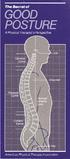 The Secret... T he American Physical Therapy Association would like to share a secret with you. It can help you do more with less effort breathe easier feel great. The secret is about good posture, which
Biomechanical Analysis of the Deadlift (aka Spinal Mechanics for Lifters) Tony Leyland
 Biomechanical Analysis of the Deadlift (aka Spinal Mechanics for Lifters) Tony Leyland Mechanical terminology The three directions in which forces are applied to human tissues are compression, tension,
DSM Spine+Sport - Mobility
 To set yourself up for success, practice keeping a neutral spine throughout all of these movements. This will ensure the tissue mobilization is being applied to the correct area, and make the techniques
Core stability training program
 Core stability training program The structure of the lumbar region is inheriently unstable. In practical term this means the lumbar spine relies upon sufficent support from the muscles that actively suport
NETWORK FITNESS FACTS THE HIP
 NETWORK FITNESS FACTS THE HIP The Hip Joint ANATOMY OF THE HIP The hip bones are divided into 5 areas, which are: Image: www.health.com/health/static/hw/media/medical/hw/ hwkb17_042.jpg The hip joint is
What is Separation of the Abdominal Muscles after Childbirth (also known as Divarication of Rectus Abdominis)?
 What is Separation of the Abdominal Muscles after Childbirth (also known as Divarication of Rectus Abdominis)? Following your pregnancy and the birth of your baby your abdominal (tummy) muscles may have
Basic Stretch Programme 3. Exercise Circuit 4
 Basic Stretch Programme 3 Exercise Circuit 4 2 1 Calves Stand approximately 1 metre away from wall with legs straight and heels on floor. Step and lean forward and slowly push hips towards wall. Should
MOON SHOULDER GROUP. Rotator Cuff Home Exercise Program. MOON Shoulder Group
 MOON Shoulder Group For information regarding the MOON Shoulder Group, talk to your doctor or contact: Rosemary Sanders 1215 21 st Avenue South 6100 Medical Center East Vanderbilt University Medical Center
How to Get and Keep a Healthy Back. Amy Eisenson, B.S. Exercise Physiologist
 How to Get and Keep a Healthy Back Amy Eisenson, B.S. Exercise Physiologist Lesson Objectives Statistics of Back Pain Anatomy of the Spine Causes of Back Pain Four Work Factors Core Muscles Connection
Physiotherapy Database Exercises for people with Spinal Cord Injury
 Physiotherapy Database Exercises for people with Spinal Cord Injury Compiled by the physiotherapists associated with the following Sydney (Australian) spinal units : Last Generated on Mon Mar 29 16:57:20
 Low Back Pain Mansour Dib MD Physical Medicine and Rehabilitation Pain generators Disc Posterior elements Sacro-iliac joint Education - Spine Positioning Neutral Extension Flexion Disc disease Discogenic
D: Date Sunday Monday Tuesday Wednesday Thursday Friday Saturday Week 1 D: D: D: D: D: D: D:
 Physical Therapy and Home Exercise Program for Patients in the Exercise Group (Treatment Sessions 1-8) and the Manipulation + Exercise Group (Treatment Sessions 3-8) This exercise handout contains descriptions
Hip and Trunk Exercise Program
 Hip and Trunk Exercise Program Hip and Pelvis Exercise Program Gluteus Medius and Minimus (Hip Abductors) Page 2 Lateral Hip Rotators Page 6 Tensor Fascia Lata (TFL) and Illiotibial Band (ITB) Page 7 Lower
Rotator Cuff Home Exercise Program MOON SHOULDER GROUP
 Rotator Cuff Home Exercise Program MOON SHOULDER GROUP Introduction The MOON Shoulder group is a Multi-center Orthopaedic Outcomes Network. In other words, it is a group of doctors from around the country
A proper warm-up is important before any athletic performance with the goal of preparing the athlete both mentally and physically for exercise and
 A proper warm-up is important before any athletic performance with the goal of preparing the athlete both mentally and physically for exercise and competition. A warm-up is designed to prepare an athlete
I tro r duct c io i n t o Exercise Technique
 Introduction to Exercise Technique Is Exercise Technique Important? It is the actual technique used for a resistance training exercise that determines; The precise movement pattern the body will be attempting
General Guidelines. Neck Stretch: Side. Neck Stretch: Forward. Shoulder Rolls. Side Stretch
 Stretching Exercises General Guidelines Perform stretching exercises at least 2 3 days per week and preferably more Hold each stretch for 15 20 seconds Relax and breathe normally Stretching is most effective
Physical Capability Strength Test: One Component of the Selection Process
 Physical Capability Strength Test: One Component of the Selection Process One aspect of the Power Systems Institute selection process is to successfully complete and achieve a passing score on a physical
Post Operative Hip Arthroscopy Rehabilitation Protocol Dr. David Hergan Labral Repair with or without FAI Component
 Post Operative Hip Arthroscopy Rehabilitation Protocol Dr. David Hergan Labral Repair with or without FAI Component Initial Joint Protection Guidelines- (P.O. Day 1-4 wks): Joint Protection Patient education
No Equipment Agility/Core/Strength Program for Full Body No Equip Trainer: Rick Coe
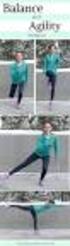 No Equipment Agility/Core/Strength Program for Full Body No Equip Trainer: Rick Coe Introduction Program designed to be performed in a circuit. Perform exercises in sequence without rest 2-3 times. Increase
total hip replacement
 total hip replacement EXCERCISE BOOKLET patient s name: date of surgery: physical therapist: www.jointpain.md Get Up and Go Joint Program Philosophy: With the development of newer and more sophisticated
Rehabilitation after shoulder dislocation
 Physiotherapy Department Rehabilitation after shoulder dislocation Information for patients This information leaflet gives you advice on rehabilitation after your shoulder dislocation. It is not a substitute
Passive Range of Motion Exercises
 Exercise and ALS The physical or occupational therapist will make recommendations for exercise based upon each patient s specific needs and abilities. Strengthening exercises are not generally recommended
International Standards for the Classification of Spinal Cord Injury Motor Exam Guide
 C5 Elbow Flexors Biceps Brachii, Brachialis Patient Position: The shoulder is in neutral rotation, neutral flexion/extension, and adducted. The elbow is fully extended, with the forearm in full supination.
The One-Leg Standing Test and the Active Straight Leg Raise Test: A Clinical Interpretation of Two Tests of Load Transfer through the Pelvic Girdle
 Diane Lee BSR, FCAMT, CGIMS Published in the Orthopaedic Division Review 2005 I read with interest and some concern the discussion in the last issue of the Orthopaedic Division Review on evidence based
Exercises for older people
 Exercise for older people Exercises for older people Sitting Getting started If you ve not done much physical activity for a while, you may want to get the all-clear from a GP before starting. For the
SPINE. Postural Malalignments 4/9/2015. Cervical Spine Evaluation. Thoracic Spine Evaluation. Observations. Assess position of head and neck
 SPINE Observations Body type Postural alignments and asymmetries should be observed from all views Assess height differences between anatomical landmarks Figure 25-9 Figure 25-10 Figure 25-11 & 12 Postural
Myofit Massage Therapy Stretches for Cycling
 Guidelines for Stretching Always assume the stretch start position and comfortably apply the stretch as directed. Think Yoga - gently and slowly, no ballistic actions or bouncing at joint end range. Once
Strength Training for the Runner
 Strength Training for the Runner Strength Training for the Runner What? The goal of resistance training for runners is not necessarily adding muscle mass but 1. improving muscular strength, 2. improving
HYPERLORDOSIS & PILATES TREATMENT
 HYPERLORDOSIS & PILATES TREATMENT Grace Tiangco 3/18/15 2012-2013 Abstract Sacramento/Mountain View Lordosis or Hyperlordosis is defined as a postural type in which the natural curves of the spine are
Stretching the Major Muscle Groups of the Lower Limb
 2 Stretching the Major Muscle Groups of the Lower Limb In this chapter, we present appropriate stretching exercises for the major muscle groups of the lower limb. All four methods (3S, yoga, slow/static,
MELT Mini Map For Motorcyclists
 MELT Mini Map For Motorcyclists The MELT Self-Treatment Tools needed for this monthʼs Mini Map can be found online at store.meltmethod.com. Depending on which tools you have on hand, you can start with
Hip Conditioning Program. Purpose of Program
 Prepared for: Prepared by: OrthoInfo Purpose of Program After an injury or surgery, an exercise conditioning program will help you return to daily activities and enjoy a more active, healthy lifestyle.
Lower Back Pain An Educational Guide
 Lower Back Pain An Educational Guide A publication from the Center of Pain Medicine and Physiatric Rehabilitation 2002 Medical Parkway Ste 150 1630 Main St Ste 215 Annapolis, MD 21401 Chester, MD 21619
Physical Therapy after Hip Arthroscopy Therapy Phases 1 and 2
 Physical Therapy after Hip Arthroscopy Therapy Phases 1 and 2 patienteducation.osumc.edu Table of Contents Physical Therapy after Hip Surgery... 3 OSU Sports Medicine Locations... 4 Hip Therapy Goals...
Back Safety and Lifting
 Back Safety and Lifting Structure of the Back: Spine The spine is the part of the back that supports the trunk and head. It protects the spinal cord as well as giving flexibility to the body. Vertebrae
What is Pilates? Pilates for Horses?
 What is Pilates? Pilates is a conditioning system that increases core stability, strength and body awareness; redresses imbalances, and re aligns the body from the inside out. It can improve posture, achieve
Exercises for Growing Taller
 1 Exercises for Growing Taller A Mini-Guide By Rodney Williams Copyright and Legal Notice 2 Published by: Copyright 2011. All Rights Reserved. No part of this publication may be reproduced or transmitted
are you reaching your full potential...
 T h e r e s n o s u c h t h i n g a s b a d e x e r c i s e - j u s t e x e r c i s e d o n e b a d l y FIT for sport are you reaching your full potential... These tests are a series of exercises designed
Posture. Let s look at. in the head is jutting. the norm. you know if your belt. If you belt. lower body. 2 sections, upper. pulls?
 Fixing the Computer Guy Posture Lower back/h hip stability Let s look at ideal posture for a minute. Look at your profile in the mirror. Chances are you re gonna find that your head is jutting forward,
EXERCISE DESCRIPTIONS PHASE I Routine #1
 EXERCISE DESCRIPTIONS PHASE I Routine #1 Hip Mobility Exercise: Forward Out-In Movement: Raise leg out to the side, and rotate around to the front. Keep shin/thigh angle at 90 degrees. Exercise: Backward
Care at its Best! Foam Roller Exercise Program
 Foam Roller Exercise Program Foam rollers are a popular new addition the gym, physical therapy clinics or homes. Foam rollers are made of lightweight polyethyline foam. Cylindrical in shape, foam rollers
Pilates for Kyphosis A BASI Pilates program designed to help correct thoracic kyphosis
 Pilates for Kyphosis A BASI Pilates program designed to help correct thoracic kyphosis 1 Lucy Penrose 19/01/2014 Wimbledon UK, April 2013 Abstract Kyphosis refers to an exaggerated curve in the thoracic
Sutton & Cheam Swimming Club. Land Training for Swimming and Water Polo
 Sutton & Cheam Swimming Club Land Training for Swimming and Water Polo Why do we need to perform land work? Many of the basics for swimming and water polo can be gained by experiencing activities out
A small roller with a big effect. The mini roller for massaging, strengthening, stretching and warming up
 A small roller with a big effect The mini roller for massaging, strengthening, stretching and warming up Suva Preventative products P. O Box, 6002 Lucerne Enquiries Tel. 041 419 58 51 Orders www.suva.ch/waswo
12 Week Do-it-Yourself Fitness Program
 12 Week Do-it-Yourself Fitness Program Created by Brad Awalt, MS, ACSM Assistant Manager, Health Plus [email protected] January 2011 Do you have a goal to begin an exercise routine, but not sure
Strength Training HEALTHY BONES, HEALTHY HEART
 Strength Training HEALTHY BONES, HEALTHY HEART No matter what your age, strength training can improve your bone health and your balance. As we age, our bones lose both tissue and strength. This condition
The Process of Strength and Conditioning for Golfers
 The Process of Strength and Conditioning for Golfers The use of different sporting activities and resistance work to develop a strength and conditioning program specific to golf. Many club golfers are
Australian Centre for Agricultural Health and Safety. Farming with Back Pain
 Australian Centre for Agricultural Health and Safety Farming with Back Pain 2008 Australian Centre for Agricultural Health and Safety All rights reserved Title: Farming with Back Pain Authors: Boughton
Strength Exercises for Improved Running Biomechanics
 2 CHAPTER Strength Exercises for Improved Running Biomechanics ssssssssssssssssssssssssssssssssssssssssssssssssssssssssssssssssssssssssssssssssssssssssssssssssssssssssssdd s Many gait abnormalities seen
Rotator Cuff and Shoulder Conditioning Program. Purpose of Program
 Prepared for: Prepared by: OrthoInfo Purpose of Program After an injury or surgery, an exercise conditioning program will help you return to daily activities and enjoy a more active, healthy lifestyle.
Self-mobilization methods
 Self-mobilization methods 5 Muscle energy techniques, as outlined in previous chapters, provide us with an excellent series of methods for relaxation and stretching of specific tight, shortened, contracted
Chair Exercises For Older Adults
 Chair Exercises For Older Adults Many of these exercises were adapted from these sources: National Institute on Aging, Exercise: A Guide from the National Institute on Aging, 2001, http://www.nia.nih.gov/healthinformation/publications/exerciseguide/.
Current Concepts of Low Back Pain. Terry L. Grindstaff, PhD, PT, ATC, SCS, CSCS
 Current Concepts of Low Back Pain Terry L. Grindstaff, PhD, PT, ATC, SCS, CSCS 28% population reports LBP in past 3 months (CDC 2010) 60% recurrence rate (Turner et al, 1992) Low Back Pain Low Back Pain
Physical & Occupational Therapy
 In this section you will find our recommendations for exercises and everyday activities around your home. We hope that by following our guidelines your healing process will go faster and there will be
Range of Motion Exercises
 Range of Motion Exercises Range of motion (ROM) exercises are done to preserve flexibility and mobility of the joints on which they are performed. These exercises reduce stiffness and will prevent or at
Sit stand desks and musculo skeletal health. Katharine Metters
 Sit stand desks and musculo skeletal health Katharine Metters Topics Sitting Standing Movement and activity Work and human change Sitting uses less energy Sitting provides support for the body to reduce
Basic Training Exercise Book
 Basic Training Exercise Book Basic Training Exercise Book Instructions The exercises are designed to challenge the major muscles groups every day, approximately every 2 to 3 hours., for a total of 6 times