
NGA GRID GUIDE HOW TO USE ArcGIS 8.x ANS 9.x TO GENERATE MGRS AND OTHER MAP GRIDS
|
|
|
- Benjamin Berry
- 10 years ago
- Views:
Transcription
1 GEOSPATIAL SCIENCES DIVISION COORDINATE SYSTEMS ANALYSIS TEAM (CSAT) SEPTEMBER 2005 Minor Revisions March 2006 POC Kurt Schulz NGA GRID GUIDE HOW TO USE ArcGIS 8.x ANS 9.x TO GENERATE MGRS AND OTHER MAP GRIDS INTRODUCTION. The purpose of this guide is to help NGA cartographers and analysts who use ESRI s ArcMap to create grid and graticule reference systems for their hardcopy operational, reference and planning graphics. DATA VIEW VS LAYOUT VIEW. In ArcGIS, grids, graticules, and MGRS grids are normally created in the layout view. These grids are annotations, not GIS layers, so they are not visible in the data view. If you wish to view grids and graticules in the data view, they must be in shapefile format. Procedures for generating grids and graticules in shapefile format are described in a separate guide. CSAT can create custom-generated graticule- and grid-shapefiles upon request. Call for requests. In addition, CSAT has numerous graticules and UTM / MGRS grids in shapefile format, which are downloadable from their website: (WWW) (OSIS) (SIPRNET) (JWICS) PROJECTED VS UNPROJECTED It is important to know the difference between projected and unprojected GIS data. Unprojected is also known as lat/long. Unprojected means the GIS is set to a geographic coordinate system (GCS) rather than a projected coordinate system. This is set in Data Frame Properties, Coordinate System tab. A common example of an unprojected system is GCS_WGS_84. In an unprojected GCS, the GIS map units are degrees, not meters. A unit of latitude will equal a unit of longitude, and parallels and meridians will form straight, perpendicular lines. This is NOT an accurate depiction of the earth, except at the equator. It s unprofessional to create a map that is not in a map projection. For information on specific map projections, see the Quick-Start Guide to ArcGIS Map Projections at the end of this guide.

2 GRATICULES AND GRIDS There is some confusion with reference to the terms graticule and grid. Grid refers to lines representing X or Y values of a two-dimensional rectangular coordinate system, and uses linear units of measure, usually meters. The coordinate system is based on a map projection. X and Y values are also referred to as eastings and northings. o As long as the grid line spacing is the same for both vertical and horizontal lines, the lines of a grid should form perfect squares. Graticule refers to parallels and meridians, i.e. lines of latitude and longitude, and uses angular units of measure, usually degrees (degrees/minutes/seconds or decimal degrees). o When the map is projected, the lines of the graticule should NOT form perfect squares as a grid does, except near the equator. CREATING GRATICULES AND GRIDS IN ArcGIS In ArcGIS, grids and graticules are generated and modified in Data Frame Properties, Grids tab. This displays a text window and five buttons. The text window displays a list of the ArcMap document s grids and graticules, each with a checkbox next to it. (In a new document, the text window will be empty until a grid or graticule is created). o Click inside the checkbox to turn on/off display of the grid in the layout view. o When a grid or graticule is created, it is then added to the text window. To change the name, click once on the name to activate it. Click a second time (not a double-click ) to enable name change. The New Grid button is for creating a new grid or graticule. Clicking on it should bring up the Grids and Graticules Wizard (see Grids and Graticules Wizard below). The Remove button is for removing a grid or graticule from your ArcMap document. To do so, click on the grid name in the text window to highlight it, then click Remove. The Style button brings up the Reference System Selector window so that the grid style can be changed. When you generate a measured grid in the Grids and Graticules Wizard, you can use this to change it to an MGRS grid (see the MGRS Grid Generation in ArcGIS section below). The Properties button brings up the Reference System Properties window to change the properties of a grid (see Reference System Properties Tabs below). The Convert To Graphics button makes a likeness of a grid in the form of a graphic element. It can then be enlarged, reduced or moved like text or drawings, and is not tied to the coordinate system parameters as is the grid itself (rarely used).

3 THE GRIDS AND GRATICULES WIZARD If clicking on the New Grid button does not bring up the Grids and Graticules Wizard but instead brings up the Reference System Selector window, then ArcMap is not configured to show wizards. o To enable wizards, cancel the Reference System Selector window, then click on Tools > Options. Select the Application tab. Check the box next to Show Wizards when available. Click OK. With GIS configured to show wizards, click New Grid. The Grids and Graticules Wizard will appear. It has four windows. The Next and Back buttons allow you to move from one window to the next. In the first window, select either Graticule or Measured Grid. Change grid name, if desired. Click Next. The second window allows you to select desired appearance and grid/graticule line interval. o If you are creating a grid instead of a graticule, the wizard will include an option for selecting the Coordinate System. You will most likely want to leave the default selection Same as data frame (for more info on this, see Reference System Properties, System tab). Click Next. The third window allows you to specify properties of neatline ticks and labels. Click Next. The fourth and last window allows you to specify properties of the graticule border and neatline. You may also choose to make the grid a static graphic (see description of Convert to Graphics button). This option is rarely used. Keep the default selection fixed grid. Click Finish. The graticule/grid name appears in the text window of the Data Frame Properties window. NOTE: TO AVOID SOFTWARE GLITCHES, YOU MAY BE BETTER OFF TO SIMPLY LEAVE DEFAULT SETTINGS FOR THE LAST THREE WINDOWS, CLICK FINISH, AND THEN GO DIRECTLY TO REFERENCE SYSTEM PROPERTIES. o The only critical wizard selection is the first one, choosing a graticule or measured grid. o Because the wizard is limited in grid property options, you will almost always end up going immediately to Reference System Properties when you are done with the wizard anyway. o If you do choose to utilize the wizard, keep in mind that whatever options you select can be changed later in the Reference System Properties window.

4 THE REFERENCE SYSTEM PROPERTIES WINDOW When you click the Properties button, the Reference System Properties window will appear, with several tabs. It has six tabs for graticules, five for grids. Following are the functions for each of the tabs. Graticules Grids Axes tab controls graticule features along the perimeter (neatline) of the map. o Border controls the width, color, etc. of the border (neatline). o If the major division ticks boxes are checked, tick marks will occur where the graticule lines intersect the border ( major division ticks are usually not needed). o Subdivision ticks are often useful. If subdivision ticks are desired, set spacing by specifying the number of subdivisions. For example, for ticks to occur every degree of latitude/longitude on a map with graticule spacing (see Interval tab) at five degrees, specify 5 subdivisions. Interior Labels tab enables labeling of graticule lines in the interior of the chart, not just along the perimeter. Labels tab controls activation of labels along perimeter of map, as well as font, size, color, and orientation. o If you have several grids, you may wish to increase Label Offset to avoid overlapping labels of another grid. o The Additional Properties button allows labels to display only degrees, instead of DMS (e.g., 45 N instead of N). Direction labels can also be removed. Lines tab controls whether the graticule will be displayed as lines (parallels and meridians) or ticks ( crosshairs, where parallels and meridians intersect). Also controls thickness, color, etc. of the lines/ticks. Hatching tab. Hatch marks are like ticks, but occur along graticule lines instead of the map border. To generate hatch marks, specify a hatch interval. (The Hatching tab also allows axis ticks along the map border to be offset, or placed away from, the map border. This function is rarely used.) Intervals tab. Controls spacing of graticule lines, and sets origin. For example, to generate graticule lines spaced five degrees apart, enter X Axis Interval=5, Y Axis Interval=5. o IMPORTANT: FOR SET ORIGIN, ALWAYS SELECT DEFINE YOUR OWN ORIGIN, AND SET X-ORIGIN=0, Y-ORIGIN=0. Axes tab. Same as for graticules. Labels tab. Same as for graticules, except for the following: There are three grid label style formats: Mixed Font, Corner Label, and Formatted. Also, the Additional Properties button has different controls for grids than for graticules. That s because

5 (except for rare cases) graticule labels are in degrees (or DMS), and grid labels are in meters. o It is highly recommended that label style format Formatted be selected. Click Additional Properties button. For number of decimal places, enter 0. You may also wish to activate show thousands separators if grid lines are spaced at 10,000m or more. o The default grid label style format is Mixed Font, which shows large-value digits in a large black font, and small-value digits in a small red font. Mixed Font is very difficult to control and is best avoided. o The Corner Label style is also extremely difficult to use and is best avoided. If corner labels were needed, it would be better to create them manually, using the New Text icon. Actual corner coordinate values can be determined by placing the pointer icon on the map corner and reading the coordinate display in the lower-right corner of the screen. Lines tab. Same as for graticules. System tab. In most cases, select current coordinate system. If you want the grid to be based on a map projection other than the one on which the data frame (your map) is based, select use another coordinate system. Intervals tab. Same as for graticules. Note that units will be in meters instead of degrees. Change Axis Intervals to an appropriate round number, such as 1000, 10,000, or 100,000, depending on map scale. The following table is a rough guide for spacing: APPROXIMATE SCALE EQUIVALENT NGA MAP 1:25,000 TO 1:100,000 TLM 1,000 1:250,000 JOG 10,000 1:500,000 TO 1:1,000,000 TPC, ONC 100,000 GRID LINE SPACING o In most cases, you will leave Units in meters. Simply changing the interval value to another unit, such as feet, would rarely be useful. The resulting grid lines would be spaced in increments of feet, but they would still be labeled in meters. Additional steps are involved in order to generate a grid using different units, such as feet, and still have the grid lines labeled in those units. First, go to the System tab. Choose Use Another Coordinate System. Select the same map projection that your data frame is in, but click Modify. Change Linear Units to feet. Click OK, click OK. Go back to Intervals tab, and change units to Unknown Units. o IMPORTANT. As with graticules, CHOOSE DEFINE YOUR OWN ORIGIN, AND SET X-ORIGIN=0, Y-ORIGIN=0. MGRS GRID GENERATION IN ArcGIS MGRS grids can be generated using the standard grid generation procedure described above, but ArcMap has provided an MGRS template to make it much easier. Following is the procedure for utilizing the MGRS grid generation template.

6 NOTE: Before generating an MGRS grid, you must change your coordinate system to UTM. Follow these steps to do so: Click View > Data Frame Properties. Choose Coordinate System tab. To select a UTM coordinate system, browse in the Select a coordinate system window to the following: Predefined / Projected Coordinate Systems / Utm / Wgs 84 / WGS 1984 UTM Zone XXN, where XX is the UTM zone of your area of interest. With coordinate system set to one of the UTM zones, you are ready to create an MGRS grid. The following is taken directly from ESRI Help, under Grids, MGRS (with a few independent comments added in italics). Follow these steps to create an MGRS grid in the layout window. Adding an MGRS Grid to your list of personal styles 1. Click the Tools menu, point to Styles, then click Style Manager. 2. In the Styles tree view to the left, click the name of the style file into which you would like to add an MGRS Grid style. Comment: It doesn t seem to matter which style file you choose. 3. In the style folders on the right, right-click Reference Systems. Choose New and choose MGRS Grid. 4. Click OK to close the Reference Systems dialog box. And don t select any of the options in any of the tabs---that will be done later. 5. Click Close. Creating an MGRS Grid 1. Click the View menu and click Data Frame Properties. 2. Click the Coordinate System tab and make sure the data frame is set to a UTM projected coordinate system. 3. Click the Grids tab. 4. Click New Grid. 5. From the list of grids, choose the MGRS Grid that you added into your list of personal styles (see the previous procedure, 'Adding an MGRS Grid to your list of personal styles'). 6. On the MGRS tab, select options for enabling/disabling ladder labels and 100,000- meter grid zones. If your map scale is 1:1,000,000 or smaller, you can also specify interior tick marks that fall along the grid lines. 7. The Labels tab allows you to specify labeling options for the axis labels. The font style, size, and color affect the principal digits. Click Additional Properties to specify the font style and size of the secondary (base) digits. The Corner Labels tab allows you to choose which corners of the map will be labeled with full coordinate values. NOTE: For MGRS grids, you do not select grid line spacing interval. ArcMap will determine line spacing automatically.

7 QUALITY ASSURANCE FOR GRIDS Analysts can assure correct grid generation by checking to make sure that the grid and its coordinates are in proper position with respect to the map projection/coordinate system upon which it is based. Here are some map projection basics: All map projections have an origin. The origin is where the map projection s central meridian crosses its latitude of origin. The map projection origin is also the origin of the grid. Grid coordinate values, which are almost always in meters (occasionally feet or yards), represent actual ground distance from the origin. Grid distances correspond exactly to distances on the map scale. o Note: Grid coordinate values and map scale distances will not be exact ground distance due to distortion (every map projection distorts the earth in some manner). However, if the coordinates are within the intended map use zone of a conformal projection (UTM, Lambert Conformal Conic, etc.), grid coordinates will correlate very closely to actual ground distance.

8 In the above map, the graticule lines are red, and the grid lines are gray. Grid values (eastings and northings) are in meters, and are labeled around the perimeter of the map. Note how grid values occur in relation to the map projection origin. Note how the central meridian coincides with the Y-axis of the grid. This is true for virtually all map projections. In a conic projection such as this one, the latitude of origin is an arc, not a straight line, so it does not correspond to the X-axis of the grid. However, in a cylindrical projection (UTM, Mercator, etc.), the latitude of origin does correspond to the X-axis of the grid. Many map projections apply a false easting and/or false northing. Their purpose is to avoid negative grid coordinates, which can cause confusion. o The map below is a modification of the previous map. It now has a false easting of nine million and a false northing of three million. Without a false easting and false northing, most of the map would have negative grid coordinate values.

9 One important way to check grid coordinate values in a GIS is to read the coordinate display, which displays the coordinates of the mouse pointer position. In the figure below, the magenta arrow represents the position of the mouse pointer, which is very close to the grid corner at mE, mN. Below the layout view of the GIS (bottom-right magenta circle) is the coordinate display, providing the exact values of easting and northing for the position of the mouse pointer. The display may be changed from meters to degrees in Data Frame Properties.

10 QUALITY ASSURANCE FOR MILITARY GRIDS Apply map projection basics to assure correct military grid generation: UTM grids are based on the Transverse Mercator map projection. o The latitude of origin is 0 (the equator). o The central meridian runs through the center of the UTM zone. o The false easting is 500,000. In the map below, UTM Zone 38 lies between 42 and 48 E. The central meridian is 45 E.

11 MGRS grid lines coincide exactly with UTM grid lines. In MGRS, the 100,000-meter grid squares are assigned a two-letter designator (see map below). FOLLOWING ARE SOME EXTRA ILLUSTRATIONS:

12 THIS IS AN ENLARGEMENT OF THE PREVIOUS MGRS MAP, TO ILLUSTRATE HOW ARCMAP ADJUSTS THE GRID LINE SPACING. SCALE WAS INCREASED, SO SPACING WENT FROM 100,000 METERS TO 10,000 METERS. THE GIS ANALYST ADJUSTED THE PROPERTIES OF THE GRID SQUARE DESIGNATORS SO THAT THEY ARE SMALLER, AND APPEAR AT THE CORNERS INSTEAD OF THE CENTER. NOTE UTM VALUES IN MARGINS. ALSO, LADDER VALUES WERE ADDED.

13 SAME MGRS MAP WAS ENLARGED SOME MORE. NOW, GRID LINES HAVE GONE FROM 10,000 METERS TO 1,000 METERS.

14 THIS ILLUSTRATES DEFAULT LABELING ALONG NEATLINE (AXES) OF MAP: MIXED FONT. SEE ENLARGEMENT BELOW.

15 ENLARGEMENT OF DEFAULT MIXED FONT LABELING STYLE

16 HERE, LABEL STYLE WAS CHANGED TO FORMATTED. ALSO, THE DECIMALS WERE REMOVED BY UTILIZING THE ADDITIONAL PROPERTIES BUTTON.

17 ENLARGEMENT SHOWING NEW FORMATTED LABEL STYLE, DECIMALS REMOVED.

18 THIS ILLUSTRATES THE AXES FEATURES THAT THE AXES TAB CONTROLS.

19 ENLARGEMENT OF AXES FEATURES

20 THIS ILLUSTRATES VARIOUS FEATURES WHOSE PROPERTIES ARE CONTROLLED BY VARIOUS REFERENCE SYSTEM PROPERTIES TABS

21 ENLARGEMENT OF VARIOUS FEATURES FROM REFERENCE SYSTEM PROPERTIES
22 THIS ILLUSTRATES INTERIOR GRID LABELS. NOTE: THE GRID IN THIS CASE IS NOT A MEASURED GRID, BUT A GRATICULE.
23 HERE IS AN EXAMPLE OF A LAYOUT WINDOW WITH TWO GRIDS, EACH ONE FROM A DIFFERENT COORDINATE SYSTEM. THE BLACK IS FOR THE DATA FRAME S COORDINATE SYSTEM, UTM ZONE 38. THE RED IS FOR UTM ZONE 39.
24 ENLARGEMENT OF TWO-GRID EXAMPLE. NOTE VALUES FOR NORTHINGS AND EASTINGS ALONG AXES.
25 HATCHING EXAMPLE
26 COORDINATE SYSTEMS ANALYSIS TEAM (CSAT) FEBRUARY 2005 QUICK-START GUIDE TO ArcGIS MAP PROJECTIONS This guide is intended for the generation of custom products such as reference maps, planning maps, graphics that accompany geospatial studies, and digital GIS products. It should NOT be used as guidance for NGA standard products or any other product used in navigation or targeting. WHEN CREATING MAPS, GIS DATA SHOULD NEVER BE LEFT IN THE DEFAULT UNPROJECTED COORDINATE SYSTEM. ALWAYS SELECT AN APPROPRIATE MAP PROJECTION FOR DISPLAYING GEOSPATIAL DATA AND REFERENCE MAPS. UNPROJECTED PROJECTED (LAMBERT CONFORMAL CONIC) With the exception of maritime and polar charts, NGA maps and charts mainly use the Lambert Conformal Conic (LCC) and Transverse Mercator (TM) projections. Therefore, as a general rule of thumb, use TM (or UTM) for large-scale (small area) maps, and LCC for small-scale (large-area) maps. FOLLOWING IS A BRIEF GUIDE TO ArcGIS MAP PROJECTIONS.
27 First, select Projected Coordinate Systems. Geographic Coordinate Systems do not contain map projections, but are used to process GIS data that are in a local datum. Select one of the following Projected Coordinate System categories according to your Area of Interest and mapping need: The remainder of this guide will provide some brief definitions for each of the above categories. Continental contains conic projections. o Lambert Conformal Conic, or LCC, is a good conformal projection for areas in mid-latitudes. Distortion is minimized along east-west standard parallels. It s good for displaying large multi-national regions and continents. TPCs and ONCs use LCC. o Albers Equal Area. Areas on map are proportional to areas on earth.
28 o Equidistant. Distances are true along meridians and standard parallels. To suit your area of interest, you may want to modify the map projection parameters: Standard Parallels 1 & 2, and Central Meridian. o Scale and distance are true along the standard parallels. o The Central Meridian is the one meridian on the map where north is straight up. CONTINENTAL MENU DISPLAYS: Gauss Kruger, or GK, is very similar to UTM. Some countries use GK instead of UTM for their grid system. This would be used when dealing with coordinates of a grid system that uses the GK. National Grids are grid systems for individual countries, each based on a map projection. As with GK, use this when working with coordinates of a particular country s grid system. Polar contains planar, a.k.a. azimuthal, projections. These types of projections are needed to map polar areas, BUT, for some purposes, they are ALSO useful in non-polar areas. For non-polar uses, modify the map projection parameters: Central Meridian and Latitude of Origin. o Azimuthal Equidistant. All distances from the origin point of the projection are true. o Gnomonic. All great circles on the globe are straight lines on the map.
29 o Lambert Azimuthal Equal Area. Areas of polygons are true. o Orthographic. Useful for displaying the world as a globe. o Stereographic. Used in geophysics and other applications. o UPS. Universal Polar Stereographic system, the polar segment of the UTM/MGRS system. POLAR MENU DISPLAY: State Plane contains individual state grid systems in the U.S. Used by surveyors, engineers, city governments, etc. UTM contains all 60 UTM/MGRS zones, each based on the Transverse Mercator Projection. o NOTE: USE UTM FOR ANY TRANSVERSE MERCATOR PROJECTION, whether part of the UTM system or not (if not, parameters will be modified). o Transverse Mercator is a good conformal projection for areas that stretch in a north-south direction. Distortion is minimized along the central meridian. UTM MENU DISPLAYS:
30 World contains various projections that are useful for displaying a world map. Some (e.g. Mercator) are also useful for displaying equatorial regions. REFERENCES: Understanding Map Projections, by Melita Kennedy and Steve Kopp, ESRI, Map Projections (Poster), U.S. Geological Survey. See
Creating Figure Ground Maps in ArcMap 10.x: Basic procedures to download, open, manipulate and print spatial data
 Creating Figure Ground Maps in ArcMap 10.x: Basic procedures to download, open, manipulate and print spatial data These procedures outline: A. Retrieving Property Data B. Uncompressing the Downloaded Files
What are map projections?
 Page 1 of 155 What are map projections? ArcGIS 10 Within ArcGIS, every dataset has a coordinate system, which is used to integrate it with other geographic data layers within a common coordinate framework
GIS IN ECOLOGY: SPATIAL REFERENCING
 GIS IN ECOLOGY: SPATIAL REFERENCING Contents Introduction... 2 Coordinate Systems... 2 Map Projections... 3 Georeferencing... 5 Data Sources... 7 Tasks... 7 Undefined versus Unprojected Data... 7 Setting
INTRODUCTION to ESRI ARCGIS For Visualization, CPSC 178
 INTRODUCTION to ESRI ARCGIS For Visualization, CPSC 178 1) Navigate to the C:/temp folder 2) Make a directory using your initials. 3) Use your web browser to navigate to www.library.yale.edu/mapcoll/ and
Data Visualization. Brief Overview of ArcMap
 Data Visualization Prepared by Francisco Olivera, Ph.D., P.E., Srikanth Koka and Lauren Walker Department of Civil Engineering September 13, 2006 Contents: Brief Overview of ArcMap Goals of the Exercise
WGS AGD GDA: Selecting the correct datum, coordinate system and projection for north Australian applications
 internal report WGS AGD GDA: Selecting the correct datum, coordinate system and projection for north Australian applications JBC Lowry Hydrological and Ecological Processes Program Environmental Research
Earth Coordinates & Grid Coordinate Systems
 Earth Coordinates & Grid Coordinate Systems How do we model the earth? Datums Datums mathematically describe the surface of the Earth. Accounts for mean sea level, topography, and gravity models. Projections
THE UNIVERSAL GRID SYSTEM
 NGA Office of GEOINT Sciences Coordinate Systems Analysis (CSAT) Phone: 314-676-9124 Unclassified Email: [email protected] March 2007 THE UNIVERSAL GRID SYSTEM Universal Transverse Mercator (UTM) Military
TABLE OF CONTENTS. INTRODUCTION... 5 Advance Concrete... 5 Where to find information?... 6 INSTALLATION... 7 STARTING ADVANCE CONCRETE...
 Starting Guide TABLE OF CONTENTS INTRODUCTION... 5 Advance Concrete... 5 Where to find information?... 6 INSTALLATION... 7 STARTING ADVANCE CONCRETE... 7 ADVANCE CONCRETE USER INTERFACE... 7 Other important
Spatial Adjustment Tools: The Tutorial
 Spatial Adjustment Tools: The Tutorial By Peter Kasianchuk, ESRI Educational Services In this exercise, you will perform some spatial adjustment and data management operations data to be used in analysis
How To Create A View Frame In 3D
 12/4/2008-10:00 am - 11:30 am Room:Palazzo O-P (5th) The Secrets of Cutting Plan and Profile Sheets in AutoCAD Civil 3D Michelle Rasmussen - Application Engineer, IMAGINiT Technologies CV304-1P In this
WFP Liberia Country Office
 1 Oscar Gobbato [email protected] [email protected] WFP Liberia Country Office GIS training - Summary Objectives 1 To introduce to participants the basic concepts and techniques in using Geographic
MARS STUDENT IMAGING PROJECT
 MARS STUDENT IMAGING PROJECT Data Analysis Practice Guide Mars Education Program Arizona State University Data Analysis Practice Guide This set of activities is designed to help you organize data you collect
Data Visualization. Prepared by Francisco Olivera, Ph.D., Srikanth Koka Department of Civil Engineering Texas A&M University February 2004
 Data Visualization Prepared by Francisco Olivera, Ph.D., Srikanth Koka Department of Civil Engineering Texas A&M University February 2004 Contents Brief Overview of ArcMap Goals of the Exercise Computer
Introduction to Autodesk Inventor for F1 in Schools
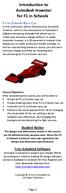 Introduction to Autodesk Inventor for F1 in Schools F1 in Schools Race Car In this course you will be introduced to Autodesk Inventor, which is the centerpiece of Autodesk s digital prototyping strategy
Lecture 2. Map Projections and GIS Coordinate Systems. Tomislav Sapic GIS Technologist Faculty of Natural Resources Management Lakehead University
 Lecture 2 Map Projections and GIS Coordinate Systems Tomislav Sapic GIS Technologist Faculty of Natural Resources Management Lakehead University Map Projections Map projections are mathematical formulas
How to create pop-up menus
 How to create pop-up menus Pop-up menus are menus that are displayed in a browser when a site visitor moves the pointer over or clicks a trigger image. Items in a pop-up menu can have URL links attached
Introduction to Autodesk Inventor for F1 in Schools
 F1 in Schools race car Introduction to Autodesk Inventor for F1 in Schools In this course you will be introduced to Autodesk Inventor, which is the centerpiece of Autodesk s Digital Prototyping strategy
ArcGIS Tutorial: Adding Attribute Data
 ArcGIS Tutorial: Adding Attribute Data Introduction A common need in GIS is to map characteristics, or attributes, of different geographic areas. These maps are called thematic maps. Examples of thematic
Tutorial 3 - Map Symbology in ArcGIS
 Tutorial 3 - Map Symbology in ArcGIS Introduction ArcGIS provides many ways to display and analyze map features. Although not specifically a map-making or cartographic program, ArcGIS does feature a wide
Finding GIS Data and Preparing it for Use
 Finding_Data_Tutorial.Doc Page 1 of 19 Getting Ready for the Tutorial Sign Up for the GIS-L Listserv Finding GIS Data and Preparing it for Use The Yale University GIS-L Listserv is an internal University
Using Google Earth for Environmental Science Research
 Using Google Earth for Environmental Science Research This document is up-to-date as of August 2013. If you have any questions or additions to this material please email [email protected]. Note: this
Metes and Bounds Help
 Metes and Bounds Help Topics: Drawing Wizard Data Entry o Entering Metes and Bounds Data o Entering Section Call Data Layers o Layer Options o Analyze Layer Closing Error Tabs Drawing Options o Drawing
Guide To Creating Academic Posters Using Microsoft PowerPoint 2010
 Guide To Creating Academic Posters Using Microsoft PowerPoint 2010 INFORMATION SERVICES Version 3.0 July 2011 Table of Contents Section 1 - Introduction... 1 Section 2 - Initial Preparation... 2 2.1 Overall
Custom Reporting System User Guide
 Citibank Custom Reporting System User Guide April 2012 Version 8.1.1 Transaction Services Citibank Custom Reporting System User Guide Table of Contents Table of Contents User Guide Overview...2 Subscribe
Interactive Voting System. www.ivsystem.nl. IVS-Basic IVS-Professional 4.4
 Interactive Voting System www.ivsystem.nl IVS-Basic IVS-Professional 4.4 Manual IVS-Basic 4.4 IVS-Professional 4.4 1213 Interactive Voting System The Interactive Voting System (IVS ) is an interactive
Pro/ENGINEER Wildfire 4.0 Basic Design
 Introduction Datum features are non-solid features used during the construction of other features. The most common datum features include planes, axes, coordinate systems, and curves. Datum features do
An Introduction to Coordinate Systems in South Africa
 An Introduction to Coordinate Systems in South Africa Centuries ago people believed that the earth was flat and notwithstanding that if this had been true it would have produced serious problems for mariners
KaleidaGraph Quick Start Guide
 KaleidaGraph Quick Start Guide This document is a hands-on guide that walks you through the use of KaleidaGraph. You will probably want to print this guide and then start your exploration of the product.
Plotting: Customizing the Graph
 Plotting: Customizing the Graph Data Plots: General Tips Making a Data Plot Active Within a graph layer, only one data plot can be active. A data plot must be set active before you can use the Data Selector
Acrobat PDF Forms - Part 2
 Acrobat PDF Forms - Part 2 PDF Form Fields In this lesson, you will be given a file named Information Request Form that can be used in either Word 2003 or Word 2007. This lesson will guide you through
Create a folder on your network drive called DEM. This is where data for the first part of this lesson will be stored.
 In this lesson you will create a Digital Elevation Model (DEM). A DEM is a gridded array of elevations. In its raw form it is an ASCII, or text, file. First, you will interpolate elevations on a topographic
Understand the Sketcher workbench of CATIA V5.
 Chapter 1 Drawing Sketches in Learning Objectives the Sketcher Workbench-I After completing this chapter you will be able to: Understand the Sketcher workbench of CATIA V5. Start a new file in the Part
What s New V 11. Preferences: Parameters: Layout/ Modifications: Reverse mouse scroll wheel zoom direction
 What s New V 11 Preferences: Reverse mouse scroll wheel zoom direction Assign mouse scroll wheel Middle Button as Fine tune Pricing Method (Manufacturing/Design) Display- Display Long Name Parameters:
If you know exactly how you want your business forms to look and don t mind detail
 Advanced Form Customization APPENDIX E If you know exactly how you want your business forms to look and don t mind detail work, you can customize QuickBooks forms however you want. With QuickBooks Layout
Using Microsoft Word. Working With Objects
 Using Microsoft Word Many Word documents will require elements that were created in programs other than Word, such as the picture to the right. Nontext elements in a document are referred to as Objects
Generative Drafting. Page 1 1997 2001 DASSAULT SYSTEMES. IBM Product Lifecycle Management Solutions / Dassault Systemes
 Generative Drafting Page 1 Tutorial Objectives Description This Tutorial is an introduction to Generative Drafting. Message To show how CATIA V5 allows the user to automatically generate associative drafting
Importing and Opening an Alignment
 Chapter 6 Alignment Files An alignment defines the route of a road, utility line, water way, etc., and is typically comprised of both horizontal and vertical elements. Also, an alignment may include cross-sectional
Chapter 4 Creating Charts and Graphs
 Calc Guide Chapter 4 OpenOffice.org Copyright This document is Copyright 2006 by its contributors as listed in the section titled Authors. You can distribute it and/or modify it under the terms of either
ArcGIS. Tips and Shortcuts. for Desktop
 ArcGIS Tips and Shortcuts for Desktop Map Navigation Refresh and redraw the display. F5 Suspend the map s drawing. F9 Zoom in and out. Center map. Roll the mouse wheel backward and forward. Hold down Ctrl
http://school-maths.com Gerrit Stols
 For more info and downloads go to: http://school-maths.com Gerrit Stols Acknowledgements GeoGebra is dynamic mathematics open source (free) software for learning and teaching mathematics in schools. It
Autodesk Civil 3D Styles: A Guide to the Fundamentals
 AUTODESK CIVIL 3D WHITE PAPER Autodesk Civil 3D Styles: A Guide to the Fundamentals About the Author: Mark Scacco, PE, is the founder and president of Engineered Efficiency, Inc., a technology consulting
SESSION 8: GEOGRAPHIC INFORMATION SYSTEMS AND MAP PROJECTIONS
 SESSION 8: GEOGRAPHIC INFORMATION SYSTEMS AND MAP PROJECTIONS KEY CONCEPTS: In this session we will look at: Geographic information systems and Map projections. Content that needs to be covered for examination
Government 1009: Advanced Geographical Information Systems Workshop. LAB EXERCISE 3b: Network
 Government 1009: Advanced Geographical Information Systems Workshop LAB EXERCISE 3b: Network Objective: Using the Network Analyst in ArcGIS Implementing a network functionality as a model In this exercise,
Excel -- Creating Charts
 Excel -- Creating Charts The saying goes, A picture is worth a thousand words, and so true. Professional looking charts give visual enhancement to your statistics, fiscal reports or presentation. Excel
In this session, we will explain some of the basics of word processing. 1. Start Microsoft Word 11. Edit the Document cut & move
 WORD PROCESSING In this session, we will explain some of the basics of word processing. The following are the outlines: 1. Start Microsoft Word 11. Edit the Document cut & move 2. Describe the Word Screen
Data source, type, and file naming convention
 Exercise 1: Basic visualization of LiDAR Digital Elevation Models using ArcGIS Introduction This exercise covers activities associated with basic visualization of LiDAR Digital Elevation Models using ArcGIS.
Activity: Using ArcGIS Explorer
 Activity: Using ArcGIS Explorer Requirements You must have ArcGIS Explorer for this activity. Preparation: Download ArcGIS Explorer. The link below will bring you to the ESRI ArcGIS Explorer download page.
ArcGIS online Introduction... 2. Module 1: How to create a basic map on ArcGIS online... 3. Creating a public account with ArcGIS online...
 Table of Contents ArcGIS online Introduction... 2 Module 1: How to create a basic map on ArcGIS online... 3 Creating a public account with ArcGIS online... 3 Opening a Map, Adding a Basemap and then Saving
DESIGN A WEB SITE USING PUBLISHER Before you begin, plan your Web site
 Page 1 of 22 DESIGN A WEB SITE USING PUBLISHER Before you begin, plan your Web site Before you create your Web site, ask yourself these questions: What do I want the site to do? Whom do I want to visit
Scientific Graphing in Excel 2010
 Scientific Graphing in Excel 2010 When you start Excel, you will see the screen below. Various parts of the display are labelled in red, with arrows, to define the terms used in the remainder of this overview.
WILD 3710 Lab 3: GIS Data Exploration Camp W.G. Williams
 WILD 3710 Lab 3: GIS Data Exploration Camp W.G. Williams -Laboratory- TAs and Lab Instructors: Chris McGinty [email protected] Office: JQL 146 Office Hours: W 2:30 3:30 or by appt. Alex Hernandez [email protected]
UTM Zones for the US UTM UTM. Uniform strips Scalable coordinates
 UTM UTM Uniform strips Scalable coordinates Globally consistent, most popular projection/coordinate system for regional to global scale geospatial data (i.e. satellite images global scale datasets USGS/EDC)
Software: AutoCAD Civil 3D 2014, NRCS C3D 2014 template, ESRI ArcMap. Notation:Button to Press Displayed Text Icon Action {Text to Enter} Menu Item
 Overview: Use the following processes for exchanging georeferenced data between AutoCAD Civil 3D 2014 and ArcMap. The work must be based in any real world coordinate system. (This example uses NAD 83 UTM
Chapter 1. Creating Sketches in. the Sketch Mode-I. Evaluation chapter. Logon to www.cadcim.com for more details. Learning Objectives
 Chapter 1 Creating Sketches in Learning Objectives the Sketch Mode-I After completing this chapter you will be able to: Use various tools to create a geometry. Dimension a sketch. Apply constraints to
University of Arkansas Libraries ArcGIS Desktop Tutorial. Section 2: Manipulating Display Parameters in ArcMap. Symbolizing Features and Rasters:
 : Manipulating Display Parameters in ArcMap Symbolizing Features and Rasters: Data sets that are added to ArcMap a default symbology. The user can change the default symbology for their features (point,
Studying Topography, Orographic Rainfall, and Ecosystems (STORE)
 Studying Topography, Orographic Rainfall, and Ecosystems (STORE) Basic Lesson 3: Using Microsoft Excel to Analyze Weather Data: Topography and Temperature Introduction This lesson uses NCDC data to compare
BD CellQuest Pro Software Analysis Tutorial
 BD CellQuest Pro Analysis Tutorial This tutorial guides you through an analysis example using BD CellQuest Pro software. If you are already familiar with BD CellQuest Pro software on Mac OS 9, refer to
Enhanced Formatting and Document Management. Word 2010. Unit 3 Module 3. Diocese of St. Petersburg Office of Training Training@dosp.
 Enhanced Formatting and Document Management Word 2010 Unit 3 Module 3 Diocese of St. Petersburg Office of Training [email protected] This Page Left Intentionally Blank Diocese of St. Petersburg 9/5/2014
Canterbury Maps Quick Start - Drawing and Printing Tools
 Canterbury Maps Canterbury Maps Quick Start - Drawing and Printing Tools Quick Start Guide Standard GIS Viewer 2 Canterbury Maps Quick Start - Drawing and Printing Tools Introduction This document will
Introduction to GIS Mapping and ESRI s ArcGIS Software
 01-Introduction To GIS Mapping And Arcgis 9.2 Software.Doc Page 1 of 25 Objectives Introduction to GIS Mapping and ESRI s ArcGIS Software In this exercise you are introduced to the ArcMap interface and
House Design Tutorial
 Chapter 2: House Design Tutorial This House Design Tutorial shows you how to get started on a design project. The tutorials that follow continue with the same plan. When we are finished, we will have created
User s Guide to ArcView 3.3 for Land Use Planners in Puttalam District
 User s Guide to ArcView 3.3 for Land Use Planners in Puttalam District Dilhari Weragodatenna IUCN Sri Lanka, Country Office Table of Content Page No Introduction...... 1 1. Getting started..... 2 2. Geo-referencing...
Maplex Tutorial. Copyright 1995-2010 Esri All rights reserved.
 Copyright 1995-2010 Esri All rights reserved. Table of Contents Introduction to the Maplex tutorial............................ 3 Exercise 1: Enabling Maplex for ArcGIS and adding the Labeling toolbar............
Create a Poster Using Publisher
 Contents 1. Introduction 1. Starting Publisher 2. Create a Poster Template 5. Aligning your images and text 7. Apply a background 12. Add text to your poster 14. Add pictures to your poster 17. Add graphs
w w w. g e o s o f t. c o m
 SEG-Y Reader Convert SEG-Y files to: Windows BMP, Geosoft Grid, Geosoft Database, Geosoft Voxel USER GUIDE w w w. g e o s o f t. c o m SEG-Y Reader SEG-Y Reader reads 2D and 3D SEG-Y format data files
Contents. The OWRB Floodplain Viewer. Creating Maps... 8. Helpful Tips... 10
 Contents QUICK START GUIDE... 2-5 Add layers...9 Search for Layers...9 COMPREHENSIVE GUIDE... 6 Navigate the map...6 Locate specific places...6 Add layer from file...9 Add layer from web...9 Display pop-up
Tutorial 8 Raster Data Analysis
 Objectives Tutorial 8 Raster Data Analysis This tutorial is designed to introduce you to a basic set of raster-based analyses including: 1. Displaying Digital Elevation Model (DEM) 2. Slope calculations
Roof Tutorial. Chapter 3:
 Chapter 3: Roof Tutorial The majority of Roof Tutorial describes some common roof styles that can be created using settings in the Wall Specification dialog and can be completed independent of the other
Choose a topic from the left to get help for CmapTools.
 Using CmapTools Create a Cmap Add a Concept Create a Proposition from One Concept Create a Proposition from Existing Concepts Save a Cmap Open a Cmap Create a Folder Drag in Resources Import Resources
INSTRUCTIONS FOR MAKING 3D,.DWG CONTOUR LINES
 INSTRUCTIONS FOR MAKING 3D,.DWG CONTOUR LINES A TUTORIAL FROM SPATIAL AND NUMERIC DATA SERVICES NICOLE SCHOLTZ AND GEOFF IVERSON Overview... 2 A. Get a Digital Elevation Model (DEM)... 3 B. Open ArcMap,
Creating Drawings in Pro/ENGINEER
 6 Creating Drawings in Pro/ENGINEER This chapter shows you how to bring the cell phone models and the assembly you ve created into the Pro/ENGINEER Drawing mode to create a drawing. A mechanical drawing
Create Charts in Excel
 Create Charts in Excel Table of Contents OVERVIEW OF CHARTING... 1 AVAILABLE CHART TYPES... 2 PIE CHARTS... 2 BAR CHARTS... 3 CREATING CHARTS IN EXCEL... 3 CREATE A CHART... 3 HOW TO CHANGE THE LOCATION
UTM: Universal Transverse Mercator Coordinate System
 Practical Cartographer s Reference #01 UTM: Universal Transverse Mercator Coordinate System 180 174w 168w 162w 156w 150w 144w 138w 132w 126w 120w 114w 108w 102w 96w 90w 84w 78w 72w 66w 60w 54w 48w 42w
KML EXPORT & 3D CONSTRUCTION POINT TIP SHEET FOR iwitness TM V2
 KML EXPORT & 3D CONSTRUCTION POINT TIP SHEET FOR iwitness TM V2 Working with GPS Coordinates STEP 1. Conduct the iwitness project and assure the scale distance used is set in Meters (Metres). NOTE: there
Taking Advantage of Crystal Reports
 What You Will Need ArcGIS 8.3 (ArcInfo, ArcEditor, or ArcView license) with Crystal Reports installed Sample data downloaded from ArcUser Online Taking Advantage of Crystal Reports In addition to maps,
HELCOM Data and Map Service. User Manual
 HELCOM Data and Map Service User Manual Version 2.2 - February 2015 1 Table of contents 1. General Information... 3 1.1 Background... 3 1.2 Technical requirements... 3 1.3 Contact... 3 2. Accessing HELCOM
PERFORMING REGRESSION ANALYSIS USING MICROSOFT EXCEL
 PERFORMING REGRESSION ANALYSIS USING MICROSOFT EXCEL John O. Mason, Ph.D., CPA Professor of Accountancy Culverhouse School of Accountancy The University of Alabama Abstract: This paper introduces you to
PowerPoint: Graphics and SmartArt
 PowerPoint: Graphics and SmartArt Contents Inserting Objects... 2 Picture from File... 2 Clip Art... 2 Shapes... 3 SmartArt... 3 WordArt... 3 Formatting Objects... 4 Move a picture, shape, text box, or
Using Map Topology Editing Tools
 Using Map Topology Editing Tools What You Will Need in ArcView This tutorial, written by Colin Childs, is a companion to the article ArcGIS Topology for ArcView Users, also by Colin Childs, that appeared
Introduction to GIS Using ArcGIS Desktop 10
 Introduction to GIS Using ArcGIS Desktop 10 Last Modified: January 2012 This reference and training manual was produced by the University of Maryland Libraries. Permission to reproduce this manual or any
The following is an overview of lessons included in the tutorial.
 Chapter 2 Tutorial Tutorial Introduction This tutorial is designed to introduce you to some of Surfer's basic features. After you have completed the tutorial, you should be able to begin creating your
Microsoft Excel 2010 Part 3: Advanced Excel
 CALIFORNIA STATE UNIVERSITY, LOS ANGELES INFORMATION TECHNOLOGY SERVICES Microsoft Excel 2010 Part 3: Advanced Excel Winter 2015, Version 1.0 Table of Contents Introduction...2 Sorting Data...2 Sorting
Understanding Map Projections
 Understanding Map Projections Melita Kennedy ArcInfo 8 Copyright 1994, 1997, 1999, 2000 Environmental Systems Research Institute, Inc. All Rights Reserved. Printed in the United States of America. The
Layout Tutorial. Getting Started
 Getting Started Layout Tutorial This tutorial will explain how create a layout template, send views to a layout page, then save the document in PDF format. In this tutorial you will learn about: Creating
Excel 2003 Tutorial I
 This tutorial was adapted from a tutorial by see its complete version at http://www.fgcu.edu/support/office2000/excel/index.html Excel 2003 Tutorial I Spreadsheet Basics Screen Layout Title bar Menu bar
Chapter 15 Using Forms in Writer
 Writer Guide Chapter 15 Using Forms in Writer OpenOffice.org Copyright This document is Copyright 2005 2006 by its contributors as listed in the section titled Authors. You can distribute it and/or modify
ClarisWorks 5.0. Graphics
 ClarisWorks 5.0 Graphics Level 1 Training Guide DRAFT Instructional Technology Page 1 Table of Contents Objectives... Page 3 Course Description and Organization... Page 4 Technology Requirements... Page
Intro to Excel spreadsheets
 Intro to Excel spreadsheets What are the objectives of this document? The objectives of document are: 1. Familiarize you with what a spreadsheet is, how it works, and what its capabilities are; 2. Using
Microsoft. Access HOW TO GET STARTED WITH
 Microsoft Access HOW TO GET STARTED WITH 2015 The Continuing Education Center, Inc., d/b/a National Seminars Training. All rights reserved, including the right to reproduce this material or any part thereof
WHAT YOU NEED TO USE THE STATE PLANE COORDINATE SYSTEMS
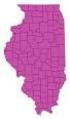 WHAT YOU NEED TO USE THE STATE PLANE COORDINATE SYSTEMS N & E State Plane Coordinates for Control Points AZIMUTHS - True, Geodetic, or Grid - Conversion from Astronomic to Geodetic (LaPlace Correction)
University of Arkansas Libraries ArcGIS Desktop Tutorial. Section 4: Preparing Data for Analysis
 : Preparing Data for Analysis When a user acquires a particular data set of interest, it is rarely in the exact form that is needed during analysis. This tutorial describes how to change the data to make
Excel 2007 Basic knowledge
 Ribbon menu The Ribbon menu system with tabs for various Excel commands. This Ribbon system replaces the traditional menus used with Excel 2003. Above the Ribbon in the upper-left corner is the Microsoft
Charts for SharePoint
 KWizCom Corporation Charts for SharePoint Admin Guide Copyright 2005-2015 KWizCom Corporation. All rights reserved. Company Headquarters 95 Mural Street, Suite 600 Richmond Hill, ON L4B 3G2 Canada E-mail:
Using Excel for descriptive statistics
 FACT SHEET Using Excel for descriptive statistics Introduction Biologists no longer routinely plot graphs by hand or rely on calculators to carry out difficult and tedious statistical calculations. These
Microsoft Access 2010 handout
 Microsoft Access 2010 handout Access 2010 is a relational database program you can use to create and manage large quantities of data. You can use Access to manage anything from a home inventory to a giant
Basic Steps to Using the Wildlife Application
 Basic Steps to Using the Wildlife Application The intent of the Wildlife Application (http://gisweb1.serm.gov.sk.ca/wildlifelogin/form.asp) is to provide a tool to search an area in the province of Saskatchewan
City of Tigard. GIS Data Standards
 City of Tigard GIS Data Standards City of Tigard 13125 SW Hall Blvd Tigard, Oregon 97223 503 639-4171 Page 1 of 5 1.0 Purpose The purpose of these standards is to provide guidance for geospatial data development