
Food and Water in an Emergency
|
|
|
- Beverly Sanders
- 10 years ago
- Views:
Transcription
1 Food and Water in an Emergency

2

3 If an earthquake, hurricane, winter storm, or other disaster strikes your community, you might not have access to food, water, and electricity for days or even weeks. By taking some time now to store emergency food and water supplies, you can provide for your entire family.

4 Emergency Food Supplies Even though it is unlikely that an emergency would cut off your food supply for two weeks, consider maintaining a supply that will last that long. You may not need to go out and buy foods to prepare an emergency food supply. You can use the canned goods, dry mixes, and other staples on your cupboard shelves. Be sure to check expiration dates and follow the practice of first-in, first-out. PREPARING AN EMERGENCY FOOD SUPPLY As you stock food, take into account your family s unique needs and tastes. Familiar foods are important. They lift morale and give a feeling of security in times of stress. Try to include foods that they will enjoy and that are also high in calories and nutrition. Foods that require no refrigeration, water, special preparation, or cooking are best. 2

5 Individuals with special diets and allergies will need particular attention, as will babies, toddlers, and the elderly. Nursing mothers may need liquid formula, in case they are unable to nurse. Canned dietetic foods, juices, and soups may be helpful for ill or elderly people. Make sure you have a manual can opener and disposable utensils. Don t forget nonperishable foods for your pets. STORAGE TIPS Keep food in a dry, cool spot a dark area if possible. Open food boxes and other re-sealable containers carefully so that you can close them tightly after each use. Wrap perishable foods, such as cookies and crackers, in plastic bags and keep them in sealed containers. Empty open packages of sugar, dried fruits, and nuts into screw-top jars or air-tight canisters for protection from pests. Inspect all food for signs of spoilage before use. Throw out canned goods that become swollen, dented, or corroded. Use foods before they go bad, and replace them with fresh supplies, dated with ink or marker. Place new items at the back of the storage area and older ones in front. 3

6 SHELF-LIFE OF FOODS FOR STORAGE The following provides some general guidelines for replacement of common emergency foods. Use within six months: Powdered milk - boxed Dried fruit Dry, crisp crackers Potatoes Use within one year, or before the date indicated on the label: Canned condensed meat and vegetable soups Canned fruits, fruit juices, and vegetables Ready-to-eat cereals and uncooked instant cereals Peanut butter Jelly Hard candy and canned nuts Vitamins May be stored indefinitely (in proper containers and conditions): Wheat Vegetable oils Dried corn Baking powder Soybeans Instant coffee, tea, and cocoa Salt Noncarbonated soft drinks White rice Bouillon products Dry pasta Powdered milk in nitrogen-packed cans 4

7 IF THE ELECTRICITY GOES OFF... FIRST... Use perishable food from the refrigerator, pantry, garden, etc. THEN... Use the foods from the freezer. To limit the number of times you open the freezer door, post a list of freezer contents on it. In a well-filled, well-insulated freezer, foods will usually still have ice crystals in their centers (meaning foods are safe to eat) for at least two days. Check to make sure the seal on your freezer door is still in good condition. FINALLY... Begin to use non-perishable foods and staples. 5

8 HOW TO COOK IF THE POWER GOES OUT For emergency cooking indoors, you can use a fireplace. A charcoal grill or camp stove can be used outdoors. You can keep cooked food hot by using candle warmers, chafing dishes, and fondue pots. Use only approved devices for warming food. Canned food can be eaten right out of the can. If you heat it in the can, be sure to open the can and remove the label before heating. Always make sure to extinguish open flames before leaving the room. WHEN FOOD SUPPLIES ARE LOW If activity is reduced, healthy people can survive on half their usual food intake for an extended period and without any food for many days. Food, unlike water, may be rationed safely, except for children and pregnant women. If your water supply is limited, don t eat salty foods, since they will make you thirsty. Instead, eat salt-free crackers, whole grain cereals, and canned foods with high liquid content. NUTRITION TIPS During and after a disaster, it is vital that you maintain your strength. Remember the following: Eat at least one well-balanced meal each day. Drink enough liquid to enable your body to function properly (two quarts or a half gallon per day). Take in enough calories to enable you to do any necessary work. Include vitamin, mineral, and protein supplements in your stockpile to ensure adequate nutrition. 6

9 Emergency Water Supplies Having an ample supply of clean water is a top priority in an emergency. A normally active person needs to drink at least two quarts (half gallon) of water each day. People in hot environments, children, nursing mothers, and ill people will require even more. You will also need water for food preparation and hygiene. Store at least one gallon per person, per day. Consider storing at least a two-week supply of water for each member of your family. If you are unable to store this quantity, store as much as you can. If supplies run low, never ration water. Drink the amount you need today, and try to find more for tomorrow. You can minimize the amount of water your body needs by reducing activity and staying cool. 7

10 PREPARE AND STORE AN EMERGENCY SUPPLY OF WATER To prepare the safest and most reliable emergency supply of water, it is recommended that you purchase commercially bottled water. Keep bottled water in its original container, and do not open it until you need to use it. Store bottled water in the original sealed container, and observe the expiration or use by date. If You Are Preparing Your Own Containers of Water... It is recommended to purchase food-grade water storage containers from surplus or camping supplies stores to use for water storage. If you decide to re-use storage containers, choose two-liter plastic soft drink bottles not plastic jugs or cardboard containers that have had milk or fruit juice in them. The reason is that milk protein and fruit sugars cannot be adequately removed from these containers and provide an environment for bacterial growth when water is stored in them. Cardboard containers leak easily and 8

11 are not designed for long-term storage of liquids. Also, do not use glass containers, because they are heavy and may break. Preparing Containers Thoroughly clean the bottles with dishwashing soap and water, and rinse completely so there is no residual soap. Additionally, for plastic soft drink bottles, sanitize the bottles by adding a solution of 1 teaspoon of non-scented liquid household chlorine bleach to a quart (1/4 gallon) of water. Swish the sanitizing solution in the bottle so that it touches all surfaces. After sanitizing the bottle, thoroughly rinse out the sanitizing solution with clean water. Filling Water Containers Fill the bottle to the top with regular tap water. (If your water utility company treats your tap water with chlorine, you do not need to add anything else to the water to keep it clean.) If the water you are using comes from a well or water source that is not treated with chlorine, add two drops of non-scented liquid household chlorine bleach to each gallon of water. Tightly close the container using the original cap. Be careful not to contaminate the cap by touching the inside of it with your fingers. Write the date on the outside of the container so that you know when you filled it. Store in a cool, dark place. Replace the water every six months if not using commercially bottled water. 9

12 HIDDEN WATER SOURCES IN YOUR HOME Safe water sources in your home include the water in your hotwater tank, pipes, and ice cubes. You should not use water from toilet flush tanks or bowls, radiators, waterbeds, or swimming pools/spas. You will need to protect the water sources already in your home from contamination if you hear reports of broken water or sewage lines, or if local officials advise you of a problem. To shut off incoming water, locate the main valve and turn it to the closed position. Be sure you and other family members know beforehand how to perform this important procedure. To use the water in your pipes, let air into the plumbing by turning on the faucet in your home at the highest level. A small amount of water will trickle out. Then obtain water from the lowest faucet in the home. To use the water in your hot-water tank, be sure the electricity or gas is off, and open the drain at the bottom of the tank. Start the water flowing by turning off the water intake valve at the tank and turning on a hot-water faucet. Refill the tank before turning the gas or electricity back on. If the gas is turned off, a professional will be needed to turn it back on. EMERGENCY OUTDOOR WATER SOURCES If you need to find water outside your home, you can use these sources. Be sure to treat the water according to the instructions on the next page before drinking it. Rainwater Streams, rivers, and other moving bodies of water Ponds and lakes Natural springs Avoid water with floating material, an odor, or dark color. Use saltwater only if you distill it first. You should not drink flood water. 10

13 WAYS TO TREAT WATER The instructions below are for treating water of uncertain quality in rare emergency situations in the absence of instructions from local authorities when no other reliable clean water source is available and you have used all of your stored water. If you store enough water in advance, you will not need to treat water using these or other methods. In addition to having a bad odor and taste, contaminated water can contain microorganisms (germs, bacteria, and viruses) that cause diseases such as dysentery, typhoid, and hepatitis. You should treat all water of uncertain quality before using it for drinking, food preparation, or hygiene. There are many ways to treat water, though none are perfect. Often the best solution is a combination of methods. Boiling or chlorination will kill most microorganisms but will not remove other contaminants such as heavy metals, salts, and most other chemicals. Before treating, let any suspended particles settle to the bottom, or strain them through layers of paper towel, clean cloth, or coffee filter. Boiling Boiling is the safest method of treating water. In a large pot or kettle, bring water to a rolling boil for 1 full minute, keeping in mind that some water will evaporate. Let the water cool before drinking. Boiled water will taste better if you put oxygen back into it by pouring the water back and forth between two clean containers. This will also improve the taste of stored water. Chlorination You can use household liquid bleach to kill microorganisms. Use only regular household liquid bleach that contains 5.25 to 6.0 percent sodium hypochlorite. Do not use scented bleaches, colorsafe bleaches, or bleaches with added cleaners. Because the potency of bleach diminishes with time, use bleach from a newly opened or unopened bottle. 11

14 Add 16 drops (1/8 teaspoon) of bleach per gallon of water, stir and let stand for 30 minutes. The water should have a slight bleach odor. If it doesn t, then repeat the dosage and let stand another 15 minutes. If it still does not smell of bleach, discard it and find another source of water. Other chemicals, such as iodine or water treatment products (sold in camping or surplus stores) that do not contain 5.25 to 6.0 percent sodium hypochlorite as the only active ingredient, are not recommended and should not be used. Distillation While the two methods described above will kill most microorganisms in water, distillation will remove microorganisms that resist these methods, as well as heavy metals, salts, and most other chemicals. Distillation involves boiling water and then collecting the vapor that condenses back to water. The condensed vapor will not include salt or most other impurities. To distill, fill a pot halfway with water. Tie a cup to the handle on the pot s lid so that the cup will hang rightside-up when the lid is upside-down (make sure the cup is not dangling into the water), and boil the water for 20 minutes. The water that drips from the lid into the cup is distilled. (See illustration.) 12

15 Disaster Supplies Kit In the event you need to evacuate at a moment s notice and take essentials with you, you probably will not have the opportunity to shop or search for the supplies you and your family will need. Every household should assemble a disaster supplies kit and keep it up to date. A disaster supplies kit is a collection of basic items a family would probably need to stay safe and be more comfortable during and after a disaster. Disaster supplies kit items should be stored in a portable container(s) near, or as close as possible to, the exit door. Review the contents of your kit at least once per year or as your family needs change. Also, consider having emergency supplies in each vehicle and at your place of employment. The following should be included in your basic disaster supplies kit: Three-day supply of nonperishable food and manual can opener. Three-day supply of water (one gallon of water per person, per day). Portable, battery-powered radio or television, and extra batteries. Flashlight and extra batteries. First aid kit and manual. Sanitation and hygiene items (hand sanitizer, moist towelettes, and toilet paper). Matches in waterproof container. Whistle. Extra clothing and blankets. Kitchen accessories and cooking utensils. Photocopies of identification and credit cards. Cash and coins. Special needs items such as prescription medications, eye glasses, contact lens solution, and hearing aid batteries. Items for infants, such as formula, diapers, bottles, and pacifiers. Tools, pet supplies, a map of the local area, and other items to meet your unique family needs. 13

16 Learn More The Federal Emergency Management Agency s Community and Family Preparedness Program and American Red Cross Community Disaster Education are nationwide efforts to help people prepare for disasters of all types. For more information, please contact your local emergency management office or American Red Cross chapter. This booklet and the preparedness materials listed below are online at and org. Other preparedness materials are available at these sites, as well as at These publications are also available by calling FEMA at , or writing: FEMA P.O. Box 2012 Jessup, MD Publications with an A number are available from your local American Red Cross chapter. Are You Ready? An In-depth Guide to Citizen Preparedness (IS-22) Preparing for Disaster (FEMA 475) (A4600) Preparing for Disaster for People with Disabilities and other Special Needs (FEMA 476) (A4497) Helping Children Cope with Disaster (FEMA 478) (A4499) Local sponsorship provided by: FEMA 477 A5055 August 2004

Helping Children Cope with Disaster
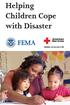 Helping Children Cope with Disaster This booklet offers parents, caregivers, and other adults suggestions on how to help children cope with the effects of disaster, as well as how to be prepared before
Precautionary Boil Water Notices: Frequently Asked Questions
 Precautionary Boil Water Notices: Frequently Asked Questions QUICK TIPS: Boil Water For: Drinking Brushing Teeth Washing fruits & vegetables Preparing food Mixing baby formula Making ice Giving water to
EMERGENCY PREPAREDNESS
 EMERGENCY PREPAREDNESS REQUIREMENTS: Wind makes kites fly, fire can keep us warm, and rain helps the flowers and plants to grow. But sometimes the wind can blow too hard, fires can get too big or it can
The effects of a pandemic can be lessened, however, if preparations are made ahead of time.
 PANDEMIC FLU FAMILY GUIDE TO PREPARATIONS A flu pandemic is a global outbreak of influenza that occurs when a new flu virus appears to which people have little or no immunity. Pandemic flu spreads easily
Cholera Prevention and Control: Introduction and Community Engagement. Module 1
 Cholera Prevention and Control: Introduction and Community Engagement Module 1 Introduction This guide instructs how to prevent cholera illnesses and deaths in your communities. These slides and modules
Food Protection Program 2 North Meridian Street Indianapolis, IN 46204 http://www.in.gov/isdh/regsvcs/foodprot/index.htm.
 Food Protection Program 2 North Meridian Street Indianapolis, IN 46204 http://www.in.gov/isdh/regsvcs/foodprot/index.htm Sewage Backup For the purpose of this Emergency Action Plan (EAP), a sewage backup
Emergency Guideline for Food Facilities during Boil Water Advisory or Other Public Notices
 Emergency Guideline for Food Facilities during Boil Water Advisory or Other Public Notices Water supply warnings are generally required when water suppliers need to provide consumers with immediate and
How to Use Water Safely in Your Food Establishment During a Boil Water Advisory
 How to Use Water Safely in Your Food Establishment During a Boil Water Advisory Food service establishments are allowed to operate during the boil water advisory as long as the conditions outlined below
How to Prepare for and Survive a Disaster in Rancho Palos Verdes
 How to Prepare for and Survive a Disaster in Rancho Palos Verdes Is Your Home Ready? It s not the will to survive, but the will to prepare to survive that makes the difference. This brochure provides clear
How to prepare your baby s bottle
 How to prepare your baby s bottle Cleaning and Sterilising Using or storing sterilised bottles Preparing a bottle feed Storing and warming feeds Feeding your baby Crèches, childminders and other childcare
Suggested Hurricane Supply List
 Suggested Hurricane Supply List To prepare for the unknown, each home should have a 72-hour Disaster Survival Kit. You will need to pack some essential items to help you and your family survive, whether
EmERgEnCY PREPAREDnESS guide for muskego CREE families JAmES BAY first nation COmmunitiES
 Emergency Preparedness Guide for Muskego Cree Families James Bay First Nation Communities BE RED CROSS READY www.redcross.ca/ready www.moosecree.com www.facebook.com/moosecreefirstnation pr Ther eme st
Hurricane Preparedness Checklist www.hcoem.org
 Hurricane Preparedness Checklist DISASTER. It strikes anytime, anywhere. It takes many forms -- a hurricane, an earthquake, a tornado, a flood, a fire or a hazardous spill, some are natural, some are man-made.
How to prepare your baby s bottle feed
 How to prepare your baby s bottle feed New Safety Advice Powdered infant formula is not sterile. It may contain bacteria that can make your baby sick. You can reduce the risk to your baby if you prepare
Food Safety Guide for Family Day Care Educators
 Food Safety Guide for Family Day Care Educators Department of Health and Human Services About this Guide This Guide is designed to help Family Day Care (FDC) Educators make safe and healthy meals for the
Boil Water Advisory. For Commercial/Public Facilities. Boil Water Advisory Factsheet #3
 Boil Water Advisory Factsheet #3 Boil Water Advisory For Commercial/Public Facilities How to operate a commercial/ public facility under a boil water advisory Boil water advisories are issued when a municipal,
HOW TO RESPOND WHEN DISASTER STRIKES.. FIRE POWER OUTAGE WATER DAMAGE ( TO ADD TEMPORARY WATER INTERRUPTION)
 HOW TO RESPOND WHEN DISASTER STRIKES.. FIRE POWER OUTAGE WATER DAMAGE ( TO ADD TEMPORARY WATER INTERRUPTION) FIRE Determining the extent of fire and smoke damage is very difficult. Look for the following
City of Richmond Citizens Emergency Citizens Emergency Preparedness Preparedness Guide Guide
 City of Richmond Citizens Emergency Citizens Emergency Preparedness Preparedness Guide Guide Your Guide To Emergency Preparedness Letter from Mayor... 1 Are You Ready?... 3 Get a Kit... 5 Emergency Supply
REQUIREMENTS FOR TRADE SHOWS
 REQUIREMENTS FOR TRADE SHOWS All Trade Show Booth operators who give out food samples must be approved before the event and licensed by Regina Qu Appelle Health Region prior to opening. Food sold for immediate
FLOOD CLEANUP HEALTH TIPS DOUGLAS COUNTY HEALTH DEPARTMENT
 Food & Drink Section: 444-7480 Sanitation Control: 444-7481 Sanitary Engineering: 444-7485 FLOOD CLEANUP HEALTH TIPS DOUGLAS COUNTY HEALTH DEPARTMENT In order to provide one convenient source of emergency
WHEN THERE S A FLOOD What you NEED TO KNOW to protect your health and safety
 Before You Evacuate WHEN THERE S A FLOOD What you NEED TO KNOW to protect your health and safety If there is time, move important papers, television sets, computers, stereo equipment and easily moveable
Pandemic Influenza: A Guide for Individuals and Families
 Pandemic Influenza: A Guide for Individuals and Families GET INFORMED. BE PREPARED. This guide is designed to help you understand the threat of a pandemic influenza outbreak in our community. It describes
Building a Disaster Supply Kit: A 20 Week Checklist
 Building a Disaster Supply Kit: A 20 Week Checklist Visit us at: www.redcrosscentralcoast.org Connect with us: www.youtube/redcrosscentralcoast http://facebook.com/redcrossventuracounty http://facebook.com/redcrosssantabarbaracounty
Maintaining Nutrition as We Age
 SS-207-06 For more information, visit the Ohio Department of Aging web site at: http://www.goldenbuckeye.com and Ohio State University Extension s Aging in Ohio web site at: http://www.hec.ohio-state.edu/famlife/aging
Yorketown Community Children s Centre. Food Safety and Healthy Eating Policy
 Yorketown Community Children s Centre Food Safety and Healthy Eating Policy Policy Number 1 Link to CCQA Principles Family Day Care Quality Assurance (FDCQA) Quality Practices Guide (2004) Principle 4.2
READY? are you. Become a Ready Hero and learn how to plan for emergencies.
 are you READY? Become a Ready Hero and learn how to plan for emergencies. Once you have completed your readiness plan and built your emergency kit, have each family member sign the certificate (see inside
EMERGENCY ACTION PLAN FLOOD AND FOOD OPERATIONS
 NEW HAMPSHIRE DEPARTMENT OF HEALTH AND HUMAN SERVICES DIVISION OF PUBLIC HEALTH SERVICES FOOD PROTECTION SECTION EMERGENCY ACTION PLAN FLOOD AND FOOD OPERATIONS For single events affecting an individual
Food delivery & storage
 screen 1 Food delivery & storage 7. Rubbish bags in the way of deliveries This screen shows a delivery scene with a number of potential hazards to food safety. As a starting point students are encouraged
Are You Ready? FEMA. Are You Ready? An In-depth Guide to Citizen Preparedness. An In-depth Guide to Citizen Preparedness.
 An In-depth Guide to Citizen Preparedness FEMA Are You Ready? An In-depth Guide to Citizen Preparedness Are You Ready? IS-22 August 2004 Preface This guide has been prepared for direct dissemination to
SHOP SMART, STORE SAFE
 SHOP SMART, STORE SAFE Introduction This lesson gives an older adult audience an opportunity to focus on making the most of their food budgets by sharing strategies for healthy shopping on a budget and
SAFE HEALTHY CHILDREN A Health and Safety Manual for Childcare Providers
 TABLE OF CONTENTS Chapter 7: Food Storage and Preparation Safe Food: Food Storage and Preparation 7.1 Requirements of the Day Nurseries Act... 7.2 Recommendations of the Medical Officer of Health... 7.2
Things to Think About
 Why Do People with Thalassemia Need an Emergency Preparedness Checklist? Emergencies and natural disasters are thankfully rare, but they do happen. It s important that all families develop a plan of action
Disinfecting Your Private Well
 TCEQ GENERAL INFORMATION Water Supply Division GI-432 August 2013 Disinfecting Your Private Well Is Your Well Flooded? Disinfect It Before You Drink It! If your private well is flooded, do not use water
MY HOME IN A HOUSING BLOCK A GUIDE FOR RESIDENTS
 MY HOME IN A HOUSING BLOCK A GUIDE FOR RESIDENTS -KESKUSTA One half of Finns live in housing blocks, which is a safe and comfortable way to live. Welcome a board! Buildings and the Finnish climate There
How to Prepare Powdered Infant Formula in Care Settings
 How to Prepare Powdered Infant Formula in Care Settings This booklet contains new information to help you prepare powdered infant formula for bottle-feeding and cup-feeding as safely as possible. Powdered
BOIL WATER NOTICE FREQUENTLY ASKED QUESTIONS
 Nick Fish, Commissioner David G. Shaff, Administrator 1120 SW 5 th Avenue, Room 600 Portland, Oregon 97204-1926 Information: 503-823-7404 www.portlandoregon.gov/water About the Event: BOIL WATER NOTICE
Sanitary Food Preparation & Safe Food Handling
 70 Feeding Infants 10 Sanitary Food Preparation & Safe Food Handling Babies are more susceptible to bacteria than older children, and unsanitary food conditions can cause serious infections. General cleanliness,
Guideline on Emergency Action Plans for Food Establishments: Sewage Backup
 Guideline on Emergency Action Plans for Food Establishments: Sewage Backup A sewage backup refers to the overflow of sewage from equipment or plumbing facilities within a food establishment. A sewage backup
Common Causes of High Water Bills
 Common Causes of High Water Bills An unusually high water bill is most often caused by a leak or change in water use. Some common causes of high water bills include: A leaking toilet, or a toilet that
See also: http://healthyrecipes.oregonstate.edu/
 See also: http://healthyrecipes.oregonstate.edu/ http://extension.oregonstate.edu/fcd/nutrition/ewfl/module_03/intro_02.php healthy recipes: http://healthyrecipes.oregonstate.edu/recipes Planning ahead
EMERGENCY ACTION PLAN CONTAMINATED WATER SUPPLY (BIOLOGICAL)
 NEW HAMPSHIRE DEPARTMENT OF HEALTH AND HUMAN SERVICES DIVISION OF PUBLIC HEALTH SERVICES FOOD PROTECTION SECTION EMERGENCY ACTION PLAN CONTAMINATED WATER SUPPLY (BIOLOGICAL) For the purpose of this Emergency
VRE. Living with. Learning how to control the spread of Vancomycin-resistant enterococci (VRE)
 VRE Living with Learning how to control the spread of Vancomycin-resistant enterococci (VRE) CONTENTS IMPORTANT VRE is a serious infection that may become life-threatening if left untreated. If you or
PANDEMIC INFLUENZA PLANNING:
 PANDEMIC INFLUENZA PLANNING: A Guide for Individuals and Families Get Informed. Be Prepared. U.S. Department of Health and Human Services January 2006 Pandemics are global in nature, but their impact is
FLOOD EMERGENCY CLEANUP HANDBOOK
 COUNTY OF BERGEN FLOOD EMERGENCY CLEANUP HANDBOOK KATHLEEN A. DONOVAN County Executive BOARD OF CHOSEN FREEHOLDERS 327 E. Ridgewood Avenue Paramus, NJ 07652-4895 201-634-2600 FAX: 201-986-1968 www.bergenhealth.org
Preparing Food at Home advice and legal requirements www.eastbourne.gov.uk/homecatering
 Preparing Food at Home advice and legal requirements www.eastbourne.gov.uk/homecatering Introduction This advice is aimed at people preparing food for others beside their immediate family either: a) on
What to Recycle with NYC Dept. of Sanitation
 What to Recycle with NYC Dept. of Sanitation http://www.nyc.gov/html/nycwasteless/html/recycling/recycle_what.shtml Recycling is one of the simplest and most effective ways you can reduce your carbon footprint.
Household Preparedness Guide
 PreparedBC: Household Preparedness Guide A guide for protecting your family PreparedBC HOUSEHOLD PREPAREDNESS GUIDE Earthquakes, tsunamis, floods and wildfires are just some of the potential hazards in
SHELTER-IN-PLACE OR EVACUATE
 SHELTER-IN-PLACE OR EVACUATE WOULD YOU KNOW WHAT TO DO? A PREPAREDNESS GUIDE FOR THE HOME No matter where you live, your community may experience a natural or man-made disaster a tornado, floor, winter
Water It s Crucial Role in Health. By: James L. Holly, MD
 Water It s Crucial Role in Health By: James L. Holly, MD After a two week hiatus, we return to our series entitled, Aging Well. It is often the case that in health we become so infatuated with the exotic,
Preparing for Disaster
 Preparing for Disaster Where Will You or Your Family Be When a Disaster Strikes? You could be anywhere at work, at school or in the car. How will you find each other? Will you know if your children are
TEMPORARY FOOD FACILITY PERMIT APPLICATION
 COUNTY OF LAKE HEALTH SERVICES DEPARTMENT Division of Environmental Health 922 Bevins Court, Lakeport, CA 95453-9739 Telephone 707/ 263-1164 FAX: 263-1681 TEMPORARY FOOD FACILITY PERMIT APPLICATION Failure
Lesson Plan: How Do We Know What is Healthy Water?
 Lesson Plan: How Do We Know What is Healthy Water? Estimated Time: 1-3 days ph /Chlorine / Hardness State Standards taught and addressed Grade 8: Standards Taught (and evaluated at end of lesson) Science
Infant formula. Produced by. A guide to safe preparation and feeding of infant formula
 This publication was produced by the Centre for Health Promotion, in partnership with the Department of Nutrition, Women s and Children s Health Network. Infant formula Produced by Women s and Children
Earthquake Safety Checklist
 Earthquake Safety Checklist FEMA 526 / August 2005 FEMA Important Numbers and Addresses Call 911 for emergencies Your family may not be together when an earthquake strikes, so use the spaces below to
Healthy Grocery Shopping On A Budget
 Healthy Grocery Shopping On A Budget 1 Click Understanding to edit Master Grocery title style Stores Over 50,000 products Strategically placed items and traffic flow Lighting, music, color used strategically
MA Department of Public Health
 Emergency Guideline for Food Establishments During Boil Water Order What food establishments are affected? As of 5/1/10, all food establishments including restaurants, supermarkets, caterers, food service
GET READY IN 5 EASY STEPS HURRICANE SEASON
 HURRICANE SEASON GET READY IN 5 EASY STEPS It s true, major hurricanes don t hit the U.S. every year. But if you live on or near the coast, someday you may have to face a Category 3, or worse. Could be
A breastfed baby s bowel motions are soft, a bright yellow colour and often very frequent, but each baby is different. Breastfed babies don t usually
 2 A breastfed baby s bowel motions are soft, a bright yellow colour and often very frequent, but each baby is different. Breastfed babies don t usually get constipated, even though some babies only have
8 plumbing. plumbing. 2010 PulteGroup, Inc. All Rights Reserved.
 8 90 2010 PulteGroup, Inc. All Rights Reserved. drains All the water you use leaves the home through a drain. Maintaining drains prevents clogging, overflows, water damage, and other problems. care and
PreparedBC: Guide for Apartments, Condos and Townhomes
 PreparedBC: Guide for Apartments, Condos and Townhomes PreparedBC GUIDE FOR APARTMENTS, CONDOS AND TOWNHOUSES Did you know almost half of all British Columbians live in some form of multi-family housing
Help protect our special places by maintaining your septic tank
 Help protect our special places by maintaining your septic tank BC3136 A septic tank guide Help protect our special places Rural Auckland is a special place, but the remoteness also means that many homes
N F C S R E S O U R C E S. Just In Case. National Family Caregiver Support Program. Emergency Readiness for Older Adults and Caregivers
 N F C S U.S. Department of Health and Human Services Administration on Aging National Family Caregiver Support Program Just In Case Emergency Readiness for Older Adults and Caregivers P R E S O U R QUICK
How to prepare the Green Cleaning Recipes for a Healthy Home pages:
 How to prepare the Recipes for a Healthy Home pages: The following pages, Recipes for a Healthy Home, should be printed back to back on heavy weight paper. The odd number recipes will be on top and the
FACT SHEET. Users That Must Take Particular Precautions During A Boil Advisory
 FACT SHEET Users That Must Take Particular Precautions During A Boil Advisory a) Commercial Establishments (Restaurants, Hotels, Convenience Stores, etc.) - All water that is to be provided directly to
Pima County Office of Emergency Management and Homeland Security
 Pima County Office of Emergency Management and Homeland Security A Neighborhood Guide for Emergency Preparedness The events of September 11, 2001 and subsequent bioterrorism acts have reminded us of the
Save Time and Money at the Grocery Store
 Save Time and Money at the Grocery Store Plan a Grocery List Making a list helps you recall items you need and also saves you time. Organize your list according to the layout of the grocery store. For
Saving Energy in the Home Top Tips Easy Read
 Saving Energy in the Home Top Tips Easy Read Rory Rory BILLY BILLY Rory Save it! This workbook has been made by people with learning disabilities and/or autism. This workbook will help you to think about
Feeding. Baby. Your. Infant. Formula
 Feeding Your Infant Baby Formula 1 Feeding Your Baby Infant Formula There are many reasons why some mothers don t breastfeed. If you feel sad and/or disappointed that you are not fully breastfeeding your
Cleaning up after sewage backup
 Be prepared Being prepared before an emergency strikes will benefit you greatly in: Reducing your stress and protecting your health. Minimizing possible exposure to health hazards. Minimizing loss to personal
Healthy Grocery Shopping on a Budget. Tips for smart spending at the grocery store
 Healthy Grocery Shopping on a Budget Tips for smart spending at the grocery store Re c ipe e! In d si Grocery Store Science Eating well does not need to cost a lot of money. Here are some ways to choose
Emergency Planning Template. A Guide for Family and Large Family
 Emergency Planning Template A Guide for Family and Large Family Child Care Homes Emergency Planning Template: A Guide for Family and Large Family Child Care Homes June, 2009 The purpose of this template
What To Do When Your Well is Flooded. Common Sense Steps To Take If Your Well Is Covered by Flood Water
 What To Do When Your Well is Flooded Common Sense Steps To Take If Your Well Is Covered by Flood Water Courtesy of CleanWaterStore.com 2016 Contents 1. What To Do If Your Well Is Covered by Flood Water...
Florida Department of Health WIC Program. This institution is an equal opportunity provider. 1/2016 1
 Florida Department of Health WIC Program This institution is an equal opportunity provider. 1/2016 1 EBT stands for Electronic Benefits Transfer. EBT is a simple, secure, and convenient way to buy your
What Is. Norovirus? Learning how to control the spread of norovirus. Web Sites
 Web Sites Centers for Disease Control and Prevention (CDC) http://www.cdc.gov/norovirus/index.html Your Local Health Department http://www.azdhs.gov/diro/lhliaison/countymap.htm What Is Ocument dn Norovirus?
Black Hills Healthcare System
 Black Hills Healthcare System Methicillin Resistant Staphylococcal Aureus (MRSA) Patient and Family Information What is MRSA? Staphylococcus Aureus, often referred to simply as staph, is a bacteria commonly
Candidate Study Guide for the Illinois Food Service Sanitation Manager Examinations
 Candidate Study Guide for the Illinois Food Service Sanitation Manager Examinations This information is intended to help you prepare for the Illinois Food Service Sanitation Manager Examinations. Part
Hot Leaks. See how the temperature of liquids changes the way they flow.
 P h y s i c s Q u e s t A c t i v i t i e s Activity 2 1 Hot Leaks See how the temperature of liquids changes the way they flow. Safety: This experiment requires using the hot water tap and straight pins.
When 911 is called, the person making the call will stay on the phone until the dispatcher hangs up and all questions have been answered.
 Emergency Preparedness Plan In all scenarios below, the situation, with specific details, will be documented in the client s file. The client s case management agency and client s family/representative
How to Prepare Yourself For Emergencies
 Emergency Management at Yale Important Phone Numbers Yale Police 911 or 203-432-4400 Yale Security 203-785-5555 Facilities Operations Center 203-432-6888 Yale Health 203-432-0123 Blue phones 400+ around
Balloon Inside a Bottle
 Balloon Inside a Bottle What is Needed * One small party balloon * One small bottle. A 16 ounce pop bottle works well. What to Do Put approximately 1 tablespoon of water into the empty pop bottle. Then
Maximizing Nutrition at Minimal Cost
 Maximizing Nutrition at Minimal Cost Outline: Get down to the nutrition basics Identify health issues at hand Understand the challenges & barriers Practical application & solutions Rate Your Plate What
General food hygiene rules
 General food hygiene rules Why food hygiene is important? Good food hygiene is essential to ensure that the food you and your family eats is safe. Poor hygiene procedures in your home can put you at risk.