
Civic Engagement and the Transition to Adulthood
|
|
|
- Alice Lang
- 10 years ago
- Views:
Transcription
1 Civic Engagement and the Transition to Adulthood Constance Flanagan and Peter Levine Summary Constance Flanagan and Peter Levine survey research on civic engagement among U.S. adolescents and young adults. Civic engagement, they say, is important both for the functioning of democracies and for the growth and maturation it encourages in young adults, but opportunities for civic engagement are not evenly distributed by social class or race and ethnicity. Today s young adults, note the authors, are less likely than those in earlier generations to exhibit many important characteristics of citizenship, raising the question of whether these differences represent a decline or simply a delay in traditional adult patterns of civic engagement. Flanagan and Levine also briefly discuss the civic and political lives of immigrant youth in the United States, noting that because these youth make up a significant share of the current generation of young adults, their civic engagement is an important barometer of the future of democracy. The authors next survey differences in civic participation for youth from different social, racial, and ethnic backgrounds. They explore two sets of factors that contribute to a lower rate of civic engagement among low-income and minority young adults. The first is cumulative disadvantage unequal opportunities and influences before adulthood, especially parental education. The second is different institutional opportunities for civic engagement among college and noncollege youth during the young-adult years. Flanagan and Levine survey various settings where young adults spend time schools and colleges, community organizations, faith-based institutions, community organizing and activism projects, and military and other voluntary service programs and examine the opportunities for civic engagement that each affords. As the transition to adulthood has lengthened, say the authors, colleges have become perhaps the central institution for civic incorporation of younger generations. But no comparable institution exists for young adults who do not attend college. Opportunities for sustained civic engagement by year-long programs such as City Year could provide an alternative opportunity for civic engagement for young adults from disadvantaged families, allowing them to stay connected to mainstream opportunities and to adults who could mentor and guide their way. Constance Flanagan is a professor of youth civic development in the College of Agricultural Sciences at Pennsylvania State University. Peter Levine is the director of CIRCLE (The Center for Information and Research on Civic Learning and Engagement) at the Tisch College of Citizenship and Public Service, Tufts University. VOL. 20 / NO. 1 / SPRING

2 Constance Flanagan and Peter Levine The civic engagement of young adults whether in the form of joining community groups, volunteering to help neighbors, or leading grassroots efforts to gain civil rights is important to the health and performance of democracy. It is also important for personal growth and identity formation during the transition to adulthood. When younger Americans have a voice in community affairs, they can contribute their insights to public debates and their energies to addressing public problems. Issues that centrally involve adolescents and young adults such as the high-school dropout crisis, the costs of higher education, or youth violence especially benefit from youth input. Young adults who identify with, have a stake in, and want to contribute to their communities can help to stabilize democratic societies by directing their discontent into constructive channels. They can also be a force for political change, by bringing new perspectives on political issues and offering fresh solutions. During late adolescence and young adulthood, people chart a course for their future and take stock of the values they live by and the kind of world they want to be part of. The personal and psychological benefits of civic engagement for young adults include fulfillment of the human need to belong and to feel that life has a purpose beyond the pursuit of individual gain. Whether through voting, working in community-based organizations to address local problems, or volunteering time or money to a social cause, civic activities raise issues involving connection to others, public goods and values, and the collective nature of solving problems. Engaging with fellow members of a community-based group also helps youth form social networks, build social capital, and connect to educational and occupational opportunities. Civic Engagement and the Changing Transition to Adulthood Like other markers of adulthood such as finishing school and starting a family, civic engagement is a key part of the transition between adolescence and mature adulthood. During childhood and adolescence people become aware of political institutions, social issues, and larger communities; learn facts and concepts related to politics; and begin to practice active citizenship by volunteering, belonging to groups, consuming news media, and discussing issues. The opportunities and choices of these years shape interests and pathways. 1 During late adolescence and young adulthood, people chart a course for their future and take stock of the values they live by and the kind of world they want to be part of. Moral and political issues become salient concerns. Exploring alternative political perspectives, working with people from different social backgrounds, and wrestling with a range of perspectives on social issues provide opportunities to reflect on one s own views and decide where one stands. According to life-cycle theories, stable patterns of civic engagement take hold once individuals have settled into adult roles, such as steady jobs, marriage, and parenting, that build up their stake in community affairs. These adult roles give a predictable structure 160 THE FUTURE OF CHILDREN

3 to life that makes regular engagement in community affairs more likely and increases the probability of being recruited into civic affairs. 2 By contrast, the lives of young adults are unsettled and in flux as they move into and out of institutional settings such as school or work. Although they are more likely to take part in civic life when they are in such settings, their involvement tends to be episodic. Nonetheless, opportunities to explore civic issues and to wrangle with others who have different perspectives help young adults to crystallize their values and political stands. Political identities formed in the early-adult years are highly predictive of the positions individuals will hold in middle and even late adulthood. Political views as well as levels and forms of engagement will vary within every generation, but the politics of a generation takes shape in the context of the political climate, issues, and range of tenable solutions circulating when a cohort comes of age. In this article, we summarize research findings on civic engagement in late adolescence and early adulthood and on how patterns of engagement today may differ from those in earlier generations. As the transition to adulthood lengthens, is it taking longer for persistent patterns of civic engagement to take hold? We discuss how civic participation varies for youth from different social, racial, and ethnic backgrounds and for new immigrants. In particular, we assess two sets of factors that may contribute to a civic divide. The first is cumulative disadvantage (unequal opportunities and influences before adulthood); the second is differing institutional opportunities during the young-adult years themselves. Next we focus on a variety of institutional settings where young adults spend time schools and colleges, community organizations, faith-based groups, community activist groups, the military, and year-long programs such as AmeriCorps and examine the opportunities for civic engagement that each affords. We conclude with a discussion of policy directions. Decline or Delay? Trends in Young Adults Civic Engagement Young adults today are less likely than their counterparts in the 1970s were to exhibit nine out of ten important characteristics of citizenship: belonging to at least one group, attending religious services at least monthly, belonging to a union, reading newspapers at least once a week, voting, being contacted by a political party, working on a community project, attending club meetings, and believing that people are trustworthy. 3 Only in a tenth form of citizenship volunteering are they more likely to participate, probably as a result of deliberate efforts over the past several decades by schools, colleges, and community groups to encourage volunteering. For several of these ten types of engagement notably voting rates have risen in the 2000s compared with the 1990s, but not enough to compensate for thirty years of decline. These changes invite us to ask whether the nation s younger generations have permanently weaker connections to civic life than their predecessors or whether the lengthening transition to adulthood means that young people today take longer to begin to forge those connections (much as they take longer to get married or finish their education). Trends in voting provide evidence that at least some of the change is a matter of delay, not a permanent generational decline. During any era, young adults are less likely than their elders to vote. Since 1972, when eighteenyear-old Americans were first eligible to vote, the voting gap between youth aged eighteen to twenty-five and their elders has fluctuated VOL. 20 / NO. 1 / SPRING

4 Constance Flanagan and Peter Levine Figure 1. Voting Turnout over the Life Course and earlier 1960 cohort 1964 cohort 1968 cohort 1972 cohort 1976 cohort 1980 cohort 1984 cohort 1988 cohort 1992 cohort 1996 cohort 2000 cohort 70 Percent st 2nd 3rd 4th 5th 6th 7th 8th Number of elections since cohort was first eligible to vote Source: Census Current Population Supplement. in presidential election years between 16 percent and 27 percent, with the smallest margin in 1972 and the largest in Figure 1 shows voting rates over the life course for twelve different cohorts (each born within a different four-year period) that became eligible to vote in time for presidential elections from 1956 to The overall pattern is that each generation moves toward the same high level of turnout over the life course. For instance, the cohorts that are old enough to have voted in five elections are all voting at rates above 60 percent. But the earlier generations start at a higher rate and rise less to reach the 60 percent level or above. Every successive cohort has had a lower starting point, but has also become substantially more engaged during their twenties and into their thirties, narrowing the gap. This interpretation is consistent with a political life-cycle model that holds that political engagement increases as one s life, roles, and institutional connections in the community become more stable. Delays in role changes (stable jobs, marriage, and family formation) associated with the increasingly protracted transition to adulthood have been accompanied by delays in the voting patterns of successive cohorts of young adults. These trends in voting patterns tell a story of delay rather than one of decline. But a protracted developmental period and delayed civic engagement cannot explain all the changes in forms of engagement. First, certain civic activities have become more common for young adults than they once were. As noted, the volunteering rate for young adults rose during the 1990s and is higher today than it was during the 1970s and 1980s. Today young adults are about as likely as their contemporary elders to volunteer, raise funds for causes, and say they have worked on local projects with other people in their communities. Youth today are more likely than their contemporary elders to engage in global activism, to use the Internet for political information and action (which 162 THE FUTURE OF CHILDREN

5 was impossible thirty years ago), and to engage in lifestyle and consumer politics. 5 Second, in some forms of civic engagement that have declined substantially, younger generations do not catch up with their elders as they move through their twenties. Newspaper readership is one example: recent generations have not narrowed the gap with their parents as they have aged. 6 Social trust reflected generational declines through the 1990s but showed some recovery in the new millennium and, across cohorts, increased through the third decade of life. 7 For some other forms of engagement (such as meeting attendance and working on community projects), we lack sufficient long-term data to be able to tell whether downward trends represent declines or delays. For several decades, both forms and patterns of young adult civic engagement have been changing. For example, panel studies indicate that patterns of civic engagement in young adulthood have become increasingly episodic over the past several generations. Even the civic engagement of the baby boom generation (1965 high school graduating cohort) was more episodic than that of their parents at similar ages. Consequently, it is more challenging to predict lifelong patterns of conventional engagement based on adolescent activity. For the baby boom generation, levels of civic engagement in high school were a poor predictor of engagement in their midtwenties. As the boomers settled into adult roles in their thirties and forties, however, patterns of civic engagement became more predictable. 8 These trends across generations have led to speculation that the character of American civic life is changing toward more short-term and episodic engagement and away from enduring memberships in associations and community organizations. Nonetheless, the young adult years are a formative period when civic values and political ideologies crystallize. Opportunities for engaging with others to address civic concerns make it more likely that in the long run people will identify with and contribute to the common good. Immigrant Youth and Undocumented Youth The nature of the civic and political lives of immigrant youth in the United States is an important barometer for the future of democracy, if for no other reason than that these youth make up a significant share of the younger generation (see the article by Rubén Rumbaut in this volume for more detail on immigrant youth). Examining the ways in which society includes or excludes these groups, the forms their political engagement takes, and the opportunities they have to exercise their political voice and develop civic competencies begin to yield a picture of tomorrow s political landscape. Besides sheer numbers, immigrant youth provide unique insights into the social contract and the ties of rights and responsibilities that bind us as Americans. Only immigrants, after all, choose to become U.S. citizens. That decision may be instrumental a path to other ends or it may be motivated by more lofty (patriotic) goals. In either case, choosing to become a citizen and accepting the rights and responsibilities of that decision is a form of civic engagement unique to immigrants. Newcomers who lack legal permanent residency, of course, do not have that choice. For many immigrants, especially the undocumented, citizenship itself is contested, and everyday life raises political issues. It is estimated that roughly half of immigrant children live in families where at least one adult is not an American citizen. In 2005, it VOL. 20 / NO. 1 / SPRING

6 Constance Flanagan and Peter Levine was estimated that 11 percent of children in immigrant families were unauthorized and 18 percent were born in the United States to an unauthorized parent. 9 Many of the mainstream institutions that engage most Americans are not open to the undocumented. One exception is the public school, from which undocumented children cannot legally be excluded. Passages into adulthood (jobs or postsecondary education) after school, however, are severely constrained, because the undocumented cannot legally work and are denied access to most publicly funded programs, including ones with explicit civic missions, such as Conservation Corps. Even applying for a library card or driver s license is off limits for those without the proper identity papers. Furthermore, because the undocumented are ineligible for most college financial aid programs, they face enormous barriers to higher education. It is thus not surprising that working to change systemic barriers and legalizing access to higher education are meaningful forms of civic engagement that unite immigrant communities. In a national survey of youth conducted in the spring of 2006 a time when major protests were being organized in most large American cities against restrictions on immigration 23 percent of immigrant youth and 18 percent of children of immigrant parents reported that they had protested in the past twelve months. 10 In contrast, young people who were born in the United States to native-born parents reported a protest rate of just 10 percent. Student activist groups such as California s Orange County Immigrant Student Group (OCISG) have coalesced around the shared goal of educational access. Group members, who come from California s postsecondary public education system, include both documented and undocumented immigrants and current, former, and aspiring students. Organizing is now focused on the DREAM (Development, Relief and Education for Alien Minors) Act, a bill under consideration in Washington to legalize qualified young immigrants who came to the United States as children. Past organizing targeted California s Assembly Bill 540, which was signed into law in 2001 and which now guarantees in-state tuition for undocumented residents. That achievement is marked by some student leaders who refer to themselves as AB 540 students. But their civic engagement extends beyond campus as they reach out to explain issues of access to high school students and their parents. 11 Immigrant youth engage in a wide array of civic activities, working in faith-based groups and using their bilingual skills to assist fellow immigrants as translators and tutors. Comparisons of nationally representative studies of foreign-born, second-generation, and native-born seventh through twelfth graders reveal that new immigrants are just as likely as any of their contemporaries to embrace core American political values and to engage in volunteerism. Further, once socioeconomic differences are taken into account, immigrant youth are as likely, or almost as likely, as their native-born peers to be engaged in most conventional forms of civic participation. 12 Social Class and Civic Participation The long-recognized and stubborn relationship in the United States between social class and political participation has been referred to as the best-documented finding in American political behavior research. 13 The class divide in political participation takes many forms. The self-reported volunteering rate is 25 percent for young adults (ages eighteen to twenty-nine) who have attended college even briefly, but only THE FUTURE OF CHILDREN

7 percent for those who have never attended college about half the youth population. 14 In 2008, the voter turnout rate for young people without college experience was 36 percent, compared with 62 percent for those with college experience. 15 These gaps tend to be larger in the United States than in many European nations, where labor unions play a major role in political recruitment. Trends over the past several decades suggest that the U.S. class divide in civic participation has widened (although the verdict is still out). Young people are most likely to become civically engaged when they are in settings, such as faith-based institutions, workplaces, schools, and community organizations, where they become knowledgeable about issues and about how to take action on them, where they are asked by someone to join an organization or attend a meeting, or where normative pressures encourage them to participate in civic affairs. 16 Young adults from advantaged and disadvantaged backgrounds, however, do not have equal access to such opportunities. Inequalities in political participation among young Americans are rooted in the differing education and political involvement of their parents. Parents of high socioeconomic status pass on to their children such advantages as political awareness, access to community and educational resources, and, ultimately, the child s own educational attainment. Parental education is a more powerful predictor of a young adult child s voting than is parental profession or income, though, not surprisingly, its influence diminishes over time as a child s adult roles and the normative pressures associated with them begin to shape habits of civic participation. Voting in young adulthood entails certain costs, such as learning about political parties and about the registration and voting process; in addition, peers of young adults are more likely to be non-voters. Having better educated parents overcomes many of these costs and also increases normative pressures to be engaged. 17 The class divide in civic participation is thus attributable, in part, to cumulative disadvantage over the course of childhood and adolescence. But it also results from a lack of institutional opportunities for civic activities for young adults who do not attend college. In years past, non-college-bound youth had alternative sites for civic learning and recruitment. During the 1970s, for example, almost 14 percent of young adults without college experience belonged to unions, which promoted voting, leadership skills, and issue discussion among their members. And about 40 percent of young adults who had not gone to college attended weekly religious services, where they could be recruited for civic and political activities and consequently develop civic and organizational skills. More than two-thirds of this group also read a newspaper at least a few times a week to keep up with social issues and civic affairs. Today, however, according to the self-reports of eighteen- to twenty-nine-year-olds who have not attended college, union membership has dropped by more than half (to just 6 percent), newspaper readership is down by more than one-third (to 45 percent), and regular religious attendance is down 5 points to about 41 percent. 18 These forms of engagement have declined for college-educated young people as well, but their situation is less isolating. Not only do they have college itself as a civic opportunity, but the alternative institutions appear to serve them better. They are, for example, more likely to belong to unions than their noncollege-educated contemporaries. Thus even institutions traditionally understood as resources for the working class are now more likely to serve young members of the middle class. VOL. 20 / NO. 1 / SPRING

8 Constance Flanagan and Peter Levine The importance of being there in institutional settings (such as school or work) where one can be recruited into civic activities is illustrated by estimates by the Independent Sector that 71 percent of volunteers and 61 percent of charitable contributors take part in these activities at someone s request. 19 A disconcerting report by Child Trends reveals that many of the nation s young adults aged eighteen to twenty-four have no access to such settings: about 14 percent are not in school or the military, have no degree beyond high school, and are not in the work force. And that share has been growing. 20 Community-based programs like City Year provide one alternative institutional setting for youth who are not going to college, but funding for these programs falls far short of their needs. Students engagement in extracurricular activities in high school and their feelings of social connectedness to community institutions predict voting and other forms of civic engagement in young adulthood. Inequalities before the Transition to Adulthood The civic skills, habits, and motivations of young adults result, in part, from the accumulation of engagement opportunities in the child and adolescent years. Long-term studies have shown that, controlling for background factors, both students engagement in extracurricular activities in high school and their feelings of social connectedness to community institutions predict voting and other forms of civic engagement in young adulthood. 21 Social incorporation into the body politic begins in the formative years through the opportunities that children and teens have as members of local organizations, exercising the rights and assuming the responsibilities associated with membership. In short, becoming a stakeholder in one s society develops through the accumulated opportunities to be involved in groups that build civic identities and skills. Social class disparities in civic participation that begin in the pre-adult years are exacerbated by unequal opportunities for gaining civic practice. Schools with more privileged student bodies, for example, provide more and better opportunities. Civic opportunity disparities also exist within schools; a student s race or family background makes it more or less likely that he will engage in civically relevant activities such as studying the Constitution and engaging in mock trials or in community voluntary service. 22 Besides disparities in opportunities between and within schools, providing civic practice for children growing up in disadvantaged communities offers numerous challenges. For example, many volunteering and civic engagement opportunities take place in the context of community-based youth organizations. Those groups rely on adult volunteers to carry out programming, making it difficult for some low-income communities with very high ratios of children to adults to muster enough adult volunteers. 23 Two specific events during a young person s life are associated with reduced rates of adult civic engagement: dropping out of high school and being arrested. Long-term studies following eighth graders into early adulthood 166 THE FUTURE OF CHILDREN

9 show that, controlling for the effects of growing up in disadvantaged families and neighborhoods, dropping out of high school decreases voting turnout by 19 percent for whites, 11 percent for blacks, and 10 percent for Hispanics. Youths reports of being arrested in the tenth or twelfth grade reduced voter turnout by 7 percent for whites and 21 percent for blacks. 24 A felony conviction is a profound barrier to civic engagement. Current prisoners or former felons (or both) are forbidden to vote in forty-eight states, to hold public office in forty states, and to serve on juries in fortyseven states. Some five million citizens mostly poor people and people of color are currently locked out of the democratic process. 25 Not all of the five million are young adults, but felons and former felons are predominantly young, male, poor, and unsuccessful in school. Although the argument for not allowing felons who are in prison to vote is clear, the rationale for continuing to disenfranchise former felons who have served their time and paid their debt to society and who are now attempting to reintegrate into community life raises more difficult questions for society. Christopher Uggen and Sara Wakefield found that former felons viewed disenfranchisement as a clear indicator that they were unwanted or unaccepted as full citizens in their communities a message that may inhibit the assumption of other adult roles and undermine the reintegrative goal of encouraging offenders to empathize with or identify with other citizens. 26 Institutionalized Opportunities for Civic Engagement Several leading American institutions already engage substantial numbers of people under the age of thirty in civic activities. These settings, though, could provide more effective and equitable civic opportunities. We explore the most common forms of institutionalized engagement in the following sections. Community Volunteer Work Organized volunteering activities typically arranged by schools, colleges, religious congregations, or nonprofit organizations represent common institutionally supported opportunities for civic engagement and learning. Today s young adults grew up during a period when community service was becoming almost a normal part of growing up. Since the early 1990s, a steadily increasing number of middle and, especially, high schools have been offering some type of community service or service-learning courses as an option or, in some cases, a mandate for high school graduation. Trends in the Monitoring the Future study of high school seniors show that volunteering in the community has become more common. Between 1976 and 1990, rates were fairly steady, with 22 percent of young people reporting that they had participated in community affairs or volunteer work at least once or twice a month or more. Between 1990 and 2000 there was a steady increase, with 35 percent in 2000 reporting such involvement, and the trend has held steady since that time. 27 According to the Corporation for National and Community Service s national study of public school principals, between 1999 and 2008 the share of middle and high schools offering opportunities for students to serve rose from 64 to 68 percent, with the share of high schools growing from 83 to 86 percent. Schools in low-income areas, however, were 26 percent less likely to have opportunities for service learning. 28 Adolescents also get engaged in community service through community-based youth VOL. 20 / NO. 1 / SPRING

10 Constance Flanagan and Peter Levine organizations and religious congregations. According to a national survey of youth aged twelve to eighteen, those who regularly attend religious services are nearly twice as likely to volunteer as are those who never attend services. Of the 49 percent who attend weekly services, 64 percent report that they regularly volunteer in their community, although not necessarily with their congregation. The religious congregation is the main avenue through which youth from disadvantaged backgrounds volunteer. 29 Colleges and universities are also offering more opportunities for, and expecting more students to engage in, community volunteer work. A comparison of a large student cohort attending more than a hundred universities between 1985 and 1989 and another cohort attending those same universities between 1994 and 1998 showed substantial increases in community service across time. 30 Population-based studies of American adults also show that the share of college students who have done some kind of volunteer work rose from 27.1 percent in 2002 to 30.2 percent in 2005, surpassing the 28.8 percent rate for the general adult population. 31 Although only 11 percent of non-college young adults reported volunteering in 2008, that figure nevertheless represents millions of volunteers, most of whom served through institutions. Thirty-seven percent of youngadult volunteers without college experience reported serving through churches or other religious congregations; 27 percent, through children s educational, sports, or recreational programs. In both cases, volunteers without college experience were more likely than their college-educated peers to have named these organizations as their main site of volunteering. About half of non-college youth who volunteered reported being asked to serve by someone in the organization. 32 Although institutionalized opportunities for community service are fairly rare for young adults who do not attend college, about 5 percent of this population reports serving as a result of being recruited by someone in a service organization. This institutional infrastructure could be expanded. The benefits to the volunteer in terms of motivations and skills depend on the quality of the service project itself. But some evidence suggests that engaging in volunteer work generally during the high school years causes young people to pause and reconsider their vocational priorities. For example, one panel study of a representative community sample found that taking part in community service strengthens intrinsic work values, leads youth to rethink their vocational priorities, and encourages a less individualistic focus on careers. 33 The potential civic benefits of time spent in community work during the late adolescent and young-adult years may be especially important because trends over the past three decades indicate that youth may be adapting to an unpredictable labor market by considering stable paid work less central to their identities. 34 As the transition to adulthood lengthens, community volunteer work may allow youth to become more relaxed about finding the right job, at least right away, and may help them to reevaluate what they are looking for in a job. Youth Organizing and Activism Projects Over the past twenty years, scholars have begun paying closer attention to youth organizing and activism projects. Activism as a form of civic engagement is distinct from service or volunteer work and from political advocacy on behalf of youth in that young activists themselves define 168 THE FUTURE OF CHILDREN

11 the political targets and lead the projects. Adults are involved as partners and train the younger generation in community organizing, analyzing power, developing skills, and devising strategies for institutional change. But the young people are the agents of change. And, typically, youth organizing and activism attract young people in marginalized communities who, collectively, are addressing issues that concern them. Prominent themes in youth activist projects include reform of public education and the poor quality of urban schools, community development projects to include marginalized youth and challenge gentrification, the criminal justice system, police brutality and racial profiling, and gender and sexual equality. Youth activism also differs from servicelearning and mainstream youth development programs in that it empowers young people to redress perceived injustice rather than to provide a community service. The model borrows heavily from community organizing, typically involves a critical analysis of social, political, and economic power, and emphasizes collective concerns identified by and actions led by young people to improve their everyday lives. Many projects draw from youth culture and educate the young people about the history of civil rights activism of their racial/ethnic group. Both the practice and the study of youth organizing and activism have grown over the past several decades and focus on issues of school reform, incarceration, and community safety. Youth activism offers unique opportunities for political growth for youth whose interests and needs are too often marginalized by traditional youth organizations. 35 According to a two-year study of twelve community organizations as part of the Youth Leadership for Development Initiative of the Ford Foundation activism tends to engage late adolescents and young adults, reframes personal problems of everyday life into political issues shared by a community, and provides challenge, leadership, and personal support comparable to or greater than that provided by conventional youth organizations. 36 Higher Education As noted, young adults with college experience are much more civically engaged than their peers who do not attend college. This gap reflects the differing advantages and opportunities that accumulate from childhood on, but colleges and universities also directly strengthen the civic skills, motivations, and knowledge of their students through the courses and extracurricular opportunities that they offer. After all, the mission statements of most colleges and universities contain some reference to the civic preparation of younger generations. Higher education is increasingly committed to a civic mission. One form that commitment takes is organized volunteering, already mentioned above, but it also includes community-based research, durable partnerships between colleges or universities and nearby community organizations, political discussion and debate on campus, courses that impart civic skills, student-produced news media, internships and study-abroad opportunities, and events and exhibitions meant to serve communities. Among the groups endorsing a broad civic mission are Campus Compact (a consortium of more than one thousand colleges and universities that have adopted principles of civic engagement), the American Association of State Colleges and Universities American Democracy Project, the Association of American Colleges and Universities Core Commitments program, VOL. 20 / NO. 1 / SPRING

12 Constance Flanagan and Peter Levine and the American Association of State Colleges and Universities Civic Indicators project, to name a few. Likewise, over the past several decades, higher education has moved toward a public and outreach scholarship model of undergraduate education, one that integrates public and civic issues with courses in an undergraduate major. As the transition to adulthood grows more protracted, this model of higher education may offer psychological benefits by helping students find purpose in roles other than the (often unpredictable) world of work and by helping them see that citizenship is not a part-time enterprise. 37 Several of the forms of civic education offered on campuses have not been evaluated for their impact on students. But research does show that engaging in diversity workshops and socializing with diverse groups of peers, discussing social and political issues with fellow students, joining student organizations, and participating in learning communities and collaborative learning strengthen students community orientation and commitments. 38 Service-learning courses that tie service to course content support students commitment to social activism, their awareness of social and economic inequality and systemic causes of those inequities, and their personal feelings of social responsibility. In-depth studies using long-term data show that ambitious courses in which students analyze and address social problems increase civic knowledge and narrow gaps in civic engagement among students. 39 The opportunities colleges offer for civic learning vary widely, with most of the variations reflecting differences in endowments and prestige. A study of 400 randomly recruited undergraduates at Ivy League universities, flagship state universities, and selective liberal arts colleges found student experiences with civic engagement virtually universal and popular. By contrast, at non-selective public universities and poorly endowed private colleges, many students reported no civic engagement and low efficacy. 40 The most affordable, most accessible, and most egalitarian institutions of higher education in the nation are community colleges. In 2005, these two-year colleges enrolled nearly 40 percent of all college students, including more than half of all minority and first-generation college students. Rough estimates are that 80 percent of community college students are the first in their families to attend college. Community colleges serve a far more diverse population than do four-year colleges. According to the American Association of Community Colleges, minority students account for 30 percent of enrollment. English as a Second Language courses are typical, reflecting the recent immigrant status of many of their students. Community colleges are thus a key institutional setting for recruiting into political life members of groups who now participate at lower levels. Long-term analyses following eighth graders into young adulthood find very significant effects of attending two-year colleges on voting. According to Juliana Pacheco and Eric Plutzer, full-time enrollment in a four-year college would increase voting rates by 10 percent for whites, 10 percent for blacks, and 14 percent for Hispanics. But for African Americans, attending a two-year college half time would increase voting rates more than attending a four-year school full time. 41 A recent experimental study in Louisiana described in more detail in the article by Tom Brock in this volume provides a clue to potential mechanisms. This incentive 170 THE FUTURE OF CHILDREN

13 scholarship program combined with counseling for low-income, largely African American mothers in their mid-twenties raised the likelihood of registering to vote and of donating time or money to a political campaign. Students improved their course attendance and earned more credits; they also enjoyed other psychosocial benefits, such as feeling able to set and pursue personal goals, feeling a sense of purpose in life, and feeling that they have something positive to contribute. 42 Community colleges are a key institutional setting for recruiting into political life members of groups who now participate at lower levels. The Military Given its potential personal costs, some would argue that military service is the highest form of civic engagement. Patriotism ranks high among the reasons recruits give for signing up, and time in the military may further imbue them with an ethic of civic participation and provide skills that can be used in peacetime service at home. Studies indicate that, with the possible exception of veterans from the war in Vietnam, veterans are more likely than non-veterans to vote. Analyses of the 2005 Current Population Survey show that volunteering is higher among African American and Hispanic veterans than among the general public, but not among veterans overall. 43 Of those veterans who have served since the terrorist attacks on September 11, 2001, on New York and Washington, 25.1 percent reported volunteering in the United States in Military training emphasizes group solidarity and works to overcome inter-group hostilities. Military service in foreign wars since 2001 has provided both opportunities and challenges for the civic engagement of those who served. On one hand, the usual civic benefits of military service (such as socialization into norms of service and solidarity, and experiences of diversity) apply; and some military personnel abroad were involved in activities like planning reconstruction and relief programs and canvassing residents needs that could provide useful civic skills back home. Veterans of the wars in Iraq and Afghanistan who spent most of their time on planning and reconstruction were slightly more likely to volunteer back home than those who took part in combat or medical assistance. They were especially involved with serving military families upon return. 45 On the other hand, many returning veterans suffer from trauma or otherwise face challenges in reintegrating with civic communities. Veterans under the age of thirty are having a more difficult time transitioning back to civilian life than those who are thirty and older; 46.5 percent of veterans aged twenty-nine and younger agree or strongly agree that their transition is going well, as compared with 57 percent of veterans thirty and older. Younger veterans are slightly less likely than older veterans to have volunteered in civilian contexts. Sources of support and civic incorporation for returning veterans include veterans organizations and the military itself. More than half of current volunteering veterans have been asked to serve by a veterans organization, and 78 percent of those who had been asked VOL. 20 / NO. 1 / SPRING

14 Constance Flanagan and Peter Levine to serve by a veterans organization have volunteered since their return. 46 AmeriCorps Programs AmeriCorps, created in 1993, is a federal funding stream for several large programs, including City Year, whose members devote a year to service through local community organizations and institutions. Participants, the vast majority of whom are under age thirty, provide service in exchange for a modest living stipend (enough to cover living expenses for most participants) and an educational award. The intersection of developmental timing and institutional opportunities for service is evidenced by the upticks in program enrollment at ages eighteen and twenty-two, when youth typically finish high school or college. Contrary to popular stereotypes of corps members as college graduates, a sizable number of AmeriCorps members come from disadvantaged backgrounds: 36 percent of participants report having received public assistance or lived in public housing before their service work, indicating that national programs can provide opportunities for disadvantaged youth to connect with their communities. More analyses are needed, but AmeriCorps may be one route through which youth from disadvantaged circumstances can be empowered to improve their own lives through education and training and to improve their communities through their service work. Does a year of service in AmeriCorps programs have civic benefit? A recent study by the Corporation for National and Community Service compared AmeriCorps participants with individuals who looked into but did not enroll in AmeriCorps and followed the two groups for eight years. 47 Findings from the study are suggestive, not definitive, because the groups were not randomly assigned and the comparison group inquired about AmeriCorps but ultimately did not apply. The comparison group may have had alternative options that they pursued or the motivations of the two groups may have differed, or both. AmeriCorps may be one route through which youth from disadvantaged circumstances can be empowered to improve their own lives through education and training and to improve their communities through their service work. Nonetheless, the study identified several differences in civic involvement between the groups eight years after baseline. AmeriCorps participants felt more connected to their communities, had more identification with and understanding of problems within their communities, were more confident in their ability to work with the local government and lead a community-based movement, and participated more in community affairs. They were also more likely to be working in the public sector after completing their service, and they reported higher life satisfaction. Even eight years after joining the program, the civic outcomes of the AmeriCorps program persisted. Furthermore, subgroup analyses revealed that ethnic minority corps members and those from disadvantaged backgrounds were more likely than their counterparts in the comparison group to be in careers in public service or the public sector. Other work shows positive relationships 172 THE FUTURE OF CHILDREN

15 between civic engagement and educational gains for youth in both the program and comparison groups. An evaluation of Youth Corps has also identified civic benefits for African American men. Besides positive benefits in education and employment, the evaluation also found increases in social and personal responsibility and in intentions to vote. Connecting with a supportive, caring adult and with better-educated individuals were among the explanations offered for the effects. 48 The Internet The National Conference on Citizenship s 2008 Civic Health Index survey revealed gaps in civic engagement between young adults with and without college experience. Gaps in certain forms of online engagement, however, were smaller. For example, 57 percent of young adults with college experience, and 52 percent of young adults without college experience, said that they had used social networking sites such as MySpace or Facebook to address social issues. 49 On six measures of online engagement, college youth were ahead of non-college youth, but these gaps were notably smaller than the gaps in traditional forms of engagement that were observed in the same survey. According to the Civic Health Index, noncollege youth who used various types of digital media (such as , Facebook or MySpace, posting videos online, text messaging other people, or watching a video of a presidential candidate) were between 10 and 40 percent more likely to volunteer than non-college youth who did not use these media. 50 To be sure, this correlation does not show that digital media cause volunteering rates to rise. But future research should investigate the potential of digital media to engage young people. In principle, the new electronic media have several advantages. Barriers to entry are low, communities of interest are diverse and numerous, and peers can recruit one another for political or service activities even if they are physically dispersed. Conclusion and Directions for Policy Civic engagement of young adults is important both for the functioning of a democratic society and for individual development. As generational replacement theories suggest, democracies depend on the social integration of successive younger generations into the body politic. For individual youth, civic engagement fulfills a need to belong and provides opportunities to work in concert with fellow citizens to realize shared ends. Through civic activities young generations come to appreciate their identities as members of the public. New generations get recruited into civic life by being in settings that offer opportunities to get engaged, to develop civic competencies, and to connect their lives with the lot of others. But opportunities for civic engagement are not evenly distributed by social class or by racial and ethnic group, and wide disparities in political participation exist. As the transition to adulthood has lengthened, four-year colleges have become perhaps the central institution for civic incorporation of younger generations. They are heavily subsidized by public dollars, and no comparable institution exists for young adults who complete their education with a high school diploma or less. Institutions, such as unions, that once attempted to involve these youth in public affairs have diminished in reach. Opportunities for sustained engagement by programs such as City Year could provide an alternative developmental path during the VOL. 20 / NO. 1 / SPRING

16 Constance Flanagan and Peter Levine prolonged transition to adulthood. When youth aged eighteen to twenty-five are asked what it means to them to be an adult, they cite responsibility for one s actions and awareness of others. 51 Their journey into adulthood could be more meaningful if society were to provide institutional opportunities for responsible civic engagement. Such opportunities could also compensate for the lack of occupational outlets, especially for forming careers, that many young adults face today. Opportunities for sustained community engagement also could provide new norms or markers of mature adult behavior that young adults could use as a gauge for their own maturation. (Even without a steady job or life partner, it is still possible to be a responsible and committed member of one s community.) Society could also use civic activity as a new benchmark for assessing how this age group is faring. Finally, such sustained civic activity programs could be a new institutional model that would enable young adults from disadvantaged families to stay connected to mainstream opportunities and to adults who could mentor and guide their way. The Edward M. Kennedy Serve America Act (P.L ), signed by President Barack Obama in April 2009, responds to several issues concerning civic engagement and the prolonged transition to adulthood. First, it increases the number of slots in AmeriCorps programs and adds new corps to address America s most pressing needs in health care, education, the environment, emergency preparedness, and public service. These new opportunities will enable corps members to work on civic issues and, at the same time, explore career options in expanding occupations. A year in an AmeriCorps program could become a pathway into adulthood and transform the episodic style of much of the current youth engagement into a more sustained form. Second, the legislation adds flexibility to ways that young people can get engaged in service and so is attuned to the balancing act that characterizes young adulthood today. For example, the National Civilian Conservation Corps will now have a non-residential component, which means that youth could focus on such things as disaster relief or energy conservation in the community where they grew up and still rely on the support of family and friends. Third, the education award, which has been a key element of AmeriCorps, is increased to $5,350 (the amount of Pell grants) and can be applied to a wider range of institutions. Although the award remains small compared with the rising costs of education, these changes should make the program more attractive to youth at different stages in their educational career. Fourth, and perhaps most important in our view, is that the legislation not only targets the needs of low-income communities but also makes the inclusion of marginalized youth a priority. For example, at least 50 percent of the participants in the National Civilian Conservation Corps must be youth from economically disadvantaged backgrounds (including youth in foster care) or represent the ethnic diversity of America. With respect to K 12 service learning, the law encourages a semester of service in high school, urges schools to tie service to local community needs, and also extends to sixth to twelfth graders the opportunity to earn income for a summer of community service. Although these efforts would hardly put a dent in the cumulative disadvantage that leads to inequalities in civic participation, they are steps in the right direction. 174 THE FUTURE OF CHILDREN

17 Accountability and innovation are integral to the goal of building the nation s volunteer infrastructure. Toward this end, the law includes a ten-year study of the benefits of service learning and directs the Census Bureau to conduct a national Civic Health Index. The law also includes capacity building for nonprofits, a social innovation fund, and training and technical assistance, especially for programs that mix youth with older adults. The Kennedy Act represents an important investment but could be improved in several ways in the future. It forbids corps members from engaging in political activity of any sort. Thus, youth who become engaged in sustained efforts to address national needs as outlined in the legislation (safeguarding the environment, strengthening schools, improving health care in low-income communities) may not use the knowledge and experience gained in their service to work for policies that could potentially improve the very problems they are addressing in their volunteer service. Further, the legislation provides nothing like a common curriculum or set of learning standards and objectives for AmeriCorps programs. The emphasis is on generating service hours and addressing social problems, but not making sure that participants obtain any specified set of civic skills or motivations. AmeriCorps would be more effective as a tool for civic engagement if, like the Civilian Conservation Corps of the 1930s, it aimed to teach democratic skills and was assessed on those terms. 52 Overall, the evidence supports providing alternative civic learning opportunities for young adults not in college. AmeriCorps, especially if modified to become more educative and more open to politics, would be an important step, but would by no means suffice to close the civic engagement gap or to reverse declines since the 1970s. VOL. 20 / NO. 1 / SPRING

18 Constance Flanagan and Peter Levine Endnotes 1. Constance Flanagan and Lonnie R. Sherrod, Youth Political Development: An Introduction, Journal of Social Issues 54, no. 3 (1998): ; David O. Sears and Sheri Levy, Childhood and Adult Political Development, in the Oxford Handbook of Political Pyschology, edited by David Sears, Leonie Huddy, and Robert Jervis (Oxford University Press, 2003), pp ; and Richard Niemi and Mary Hepburn, The Rebirth of Political Socialization, Perspectives on Political Science 24 (1995): Donald Kinder, Politics and the Life Cycle, Science 312 (2006): ; M. Kent Jennings and Laura Stoker, Social Trust and Civic Engagement across Time and Generations, Acta Politica 39 (2004): ; and U.S. Bureau of the Census, Voting and Registration in the Election of November 2000 (Washington: U.S. Bureau of the Census, 2002). 3. Constance A. Flanagan, Peter Levine, and Richard Settersten, Civic Engagement and the Changing Transition to Adulthood, CIRCLE monograph, January 2009, using General Social Survey (GSS) for trust, group membership, religious attendance, union membership, and reading newspapers. Self-reported voting and being contacted by a party come from the American National Election Study. Volunteering, working on a community project, and attending club meetings come from the DDB Life Styles Surveys. 4. Census Current Population Voting Supplements, , tabulated by CIRCLE (The Center for Information and Research on Civic Learning and Engagement). 5. Dietlind Stolle in collaboration with Michele Micheletti and Marc Hooghe, Reconceptualization of Political Participation and Responsibility-Taking, in Youth Civic Engagement: An Institutional Turn, edited by Peter Levine and James Youniss, CIRCLE Working Paper 45 (2006), pp , and Pippa Norris, ed., Critical Citizens: Global Support for Democratic Governance (Oxford University Press, 1999). 6. David T. Z. Mindich, Tuned Out: Why Americans under 40 Don t Follow the News (Oxford University Press, 2005). 7. Laine Briddell and others, Role Transitions and Social Trust: A Study of Late Adolescence, paper presented at the Society for Research on Child Development meetings, Denver, Colo., April Jennings and Stoker, Social Trust and Civic Engagement (see note 2). 9. Donald J. Hernandez, Nancy A. Denton, and Suzanne E. Macartney, Children in Immigrant Families: Key to America s Future, Society for Research in Child Development Social Policy Report 22, no. 3 (2008). 10. Mark Hugo Lopez and others, The 2006 Civic and Political Health of the Nation: A Detailed Look at How Youth Participate in Politics and Communities, CIRCLE monograph, Roberto G. Gonzales, Born in the Shadows: The Uncertain Futures of the Children of Unauthorized Mexican Migrants Ph.D. dissertation, Department of Sociology, University of California Irvine, 2008; and Hinda Seif, The Civic Education and Engagement of Latina/o Immigrant Youth: Challenging Boundaries and Creating Safe Spaces, in Handbook of Research on Civic Engagement in Youth, edited by Lonnie Sherrod and others (Hoboken, N.J.: Wiley, forthcoming). 12. Mark Hugo Lopez and Karlo Barrios Marcelo, The Civic Engagement of Immigrant Youth: New Evidence from the 2006 Civic and Political Health of the Nation Survey, Applied Developmental Science 12, no THE FUTURE OF CHILDREN

19 (2008): 66 73; Carola Suárez-Orozco, Marcelo M. Suárez-Orozco, and Irina Todorova, Learning a New Land: Immigrant Students in American Society (Cambridge, Mass.: Harvard University Press, 2008); and Kei Kawashima-Ginsberg and Emily Hoban Kirby, Volunteering among Youth of Immigrant Origin, CIRCLE Fact Sheet, July 2009, Norman H. Nie, Jane Junn, and Kenneth Stehlik-Barry, Education and Democratic Citizenship in America (University of Chicago Press, 1996), p Emily Hoban Kirby, Karlo Barrios Marcelo, and Kei Kawashima-Ginsberg, Volunteering and College Experience, CIRCLE Fact Sheet, August 2009, Emily Hoban Kirby and Kei Kawashima-Ginsberg, The Youth Vote in 2008, CIRCLE Fact Sheet, June 2009, Sidney Verba, Kay Lehman Schlozman, and Henry Brady, Voice and Equality: Civic Voluntarism in American Politics (Harvard University Press, 1995). 17. Eric Plutzer, Becoming a Habitual Voter: Inertia, Resources, and Growth in Young Adulthood, American Political Science Review 96, no. 1 (2002): 41 56; Sidney Verba, Nancy Burns, and Kay Lehman Schlozman, Unequal at the Starting Line: Creating Participatory Inequalities across Generations and among Groups, American Sociologist 34, no. 1 2 (2003): General Social Survey data, aggregated from the surveys of 1972, 1973, 1974, 1975, 1976, 1977, 1978, 2000, 2002, 2004, and Verba, Schlozman, and Brady, Voice and Equality (see note 16). 20. Susan Jekielek and Brett Brown, The Transition to Adulthood: Characteristics of Young Adults Ages 18 to 24 in America (Washington: Child Trends, 2005). 21. Daniel A. McFarland and R. Jack Thomas, Bowling Young: How Youth Voluntary Associations Influence Adult Political Participation, American Sociological Review 71, no. 3 (2006): ; Naomi Duke and others, From Adolescent Connections to Social Capital: Predictors of Civic Engagement in Young Adulthood, Journal of Adolescent Health 44, no. 2 (2009): ; and Elizabeth S. Smith, Effects of Investment in the Social Capital of Youth on Political and Civic Behavior in Young Adulthood: A Longitudinal Analysis, Political Psychology 20, no. 3 (1999): Joseph E. Kahne and Ellen Middaugh, Democracy for Some: The Civic Opportunity Gap in High School, in Policies for Youth Civic Engagement, edited by James Youniss and Peter Levine (Vanderbilt University Press, 2009), pp Daniel Hart and Robert Atkins, Civic Competence in Urban Youth, Applied Developmental Science 6 (2002): Julianna Sandell Pacheco and Eric Plutzer, Political Participation and Cumulative Disadvantage: The Impact of Economic and Social Hardship on Young Citizens, Journal of Social Issues 64 (2008): Christopher Uggen, Jeff Manza, and Melissa Thompson, Citizenship, Democracy, and the Civic Reintegration of Criminal Offenders, The ANNALS of the American Academy of Political and Social Science 605 (2006): VOL. 20 / NO. 1 / SPRING

20 Constance Flanagan and Peter Levine 26. Christopher Uggen and Sara Wakefield, Young Adults Reentering the Community from the Criminal Justice System: The Challenge of Becoming an Adult, On Your Own without a Net: The Transition to Adulthood for Vulnerable Populations, edited by D. Wayne Osgood and others (Chicago: University of Chicago Press, 2007), pp Amy Syvertsen and others, Thirty-Year Trends in American Adolescents Civic Engagement: A Story of Changing Participation and Educational Differences, manuscript under review. 28. Corporation for National and Community Service, Office of Research and Policy Development, Community Service and Service-Learning in America s Schools, 2008 (Washington: 2008). 29. Corporation for National and Community Service, Building Active Citizens: The Role of Social Institutions in Teen Volunteering, Brief 1 in the Youth Helping America Series (Washington: 2005). 30. Alexander W. Astin, Jennifer R. Keup, and Jennifer A. Lindholm, A Decade of Change in Undergraduate Education: A National Study of System Transformation, Review of Higher Education 25, no. 2 (2002): Corporation for National and Community Service, College Students Helping America, Research Report (Washington: Corporation for National and Community Service, 2006). 32. Kirby, Marcelo, and Kawashima-Ginsberg, Volunteering and College Experience (see note 14), pp Monica Kirkpatrick Johnson and others, Volunteerism in Adolescence: A Process Perspective, Journal of Research on Adolescence 8 (1998): Laura Wray-Lake and others, Exploring the Meaning of Work for High School Seniors from 1976 to 2005 Youth & Society (forthcoming). 35. Daniel Hart and Ben Kirshner, Civic Participation and Development in Urban Adolescents, in Engaging Young People in Civic Life, edited by James Youniss and Peter Levine (Vanderbilt University Press, 2009), pp ; Shawn Ginwright, Black Youth Rising: Activism and Radical Healing in Urban America (Teachers College Press, 2009). 36. Heather Lewis-Charp and others, Extending the Reach of Youth Development through Civic Activism: Outcomes of the Youth Leadership for Development Initiative (Social Policy Research Associates, 2003); Hart and Kirshner, Civic Participation and Development in Urban Adolescents (see note 35), pp Ann Colby and others, Educating Citizens: Preparing America s Undergraduates for Lives of Moral and Civic Responsibility (San Francisco: Jossey-Bass, 2003); and Constance Flanagan, Public Scholarship and Youth at the Transition to Adulthood, New Directions for Teaching and Learning 105 (San Francisco: Jossey-Bass, 2006). 38. For evaluations with control groups, see, for example, Ratnesh Biren and others, Evaluating Intergroup Dialogue: Engaging Diversity for Personal and Social Responsibility, Diversity & Democracy 12, no. 1 (January 2009); Kary Harriger and Jill J. McMillan, Speaking of Politics: Preparing College Students for Democratic Citizenship through Deliberative Dialogue (Dayton, Ohio: Kettering Foundation Press, 2007); and Greg Markus, J. Howard, and D. King, Integrating Community Service and Classroom Instruction Enhances Learning: Results from an Experiment, Educational Evaluation and Policy Analysis 15 (1993): THE FUTURE OF CHILDREN

21 39. Elizabeth Beaumont, Thomas Ehrlich, and Josh Corngold, Educating for Democracy: Preparing Undergraduates for Responsible Political Engagement (San Francisco: Jossey-Bass, 2007). 40. Abby Kiesa, Alexander P. Orlowski, and others, College Students Talk Politics: A Study of College Student Civic Engagement, CIRCLE monograph, 2007, Pacheco and Plutzer, Political Participation and Cumulative Disadvantage (see note 24). 42. Lashawn Richburg-Hayes and others, Rewarding Persistence: Effects of a Performance-Based Scholarship Program for Low-Income Parents (New York: MDRC, January 2009). See page 124 of this volume for Thomas Brock s description of the program. 43. D. L. Leal, It s Not Just a Job: Military Service and Latino Political Participation, in Political Behavior 21, no. 2 (1999): ; Charles C. Moskos and J. S. Butler, All That We Can Be: Black Leadership and Racial Integration in the Army Way (New York: Basic Books, 1996); Rebecca Nesbit and David A. Reingold, Soldiers to Citizens: The Link between Miliary Service and Volunteering paper presented at the Minnowbrook III research conference, September 5 7, 2008; and Jeremy M. Teigen, Enduring Effects of the Uniform: Previous Military Experience and Voting Turnout, Political Research Quarterly 59 (2006): Kei Kawashima-Ginsberg, Surbhi Godsay, and Amanda Nover, Volunteering and Civic Engagement among Veterans, CIRCLE Fact Sheet, July 2009, Ibid. Using data from a 2009 Civic Enterprises survey of returning veterans. The sample was constructed using a snowball strategy (non-random) and then weighted to reflect national data. 46. Ibid. 47. Corporation for National and Community Service, Still Serving: Measuring the Eight-Year Impact of AmeriCorps on Alumni (Washington: Corporation for National and Community Service, 2008). 48. JoAnn Jastrzab and others, Youth Corps: Promising Strategies for Young People and Their Communities, no (Cambridge, Mass.: Abt Associates Inc., 1999); Susan Jekielek, Stephanie Cochran, and Elizabeth Hair, Employment Programs and Youth Development: A Synthesis, no (Washington: Child Trends, 2002); and Andrea Finlay and Constance Flanagan, Making Educational Progress: Links to Civic Engagement during the Transition to Adulthood, CIRCLE Working Paper 67, National Conference on Citizenship, 2008 Civic Health Index: Beyond the Vote, Kirby, Marcelo, and Kawashima-Ginsberg, Volunteering and College Experience (see note 14), pp Jeffrey J. Arnett, Emerging Adulthood: The Winding Road from the Late Teens through the Twenties (Oxford University Press, 2004). 52. Melissa Bass, Civic Education through National Service: Lessons from American History, CIRCLE Working Paper 12, March 2004, VOL. 20 / NO. 1 / SPRING
A Study of Career Patterns of the Presidents of Independent Colleges and Universities
 A Study of Career Patterns of the Presidents of Independent Colleges and Universities Harold V. Hartley III Eric E. Godin A Study of Career Patterns of the Presidents of Independent Colleges and Universities
Latino Civic and Community Involvement: Findings from the Chicago-Area Survey
 Vol. 3, No. 4, December 2006 A series of policy and research briefs from the Institute for Latino Studies at the University of Notre Dame About the Researchers Timothy Ready is director of research at
College Enrollment by Age 1950 to 2000
 College Enrollment by Age 1950 to 2000 Colleges compete with the labor market and other adult endeavors for the time and attention of young people in a hurry to grow up. Gradually, young adults drift away
AFTER HIGH SCHOOL: A FIRST LOOK AT THE POSTSCHOOL EXPERIENCES OF YOUTH WITH DISABILITIES
 April 2005 AFTER HIGH SCHOOL: A FIRST LOOK AT THE POSTSCHOOL EXPERIENCES OF YOUTH WITH DISABILITIES A Report from the National Longitudinal Transition Study-2 (NLTS2) Executive Summary Prepared for: Office
Volunteer Management. Capacity in America s. Charities and Congregations
 Volunteer Management Capacity in America s Charities and Congregations A BRIEFING REPORT February 2004 The Urban Institute Citation: Urban Institute. 2004. Volunteer Management Capacity in America s Charities
Undergraduate Degree Completion by Age 25 to 29 for Those Who Enter College 1947 to 2002
 Undergraduate Degree Completion by Age 25 to 29 for Those Who Enter College 1947 to 2002 About half of those who start higher education have completed a bachelor's degree by the ages of 25 to 29 years.
CIRCLE The Center for Information & Research on Civic Learning & Engagement
 FACT SHEET CIRCLE The Center for Information & Research on Civic Learning & Engagement Youth Voter has Declined, by Any Measure By Peter Levine and Mark Hugo Lopez 1 September 2002 Measuring young people
An Equity Profile of the Kansas City Region. Summary. Overview. The Equity Indicators Framework. central to the region s economic success now and
 An Equity Profile of the Kansas City Region PolicyLink and PERE An Equity Profile of the Kansas City Region Summary Overview Across the country, regional planning organizations, community organizations
WORKING THEIR WAY THROUGH COLLEGE: STUDENT EMPLOYMENT AND ITS IMPACT ON THE COLLEGE EXPERIENCE
 Issue Brief May 2006 WORKING THEIR WAY THROUGH COLLEGE: STUDENT EMPLOYMENT AND ITS IMPACT ON THE COLLEGE EXPERIENCE During the 2003 04 academic year, 78 percent of undergraduates worked while they were
Race and Social Justice Initiative (RSJI) in the Budget
 (RSJI) in the Budget Introduction This chapter provides background and context for Race and Social Justice Initiative (RSJI) related budget additions throughout the 2015-2016 Proposed Budget. This is an
Graduating to a Pay Gap
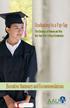 Graduating to a Pay Gap The Earnings of Women and Men One Year after College Graduation Executive Summary and Recommendations Executive Summary Fifty years after the passage of the Equal Pay Act of 1963,
Women, Wages and Work A report prepared by the UNC Charlotte Urban Institute for the Women s Summit April 11, 2011
 A report prepared by the UNC Charlotte Urban Institute for the Women s Summit April 11, 2011 A report prepared for the Women s Summit by the UNC Charlotte Urban Institute 1 Table of Contents Table of Contents...
A MIDDLE SCHOOL FAMILY INVOLVEMENT PROGRAM TO FOSTER THE ACADEMIC SUCCESS AND COLLEGE ATTAINMENT FOR LATINO STUDENTS: A GRANT PROPOSAL
 A MIDDLE SCHOOL FAMILY INVOLVEMENT PROGRAM TO FOSTER THE ACADEMIC SUCCESS AND COLLEGE ATTAINMENT FOR LATINO STUDENTS: A GRANT PROPOSAL By: Briana Guzman, MSW California State University, Long Beach May
First in My Family: Executive Summary
 First in My Family: A Profile of First-Generation College Students at Four-Year Institutions Since 1971 Executive Summary April 2007 Victor B. Saenz Sylvia Hurtado Doug Barrera De Sha Wolf Fanny Yeung
College Enrollment Hits All-Time High, Fueled by Community College Surge
 Enrollment Hits All-Time High, Fueled by Community Surge FOR RELEASE: OCTOBER 29, 2009 Paul Taylor, Project Director Richard Fry, Senior Researcher Wendy Wang, Research Associate Daniel Dockterman, Research
National Civics Teacher Survey: Information Literacy in High School Civics
 National Civics Teacher Survey: Information Literacy in High School Civics By: Kei Kawashima-Ginsberg 1 Funded principally by the Robert R. McCormick Foundation January 2014 Teaching students to use news
Oregon Education Investment Board: Equity Lens
 Oregon Education Investment Board: Equity Lens OEIB Vision Statement To advise and support the building, implementation and investment in a unified public education system in Oregon that meets the diverse
Analysis Brief March 2013
 Trends in Higher Education Series College Board Advocacy & Policy Center Analysis Brief March 2013 How Students and Parents Pay for College Kathleen Payea Policy Analyst, The College Board Sandy Baum Senior
New Jersey State Legislature: A Demographic Profile
 New Jersey State Legislature: A Demographic Profile September 2015 John Froonjian, Senior Research Associate Daniel Rockefeller, Graduate Assistant William J. Hughes Center for Public Policy Stockton University
From High School to the Future: Potholes on the Road to College
 Research Summary c c s r CONSORTIUM ON CHICAGO SCHOOL RESEARCH AT THE UNIVERSITY OF CHICAGO March 2008 Executive Summary From High School to the Future: Potholes on the Road to College Melissa Roderick,
Voter Turnout by Income 2012
 American democracy is challenged by large gaps in voter turnout by income, age, and other factors. Closing these gaps will require a sustained effort to understand and address the numerous and different
Maine High School Graduates: Trends in College-Going, Persistence, and Completion August 2015
 Maine High School Graduates: Trends in College-Going, Persistence, and Completion August 2015 This report summarizes data from the Maine Department of Education (DOE) and the National Student Clearinghouse
Berkeley City College Student Equity Plan
 Berkeley City College Student Equity Plan January 1, 2015 2 Executive Summary Diversity and equity efforts are important because they are fundamental to quality and excellence. Moreover, diversity is more
BLACK MILLENNIALS IN AMERICA
 BLACK MILLENNIALS IN AMERICA Documenting the experiences, voices and political future of young Black Americans Jon C. Rogowski Cathy J. Cohen For 10 years, the Black Youth Project, housed at the Center
Highlights from State Reports to the National Youth in Transition Database, Federal Fiscal Year 2011
 Data Brief #1 Highlights from State Reports to the National Youth in Transition Database, Federal Fiscal Year 2011 September 2012 Background In 1999, Public Law 106-169 established the John H. Chafee Foster
Part II: Factors Contributing to the Current Situation The View from the Field
 Part II: Factors Contributing to the Current Situation The View from the Field The General Economy Virtually all of our key informants noted that the post-2008 economic environment had complicated the
Education: It Matters More to Health than Ever Before
 ISSUE BRIEF Education: It Matters More to Health than Ever Before Americans with fewer years of education have poorer health and shorter lives, and that has never been more true than today. In fact, since
THE EDUCATIONAL PROGRESS OF BLACK STUDENTS
 NATIONAL CENTER FOR EDUCATION STATISTICS Findings from THE CONDITION OF EDUCATION 1994 NO. 2 THE EDUCATIONAL PROGRESS OF BLACK STUDENTS U.S. Department of Education Office of Educational Research and Improvement
By Melissa S. Kearney, Brad Hershbein, and Elisa Jácome The Hamilton Project
 PROFILES OF CHANGE: EMPLOYMENT, EARNINGS, AND OCCUPATIONS FROM 1990-2013 April 20, 2015 By Melissa S. Kearney, Brad Hershbein, and Elisa Jácome The Hamilton Project There has been tremendous focus in recent
Canada Student Loans Program Review: Seneca College Recommendations
 Canada Student Loans Program Review: Seneca College Recommendations Seneca College s submission to the Canada Student Loan Program (CSLP) Review has been developed based upon a number of distinctive characteristics
College Transition Programs: Promoting Success Beyond High School
 College Transition Programs: Promoting Success Beyond High School I s s u e P a p e r s T h e H i g h S c h o o l L e a d e r s h i p S u m m i t Parents have higher educational aspirations for their children
Race Matters. Household Asset Poverty by Race in North Carolina. Child Poverty by County
 Race Matters Children of color are more likely to grow up in both income poverty and asset poverty. This double burden creates a difficult barrier for children to overcome. As adults, children of color
Borrowers Who Drop Out
 A Neglected Aspect of the College Student Loan Trend By Lawrence Gladieux and Laura Perna May 2005 The National Center for Public Policy and Higher Education National Center Report #05-2 2005 by The National
Strategic Plan 2013-2016
 Strategic Plan 2013-2016 Strategic Plan 2013 2016 Mission Statement Kutztown University s mission is to provide a high quality education at the undergraduate and graduate level in order to prepare students
How To Plan For A Community College
 Strategic Plan 2020 REVISION 2013 Strategic Plan 2020 REVISION 2013 Table of Contents Mission, Vision and Core Values 4 Message from the Chancellor 5 Strategic Plan 2020 7 Strategic Goals 8 Strategic
In Pursuit of Excellence and Equity Gevirtz Graduate School of Education Strategic Plan 2007 2012
 1 In Pursuit of Excellence and Equity Gevirtz Graduate School of Education Strategic Plan 2007 2012 The Gevirtz Graduate School of Education is one of five colleges at the University of California, Santa
The question of whether student debt levels are excessive
 College on Credit: How Borrowers Perceive Their Education Debt By Sandy Baum and Marie O Malley Sandy Baum is professor of economics at Skidmore College in Skidmore, PA. Marie O Malley is vice president
School of Nursing Plan for Faculty Eminence through Diversity: Overview and Goals. May 2012 Public Version
 School of Nursing Plan for Faculty Eminence through Diversity: Overview and Goals May 2012 Public Version General Statement The University of Pennsylvania School of Nursing has a long-standing commitment
The Graduate School STRATEGIC PLAN 2007-2016
 The Graduate School STRATEGIC PLAN 2007-2016 Table of Contents Page 1. Introduction 4 2. The Graduate School s Mission, Vision and Core Values.. 5 3. Strategic Advantages. 6 4. Strategic Challenges.. 7
Reach Higher, AMERICA OVERCOMING CRISIS IN THE U.S. WORKFORCE
 Reach Higher, AMERICA OVERCOMING CRISIS IN THE U.S. WORKFORCE EXECUTIVE SUMMARY Report of the National Commission on Adult Literacy June 2008 Council for Advancement of Adult Literacy EXECUTIVE SUMMARY
The Youth Vote in 2012 CIRCLE Staff May 10, 2013
 The Youth Vote in 2012 CIRCLE Staff May 10, 2013 In the 2012 elections, young voters (under age 30) chose Barack Obama over Mitt Romney by 60%- 37%, a 23-point margin, according to the National Exit Polls.
A PHILANTHROPIC PARTNERSHIP FOR BLACK COMMUNITIES. Criminal Justice BLACK FACTS
 A PHILANTHROPIC PARTNERSHIP FOR BLACK COMMUNITIES Criminal Justice BLACK FACTS Criminal Justice: UnEqual Opportunity BLACK MEN HAVE AN INCARCERATION RATE NEARLY 7 TIMES HIGHER THAN THEIR WHITE MALE COUNTERPARTS.
MASTERS SOCIAL WORK PROGRAM ASSESSMENT REPORT
 MASTERS SOCIAL WORK PROGRAM ASSESSMENT REPORT This report covers the academic year 2010-2011 and includes activity during the summer of 2011 Outcomes The current mission is to prepare graduate social work
Abstract. Introduction
 Enrollment Management Dynamics of Adult Undergraduate Degree-Completion Business Programs at Private Universities Dr. CJ Kalin University of San Francisco 2130 Fulton Street, San Francisco, CA 94117 (415)
Parental Educational Attainment and Higher Educational Opportunity
 Parental Educational Attainment and Higher Educational Opportunity Federal higher education policy recognizes certain student characteristics as limiting higher educational opportunity, and has created
Higher Education Policy Brief
 Higher Education Policy Brief Indiana s Twenty-first Century Scholars Program: A Look at Impact Contents High School Completion 2 History and Overview In 199, Indiana policymakers created a program to
THE PROFESSIONAL AND TECHNICAL WORKFORCE
 Fact Sheet 2013 THE PROFESSIONAL AND TECHNICAL WORKFORCE Introduction The professional and technical workforce is defined to include all workers in the U.S. Bureau of Labor Statistics (BLS) category management,
ETS s Addressing Achievement Gaps Symposium. Advancing Success for Black Men in College. A Statistical Profile
 ETS s Addressing Achievement Gaps Symposium Advancing Success for Black Men in College A Statistical Profile ETS s Addressing Achievement Gaps Symposium Advancing Success for Black Men in College Co-sponsored
DIVISION OF STUDENT AFFAIRS. Office of Excellence and Multicultural Student Success
 DIVISION OF STUDENT AFFAIRS Office of Excellence and Multicultural Student Success Office Mission The mission of the Office of Excellence and Multicultural Student Success is to create a campus environment
Approach to Community Impact Grant Guidelines
 Approach to Community Impact Grant Guidelines 2015 TABLE OF CONTENTS ABOUT THE MINNEAPOLIS FOUNDATION 2 GRANTS TO NONPROFITS 3 IMPACT PRIORITIES FOR GRANTMAKING 3-8 EDUCATION 4-5 ECONOMIC VITALITY 6-7
a topic for a future issue brief, please Minnesota is heading into challenging territory. In the decades
 RESEARCH BRIEF September 2011 Minnesota Educational Needs and Higher Education Finance Policy This is one in a series of research-based briefs prepared by the Minnesota Private College Council for members
Workforce Training Results Report
 Report December 2008 Secondary Career and Technical Education (CTE) Secondary CTE serves high school age youth in approximately 238 school districts and 10 Skills Centers throughout the state, preparing
Legal education, research, advice and advocacy for just and resilient economies 2323 Broadway, #203 Oakland, CA 94612 www.theselc.
 Legal education, research, advice and advocacy for just and resilient economies 2323 Broadway, #203 Oakland, CA 94612 www.theselc.org Memo to the California State Bar Civil Justice Strategies Task Force
HEALTH INSURANCE COVERAGE
 MEDICAID AND SCHIP HAVE REDUCED THE SHARE OF LOW-INCOME CHILDREN WHO ARE UNINSURED BY OVER ONE-THIRD The proportion of low-income children who are uninsured dropped by more than one-third between 1997
The Difficult Transition from Military to Civilian Life
 1 By Rich Morin Military service is difficult, demanding and dangerous. But returning to civilian life also poses challenges for the men and women who have served in the armed forces, according to a recent
Employers Views On College Learning In The Wake Of The Economic Downturn. A Survey Among Employers Conducted On Behalf Of:
 Raising The Bar Employers Views On College Learning In The Wake Of The Economic Downturn A Survey Among Employers Conducted On Behalf Of: The Association Of American Colleges And Universities By Hart Research
Laralee Davenport. Students who do not meet one or more of the above requirements may be admitted as non-degree seeking.
 Dixie State University 1 Admissions Assistant Director: Office: Laralee Davenport Phone: (435) 652-7777 FAX: (435) 879-4060 Email: Website: Hours: Level 1, Holland Centennial Commons [email protected]
First-Generation College Students: How Co-Curricular Involvement Can Assist with Success. Valerie Garcia
 46 The Vermont Connection 2010 Volume 31 First-Generation College Students: How Co-Curricular Involvement Can Assist with Success Valerie Garcia First-generation college students are students whose parents
AMERICA'S YOUNG ADULTS AT 27: LABOR MARKET ACTIVITY, EDUCATION, AND HOUSEHOLD COMPOSITION: RESULTS FROM A LONGITUDINAL SURVEY
 For release 10:00 a.m. (EDT) Wednesday, March 26, 2014 USDL-14-0491 Technical information: (202) 691-7410 [email protected] www.bls.gov/nls Media contact: (202) 691-5902 [email protected] AMERICA'S YOUNG
Betty Gray Community College Scholarship Program Evaluation
 Evaluation Study Betty Gray Community College Scholarship Program Evaluation Roberta B. Weber Deana Grobe Shannon T. Lipscomb Oregon State University Family Policy Program Oregon Child Care Research Partnership
ETS s Addressing Achievement Gaps Symposium. Black Male Teens: Moving to Success in the High School Years. A Statistical Profile
 ETS s Addressing Achievement Gaps Symposium Black Male Teens: Moving to Success in the High School Years A Statistical Profile ETS s Addressing Achievement Gaps Symposium Black Male Teens: Moving to Success
Rationale for Inspiring the Future
 Rationale for Inspiring the Future Research evidence shows that there is a practical need for Inspiring the Future. Here is a summary of the main issues. Improving career choices, employment and social
Bowen, Chingos & McPherson, Crossing the Finish Line
 1 Bowen, W. G., Chingos, M. M., and McPherson, M. S. (2009). Crossing the Finish Line: Completing College at America s Public Universities. Princeton, N.J.: Princeton University Press. The authors begin
Young Adult Justice Programs Concept Paper January 10, 2011
 Young Adult Justice Programs Concept Paper January 10, 2011 I. Purpose This concept paper is the precursor to a forthcoming Request for Proposals (RFP) that will include programming for young adults involved
Projections of the Size and Composition of the U.S. Population: 2014 to 2060 Population Estimates and Projections
 Projections of the Size and Composition of the U.S. Population: to Population Estimates and Projections Current Population Reports By Sandra L. Colby and Jennifer M. Ortman Issued March 15 P25-1143 INTRODUCTION
Florida s Great Cost Shift: How Higher Education Cuts Undermine Its Future Middle Class
 Florida s Great Cost Shift: How Higher Education Cuts Undermine Its Future Middle Class J ust as a postsecondary education has become essential for getting a decent job and entering the middle class, it
The MetLife Survey of
 The MetLife Survey of Challenges for School Leadership Challenges for School Leadership A Survey of Teachers and Principals Conducted for: MetLife, Inc. Survey Field Dates: Teachers: October 5 November
臺 灣 大 學 師 資 培 育 中 心 教 育 系 列 演 講 ( 二 )
 臺 灣 大 學 師 資 培 育 中 心 教 育 系 列 演 講 ( 二 ) 主 辦 單 位 : 國 立 臺 灣 大 學 師 資 培 育 中 心 協 辦 單 位 : 國 立 臺 灣 大 學 教 學 發 展 中 心 講 題 :California's Higher Education System - Its Successes and Troubles 演 講 人 : Dr. John Douglass
Application Trends Survey
 The premier provider of market intelligence Application Trends Survey SURVEY REPORT About This Study The Application Trends Survey is a product of the Graduate Management Admission Council (GMAC ), a global
Trends & Issues Money matters: Compensation in the nonprofit sector
 Trends & Issues Money matters: Compensation in the nonprofit sector In April 2010, HR Council website users completed a survey asking what hot-button HR issues they would like us to research. The results
BizBuySell.com Small Business Buyer & Seller Demographic Study
 BizBuySell.com Small Business Buyer & Seller Demographic Study Table of Contents Report Executive Summary Younger, More Diverse Buyers Look to Acquire Retiring Baby Boomer Businesses Female Business Buyers
Social Security Eligibility and the Labor Supply of Elderly Immigrants. George J. Borjas Harvard University and National Bureau of Economic Research
 Social Security Eligibility and the Labor Supply of Elderly Immigrants George J. Borjas Harvard University and National Bureau of Economic Research Updated for the 9th Annual Joint Conference of the Retirement
By Hart Research Associates
 One Year Out Findings From A National Survey Among Members Of The High School Graduating Class Of 2010 Submitted To: The College Board By Hart Research Associates August 18, 2011 Hart Research Associates
The NLN s 2015-2016 Public Policy Agenda:
 Dedicated to excellence in nursing and preparing the nursing workforce to meet the health care needs of our diverse populations, the National League for Nursing is the premier organization for nurse faculty
Recruiting Mentors for Youth
 for Youth Involved in the Juvenile Justice or Foster Care System The Technical Assistance and Training Program for Mentoring System-Involved Youth A mentor can change the life of a young person involved