
POWERTECH 2.4 L & 3.0 L 4024 and 5030 OEM Diesel Engines
|
|
|
- Pierce Blankenship
- 8 years ago
- Views:
Transcription
1 POWERTECH 2.4 L & 3.0 L 4024 and 5030 OEM Diesel Engines DCT OPERATOR S MANUAL 2.4 L & 3.0 L OEM Diesel Engines OMRG34851 Issue 13OCT04 (ENGLISH) CALIFORNIA Proposition 65 Warning Diesel engine exhaust and some of its constituents are known to the State of California to cause cancer, birth defects, and other reproductive harm. If this product contains a gasoline engine: WARNING The engine exhaust from this product contains chemicals known to the State of California to cause cancer, birth defects or other reproductive harm. The State of California requires the above two warnings. OMRG34851 John Deere Power Systems LITHO IN U.S.A.
2 Introduction Forward READ THIS MANUAL carefully to learn how to operate and service your engine correctly. Failure to do so could result in personal injury or equipment damage. THIS MANUAL SHOULD BE CONSIDERED a permanent part of your engine and should remain with the engine when you sell it. MEASUREMENTS IN THIS MANUAL are given in both metric and customary U.S. unit equivalents. Use only correct replacement parts and fasteners. Metric and inch fasteners may require a specific metric or inch wrench. RIGHT-HAND AND LEFT-HAND sides are determined by standing at the drive or flywheel end (rear) of the engine and facing toward the front of the engine. WRITE ENGINE SERIAL NUMBERS and option codes in the spaces indicated in the Record Keeping Section. Accurately record all the numbers. Your dealer also needs these numbers when you order parts. File the identification numbers in a secure place off the engine. SETTING FUEL DELIVERY beyond published factory specifications or otherwise overpowering will result in loss of warranty protection for this engine. CERTAIN ENGINE ACCESSORIES such as radiator, air cleaner, and instruments are optional equipment on John Deere OEM Engines. These accessories may be provided by the equipment manufacturer instead of John Deere. This operator s manual applies only to the engine and those options available through the John Deere distribution network. NOTE: This operators manual covers only engines provided to OEM (Outside Equipment Manufacturers). For engines in Deere machines, refer to the machine operators manual. TX,DH DEC95 1/ PN=2
3 Introduction Engine Owner John Deere Engine Owner: Don t wait until you need warranty or other service to meet your local John Deere Engine Distributor or Service Dealer. To register your engine for warranty via the Internet, use the following URL: Learn who your dealer is and where he is. At your first convenience, go meet him. He ll want to get to know you and to learn what your needs might be. Aux Utilisateurs De Moteurs John Deere: N attendez pas d être obligé d avoir recours à votre concessionnaire John Deere ou au point de service le plus proche pour vous adresser à lui. Pour enregistrer votre moteur pour la garantie via Internet, utilisez l adresse suivante: Renseignez-vous dès que possible pour l identifier et le localiser. A la première occasion, prenez contact avec lui et faites-vous connaître. Il sera lui aussi heureux de faire votre connaissance et de vous proposer ses services le moment venu. An Den Besitzer Des John Deere Motors: Warten Sie nicht auf einen evt. Reparaturfall, um den nächstgelegenen John Deere Händler kennen zu lernen. Zur Registrierung Ihres Motors für die Garantie dient folgende Internet-Adresse: distributore dei motori John Deere o del concessionario che fornisce l assistenza tecnica. Per registrare via Internet la garanzia del suo motore, si collegi al seguente sito URL: Lo identifichi e si informi sulla sua ubicazione. Alla prima occasione utile lo contatti. Egli desidera fare la sua conoscenza e capire quali potrebbero essere le sue necessità. Propietario De Equipo John Deere: No espere hasta necesitar servicio de garantía o de otro tipo para conocer a su Distribuidor de Motores John Deere o al Concesionario de Servicio. Registre su motor para la garantía en la siguiente dirección de internet: Entérese de quién es, y dónde está situado. Cuando tenga un momento, vaya a visitarlo. A él le gustará conocerlo, y saber cuáles podrían ser sus necesidades. Till ägare av John Deere motorer: Ta reda på vem din återförsäljare är och besökhonom så snart tillfälle ges. Vänta inte tills det är dags för service eller eventuellt garantiarbete. Din motor garantiregistrerar Du via Internet på Din återförsäljare vill mycket gärna träffa dig för att lära känna dina behov och hur bäst han kan hjälpa dig. Machen Sie sich bei ihm bekannt und nutzen Sie sein Service Angebot. Proprietario del motore John Deere: Non aspetti fino al momento di far valere la garanzia o di chiedere assistenza per fare la conoscenza del OURGP11, NOV03 1/ PN=3
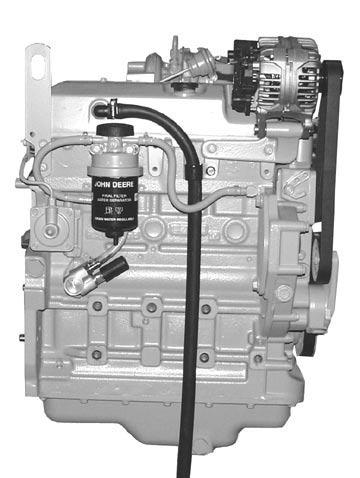


4 Introduction POWERTECH 2.4 L & 3.0 L Diesel Engines 2.4 L Right Side View RG12961 UN 03JUN L Left Side View RG12962 UN 03JUN03 RG12960 UN 03JUN03 RG12963 UN 03JUN L Right Side View 3.0 L Left Side View POWERTECH is a trademarkof Deere & Company RG41183,000001D 19 03JUN03 1/ PN=4
5 Contents Page Page Record Keeping Lubrication and Maintenance POWERTECH Medallion Observe Service Intervals Engine Serial Number Plate Use Correct Fuels, Lubricants, and Coolant Record Engine Serial Number Lubrication and Maintenance Service Engine Option Codes Interval Chart Standard Industrial Engines Lubrication and Maintenance Service Safety Interval Chart Generator (Standby) Applications Fuels, Lubricants, and Coolant Diesel Fuel Lubricity of Diesel Fuel Handling and Storing Diesel Fuel Dieselscan Fuel Analysis Bio-Diesel Fuel Kerosene (Burner) Fuels Minimizing the Effect of Cold Weather on Diesel Engines Diesel Engine Oil Extended Diesel Engine Oil Service Intervals Mixing of Lubricants OILSCAN and COOLSCAN Alternative and Synthetic Lubricants Lubricant Storage Grease Diesel Engine Coolant Drain Intervals for Diesel Engine Coolant Supplemental Coolant Additives Testing Diesel Engine Coolant Operating in Warm Temperature Climates Disposing of Coolant Lubrication & Maintenance/Daily Daily Prestarting Checks Lubrication & Maintenance/500 Hour/12 Month Changing Engine Oil and Replacing Filter Replacing Fuel Filter Element Cleaning Crankcase Vent Tube Checking Air Intake System CheckEngine Speeds Checking Belt Tensioner Spring Tension and Belt Wear (Automatic Tensioner) Checking Engine Electrical Ground Connections Servicing Fire Extinguisher Checking Engine Mounts Servicing Battery Checking Cooling System Replenishing Supplemental Coolant Additives (SCAs) Between Coolant Changes Testing Diesel Engine Coolant Pressure Testing Cooling System Engine Operating Guidelines Instrument Panel Lubrication & Maint./2000 Hour/24 Month Normal Engine Operation Checking Crankshaft Vibration Damper (If Break-In Service Equipped) Auxiliary Gear Drive Limitations Flushing and Refilling Cooling System Starting The Engine Testing Thermostats Opening Temperature Cold Weather Starting Warming Engine Service as Required Avoid Excessive Engine Idling Additional Service Information Locking Throttle at Preset Speed Do Not Modify Fuel System Stopping the Engine Using a Booster Battery or Charger Continued on next page All information, illustrations and specifications in this manual are based on the latest information available at the time of publication. The right is reserved to make changes at any time without notice. COPYRIGHT 2004 DEERE & COMPANY Moline, Illinois All rights reserved A John Deere ILLUSTRUCTION Manual Previous Editions Copyright 2003 i PN=1
6 Contents Page Adding Coolant Replacing Single Stage Air Cleaner Element Replacing Axial Seal Air Cleaner Filter Element Replacing Radial Seal Air Cleaner Filter Element Replacing Fan and Alternator Belt Checking Fuses Checking Air Compressors Adjusting Speed Gain (Generator Sets) Bleeding the Fuel System Troubleshooting General Troubleshooting Information Electrical System Schematic Engine Troubleshooting Storage Engine Storage Guidelines Preparing Engine for Long Term Storage Removing Engine from Long Term Storage Specifications General OEM Engine Specifications Engine Power Rating and Speed Specifications Engine Crankcase Oil Capacities Unified Inch Bolt and Screw Torque Values Metric Bolt and Screw Torque Values Lubrication and Maintenance Records Using Lubrication and Maintenance Records Daily (Prestarting) Service Hour/12 Month Service Hour/24 Month Service Service as Required Emission System Warranty U.S. EPA Emissions Control Warranty Statement Emissions Control System Certification Label ii PN=2


7 Record Keeping POWERTECH Medallion A medallion is located on the rocker arm cover which identifies each engine as a John Deere POWERTECH engine. RG12684 UN 12DEC02 RG12685 UN 12DEC02 POWERTECH is a trademarkof Deere & Company. RG41183, DEC02 1/1 Engine Serial Number Plate Each engine has a 13-digit John Deere engine serial number. The first two digits identify the factory that produced the engine. PE indicates the engine was built in Torreon, Mexico Your engine s serial number plate (A) is located on the left-hand side of cylinder blockbehind the starter motor. 13-Digit Engine Serial Number Plate RG12687 UN 12DEC02 RG41183, DEC02 1/ PN=7

8 Record Keeping Record Engine Serial Number Record all of the numbers and letters found on your engine serial number plate in the spaces provided below. This information is very important for repair parts or warranty information. Engine Serial Number (B) Engine Model Number (C) Engine Serial Number Plate RG13539 UN 21MAY04 OURGP12, MAY04 1/ PN=8

9 Record Keeping Engine Option Codes Engine Option Codes RG12689A UN 09JUN04 In addition to the serial number plate, OEM engines have an engine option code label affixed to the rocker arm cover. These codes indicate which of the engine options were installed on your engine at the factory. When in need of parts or service, furnish your authorized servicing dealer or engine distributor with these numbers. The engine option code label includes an engine base code (A). This base code must also be recorded along with the option codes. The first two digits of each code identify a specific group, such as alternators. The last two digits of each code identify one specific option provided on your engine, such as a 12-volt, 70-amp alternator. NOTE: These option codes are based on the latest information available at the time of publication. The right is reserved to make changes at any time without notice. If an engine is ordered without a particular component, the last two digits of that functional group option code will be 99, 00, or XX. The list on the next page shows only the first two digits of the code numbers. For future reference such as ordering repair parts, it is important to have these code numbers available. To ensure this availability, enter the third and fourth digits shown on your engine option code label in the spaces provided on the following page. Continued on next page RG41183, DEC02 1/ PN=9
10 Record Keeping NOTE: Your engine option code label may not contain all option codes if an option has been added after the engine left the producing factory. If option code label is lost or destroyed, consult your servicing dealer or engine distributor selling the engine for a replacement. An additional option code label may also be delivered with the engine. Place this sticker or tag, for reference, either on this page or in the engine owner s warranty booklet under OPTION CODES title. Option Codes Description Option Codes Description 11 Rocker Arm Cover 46 Cylinder Blockand Camshaft 12 Oil Filler 47 Crankshaft and Bearings 13 Crankshaft Pulley 48 Connecting Rods and Pistons 14 Flywheel Housing 49 Valve Actuating Mechanism 15 Flywheel 50 Oil Pump 16 Fuel Injection System 51 Cylinder Head With Valves 17 Air Inlet 52 Auxiliary Gear Drive 18 Air Cleaner 55 Shipping Stand 19 Oil Pan 56 Paint Option 20 Coolant Pump 57 Coolant Pump Inlet 21 Thermostat Cover 59 Oil Cooler 22 Thermostat 60 Alternator Fan Drive Pulley 23 Fan Drive 62 Alternator Mounting 24 Fan Belt 64 Exhaust Elbow 25 Fan 65 Turbocharger 26 Engine Coolant Heater 66 Coolant Temperature Switch 27 Radiator 67 Speed Sensor 28 Exhaust Manifold 68 Crankshaft Rear Damper 29 Crankcase Vent System 69 Engine Serial Number Plate 30 Starter Motor 74 Air Conditioning (Freon) Compressor 31 Alternator 75 Air Restriction Indicator 32 Instrument Panel 76 Oil Pressure Switch 33 Tachometer 78 Air Compressor 35 Fuel Filter 86 Fan Pulley 36 Front Plate 87 Belt Tensioner 37 Fuel Transfer Pump 88 Oil Filter 39 Thermostat Housing 92 Test Certificate 40 Oil Dipstick95 Special Equipment (Factory Installed) 43 Starting Aids 97 Special Equipment (Field Installed) 44 Timing Gear Cover 98 Lift Straps for Engine 45 Balancer Shafts 99 Service Only Parts and Kits Engine Base Code RG41183, DEC02 2/ PN=10


11 Safety Recognize Safety Information This is a safety-alert symbol. When you see this symbol on your machine or in this manual, be alert to the potential for personal injury. Follow recommended precautions and safe operating practices. T81389 UN 07DEC88 DX,ALERT 19 29SEP98 1/1 Understand Signal Words A signal word DANGER, WARNING, or CAUTION is used with the safety-alert symbol. DANGER identifies the most serious hazards. DANGER or WARNING safety signs are located near specific hazards. General precautions are listed on CAUTION safety signs. CAUTION also calls attention to safety messages in this manual. TS SEP88 DX,SIGNAL 19 03MAR93 1/1 Follow Safety Instructions Carefully read all safety messages in this manual and on your machine safety signs. Keep safety signs in good condition. Replace missing or damaged safety signs. Be sure new equipment components and repair parts include the current safety signs. Replacement safety signs are available from your John Deere dealer. Learn how to operate the machine and how to use controls properly. Do not let anyone operate without instruction. TS201 UN 23AUG88 Keep your machine in proper working condition. Unauthorized modifications to the machine may impair the function and/or safety and affect machine life. If you do not understand any part of this manual and need assistance, contact your John Deere dealer. DX,READ 19 03MAR93 1/ PN=11


12 Safety Replace Safety Signs Replace missing or damaged safety signs. See the machine operator s manual for correct safety sign placement. TS201 UN 23AUG88 DX,SIGNS JUN90 1/1 Prevent Bypass Starting Avoid possible injury or death from engine runaway. Do not start engine by shorting across starter terminal. Engine will start with PTO engaged if normal circuitry is bypassed. Start engine only from operator s station with PTO disengaged or in neutral. Prevent Bypass Starting RG5419 UN 28FEB89 RG,RG34710, JUN97 1/1 Handle Fuel Safely Avoid Fires Handle fuel with care: it is highly flammable. Do not refuel the machine while smoking or when near open flame or sparks. Always stop engine before refueling machine. Fill fuel tank outdoors. Prevent fires by keeping machine clean of accumulated trash, grease, and debris. Always clean up spilled fuel. TS202 UN 23AUG88 DX,FIRE MAR93 1/ PN=12


13 Safety Prepare for Emergencies Be prepared if a fire starts. Keep a first aid kit and fire extinguisher handy. Keep emergency numbers for doctors, ambulance service, hospital, and fire department near your telephone. TS291 UN 23AUG88 DX,FIRE MAR93 1/1 DO NOT USE Starting Fluids DO NOT USE ether starting fluids with these glow plug - equipped engines as it could cause an extreme explosion with possible personnal injury. RG41183,00000B FEB03 1/1 Handle Fluids Safely Avoid Fires When you workaround fuel, do not smoke or worknear heaters or other fire hazards. Store flammable fluids away from fire hazards. Do not incinerate or puncture pressurized containers. Make sure machine is clean of trash, grease, and debris. Do not store oily rags; they can ignite and burn spontaneously. TS227 UN 23AUG88 DX,FLAME 19 29SEP98 1/ PN=13


14 Safety Service Machines Safely Tie long hair behind your head. Do not wear a necktie, scarf, loose clothing, or necklace when you work near machine tools or moving parts. If these items were to get caught, severe injury could result. Remove rings and other jewelry to prevent electrical shorts and entanglement in moving parts. TS228 UN 23AUG88 DX,LOOSE 19 04JUN90 1/1 Wear Protective Clothing Wear close fitting clothing and safety equipment appropriate to the job. Prolonged exposure to loud noise can cause impairment or loss of hearing. Wear a suitable hearing protective device such as earmuffs or earplugs to protect against objectionable or uncomfortable loud noises. Operating equipment safely requires the full attention of the operator. Do not wear radio or music headphones while operating machine. TS206 UN 23AUG88 DX,WEAR 19 10SEP90 1/1 Protect Against Noise Prolonged exposure to loud noise can cause impairment or loss of hearing. Wear a suitable hearing protective device such as earmuffs or earplugs to protect against objectionable or uncomfortable loud noises. TS207 UN 23AUG88 DX,NOISE 19 03MAR93 1/ PN=14


15 Safety Handle Chemical Products Safely Direct exposure to hazardous chemicals can cause serious injury. Potentially hazardous chemicals used with John Deere equipment include such items as lubricants, coolants, paints, and adhesives. A Material Safety Data Sheet (MSDS) provides specific details on chemical products: physical and health hazards, safety procedures, and emergency response techniques. Checkthe MSDS before you start any job using a hazardous chemical. That way you will know exactly what the risks are and how to do the job safely. Then follow procedures and recommended equipment. TS1132 UN 26NOV90 (See your John Deere dealer for MSDS s on chemical products used with John Deere equipment.) DX,MSDS,NA 19 03MAR93 1/1 Stay Clear of Rotating Drivelines Entanglement in rotating driveline can cause serious injury or death. Keep master shield and driveline shields in place at all times. Make sure rotating shields turn freely. Wear close-fitting clothing. Stop the engine and be sure PTO driveline is stopped before making adjustments, connections, or performing any type of service on the engine or PTO-driven equipment. Rotating Drivelines TS1644 UN 22AUG95 OUO1004,0000BD NOV00 1/ PN=15

16 Safety Practice Safe Maintenance Understand service procedure before doing work. Keep area clean and dry. Never lubricate, service, or adjust machine while it is moving. Keep hands, feet, and clothing from power-driven parts. Disengage all power and operate controls to relieve pressure. Lower equipment to the ground. Stop the engine. Remove the key. Allow machine to cool. Securely support any machine elements that must be raised for service work. Keep all parts in good condition and properly installed. Fix damage immediately. Replace worn or broken parts. Remove any buildup of grease, oil, or debris. On self-propelled equipment, disconnect battery ground cable (-) before making adjustments on electrical systems or welding on machine. On towed implements, disconnect wiring harnesses from tractor before servicing electrical system components or welding on machine. TS218 UN 23AUG88 DX,SERV 19 17FEB99 1/1 Work In Ventilated Area Engine exhaust fumes can cause sickness or death. If it is necessary to run an engine in an enclosed area, remove the exhaust fumes from the area with an exhaust pipe extension. If you do not have an exhaust pipe extension, open the doors and get outside air into the area TS220 UN 23AUG88 DX,AIR 19 17FEB99 1/ PN=16

17 Safety Avoid High-Pressure Fluids Escaping fluid under pressure can penetrate the skin causing serious injury. Avoid the hazard by relieving pressure before disconnecting hydraulic or other lines. Tighten all connections before applying pressure. Search for leaks with a piece of cardboard. Protect hands and body from high pressure fluids. X9811 UN 23AUG88 If an accident occurs, see a doctor immediately. Any fluid injected into the skin must be surgically removed within a few hours or gangrene may result. Doctors unfamiliar with this type of injury should reference a knowledgeable medical source. Such information is available from Deere & Company Medical Department in Moline, Illinois, U.S.A. DX,FLUID 19 03MAR93 1/1 Avoid Heating Near Pressurized Fluid Lines Flammable spray can be generated by heating near pressurized fluid lines, resulting in severe burns to yourself and bystanders. Do not heat by welding, soldering, or using a torch near pressurized fluid lines or other flammable materials. Pressurized lines can accidentally burst when heat goes beyond the immediate flame area. TS953 UN 15MAY90 DX,TORCH 19 10DEC04 1/1 Do Not Open High-Pressure Fuel System High-pressure fluid remaining in fuel lines can cause serious injury. Do not disconnect or attempt repair of fuel lines, sensors, or any other components between the high-pressure fuel pump and nozzles on engines with High Pressure Common Rail (HPCR) fuel system. Only technicians familiar with this type of system can perform repairs. (See your John Deere dealer.) TS1343 UN 18MAR92 DX,WW,HPCR JAN03 1/ PN=17
18 Safety Remove Paint Before Welding or Heating Avoid potentially toxic fumes and dust. Hazardous fumes can be generated when paint is heated by welding, soldering, or using a torch. Remove paint before heating: Remove paint a minimum of 100 mm (4 in.) from area to be affected by heating. If paint cannot be removed, wear an approved respirator before heating or welding. If you sand or grind paint, avoid breathing the dust. Wear an approved respirator. If you use solvent or paint stripper, remove stripper with soap and water before welding. Remove solvent or paint stripper containers and other flammable material from area. Allow fumes to disperse at least 15 minutes before welding or heating. TS220 UN 23AUG88 Do not use a chlorinated solvent in areas where welding will take place. Do all workin an area that is well ventilated to carry toxic fumes and dust away. Dispose of paint and solvent properly. DX,PAINT 19 24JUL02 1/1 Service Cooling System Safely Explosive release of fluids from pressurized cooling system can cause serious burns. Shut off engine. Only remove filler cap when cool enough to touch with bare hands. Slowly loosen cap to first stop to relieve pressure before removing completely. TS281 UN 23AUG88 DX,RCAP 19 04JUN90 1/ PN=18


19 Safety Install Fan Guards Rotating cooling system fans can cause serious injury. Keep fan guards in place at all times during engine operation. Wear close fitting clothes. Stop the engine and be sure fan is stopped before making adjustments or connections, or cleaning near the front of the engine. Rotating Fan TS677 UN 21SEP89 OUOD006,000009D 19 04DEC02 1/1 Avoid Hot Parts Avoid skin contact with exhaust manifolds, turbochargers and mufflers. Keep flammable materials clear of the turbocharger. External dry exhaust parts become very hot during operation. Turbochargers may reach temperatures as high as 500 C (932 F) under full load, and naturally aspired exhaust manifolds may reach 600 C (1112 F) under full load. This may ignite paper, cloth or wooden materials. Parts on engines that have been at full load and reduced to no load idle will maintain approximately 150 C (302 F). Hot Surface TS271 UN 23AUG88 OUOD006,000009E 19 04DEC02 1/ PN=19
20 Safety Avoid Harmful Asbestos Dust Avoid breathing dust that may be generated when handling components containing asbestos fibers. Inhaled asbestos fibers may cause lung cancer. Components in products that may contain asbestos fibers are brake pads, brake band and lining assemblies, clutch plates, and some gaskets. The asbestos used in these components is usually found in a resin or sealed in some way. Normal handling is not hazardous as long as airborne dust containing asbestos is not generated. TS220 UN 23AUG88 Avoid creating dust. Never use compressed air for cleaning. Avoid brushing or grinding material containing asbestos. When servicing, wear an approved respirator. A special vacuum cleaner is recommended to clean asbestos. If not available, apply a mist of oil or water on the material containing asbestos. Keep bystanders away from the area. DX,DUST 19 15MAR91 1/1 Prevent Battery Explosions Keep sparks, lighted matches, and open flame away from the top of battery. Battery gas can explode. Never checkbattery charge by placing a metal object across the posts. Use a volt-meter or hydrometer. Do not charge a frozen battery; it may explode. Warm battery to 16 C (60 F). TS204 UN 23AUG88 DX,SPARKS 19 03MAR93 1/ PN=20
21 Safety Handling Batteries Safely CAUTION: Battery gas can explode. Keep sparks and flames away from batteries. Use a flashlight to check battery electrolyte level. Never check battery charge by placing a metal object across the posts. Use a voltmeter or hydrometer. Always remove grounded ( ) battery clamp first and replace it last. Explosion TS204 UN 23AUG88 CAUTION: Sulfuric acid in battery electrolyte is poisonous. It is strong enough to burn skin, eat holes in clothing, and cause blindness if splashed into eyes. Avoid the hazard by: 1. Filling batteries in a well-ventilated area. 2. Wearing eye protection and rubber gloves. 3. Avoiding breathing fumes when electrolyte is added. 4. Avoiding spilling or dripping electrolyte. 5. Using proper jump start procedure. If you spill acid on yourself: 1. Flush your skin with water. 2. Apply baking soda or lime to help neutralize the acid. 3. Flush your eyes with water for minutes. Get medical attention immediately. If acid is swallowed: 1. Do not induce vomiting. 2. Drink large amounts of water or milk, but do not exceed 2L(2qt.). 3. Get medical attention immediately. Acid TS203 UN 23AUG88 WARNING: Battery posts, terminals, and related accessories contain lead and lead compounds, chemicals known to the State of California to cause cancer and reproductive harm. Wash hands after handling. DPSG,OUO1004, MAY00 1/ PN=21


22 Safety Protect Against High Pressure Spray Spray from high pressure nozzles can penetrate the skin and cause serious injury. Keep spray from contacting hands or body. If an accident occurs, see a doctor immediately. Any high pressure spray injected into the skin must be surgically removed within a few hours or gangrene may result. Doctors unfamiliar with this type of injury should reference a knowledgeable medical source. Such information is available from Deere & Company Medical Department in Moline, Illinois, U.S.A. TS1343 UN 18MAR92 DX,SPRAY 19 16APR92 1/1 Use Proper Lifting Equipment Lifting heavy components incorrectly can cause severe injury or machine damage. Follow recommended procedure for removal and installation of components in the manual. TS226 UN 23AUG88 DX,LIFT 19 04JUN90 1/1 Use Proper Tools Use tools appropriate to the work. Makeshift tools and procedures can create safety hazards. Use power tools only to loosen threaded parts and fasteners. For loosening and tightening hardware, use the correct size tools. DO NOT use U.S. measurement tools on metric fasteners. Avoid bodily injury caused by slipping wrenches. TS779 UN 08NOV89 Use only service parts meeting John Deere specifications. DX,REPAIR 19 17FEB99 1/ PN=22
23 Safety Dispose of Waste Properly Improperly disposing of waste can threaten the environment and ecology. Potentially harmful waste used with John Deere equipment include such items as oil, fuel, coolant, brake fluid, filters, and batteries. Use leakproof containers when draining fluids. Do not use food or beverage containers that may mislead someone into drinking from them. Do not pour waste onto the ground, down a drain, or into any water source. TS1133 UN 26NOV90 Air conditioning refrigerants escaping into the air can damage the Earth s atmosphere. Government regulations may require a certified air conditioning service center to recover and recycle used air conditioning refrigerants. Inquire on the proper way to recycle or dispose of waste from your local environmental or recycling center, or from your John Deere dealer. DX,DRAIN 19 03MAR93 1/ PN=23
24 Fuels, Lubricants, and Coolant Diesel Fuel Consult your local fuel distributor for properties of the diesel fuel available in your area. In general, diesel fuels are blended to satisfy the low temperature requirements of the geographical area in which they are marketed. Diesel fuels specified to EN 590 or ASTM D975 are recommended. Required fuel properties In all cases, the fuel must meet the following properties: Cetane number of 45 minimum. Cetane number greater than 50 is preferred, especially for temperatures below -20 C (-4 F) or elevations above 1500 m (5000 ft). Cold Filter Plugging Point (CFPP) below the expected low temperature OR Cloud Point at least 5 C (9 F) below the expected low temperature. Fuel lubricity should pass a minimum load level of 3100 grams as measured by ASTM D6078 or, maximum scar diameter of 0.45 mm as measured by ASTM D6079. Sulfur content: Diesel fuel quality and fuel sulfur content must comply with all existing regulations for the area in which the engine operates. Sulfur content less than 0.05% (500 ppm) is preferred. If diesel fuel with sulfur content greater than 0.05% (500 ppm) is used, crankcase oil service intervals may be affected. (See recommendation for Diesel Engine Oil.) DO NOT use diesel fuel with sulfur content greater than 1.0%. IMPORTANT: DO NOT mix used engine oil or any other type of lubricating oil with diesel fuel. OUOD002, DEC01 1/ PN=24
25 Fuels, Lubricants, and Coolant Lubricity of Diesel Fuel Diesel fuel must have adequate lubricity to ensure proper operation and durability of fuel injection system components. ASTM D975 specifications do not require fuels to pass a fuel lubricity test. Sulfur content of diesel fuel for highway use is less than 0.05% (500 ppm) in the United States and Canada, and less than 0.035% (350 ppm) in the European Union. Experience shows that some low sulfur diesel fuels may have inadequate lubricity and their use may reduce performance in fuel injection systems due to inadequate lubrication of injection pump components. The lower concentration of aromatic compounds in these fuels also adversely affects injection pump seals and may result in leaks. Use of low lubricity diesel fuels may also cause accelerated wear, injection nozzle erosion or corrosion, engine speed instability, hard starting, low power, and engine smoke. Fuel lubricity should pass a minimum load level of 3100 grams as measured by ASTM D6078 or a maximum scar diameter of 0.45 mm as measured by ASTM D6079 or ISO If fuel of low or unknown lubricity is used, add John Deere PREMIUM DIESEL FUEL CONDITIONER (or equivalent) at the specified concentration. DX,FUEL FEB04 1/1 Handling and Storing Diesel Fuel CAUTION: Handle fuel carefully. Do not fill the fuel tank when engine is running. DO NOT smoke while you fill the fuel tank or service the fuel system. Fill the fuel tankat the end of each day s operation to prevent water condensation and freezing during cold weather. Keep all storage tanks as full as practicable to minimize condensation. Ensure that all fuel tankcaps and covers are installed properly to prevent moisture from entering. Monitor water content of the fuel regularly. When using bio-diesel fuel, the fuel filter may require more frequent replacement due to premature plugging. Checkengine oil level daily prior to starting engine. A rising oil level may indicate fuel dilution of the engine oil. IMPORTANT: The fuel tank is vented through the filler cap. If a new filler cap is required, always replace it with an original vented cap. When fuel is stored for an extended period or if there is a slow turnover of fuel, add a fuel conditioner to stabilize the fuel and prevent water condensation. Contact your fuel supplier for recommendations. DX,FUEL DEC03 1/ PN=25
26 Fuels, Lubricants, and Coolant Dieselscan Fuel Analysis DIESELSCAN is a John Deere fuel analysis program that can be used to help monitor the quality of diesel fuel. The DIESELSCAN analysis verifies fuel type, cleanliness, water content, suitability for cold weather operation, and whether the fuel meets specifications. Checkwith your John Deere dealer for availability of DIESELSCAN kits. DIESELSCAN is a trademarkof Deere & Company DX,FUEL FEB04 1/1 Bio-Diesel Fuel Consult your local fuel distributor for properties of the bio-diesel fuel available in your area. Bio-diesel fuels may be used ONLY if the bio-diesel fuel properties meet the latest edition of ASTM D6751, EN 14214, or equivalent specification. The maximum allowable bio-diesel concentration is a 5% blend (also known as B5) in petroleum diesel fuel. It has been found that bio-diesel fuels may improve lubricity in concentrations up to this 5% blend. When using a blend of bio-diesel fuel, the engine oil level must be checked daily when the air temperature is 10 C (14 F) or lower. If oil becomes diluted with fuel, shorten oil change intervals accordingly. IMPORTANT: Raw pressed vegetable oils are NOT acceptable for use as fuel in any concentration in John Deere engines. These oils do not burn completely, and will cause engine failure by leaving deposits on injectors and in the combustion chamber. A major environmental benefit of bio-diesel fuel is its ability to biodegrade. This makes proper storage and handling of bio-diesel fuel especially important. Areas of concern include: Quality of new fuel Water content of the fuel Problems due to aging of the fuel Potential problems resulting from deficiencies in the above areas when using bio-diesel fuel in concentrations above 5% may lead to the following symptoms: Power loss and deterioration of performance Fuel leakage Corrosion of fuel injection equipment Coked and/or blocked injector nozzles, resulting in engine misfire Filter plugging Lacquering and/or seizure of internal components Sludge and sediments Reduced service life of engine components Consult your fuel supplier for additives to improve storage and performance of bio-diesel fuels. DX,FUEL MAR04 1/ PN=26
27 Fuels, Lubricants, and Coolant Kerosene (Burner) Fuels Kerosene (burner) fuels may be used with the following restrictions. Type Comments No.2 Higher density and specific gravity than base No. 2-D diesel fuel. Power increase up to 2.5% can be expected. No.1 Lower viscosity than base No. 2-D diesel fuel. Power loss up to 1.5% can be expected. OUOD006,00000A DEC02 1/ PN=27
28 Fuels, Lubricants, and Coolant Minimizing the Effect of Cold Weather on Diesel Engines John Deere diesel engines are designed to operate effectively in cold weather. However, for effective starting and cold weather operation, a little extra care is necessary. The information below outlines steps that can minimize the effect that cold weather may have on starting and operation of your engine. See your authorized engine distributor or servicing dealer for additional information and local availability of cold weather aids. Use Grade No. 1-D Fuel When temperatures fall below 5 C (40 F), Grade No. 1-D fuel is best suited for cold weather operation. Grade No. 1-D fuel has a lower cloud point and a lower pour point. Cloud point is the temperature at which wax will begin to form in the fuel and this wax causes fuel filters to plug. Pour point is the temperature at which fuel begins to thicken and becomes more resistant to flow through fuel pumps and lines. NOTE: On an average, Grade No. 1-D fuel has a lower BTU (heat content) rating than Grade No. 2-D fuel. When using Grade No. 1-D fuel you may notice a drop in power and fuel efficiency, but should not experience any other engine performance effects. Checkthe grade of fuel being used before troubleshooting for low power complaints in cold weather operation. Coolant Heaters Engine blockheaters (coolant) are an available option to aid cold weather starting. Seasonal Viscosity Oil and Proper Coolant Concentration Use seasonal grade viscosity engine oil based on expected air temperature range between oil changes and a proper concentration of low silicate antifreeze as recommended. (See DIESEL ENGINE OIL and ENGINE COOLANT REQUIREMENTS later in this section). Diesel Fuel Flow Additive IMPORTANT: Treat fuel when outside temperature drops below 0 C (32 F). For best results, use with untreated fuel. Follow all recommended instructions on label. Use John Deere Premium Diesel Fuel Conditioner (Winter) or equivalent to treat fuel during the cold weather season. This winter formulation is a combination diesel fuel conditioner and anti-gel additive. Winterfronts Use of fabric, cardboard, or solid winterfronts is not recommended with any John Deere engine. Their use can result in excessive engine coolant, oil, and charge air temperatures. This can lead to reduced engine life, loss of power and poor fuel economy. Winterfronts may also put abnormal stress on fan and fan drive components potentially causing premature failures. If winterfronts are used, they should never totally close off the grill frontal area. Approximately 25% area in the center of the grill should remain open at all times. At no time should the air blockage device be applied directly to the radiator core. Radiator Shutters If equipped with a thermostatically controlled radiator shutter system, this system should be regulated in such a way that the shutters are completely open by the time the coolant reaches 93 C (200 F) to prevent excessive intake manifold temperatures. Manually controlled systems are not recommended. Continued on next page RG,RG34710, SEP02 1/ PN=28
29 Fuels, Lubricants, and Coolant If air-to-air aftercooling is used, the shutters must be completely open by the time the intake manifold air temperature reaches the maximum allowable temperature out of the charge air cooler. For more information, see your John Deere engine distributor or servicing dealer. RG,RG34710, SEP02 2/ PN=29
30 Fuels, Lubricants, and Coolant Diesel Engine Oil Use oil viscosity based on the expected air temperature range during the period between oil changes. John Deere PLUS-50 oil is preferred. Oils meeting one of the following specifications are also recommended ACEA Oil Sequence E5 ACEA Oil Sequence E4 Extended service intervals may apply when PLUS-50, ACEA E5, or ACEA E4 engine oils are used. Consult the following page. Other oils may be used if they meet one or more of the following: John Deere TORQ-GARD SUPREME API Service Category CI-4 API Service Category CH-4 ACEA Oil Sequence E3 Air Temperature Ranges RG13540 UN 21MAY04 Multi-viscosity diesel engine oils are preferred. NOTE: DO NOT USE BREAK-IN OILS IN THESE ENGINES. These engines are factory-filled with John Deere PLUS-50 10W-30 oil, and only this oil should be used to maintain the specified oil level. Diesel fuel quality and fuel sulfur content must comply with all existing emissions regulations for the area in which the engine operates. If diesel fuel with sulfur content greater than 0.05% (500 ppm) is used, reduce the service interval by 100 hours. If diesel fuel with sulfur content greater than 0.5% (5000 ppm) is used, reduce the service interval by 50%. DO NOT use diesel fuel with sulfur content greater than 1.0% ( ppm). PLUS-50 is a trademarkof Deere & Company TORQ-GARD SUPREME is a trademarkof Deere & Company OURGP12,00002AB 19 04MAY04 1/ PN=30
31 Fuels, Lubricants, and Coolant Extended Diesel Engine Oil Service Intervals When John Deere PLUS-50, ACEA E5, or ACEA E4 oils are used with the specified John Deere filter, the service interval for engine oil and filter changes may be increased by 50% but not to exceed a maximum of 500 hours. If John Deere PLUS-50, ACEA E5, or ACEA E4 oils are used with other than the specified John Deere filter, change the engine oil and filter at the reduced service interval of every 250 hours. If John Deere TORQ-GARD SUPREME, API CI-4, API CH-4, or ACEA E3 oils are used, change the engine oil and filter at the reduced service interval of every 250 hours. OURGP12,00002AC 19 04MAY04 1/1 Mixing of Lubricants In general, avoid mixing different brands or types of oil. Oil manufacturers blend additives in their oils to meet certain specifications and performance requirements. Consult your John Deere dealer to obtain specific information and recommendations. Mixing different oils can interfere with the proper functioning of these additives and degrade lubricant performance. DX,LUBMIX 19 18MAR96 1/ PN=31
32 Fuels, Lubricants, and Coolant OILSCAN and COOLSCAN OILSCAN and COOLSCAN are John Deere sampling programs to help you monitor machine performance and identify potential problems before they cause serious damage. Oil and coolant samples should be taken from each system prior to its recommended change interval. Checkwith your John Deere dealer for the availability of OILSCAN and COOLSCAN kits. T6828AB UN 15JUN89 T6829AB UN 18OCT88 OILSCAN is a registered trademarkof Deere & Company. COOLSCAN is a trademarkof Deere & Company. DX,OILSCAN 19 02DEC02 1/1 Alternative and Synthetic Lubricants Conditions in certain geographical areas may require lubricant recommendations different from those printed in this manual. Some John Deere brand coolants and lubricants may not be available in your location. Consult your John Deere dealer to obtain information and recommendations. Synthetic lubricants may be used if they meet the performance requirements as shown in this manual. The temperature limits and service intervals shown in this manual apply to both conventional and synthetic oils. Re-refined base stockproducts may be used if the finished lubricant meets the performance requirements. DX,ALTER 19 15JUN00 1/ PN=32
33 Fuels, Lubricants, and Coolant Lubricant Storage Your equipment can operate at top efficiency only when clean lubricants are used. Use clean containers to handle all lubricants. Whenever possible, store lubricants and containers in an area protected from dust, moisture, and other contamination. Store containers on their side to avoid water and dirt accumulation. Make certain that all containers are properly marked to identify their contents. Properly dispose of all old containers and any residual lubricant they may contain. DX,LUBST 19 18MAR96 1/1 Grease Use grease based on NLGI consistency numbers and the expected air temperature range during the service interval. John Deere SD POLYUREA GREASE is preferred. The following greases are also recommended John Deere HD LITHIUM COMPLEX GREASE John Deere HD WATER RESISTANT GREASE John Deere GREASE-GARD Other greases may be used if they meet the following: NLGI Performance Classification GC-LB IMPORTANT: Some types of grease thickeners are not compatible with others. Consult your grease supplier before mixing different types of grease TS1673 UN 31OCT03 GREASE-GARD is a trademarkof Deere & Company DX,GREA NOV03 1/ PN=33
34 Fuels, Lubricants, and Coolant Diesel Engine Coolant The engine cooling system is filled to provide year-round protection against corrosion and cylinder liner pitting, and winter freeze protection to -37 C (-34 F). If protection at lower temperatures is required, consult your John Deere dealer for recommendations. John Deere COOL-GARD Prediluted Coolant is preferred for service. John Deere COOL-GARD Prediluted Coolant is available in a concentration of either 50% ethylene glycol or 55% propylene glycol. Additional recommended coolants The following engine coolant is also recommended: John Deere COOL-GARD Coolant Concentrate in a 40% to 60% mixture of concentrate with quality water. John Deere COOL-GARD coolants do not require use of supplemental coolant additives, except for periodic replenishment of additives during the drain interval. Other fully formulated coolants Other fully formulated low silicate ethylene or propylene glycol base coolants for heavy-duty engines may be used if they meet one of the following specifications: ASTM D6210 prediluted (50%) coolant ASTM D6210 coolant concentrate in a 40% to 60% mixture of concentrate with quality water Coolants meeting ASTM D6210 do not require use of supplemental coolant additives, except for periodic replenishment of additives during the drain interval. Other low silicate ethylene glycol base coolants for heavy-duty engines may also be used if they meet one of the following specifications: ASTM D4985 ethylene glycol base prediluted (50%) coolant ASTM D4985 ethylene glycol base coolant concentrate in a 40% to 60% mixture of concentrate with quality water Coolants meeting ASTM D4985 require an initial charge of supplemental coolant additives, formulated for protection of heavy duty diesel engines against corrosion and cylinder liner erosion and pitting. They also require periodic replenishment of additives during the drain interval. Other coolants If a coolant known to meet the requirements of coolant specifications shown in this manual is not available, use either: ethylene glycol or propylene glycol base prediluted (40% to 60%) coolant ethylene glycol or propylene glycol base coolant concentrate in a 40% to 60% mixture of concentrate with quality water The coolant concentrate or prediluted coolant shall be of a quality that provides cavitation protection to cast iron and aluminum parts in the cooling system. Water quality Water quality is important to the performance of the cooling system. Distilled, deionized, or demineralized water is recommended for mixing with ethylene glycol and propylene glycol base engine coolant concentrate. Coolants requiring supplemental coolant additives COOL-GARD is a trademarkof Deere & Company Continued on next page PN=34 DX,COOL DEC03 1/2
35 Fuels, Lubricants, and Coolant IMPORTANT: Do not use cooling system sealing additives or antifreeze that contains sealing additives. IMPORTANT: Do not mix ethylene glycol and propylene glycol base coolants. DX,COOL DEC03 2/2 Drain Intervals for Diesel Engine Coolant Drain the factory fill engine coolant, flush the cooling system, and refill with new coolant after the first 3 years or 3000 hours of operation. Subsequent drain intervals are determined by the coolant used for service. At each interval, drain the coolant, flush the cooling system, and refill with new coolant. When John Deere COOL-GARD is used, the drain interval may be extended to 5 years or 5000 hours of operation, provided that the coolant is tested annually AND additives are replenished, as needed, by adding a supplemental coolant additive. If John Deere COOL-GARD is used but the coolant is not tested OR additives are not replenished by adding a supplemental coolant additive, the drain interval is 3 years or 3000 hours of operation If COOL-GARD is not used, the drain interval is reduced to 2 years or 2000 hours of operation. COOL-GARD is a trademarkof Deere & Company DX,COOL DEC03 1/ PN=35
36 Fuels, Lubricants, and Coolant Supplemental Coolant Additives The concentration of coolant additives is gradually depleted during engine operation. For all recommended coolants, replenish additives between drain intervals by adding a supplemental coolant additive every 12 months or as determined necessary by coolant testing. John Deere COOLANT CONDITIONER is recommended as a supplemental coolant additive in John Deere engines. IMPORTANT: Do not add a supplemental coolant additive when the cooling system is drained and refilled with John DeereCOOL-GARD. If other coolants are used, consult the coolant supplier and follow the manufacturer s recommendation for use of supplemental coolant additives. The use of non-recommended supplemental coolant additives may result in additive drop-out and gelation of the coolant. Add the manufacturer s recommended concentration of supplemental coolant additive. DO NOT add more than the recommended amount. COOL-GARD is a trademarkof Deere & Company DX,COOL NOV03 1/1 Testing Diesel Engine Coolant Testing Diesel Engine Coolant Maintaining adequate concentrations of glycol and inhibiting additives in the coolant is critical to protect the engine and cooling system against freezing, corrosion, and cylinder liner erosion and pitting. Test the coolant solution at intervals of 12 months or less and whenever excessive coolant is lost through leaks or overheating. Coolant test strips Coolant test strips are available from your John Deere dealer. These test strips provide a simple, effective method to checkthe freeze point and additive levels of your engine coolant. Compare the results to the supplemental coolant additive (SCA) chart to determine the amount of inhibiting additives in your coolant and whether more John Deere COOLANT CONDITIONER should be added. COOLSCAN and COOLSCAN PLUS For a more thorough evaluation of your coolant, perform a COOLSCAN or COOLSCAN PLUS analysis, where available. See your John Deere dealer for information. COOLSCAN is a trademarkof Deere & Company COOLSCAN PLUS is a trademarkof Deere & Company DX,COOL DEC03 1/ PN=36
37 Fuels, Lubricants, and Coolant Operating in Warm Temperature Climates John Deere engines are designed to operate using glycol base engine coolants. Always use a recommended glycol base engine coolant, even when operating in geographical areas where freeze protection is not required. IMPORTANT: Water may be used as coolant in emergency situations only. Foaming, hot surface aluminum and iron corrosion, scaling, and cavitation will occur when water is used as the coolant, even when coolant conditioners are added. Drain cooling system and refill with recommended glycol base engine coolant as soon as possible. DX,COOL MAR96 1/1 Disposing of Coolant Improperly disposing of engine coolant can threaten the environment and ecology. Use leakproof containers when draining fluids. Do not use food or beverage containers that may mislead someone into drinking from them. Do not pour waste onto the ground, down a drain, or into any water source. Inquire on the proper way to recycle or dispose of waste from your local environmental or recycling center, or from your John Deere engine distributor or servicing dealer. Recycle Waste TS1133 UN 26NOV90 RG,RG34710, JAN03 1/ PN=37
38 Instrument Panel Engine Operating Guidelines All controls and gauges are optional equipment for John Deere 2.4 L and 3.0 L OEM Engines. They may be provided by the equipment manufacturer instead of John Deere. IMPORTANT: Any time an electric gauge or meter does not register correctly, replace it with a new one. Do not attempt to repair it. Following is a brief description of the components on the John Deere instrument (gauge) panel: A Tachometer with Hourmeter (Optional) - The tachometer with hourmeter indicates engine speed in revolutions per minute (rpm) and shows the operating hours of the engine while key switch is in the ON position. The hour meter should be used as a guide for scheduling periodic service. B Oil Pressure Gauge - The oil pressure gauge indicates engine oil pressure. If the engine oil pressure falls below a safe operating pressure, the engine will shut down. C Voltmeter Gauge - The voltmeter indicates system battery voltage. D Coolant Temperature Gauge - The coolant temperature gauge indicates the engine coolant temperature. If coolant temperature rises above the preset, safe operating temperature, the engine will shut down. Instrument Panel and Gauges A Tachometer with Hourmeter (Optional) B Oil Pressure Gauge C Voltmeter Gauge D Coolant Temperature Gauge E Preheat Button F Reset (Safety) Button G Fuse Holder H Key Switch I Throttle with Locking Knob (Optional) J Hourmeter (Optional) RG13360 UN 06FEB04 E Pre-Heat Button - Press button to activate the glow plugs for cold weather starting. F Reset (Safety) Switch- Reset button will pop out and shut down the engine if the coolant temperature is too high or oil pressure is too low. Press in and hold while starting engine until oil pressure is at a safe operating level. G Fuse Holder - Contains 14 amp fuse. Continued on next page OURGP12,00002AD 19 04MAY04 1/ PN=38
39 Engine Operating Guidelines H Key Switch - The key switch controls the electrical system. Positions of key switch are marked as follows: OFF, ON, and START. I Throttle with Locking Knob (Optional) - The throttle control is used to control engine speed. The throttle locking knob can be used to lock the throttle at a set speed. J Hourmeter (Optional) - The hourmeter indicates the operating hours of the engine while key switch is in the ON position. The hour meter should be used as a guide for scheduling periodic service. OURGP12,00002AD 19 04MAY04 2/ PN=39
40 Engine Operating Guidelines Normal Engine Operation Before starting, fill engine with oil and coolant meeting specifications. (See DIESEL ENGINE OIL and DIESEL ENGINE COOLANT SPECIFICATIONS in Fuels, Lubricants, and Coolant section.) Observe engine coolant temperature and engine oil pressure. Temperatures and pressures will vary between engines and with changing operating conditions, temperatures, and loads. Normal engine oil pressure is 375 ± 105 kpa (54 ± 15 psi). Normal engine coolant operating temperature range is C ( F). If coolant temperature rises above 105 C (220 F), reduce load on engine. Unless temperature drops quickly, stop engine and determine cause before resuming operation. Operate the engine under a lighter load and at slower than normal speed for first 15 minutes after start-up. DO NOT run engine at slow idle. Stop engine immediately if there are any signs of part failure. Symptoms that may be early signs of engine problems are: Sudden drop in oil pressure Abnormal coolant temperatures Unusual noise or vibration Sudden loss of power Excessive blackexhaust Excessive fuel consumption Excessive oil consumption Fluid leaks OURGP12,00002AF 19 04MAY04 1/ PN=40
41 Engine Operating Guidelines Break-In Service NOTE: Factory-fill oil and filter are suitable for extended 500-hour drain interval. Before starting, fill engine with seasonal viscosity grade oil and with coolant meeting specifications. (See DIESEL ENGINE OIL and DIESEL ENGINE COOLANT SPECIFICATIONS in Fuels, Lubricants, and Coolant Section.) 1. During the first 20 hours, avoid prolonged periods of engine idling or sustained maximum load operation. Warm-up engine carefully and operate at normal loads. If engine will idle longer than 5 minutes, stop engine. CheckEngine Oil Level Daily RG12692 UN 07FEB03 NOTE: DO NOT USE BREAK-IN OILS IN THESE ENGINES. These engines are factory-filled with John Deere PLUS-50 10W-30 oil, and only this oil should be used to maintain the specified oil level. 2. Checkoil level daily or every 10 hours during engine break-in period. If oil must be added during this period, use John DeerePLUS-50 oil. (See DIESEL ENGINE OIL in Fuels, Lubricants, and Coolant section.) Oil Pressure and Coolant Temperature Gauges RG13361 UN 06FEB04 3. Watch oil pressure (A) and coolant temperature (B) closely during break-in period. Also check coolant level daily or every 10 hours and checkfor leaks. A Oil Pressure B Coolant Temperature PLUS-50 is a trademarkof Deere & Company. Continued on next page OURGP12,00002AE 19 04MAY04 1/ PN=41

42 Engine Operating Guidelines 4. Checkpoly-vee belt for proper alignment and seating in pulley grooves. 5. Change oil and filter after first 500 hours/12 months. (See CHANGE ENGINE OIL AND FILTER in Lubrication and Maintenance/500 Hour Section.) Fill crankcase with seasonal viscosity grade oil. (See DIESEL ENGINE OIL, in Fuels, Lubricants, and Coolant Section.) IMPORTANT: DO NOT operate engine when oil level is below ADD mark on dipstick. Check oil level before starting engine for the first time. Automatic Belt Tensioner RG12502 UN 12DEC02 A Oil Filter Engine Oil Filter OURGP12,00002AE RG12693 UN 07FEB MAY04 2/2 Auxiliary Gear Drive Limitations IMPORTANT: When attaching an air compressor, hydraulic pump, or other accessory to be driven by the auxiliary gear drive (A) (engine timing gear train at front of engine), power requirements of the accessory must be limited to values listed below: 30 kw (40 hp) Continuous Operation at 2800 rpm 37 kw (50 hp) Intermittent Operation at 2800 rpm RG41183, DEC02 1/ PN=42
43 Engine Operating Guidelines Starting The Engine The following instructions apply to the optional controls and instruments available on John Deere Industrial and Generator Power Units only. The controls and instruments for your engine may be different from those shown here. Always follow manufacturer s instructions and familiarize yourself with the correct starting procedure. CAUTION: Before starting engine in a confined building, install proper outlet exhaust ventilation equipment. Always use safety approved fuel storage and piping. Use Proper Ventilation TS220 UN 23AUG88 NOTE: If temperature is below 0 C (32 F), it may be necessary to use cold weather starting aids. (See COLD WEATHER OPERATION, later in this section). 1. Perform all prestarting checks outlined in Lubrication & Maintenance/Daily Section later in this manual. 2. Disengage engine rear driveline (if equipped) or gen set drive. 3. Open the fuel supply shut-off valve, if equipped. 4. Place the speed control lever in the START position, if equipped. Starting Engine Using Reset Button and Key Switch RG13366 UN 12FEB04 IMPORTANT: Do not operate the starter for more than 15 seconds at a time. To do so may overheat the starter. If the engine does not start the first time, wait at least 2 minutes before trying again. If engine does not start after four attempts, see Troubleshooting Section. 5. Press reset button (A) while turning key switch (B) to START position and hold until engine starts. Release key and button once engine starts; key automatically returns to ON position and instrument panel gauges start operating. 6. Warm-up engine for at least 5 minutes before applying a load. (See WARMING-UP ENGINE, later in this section.) A Reset Button B Key Switch Continued on next page OURGP12, MAY04 1/ PN=43
44 Engine Operating Guidelines 7. Checkall gauges for normal operation. If operation is not normal, stop engine immediately and determine cause. OURGP12, MAY04 2/2 Cold Weather Starting When outside temperatures fall below 0 C (32 F) it may be necessary to consider using cold weather starting aids. Engines are equipped with standard glow plugs. CAUTION: NEVER USE ETHER as a starting aid with these glow plug-equipped engines as it could cause an explosion and possible personal injury. Additionally, your POWERTECH Engines may be fitted with a blockheater, and increased capacity battery and/or lower viscosity oil may also be used. See your local John Deere engine distributor or servicing dealer for recommendations. Using Preheat Button to Activate Glow Plugs C Preheat Button RG13532 UN 07MAY04 1. Perform all prestarting checks outlined in Lubrication & Maintenance/Daily Section later in this manual. 2. Disengage engine rear driveline (if equipped) or gen set drive. 3. Open the fuel supply shut-off valve, if equipped. 4. Place the throttle knob or speed control lever in the START position, if equipped. 5. Press and hold preheat button (C) for seconds, as needed. This activates the glow plugs to warm the combustion chamber. POWERTECH is a trademarkof Deere & Company Continued on next page OURGP12,00002B MAY04 1/ PN=44
45 Engine Operating Guidelines IMPORTANT: Do not operate the starter for more than 15 seconds at a time. To do so may overheat the starter. If the engine does not start the first time, wait at least 2 minutes before trying again. If engine does not start after four attempts, see Troubleshooting Section. 6. Press reset button (A) while turning key switch (B) to START position and hold until engine starts. Release key and button once engine starts; key automatically returns to ON position and instrument panel gauges start operating. 7. Warm-up engine for at least 5 minutes before applying a load. (See WARMING ENGINE, later in this section.) Starting Engine Using Reset Button and Key Switch RG13366 UN 12FEB04 A Reset Button B Key Switch OURGP12,00002B MAY04 2/ PN=45
46 Engine Operating Guidelines Warming Engine IMPORTANT: To assure proper lubrication, operate engine at or below 1200 rpm with no load for 1 2 minutes. Extend this period 2 4 minutes when operating at temperatures below freezing. 1. Checkoil pressure gauge (A) as soon as engine starts. If gauge needle does not rise above minimum oil pressure specification of 105 kpa (1.05 bar) (15.0 psi) within 5 seconds, stop the engine and determine the cause. Normal engine oil pressure is 375 ± 105 kpa (3.75 ± 1.05 bar) (54 ± 15 psi) at rated full load speed ( rpm) with oil at normal operating temperature of 115 C (240 F). This oil pressure can vary within the ranges given above. Oil Pressure and Coolant Temperature Gauges A Oil Pressure B Coolant Temperature RG13361 UN 06FEB04 NOTE: On certain engines, the oil pressure and coolant temperature gauges are replaced by indicator warning lights. The lights must be "OFF" when engine is running. 2. Watch coolant temperature gauge (B). Do not place engine under full load until it is properly warmed up. The normal engine coolant temperature range is C ( F). NOTE: It is a good practice to operate the engine under a lighter load and at lower speeds than normal for the first few minutes after start-up. OURGP12,00002B MAY04 1/ PN=46
47 Engine Operating Guidelines Avoid Excessive Engine Idling Avoid excessive engine idling. Prolonged idling may cause the engine coolant temperature to fall below its normal range. This, in turn, causes crankcase oil dilution, due to incomplete fuel combustion, and permits formation of gummy deposits on valves, pistons, and piston rings. It also promotes rapid accumulation of engine sludge and unburned fuel in the exhaust system. Once an engine is warmed to normal operating temperatures, engine should be idled at slow idle speed. (See ENGINE POWER RATING AND SPEED SPECIFICATIONS in the Specifications Section for slow idle speed information.) If an engine will be idling for more than 5 minutes, stop and restart later. OURGP12,00000FC 19 18MAY04 1/1 Locking Throttle at Preset Speed 1. Push in/pull out throttle to desired setting. 2. Rotate locking knob (A), at base of throttle, clockwise to lockthe throttle in place. A Locking Knob Locking Throttle RG13533 UN 07MAY04 OURGP12,00002B MAY04 1/ PN=47

48 Engine Operating Guidelines Stopping the Engine IMPORTANT: Stopping the engine immediately when it has been working under load, can result in overheating and accelerated wear of the engine components. ALWAYS run the engine at slow idle and no load to allow hot engine parts to cool before shutdown (if possible). On engines with variable speed governors, remove load from engine and run engine for at least 2 minutes Run turbocharged engines for 3 to 5 minutes. A Key Switch Key Switch on Instrument Panel RG13362 UN 06FEB04 On generator set engines with governors locked at a specific speed, remove electrical load from engine (if possible) and run at fast idle and no load for at least 2 minutes. 1. Drop engine speed to slow idle (variable speed governors only). 2. Turn key switch (A) to "OFF" position to stop the engine. After engine stops, close valve on fuel supply to prevent accidental starting. OURGP12,00002B MAY04 1/2 IMPORTANT: Make sure that exhaust stack cap (rain cap) is in place when engine is not running. This will prevent water and dirt from entering engine. 3. Fill fuel tankto minimize possible water condensation problems. Filling tanks at end of day drives out moisture-laden air. Exhaust StackRain Cap RG10616 UN 16JUN00 OURGP12,00002B MAY04 2/ PN=48
49 Engine Operating Guidelines Using a Booster Battery or Charger A 12-volt booster battery can be connected in parallel with battery (ies) on the unit to aid in cold weather starting. ALWAYS use heavy duty jumper cables. CAUTION: Gas given off by battery is explosive. Keep sparks and flames away from battery. Before connecting or disconnecting a battery charger, turn charger off. Make last connection and first disconnection at a point away from battery. Always connect NEGATIVE ( ) cable last and disconnect this cable first. Exploding Battery TS204 UN 23AUG88 WARNING: Battery posts, terminals, and related accessories contain lead and lead compounds, chemicals known to the State of California to cause cancer and reproductive harm. Wash hands after handling. IMPORTANT: Be sure polarity is correct before making connections. Reversed polarity will damage electrical system. Always connect positive to positive and negative to ground. Always use 12-volt booster battery for 12-volt electrical systems and 24-volt booster battery (ies) for 24-volt electrical systems. 12-Volt System RG4678 UN 14DEC88 1. Connect booster battery or batteries to produce the required system voltage for your engine application. NOTE: To avoid sparks, DO NOT allow the free ends of jumper cables to touch the engine. 2. Connect one end of jumper cable to the POSITIVE (+) post of the booster battery. 3. Connect the other end of the jumper cable to the POSITIVE (+) post of battery connected to starter. 4. Connect one end of the other jumper cable to the NEGATIVE ( ) post of the booster battery. 5. ALWAYS complete the hookup by making the last connection of the NEGATIVE ( ) cable to a good ground on the engine frame and away from the battery (ies). 24-Volt System A 12-Volt Machine Battery (ies) B 12-Volt Booster Battery (ies) C Booster Cable D Cable to Starting Motor RG4698 UN 14DEC88 Continued on next page RG,RG34710, MAY96 1/ PN=49
50 Engine Operating Guidelines 6. Start the engine. Disconnect jumper cables immediately after engine starts. Disconnect NEGATIVE ( ) cable first. RG,RG34710, MAY96 2/ PN=50

51 Observe Service Intervals Lubrication and Maintenance Using hour meter (A) (if equipped) as guide, perform all services at the hourly intervals indicated on following pages. At each scheduled maintenance interval, perform all previous maintenance operations in addition to the ones specified. Keep a record of hourly intervals and services performed using charts provided in Lubrication and Maintenance Records Section. IMPORTANT: Recommended service intervals are for normal operating conditions. Service MORE OFTEN if engine is operated under adverse conditions. Neglecting maintenance can result in failures or permanent damage to the engine. Instrument Panel with Optional Hour Meter A Hour Meter RG13534 UN 07MAY04 OURGP12,00002B MAY04 1/1 Use Correct Fuels, Lubricants, and Coolant IMPORTANT: Use only fuels, lubricants, and coolants meeting specifications outlined in Fuels, Lubricants, and Coolant Section when servicing your John Deere Engine. Consult your John Deere engine distributor, servicing dealer or your nearest John Deere Parts Networkfor recommended fuels, lubricants, and coolant. Also available are necessary additives for use when operating engines in tropical, arctic, or any other adverse conditions. TS100 UN 23AUG88 DPSG,OUOE003, JAN99 1/ PN=51
52 Lubrication and Maintenance Lubrication and Maintenance Service Interval Chart Standard Industrial Engines NOTE: The service intervals below are for standard industrial engines. Match service items below to titles in Lubrication and Maintenance Sections for procedures. Lubrication and Maintenance Service Intervals 500 Hour/ 2000 Hour/ Item Daily 12 Month 24 Month As Required CheckEngine Oil and Coolant Level CheckFuel Filter CheckAir Cleaner Dust Unloader Valve & Indicator a Perform Visual Walkaround Inspection CheckLamps Changing Engine Oil And Replacing Oil Filter b Replacing Fuel Filter Element Cleaning Crankcase Vent Tube Checking Air Intake System Checking Engine Speeds Checking Belt Tensioner Spring Tension and Belt Wear (Automatic Tensioner) Checking Engine Electrical Ground Connection Servicing Fire Extinguisher Checking Engine Mounts Servicing Battery Checking Cooling System Replenishing SCAs as Required Testing Diesel Engine Coolant Pressure Testing Cooling System Checking Crankshaft Vibration Damper (If Equipped) c Flushing Cooling System d Testing Thermostats Adding Coolant Replacing Air Cleaner Elements Replacing Poly-Vee Belt a Replace primary air cleaner element when restriction indicator shows a vacuum of 625 mm (25 in.) H2O. b If PLUS-50 or ACEA - E4/E5 oil is NOT used along with a John Deere oil filter, the oil change interval is reduced to every 250 hours. c Replace crankshaft damper every 4500 hours or 60 months, whichever occurs first. d If John Deere COOL-GARD is used, the flushing interval may be extended to 3000 hours or 36 months. If John Deere COOL-GARD is used and the coolant is tested annually AND additives are replenished as needed by adding a supplemental coolant additive, the flushing interval may be extended to 5000 hours or 60 months, whichever occurs first. Continued on next page OURGP12,00000FD 19 18MAY04 1/ PN=52
53 Lubrication and Maintenance Checking Fuses Checking Air Compressor (If Equipped) Bleeding Fuel System Lubrication and Maintenance Service Intervals 500 Hour/ 2000 Hour/ Item Daily 12 Month 24 Month As Required OURGP12,00000FD 19 18MAY04 2/ PN=53
54 Lubrication and Maintenance Lubrication and Maintenance Service Interval Chart Generator (Standby) Applications NOTE: Use service intervals listed below for generator (standby) applications. Match service items below to titles in Lubrication and Maintenance Sections for procedures. Lubrication and Maintenance Service Intervals 500 Hours or 2000 Hours or Item Every 2 Weeks 12 Months 24 Months As Required Operate Engine at Rated Speed and 50% 70% Load a Minimum of 30 Minutes CheckEngine Oil and Coolant Level CheckFuel Filter CheckAir Cleaner Dust Unloader Valve & Indicator a Perform Visual Walkaround Inspection CheckLamps Changing Engine Oil And Replacing Oil Filter b Replacing Fuel Filter Element Cleaning Crankcase Vent Tube Checking Air Intake System Checking Engine Speeds Checking Belt Tensioner Spring Tension and Belt Wear (Automatic Tensioner) Checking Engine Electrical Ground Connection Servicing Fire Extinguisher Checking Engine Mounts Servicing Battery Checking Cooling System Replenishing SCAs as Required Testing Diesel Engine Coolant Pressure Testing Cooling System Checking Crankshaft Vibration Damper c Flushing Cooling System d Testing Thermostats Adding Coolant Replacing Air Cleaner Elements a Replace primary air cleaner element when restriction indicator shows a vacuum of 625 mm (25 in.) H2O. b If PLUS-50 or ACEA - E4/E5 oil is NOT used along with a John Deere oil filter, the oil change interval is reduced to every 250 hours. c Replace crankshaft damper every 4500 hours or 60 months, whichever occurs first. d If John Deere COOL-GARD is used, the flushing interval may be extended to 3000 hours or 36 months. If John Deere COOL-GARD is used and the coolant is tested annually AND additives are replenished as needed by adding a supplemental coolant additive, the flushing interval may be extended to 5000 hours or 60 months, whichever occurs first. Continued on next page OURGP12,00002B MAY04 1/ PN=54
55 Lubrication and Maintenance Replacing Poly-Vee Belt Checking Fuses Checking Air Compressor (If Equipped) Adjusting Speed Gain Bleeding Fuel System Lubrication and Maintenance Service Intervals 500 Hours or 2000 Hours or Item Every 2 Weeks 12 Months 24 Months As Required OURGP12,00002B MAY04 2/ PN=55


56 Lubrication & Maintenance/Daily Daily Prestarting Checks Do the following BEFORE STARTING THE ENGINE for the first time each day: IMPORTANT: DO NOT add makeup oil until the oil level is BELOW the ADD mark on dipstick. Do not use break-in oil in this engine. 1. Checkengine oil level on dipstick. Add as required, using seasonal viscosity grade oil. (See DIESEL ENGINE OIL in Fuels, Lubricants, and Coolant Section for oil specifications.) Left Side Oil Dipstick RG12692 UN 07FEB03 Depending on application, oil may be added at left side (A) or rocker arm cover filler cap (C) locations. After checking oil, hand tighten dipstick used on left-hand oil fillers. IMPORTANT: DO NOT fill above the top mark on the dipstick. Oil levels anywhere within the crosshatch (D) are considered in the acceptable operating range. Left Side Oil Filler Cap and Dipstick RG12779 UN 07JAN03 RG12781 UN 17FEB03 Rocker Arm Cover Filler Cap D RG12780 UN 07JAN03 Crosshatch on dipstick Continued on next page OURGP12,00002B MAY04 1/ PN=56

57 Lubrication & Maintenance/Daily CAUTION: Explosive release of fluids from pressurized cooling system can cause serious burns. Only remove filler cap when engine is cold or when cool enough to touch with bare hands. Slowly loosen cap to first stop to relieve pressure before removing completely. 2. Checkthe coolant level when engine is cold. Coolant level should be at bottom of filler neck. Fill radiator (A) with proper coolant solution if level is low. (See ADDING COOLANT in Service As Required Section.) Checkoverall cooling system for leaks. High-Pressure Fluids TS281 UN 23AUG88 NOTE: Refer to your vehicle s operator s manual for recommendations for non-john Deere supplied accessories. A Fill Radiator CheckCoolant Level in Radiator RG6576 UN 20JAN93 Fill Radiator RG4675 UN 14DEC88 Continued on next page OURGP12,00002B MAY04 2/ PN=57
58 Lubrication & Maintenance/Daily IMPORTANT: Drain water from filter bowl daily to avoid premature failure of unit injection pump. 3. Checkthe fuel filter for water or debris. If filter is fitted with a see-through bowl, drain as needed based on a daily visual inspection. IMPORTANT: Drain water into a suitable container and dispose of properly. a. Loosen drain plug (B) at bottom of fuel filter or bowl, if equipped, two or three turns. b. Loosen air bleed plug (A) two full turns on fuel filter mounting and drain water from bottom until fuel starts to drain out. c. When fuel starts to drain out, tighten drain plug securely. After draining water from the fuel filter, the filter must be primed by bleeding all air from the fuel system. a. Operate primer plunger on the fuel filter header (C) until fuel flow is free from air bubbles. b. Tighten bleed plug securely, continue operating primer until pumping action is not felt. If the fuel system needs further bleeding of air, see BLEEDING FUEL SYSTEM in Service As Required Section, later in this manual. Fuel Transfer Pump and Filter A Air Bleed Plug B Drain Plug C Primer Plunger D Fuel Filter RG12782A UN 18FEB03 Continued on next page OURGP12,00002B MAY04 3/ PN=58

59 Lubrication & Maintenance/Daily 4. If the air cleaner has an automatic dust unloader valve (A), squeeze the unloader valve on air cleaner assembly to clear away any dust buildup. If equipped with air intake restriction indicator gauge (B), checkgauge to determine if air cleaner needs to be serviced. IMPORTANT: Maximum air intake restriction is 6.25 kpa (0.06 bar) (1.0 psi) (25 in. H 2 O). A clogged air cleaner element will cause excessive intake restriction and a reduced air supply to the engine. Dust Unloader Valve and Indicator Gauge RG7332A UN 22JAN99 5. Make a thorough inspection of the engine compartment. Lookfor oil or coolant leaks, worn fan and accessory drive belts, loose connections and trash build-up. Remove trash buildup and have repairs made as needed if leaks are found. NOTE: Wipe all fittings, caps, and plugs before performing any maintenance to reduce the chance of system contamination. Inspect: Radiator for leaks and trash build-up. Air intake system hoses and connections for cracks and loose clamps. Fan, alternator, and accessory drive belts for cracks, breaks or other damage. Coolant pump for coolant leaks. Key Switch in "ON" Position A Dust Unloader Valve B Air Restriction Indicator RG13535 UN 07MAY04 NOTE: It is normal for a small amount of leakage to occur as the engine cools down and parts contract. Excessive coolant leakage may indicate the need to replace the coolant pump. Contact your engine distributor or servicing dealer for repairs. 6. Turn key switch to ON position and check lamps. WATER and HEAT lamps should be off, while OIL and CHG lamps should be lit. Replace lamps as needed. If this does not solve any problems, see your John Deere dealer or distributor. OURGP12,00002B MAY04 4/ PN=59
60 Lubrication & Maintenance/500 Hour/12 Month Changing Engine Oil and Replacing Filter If John Deere PLUS-50 or ACEA - E4/E5 engine oil and a John Deere oil filter are used, the oil and filter change interval may be extended to every 500 hours or every 12 months, whichever occurs first. NOTE: If other than recommended oils or filters are used, the oil and filter change interval is reduced to every 250 hours. OILSCAN or OILSCAN PLUS is a John Deere sampling program to help you monitor machine performance and identify potential problems before they cause serious damage. OILSCAN and OILSCAN PLUS kits are available from your John Deere engine distributor or servicing dealer. Oil samples should be taken prior to the oil change. Refer to instructions provided with kit. PLUS-50 is a trademarkof Deere & Company. OILSCAN is a trademarkof Deere & Company. OILSCAN PLUS is a trademarkof Deere & Company. Continued on next page OURGP12,00002B MAY04 1/ PN=60


61 Lubrication & Maintenance/500 Hour/12 Month CAUTION: Metal surfaces of oil pan and drain plug maybe hot to the touch. Use care to prevent burns. To change engine oil and oil filter: 1. Run engine approximately 5 minutes to warm up oil. Shut engine off. 2. Remove oil pan drain plug (arrow). 3. Drain crankcase oil from engine while warm. Oil Pan Drain Plug RG12783 UN 18FEB03 4. Turn filter element (A) counterclockwise using a suitable filter wrench to remove. Discard oil filter element. NOTE: Depending on engine application, oil filter may have either a vertical or horizontal mounting. 5. Remove oil filter packing and clean filter mounting pad. IMPORTANT: Filtration of oils is critical to proper lubrication. Always change filter regularly. Use filter meeting John Deere performance specifications. Removing Horizontal Oil Filter Element RG12693 UN 07FEB03 NOTE: Apply a thin coat of engine oil to the entire filter packing. DO NOT use grease. 6. Oil new packing and install new filter element. Hand tighten element according to values printed on filter element. If values are not provided, tighten element by hand approximately 3/4 1-1/4 turn after packing contacts filter housing. DO NOT overtighten filter element. If a filter wrench is used, be sure it is padded to avoid damaging element. 7. Install oil pan drain plug with O-ring. If O-ring is damaged, replace it. 8. Tighten drain plug to specifications. Removing Optional Vertical Oil Filter Element A Oil Filter Element RG12822 UN 09FEB03 Specification Oil Pan Drain Plug With O-Ring Torque N m (26 lb ft) Continued on next page OURGP12,00002B MAY04 2/ PN=61
62 Lubrication & Maintenance/500 Hour/12 Month 9. Fill engine crankcase with correct John Deere engine oil through rocker arm cover opening (C) or side oil filler (B) depending on engine application. (See DIESEL ENGINE OIL in Fuels, Lubricants, and Coolant Section for determining correct engine oil.) To determine the correct oil fill quantity for your engine, see ENGINE CRANKCASE OIL CAPACITIES in the Specifications Section of this manual. IMPORTANT: Immediately after completing any oil change, crank engine for 30 seconds without permitting engine to start. This will help insure adequate lubrication to engine components before engine starts. Rocker Arm Cover Oil Fill RG12780 UN 07JAN03 NOTE: Crankcase oil capacity may vary slightly. ALWAYS fill crankcase to within crosshatch marks (D) on dipstick. DO NOT overfill. 10. Start engine and run to checkfor possible leaks. 11. Stop engine and checkoil level after 10 minutes. Oil level reading should be within crosshatch marks (D) on dipstick. B Optional Side Oil Fill C Rocker Arm Cover Oil Fill D Crosshatch Marks on Dipstick RG12781 UN 17FEB03 Optional Side Oil Fill D RG12779A UN 07JAN03 Crosshatch Marks on Dipstick OURGP12,00002B MAY04 3/ PN=62

63 Lubrication & Maintenance/500 Hour/12 Month Replacing Fuel Filter Element CAUTION: Escaping fluid under pressure can penetrate the skin causing serious injury. Relieve pressure before disconnecting fuel or other lines. Tighten all connections before applying pressure. Keep hands and body away from pinholes and nozzles which eject fluids under high pressure. Use a piece of cardboard or paper to search for leaks. Do not use your hand. If any fluid is injected into the skin, it must be surgically removed within a few hours by a doctor familiar with this type injury or gangrene may result. Doctors unfamiliar with this type of injury may call the Deere & Company Medical Department in Moline, Illinois, or other knowledgeable medical source. High-Pressure Fluids X9811 UN 23AUG88 1. Close fuel shut-off valve, if equipped. 2. Thoroughly clean fuel filter assembly and surrounding area. 3. Loosen drain plug (B) and drain fuel into a suitable container. 4. Firmly grasp the filter element (A) and rotate it counterclockwise 1/4 turn. Remove filter element. 5. Inspect filter mounting base for cleanliness. Clean as required. 6. Install new filter element by pushing up firmly into mounting base, then turn clockwise until it locks in place. Be sure element is firmly seated in base. NOTE: A plug is provided with the new element for plugging the used element. 7. Open fuel shut-off valve and bleed the fuel system by pressing down in the primer button (D) on top of filter until resistance is felt or fuel flows freely from the bleed plug. Tighten bleed plug (C). A Bleed Plug B Drain Plug C Primer Button D Filter Element Fuel Filter RG12782A UN 18FEB03 RG41183, JAN03 1/ PN=63

64 Lubrication & Maintenance/500 Hour/12 Month Cleaning Crankcase Vent Tube If you operate the engine in dusty conditions, clean the tube at shorter intervals. 1. Remove and clean crankcase vent tube (A) by loosening clamp (B) and hose clamp screw. 2. Install the vent tube and hose clamp screw. Tighten hose clamp cap screw to specification. Specification Vent Tube Clamp Cap Screw Torque N m (30 lb ft) Crankcase Vent Tube and Clamp RG12787 UN 02JUN03 RG41183,000003C 19 07JAN03 1/ PN=64
65 Lubrication & Maintenance/500 Hour/12 Month Checking Air Intake System IMPORTANT: The air intake system must not leak. Any leak, no matter how small, may result in internal engine damage due to abrasive dirt and dust entering the intake system. 1. Inspect all intake hoses (piping) for cracks. Replace as necessary. 2. Checkclamps (A) on piping which connect the air cleaner, engine and, if present, turbocharger. Tighten clamps as necessary. This will help prevent dirt from entering the air intake system through loose connections causing internal engine damage. CheckClamps RG4689 UN 20DEC88 3. If engine has a rubber dust unloader valve (B), inspect the valve on bottom of air cleaner for cracks or plugging. Replace as necessary. IMPORTANT: ALWAYS REPLACE primary air cleaner element when air restriction indicator shows a vacuum of 625 mm (25 in.) H 2 O, is torn, or visibly dirty. See REPLACINGAIR CLEANER ELEMENT later in Service As Required section. 4. Test air restriction indicator (C) for proper operation. Replace indicator as necessary. Unloader Valve and Air Restriction Indicator A Clamps B Dust Unloader Valve C Air Restriction Indicator RG7332B UN 22JAN99 IMPORTANT: If not equipped with air restriction indicator, replace air cleaner elements at 500 Hours or 12 Months, whichever occurs first. RG41183,000003D 19 07JAN03 1/1 Check Engine Speeds Observe tachometer reading (if equipped) and check speeds per specification (See correct speeds listed in ENGINE POWER RATINGS). If speeds require adjustment, contact your John Deere dealer or distributor. RG41183,000003E 19 07JAN03 1/ PN=65

66 Lubrication & Maintenance/500 Hour/12 Month Checking Belt Tensioner Spring Tension and Belt Wear (Automatic Tensioner) Belt drive systems equipped with an automatic (spring) belt tensioner cannot be adjusted or repaired. The automatic belt tensioner is designed to maintain proper belt tension over the life of the belt. If tensioner spring tension is not within specification, replace tensioner assembly. RG41183, MAR04 1/3 Checking Belt Wear The belt tensioner is designed to operate within the limit of arm movement when correct belt length and geometry is used. Visually inspect belt for excessive wear and cracks. See Replacing Fan and Alternator Belt in Section 45. A Belt Tensioner B Poly-Vee Belt Belt Wear Inspection RG12972 UN 05JUN03 Continued on next page RG41183, MAR04 2/ PN=66


67 Lubrication & Maintenance/500 Hour/12 Month Checking Tensioner Spring Tension A belt tension gauge will not give an accurate measure of the belt tension when automatic spring tensioner is used. Measure tensioner spring tension using a torque wrench and procedure outlined below: 1. Release tension on belt using a breaker bar and socket on tension arm. Remove belt from pulleys. 2. Release tension on tension arm and remove breaker bar. 3. Put a mark(a) on swing arm of tensioner as shown. Marks on Tensioner RG12825 UN 19FEB03 4. Measure 21 mm (0.83 in.) from (A) and put a mark(b) on tensioner mounting base. 5. Install torque wrench (C) so that it is aligned with center of pulley and tensioner. Rotate the swing arm with the torque wrench until marks (A and B) are aligned. 6. Record torque wrench measurement and compare with specification below. Replace tensioner assembly as required. Align Marks RG12824 UN 19FEB03 Specification Spring Tension Torque N m (13-16 lb-ft) NOTE: Threads on belt tensioner roller cap screw are LEFT-HAND threads A Mark On Swing Arm B Mark On Tensioner Mounting Base C Torque Wrench Align Torque Wrench With Pulley And Tensioner RG12971 UN 04JUN03 RG41183, MAR04 3/ PN=67

68 Lubrication & Maintenance/500 Hour/12 Month Checking Engine Electrical Ground Connections Keep all engine ground connections clean and tight to prevent electrical arcing which can damage electrical components. RG41183, JAN03 1/1 Servicing Fire Extinguisher A fire extinguisher (A) is available from your authorized servicing dealer or engine distributor. Read and follow the instructions which are packaged with it. The extinguisher should be inspected at least every 250 hours of engine operation or once a month. Once extinguisher is operated, no matter how long, it must be recharged. Keep record of inspections on the tag which comes with the extinguisher instruction booklet. A Fire Extinguisher Fire Extinguisher RW4918 UN 15DEC88 RG,RG34710, MAY96 1/1 Checking Engine Mounts Engine mounting is the responsibility of the vehicle or generator manufacturer. Follow manufacturer s guidelines for mounting specifications. IMPORTANT: Use only Grade SAE 8 or higher grade of hardware for engine mounting. 1. Checkthe engine mounting bracket, vibration isolators, and mounting bolts on support frame and engine block for tightness. Tighten as necessary. 2. Inspect overall condition of vibration isolators, if equipped. Replace isolators if rubber has deteriorated or mounts have collapsed, as necessary. DPSG,RG34710, JAN02 1/ PN=68
69 Lubrication & Maintenance/500 Hour/12 Month Servicing Battery CAUTION: Battery gas can explode. Keep sparks and flames away from batteries. Use a flashlight to check battery electrolyte level. Never check battery charge by placing a metal object across the posts. Use a voltmeter or hydrometer. Always remove grounded NEGATIVE ( ) battery clamp first and replace it last. Exploding Battery TS204 UN 23AUG88 WARNING: Battery posts, terminals, and related accessories contain lead and lead compounds, chemicals known to the State of California to cause cancer and reproductive harm. Wash hands after handling. 1. On regular batteries, checkelectrolyte level. Fill each cell to bottom of filler neckwith distilled water. NOTE: Low-maintenance or maintenance-free batteries should require little additional service. However, electrolyte level can be checked by cutting the center section of decal on dash-line, and removing cell plugs. If necessary, add clean, soft water to bring level to bottom of filler neck. 2. Keep batteries clean by wiping them with a damp cloth. Keep all connections clean and tight. Remove any corrosion, and wash terminals with a solution of 1 part baking soda and 4 parts water. Tighten all connections securely. NOTE: Coat battery terminals and connectors with a mixture of petroleum jelly and baking soda to retard corrosion. 3. Keep battery fully charged, especially during cold weather. If a battery charger is used, turn charger off before connecting charger to battery(ies). Attach POSITIVE (+) battery charger lead to POSITIVE (+) battery post. Then attach NEGATIVE ( ) battery charger lead to a good ground. Continued on next page RG,RG34710, MAY96 1/ PN=69

70 Lubrication & Maintenance/500 Hour/12 Month CAUTION: Sulfuric acid in battery electrolyte is poisonous. It is strong enough to burn skin, eat holes in clothing, and cause blindness if splashed into eyes. Avoid the hazard by: 1. Filling batteries in a well-ventilated area. 2. Wearing eye protection and rubber gloves. 3. Avoiding breathing fumes when electrolyte is added. 4. Avoiding spilling or dripping electrolyte. 5. Use proper jump start procedure. If you spill acid on yourself: 1. Flush your skin with water. 2. Apply baking soda or lime to help neutralize the acid. 3. Flush your eyes with water for minutes. Get medical attention immediately. If acid is swallowed: 1. Drink large amounts of water or milk. 2. Then drink milk of magnesia, beaten eggs, or vegetable oil. 3. Get medical attention immediately. Sulfuric Acid TS203 UN 23AUG88 In freezing weather, run engine at least 30 minutes to assure thorough mixing after adding water to battery. If necessary to replace battery(ies), replacements must meet or exceed the following recommended capacities at -18 C (0 F): Specification 12 Volt Standard Duty Starter Cold Cranking Amps Volt Heavy Duty Starter Cold Cranking Amps Volt Standard Duty Starter Cold Cranking Amps RG,RG34710, MAY96 2/ PN=70
71 Lubrication & Maintenance/500 Hour/12 Month Checking Cooling System CAUTION: Explosive release of fluids from pressurized cooling system can cause serious burns. Shut off engine. Only remove filler cap when cool enough to touch with bare hands. Slowly loosen cap to first stop to relieve pressure before removing completely. IMPORTANT: Air must be expelled from cooling system when system is refilled. Loosen temperature sending unit fitting at rear of cylinder head or plug in thermostat housing to allow air to escape when filling system. Retighten fitting or plug when all the air has been expelled. High-Pressure Fluids TS281 UN 23AUG88 1. Visually checkentire cooling system for leaks. Tighten all clamps securely. 2. Thoroughly inspect all cooling system hoses for hard, flimsy, or cracked condition. Replace hoses if any of the above conditions are found. RG,RG34710, MAY96 1/ PN=71
72 Lubrication & Maintenance/500 Hour/12 Month Replenishing Supplemental Coolant Additives (SCAs) Between Coolant Changes IMPORTANT: Do not add supplemental coolant additives when the cooling system is drained and refilled with John Deere COOL-GARD NOTE: If system is to be filled with coolant that does not contain SCAs, the coolant must be precharged. Determine the total system capacity and premix with 3% John Deere Coolant Conditioner. Through time and use, the concentration of coolant additives is gradually depleted during engine operation. Periodic replenishment of inhibitors is required, even when John Deere COOL-GARD is used. The cooling system must be recharged with additional supplemental coolant additives available in the form of liquid coolant conditioner. Radiator Coolant Check RG6261 UN 08DEC97 Maintaining the correct coolant conditioner concentration (SCAs) and freeze point is essential in your cooling system to protect against rust, liner pitting and corrosion, and freeze-ups due to incorrect coolant dilution. John Deere LIQUID COOLANT CONDITIONER is recommended as a supplemental coolant additive in John Deere engines. DO NOT mix one brand of SCA with a different brand. Test the coolant solution at 500 hours or 12 months of operation using either John Deere coolant test strips or a COOLSCAN or COOLSCAN PLUS analysis. If a COOLSCAN or COOLSCAN PLUS analysis is not available, recharge the system per instructions printed on label of John Deere Liquid Coolant Conditioner. JT07298 Coolant/Battery Tester RG6262 UN 05DEC97 COOL-GARD is a trademarkof Deere & Company COOLSCAN is a trademarkof Deere & Company COOLSCAN PLUS is a trademarkof Deere & Company Continued on next page DPSG,OUOD002, FEB03 1/ PN=72
73 Lubrication & Maintenance/500 Hour/12 Month IMPORTANT: ALWAYS maintain coolant at correct level and concentration. DO NOT operate engine without coolant even for a few minutes. If frequent coolant makeup is required, the glycol concentration should be checked with JT07298 Coolant/Battery Tester to ensure that the desired freeze point is maintained. Follow manufacturer s instructions provided with Coolant/Battery Tester. Add the manufacturer s recommended concentration of supplemental coolant additive. DO NOT add more than the recommended amount. The use of non-recommended supplemental coolant additives may result in additive drop-out and gelation of the coolant. If other coolants are used, consult the coolant supplier and follow the manufacturer s recommendation for use of supplemental coolant additives. See DIESEL ENGINE COOLANTS AND SUPPLEMENTAL ADDITIVE INFORMATION for proper mixing of coolant ingredients before adding to the cooling system. DPSG,OUOD002, FEB03 2/ PN=73
74 Lubrication & Maintenance/500 Hour/12 Month Testing Diesel Engine Coolant Testing Diesel Engine Coolant Maintaining adequate concentrations of glycol and inhibiting additives in the coolant is critical to protect the engine and cooling system against freezing, corrosion, and cylinder liner erosion and pitting. Test the coolant solution at intervals of 12 months or less and whenever excessive coolant is lost through leaks or overheating. Coolant test strips Coolant test strips are available from your John Deere dealer. These test strips provide a simple, effective method to checkthe freeze point and additive levels of your engine coolant. Compare the results to the supplemental coolant additive (SCA) chart to determine the amount of inhibiting additives in your coolant and whether more John Deere COOLANT CONDITIONER should be added. COOLSCAN and COOLSCAN PLUS For a more thorough evaluation of your coolant, perform a COOLSCAN or COOLSCAN PLUS analysis, where available. See your John Deere dealer for information. COOLSCAN is a trademarkof Deere & Company COOLSCAN PLUS is a trademarkof Deere & Company DX,COOL DEC03 1/ PN=74
75 Lubrication & Maintenance/500 Hour/12 Month Pressure Testing Cooling System Test Radiator Cap RG6557 UN 20JAN93 Test Cooling System RG6558 UN 20JAN93 CAUTION: Explosive release of fluids from pressurized cooling system can cause serious burns. Shut off engine. Only remove filler cap when cool enough to touch with bare hands. Slowly loosen cap to first stop to relieve pressure before removing completely. Test Radiator Cap 1. Remove radiator cap and attach to D05104ST Tester as shown. 2. Pressurize cap to specification listed. Gauge should hold pressure for 10 seconds within the normal range if cap is acceptable. If gauge does not hold pressure, replace radiator cap. Specification Radiator Cap Holding Pressure (Not Opening For 10 Seconds) Pressure kpa (0.7 bar) (10 psi) minimum 1. Allow engine to cool, then carefully remove radiator cap. 2. Fill radiator with coolant to the normal operating level. IMPORTANT: DO NOT apply excessive pressure to cooling system, doing so may damage radiator and hoses. 3. Connect gauge and adapter to radiator filler neck. Pressurize cooling system to specification listed for radiator cap. 4. With pressure applied, checkall cooling system hose connections, radiator, and overall engine for leaks. If leakage is detected, correct as necessary and pressure test system again. If no leakage is detected, but the gauge indicated a drop in pressure, coolant may be leaking internally within the system or at the block-to-head gasket. Have your engine distributor or servicing dealer correct this problem immediately. 3. Remove the cap from gauge, turn it 180, and retest cap. This will verify that the first measurement was accurate. Test Cooling System NOTE: Engine should be warmed up to test overall cooling system. RG,RG34710, JAN02 1/ PN=75


76 Lubrication & Maint./2000 Hour/24 Month Checking Crankshaft Vibration Damper (If Equipped) 1. Grasp vibration damper with both hands and attempt to turn it in both directions. If rotation is felt, damper is defective and should be replaced. IMPORTANT: The vibration damper assembly is not repairable and should be replaced every 4500 hours or 60 months, whichever occurs first. 2. Checkvibration damper radial runout by positioning a dial indicator so probe contacts damper outer diameter. Vibration Damper RG12917 UN 16MAY03 3. Remove starter motor. 4. Rotate crankshaft using JDG1704 Flywheel Turning Tool as shown. This tool is available from your John Deere dealer or distributor. 5. Note dial indicator reading. If runout exceeds specifications given below, replace vibration damper. Specification Vibration Damper Maximum Radial Runout mm (0.060 in.) Rotating Crankshaft Using JDG1704 RG12788 UN 21JAN03 6. Remove tool and reinstall starter motor. Connect wiring and tighten mounting cap screws to specifications. Specification Starter Motor Mounting Cap Screws Torque N m (59 lb-ft) Vibration Damper Radial (Concentricity) RG41183,000004B RG12918 UN 16MAY JAN03 1/ PN=76

77 Lubrication & Maint./2000 Hour/24 Month Flushing and Refilling Cooling System CAUTION: Explosive release of fluids from pressurized cooling system can cause serious burns. Shut off engine. Only remove filler cap when cool enough to touch with bare hands. Slowly loosen cap to first stop to relieve pressure before removing completely. NOTE: When John Deere COOL-GARD is used, the drain interval is 3000 hours or 36 months. The drain interval may be extended to 5000 hours or 60 months of operation, provided that the coolant is tested annually AND additives are replenished, as needed, by adding a supplemental coolant additive (SCA). High-Pressure Fluids TS281 UN 23AUG88 If COOL-GARD is not used, the flushing interval is 2000 hours or 24 months of operation. Drain old coolant, flush the entire cooling system, test thermostats, and fill with recommended clean coolant as follows: 1. Pressure test entire cooling system and pressure cap if not previously done. (See PRESSURE TESTING COOLING SYSTEM, in the Lubrication and Maintenance/500 Hour/12 Month Section.) Cooling System Filler Cap RG6576 UN 20JAN93 2. Slowly open the engine cooling system filler cap or radiator cap to relieve pressure and allow coolant to drain faster. 3. Open engine blockdrain valve (A) on right side of coolant pump on engine front cover. Drain all coolant from engine block. 4. Open radiator drain valve. Drain all coolant from radiator. Engine Coolant Drain Valve A Engine Coolant Drain Valve RG12534 UN 12DEC02 5. Remove coolant hose and thermostat at this time, if not previously done. (See TESTING THERMOSTATS OPENING TEMPERATURE later in this section.) 6. Close all drain valves after coolant has drained. Continued on next page OURGP12,00002B MAY04 1/ PN=77
78 Lubrication & Maint./2000 Hour/24 Month CAUTION: Do not run engine longer than 10 minutes. Doing so may cause engine to overheat which may cause burns when radiator water is draining. 7. Fill the cooling system with clean water. Run the engine about 10 minutes to stir up possible rust or sediment. 8. Stop engine, pull off lower radiator hose and remove radiator cap. Immediately drain the water from system before rust and sediment settle. Radiator Cap RG6576 UN 20JAN93 9. After draining water, close drain valves. Reinstall radiator cap and radiator hose and clamp. Fill the cooling system with clean water and a heavy duty cooling system cleaner such as Fleetguard RESTORE and RESTORE PLUS. These products may be available from your John Deere dealer. Follow manufacturer s directions on label. 10. After cleaning the cooling system, drain cleaner and fill with water to flush the system. Run the engine about 10 minutes, remove radiator cap and pull off lower radiator hose to drain out flushing water. 11. Close all drain valves on coolant pump and radiator. Install thermostat. Reinstall radiator hose and tighten clamps securely. IMPORTANT: Air must be expelled from cooling system when system is refilled. Loosen temperature sending unit fitting at rear of cylinder head or plug in thermostat housing to allow air to escape when filling system. Retighten fitting or plug after filling cooling system. 12. Refill system with fresh coolant at radiator until coolant touches bottom of filler neck. See specification for capacity. (See ADDING COOLANT in Service As Required Section.) Install radiator cap. Fleetguard is a trademarkof Cummins Engine Company, Inc. RESTORE is a trademarkof Fleetguard. RESTORE PLUS is a trademarkof Fleetguard. Continued on next page PN=78 OURGP12,00002B MAY04 2/3

79 Lubrication & Maint./2000 Hour/24 Month Specification 2.4 L Engine Coolant Capacity L (2.7 qt) 3.0 L Engine Coolant Capacity L (3.1 qt) 13. Run engine until it reaches operating temperature. This mixes the solution uniformly and circulates it through the entire system. The normal engine coolant temperature range is C ( F). 14. After running engine, checkcoolant level and entire cooling system for leaks. OURGP12,00002B MAY04 3/3 Testing Thermostats Opening Temperature To Remove Thermostat CAUTION: Explosive release of fluids from pressurized cooling system can cause serious burns. DO NOT drain coolant until it has cooled below operating temperature. Always loosen radiator pressure cap or drain valve slowly to relieve pressure. 1. Visually inspect area around thermostat housing on top of engine timing gear cover for leaks. High Pressure Fluids TS281 UN 23AUG88 2. Remove radiator pressure cap and partially drain cooling system. 3. Remove coolant hose (shown removed) from thermostat housing. A Thermostat Hose Connection Continued on next page Coolant Hose to Thermostat Housing RG41183, RG12789 UN 21JAN JAN03 1/ PN=79

80 Lubrication & Maint./2000 Hour/24 Month 4. Remove thermostat from thermostat housing by squeezing handle to release from grooves inside bore and pull out. 5. Clean and checkthermostat housing for cracks or damage. Removing Thermostat from Housing RG12790 UN 21JAN03 Continued on next page RG41183, JAN03 2/ PN=80
81 Lubrication & Maint./2000 Hour/24 Month Testing Thermostats Opening Temperature 1. Remove thermostat(s). 2. Visually inspect thermostat(s) for corrosion or damage. If dual thermostats, replace as a matched set as necessary. CAUTION: DO NOT allow thermostat or thermometer to rest against the side or bottom of container when heating water. Either may rupture if overheated. 3. Suspend thermostat and a thermometer in a container of water. 4. Stir the water as it heats. Observe opening action of thermostat and compare temperatures with the specification below. NOTE: Due to varying tolerances of different suppliers, initial opening and full open temperatures may vary slightly from specified temperatures. Testing Thermostat Opening Temperature RG5971 UN 23NOV97 THERMOSTAT TEST SPECIFICATIONS Rating Initial Opening (Range) Full Open (Nominal) 71 C (160 F) C ( F) 84 C (182 F) 77 C (170 F) C ( F) 89 C (192 F) 82 C (180 F) C ( F) 94 C (202 F) 89 C (192 F) C ( F) 101 C (214 F) 90 C (195 F) C ( F) 103 C (218 F) 92 C (197 F) C ( F) 105 C (221 F) 96 C (205 F) C ( F) 100 C (213 F) 99 C (210 F) C ( F) 111 C (232 F) 5. Remove thermostat and observe its closing action as it cools. In ambient air the thermostat should close completely. Closing action should be smooth and slow. 6. Replace any defective thermostat. Continued on next page RG41183, JAN03 3/ PN=81

82 Lubrication & Maint./2000 Hour/24 Month To Install Thermostats 1. Insert thermostat in housing as shown until both tabs (A) are fully engaged in the groove in the housing bore. 2. Install coolant hose to thermostat cover. Tighten clamp. 3. If not already done, fill cooling system and checkfor leaks. IMPORTANT: Air must be expelled from cooling system when filling. Loosen temperature sending unit fitting at rear of cylinder head or plug in thermostat housing to allow air to escape when filling system. Tighten fitting or plug when all air has been expelled. Installing Thermostat RG12791 UN 21JAN03 RG41183, JAN03 4/ PN=82

83 Additional Service Information This is not a detailed service manual. If you want more detailed service information, use the form in the backof this manual to order a component technical manual. Service as Required Component Technical Manual RG4624 UN 15DEC88 RG,RG34710, MAY96 1/1 Do Not Modify Fuel System IMPORTANT: Modification or alteration of the fuel injection system, the injection timing, or the fuel injectors in ways not recommended by the manufacturer will terminate the warranty obligation to the purchaser. In addition, tampering with fuel system which alters emission-related equipment on engines may result in fines or other penalties, per EPA regulations or other local emission laws. Fuel System RG12798 UN 21JAN03 Do not attempt to service fuel injectors yourself. Special training and special tools are required. (See your authorized servicing dealer or engine distributor.) RG41183, JAN03 1/ PN=83

84 Service as Required Adding Coolant CAUTION: Explosive release of fluids from pressurized cooling system can cause serious burns. Shut off engine. Only remove filler cap when cool enough to touch with bare hands. Slowly loosen cap to first stop to relieve pressure before removing completely. IMPORTANT: Never pour cold liquid into a hot engine, as it may crack cylinder head or block. DO NOT operate engine without coolant for even a few minutes. High-Pressure Fluids TS281 UN 23AUG88 John Deere TY15161 Cooling System Sealer may be added to the radiator to stop leaks. DO NOT use any other stop-leak additives in the system. Air must be expelled from cooling system when coolant is added. 1. Loosen temperature sending unit fitting at rear of cylinder head or plug in side of thermostat housing to allow air to escape when filling system. Radiator Filler Neck RG6576A UN 04JUN03 IMPORTANT: When adding coolant to the system, use the appropriate coolant solution. ( See ENGINE COOLANT SPECIFICATIONS in Fuels, Lubricants, and Coolant Section for mixing of coolant ingredients before adding to cooling system.) Do not overfill cooling system. A pressurized system needs space for heat expansion without overflowing at top of radiator. 2. Remove radiator cap and fill until coolant level touches bottom of radiator filler neck(a). 3. Tighten plugs and fittings when air has been expelled from system. 4. Run engine until it reaches operating temperature. RG,RG34710, JAN02 1/ PN=84

85 Service as Required Replacing Single Stage Air Cleaner Element IMPORTANT: ALWAYS REPLACE air cleaner when air restriction indicator shows a vacuum of 625 mm (25 in.) H 2 O, is torn, or visibly dirty. NOTE: Refer to manufacturers instructions for servicing air cleaners not supplied by John Deere. If engine is NOT equipped with an air restriction indicator, replace air filter element every 500 hours of operation or every 12 months, whichever occurs first. Single Stage Air Filter RG11319A UN 06SEP00 1. If equipped, loosen body clamp. 2. Loosen clamp around outlet neck(a). 3. Remove air cleaner. 4. Install new filter so that overlap (B) of air cleaner outlet neckand engine intake pipe is to specification below. Specification Air Cleaner Neckto Engine Intake Overlap mm (1.5 in) 5. Tighten neckclamp (A) to specification below. Specification Air Cleaner NeckClamp Torque N m (60 lb-in.) Installation of Single Stage Air Cleaner A Outlet Neck Clamp B Filter to Engine Overlap RG11320 UN 07SEP00 IMPORTANT: Do NOT overtighten body clamp. Overtightening may cause crushing of air cleaner body. Tighten body clamp only until snug. 6. If equipped, tighten body clamp until snug. IMPORTANT: Whenever the air cleaner has been serviced or removed, ALWAYS fully depress the air restriction indicator reset button (if equipped) to assure accurate readings. 7. If equipped, fully depress air restriction indicator reset button and release to reset indicator. RG41183, JAN03 1/ PN=85


86 Service as Required Replacing Axial Seal Air Cleaner Filter Element IMPORTANT: ALWAYS REPLACE primary air cleaner element when air restriction indicator shows a vacuum of 625 mm (25 in.) H 2 O, is torn, or visibly dirty. NOTE: Refer to manufacturers instructions for servicing air cleaners not supplied by John Deere. If engine is NOT equipped with an air restriction indicator, replace air filter element every 500 hours of operation or every 12 months, whichever occurs first. Wing Nut and Primary Element RG4686 UN 20DEC88 1. Remove wing nut and remove canister cover shown in small illustration inset. 2. Remove wing nut (A) and remove primary element (B) from canister. 3. Thoroughly clean all dirt from inside canister. NOTE: Some engines may have a dust unloader valve (C) on the air cleaner. If equipped, squeeze valve tip to release any trapped dirt particles. Dust Unloader Valve RG4687 UN 20DEC88 IMPORTANT: Remove secondary (safety) element (E) ONLY for replacement. DO NOT attempt to clean, wash, or reuse secondary element. Replacement of secondary element is usually necessary ONLY when primary element has a hole in it. 4. To replace secondary element, remove retaining nut (D) and secondary element (E). Immediately replace secondary element with new element to prevent dust from entering air intake system. 5. Install new primary element and tighten wing nut securely. Install cover assembly and tighten retaining wing nut securely. Retaining Nut and Secondary Element A Wing Nut B Primary Element C Dust Unloader Valve D Retaining Nut E Secondary Element RG11068 UN 26JUN00 Continued on next page RG41183, JAN03 1/ PN=86
87 Service as Required IMPORTANT: Whenever the air cleaner has been serviced or had cover removed, ALWAYS fully depress the air restriction indicator reset button (if equipped) to assure accurate readings. 6. If equipped, fully depress air restriction indicator reset button and release to reset indicator. RG41183, JAN03 2/ PN=87


88 Service as Required Replacing Radial Seal Air Cleaner Filter Element IMPORTANT: ALWAYS REPLACE primary air cleaner element when air restriction indicator shows a vacuum of 625 mm (25 in.) H 2 O, is torn, or visibly dirty. NOTE: Refer to manufacturers instructions for servicing air cleaners not supplied by John Deere. If engine is NOT equipped with an air restriction indicator, replace air filter element every 500 hours of operation or every 12 months, whichever occurs first. Dust Cup/Cover RG11321A UN 08SEP00 1. Unlatch and remove dust cup/cover (A) of air cleaner. 2. Move end of filter (B) backand forth gently to break seal. 3. Pull filter (B) off outlet tube and out of housing. 4. Thoroughly clean all dirt from inside housing and from outlet bore. IMPORTANT: Remove secondary (safety) element (C) ONLY for replacement. DO NOT attempt to clean, wash, or reuse secondary element. Replacement of secondary element is usually necessary ONLY when primary element has a hole in it. 5. To replace secondary element (C), pull filter element out gently. Immediately replace secondary element with new element to prevent dust from entering air intake system. 6. Install new primary filter element. Apply pressure by hand at outer rim of filter. Primary Filter Element Secondary Filter Element RG11322A UN 08SEP00 RG11327A UN 08SEP00 IMPORTANT: Do NOT use latches on cover to force filter into air cleaner. Using cover to force filter will damage cleaner housing. A Dust Cap/Cover B Primary Filter Element C Secondary Filter Element 7. Close housing with dust unloader valve aimed down and latch latches. Continued on next page RG41183, JAN03 1/ PN=88

89 Service as Required IMPORTANT: Whenever the air cleaner has been serviced or cover has been removed, ALWAYS fully depress the air restriction indicator reset button (if equipped) to assure accurate readings. 8. If equipped, fully depress air restriction indicator reset button and release to reset indicator. RG41183, JAN03 2/2 Replacing Fan and Alternator Belt Refer to CHECKING BELT TENSIONER SPRING TENSION AND BELT WEAR in Lubrication and Maintenance/250 Hour/6 Month Section for additional information on the belt tensioner. 1. Inspect belts for cracks, fraying, or stretched out areas. Replace if necessary. 2. To replace belt, release tension on belt using a 3/8-inch drive arm (B) on tension arm. 3. Remove poly-vee belt from pulleys and discard belt. 4. Install new belt, making sure belt is correctly seated in all pulley grooves. Refer to belt routing at right for your application. 5. Best method to install belt is: Back-wrap it around the fan pulley (FD), route it over the alternator (A), over top of the idler pulley (I), then down and around the crankshaft pulley (CSP). Finally, use a 3/8-inch drive arm to rotate the tensioner (T) to the tensioned position and slip the belt (back-wrap) over the coolant pump pulley (CP), then release the tensioner. 6. Apply tension to belt with tensioner. Remove drive arm. 7. Start engine and checkbelt alignment. T A Replacing Belt I FD CP CSP RG12799 UN 21JAN03 RG12800 UN 21JAN03 Belt Routing A Alternator CSP Crankshaft Pulley FD Fan Drive I Idler Pulley T Tensioner CP Coolant Pump RG41183, JAN03 1/ PN=89
90 Service as Required Checking Fuses Checkfuses for electrical system and replace if defective. Refer to manufactures instructions and wiring diagrams for location and types of fuses. For John Deere instrument panels, there is a replaceable 14-amp fuse (A) located on the face of the panel. To replace, press in and rotate the fuse. A 14- Amp Fuse 14- Amp Fuse RG13536 UN 07MAY04 OURGP12,00002B MAY04 1/1 Checking Air Compressors (If Equipped) Air compressors are offered as options with John Deere OEM engines to provide compressed air to operate air-powered devices like vehicle air brakes. Air compressors are engine-driven piston types. They are either air cooled or cooled with engine coolant. The compressors are lubricated with engine oil. The compressor runs continuously as gear or spline driven by the auxiliary drive of the engine but has loaded and unloaded operating modes. This is controlled by the vehicle s air system (refer to vehicle technical manual for complete air system checks and services). See your John Deere engine distributor or servicing dealer for diagnostic and troubleshooting information. If diagnosis leads to an internal fault in the compressor, replace the complete compressor as a new or remanufactured unit. Air Compressor (Optional) RG12836 UN 27FEB03 OURGP12,00001E FEB03 1/ PN=90

91 Service as Required Adjusting Speed Gain (Generator Sets) An electronic governor is standard equipment for all generator set applications. The Engine Control Unit (ECU) (A) is set to maintain a specific speed during engine operation. It adjusts the amount of fuel being delivered in order to maintain that engine speed when load changes occur. The adjustment range of the gain potentiometer (B) is ±20% of the nominal gain value for the rated speed of the generator set. See your John Deere distributor or servicing dealer for any additional adjustments to the ECU, or for diagnostic and troubleshooting information. Engine Control Unit RG13537 UN 07MAY04 IMPORTANT: Under NO circumstances should the Engine Control Unit (ECU) be opened. A Engine Control Unit B Gain Potentiometer OURGP12,00002BC 19 05MAY04 1/1 Bleeding the Fuel System CAUTION: Escaping fluid under pressure can penetrate the skin causing serious injury. Avoid hazards by relieving pressure before disconnecting hydraulic or other lines. Tighten all connections before applying pressure. Search for leaks with a piece of cardboard. Protect hands and body from high pressure fluids. If an accident occurs, see a doctor immediately. Any fluid injected into the skin must be surgically removed within a few hours or gangrene may result. Doctors unfamiliar with this type of injury may call the Deere & Company Medical Department in Moline, Illinois, or other knowledgeable medical source. High Pressure Fluids X9811 UN 23AUG88 Any time the fuel system has been opened up for service (lines disconnected or filter removed), it will be necessary to bleed air from the system. The fuel system may be bled at one of several locations. On some engine applications it may be necessary to consult your operator s manual and choose the best location for your engine/machine application. Continued on next page OURGP12,00002BA 19 05MAY04 1/ PN=91

92 Service as Required 1. Open air bleed vent screw (A) two full turns by hand. 2. Pump the hand primer (B) on filter mounting base until a noticeable amount of fuel and air comes out of vent opening. Continue pumping and close vent screw when fuel starts to flow. 3. Pump the hand primer several times until resistance is felt. Continue pumping and open air bleed vent screw again. 4. Close air bleed vent screw and pump the hand primer several times until resistance is felt again. Fuel Filter Bleed Vent Screw and Hand Primer RG12708A UN 04JUN03 A Bleed Vent Screw B Hand Primer OURGP12,00002BA 19 05MAY04 2/ PN=92
93 General Troubleshooting Information Troubleshooting Troubleshooting engine problems can be difficult. An engine wiring diagram is provided in this section to help isolate electrical problems. Refer to manufactures literature and diagrams for electrical systems not provided by John Deere. Later in this section is a list of possible engine problems along with possible causes and corrections. The illustrated diagrams and troubleshooting information are of a general nature, final design of the overall system for your engine application may be different. See your engine distributor or servicing dealer if you are in doubt. Know the engine and all related systems. Study the problem thoroughly. Relate the symptoms to your knowledge of engine and systems. Diagnose the problem starting with the easiest things first. Double-checkbefore beginning the disassembly. Determine cause and make a thorough repair. After making repairs, operate the engine under normal conditions to verify that the problem and cause was corrected. A reliable program for troubleshooting engine problems should include the following basic diagnostic thought process: RG41183, JAN03 1/ PN=93
94 Troubleshooting Electrical System Schematic RG13538 UN 10JUN04 A Battery Disconnect Switch C Coolant Temperature E Glow Plugs H Block Heater (Optional) (Optional) Sensor F Battery I Instrument (Gauge) Panel B Starter Motor D Alternator G Oil Pressure Sensor J Speed Sensor OURGP12,00002BB 19 05MAY04 1/ PN=94
95 Troubleshooting Engine Troubleshooting Symptom Problem Solution Engine cranks but will not start Incorrect starting procedure. Verify correct starting procedure. No fuel. Exhaust restricted. Fuel filter plugged or full of water. Unit injection pumps not getting fuel /or air in fuel system. Faulty injection pumps or nozzles. Checkfuel in tankand manual shut-off valve. Checkand correct exhaust restriction. Replace fuel filter or drain water from filter. Checkfuel flow at transfer pump or bleed fuel system. Consult authorized diesel repair station for repair or replacement. Engine hard to start or will not Engine starting under load. Disengage driveline. start Improper starting procedure. No fuel. Air in fuel line. Cold weather. Slow starter speed. Crankcase oil too heavy. Improper type of fuel. Water, dirt, or air in fuel system. Clogged fuel filter. Dirty or faulty injection nozzles. Injection shut-off not reset. Review starting procedure. Checkfuel tank. Bleed fuel line. Activate glow plugs. See Starter Cranks Slowly. Use oil of proper viscosity. Consult fuel supplier; use proper type fuel for operating conditions. Drain, flush, fill, and bleed system. Replace filter element. Have authorized servicing dealer or engine distributor checkinjectors. Turn key switch to OFF then to ON. Continued on next page OURGP12, MAY04 1/ PN=95
96 Troubleshooting Symptom Problem Solution Engine overspeeds at startup Low gain on electronic governor. Increase governor speed gain. (Generator set engines) Sluggish response to load Low gain on electronic governor. Increase governor speed gain. changes (Generator set engines) Engine knocks Low engine oil level. Add oil to engine crankcase. Unit injection pumps out of time. Hydraulic valve lifters. Low coolant temperature. Engine overheating. See your authorized servicing dealer or engine distributor. See your authorized servicing dealer or engine distributor. Remove and checkthermostat. See Engine Overheats. Engine runs irregularly or stalls Low coolant temperature. Remove and checkthermostat. frequently Clogged fuel filter. Water, dirt, or air in fuel system. Dirty or faulty injectors. Replace fuel filter element. Drain, flush, fill, and bleed system. Have authorized servicing dealer or engine distributor checkinjectors. Below normal engine Defective thermostat. Remove and checkthermostat. temperature Defective temperature gauge or sender. Checkgauge, sender, and connections. Continued on next page OURGP12, MAY04 2/ PN=96
97 Troubleshooting Symptom Problem Solution Lack of power Engine overloaded. Reduce load. Intake air restriction. Clogged fuel filter. Improper type of fuel. Overheated engine. Below normal engine temperature. Improper valve clearance. Dirty or faulty injectors. Unit injection pumps out of time Turbocharger not functioning. (Turbocharger engines only.) Leaking exhaust manifold gasket. Defective aneroid control line. (Aneroid engines only.) Restricted fuel hose. Low fast idle speed. Service air cleaner. Replace filter elements. Use proper fuel. See Engine Overheats. Remove and checkthermostat. See your authorized servicing dealer or engine distributor. Have authorized servicing dealer or engine distributor checkinjectors. See your authorized servicing dealer or engine distributor. See your authorized servicing dealer or engine distributor. See your authorized servicing dealer or engine distributor. See your authorized servicing dealer or engine distributor. Clean or replace fuel hose. See your authorized servicing dealer or engine distributor. Low oil pressure Low oil level. Add oil. Improper type of oil. Drain, fill crankcase with oil of proper viscosity and quality. Continued on next page OURGP12, MAY04 3/ PN=97
98 Troubleshooting Symptom Problem Solution High oil consumption Crankcase oil too light. Use proper viscosity oil. Oil leaks. Restricted crankcase vent tube. Defective turbocharger. (Turbocharger engines only.) Check for leaks in lines, gaskets, and drain plug. Clean vent tube. See your authorized servicing dealer or engine distributor. Engine emits white smoke Improper type of fuel. Use proper fuel. Low engine temperature. Defective thermostat. Defective fuel injectors. Engine out of time. Warm up engine to normal operating temperature. Remove and checkthermostat. See your authorized servicing dealer or engine distributor. See your authorized servicing dealer or engine distributor. Engine emits black or gray Improper type of fuel. Use proper fuel. exhaust smoke Clogged or dirty air cleaner. Engine overloaded. Fuel injectors dirty. Engine out of time. Turbocharger not functioning. (Turbocharged engines only) Service air cleaner. Reduce load. See your authorized servicing dealer or engine distributor. See your authorized servicing dealer or engine distributor. See your authorized servicing dealer or engine distributor. Continued on next page OURGP12, MAY04 4/ PN=98
99 Troubleshooting Symptom Problem Solution Engine overheats Engine overloaded. Reduce load. Low coolant level. Faulty radiator cap. Stretched poly-vee belt or defective belt tensioner. Low engine oil level. Cooling system needs flushing. Defective thermostat. Defective temperature gauge or sender. Incorrect grade of fuel. Fill radiator to proper level, check radiator and hoses for loose connections or leaks. Have serviceman check. Checkautomatic belt tensioner and checkbelts for stretching. Replace as required. Checkoil level. Add oil as required. Flush cooling system. Remove and checkthermostat. Checkwater temperature with thermometer and replace, if necessary. Use correct grade of fuel. High fuel consumption Improper type of fuel. Use proper type of fuel. Clogged or dirty air cleaner. Engine overloaded. Improper valve clearance. Fuel injectors dirty. Engine out of time. Defective turbocharger. (Turbocharged engines only.) Low engine temperature. Service air cleaner. Reduce load. See your authorized servicing dealer or engine distributor. See your authorized servicing dealer or engine distributor. See your authorized servicing dealer or engine distributor. See your authorized servicing dealer or engine distributor. Checkthermostat. Continued on next page OURGP12, MAY04 5/ PN=99
100 Troubleshooting Symptom Problem Solution Undercharged electrical system Excessive electrical load from added Remove accessories or install higher accessories. output alternator. Excessive engine idling. Poor electrical connections on battery, ground strap, starter, or alternator. Defective battery. Defective alternator. Increase engine rpm when heavy electrical load is used. Inspect and clean or tighten connections as necessary. Test battery. Test charging system. Battery uses too much water Cracked battery case. Check for moisture and replace as necessary. Defective battery. Battery charging rate too high. Test battery. Test charging system. Batteries will not charge Loose or corroded connections. Clean and tighten connections. Sulfated or worn-out batteries. Stretched poly-vee belt or defective belt tensioner. See your authorized servicing dealer or engine distributor. Adjust belt tension or replace belts. Starter will not crank Engine driveline engaged. Disengage engine driveline. Loose or corroded connections. Low battery output voltage. Faulty start circuit relay. Blown main system fuse. Clean and tighten loose connections. See your authorized servicing dealer or engine distributor. See your authorized servicing dealer or engine distributor. Replace electrical system fuse. Starter cranks slowly Low battery output. See your authorized servicing dealer or engine distributor. Crankcase oil too heavy. Loose or corroded connections. Use proper viscosity oil. Clean and tighten loose connections. Continued on next page OURGP12, MAY04 6/ PN=100
101 Troubleshooting Symptom Problem Solution Entire electrical system does not Faulty battery connection. Clean and tighten connections. function Sulfated or worn-out batteries. Blown main system fuse. See your authorized servicing dealer or engine distributor. Replace electrical system fuse. OURGP12, MAY04 7/ PN=101
102 Storage Engine Storage Guidelines 1. John Deere engines can be stored outside for up to three (3) months with no long term preparation IF COVERED BY WATERPROOF COVERING. 2. John Deere engines can be stored in a standard overseas shipping container for up to three (3) months with no long term preparation. 4. John Deere engines expected to be stored more than six (6) months, long term storage preparation MUST BE taken. ( See PREPARING ENGINE FOR LONG TERM STORAGE, later in this section.) 3. John Deere engines can be stored inside, warehoused, for up to six (6) months with no long term preparation. RG41183, JAN03 1/1 Preparing Engine for Long Term Storage The following storage preparations are good for long term engine storage up to one year. After that, the engine should be started, warmed up, and retreated for an extended storage period. IMPORTANT: Any time your engine will not be used for over six (6) months, the following recommendations for storing it and removing it from storage will help to minimize corrosion and deterioration. 1. Change engine oil and replace filter. Used oil will not give adequate protection. (See CHANGE ENGINE OIL AND FILTER in Lubrication and Maintenance/500 Hour Section.) 2. Service air cleaner. (See REPLACING AIR CLEANER FILTER ELEMENTS in Service As Required Section.) 3. Draining and flushing of cooling system is not necessary if engine is to be stored only for several months. However, for extended storage periods of a year or longer, it is recommended that the cooling system be drained, flushed, and refilled. Refill with appropriate coolant. (See RECOMMENDED ENGINE COOLANT in Fuels, Lubricants, and Coolant Section and ADDING COOLANT in Service As Required Section.) 4. Remove fan/alternator poly-vee belt, if desired. 5. Remove and clean batteries. Store them in a cool, dry place and keep them fully charged. 6. Disengage the clutch for any driveline. 7. Clean the exterior of the engine with salt-free water and touch up any scratched or chipped painted surfaces with a good quality paint. 8. Coat all exposed (machined) metal surfaces with grease or corrosion inhibitor if not feasible to paint. 9. Seal all openings on engine with plastic bags and tape. 10. Store the engine in a dry protected place. If engine must be stored outside, cover it with a waterproof canvas or other suitable protective material and use a strong waterproof tape. OURGP12,00002BD 19 05MAY04 1/ PN=102
103 Storage Removing Engine from Long Term Storage Refer to the appropriate section for detailed services listed below or have your authorized servicing dealer or engine distributor perform services that you may not be familiar with. 1. Remove all protective coverings from engine. Unseal all openings in engine and remove covering from electrical systems. 2. Remove the batteries from storage. Install batteries (fully charged) and connect the terminals. 3. Install fan/alternator poly-vee belt if removed. 4. Fill fuel tank. 5. Perform all appropriate prestarting checks. ( See DAILY PRESTARTING CHECKS in Lubrication and Maintenance/Daily Section.) IMPORTANT: DO NOT operate starter more than 30 seconds at a time. Wait at least 2 minutes for starter to cool before trying again. 6. Crankengine for 20 seconds with starter (do not allow the engine to start). Wait 2 minutes and crank engine an additional 20 seconds to assure bearing surfaces are adequately lubricated. 7. Start engine and run at low idle and no load for several minutes. Warm up carefully and checkall gauges for correct readings before placing engine under load. 8. On the first day of operation after storage, check overall engine for leaks and check all gauges for correct readings. RG,RG34710, MAY96 1/ PN=103
104 General OEM Engine Specifications Specifications ITEM UNIT OF MEASURE 4024TF 5030TF/HF Number of Cylinders 4 5 Bore mm (in.) 86 (3.39) 86 (3.39) Stroke mm (in.) 105 (4.13) 105 (4.13) Displacement L (cu. in.) 2.44 (149) 3.05 (186) Compression Ratio 18.0: :1 Max. CrankPressure kpa (in. H 2O) 0.5 (2) 0.5 (2) Governor Regulation- Mechanical 7 10 % 7 10 % (Industrial) Governor Regulation- Speed ± 20 % ±20 % Gain (Gen Set) Oil Pressure At Rated Speed kpa (psi) 375±105 (54±15) 375±105 (54±15) Oil Pressure At Low Idle kpa (psi) 150 (22) 150 (22) Coolant Temperature Range C ( F) ( ) ( ) Cooling System Capacity L (qt) 2.6 (2.7) 2.9 (3.1) Length mm (in.) 662 (26.1) 799 (31.5) Width mm (in.) 566 (22.3) 566 (22.3) Height mm (in.) 772 (30.4) 800 (31.5) Weight kg (lb) 251 (554) 287 (633) Engines with suffix T are turbocharged, while engines with suffix H are turbocharged and aftercooled. OURGP12,00002BE 19 06MAY04 1/ PN=104
105 Specifications Engine Power Rating and Speed Specifications NOTE: Specifications are subject to change without notice. Engine speeds listed are as preset to factory specification. In some cases, slow idle speed will be reset depending upon specific vehicle application requirements. Refer to your machine technical manual for engine speeds that are different from those preset at the factory. Power ratings specify flywheel power for a bare engine without the drag effect of a cooling fan or other accessories like an air compressor. POWER RATINGS ON DYNAMOMETER FOR OEM ENGINES Engine Model Fuel System Engine Slow Idle (rpm) Fast Idle (rpm) Rated Speed at Power Rating Option Code or Application Full Load (rpm) kw (HP) a Hz Rating 4024TF Industrial (49) 4024TF Industrial (60) 4024TF Industrial (66) 4024TF Hz Gen Set (48) 4024TF Hz Gen Set (42) 4024TF Hz Gen Set (28) 5030TF Industrial (75) 5030TF Industrial (84) 5030HF Industrial (99) 5030TF Hz Gen Set (80) 5030HF Hz Gen Set (96) 5030TF Hz Gen Set (56) 5030HF Hz Gen Set (84) a Power rating is under full load and at rated speed listed. Gen set power ratings are standby power. OURGP12,00002BF 19 06MAY04 1/ PN=105
106 Specifications Engine Crankcase Oil Capacities To determine the option code for the oil fill quantity of your engine, refer to the engine option code label affixed to the rocker arm cover. The first two digits of the code (19) identify the oil pan option group. The last two digits of each code identify the specific oil pan on your engine. NOTE: Crankcase oil capacity may vary slightly. ALWAYS fill crankcase to within crosshatch marks on dipstick. DO NOT overfill. The following table lists approximate engine crankcase oil capacities for each 19 option code for these engines. Engine Model Option Code Crankcase Oil Capacity L (qt) (8.5) (8.5) (8.5) (8.5) (11.5) (11.5) (11.5) (11.5) OURGP12, MAY04 1/ PN=106
107 Specifications Unified Inch Bolt and Screw Torque Values TS1671 UN 01MAY03 Bolt or SAE Grade 1 SAE Grade 2 a SAE Grade 5, 5.1 or 5.2 SAE Grade 8 or 8.2 Screw Lubricated b Dry c Lubricated b Dry c Lubricated b Dry c Lubricated b Dry c Size N m lb-in N m lb-in N m lb-in N m lb-in N m lb-in N m lb-in N m lb-in N m lb-in 1/ N m lb-ft N m lb-ft 5/ N m lb-ft N m lb-ft 3/ N m lb-ft N m lb-ft N m lb-ft 7/ N m lb-ft 1/ / / / / / / / / Torque values listed are for general use only, based on the strength of the Replace fasteners with the same or higher grade. If higher bolt or screw. DO NOT use these values if a different torque value or grade fasteners are used, tighten these to the strength of the tightening procedure is given for a specific application. For plastic insert or original. Make sure fastener threads are clean and that you crimped steel type locknuts, for stainless steel fasteners, or for nuts on properly start thread engagement. When possible, lubricate U-bolts, see the tightening instructions for the specific application. Shear plain or zinc plated fasteners other than locknuts, wheel bolts bolts are designed to fail under predetermined loads. Always replace shear or wheel nuts, unless different instructions are given for the bolts with identical grade. specific application. a Grade 2 applies for hex cap screws (not hex bolts) up to 6. in (152 mm) long. Grade 1 applies for hex cap screws over 6 in. (152 mm) long, and for all other types of bolts and screws of any length. b Lubricated means coated with a lubricant such as engine oil, fasteners with phosphate and oil coatings, or 7/8 in. and larger fasteners with JDM F13C zinc flake coating. c Dry means plain or zinc plated without any lubrication, or 1/4 to 3/4 in. fasteners with JDM F13B zinc flake coating. DX,TORQ APR03 1/ PN=107
108 Specifications Metric Bolt and Screw Torque Values TS1670 UN 01MAY03 Bolt or Class 4.8 Class 8.8 or 9.8 Class 10.9 Class 12.9 Screw Lubricated a Dry b Lubricated a Dry b Lubricated a Dry b Lubricated a Dry b Size N m lb-in N m lb-in N m lb-in N m lb-in N m lb-in N m lb-in N m lb-in N m lb-in M N m lb-ft N m lb-ft N m lb-ft N m lb-ft M N m lb-ft N m lb-ft N m lb-ft M N m lb-ft M M M M M M M M M M M Torque values listed are for general use only, based on the strength Shear bolts are designed to fail under predetermined loads. Always of the bolt or screw. DO NOT use these values if a different torque replace shear bolts with identical property class. Replace fasteners value or tightening procedure is given for a specific application. For with the same or higher property class. If higher property class stainless steel fasteners or for nuts on U-bolts, see the tightening fasteners are used, tighten these to the strength of the original. Make instructions for the specific application. Tighten plastic insert or sure fastener threads are clean and that you properly start thread crimped steel type locknuts by turning the nut to the dry torque engagement. When possible, lubricate plain or zinc plated fasteners shown in the chart, unless different instructions are given for the other than locknuts, wheel bolts or wheel nuts, unless different specific application. instructions are given for the specific application. a Lubricated means coated with a lubricant such as engine oil, fasteners with phosphate and oil coatings, or M20 and larger fasteners with JDM F13C zinc flake coating. b Dry means plain or zinc plated without any lubrication, or M6 to M18 fasteners with JDM F13B zinc flake coating. DX,TORQ APR03 1/ PN=108
109 Lubrication and Maintenance Records Using Lubrication and Maintenance Records Refer to specific Lubrication and Maintenance Section for detailed service procedures. 1. Keep a record of the number of hours you operate your engine by regular observation of hour meter. 2. Checkyour record regularly to learn when your engine needs service. 3. DO ALL the services within an interval section. Write the number of hours (from your service records) and the date in the spaces provided. For a complete listing of all items to be performed and the service intervals required, refer to the quick-reference chart near the front of the Lubrication and Maintenance Section. IMPORTANT: The service recommendations covered in this manual are for the accessories that are provided by John Deere. Follow manufacturer s service recommendations for servicing engine-driven equipment or other accessories not supplied by Deere. RG,RG34710, MAY96 1/1 Daily (Prestarting) Service Checkengine oil level. Checkcoolant level. IMPORTANT: Drain water by loosening drain plug on fuel/water separator bowl. Premature unit injection pump failure may occur if water is not drained daily. Checkfuel filter/water separator bowl. Checkair cleaner dust unloader valve and air restriction indicator, if equipped. Visual walkaround inspection. RG41183,000006B 19 21JAN03 1/ PN=109
110 Lubrication and Maintenance Records 500 Hour/12 Month Service Change engine oil and filter. 1 Replace fuel filter element. Clean crankcase vent tube. Checkair intake system. Checkengine speeds Checkautomatic belt tensioner and belt wear. Checkengine electrical ground connection. Service fire extinguisher. Checkengine mounts. Service battery. Checkcooling system. Replenish SCAs as needed. Test diesel engine coolant. Pressure test cooling system. Hours Date Hours Date Hours Date Hours Date Hours Date Hours Date Hours Date Hours Date 1 If John Deere PLUS-50 or ACEA - E4/E5 oil is NOT used along with a John Deere oil filter, the oil and filter change interval is reduced by 50 percent to every 250 hours. OURGP12,00002C MAY04 1/ PN=110
111 Lubrication and Maintenance Records 2000 Hour/24 Month Service Checkcrankshaft vibration damper (If equipped). (5030 Engines only). Flush cooling system. 1 Test thermostats. Hours Date Hours Date Hours Date Hours Date Hours Date Hours Date Hours Date Hours Date 1 If John Deere COOL-GARD is used, the flushing interval may be extended to 3000 hours, or 36 months. If John Deere COOL-GARD is used and the coolant is tested annually AND additives are replenished as needed by adding a supplemental coolant additive, the flushing interval may be extended to 5000 hours or 60 months, whichever occurs first. RG41183,000006D 19 21JAN03 1/ PN=111
112 Lubrication and Maintenance Records Service as Required Add coolant Replace air cleaner. Replace poly-vee belt. Checkfuses Checkair compressor (if equipped) Adjust speed gain (Generator sets) Bleed fuel system Hours Date Hours Date Hours Date Hours Date Hours Date Hours Date Hours Date Hours Date OURGP12,00000FE 19 18MAY04 1/ PN=112
113 Emission System Warranty U.S. EPA Emissions Control Warranty Statement Emissions control-related parts and components are warranted by John Deere for five years or 3000 hours of operation, whichever occurs first. John Deere further warrants that the engine covered by this warranty was designed, built, and equipped so as to conform at the time of sale with all U.S. emissions standards at the time of manufacture, and that it is free of defects in materials and workmanship which would cause it not to meet these standards within the period of five years or 3000 hours of operation, whichever occurs first. Warranties stated in this manual refer only to emissions-related parts and components of your engine. The complete engine warranty, less emissions-related parts and components, is provided separately as the John Deere New Off-Highway Engine Warranty. RG,RG34710, JUN97 1/ PN=113

114 Emission System Warranty Emissions Control System Certification Label CAUTION: Statutes providing severe penalties for tampering with emissions controls may apply to the user or dealer. The emissions warranty described below applies only to those engines marketed by John Deere that have been certified by the United States Environmental Protection Agency (EPA) and/or California Air Resources Board (CARB); and used in the United States and Canada in non-road mobile (self-propelled or portable/transportable 1 ) equipment. The presence of an emissions label like the one shown signifies that the engine has been certified with the EPA and/or CARB. The EPA and CARB warranties only apply to new engines having the certification label affixed to the engine and sold as stated above in the geographic areas. The presence of an EU number in the third line of the label signifies that the engine has been certified with the European Union countries per Directive 97/68/EC. The emissions warranty does not apply to the EU countries. Emissions Label RG12943 UN 02JUN03 NOTE: The hp/kw rating on the engine emissions certification label specifies the gross engine hp/kw, which is flywheel power without fan. In most applications this will not be the same rating as the advertised vehicle hp/kw rating. 1 Equipment moved at least once every 12 months. RG41183,000006E 19 21JAN03 1/ PN=114


115 John Deere Service Literature Available Technical Information Technical information is available from John Deere. Some of this information is available in electronic as well as printed form. Order from your John Deere dealer or call Please have available the model number, serial number, and name of the product. Available information includes: PARTS CATALOGS list service parts available for your machine with exploded view illustrations to help you identify the correct parts. It is also useful in assembling and disassembling. OPERATOR S MANUALS providing safety, operating, maintenance, and service information. These manuals and safety signs on your machine may also be available in other languages. OPERATOR S VIDEO TAPES showing highlights of safety, operating, maintenance, and service information. These tapes may be available in multiple languages and formats. TECHNICAL MANUALS outlining service information for your machine. Included are specifications, illustrated assembly and disassembly procedures, hydraulic oil flow diagrams, and wiring diagrams. Some products have separate manuals for repair and diagnostic information. Some components, such as engines, are available in separate component technical manuals FUNDAMENTAL MANUALS detailing basic information regardless of manufacturer: Agricultural Primer series covers technology in farming and ranching, featuring subjects like computers, the Internet, and precision farming. Farm Business Management series examines real-world problems and offers practical solutions in the areas of marketing, financing, equipment selection, and compliance. Fundamentals of Services manuals show you how to repair and maintain off-road equipment. Fundamentals of Machine Operation manuals explain machine capacities and adjustments, how to improve machine performance, and how to eliminate unnecessary field operations. Parts Catalogs Operator Manuals Component Technical Manuals RG9262 UN 16MAR98 RG9260 UN 16MAR98 RG9261 UN 16MAR98 Fundamental Manuals TS1663 UN 10OCT97 DPSG,RG41165, JUL00 1/ PN=115
116 John Deere Service Literature Available Publications for this Engine Technical information is available from John Deere in support of our products. Some of this information is available in electronic as well as printed form. Order from your John Deere dealer or call Please have available the model number, and name of the product. Title Order Number POWERTECH 2.4 L and 3.0 L OEM Diesel Engines (English): Operation and Maintenance Manual OMRG34851 Parts Catalogs (OEM Engines Only) POWERTECH 2.4 L (4024) PC9281 POWERTECH 3.0 L (5030) PC9282 Component Technical Manual: (2.4 & 3.0 L) CTM301 OEM Engine Accessories CTM67 Alternators and Starter Motors CTM77 RG41183,000006F 19 21JAN03 1/ PN=116
117 Index Page Page A Diesel fuel , 10-3 Acid burns Air compressor, checking Air intake system, checking Alternator Replacing Belt Belt Routing Alternator belt, replacing B Batteries Charge/Boost Servicing Battery acid burns Battery explosion Belt tensioner, automatic Belts, replacing Bleeding fuel system Burner fuels C E Emissions EPA Statement Engine coolant Disposing of Engine mounts Checking Engine oil Capacity Changing Diesel recommendations Extended service intervals F Fan belt, replacing Filter, replacing Fuel Oil Fire extinguisher, servicing Fuel Burner Diesel , 10-3 Handling and storing Kerosene Lubricity Fuel filter, replacing Fuel system Bleeding Replacing filter Fuses, checking Chart, service interval , 20-4 Cold weather Starting Starting aids Compressor, air, checking Coolant Adding Diesel engine Disposing Replenishing supplemental additives Supplemental additives Testing , Warm temperature climates Cooling system Adding coolant G Checking Flushing Generator (Standby) Applications Pressure testing Glow plugs, activating Pressure testing radiator cap Grease Thermostat Extreme pressure and multipurpose Crankcase vent tube, cleaning D K Diesel engine oil Kerosene fuels Index PN=1
118 Index Page Page L Fire extinguisher Intervals , 20-4 Lubricant Service intervals Mixing Extended, diesel engine oil Storage Specifications Lubrication and Maintenance Battery capabilities Service Interval Chart , 20-4 Belt tensioner Lubricity of diesel fuel Oil capacity Power ratings Speed gain, adjusting, gen sets Storage M Guidelines Long term Maintenance interval chart Removing from Generator (Standby) applications Storing fuel Standard industrial applications Storing lubricants Mixing lubricants Supplemental coolant additives Mounts, engine Replenishing Checking O Tensioner, belt Oil Automatic Changing Troubleshooting Oil filters Electrical Replacing Engine Operating engine General Break-in Cold weather Normal Starting V T P Vibration Damper Inspecting Prestarting checks Daily Warranty Emission System R Winterfronts Radiator cap testing Radiator shutters W S Service Battery Index PN=2
COOLING SYSTEM Section Page
 5 COOLING SYSTEM Section Page 5.1 COOLANT PRE-HEATER... 5-3 5.2 COOLANT PUMP NON-EGR ENGINE... 5-7 5.3 COOLANT PUMP EGR ENGINE... 5-13 5.4 FRONT CONNECTOR HOUSING NON-EGR ENGINE... 5-17 5.5 FRONT CONNECTOR
3620 W 11th Streetб Houston, TX 77008 Telephone: 713-635-6291 Email: [email protected] Website: www.kellogg-american.com
 Unpackaging & Handling Be sure to carefully inspect the unit before accepting the shipment. If any damage has occurred document it with the trucking company immediately. Contact your Kellogg Distributor
Installation Instructions for Alarm Module Kit A043F059
 Instruction Sheet 07-2013 Installation Instructions for Alarm Module Kit A043F059 1 Introduction The information contained within is based on information available at the time of going to print. In line
15GAL STEEL OIL DRAIN WITH 110V PUMP
 15GAL STEEL OIL DRAIN WITH 110V PUMP OWNER S MANUAL WARNING: Read carefully and understand all ASSEMBLY AND OPERATION INSTRUCTIONS before operating. Failure to follow the safety rules and other basic safety
Kobelco Extended Warranty Program. www.kobelco-europe.com
 Kobelco Extended Warranty Program www.kobelco-europe.com Kobelco Extended Warranty is a convenient, value added way to give your Kobelco customers added security and peace of mind. Benefits of the Kobelco
MODEL T-4 TRENCHER. Operators Manual
 DO NOT THROW AWAY IMPORTANT MANUAL MODEL TRENCHER Operators Manual P.O.BOX 290 San Bernardino, CA. 92402 Phone (909) 478-5700 (800) 922-4680 Fax (909) 478-5710 E-mail: [email protected] www.groundhoginc.com
Trouble Shooting. Pump
 Trouble Shooting Pump Trouble Possible Cause Remedy Oil leaking in the area of water pump crankshaft Worn crankshaft seal, bad bearing, grooved shaft, or failure of retainer o-ring. Excessive play on crankshaft
Cooling system components, removing and installing
 Engine BHW Cooling system components, removing and installing Page 1 / 24 19-1 Cooling system components, removing and installing Warning! When doing any repair work, especially in the engine compartment,
Turbocharger system components, servicing
 21-1 Turbocharger system components, servicing Engine codes: AAZ, 1Z, AHU Observe rules of cleanliness Page 21-10 Turbocharger hoses and lines, connecting Page 21-11 WARNING! Do not re-use any fasteners
Voltmaster Trash Pumps Model TSP2, TSP3 and TSP4
 Model TSP2, TSP3 and TSP4 Owner s Manual July 2010 Table of Contents 1 Introduction...................................................... 1 1.1 Read before using..............................................
Volkswagen Golf 5 2004-> VW Rabbit GTI 2006->
 Стр. 1 из 24 Volkswagen Golf 5 2004-> VW Rabbit GTI 2006-> 19-1 Cooling system components Warning! Hot steam may escape when opening expansion tank. Wear protective goggles and protective clothing to prevent
REMOVAL AND INSTALLATION
 303-01C-1 REMOVAL AND INSTALLATION Engine Body On Special Tool(s) Adapter For 303-D043 303-D043-02 or equivalent Special Tool(s) 303-01C-1 Turbocharger Lifting Bracket 303-1266 Wrench, Fan Clutch Nut 303-214
POWERTECH 2.4L & 3.0L Diesel Engines
 POWERTECH 2.4L & 3.0L Diesel Engines TECHNICAL MANUAL 2.4L & 3.0L Diesel Engines Component Technical Manual CTM301 22SEP05 (ENGLISH) For complete service information also see: Alternators and Starting
Cooling system components, removing and installing
 Page 1 of 34 19-1 Cooling system components, removing and installing WARNING! The cooling system is pressurized when the engine is warm. When opening the expansion tank, wear gloves and other appropriate
ENGINE COOLING SYSTEM
 ENGINE COOLING SYSTEM 1988 Toyota Celica 1987-88 TOYOTA Engine Cooling Systems Celica DESCRIPTION The basic liquid cooling system consists of a radiator, water pump, thermostat, cooling fan, pressure cap,
Chapter 7 Hydraulic System Troubleshooting
 Chapter 7 Hydraulic System Troubleshooting General The following troubleshooting information is provided as a general guide to identify, locate and correct problems that may be experienced with the hydraulic
System Saver 318 Air Compressor for Mack E-Tech and ASET Engines
 Maintenance Manual 31 System Saver 318 Air Compressor for Mack E-Tech and ASET Engines Revised 08-05 NON-THROUGH DRIVE THROUGH DRIVE Service Notes About This Manual This manual provides service and repair
Volkswagen Jetta, Golf, GTI 1999, 2000 2.8 Liter VR6 2V Engine Mechanical, Engine Code(s): AFP 17 Engine-Lubrication (Page GR-17)
 17 Engine-Lubrication (Page GR-17) Lubrication system components, removing and installing Oil filter housing, disassembling and assembling Oil pan, removing and installing Oil pressure and oil pressure
CDS TROUBLESHOOTING SECTION I. VACUUM. 1.0. Weak vacuum at wand. Gauge reads normal (10hg to 14hg)
 CDS TROUBLESHOOTING SECTION I. VACUUM 1.0. Weak vacuum at wand. Gauge reads normal (10hg to 14hg) 1.1. Clogged hoses or wand tube. Disconnect hoses and carefully check for an obstruction. 1.2. Excessive
Standard Operating Procedure (SOP) Car/Truck Battery Safety
 INTRODUCTION Lead-acid batteries contain sulfuric acid and only trained and authorized personnel should handle them. When talking about lead-acid batteries, people usually call sulfuric acid "battery acid"
National- Spencer Inc.
 9-27-2010 National- Spencer Inc. 19.2V HEAVY DUTY GREASE GUN PRODUCT SPECIFICATION Charger Input Power 110 VAC Battery Output Power 19.2V Battery Capacity 1500 MAH Battery Pack Charge Time 1 Hour Maximum
CARING FOR YOUR WATER HEATER
 http://waterheatertimer.org/troubleshoot-rheem-tankless-water-heater.html Water Heater Inspections CARING FOR YOUR WATER HEATER Venting System (Direct Vent Only) The venting system should be inspected
C18 ACERT Fire Pump Tier 3 448 bkw/600 bhp @ 1750 rpm
 CATERPILLAR ENGINE SPECIFICATIONS I-6, 4-Stroke-Cycle Diesel Bore...145.0 mm (5.71 in) Stroke...183.0 mm (7.2 in) Displacement... 18.1 L (1,104.53 in3) Aspiration...Turbocharged Aftercooled Compression
3516 Industrial Engine
 CAT ENGINE SPECIFICATIONS V-16, 4-Stroke-Cycle Diesel Bore...170.0 mm (6.69 in) Stroke...190.0 mm (7.48 in) Displacement... 69.06 L (4,214.3 in 3 ) Aspiration...Turbocharged / Aftercooled Compression Ratio...13.0:1
Oxy-Fuel Gas Welding. Given a functional oxy-fuel gas unit, instruction and demonstration of use, each student will be able to:
 I. Competencies Oxy-Fuel Gas Welding Given a functional oxy-fuel gas unit, instruction and demonstration of use, each student will be able to: A. Identify the major parts of the oxy-fuel gas unit. B. Pass
Cooling system components, removing and installing
 Volkswagen Touareg 3.2 - Cooling system components, removing and installing Page 1 / 24 19-1 Cooling system components, removing and installing Warning! Hot steam may escape when opening expansion tank.
Engine. 204-1890 Strobe light, 110V 204-1891 Strobe light, 220V 204-458 Replacement bulb. 204-1057 Compression gauge. 204-166 Dial indicator
 The Strobe light checks the unit for: Balance of operating machinery RPM of motors, engine pulleys, fans, etc. Observe belt slippage Strobe light will stop action at speeds from 200 to 6000 RPM 204-1890
11. COOLING SYSTEM 11-0 COOLING SYSTEM BET & WIN 50
 11 COOLING SYSTEM SERVICE INFORMATION------------------------------------------------ 11-1 TROUBLESHOOTING----------------------------------------------------- 11-1 RADIATOR ------------------------------------------------------------------
Cooling Systems. Table of Contents
 Cooling Systems Table of Contents Sub-Headings Safety 2 s 2 Cautions 2 Notes 2 Introduction 2 General Specifications 2 ISB Engine 2 ISC Engine 2 Caterpillar 3126 Engine 2 Types of Coolant 3 ISB Engine
INSTALLATION INSTRUCTIONS Fan Coil Replacement Coil Kit EBX & EBXX
 Fan Coil Replacement Coil Kit EBX & EBXX These instructions must be read and understood completely before attempting installation. These instructions covers the installation of replacement coil kit into
USER S, MAINTENANCE and SERVICE INFORMATION MANUAL
 CONTENTS SAFETY INFORMATION................ 2 FOR YOUR SAFETY....................... 2 SYSTEM OPERATION.................. 2 THERMOSTATS........................... 2 INTERMITTENT IGNITION DEVICE...........
ENGINE FUEL FUEL FILTER... FUEL HEATER... INJECTOR... SUPPLY PUMP... COMMON RAIL... FUEL PRESSURE LIMITTER...
 FUEL FILTER............................ FUEL HEATER.......................... INJECTOR.............................. SUPPLY PUMP.......................... COMMON RAIL.......................... FUEL PRESSURE
Convoy Application For Motor Oil Limited Warranty
 Convoy Application For Motor Oil Limited Warranty PLEASE PRINT OR TYPE Vehicle owner last first middle initial Street address _ City/State/Zip Phone # ( ) Fax # ( _ ) _ Representative last first middle
Rexroth Hydraulic Pump A10VO Series User Manual
 Rexroth Hydraulic Pump A10VO Series User Manual Rexroth Hydraulic pump A10VO Series User Manual Revised 5/1/2009 Page 1 of 12 Functional Purpose This pump is preferred over a fixed displacement (gear)
Section 7 Adjustment, Repair and Replacement
 Section 7 Adjustment, Repair, and Replacement Page 7-1 Section 7 Adjustment, Repair and Replacement Section Contents Page Overview...7-5 Belts Belt Guard Removal/Installation...7-7 Belt Removal/Installation...7-11
SV710-SV740. SV810-SV840 Owner's Manual
 SV710-SV740 SV810-SV840 Owner's Manual IMPORTANT: Read all safety precautions and instructions carefully before operating equipment. Refer to operating instruction of equipment that this engine powers.
PREVENTION MAINTENANCE CHECKLIST FOR TRACTORS, TRUCKS, AND AUTOMOBILES
 PREVENTION MAINTENANCE CHECKLIST FOR TRACTORS, TRUCKS, AND AUTOMOBILES Farm Machinery Fact Sheet FM-21 By Dr. Von H. Jarrett, Extension Agricultural Engineer Systematic sequence for inspection GASOLINE
Evaluate, Clean, and Tune Guidance
 Evaluate, Clean, and Tune Guidance The Evaluate, Clean and Tune (ECT) process serves three essential purposes in the Weatherization Assistance Program (WAP). The first is to evaluate the existing system
Cooling system components, servicing
 19-1 Cooling system components, servicing WARNING! The cooling system is pressurized when the engine is warm. When opening the expansion tank, wear gloves and other appropriate protection, cover the cap
tire inflator with pressure gauge
 tire inflator with pressure gauge Model 95583 Assembly And Operation Instructions Due to continuing improvements, actual product may differ slightly from the product described herein. 3491 Mission Oaks
Wynn s Extended Care
 Wynn s Extended Care Every car deserves to receive the very best care... especially yours. How Do You Keep Your Reliable Transportation Reliable? Count on Wynn s Because Wynn s has been caring for cars
How To Fix A Car With A Carbide Engine
 Section 12 Adjustment, Repair, and Replacement Page 12-1 Section 12 Adjustment, Repair and Replacement Section Contents Page Overview...12-5 Belts Belt Guard Removal/Installation...12-7 Belt Removal/Installation...12-11
Failure to comply with the following cautions and warnings could cause equipment damage and personal injury.
 1.0 IMPORTANT RECEIVING INSTRUCTIONS Visually inspect all components for shipping damage. Shipping Damage is not covered by warranty. If shipping damage is found, notify carrier at once. The carrier is
Volkswagen Jetta, Golf, GTI 1999, 2000 Brake System 47 Brakes - Hydraulic Components (Page GR-47)
 47 Brakes - Hydraulic Components (Page GR-47) FS III front brake calipers, servicing Front brake caliper piston, removing and installing FN 3 front brake calipers, servicing Front caliper piston, removing
Compressed Gas Cylinder Program
 Department of Environmental Health & Safety Procedures Compressed Gas Cylinder Program March 2010 Compressed Gas Cylinder Program Page 1 of 8 Table of Contents I. Introduction II. III. IV. Policy Scope
Operation and Maintenance Manual
 SEBU8311-01 April 2008 Operation and Maintenance Manual 402D-403D-404D Industrial Engine GG (Engine) GH (Engine) GJ (Engine) GK (Engine) GL (Engine) GM (Engine) GN (Engine) GP (Engine) GQ (Engine) GS (Engine)
Section 10 Maintenance Specifications
 Page 10-1 Section Contents Page General Engine Data...10-3 Fuel System Specifications...10-3 Lubricating Oil System Specifications...10-4 Cooling System Specifications...10-4 Air Intake System Specifications...10-4
accidents which arise due to nonobservance and the safety information herein.
 20 GALLON COMPRESSOR Model: 7342 CALIFORNIA PROPOSITION 65 WARNING: You can create dust when you cut, sand, drill or grind materials such as wood, paint, metal, concrete, cement, or other masonry. This
SL280UHV SERIES GAS FURNACE WARNING
 2010 Lennox Industries Inc. Dallas, Texas, USA 506677 01 11/2010 Supersedes 506409 01 SL280UHV SERIES GAS FURNACE Litho U.S.A. FIRE OR EXPLOSION HAZARD. Failure to follow safety warnings exactly could
POWERTECH 4.5 L & 6.8 L 4045 and 6068 OEM Diesel Engines OPERATION AND MAINTENANCE MANUAL. 1996 EPA Certification Levels (U.S.A.)
 POWERTECH 4.5 L & 6.8 L 4045 and 6068 OEM Diesel Engines 1996 EPA Certification Levels (U.S.A.) OPERATION AND MAINTENANCE MANUAL Deere Power Systems Group OMRG25204 (20MAY96) LITHO IN U.S.A. ENGLISH Introduction
Cooling system components, removing and installing
 Page 1 of 30 19-1 Cooling system components, removing and installing Notes: When the engine is warm the cooling system is under pressure. If necessary release pressure before commencing repair work. Secure
Volkswagen New Beetle 2.0 Liter 4-cyl General, Engine (Engine Code AEG) 17 Engine-Lubrication system (Page GR-17)
 17 Engine-Lubrication system (Page GR-17) Lubrication system components, removing and installing Oil pan, removing and installing Oil pressure and oil pressure switch, checking Dynamic oil pressure warning
Section 10 Maintenance Specifications
 Page 10-1 Section Contents Page General Engine Data...10-3 Fuel System Specifications...10-4 Lubricating Oil System Specifications...10-4 Cooling System Specifications...10-4 Air Intake System Specifications...10-5
C32 MARINE ENGINE (RXB)
 SAFETY.CAT.COM C32 MARINE ENGINE (RXB) Maintenance Intervals Excerpted from Operation & Maintenance Manual (SEBU7908-09) 2009 Caterpillar All Rights Reserved SEBU7908-09 69 Maintenance Interval Schedule
ALS TRIBOLOGY Engine Coolant Reference Guide
 ALS TRIBOLOGY Engine Coolant Reference Guide Engine coolants are a mixture of, inhibitors, and water. Each formula is designed for specific protection and engine requirements. Mixing different coolants
If you accidentally get battery acid on your skin, flush it with lots of water
 RV Battery Savvy To properly maintain and extend the life of your RV batteries you need to have a basic understanding of what a battery is and how it works. Batteries used in RVs are lead acid batteries.
SWIMMING POOL HEAT PUMP
 SWIMMING POOL HEAT PUMP Installation & User Manual Model HP40B HP50B HP65B Hayward Pool Products Canada, Inc. T: 1-888-238-7665 www.haywardpool.ca CONTENT I. Application 4 II. Features 4 III. Technical
1 5 05-12 5 05-12. Additions, Revisions, or Updates
 5 05-12 1 5 05-12 SUBJECT DATE Cylinder Head May 2012 Additions, Revisions, or Updates Publication Number / Title Platform Section Title Change DDC-SVC-MAN-0023 EPA04 MBE 4000 Cylinder Head Additional
Duramax Maintenance Info
 The following maintenance schedule was arranged using information from GM, OEM manufacturers and personal experience. It does not represent the standard and should only be used as reference, you may choose
David O. Ahrens, Commercial Marine Manager Caterpillar Engine Products Division
 Caterpillar Inc. Cat Marine Power Diesel fuel feature story 187-P-2-004-98 Special to Seaway Review HEADLINE: BYLINE: Fuel for Thought David O. Ahrens, Commercial Marine Manager Caterpillar Engine Products
Model 854/856. Operating and Assembly Manual. Palmor Products Inc. 5225 Serum Plant Road Thorntown, IN 46071
 Model 854/856 Operating and Assembly Manual Palmor Products Inc. 55 Serum Plant Road Thorntown, IN 46071 3/31/2015 SAFETY RULES Remember, any power equipment can cause injury if operated improperly or
Fuel Injection Pump, Rotary (005-014)
 Fuel Injection Pump, Rotary View Related Topic Page 1 of 30 Fuel Injection Pump, Rotary (005-014) Table of Contents Summary General Information Preparatory Steps Remove Front Gear Train Rear Gear Train
PAINT SPRAY GUN WASHER
 PAINT SPRAY GUN WASHER 94996 ASSEMBLY AND OPERATING INSTRUCTIONS Visit our website at: http://www.harborfreight.com Read this material before using this product. Failure to do so can result in serious
PBX Series Quick Fit Connector Bimetallic Steam Traps
 6262100/6 IM-P626-01 ST Issue 6 PBX Series Quick Fit Connector Bimetallic Steam Traps Installation and Maintenance Instructions 1. Safety information 2. General product information 3. Installation 4. Commissioning
BATTERY CHARGING GUIDELINES FOR 6-VOLT DEEP CYCLE BATTERIES
 BATTERY CHARGING GUIDELINES FOR 6-VOLT DEEP CYCLE BATTERIES Introduction Your 6-volt deep cycle battery set has been specially formulated for long cycle life and has particular voltage and specific gravity
San josé OWNER S MANUAL
 San josé OWNER S MANUAL Assembling & operating manual San josé 30 mbar - PORTABLE GAS BARBECUE 1. 2. 3. Improper installation, adjustment, alteration, service or maintenance can injury or property damage.
6.7L Diesel Fuel System Contamination Diagnosis and Service Procedure Job Aid (Revised March, 2012)
 6.7L Diesel Fuel System Contamination Diagnosis and Service Procedure Job Aid (Revised March, 2012) Fuel contamination on 6.7L diesel engines can damage fuel system components including the High Pressure
FJ2. 2 Ton Trolley Floor Jack Assembly & Operating Instructions
 FJ2 2 Ton Trolley Floor Jack Assembly & Operating Instructions READ ALL INSTRUCTIONS AND WARNINGS BEFORE USING THIS PRODUCT. This manual provides important information on proper operation & maintenance.
Skills Standards MEDIUM/HEAVY DUTY TRUCK: DIESEL ENGINE REPAIR TECHNICIAN OD32151 ALIGNED WITH ASE/NATEF
 Skills Standards MEDIUM/HEAVY DUTY TRUCK: DIESEL ENGINE REPAIR TECHNICIAN OD32151 ALIGNED WITH ASE/NATEF Competency-Based Education: OKLAHOMA S RECIPE FOR SUCCESS BY THE INDUSTRY FOR THE INDUSTRY Oklahoma
This kit may void factory warranty please check with manufacturer.
 Mfg Company TM Thank you for purchasing a Sinister Manufacturing Company EGR delete kit. Precision manufactured using aircraft quality 304 stainless steel and billet aluminum; this EGR kit is designed
Hydraulic Air Riveter. Operation Manual RC197 RC198. Recommend for mass production line industrial area. Page 1
 Hydraulic Air Riveter Recommend for mass production line industrial area Operation Manual RC197 RC198 Page 1 CONTENTS 1 Important Safety Rules 2 Tool Specification 2.1 Nomenclature 2.2 Technical Data 3
Fuel Recommendations and Specifications for Cummins ISB07 (018-002)
 Fuel Recommendations and Specifications for Cummins ISB07 (018-002) Table of Contents Fuel Recommendations Fuel Recommendations TOC WARNING Do not mix gasoline, alcohol, or gasohol with diesel fuel. This
Cylinder Leak- Down Tester
 Cylinder Leak- Down Tester Item 94190 INSTRUCTIONS AND PRECAUTIONS Visit our website at: http://www.harborfreight.com When unpacking, make sure that the product is intact and undamaged. If any parts are
Draining and filling cooling system
 Page 1 of 9 Draining and filling cooling system Special tools and workshop equipment required Adapter -V.A.G 1274/8- Pipe -V.A.G 1274/10- Drip tray -V.A.G 1306- or drip tray for workshop hoist -VAS 6208-
IMPORTANT SAFETY NOTICE
 IMPORTANT SAFETY NOTICE To: Our Valued Customers User safety is a major focus in the design of our products. Following the precautions outlined in this manual will minimize your risk of injury. ITT Goulds
Industrial Process Pump Safety Manual IMPORTANT SAFETY NOTICE
 Industrial Process Pump Safety Manual IMPORTANT SAFETY NOTICE To: Our Valued Customers User safety is a major focus in the design of our products. Following the precautions outlined in this manual will
3208 MARINE ENGINE Maintenance Intervals
 SAFETY.CAT.COM 3208 MARINE ENGINE Maintenance Intervals Excerpted from Operation & Maintenance Manual (SEBU6090-03-01) 2007 Caterpillar All Rights Reserved 56 Maintenance Interval Schedule i00917973 Maintenance
AWWA Butterfly Valve Operation and Maintenance Manual Series 511A & 510A 20 and Smaller
 January 2013 AWWA Butterfly Valve Operation and Maintenance Manual Series 511A & 510A 20 and Smaller Milliken Valve Company 190 Brodhead Avenue, Suite 100 Bethlehem, PA 18017 Phone: (610) 861-8803 Fax:
6-years/75,000 miles Comprehensive coverage Subsequent Owner Warranty $100 Deductible
 LINCOLN PREMIER LIMITED WARRANTY 6-years/75,000 miles Comprehensive coverage Subsequent Owner Warranty $100 Deductible Comprehensive Coverage Because Lincoln has always been a brand you can trust and respect,
12V Portable Diaphragm Compressor Operating and Maintenance Instructions
 12V Portable Diaphragm Compressor Operating and Maintenance Instructions (Part No. DC2) Part No. Serial Number Date Purchased Table of Contents Page Safety Messages...2 Guidelines for Product Use...2 Operation
26 3213.13 Diesel Engine Driven Generators Page 1 of 6
 Last Update: December 8, 2014 A. Description of System Consultant s Handbook Page 1 of 6 1. Provide a diesel engine driven electric generating unit, factory assembled, tested and certified to operate at
18SP653* EPA04 and EPA98 MBE 4000 High Pressure Fuel Line and Transfer Tube Installation
 18SP653* EPA04 and EPA98 MBE 4000 High Pressure Fuel Line and Transfer Tube Installation * - Rev. 9/24/08 KIT DESCRIPTION A service kit (P/N: A4600700135) is now available to install EPA07 high pressure
2 HP / 4 GALLON AIR COMPRESSOR OWNER'S MANUAL
 2 HP / 4 GALLON AIR COMPRESSOR OWNER'S MANUAL WARNING: Read carefully and understand all INSTRUCTIONS before operating. Failure to follow the safety rules and other basic safety precautions may result
AUTOMOBILE MECHANIC STUDENT INTERNSHIP SKILLS LIST Provo School District
 AUTOMOBILE MECHANIC STUDENT INTERNSHIP SKILLS LIST Provo School District Repairs and overhauls automobiles, buses, trucks, and other automotive vehicles: Examines vehicle and discusses with customer or
BUT PRECAUTIONS MUST BE TAKEN OR SERIOUS BURNS CAN RESULT.
 Cooling System Operation Below is an explanation of this system's operation Radiator The radiator is a device designed to dissipate the heat which the coolant has absorbed from the engine. It is constructed
6001-602 NOTCHED MARKER DISCS/HUBS BOX
 6001-602 NOTCHED MARKER DISCS/HUBS BOX YETTER MANUFACTURING CO. FOUNDED 1930 Colchester, IL 62326-0358 Toll free: 800/447-5777 309/776-3222 (Fax) Website: www.yetterco.com Email: [email protected] 1 6001-602
SERIES 60 SERVICE MANUAL
 SERIES 60 SERVICE MANUAL The original air compressor is driven by the bull gear and water cooled. Engine coolant is fed to the compressor through a flexible hose tapped into the engine block water jacket
Emergency Response Guide
 Emergency Response Guide Honda Fuel Cell Vehicle Prepared for Fire Service, Law Enforcement, Emergency Medical, and Professional Towing Personnel by American Honda Motor Co., Inc. Contents Key Components...2
NUMBER: 08 DD15-10 S.M. REF.: 3.2 ENGINE: DD15 DATE: September 2008
 NUMBER: 08 DD15-10 S.M. REF.: 3.2 ENGINE: DD15 DATE: September 2008 SUBJECT: 3.2 OIL PAN PUBLICATION: DDC-SVC-MAN-0002 Oil pan section 3.2 has been updated. Section Change 3.2 Oil Pan Call-outs have been
4000 Series 4008TAG2A Diesel Engine ElectropaK 947 kwm @ 1500 rpm
 The Perkins 4000 Series family of 6, 8, 12 and 16 cylinder diesel engines was designed in advance of today s uncompromising demands within the power generation industry and includes superior performance
MAINTENANCE INTERVALS
 MAINTENANCE INTERVALS Operation and Maintenance Manual Excerpt 2010 Caterpillar All Rights Reserved SEBU8407-03 November 2009 Operation and Maintenance Manual 279C, 289C and 299C Compact Track Loaders
SOLVENT CLEANER MSDS Page 1 of 5 SAFETY DATA SHEET. (To comply with OSHA s Hazard Communication Standard 29CFR 1910.1200/ANSI z400.
 SOLVENT CLEANER MSDS Page 1 of 5 SAFETY DATA SHEET (To comply with OSHA s Hazard Communication Standard 29CFR 1910.1200/ANSI z400.1-1993) 1. PRODUCT & COMPANY IDENTIFICATION Prepared on: Month, Year Manufactured
Extrusion Flo-Valve INSTRUCTIONS-PARTS LIST. 3000 psi (210 bar) Maximum Working Pressure. Model 204 355, Series K. Rev.
 INSTRUCTIONS-PARTS LIST INSTRUCTIONS This manual contains important warnings and information. READ AND KEEP FOR REFERENCE. 306 586 Rev. D Supercedes B Extrusion Flo-Valve Model 204 355, Series K 3000 psi
Vehicle Fire Protection. An Ownerʼs Manual for ANSUL Fire Suppression/Detection Systems
 Vehicle Fire Protection An Ownerʼs Manual for ANSUL Fire Suppression/Detection Systems 002792 Off-road vehicles do have fires Statistics show that off-road vehicles burn with alarming frequency. These
123 Industrial Loop Road Paynesville, MN 56362 Phone: 1-800-864-1649 www.master-mfg.com MASTER MANUFACTURING MASTER GARDNER
 123 Industrial Loop Road Paynesville, MN 56362 Phone: 1-800-864-1649 www.master-mfg.com MASTER MANUFACTURING MASTER GARDNER Part Number PCD E3 009B MM Rev 1 Nov. 2010 INTRODUCTION The purpose of this manual
12 Volt 30 Amp Digital Solar Charge Controller
 12 Volt 30 Amp Digital Solar Charge Controller User s Manual WARNING Read carefully and understand all INSTRUCTIONS before operating. Failure to follow the safety rules and other basic safety precautions
SBC90. Abrasive Blast Cabinet Assembly & Operating Instructions
 SBC90 Abrasive Blast Cabinet Assembly & Operating Instructions READ ALL INSTRUCTIONS AND WARNINGS BEFORE USING THIS PRODUCT. SAVE THESE INSTRUCTIONS FOR FUTURE REFERENCE. This manual provides important
3/5/2015. Oil Analysis Tests. Lubricating Oils. Six Functions of Lubricating Oil
 Oil Analysis Tests Oil analysis is a series of laboratory tests used to evaluate the condition of used lubricants and equipment components. By studying the results of the used oil analysis tests, a determination
Your safety and the safety of others are very important.
 NATURAL GAS TO PROPANE CONVERSION KIT 090 INSTALLATION INSTRUCTIONS FOR ALTITUDES 0 -,00 FT. ONLY PROPANE CONVERSION KIT SAFETY... INSTALLATION REQUIREMENTS... Tools and Parts... LP Gas Requirements...
SPECIFICATION TECHNICAL AIR-CONDITIONING UNITS SINGLE AND SPLIT (DUCTED) (AIR COOLED PACKAGED UNIT)
 SPECIFICATION TECHNICAL AIR-CONDITIONING UNITS SINGLE AND SPLIT (DUCTED) (AIR COOLED PACKAGED UNIT) MAINTENANCE TYPE: STATUTORY 1.0 SCOPE OF SERVICES The Contractor shall provide maintenance Services for