
Guideline on Emergency Action Plans for Food Establishments
|
|
|
- Alan Lyons
- 10 years ago
- Views:
Transcription
1 Guideline on Emergency Action Plans for Food Establishments In the event of an imminent health hazard involving interruption of electrical service, water service, contaminated water supply, fire, flood or sewage back up at a food service establishment the following actions should be taken: Assess the situation. Immediately discontinue operation if a safe operation cannot be maintained. Notify the Public Health Inspector of the imminent health hazard and discuss alternate procedures to be used. Determine if the issue is widespread. Follow the Appropriate Emergency Procedures if approved by the Public Health Inspector or remain closed until granted approval to re-open by the regulatory authority. A food establishment that was ordered or otherwise required to cease operations may not re-open until authorization has been granted by the regulatory authority. Manitoba Health s Health Protection Unit will promptly respond to single events involving imminent health hazards and provide guidance to help the operator resume operation as quickly as possible. May 2011 Guideline #HPU11-01

2 Interruption of Electrical Service Emergency Action Plans It is recommended that the operator of an establishment note the date and time of the electrical service interruption and notify the regulatory authority at the onset of the interruption. After two hours the operator must close the establishment. Response: The following are temporary alternative procedures that should be taken to address specific affected food operations during an extended interruption of electrical service. Affected Operations: In response to an electrical service interruption affected operations are to monitor: Refrigeration- Note the time the power outage begins; monitor and record food temperatures every two hours. Keep the refrigeration doors closed to help maintain the temperature. Pack potentially hazardous food in commercially made ice. Do not put hot food in the refrigeration equipment. Ventilation- No mechanical ventilation provided to remove cooking smoke; steam, grease laden air, etc therefore discontinue all cooking operations. Lighting-Lack of artificial illumination for personal safety, food preparation, food handling, cleaning equipment/utensils, cleaning the premises. Cooking Equipment- Discard potentially hazardous foods that were in the cooking or re-heating process since cooking equipment is no longer functional. Hot Food Holding - Equipment for holding potentially hazardous food hot is no longer operational. Note the time the power outage begins and discard all potentially hazardous food four hours after removing it from temperature control (below 60 0 C). May

3 Dishwashing Equipment- Equipment for cleaning and sanitizing utensils and tableware is not longer operational. Use the three compartment sink method to manually wash dishes, if hot water is still available. The use of single service tableware can also be used and discontinue operations that generate soiled utensils/tableware. Water- See Interruption of Water Service Sewage Disposal- if the use of restroom facilities is not possible; the operation should be closed. Should the disposal of food be required, all food discarded should be denatured (such as with bleach or other cleaning product to render it unusable) and placed in an outside refuse bin for removal. If large volumes require disposal a disposal company to be contacted for transportation to a licensed landfill. A warning label should be placed on all denatured food packaging to alert potential scavengers that the food is poisonous. Recovery: Recovery involves the necessary steps for re-opening and returning to a normal safe operation. A food establishment that was ordered or required to cease operations may not re-open until authorization has been granted by the regulatory authority. Refrigeration Food Safety Guide: Cold Food Temperature Guide Time C C 10 0 C or above 0-2 hours PHF can be sold Immediately cool PHF to 5 0 C or below within 2 hours 2-3 hours PHF can be sold, but must be cooled to 5 0 C or below within 2 hours 4 hours Immediately cool PHF to 5 0 C or below within 1 hour 5+ hours PHF cannot be sold; destroy the food Immediately cool PHF to 5 0 C or below within 1 hour PHF cannot be sold; destroy the food PHF cannot be sold; destroy the food May

4 Interruption of Water Service It is recommended that the operator of an establishment note the date and time of the water service interruption and notify the regulatory agency at the onset of the interruption. After two hours the operator must close the establishment. Response: The following temporary alternative procedures can be taken to address specific affected food operations during an interruption of water service. Affected Operations: Hand washing: No water to wash hands. An alcohol based hand sanitizer may be used for cleaning hands if the food items offered are prepackaged or protected from contamination by hands, no bare hand contact with food will occur, AND a hand washing facility is available in the restroom. Potable water from an approved public water supply can be placed in a clean, sanitized container with a spigot, which can be used for hand washing. Suitable hand soap, disposable towels and a waste receptacle must also be provided. Toilet Facilities: No water to flush toilets. Discontinue operation if toilet facilities are not available. Drinking Water: Use commercially bottled water; Haul water from an approved public water supply in a covered sanitized container. Cooking: For food preparation use commercially bottled water; Haul water from an approved public water supply in a covered sanitized container. Ice: Use commercially manufactured ice. Post Mix Fountain Drinks: Discontinue service Cleaning & Sanitizing: Use single service articles; Use commercially bottled water or water from approved water supply for manually dishwashing. Discontinue operations when inventories of clean equipment and tableware are exhausted. Discontinue operations when cleanliness of the physical facility jeopardizes food safety. Recovery: Recovery involves the necessary steps for re-opening and returning to a normal safe operation. May

5 Once water is restored flush out all pipes/faucets as per municipality directions; Equipment with water line connections i.e. Coffee makers, ice machines, glass washers, dishwashers, etc, must be flushed, cleaned, and sanitized in accordance with manufacturers instructions. Flush hot water tank, ice machine, beverage machines, and drinking fountains continuously for 5 minutes. Contaminated Water Supply An imminent health hazard exists whenever a municipality has issued a boil water advisory or when an onsite water supply has exceeded the maximum contaminant level for coliform bacteria. Response: The following are temporary alternative procedures to address specific affected food operations during a biological contamination of the water supply (boil water advisory). Where boiled water is indicated, the water must remain at a rolling boil for at least one minute. Although chemicals such as bleach are sometimes used for disinfecting small amounts of household drinking water, chemical disinfection is generally not an option for food establishments because of the lack of onsite equipment for testing chemical residuals. Affected Operations: Drinking water/cooking- use commercially bottled water, water that has been boiled for at least one minute or haul water from approved public supply in a covered sanitized container. Beverages made with water- including post mix carbonated beverages, coffee makers, hot water dispenser, etc. Use alternative procedures; discontinue use of such equipment. Ice Making- discard existing ice and discontinue making ice. Use commercially manufactured ice. Preparing food products requiring water- discard any ready to eat food prepared with water prior to the discovery of the contamination. Prepare all food using commercially bottled or boiled water. Washing Produce- use pre-washed packaged produce and/or use frozen/canned fruits and vegetables and/or wash fresh produce with boiled, commercially bottled water or safe potable water. May

6 Thawing of Frozen Foods- thaw only in the refrigerator or as part of cooking process. Hand washing- use heated bottled water, boiled water or potable water from an approved public water supply; use tap water followed by a hand sanitizer and suspend alternate procedures for bare hand contact. Do not allow bare hand contact with ready-to-eat food. Cleaning and Sanitizing Utensils and Tableware: Use single service articles or use existing mechanical dishwasher or three compartment sink method. Ensure the sanitization step is being properly conducted (sanitizer concentration/temperature). Spray Misting Units (used for produce, meat, etc.)- discontinue use of misters. Recovery: After the municipality or regulatory authority has provided notice that the water supply is safe to use, the operator must verify that all the equipment is safe to use and properly flushed as per recovery steps in the interruption of water service. Food Safety after a Fire Response: The following are temporary alternative procedures that can be taken to address specific affected food operations as a result of a fire. A non-reportable fire is any small confined fire in a food establishment that has been extinguished using a simple device such as a wet towel or pan lid. Otherwise, all other fires must be reported to the regulatory authority. Fire is confined to a small incidental area or a single piece of equipment and fire is extinguished using a simple fire-fighting device (i.e. hand held extinguisher) that does not require extensive cleanup. Unaffected areas of the establishment may remain open while cleanup and minor repairs are done. May

7 If the process of fighting the fire (regardless of size) contaminates any of the following: foods, equipment, utensils, linens, single service items, etc discontinue operations immediately. Typically, these fires are associated with the use of high pressure fire suppression devices (i.e. ventilation hood fire suppression system or professional fire department equipment). Resume operations only after recovery steps have been completed. Discontinue operations if a fire causes extensive damage to equipment and the facility s structure. Resume operations only after recovery steps have been completed. Recovery: Recovery involves the following necessary steps for re-opening and returning to a normal safe operation. The owner/operator will: Contact all other appropriate agencies to determine if the building structure is safe and approved for occupancy. Sort the salvageable from the non-salvageable foods as quickly as possible. Properly dispose of the non-salvageable food items. Provide general clean-up. Clean and sanitize equipment and utensils. Food salvaging/general Considerations: If the quantities of food involved are large (i.e. supermarket or large warehouse) it may be feasible to attempt salvage for either human or animal consumption. Smoke Damage: This will depend on the type of fire, proximity to the fire and the contents or stock contained in the premises. If the smoke is extensive or even just of a minor nature, practically all open goods should be removed for destruction. Depending on the extent of the smoke encountered in a premises, certain boxed or packaged goods have to be checked for smoke contamination especially where cartons show smoke residue on the exterior. In all cases where only smoke is involved canned goods are found to be safe for consumption after cleaning the exterior, even where the exterior and labels are badly discolored from smoke. The contents of refrigerators generally are not affected by smoke unless excessive smoke has occurred and penetrated around doors or other openings. May

8 Water Damage: Stocks may suffer extensive damage from water, and condemnation of all foodstuffs excepting those in sealed containers is recommended. Canned goods may require washing and sanitizing. In premises where a fire has occurred, basement stock rooms may be flooded due to sewers being incapable of carrying off the quantity of water used in fighting the fire. In such cases foodstuffs should be dealt with in the same manner in which flood damaged foods are handled. Heat Damage: Any foodstuffs which show signs of having been burnt must be immediately destroyed. Meat and meat products showing signs of having been scorched or partially cooked are to be disposed. In the case of refrigerators containing meat and meat products, if the seals around the doors have not been broken or damaged by heat and the power is still on, the contents will generally be found to be satisfactory for immediate consumption. Canned goods exposed to excessive heat generally show signs of blowing. If only slightly affected by heat such cans should be held for approximately three weeks and checked at that time for signs of blowing or leaks; if present such cans should be destroyed. Glass food containers which are involved in heat damage should be closely checked for cracks or other damage and if any sign of damage is evident they should be condemned. Other items such as cereals, grains, coffee, tea etc, are not generally affected by heat unless when in direct contact they will take on a burnt taste and therefore should not be used for human consumption. Fruits and vegetables which are subjected to heat of any great degree should be condemned. The following is a guideline on how to handle specific food items: Bottled soft drinks: Unless protected by plastic outer wrap or in bottles with a sealed screw on lid, soft drinks in glass bottles are almost impossible to salvage. In addition, soft drinks in plastic bottles are almost always deemed unsalvageable due to heat and smoke. Canned soft drinks: They may be salvaged if the contents have not been subjected to excessive heat or fire. The cans must be cleaned and sanitized, if necessary. If the cans have been subjected to excessive heat or are deemed uncleanable, the contents must be destroyed. Dairy products: As a rule, dairy products must be destroyed with no attempt to salvage, due to vulnerable packaging and temperature requirements. Sugars, candies, flour, cereal products, bakery products, beans, rice and grains: Usually, no attempt to salvage such products can be permitted due to vulnerable packaging. May

9 Products in glass with metal screw-type or metal slip covers: This includes pickles and like items, ketchup, sauces in bottles, salad dressings, syrups, etc. This type of container is impossible to clean or disinfect due to exposure of the threaded closure and must be destroyed. Fish and meats- fresh or frozen: In almost all instances, these products must be destroyed. Refrigerated and frozen foods: Usually no salvage can be attempted unless frozen foods are stored in a completely enclosed walk-in cooler or cabinet freezer that has a seal and electrical service has not been interrupted for extended periods. Prompt removal of such foods to a suitable storage unit is necessary to save the product. Produce- fresh or dried: Usually, no attempt to salvage can be permitted and all such products must be destroyed. Canned goods: Where the heat and water damage has been minimal, canned goods can be salvaged quickly by cleaning the exterior surfaces and removing them to a suitable storage area, preferably away from the fire scene. Cleaning and re-labeling a relatively small quantity of canned goods is usually not attempted because of the cost involved compared to the lower value of the salvaged product. Single service items: The operator/regulator must consider soot residue, even on single service items that are still in plastic sleeves, due to the static electricity and transfer. Some operators/regulators may think that the sleeves can be wiped off and because the items were wrapped, they should be okay for service, when, in reality, they may not be okay. General Cleanup Considerations: All areas affected by the fire must be cleaned and sanitized. All damaged food products, equipment, utensils, linens, and single service/use items must be removed from the premises as necessary. Re-occupancy should only be allowed after the fire department has determined that the structure is safe. If an insurance company is involved it is recommended they be notified as soon as possible. May

10 Disposal of Food: If it is determined that food must be discarded: Remove to a designated condemned food storage area away from food preparation and equipment storage. Secured in covered refuse containers or other isolated areas to prevent either service to the public, or accidental contamination of the facility and other food. If the food must be retained until the distributor can credit the facility, it must be clearly labeled as NOT FOR SALE. Discarded refrigerated food may be stored in a refrigerated location separate from other food and held for credit until recorded by food supplier/distributor. The facility should document the type and amount of food, costs and the reason for disposal for insurance and regulatory purposes. If the health department recommends disposal, the products and amounts should be documented. Small volumes of food to be discarded can be denatured with a cleaning product (such as bleach) and placed in a covered refuse bin outside the facility. Large volumes of food should be stored in covered refuse containers in a secure location and disposed of by a refuse disposal company as soon as possible. If business is closed for renovation or repairs the plans may need to be reviewed by the Public Health Inspector and a reopening inspection conducted by the regulating authority. Response to a Flood Flood damage includes floods from rivers flooding over banks into the neighboring premises; flooding due to a break in the water main; the backing up of a sewer which may be due to heavy rains; or from the sewers being incapable of handling the amount of water used in fighting a fire. Response: Flood waters can create potential health hazards. The following are temporary alternative procedures that can be taken to address food establishments after May

11 being affected by a flood. The operation may be affected by a minor leakage or a flood throughout the entire building. Minor Leakage from a water line or incidental water accumulation on a floor. Food, utensils, equipment, etc are not affected. Unaffected areas of the establishment may remain open while recovery in the affected areas Flooding inside the building due to overflow of a body of water, poor surface drainage, a major break in a water line, etc. will result in discontinuing the operation. Recovery: Thoroughly wash cleanable surfaces with a solution of water and detergent. Sort the salvageable from non-salvageable foods, equipment, utensils, linens, and single service items as quickly as possible. Remove and discard non-cleanables. Ensure the building is safe. Contact local building department to determine if the building structure is safe. Check for downed power lines and gas smells. Ensure personal protection equipment is worn during cleanup. The clean up must include the following: o All damaged food equipment, utensils; single service items must be destroyed and properly disposed. o Floors, walls, furnishings, carpets, utensils, and equipment damaged beyond salvage must be removed and replaced as necessary. o Affected walls, floors and equipment surfaces must be cleaned with soap and water, rinsed and sanitized. Carpets should be removed or steam cleaned. o Remove wet materials. Dispose of any materials that cannot be effectively cleaned and sanitized. o Remove any standing water. o Clean and sanitize any utensils and equipment. o Use a detergent solution to clean floors, equipment and other affected areas followed by a clean water rinse. o Sanitize the floor using a concentration of 500 ppm of chlorine solution. May

12 o Launder or discard mop heads and other cleaning aids that came in contact with the flood water. As well as, linens or uniforms that came in contact with the flood water. o Discard any food items (packaged or unpackaged) in contact with flood water. General Flood Water Assessment Flood waters may carry raw sewage, chemical waste, or other contaminants that may cause food even if packaged to be unsafe to consume. Therefore, discard any food or food packaging materials that came in contact with flood water. Very few food or beverage items can be salvaged after being exposed to flood water. Food items in soft packaging or with screw top lids must be destroyed. Flood water can make food unsafe to consume, therefore discard any food items if water has covered, splashed, dripped or seeped into the package. The following items should be discarded: If alcoholic beverages are affected contact the MLCC to discuss the destruction of the products. If items are to be discarded, the cans or bottles may be able to be salvaged for a refund. In all instances contact the local MLCC inspector. Exposed food, bulk foods, fresh product, meat, poultry, fish and eggs. Any foods packaged in paper, plastic, cloth or fiber. Cardboard boxes, even if the contents appear dry, this would include cereals, grains, pastas, etc. Foods with cardboard seals, such as mayonnaise and salad dressing or foil or cellophane packages. Food in glass jars, including unopened jars with waxed paper, foil, cellophane or cloth covers. Foods, liquids, or beverages in crown capped bottles or containers with pull tab tops, corks or screw caps. All opened containers and packages; food in bags or canisters. Cans that are dented, leaking bulging or rusted. Cans may not be sold without all required labeling information. Therefore if the label is damaged, discard the item. May

13 For disposal of food follow the protocol outlined in Disposal of food under the Food Safety after a Fire section Response to a Sewage Backup A sewage backup means the overflow of sewage from equipment or plumbing facilities within a food establishment. A sewage backup would result in the closure of a food establishment. Response: The following are procedures that can be taken to address a food establishment during a sewage backup emergency. General- sewage from equipment directly connected to the plumbing system is either slow to drain or doesn t drain. Remove the affected equipment from service and remove the obstruction or call a service company. Thoroughly clean any spills with a detergent solution followed by a sanitizer solution. Keep foot traffic away from the area. Use other properly operating appliances or fixtures in the establishment. Hand washing- all hand washing sinks in the establishment do not drain. Use alcohol based hand sanitizer and avoid bare hand contact with food. A hand washing facility must be available in the toilet facility for operation to continue. Hot water from a potable source can be placed into an insulated container with spigot which can be turned on to allow clean, warm water to flow. Provide suitable hand cleaner, disposable towels and waste receptacle. If neither of the above procedures can be done the operation will be required to close. Toilet facilities- all toilet facilities do not drain. Discontinue operation. Culinary sinks- all sinks required for thawing food, washing fruits and vegetables, cooling food, etc. do not drain. Alternative procedures: Thaw food in the refrigerator or as part of the cooking process. Use prewashed packaged produce. Use frozen/canned fruits and vegetables not requiring washing, use alternate cooling methods. Modify the menu to avoid procedures requiring the use of the culinary sink. May

14 Warewashing equipment- all dish machines, three compartment sink, pot sinks do not drain. Alternative procedures: Discontinue ware washing and use single service items. Discontinue affected operations after supply of clean equipment, utensils, and single service items is exhausted. Janitor/Utility Sink does not drain. Discontinue use of the sink. Dump mop water into the toilet (this method to be used on temporarily). Discontinue operation if the physical facility cannot be maintained in a sanitary condition. Continuous overflow of sewage into the establishment - Discontinue operation. Recovery: Determine the cause of the problem and take appropriate corrective action. In the case of plugged drain lines, a service company should be contacted to remove the obstruction. Worn or damaged plumbing to be replaced as needed. If the onsite sewage disposal system is malfunctioning, contact a licensed sewage hauler to pump the septic tank. If necessary barricade the affected area to keep the public and employees away from the exposed sewage. Make applicable repairs to the field. Personal protection equipment to be worn during cleanup. General clean up: All damaged food equipment, utensils, linens and single service items must be destroyed or properly disposed. Floors, walls, furnishings, carpets, utensils and equipment damaged beyond salvage must be removed and replaced as necessary. Affected walls, floors and equipment surfaces must be cleaned with soap and water, rinsed and sanitized. Carpets should be either removed or effectively cleaned (i.e. steam). Remove wet materials. Dispose of any materials that cannot be effectively cleaned and sanitized. Remove any standing sewage May

15 Clean and sanitize any utensils and equipment in the affected area. Use a detergent solution to clean floors, equipment and other affected areas followed by a clean water rinse. Sanitize the floor and other affected areas by using a sanitizer and air dry the affected areas. Launder or discard mop heads and other cleaning aids that contacted the sewage. Hire a professional restoration company that has expertise in cleaning food establishments exposed to sewage backups. The disposal of foods is generally the same procedure in any emergency action plan. See disposal outlined in Disposal of food under the Food Safety after a Fire section. May

Guideline on Emergency Action Plans for Food Establishments: Sewage Backup
 Guideline on Emergency Action Plans for Food Establishments: Sewage Backup A sewage backup refers to the overflow of sewage from equipment or plumbing facilities within a food establishment. A sewage backup
Food Protection Program 2 North Meridian Street Indianapolis, IN 46204 http://www.in.gov/isdh/regsvcs/foodprot/index.htm.
 Food Protection Program 2 North Meridian Street Indianapolis, IN 46204 http://www.in.gov/isdh/regsvcs/foodprot/index.htm Sewage Backup For the purpose of this Emergency Action Plan (EAP), a sewage backup
EMERGENCY ACTION PLAN FLOOD AND FOOD OPERATIONS
 NEW HAMPSHIRE DEPARTMENT OF HEALTH AND HUMAN SERVICES DIVISION OF PUBLIC HEALTH SERVICES FOOD PROTECTION SECTION EMERGENCY ACTION PLAN FLOOD AND FOOD OPERATIONS For single events affecting an individual
EMERGENCY ACTION PLAN CONTAMINATED WATER SUPPLY (BIOLOGICAL)
 NEW HAMPSHIRE DEPARTMENT OF HEALTH AND HUMAN SERVICES DIVISION OF PUBLIC HEALTH SERVICES FOOD PROTECTION SECTION EMERGENCY ACTION PLAN CONTAMINATED WATER SUPPLY (BIOLOGICAL) For the purpose of this Emergency
Emergency Guideline for Food Facilities during Boil Water Advisory or Other Public Notices
 Emergency Guideline for Food Facilities during Boil Water Advisory or Other Public Notices Water supply warnings are generally required when water suppliers need to provide consumers with immediate and
How To Plan For An Emergency
 Emergency Action Planning Guidance for Retail Food Establishments Practical guidance for retail grocery and food service establishments in planning for and responding to emergencies that have the potential
Emergency Action Planning Guidance for. Food Production Facilities
 Emergency Action Planning Guidance for Food Production Facilities Practical guidance for food production facilities in planning for and responding to emergencies with the potential to create an imminent
Emergency Action Plans
 Emergency Action Plans for Retail Food Establishments Practical guidance for retail grocery and food service establishments to plan and respond to emergencies that create the potential for an imminent
MA Department of Public Health
 Emergency Guideline for Food Establishments During Boil Water Order What food establishments are affected? As of 5/1/10, all food establishments including restaurants, supermarkets, caterers, food service
HOW TO RESPOND WHEN DISASTER STRIKES.. FIRE POWER OUTAGE WATER DAMAGE ( TO ADD TEMPORARY WATER INTERRUPTION)
 HOW TO RESPOND WHEN DISASTER STRIKES.. FIRE POWER OUTAGE WATER DAMAGE ( TO ADD TEMPORARY WATER INTERRUPTION) FIRE Determining the extent of fire and smoke damage is very difficult. Look for the following
Emergency Action Plan for Retail Food Establishments
 Emergency Action Plan for Retail Food Establishments Practical guidance for retail grocery and food service establishments to plan and respond to emergencies that create the potential for an imminent health
REQUIREMENTS FOR TRADE SHOWS
 REQUIREMENTS FOR TRADE SHOWS All Trade Show Booth operators who give out food samples must be approved before the event and licensed by Regina Qu Appelle Health Region prior to opening. Food sold for immediate
SOUTH CAROLINA. Downloaded January 2011
 SOUTH CAROLINA Downloaded January 2011 1401. General (II) B. When meals are catered to a facility, such meals shall be obtained from a meal service establishment graded by the Department, pursuant to R.61
Important Information for Vendors at Temporary Events
 Important Information for Vendors at Temporary Events As a food vendor, you are responsible for ensuring that your operation complies with the Colorado Retail Food Establishment Rules and Regulations.
SAFE HEALTHY CHILDREN A Health and Safety Manual for Childcare Providers
 TABLE OF CONTENTS Chapter 7: Food Storage and Preparation Safe Food: Food Storage and Preparation 7.1 Requirements of the Day Nurseries Act... 7.2 Recommendations of the Medical Officer of Health... 7.2
New or Remodeled Food Service Establishment Checklist**
 ToTo Protect and Promote the Health and the Environment of the People of Kittitas County New or Remodeled Food Service Establishment Checklist** **Some items may not be required for limited food service
TEMPORARY EVENT APPLICATION
 www.camdencounty.com TEMPORARY EVENT APPLICATION Dear Special Event Participant: Enclosed is a copy of the Requirements for Temporary Food Service Operation and Special Event Fact Sheet. To obtain approval
Boil Water Advisory. For Commercial/Public Facilities. Boil Water Advisory Factsheet #3
 Boil Water Advisory Factsheet #3 Boil Water Advisory For Commercial/Public Facilities How to operate a commercial/ public facility under a boil water advisory Boil water advisories are issued when a municipal,
STANDARD OPERATING PROCEDURE S (SOP S) FOR HAZARDOUS ANALYSIS CRITICAL CONTROL POINT (HACCP) PLANS
 STANDARD OPERATING PROCEDURE S (SOP S) FOR HAZARDOUS ANALYSIS CRITICAL CONTROL POINT (HACCP) PLANS RECEIVING: All food must be from approved sources. Foods must be wholesome and not adulterated. No home-prepared
Florida s Cottage Food Industry and Beyond
 Florida s Cottage Food Industry and Beyond The 2012 Educational Program Committee is pleased to share conference educational materials with you under the condition that they are used without alteration
How to Use Water Safely in Your Food Establishment During a Boil Water Advisory
 How to Use Water Safely in Your Food Establishment During a Boil Water Advisory Food service establishments are allowed to operate during the boil water advisory as long as the conditions outlined below
Chapter 8 Water and Sewage Systems
 Chapter 8 Water and Sewage Systems Proper sanitary controls pertaining to the water supply system and sewage and liquid waste disposal systems are necessary in all types of food establishments to prevent
VENDOR APPLICATION FOR TEMPORARY FOOD EVENTS
 VENDOR APPLICATION FOR TEMPORARY FOOD EVENTS All vendors must complete and submit to Event Coordinator for each event in the Tri-County area. If no menu and no equipment change are occurring from one event
Montgomery County Health Department Mobile Food Guidelines. Definitions
 Montgomery County Health Department Mobile Food Guidelines Definitions Commissary A permitted food establishment to which a mobile unit returns on a daily basis for such tasks as discarding liquid and/or
Requirements for Special Event Food Vendors
 Niagara Region PUBLIC HEALTH Requirements for Special Event Food Vendors Please be advised that it is the responsibility of each Special Event Food Vendor to be aware of and in full compliance with the
TARRANT COUNTY PUBLIC HEALTH DEPARTMENT 817-321-4960 fax 817-321-4961 FOOD ESTABLISHMENT REVIEW APPLICATION
 TARRANT COUNTY PUBLIC HEALTH DEPARTMENT 817-321-4960 fax 817-321-4961 FOOD ESTABLISHMENT REVIEW APPLICATION Date: NEW REMODEL Name of Establishment: Category: Restaurant Institution Daycare Retail Market
02.11 Food and Nutrition Services
 02.11 Purpose Audience To assure proper and safe food handling, storage, and preparation. All Department of employees. Personnel The following guidelines shall be used to monitor proper and safe food handling,
CLEANING AND SANITIZING
 CLEANING AND SANITIZING Cleaning and sanitizing procedures must be part of the standard operating procedures that make up your food safety program. Improperly cleaned and sanitized surfaces allow harmful
BASEMENT FLOODING. Prevention Guide for. Homeowners
 BASEMENT FLOODING Prevention Guide for Homeowners 1 Did You Know? Floods are the most common hazards in Canada. Water damage is a common cause of loss for homeowner insurance. A heavy rainfall can result
Flood Preparedness and Response for Food Establishments
 Division of Food and Lodging North Dakota Department of Health 600 East Boulevard Avenue, Dept. 301 Bismarck, N.D. 58505-0200 701.328.1291 or 1.800.472.2927 Flood Preparedness and Response for Food Establishments
Table of Contents. Introduction... 1. Personal Hygiene... 2. Temperature Control... 5. Cross-contamination... 6. Cleaning and Sanitizing...
 Table of Contents Introduction... 1 Food Handler Certification Program... 1 Personal Hygiene... 2 Temperature Control... 5 Cross-contamination... 6 Cleaning and Sanitizing... 6 Dishwashing... 7 Food Storage...
Water should be removed as soon as possible once the safety of the structure has been verified.
 FACT SHEET Posted October 18 2005 Check List for Infection Control Concerns when Reopening Healthcare Facilities Closed due to Extensive Water and Wind Damage Prior to opening a healthcare facility that
Cleaning up after sewage backup
 Be prepared Being prepared before an emergency strikes will benefit you greatly in: Reducing your stress and protecting your health. Minimizing possible exposure to health hazards. Minimizing loss to personal
Temporary Food Service
 Public Health Inspection Services Community Health Head Office Frontier Mall 11427 Railway Ave. East NORTH BATTLEFORD, SK. S9A 1E9 Tel: (306)446-6400 Fax: (306)446-6018 Temporary Food Service Food Vendor
Food Service Operation/Retail Food Establishment Plan Review Application
 CHRISTOPHER S. SMITH, RS, MA HEALTH COMMISSIONER DAVID BEYERS, MD MEDICAL DIRECTOR CITY OF PORTSMOUTH HEALTH DEPARTMENT 605 WASHINGTON STREET PORTSMOUTH, OH 45662 BOARD MEMBERS JIM KALB, PRESIDENT TIMOTHY
Flood Information for Food Businesses
 Flooding Advice Flood Information for Food Businesses Public Health If your food business has been flooded there could be a serious risk to public health from infection and food contamination. Do not prepare
Public Works Department Sewer Backup No-Fault Assistance
 Public Works Department Sewer Backup No-Fault Assistance Spanish Fork City and its employees will help to alleviate some of the problems created by this unfortunate backup. City employees are working hard
A Guideline for Cleaning Up After Flood or Sewer Back-up
 A Guideline for Cleaning Up After Flood or Sewer Back-up Revised 2010-03 INDEX PAGE Index 2 Personal Protection 3 Procedure for Cleaning Up 3 Safety 4 Initial Clean-up 5 Clean-up and Disinfection 5 Disinfectants
How To Keep Grease Out Of The Sewer
 FOG Program Fats, Oils & Grease Proper disposal of fats, oils and grease protects your business, public health and the environment. It s the law, and it s the right thing to do. Wherever there s water,
CITY OF GOLDEN DEPARTMENT OF PUBLIC WORKS, ENVIRONMENTAL SERVICES DIVISION
 CITY OF GOLDEN DEPARTMENT OF PUBLIC WORKS, ENVIRONMENTAL SERVICES DIVISION Grease, So What's the Problem? Does your facility produce grease? All commercial cooking facilities generate Fats, Oil, and Grease
Food Safety Guide for Family Day Care Educators
 Food Safety Guide for Family Day Care Educators Department of Health and Human Services About this Guide This Guide is designed to help Family Day Care (FDC) Educators make safe and healthy meals for the
City of Green Bay Department of Public Works Engineering Department
 City of Green Bay Department of Public Works Engineering Department The Difference Between Sanitary & Storm Sewers Contact Information: Department of Public Works City Hall 100 North Jefferson Street,
Standard Operating Procedures for Water Line Response and Repair. 2/12/2014 Illinois State University Environmental Health and Safety
 Standard Operating Procedures for Water Line Response and Repair 2/12/2014 Illinois State University Environmental Health and Safety Contents I. PURPOSE... 2 II. DEFINITIONS... 2 III. RESPONSIBILITIES...
STARTING A FOOD BUSINESS GUIDE
 STARTING A FOOD BUSINESS A HELPFUL GUIDE To assist those who are planning to open a food business in Columbus or Worthington Developed by the Food Protection Program at Columbus Public Health Updated April
Food delivery & storage
 screen 1 Food delivery & storage 7. Rubbish bags in the way of deliveries This screen shows a delivery scene with a number of potential hazards to food safety. As a starting point students are encouraged
Low risk includes facilities that sell or give away non potentially hazardous food in original manufacturer packaging and do not offer samples.
 Planning, Building &Environmental Services 1195 Third Street, Suite 210 Napa, CA 94559 www.co.napa.ca.us Main: (707) 253-4471 Fax: (707) 253-4545 PERMIT APPLICATION AND REQUIREMENTS FOR FOOD VENDORS AT
Preparing Food at Home advice and legal requirements www.eastbourne.gov.uk/homecatering
 Preparing Food at Home advice and legal requirements www.eastbourne.gov.uk/homecatering Introduction This advice is aimed at people preparing food for others beside their immediate family either: a) on
Chapter 5 Water, Plumbing, and Waste
 Chapter 5 Water, Plumbing, and Waste Parts 5-1 WATER 5-2 PLUMBING SYSTEM 5-3 MOBILE WATER TANK AND MOBILE FOOD ESTABLISHMENT WATER TANK 5-4 SEWAGE, OTHER LIQUID WASTE, AND RAINWATER 5-5 REFUSE, RECYCLABLES,
later damage - Loss ControL
 later damage - Loss ControL axisinsurance.ca Table of Contents EXECUTIVE SUMMARY... 1 FACILITY SYSTEMS WATER DAMAGE... 2 Frozen Pipes.....................................................................................
Before. Here is a list of recommended items that will help you in the recovery process:
 2 3 floor Recovery Canadian Floods are the most frequent natural disaster in Canada. Happening at any time of the year, floods are most often caused by heavy rainfall or rapid snow melting. Often times,
TEMPORARY FOOD ESTABLISHMENT EVENT APPLICATION
 CONSOLIDATED HUMAN SERVICES Health Department Environmental Health TEMPORARY FOOD ESTABLISHMENT EVENT APPLICATION This application must be submitted to Onslow County Health Department at least fifteen
FOOD ESTABLISHMENT PERMIT APPLICATION FOR NEW, REMODEL OR CHANGE OF OWNERSHIP
 Health & Community Services San Juan County P.O. Box 607 145 Rhone, Friday Harbor, WA 98250 Phone: (360) 378-4474 Fax: (360) 378-7036 FOOD ESTABLISHMENT PERMIT APPLICATION FOR NEW, REMODEL OR CHANGE OF
FOOD HYGIENE & KITCHEN SAFETY
 FOOD HYGIENE & KITCHEN SAFETY [These are as collated for use at Union Baptist Church. We acknowledge the excellent work done by the Galashiels Presbytery in preparing the original document from which much
A GUIDE TO OPENING A FOOD PREMISES
 A GUIDE TO OPENING A FOOD PREMISES Introduction Everyone who intends to operate a food premises must notify the health unit where their business will be located. The protection of food is an important
SOUTH CAROLINA DEPARTMENT OF AGRICULTURE FOOD SAFETY DIVISION GUIDELINES FOR FOOD PROCESSORS (REVISED)
 SOUTH CAROLINA DEPARTMENT OF AGRICULTURE FOOD SAFETY DIVISION GUIDELINES FOR FOOD PROCESSORS 2013 (REVISED) SOUTH CAROLINA DEPARTMENT OF AGRICULTURE PRODUCT TO PRODUCTION GETTING STARTED FROM SCRATCH If
FOOD ESTABLISHMENT REQUIREMENTS
 FOOD ESTABLISHMENT REQUIREMENTS 1. Three-compartment sink with dual drainboards A sink with at least three compartments shall be provided for manually washing, rinsing and sanitizing equipment. And shall
City of Freeport, Illinois
 City of Freeport, Illinois GEORGE W. GAULRAPP 230 W. Stephenson Street MAYOR Freeport, Illinois 61032 Telephone (815) 235-8200 Facsimile (815) 232-7925 July 26, 2010 Dear Resident: Last week brought eleven
Temporary Food Premises Application Review and complete all relevant parts of this form
 The personal information collected relates directly to and is necessary for program operation per Section 26 of the Freedom of Information and Protection of Privacy Act. If you have any questions about
Region of Waterloo Public Health SPECIAL EVENTS. Food Vendor Requirements
 Region of Waterloo Public Health SPECIAL EVENTS Food Vendor Requirements Date: Dear Food Vendor: Region of Waterloo Public Health (ROWPH) has been notified that you will be selling, serving food and/or
TEMPORARY FOOD EVENT
 Serving the Counties of Clarke, Frederick, Page, Shenandoah, Warren, and the City of Winchester TEMPORARY FOOD EVENT For Event Coordinators and Temporary Food Event Participants including anyone who wishes
Department of Public Utilities. Information for Property Owners & Residents about Sewer Backup Incidents. September 2014.
 Department of Public Utilities Information for Property Owners & Residents about Sewer Backup Incidents September 2014 Page 1 of 6 General Information The City of New Bern Utilities Department makes a
SINKS / DISHMACHINES. Food Preparation Sink
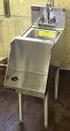 ENVIRONMENTAL HEALTH DIVISION 2120 Diamond Blvd., Suite 200 Concord, CA 94520 Phone: (925) 692-2500 Fax: (925) 692-2505 www.cchealth.org/eh/ SINKS / DISHMACHINES Food Preparation Sink A separate stainless
TEMPORARY FOOD FACILITY PERMIT APPLICATION
 COUNTY OF LAKE HEALTH SERVICES DEPARTMENT Division of Environmental Health 922 Bevins Court, Lakeport, CA 95453-9739 Telephone 707/ 263-1164 FAX: 263-1681 TEMPORARY FOOD FACILITY PERMIT APPLICATION Failure
FOOD SERVICE FACILITIES Best Management Practices Stormwater Management Program City of Bluff City P.O. Box 70, Bluff City, TN 37618 423-538-7144
 FOOD SERVICE FACILITIES Best Management Practices Stormwater Management Program City of Bluff City P.O. Box 70, Bluff City, TN 37618 423-538-7144 This document may be printed and used for reference by
Article 11 Laundry and Dry Cleaning
 Article 11 Laundry and Dry Cleaning 41101. General Provisions. 41102. Construction Permit. 41103. Sanitary Permit. 41104. Materials and Construction of Physical Facilities. 41105. Sanitary Facilities Plumbing.
Emergency Action Plan for Retail Food Establishments Second Edition
 Emergency Action Plan for Retail Food Establishments Second Edition Practical guidance for retail grocery and food service establishments to plan and respond to emergency situations that could impact food
Precautionary Boil Water Notices: Frequently Asked Questions
 Precautionary Boil Water Notices: Frequently Asked Questions QUICK TIPS: Boil Water For: Drinking Brushing Teeth Washing fruits & vegetables Preparing food Mixing baby formula Making ice Giving water to
MY HOME IN A HOUSING BLOCK A GUIDE FOR RESIDENTS
 MY HOME IN A HOUSING BLOCK A GUIDE FOR RESIDENTS -KESKUSTA One half of Finns live in housing blocks, which is a safe and comfortable way to live. Welcome a board! Buildings and the Finnish climate There
Hygiene Standards for all Food Businesses
 Hygiene Standards for all Food Businesses Food hygiene laws are not simply a list of rules. They are intended to let food business operators assess the risks to food safety in their business and apply
MISSISSIPPI. Downloaded January 2011
 MISSISSIPPI Downloaded January 2011 101.08 Dietitian. The term dietitian shall mean a person who is licensed as a dietitian in the State of Mississippi, or a Registered Dietitian exempted from licensure
Prevention. Cause. Causes: Groundwater seepage through the basement walls. Prevention: OPEN 24 Hours. Surface runoff. Sanitary sewer backup
 U n d e r s t a n d i n g B a s e m e n t F l o o d i n g Cause hen a basement floods, it is a source of stress and frustration for everyone involved. The City of Lansing wants to be a resource of information
CRITICAL VIOLATION RISK FACTORS
 Food Service Establishment Inspection Establishment Name: Address: 2104 OLD LEXINGTON ROAD City: WINSTON SALEM State: NC Zip: 27103 Permittee: JOSE & MILCIADES SORTO Mailing Address: 2104 OLD LEXINGTON
GUIDELINES. for COTTAGE INDUSTRY INVOLVED in HOME FOOD PRODUCTION
 GUIDELINES for COTTAGE INDUSTRY INVOLVED in HOME FOOD PRODUCTION ENVIRONMENTAL HEALTH PO Box 2000, 16 Garfield Street Charlottetown, PEI CIA 7N8 Tel: 368-4970 / Fax: 368-6468 These guidelines have been
8 plumbing. plumbing. 2010 PulteGroup, Inc. All Rights Reserved.
 8 90 2010 PulteGroup, Inc. All Rights Reserved. drains All the water you use leaves the home through a drain. Maintaining drains prevents clogging, overflows, water damage, and other problems. care and
Iowa State University Food Sales or Service Agreement
 Food Sales or Service Agreement (1) Read this agreement and make note of all topics that pertain to your organization s event. (2) Complete pages 1-3 and submit to the at least one week prior to your event.
Accident Prevention. and Crisis Management. Learning Objectives
 13 1 1 Accident Prevention 2 and Crisis Management Learning Objectives How can you prevent accidents? What should you do when a food recall or food crisis occurs? What should you do if the establishment
This Food Safety Plan was developed in New York as an example for growers. Each grower must develop their own plan which fits their operation.
 G1 This Food Safety Plan was developed in New York as an example for growers. Each grower must develop their own plan which fits their operation. This is a food safety and security program which incorporates
FACT SHEET. Users That Must Take Particular Precautions During A Boil Advisory
 FACT SHEET Users That Must Take Particular Precautions During A Boil Advisory a) Commercial Establishments (Restaurants, Hotels, Convenience Stores, etc.) - All water that is to be provided directly to
Address of food business: 17-27 Orford Place, Norwich, NR1 3QA Date of Inspection: 25 September 2014 Date of revisit: 8 th April 2015
 Public Protection (food & safety) Food Premises Inspection Report Name of Business: Pizza Hut Address of food business: 17-27 Orford Place, Norwich, NR1 3QA Date of Inspection: 25 September 2014 Date of
CLEAN UP FOR VOMITING & DIARRHEAL EVENT IN RETAIL FOOD FACILITIES
 CLEAN UP FOR VOMITING & DIARRHEAL EVENT IN RETAIL FOOD FACILITIES GENERAL INFORMATION Noroviruses are a group of viruses that cause gastroenteritis [gas-trō-en-ter-ī-tis] in people. Gastroenteritis is
Good Hygiene Practices for Catering at Outdoor Events
 Good Hygiene Practices for Catering at Outdoor Events The following pages of advice are based on the requirements of Regulation (EC) 852/2004 on the Hygiene of Foodstuffs The Food Hygiene (England) Regulations
Home Food Safety Myths and Facts for Consumers. The Partnership for Food Safety Education
 10 Home Food Safety Myths and Facts for Consumers The Partnership for Food Safety Education 2014 For more Home Food Safety Mythbusters go to www.fightbac.org Myth #1 Freezing foods kills harmful bacteria
Approved by Commissioner: LATEST REVISION: June 28, 2013
 POLICY TITLE: FOOD SERVICE MANAGEMENT, GENERAL PAGE 1 OF 13 POLICY NUMBER: 11.6 CHAPTER 11: FOOD SERVICE STATE of MAINE DEPARTMENT OF CORRECTIONS Division of Juvenile Services Approved by Commissioner:
FOG PRETREATMENT INFORMATION. New London Public Utilities F.O.G. Program 120 Broad Street New London, CT 06320
 FOG PRETREATMENT INFORMATION 1 New London Public Utilities F.O.G. Program 120 Broad Street New London, CT 06320 Kathryn Willis Program Coordinator Phone: 860-447-5222 Introduction This information package
Guide to Care and Maintenance
 Village of Mount Prospect Guide to Care and Maintenance of Your Apartment Sponsored ed by: y: Village of Mount Prospect Envir nvironmental Health Division with the assistance of The Concerened ened Owners
University of Vermont
 University of Vermont Department of Physical Plant Burlington, Vermont WATER INTRUSION GUIDELINES In accordance with: IIRC S500 IIRC S520 EPA Document 402-K-01-001 REVISED AND DISTRIBUTED BY: THE UNIVERSITY
4X BMPs for Food Service Facilities
 4X BMPs for Food Service Facilities APPENDIX 4X BEST MANAGEMENT PRACTICES 4X-1 Food Service Facilities Focus of Document This guidance presents BMPs to address the discharge of pollutants to the storm
GUIDELINES FOR OPERATORS OF MOBILE FOOD BUSINESSES: DESIGN, CONSTRUCTION
 Southern Drive, Busselton WA 6280 All Correspondence to: The Chief Executive Officer, Locked Bag 1, Busselton WA 6280 Ph: (08) 9781 0444 Fax: (08) 9752 4958 Email: [email protected] Web: www.busselton.wa.gov.au
Workbook for Developing an Active Food Safety Management System
 Workbook for Developing an Active Food Safety Management System A food safety management system will help to minimize the risk of foodborne illness in your food service establishment. It includes all the
MOBILE RETAIL FOOD ESTABLISHMENT APPLICATION SEASONAL ANNUAL TEMPORARY/SPECIAL EVENT
 Date Received: Application must be submitted at least 10 business days prior to proposed operation. MOBILE RETAIL FOOD ESTABLISHMENT APPLICATION SEASONAL ANNUAL TEMPORARY/SPECIAL EVENT PART 1 TO BE COMPLETED