
Society of Interventional Radiology Quality Improvement Guidelines for Percutaneous Vertebroplasty
|
|
|
- Mitchell Norman
- 10 years ago
- Views:
Transcription
1 Society of Interventional Radiology Quality Improvement Guidelines for Percutaneous Vertebroplasty J. Kevin McGraw, MD, John Cardella, MD, John Dean Barr, MD, John M. Mathis, MD, Orestes Sanchez, MD, Marc S. Schwartzberg, MD, Timothy L. Swan, MD, and David Sacks, MD, for the Society of Interventional Radiology Standards of Practice Committee J Vasc Interv Radiol 2003; 14:S311 S315 PREAMBLE This article first appeared in J Vasc Interv Radiol 2003; 14: From the Department of Interventional Radiology (J.K.M.), Riverside Methodist Hospital, Columbus, Ohio; Department of Radiology (J.C.), SUNY Upstate Medical University, Syracuse, New York; Mid- South Imaging and Therapeutics (J.D.B.), Memphis, Tennessee; Department of Radiology (J.M.M.), Lewis-Gale Hospital, Salem, Virginia; Department of Radiology (O.S.), Passaic Beth Israel Hospital; Radiology Associates of Central Florida (M.S.S.), Leesburg, Florida; Department of Radiology (T.L.S.), Marshfield Clinic, Marshfield, Wisconsin; and Department of Radiology (D.S.), The Reading Hospital and Medical Center, Reading, Pennsylvania. Address correspondence to SIR, Lee Highway, Suite 500, Fairfax, VA J.M.M. has identified a potential conflict of interest. SIR, 2003 DOI: /01.RVI c THE membership of the Society of Interventional Radiology (SIR) Standards of Practice Committee represents experts in a broad spectrum of interventional procedures from the private and academic sectors of medicine. Generally, Standards of Practice Committee members dedicate the vast majority of their professional time to performing interventional procedures; as such, they represent a valid, broad expert constituency of the subject matter under consideration for standards production. Technical documents specifying the exact consensus and literature review methodologies as well as the institutional affiliations and professional credentials of the authors of this document are available on request from the Society of Interventional Radiology, Lee Highway, Suite 500, Fairfax, VA METHODOLOGY SIR produces its Standards of Practice documents with use of the following process: Standards documents of relevance and timeliness are conceptualized by the Standards of Practice Committee members. A recognized expert is identified to serve as the principal author for the standard. Additional authors may be assigned depending on the magnitude of the project. An in-depth literature search is performed with use of electronic medical literature databases. Then, a critical review of peer-reviewed articles is performed with regard to the study methodology, results, and conclusions. The qualitative weight of these articles is assembled into an evidence table, which is used to write the document so it contains evidence-based data with respect to content, rates, and thresholds. When the evidence of literature is weak, conflicting, or contradictory, consensus for the parameter is reached by a minimum of 12 Standards of Practice Committee members with use of a Modified Delphi Consensus Method (1,2). For the purposes of these documents, consensus is defined as 80% Delphi participant agreement on a value or parameter. The draft document is critically reviewed by the Standards of Practice Committee members by telephone conference call or face-to-face meeting. The finalized draft from the Committee is sent to the SIR membership for further input/criticism during a 30-day comment period. These comments are discussed by the Standards of Practice Committee and appropriate revisions are made to create the finished standards document. Before its publication, the document is endorsed by the SIR Executive Council. VERTEBRAL FRACTURES Each year, more than 700,000 vertebral fractures secondary to osteoporosis are diagnosed in the United States population, resulting in 115,000 hospital admissions (3). The lifetime risk of a vertebral body compression fracture is 16% for women and 5% for men, and the incidence of osteoporotic fractures is anticipated to increase fourfold worldwide in the next 50 years (3). Other causes of painful compression fracture include malignant involvement of the spinal column (metastasis, myeloma, and lymphoma), hemangioma, and vertebral osteonecrosis. In addition to pain, spinal column instability may also be present. Regardless of etiology, treatment for compression fractures has been largely conservative and directed toward pain control, usually consisting of narcotic analgesia, bedrest, and back bracing. For osteoporosis, current S311

2 S312 Quality Improvement Guidelines for Percutaneous Vertebroplasty September 2003 JVIR preventive drug regimens, including hormonal replacement therapy, biphosphonates, and calcitonin, often are not prescribed until the disease has been diagnosed by the presence of a fracture. Percutaneous vertebroplasty is a therapeutic alternative for the treatment of pain associated with vertebral body compression fractures (4 22). The procedure entails placement of a large-caliber needle into the involved vertebral body and injection of radiopaque bone cement (eg, polymethyl methacrylate). The injected bone cement does not reexpand the collapsed vertebra, but acts as an internal splint to reinforce and stabilize the fracture for pain alleviation. These guidelines are written to be used in quality improvement programs to assess percutaneous vertebroplasty procedures. The most important processes of care are (i) selecting patients, (ii) performing the procedure, and (iii) monitoring the patient. The outcome measures or indicators for these processes are indications, success rates, and complication rates. Outcome measures are assigned threshold levels. DEFINITIONS Percutaneous vertebroplasty is defined as the injection of radiopaque bone cement (eg, polymethyl methacrylate) into a painful osteoporotic compression fracture (9,10,12 14,16, 18,20 28) or painful pathologic vertebral body (eg, multiple myeloma [7,8,29 31], metastatic disease [5 7, 33], and hemangioma [4,33 38]) with use of imaging guidance. Radiologic imaging has been a critical part of percutaneous vertebroplasty from its inception. Most procedures are performed with use of fluoroscopic guidance for needle placement and to monitor bone cement injection. The use of computed tomography has also been described (39). Although practicing physicians should strive to achieve perfect outcomes (eg, 100% success, 0% complications), in practice, all physicians will fall short of this ideal to a variable extent. Therefore, indicator thresholds may be used to assess the efficacy of ongoing quality-improvement programs. For the purposes of these guidelines, a threshold is a specific Table 1 Indications for Percutaneous Vertebroplasty: Threshold 95% 1. Painful primary and secondary osteoporotic vertebral compression fracture(s) refractory to medical therapy. 2. Painful vertebrae with extensive osteolysis or invasion secondary to benign or malignant tumor (ie, hemangioma, multiple myeloma, or metastatic disease). 3. Painful vertebral fracture associated with osteonecrosis (Kummell Disease). Note. When fewer than 95% of percutaneous vertebroplasty in an institution are performed for one or more of the above indications, it should prompt a review or practices related to selection of patients for percutaneous vertebroplasty. level of an indicator that should prompt a review. Procedure thresholds or overall thresholds reference a group of indicators for a procedure, eg, major complications. Individual complications may also be associated with complication-specific thresholds. When measures such as indications or success rates fall below a (minimum) threshold, or when complication rates exceed a (maximum) threshold, a review should be performed to determine causes and to implement changes if necessary. For example, if the incidence of fracture of rib or other bone is one measure of the quality of percutaneous vertebroplasty, values in excess of the defined threshold (in this case 1%) should trigger a review of policies and procedures within the department to determine the causes and to implement changes to lower the incidence of the complication. Thresholds may vary from those listed herein; for example, patient referral patterns and selection factors may dictate a different threshold value for a particular indicator at a particular institution. Therefore, setting universal thresholds is very difficult, and each department is urged to alter the thresholds as needed to higher or lower values to meet its own quality improvement program needs. Complications can be stratified on the basis of outcome. Major complications result in admission to a hospital Table 2 Absolute and Relative Contraindications for Percutaneous Vertebroplasty Absolute Contraindications 1. Asymptomatic vertebral body compression fractures 2. Patient improving on medical therapy 3. Prophylaxis in osteoporotic patients 4. Ongoing local or systemic infection 5. Retropulsed bone fragment resulting in myelopathy 6. Spinal canal compromise secondary to tumor resulting in myelopathy 7. Uncorrectable coagulopathy 8. Allergy to bone cement or opacification agent Relative Contraindications 1. Radiculopathy in excess of vertebral pain, caused by a compressive syndrome unrelated to vertebral collapse. Occasionally preoperative percutaneous vertebroplasty can be performed before a spinal decompressive procedure 2. Asymptomatic retropulsion of a fracture fragment causing significant spinal canal compromise 3. Asymptomatic tumor extension into the epidural space for therapy (for outpatient procedures), an unplanned increase in the level of care, prolonged hospitalization, permanent adverse sequelae, or death. Minor complications result in no sequelae; they may require nominal therapy or a short hospital stay for observation (generally overnight; see Appendix 1). The complication rates and thresholds described herein refer to major complications. INDICATIONS The major indication for percutaneous vertebroplasty is the treatment of symptomatic osteoporotic or neoplastic vertebral body compression fracture(s) refractory to medical therapy. Failure of medical therapy is defined by minimal or no pain relief with the administration of prescribed analgesics or adequate pain relief with narcotic dosages that produce undesirable side effects (excessive and

3 Volume 14 Number 9 Part 2 McGraw et al S313 Table 3 Specific Complications for Percutaneous Vertebroplasty Specific Complication Published Rates (%) Suggested Thresholds (%) Transient neurological deficit ( 30 days) Osteoporosis 1 1 Neoplastic 5 10 Permanent neurological deficit ( 30 days or requiring surgery) Osteoporosis 0 1 Neoplastic 2 5 Fracture of rib or vertebra 1 1 Allergic or idiosyncratic reaction 1 1 Infection 1 1 Symptomatic pulmonary cement embolus 1 1 Significant hemorrhage or vascular injury 0 0 Death 0 0 MD, Daniel J. Wunder, MD, Thomas M. Vesely, MD, Curtis W. Bakal, MD, Elizabeth A. Drucker, MD, JD, Curtis A. Lewis, MD, MBA, Albert A. Nemcek, Jr, MD, and Kenneth S. Rholl, MD. APPENDIX 1: SIR STANDARDS OF PRACTICE COMMITTEE CLASSIFICATION OF COMPLICATIONS BY OUTCOME Minor Complications A. No therapy, no consequence, or B. Nominal therapy, no consequence; includes overnight admission for observation only. intolerable sedation, confusion, or constipation). Other indications are less common and outlined in Table 1. Absolute and relative contraindications are outlined in Table 2. The indications and contraindications for percutaneous vertebroplasty may change in the future as more research and information becomes available. SUCCESS RATES When percutaneous vertebroplasty is performed for osteoporosis, success is defined as achievement of significant pain relief and/or improved mobility as measured by validated measurement tools with a threshold of 80%. When percutaneous vertebroplasty is performed for neoplastic involvement, success is defined as achievement of significant pain relief and/or improved mobility as measured by validated measurement tools with a threshold of 50% 60%. COMPLICATIONS Major complications occur in less than 1% of patients treated for compression fractures secondary to osteoporosis and in less than 5% of treated patients with neoplastic involvement (5 9,13,14,16,19,22,23,28,40 49). Published complication rates and suggested thresholds are included in Table 3. Published rates for individual types of complications are highly dependent on patient selection and are based on series comprising several hundred patients, which is a volume larger than most individual practitioners are likely to treat. It is also recognized that a single complication can cause a rate to cross above a complication-specific threshold when the complication occurs in a small volume of patients, eg, early in a quality-improvement program. In this situation, the suggested threshold is more appropriate for use in a quality-improvement program than is the published rate. Overall procedure threshold for all complications resulting from percutaneous vertebroplasty performed for osteoporosis is 2%, and performed for neoplastic indications is 10% (32). Acknowledgments: Dr. J. Kevin McGraw authored the first draft of this document and served as topic leader during the subsequent revisions of the draft. Dr. John F. Cardella is Chair of the SIR Standards of Practice Committee. Dr. David Sacks is Councilor of the SIR Standards Division. Other members of the Standards of Practice Committee and SIR who participated in the development of this clinical practice guideline are (listed alphabetically): John Aruny, MD, Daniel B. Brown, MD, Patricia Cole, PhD, MD, Peter Drescher, MD, MS, Neil Freeman, MD, Jeff Georgia, MD, Clement Grassi, MD, Ziv Haskal, MD, Michael Todd Jones, MD, Patrick Malloy, MD, Louis Martin, MD, Timothy McCowan, MD, Steven Meranze, MD, Theodore Mirra, MD, Kenneth D. Murphy, MD, Calvin Neithamer, MD, Steven Oglevie, MD, Reed Omary, MD, Nilesh Patel, MD, Parvati Ramchandani, MD, Anne C. Roberts, MD, Mark I. Silverstein, MD, H. Bob Smouse, MD, Patricia E. Thorpe, MD, Richard B. Towbin, MD, Anthony C. Venbrux, Major Complications C. Require therapy, minor hospitalization ( 48 h), D. Require major therapy, unplanned increase in level of care, prolonged hospitalization ( 48 h), E. Have permanent adverse sequelae, or F. Result in death. APPENDIX 2: METHODOLOGY Reported complication-specific rates in some cases reflect the aggregate of major and minor complications. Thresholds are derived from critical evaluation of the literature, evaluation of empirical data from Standards of Practice Committee member practices, and, when available, the SIR HI-IQ system national database. Consensus on statements in this document was obtained utilizing a modified Delphi technique (1,2). Technical documents specifying the exact consensus and literature review methodologies as well as the institutional affiliations and professional credentials of the authors of this document are available upon request from SIR, Lee Highway, Suite 500, Fairfax, VA References 1. Fink A, Kosefcoff J, Chassin M, Brook RH. Consensus methods: characteristics and guidelines for use. Am J Public Health 1984; 74: Leape LL, Hilborne LH, Park RE, et al. The appropriateness of use of coronary

4 S314 Quality Improvement Guidelines for Percutaneous Vertebroplasty September 2003 JVIR artery bypass graft surgery in New York State. JAMA 1993; 269: Riggs BL, Melton III LJ. The worldwide problem of osteoporosis: insights afforded by epidemiology. Bone 1995; 17(suppl):505S 511S. 4. Galibert P, Deramond H, Rosat P, Le Gars D. Preliminary note on the treatment of vertebral angioma by percutaneous acrylic vertebroplasty. Neurochirurgie 1987; 33: [French] 5. Kaemmerlen P, Thiesse P, Bouvard H, Biron P, Mornex F, Jonas P. Percutaneous vertebroplasty in the treatment of metastases: technique and results. J Radiol 1989; 70: [French] 6. Weill A, Chiras J, Simon JM, et al. Spinal metastases: indications for and results of percutaneous injection of acrylic surgical cement. Radiology 1996; 199: Cotten A, Dewatre F, Cortet B, et al. Percutaneous vertebroplasty for osteolytic metastases and myeloma: effects of the percentage of lesion filling and the leakage of methyl methacrylate at clinical follow-up. Radiology 1996; 200: Cortet B, Cotten A, Boutry N, et al. Percutaneous vertebroplasty in patients with osteolytic metastases or multiple myeloma. Rev Rhum Engl Ed 1997; 64: Jensen ME, Evans AJ, Mathis JM, et al. Percutaneous polymethylmethacrylate vertebroplasty in the treatment of osteoporotic vertebral body compression fractures: technical aspects. AJNR Am J Neuroradiol 1997; 18: Mathis JM, Petri M, Naff N. Percutaneous vertebroplasty treatment of steroid-induced osteoporotic compression fractures. Arthritis Rheum 1998; 41: Deramond H, Depriester C, Galibert P, Le Gars D. Percutaneous vertebroplasty with polymethylmethacrylate: technique, Indications, and results. Radiol Clin North Am 1998; 36: Cortet B, Cotton A, Boutry N, et al. Percutaneous vertebroplasty in the treatment of osteoporotic vertebral compression fractures: an open prospective study. J Rheumatol 1999; 26: Martin JB, Jean B, Sugiu K, et al. Vertebroplasty: clinical experience and follow-up results. Bone 1999; 24(suppl): 11S 15S. 14. Cyteval C, Sarrabere MPB, Roux JO, et al. Acute osteoporotic vertebral collapse: open study on percutaneous injection of acrylic surgical cement in 20 patients. AJR Am J Roentgenol 1999; 173: Jensen ME, Dion JE. Percutaneous vertebroplasty in the treatment of osteoporotic compression fractures. Neuroimaging Clin N Am 2000; 10: Barr JD, Barr MS, Lemley TJ, McCann RM. Percutaneous vertebroplasty for pain relief and spine stabilization. Spine 2000; 25: O Brien JP, Sims JT, Evans AJ. Vertebroplasty in patients with severe vertebral compression fractures: a technical report. AJNR Am J Neuroradiol 2000; 21: Grados F. Depriester C, Cayrolle G, et al. Long term observations of vertebral osteoporotic fractures treated by percutaneous vertebroplasty. Rheumatology 2000; 39: Mathis JM, Barr JD, Belkoff SM, et al. Percutaneous vertebroplasty: a developing standard of care for vertebral compression fractures. AJNR Am J Neuroradiol 2001; 22: Zoarski GH, Snow P, Olan WJ, et al. Percutaneous vertebroplasty for osteoporotic compression fractures: quantitative prospective evaluation of longterm outcomes. J Vasc Interv Radiol 2002; 13: Peh WC, Gilula LA, Peck DD. Percutaneous vertebroplasty for severe osteoporotic vertebral body compression fractures. Radiology 2002; 223: McGraw JK, Lippert JA, Minkus KD, et al. Prospective evaluation of pain relief in 100 patients undergoing percutaneous vertebroplasty: results and follow-up. J Vasc Interv Radiol 2002; 13: Levine SA, Perin LA, Hayes D, et al. An evidence-based evaluation of percutaneous vertebroplasty. Managed Care 2000; 9:56 60, Heini PF, Walchli B, Berlemann U. Percutaneous transpedicular vertebroplasty with PMMA: operative technique and early results. Eur Spine J 2000; 9: Kaufmann TJ, Jensen ME, Schweickert PA, et al. Age of fracture and clinical outcomes of percutaneous vertebroplasty. AJNR Am J Neuroradiol 2001; 22: Garfin SR, Yuan HA, Reiley MA. Kyphoplasty and vertebroplaty for the treatment of painful osteoporotic compression fractures. Spine 2001; 26: Hardouin P, Grados F, Cotton A, Cortet B. Should percutaneous vertebroplasty be used to treat osteoporotic fractures? An update. Joint Bone Spine 2001; 68: Amar AP, Larsen DW, Esnaashari N, et al. Percutaneous transpedicular polymethylmethacrylate vertebroplasty for the treatment of spinal compression fractures. Neurosurgery 2001; 49: Deramond H, Depriester C, Toussaint P, Galibert P. Percutaneous vertebroplasty. Semin Musculoskelet Radiol 1997; 1: Cotten A, Boutry N, Cortet B, et al. Percutaneous vertebroplasty: state of the art. RadioGraphics 1998; 18: Murphy KJ, Deramond H. Percutaneous vertebroplasty in benign and malignant disease. Neuroimaging Clin N Am 2000; 10: Jensen ME, Kallmes DE. Percutaneous vertebroplasty in the treatment of malignant spine disease. Cancer J 2002; 8: Galibert P, Deramond H. Percutaneous acrylic vertebroplasty as a treatment of vertebral angioma as well as painful and debilitating diseases. Chirurgie 1990; 116: [French] 34. Cortet B, Cotten A, Deprez X, Deramond H, et al. Value of vertebroplasty combined with surgical decompression in the treatment of aggressive spinal angioma. Rev Rhum Ed Fr 1994; 61: [French] 35. Ide C, Gangi A, Rimmelin A, et al. Vertebral haemangiomas with spinal cord compression: the place of preoperative percutaneous vertebroplasty with methyl methacrylate. Neuroradiology 1996; 38: Dousset V, Mousselard H, de Monck d User L, et al. Asymptomatic cervical haemangioma treated by percutaneous vertebroplasty. Neuroradiology 1996; 38: Feydy A, Cognard C, Miaux Y, et al. Acrylic vertebroplasty in symptomatic cervical vertebral haemangiomas: report of 2 cases. Neuroradiology 1996; 38: Cotten A, Deramond H, Cortet B, et al. Preoperative percutaneous injection of methyl methacrylate and n-butyl cyanoacrylate in vertebral hemangiomas. AJNR Am J Neuroradiol 1996; 17: Gangi A, Kastler BA, Dietemann JL. Percutaneous vertebroplasty guided by a combination of CT and fluoroscopy. AJNR Am J Neuroradiol 1994; 15: Padovani B, Kasriel O, Brunner P, Peretti-Viton P. Pulmonary embolism caused by acrylic cement: a rare complication of percutaneous vertebroplasty. AJNR Am J Neuroradiol 1999; 20: Ratliff J, Nguyen T, Heiss J. Root and spinal cord compression from methylmethacrylate vertebroplasty. Spine 2001; 26:E300 E Vasconcelos C, Gailloud P, Martin JB, Murphy KJ. Transient arterial hypotension induced by polymethylmethacrylate injection during percutaneous vertebroplasty. J Vasc Interv Radiol 2001; 12:
![Preliminary note on the treatment of vertebral angioma by percutaneous acrylic vertebroplasty. Neurochirurgie 1987; 33:166 168. [French] 5.](/docs-images/42/5193500/images/page_4.jpg "Kaemmerlen P, Thiesse P, Bouvard H, Biron P, Mornex F, Jonas P. Percutaneous vertebroplasty in the treatment of metastases: technique and results. J Radiol 1989; 70:557 562. [French] 6.")
5 Volume 14 Number 9 Part 2 McGraw et al S Harrington KD. Major neurological complications following percutaneous vertebroplasty with polymethylmethacrylate. J Bone Joint Surg Am 2001; 83A: Ryu KS, Park CK, Kim MC, Kang JK. Dose-dependent epidural leakage of polymethylmethacrylate after percutaneous vertebroplasty in patients with osteoporotic vertebral compression fractures. J Neurosurg 2002;96(suppl 1): McGraw JK, Heatwole EV, Strnad BT, et al. Predictive value of intraosseous venography before percutaneous vertebroplasty. J Vasc Interv Radiol 2002; 13: Gaughen JR, Jensen ME, Schweickert PA, et al. Relevance of antecedent venography in percutaneous vertebroplasty for the treatment of osteoporotic compression fractures. AJNR Am J Neuroradiol 2002; 23: Kaufmann TJ, Jensen ME, Ford G, et al. Cardiovascular effects of polymethylmethacrylate use in percutaneous vertebroplasty. AJNR Am J Neuroradiol 2002; 23: Scroop R, Eskridge J, Britz GW. Paradoxical cerebral arterial embolization of cement during intraoperative vertebroplasty: case report. AJNR Am J Neuroradiol 2002; 23: Vasconcelos C, Gaulloud P, Beauchamp NJ, et al. Is percutaneous vertebroplasty without pretreatment venography safe? Evaluation of 205 consecutive procedures. AJNR Am J Neuroradiol 2002:23: The clinical practice guidelines of the Society of Interventional Radiology attempt to define practice principles that generally should assist in producing high-quality medical care. These guidelines are voluntary and are not rules. A physician may deviate from these guidelines, as necessitated by the individual patient and available resources. These practice guidelines should not be deemed inclusive of all proper methods of care or exclusive of other methods of care that are reasonably directed toward the same result. Other sources of information may be used in conjunction with these principles to produce a process leading to high-quality medical care. The ultimate judgment regarding the conduct of any specific procedure or course of management must be made by the physician, who should consider all circumstances relevant to the individual clinical situation. Adherence to the SIR Quality Improvement Program will not assure a successful outcome in every situation. It is prudent to document the rationale for any deviation from the suggested practice guidelines in the department policies and procedure manual or in the patient s medical record.

Increase in Vertebral Body Height after Vertebroplasty
 AJNR Am J Neuroradiol 23:185 189, February 2003 Increase in Vertebral Body Height after Vertebroplasty Akio Hiwatashi, Toshio Moritani, Yuji Numaguchi, and Per-Lennart Westesson BACKGROUND AND PURPOSE:
Despite recent advances in medical
 RADIOLOGIC DECISION-MAKING Percutaneous Vertebroplasty: New Treatment for Vertebral Compression Fractures THOMAS A. PREDEY, M.D., LUKE E. SEWALL, M.D., and STEVEN J. SMITH, M.D. La Grange Memorial Hospital,
New Technologies in Spine
 New Technologies in Spine Kyphoplasty and Vertebroplasty for the Treatment of Painful Osteoporotic Compression Fractures Steven R. Garfin, MD,* Hansen A. Yuan, MD, and Mark A. Reiley, MD SPINE Volume 26,
Kyphoplasty and Vertebroplasty
 Kyphoplasty and Vertebroplasty Policy Number: Original Effective Date: MM.06.007 01/11/2005 Line(s) of Business: Current Effective Date: HMO; PPO; QUEST 10/26/2012 Section: Surgery Place(s) of Service:
Percutaneous Treatment of Vertebral Compression Fractures
 Percutaneous Treatment of Vertebral Compression Fractures A Meta-analysis of Complications Michael J. Lee, MD, Mark Dumonski, MD, Patrick Cahill, MD, Tom Stanley, MD, Daniel Park, MD, and Kern Singh, MD
Percutaneous balloon kyphoplasty for the correction of spinal deformity in painful vertebral body compression fractures
 Journal of Clinical Imaging 26 (2002) 1 5 Percutaneous balloon kyphoplasty for the correction of spinal deformity in painful vertebral body compression fractures Daphne J. Theodorou a, Stavroula J. Theodorou
STONY BROOK UNIVERSITY HOSPITAL VASCULAR CENTER CREDENTIALING POLICY
 STONY BROOK UNIVERSITY HOSPITAL VASCULAR CENTER CREDENTIALING POLICY Per Medical Board decision March 18, 2008: These credentialing standards do NOT apply to peripheral angiography performed in the context
Cement augmentation for vertebral fractures in patients with multiple myeloma
 Acta Orthop. Belg., 2014, 80, 551-557 ORIGINAL STUDY Cement augmentation for vertebral fractures in patients with multiple myeloma Haroon Majeed, Rajendranath Bommireddy, Zdenek Klezl From Royal Derby
Metastatic Bone Disease and Multiple Myeloma 16000122-01
 Metastatic Bone Disease and Multiple Myeloma 16000122-01 1 Southwest Spine Institute Douglas S. Won, MD Spine Surgery Specialist Director of Southwest Spine Institute Clinical Asst. Professor, UT Southwestern
KYPHON. Reimbursement Guide. Physician Reimbursement. Balloon Kyphoplasty Procedure. ICD-9-CM Diagnosis Codes. CPT Codes and Payment
 KYPHON Balloon Kyphoplasty Procedure Reimbursement Guide ICD-9-CM Diagnosis Codes Providers should report the ICD-9-CM diagnosis code that most accurately describes the patient s condition. Please refer
Measure Title X RAY PRIOR TO MRI OR CAT SCAN IN THE EVAULATION OF LOWER BACK PAIN Disease State Back pain Indicator Classification Utilization
 Client HMSA: PQSR 2009 Measure Title X RAY PRIOR TO MRI OR CAT SCAN IN THE EVAULATION OF LOWER BACK PAIN Disease State Back pain Indicator Classification Utilization Strength of Recommendation Organizations
62 M.J.B. Stallmeyer and G.H. Zoarski
 5 Patient Evaluation and Selection M.J.B. Stallmeyer and Gregg H. Zoarski Vertebral compression fractures (VCFs) can occur as a result of osteoporosis, malignant primary bone tumors, osteolytic metastases,
Management of Painful Vertebral Hemangiomas with Kyphoplasty: A Report of Two Cases and a Literature Review
 Pain Physician 2009; 12:E297-E303 ISSN 2150-1149 Case Reports Management of Painful Vertebral Hemangiomas with Kyphoplasty: A Report of Two Cases and a Literature Review Jonathan O. Jones, MD 1, Brian
Get Back to the Life You Love! The MedStar Spine Center in Chevy Chase
 Get Back to the Life You Love! The MedStar Spine Center in Chevy Chase The MedStar Spine Center in Chevy Chase Relief from Pain, Restoration of Function Non-surgical, Minimally Invasive and Complex Surgical
The Lewin Group undertook the following steps to identify the guidelines relevant to the 11 targeted procedures:
 Guidelines The following is a list of proposed medical specialty guidelines that have been found for the 11 targeted procedures to be included in the Medicare Imaging Demonstration. The list includes only
Contents. Introduction 1. Anatomy of the Spine 1. 2. Spinal Imaging 7. 3. Spinal Biomechanics 23. 4. History and Physical Examination of the Spine 33
 Contents Introduction 1. Anatomy of the Spine 1 Vertebrae 1 Ligaments 3 Intervertebral Disk 4 Intervertebral Foramen 5 2. Spinal Imaging 7 Imaging Modalities 7 Conventional Radiographs 7 Myelography 9
GUIDELINES FOR ASSESSMENT OF SPINAL STABILITY THE CHRISTIE, GREATER MANCHESTER & CHESHIRE. CP57 Version: V3
 GUIDELINES FOR ASSESSMENT OF SPINAL STABILITY THE CHRISTIE, GREATER MANCHESTER & CHESHIRE Procedure Reference: Document Owner: CP57 Version: V3 Dr V. Misra Accountable Committee: Acute Oncology Group Network
Advances In Spine Care. James D. Bruffey M.D. Scripps Clinic Division of Orthopaedic Surgery Section of Spinal Surgery
 Advances In Spine Care James D. Bruffey M.D. Scripps Clinic Division of Orthopaedic Surgery Section of Spinal Surgery Introduction The Spine - A common source of problems Back pain is the #2 presenting
Minimally Invasive Spine Surgery For Your Patients
 Minimally Invasive Spine Surgery For Your Patients Lukas P. Zebala, M.D. Assistant Professor Orthopaedic and Neurological Spine Surgery Department of Orthopaedic Surgery Washington University School of
Osteoporosis and Vertebral Compression (Spinal) Fractures Fact Sheet
 Osteoporosis and Vertebral Compression (Spinal) Fractures Fact Sheet About Osteoporosis Osteoporosis is estimated to affect 200 million women worldwide. 1 Worldwide, osteoporosis causes more than nine
Percutaneous Vertebroplasty
 Wilfred C. G. Peh 1,2 Michael S. Gelbart 2 Louis. Gilula 2 Dallas D. Peck 2,3 Received January 17, 2002; accepted after revision October 22, 2002. 1 Department of Diagnostic Radiology, Singapore General
Management of spinal cord compression
 Management of spinal cord compression (SUMMARY) Main points a) On diagnosis, all patients should receive dexamethasone 10mg IV one dose, then 4mg every 6h. then switched to oral dose and tapered as tolerated
VERTEBRAL COMPRESSION FRACTURE AND KIENBOCK S DISEASE TREATMENTS
 TREATMENTS Coverage for services, procedures, medical devices and drugs are dependent upon benefit eligibility as outlined in the member's specific benefit plan. This Medical Coverage Guideline must be
Guidance on competencies for management of Cancer Pain in adults
 Guidance on competencies for management of Cancer Pain in adults Endorsed by: Contents Introduction A: Core competencies for practitioners in Pain Medicine B: Competencies for practitioners in Pain Medicine
White Paper: Reducing Utilization Concerns Regarding Spinal Fusion and Artificial Disc Implants
 White Paper: Reducing Utilization Concerns Regarding Spinal Fusion and Artificial Disc Implants For Health Plans, Medical Management Organizations and TPAs Executive Summary Back pain is one of the most
Marc A. Cohen, MD, FAAOS, FACS Diplomate American Board of Spinal Surgery Fellow American College of Spinal Surgery
 Marc A. Cohen, MD, FAAOS, FACS Diplomate American Board of Spinal Surgery Fellow American College of Spinal Surgery 221 Madison Ave Morristown, New Jersey 07960 (973) 538 4444 Fax (973) 538 0420 Patient
MRI and Bone Scan Imaging in the Preoperative Evaluation of Painful Vertebral Fractures Treated with Vertebroplasty and Kyphoplasty
 MRI and Bone Scan Imaging in the Preoperative Evaluation of Painful Vertebral Fractures Treated with Vertebroplasty and Kyphoplasty SALVATORE MASALA 1, ORAZIO SCHILLACI 2, FRANCESCO MASSARI 1, ROBERTA
Objectives. Spinal Fractures: Classification Diagnosis and Treatment. Level of Fracture. Neuro exam Muscle Grading
 Objectives Spinal Fractures: Classification Diagnosis and Treatment Johannes Bernbeck,, MD Review and apply the understanding of incidence and etiology of VCF. Examine conservative and operative management
Update to the Treatment of Degenerative Cervical Disc Disease
 Update to the Treatment of Degenerative Cervical Disc Disease Michael Lynn, MD Neurosurgeon, Southeastern Neurosurgical & Spine Institute Adjunct Assistant Clinical Professor of Bioengineering, Clemson
The goals of modern spinal surgery are to maximize
 SPRING 2013 Robot-Guided Spine Surgery Christopher R. Good, M.D., F.A.C.S. and Blair K. Snyder, P.A.-C. The goals of modern spinal surgery are to maximize patient function and accelerate a return to a
6/3/2011. High Prevalence and Incidence. Low back pain is 5 th most common reason for all physician office visits in the U.S.
 High Prevalence and Incidence Prevalence 85% of Americans will experience low back pain at some time in their life. Incidence 5% annual Timothy C. Shen, M.D. Physical Medicine and Rehabilitation Sub-specialty
Clinical Guideline. Low Back Pain Orthopaedics. Princess Alexandra Hospital Emergency Department. 1 Purpose. 2 Background
 Princess Alexandra Hospital Emergency Department Clinical Guideline Orthopaedics Review Officer: Katherine Isoardi Version no: 1 Approval date: 18/03/2015 Review date: 18/03/2017 Approving Officer Dr James
SPINE ANATOMY AND PROCEDURES. Tulsa Spine & Specialty Hospital 6901 S. Olympia Avenue Tulsa, Oklahoma 74132
 SPINE ANATOMY AND PROCEDURES Tulsa Spine & Specialty Hospital 6901 S. Olympia Avenue Tulsa, Oklahoma 74132 SPINE ANATOMY The spine consists of 33 bones called vertebrae. The top 7 are cervical, or neck
SPINE SERVICE ROTATION ROTATION SPECIFIC OBJECTIVES (RSO) DEPT. OF ORTHOPEDICS AND PHYSICAL REHABILITATION UNIVERSITY OF MASSACHUSETTS
 SPINE SERVICE ROTATION ROTATION SPECIFIC OBJECTIVES (RSO) DEPT. OF ORTHOPEDICS AND PHYSICAL REHABILITATION UNIVERSITY OF MASSACHUSETTS The purpose of this RSO is to outline and clarify the objectives of
Information for the Patient About Surgical
 Information for the Patient About Surgical Decompression and Stabilization of the Spine Aging and the Spine Daily wear and tear, along with disc degeneration due to aging and injury, are common causes
Int J Clin Exp Med 2015;8(9):16287-16293 www.ijcem.com /ISSN:1940-5901/IJCEM0011602
 Int J Clin Exp Med 2015;8(9):16287-16293 www.ijcem.com /ISSN:1940-5901/IJCEM0011602 Original Article Treatment of osteoporotic vertebral compression fractures with percutaneous vertebroplasty under local
Nonoperative Management of Herniated Cervical Intervertebral Disc With Radiculopathy. Spine Volume 21(16) August 15, 1996, pp 1877-1883
 Nonoperative Management of Herniated Cervical Intervertebral Disc With Radiculopathy 1 Spine Volume 21(16) August 15, 1996, pp 1877-1883 Saal, Joel S. MD; Saal, Jeffrey A. MD; Yurth, Elizabeth F. MD FROM
X-Plain Vertebral Compression Fractures Reference Summary
 X-Plain Vertebral Compression Fractures Reference Summary Introduction Back pain caused by a vertebral compression fracture, or VCF, is a common condition that affects thousands of people every year. A
Osteoporotic Verterbal Compression Fractures
 Osteoporotic Verterbal Compression Fractures Kook Jin Chung Department of Orthopaedic Surgery, Kangnam Sacred Heart Hospital, College of Medicine, Hallym University Korea 2 1. Introduction As the number
The Role of Bisphosphonates in Multiple Myeloma: 2007 Update Clinical Practice Guideline
 The Role of Bisphosphonates in Multiple Myeloma: 2007 Update Clinical Practice Guideline Introduction ASCO convened an Update Committee to review and update the 2002 recommendations for the role of bisphosphonates
DIFFERENTIAL DIAGNOSIS OF LOW BACK PAIN. Arnold J. Weil, M.D., M.B.A. Non-Surgical Orthopaedics, P.C. Atlanta, GA
 DIFFERENTIAL DIAGNOSIS OF LOW BACK PAIN Arnold J. Weil, M.D., M.B.A. Non-Surgical Orthopaedics, P.C. Atlanta, GA MEDICAL ALGORITHM OF REALITY LOWER BACK PAIN Yes Patient will never get better until case
LOW BACK PAIN; MECHANICAL
 1 ORTHO 16 LOW BACK PAIN; MECHANICAL Background This case definition was developed by the Armed Forces Health Surveillance Center (AFHSC) for the purpose of epidemiological surveillance of a condition
Vesselplasty: A New Technical Approach to Treat Symptomatic Vertebral Compression Fractures
 Vascular and Interventional Radiology Original Research Flors et al. Vesselplasty to Treat Symptomatic VCFs Vascular and Interventional Radiology Original Research Vesselplasty: A New Technical Approach
OVCF of the thoracic and lumbar spine can be a source of
 Published August 26, 2010 as 10.3174/ajnr.A2223 ORIGINAL RESEARCH A.O. Ortiz R. Bordia Injury to the Vertebral Endplate-Disk Complex Associated with Osteoporotic Vertebral Compression Fractures BACKGROUND
Spinal Surgery Functional Status and Quality of Life Outcome Specifications 2015 (01/01/2013 to 12/31/2013 Dates of Procedure) September 2014
 Description Methodology For patients ages 18 years and older who undergo a lumbar discectomy/laminotomy or lumbar spinal fusion procedure during the measurement year, the following measures will be calculated:
Temple Physical Therapy
 Temple Physical Therapy A General Overview of Common Neck Injuries For current information on Temple Physical Therapy related news and for a healthy and safe return to work, sport and recreation Like Us
MALIGNANT SPINAL CORD COMPRESSION. Kate Hamilton Head of Medical Oncology Ballarat Health Services
 MALIGNANT SPINAL CORD COMPRESSION Kate Hamilton Head of Medical Oncology Ballarat Health Services OVERVIEW Background Epidemiology Pathophysiology Diagnosis Investigation Differential Diagnosis Management
.org. Metastatic Bone Disease. Description
 Metastatic Bone Disease Page ( 1 ) Cancer that begins in an organ, such as the lungs, breast, or prostate, and then spreads to bone is called metastatic bone disease (MBD). More than 1.2 million new cancer
А А А дламая АмАяАяАсАяАя АК А АВдлАмАК АКАВАК
 Аядл АК А АВдлАК АКАВАК 2 АяАяА АВА АсдлАя А А А длая АяАяАсАяАя АК А АВдлАК АКАВАК Ас. apple apple АУ fi applefi АвАвАУ- fi applefi - АУapple applefi apple fi fi fi applefi-. (. 2-184, 2-185) АУ apple
Spinal Compression Fractures A Patient's Guide to Spinal Compression Fractures
 Arcata Chiropractic Office Larry J. Kleefeld D.C. Spinal Compression Fractures A Patient's Guide to Spinal Compression Fractures Introduction Compression fractures are the most common type of fracture
Jonathan R. Gottlieb, MD 7220 SW 127 Street Pinecrest, FL 33156 [email protected]
 Jonathan R. Gottlieb, MD 7220 SW 127 Street Pinecrest, FL 33156 [email protected] CURRENT PRACTICE September 2009-present University of Miami School of Medicine Assistant Professor, Department of
James A. Sanfilippo, M.D. CONSENT FOR SPINAL SURGERY PATIENT: DATE:
 James A. Sanfilippo, M.D. CONSENT FOR SPINAL SURGERY PATIENT: DATE: 1. I have been strongly advised to carefully read and consider this operative permit. I realize that it is important that I understand
Spine University s Guide to Vertebral Osteonecrosis (Kummel's Disease)
 Spine University s Guide to Vertebral Osteonecrosis (Kummel's Disease) 2 Introduction Kummel's disease is a collapse of the vertebrae (the bones that make up the spine). It is also called vertebral osteonecrosis.
CLINICAL PRACTICE GUIDELINES FOR MANAGEMENT OF LOW BACK PAIN
 CLINICAL PRACTICE GUIDELINES FOR MANAGEMENT OF LOW BACK PAIN Low back pain is very common, up to 90+% of people are affected by back pain at some time in their lives. Most often back pain is benign and
Brown-Sequard Syndrome Caused by Cervical Disc Herniation
 62 CASE REPORT Brown-Sequard Syndrome Caused by Cervical Disc Herniation Chih-Hsiu Wang, Chun-Chung Chen, Der-Yang Cho Department of Neurosurgery, China Medical University Hospital, Taichung, Taiwan, R.O.C.
Compression Fractures
 September 2006 Compression Fractures Eleanor Adams Harvard Medical School Year IV Overview Spine Anatomy Thoracolumbar Fractures Cases Compression Fractures, Ddx Radiologic Tests of Choice Treatment Options
Percutaneous balloon kyphoplasty for the treatment of vertebral compression fractures
 Yu et al. BMC Surgery 2014, 14:3 RESEARCH ARTICLE Open Access Percutaneous balloon kyphoplasty for the treatment of vertebral compression fractures Chia-Wei Yu, Ming-Kai Hsieh, Lih-Huei Chen *, Chi-Chien
W40 Total prosthetic replacement of knee joint using cement
 Bedfordshire and Hertfordshire Priorities Forum statement Number: 33 Subject: Referral criteria for patients from primary care presenting with knee pain due to ostoarthritis, and clinical threshold for
METASTASES TO THE BONE
 RADIATION THERAPY FOR METASTASES TO THE BONE Facts to Help Patients Make an Informed Decision TARGETING CANCER CARE AMERICAN SOCIETY FOR RADIATION ONCOLOGY WHAT ARE BONE METASTASES? Cancer that starts
Options for Cervical Disc Degeneration A Guide to the Fusion Arm of the M6 -C Artificial Disc Study
 Options for Cervical Disc Degeneration A Guide to the Fusion Arm of the M6 -C Artificial Disc Study Each year, hundreds of thousands of adults are diagnosed with Cervical Disc Degeneration, an upper spine
Advanced Practice Provider Academy
 (+)Dean T. Harrison, MPAS,PA C,DFAAPA Director of Mid Level Practitioners; Assistant Medical Director Clinical Evaluation Unit, Division of Emergency Medicine, Department of Surgery, Duke University Medical
The Risk of New Osteoporotic Vertebral Compression Fractures in the Year after Percutaneous Vertebroplasty
 The Risk of New Osteoporotic Vertebral Compression Fractures in the Year after Percutaneous Vertebroplasty Maurits H.J. Voormolen, MD, Paul N.M. Lohle, MD, PhD, Job R. Juttmann, MD, PhD, Yolanda van der
Adult Spine Rotation Specific Evaluation Orthopaedic Surgery Training Program School of Medicine, Queen s University
 Adult Spine Rotation Specific Evaluation Orthopaedic Surgery Training Program School of Medicine, Queen s University CanMEDS Roles / Competencies Name: PGY Rotation Dates: s s Exceeds N/A Attending Staff:
Department of Diagnostic Radiology, Sohag Faculty of Medicine, Sohag University, Sohag, Egypt
 Journal of Orthopaedic Surgery 2011;19(2):145-50 Sensitivity, specificity and accuracy of magnetic resonance imaging for differentiating vertebral compression caused by malignancy, osteoporosis, and infections
.org. Fractures of the Thoracic and Lumbar Spine. Cause. Description
 Fractures of the Thoracic and Lumbar Spine Page ( 1 ) Spinal fractures can vary widely in severity. While some fractures are very serious injuries that require emergency treatment, other fractures can
Physicians at-a-glance
 Ohio Physicians Neurosurgery Office UC Physicians Office - Clifton Expertise traumatic brain injury, intracerebral hemorrhage, stroke, carotid artery disease, moyamoya disease, brain tumors; spine surgery,
CERTIFICATE OF NEED AND ACUTE CARE LICENSURE PROGRAM. Hospital Licensing Standards: Emergency Department and Trauma Services:
 HEALTH AND SENIOR SERVICES HEALTH CARE QUALITY AND OVERSIGHT BRANCH HEALTH CARE QUALITY AND OVERSIGHT DIVISION ACUTE CARE FACILITY OVERSIGHT CERTIFICATE OF NEED AND ACUTE CARE LICENSURE PROGRAM Hospital
METROPOLITAN LIFE INSURANCE COMPANY 200 PARK AVENUE, NEW YORK, NEW YORK 10166-0188
 METROPOLITAN LIFE INSURANCE COMPANY 200 PARK AVENUE, NEW YORK, NEW YORK 10166-0188 POLICYHOLDER: NORFOLK PUBLIC SCHOOLS Group Policy Form No: GPNP04-CI (Referred to herein as the Group Policy ) Certificate
ICD 10 CM IMPLEMENTATION DATE OCT 1, 2015
 Presented by: Teri Romano, RN, MBA, CPC, CMDP ICD 10 CM IMPLEMENTATION DATE OCT 1, 2015 Source: http://journal.ahima.org/2015/02/04/us house committee to hold hearing on icd 10 implementation/ 2 2015 Web_Non
Medication Guidelines for LP/Myelograms Medication Recommendation Comments Plavix, Ticlid, other antiplatelet meds
 Critical Laboratory Values for Lumbar Puncture/Myelography Lab Test PLT INR PTT Lab Value >25,000
Dr. Joshua D. Dion DNP, A.C.N.P-BC, R.N.-BC. Northeastern University, Boston MA, Doctor of Nursing Practice Degree (January 2014).
 Dr. Joshua D. Dion DNP, A.C.N.P-BC, R.N.-BC Education: Northeastern University, Boston MA, Doctor of Nursing Practice Degree (January 2014). MGH Institute of Health Professions, Boston, MA, Master of Science
Cervical Spondylosis (Arthritis of the Neck)
 Copyright 2009 American Academy of Orthopaedic Surgeons Cervical Spondylosis (Arthritis of the Neck) Neck pain is extremely common. It can be caused by many things, and is most often related to getting
Quality Improvement Guidelines for Percutaneous Nephrostomy
 Quality Improvement Guidelines for Percutaneous Nephrostomy Parvati Ramchandani, MD, John F. Cardella, MD, Clement J. Grassi, MD, Anne C. Roberts, MD, David Sacks, MD, Marc S. Schwartzberg, MD, and Curtis
Cervical-Spine Injuries: Catastrophic Injury to Neck Sprain. Seth Cheatham, MD
 Cervical-Spine Injuries: Catastrophic Injury to Neck Sprain Seth Cheatham, MD 236 Seth A. Cheatham, MD VCU Sports Medicine I have no financial disclosures Contact sports, specifically football, places
Contractor Number 11302. Oversight Region Region IV
 Local Coverage Determination (LCD): Spinal Cord Stimulators for Chronic Pain (L32549) Contractor Information Contractor Name Palmetto GBA opens in new window Contractor Number 11302 Contractor Type MAC
Khaled s Radiology report
 Khaled s Radiology report Patient Name: Khaled Adli Moustafa Date 06/15/2014 The patient is not present. And the following report is based upon what was in the MRI of the cervical and lumbar spine report
Each year, hundreds of thousands of adults are diagnosed with Cervical Disc Degeneration, The Cervical Spine. What is the Cervical Spine?
 Each year, hundreds of thousands of adults are diagnosed with Cervical Disc Degeneration, an upper spine condition that can cause pain and numbness in the neck, shoulders, arms, and even hands. This patient
1 REVISOR 5223.0070. (4) Pain associated with rigidity (loss of motion or postural abnormality) or
 1 REVISOR 5223.0070 5223.0070 MUSCULOSKELETAL SCHEDULE; BACK. Subpart 1. Lumbar spine. The spine rating is inclusive of leg symptoms except for gross motor weakness, bladder or bowel dysfunction, or sexual
www.backandspinefl.com Back and Spine Center 509 Riverside Dr., Suite 203 Stuart, FL 34994 Phone: (772) 288-5862
 Non-Profit ORG. U.S. Postage PAID West Palm BCH. FL. PERMIT NO. 4709 www.backandspinefl.com Back and Spine Center 509 Riverside Dr., Suite 203 Stuart, FL 34994 Phone: (772) 288-5862 The evolution of neurosurgery
The Women s Health Initiative: The Role of Hormonal Therapy in Disease Prevention
 The Women s Health Initiative: The Role of Hormonal Therapy in Disease Prevention Robert B. Wallace, MD, MSc Departments of Epidemiology and Internal Medicine University of Iowa College of Public Health
X Stop Spinal Stenosis Decompression
 X Stop Spinal Stenosis Decompression Am I a candidate for X Stop spinal surgery? You may be a candidate for the X Stop spinal surgery if you have primarily leg pain rather than mostly back pain and your
Musculoskeletal: Acute Lower Back Pain
 Musculoskeletal: Acute Lower Back Pain Acute Lower Back Pain Back Pain only Sciatica / Radiculopathy Possible Cord or Cauda Equina Compression Possible Spinal Canal Stenosis Red Flags Initial conservative
Intrathecal Baclofen for CNS Spasticity
 Intrathecal Baclofen for CNS Spasticity Last Review Date: November 13, 2015 Number: MG.MM.ME.31bC5 Medical Guideline Disclaimer Property of EmblemHealth. All rights reserved. The treating physician or
National Medical Policy
 National Medical Policy Subject: Policy Number: Kyphoplasty NMP62 Effective Date*: October 2003 Updated: August 2015 This National Medical Policy is subject to the terms in the IMPORTANT NOTICE at the
Low Back Pain Protocols
 Low Back Pain Protocols Introduction: Diagnostic Triage And 1. Patient Group Adults aged 18 years and over with routine low back problems. Patients who have had recent surgery should be referred directly
Spinal cord stimulation
 Spinal cord stimulation This leaflet aims to answer your questions about having spinal cord stimulation. It explains the benefits, risks and alternatives, as well as what you can expect when you come to
Clinical guidance for MRI referral
 MRI for cervical radiculopathy Referral by a medical practitioner (excluding a specialist or consultant physician) for a scan of spine for a patient 16 years or older for suspected: cervical radiculopathy
Lumbar Spinal Stenosis
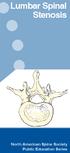 Lumbar Spinal Stenosis North American Spine Society Public Education Series What Is Lumbar Spinal Stenosis? The vertebrae are the bones that make up the lumbar spine (low back). The spinal canal runs through