
Sensitivity- and Uncertainty-Based Criticality Safety Validation Techniques
|
|
|
- Angelina Murphy
- 10 years ago
- Views:
Transcription
1 NUCLEAR SCIENCE AND ENGINEERING: 146, ~2004! Sensitivity- and Uncertainty-Based Criticality Safety Validation Techniques B. L. Broadhead, B. T. Rearden,* and C. M. Hopper Oak Ridge National Laboratory P.O. Box 2008, Oak Ridge, Tennessee J. J. Wagschal The Hebrew University of Jerusalem Racah Institute of Physics, 91904, Jerusalem, Israel and C. V. Parks Oak Ridge National Laboratory P.O. Box 2008, Oak Ridge, Tennessee Received January 9, 2003 Accepted June 20, 2003 Abstract The theoretical basis for the application of sensitivity and uncertainty (S/U) analysis methods to the validation of benchmark data sets for use in criticality safety applications is developed. Sensitivity analyses produce energy-dependent sensitivity coefficients that give the relative change in the system multiplication factor k eff value as a function of relative changes in the cross-section data by isotope, reaction, and energy. Integral indices are then developed that utilize the sensitivity information to quantify similarities between pairs of systems, typically a benchmark experiment and design system. Uncertainty analyses provide an estimate of the uncertainties in the calculated values of the system k eff due to crosssection uncertainties, as well as correlation in the k eff uncertainties between systems. These uncertainty correlations provide an additional measure of system similarity. The use of the similarity measures from both S/U analyses in the formal determination of areas of applicability for benchmark experiments is developed. Furthermore, the use of these similarity measures as a trending parameter for the estimation of the computational bias and uncertainty is explored. The S/U analysis results, along with the calculated and measured k eff values and estimates of uncertainties in the measurements, were used in this work to demonstrate application of the generalized linear-least-squares methodology (GLLSM) to data validation for criticality safety studies. An illustrative example is used to demonstrate the application of these S/U analysis procedures to actual criticality safety problems. Computational biases, uncertainties, and the upper subcritical limit for the example applications are determined with the new methods and compared to those obtained through traditional criticality safety analysis validation techniques. The GLLSM procedure is also applied to determine cutoff values for the similarity indices such that applicability of a benchmark experiment to a criticality safety design system can be assured. Additionally, the GLLSM procedure is used to determine how many applicable benchmark experiments exceeding a certain degree of similarity are necessary for an accurate assessment of the computational bias. * [email protected] 340

2 CRITICALITY SAFETY VALIDATION 341 I. INTRODUCTION The American national standard for nuclear criticality safety in operations with fissionable material outside reactors, ANSI0ANS ~Ref. 1!, allows the use of calculations in the determination of subcritical limits for the design of fissionable material systems. The standard requires validation of the analytical methods and data used in nuclear criticality safety calculations in order to quantify any computational bias and the uncertainty in the bias. The validation procedure must be conducted through comparison of the computed results with experimental data, and the design system for which the subcritical limit is established must fall within the area of applicability of the experiments chosen for validation. The standard defines the area ~or areas! of applicability as the limiting ranges of material compositions, geometric arrangements, neutron energy spectra, and other relevant parameters ~e.g., heterogeneity, leakage, interaction, absorption, etc.! within which the bias of a computational method is established. For design systems that fall outside the area of applicability of available experiments, the standard allows for the use of trends in the bias to extend the range of the experimental conditions. The standard further states, Where the extension is large, the method should be supplemented by other computational methods to provide a better estimate of the bias, and especially its uncertainty in the extended area ~or areas!, and to demonstrate consistency of computed results. The standard provides no guidance with respect to the determination of what constitutes a valid area of applicability, under what conditions a given system is considered to fall outside an area of applicability, or when any extension outside the area of applicability is considered to be large. In compliance with the standards, the nuclear criticality safety community in the United States typically evaluates the computational biases and uncertainties of its computational methods and nuclear data through the use of trending analyses. For a traditional trending analysis, a suite of critical-experimental benchmarks is selected with physical characteristics that are similar to the corresponding values in the design system for which the subcritical limit is to be established. 2 Some physical characteristics used to evaluate system similarity are fissile element~s!, fissile concentration, moderator type, geometrical configuration, hydrogen-to-fissile atom ratios ~H0X!, average neutron-energy group causing fission, and energy of average neutron lethargy causing fission ~EALF!. Typically, the trending parameters are calculated as averages over the entire benchmark experiment. Each of the experiments in the benchmark suite is modeled with the same code and data that will be used in the criticality safety analysis of the design system. The difference between the measured and calculated value of the effective neutron multiplication factor k eff of a critical experiment is considered to be the computational bias for that experiment. The expected computational bias of the design system is established through a trending analysis of the bias for all of the selected critical experiments as a function of their physical characteristics ~e.g., H0X, EALF, etc.!. The uncertainty in the bias is established through a statistical analysis of the trend. With the use of traditional validation techniques, the establishment of the area of applicability and selection of a trending parameter is limited to the engineering judgment of the criticality safety analysts, 3 who have estimated that the actual critical conditions of the design system can be computationally predicted within the limits of the bias and uncertainty established using the benchmarks. For design systems that have few or no benchmark experiments with similar physical characteristics, it is difficult, even through expert judgment, to assess the coverage of the system within the area of applicability of the available experiments. Some examples of systems for which limited applicable benchmark experiments are available include 1. intervening materials and configurations used in the packaging of unirradiated and irradiated fissionable materials for transport and storage 2. fissionable material operations involving neutron interaction between high-neutron-leakage fissionable material units 3. neutron reflector influences on large systems of heterogeneous fissionable material units ~e.g., packaged waste and weapon components or reactor fuel! 4. operations involving mixed weapons-grade plutonium and uranium oxides with varying degrees of neutron moderation 5. operations involving fissionable materials that have a predominance of fission chains initiated with intermediate neutron energies such as systems of damp oxides of low-enriched to moderately enriched damp uranium, damp oxides of plutonium or 233 U, systems using large quantities of thermal 10v or resonance neutron absorbers 6. irradiated and spent-fuel configurations in transport and storage. Because of increasing costs to perform experimental measurements, the reliance on computational methods has increased. For the example systems mentioned earlier, and others, the applicability of available benchmark experiments to perform criticality validations is suspect. A more formal procedure is needed to assist in the definition of the area of applicability such that the similarity of experiments and design systems is quantifiable and less reliant on varied judgments. For design systems that extend beyond the area of applicability, especially where the extension is large, a method for predicting the computational bias and its uncertainty is needed.

3 342 BROADHEAD et al. With the joint support of the U.S. Nuclear Regulatory Commission and the U.S. Department of Energy s Nuclear Criticality Safety Program, Oak Ridge National Laboratory ~ORNL! has been working to 1. devise a rigorous physics-based approach for the determination of system similarity, which can be used to assess coverage of a design system within the area of applicability of critical experiments 2. formulate the methodology and approach needed for determination of the computational biases and uncertainties due to experimental descriptions, computational methods, and nuclear data 3. develop the software tools needed to implement the methodology 4. provide illustrations and example guidance for the applications of these biases and uncertainties for defensible margins of subcriticality and safety. To achieve these goals, prototypic sensitivity and uncertainty ~S0U! analysis methods have been designed for use within the Standardized Computer Analyses for Licensing Evaluation ~SCALE! code system. 4 6 The basis of these analysis techniques is that systems with neutron multiplication factors that exhibit similar sensitivities to perturbations in the neutron cross-section data on an energy-dependent, nuclide-reaction specific level will have similar biases due to the computational method and nuclear data used in the criticality safety analysis. To quantify the similarity between a particular experiment and a design system, two types of integral indices were derived. Each of these integral indices consists of a bounded single value that determines whether or not the design system falls within the area of applicability of a given experiment. The first integral index E sum is based only on sensitivity data and gives a measure of the commonality of the k eff response of an experiment and a design system to perturbations in the cross-section data. The second integral index c k couples the sensitivity data with tabulated cross-section covariance data to give a correlation coefficient that provides a measure of the shared variance, due to cross-section uncertainties, in the computed value of k eff for the design system and a given experiment. Each of these integral indices can be used in advanced trending studies to predict the computational bias and its uncertainty as a function of system similarity. Independently, but in comparison with the integral indices, an implementation of generalized linearleast-squares methodology ~GLLSM! rigorously predicts the computation bias of a design system based on the sensitivity, cross-section covariance, and experimental uncertainty data. This paper provides the theoretical development of each of these tools and provides example applications and guidance for their use. II. TRADITIONAL TRENDING ANALYSIS Before formally introducing the S0U techniques for criticality safety analysis validation, a review of a representative traditional trending technique commonly used by criticality practitioners is presented. Where analytical methods are used to predict the criticality condition of a design system, the American National Standard ANSI0 ANS ~R1997! ~Ref. 7! requires that the calculated multiplication factor k s shall not exceed a maximum allowable value established as where k s k c Dk s Dk c Dk m, ~1! k s the calculated allowable maximum multiplication factor k eff of the system being evaluated for normal or credible abnormal conditions or events; k c the mean k eff that results from the calculation of the benchmark criticality experiments using a particular computational method. If the calculated k eff values for the criticality experiments exhibit a trend with a parameter, then k c shall be determined by extrapolation on the basis of a best fit to the calculated values. The criticality experiments used as benchmarks in computing k c should have physical compositions, configurations, and nuclear characteristics ~including reflectors! similar to those of the system being evaluated; Dk s an allowance for ~a! statistical or convergence uncertainties, or both in the computation of k s ; ~b! material and fabrication tolerances; ~c! uncertainties due to limitations in the geometric or material representations used in the computational method; Dk c a margin for uncertainty in k c which includes allowance for ~a! uncertainties in the critical experiments; ~b! statistical or convergence uncertainties, or both, in the computation of k c ; ~c! uncertainties due to extrapolation of k c outside the range of experimental data; ~d! uncertainties due to limitations in the geometrical or material representations used in the computational method Dk m an arbitrary margin to ensure the subcriticality of k s.

4 CRITICALITY SAFETY VALIDATION 343 Consistent with the requirements of ANSI0ANS ~R1997!, a criticality code is typically validated against a suite of critical experiments to define an upper subcritical limit ~USL! for design systems. According to the standard, the computed k eff value of a design system ~i.e., k s! should not exceed the maximum acceptable value. This is expressed as k s 2s USL 1.00 b Db Dk m, ~2! where s is the standard deviation of the computed value k s ; b and Db represent the computational bias and uncertainty in the bias, respectively. 8 For critical experiments, the computational bias is the difference between the mean value of k eff calculated for the critical experiments k c and 1.0 ~i.e., b k c 1.0!. In practice, certain critical experiments may exhibit calculated k eff values.1.0, leading to a positive bias and reducing the required subcritical margin for the design system. However, regulatory impositions typically have not allowed for a positive computational bias; thus, b is either negative or zero. The quantity Dk m is often referred to as an administrative margin and commonly assigned a value between 2 and 5% in k eff ~e.g., Dk m 0.05!, depending on the application and regulatory guidance. Two commonly used approaches for the calculation of the USL based on a suite of criticality experiments covering a particular area of applicability are ~a! confidence band with administrative margin, referred to as USL 1, and ~b! single-sided uniform-width closed-interval approach, also called the lower tolerance band ~LTB! method, and referred to as USL 2 ~Ref. 2!. The statistical analysis used in the computation of USL 1 and USL 2 is valid only within the range of applicability of the chosen trending parameter. The range of applicability is the portion of the area of applicability pertaining to the single selected trending parameter. Any extrapolation outside the range of applicability requires a different statistical treatment. The USL obtained with the first method as a function of some trending parameter t is defined as USL 1 ~t! 1.0 Dk m W b~t!. ~3! The confidence bandwidth W provides a statistical estimate for the uncertainty in the bias Db, which accounts for uncertainties in the experiments, computational method, and data. The maximum value is W, evaluated at the endpoints of the range of applicability of a confidence band w~t!, which is based on a statistically specified confidence level ~1 g 1!, and the calculated k eff values for the critical experiments. The lower confidence limit, which is k c ~t! W, provides a ~1 g 1! confidence that the calculated k eff values for the critical experiments are above the lower confidence limit. The confidence band is directly proportional to the standard deviation in the data and the specified level of confidence. A higher confidence level or larger standard deviation will lead to a larger value of W. The USL 1 approach is illustrated in Fig. 1 where the computed values of k eff are trended against some generic parameter. In Fig. 1 the computed k eff values for 12 critical experiments are shown with their associated uncertainties as error bars. The solid line depicts k c ~t!, the linear regression fit to the computed data. Curves representing k c ~t! w~t!, k c ~t! W, and USL 1 are also shown. Because of the disallowance of positive biases, the USL 1 curve has a constant value where k c ~t! exceeds 1.0. The positive bias adjustment in k c ~t! W is noted in Fig. 1. To evaluate the USL for a design application, using this approach, the value of the trending parameter for the design application would be assessed, and the USL 1 k eff value would be read from Fig. 1. Then, because W is computed only within the range of applicability, the statistical approach used in the calculation USL 1 does not allow for extrapolation outside of the range of applicability of the chosen trending parameter. If extrapolations are required, the value of w~t! should be evaluated in place of W. In the LTB method, statistical techniques are used to determine a combined LTB plus administrative margin Dk m. The USL obtained with this method is defined as USL 2 ~t! 1.0 ~C a0r {s r! b~t!, ~4! where s r is the pooled variance for the linear fit to the data k c ~t!; C a0r is a statistically determined multiplier for a specified confidence a and probability r. The term C a0r {s r provides an LTB such that there is a confidence and r probability that a future criticality calculation of a design system will lie above the LTB. The term C a0r {s r can also be used to provide a statistical estimate of the administrative subcritical margin Dk m. Moreover, Dk m is Fig. 1. Example trending analysis diagram.

5 344 BROADHEAD et al. the difference between C a0r {s r and the confidence band W ~i.e., Dk m C a0r {s r W!. Both USL 1 and USL 2 values are computed by the USLSTATS computer code. 2 Example uses of the traditional trending methodologies are presented in Sec. VII.B. III. SENSITIVITY ANALYSIS TECHNIQUES As an alternative to the traditional system-averaged trending parameters, ORNL has utilized sensitivity techniques to provide a quantifiable physics-based measure of the similarity of a design system and an experiment. The similarity measure can be used to determine whether or not a design system falls within the area of applicability of an experiment. With the sensitivity methods, the similarity measure is based on the energy-dependent, nuclide-reaction specific sensitivity of k eff to the crosssection data. Based on the sensitivity, where a design system exhibits a certain degree of similarity to the experiment, the design system is deemed to fall within the area of applicability of the experiment. III.A. Sensitivity Theory Sensitivity coefficients are defined physically such that they represent the percentage effect on some system response due to a percentage change in an input parameter. For fissionable material systems, one of the appropriate responses is the system multiplication factor k eff. The sensitivity coefficients are typically presented as profiles, where the change in k eff due to perturbations of the cross-section data is given as a function of cross-section energy. These sensitivity profiles can be generated for each material in the system and may include various nuclear reactions ~e.g., scatter, absorption, fission! as well as the neutron energy distribution from fission x and average number of neutrons emitted per fission n. T In this work, the sensitivity coefficients are calculated using the well-established adjoint-based perturbation theory approach The full derivation of the general procedure is not given here; however, the specific theory for the generation of k eff sensitivities is presented below. For the full derivation of the general sensitivity equations, the reader is referred to Ref. 13. The Boltzmann transport equation is written in the lb#f 0, ~5! where A and B are loss and production operators, f is the angular neutron flux, and l represents the eigenvalues where the largest eigenvalue is 10k eff. Define perturbed transport operators and the perturbed eigenvalues as A ' A da, B ' B db, and l ' l dl, ~6! where da and db represent small linear perturbations in their corresponding transport operators and dl represents the resulting change in the eigenvalues. The perturbed transport equation can be written in the ' l ' B ' #f ' 0. ~7! The equation adjoint to Eq. ~5! * lb * #f * 0, ~8! where f * is the adjoint flux, also known as the importance function, and A * and B * are the adjoint operators corresponding to A and B. Multiplying Eq. ~7! by f *, and integrating over all phase-space, yields ^f * ~A ' l ' B '!f ' & 0, ~9! where ^&represents integration over all phase-space ~volume, energy, and direction!. Expanding Eq. ~9! in terms of Eq. ~6! yields ^f * ~A lb da ldb Bdl dldb!f ' & 0. ~10! Using the property of adjointness ~i.e., ^f * ~A lb!f ' & ^f ' ~A * lb *!f * &! and Eq. ~8! to reduce the number of terms yields ^f * ~da ldb Bdl dldb!f ' & 0. ~11! Equation ~11! is further simplified by ignoring the secondorder perturbation term ~dldb! and substituting f ' with f, indicating that the perturbations in the transport operators do not cause significant perturbations in the flux solution. The eigenvalue perturbation becomes dl l ^f* ~da ldb!f& ^f * ~lb!f&. ~12! Substituting the perturbation terms with partial derivatives with respect to a particular nuclide-reaction pair cross section S x, the relative sensitivity of l becomes S x l ]l S x ]S x l ]A f* ]S x l ]B ^f * Bf& ]S x f. ~13!

6 CRITICALITY SAFETY VALIDATION 345 Note that since l 10k eff, then ]l0l ]k eff 0k eff such that the sensitivity of k eff to some macroscopic cross section S x is defined as S k, Sx S x k eff S x k eff ]k eff S x ]S x l ]A f* ]l ]S x 1 ]B ]S x k eff f* B f 2 k eff ]S x f. ~14! In practice, the ]A0]S x and ]B0]S x terms in Eq. ~14! are simple functions of the scattering, capture, and fission cross-section data. The evaluation of Eq. ~14! then becomes an integration of the forward and adjoint fluxes and the cross sections over the entire phase-space. Typically, the energy dependence of the crosssection data is represented by averaging the S x quantities over an energy group g and is represented as S x,g. Insertion of these group quantities into Eq. ~14! yields the sensitivity of k eff to perturbations in a single energy group of a particular nuclear-reaction pair as S k, Sx, g S x, g k eff ]k eff ]S x, g. ~15! When g is varied to obtain the sensitivity for all groups, which span the energy range of interest, an energydependent sensitivity profile is generated. The implementation of first-order adjoint-based sensitivity analysis used to develop Eq. ~14! is consistent with that developed for and used previously in the FORSS code system at ORNL ~Ref. 13!. However, it has been demonstrated that this methodology is incomplete and only accounts for the explicit effect due to the perturbation of the macroscopic cross-section data components in the criticality calculation. 14 The sensitivity coefficients as computed in Eq. ~15! require another term to account for the first-order implicit effect of perturbations in the material number densities or nuclear data upon the shielded groupwise macroscopic cross-section data. The implicit portion of the sensitivity coefficient is defined as S Sx, g, v i v i S g, x ]S x, g ]v i, ~16! where v i is the number density of a particular material or a certain nuclear data component. The sensitivity coefficients defined in Eq. ~16! can be propagated to the k eff sensitivity via the chain rule for derivatives. Where the implicit sensitivity is added to the explicit sensitivity, the complete sensitivity coefficient, accounting for both the explicit and implicit terms, can be presented as ~S k, Sx, g! tot S k, Sx, g ( i ( y ( S k, Sy, h S Sy, h, v i S vi, S x, g, h ~17! where i is summed over all parameters that are dependent on the groupwise cross section S x,g and y and h are summed over all nuclide-reaction pairs and energy groups that are dependent on v i. The implementation of this methodology is explained in more detail in a companion paper. 6 As examples, sensitivity profiles for 235 U fission for three critical systems are shown in Fig. 2. Each of these systems is from the LEU-COMP-THERM-032 series of experiments from the International Handbook of Evaluated Criticality Safety Benchmark Experiments 15 ~IHECSBE!. This series of experiments consists of waterflooded lattices of UO 2 fuel pins enriched to 10 wt% in 235 U. The first two sensitivity profiles shown in Fig. 2 are for tightly packed lattices at 20 and 1668C, respectively. The third sensitivity profile shown in Fig. 2 is for the seventh core detailed in the experiment evaluation, a loosely packed lattice at 208C. As depicted in Fig. 2, the energy-dependent response of k eff to perturbations in the 235 U fission crosssection data for the first system is similar to that of the second system. The shape and magnitude of the profile for the third system are different from those of the first system. Had the first profile been generated for a design system and the second and third profiles for benchmark experiments, the second system would exhibit more similarities to the first than does the third. Thus, the second system would be more applicable to the criticality code validation of the first system. Sensitivity profiles could be generated to compare the response of each of these systems to perturbations of other nuclide-reaction pairs to provide a complete analysis of system similarity and demonstrate the ability of the benchmark experiment to validate the particular reaction over the energy range. Although it is instructive to assess similarity by visually comparing the sensitivity profiles of one system to those of another, the effort required to use such a manual procedure in a production environment is prohibitive. Furthermore, the establishment of a consistent quantitative measure of system similarity would be difficult. III.B. Sensitivity-Based Integral Indices In order to automate the process of assessing system similarity based on the sensitivity profiles, the development of a number of different sensitivity-based integral indices has been studied in this work. 16 The objective is to produce a single index that quantifies the similarity between two systems, such that this single index could be used for the determination of applicability and as a trending parameter. Initially, parameters using the absolute value of the sensitivity differences by group were developed. These D values are defined as

7 346 BROADHEAD et al. Fig. 2. The 235 U fission sensitivity profiles for LEU-COMP-THERM-032 cases 1, 2, and 7. and D T N n ( i 1 N D c ( i 1 N D s ( i 1 G g 1 ( 6S n, T g a, i e, S i n, T g 6, G g 1 ( a, 6S i e, c, g S i c, g 6, G g 1 ( a, 6S i e, s, g S i s, g 6, D sum D nt D c D s, ~18! where S is a simplified notation for the sensitivity coefficient as defined in Eq. ~17! for the safety application a, or experimental configuration e, to the capture ~c! or scattering ~s! cross sections, or to nt for energy group g and nuclide i with the total number of energy groups G and the total number of nuclides N. The usefulness of these integral indices was demonstrated in that clear patterns could be detected when compared to traditional trending analyses for criticality safety validation. 16 However, because these indices are unnormalized, the establishment of consistent limiting values was not possible. Therefore, an alternate form of sensitivity-based integral indices, denoted as E, was developed. These sensitivity-based indices correspond to the summation of the product of the sensitivity coefficients for two systems over energy groups and nuclides, normalized such that when summed over nuclides and reactions, an E value of 0.0 indicates the systems are totally dissimilar and an E value of 1.0 indicates the two systems are precisely the same. The E values are defined as and N E f M 1 ( i 1 N E c M 1 ( i 1 N E s M 1 ( i 1 G g 1 ( a, S i e, i f, g S f, g, G g 1 ( a, S i e, i c, g S c, g, G g 1 ( a, S i e, i s, g S s, g, where f, c, and s denote the fission, capture, and scattering reactions, respectively. The normalizing denominator is defined with a sum over x representing each reaction as M ( N ( x i 1 G g 1 ( ~S x, g N a, i! 2 ( i 1 G g 1 ( e, ~S i x, g!.

8 CRITICALITY SAFETY VALIDATION 347 Finally, the summative value is defined as E sum E f E c E s. ~19! If the groupwise sensitivity data for fission, capture, and scattering reactions for all nuclides for each system are thought of as vector, then the integral index E sum is the cosine of the angle between the two sensitivity vectors for the analyzed systems. If the two sensitivity vectors are parallel, i.e., proportional, the systems are similar. Mathematically, an E sum value as low as 1.0 could be generated, but this would be the result of a rare combination of system sensitivity coefficients such that the sensitivity of the respective system responses would have to be exactly proportional in magnitude and opposite in sign, which seems not to be physically feasible. As with the case of an E sum value of 0.0, this would indicate that the systems are dissimilar, or rather antisimilar. The E sum parameter is considered global in nature because its single quantity assesses similarity between two systems based on the magnitude and shape of all sensitivity profiles for fission, capture, and scatter. It is also possible and sometimes desirable to produce values analogous to E sum for each isotope-reaction pair, such that similarity can be assessed on a reactionand nuclide-specific level. For this purpose, an additional parameter de is defined from the equations above by omitting the nuclide and reaction summations in the numerator and the reaction summation in the denominator. Thus, the de value for reaction x of nuclide i between application a and experiment e is defined as e, de a x, i N ( i 1 G ( g 1 G g 1 ( ~S x, g a, S i e, i x, g S x, g N a, i! 2 ( i 1. ~20! G g 1 ( e, ~S i x, g! The de values relate, on a system-to-system basis, the similarity of various nuclide-reaction pairs. These values are normalized such that when an application is compared to itself, the sum over nuclides for a given reaction type ~i.e., capture, fission, scatter! is 1.0. This allows for similarity determinations for a particular reaction among various nuclides. With the de parameter, the particular nuclide-reaction pairs that cause two systems to be similar or dissimilar can be investigated. The magnitudes of the de values show the relative contribution to E for each nuclide with respect to its capture, fission, or scattering reactions. In addition, since the normalization requires that the sum over a given reaction will be only 1.0 if the two systems are exactly the same, the sum over the de values for each reaction gives an additional indicator of the systems similarity. A method of utilizing this information in a simple manner was to define a T~E! value, which is the ratio of the de value relating the two systems to the de value of the application system related to itself. Thus, the T~E! value relating application a to experiment e for reaction x of nuclide i is e, T~E! a x, i de e, a x, i. ~21! a, a de x, i If the nuclide-reaction pair is less important in the benchmark experiment than the application, T~E! has a value,1.0. If the importance of the nuclide-reaction pair in the benchmark experiment is greater than or equal to the importance in the application, T~E! is 1.0. Thus, the number of benchmark systems with T values near or greater than 1.0 is an indicator of benchmark coverage for a given nuclide-reaction pair. Care must be taken in the use of T~E! in that if the sensitivity for an experiment greatly exceeds that of the application for a portion of the spectrum, but is much less than the sensitivity of the application over another portion of the spectrum, an artificially high T~E! value can result. Recent studies have investigated the development of a new parameter to address this difficulty. 17 Returning to the example systems described in Sec. III.A, with sensitivity profiles shown in Fig. 2, the global E sum values relating the first system to the second and the third are and , respectively. The T~E! values for 235 U fission of the first system compared to the second and third are and , respectively. Since higher-valued integral indices represent more similarity, the methodology has quantified, on both a systemwide and nuclide-reaction specific basis, that the second system exhibits more similarities to the first than does the third. IV. UNCERTAINTY ANALYSIS TECHNIQUES An alternative and complementary approach to exploring the similarity of systems based solely on the use of sensitivity data is the use of uncertainty analysis, which propagates the tabulated cross-section uncertainty information to the calculated k eff value of a given system via the sensitivity coefficients. This technique is similar to that employed in previous studies involving the validation of data for use in the design of fast reactors. 18 Mathematically, the system uncertainty is computed with a quadratic product of the groupwise sensitivity profile vectors by nuclide and reaction type with the crosssection uncertainty matrices by nuclide and reaction type. The result of this procedure is not only an estimate of the uncertainty in the system k eff due to cross sections but also an estimate of the correlated uncertainty between systems. These correlated uncertainties can be represented by correlation coefficients, which represent the degree of correlation in the uncertainties between the two systems. This parameter, denoted as c k, not only has the desirability of a single quantity relating the two systems but also measures the similarity of the systems in

9 348 BROADHEAD et al. terms of related uncertainty, not just the related sensitivity. These correlation coefficients are particularly useful when used in traditional trending analyses for criticality safety validation in that the correlation coefficient relates the degree in which the uncertainties in the critical benchmarks are coupled with the uncertainties in the application of interest. This coupling with the common uncertainties in the various systems is expected to closely mimic the coupling in predicted biases between the various systems since they should both be related to the cross-section uncertainties. The underlying assumption in this approach is that the cross-section uncertainty data for all nuclides and reactions of interest have been evaluated and processed for use by these procedures. However, evaluated cross-section uncertainty data are not available for all nuclide-reaction pairs. Nuclide-reaction pairs without available data are omitted from this analysis, but it is assumed that either the cross-section data values from these pairs are well known ~i.e., small uncertainties! or the sensitivity of the system k eff to these nuclide-reaction pairs is small. Where these assumptions hold, the nuclide-reaction pairs without cross-section uncertainty data present a negligible contribution to the uncertainty-based analysis. For situations where this negligible contribution assumption is judged not to be valid, the use of uncertainty analysis is not appropriate. Two steps are required in the determination of the uncertainties in the calculated values of the system multiplication factor: ~a! the estimation and processing of uncertainties in the cross-section data and ~b! the propagation of those uncertainties to the systems k eff values. The techniques for processing cross-section uncertainty data are established 19,20 and will not be discussed here. Crosssection uncertainty data in the evaluated nuclear data files ~i.e., ENDF0B-V! are limited to select isotopes; however, those data that are available have been processed for use with these techniques. Given uncertainty information for the cross sections for all nuclides and reaction processes that are important to the system of interest, it is possible to estimate the uncertainty in the calculated system multiplication factor due to these data uncertainties. The nuclear data parameters are represented by the vector a[~a n!,n 1,2,...,M, where M is the number of nuclide-reaction pairs the number of energy groups. The corresponding symmetric M M matrix containing the relative variances ~diagonal elements! and covariances ~off-diagonal elements! in the nuclear data is where cov~a n,a p! C aa [, a n a p n 1, 2,...,M; p 1, 2,...,M, ~22! cov~a n,a p! ^da n da p &, ~23! where da n and da p represent the difference between the values and expectation values of the nuclear data parameters and ^ & represents integration over the ranges of a n and a p weighted with a probability density function. A rigorous definition of the cross-section covariance data is given in Ref. 21. The matrix containing sensitivities of the calculated k eff to the a parameters, where each matrix entry is consistent with Eq. ~17!, is given as S k [ a n ]k i k i ]a n, i 1,2,...,I; n 1,2,...,M, ~24! where I is the number of critical systems being considered. The uncertainty matrix for the system k eff values, C kk, is given as C kk S k C aa S k, ~25! where indicates a transpose, S k is an I M matrix, C aa is an M M matrix, and the resulting C kk matrix is of dimension I I. The C kk matrix consists of relative variance values s 2 i for each of the critical systems under consideration ~the diagonal elements!, as well as the relative covariance between systems s 2 ij ~the off-diagonal elements!. These off-diagonal elements represent the shared or common variance between two systems. The off-diagonal elements are typically divided by the square root of the corresponding diagonal elements ~i.e., the respective standard deviations! to generate a correlation coefficient matrix. Thus, the correlation coefficient is defined as c k s ij 2 ~s i s j!, ~26! such that the single c k value represents the correlation coefficient between uncertainties in system i and system j. These correlations are primarily due to the fact that the uncertainties in the calculated k eff values for two different systems are related since they contain the same materials. Cross-section uncertainties propagate to all systems containing these materials. Systems with the same materials and similar spectra would be correlated, while systems with different materials or spectra would not be correlated. The interpretation of the correlation coefficient is the following: a value of 0.0 represents no correlation between the systems, a value of 1.0 represents full correlation between the systems, and a value of 1.0 represents a full anticorrelation. Similar to the de values defined previously, the nuclide-reaction specific components of c k, denoted dc k, are defined for comparison of specific nuclide-reaction pairs between a given application and experiment. A T~c k! parameter is defined as the ratio of the dc k value for an experiment compared to an application to the dc k value of the application compared to itself as

10 CRITICALITY SAFETY VALIDATION 349 T ~c k! xeaj dc k xeaj. ~27! dc kxaaj A T~c k! value of 1.0 or higher indicates that for a given nuclide reaction, the variance of the experiment is as great or greater than that of the application. Again, returning to the example systems described in Sec. III.A, with sensitivity profiles shown in Fig. 2, the c k values relating the first system to the second and the third are and , respectively. The T~c k! values for 235 U fission for the first system and compared to the second and third are and , respectively. Consistent with the conclusion reached in regard to these systems with the sensitivity-based integral indices, the uncertainty-based methodology has quantified, on both a systemwide and reaction-specific basis, that the second system exhibits more similarities to the first than does the third. V. USE OF INTEGRAL INDICES AS TRENDING PARAMETERS The integral indices E sum and c k can be used as trending parameters in criticality safety analysis validation studies. Using the same trending analysis tools described in Sec. II, but substituting either E sum or c k as the trending parameter, the computational bias and uncertainty can be determined. Because the integral indices measure the similarity of a benchmark experiment to an individual design system, a separate trending analysis must be conducted for each system of interest. This differs from the trending techniques presented in Sec. II, where the bias, uncertainty, and USL are determined as a function of the specified trending parameter, and then the bias and uncertainty functions are evaluated at the value of the trending parameter corresponding to each design system that falls within the range of applicability of that parameter. Because of the definitions and normalizations of the integral indices E sum and c k when used as trending parameters, the evaluation of the bias and uncertainty will always occur at the trending parameter value of 1.0, which corresponds to the design system. Furthermore, all benchmark experiments will have an E sum or c k value,1.0 in relation to a design system. Thus, the evaluation of the bias and uncertainty will always require some degree of extrapolation outside the range of the trending parameters, as shown in the right side of Fig. 1. The evaluation of the computation bias is achieved through the same linear regression of the k eff values as is used in the calculation of USL 1 and USL 2, but the uncertainty in the bias should be evaluated using w~t!, the functional confidence band, instead of W, the maximum value of w~t! within the range of the trending parameters. Some sample trending analyses, comparing the use of various trending parameters, are presented in Sec. VII. VI. GENERALIZED LINEAR-LEAST-SQUARES TECHNIQUES The GLLSM provides an alternative approach to traditional trending analysis for the determination of computational biases. The GLLSM predicts cross-section data adjustments that would produce the best agreement between the measured and calculated values of k eff based on the entire set of benchmark experiments used in the data validation process. 22 The effect of these crosssection adjustments is then estimated through propagation to the computed k eff, via the sensitivity coefficients, for any system determined to be within the area of applicability of the chosen benchmark experiments. The difference between the k eff values computed with the standard cross-section data and those computed with the adjusted cross-section data gives an assessment of the computational bias. The inputs needed for such an analysis are almost identical to those used in the S0U methods presented thus far: the sensitivity coefficients, the cross-section uncertainties, and the calculated k eff values. Additionally, estimates of the uncertainties in the measured k eff values of the benchmark experiments are also required. One of the benefits of the GLLSM approach is that not only can the bias for a given application be estimated based on a particular set of benchmarks, but also the effect on the bias of the inclusion or exclusion of benchmark experiments can be determined. The adequacy of the benchmark set chosen for validation can be verified with this procedure. GLLSM can address how many experiments are needed and how much correlation is necessary to validate criticality codes within a particular area of applicability. VI.A. GLLSM Theory The GLLSM has been referred to as a data adjustment procedure, a data consistency analysis, and even a data evaluation technique. The most appropriate description of GLLSM for this particular application is that of a generalized trending analysis tool. The GLLSM forces agreement between the measured and calculated values of k eff for the entire set of benchmark experiments used in the data validation process. The data adjustments that result from the application of the GLLSM can then be used to predict the biases for any application determined to be within the area of applicability of the benchmark experiments used in the GLLSM analysis. Functionally, the GLLSM can be thought of as a trending of a suite of critical benchmarks with respect to the cross-section correlation coefficient between the various systems. The GLLSM has the capability of identifying experiments that contain inconsistencies ~i.e., the magnitude of the measured-to-calculated k eff difference is larger than their combined uncertainties!. Ax 2 -consistency indicator is used to directly predict the overall consistency of the

11 350 BROADHEAD et al. suite of benchmarks. A value of x 2 for each experiment is also available from the GLLSM tool. The vector m [~m i!,i 1,2,...,I, represents a series of k eff measurements on I critical benchmark experiments that are to be used in the validation of a code and dataset over a particular area of applicability for criticality safety computations. The elements of the I I matrix of the relative uncertainties in the measurements are given by cov~m i, m j! m i m j, i 1,...,I, j 1,...,I. ~28! For consistency with adjustments relative to the calculated k eff values, the elements of relative uncertainty matrix for the measured values C mm are defined as 23 m i k i cov~m i, m j! m j k j, m i m j i 1,...,I; j 1,...,I, ~29! where the elements of the vector k [~k i!,i 1,2,...,I, are the corresponding calculated values of k eff for each of these experiments. The GLLSM procedure also allows for the possibility of correlations between the integral and differential quantities. The elements of this M I relative cross-covariance are cov~a n,m i! a n m i, n 1,2,...,M; i 1,2,...,I. ~30! Similar to the definition in Eq. ~29!, the elements of the relative uncertainty matrix for the cross-correlations C am are defined relative to the calculated k eff as cov~a n,m i! a n m i m i k i, n 1,...,M; i 1,...,I. ~31! The correlations given in Eq. ~31! are not yet included in this implementation of GLLSM but are carried through this theoretical derivation. Linear changes in the calculated k eff values due to perturbations in a can be represented as k i ~a '! k i ~a da! k i ~a! dk i M k i ~a! 1 ( n 1 S n i da n a n, ~32! where a ' is an adjusted set of nuclear data parameters defined as the original parameters with some perturbation da; k~a! and k~a '! represent the calculated k eff values using the standard and adjusted data sets, respectively. The sensitivity coefficient S n i represents the relative sensitivity of the k eff of system i to perturbations in nuclear parameter a n. The relative deviations of the calculated responses from their corresponding measured values are denoted with the vector d, the elements of which are ~d i! k i~a! m i k i ~a!, i 1,...,I. ~33! The uncertainty matrix for the absolute deviation vector taken relative to the calculational k eff values is C dd C kk C mm S k C am C ma S k, S k C aa S k C mm S k C am C ma S k. ~34! The elements of the M-dimensional vector z are the relative changes in parameters a n such that z n a n ' a n a n da n a n. The elements of the vector y are the resulting deviations of the calculated k eff values from their respective measured values m i relative to the original calculated values k i ~a! such that y i m i ' m i k i k i~a '! m i k i ~a! The vector m ' [~m ' i!,i 1,...,I represents the best estimates of the k eff values. Using these definitions, Eq. ~32! can be rewritten as y d S k z. ~35! The measured k eff values m and the measured ~or evaluated from measurements! parameter values a both have their corresponding uncertainties. The best evaluated parameters a ' and the best evaluated k eff values m ' will be those values that are consistent with each other, namely, m ' k~a '!. Additionally, m ' and a ' are consistent with their estimated values and uncertainties in that they do not deviate from the stated values of m and a by more than the respectively stated uncertainties. The GLLSM procedure involves minimizing the quadratic loss function Q~z, y! ~y, z! C mm C am C 1 ma C aa. ~y, z!, ~36! where ~y, z! [~y 1,y 2,...,y I,z 1,z 2,...,z M!, subject to the constraint expressed by Eq. ~35!. Adopting the procedure of Ref. 16, the foregoing conditional minimum formulation is equivalent to unconditionally minimizing the function R~z, y!, where R~z, y! Q~z, y! 2l ~S k z y! ~37!

12 CRITICALITY SAFETY VALIDATION 351 and l is an i-dimensional vector of Lagrange multipliers. Thus z and y satisfy the equation ]R~z, y! ]R~z, y! 0. ~38! ]z ]y Solving the resulting equations for z and y, one obtains and z ~C am C aa S k!c 1 dd d y ~C mm C ma S k!c 1 dd d, ~39! where the I I matrix C 1 dd is the inverse of C dd in Eq. ~34!. A few observations are due here: 1. If the a ' values obtained in Eq. ~39! are substituted in k~a!, using the linearity assumption of Eq. ~32!, then m ' k~a '! is satisfied. 2. Moreover, not only are the new0best estimates of the cross sections and of the k eff values consistent, but their uncertainties are reduced as well. and where and These reduced relative uncertainties are given by C m ' m ' C mm C yy C a ' a ' C aa C zz, ~40! C yy ~C mm C ma S k!c 1 dd ~C mm S k C am! C zz ~C am C aa S k!c 1 dd ~C ma S k C aa!. ~41! This suggests that any criticality application that is similar to the selected benchmarks should be calculated using the modified cross sections and thus have a reduced uncertainty. However, even when maintaining conventional criticality estimates using established cross sections and trend curves, the GLLSM approach can be beneficial, as will be demonstrated in Sec. VI.B. In summary, the GLLSM procedure as applied to the validation of cross-section libraries and codes for criticality safety applications is designed to predict the data relative changes z such that the differences between measured and calculated k eff values ~i.e., y! are minimized. These k eff differences are the trends observed in the traditional criticality safety trending analyses. Removal of these trends and the identification of the data responsible for them are keys to the application of GLLSM techniques to criticality safety data validation. VI.B. Application of GLLSM to Data Validation The solution of Eq. ~39! allows evaluation of the z and y quantities in Eq. ~35!. Of particular interest is the quantity d, whose elements are defined in Eq. ~33!. This quantity is the relative calculated-versus-measured discrepancy in k eff as determined from the as-specified experimental benchmark description and given cross sections. For a criticality safety application for which the computational bias must be assessed, the single measured value m a associated with the calculated value of k eff, k a ~a!, does not exist. Rewriting Eq. ~35! for the application and substituting the value of m ' a for m a, thus using the best estimate of the measured values, we obtain k a ~a ' '! m a k ' a~a! m a S a z, ~42! k a ~a! k a ~a! where S a is an M-dimensional row vector of the calculated sensitivities for the design application. The GLLSM theory predicts that if a sufficient number of experiments are similar to the application of interest, the calculated value of k eff, using the best adjusted cross sections a ', will indeed approach the value m ' a ; thus, k a ~a '! m ' a 0, and Eq. ~42! yields the predicted value of the application bias b a k a ~a! m a ', ~43! which is also obtained when using the standard and adjusted cross section as b a k a ~a!{s a z, ~44! where z is obtained in Eq. ~39! using all similar benchmark criticality measurements. The uncertainty in the adjusted value of k eff, k a ~a '!, is obtained by propagating the adjusted cross-section covariance matrix C a ' ' a defined in Eq. ~40! to the uncertainty in k eff as C k ' k S ' k C a ' a S ' k. ~45! The definitions of a similar and sufficient number of experiments necessary for accurate convergence of the methodology are determined by tests using actual benchmark experiments and are discussed in Sec. VIII. VII. TRENDING ANALYSIS EXAMPLES Some illustrative applications of the techniques outlined in this paper are given below. The sensitivity data for each of the systems included in this analysis were generated using the TSUNAMI-1D ~formerly SEN1! ~Ref. 5! or TSUNAMI-3D ~formerly SEN3!~Ref. 6! sensitivity analysis sequence within a prerelease of version 5 of SCALE ~Ref. 4!, SCALE 5. The k eff value for

13 352 BROADHEAD et al. each system was also generated with the criticality calculation of the sensitivity analysis. The integral parameters c k, E sum, T~c k!, and T~E! were generated using the TSUNAMI-IP ~formerly CANDE! code within the prerelease version of SCALE 5. The cross-section covariance data were obtained from the PUFF-II code. 24 In all cases, the criticality and sensitivity calculations were performed with the 44-energy-group neutron-crosssection data library of SCALE, which is based on ENDF0 B-V data. These example calculations correspond to the validation of criticality safety studies for facilities processing uranium fuels with enrichments.5 wt% in 235 U for use in commercial power reactors. Currently, uranium processing facilities are limited to enrichments at or below 5 wt%, and much of the available benchmark experiment data correspond to these lower enrichments. The goal of these exercises is to estimate the bias trends for ranges over which the criticality safety computational studies are to be performed. For this example, a hypothetical set of four systems that could be encountered in the design of a uranium processing facility was conceived. Each design system consists of critical bare spheres of UO 2 fuel enriched to 11 wt% in 235 U with H0X values varying from 0 to 500. The 11 wt% enrichment was chosen so the entire range of moderation conditions, including dry, could be studied in a critical configuration. The H0X values, critical radii, and computed EALF values for these four sample design systems are presented in Table I. Data validations for these systems were performed using traditional trending analyses, trending analyses with the S0U integral indices E sum and c k, and the GLLSM approach. Advantages and disadvantages of each approach are explored, and guidance for the general use of these techniques is developed. VII.A. Description of Benchmark Systems A suite of 100 available benchmark experiments was prepared for this study. These experiments were selected H0X TABLE I Specifications for Example Applications Consisting of Bare U~11!O 2 Spheres Critical Radius ~cm! EALF ~ev! Uncertainty in Calculated k eff due to Cross-Section Data Uncertainties ~% standard deviation! to represent a wide range of uranium-fueled systems such that the capabilities of S0U methods could be demonstrated. This experiment suite, which is further documented in Ref. 16, is summarized in Table II of this paper. The first 12 experiments in Table II are lowenrichment uranium oxide or fluoride systems with 2 to 5 wt% uranium fuel and paraffin or stereotex moderators. Fifteen experiments ~13 through 17; 28 through 32; 44, 45, and 46; and 49 and 50 in Table II! were developed by the Cross-Section Evaluation Working Group as data-testing benchmarks and cover a full range of enrichments from ;1 to 93 wt%, dry to fully moderated. Eleven experiments ~33 through 43! are Physical Constants Testing Reactor ~PCTR! infinite multiplication factor k` experiments on 2 wt% enriched uranium fuel. Eight experiments ~20 through 27! are high-enrichment uranium ~HEU! metal experiments ~HEUMET!, and eight experiments ~57 through 64! are low-h0x Rocky Flats experiments ~RF! with uranium enrichments of 4.5 wt%. Thirty-six experiments ~65 through 100!, obtained from the IHECSBE, were performed in Russia with various configurations of solution tanks and fuel rod arrays with 235 U enrichments ranging from 5 to 89 wt%. An additional ten various experiments ~18 and 19, 47 and 48, and 51 through 56! include HISS, UH 3, and LXX configurations described in Ref. 16. For this demonstration analysis, the SEN1 code was used to calculate the criticality and sensitivity data of systems for which reliable one-dimensional ~1-D! models were available. TSUNAMI-3D was used to calculate the data for more complex systems, which required Monte Carlo analysis. One exception is the ICT series of hexagonally pitched arrays. In this case, the CSAS26 analysis sequence of SCALE using the KENO-VI Monte Carlo code was used to generate the criticality data based on a three-dimensional model, and the SEN1 sequence was used to generate the sensitivity data based on a 1-D system model. VII.B. Traditional Trending Analysis In order to clearly show the relationship between the S0U techniques and the traditional techniques for criticality safety validations, a traditional trending analysis of the four U~11!O 2 design systems was performed based on the 100 benchmark experiments. For this analysis the USLSTATS computer program 2 was applied to compute the USL 1 and USL 2, defined in Eqs. ~3! and ~4!, in order to determine the limiting values of k eff as a function of EALF and H0X for the selected suite of benchmark experiments. The trending of k eff as a function of EALF is shown in Fig. 3, and the trending of k eff as a function of H0X is shown in Fig. 4. The area of applicability of the chosen experiments includes EALF values from to ev and H0X ratios from 0 to 1840, as shown in Table II. Since the U~11!O 2 design systems have EALF values of to ev and H0X ratios of 0 to

14 CRITICALITY SAFETY VALIDATION 353 TABLE II Specifications of 100 Benchmark Experiments Selected for Example Validation Study System Number Identifier Code a Calculated k eff 6s ~standard deviation of Monte Carlo! Uncertainty in Calculated k eff due to Cross-Section Data Uncertainties ~% standard deviation! Measured k eff Value Reported Uncertainty in Measured k eff ~% standard deviation! ~Measured0 Calculated! 1 ~%! EALF H0X 1 U~2!F E 01 b U~2!F E U~2!F E U~2!F E U~2!F E U~2!F E U~5!3O E U~5!3O E U~5!3O E U~5!3O E U~5!3O E U~5!3O E Godiva E Bapl NR E Bapl NR E Bapl NR E Big E HISS ~HUG! E U~98! H2O refl E HEUMET A E HEUMET B E HEUMET C E HEUMET D E HEUMET E E HEUMET F E HEUMET G E HEUMET H E ORNL E ORNL E ORNL E ORNL E ORNL E PCTR E PCTR E PCTR E PCTR E PCTR E PCTR E PCTR E PCTR E PCTR E PCTR E PCTR 7.52a E ZPR E ZPR E ZPR 606a E UH3 NI NR E UH3 UR NR E TRX NR E TRX NR E ORNL L NR E ORNL L NR E ORNL L NR E ORNL L NR E ~Continued!

15 354 BROADHEAD et al. TABLE II ~Continued! System Number Identifier Code a Calculated k eff 6s ~standard deviation of Monte Carlo! Uncertainty in Calculated k eff due to Cross-Section Data Uncertainties ~% standard deviation! Measured k eff Value Reported Uncertainty in Measured k eff ~% standard deviation! ~Measured0 Calculated! 1 ~%! EALF H0X 55 ORNL L NR E SHEBA NR E RF 0.77 A E RF 0.77 B E RF 0.77 C E RF 0.77 D E RF 2.03 A E RF 2.03 B E RF 2.03 C E RF 2.03 D E HST E HST E HST E HST E HST E HST E HST E HST E HST E HST E HST E HST E HST E HST E HST E HST E HST E HST E ICT E ICT E ICT E ICT E ICT E ICT E LCT E LCT E LCT E LCT E LCT E LCT E LCT E LCT E LCT E LST E LST E LST E a 1: TSUNAMI-1D used to calculate all data, 3: TSUNAMI-3D used to calculate all data, 6: CSAS26 used to calculate k eff data, and TSUNAMI-1D used to calculate sensitivity data. b Read as , complete coverage for the use of traditional trending techniques is demonstrated. The predicted bias; uncertainty in the bias, W in Eq. ~3!; and the USL 1 values for the four design systems are given in Table III. The predictions from this analysis are a positive bias of 0.15 to 0.37%. The limiting USL 1 value, which treats a positive bias as a bias of zero, is , based on the H0X trending results.

16 CRITICALITY SAFETY VALIDATION 355 Fig. 3. Trend plot of k eff versus EALF for 100 benchmark experiments. Fig. 4. Trend plot of k eff versus H0X for 100 benchmark experiments. VII.C. Trending Analysis with Integral Parameter Techniques In this section, trending analyses using the same set of 100 benchmarks as was used in the traditional analyses are performed using the E sum and c k coefficients as the trending parameters. Even though it is possible to perform the trending on each of the E coefficients independently, it was decided to trend k eff versus the sum of these coefficients ~i.e., E sum E c E f E s!. This combination reduces the number of trend plots to be examined and provides a comprehensive measure of system similarity. Consistent with traditional trending analysis, the S0U trending analyses presented in this section were performed with the USLSTATS computer program. In place of the traditional trending parameters, the values of E sum and c k for the specific application analyzed were input to the program. The bias and its uncertainty were assessed at an E sum or c k value of 1.0, which by definition of these indices corresponds to the design system. The trending methodology described in Sec. V was followed with the administrative margin set at 5%. Prior to the trending analysis, a full set of sensitivity coefficients, detailing the groupwise sensitivity of k eff to each nuclide-reaction pair, was generated for each of the design systems and for each of the 100 experimental benchmarks. These data were then utilized in the TSUNAMI-IP code to generate the integral parameters E sum and c k, demonstrating the similarity of each benchmark experiment to each design system. The standard deviations in the calculated values of k eff due to evaluated uncertainties in the cross-section data were TABLE III Comparison of Predicted U~11!O 2 Dk Bias, Uncertainty in the Bias, and USL 1 for Various Procedures H0X 0 H0X 3 H0X 40 H0X 500 Procedure b ~%! Db b ~%! USL 1 ~%! Db b ~%! USL 1 ~%! Db b ~%! USL 1 ~%! Db ~%! USL 1 EALF H0X E sum c k GLLSM

17 356 BROADHEAD et al. also computed and are presented in Table I for the U~11!O 2 systems and in Table II for the experimental benchmarks. The uncertainties for the U~11!O 2 systems range from 0.85 to 1.87%, and the uncertainties for the benchmark experiments range from 0.80 to 2.36%. The highest uncertainties correspond to the lowest H0X values because a harder neutron spectrum enhances the sensitivity to the higher-energy cross sections, which typically have higher uncertainties than the thermal values. Where the ranges of the EALF and H0X values for the benchmark experiments were used to demonstrate that the U~11!O 2 design systems fell within the area of applicability of the suite of experiments for traditional validation techniques, the E sum and c k values are used to assess the applicability of each experiment to each design system. The E sum and c k values for four U~11!O 2 systems are presented in Table IV. The trend plot of k eff versus E sum is given in Fig. 5 for the U~11!O 2 design system with H0X 3. The bias and uncertainty in the bias is obtained from integral index trending by extrapolating the trending parameter to a value of 1.0. The slope of the trend curve is of secondary importance. The items of primary importance are the number of systems with high E sum and c k values and the value of the predicted Dk bias and uncertainty in the bias where E sum 1.0. The results from this trending analysis are shown in Table III. Figure 5 shows that few systems exhibit high E sum values. Only 15 systems have E sum values exceeding 0.5, and only one exceeds 0.8. A cutoff value for E sum and c k that can be used to determine applicability will be addressed later in this paper. The trend plot of k eff versus c k for the U~11!O 2 system with H0X 0 is shown in Fig. 6. This trend plot is interesting when compared with the traditional trend plot of k eff versus EALF, shown in Fig. 3. The three data points in the upper-right portion of Fig. 6 correspond to three data points distributed across the top-middle portion of Fig. 3. The three corresponding systems are entries 44, 45, and 46 in Table II, the ZPR experiments. Each of these systems exhibits a c k value in excess of 0.9 with this design system. As shown in Table III, the Dk bias b with the EALF trending is ;0.18%. This bias is relatively small because the overprediction of k eff for these four systems is counteracted by the underprediction of k eff for entries 20 through 26 in Table II, six of the seven HEUMET experiments considered, which all have very similar values of EALF. However, the trending of k eff with c k, shown in Fig. 6, results in a Dk bias of 0.76%. The higher bias is caused by the lack of similarity between the U~11!O 2 H0X 0 design system and the HEUMET systems. With this design system, these HEUMET systems have c k values of ;0.4 to 0.6, indicating only minor correlations with the U~11!O 2 H0X 0 system. This example shows the potential improvement from the use of a traditional trending analysis with these new integral indices since trends can be observed as a function of systems that are expressly determined to be similar. The preceding analyses demonstrate that the traditional parameters can erroneously indicate that systems should be considered similar, where they are indeed different. Thus, using traditional techniques, it is necessary Fig. 5. Trend plot of k eff versus E sum for U~11!O 2 system with H0X 3 for 100 benchmark experiments. Fig. 6. Trend plot of k eff versus c k for U~11!O 2 system with H0X 0 for 100 benchmark experiments.

18 CRITICALITY SAFETY VALIDATION 357 TABLE IV Integral Parameters for 100 Benchmark Experiments in Relation to Selected U~11!O 2 Design Systems c k System Number Identifier H0X 0 H0X 3 H0X 40 H0X 500 H0X 0 H0X 3 H0X 40 H0X U~2!F U~2!F U~2!F U~2!F U~2!F U~2!F U~5!3O U~5!3O U~5!3O U~5!3O U~5!3O U~5!3O Godiva Bapl Bapl Bapl Big HISS ~HUG! U~98! H2O refl HEUMET A HEUMET B HEUMET C HEUMET D HEUMET E HEUMET F HEUMET G HEUMET H ORNL ORNL ORNL ORNL ORNL PCTR PCTR PCTR PCTR PCTR PCTR PCTR PCTR PCTR PCTR PCTR 7.52a ZPR ZPR ZPR 606a UH3 NI UH3 UR TRX TRX ORNL L ORNL L ORNL L ~Continued! E sum

19 358 BROADHEAD et al. TABLE IV ~Continued! c k System Number Identifier H0X 0 H0X 3 H0X 40 H0X 500 H0X 0 H0X 3 H0X 40 H0X ORNL L ORNL L SHEBA RF 0.77 A RF 0.77 B RF 0.77 C RF 0.77 D RF 2.03 A RF 2.03 B RF 2.03 C RF 2.03 D HST HST HST HST HST HST HST HST HST HST HST HST HST HST HST HST HST HST ICT ICT ICT ICT ICT ICT LCT LCT LCT LCT LCT LCT LCT LCT LCT LST LST LST E sum to produce a tailored set of benchmarks to trend against, while S0U techniques can be used with large-multiplesystem-type benchmark datasets. The trend plots for the remaining U~11!O 2 systems with H0X values of 3, 40, and 500 are presented in Figs. 7, 8, and 9, with the values of the b, Db, and USL 1 presented in Table III. For the system with an H0X value of 3, the predicted biases are higher than those predicted by the standard techniques. The specific reasons for these differences were not explored in depth as with the H0X

20 CRITICALITY SAFETY VALIDATION 359 Fig. 7. Trend plot of k eff versus c k for U~11!O 2 system with H0X 3 for 100 benchmark experiments. Fig. 9. Trend plot of k eff versus c k for U~11!O 2 system with H0X 500 for 100 benchmark experiments. Fig. 8. Trend plot of k eff versus c k for U~11!O 2 system with H0X 40 for 100 benchmark experiments. of 0 cases but are believed to be caused by the separation of effects that tended to cancel each other in trending with traditional parameters. In any case, it should be noted that in this instance, experiments with higher c k values generally have calculated k eff values that are 1. The Dk biases predicted for the H0X 40 and H0X 500 systems with the c k trending are consistent with those predicted with traditional techniques since there are a large number of experiments considered to be similar, and no cancellation of effects is observed. A comparison of the c k versus E sum integral indices for four selected U~11!O 2 systems is shown in Fig. 10. This plot demonstrates a general 1:1 correlation of c k with E sum, with the exceptions of the design systems with H0X 3 and H0X 500 for values of c k below 0.9. For the H0X 3 systems, the E sum values are lower than the c k values. Further investigation revealed that this effect is caused by the intermediate-energy spectrum of the U~11!O 2 H0X 3 system. Few experiments examined here have similar energy spectra, leading to lower E sum values. However, the cross-section uncertainty data in this energy range, particularly in the 235 U capture and fission cross sections, increase the overall correlations in the uncertainties for the various systems, and hence, the c k values are large relative to the E sum values. The opposite effect is seen for the H0X 500 system. Here, the E sum values generally exceed the c k values. In the H0X 500 design system, the importance of the 1 H scattering reaction, as assessed by the magnitude of the energy-integrated sensitivity coefficients, exceeds the importance of 1 H scattering in the H0X 3 system by a factor of 5. The energy-integrated 1 H scattering sensitivity coefficients are and for the H0X 500 and H0X 3 systems, respectively. Additionally, the cross-section data for 1 H scattering is relatively well known with small tabulated uncertainties. Experiments with thermal energy spectra exhibit similar

21 360 BROADHEAD et al. Fig. 10. E sum versus c k values for four U~11!O 2 applications: H0X 0, 3, 40, and 500. sensitivities to 1 H scattering as the H0X 500 design system. These similarities in an important nuclidereaction pair can lead to high-valued E sum parameters. However, the small-valued uncertainty data minimize the impact of the similar sensitivity coefficients in the calculation of c k. Although the experiments do indeed provide excellent coverage for 1 H scattering for this system, a nuclide-reaction pair with small cross-sectiondata uncertainties is not believed to make a significant contribution to the computational bias. Thus, the reduced value of c k, relative to E sum, indicates that other important nuclide-reaction pairs with higher crosssection data uncertainties may not be covered as well by the experiments. As a comparison of the use of c k or E sum for establishing applicability of experiments for use in code validation calculations, the numbers of systems exceeding a value of 0.8 for c k and E sum is shown in Table V. The choice of 0.8 is somewhat arbitrary, but a c k value of 0.8 represents that 80% of the variance, due to data uncertainties, in the design system is shared by the experimental benchmark. An E sum value of 0.8 represents that 80% of the sensitivity of k eff to its constituent cross-section data is common to the two systems. Table V also contains the number of systems with T~E!.0.95 for the major nuclide-reaction pairs for each of these four application areas. The 0.95 criterion indicates similarity between the energy-dependent sensitivity of k eff to a particular nuclide-reaction pair in the benchmark system and the design system. The use of T~E! allows the determination of reaction-specific applicability of the benchmark. The acceptance criterion of
22 TABLE V Number of 100 Benchmark Systems Matching Selected Criterion for U~11!O 2 Systems Criterion H0X 0 H0X 3 H0X 40 H0X 500 c k E sum T~E!.0.95-H capture T~E!.0.95-H scatter 6 51 a 48 a T~E!.0.95-O scatter T~E! U fission 2 a 2 a 4 a 49 a T~E! U capture T~E! U fission 6 a 2 a 4 T~E! U capture 0 a 0 a 6 a 40 a a Top three sensitivities. CRITICALITY SAFETY VALIDATION is preliminary and based only on heuristic arguments. However, a comparison of the global acceptance criteria and the reaction-specific criteria is interesting. The global similarity criteria require the major sensitivity components of each system pair to match; however, the reaction-specific criteria require only the individual cross-section processes to match. The reactionspecific tests do not consider whether or not the process is important in the system, only that the sensitivity of the benchmark to the selected process is greater than that for the design system. The numbers of systems, shown in Table V, meeting the reaction-specific criterion for the nuclide-reaction pairs with the highest sensitivities are generally less than the numbers meeting the globalbased criteria. This discrepancy in the numbers of systems meeting each criterion indicates that T~E!.0.95 is a more stringent criterion than the E sum criterion. Preliminary work has suggested that a criterion of T~E!.0.90 might be more appropriate. Further work is required for the establishment of better guidance on appropriate limits for these integral indices. VII.D. GLLSM Analysis The GLLSM procedure was applied to determine the computational bias and its uncertainty for the U~11!O 2 systems in reference to the same set of 100 benchmark experiments used in the previous trending analyses. For this analysis, the data input to GLLSM included the sensitivity data and computed value of k eff for each benchmark experiment and each design system, the experimentally measured value of k eff and its reported uncertainty for each benchmark experiment, and the cross-section covariance data. For experiments without reported experimental uncertainties, a uniform value of 0.3% was used. The GLLSM procedure allows for the use of correlated uncertainties within the experimental data. However, this option was not used in this analysis. Although this option is not used in the current analysis, an example application of the x 2 -consistency indicator is presented in Ref. 25. The GLLSM procedure produced an adjusted set of cross-section data to minimize the difference between the measured and computed values of k eff. The effect of the data adjustment on the computed value of k eff for each design system was realized by propagating the adjustment to k eff via the sensitivity coefficients. The difference between the computed k eff value of the design system with the standard data and with adjusted cross sections represents the computational bias. The predicted computational bias b and the uncertainty in k eff are shown in TABLE III. Here, the uncertainty is not in the bias and does not represent a confidence band as is presented for the other procedures. Rather, for each design system, the value presented as Db is the uncertainty in the computed k eff ~percent standard deviation!, due to cross-section data uncertainties, for the adjusted set of cross-section data. This value is somewhat analogous to the pooled standard deviation s r in Eq. ~4!. Thus, a value analogous to USL 1 is not available from this procedure for comparison with the other procedures. The computational bias b predicted by GLLSM does have the same interpretation as that predicted by the other procedures. Because the GLLSM procedure predicts the computational bias through a data adjustment technique, the benchmark experiments used to produce the adjustments have a great impact on the results of the analysis. Because the k eff covariance matrix C kk, is explicitly included in the GLLSM adjustment procedure and in the calculation of the c k values, c k provides a measure of the appropriateness of the benchmark experiment for use in the data adjustment procedure. With the inclusion of more experiments with higher c k values, the data adjustment, and thus the computational bias predicted by GLLSM, becomes more reliable. For the U~11!O 2 systems, as shown in Table V, very few benchmarks exhibit c k 0.8 for the H0X 0 and H0X 3 systems. Because of the lack of experiments that are highly correlated to these
23 362 BROADHEAD et al. design systems, the GLLSM does not have enough information to produce a reliable estimate of the computational bias. VIII. ESTABLISHMENT OF APPLICABILITY CRITERIA The relationship between GLLSM and c k can be used to determine a criterion for c k that indicates whether or not a design system falls within the area of applicability of the benchmark experiment. For this exercise, repetitious GLLSM calculations were carried out for five of the U~2!F 4 systems in the benchmarking set, entries 1 through 5 in Table II, with H0X values ranging from 195 to 614. Because these are actual critical experiments, the computational bias for each system is known. The intent of this exercise was to determine the magnitude of the c k value necessary to obtain convergence of the GLLSM procedure. It is expected that with sufficient information, GLLSM should converge to an adjusted data set that minimizes the difference in the experimental and calculated k eff values. For each of the first five entries in Table II, the c k values for each of the 100 experiments from Table II were computed. For each of the five systems, the GLLSM analysis was repeated by removing the experiments with the highest c k values from the analysis in increments of Thus, the first GLLSM analysis included all 100 experiments, even the system for which the bias was to be minimized, which by definition has a c k value of 1.0. The next analysis included only experiments with c k values of 0.99 and lower, then 0.98 and lower, and so forth. The results of this exercise are shown in Fig. 11. The horizontal axis of Fig. 11 presents the cutoff for c k used in the calculation. The vertical axis presents the bias b a obtained from Eq. ~44!. The value of the bias should not exceed the stated uncertainty in the experimental measurements when the system itself is included in the GLLSM analysis. The endpoints of the data shown in Fig. 11 do not deviate from a zero bias by more than the experimental uncertainty. The values of b a, with decreasing c k, are fairly constant for the first several data points of each curve plotted in Fig. 11. In all cases the b a value is nearly constant to the point of removing experiments with c k values of 0.9 and higher. When including only the experiments with c k values of 0.89 and lower, the value of y for the H0X 195 system begins a dramatic change. Similar changes are observed at c k values of 0.86, 0.82, 0.80, and 0.78 for systems with H0X values of 294, 406, 496, and 614, respectively. Even though these results correspond only to U~2!F 4 systems, these clear breaks in the Fig. 11. Dependence of GLLSM predicted bias on the inclusion of only experiments with correlation coefficients of less than c k for U~2!F 4 systems.
24 CRITICALITY SAFETY VALIDATION 363 behavior of the data adjustment produced by the GLLSM procedure indicate that a design system falls within the area of applicability of experiments with c k values of 0.9 and greater and may fall within the area of applicability of experiments with c k values as low as The applicability criterion of c k 0.8, as recommended in Ref. 16, is not unreasonable but should be used with caution. In this example, the applicability criteria demonstrated an inverse correlation with H0X; however, it is not known if this is a general trend for all areas of applicability. The applicability criteria will be studied further in continuing work on this subject. The number of correlated systems necessary to obtain convergence of the GLLSM procedure was also investigated. For each of the U~2!F 4 systems, benchmark experiments were incrementally included in the analysis beginning with experiments exhibiting c k values of 0.90 to Next, experiments exhibiting c k values of 0.90 to 0.92 were included, then 0.90 to 0.93, and so forth. Convergence of the procedure was determined where the value of y agreed within 1s of the endpoint value. In this case, the standard deviation used was the propagated adjusted cross-section uncertainty determined by the diagonal elements of C k ' k computed in Eq. ~45!. For the ' five series of calculations, a range of 14 to 22 systems was required for convergence of the GLLSM procedure. This convergence procedure is illustrated in Fig. 12, where the error bars on the endpoints represent 1s. When repeating this analysis by incrementally including systems with c k values of 0.80 and higher, 25 to 40 systems were required to obtain convergence within 1s. Based on these results, an adequate assessment of the computational bias and its uncertainty for a design system can be determined with a suite of approximately 15 to 20 benchmark experiments that demonstrate c k values of 0.9 or higher. These guidelines are more stringent than those given in Ref. 16, which recommends 5 to 10 benchmarks with c k values of 0.9 or higher and 15 to 20 benchmarks with c k values of 0.8 or higher. Additionally, the currently proposed criteria are based on the evaluation of the thermal systems. In an earlier evaluation of fast HEU and Pu metallic spheres, the data adjustments of the GLLSM procedure were found to converge with as few as four systems that were very similar in spectra and material composition. 22 Because of the similarity of c k and E sum, the same limits developed for c k should also be applicable to the use of the E sum parameter. IX. SUMMARY This paper has presented the theoretical basis for the application of S0U analysis methods to the validation of Fig. 12. Convergence of GLLSM predicted bias with inclusion of experiments with c k. 0.9 for U~2!F 4 systems.
25 364 BROADHEAD et al. data sets for use in criticality safety applications and compared their use to the methods traditionally employed in validation of criticality safety analysis methods. The new validation techniques involve updated S0U analyses, similar to those developed in the late 1970s primarily for use in the development of fast reactor systems. The sensitivity analyses produce energy-dependent sensitivity values ~sensitivity profiles!, which give the relative change in the system k eff value as a function of relative changes in the cross sections by energy. These analyses provide the basic understanding of the physics of each benchmark experiment in order to properly characterize similarities between systems in a consistent manner. The uncertainty analyses provide an estimate of the uncertainties in the calculated values of the system k eff due to cross-section uncertainties, as well as correlations in the k eff uncertainties between systems. The use of both sensitivity and S0U analyses in the formal determination of areas of applicability has been developed in this work. These determinations of applicability can be accomplished via integral indices, which represent the similarity in the sensitivity profile values and0or the correlation coefficients c k. Ranges of these indices, proposed to formally define the applicability of a series of critical benchmark experiments to a particular application area, are c k and E sum values that are 0.90 or higher. These indices relate directly to the similarity between pairs of systems. This similarity can be used to establish the applicability of a benchmark experiment to the criticality code validation of a design system. The elements used in the S0U analysis, along with the calculated and measured k eff values and estimates of uncertainties in the measurements, were used in this work to demonstrate application of the GLLSM procedure to data validation for criticality safety studies. The primary goal of the GLLSM analysis is the prediction of the calculated-versus-measured differences for systems that have not been measured. These calculated-versusmeasured differences are the so-called computational biases. Application of the GLLSM procedures to a series of critical experiments is designed to identify changes in the underlying nuclear data such that the calculatedversus-measured differences are minimized. This work has identified the relationship between these predicted data changes and the computational bias for systems that have not been measured and hence correspond to interpolations or extrapolations in the vector space corresponding to the original set of benchmark experiments. Uncertainties in the bias can be estimated based on the standard deviation provided by the GLLSM procedure. A benchmark database of 100 experiments, which included not only computational models and measuredversus-computational k eff results but also S0U results generated by the S0U methodology, was developed. The same tools were then applied to a set of four application scenarios corresponding to U~11!O 2 systems with H0X values ranging from 0 to 500. An area of applicability determination was performed using the c k and E sum integral indices generated in the S0U analysis. The analysis indicated that the benchmark dataset had good coverage of the 11 wt% systems with H0X values.40, while the systems with H0X values,40 had only marginal-toinadequate coverage. The scarcity of low-h0x benchmark experiments is a concern. Additional experiments in this area would be useful. Additionally, analyses were performed to predict the computational biases for the 11 wt% systems. Specifically, the traditional k eff trending analyses were compared with newly developed k eff trending procedures, utilizing the c k and E sum parameters, as well as the GLLSM procedure. Comparisons of the various trending techniques were quite interesting in that the differences in the biases predicted by the various methods depend on the particular system being analyzed. The predicted biases for various systems were in some cases up to a factor of 5 differences between the various trending parameters. The primary reason for these differences is that systems demonstrating similarity from the standpoint of certain parameters may be dissimilar with respect to other parameters. In particular, the H0X and EALF parameters predicted similarity between dry uranium systems with high enrichments ~93 wt%! and dry uranium systems with intermediate enrichments ~10 wt%!, while the c k and E sum indices indicated that these systems were quite different. The net effect of trending with H0X and EALF was a cancellation of the effects of the biases on the trend, which produced a predicted design system bias of,0.5% overprediction for a dry U~11!O 2 system. The trending with c k and E sum integral indices produced an estimated bias of nearly 1% overprediction since a number of systems predicted to be very similar to the dry U~11!O 2 system demonstrated an overprediction calculated value of k eff. Although the predicted biases from these applications are all positive, and thus not considered in the calculation of the USL, the differences in magnitude are a concern since the prudent application of trending procedures is very important in criticality safety analysis validation exercises. The example application given herein is included primarily for illustrative purposes. Further study is ongoing with the aim of providing specific guidance on the application of these techniques to criticality safety validation studies. Studies have indicated that 15 to 20 benchmarks with c k values near or exceeding 0.9 are needed to ensure convergence in a GLLSM procedure. Therefore, a corresponding number and type of systems should be considered a minimum to establish the area of applicability covering the design system. Under certain conditions, convergence can also be expected for 25 to 40 systems with c k values.0.8. The type of conditions under which convergence can be produced with systems with c k values
26 CRITICALITY SAFETY VALIDATION 365,0.9 is the subject of current research. This work has shown that the c k and E sum values perform equally well for the set of applications considered. Hence, the same criterion used for the c k values should be applicable to the E sum values. Additional studies will be performed to verify this observation. Future work in this area of study may involve determining procedures to be followed if a sufficient number of benchmarks experiments with integral indices equal to 0.9 cannot be identified and addressing the issue of cross-section data for which no uncertainty data are available. ACKNOWLEDGMENTS The authors acknowledge the technical contributions of R. L. Childs, formerly of ORNL. The authors further acknowledge the support and encouragement of this work by C. Nilsen and D. Damon of the U.S. Nuclear Regulatory Commission ~NRC! and H. Johnson, J. McKamy, and J. Felty of the U.S. Department of Energy ~DOE!. The work described in this paper was funded by support from the NRC and the DOE Nuclear Criticality Safety Program. Oak Ridge National Laboratory is managed and operated by UT-Battelle, LLC, for the U.S. Department of Energy under contract DE-AC05-00OR REFERENCES 1. Nuclear Criticality Safety in Operations with Fissionable Materials Outside Reactors, ANSI0ANS , American Nuclear Society ~1998!. 2. J. J. LICHTENWALTER, S. M. BOWMAN, M. D. DE- HART, and C. M. HOPPER, Criticality Benchmark Guide for Light-Water-Reactor Fuel in Transportation and Storage Packages, NUREG0CR-6361 ~ORNL0TM-13211!, U.S. Nuclear Regulatory Commission0Oak Ridge National Laboratory ~1997!. 3. R. K. DISNEY, A Review of the Current State-of-the-Art Methodology for Handling Bias and Uncertainty in Performing Criticality Safety Evaluations, INEL , UC-501, Idaho National Engineering Laboratory ~1994!. 4. SCALE: A Modular Code System for Performing Standardized Computer Analysis for Licensing and Evaluations, NUREG0CR-0200, Rev. 6 ~ORNL0NUREG0CSD-20R6!, Vols. I, II, and III, CCC-545, Radiation Safety Information Computational Center ~May 2000!. 5. R. L. CHILDS, SEN1: A One-Dimensional Cross-Section Sensitivity and Uncertainty Module for Criticality Safety Analysis, NUREG0CR-5719 ~ORNL0TM-13738!, U.S. Nuclear Regulatory Commission0Oak Ridge National Laboratory ~1999!. 6. B. T. REARDEN, Perturbation Theory Eigenvalue Sensitivity Analysis with Monte Carlo Techniques, Nucl. Sci. Eng., 145, XXX ~2004!. 7. American National Standard for Criticality Safety Criteria for the Handling, Storage, and Transportation of LWR Fuel Outside Reactors, ANSI0ANS ~R 1997!, American Nuclear Society ~1997!. 8. H. R. DYER and C. V. PARKS, Recommendations for Preparing the Criticality Safety Evaluation of Transport Packages, NUREG0CR-5661 ~ORNL0TM-11936!, U.S. Nuclear Regulatory Commission0Oak Ridge National Laboratory ~1997!. 9. E. M. OBLOW, Sensitivity Theory from a Differential Viewpoint, Nucl. Sci. Eng., 59, 187 ~1976!. 10. W. M. STACEY, Jr., Variational Estimates and Generalized Perturbation Theory for the Ratios of Linear and Bilinear Functionals, J. Math. Phys., 13, 1119 ~1972!; see also W. M. STACEY, Jr., Variational Estimates of Reactivity Worths and Reaction Rate Ratios in Critical Nuclear Reactors, Nucl. Sci. Eng., 48, 444 ~1972!. 11. L. N. USACHEV, Perturbation Theory for the Breeding Ratio and for Other Number Ratios Pertaining to Various Reactor Processes, J. Nucl. Energy 18, parts A0B, 571 ~1964!. 12. A. GANDINI, A Generalized Perturbation Method for Bilinear Functionals of the Real and Adjoint Neutron Fluxes, J. Nucl. Energy, 21, 755 ~1967!. 13. C. R. WEISBIN, J. H. MARABLE, J. L. LUCIUS, E. M. OBLOW, F. R. MYNATT, R. W. PEELLE, and F. G. PEREY, Application of FORSS Sensitivity and Uncertainty Methodology to Fast Reactor Benchmark Analysis, ORNL0TM- 5563, Oak Ridge National Laboratory ~Dec. 1976!; see also Application of Sensitivity and Uncertainty Methodology to Fast Reactor Integral Experiment Analysis, Nucl. Sci. Eng., 66, 307 ~1978!. 14. M. L. WILLIAMS, B. L. BROADHEAD, and C. V. PARKS, Eigenvalue Sensitivity Theory for Resonance-Shielded Cross Sections, Nucl. Sci. Eng., 138, 177 ~2001!. 15. International Handbook of Evaluated Criticality Safety Benchmark Experiments, NEA0NSC0DOC~95!03, Nuclear Energy Agency Nuclear Science Committee of the Organization for Economic Cooperation and Development ~1999!. 16. B. L. BROADHEAD, C. M. HOPPER, R. L. CHILDS, and C. V. PARKS, Sensitivity and Uncertainty Analyses Applied to Criticality Safety Validation, NUREG0CR-6655, Vols. 1 and 2 ~ORNL0TM V1 andv2!, U.S. Nuclear Regulatory Commission0Oak Ridge National Laboratory ~1999!. 17. S. GOLOUGLU, C. M. HOPPER, and B. T. REARDEN, Extended Interpretation of Sensitivity Data for Benchmark Areas of Applicability, Trans. Am. Nuc. Soc., 88, 77~2003!.
27 366 BROADHEAD et al. 18. G. PALMIOTTI and M. SALVATORES, Use of Integral Experiments in the Assessment of Large Liquid-Metal Fast Breeder Reactor Basic Design Parameters, Nucl. Sci. Eng., 87, 333 ~1984!. 19. J. D. SMITH III and B. L. BROADHEAD, Multigroup Covariance Matrices for Fast Reactor Studies, ORNL0TM- 7389, Oak Ridge National Laboratory ~1981!. 20. R. E. McFARLANE, R. J. BARRETT, D. W. MUIR, and R. M. BOICOURT, The NJOY Nuclear Data Processing System: User s Manual, LA-7584-M, Los Alamos National Laboratory ~1978!. 21. M. E. DUNN, PUFF-III: A Code for Processing ENDF Uncertainty Data into Multigroup Covariance Matrices, ORNL0TM ~NUREG0CR-6650!, U.S. Nuclear Regulatory Commission0Oak Ridge National Laboratory ~2000!. 22. A. PAZY, G. RAKAVY, I. REISS, J. J. WAGSCHAL, A. YA ARI, and Y. YEIVIN, The Role of Integral Data in Neutron Cross-Section Evaluation, Nucl. Sci. Eng., 55, 280 ~1974!. 23. R. L. PEREL, J. J. WAGSCHAL, and Y. YEIVIN, PV- Surveillance Dosimetry and Adjustment: Review of Several Significant Oral Laws, in Reactor Dosimetry: Radiation Metrology and Assessment, J. G. WILLIAMS, D. W. VAHAR, F. H. RUDDY, and D. M. GILLIAM, Eds., ASTM STP 1398, p. 486, American Society for Testing and Materials ~2001!. 24. J. D. SMITH III, Processing ENDF0B-V Uncertainty into Multigroup Covariance Matrices, ORNL0TM-7221, Oak Ridge National Laboratory ~1980!. 25. B. L. BROADHEAD, C. M. HOPPER, S. C. FRANKLE, J. F. BRIESMEISTER, R. C. LITTLE, and J. J. WAGSCHAL, Further Investigations of NIST Water Sphere Discrepancies, ORNL0TM , Oak Ridge National Laboratory ~2000!.
How To Understand The Sensitivity Of A Nuclear Fuel Cask
 IAEA Conference Paper Thursday, February 16, 2006 Nuclear Science and Technology Division Application of Sensitivity/Uncertainty Methods to Burnup Credit Validation D. E. Mueller and J. C. Wagner Oak Ridge
The Characteristic Polynomial
 Physics 116A Winter 2011 The Characteristic Polynomial 1 Coefficients of the characteristic polynomial Consider the eigenvalue problem for an n n matrix A, A v = λ v, v 0 (1) The solution to this problem
Nuclear Science and Technology Division (94) Multigroup Cross Section and Cross Section Covariance Data Visualization with Javapeño
 June 21, 2006 Summary Nuclear Science and Technology Division (94) Multigroup Cross Section and Cross Section Covariance Data Visualization with Javapeño Aaron M. Fleckenstein Oak Ridge Institute for Science
DOE FUNDAMENTALS HANDBOOK
 DOE-HDBK-1019/2-93 JANUARY 1993 DOE FUNDAMENTALS HANDBOOK NUCLEAR PHYSICS AND REACTOR THEORY Volume 2 of 2 U.S. Department of Energy Washington, D.C. 20585 FSC-6910 Distribution Statement A. Approved for
MATRIX ALGEBRA AND SYSTEMS OF EQUATIONS. + + x 2. x n. a 11 a 12 a 1n b 1 a 21 a 22 a 2n b 2 a 31 a 32 a 3n b 3. a m1 a m2 a mn b m
 MATRIX ALGEBRA AND SYSTEMS OF EQUATIONS 1. SYSTEMS OF EQUATIONS AND MATRICES 1.1. Representation of a linear system. The general system of m equations in n unknowns can be written a 11 x 1 + a 12 x 2 +
MATRIX ALGEBRA AND SYSTEMS OF EQUATIONS
 MATRIX ALGEBRA AND SYSTEMS OF EQUATIONS Systems of Equations and Matrices Representation of a linear system The general system of m equations in n unknowns can be written a x + a 2 x 2 + + a n x n b a
Nonlinear Iterative Partial Least Squares Method
 Numerical Methods for Determining Principal Component Analysis Abstract Factors Béchu, S., Richard-Plouet, M., Fernandez, V., Walton, J., and Fairley, N. (2016) Developments in numerical treatments for
State of Stress at Point
 State of Stress at Point Einstein Notation The basic idea of Einstein notation is that a covector and a vector can form a scalar: This is typically written as an explicit sum: According to this convention,
Introduction to Matrix Algebra
 Psychology 7291: Multivariate Statistics (Carey) 8/27/98 Matrix Algebra - 1 Introduction to Matrix Algebra Definitions: A matrix is a collection of numbers ordered by rows and columns. It is customary
Overview of Violations of the Basic Assumptions in the Classical Normal Linear Regression Model
 Overview of Violations of the Basic Assumptions in the Classical Normal Linear Regression Model 1 September 004 A. Introduction and assumptions The classical normal linear regression model can be written
CHAPTER 8 FACTOR EXTRACTION BY MATRIX FACTORING TECHNIQUES. From Exploratory Factor Analysis Ledyard R Tucker and Robert C.
 CHAPTER 8 FACTOR EXTRACTION BY MATRIX FACTORING TECHNIQUES From Exploratory Factor Analysis Ledyard R Tucker and Robert C MacCallum 1997 180 CHAPTER 8 FACTOR EXTRACTION BY MATRIX FACTORING TECHNIQUES In
15.062 Data Mining: Algorithms and Applications Matrix Math Review
 .6 Data Mining: Algorithms and Applications Matrix Math Review The purpose of this document is to give a brief review of selected linear algebra concepts that will be useful for the course and to develop
NCSS Statistical Software Principal Components Regression. In ordinary least squares, the regression coefficients are estimated using the formula ( )
 Chapter 340 Principal Components Regression Introduction is a technique for analyzing multiple regression data that suffer from multicollinearity. When multicollinearity occurs, least squares estimates
THREE DIMENSIONAL GEOMETRY
 Chapter 8 THREE DIMENSIONAL GEOMETRY 8.1 Introduction In this chapter we present a vector algebra approach to three dimensional geometry. The aim is to present standard properties of lines and planes,
NEW YORK STATE TEACHER CERTIFICATION EXAMINATIONS
 NEW YORK STATE TEACHER CERTIFICATION EXAMINATIONS TEST DESIGN AND FRAMEWORK September 2014 Authorized for Distribution by the New York State Education Department This test design and framework document
Algebra 1 Course Information
 Course Information Course Description: Students will study patterns, relations, and functions, and focus on the use of mathematical models to understand and analyze quantitative relationships. Through
Introduction to Engineering System Dynamics
 CHAPTER 0 Introduction to Engineering System Dynamics 0.1 INTRODUCTION The objective of an engineering analysis of a dynamic system is prediction of its behaviour or performance. Real dynamic systems are
Current Standard: Mathematical Concepts and Applications Shape, Space, and Measurement- Primary
 Shape, Space, and Measurement- Primary A student shall apply concepts of shape, space, and measurement to solve problems involving two- and three-dimensional shapes by demonstrating an understanding of:
DATA ANALYSIS II. Matrix Algorithms
 DATA ANALYSIS II Matrix Algorithms Similarity Matrix Given a dataset D = {x i }, i=1,..,n consisting of n points in R d, let A denote the n n symmetric similarity matrix between the points, given as where
Solution of Linear Systems
 Chapter 3 Solution of Linear Systems In this chapter we study algorithms for possibly the most commonly occurring problem in scientific computing, the solution of linear systems of equations. We start
Introduction to the Monte Carlo method
 Some history Simple applications Radiation transport modelling Flux and Dose calculations Variance reduction Easy Monte Carlo Pioneers of the Monte Carlo Simulation Method: Stanisław Ulam (1909 1984) Stanislaw
AP Physics 1 and 2 Lab Investigations
 AP Physics 1 and 2 Lab Investigations Student Guide to Data Analysis New York, NY. College Board, Advanced Placement, Advanced Placement Program, AP, AP Central, and the acorn logo are registered trademarks
The Basics of FEA Procedure
 CHAPTER 2 The Basics of FEA Procedure 2.1 Introduction This chapter discusses the spring element, especially for the purpose of introducing various concepts involved in use of the FEA technique. A spring
CITY UNIVERSITY LONDON. BEng Degree in Computer Systems Engineering Part II BSc Degree in Computer Systems Engineering Part III PART 2 EXAMINATION
 No: CITY UNIVERSITY LONDON BEng Degree in Computer Systems Engineering Part II BSc Degree in Computer Systems Engineering Part III PART 2 EXAMINATION ENGINEERING MATHEMATICS 2 (resit) EX2005 Date: August
Marketing Mix Modelling and Big Data P. M Cain
 1) Introduction Marketing Mix Modelling and Big Data P. M Cain Big data is generally defined in terms of the volume and variety of structured and unstructured information. Whereas structured data is stored
Solving Simultaneous Equations and Matrices
 Solving Simultaneous Equations and Matrices The following represents a systematic investigation for the steps used to solve two simultaneous linear equations in two unknowns. The motivation for considering
INTRODUCTION. The ANSWERS Software Service WIMS. 1998 AEA Technology plc
 INTRODUCTION INTRODUCTION 1 Overview 1 is the most extensive and versatile software package currently available for neutronics calculations. has an open structure which comprises a set of methods linked
Eigenvalues, Eigenvectors, Matrix Factoring, and Principal Components
 Eigenvalues, Eigenvectors, Matrix Factoring, and Principal Components The eigenvalues and eigenvectors of a square matrix play a key role in some important operations in statistics. In particular, they
Chapter 2 Portfolio Management and the Capital Asset Pricing Model
 Chapter 2 Portfolio Management and the Capital Asset Pricing Model In this chapter, we explore the issue of risk management in a portfolio of assets. The main issue is how to balance a portfolio, that
Lecture L3 - Vectors, Matrices and Coordinate Transformations
 S. Widnall 16.07 Dynamics Fall 2009 Lecture notes based on J. Peraire Version 2.0 Lecture L3 - Vectors, Matrices and Coordinate Transformations By using vectors and defining appropriate operations between
MULTIPLE LINEAR REGRESSION ANALYSIS USING MICROSOFT EXCEL. by Michael L. Orlov Chemistry Department, Oregon State University (1996)
 MULTIPLE LINEAR REGRESSION ANALYSIS USING MICROSOFT EXCEL by Michael L. Orlov Chemistry Department, Oregon State University (1996) INTRODUCTION In modern science, regression analysis is a necessary part
Algebra 1 2008. Academic Content Standards Grade Eight and Grade Nine Ohio. Grade Eight. Number, Number Sense and Operations Standard
 Academic Content Standards Grade Eight and Grade Nine Ohio Algebra 1 2008 Grade Eight STANDARDS Number, Number Sense and Operations Standard Number and Number Systems 1. Use scientific notation to express
Thnkwell s Homeschool Precalculus Course Lesson Plan: 36 weeks
 Thnkwell s Homeschool Precalculus Course Lesson Plan: 36 weeks Welcome to Thinkwell s Homeschool Precalculus! We re thrilled that you ve decided to make us part of your homeschool curriculum. This lesson
December 4, 2013 MATH 171 BASIC LINEAR ALGEBRA B. KITCHENS
 December 4, 2013 MATH 171 BASIC LINEAR ALGEBRA B KITCHENS The equation 1 Lines in two-dimensional space (1) 2x y = 3 describes a line in two-dimensional space The coefficients of x and y in the equation
MATH BOOK OF PROBLEMS SERIES. New from Pearson Custom Publishing!
 MATH BOOK OF PROBLEMS SERIES New from Pearson Custom Publishing! The Math Book of Problems Series is a database of math problems for the following courses: Pre-algebra Algebra Pre-calculus Calculus Statistics
MAT188H1S Lec0101 Burbulla
 Winter 206 Linear Transformations A linear transformation T : R m R n is a function that takes vectors in R m to vectors in R n such that and T (u + v) T (u) + T (v) T (k v) k T (v), for all vectors u
7. DYNAMIC LIGHT SCATTERING 7.1 First order temporal autocorrelation function.
 7. DYNAMIC LIGHT SCATTERING 7. First order temporal autocorrelation function. Dynamic light scattering (DLS) studies the properties of inhomogeneous and dynamic media. A generic situation is illustrated
Notes on Determinant
 ENGG2012B Advanced Engineering Mathematics Notes on Determinant Lecturer: Kenneth Shum Lecture 9-18/02/2013 The determinant of a system of linear equations determines whether the solution is unique, without
Matrices 2. Solving Square Systems of Linear Equations; Inverse Matrices
 Matrices 2. Solving Square Systems of Linear Equations; Inverse Matrices Solving square systems of linear equations; inverse matrices. Linear algebra is essentially about solving systems of linear equations,
Nonlinear Programming Methods.S2 Quadratic Programming
 Nonlinear Programming Methods.S2 Quadratic Programming Operations Research Models and Methods Paul A. Jensen and Jonathan F. Bard A linearly constrained optimization problem with a quadratic objective
V K Raina. Reactor Group, BARC
 Critical facility for AHWR and PHWRs V K Raina Reactor Group, BARC India has large reserves of Thorium Critical facility Utilisation of Thorium for power production is a thrust area of the Indian Nuclear
7 Gaussian Elimination and LU Factorization
 7 Gaussian Elimination and LU Factorization In this final section on matrix factorization methods for solving Ax = b we want to take a closer look at Gaussian elimination (probably the best known method
Linear Algebraic Equations, SVD, and the Pseudo-Inverse
 Linear Algebraic Equations, SVD, and the Pseudo-Inverse Philip N. Sabes October, 21 1 A Little Background 1.1 Singular values and matrix inversion For non-smmetric matrices, the eigenvalues and singular
(Refer Slide Time: 1:42)
 Introduction to Computer Graphics Dr. Prem Kalra Department of Computer Science and Engineering Indian Institute of Technology, Delhi Lecture - 10 Curves So today we are going to have a new topic. So far
Determination of g using a spring
 INTRODUCTION UNIVERSITY OF SURREY DEPARTMENT OF PHYSICS Level 1 Laboratory: Introduction Experiment Determination of g using a spring This experiment is designed to get you confident in using the quantitative
2. Simple Linear Regression
 Research methods - II 3 2. Simple Linear Regression Simple linear regression is a technique in parametric statistics that is commonly used for analyzing mean response of a variable Y which changes according
1 Portfolio mean and variance
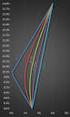 Copyright c 2005 by Karl Sigman Portfolio mean and variance Here we study the performance of a one-period investment X 0 > 0 (dollars) shared among several different assets. Our criterion for measuring
Understanding the Impact of Weights Constraints in Portfolio Theory
 Understanding the Impact of Weights Constraints in Portfolio Theory Thierry Roncalli Research & Development Lyxor Asset Management, Paris [email protected] January 2010 Abstract In this article,
Algebra I Vocabulary Cards
 Algebra I Vocabulary Cards Table of Contents Expressions and Operations Natural Numbers Whole Numbers Integers Rational Numbers Irrational Numbers Real Numbers Absolute Value Order of Operations Expression
The Singular Value Decomposition in Symmetric (Löwdin) Orthogonalization and Data Compression
 The Singular Value Decomposition in Symmetric (Löwdin) Orthogonalization and Data Compression The SVD is the most generally applicable of the orthogonal-diagonal-orthogonal type matrix decompositions Every
Numerical Analysis Lecture Notes
 Numerical Analysis Lecture Notes Peter J. Olver 5. Inner Products and Norms The norm of a vector is a measure of its size. Besides the familiar Euclidean norm based on the dot product, there are a number
4.3 Lagrange Approximation
 206 CHAP. 4 INTERPOLATION AND POLYNOMIAL APPROXIMATION Lagrange Polynomial Approximation 4.3 Lagrange Approximation Interpolation means to estimate a missing function value by taking a weighted average
DECISION LIMITS FOR THE CONFIRMATORY QUANTIFICATION OF THRESHOLD SUBSTANCES
 DECISION LIMITS FOR THE CONFIRMATORY QUANTIFICATION OF THRESHOLD SUBSTANCES Introduction This Technical Document shall be applied to the quantitative determination of a Threshold Substance in a Sample
Question 2: How do you solve a matrix equation using the matrix inverse?
 Question : How do you solve a matrix equation using the matrix inverse? In the previous question, we wrote systems of equations as a matrix equation AX B. In this format, the matrix A contains the coefficients
Structure of the Root Spaces for Simple Lie Algebras
 Structure of the Root Spaces for Simple Lie Algebras I. Introduction A Cartan subalgebra, H, of a Lie algebra, G, is a subalgebra, H G, such that a. H is nilpotent, i.e., there is some n such that (H)
Enhancing the SNR of the Fiber Optic Rotation Sensor using the LMS Algorithm
 1 Enhancing the SNR of the Fiber Optic Rotation Sensor using the LMS Algorithm Hani Mehrpouyan, Student Member, IEEE, Department of Electrical and Computer Engineering Queen s University, Kingston, Ontario,
Increasing for all. Convex for all. ( ) Increasing for all (remember that the log function is only defined for ). ( ) Concave for all.
 1. Differentiation The first derivative of a function measures by how much changes in reaction to an infinitesimal shift in its argument. The largest the derivative (in absolute value), the faster is evolving.
Multiple regression - Matrices
 Multiple regression - Matrices This handout will present various matrices which are substantively interesting and/or provide useful means of summarizing the data for analytical purposes. As we will see,
The Gravity Model: Derivation and Calibration
 The Gravity Model: Derivation and Calibration Philip A. Viton October 28, 2014 Philip A. Viton CRP/CE 5700 () Gravity Model October 28, 2014 1 / 66 Introduction We turn now to the Gravity Model of trip
Unified Lecture # 4 Vectors
 Fall 2005 Unified Lecture # 4 Vectors These notes were written by J. Peraire as a review of vectors for Dynamics 16.07. They have been adapted for Unified Engineering by R. Radovitzky. References [1] Feynmann,
How To Understand And Solve Algebraic Equations
 College Algebra Course Text Barnett, Raymond A., Michael R. Ziegler, and Karl E. Byleen. College Algebra, 8th edition, McGraw-Hill, 2008, ISBN: 978-0-07-286738-1 Course Description This course provides
Implementing the combing method in the dynamic Monte Carlo. Fedde Kuilman PNR_131_2012_008
 Implementing the combing method in the dynamic Monte Carlo Fedde Kuilman PNR_131_2012_008 Faculteit Technische Natuurwetenschappen Implementing the combing method in the dynamic Monte Carlo. Bachelor End
Reproducing Calculations for the Analytical Hierarchy Process
 Reproducing Calculations for the Analytical Hierarchy Process Booz Allen Hamilton International Infrastructure Team Introduction Booz Allen supports clients in the application of the Analytical Hierarchy
SOLVING LINEAR SYSTEMS
 SOLVING LINEAR SYSTEMS Linear systems Ax = b occur widely in applied mathematics They occur as direct formulations of real world problems; but more often, they occur as a part of the numerical analysis
CS3220 Lecture Notes: QR factorization and orthogonal transformations
 CS3220 Lecture Notes: QR factorization and orthogonal transformations Steve Marschner Cornell University 11 March 2009 In this lecture I ll talk about orthogonal matrices and their properties, discuss
Auxiliary Variables in Mixture Modeling: 3-Step Approaches Using Mplus
 Auxiliary Variables in Mixture Modeling: 3-Step Approaches Using Mplus Tihomir Asparouhov and Bengt Muthén Mplus Web Notes: No. 15 Version 8, August 5, 2014 1 Abstract This paper discusses alternatives
1 VECTOR SPACES AND SUBSPACES
 1 VECTOR SPACES AND SUBSPACES What is a vector? Many are familiar with the concept of a vector as: Something which has magnitude and direction. an ordered pair or triple. a description for quantities such
26. Determinants I. 1. Prehistory
 26. Determinants I 26.1 Prehistory 26.2 Definitions 26.3 Uniqueness and other properties 26.4 Existence Both as a careful review of a more pedestrian viewpoint, and as a transition to a coordinate-independent
Chapter Test B. Chapter: Measurements and Calculations
 Assessment Chapter Test B Chapter: Measurements and Calculations PART I In the space provided, write the letter of the term or phrase that best completes each statement or best answers each question. 1.
CORRELATED TO THE SOUTH CAROLINA COLLEGE AND CAREER-READY FOUNDATIONS IN ALGEBRA
 We Can Early Learning Curriculum PreK Grades 8 12 INSIDE ALGEBRA, GRADES 8 12 CORRELATED TO THE SOUTH CAROLINA COLLEGE AND CAREER-READY FOUNDATIONS IN ALGEBRA April 2016 www.voyagersopris.com Mathematical
Performance Level Descriptors Grade 6 Mathematics
 Performance Level Descriptors Grade 6 Mathematics Multiplying and Dividing with Fractions 6.NS.1-2 Grade 6 Math : Sub-Claim A The student solves problems involving the Major Content for grade/course with
Understanding Poles and Zeros
 MASSACHUSETTS INSTITUTE OF TECHNOLOGY DEPARTMENT OF MECHANICAL ENGINEERING 2.14 Analysis and Design of Feedback Control Systems Understanding Poles and Zeros 1 System Poles and Zeros The transfer function
On the Interaction and Competition among Internet Service Providers
 On the Interaction and Competition among Internet Service Providers Sam C.M. Lee John C.S. Lui + Abstract The current Internet architecture comprises of different privately owned Internet service providers
1 Review of Least Squares Solutions to Overdetermined Systems
 cs4: introduction to numerical analysis /9/0 Lecture 7: Rectangular Systems and Numerical Integration Instructor: Professor Amos Ron Scribes: Mark Cowlishaw, Nathanael Fillmore Review of Least Squares
Experiment #1, Analyze Data using Excel, Calculator and Graphs.
 Physics 182 - Fall 2014 - Experiment #1 1 Experiment #1, Analyze Data using Excel, Calculator and Graphs. 1 Purpose (5 Points, Including Title. Points apply to your lab report.) Before we start measuring
Quantitative Inventory Uncertainty
 Quantitative Inventory Uncertainty It is a requirement in the Product Standard and a recommendation in the Value Chain (Scope 3) Standard that companies perform and report qualitative uncertainty. This
In mathematics, there are four attainment targets: using and applying mathematics; number and algebra; shape, space and measures, and handling data.
 MATHEMATICS: THE LEVEL DESCRIPTIONS In mathematics, there are four attainment targets: using and applying mathematics; number and algebra; shape, space and measures, and handling data. Attainment target
DEMONSTRATION ACCELERATOR DRIVEN COMPLEX FOR EFFECTIVE INCINERATION OF 99 Tc AND 129 I
 DEMONSTRATION ACCELERATOR DRIVEN COMPLEX FOR EFFECTIVE INCINERATION OF 99 Tc AND 129 I A.S. Gerasimov, G.V. Kiselev, L.A. Myrtsymova State Scientific Centre of the Russian Federation Institute of Theoretical
13 MATH FACTS 101. 2 a = 1. 7. The elements of a vector have a graphical interpretation, which is particularly easy to see in two or three dimensions.
 3 MATH FACTS 0 3 MATH FACTS 3. Vectors 3.. Definition We use the overhead arrow to denote a column vector, i.e., a linear segment with a direction. For example, in three-space, we write a vector in terms
Statistical Rules of Thumb
 Statistical Rules of Thumb Second Edition Gerald van Belle University of Washington Department of Biostatistics and Department of Environmental and Occupational Health Sciences Seattle, WA WILEY AJOHN
THE STATISTICAL TREATMENT OF EXPERIMENTAL DATA 1
 THE STATISTICAL TREATMET OF EXPERIMETAL DATA Introduction The subject of statistical data analysis is regarded as crucial by most scientists, since error-free measurement is impossible in virtually all
Algebra Unpacked Content For the new Common Core standards that will be effective in all North Carolina schools in the 2012-13 school year.
 This document is designed to help North Carolina educators teach the Common Core (Standard Course of Study). NCDPI staff are continually updating and improving these tools to better serve teachers. Algebra
096 Professional Readiness Examination (Mathematics)
 096 Professional Readiness Examination (Mathematics) Effective after October 1, 2013 MI-SG-FLD096M-02 TABLE OF CONTENTS PART 1: General Information About the MTTC Program and Test Preparation OVERVIEW
Least Squares Estimation
 Least Squares Estimation SARA A VAN DE GEER Volume 2, pp 1041 1045 in Encyclopedia of Statistics in Behavioral Science ISBN-13: 978-0-470-86080-9 ISBN-10: 0-470-86080-4 Editors Brian S Everitt & David
Similar matrices and Jordan form
 Similar matrices and Jordan form We ve nearly covered the entire heart of linear algebra once we ve finished singular value decompositions we ll have seen all the most central topics. A T A is positive
Department of Economics
 Department of Economics On Testing for Diagonality of Large Dimensional Covariance Matrices George Kapetanios Working Paper No. 526 October 2004 ISSN 1473-0278 On Testing for Diagonality of Large Dimensional
Least-Squares Intersection of Lines
 Least-Squares Intersection of Lines Johannes Traa - UIUC 2013 This write-up derives the least-squares solution for the intersection of lines. In the general case, a set of lines will not intersect at a
Linear Algebra: Vectors
 A Linear Algebra: Vectors A Appendix A: LINEAR ALGEBRA: VECTORS TABLE OF CONTENTS Page A Motivation A 3 A2 Vectors A 3 A2 Notational Conventions A 4 A22 Visualization A 5 A23 Special Vectors A 5 A3 Vector
Overview. Essential Questions. Precalculus, Quarter 4, Unit 4.5 Build Arithmetic and Geometric Sequences and Series
 Sequences and Series Overview Number of instruction days: 4 6 (1 day = 53 minutes) Content to Be Learned Write arithmetic and geometric sequences both recursively and with an explicit formula, use them
1 Determinants and the Solvability of Linear Systems
 1 Determinants and the Solvability of Linear Systems In the last section we learned how to use Gaussian elimination to solve linear systems of n equations in n unknowns The section completely side-stepped
9.2 Summation Notation
 9. Summation Notation 66 9. Summation Notation In the previous section, we introduced sequences and now we shall present notation and theorems concerning the sum of terms of a sequence. We begin with a
South Carolina College- and Career-Ready (SCCCR) Algebra 1
 South Carolina College- and Career-Ready (SCCCR) Algebra 1 South Carolina College- and Career-Ready Mathematical Process Standards The South Carolina College- and Career-Ready (SCCCR) Mathematical Process
1 Sets and Set Notation.
 LINEAR ALGEBRA MATH 27.6 SPRING 23 (COHEN) LECTURE NOTES Sets and Set Notation. Definition (Naive Definition of a Set). A set is any collection of objects, called the elements of that set. We will most
General Framework for an Iterative Solution of Ax b. Jacobi s Method
 2.6 Iterative Solutions of Linear Systems 143 2.6 Iterative Solutions of Linear Systems Consistent linear systems in real life are solved in one of two ways: by direct calculation (using a matrix factorization,
MATH. ALGEBRA I HONORS 9 th Grade 12003200 ALGEBRA I HONORS
 * Students who scored a Level 3 or above on the Florida Assessment Test Math Florida Standards (FSA-MAFS) are strongly encouraged to make Advanced Placement and/or dual enrollment courses their first choices
Guidance for Industry
 Guidance for Industry Q2B Validation of Analytical Procedures: Methodology November 1996 ICH Guidance for Industry Q2B Validation of Analytical Procedures: Methodology Additional copies are available from:
Lecture 3: Finding integer solutions to systems of linear equations
 Lecture 3: Finding integer solutions to systems of linear equations Algorithmic Number Theory (Fall 2014) Rutgers University Swastik Kopparty Scribe: Abhishek Bhrushundi 1 Overview The goal of this lecture
Vector and Matrix Norms
 Chapter 1 Vector and Matrix Norms 11 Vector Spaces Let F be a field (such as the real numbers, R, or complex numbers, C) with elements called scalars A Vector Space, V, over the field F is a non-empty