
Coyote and Fox Rehabilitation and Release
|
|
|
- Alaina Hudson
- 10 years ago
- Views:
Transcription
1 Coyote and Fox Rehabilitation and Release Wildlife Center of Silicon Valley s Guidelines for Rehabilitating and Releasing Coyotes and Gray Foxes Photo by Carol Baldwin, WCSV ~The Wildlife Center of Silicon Valley strives to provide the best possible care for our patients. The WCSV does not offer any domestic animal food to predatory mammals. All coyotes and foxes are conditioned on live food before they can be released. ~ Ashley Kinney Wildlife Rehabilitation Supervisor Wildlife Center of Silicon Valley Updated October 2012

2 Introduction to Coyote and Fox Rehabilitation-Prepping Your Organization to Rehabilitate Coyotes and Gray Foxes Our goal as wildlife rehabilitators is to release wild animals. We must keep the animal s best interest in mind and refrain from becoming attached to these animals. Always refrain from handling the animals too frequently, talking around the animals and using endearing terms. We are not here to imprint or habituate wildlife in any way. Young coyotes and foxes are extremely intelligent, social animals that have a controversial rap especially coyotes. Any rehabber raising these intelligent animals must take all necessary precautions to make sure they are not habituated in any way, and are released in a safe environment. Coyotes and foxes must be fearful of humans and able to thrive in the wild. Releasing a coyote or fox that is in any way acclimated to human interaction is setting that animal up for an unfortunate ending. The Wildlife Center of Silicon Valley has spent many years mastering different rehabilitation techniques to release wild coyotes and foxes. The Center is known for its expertise in raising neonatal pups and kits without any imprinting or habituation. The Wildlife Center has also had great success reversing habituated behavior in pups and kits that were illegally kept as pets, or had too much human exposure at a young age. WCSV is an organization that does not use any domestic dog or cat food in our diets. As stated above, any rehabber raising coyotes and foxes are responsible for their every need. Feeding domestic food can cause coyotes and foxes to become accustomed to eating nonnatural food products; in turn these animals will only know to search for kibble in the wild, causing them to become dependent on humans. These animals are predatory, meaning they need to be skillful in predatory behavior. Offering coyotes and foxes domestic foods can and will cause a negative situation for the animals, and a potentially dangerous situation for humans. Before coyotes and foxes are released they are conditioned on live food starting at 13 weeks of age for coyotes, and weeks for foxes. If your organization is not able to provide natural food to these animals, we recommend that the coyotes and foxes be rehabilitated at a facility that can accommodate their nutritional needs. The WCSV requires all staff and volunteers to have received the series of three preexposure rabies vaccinations to work with any predatory mammal and bat. All staff and volunteers are to receive extensive training from senior staff before they are able to work with these predatory mammals. For the safety of the handler and the animal, never handle a juvenile or adult coyote or fox alone. If for any reason a handler is injured while working with coyotes or foxes, we require an accident report form to be filled out and returned to the supervisor within 24 hours. If you are able to provide coyotes with appropriate nutritional needs, a quiet environment, large, natural enclosure space and an understanding that these animals are to remain wild, you are ready to take the next step to prepare for rehabilitating these wonderful animals.


3 Checklist of Basic Items You Will Need to Get Started in Coyote and Gray Fox Rehabilitation Young: A quiet location! Conspecifics never raise a young pup or kit alone. Network with other Centers to find conspecifics. Reuniting before rehabilitation always network with other Centers if you are not sure how to go about reuniting. Recycled furs or stuffed animal to act as a buddy for the pups and kits. If the eyes are closed and the young need bottle-feeding, please use a surrogate stuffed animal. (Photo shown in manual.) Heartbeat recorder Bottles Crate with heating pad Enrichment even for eyes-closed foxes and coyotes! a. Den boxes b. Leaf litter c. Hay d. Pinecones e. Branches WCSV uses Fox Valley Formula Graduation room once eyes open they are moved into a warm, isolated room where a makeshift den is provided. (Photos show in handout) Shallow feeding dishes for soup Parasite control WCSV requires all coyotes and foxes to be fully vaccinated for distemper and fully dewormed before they are moved into their outdoor enclosure. Outdoor enclosure that meets IWRC s Minimum Standards. Ability to live hunt before release. Shows full fear of humans under no circumstances shall you release any coyote or fox that shows signs of imprinting or habituation. It is highly important to understand the natural history and needs of each of these species. We as professional rehabilitators cannot risk habituating or imprinting in any way. Please do not attempt to rehabilitate these animals if you are unable to emotionally detach yourself from these species. As their caregivers we must take all necessary measures to release healthy and fit wild foxes and coyotes.

4 Does the animal need to be rescued? Key questions to prevent over rescues. Our main goal is to keep all young with their parents. We as respectable rehabbers must do all we can to keep these animals in the wild. Juveniles and adults also have a lot of controversy surrounding them. Politely educating the public on the importance of these animals can save their life! Common Calls the WCSV Receives: Common Nuisance Problems: In my neighborhood May get my cat or dog In my backyard Under my deck Haven t seen mom Keeps coming back to my yard In same location exhausted Common Deterrence Solutions: Bang pots and pans together Secure fencing Secure deck Keep food out of yard Keep small pets indoors while there is an issue Ammonia scented deterrents around property Coyote rollers Monitoring from a distance Understanding that they may stray when young Understanding that you may not see mom/ other relative Questions to Ask Regarding Young: Eyes open or closed? Have you seen conspecifics? Is it vocalizing? If so, for how long? Does the animal look depressed? How long has it been out? Last time parent seen? Time of day you have been seeing the animal? Any obvious injuries? Deceased parent? Is Rescue Needed? If the animal is in need of rehabilitation go over all of your options with the public on how to safely get animals to your Center. WCSV has great partnerships with local Animal Control agencies and WildRescue, an organization that does field rescue, based out of Moss Landing. We never let members of the public handle or attempt to rescue a predatory mammal no matter the age Wildlife Center of Silicon Valley has highly trained staff to handle all of your nuisance coyote and fox questions. If we are unable to help you, we work close with amazing organizations that can. Don t hesitate to reach out for assistance. The animals appreciate it! ~ WILD~


5 Neonate Red Fox Identification Tips Rust coloration on side of head Kitten-like paws and white nails White tip on tail Birth weight g 8 mammae Photo by Adirondack Wildlife Refuge & Rehab Center

6 Neonate Grey Fox Identification Tips Birth weight g 6 mammae Dark coloration on head and back of body Kitten-like paws and nails Black tip on tail Top photo- Carole Baldwin- WCSV Bottom photo- Wildlife Rehabilitation Center of Minnesota (WRC)

7 Neonate Coyote Identification Tips Birth weight grams 8 mammae White chest patch White tips on nails Bare abdomen Dark tail tip Photo by Kathy Jones, Lindsey Wildlife Museum

8 Examination Time! Now that you have determined the species, and the young cannot stay in the wild, it s time to get the rehabilitation process started. While examining kits and pups you never want to talk, nor hold the animal like a domestic puppy or kitten. Remember if you treat these animals like the wild animals they are, you will be successful in their rehabilitation. Head to Toe Exam: Remember ALWAYS WEAR GLOVES! Look in the ears and eyes (if open) Check mucous membrane color should be a nice bright pink. o If their mucous membrane color is pale it can be a sign of dehydration and anemia. Take the weight of the animal o The weight of the animals will allow you to calculate any needed medications and fluid therapy administration. It will also tell you how much formula to offer the neonates. Do not offer formula until the animal is fully hydrated. Palpate all limbs for any fractures and/or luxations. Check their temperature if there is any question of the overall health of the animal. Common parasites to look for: Nematodes Tapeworms Fleas Lice Ticks Chiggers Mites Top reasons why WCSV receives neonate coyotes and foxes: Emaciation Hypothermia Parasite infestation (pale, weak and dehydrated) Orphaned Over rescued Reunite!! Gray fox kits, Ashley Kinney, WCSV Any injuries and all prescriptions should be overseen by your veterinarian. Many medical treatments differ between organizations, so please check with your veterinarian for any medical questions. WCSV vaccinates for distemper, and deworms before young are moved into an outdoor enclosure. All coyotes and foxes are quarantined for days no exceptions. WCSV microchips all coyotes and foxes for identification purposes. We also paint a small stripe on their ear for visual identification while they are young (using nail polish).

9 Coyote HBC by Carol Baldwin, WCSV Examining Juvenile and Adult Coyotes: Always muzzle the juveniles and adults. If the coyote or fox is hard to handle, or very stressed, please anesthetize the animal or tranquilize only with your veterinarian on hand. You must make sure to take all necessary safety precautions when handling these guys. You can generally handle the young juveniles by the scruff with a muzzle, between the ears to prevent them from turning around. How do I muzzle an adult coyote or fox? This is a great question! You must be calm and go slow. Have someone restrain the animal, generally with a catchpole, while you (with a gloved hand) slowly move the muzzle over their face. Again, if the animal is too active OR too stressed to be handled without sedation, please do not push the animal. Always think your own safety and the well-being of the patient. It is best to chemically restrain the animal if they are too active and or too stressed for an examination. Safety first!! Adult Gray Fox- Lyme disease. Andrea Rojas, WCSV Common reasons juveniles and adults are admitted: Hit by car o Fractures o Head trauma o Internal Trauma Severe parasite infestation o Mainly mange Hit by car coyote-ashley Kinney, WCSV o Nematodes o Fleas o Ticks Emaciation Head to Toe Exam Animals should be sedated if alert/responsive: Remember ALWAYS WEAR LATEX GLOVES! Look in the ears and eyes Check mucous membrane color should be a nice bright pink. o If their mucous membrane color is pale it can be a sign of dehydration and anemia. Take the weight of the animal o The weight of the animals will allow you to calculate any needed medications and fluid therapy administration. Palpate all limbs for any fractures and or luxations Check body temperature if there is any question of the overall health of the animal. All wildlife hospitals have different medical protocols. Discuss all medical treatments with your veterinarian. Coyote with mange and emaciation, WCSV

10 Examination is complete, now it is time to set your patient up Neonate coyote and foxes need a warm, well-ventilated environment free of human sounds. You will read this frequently in the handout; hands-off rehabilitation is the ONLY way to successfully rehabilitate and release. Volunteers will want to peak at these young pups and kits, but you must keep human contact to a minimum. You should only go near the young when you are cleaning and feeding. It is vital to have a visual barrier for all cleaning and feeding tasks being performed. Never talk to or around coyote pups and fox kits. Foxes and coyotes are intelligent, social animals that have an instinct to bond; for their survival you must keep your emotions out of their rehabilitation stay. It is important to keep in mind that foxes develop slower than coyotes; they can be 2-8 weeks behind the developmental stages of coyotes. You will have to monitor fox behavior and eating habits more closely than coyotes. Housing for ~0-2 weeks: Well-ventilated Rubbermaid bin with heating pad, soft bedding, recycled fur, and a stuffed animal. ~0-1 week: Coyote ~0-2 week: Gray Fox Diet for ~0-2 weeks: Never start an animal on formula without fully hydrating it first. Always make sure to give the neonate at least four rounds of fluids before offering formula. You want to slowly introduce formula to a newly-admitted animal. Amount of formula is based on the animal s body weight. The Wildlife Center of Silicon Valley uses Fox Valley formula. For their first day on formula you want to start them on a 3:1 ratio (three parts water to one part formula). Keep the animal on 3:1 for hours. This will reduce the risk of shocking the neonate s system. Once the neonate is processing the 3:1 ratio you can upgrade to 2:1 (two parts water to one part formula) this will be the strongest ratio you can give to them. If for some reason the neonate is NOT processing the formula, you want to go back to the 3:1 ratio or go back to hydrating. Main signs of the neonate not processing formula are distended abdomen and no fecal output. In some cases there can be an underlying issue


11 preventing the animal from processing its food. Please check with your veterinarian to rule out any underlying health-related problem. DO NOT handle the animal to bottle-feed!! The Wildlife Center of Silicon Valley has spent many years mastering neonate care. We never handle the animal for bottle-feeding; we use a stuffed animal that is turned into a surrogate mother. Build-A-Mom-Workshop Heartbeat Recorder Warmers to keep formula warm Warmers to keep formula warm The above model will help you improve the chances of not habituating or imprinting the young in your care. Their first few feedings can be somewhat rough new surroundings for the young and different formula taste are both factors. With effort and time you will be successful in using this surrogate mom. The next time you have a fox or coyote under anesthesia record their heartbeat by using an inexpensive heartbeat recording. You can find these recorders on most infant (human) websites.

12 Housing ~17-25 days: Large dog kennel with clean bedding, heating pad, recycled fur, and enrichment pinecones, branches, hay, leaf litter and a stuffed canine-type animal. ~17-18 days: Coyote ~14-25 days: Gray Fox Diet for ~17-25 days old: NEVER FEED ANY FORM OF DOMESTIC FOOD NO DOG OR CAT FOOD FOR ANY STAGE OF LIFE! At this age coyotes and foxes are starting to move around the den. Coyotes are receiving regurgitated food from their parents and are still nursing. Foxes are still nursing at this point, but will start to chew on soft fruits and meat. The Wildlife Center of Silicon Valley tries to wean these animals as soon as possible. We start offering SOUP about 3-5 days after their eyes open. What is SOUP? Soup contains soft fruits, vegetables, egg and chopped mice with Fox Valley formula. You can blend the food items if the animals are not eating any of them. Banana Berries Yams cooked at first if needed Chopped Mice Ground rabbit Hardboiled Eggs IF you notice the young not eating SOUP, you can add appetite stimulants Gerber Baby Food NutriCal Yogurt Applesauce The coyotes generally start eating SOUP within the first three or four times it is offered to them. As stated earlier, foxes are slower developmentally and can take longer to start consuming the soup. If you have to continue to bottle feed, YOU MUST use a visual barrier especially since their eyes are now open. This is a messy stage in their life but remember, no talking when you clean or feed them!!

13 Housing ~18-40 days: At this age the kits and pups need a large area to start exploring outside of the den. The WCSV uses an entire room in a portable building. We provide den boxes you can use wooden platter boxes, igloos, and kennels with no doors. You want to add lots of enrichment items for them, as this is the age where they are extremely curious and anxious to explore. Easy enrichment items: Pinecones Hay Shrubs Branches Pumpkins or squash stuffed with soft food items berries, banana, chopped mice, chopped quail, ground rabbit etc. Milk crates filled with hay and soft food items Diet for ~18-40 days: Start to put solid food pieces around the room, not just in the SOUP dish. They will start to forage for food, and some will even start to show caching behavior. You can start introducing larger food items such as cut open quail and small rats. At this stage, start reducing the amount of formula consumption and try to increase the amount of natural foods fruits, vegetables, and meat products. Common food items: Melon Banana Berries Apples Peaches Figs Corn on the cob good enrichment, not just food! Oats and nuts Mice, rats, rabbit, whole chicken, quail, and smelt Egg Coyotes are generally fully weaned (completely off of formula) by 35 days old. Gray foxes are generally fully weaned by days of age.

14 ~40 days and up: At this point coyotes should be fully weaned and ONLY on solid food. DO NOT use any form of food dishes, simply scatter the food around the enclosure. This will also teach them how to forage. Foxes will more than likely need another week or so of soup and solid food scattered around the isolation room. Once they are thriving and on solid food for about a week, it is time to move them into a suitable outdoor enclosure. Use of Live Food: We all understand the use of live food is no easy task, but we need to teach these animals as much as we can before they are released back into the wild. As responsible rehabilitators we need to make sure these animals are able to thrive in the wild, and that means they must know how to live hunt. The WCSV uses live mice, rats and quail. Coyotes and foxes are started on slow live prey around days old. Quail move slower than rodents, and they are easier to spot in their enrichment-full enclosure. Once the pups and kits master hunting quail we upgrade them to mice, then we will move on to rats. Coyotes and foxes must be live hunted at least three times per week until they are ready for release. Key components to fox and coyote enclosures: Away from noise! Visual barriers Holding pen Den boxes fixed to assist with capture for release Water troughs drain and fill from the outside of the enclosure Cat walks for foxes Large rocks Live grass, shrubs and trees Dirt bottom they will learn to cache food, they also will take dirt baths Predator-proof Foxes and coyotes unable to escape Live pray unable to escape Meets and/or exceeds IWRC s Minimum Standards Spot Cleaning: To reduce the amount of human contact we generally spot clean the enclosure 2-3 times per week. If you monitor their food consumption (amount consumed nightly), you will not have to clean up too much leftover food mainly fecal output.


15 Cat walk in Fox enclosure Fox enclosure: The fox enclosure is a tall, deep enclosure with a holding pen, large water trough, and plenty of hiding spaces. It contains a large cat walk that they enjoy sunning themselves on. The water trough is set up so we can drain and fill from the outside. The enclosure contains many live plants Toyon, sage, and wild grass. We also have many different large rocks inside the enclosure. There are vines and trees growing around the enclosure to serve as visual barriers and provide shade. The enclosure is located at the back of our compound, away from high-traffic areas. Only highly-trained staff and volunteers are permitted to enter the enclosures. Coyote enclosure: This enclosure can be divided into two sections. The enclosure also has a holding pen. Both sides have a large water trough and den boxes. We have three large trees, several plants and wild grass on each side of the enclosure. Vines and trees are planted on the outside of this enclosure to serve as a visual barrier. Den boxes: Our boxes are designed to make the animals feel more comfortable, and to have a safe capture when they are ready for release. When it comes time to capture you can put a large dog crate at the front opening. There is a section on the lid that opens to allow you to move the animal from the box into the kennel, or capture them using a catchpole or net. Opening on top of den box The coyote and foxes will also use these dens to cache food, burrow, and sleep. You generally do not need to add any bedding to the den boxes; the coyotes and foxes will bring what they want in with them.

16 Water set up: Our water system allows us to drain and fill the troughs from the outside. Once every three weeks we have to remove the rocks (algae can and will build up) and scrub them. PVC pipe-flows into troughs Water switch lever located outside of the enclosure Water trough Drainage valves outside enclosure Full view of water set-up

17 Fox Enclosure Pictures during Construction Fox enclosure needs: Cat Walk Water Source Tons of plans and grass for hiding and enrichment Large rocks Dens Away from people Visual barriers around the outside of the enclosure

18 Coyote Enclosure Coyote enclosure needs: Dens Tons of enrichment- plants, trees, milk crates etc. Water source Large rocks Away from people Visual barriers around the outside of the enclosure

19 What to do if you have a debilitated juvenile or adult? Setting up an injured coyote or fox: Any debilitated juvenile or adult must be isolated in a dark, quiet environment. WCSV has a quarantine room in a portable building to isolate all debilitated coyote or fox. If the animal is stable enough, they will have free roam in the quarantine room. If the animal has a fracture or injury that requires a small space, they will get set-up in a large dog kennel. If the animal is isolated to a kennel (adults and juveniles), staff will be the only ones permitted to clean and feed this is for liability reasons. Coyotes and foxes in a small environment will be more stressed out. You need to make sure they are away from sounds and people while they are isolated. Diet for debilitated foxes and coyote: If the animal is emaciated, always start them off slow just like any other emaciated animal. Make sure they are well-hydrated before offering them any food. The WCSV uses a/d OR Carnivore care to get them to start eating. We will then continue to add on hard-boiled eggs, and soft fruits and veggies before giving them whole meat product. Upgrading their diet is going to be on a case-by-case basis. Always refer to your veterinarian if you have any questions about emaciation protocol. Once the animal is stable and ready to go outside, you want to start live hunting within 3 days. Adults should be live-hunted (especially if they had any form of fracture) to make sure they are fit for release.

20 Are they ready for release?! How will you know if your patients are ready for the ultimate step RELEASE?! All coyote and foxes Here is a checklist to see if the coyotes and or foxes are ready to go: No medical treatments for at least two weeks prior to release At least 8-10 months of age Live hunting**a MUST Able to forage for food Full recognition of conspecifics Fearful of humans absolutely no chance of habituation or imprinting Understanding of what their natural diet is (no domestic food) If your patients match all of those requirements, they are ready to go! You must make sure you are releasing them where they were found. If you are unable to locate a good release source we recommend networking with Rangers, Fish and Game and Biologists in the area. You never want to release in an area that has reached its carrying capacity. Always release adults two to three miles from where they were found. The release is the most satisfying thing a wildlife rehabilitator gets to experience. We put so much time, energy and money into making sure these animals receive the best possible care, and the greatest gift ever freedom. Although we are not sure what happens to them in the wild, by following these important guidelines we know we have given them the best possible chance. These animals are one of the most controversial species we can rehabilitate, which is why we must do everything we can to make sure we do the best possible job. Never hesitate to network with specialist if you have questions regarding care. Together we can make their rehabilitation and release successful.

Puppies! Intro Supplies Getting Started Feeding Eliminating Socialization Growth and Development
 Puppies! Intro Supplies Getting Started Feeding Eliminating Socialization Growth and Development Intro Very often, underage puppies (under 8 weeks of age) are brought to shelters without their mothers
Caring for guinea pigs
 Caring for guinea pigs YOUR GUIDE TO KEEPING GUINEA PIGS HEALTHY AND HAPPY Animal Welfare Foundation www.bva-awf.org.uk AWF is the charity led by the veterinary profession Registered Charity No. 287118
A guide to living with Urban Coyotes
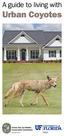 A guide to living with Urban Coyotes Living with coyotes ThinkStock Coyotes are found throughout Florida. This adaptable animal belongs to the dog family and resembles a small German shepherd. In Florida,
Tree House Humane Society
 Tree House Cats at Work Project For the cats -- for the community Humane, Effective, Long-term Solutions The Tree House Cats at Work Project is a green humane program that removes sterilized and vaccinated
Planning to travel? Read Hannah recommendations for keeping your Pets happy and healthy while you are away:
 Planning to travel? Read Hannah recommendations for keeping your Pets happy and healthy while you are away: 1. First choice is to take your Pet with you. Kennel Training - Follow Hannah recommended kennel
Contract for Pet Care
 Contract for Pet Care Dogsondeployment.org Page 1 Contents DoD Boarder Information... 3 Pet Owner Information... 3 Pet Information... 3 Medical History... 3 Primary Veterinarian Information... 4 Emergency/After-Hours
PROCEDURES for BOBCAT REHABILITATION
 Wildlife Education and Rehabilitation Center P.O. Box 1105, Morgan Hill, CA 95038-1105 Telephone & fax: (408) 779-WERC (9372) Email: [email protected] Website: www.werc-ca.org PROCEDURES for BOBCAT REHABILITATION
Manage cancer related fatigue:
 Manage cancer related fatigue: For People Affected by Cancer In this pamphlet: What can I do to manage fatigue? What is cancer related fatigue? What causes cancer related fatigue? How can my health care
What to Do About Rats or Mice in Your Home or Business
 Janel Heinrich, MPH, MA, Director City-County Building, Room 507 608 266-4821 210 Martin Luther King, Jr. Boulevard 608 266-4858 fax Madison, WI 53703 www.publichealthmdc.com What to Do About Rats or Mice
Colon Cancer Surgery and Recovery. A Guide for Patients and Families
 Colon Cancer Surgery and Recovery A Guide for Patients and Families This Booklet You are receiving this booklet because you will be having surgery shortly. This booklet tells you what to do before, during,
Living with Foxes and Skunks Goose Hunting: CWS
 Ministry of Natural Resources and Forestry Living with Foxes and Skunks Goose Hunting: CWS November 19 th, 2015 Town of Tecumseh Kathryn Markham, A/Management Biologist Steven Rowswell, A/Wildlife Technician
Guidelines for caring for injured turtles
 Guidelines for caring for injured turtles Background The NT is home to six of the world s seven different marine turtles, five of which are listed internationally as endangered. Along with the sea turtles,
Bites, Bats, and being safe a a quiz about RABIES. Dr. Emily Beeler, DVM Los Angeles County Public Health Veterinary Public Health and Rabies Control
 Bites, Bats, and being safe a a quiz about RABIES Dr. Emily Beeler, DVM Los Angeles County Public Health Veterinary Public Health and Rabies Control Overview What is rabies? What animals transmit rabies?
Play Every Day. Go Outside
 QUICK START KIT: Choose to At the Y, we believe that small steps lead to big changes. With a balanced approach, even the busiest of families can discover ways to eat healthier and feel better. Get Together
St. Catherine University Support Animal Policy
 St. Catherine University Support Animal Policy Residence Life Community Policies St. Catherine University supports students who have a need for a service animal or a support animal. A Service Animal or
Animal Care and Control Bite Prevention Consultation Education Registration Vaccination
 Animal Care and Control Bite Prevention Consultation Education Registration Vaccination Can you identify these animal tracks? 9. 1. 2. 5. 7. 10. 3. 4. 6. 8. Find answers on Be Smart About Animals page
Questions & Answers on Rabies
 BUCKS COUNTY DEPARTMENT OF HEALTH Neshaminy Manor Center, Health Building 1282 Almshouse Road Doylestown, PA 18901 215-345-3318 Questions & Answers on Rabies Q: What is rabies? A: Rabies is a deadly disease
0 3 Months Sensory Motor Checklist
 0 3 Months Sensory Motor Checklist Enjoys playful face-to-face interaction with people Coos in response to playful interaction Notices and responds to sounds Moves legs and arms off of surface when excited
CATS and WILDLIFE HOW YOU CAN PROTECT BOTH
 CATS and WILDLIFE HOW YOU CAN PROTECT BOTH Where is your cat right now? Could it be harming native wildlife? Is it roaming in your neighbour s yard? Is it crossing a busy road? Could it be returned to
General Practice Service Willows Information Sheets. Ectoparasites (fleas and other skin parasites) in dogs
 General Practice Service Willows Information Sheets Ectoparasites (fleas and other skin parasites) in dogs Flea Tick Mite Louse Ectoparasites (fleas and other skin parasites) in dogs What types of skin
PROCEDURES For COYOTE REHABILITATION
 PROCEDURES For COYOTE REHABILITATION GENERAL DISCUSSION. Larger and more dangerous than most animals seen by rehabilitators, the coyote is well known to be responsible for significant depredation of small
How To Care For A Sick Person
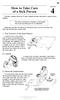 39 How to Take Care of a Sick Person Sickness weakens the body. To gain strength and get well quickly, special care is needed. Medicines are often not necessary. But good care is always important. The
Many dogs love to play and to be petted. But not all dogs are friendly or want to play all the time.
 Dear Parents: Many children are bitten and injured by dogs each year. Bites can result from family dogs, neighbor dogs, as well as strange dogs. These injuries often occur because children do not understand
Adopting an Under-Socialized Dog
 3100 Cherry Hill Road Ann Arbor, MI 48105 734-662-5585 www.hshv.org Adopting an Under-Socialized Dog Congratulations you have saved a very special life! Bringing an under-socialized dog into your home
Emergency Contact Information
 Emergency Contact Information Owner Information Name: Address: City: Home phone: Work Phone: Email: Is it ok to send pictures/updates to this email? Y-N Cell Phone: Emergency Contact Other than yourself
Tracks of a Panda by Nick Dowson, Illustrated by Yu Rong Scripted for Readers Theater by Karen Antikajian
 Tracks of a Panda by Nick Dowson, Illustrated by Yu Rong Scripted for Readers Theater by Karen Antikajian Narrator 1: Narrator 6: Narrator 2: Narrator 7: Narrator 3: Narrator 8: Narrator 4: Fact Announcer
WILDLIFE REHABILITATION IS IT FOR YOU?
 WILDLIFE REHABILITATION IS IT FOR YOU? developed by The Wildlife Rehabilitator Recruiting Project 1 Thank you for your interest in wildlife rehabilitation. We are always happy to explain wildlife rehabilitation
Infant Development: The First Year of Life
 Infant Development: The First Year of Life Your child's first few years are critical in the development of his or her temperament, learning style and pattern of growth. You are your child's first and most
Mission. Values. Vision. Mission Values Vision
 Mission Values Vision Mission The Wildlife Rehabilitation of Minnesota provides quality medical care and rehabilitation for all injured, sick and orphaned wild birds and animals and shares its knowledge
KNOW THE BEAR FACTS FOR KIDS
 KNOW THE BEAR FACTS FOR KIDS New Jersey Department of Environmental Protection Black Bears in New Jersey Activity Guide Black bears live in New Jersey. They were here long before people were. About 100
Housebreaking tips for 4 month old puppies & older
 Housebreaking tips for 4 month old puppies & older Feng Shui with Fido Philosophy: The main thing to know is that housebreaking a puppy happens in stages! Crate training is essential to this process. Dogs
Fawn Rehabilitation in North Carolina
 Fawn Rehabilitation in North Carolina Daron K. Barnes Permits Supervisor Wildlife Rehabilitators of NC Annual Symposium Raleigh, NC January 28, 2012 Purpose of the Program Rehabilitate and release orphaned
Saving Wild Baby Rabbits
 Saving Wild Baby Rabbits The best chance for survival of a wild baby rabbit is to leave it in its nest, where the mother will return to take care of it. If you find a wild baby rabbit, let him be, and
ANIMALS AND THEIR HABITATS: KS1 STUDENT RESOURCES
 ANIMALS AND THEIR HABITATS: KS1 STUDENT RESOURCES PLANT OR ANIMAL? (Lesson 1:1) Card sort task: print out and get the students to sort them into: Plants or Animals. Get the students to explain why they
What You And Your Family Can Do About Asthma
 GLOBAL INITIATIVE FOR ASTHMA What You And Your Family Can Do About Asthma BASED ON THE GLOBAL STRATEGY FOR ASTHMA MANAGEMENT AND PREVENTION NHLBI/WHO WORKSHOP REPORT NATIONAL INSTITUTES OF HEALTH NATIONAL
Follow the steps listed on the following pages to help eliminate the conditions that encourage rats.
 CONTROLLING RATS Responsibilities It takes a community-wide effort to manage the rodent population. What Does the Evanston Health and Human Services Department Do? Working with residents, the Evanston
CARE OF ORPHANED RACOONS
 CARE OF ORPHANED RACOONS Compiled by Laurel A. Beechey [email protected] 94 North St. W. Tillsonburg, On. Canada N4G1C3 519-842-9416 CARE OF ORPHANED RACCOONS For Wildlife Guardians of Ontario This
Preparing For a New Dog
 Preparing For a New Dog Contents Are you ready to get a dog? 3 Choosing a breed 4 Hypoallergenic breeds 4 Should you get a puppy or an adult dog? 5 Where to find your dog 5 Picking up your dog 6 Bringing
Lesson Title: Beef Cattle-Animal Care is Everywhere Grade Level: K-4 Time: 1 hour Content Area: Science, Language Arts Objectives:
 Lesson Title: Beef Cattle-Animal Care is Everywhere Grade Level: K-4 Time: 1 hour Content Area: Science, Language Arts Objectives: Identify the needs of beef animals Compare the needs of beef animals to
CHICKENS 101 INTRODUCTORY COURSE HOUSING AND PREDATOR CONTROL
 CHICKENS 101 INTRODUCTORY COURSE HOUSING AND PREDATOR CONTROL THE BASICS: HOUSING 1 3 THE BASICS: HOUSING 1 Protect from rain and cold when first outside. After about three weeks, chickens can tolerate
Neonatal Abstinence Syndrome. A Guide for Families
 Neonatal Abstinence Syndrome A Guide for Families Contents What is Neonatal Abstinence Syndrome (NAS)?...................... 4 When will my baby show signs of NAS?..................................................
Sanitary Food Preparation & Safe Food Handling
 70 Feeding Infants 10 Sanitary Food Preparation & Safe Food Handling Babies are more susceptible to bacteria than older children, and unsanitary food conditions can cause serious infections. General cleanliness,
Have you ever wanted to help animals and people stay healthy? Have you ever thought about working in veterinary medicine? Well, I m here to explain
 Have you ever wanted to help animals and people stay healthy? Have you ever thought about working in veterinary medicine? Well, I m here to explain what veterinarians do and answer some of your questions.
your new puppy! Congratulations on Puppy nutrition 7
 Puppy care Congratulations on your new puppy! This guide has been designed to help you familiarise yourself with the routine healthcare requirements of the new addition to your family, answering some of
Cool air quietly and efficiently. A guide to buying and operating an air conditioner
 Cool air quietly and efficiently A guide to buying and operating an air conditioner Cool air quietly and efficiently Noise from air conditioners can be a serious issue between neighbours. If an air conditioner
Pre and postoperative
 Pre and postoperative care Your guide to caring for your pet before and after an operation Animal Welfare Foundation www.bva-awf.org.uk AWF is the charity led by the veterinary profession Registered Charity
Suggested Open Ended Questions Suggested Affirming Statements Suggested Nutrition Education Statements
 Suggested Open Ended Questions Suggested Affirming Statements Suggested Nutrition Education Statements Caregiver: How did your baby s last check-up go? Primary Feeding: Tell me about the kind of formula
First Grade Reading Street Unit 1.1: Sam, Come Back! - Taken from www.freidalewis.com
 Blend & Segment Phonemes Isolate Final Sounds Identify Position of Sounds Short a and Final ck Character Monitor & Fix Up 1. at 2. can 3. cat 4. back 5. dad 6. am First Grade Reading Street Unit 1.1: Sam,
ZOOS GO BLUE. Your Trip to Zoo Atlanta! Sunday, April 6
 ZOOS GO BLUE Your Trip to Zoo Atlanta! Sunday, April 6 Autism Awareness Day at Zoo Atlanta! Going to the Zoo can be a lot of fun. Here are some things you can do to prepare for your exciting trip and make
Neonatal Intensive Care Unit A photographic tour
 Patient Education : A photographic tour Neonatal Intensive Care Unit A photographic tour This booklet was created by mothers who gave birth to premature babies at University of Washington Medical Center
A Most Colorful Mammal by Guy Belleranti
 Name: In the tropical rainforests of western Africa lives a mammal with a most colorful face and rump. This mammal is the mandrill, the world's largest monkey. The skin on a male mandrill's face has a
Congratulations on adopting a dog or puppy from
 Dog and Puppy Care Congratulations on adopting a dog or puppy from SPCA Auckland. Dogs bring enormous joy into our lives and we wish you many years of happiness together. This guide has been developed
Yorketown Community Children s Centre. Food Safety and Healthy Eating Policy
 Yorketown Community Children s Centre Food Safety and Healthy Eating Policy Policy Number 1 Link to CCQA Principles Family Day Care Quality Assurance (FDCQA) Quality Practices Guide (2004) Principle 4.2
X-Plain Preparing For Surgery Reference Summary
 X-Plain Preparing For Surgery Reference Summary Introduction More than 25 million surgical procedures are performed each year in the US. This reference summary will help you prepare for surgery. By understanding
This document was prepared for the Federal Emergency Management Agency s U.S. Fire Administration under contract number HSFE20-13-P-0275.
 Family Guide This document was prepared for the Federal Emergency Management Agency s U.S. Fire Administration under contract number HSFE20-13-P-0275. For more information about the SESAME STREET Fire
Four more traditional breed systems
 Animal Welfare Aspects of Good Agricultural Practice: pig production - ciwf.org/gap 135 Pig Case Study Hungary 2 Four more traditional breed systems Extensive rare breed Mangalica systems (see also Pig
Policies and Agreement Contract
 Policies and Agreement Contract GENERAL Kelsey s Companion Care For the purposes of this document, the term client means the person(s) owning the home and pet(s) and entering into contracted services for
P R I M AR Y S C H OOLS HALF YEARLY EXAMINATIONS 2015 ENGLISH. (Reading Comprehension, Language and Writing) TOTAL MARKS
 P R I M AR Y S C H OOLS HALF YEARLY EXAMINATIONS 2015 YEAR: 5 ENGLISH (Reading Comprehension, Language and Writing) Time: 1hr 15 mins Name: Class: TOTAL MARKS 60 READ CAREFULLY THE FOLLOWING POINTS: Fill
When Short-Term Rehab Turns into a Long-Term Stay
 When Short-Term Rehab Turns into a Long-Term Stay Even if your family member moves to a longstay unit, he or she may be able to return home later -- if there is more progress, the home is prepared, and
REGULAR CAT FOOD COMPARISON CHART
 REGULAR CAT FOOD COMPARISON CHART ob li gate [adj. ob-li-geyt] car ni vore [noun kahr-nuh-vohr] An obligate or a true carnivore is an animal that must eat meat in order to thrive. Just like leopards, lions
Integrated Pest Management
 Integrated Pest Management Many people do not mind encountering bugs outdoors. However, bugs indoors are usually considered pests. Even one insect may be considered too many. People use pesticides to control
Extreme Heat: A Prevention Guide to Promote Your Personal Health and Safety
 Extreme Heat: A Prevention Guide to Promote Your Personal Health and Safety Heat-related deaths and illness are preventable yet annually many people succumb to extreme heat. Historically, from 1979-2003,
Water It s Crucial Role in Health. By: James L. Holly, MD
 Water It s Crucial Role in Health By: James L. Holly, MD After a two week hiatus, we return to our series entitled, Aging Well. It is often the case that in health we become so infatuated with the exotic,
CAREGIVER GUIDE. A doctor. He or she authorizes (approves) the rehab discharge.
 Guide for Discharge to Home From Inpatient Rehab Who Is on the Discharge Team? Many people help plan a rehab discharge, and they are often referred to as a team. The team members include: A doctor. He
Today is VET NURSES DAY. The day we highlight the dedication and hard work by our amazing vet nurses
 Today is VET NURSES DAY The day we highlight the dedication and hard work by our amazing vet nurses A day in the life of a vet nurse Clients mainly have interactions with nurses in the reception area however
Dear Internship Candidate,
 Dear Internship Candidate, Thanks for your interest in becoming a part of the team here at the WNC Nature Center, a part of the City of Asheville's Parks, Recreation and Cultural Arts Department. With
Maintaining Nutrition as We Age
 SS-207-06 For more information, visit the Ohio Department of Aging web site at: http://www.goldenbuckeye.com and Ohio State University Extension s Aging in Ohio web site at: http://www.hec.ohio-state.edu/famlife/aging
Wildlife Rehabilitation Rules
 Wildlife Rehabilitation Rules Background Wildlife Rehabilitation Rules first adopted in 1983 External working group convened in 2000 Reinitiated in Spring 2010 Advisory Group 13 Licensed wildlife rehabilitators
How To Understand Wolves
 SOME THINGS YOUR STUDENTS WILL WANT TO KNOW ABOUT WOLVES - AND WON T BE AFRAID TO ASK 1. Are wolves dangerous to people? Wild wolves avoid people. The myths about wolves attacking and eating people are
Grade 5 Standard 5 Unit Test Heredity. 1. In what way will a kitten always be like its parents? The kitten will...
 Grade 5 Standard 5 Unit Test Heredity Multiple Choice 1. In what way will a kitten always be like its parents? The kitten will... A. be the same color. B. learn the same things. C. have the same body structures.
Cancer-Related Brain Fog
 Cancer-Related Brain Fog Information for Cancer Patients and Caregivers about Cancer-Related Brain Fog Princess Margaret Also called Chemo-Fog, Chemo-Brain, or Cancer-Related Cognitive Dysfunction Please
Small-scale poultry keeping housing layers
 NOVEMBER 2007 PRIMEFACT 603 (REPLACES AGFACT A5.7.9) Small-scale poultry keeping housing layers Intensive Livestock Industries Development Introduction Poultry of all types require housing that will protect
Humane Society International. Creating Animal Shelter Guidelines: Selecting Animals for Euthanasia
 Humane Society International Creating Animal Shelter Guidelines: Selecting Animals for Euthanasia The Humane Society of the United States (HSUS) is frequently asked for recommendations to create guidelines
Fry Phrases Set 1. TeacherHelpForParents.com help for all areas of your child s education
 Set 1 The people Write it down By the water Who will make it? You and I What will they do? He called me. We had their dog. What did they say? When would you go? No way A number of people One or two How
Take Action on Asthma. Environmental triggers of asthma and allergies
 Take Action on Asthma Environmental triggers of asthma and allergies What are asthma and allergies? They are both conditions where the body reacts to substances commonly found in the air. Asthma is a very
Armadillo. Armadillo babies come in fours. All are girls or all are boys. They nurse five months and then they say, What else is there to eat today?
 Bat Armadillo Panther Baby bats nurse for two months and then fly, chasing mosquitoes across the night sky. Armadillo babies come in fours. All are girls or all are boys. They nurse five months and then
Rodents. By: Isidoro Cabrera
 Rodents By: Isidoro Cabrera The trouble with rodents Norway rats The trouble with rodents Polynesian rats The trouble with rodents Roof rats The trouble with rodents Common house mouse Norway rats and
DOMAIN Ill: Cognitive Development
 Purpose: To develop new skills, knowledge and the ability to acquire and process new information through play and interaction with others and the environment. The cognitive development domain includes
Coping With Alcohol Withdrawal
 Coping With Alcohol Withdrawal Central and North West London NHS Foundation Trust Addictions Services Alcohol withdrawal When a person is dependent on alcohol and suddenly stops drinking there are certain
1. Rehabilitating your rescued dog: The positive, gentle and kind way [pages 4 5] 2. Before your dog arrives: Helpful supplies and equipment [page 6]
![1. Rehabilitating your rescued dog: The positive, gentle and kind way [pages 4 5] 2. Before your dog arrives: Helpful supplies and equipment [page 6]](/thumbs/40/21863027.jpg "1. Rehabilitating your rescued dog: The positive, gentle and kind way [pages 4 5] 2. Before your dog arrives: Helpful supplies and equipment [page 6]") 1. Rehabilitating your rescued dog: The positive, gentle and kind way [pages 4 5] 2. Before your dog arrives: Helpful supplies and equipment [page 6] 3. Safety: For you, your new dog, and current pets
1. Rehabilitating your rescued dog: The positive, gentle and kind way [pages 4 5] 2. Before your dog arrives: Helpful supplies and equipment [page 6] 3. Safety: For you, your new dog, and current pets
Bottle Feeding Puppies and Kittens
 Bottle Feeding Puppies and Kittens Formula Goats milk works as a temporary substitute, but it can get expensive. Goats milk is sold at Wal-Mart and most grocery stores. Cow s milk is not an alternative;
Small Scale Poultry Housing
 Small Scale Poultry Housing Phillip J. Clauer, Poultry Extension Specialist, Animal and Poultry Sciences Small scale poultry coops seem to be built in almost every possible shape and size. Those building
A Wildlife Rehabilitation permit is required for the temporary holding, care and rehabilitation of New Jersey s native wildlife.
 Wildlife Rehabilitator Definitions and Requirements Introduction Wildlife rehabilitators provide a valuable public service. In order to ensure the safety of both the public and the animals, only persons
How To Plan A Buffer Zone
 Backyard Buffers Protecting Habitat and Water Quality What is a buffer? A buffer (also called a riparian buffer area or zone) is the strip of natural vegetation along the bank of a stream, lake or other
Religious Studies (Short Course) Revision Religion and Animal Rights
 Religious Studies (Short Course) Revision Religion and Animal Rights How to use this presentation The first part of this presentation (blue headings) will give you brief information, religious viewpoints