
Saving Wild Baby Rabbits
|
|
|
- Brett Curtis
- 10 years ago
- Views:
Transcription
1 Saving Wild Baby Rabbits The best chance for survival of a wild baby rabbit is to leave it in its nest, where the mother will return to take care of it. If you find a wild baby rabbit, let him be, and do not attempt to "rescue" him. Mother cottontails feed their babies only once or twice a day, and then stay as far away from the nest as possible, so as to avoid attracting predators. Mama rabbit will be calling for the baby you think is abandoned. No matter how cute and helpless he looks, if he appears healthy, leave him alone. If you disturbed a nest, just remake it. If you touched the baby, that doesn't matter. Put back in the general area in a safe place. Mama comes back only at night, when you are not looking. If, however, you find ANY injured animal, or a truly orphaned wild baby (you can confirm that the mother was killed), contact your local humane society/animal control. Do not attempt to feed the babies, as the physiology of their digestive tract is incredibly complex and sensitive. Feeding anything can definitely do more harm than good. If the baby appears injured, and it's after normal veterinary hours, try to call an emergency vet who can administer treatment. To find a vet in your area who is experienced in treating rabbits, go to: and/or Global) Orphaned wildlife species have very specific dietary and care needs. They need a skilled wildlife rehabilitator to help them survive. Do not feed formula yourself or keep the rabbit as a pet! A baby cottontail needs the right formula twice a day only, and is extremely fragile. To find a wildlife rehabilitator in your area, first call your local Humane Society, and then check the following web sites for vets/rehabilitators: Global)

2 Without a professional, wild babies mostly die. If you have found a true orphan, house it in a small pet carrier or sturdy cardboard box on soft towels until you can get it to the rehabilitator or vet. Safe foods to include in the box are timothy hay, dandelion greens, parsley, carrot tops, carrots, grated very small. If you have more questions about orphaned rabbits, please go to: If all else fails, here is an article on saving baby wild rabbits that might help. Good luck! Dana ********************************** The following information is from: V. Johnson, P. Adams, P. Goodrich and R. Haas, 1991: "Wild Animal Care and Rehabilitation Manual", 4th Edition, Kalamazoo Nature Center, ISBN (Please use this only for the baby rabbits you have found, and do not distribute this article without permission of the authors. It is fully copyrighted, and must not be reproduced without the express, written permission of the authors.) RABBITS IN THE WILD Just prior to birth of a litter, the female prepares a nest which may be underground or in a concealed, grass-lined cavity under vegetation. She lines the den using fur plucked from her abdomen. The newborns (1 to 8) are born with their eyes closed and their ears flat against their heads. They are not born with fur, but within a week they have a full coat. The eyes open 6 to 10 days after birth. The babies are nursed about twice a day, for the first two weeks, usually once in the morning and once in the evening. Baby cottontails leave the nest at 2 to 3 weeks and learn to nibble tender grass shoots. They leave the nest for good when they are about 3 to 4 weeks old. They may remain in the nest area. The question is often asked: Will the mother rabbit return if the nest has been disturbed? We believe that there is no absolute rule followed by

3 mother rabbits. The maternal instinct is strong, and she probably will return to feed 2 to 3 times within a 24-hour period if the nest has not been drastically disturbed. There have been recorded observations of mother rabbits returning to care for very young rabbits when the nest was mildly disturbed, and there have been observations of abandoned young after some mild or severe disturbance of the nest. We urge people to stay away and leave the nest alone for 24 hours before making a decision. If young are warm and healthy at this point, the mother has been returning. If the young feel cold and appear thin or dehydrated, she probably has not been returning, and it is time to take the rabbits to a rehabilitator. WHAT TO DO FIRST When you receive a litter of rabbits, their temperature is immediately important. A rabbit's normal temperature is higher than yours; if the babies do not feel warm, you should get the temperature back up to normal as soon as possible. Raise the temperature slowly by placing the babies in a small box lined with soft towelling and place a heating pad (set on warm) under the box; or use a warm hot water bottle wrapped in towelling. Leave the babies there until they feel warm to the touch. If the rabbits' skin tents when pinched lightly and they appear weak and listless, the babies are dehydrated. After they regain their normal body temperature, they should be given (just a few drops if they are newborn) hydrating solution every 15 minutes for the first hour. Commercial hydrating solutions (e.g., Pedialyte or Gatorade) may be used, or you can make your own solution by combining 1 teaspoon salt and 3 tablespoons sugar in 1 quart warm water. When the babies are warm and hydrated, prepare housing, and begin a normal feeding schedule. Always try to raise rabbits in groups of two or more. If you have a single rabbit, you might want to place a piece of fake fur in with the rabbit to act as a surrogate companion. A pocket watch wrapped inside the piece of fake fur will simulate the sound of a heartbeat. Most fake fur is machine washable, but it should not go into the dryer. HOUSING If the rabbits' eyes have not yet opened, prepare housing by lining a small box or laundry basket with newspaper and then add flannel or towelling. Sweatshirt fleece from a fabric store is a good substitute for towelling. It is fairly inexpensive, is quite soft, and doesn't have the loops that terry cloth has. The sides of the box must be higher than for other

4 mammals, because even baby rabbits can jump very high. Place the box in an area away from drafts and in a quiet place because rabbits are easily frightened. Young rabbits with their eyes not yet opened need to be supplied with supplemental heat. This heat source may be provided by using either a heating pad OR an ordinary 60-watt light bulb. If a heating pad is used, place the pad outside and under 1/4 to 1/3 of the box and up one side. This allows warmth when needed but escape if too warm. Start the pad on low heat and use your hand to feel the warmth coming through the bottom of the box; the box should feel warm, not hot. The temperature for the very young should be 95F. If a light bulb is used, hang an ordinary 60-watt bulb near the box and position the light over one end of the box so that the temperature will vary from one end to the other. Feel the bunnies periodically to make sure the light bulb is keeping them warm. If not, switch to a heating pad. Cover the babies so that the light doesnt dry out their skin. Some rehabilitators use a heating pad at night and a light during the day to help the animals learn about the normal day and night cycles. NEVER use both a light and heating pad at the same time. The heat source can be removed when the bunnies are furred and beginning to eat on their own. Gradually eliminate the supplemental heat (e.g., several hours a day, removing the night heat last). After you have removed the heat, monitor the rabbits to be sure they are maintaining their body heat. If they aren't, reintroduce the supplemental heat. The size and depth of the box should be adjusted as the rabbits become larger and better jumpers. Rabbits can jump surprisingly high at a very young age. Place fresh, chemically free clover, dandelion greens, and Queen Anne's Lace in the box from the beginning so that the first sights and smells will be natural. The box should be cleaned twice a day and all greens removed and replaced once a day. If the rabbits are housed in a cage when they are young and still inside, make sure the cage is elevated off.the floor so that the urine can drain freely. Baby rabbits seem to like being covered with a soft piece of material until

5 they are eating on their own. Their natural instincts are to be under or inside a shelter. As the eyes open and the rabbits become more mobile, they should be housed in a larger, portable cage. This cage should be large enough for the rabbits to get plenty of exercise, yet small enough so that the cage can be moved back and forth from inside to outside. During this phase, the rabbits gradually should be getting used to being outside for longer and longer periods of time (acclimatized). This is the appropriate time for them to be weaned (from you and from formula feedings); they should be handled as little as possible. Include in the cage a wide variety of natural foods, natural features (e.g., logs, branches, mounds of fresh soil, etc.), a source of fresh water, and a nesting box. When the rabbits have been acclimatized and are eating a natural diet, they should be placed in permanent, outside-release housing as described in the RELEASING section in this chapter. FEEDING Use 1 part powdered Unilact to 3 parts warm water plus 2 parts heavy cream. Soy-based infant formula (e.g., Isomil, Nursoy, or Prosobee) mixed according to manufacturer's directions may be used to feed rabbits. Rabbits eat better if the formula is warmed. Feed the babies with an eyedropper, syringe, or pet-nurser bottle, depending on the size and age of the rabbits. Rehabilitators have had success feeding rabbits by placing a cat replacement nipple on the end of an eyedropper or a 1/2 cc to 3 cc syringe. The cat replacement nipples are available from most veterinary supply companies. There is no consensus on how often to feed baby rabbits. Some authorities recommend not feeding them more often than every 6 hours. Animal care rehabilitators have had success feeding baby rabbits every 2 to 3 hours from 7 a.m. to 11 p.m. when the rabbits' eyes are closed. The time between feedings is lengthened as the rabbits eat more per feeding. We have also had success feeding every 6 hours. A poor eater may require more feedings a day than a vigorous eater. Some rehabilitators have worked slowly up to 6 hours between feedings with healthy vigorous rabbits. With pink, hairless rabbits, feed about 1/2 cc of warm formula every 3 hours. Rabbits with

6 their eyes tightly closed and ears flat to their head will eat about 2 eyedroppersfull (approximately 2 cc) per feeding. The amount increases as their size and weight increase. The stomach should be full and round -- not tight. The amount also will vary depending on how often the rabbits are fed. Feed slowly so that the formula is not aspirated into the lungs. Food in the lungs increases susceptibility to pneumonia. Rabbits startle very easily, so be careful when handling them. They can injure themselves jumping suddenly from a rehabilitator's hand. Note illustration for appropriate feeding position. Check position of rabbits forefeet and head when held. Do not be discouraged if rabbits do not feed well at the first or second feeding. Rabbits have nervous systems that do not adapt easily to new situations or to changes. That hard syringe or eyedropper in the mouth is difficult to learn to associate with food. Being held in a human hand is also a difficult adjustment as are unfamiliar odors and sounds. Be patient and persistent. Some rehabilitators use an extra box at feeding time if they are feeding a litter of 3 or more. They feed a rabbit, place it in the extra box (so as to be able to tell which animals have been fed), and do the same for each rabbit in that litter. They then feed the rabbits in reverse order from the extra box back to the nesting box. This procedure is done to make certain each rabbit is fed twice and gets a second chance to fill its stomach. Some rehabilitators have reported that even rabbits with their eyes closed will nibble on fresh clover, wild carrot greens, and dandelion greens. We recommend adding fresh, chemically free greens to the box daily even if the rabbits' eyes are closed. At this point, continue with regular formula feeding until the eyes have opened. Following each feeding, rub each rabbit's belly and genital areas with a warm, damp cloth. This usually stimulates the baby to urinate or have a bowel movement; don't worry if it doesn't work every time. Discontinue the rubbing after a minute or so whether or not the rabbit has eliminated. Rabbits over 7 days old do not need stimulation after each feeding in order to defecate and urinate; they will eliminate on their own. If a rabbit becomes bloated, put the lower half of its body (up to its waist) in warm water, and gently massage its stomach for about 5 minutes. Dry very carefully, and return the rabbit to the nesting box. Do not chill. Within a couple of hours, the bloat should disappear. If the bloat

7 continues, alternate regular feedings of formula with a feeding using hydrating solution. Contact your supervisor if the bloat continues unabated for more than 24 hours. The color of rabbit's urine can vary. It's not unusual for wild rabbits to have very dark, rusty colored urine. When the eyes are open, continue adding lots of fresh clover, slices of apple, dandelion greens, Queen Anne's Lace, and wheat germ to the floor of the box each day. Include the roots and the soil attached to plants you pick. Grass, because of its low nutritional value, should constitute a small percentage of the total vegetation. Place some formula in a shallow jar cap with active-culture yogurt (with berries) in order to help prevent intestinal bacterial diseases. Gradually, over a period of several days, eliminate formula feedings as the rabbits start eating on their own. Although rabbis get some moisture from the greens, it is advisable to add a small jar cap of water to the box after weaning. It's not unusual for rabbits to become disinterested in eating when they first open their eyes. Their preoccupation with their new surroundings should subside in about a day, and their appetite should return to normal. The clover, Queen Anne's Lace, and dandelion greens should be picked twice a day, morning and evening. Be sure the vegetation is free from any toxic sprays. Commercial rabbit chow can be added. Eliminate the formula when you are certain the rabbits are filling up on the natural foods. You may not actually see them eating, but indications that they are include: seeing pieces of grass in the corners of their mouths; noticing the difference between how much natural food put in and how much is left; noticing bites taken from a piece of apple; recognizing that a rabbit's tummy is rounded when no formula has been fed for 4 or more hours; and observing disinterest in formula. If all the greens are consumed, you might not be feeding enough. Provide enough greens so that there is a small amount left between feedings. Self-feeding rabbits often will stop eating if there is any noise in the room or if they are being observed. RELEASING When the rabbits are eating a natural diet and have been acclimatized, place them in a predator-proof, outside-release cage. Construct the release

8 cage with wood that hasn't been chemically treated and 1/2-inch hardware cloth. The wire must be fairly small gauge because rabbits can squeeze through very small openings. Wire the cage on all sides, including the top and bottom. Cover the bottom of the cage with soil. Provide the rabbits with natural landscaping in the cage, such as logs, rocks, branches, shrubs, etc. Include a smaller nesting box within the larger cage. To protect the rabbits from excessive sun, rain, and/or wind, either cover part of the cage with a tarpaulin or construct the cage with a solid top and two adjoining solid sides. Before releasing, the rabbits must have been outside, day and night, rain and shine, for at least 5 days. Provide a large amount of fresh clover, dandelion greens, and Queen Anne's Lace daily. Be sure the water source is fresh and clean. Rabbits are vulnerable to heat. They should never be placed in the direct sun. If your rabbits develop symptoms of heat stroke (act lethargic, feel hot to the touch, lie in a stretched out position, and are panting), wrap them in a towel that has been moistened with cool (not cold) water. When they have recovered, place them in a cooler location. On extremely hot days, some rehabilitators have placed plastic milk jugs containing water that has been frozen in the rabbit cage to help alleviate the summer heat. When the plastic jug is filled with water, make sure that you don't fill it all the way to the top; the plastic will break when the water freezes if it doesn't have room to expand. If you have trouble with the milk containers cracking, try using a square plastic freezer container. Release the rabbits in a location where there are plenty of grazing areas plus wooded areas for shelter. Log piles and thick shrubby or thorny thickets are good release areas. Release away from humans, dogs, cats, roads, and gardens. Once a rabbit is released, it probably won't come back to a release site. However, just to be safe, lock the cage door so that the rabbits don't reenter the cage and become an easy, captive prey for predators. An appropriate release age is 3 to 5 weeks. Do not keep healthy rabbits longer than this. Even though they are not full-grown, they are ready for release and not do well in captivity after 5 weeks. Check the weather forecast before releasing the rabbits, and wait for a prediction of at least 3 days without rain or dramatic drops in temperature.

INTRODUCTION TO THE REHABILITATION OF THE EASTERN COTTONTAIL
 INTRODUCTION TO THE REHABILITATION OF THE EASTERN COTTONTAIL Wildlife Welfare, Inc 2013 WRNC Symposium 2013 Basic Cottontail Rehabilitation Instructor: Jackie Wylie [email protected] INTRODUCTION
Puppies! Intro Supplies Getting Started Feeding Eliminating Socialization Growth and Development
 Puppies! Intro Supplies Getting Started Feeding Eliminating Socialization Growth and Development Intro Very often, underage puppies (under 8 weeks of age) are brought to shelters without their mothers
Bottle Feeding Puppies and Kittens
 Bottle Feeding Puppies and Kittens Formula Goats milk works as a temporary substitute, but it can get expensive. Goats milk is sold at Wal-Mart and most grocery stores. Cow s milk is not an alternative;
How To Care For A Sick Person
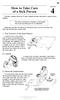 39 How to Take Care of a Sick Person Sickness weakens the body. To gain strength and get well quickly, special care is needed. Medicines are often not necessary. But good care is always important. The
GENERAL WATERING & CARE GUIDE
 GENERAL WATERING & CARE GUIDE Between 30-60 percent of water applied to lawns and gardens is never absorbed by the plants. Water is often wasted because it is applied too quickly and runs off, evaporates
How to Raise and Show Pigs
 How to Raise and Show Pigs Producing a champion show pig requires a lot of hard work, careful selection, a good home and feeding program, and effective fitting and showing. All six steps must be followed
Animal Environmental Internal Response Types
 Animal Environmental Internal Response Types Stimuli Stimuli Panting (P) Sweating (S) 1. 2. 3. 4. 5. 6. 7. 8. 9. 10. What happens to you internally (in your body) when you run as fast as you can around
Caring for guinea pigs
 Caring for guinea pigs YOUR GUIDE TO KEEPING GUINEA PIGS HEALTHY AND HAPPY Animal Welfare Foundation www.bva-awf.org.uk AWF is the charity led by the veterinary profession Registered Charity No. 287118
KINGMAN IS GROWING! Column
 KINGMAN IS GROWING! Column Protect Plants When Temperatures Drop By Charlee Ware, Kingman Area Master Gardener Fortunately for us, we had three extra weeks of warm fall weather. In most years, that 32-degree
Off to the best start. Important information about feeding your baby
 Off to the best start Important information about feeding your baby mum s milk the best start for your baby What happens in your baby s first years has a big effect on how healthy he or she will be in
Virginia Gardener http://www.hort.vt.edu/envirohort
 The Virginia Gardener http://www.hort.vt.edu/envirohort Name Help Sheets: Things Plants Need There are certain things that every living thing needs in order to live and grow. Just like you, plants need
Cytotoxic Precautions at Home A Guide for Cancer Patients and Families
 Cytotoxic Precautions at Home A Guide for Cancer Patients and Families Your cancer treatment... 1 What are cytotoxic precautions?... 1 What body fluids are cytotoxic?... 1 How do I handle my body wastes?...
Breastfed Babies in Child Care. Breastfeeding Works! How to Meet the Needs of
 Breastfeeding Works! How to Meet the Needs of Breastfed Babies in Child Care Massachusetts Department of Public Health Bureau of Family and Community Health Nutrition and Physical Activity Unit WIC Nutrition
X-Plain Foley Catheter Male Reference Summary
 X-Plain Foley Catheter Male Reference Summary Introduction A Foley catheter is a tube that is put through the urinary opening and into your bladder to drain urine. Your doctor may have placed or may ask
What You And Your Family Can Do About Asthma
 GLOBAL INITIATIVE FOR ASTHMA What You And Your Family Can Do About Asthma BASED ON THE GLOBAL STRATEGY FOR ASTHMA MANAGEMENT AND PREVENTION NHLBI/WHO WORKSHOP REPORT NATIONAL INSTITUTES OF HEALTH NATIONAL
Let s see if I can convince you
 Chapter 33: Page 328 How many times have you been sick in the past year? Once, twice, three times? What if I told you there are ways to keep from getting sick so many times? Would you do it? Let s see
MRSA. Living with. Acknowledgements. (Methicillin-Resistant Staphylococcus aureus)
 How can I keep myself healthy? Hand washing and use of an alcohol-based hand sanitizer are the primary way to prevent acquiring or transmitting bacteria. If you get a cut or scrape, wash it well with soap
Guidelines for caring for injured turtles
 Guidelines for caring for injured turtles Background The NT is home to six of the world s seven different marine turtles, five of which are listed internationally as endangered. Along with the sea turtles,
Ear Infections Gastroenteritis gastroenteritis
 Ear Gastroenteritis Infections gastroenteritis Gastroenteritis can be caused by many different germs, and the effects of gastro on babies and children depend on several things including: the age of the
Living with MRSA. Things to remember about living with MRSA: This is really serious. I need to do something about this now!
 Things to remember about living with MRSA: 1. Wash your hands often. 2. Take care of yourself: Eat right, exercise, quit smoking, and avoid stress. 3. Take good care of your skin. 4. Keep skin infections
Learning About MRSA. 6 How is MRSA treated? 7 When should I seek medical care?
 IMPORTANT MRSA is a serious infection that can become life-threatening if left untreated. If you or someone in your family has been diagnosed with MRSA, there are steps you need to take now to avoid spreading
ORIENTAL COCKROACH PREVENTION & CONTROL
 ORIENTAL COCKROACH PREVENTION & CONTROL DESCRIPTION Oriental cockroaches are dark brown to black in color and 1-1¼ inch in length. The females have only traces of wings, while males have short wings which
Care of a Foley Catheter
 Care of a Foley Catheter A Foley catheter is a tube that is put into the bladder to drain urine out of the body. A Foley catheter can stay in the bladder for hours or weeks. Having the catheter put in
CyberKnife planning and treatment for prostate cancer
 CyberKnife planning and treatment for prostate cancer Please bring this handout with you to all of your radiation appointments. Appointments If you take pain or anti-anxiety medication, please bring it
General Practice Service Willows Information Sheets. Ectoparasites (fleas and other skin parasites) in dogs
 General Practice Service Willows Information Sheets Ectoparasites (fleas and other skin parasites) in dogs Flea Tick Mite Louse Ectoparasites (fleas and other skin parasites) in dogs What types of skin
Activities for the Young Baby
 31 Chapter 5 Activities for the Young Baby (Birth to 6 Months) A new baby does not usually look as though she is doing very much. She spends most of her time eating, sleeping, and resting. But even though
Water It s Crucial Role in Health. By: James L. Holly, MD
 Water It s Crucial Role in Health By: James L. Holly, MD After a two week hiatus, we return to our series entitled, Aging Well. It is often the case that in health we become so infatuated with the exotic,
heatwave A GUIDE TO LOOKING AFTER YOURSELF AND OTHERS DURING HOT WEATHER
 heatwave A GUIDE TO LOOKING AFTER YOURSELF AND OTHERS DURING HOT WEATHER heatwave Most of us enjoy sunny weather, but extreme heat can seriously damage your health. During a heatwave, when temperatures
Owner Manual. Diabetes in Dogs. www.pet-diabetes.com. Simplifying small animal diabetes
 Owner Manual www.pet-diabetes.com Diabetes in Dogs Simplifying small animal diabetes D i a b e t e s i n D o g s What is Diabetes? Glucose ( blood sugar ) provides the cells in the body with the energy
HEAT PUMP FREQUENTLY ASKED QUESTIONS HEAT PUMP OUTDOOR UNIT ICED-UP DURING COLD WEATHER:
 HEAT PUMP FREQUENTLY ASKED QUESTIONS HEAT PUMP OUTDOOR UNIT ICED-UP DURING COLD WEATHER: It is normal for a heat pump to have a build up of white frost on the outside coil during cold damp weather. The
METHODS OF WOOD DRYING By Daniel Yourdon
 METHODS OF WOOD DRYING By Daniel Yourdon Over the past year I have been gathering information on various methods of wood drying. This article is an attempt to consolidate that information. Specifically
How babies' senses develop
 B2 There is much growth and change that must occur in your baby s body. For babies born full-term (37-40 weeks), this growth and change occurred within the warm, dark, watery womb. For the premature baby,
Suggested Open Ended Questions Suggested Affirming Statements Suggested Nutrition Education Statements
 Suggested Open Ended Questions Suggested Affirming Statements Suggested Nutrition Education Statements Caregiver: How did your baby s last check-up go? Primary Feeding: Tell me about the kind of formula
GARDEN FACTS. When are apples ripe?
 A3743-E GARDEN FACTS U n i v e r s i t y o f W i s c o n s i n E x t e n s i o n When are apples ripe? Teryl R. Roper DIFFERENT APPLE CULTIVARS RIPEN over a long season. In Wisconsin, apples ripen from
Tell your doctor about all the medicines you take, including prescription and nonprescription medicines, vitamins, and herbal supplements.
 SOMAVERT pegvisomant for injection PATIENT INFORMATION SOMAVERT (SOM-ah-vert) (pegvisomant for injection) Read the patient information that comes with SOMAVERT before you start using it and each time you
What Is. Norovirus? Learning how to control the spread of norovirus. Web Sites
 Web Sites Centers for Disease Control and Prevention (CDC) http://www.cdc.gov/norovirus/index.html Your Local Health Department http://www.azdhs.gov/diro/lhliaison/countymap.htm What Is Ocument dn Norovirus?
You will be having surgery to remove a tumour(s) from your liver.
 Liver surgery You will be having surgery to remove a tumour(s) from your liver. This handout will help you learn about the surgery, how to prepare for surgery and your care after surgery. Surgery can be
Tree House Humane Society
 Tree House Cats at Work Project For the cats -- for the community Humane, Effective, Long-term Solutions The Tree House Cats at Work Project is a green humane program that removes sterilized and vaccinated
Key Idea 2: Ecosystems
 Key Idea 2: Ecosystems Ecosystems An ecosystem is a living community of plants and animals sharing an environment with non-living elements such as climate and soil. An example of a small scale ecosystem
Balloon Inside a Bottle
 Balloon Inside a Bottle What is Needed * One small party balloon * One small bottle. A 16 ounce pop bottle works well. What to Do Put approximately 1 tablespoon of water into the empty pop bottle. Then
Heat Illnesses. Common Heat Rash Sites
 Heat Illnesses Introduction Heat illnesses happen when the body becomes too hot and cannot cool itself. There are several different types of heat-related illnesses. This includes heat cramps, heat exhaustion,
Identification and Prevention of Frost or Freeze Damage By Linda Reddick, Kingman Area Master Gardener
 KINGMAN IS GROWING! COLUMN Identification and Prevention of Frost or Freeze Damage By Linda Reddick, Kingman Area Master Gardener Again this year we have been experiencing some very cold weather, with
Injecting Inside the Mouth
 Injecting Inside the Mouth 135 9 CHAPTER It is possible to treat a tooth without pain. You do this with an injection of local anesthetic. You must inject near the nerve, so to give good injections, you
Oregon Youth Soccer Association Weather Related Safety Precautions
 Oregon Youth Soccer Association Weather Related Safety Precautions Safety during all soccer activities is the primary concern for any individual participating in Oregon Youth Soccer or the activities of
2. When temperature and wind chill falls below 35 degrees including the wind chill, students, are kept indoors.
 Weather /Environmental Guidelines Time spent outdoors is an important part of the school day. It is difficult to set guidelines that fit every circumstance and condition in regards to outside activities.
GOING HOME AFTER YOUR TAVR PROCEDURE
 GOING HOME AFTER YOUR TAVR PROCEDURE HENRY FORD HOSPITAL CENTER FOR STRUCTURAL HEART DISEASE GOING HOME After your TAVR procedure, you will need help when you go home. It is hard to predict how much help
Cast removal what to expect #3 Patient Information Leaflet
 Cast removal what to expect #3 Patient Information Leaflet SM466 Now your cast is off, self help is the key! Follow the advice given to you by your doctor and the staff in the clinic. Your skin will be
EXTREME HEAT/HUMIDEX ADVISORY FACT SHEET
 EXTREME HEAT/HUMIDEX ADVISORY FACT SHEET While it is important to enjoy the outdoors during Canadian summers, it is also essential to keep in mind that periods of extreme heat and humidex events may cause
ELEMENTARY-LEVEL SCIENCE TEST
 4THE UNIVERSITY OF THE STATE OF NEW YORK SPRING 2008 GRADE 4 ELEMENTARY-LEVEL SCIENCE TEST WRITTEN TEST Student Name School Name Print your name and the name of your school on the lines above. The test
Heat Illness Prevention Program
 I. Policy Heat Illness Prevention Program Responsible Executive: Vice President for Administration and Finance Responsible Office: Environmental Health and Instructional Safety Originally Issued: February
What safe sleep practices do you see in this picture?
 SAFE 1. What safe sleep practices do you see in this picture? SAFE Safe Sleep Practices: Crib is placed next to the bed so the baby can sleep in the same room as the parents, on a separate sleep surface.
Common Concerns About Breastfeeding
 Patient Education Page 51 Caring for Yourself and Your New Baby Common Concerns About Breastfeeding Breastfeeding is healthy and natural. So are the questions and concerns that come with it. Whether you
HEAT ILLNESS PREVENTION PLAN FOR SUTTER COUNTY SUPERINTENDENT OF SCHOOLS
 HEAT ILLNESS PREVENTION PLAN FOR SUTTER COUNTY SUPERINTENDENT OF SCHOOLS TABLE OF CONTENTS 1.0 Purpose... 1 2.0 Heat Illness Prevention... 2 2.1 Heat Stroke... 2 2.2 Heat Exhaustion... 2 2.3 Heat Cramps...
Maintaining Proper Bowel Elimination
 Peak Development Resources, LLC P.O. Box 13267 Richmond, VA 23225 Phone: (804) 233-3707 Fax: (804) 233-3705 After reading the newsletter, the nursing assistant should be able to: 1. Describe the normal
Many dogs love to play and to be petted. But not all dogs are friendly or want to play all the time.
 Dear Parents: Many children are bitten and injured by dogs each year. Bites can result from family dogs, neighbor dogs, as well as strange dogs. These injuries often occur because children do not understand
Rabbits need to run, jump, stretch up, dig and forage it s cruel to keep a rabbit alone and in a hutch.
 A HUTCH IS NOT ENOUGH HOW DO YOU KEEP YOUR BUNNY? Have you got a single bunny spending most of its time in a hutch? Or a single bunny that you lift into a run most days? If so, please read on for some
Follow the steps listed on the following pages to help eliminate the conditions that encourage rats.
 CONTROLLING RATS Responsibilities It takes a community-wide effort to manage the rodent population. What Does the Evanston Health and Human Services Department Do? Working with residents, the Evanston
Yorketown Community Children s Centre. Food Safety and Healthy Eating Policy
 Yorketown Community Children s Centre Food Safety and Healthy Eating Policy Policy Number 1 Link to CCQA Principles Family Day Care Quality Assurance (FDCQA) Quality Practices Guide (2004) Principle 4.2
First Grade Unit A: PHYSICAL SCIENCE Chapter 1: Observing Solids, Liquids and Gases Lessons 1 to 5
 First Grade Unit A: PHYSICAL SCIENCE Chapter 1: Observing Solids, Liquids and Gases Lessons 1 to 5 Physical Science Overview Materials (matter) come in different forms. Water can be rain falling (liquid)
Your Guide to Peritoneal Dialysis Module 3: Doing Peritoneal Dialysis at Home
 Your Guide to Peritoneal Dialysis Module 3: 6.0959 in Preparing to do PD One of the most important things about PD is to keep the dialysis area and anything that comes in contact with the PD equipment
Heat Illness Prevention Program
 Heat Illness Prevention Program I. Policy Employees working in outdoor places of employment or in other areas at times when the environmental risk factors for heat illness are present, are at risk for
CLASS OBJECTIVE: What factors influence prenatal development? Test Your Knowledge! True or False? Is the prenatal environment that important??
 Life Span Development I Chapter 9 CLASS OBJECTIVE: What factors influence prenatal development? 1 Test Your Knowledge! True or False? Most babies are born healthy and most hazards can be avoided. TRUE!
Why Fruit Trees Die D. B. Meador, Extension Specialist (retired) University of Illinois
 Why Fruit Trees Die D. B. Meador, Extension Specialist (retired) University of Illinois Occasionally, fruit trees decline and often die. Diseases affecting the leaves, fruit, and twigs of fruit trees usually
In case of an urgent concern or emergency, call 911 or go to the nearest emergency department right away.
 Asthma Basics Patient and Family Education This teaching sheet contains general information only. Talk with your child s doctor or a member of your child s healthcare team about specific care of your child.
Sanitary Food Preparation & Safe Food Handling
 70 Feeding Infants 10 Sanitary Food Preparation & Safe Food Handling Babies are more susceptible to bacteria than older children, and unsanitary food conditions can cause serious infections. General cleanliness,
To protect your health when temperatures are extremely high, remember to keep cool and use common sense. The following tips are important:
 What Is Extreme Heat? Temperatures that hover 10 degrees or more above the average high temperature for the region and last for several weeks are defined as extreme heat. Humid or muggy conditions, which
Wild About... Frogs and Frogspawn
 a Wild About... Rutland County Council Nature notes Frogs belong to a group of animals called amphibians, which also includes newts and toads. Amphibians live both on land and in water. Water is needed
Hygiene and Infection. Control advice in the home
 Introduction The Infection Control Department Mid-Western Regional Hospital, Ennis, wrote this booklet with Clare Primary Community and Continuing Care and C-Diff Patients and Families Group. This booklet
What to Do About Rats or Mice in Your Home or Business
 Janel Heinrich, MPH, MA, Director City-County Building, Room 507 608 266-4821 210 Martin Luther King, Jr. Boulevard 608 266-4858 fax Madison, WI 53703 www.publichealthmdc.com What to Do About Rats or Mice
BREAST FEEDING TEACHING GUIDE
 BREAST FEEDING TEACHING GUIDE This information was developed to address issues related to breast-feeding and identify problems usually encountered in the first six weeks postpartum after discharge from
Proper Handling of Eggs: From Hen to Consumption
 Proper Handling of Eggs: From Hen to Consumption Phillip J. Clauer, Poultry Extension Specialist, Animal and Poultry Sciences To insure egg quality in small flocks, egg producers must learn to properly
Extreme Heat: A Prevention Guide to Promote Your Personal Health and Safety
 Extreme Heat: A Prevention Guide to Promote Your Personal Health and Safety Heat-related deaths and illness are preventable yet annually many people succumb to extreme heat. Historically, from 1979-2003,
Temperature affects water in the air.
 KEY CONCEPT Most clouds form as air rises and cools. BEFORE, you learned Water vapor circulates from Earth to the atmosphere Warm air is less dense than cool air and tends to rise NOW, you will learn How
Breastfeeding WORKS for Working Women! Here s HoW
 E m p l o y E E s G u i d E t o B r E a s t f E E d i n G a n d W o r k i n G B o t t o m l i n E B E n E f i t s Breastfeeding WORKS for Working Women! Here s HoW Breastfeeding is the most precious gift
FACT SHEET: HAZARDOUS MATERIALS ACCIDENTS
 FACT SHEET: HAZARDOUS MATERIALS ACCIDENTS A hazardous materials accident can occur anywhere. Communities located near chemical manufacturing plants are particularly at risk. However, hazardous materials
BREASTFEEDING; HOW? January 14 HELEN BORG, INFANT FEEDING MIDWIFE MATER DEI HOSPITAL
 BREASTFEEDING; HOW? January 14 HELEN BORG, INFANT FEEDING MIDWIFE MATER DEI HOSPITAL 1 THE IMMIGRANT MOTHER- BABY DYAD Challenges to Breastfeeding and Bonding Lack of Information How to enhance milk supply
Throughout this reference summary, you will find out what massage therapy is, its benefits, risks, and what to expect during and after a massage.
 Massage Therapy Introduction Massage therapy is the manipulation of the soft tissues of the body, including the skin, tendons, muscles and connective tissue by a professional, for relaxation or to enhance
Virginia Gardener http://www.hort.vt.edu/envirohort
 The Virginia Gardener http://www.hort.vt.edu/envirohort Name Help Sheets: Seeds What Is a Seed? A seed is a very young plant that is in the dormant, or resting stage. It is very much alive. There are three
GJ TUBE (GASTROJEJUNOSTOMY TUBE) Daily Care
 GJ TUBE (GASTROJEJUNOSTOMY TUBE) Daily Care Your child has a Picture 1 The GJ Tube inside the body. gastrojejunostomy (GJ) tube Disc (Picture 1). This set of tubes lets food or medicine go into either
NURSING ASSISTANT/NURSE AIDE Knowledge Competency Examination PRACTICE TEST. 2 Hours
 - 1 - NURSING ASSISTANT/NURSE AIDE Knowledge Competency Examination PRACTICE TEST 2 Hours Directions: This test contains 50 questions. Each question has four suggested answers, (A), (B), (C), and (D).
Feline Diabetes Mellitus
 Feline Diabetes Mellitus Expert health and behavior advice from the feline care professionals at Paws, Whiskers & Claws The Feline Hospital www.pawswhiskersandclaws.com What is diabetes mellitus? Diabetes
Basic Forms of Energy:
 Background Information: Energy can be defined in many different ways: the ability to do work, the ability to the change the properties of a material, or simply the ability to do something. Energy is a
Gastroschisis and My Baby
 Patient and Family Education Gastroschisis and My Baby Gastroschisis is a condition where a baby is born with the intestine outside the body. Learning about the diagnosis What is gastroschisis? (pronounced
PATIENT GUIDE. Care and Maintenance Drainage Frequency: Max. Drainage Volume: Dressing Option: Clinician s Signature: Every drainage Weekly
 PATIENT GUIDE Care and Maintenance Drainage Frequency: Max. Drainage Volume: Dressing Option: Every drainage Weekly Clinician s Signature: ACCESS SYSTEMS Pleural Space Insertion Site Cuff Exit Site Catheter
Raising Show Rabbits from Start to Finish
 Raising Show Rabbits from Start to Finish I. Introduction A. Raising market rabbits can be a very enjoyable & rewarding SAE for the exhibitor. B. Many exhibitors use market rabbits as a way to fund their
Science of Life Explorations
 Science of Life Explorations Celebrate the Growing Year: The Farmer s Year A Farmer s Year While you are in school or on a vacation, farmers are working hard to provide us with the foods we eat and the
Play it Safe in the Heat Tips for Coaches and Parents
 Play it Safe in the Heat Tips for Coaches and Parents Heat is the number one weather related killer in the United States. Heat illness is the leading cause of preventable death in high school athletics
Abdominal Wall (Ventral, Incisional, Umbilical) Hernia Repair Postoperative Instructions
 Abdominal Wall (Ventral, Incisional, Umbilical) Hernia Repair Postoperative Instructions No lifting greater than 10 15 lbs for the first three weeks following your surgery. Walking around the house, office
After a Fire or Flood
 After a Fire or Flood Some help and advice Advice after a Fire Your property is your responsibility when the firefighters leave. If you intend to leave your property unattended: Lock all windows and doors,
Questions & Answers on Rabies
 BUCKS COUNTY DEPARTMENT OF HEALTH Neshaminy Manor Center, Health Building 1282 Almshouse Road Doylestown, PA 18901 215-345-3318 Questions & Answers on Rabies Q: What is rabies? A: Rabies is a deadly disease
Protecting Yourself from. Heat Stress
 Fast Facts Heat stress, from exertion or hot environments, places workers at risk for illnesses such as heat stroke, heat exhaustion, or heat cramps. Heat Stroke A condition that occurs when the body becomes
INSULIN INJECTION KNOW-HOW
 0-0- 0 INSULIN INJECTION KNOW-HOW pro tips (and tricks) for easier and better Insulin Injections ABDOMEN THIGHS BUTTOCKS ARMS recommended injection sites WHERE IS THE BEST PLACE TO GIVE INJECTIONS? 0-