
Middle Ear. Inner Ear. Ossicles Semicircular canals. Auditory nerve. Cochlea. Eardrum Eustachian tube
|
|
|
- Joshua Clarke
- 10 years ago
- Views:
Transcription
1 2007

2 Middle Ear Inner Ear } } Ossicles Semicircular canals Auditory nerve Cochlea Eardrum Eustachian tube

3 Table of Contents Requirements and Guidelines...page 3 I. Introduction to Hearing Screening Policies for Children...4 II. Hearing Screening Goals and Objectives...4 III. Summary of State Laws Pertaining to Hearing Screening...4 IV. Hearing Screening Guidelines and Referral Criteria...6 A. Required Screening Procedures Observation Pure-tone Air Conduction Audiometry...6 B. Optional Screening Procedures Tympanometry Otoacoustic Emissions...7 C. Children to be Screened...8 V. Recommended Portable Screening Equipment Requirements...9 VI. Hearing Screening Follow-up/Referral Procedures...9 VII. Screening by Hearing Care Professionals...10 VIII. Resource Information...11 Appendices...page 13 A. State Laws Pertaining to Hearing Screening Programs...14 B. Hearing Advisory Committee Members...17 C. Basic Guide for Screening Children - Audiometric Screening Procedures...18 D. Subgroup Committee Members Pertaining to Tympanometry and Otoacoustic Emissions...20 E. Tympanometry...21 F. Otoacoustic Emissions...23 G. Hearing Probable Handicaps and Needs...24 H. Screening Preschool Children and Special Populations...25 I. Resources for Hearing Information...26 Forms...page 27 School Hearing Screening Information...29 Hearing Screening Referral Letter...31 Hearing Screening Referral Report...33 Hearing Screening Record...35 Hearing Screening Follow-up Record...37 Hearing Screening Annual Report

4

5 Ohio Department of Health Hearing Screening Requirements and Guidelines for School-aged Children

6 Hearing Screening Requirements & Guidelines for School-aged Children I. Introduction to Hearing Screening Policies for Children Hearing loss in school children may interfere with normal speech and language development and with the ability to learn. Even mild or unilateral hearing losses may be educationally significant. Regular school hearing screenings are an important method of identifying children who are at risk for hearing loss. Early detection and treatment of hearing disorders provide children the best opportunity to develop academically, emotionally and socially. The Ohio Department of Health (ODH) stresses that hearing screening, while a valuable public health procedure, is not a substitute for a complete audiological/medical examination; however, to further ensure children with hearing disorders are detected early, programs utilizing regulated and supervised screening procedures have become essential. The Ohio Revised Code gives ODH the authority to institute specific testing procedures, grades and forms that are used in the school hearing screening program. Appendix A contains a complete text of state laws pertaining to hearing screening programs. ODH's policies governing hearing screening programs were reviewed following a meeting with the Ad Hoc Hearing Advisory Committee in Columbus, Ohio, and their recommendations are implemented into this policy. Members of the hearing advisory committee are listed in Appendix B. II. Hearing Screening Goals of the Ohio Department of Health The ODH goals of a school hearing screening program are: Early detection and identification of hearing loss in children. Access to professional care for all children suspected of having a hearing loss, regardless of financial limitations. The activities of a school hearing screening program that are necessary to accomplish the goals as listed above are: Perform hearing screenings according to ODH's guidelines. Notify parent or guardian of a child's hearing screening results and the need for further medical/audiological examination. Provide referral assistance to hearing professionals. Inform educational staff of the student's hearing screening results. Ill. Summary of State Laws Pertaining to Hearing Screening A. If the board of education or the board of health offers services by a physician or a nurse in the school, it must provide hearing screenings for students in accordance with the requirements set forth by ODH (section of Ohio Revised Code). B. By November 1 of the year a student is enrolled for the first time in either kindergarten or first grade, the student must be given a hearing screening in accordance with the requirements set forth by ODH (Section of the Ohio Revised Code). The board of education may provide any of the elements of the screening program itself, contract with any person or governmental entity to provide any such elements or request that parents take the child to obtain any such elements from a provider selected by the parents. 4

7 Hearing Screening Requirements & Guidelines for School-aged Children C. Boards of education and boards of health, in providing hearing screenings, must use devices and procedures approved by ODH. The procedures for conducting screenings include, but are not limited to, age or grade levels to be screened, frequency and intensity of tones to be used and criteria for referral (section of the Ohio Revised Code). D. Boards of education and boards of health that provide hearing screening must keep accurate records of the tests and of the measures taken to treat problems identified through the screening on forms furnished or approved by ODH (section of the Ohio Revised Code). E. Boards of education and boards of health must make available to state and local health, education and human service departments and agencies statistical data from the records of the hearing screenings (section of the Ohio Revised Code). F. Boards of education and boards of health must make available to the same agencies listed in the paragraph above individual records only in cases where there is evidence that no measures have been taken to treat problems determined by the screenings (section of the Ohio Revised Code). G. Boards of education and boards of health must make available to school authorities individual records in cases where they are deemed essential in establishing special education facilities for the hearing impaired (section of the Ohio Revised Code). H. Boards of education and boards of health must report the screening results in a sealed envelope addressed to the parent or guardian (section of the Ohio Revised Code). Appendix A contains a complete text of these sections of the Ohio Revised Code. 5

8 Hearing Screening Requirements & Guidelines for School-aged Children IV. Hearing Screening Guidelines and Referral Criteria Hearing screening is an effective method of identifying children at risk for hearing loss. Screening programs should stress that screening is not a diagnostic hearing evaluation and will not detect all hearing problems. Screening will produce both over-referrals and under-referrals; however, for the benefit of the children being screened, errors toward false positives (i.e., over-referrals) are preferred. Parents of children screened should be informed of the limitations of the screening. Routinely, referrals should be made only following a second screening. In general, some children will pass the second screening, reducing the over-referral rate. A. Required Screening Procedures 1. Observation a. The screener shall note on the hearing screening form any student reported symptoms: 1) Not hearing well. 2) Hearing better out of one ear than the other. 3) Ear pain or tenderness. b. Direct observation of the following: 1) Discharge from a child's ear canal. 2) Malformation of the ear. 3) Soreness or tenderness in or about the ears. c. Referral criteria: 1) A child who has any of the conditions listed in direct observation shall be referred immediately and not screened on that day. 2. Pure-tone Air Conduction Audiometry a. Screening criteria: 1) Each child shall be screened at 1000 Hz, 2000 Hz and 4000 Hz, at 20 db HL in the right and left ear. No other frequencies or intensities are to be used. 2) If the child responds at 20 db HL to all three frequencies in both ears, the child passes the hearing screening. 3) For a complete overview on hearing screening procedures, see Appendix C. b. Rescreen criteria: 1) Any child failing the first screening (who does not respond at 20 db HL to one or more of the three frequencies in either ear) should be rescreened immediately following reinstruction and repositioning of the headphones. 2) Any child who fails both initial screenings shall be rescreened again in four to six weeks. c. Referral criteria: 1) Any child who fails both the initial and second screenings shall be referred for a complete medical/audiological evaluation. 2) Any child failing the first school screening and who failed the previous year's school screening with no documented follow-up care shall be immediately referred. 6

9 Hearing Screening Requirements & Guidelines for School-aged Children B. Optional Screening Procedures 1. Tympanometry a. Screening criteria: 1) ODH highly recommends tympanometry as a useful tool for screening middle ear problems. It does not measure hearing and should not be used without pure tone air conduction testing. Members attending a Tympanometry/Otoacoustic Emissions Subgroup (Appendix D) offered recommendations on using tympanometry in a school screening program. For further details on Tympanometry, see Appendix E. 2) Tympanometry is highly recommended for: Pre-kindergarten and kindergarten. First and third graders and the difficult to test children, upon rescreen. b. Rescreen criteria: 1) A child who passes the pure tone screening but fails tympanometry shall be rescreened with pure tones and tympanometry four to six weeks later. c. Referral criteria: Hearing screeners using tympanometry with pure-tone screening shall follow the referral criteria as set forth by ODH as follows: 1) A refer tympanogram is a flat tympanogram or a gradient (tympanometric width) greater than 200 dapa (see Appendix E on tympanometry). 2) A child who fails the first screening (both pure tones and tympanometry) shall be referred immediately for a complete medical/audiological evaluation. 3) A child who fails the second tympanometry screening with a flat tympanogram will be referred for medical evaluation. 2. Otoacoustic Emissions a. Screening criteria: 1) Otoacoustic emission (OAE) screening has been approved as an alternative test for students who are unable to complete a pure-tone screening either due to young age or physical or developmental challenges. OAE testing is not a substitute for pure-tone screening for other students. Members attending a Tympanometry/Otoacoustic Emissions Subgroup (Appendix D) offered recommendations on using OAEs in a school hearing screening program. ODH has developed a comprehensive training that is recommended for nurses who have no prior experience with OAE screening of school-age children. For further details on OAEs, see Appendix F. b. Rescreen criteria: 1) A child who passes the OAE will not be rescreened. 2) A child whose test results indicate refer shall be retested immediately. 3) A child whose test results indicate refer again shall be retested no later than two week from the original test date. c. Referral criteria: 1) A child who is unable to be tested shall be referred for a complete medical/audiological evaluation. 2) A child whose test results indicate refer on the second OAE shall be referred for a complete medical/audiological evaluation. 7

10 Hearing Screening Requirements & Guidelines for School-aged Children C. Children to be Screened 1. Preschool children: a. Preschoolers attending a school-based program shall be screened each year they are enrolled in preschool. Children who cannot be screened using approved and/or optional methods shall be referred to the primary care provider or audiologist. 2. School-aged children in traditional classes: a. School-aged children shall be screened at five grade levels: kindergarten, first, third, fifth and ninth grades. Students may be tested in additional grade levels. b. In addition, the following school children shall be screened because they have not been screened in accordance with ODH guidelines: 1) Students new to a school (and not tested within the past 12 months). 2) Students referred by a teacher or other school personnel. 3) Students who were referred within the past year with no documented follow-up, regardless of grade. 4) Students absent during the previous hearing screening. 5) Students at risk for noise exposure (e.g., band, vocational education, industrial education, automotive mechanics). 6) Students who request a hearing screening. 7) Students whose parents request a hearing screening. 3. School-aged children in special education classes: a. Students in special education classes will be screened at the ages that correspond to the grade levels required for all students (preschool, kindergarten, first, third, fifth and ninth grade). These children should remain in the screening program due to a higher risk of undetected hearing loss and may be candidates for optional OAE testing and tympanometry screening. If the student cannot be screened, they should be referred for a complete medical/audiological evaluation. 8

11 Hearing Screening Requirements & Guidelines for School-aged Children 4. School-aged children who should not be included in the school hearing screening program include the following: a. Students who wear hearing aids. b. Students who have a cochlear implant. c. Students with known hearing loss including sensorineural and progressive hearing loss. d. For children in a, b and c above, follow-up with parents is important to ensure the child is under the care of a primary care provider or audiologist. (Documentation of current hearing test within past year should be in the child's file.) V. Recommended Portable Screening Equipment Requirements A. Pure-tone equipment: 1. Pure-tone equipment shall have a variable intensity attenuator ranging from 0 db to 80 db. 2. Pure-tone equipment shall have a binaural headset. Hand-held pure-tone equipment, automatic pure-tone equipment and standardized speech (picture) testing equipment are not approved for use in school hearing screenings. 3. Pure tone equipment shall meet the appropriate current standards by the American National Standards Institute (ANSI). B. Tympanometry equipment: 1. Tympanometric testing shall be performed utilizing a 226 Hz tone and a constant pump speed of 200 dapa/sec. 2. Tympanometric equipment shall meet the appropriate current standards by ANSI. C. Other: 1. All equipment shall be calibrated annually to the appropriate current standards by ANSI. 2. Screening personnel may contact ODH, Bureau of Child and Family Health Services at (614) for advice when purchasing equipment. ODH does not endorse a specific manufacturer or model. VI. Hearing Screening Follow-up/Referral Procedures A. Although not required, school screening personnel may want to inform the families of the upcoming school hearing screening (School Hearing Screening Information Form). This form also maybe modified in a school newsletter to the families. B. The Hearing Screening Record Form is provided for the initial screening and rescreening of children to assist school screening personnel in record keeping. C. Parents shall receive written notification (Hearing Screening Referral Letter) that their child has failed a hearing screening test and that an examination by a primary care provider and/or audiologist is recommended. No diagnostic statement about the child's suspected hearing problem shall be mentioned in the parents' notification. 9

12 Hearing Screening Requirements & Guidelines for School-aged Children D. Along with notification, parents shall receive a copy of the Hearing Screening Referral Report to be completed by the examining primary care provider or audiologist and returned to the referring agency. E. The names of children who have failed a hearing screening shall be entered on the Hearing Follow-up Record and tabulation of follow-up data shall be maintained. F. Results of a child's hearing screening test shall be entered on the child's permanent school health record. G. Forms used for hearing screening and follow-up may he downloaded from the ODH Web site http// or photocopied from the examples in the Forms section of this document. Schools may request approval for use of a form other than those available from ODH by submitting the form to ODH at the address listed in Section VIII. H. ODH has instituted a system of data collection (mandated by Section ORC) that periodically requires randomly selected schools to report their hearing screening data by school building. To simplify a school's ability to respond accurately to those requests, data from the Hearing Screening Record Form and Hearing Screening Follow-up Form can be entered onto the Hearing Screening Annual Report Form. VII. Screening by Hearing Care Professionals A. Hearing screenings for school children may be conducted by: 1. Physicians. 2. Audiologists. 3. Audiology aides only under the supervision of an audiologist (Licensing Law of the Ohio Board of Speech-Language Pathology and Audiology). 4. Speech language pathologists. 5. Speech language pathology aides only under the supervision of a speech language pathologist (Licensing Law of the Ohio Board of Speech-Language Pathology and Audiology). 6. Nurses. 7. Nurses may delegate hearing screening to trained unlicensed personnel in accordance with the Standards of Delegation defined in the Ohio Administrative Code (OAC) An opinion rendered by ODH's legal counsel in 1991 concluded that professionals who provide hearing screening services to schools, whether as volunteers or contract personnel, must follow the testing requirements and methodologies which are approved by ODH. B. Preparation of Hearing Screening Personnel It is required that all personnel providing hearing screening have adequate instruction. ODH's audiologists provide hearing training for screeners. Any training obtained outside of ODH must be in compliance with the requirements outlined in this document. 10

13 Hearing Screening Requirements & Guidelines for School-aged Children VIII. Resource Information A. For more information on testing children, refer to Probable Handicap and Needs in Appendix G, Screening Preschool Children and Special Populations in Appendix H, and Resources for Hearing Information in Appendix I. B. Current ODH requirements are available on the ODH Web site at Computer disks are also available upon request. Booklets will be available on a limited basis. C. Send any questions or concerns to the following address: Field Services Section Administrator Bureau of Child & Family Health Services Ohio Department of Health 246 North High Street, 6th floor Columbus OH Phone: (614) Fax: (614) [email protected] D. To request the substitution of one grade for another, send written documentation of need to the program administrator of the Field Services Section at the above address. Documentation should consist of the grade to be changed or added, specific rational for request and duration of the substitution. Permission to substitute grades will not be granted for kindergarten, first and third grades. 11

14

15 Appendices

16 Appendix Appendix A State Laws Pertaining to Hearing Screening Programs (from the Ohio Revised Code) Section Record of tests; statistical data; individual records Boards of education and boards of health making tests for determining defects in hearing and vision in school children shall keep an accurate record of such tests and of measures taken to correct such hearing and visual defects. This record shall be kept on a form to be prescribed and furnished or approved by the director of health. Statistical data from such records shall be made available to official state and local health, education, and human services departments and agencies. Individual records shall be made available to such departments and agencies only in cases where there is evidence that no measures have been taken to correct defects determined by such tests, provided that such records shall be made available to school authorities where they are deemed essential in establishing special education facilities for children with hearing and visual defects. Section Screening of beginning pupils for special learning needs. (A) Except as provided in division (B) of this section, prior to the first day of November of the school year in which a pupil is enrolled for the first time in either kindergarten or first grade, the pupil shall be screened for hearing, vision, speech and communications, and health or medical problems and for any developmental disorders. If the results of any screening reveal the possibility of special learning needs, the board of education of the school district shall conduct further assessment in accordance with Chapter of the Revised Code. The board may provide any of the elements of the screening program itself, contract with any person or governmental entity to provide any such elements, or request the parent to obtain any such elements from a provider selected by the parent. If the board conducts hearing and vision screening itself or contracts for hearing and vision screening, such screening shall be conducted pursuant to sections , , and of the Revised Code. B) Prior to the first day of August of the school year in which a pupil is required to be screened under this section, the board shall provide parents with information about the district's screening program. If the board chooses to request parents to obtain any screening services, it shall provide lists of providers to parents together with information about such screening services available in the community to parents who cannot afford them. Any parent requested to obtain any screening services under this division may sign a written statement to the effect that he does not wish to have his child receive such screening. 14

17 Appendix Section Employment of medical and dental personnel; delegation of duties to board of health or offices. The board of education of each city, exempted village, or local school district may appoint one or more school physicians and one or more school dentists. Two or more school districts may unite and employ one such physician and at least one such dentist whose duties shall be such as are prescribed by law. Said school physician shall hold a license to practice medicine in Ohio, and each school dentist shall be licensed to practice in this state. School physicians and dentists may be discharged at any time by the board of education. School physicians and dentists shall serve one year and until their successors are appointed and shall receive such compensation as the board of education determines. The board of education may also employ registered nurses, as defined by section and licensed as school nurses under section of the Revised Code, to aid in such inspection in such ways as are prescribed by it, and to aid in the conduct and coordination of the school health service program. The school dentists shall make such examinations and diagnoses and render such remedial or corrective treatment for the school children as is prescribed by the board of education; provided that all such remedial or corrective treatment shall be limited to the children whose parents cannot otherwise provide for same, and then only with the written consent of the parents or guardians of such children. School dentists may also conduct such oral hygiene educational work as is authorized by the board of education. The board of education may delegate the duties and powers provided for in this section to the board of health or officer performing the functions of a board of health within the school district, if such board or officer is willing to assume the same. Boards of education shall cooperate with boards of health in the prevention and control of epidemics. Section Hearing and visual tests of school children; exemptions. The board of education or board of health providing a system of medical and dental inspection of school children, as authorized by section of the Revised Code, shall include in such inspection tests to determine the existence of hearing and visual defects in school children. The methods of making such tests and the testing devices to be used shall be such as are approved by the department of health. Any child shall be exempted from a dental inspection if he has been examined for dental defects by a regularly licensed dentist, from a hearing test if he has been examined by a regularly licensed physician, and from a visual test if he has been examined by a regularly licensed physician or optometrist upon presentation to the school authorities of a certificate to the effect that he has been so examined during the twelve months immediately preceding the date of such inspections. 15

18 Appendix Section Board of health to make examination; report; recommendations to parents. If the board of education of a city, exempted village, or local school district has not employed a school physician, the board of health shall conduct the health examination of all school children in the health district and shall report the findings of such examination and make such recommendations to the parents or guardians as are deemed necessary for the correction of such defects as need correction. This section does not require any school child to receive a medical examination or receive medical treatment whose parent or guardian objects thereto. Section Duties of board of city or general health district. Each board of health of a city or general health district shall study and record the prevalence of disease within its district and provide for the prompt diagnosis and control of communicable diseases. The board may also provide for the medical and dental supervision of school children, for the free treatment of cases of venereal diseases, for the inspection of schools, public institutions, jails, workhouses, children's homes, infirmaries, and county homes, and other charitable, benevolent, and correctional institutions. The board may also provide for the inspection of dairies, stores, restaurants, hotels, and other places where food is manufactured, handled, stored, sold, or offered for sale, and for the medical inspection of persons employed therein. The board may also provide for the inspection and abatement of nuisances dangerous to public health or comfort, and may take such steps as are necessary to protect the public health and to prevent disease. In the medical supervision of school children, as provided in this section, no medical or surgical treatments shall be administered to any minor school child except upon the written request of a parent or guardian of such child. Any information regarding any diseased condition or defect found as a result of any school medical examination shall be communicated only to the parent or guardian of such child and if in writing shall be in a sealed envelope addressed to such parent or guardian. 16

19 Appendix Appendix B Members Attending The AD HOC Hearing Advisory Committee Otolaryngologists Daniel Choo, MD Children's Hospital Medical Center 3333 Burnet Avenue Cincinnati OH Audiologists Christine Loddo Bricker, MA North Central Ohio Special Education Regional Resources 1495 West Longview Avenue Mansfield OH Guy Naples, MA The Delaware Speech & Hearing Center 27 West Central Avenue Delaware OH Lisa Kleinline, MA Children's Hospital 700 Children's Drive Columbus OH Speech-Language Pathologists Teresa Farnham, MA North Central Ohio Special Education Regional Resources 1495 West Longview Avenue Mansfield OH Ohio Department of Education Barbara Weinburg, MA 25 S. Front Street Mail Stop 305 Columbus OH Pediatrician Martha Miller, MD Children's Hospital Ambulatory Pediatrics 700 Children's Drive Columbus OH Nurses Amy Hotler, RN Columbus City Schools Health Services 270 E. State Street Columbus OH Renee Besecker, RN Executive Director Ohio Association of School Nurses PO Box 150 Tipp City OH Special Education Martha Mitchell, MS James Madison Center 109 Madison Street Zanesville OH Ohio Board of Speech Language Pathology & Audiology Michael Setty, Executive Director 77 S. High Street 16th Floor Columbus OH Debra Abel, Vice Chair 77 S. High Street 16th Floor Columbus OH State Program Representatives Ohio Department of Health Becky Johnson Rescola, MSW, Program Administrator Kimberly Anthony, MA, Public Health Audiologist Anne Moore, MA, Public Health Audiologist Lenny Williams, MA, MPH, Hearing and Vision Coordinator Rachel Nadal, MA, Infant Hearing Program Reena Kothari, MA, Infant Hearing Program 17

20 Appendix Appendix C Basic Guide for Screening Children Audiometric Screening Procedures Screening Preparation: 1. Plug the audiometer into an outlet making sure it does not cause a tripping hazard. 2. Turn the power switch to the on position. 3. Place the tone switch in the pulse position if available. 4. Verify annual calibration of the audiometer. 5. Check the audiometer to see if it is working properly. If it is not, do not use it until it has been repaired. a. While wearing the ear phones, the tester (or a person known to have normal hearing) should be able to hear the tones at the screening levels. b. All levers and controls should operate smoothly and be free of any extraneous noises. With the earphones on, listen for a smooth increase and decrease of the sound. c. The earphone cords should be free from breaks. To check for breaks in the cords, shake the cord and listen for interruptions in the signal. Do this for each earphone separately. d. When checked, the signal should switch properly from the right earphone to the left earphone. e. The earphone cushions must be free of cracks and splits. 6. Seat the child where they cannot view the audiometer controls while testing. 7. Instruct the child to raise their hand when the tone is heard and to put their hand down when tone is no longer heard. Screening Procedure: 1. Select the right earphone. 2. Place the earphones over the child's ears with the right earphone (red) over the right hear and the left earphone (blue) over the left ear. Make sure the diaphragm of the earphone is directly over the ear canal. 3. Turn the intensity dial to 50 db at 4000 Hz for a practice tone. If the child responds, you are ready to begin the screening. 4. Present the following tones to the right ear: db db db 5. Present the following tones to the left ear: db db db 6. Any child who fails the screening (i.e., who does not respond at 20 db to all six of the test tones) shall be rescreened immediately after the screener has reinstructed the child and repositioned the earphones. 7. The screening test is now completed. Record your results. 8. A second screening must be done in approximately four to six weeks for those who fail the screening. 18

21 Appendix Common Errors in Hearing Screening: Failure to note change in ambient noise levels during the screening procedure - a quiet testing environment is very important. Unnecessary background talking during screening. Fatigue of child caused by extended screening time. Rushed screening process. Inaccurate or unclear directions to the child. Child in direct view of the audiometer's control panel. Earphone on the wrong ear. Visual cues given through eye or body movement of the examiner. Tone presentation shorter than one second. Tone presentation in a rhythmic manner. 19
22 Appendix Appendix D Members Attending Subgroup Meetings Tympanometry and Otoacoustic Emissions Audiologists Carol Flexer, Ph.D School of Speech Language Pathology & Audiology The University of Akron Akron OH Gail Whitelaw, Ph.D The Ohio State University 141 Pressy Hall 1070 Carmack Road Columbus OH Karen Mitchell, MS Audiology & Hearing Aid Services Columbus Speech and Hearing Center 510 East North Broadway Columbus OH Christine Loddo Bricker, MA North Central Ohio Special Education Regional Resources 1495 West Longview Avenue Mansfield OH Jane Dunay, Au.D Beachwood City Schools Fairmount Boulevard Beachwood OH Jean Kirchner, MA Cleveland Municipal Schools A.G. Bell Hearing Clinic Larchmere Boulevard Cleveland OH Loretta Lauder, MA Holzer Clinic 90 Jackson Pike Gallipolis OH Sandra Domoracki, MA Family Child Learning Center 143 Northwest Avenue Building A Tallmadge OH Lisa Kleinline, MA Children's Hospital 700 Children's Drive Columbus OH Laura Ritchey, Au.D Student The Ohio State University 1070 Carmack Road Columbus OH Speech-Language Pathologist Teresa Farnham, MA North Central Ohio Special Education Regional Resources 1495 West Longview Avenue Mansfield OH Nurse Renee Besecker, RN Executive Director Ohio Association of School Nurses PO Box 150 Tipp City OH State Program Representatives Ohio Department of Health Becky Johnson Rescola, MSW, Program Administrator Kimberly Anthony, MA, Public Health Audiologist Anne Moore, MA, Public Health Audiologist Dorothy Bystrom, RN, M.Ed., NCSN, School Nurse Consultant Joan Keith, RN, M.Ed., NCSN, School Nurse Consultant 20
23 Appendix Appendix E Tympanometry Tympanometry is an objective measure of testing the integrity and function of the middle ear system; however, it does not screen hearing levels. This test provides a measure of the health of the eardrum (tympanic membrane) and the middle ear space behind it by measuring the movement of the tympanic membrane as varying degrees of air pressure are introduced into the ear canal. The test is performed by placing a soft, rubber-tipped probe snugly into the ear canal while the child sits still. The tympanometer will then take a measure of the movement of the eardrum and record it on a graph called a tympanogram. The test takes only a few seconds. It is an effective screening tool for detecting middle ear problems and is most sensitive to fluid in the middle ear (otitis media). In accordance with the Ohio Department of Health's screening guidelines on tympanometry, hearing screeners using tympanometry with pure tones shall follow the pass/referral criteria listed below: What is an example of a pass tympanogram? (See Figure 1) (1) Ear Canal Volume - space measured between the tip of the probe and the eardrum Normal values are generally between.2 and 2.0 Values greater than 2.0 will imply pressure equalizing (PE) tubes or perforation of the eardrum (2) Gradient is the tympanometric pressure width at 50 percent of the compliance peak Normal tympanometric width ranges from 50 to 200 dapa What is a refer tympanogram? A refer tympanogram is a flat tympanogram or a gradient (tympanometric width) greater than 200 dapa. (See Figures 2 and 3) Abnormal tympanometry results may be indicative of any of the following: Fluid in the middle ear. Perforated ear drum. Impacted ear wax. Scarring of the tympanic membrane. Ossicular disarticulation. 21
24 Appendix Figure 1. (1) Example of a normal tympanogram that indicates maximal absorption of sound energy at atmospheric pressure (2) Implies normal middle ear function Figure 2. (1) Example of a flat tympanogram that indicates lack of normal absorption of sound energy across the pressure continuum (2) Implies outer or middle ear obstruction to sound conduction i.e. fluid, perforation, wax obstruction or PE tubes GSI 37 AUTO TYMP Name Date ECV: 3.5 cm 3 GSI 37 AUTO TYMP Name Date ECV: 0.5 cm 3 Figure 3. (1) Example of a tympanogram that the gradient is more than 200 dapa. Gradient is the tympanometric pressure width at 50 percent of the compliance peak (2) Normal tympanometric width ranges from 50 to 200 dapa ECV: 0.8 cm 3 PEAK: 0.5 cm 3 GR: 220 dapa -215 dapa R 22
25 Appendix Appendix F Otoacoustic Emissions (OAEs) Otoacoustic emissions (OAEs) are low-intensity sounds produced by normal, healthy ears. These sounds are produced either spontaneously or in response to an acoustic signal. The OAE originates in the inner ear (cochlea) from the outer hair cells in the cochlea. The response also requires normal or near normal middle ear functioning. A small probe (foam or rubber) is placed in the child's ear. A soft sound is presented and the ear produces an emission or echo response. This response is measured with a small microphone that is in the probe. Otoscopy and tympanometry should be used in conjunction with the OAE screening. It is important to document why the child was not tested with pure tone screening. OAEs are approved as an optional test procedure. They are not required. Some school districts with large preschool and/or special education populations may want to consider utilizing OAE testing. What is a pass? No interpretation is required. The OAE equipment will display a pass response. A pass OAE means the child has normal outer hair cell function. OAEs do not assess hearing acuity. The child will pass if their hearing is at least 30 db or better. This means a child with a very mild hearing loss (20-25 db) can still pass this test. Do not state the child has normal hearing because of a pass result on OAE screening. In rare cases a child will pass OAEs and have a condition called auditory neuropathy (auditory dsynchrony). In auditory neuropathy, normal outer hair cell function is present while inner hair cell or neural function may be abnormal. If a child is not developing normal speech and language, does not respond to sound or responds inconsistently to sound, they should be referred for a complete audiological evaluation. What is a refer OAE? There are many reasons why a child refers on an OAE test. The child is vocalizing, moving. Wax (cerumen) in the ear canal. Fluid in the middle ear space (otitis media). Perforation in the eardrum. Noisy environment. Hearing loss. If not done properly, OAE screening will produce over-referrals. 23
26 Appendix Appendix G The following table shows the amount of hearing loss that impact on the educational needs of the child. Hearing Level -10 to 15 db Normal Hearing db Minimal loss (Borderline) 26 to 40 db Mild loss 41 to 55 db Moderate loss 56 to 70 db Moderately severe loss 70 to 90 db Severe loss More than 90 db Profound loss Unilateral One normal ear and one ear with at least a permanent mild hearing loss Probable Handicaps and Needs A student with hearing sensitivity in this range will detect the complete speech signal even at soft conversational levels. However, good hearing does not guarantee good ability to discriminate speech in the presence of background noise. A student may have difficulty hearing faint or distant speech especially in the presence of background noise. May need favorable seating in the classroom and soundfield amplification if the classroom is noisy. A student can miss 25 percent to 40 percent of the speech signal; needs favorable seating and may benefit from hearing aid use and classroom amplification. May understand conversational speech within five feet; needs hearing aids, favorable seating, auditory training, speech reading and may require a special class for hard of hearing or special help in a regular classroom. Conversation must be loud to be understood; great difficulty in group and classroom discussion; needs full-time use of amplification; needs auditory training, speech reading and vocabulary and language development; and may require a special class for hard of hearing or special help in a regular classroom. May hear a loud voice near the ear; may identify environmental noises; may distinguish vowels but not consonants; needs special education for deaf children with emphasis on speech, auditory training and language; mainstreamed into regular classroom. May hear some loud sounds; does not rely on hearing as primary channel for communication; needs specialized education/tutors; many of these children can be expected eventually to enter regular schools. May have difficulty hearing faint or distant speech and usually has difficulty localizing sounds and voice. May benefit from a personal FM system or soundfield system. May be at risk for educational difficulties. Adapted from: Bernero, R.J. & Bothwell, II (1966). Relationship of Hearing Impairment to Educational Needs. Illinois Department of Public Health & Office of Superintendent of Public Instruction. Developed by Karen L. Anderson, Ed.S & Noel D. Matkin Ph.D. (1991) 24
27 Appendix Appendix H Screening Preschool Children and Special Populations Pure tone hearing screenings can be administered to most children aged 3 and above. It may be more difficult, however, to test younger children and those who are mentally or developmentally delayed. With these children, the tester may use any technique which yields consistent responses to the pure tone stimuli. Some examples follow: 1. Dropping blocks in a box; 2. Stacking rings on a cone; 3. Putting a peg in a peg board; 4. Giving the tester five; 5. Giving the tester small pieces of paper or game chips; 6. Pointing to an ear (not necessarily the test ear); 7. Squeezing the hand or the finger of the tester (effective with children who have limited control of their limbs); 8. Telling the tester to STOP the beep; 9. Saying I hear it or beep ; 10. Nodding the head; 11. Hand clap. The tester may help the children learn one of the above responses by physically taking them through the movements of the task. After a few repetitions the child may attempt the response without any cues from the tester. The practice tones can be presented at a 40 db or 50 db level. After the task is learned, the tones can be reduced until the testing level of 20 db is reached. Younger children do not always respond when the tone is presented. If a child responds consistently when the tone stops, that response can be considered a valid one. 25
28 Appendix Appendix I Resources for Hearing For more information on the anatomy and physiology of the ear, visit the following Web sites: For additional information about hearing: AAA - American Academy of Audiology 8201 Greensboro Dr., Suite 300 McLean VA AAA-2336 ASHA - American Speech & Hearing Association Rockville Pike Rockville MD H.E.A.R. - Hearing Education and Awareness for Rockers P.O. Box San Francisco CA Hearing Loss Association of America (formally known as SHHH) 7910 Woodmont Ave., Suite 1200 Bethesda MD
29 Forms
30
31 School Hearing Screening Information To: Parents From:, School Nurse Hearing screenings will be administered on to all preschool and students in grades. Why is it important to have your child's hearing screened? Hearing is important for speech, language development, reading and learning. A hearing screening can detect if your child needs further hearing testing. Even if your child has passed a hearing screening previously, their hearing can change. Hearing problems can be related to medical problems. Hearing screening will consist of one or both of the following tests: Tympanometry: Screening of middle ear function to determine presence/absence of middle ear fluid and/or wax which could interfere with normal hearing. Audiometry: Screening of hearing acuity. If your child passes the hearing screening, you may not be contacted by the school nurse. A hearing screening only provides a snapshot of how your child performs on the day the test was administered and is not a substitute for a complete hearing evaluation by an audiologist. If your child fails either part of the screening, a re-test and/or referral will be made by the nurse. You will be informed of test results and necessary follow-up only if your child fails the re-screen. Please direct any questions to the school nurse at.
32 Hearing Screening Referral Letter Date Address City, State, Zip Dear Parent: The School Health Services program routinely screens students for possible hearing problems in order to identify any barrier to learning that might be corrected. Screening programs are important for these reasons: They identify students with possible hearing problems. Temporary hearing loss causes students to miss crucial instructions in the classroom. Parents may not be aware of a child's mild hearing loss in every day home situations. Even mild losses may interfere with learning new vocabulary, which is critical for success in reading. Hearing loss is invisible and the child may be blamed for not paying attention. Hearing loss may be sign of ear disease. Children with very mild losses or loss in only one ear may be experiencing school failure. Your child failed our screening and rescreening for hearing problems. It is important to your child's school success to have a professional evaluation. If a problem is found and corrected, it may help your student do better in his or her school work. Enclosed is a referral form to take to your physician or audiologist. It is important to us to know the outcome of the professional examination, so please return the form to us with the results of the exam. Sincerely, School Nurse
33 Hearing Screening Referral Report Date: To the Parents of D.O.B School Grade Hearing screening was recently conducted at your child's school. The results of the hearing screening indicate that your child may have a hearing problem. Hearing problems can place your child at risk for learning difficulties. It is recommended that you take your child to his/her primary health care provider for further evaluation. If you have any questions concerning the screening results, please contact the school nurse. Please let the school nurse know if your child is already under a doctor's care for hearing problems or if you need assistance in finding a medical provider. Please return the completed form to the school. Pure Tone Hearing Screening Results: Observation/comments R Pass (20dB) Pass (20dB) Pass (20dB) Not Pass Not Pass Not Pass L Pass (20dB) Pass (20dB) Pass (20dB) Not Pass Not Pass Not Pass EVALUATION RESULTS (to be completed by the healthcare provider): Diagnosis: Treatment Plan: Comments: Signature: Date: Please return form to: Content and Release of Information I, (parent/guardian) of the above named child, hereby authorize the provider completing this report to return this completed form to: for the specific purpose of notifying the school of any specific hearing problems, recommendations and instructions for teachers related to the child's hearing problems. This authorization expires upon submission of the completed form to the above named school. I understand that I may refuse to sign this authorization and that my refusal will not affect my ability to obtain treatment, payment for services or eligibility for benefits for my child; however, if this form is not submitted to the school, I understand that the school may not have sufficient information to address special hearing needs for my child. (Signature of parent/guardian) (Date)
34 Ohio Department of Health School Year Hearing Screening Record School Date Grade Screener For Pure Tones Put a P (pass) under the column marked R (right) if the child hears all three test tones in the right ear. Put a F (fail) under this column if the child does not hear all three test tones. Do the same for the left ear. For Tympanometry Put a P (pass) under the column marked R (right) if the child passes. Put a the amount of negative pressure or flat if the child fails. Do the same for the left ear. Name of Student 1st Screening 2nd Screening Pure Tones Tympanometry Pure Tones Tympanometry (optional) (optional) R L R L R L R L Date of 2nd Screening Referral Letter Sent HEA 4710 (Rev 03/07)
35 Hearing Screening Record continued Name of Student 1st Screening 2nd Screening Pure Tones Tympanometry Pure Tones Tympanometry (optional) (optional) R L R L R L R L Date of 2nd Screening Referral Letter Sent
36 Ohio Department of Health School Year Hearing Follow-up Record School Date The names of children failing the hearing screening test should be listed below. A check mark should be placed under the appropriate column for each child. Status of Case Type of Follow-up Results Referral No Medical Name New Previously Med. Aud. Medical Treatment Aud./Exam No Further Case Case Known Case Finding Obtained Information Action Closed HEA 4718 (Rev 03/07)
37 Hearing Screening Annual Report July 1 to June 30, Grade Number Number Number Follow-Up Results TOTAL Screened Rescreened Referred Preschool Number of Completed Medical 1st Number of Referrals Not Completed 2nd TOTAL 3rd Diagnosis 4th 1. Conductive Losses 5th a. Canal Obstruction 6th b. Otitis Media 7th c. Other 8th 2. Non-Organic (Malinger) 9th 3. Sensorineural 10th 4. Mixed 11th 5. Normal Findings 12th TOTAL SP ED TOTAL School Name Submitted By Address City ZIP Code County Phone Number Ohio Department of Health Bureau of Child & Family Health Services
38 Ohio Department of Health 246 N. High St. Columbus, Ohio This institution is an equal opportunity provider
HEARING SCREENING: PURE TONE AUDIOMETRY
 HEARING SCREENING: PURE TONE AUDIOMETRY QUALIFIED SCREENERS 7-005.01 For the purposes of the school officials verifying that a qualified screener is carrying out the required screening activity, the qualified
Understanding Hearing Loss 404.591.1884. www.childrensent.com
 Understanding Hearing Loss 404.591.1884 www.childrensent.com You just found out your child has a hearing loss. You know what the Audiologist explained to you, but it is hard to keep track of all the new
Pure Tone Hearing Screening in Schools: Revised Notes on Main Video. IMPORTANT: A hearing screening does not diagnose a hearing loss.
 Pure Tone Hearing Screening in Schools: Revised Notes on Main Video (Notes are also available for Video segments: Common Mistakes and FAQs) IMPORTANT: A hearing screening does not diagnose a hearing loss.
Questions and Answers for Parents
 Questions and Answers for Parents There are simple, inexpensive tests available to detect hearing impairment in infants during the first days of life. In the past, most hearing deficits in children were
Unilateral (Hearing Loss in One Ear) Hearing Loss Guidance
 Unilateral (Hearing Loss in One Ear) Hearing Loss Guidance Indiana s Early Hearing Detection and Intervention Program Before universal newborn hearing screening, most children with unilateral hearing loss
HEARING SCREENING FOR CHILDREN
 PURPOSE Audiologic (hearing) screening identifies those persons who are likely to have hearing impairments or disorders that may interfere with body function/structure and/or activity/participation as
If your child fails the screening, you will be informed of test results. Please direct any questions to the. school nurse at.
 If your child passes the vision screening, you may not be contacted by the school nurse. A vision screening provides only a snapshot of how your child performs on the day the test was administered and
HEARING SCREENING (May 2006)
 HEARING SCREENING (May 2006) Definition Procedures for Hearing Screening Student with hearing loss School Nurse Role Referral Criteria Resources Definition: Hearing is the perception of sound. The normal
Psychological and Social Aspects of Hearing Loss 404.591.1884. www.childrensent.com
 Psychological and Social Aspects of Hearing Loss 404.591.1884 www.childrensent.com Adjusting to your Child s Diagnosis of Hearing Loss When you learn your child has a hearing loss you may feel grief, shock,
Once your baby has good head control and can turn towards something interesting, a more advanced behavioural procedure can be used.
 How do we test the hearing of babies and children? An audiologist will select from a range of different tests to evaluate your child s hearing. The choice of test depends on the information that is needed
Hearing Tests And Your Child
 HOW EARLY CAN A CHILD S HEARING BE TESTED? Most parents can remember the moment they first realized that their child could not hear. Louise Tracy has often told other parents of the time she went onto
Presbycusis. What is presbycusis? What are the symptoms of presbycusis?
 Presbycusis What is presbycusis? Presbycusis is the loss of hearing that gradually occurs in most individuals as they grow older. Hearing loss is a common disorder associated with aging. About 30-35 percent
Hearing Tests And Your Child
 How Early Can A Child s Hearing Be Tested? Most parents can remember the moment they first realized that their child could not hear. Louise Tracy has often told other parents of the time she went onto
Hearing Screening Coding Fact Sheet for Primary Care Pediatricians
 Hearing Screening Coding Fact Sheet for Primary Care Pediatricians While coding for hearing screening is relatively straightforward, ensuring that appropriate payment is received for such services is a
Vision and Hearing Screening Training 2014-2015
 Vision and Hearing Screening Training 2014-2015 Kimberly H Bass, MA, CCC-A Educational Audiologist Bibb PEC 3600 Brookdale Ave. Macon, GA 31204 (478) 779-2771 [email protected] Meeting Norms Begin
Intermediate School District 917 CLASSIFICATION DESCRIPTION Educational Audiologist Department: Special Education
 Title of Immediate Supervisor: Assistant Director of Special Education Intermediate School District 917 Department: Special Education FLSA Status: Exempt Accountable For (Job Titles): None Pay Grade Assignment:
Hearing Aids. What Is a Hearing Aid? How Common Is Hearing Loss and What Causes It? How Do We Hear?
 Hearing Aids What Is a Hearing Aid? A hearing aid is an electronic, battery-operated device that amplifies and changes sound to allow for improved communication. Hearing aids receive sound through a microphone,
So, how do we hear? outer middle ear inner ear
 The ability to hear is critical to understanding the world around us. The human ear is a fully developed part of our bodies at birth and responds to sounds that are very faint as well as sounds that are
Coding Fact Sheet for Primary Care Pediatricians
 1/1/2015 Hearing Testing Coding Fact Sheet Coding Fact Sheet for Primary Care Pediatricians While coding for hearing screening is relatively straightforward, ensuring that appropriate payment is received
STATE OF AL ASK A. Hearing Screening Guidelines for the Pre-school/School Population
 STATE OF AL ASK A Hearing Screening Guidelines for the Pre-school/School Population DIVISION OF PUBLIC HEALTH APRIL, 2016 ACKNOWLEDGEMENTS Prepared by: Mary Bell, BSN, RN, NCSN Mindy Galyon, MA, CCC-A
Getting Started Kei Te Timata
 Getting Started Kei Te Timata AN INTRODUCTION FOR THE FAMILIES AND WHANAU OF CHILDREN DIAGNOSED WITH A HEARING LOSS. THIS IS A JOINT PROJECT BY DEAF EDUCATION AOTEAROA NEW ZEALAND AND THE NATIONAL AUDIOLOGY
Sample Written Program. For HEARING CONSERVATION
 Sample Written Program For HEARING CONSERVATION 1 HEARING CONSERVATION PROGRAM Co Name Prepared by Date I. PURPOSE This purpose of this hearing conservation program is to prevent occupational hearing loss
8.Audiological Evaluation
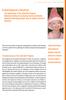 8. A U D I O L O G I C A L E V A L U A T I O N 8.Audiological Evaluation The external ear of the child with Progeria Behavioral testing for assessing hearing thresholds Objective electrophysiologic tests
Pediatric Hearing Assessment
 Pediatric Hearing Assessment Stanton Jones Key Points This chapter outlines the methods of hearing assessment that are appropriate for children from birth to adolescence. The importance of timely referral
DAILY BIOLOGIC CHECK OF AUDIOMETERS
 DAILY BIOLOGIC CHECK OF AUDIOMETERS An audiometer must be checked before each day of use or if a problem is suspected with the equipment during use. After the audiometer is turned on, the operator should
Section 4. Hearing loss and hearing tests
 Section 4 Hearing loss and hearing tests How we hear Outer Ear Middle Ear Inner Ear 4. 7. 8. 1. 3. 6. 2. 5. 1. 2. 3. 4. 5. 6. 7. 8. Ear canal Ear drum Middle ear cavity Middle ear bones the malleus, incus,
6Gx13-5D-1.021. Welfare SCHOOL HEALTH SERVICES PROGRAM
 Welfare SCHOOL HEALTH SERVICES PROGRAM The Florida School Health Services Act of 1974 authorized the development and implementation of the School Health Services Plan which is a joint responsibility of
REGULATIONS FOR THE DEGREE OF MASTER OF SCIENCE IN AUDIOLOGY (MSc[Audiology])
![REGULATIONS FOR THE DEGREE OF MASTER OF SCIENCE IN AUDIOLOGY (MSc[Audiology])](/thumbs/27/10327872.jpg "REGULATIONS FOR THE DEGREE OF MASTER OF SCIENCE IN AUDIOLOGY (MSc[Audiology])") 224 REGULATIONS FOR THE DEGREE OF MASTER OF SCIENCE IN AUDIOLOGY (MSc[Audiology]) (See also General Regulations) Any publication based on work approved for a higher degree should contain a reference to
224 REGULATIONS FOR THE DEGREE OF MASTER OF SCIENCE IN AUDIOLOGY (MSc[Audiology]) (See also General Regulations) Any publication based on work approved for a higher degree should contain a reference to
PURE TONE AUDIOMETRY Andrew P. McGrath, AuD
 PURE TONE AUDIOMETRY Andrew P. McGrath, AuD Pure tone audiometry is the standard behavioral assessment of an individual s hearing. The results of pure tone audiometry are recorded on a chart or form called
Paediatric Hearing Assessment
 Information for parents Paediatric Hearing Assessment Hearing assessment of infants is limited by their ability to respond to sounds. This is determined by both the development of the hearing system and
Infant hearing screening will not hurt your baby, and will only take between 5 and 20 minutes. Ideally it is done whilst baby is asleep or settled.
 Early diagnosis of hearing loss will make a difference to your baby s life. Significant hearing loss is the most common condition present at birth. In the private sector, 3 in every 1000 babies are born
CALIFORNIA CHILDREN S SERVICES MANUAL OF PROCEDURES 3.42 STANDARDS FOR INFANT HEARING SCREENING SERVICES
 3.42 STANDARDS FOR 3.42.1 INPATIENT INFANT HEARING SCREENING PROVIDER A. Definition An Inpatient Infant Hearing Screening Provider shall be a general acute care hospital with licensed perinatal services
Hearing Aids - Adult HEARING AIDS - ADULT HS-159. Policy Number: HS-159. Original Effective Date: 3/18/2010. Revised Date(s): 3/18/2011; 3/1/2012
 Harmony Behavioral Health, Inc. Harmony Behavioral Health of Florida, Inc. Harmony Health Plan of Illinois, Inc. HealthEase of Florida, Inc. Ohana Health Plan, a plan offered by WellCare Health Insurance
Hearing Loss in Geriatric Primary Care Mary Ann Forciea MD Josh Uy MD
 Hearing Loss in Geriatric Primary Care Mary Ann Forciea MD Josh Uy MD Q: In my office practice, I screen for hearing loss with A Level of difficulty in office conversation Questionnaire Hand held hldaudiometer
NEW YORK STATE MEDICAID PROGRAM HEARING AID/AUDIOLOGY MANUAL
 NEW YORK STATE MEDICAID PROGRAM HEARING AID/AUDIOLOGY MANUAL POLICY GUIDELINES Table of Contents SECTION I - REQUIREMENTS FOR PARTICIPATION IN MEDICAID...2 SERVICES PROVIDED TO PATIENTS UNDER 21 YEARS
The Role of the Educational Audiologist 2014. Introduction:
 The Role of the Educational Audiologist 2014. Introduction: As the current CHAIR of the BAEA I felt that it was time for the Role of the Educational Audiologist to be updated. There has been a period of
10/23/09 NewProgram-AuD-2009
 AUDIOLOGY Type of program you would like to see: Describe. We are proposing a clinical doctorate program in audiology that meets the 2007 certification standards of both the American Speech-Language and
Kansas Statutes for School Health Services
 Kansas Statutes for School Health Services Dental Screening 72-5201. Annual free dental inspection; exceptions. The boards of education of cities of the first and second class and school boards of school
PROFESSIONAL BOARD FOR SPEECH, LANGUAGE AND HEARING PROFESSIONS STANDARDS OF PRACTICE IN AUDIOLOGY
 The Health Professions Council of South Africa PROFESSIONAL BOARD FOR SPEECH, LANGUAGE AND HEARING PROFESSIONS STANDARDS OF PRACTICE IN AUDIOLOGY December 2002 The following are considered to be standard
62 Hearing Impaired MI-SG-FLD062-02
 62 Hearing Impaired MI-SG-FLD062-02 TABLE OF CONTENTS PART 1: General Information About the MTTC Program and Test Preparation OVERVIEW OF THE TESTING PROGRAM... 1-1 Contact Information Test Development
EXECUTIVE SUMMARY OF JOINT COMMITTEE ON INFANT HEARING YEAR 2007 POSITION STATEMENT. Intervention Programs
 EXECUTIVE SUMMARY OF JOINT COMMITTEE ON INFANT HEARING YEAR 2007 POSITION STATEMENT Principles and Guidelines for Early Hearing Detection and Intervention Programs The Joint Committee on Infant Hearing
Audiology (0340) Test at a Glance. About this test. Test Guide Available. See Inside Back Cover. Test Code 0340
 Audiology (0340) Test Guide Available See Inside Back Cover Test at a Glance Test Name Audiology Test Code 0340 Time 2 hours Number of Questions 150 Format Multiple-choice questions Approximate Approximate
Education Adjustment Program (EAP) Handbook
 Education Adjustment Program (EAP) Handbook Current as at September 2015 The State of Queensland (2015) This document is licensed under CC-BY 4.0, with the exception of the government coat of arms, logos
S-822. Noise and Hearing Conservation RISK MANAGEMENT
 RISK MANAGEMENT Noise and Hearing Conservation Resources and information for developing Patient handling programs in health care Employers with workplaces that have excessive levels of noise need to implement
Chapter 41 Speech-Language Pathology and Audiology Licensing Act
 Chapter 41 Speech-Language Pathology and Audiology Licensing Act 58-41-1 Title of chapter. This chapter is known as the "Speech-language Pathology and Audiology Licensing Act." 58-41-2 Definitions. In
Implantable Bone Conduction Clinical Coverage Policy No: 1A-36 Hearing Aids (BAHA) Amended Date: October 1, 2015.
 Implantable Bone Conduction Clinical Coverage Policy No: 1A-36 Table of Contents 1.0 Description of the Procedure, Product, or Service... 1 1.1 Conductive Hearing Loss... 1 1.2 Sensorineural Hearing Loss...
Guide for families of infants and children with hearing loss
 With early detection, Early Intervention can begin! Guide for families of infants and children with hearing loss Birth to 3 2008 Cover photograph Geneva Marie Durgin was born January 20, 2007. She lives
Audio Examination. Place of Exam:
 Audio Examination Name: Date of Exam: SSN: C-number: Place of Exam: The Handbook of Standard Procedures and Best Practices for Audiology Compensation and Pension Exams is available online. ( This is a
GUIDELINES FOR THE SCHOOL HEARING SCREENING PROGRAM FOR PENNSYLVANIA S SCHOOL AGE POPULATION
 08/2011- Under Review GUIDELINES FOR THE SCHOOL HEARING SCREENING PROGRAM FOR PENNSYLVANIA S SCHOOL AGE POPULATION ACKNOWLEDGEMENTS The Department of Health, Division of School Health appreciates the
Audiologist and Hearing Aid Dispenser. Provider Manual
 Audiologist and Hearing Aid Provider Manual Provider 1 TABLE OF CONTENTS Chapter I. General Program Policies Chapter II. Member Eligibility Chapter IV. Billing Iowa Medicaid Appendix III. Provider-Specific
DIAGNOSTIC TESTING GUIDELINES for Audiology
 DIAGNOSTIC TESTING GUIDELINES for Audiology In 1999, the Illinois legislature passed the Hearing Screening for Newborns Act. By December 31, 2002, hospitals delivering babies were required to provide hearing
CHAPTER 30. MEDICAL PROVIDERS-FEE FOR SERVICE SUBCHAPTER 5. INDIVIDUAL PROVIDERS AND SPECIALTIES PART 103
 CHAPTER 30. MEDICAL PROVIDERS-FEE FOR SERVICE SUBCHAPTER 5. INDIVIDUAL PROVIDERS AND SPECIALTIES PART 103. QUALIFIED SCHOOLS AS PROVIDERS OF HEALTH RELATED SERVICES 317:30-5-1023. Coverage by category
A Guide to Otoacoustic Emissions (OAEs) for Physicians
 A Guide to Otoacoustic Emissions (OAEs) for Physicians Introduction Hearing loss is not uncommon in children and adults. According to recent estimates, 31.5 million people in the United States report difficulty
Scope of Practice in Audiology
 Ad Hoc Committee on in Audiology Reference this material as: American Speech-Language-Hearing Association. (2004). in Audiology []. Available from www.asha.org/policy. Index terms: scope of practice doi:10.1044/policy.sp2004-00192
KANSAS MEDICAL ASSISTANCE PROGRAM PROVIDER MANUAL. Audiology
 KANSAS MEDICAL ASSISTANCE PROGRAM PROVIDER MANUAL Audiology PART II Introduction Section BILLING INSTRUCTIONS Page 7000 Audiology Billing Instructions............... 7-1 Submission of Claim................
Wisconsin Department of Health & Family Services Division of Disability and Elder Services Bureau of Aging & Long Term Care Resources
 Waiver Wise Technical Assistance for the Community Options Program Waiver COP-W Wisconsin Department of Health & Family Services Division of Disability and Elder Services Bureau of Aging & Long Term Care
PART I DEPARTMENT OF PERSONNEL SERVICES 6.347 STATE OF HAWAII 6.348... 6.349 6.350 Class Specification for the SPEECH PATHOLOGY SERIES
 PART I DEPARTMENT OF PERSONNEL SERVICES 6.347 STATE OF HAWAII 6.348............................. 6.349 6.350 Class Specification for the SPEECH PATHOLOGY SERIES This series includes all classes of positions
My child has a hearing loss
 My child has a hearing loss A guide for parents Content You are not alone 3 Hearing impairment 5 Methods of testing hearing 6 Audiogram 7 Types and causes of hearing loss 8 Degree of hearing loss 10 Where
Hearing Tests for Children with Multiple or Developmental Disabilities by Susan Agrawal
 www.complexchild.com Hearing Tests for Children with Multiple or Developmental Disabilities by Susan Agrawal Hearing impairment is a common problem in children with developmental disabilities or who have
Your Hearing ILLUMINATED
 Your Hearing ILLUMINATED INFORMATION FROM YOUR HEARING CARE PROFESSIONAL REDISCOVER your hearing and reconnect 1 with the important things you might have been missing. Your sense of hearing is a vital
Guidance on professional practice for Hearing Aid Audiologists
 Guidance on professional practice for Hearing Aid Audiologists Assuring High Quality Professional Hearing Care Introduction This booklet is intended to be guidance on good professional practices for Registered
Byron's Hudson Valley Hearing Aid Centers Kingston/Lake Katrine 845-336-0108 Poughkeepsie 845-485-0168 Your hearing Journey
 Your hearing Journey Don't miss out on the joys of life, your hearing is our concern. Trust our experts to enhance your quality of life. Ask Yourself: Do you have difficulty following a conversation in
Dr. Abdel Aziz Hussein Lecturer of Physiology Mansoura Faculty of Medicine
 Physiological Basis of Hearing Tests By Dr. Abdel Aziz Hussein Lecturer of Physiology Mansoura Faculty of Medicine Introduction Def: Hearing is the ability to perceive certain pressure vibrations in the
Learners Who are Deaf or Hard of Hearing Kalie Carlisle, Lauren Nash, and Allison Gallahan
 Learners Who are Deaf or Hard of Hearing Kalie Carlisle, Lauren Nash, and Allison Gallahan Definition Deaf A deaf person is one whose hearing disability precludes successful processing of linguistic information
Hearing Devices Policy and Administration Manual
 Hearing Devices Policy and Administration Manual Assistive Devices Program, Ministry of Health and Long-Term Care Table of Amendments This page will list all substantive changes to policies and procedures
Noise: Impact on Hearing; Regulation
 Noise: Impact on Hearing; Regulation EOH 466A Fall 2008 Mechanism of Hearing Sound waves collected, focused by the outer ear. Humans have little control over muscles in outer ear. Many animals have the
Ototoxicity Monitoring
 Ototoxicity Monitoring Aaron Jones, Au.D., M.S. Doctor of Audiology May 12, 2011 Agenda Background Antineoplastic ototoxicity monitoring Case study Company overview Gross Anatomy of the Ear Image: http://en.wikipedia.org/wiki/file:anatomy_of_the_human_ear.svg
Stanford University. Hearing Conservation Program
 Stanford University Hearing Conservation Program April 2006 Stanford University HEARING CONSERVATION PROGRAM CONTENTS PAGE 1.0 INTRODUCTION...1 1.1 Program Description...1 1.2 Scope...1 2.0 DEFINITIONS
CHAPTER 11 NOISE AND HEARING CONSERVATION PROGRAM
 CHAPTER 11 NOISE AND HEARING CONSERVATION PROGRAM INTRODUCTION This program contains information on the effects, evaluation, and control of noise. For assistance in evaluating a noise problem, contact
Listening Therapy for Central Auditory Processing Disorders
 Listening Therapy for Central Auditory Processing Disorders Susan Eichert, AuD, CCC A March 21, 2015 Presentation Abstract This presentation will review the need for deficit-specific treatment of central
SEMI-IMPLANTABLE AND FULLY IMPLANTABLE MIDDLE EAR HEARING AIDS
 Coverage for services, procedures, medical devices and drugs are dependent upon benefit eligibility as outlined in the member's specific benefit plan. This Medical Coverage Guideline must be read in its
DISTRICT OF COLUMBIA MUNICIPAL REGULATIONS for SPEECH- LANGUAGE PATHOLOGY
 DISTRICT OF COLUMBIA MUNICIPAL REGULATIONS for SPEECH- LANGUAGE PATHOLOGY 1 CHAPTER 79 SPEECH-LANGUAGE PATHOLOGY Sections 7900 General Provisions 7901 Term of License 7902 Educational Requirements 7903
SPECIAL EDUCATION AND RELATED SERVICES
 i SPECIAL EDUCATION AND RELATED SERVICES Updated May 2008 i It is the policy of the South Dakota Department of Education, Office of Educational Services and Supports to provide services to all persons
NEW HAMPSHIRE CODE OF ADMINISTRATIVE RULES. PART He-M 1301 MEDICAL ASSISTANCE SERVICES PROVIDED BY EDUCATION AGENCIES
 CHAPTER He-M 1300 SPECIALIZED SERVICES PART He-M 1301 MEDICAL ASSISTANCE SERVICES PROVIDED BY EDUCATION AGENCIES Statutory Authority: RSA 186-C:27; I-II He-M 1301.01 Purpose. The purpose of these rules
What are the causes of presbycusis? What can be done? How can I communicate with someone who has a hearing loss? How does hearing work?
 This e-book will answer the following questions: What is presbycusis? What are the symptoms of presbycusis? What are the causes of presbycusis? What can be done? How can I communicate with someone who
Lock in Your Team: The Role of the School Nurse in Special Education
 Lock in Your Team: The Role of the School Nurse in Special Education 2009 National Alliance for Medicaid in Education Thursday, October 15, 10:45 AM 12:15 PM Derby Janet Lowe, LSN, CPN, MA Lock In : To
MODEL SUPERBILL for AUDIOLOGY
 MODEL SUPERBILL for AUDIOLOGY The following is a model of a superbill which could be used by an audiology practice when billing private health plans. This sample is not meant to dictate which services
Instructions for the use of E-A-RTONE 3A. Insert Earphones. Revised 1997 per ANSI S3.6-1996 and ISO 389-2:1994 12/99
 Instructions for the use of E-A-RTONE 3A Insert Earphones Revised 1997 per ANSI S3.6-1996 and ISO 389-2:1994 12/99 INTRODUCTION Congratulations on the purchase of your new E-A-RTONE 3A Insert Earphones.
Insurance Tips. Obtaining Services
 Insurance Tips The information below is designed to provide an overview of how to obtain insurance coverage for speech-language pathology (speech therapy) and audiology services. The American Speech-Language-Hearing
The Disability Tax Credit Certificate Tip sheet for Audiologists
 The Disability Tax Credit Certificate Tip sheet for Audiologists Developed by: The Canadian Academy of Audiology (CAA) & Speech- Language and Audiology Canada (SAC) Purpose of This Document The Canada
STATE OF NEBRASKA STATUTES RELATING TO AUDIOLOGY AND SPEECH-LANGUAGE PATHOLOGY PRACTICE ACT
 2009 STATE OF NEBRASKA STATUTES RELATING TO AUDIOLOGY AND SPEECH-LANGUAGE PATHOLOGY PRACTICE ACT Department of Health and Human Services Division of Public Health Licensure Unit 301 Centennial Mall South,
Program No. 7.2.1. Section Heading Page # 6.0 Monitoring 4. 7.0 Training 5. 8.0 Audiometric Testing 5. 9.0 Noise Exposure Control 6
 ENVIRONMENTAL HEALTH AND SAFETY PROGRAM MANUAL Title 1.0 INTRODUCTION As part of the Weill Cornell Medical College (WCMC) Environmental Health and Safety (EHS) Manual, this recognizes the existence of
Classroom Audio Technology has been used effectively to
 The Benefits of Classroom Audio Technology White Paper by Bruce Bebb, Marketing Communications Director, Lightspeed Technologies Classroom Audio Technology has been used effectively to enhance listening
Environmental Health and Safety* 2809 Daley Drive * Ames, Iowa 50011-3660 * (515) 294-5359 * www.ehs.iastate.edu
 Environmental Health and Safety* 2809 Daley Drive * Ames, Iowa 50011-3660 * (515) 294-5359 * www.ehs.iastate.edu Revision 2 October 2008 University Nondiscrimination Statement Iowa State University does
OAE hearing screening at your fingertips OAE+
 OAE hearing screening at your fingertips OAE+ Periodic hearing screening leads to early detection of hearing loss 6-7 per 1000 children will be identified with permanent hearing loss in early childhood.
Hearing Conservation Program
 Hearing Conservation Program Document Number: Effective Date: 2/2012 Revision Date: 4/2013 1.0 Purpose and Applicability 1.1 The purpose of this Hearing Conservation Program is to provide for the protection
Audiology Services. Carolyn Dando Audiology Services Manager South Warwickshire NHS
 Audiology Services Carolyn Dando Audiology Services Manager South Warwickshire NHS What are we going to cover today? General overview of the ear Hearing loss Hearing assessments, results Hearing aids Paediatric