
Bumble! Let s get ready to. A simple, activity-packed wildlife survey for Key Stage 2 teachers
|
|
|
- Frank Malone
- 10 years ago
- Views:
Transcription
1 Let s get ready to Bumble! A simple, activity-packed wildlife survey for Key Stage 2 teachers Includes Bumblebee survey Fun, hands-on learning activities Free seeds Prize draw to win a bumblebee box and flower garden


2 This pack was created by Caerphilly County Borough Council s Countryside and Landscape Services. With thanks to the Bumblebee Conservation Trust and Cathy Edmunds, Cwmfelinfach School.

3 Let s get ready to Bumble Pack The aim of the pack is to give children a exciting, opportunity to help ecologists find out what bumblebees are living in the County Borough in order to help stop the recent decline in their numbers. Contents Survey 1 hour simple observing and recording bumblebees found around your school and local area Bumblebee facts Activities Build a Bumblebee Bumblebee drive Body part functions Life cycle role-play Flower attraction experiment Bees in my shopping bag Make a home and garden for bumblebees The bumblebee pack has 7 simple and fun activities to help key stage 2 teachers deliver the science curriculum, covering anatomy, life-cycles, and interrelations. The activities are there for you to use as you choose. We would really like you to help by carrying out the simple survey (page 6 and 7) and send your survey results to the CCBC ecologists at the address below. Margaret Iles, Ecologist, Countryside & Landscape Services, Caerphilly County Borough Council Offices, Pontllanfraith NP12 2YW Your school will then go into a prize draw where there s a chance of winning a bumblebee nest box and flower garden installed by the Countryside Ranger Service. Resources Background Bumblebees are gentle, fascinating creatures being quintessential to our summers as they busy themselves pollinating garden flowers. Bumblebees help pollinate our wild flowers too, many of which would be lost without them. Bumblebees are also important to our food production being vital in the pollination of beans and soft fruit. Over the last 70 years 2 species have become extinct and the numbers of bumblebees has plummeted with another 6 species facing extinction. They need are help! 3

4 Bumblebee Facts 1. Bumblebees are furry, as they need to be warm to function. This fur keeps them warm and therefore active on dull days. 2. Bumblebees need to reach 30 degrees centigrade before they can fly. They do this by shivering their flight muscles, which creates heat, until they reach this temperature. It can take up to 15 minutes on cold days. 3. There are three types of bumble bee in a colony, the queen (big, egg layer), the workers (females who collect pollen and nectar, protect the colony, manage the nest, feed the young larvae (babies) and look after the queen. Finally, there are drones (small, males who breed with new queens). 4. Bumblebees only create a tiny amount of honey, just enough to feed their young, so they are not commercially viable like honey bees 5. Bumblebees are not aggressive, don t want to sting and very rarely do. Also, they do not swarm like honey bees 6. Hairs on the back legs create pollen baskets to carry collected pollen. These can be easily seen when observing bumblebees 7. When the drones appear in the late summer the colony tends to fall apart and all the bumblebees disperse. 8. All the workers and drones die before the end of the year and only fertilised queens survive and hibernate. 9. Hibernating queens will produce an antifreeze to top them freezing up in winter. 10. The biggest threat to bumblebees comes from humans and the use of pesticides. For more information visit Bumblebee Conservation Trust Bumblebee Information 4

5 BUMBLEBEE SURVEY Bumblebees are in declining in numbers in Wales mainly due to the loss of their habitat. So we are asking you to help us find out which type are to be found at school or near to school. Choose a warm sunny day to do your survey. Equipment Coloured pencils Survey sheets Clipboard Pencils 1. Give each child a survey sheet (page 6 and 7). Ask the children to carefully colour in the 6 different bumblebees following the number code. This will be their identification sheet. Go over the key identification features of each species with the children (shown on the sheet) before heading out. 2. Go for a walk around the school grounds and local area, looking at flowers (blackberry is a good one to look out for). Look out for any bumblebees visiting the flowers. Bumblebees are very placid and are easy to observe, as they are much too busy collecting pollen to be bothered by people. 3. When you find one look closely to see which of your six pictures it is. Number of stripes and tail colour will help. 4. Make a tick for each one you see in the box next to its picture. 5. If you can, note the flowers that the bumblebee is visiting. 6. Return to the classroom and gather all the records 7. Fill out one survey sheet with your class results and send it to Margaret Iles, Ecologist, Countryside and Landscape Services, Caerphilly County Borough Council Office, Pontllanfraith NP12 2YW. Send it by Sept 30th 2010 to enter a prize draw to win a bumblebee nest box and flower garden installed by the Countryside Ranger Service. 5

6 BUMBLEBEE IDENTIFICATION SHEET Colour in these 6 bumblebee using this code 1 - red 3 - lemon yellow 5 - white 2 - orange 4 - dirty yellow 6 - light brown BUFFTAILED 2 dirty yellow bands Tail dirty white with brown edge Numbers Seen EARLY Small bee 2 yellow bands with orange tail Numbers Seen RED TAILED No stripes Red/orange tail Numbers Seen WHITE TAILED 2 bright lemon yellow stripes pure white tail Numbers Seen GARDEN 3 yellow stripes white tail Numbers Seen COMMON CARDER no stripe light brown all over Numbers Seen 6

7 BUMBLEBEE SURVEY SHEET School:- Name of Student:- Date of survey:- Teacher:- Species Numbers seen Flowers/Plants Buff-tailed Bumblebee Red-Tailed Bumblebee Garden Bumblebee Early Bumblebee White-tailed Bumblebee Common Carder Bumblebee 7

8 Lesson Activities 1. Build a Bumblebee Materials Bumblebee body part card (resource 1) Scissors Coloured pencils Give each child a bumblebee body part sheet Ask the children to colour in the body parts as labelled Cut out the body parts These can be used in Activity 2 (Bumblebee Drive) or Activity 3 (What do body parts do?) 2. Bumblebee Drive Materials Bumblebee parts (See above) Bumblebee drive game guide (resource2) 6 Dice (one per group) The aim of the game is to be the first to build a complete bumblebee. Children sit in groups of 6, with their bumblebee body parts nearby They take it in turns to throw the dice. Each number on the dice refers to a different body part, which is placed in front of them. Children must shake a 6 (abdomen) and 5 (thorax) to start with, before adding other parts. The dice is shaken only once by a child and passed to the next child. The first child to complete their bumblebee shouts Bumble bee! 8

9 3. What are the Body Parts for? Materials Bumblebee body cards Body Part Function cards (resource 3) Straws Children assemble their body parts into a complete bumblebee They cut out the function cards. They write in the name of the body part, which they think corresponds to the description and link it with a straw to that part of to their bumblebee. Abdomen Thorax Head Antennae Legs Wings contains heart, stomach, gut, breathing and reproductive systems contains all the muscles for wings and legs contains the brain, mouth, eyes for smelling for walking, storing pollen and cleaning for flying and air conditioning Discussions Discuss how the function of each part and compare with parts/functions of the human body 4. Lifecycle Role-Play Activity 1 In the classroom, read through the story of the lifecycle of bumblebees. Make sure that the children understand what each word means. You may find it useful to find some pictures on the internet ( has some great pictures you can show). In early spring the big queen bumblebee wakes from hibernation and heads off looking for flowers to get pollen and nectar from. When she finds some flowers, she feeds on the nectar and puts some of the pollen on her back legs in special pollen baskets. She now spends a lot of time looking for a good place to build her nest, usually an old mouse hole. When she has chosen a nest site she makes a small wax pot to store honey, which 9

10 she makes from the nectar and pollen she collected. Next she lays some eggs and incubates them by lying on them and shivering to keep them warm. While she does this she feeds on honey from the honey pot. After 4 days the eggs hatch into legless larvae that feed on the stored pollen. They grow quickly and pupate into worker bees in a few weeks. The worker bees help the queen collect food from flowers, expand the nest, feed and look after the larvae, clean the nest and protect it from predators. By the summer the nest can contain 100 workers. Near the end of summer the queen, lays eggs that will be both workers (females) and drones (males). Some of the female larvae are fed extra food to create new queens as the present queen is getting old. The new males (called drones) and the new queens fly off from the nest. The males try to find new queens from other colonises and mate with them. In early autumn the old queen and the workers abandon the nest and die off. The new queens find a safe warm place to hibernate to see the winter out before waking in spring to start the life cycle again. Discussion Talk about the seasons what makes each one different, how insects need to be warm to function. Explain any new words. Activity 2 Lifecycle Role-play. The role-play may be carried out in the classroom, hall or yard. You will need: 5 chairs (tunnels into pretend nests) 8 big colourful flower shapes 9 paper crowns for the old new queens (resource 4) Chairs are place randomly around the role-play area and 3 of the flowers placed on the floor. The teacher will place more on the floor as throughout the summer. The class is divided into 3 groups of 10 (adjust roles for your class size) and allocated the following roles. 1 x Queen (crown) 2 x Workers 3 x Larvae 2 x New (crown) 2 x Males The teacher stands in the middle of the area and reads the lifecycle script aloud and directs the acting. The children stand to one side and do not join in until they feature in the script. It may be worth doing a trial run first. Ask the worker bees to stand to one side, as they have not been born yet. Tell the queens to pretend to be asleep, hibernating as our story begins at the end of the winter. Now the performance can begin! 10

11 5. Flower Attraction Experiment Background information Bumblebees are vital in the pollination of plants. Plants produce flowers, which attract bumblebees to them by looking colourful, smelling nice and providing a free sugary drink for them called nectar. While the bumblebee is drinking the nectar, the flower covers the bumblebee s body in pollen. When the bumblebee visits another flower this pollen rubs of on the new flower and pollinates it. The flower will then die off and seeds will appear. Some of the seeds are hidden in fruits. Materials 6 different coloured flower cards (resource 5) Cotton wool Scissors Milk Bottle tops Sticky tape A small bottle of sugar water (sugar and water mixed together) Cut out the flowers Cut out the middles of the flowers Place on flat grassy surface, in full sunlight Sit children 1 meter away. Keep still and watch for about 20 minutes Make a note of the number of insects that land on each colour. Discussions What colour did most insects visit, what colour did most insect not visit Ask all the children for their results and then create bar charts. Push the milk bottle tops through so the edge is level with that of the paper flower & tape it Put some cotton wool in the milk bottle top. Carefully, add some sugar water to the cotton wool. Create a chart that can be used to record what insects visit each colour. Take the coloured flowers outside to a place where there might be lot insects 11

12 6. Bumblebee in my Shopping Bag Bees are important pollinators of plants that provide food for us. Choose one of the two activities below to get this over to the children. Activity 1 Bring in a typical shopping bag of groceries using the list below. Take items out one at a time and ask the children if bees have helped in making each product. Discuss how they do this. Activity 2 Ask children to look in their packed lunches. Give them a copy of the list of plants that are pollinated by bees and see if they can find any food items that they think have been made from plants on the list. Discuss how bees have helped in the production of the selected food items. Put a typical shopping bag of goods together chosen from the following list. Plant pollinated by Bumblebee Product Example Plant pollinated by Bumblebee Product Example Kiwi fruit Clovers Milk (feed for cows) Cranberry Juice Lupin Blue berry Muffin Buckwheat Gooseberry Runner beans Currants Blackcurrant drink Broad beans Cherry Dr Peppers Soya beans Tin of Soya milk Pear Aubergine Plum Peppers Apple Cucumber Sandwich Blackberry Tomato Soup Orange Marmalade Squash Lemon Meringue Pie Cotton Shirt Melon Peas Frozen peas Oil seed rape Vegetable oil Pumpkin Sunflowers Margarine Raspberry Jam Peach Celery Coriander Pot of curry Mustard Pot of Strawberry Jam Alfalfa 12

13 Help Bumblebees in Your Grounds Grow the free seeds enclosed with this survey in a sunny bed or container. Below is a list of other plants, which help bumblebees. Why not send this list home and see if the parents can donate some plants from their own gardens. Apple Allium Aquligia Bird foot trefoil Bluebell Borage Bramble Broom Campanula Ceanothus Cherry Chives Clover Comfrey Cotoneaster Escallonia Everlasting Pea Everlasting wallflower Flowering currant Foxglove Geranium Heather Honeysuckle Kidney Vetch Knapweed Lavender Lupin Lungwort Marjoram Meadow cranebill Mint Pear Penstemon Phacilia Plum Purple Loosestrife Pussy willow Raspberries Red campion Red dead nettle Roses Rosemary Sage Sainfoin Salvia Scabious Snap dragons Sunflower Thyme Teasels Thistles Viper bugloss White dead nettle Wisteria Woundwort 13

14 You can buy bumblebee boxes from garden centres and online or you could make your own (see below). They should be sited in a sheltered spot along a linear feature (hedge, fence) and out of direct sunlight. Put in either some dry moss or old hamster bedding which the bumblebees can make a nest in. Bumblebee Nest Site 1 Sink an upturned >20cm diameter flowerpot into the ground. Put a slate/ tile over the drainage holes to keep out rain. Run a 18mm diameter hose or pipe underground to the pot, leaving a prominent entrance. Be sure to make drainage holes in the pipe. Make a chicken-wire cradle for ventilation, and fill with a handful of nesting material (see above). Bumblebee Nest Site 2 Simply dig a cavity in the ground (roughly 15cm deep and 25 cm wide) and cover with a paving slab or piece of thick plywood. Dig channels at the sides to provide entrance holes and ventilation (2cm wide). It should be dry underneath. Try to make the entrance holes as obvious as possible so that the queens can find them. Again, put a handful of nesting material in the cavity, perhaps in a chicken-wire cradle. 14

15 RESOURCE 1 - BUMBLEBEE BODY PARTS 15

16 RESOURCE 2 - BUMBLEBEE DRIVE GUIDE HEAD 2. ANTENNAE 3. THORAX 4. WING 5. LEG 6. ABDOMEN 16

17 RESOURCE 3 - BODY PARTS FUNCTION CARDS Carefully cut out these function cards contains heart, stomach, breathing and reproductive system for smelling for flying and controlling heat in the nest for walking, storing pollen and cleaning body contains muscles for flight and walking contains brain mouth and eyes 17

18 18 RESOURCE 4 - QUEEN BEE CROWN

19 Cut out middle RESOURCE 5 - FLOWER TEMPLATE Cut out middle 19

20 Let s get ready to Bumble! A simple, activity-packed wildlife survey for Key Stage 2 teachers Includes Bumblebee survey Fun, hands-on learning activities Free seeds Prize draw to win a bumblebee box and flower garden

honey bee By Henry Touray
 honey bee By Henry Touray Introduction For my project I have chosen to research Bees. I chose to find out about the bee because bees have been in the news lately. Lots of hives have died out and scientists
Mason bee hosting workshop
 Mason bee hosting workshop Janet Gifford, Instructor Volunteer Technician, Backyard Habitat Certification Program Board Member, Columbia Land Trust Audubon Society of Portland & Columbia Land Trust Drawing
Honey Bee Background Information
 Honey Bee Background Information Honey bees are very important. Honey bees are the strongest link in the chain between the people who grow the food and the people who eat the food. Without honey bee pollination,
Plant Parts and Their Function
 Science Unit: Lesson 6: Plants Plant Parts and Their Function School year: 2004/2005 Developed for: Developed by: Grade level: Duration of lesson: Queen Alexandra Elementary School, Vancouver School District
How to make a Solitary Bee Box
 How to make a Solitary Bee Box **Note: The following instructions include the use of tools that may be dangerous. Ensure there is adult supervision with children. Time: 1 hour People: 1-2+ Materials: Wood
Flower Model: Teacher Instructions Sepals Anther Stamens (male) Filament Stigma Pistil Style (female) Ovary Petals sepals petals stamens pistil
 Flower Model: Teacher Instructions In order to better understand the reproductive cycle of a flower, take a look at some flowers and note the male and female parts. Most flowers are different; some have
Promoting Pollination Farming for Native Bees
 Promoting Pollination Farming for Native Bees Overview Pollination, the transfer of pollen grains to fertilize the ovules of flowers to produce seeds and fruits, is essential to agriculture and natural
2016 Kanabec County Fair Page 1
 DIVISION - O PANTRY STORES AND COOKING Red Star Yeast will provide RED STAR merchandise items to be given as awards this year. To be eligible to win the Red Star Yeast prizes, contestants must use Red
Cycles of life. You will be visiting the museum to see some baby animals and their parents. Here are some of their stories.
 Cycles of life Some animals die of old age, some die of disease, some are killed and eaten by other animals. But the world does not run out of animals because more are being born or hatched all the time.
How To Understand The Features And Behaviours Of Animals And Plants
 Childrenʼs Farmyard and Animal Nursery Teacher Resource Pack Curriculum linked worksheets and activities SACSA Band: Early Years Learning Area: Science Strand: Life systems Key Idea Children investigate
Adult portion size examples - approximately equivalent to 80g in weight
 FRUIT - Adult portion size = 80g Fruit (Always check labels for additives) Adult portion size examples - approximately equivalent to 80g in weight (As eaten, edible portion, drained if canned) Apple: fresh
Raspberry Pollinators and Visitors: Focus on Bees
 Raspberry Pollinators and Visitors: Focus on Bees Introduction Raspberry flowers are visited by many insects and pollinators in Manitoba, including native and managed bees. Bees rely on flowers for nectar
o d Propagation and Moon Planting Fact Sheet
 o d Propagation and Moon Planting Fact Sheet Propagation Propagation is actually quite simple and requires very little effort on your part. Most seeds are ready to go, complete with all the nutrients and
Fruits, seeds and their dispersal
 Introducing fruits, seeds and their dispersal After fertilisation, seeds will form. It is important for the seeds to be spread (dispersed) away from each other and from the parent plant. This helps to
Wild About... Frogs and Frogspawn
 a Wild About... Rutland County Council Nature notes Frogs belong to a group of animals called amphibians, which also includes newts and toads. Amphibians live both on land and in water. Water is needed
Contact us: Beehavin Apiary 225 Douglas Pike Smithfield, RI 02917. (401) 885-5172 [email protected]
 Contact us: Beehavin Apiary 225 Douglas Pike Smithfield, RI 02917 (401) 885-5172 [email protected] ! Beekeepers who work towards goal typically have the best success! First Year Beekeeper Goals! Learn
Bountiful Beetles Lesson Plan
 Bountiful Beetles Lesson Plan Lesson Title: Bountiful Beetles Objectives: Students will identify the life cycle, anatomy and other characteristics of beetles. Students will conduct a simple research using
We have put together the following guidance on the different kinds of pests that we treat.
 Pest Control Guidance Document: We have put together the following guidance on the different kinds of pests that we treat. If you need advice or help with pests, please contact us on 01942 404364. Contents
The H-Map: An Alternative to the Venn Diagram
 The H-Map: An Alternative to the Venn Diagram H Fossil Fuels 1. 2. 3. 4. 5. Both? 1. 2. 3. Solar Power 1. 2. 3. 4. 5. Venn Diagram Fossil Fuels Solar Energy Source: Holt Elements of Literature (2005) Word
ELEMENTARY-LEVEL SCIENCE TEST
 4THE UNIVERSITY OF THE STATE OF NEW YORK SPRING 2008 GRADE 4 ELEMENTARY-LEVEL SCIENCE TEST WRITTEN TEST Student Name School Name Print your name and the name of your school on the lines above. The test
Virginia Gardener http://www.hort.vt.edu/envirohort
 The Virginia Gardener http://www.hort.vt.edu/envirohort Name Help Sheets: Things Plants Need There are certain things that every living thing needs in order to live and grow. Just like you, plants need
BUTTERFLY SCIENCE. 9 Science Activities for PreK, K & 1-3. 1 800 698 4438 EarthsBirthday.org
 BUTTERFLY SCIENCE 9 Science Activities for PreK, K & 1-3 1 800 698 4438 EarthsBirthday.org CONTENTS Butterfly Life Cycle Song 4 Changing Butterfly Dance 5 What Is a Caterpillar? 6 Caterpillar & Pupa Timelines
3MNN Behavioral Outcomes Eat fruits and veggies, etc. SNAP-Education Nutrition Messages Eat fruits and veggies as healthy snacks, MyPyramid servings
 DRAFT 1 Lesson Plan Title: Phenomenal Plant Parts Grade Level: 3 Content Area: Science Setting: School garden, or classroom Instructional Time: 60 to 90 minutes Grade Level Expectations: Life Science L.OL.E3:
How Insects Feed from Flowers
 The Pollinator Garden: www.foxleas.com How Insects Feed from Flowers The main insect groupings that include species that use flowers as a food source are: Butterflies and Moths (Lepidoptera), Bees and
Insect identification sheet
 information leaflet Insect identification sheet To enable you to identify the insect you have in your home, we have provided some identification sheets. These depict the most common pest species that you
The Bug Hotel. Clouded yellow butterfly
 The Bug Hotel Clouded yellow butterfly TABLE OF CONTENTS PAGE CREATE CREATURE COMFORT 2 SO WHAT WOULD YOU NEED TO BUILD A BUG HOTEL? 2 WHERE TO SITE YOUR BUG HOTEL 2 MATERIALS 3 BUT WHERE WOULD YOU GET
4THE UNIVERSITY OF THE STATE OF NEW YORK
 4THE UNIVERSITY OF THE STATE OF NEW YORK GRADE 4 ELEMENTARY-LEVEL SCIENCE TEST WRITTEN TEST JUNE 6, 2011 Student Name School Name Print your name and the name of your school on the lines above. The test
INTERMEDIATE BEEKEEPING WEEK 1 CAROL COTTRILL
 INTERMEDIATE BEEKEEPING WEEK 1 CAROL COTTRILL BEE BIOLOGY WHY IT MATTERS There is a spectrum there are different ways to try to do things. I once thought you could do it all by a cookbook, and now I think
SPECIES DESCRIPTION Picture
 SPECIES DESCRIPTION Picture German Cockroach Cockroach egg case & nymphs 12-15mm (Adult Stage)Mid to dark brown body. Lighter area with 2 dark bars behind head. Wings. Very long antennae. Young are smaller
YOUR FARM. AT WORK. CORPORATE WELLNESS PROGRAMS
 YOUR FARM. AT WORK. CORPORATE WELLNESS PROGRAMS Join your coworkers outside to help plant, maintain, and harvest organic produce from your company s own urban farm. Green City Growers corporate wellness
Everything You Wanted to Know About Spiders!
 Everything You Wanted to Know About Spiders! How do spiders fit into the Animal Kingdom? Spiders are arthropods, a group of invertebrates containing insects, crustaceans, millipedes, centipedes, arachnids
The Dance Lesson. A good dance lesson should contain some or all of the following:-
 The Dance Lesson The Primary School Curriculum says:- Dance in education involves the child in creating, performing and appreciating movement as a means of expression and communication. Dance differs from
Common Backyard Birds of Alabama
 Common Backyard Birds of Alabama Alabama Ornithological Society (AOS) state list includes 420 species: 158 species regularly breed in Alabama 174 species regularly winter 80 species migrate through Alabama
What You And Your Family Can Do About Asthma
 GLOBAL INITIATIVE FOR ASTHMA What You And Your Family Can Do About Asthma BASED ON THE GLOBAL STRATEGY FOR ASTHMA MANAGEMENT AND PREVENTION NHLBI/WHO WORKSHOP REPORT NATIONAL INSTITUTES OF HEALTH NATIONAL
Fun ways to group students
 Fun ways to group students Tips for dividing into groups. Picture Cards: Hand out cards with images on such as strawberries, blueberries, blackberries and other such groups of things. Then get them to
The Simple Truth: We Can t Live Without Them
 The Great Pollinator Partnership poster has been reproduced as part of a cooperative effort of the North American Pollinator Protection Campaign to raise awareness of the importance of pollinators to our
Class Insecta - The insects
 A Introduction 1. Very species rich 2. Characteristics a. 3 pairs of legs b. 2 pairs of wings (most) except flies (1 pair of wings - Diptera) B. Distribution 1. All habitats except saltwater - replaced
WHAT IS A HEALTHY LIFESTYLE?
 TEACHER NOTES WHAT IS A HEALTHY LIFESTYLE? A HEALTHY LIFESTYLE Indicators Reads information about a healthy lifestyle. Critically analyzes examples of lifestyles and suggests improvements. Teacher information
2 nd Grade Science Unit B: Life Sciences Chapter 3: Plants and Animals in Their Environment Lesson 1: How are plants and animals like their parents?
 2 nd Grade Science Unit B: Life Sciences Chapter 3: Plants and Animals in Their Environment Lesson 1: How are plants and animals like their parents? offspring Offspring are young plants and animals. Offspring
Audit, plan and design school garden & grounds
 garden & grounds Time of Year This can be carried out at any time of the year (preferably Sept to Feb). Cross Curriculum Relevance SESE: Maths: Literacy: Art: SPHE: Informal Curriculum: living things,
Scientific Inquiry: What is inquiry-based learning?
 Scientific Inquiry: What is inquiry-based learning? The National Science Education Standards explain the importance of inquiry-based learning: Students at all grade levels and in every domain of science
Second Grade Insects Assessment
 Second Grade Insects Assessment 1a. The stiff shell that covers an insect s body is called an: a. outer shell b. exoskeleton 1b. The stiff shell that covers and insect s body is called an: a. outer shell
Life Cycle - Butterflies & Moths
 Life Cycle - Butterflies & Moths butterfly goes through four stages in its life. All animals A change as they grow and mature but butterflies and moths undergo the biggest change of all. Butterfly Pupa
Materials For each student (or group of students): Caterpillar data sheets Pencil For teacher: Chart paper Markers
 Insects! Concepts Life cycles and metamorphosis are common to all insects. Butterflies, like most insects, go through complete metamorphosis involving four distinct phases egg, caterpillar (larva), chrysalis
LARGE GROUP PRESENTATION: PRESENTER S NOTES
 LARGE GROUP PRESENTATION: PRESENTER S NOTES Introduce yourself. Welcome! We are so glad you are here to learn about fruits and vegetables. Icebreaker Handout: Fruit or Vegetable: Parts of Many Words Read
Diet for Oral Surgery/Wired Jaw
 Diet for Oral Surgery/Wired Jaw After oral surgery no chewing is allowed for a period of 4-8 weeks. During this time you will need a blenderized or liquid diet. This pamphlet will help you to get adequate
GREAT 5 A DAY BINGO GREAT. www.greatgrubclub.com GREAT. www.greatgrubclub.com RUB LUB. The
 How to play 1) E ach player gets a bingo card, apart from the caller who gets the base board. 2) ll the food cards are put in a bag. caller pulls out one card at a time, reads it out and places the card
www.irishseedsavers.ie Natural surface water on earth includes lakes, ponds, streams, rivers, estuaries, seas and oceans.
 www.irishseedsavers.ie POND LIFE FACT SHEET Natural surface water on earth includes lakes, ponds, streams, rivers, estuaries, seas and oceans. A pond is a small body of fresh water shallow enough for sunlight
Let s Learn About Plants and Animals!
 Grade Two Pre-Visit Activities Let s Learn About Plants and Animals! i. Teacher Introduction ii. Standards Addressed iii. Pre-Visit Activities 1. Identifying Parts of a Plant 2. Plant a Seed 3. Life Cycles
The Wonderful World of Wetlands BINGO
 The Wonderful World of Wetlands BINGO Time: 10-15 minutes to create Bingo board; 5-10 minutes to play one-round of Bingo Scituate Reservoir Watershed Education Program 17 Smith Ave Greenville, RI 02828
Totally Termites (Grades 3 5)
 Lesson Overview Students will explore the world of termites. This lesson includes a close-up look at termite specimens, special termite adaptations and insect anatomy. Students will also learn about property
9900 194 Sienna. 9900 106 Earth. 9900 41 Chocolate. 9900 211 Citrine. 9900 130 Sunshine. 9900 131 Lemon. 9900 23 30 s Yellow. 9900 148 Soft Yellow
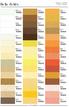 Bella Solids 100% Cotton 44-45 Wide Top 50 15 Yds D/R 9900 98 White Bleached (FCBAG 56995Z 9900 68 Fig Tree Wheat (FCBAG 02745Z 9900 152 Cheddar (FCBAG 77575W 9900 97 Bleached White PFD (FCBAG 56994S 9900
3D Pumpkins Illinois Ag in the Classroom. 3D Pumpkins Illinois Ag in the Classroom
 Materials orange construction paper 2 paper fasteners for each pumpkin green construction paper for vines paper punch scissors 3D Pumpkins Illinois Ag in the Classroom Instructions Cut 3 strips about 1
Chef s recommendation for two
 Chef s recommendation for two Chilled vegetable soup Pickled tomato / Dried tomato skin / Powdered vegetables Additional ingredients used in this dish: cider vinegar, salt, beet sugar, tomatoes, bell peppers,
Unit 3 Lesson 5: People Need Plants
 Focus Areas: Characteristics of Plants; Science Focus Skills: observing, identifying, drawing conclusions Dedicated to Reducing Pesticides Objectives To identify parts of a plant To recognize the importance
Sunflowers. Name. Level and grade. PrimaryTools.co.uk
 Sunflowers Name Score Level and grade 2012 Contents Billy s Sunflower... 3 A story by Nicola Moon So Many Sunflowers!... 14 Vincent Van Gogh... 15 Information about the artist Making a Paper Sunflower...
Parts of a Flower and Pollination
 Science Unit: Lesson 3: Soils, Plants, and First Nations Parts of a Flower and Pollination School year: 2007/2008 Developed for: Britannia Elementary School, Vancouver School District Developed by: Catriona
Florida Beekeeping Management Calendar 1
 ENY156 Florida Beekeeping Management Calendar 1 J.D. Ellis and C.M. Zettel Nalen 2 Florida's warm temperatures are very conducive to beekeeping; however, the climate, ecotype, and floral resources differ
Student worksheet. Bugs. Complete metamorphosis Dung Beetle lifecycle. Incomplete metamorphosis Leafhopper lifecycle
 Complete metamorphosis Dung Beetle lifecycle Incomplete metamorphosis Leafhopper lifecycle Museum Victoria Bugs Classroom Activities Section 3 6 A Diving Beetle s story Museum Victoria Bugs Classroom Activities
Learning Prompt 3 - Mr McGee and the Biting Flea
 Learning Prompt 3 - Mr McGee and the Biting Flea In this learning prompt, we re going to look at lists and routines, using the story of Belinda the Cow to show children how breaking a routine is the key
Virginia Gardener http://www.hort.vt.edu/envirohort
 The Virginia Gardener http://www.hort.vt.edu/envirohort Name Help Sheets: Seeds What Is a Seed? A seed is a very young plant that is in the dormant, or resting stage. It is very much alive. There are three
The Cricket Lab. Introduction
 The Cricket Lab Introduction Humans have always been fascinated by crickets, mostly because crickets sing. Movie producers add their songs to sound tracks. The Chinese have used them for medicinal purposes,
Science of Life Explorations
 Science of Life Explorations Celebrate the Growing Year: The Farmer s Year A Farmer s Year While you are in school or on a vacation, farmers are working hard to provide us with the foods we eat and the
Learning English with Bobby 1 Agricola-kustannus
 An Apple Story A red apple is for the mouse. A green apple is for the bird. l like green apples. Thank you Hedgehog! A yellow and green apple is for the cat. l like yellow and green apples. Thank you Hedgehog!
Blenderized & Pureed Recipes
 Blenderized & Pureed Recipes While you are having difficulty chewing or swallowing, use these recipes for preparing pureed meals. Use the recipes as a base for developing your own recipes. Be creative!
LIFE SCIENCE. Hoop House Construction for New Mexico: 12-ft. x 40-ft. Hoop House BRINGING TO YOUR HOME ECONOMICS COLLEGE OF AGRICULTURE AND
 Hoop House Construction for New Mexico: 12-ft. x 40-ft. Hoop House COLLEGE OF AGRICULTURE AND HOME ECONOMICS BRINGING SCIENCE TO YOUR LIFE Hoop House Construction for New Mexico: 12-ft. x 40-ft. Hoop House
Beech Maple Forest Classroom Unit
 Beech Maple Forest Classroom Unit Theme: Forest Overview What makes up a Michigan forest? Unit Connection: Introductory lesson to Beech Maple Forest Unit (lesson #1) Subject: Science Recommended Grade
Making and using keys Teacher Guidance
 Teacher Guidance Activities in earlier sections should have laid foundations that lead children to these more complex activities, in which they apply their observation and sorting skills to the practical
-* -* -* -* reflecting. A~fion ~ynop i. Gl) ~ linking to real world
 Afion ynop i Students make food webs of their study site, then trace how a change in one population could affect other populations within the web. Session 1 1. Show a food web made by a team of ecologists.
MARCH OF THE PENGUINS
 MARCH OF THE PENGUINS S C I E N C E M O V I E N I G H T The Academic Support Center @ Daytona State College (Science 127 Page 1 of 33) The Academic Support Center @ Daytona State College (Science 127 Page
Pest Check. Subterranean Termite Swarming Season. Kimberly Schofield Program Specialist- IPM [email protected]
 Kimberly Schofield Program Specialist- IPM [email protected] Pest Check Subterranean Termite Swarming Season For one subterranean termite genus, Reticultermes, the months of February through May means
Teaching Instructions
 Lesson 4: Design a Teaching Instructions Learning Outcomes Communicate: take part in conversation, share ideas and information. Improve their understanding of the needs of living organisms, conservation
Pollination and fertilisation
 Pollination and fertilisation Teacher Guidance Introducing pollination and fertilisation Pollination is the transfer of pollen, from the stamens to the stigma. The pollen is often carried by insects and
Unit 4 Lesson 1: A Pest by Any Other Name
 Focus Areas: Pest Control: Biological; Environmental Science, Language Arts Focus Skills: critical thinking, conducting research, observing, graphing, interpreting data Objectives To explore human attitudes
Animal Environmental Internal Response Types
 Animal Environmental Internal Response Types Stimuli Stimuli Panting (P) Sweating (S) 1. 2. 3. 4. 5. 6. 7. 8. 9. 10. What happens to you internally (in your body) when you run as fast as you can around
UNIT 3 SALMON ANATOMY
 UNIT 3 SALMON ANATOMY SALMON ANatOMY Overview The class identifies the body parts of a fish and compares them to human body parts. They see how fish shape, skin, scales and gills help salmon live in water.
Here Come the Sunflowers!
 Here Come the Sunflowers! Overview Students will have an opportunity to learn about sunflowers and plant sunflower seeds, a native plant of the North American prairie. Suggested Grade Level PreK - 1 Estimated
Sansefestival 2014 Opskrifter fra Midtjylland & Limfjorden
 IN DENMARK 2014 Sansefestival 2014 Opskrifter fra Midtjylland & Limfjorden DEN EUROPÆISKE UNION Den Europæiske Fond for Regionaludvikling Vi investerer i din fremtid VisitDenmark MIDTJYLLAND & LIMFJORDEN
Programmes for schools at The Dorman Museum
 Programmes for schools at The Dorman Museum Making a Mark programmes Where we live and grow up is an important part of our identity. Making a Mark programmes encourage students to understand more about,
PE in Primary Schools Resource Summer Games
 PE in Primary Schools Resource Summer Games 1 2 PE in Primary Schools Resource Summer Games Ollie Dowding Kerri Brown Tom Eisenhuth Athletics Cricket Golf Page 5-10 Page 16-21 Page 22-27 3 Example Key
3 + 7 1 2. 6 2 + 1. 7 0. 1 200 and 30 100 100 10 10 10. Maths in School. Addition in School. by Kate Robinson
 1 2. 6 2 + 1. 7 0 10 3 + 7 1 4. 3 2 1 231 200 and 30 100 100 10 10 10 Maths in School Addition in School by Kate Robinson 2 Addition in School Contents Introduction p.3 Adding in everyday life p.3 Coat
Effect of Light Colors on Bean Plant Growth
 Effect of Light Colors on Bean Plant Growth Teacher Edition Grade: Grades 6-8 Delaware State Science Standard: Science Standard 6 - Life Processes Strand: Structure/Function Relationship Strand: Matter
Guidance for self administration of insulin injections
 Guidance for self administration of insulin injections You have been recommended to give yourself insulin by injection during your pregnancy. The diabetes specialist midwife has already shown you how to
ANIMALS AND THEIR HABITATS: KS1 STUDENT RESOURCES
 ANIMALS AND THEIR HABITATS: KS1 STUDENT RESOURCES PLANT OR ANIMAL? (Lesson 1:1) Card sort task: print out and get the students to sort them into: Plants or Animals. Get the students to explain why they
Pond Vocabulary Words and Meanings
 Pond Vocabulary Words and Meanings Adapt: to adjust to a use or situation Aquatic: from or in the water Bacteria: tiny organisms, too small to be seen with the naked eye Carnivore: an animal that eats
SAMPLE. Unit 6 Let s Eat Overview. Theme Food and preferences
 Unit 6 Let s Eat Overview Theme Food and preferences Developmental Focus Social Studies and Personal Development In this unit, children learn to express their feelings by talking about foods that they
WOVEN CARPET DRY CLEANING KIT INFORMATION & DIRECTIONS FOR USE. Ph: 1800 339 379. www.interfloors.com.au
 WOVEN CARPET DRY CLEANING KIT INFORMATION & DIRECTIONS FOR USE Ph: 1800 339 379 www.interfloors.com.au Benefits of cleaning with the Dry Cleaning System Suitable for all types of carpeting from Naturals
Butterfly or Moth? Made for 2nd Graders... Project Bibliography
 Butterfly or Moth? Made for 2nd Graders... Project Bibliography Butterfly or Moth? Today you will learn about a Painted Lady Butterfly and a Robin (Cecropia) Moth. What is a butterfly? Click the butterfly
Where Do Birds Live?
 Objectives You will learn about 1) where birds build nests, 2) the materials they use, 3) different nest characteristics and 4) how to observe nesting activity. Introduction Birds hatch their young in
You can eat healthy on any budget
 You can eat healthy on any budget Is eating healthy food going to cost me more money? Eating healthy meals and snacks does not have to cost you more money. In fact, eating healthy can even save you money.
Fillings and toppings for Sandwiches
 Fillings and toppings for Sandwiches Fillings for Sandwiches Curried egg Lean ham & egg Beef with wasabi mayonnaise Turkey, cranberry & avocado Ham, cheese & relish Tuna mayonnaise & chives Fillings for
GAMES FOR THE OUTDOOR CLASSROOM
 GAMES FOR THE OUTDOOR CLASSROOM Farming & Countryside Education Registered Charity No. 1108241 Farming & Countryside Education Stoneleigh Park Warwickshire CV8 2LZ 024 7685 8261 [email protected]
Food Sources of Fibre
 Food Sources of Fibre Information About Fibre Fibre includes all parts of plant foods that your body can't digest or absorb. Fibre is also known as roughage or bulk. Insoluble fibre helps promote regularity
Controlling rats and mice. A guide to preventing infestations and getting rid of them
 Controlling rats and mice A guide to preventing infestations and getting rid of them General information about rats and mice The house mouse and the brown rat are common rodent pests. We all have a responsibility
Science Curriculum Unit Planner
 Science Curriculum Unit Planner Grade: K Strand: Matter SOL: K.4 The student will investigate and understand that the position, motion, and physical properties of an object can be described. Key concepts
GROWING THINGS SEED COLLAGES
 ART SEED COLLAGES Materials Needed: Construction paper Glue Variety of seeds Preparation: Place seeds, glue and paper at the art table. Ask the children to make a seed collage. Show the children each of
Tasks to Move Students On
 Maths for Learning Inclusion Tasks to Move Students On Part 1 Maths for Learning Inclusion (M4LI) Tasks to Move Students On Numbers 1 10 Structuring Number Maths for Learning Inclusion (M4LI) Tasks to