
Digital Signal Processing
|
|
|
- Osborne Montgomery
- 10 years ago
- Views:
Transcription
1 School Major School of Engineering Electrical Engineering General Education Requirements ARAB200 Arabic Language and Literature This course is a comprehensive review of Arabic Grammar, Syntax, major literature and poetry styles, formal and business letters. CULT200 Introduction to Arab - Islamic Civilization The purpose of this course is to acquaint students with the history and achievements of the Islamic civilization. Themes will include patterns of the political and spiritual leadership; cultural, artistic, and intellectual accomplishments ENGL201 Composition and Research Skills This course focuses on the development of writing skills appropriate to specific academic and professional purposes; the analysis and practice of various methods of organization and rhetorical patterns used in formal expository and persuasive writing; the refinement of critical reading strategies and library research techniques; and the completion of an academically acceptable library research paper. ENGL251 Communication Skills The objectives of this course are to improve students writing skills for academic purposes by developing effective use of grammatical structures; analytical and critical reading skills; a sensitivity to rhetorical situation, style, and level of diction in academic reading and writing; and competence in using various methods of organization used in formal writing. Major Requirements EENG495 Senior Project This course concentrates on providing the students with technical skills, writing skills and oral skills. Technical skills are achieved by applying engineering physical laws to real life problems. Writing skills must be achieved through teaching the students standards used in technical reports and Journals. Furthermore, The project is defended by the students before a committee. The senior project outcomes are physical, analytical or numerical models. EENG487L Digital Signal Processing Lab This course introduces the fundamentals of applied digital signal processing by implementing a wide range of digital signal processing (DSP) applications on the Com3lab boards (70073). Applications covered include digitization of analog signals, FIR filtering, IIR filtering, FFT, FFT filtering, data, and wireless communication. Real-time implementation issues as well as performance tradeoffs and processor/algorithm limitations are stressed with the intent that upon completing this lab course, you will be able to apply DSP processing to your work, projects, experiments or any real-world application that you may encounter. EENG487 Digital Signal Processing The objective of this course is to build a good understanding of the principles of Digital Signal Processing starting from the theoretical analysis of Discrete Time Systems up to the design and implementation of Digital Filters. Topics include: Analog to Digital Conversion, sampling, quantization, coding, Z-transform and its applications, structures for FIR and IIR systems, design and implementation of Filters using: window, frequency sampling and equiripple filter. In order to provide students with strong foundation of engineering practices and perform a practical application of the acquired knowledge, some design and simulation examples using Matlab

2 are covered. EENG460 Introduction to Power Systems Examines power systems under balanced three phase steady state normal operating conditions; power quantities and the per unit system, power transformers, transmission line parameters, steady state operation of transmission lines, the power flow problem, control of power flow and fast decoupled power flow. EENG435L Control Systems Lab The Control Systems Lab is concerned with the following topics: introducing MATLAB and its Control Systems Toolbox; plotting the pole-zero configuration in s-plane for a given transfer function; determining the transfer function for a given closed loop system in block diagram representation; plotting the unit-step response of given transfer function and finding the maximum overshoot, peak time, rise time and delay time; calibrating a PID Controller; plotting the root locus of a given transfer function and locating closed loop poles for different values of gain; plotting the bode plot of a given transfer function and finding the gain and phase margins; plotting the Nyquist plot for a given transfer function and discussing closed loop stability, gain and phase margins. EENG435 Control Systems Introduction to Control Systems. Open and Closed-loop feedback systems. Modelling of dynamic. Block diagrams and signal flow graphs. Transient and steady state response analysis. Root-Locus analysis, stability of control systems. Control system design (Lead, Lag, and Lead-Lag compensation), Frequency response analysis techniques. PID, PD and P correctors. EENG480 Electromagnetic Wave Propagation This course is an application and continuation of the electromagnetic field and wave EENG430. The applied topics covered are: Transmission lines, waveguides, antennas, electromagnetic interference, and microwave engineering. EENG440 Electric Machines I Review of the mechanical and electromagnetic fundamentals such as force, torque, energy, power, Ampere's law, Faraday's law, magnetic equivalent circuit, induced voltage and the operation of linear DC machine. Real, reactive, and apparent power in ac circuits. Transformers: Types, construction, principles and operation of ideal and real single-phase transformers, turns ratio, equivalent circuit, performance characteristics, per-unit system, voltage regulation and efficiency, transformer taps, auto- transformers, three-phase transformers, instrument transformers. DC machines: Construction, commutator action, armature windings, effect of armature reaction, interpoles and compensating windings, internal generated voltage and torque equations of real DC machines, classifications, performance equations of generators and motors, starting and speed control of DC motors. EENG430 Electromagnetic Fields and Waves This is an introductory course in Electromagnetics covering Vector analysis, Electrostatics, Magnetostatics, Maxwell s equations and Plane Wave Propagation. EENG400L Electronic Circuits II Lab The topics covered by this Lab course are MOSFET and BJT frequency response, feedback amplifier operation and characteristic, oscillators and multivibrators, power amplifier DC operation, voltage and power Gain. Spice simulation and breadboard implementation will be used. EENG400 Electronic Circuits II This course deals with BJTs and FETs frequency response analysis, examines operational amplifiers theory in order to discover its performance and applications, namely: Voltage summing, buffers, controlled sources, instrumentation circuits and active filters. The course also treats power amplifiers of different classes (Class: A, B, C and D). Finally, Voltage controlled oscillators, PLL and Digital to analogue converters will be also presented as well as the Analysis and design of different types of oscillators.

3 EENG385 Signals and Systems Signal and system modeling concepts; system modeling and analysis in time domain; the Fourier series; the Fourier transform and its applications; the Laplace transformation and its applications; analysis and design of analog filters, MATLAB for analog signal processing. EENG350L Electronic Circuits I Lab The topics covered by this Lab course are amplifier characteristics, Diode Characteristics & Circuit Applications, Zener Diode Characteristics & Circuit Applications. Also, MOSFET and BJT Characteristics and Amplifiers will be covered. Spice simulation and breadboard implementation will be used. EENG350 Electronic Circuits I Electrical signals and amplifier models. Semiconductors. P-N Junction: current-voltage characteristics. Diode models. Diode circuit applications. Metal Oxide Semiconductor Field-Effect Transistor (MOSFET): structure, current-voltage characteristics, DC biasing, small-signal model, MOSFET amplifiers. Bipolar junction transistor (BJT): structure, current-voltage characteristics, DC biasing, small-signal model, BJT amplifiers. EENG491 Electric Machines II This course provides students with in depth knowledge of electrical machinery theory. It teaches students the technique necessary for solving any equivalent circuit for any AC machine including Induction, Synchronous three-phase machines, and single-phase induction machines. Analysis and calculations for finding the voltage regulation and efficiency of those machines are also included. EENG300 Electric Circuits II Introduce techniques of AC circuit analysis, containing ideal and dependent sources. Covers sinusoidal steady state power calculations, balanced three phase circuits, frequency selective circuits and two-port circuits in addition to Operational amplifiers (Op-amps). EENG301L Electric Circuits Lab The Electric Circuits Lab introduces the students to circuit simulation tools, DC circuit analysis techniques such as nodal, mesh, Thevenin, Norton, & superposition, and transient circuit analysis of RC, RL, & RLC circuits. CENG405L Microprocessor Architecture and Organization Lab This lab introduces projects concerning Microcontrollers architecture, instruction sets, and applications. Introduction to programmable PIC18F4550. Serial/Parallel Bus Interfacing with PIC. Assembly/C Language. ISIS Proteus Software: simulation. MPLAB Software: Editing, compiling, simulating and programming. C18 Compiler. Writing code programs. The functions: Timer, PWM, LCD, RTC, MCP, A/D, D/A, seven segment display. The main objective of this laboratory is to cover experimentally all the applications on the Microcontroller. It is an integral part of the CENG350-Digital Logic systems, and it reinforces and complements the material covered in the course. It is designed for you to not only learn about the basic architecture of a Microcontroller, how to program them and show up their results, but in doing so; you will also use them in performing your undergraduate and graduate senior projects that allow you to have a good career. CENG405 Microprocessor Architecture & Organization This course introduces fundamental concepts in computer organization and digital logic design, Topics include computer arithmetic, MIPS processor design, ALU design, data-path and controls, pipelining, interrupts and exceptions, memory management and cache. EENG465 Electrical wiring and Installation This course provides students with in depth knowledge of electrical installation theory. It introduces basic rules and schemes of both domestic (Residential, office, Mall ) and industrial (Power system, Switchboard and upward ) electrical installation. It treats all types of earthing, cable sizing, protection, switchgears, lighting principals, wiring, bus bars, lightning, load calculation and make students familiar with different universal

4 standards such NEC code, NFPA, British standard BS, French standard NFC Standard, IEC Standard. in order to be able to design an electrical wiring map and panel board map for different projects: Industrial or residential (Hospital, manufacturer, airport, villa ). CENG350 Digital Logic Systems This course introduces students to the principles of Microcontroller design and applications. Students will be introduced to the PIC microcontroller architecture, specifically the PIC 18F family. Moreover, the course introduces programming using assembly language and C. Topics introduced will include: Looping, branching, arithmetic and logical operations, timer, interrupts, Parallel I/O. CENG352L Digital Logic Circuits Lab This lab introduces experiments concerning designing, simulating and testing digital logic circuits, which uses Combinational Logic Design; Decoders and Encoders, Multiplexers, signed number notations and arithmetic; binary addition/subtraction circuits; PLA, PAL, theory of sequential circuits; timing diagrams; analysis and synthesis of D, JK, and T flip flop based sequential circuit; Design with D and JK flip-flops. The objective of this course is to cover experimentally all experiments on Com3lab boards (70017 & 70018) that are related to the topics above. After that, each group of two students should have the tools to build combinatory circuits, where those circuits will be given as small projects where each group should write down the design and complete the implementation. CENG300 Fundamentals of Digital Logic Design This course is an introductory to logic design for students in computer and electrical engineering. The course stresses fundamentals and a large number of design problems. Topics include Boolean algebra: theory of logic functions; mapping techniques and function minimization; logic equivalent circuits and gate transformations; base conversion number notations and arithmetic; binary addition/subtraction circuits, decoder, encoder, comparator, Multiplexer and demultiplexer. Introduction to sequential circuits: Latches and flip-flops, state table and state equations, analysis of sequential circuits, Moore and Mealy state Machine. EENG491L Electric Machines II Lab MENG250 Mechanics I (Statics) This course treats only rigid-body mechanics and forms a suitable basis for the design and analysis of many types of structural, mechanical, or electrical devices encountered in engineering. As the course name suggests, this course deals with the equilibrium of bodies that are either at rest or move with constant velocity. Therefore, this Statics course provides the students with the principles that treats the Statics of particles and rigid bodies, trusses, frames, machines; centroids, centers of gravity; and friction. MENG225 Engineering Drawing & CAD This course consists in two parts: 2 D and 3D. It can be defined as a tool in order to generate accurate drawings due to scales in 2 D and in 3 D. It focuses on drawings related to engineering. Drawings may be descriptive, describing an object or a tool, or they may represent the first step of design (Design of tools and machines). EENG250 Electric Circuits I Introduce techniques of DC circuit analysis (Node, Mesh, Superposition, & Source Transformation) containing ideal and dependent sources. Covers real power calculations, perform equivalent resistive circuits. Introduce concept of Thevinin and Norton equivalent circuits, basic concept of mutual inductance, and determine the transient responses of RL, RC, parallel and series RLC. Core Requirements MATH310 Probability & Statistics for Scientists & Engineers The concept of probability and its properties, descriptive statistics, discrete and continuous random variables,

5 expected value, distribution functions, the central limit theorem, random sampling and sampling distributions, Hypothesis testing. Prerequisite: MATH 170 IENG300 Engineering Project Management This course covers the fundamentals of project management for engineering professionals. It reviews the project management framework in organizations and covers in-depth the tools and techniques used in initiating, planning, executing, monitoring, controlling and concluding a project to achieve the set goals within schedule and budget targets. Real life engineering project examples are used to demonstrate the application of project management concepts to engineering projects. The course is aligned with the Project Management Institute s (PMI s) Project Management Body of Knowledge (PMBOK) and helps learners to prepare for PMI certification exams. MATH210 Calculus II The course material includes hyperbolic functions and their inverses and their derivatives integration techniques, improper integrals, sequences, infinite series, power series, Taylor and Maclaurin series and application of power series. The mathematical software Maple will be introduced and used in support of the comprehension of the material. Prerequisites: MATH160 CSCI250 Introduction to Programming This course introduces the basic concepts and principles of structured programming in Java. It starts by an introduction to Java showing its syntax and the structure of a program in Java then teaches simple data types, control structures, methods, arrays, and recursion. CSCI250L Introduction to Programming Lab This course is a co-requisite for the Introduction to Programming course (CSCI250). The students apply in the lab all concepts they learn in CSCI250 by solving lab exercises. The concepts include input and output, arithmetic/logic/relational operators, selection structures, repetition structures, functions, arrays, and strings. MATH220 Calculus III This text covers basic topics on infinite series, lines and planes in space, cylinders and quadric surfaces, functions of several variables, limits and continuity, Partial derivatives, chain rule, directional derivatives, Gradient vector, tangent planes, double and triple integrals, areas, moments, center of mass, volumes, double integrals in polar forms, triple integrals in cylindrical and spherical coordinates, line integrals, vector fields Green s theorem, surface integrals, Stokes theorem, and the divergence theorem. Students are required to solve extensive number of problems and computer assignment using the mathematical software package Maple. MATH225 Linear Algebra with Applications Introduction to the systems of linear equations and matrices, Gaussian eliminations, matrix operations, inverses, types of matrices, determinants and their applications, vector spaces, subspaces, linear independence, basis and dimension, rank and nullity, inner product spaces and orthogonal bases, eigenvalues and eigenvectors, applications from other disciplines such as physics, computer science, and economics. MATH270 Ordinary Differential Equations First-order equations, linear and non-linear differential, linearization, numerical and qualitative analysis, secondorder equations, existence-uniqueness theorem, series solutions, Bessel s and Legendre s functions, Laplace transforms, systems of differential equations, applications and modeling of real phenomena. Prerequisite: MATH 220. PHYS220 Physics for Engineers Electricity, Electric Field and Electric Potential, Magnetism, Biot-Savarat Law, Ampere s Law, Faraday s Law, Fluid Mechanics, Wave Motion, Sound Waves, Superposition and Standing Waves, Temperature, Heat, Laws of Thermodynamics.

School of Engineering Electronics Engineering General Education Requirements Code Title Credits CULT200 Introduction to Arab - Islamic Civilization
 School Major School of Engineering Electronics Engineering General Education Requirements CULT200 Introduction to Arab - Islamic Civilization The purpose of this course is to acquaint students with the
School of Engineering Computer Engineering General Education Requirements Code Title Credits CULT200 Introduction to Arab - Islamic Civilization The
 School Major School of Engineering Computer Engineering General Education Requirements CULT200 Introduction to Arab - Islamic Civilization The purpose of this course is to acquaint students with the history
BSEE Degree Plan Bachelor of Science in Electrical Engineering: 2015-16
 BSEE Degree Plan Bachelor of Science in Electrical Engineering: 2015-16 Freshman Year ENG 1003 Composition I 3 ENG 1013 Composition II 3 ENGR 1402 Concepts of Engineering 2 PHYS 2034 University Physics
Version 2.0. Introduction to Arab Islamic 3crs ENGL151 CULT200
 Bachelor of Science in Electrical Engineering Course Description General Education Requirements Courses ARAB200 Arabic Language and Literature 3crs This course is a comprehensive review of Arabic Grammar,
ELECTRICAL ENGINEERING
 EE ELECTRICAL ENGINEERING See beginning of Section H for abbreviations, course numbers and coding. The * denotes labs which are held on alternate weeks. A minimum grade of C is required for all prerequisite
SCHWEITZER ENGINEERING LABORATORIES, COMERCIAL LTDA.
 Pocket book of Electrical Engineering Formulas Content 1. Elementary Algebra and Geometry 1. Fundamental Properties (real numbers) 1 2. Exponents 2 3. Fractional Exponents 2 4. Irrational Exponents 2 5.
DISTANCE DEGREE PROGRAM CURRICULUM NOTE:
 Bachelor of Science in Electrical Engineering DISTANCE DEGREE PROGRAM CURRICULUM NOTE: Some Courses May Not Be Offered At A Distance Every Semester. Chem 121C General Chemistry I 3 Credits Online Fall
ENEE Electrical & Computer Engineering Summer 2015
 This printed version of the Schedule of Classes is current as of 12/14/15 10:19 PM. ENEE Electrical & Computer Engineering Summer 2015 ENEE200 Social and Ethical Dimensions of Engineering Technology Credits:
The syllabus applies to students admitted in the academic year 2014-15 and thereafter under the fouryear
 COMPUTER ENGINEERING SYLLABUS The syllabus applies to students admitted in the academic year 2014-15 and thereafter under the fouryear curriculum. Definition and Terminology Each course offered by the
ELECTRICAL ENGINEERING TECHNOLOGY (EET) TRANSFER ASSURANCE GUIDE (TAG) April 22, 2008
 ELECTRICAL ENGINEERING TECHNOLOGY (EET) TRANSFER ASSURANCE GUIDE (TAG) April 22, 2008 Ohio Transfer Module: Ohio Transfer Module (OTM) Requirements: 36-40 semester hours / 54-60 quarter hours. Students
Computer Engineering Technology
 Computer Engineering Technology Dr. Adam Filios, Chair Electrical & Computer Engineering Technology Dept. [email protected] 631-420-2084 School of Engineering Technology Bachelor of Science Degree
Content Map For Career & Technology
 Content Strand: Applied Academics CT-ET1-1 analysis of electronic A. Fractions and decimals B. Powers of 10 and engineering notation C. Formula based problem solutions D. Powers and roots E. Linear equations
Electrical Engineering
 306 Electrical Engineering Paul Neudorfer, Ph.D., Chair Objectives Electrical engineering is concerned with the use of electrical energy for the benefit of society. The profession of electrical engineering
COURSE DESCRIPTION OF COMPUTER ENGINEERING SUBJECTS
 SUMMARY OF COURSE DESCRIPTIONS BACHELOR OF SCIENCE IN COMPUTER ENGINEERING A. MATHEMATICS COURSE DESCRIPTION OF COMPUTER ENGINEERING SUBJECTS COLLEGE ALGEBRA - A course in algebra covering such topics
DEGREE: Bachelor in Biomedical Engineering YEAR: 2 TERM: 2 WEEKLY PLANNING
 SESSION WEEK COURSE: Electronic Technology in Biomedicine DEGREE: Bachelor in Biomedical Engineering YEAR: 2 TERM: 2 WEEKLY PLANNING DESCRIPTION GROUPS (mark X) SPECIAL ROOM FOR SESSION (Computer class
Unit/Standard Number. High School Graduation Years 2010, 2011 and 2012
 1 Secondary Task List 100 SAFETY 101 Demonstrate an understanding of State and School safety regulations. 102 Practice safety techniques for electronics work. 103 Demonstrate an understanding of proper
Mathematics (MAT) MAT 061 Basic Euclidean Geometry 3 Hours. MAT 051 Pre-Algebra 4 Hours
 MAT 051 Pre-Algebra Mathematics (MAT) MAT 051 is designed as a review of the basic operations of arithmetic and an introduction to algebra. The student must earn a grade of C or in order to enroll in MAT
ANALOG & DIGITAL ELECTRONICS
 ANALOG & DIGITAL ELECTRONICS Course Instructor: Course No: PH-218 3-1-0-8 Dr. A.P. Vajpeyi E-mail: [email protected] Room No: #305 Department of Physics, Indian Institute of Technology Guwahati,
REPORT ON CANDIDATES WORK IN THE CARIBBEAN ADVANCED PROFICIENCY EXAMINATION MAY/JUNE 2008 ELECTRICAL AND ELECTRONIC TECHNOLOGY (TRINIDAD AND TOBAGO)
 CARIBBEAN EXAMINATIONS COUNCIL REPORT ON CANDIDATES WORK IN THE CARIBBEAN ADVANCED PROFICIENCY EXAMINATION MAY/JUNE 2008 ELECTRICAL AND ELECTRONIC TECHNOLOGY (TRINIDAD AND TOBAGO) Copyright 2008 Caribbean
COURSE DESCRIPTION OF ELECTRICAL ENGINEERING
 SUMMARY OF COURSE DESCRIPTIONS BACHELOR OF SCIENCE IN ELECTRICAL ENGINEERING A. MATHEMATICS COURSE DESCRIPTION OF ELECTRICAL ENGINEERING ALGEBRA (MATH 115) - Set theory; real numbers; algebraic expressions
Metropolitan State University of Denver
 ELECTRICAL ENGINEERING TECHNOLOGY Electrical Engineering Technology (EET) graduates have much of the know-why of the engineer and much of the knowhow of the technician. The EET curriculum combines theory
Prerequisite: High School Chemistry.
 ACT 101 Financial Accounting The course will provide the student with a fundamental understanding of accounting as a means for decision making by integrating preparation of financial information and written
PHYS 1624 University Physics I. PHYS 2644 University Physics II
 PHYS 1624 Physics I An introduction to mechanics, heat, and wave motion. This is a calculus- based course for Scientists and Engineers. 4 hours (3 lecture/3 lab) Prerequisites: Credit for MATH 2413 (Calculus
(!' ) "' # "*# "!(!' +,
 ( Controls Signal Processing Telecommunications Network and processor modeling and simulation http://www.mathworks.com/academia/classroom-resources/departments/electrical-computerengineering.html ( MATLAB
ELECTRICAL ENGINEERING
 ELECTRICAL ENGINEERING The master degree programme of Teacher Training in Electronical Engineering is designed to develop graduates competencies in the field of Curriculum Development and Instructional
Assessment Plan for Learning Outcomes for BA/BS in Physics
 Department of Physics and Astronomy Goals and Learning Outcomes 1. Students know basic physics principles [BS, BA, MS] 1.1 Students can demonstrate an understanding of Newton s laws 1.2 Students can demonstrate
ELECTRICAL ENGINEERING Electrical Engineering
 ELECTRICAL ENGINEERING Electrical Engineering Electrical Engineering Major - Required Courses and Recommended Course Sequence First Semester MTH- Calculus I CHM- Introductory Chemistry Lab for Engineers
Topic Suggested Teaching Suggested Resources
 Lesson 1 & 2: DC Networks Learning Outcome: Be able to apply electrical theorems to solve DC network problems Electrical theorems and DC network problems Introduction into the unit contents, aims & objectives
Digital Electronics Detailed Outline
 Digital Electronics Detailed Outline Unit 1: Fundamentals of Analog and Digital Electronics (32 Total Days) Lesson 1.1: Foundations and the Board Game Counter (9 days) 1. Safety is an important concept
CS & Applied Mathematics Dual Degree Curriculum Content
 CS & Applied Mathematics Dual Degree Curriculum Content General Education (41 credits) COMM 101: Written and Oral Communication I COMM 301: Written and Oral Communication II ECON 201: Economic Principles
COLLEGE OF INFORMATION TECHNOLOGY
 COLLEGE OF INFORMATION TECHNOLOGY COLLEGE OVERVIEW The College of Information Technology provides the structure and organization for male and female students to successfully pursue degree programs in Information
TEC 327 Electronic Devices Lab (1) Corequisite: TEC 326. Three hours lab per week. Experiments involving basic electronic devices.
 TEC 201 Microcomputers Applications and Techniques (3) Two hours lecture and two hours lab per week. An introduction to microcomputer hardware and applications of the microcomputer in industry. Hands-on
FBSU DEPARTMENT OF ELECTRICAL ENGINEERING. Course Descriptions
 FBSU DEPARTMENT OF ELECTRICAL ENGINEERING Course Descriptions ELEE 210 Electric Circuits I 3(3, 0, 0) A course on fundamentals of electric circuits; basic elements and laws; independent and dependent sources;
Engineering: Electrical Engineering
 Engineering: Electrical Engineering CRAFTY Curriculum Foundations Project Clemson University, May 4 7, 2000 Ben Oni, Report Editor Kenneth Roby and Susan Ganter, Workshop Organizers Summary This report
Laboratory 4: Feedback and Compensation
 Laboratory 4: Feedback and Compensation To be performed during Week 9 (Oct. 20-24) and Week 10 (Oct. 27-31) Due Week 11 (Nov. 3-7) 1 Pre-Lab This Pre-Lab should be completed before attending your regular
W03 Analysis of DC Circuits. Yrd. Doç. Dr. Aytaç Gören
 W03 Analysis of DC Circuits Yrd. Doç. Dr. Aytaç Gören ELK 2018 - Contents W01 Basic Concepts in Electronics W02 AC to DC Conversion W03 Analysis of DC Circuits (self and condenser) W04 Transistors and
School of Mathematics, Computer Science and Engineering. Mathematics* Associate in Arts Degree COURSES, PROGRAMS AND MAJORS
 Mathematics School of Mathematics, Computer Science and Engineering Dean: Lianna Zhao, MD Academic Chair: Miriam Castroconde Faculty: Miriam Castroconde; Terry Cheng; Howard Dachslager, PhD; Ilknur Erbas
جامعة البلقاء التطبيقية
 AlBalqa Applied University تا سست عام 997 The curriculum of associate degree in Air Conditioning, Refrigeration and Heating Systems consists of (7 credit hours) as follows: Serial No. Requirements First
Electrical Engineering
 College of Science, Engineering and Technology Department of Electrical & Computer Engineering and Technology 242 Trafton Science Center N 507-389-5747 Website: www.cset.mnsu.edu/ecet Chair: Vincent Winstead,
Engineering ENGINEERING. 168 2015-16 Sacramento City College Catalog
 Engineering ENGR Degrees: A.S. Civil Engineering A.S. Electrical/Computer Engineering A.S. Engineering General A.S. Mechanical/Aeronautical Engineering Civil Engineering Division of Mathematics/Statistics
Students Manual for the Exam. General Engineering and Electrical Civil Engineering Discipline
 Students Manual for the Exam General Engineering and Electrical Civil Engineering Discipline -- October March 2014 2013 -- COPYRIGHT NOTICE COPYRIGHTS 2013 NATIONAL CENTER FOR ASSESSMENT IN HIGHER EDUCATION
MATHEMATICS (MATH) 3. Provides experiences that enable graduates to find employment in sciencerelated
 194 / Department of Natural Sciences and Mathematics MATHEMATICS (MATH) The Mathematics Program: 1. Provides challenging experiences in Mathematics, Physics, and Physical Science, which prepare graduates
Credit Number Lecture Lab / Shop Clinic / Co-op Hours. MAC 224 Advanced CNC Milling 1 3 0 2. MAC 229 CNC Programming 2 0 0 2
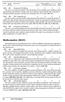 MAC 224 Advanced CNC Milling 1 3 0 2 This course covers advanced methods in setup and operation of CNC machining centers. Emphasis is placed on programming and production of complex parts. Upon completion,
Degree programme in Automation Engineering
 Degree programme in Automation Engineering Course descriptions of the courses for exchange students, 2014-2015 Autumn 2014 21727630 Application Programming Students know the basis of systems application
Microcontroller-based experiments for a control systems course in electrical engineering technology
 Microcontroller-based experiments for a control systems course in electrical engineering technology Albert Lozano-Nieto Penn State University, Wilkes-Barre Campus, Lehman, PA, USA E-mail: [email protected]
Occupational Profile: Electrical & Electronics Engineering Technician
 Occupational Profile: Electrical & Electronics Engineering Technician A competent Electrical & Electronics Engineering Technician should be able to demonstrate the following skills and competences: 1.
Pre-requisites 2012-2013
 Pre-requisites 2012-2013 Engineering Computation The student should be familiar with basic tools in Mathematics and Physics as learned at the High School level and in the first year of Engineering Schools.
The mission of the School of Electronic and Computing Systems 3 is to provide:
 BSCOMPE-COMP Computer Engineering Assessment Plan Missions and Outcomes Three mission statements are provided below for the University of Cincinnati, the College of Engineering and Applied Science, and
MECE 102 Mechatronics Engineering Orientation
 MECE 102 Mechatronics Engineering Orientation Mechatronic System Components Associate Prof. Dr. of Mechatronics Engineering Çankaya University Compulsory Course in Mechatronics Engineering Credits (2/0/2)
T146 Electro Mechanical Engineering Technician MTCU Code 51021 Program Learning Outcomes
 T146 Electro Mechanical Engineering Technician MTCU Code 51021 Program Learning Outcomes Synopsis of the Vocational Learning Outcomes* The graduate has reliably demonstrated the ability to: 1. fabricate
EDUMECH Mechatronic Instructional Systems. Ball on Beam System
 EDUMECH Mechatronic Instructional Systems Ball on Beam System Product of Shandor Motion Systems Written by Robert Hirsch Ph.D. 998-9 All Rights Reserved. 999 Shandor Motion Systems, Ball on Beam Instructional
Physics 9e/Cutnell. correlated to the. College Board AP Physics 1 Course Objectives
 Physics 9e/Cutnell correlated to the College Board AP Physics 1 Course Objectives Big Idea 1: Objects and systems have properties such as mass and charge. Systems may have internal structure. Enduring
Teaching optics in electrical engineering curriculums
 Teaching optics in electrical engineering curriculums by Alexander D Poularikas and Samuel Seely University of Alabama in Huntsville Electrical and Computer Engineering Department Huntsville, Alabama 35899
Computer Science and Electrical Engineering
 Department of Computer Science & Electrical Engineering Computer Science and Electrical Engineering Computer Science As a computer scientist, imagine creating the next search engine, the next social web
Bachelor of Science in Information Technology. Course Descriptions
 Bachelor of Science in Information Technology Course Descriptions Year 1 Course Title: Calculus I Course Code: MATH 101 Pre- Requisite(s): This course introduces higher mathematics by examining the fundamental
Undergraduate Major in Computer Science and Engineering
 University of California, Irvine 2015-2016 1 Undergraduate Major in Computer Science and Engineering On This Page: Overview Admissions Requirements for the B.S. in Computer Science and Engineering Sample
SECOND YEAR. Major Subject 3 Thesis (EE 300) 3 Thesis (EE 300) 3 TOTAL 3 TOTAL 6. MASTER OF ENGINEERING IN ELECTRICAL ENGINEERING (MEng EE) FIRST YEAR
 MASTER OF SCIENCE IN ELECTRICAL ENGINEERING (MS EE) FIRST YEAR Elective 3 Elective 3 Elective 3 Seminar Course (EE 296) 1 TOTAL 12 TOTAL 10 SECOND YEAR Major Subject 3 Thesis (EE 300) 3 Thesis (EE 300)
Electrical Engineering Technology - Process Automation
 Electrical Engineering Technology - Process Automation Ontario College Advanced Diploma (3 Years - 6 Semesters ) (4029) 705.759.6700 : 1.800.461.2260 : www.saultcollege.ca : Sault Ste. Marie, ON, Canada
SUBJECT-SPECIFIC CRITERIA
 SUBJECT-SPECIFIC CRITERIA Relating to the accreditation of Bachelor s and Master s degree programmes in electrical engineering and information technology (09 December 2011) The following specifications
Eastern Washington University Department of Computer Science. Questionnaire for Prospective Masters in Computer Science Students
 Eastern Washington University Department of Computer Science Questionnaire for Prospective Masters in Computer Science Students I. Personal Information Name: Last First M.I. Mailing Address: Permanent
ANTALYA INTERNATIONAL UNIVERSITY INDUSTRIAL ENGINEERING COURSE DESCRIPTIONS
 ANTALYA INTERNATIONAL UNIVERSITY INDUSTRIAL ENGINEERING COURSE DESCRIPTIONS CORE COURSES MATH 101 - Calculus I Trigonometric functions and their basic properties. Inverse trigonometric functions. Logarithmic
CSEN301 Embedded Systems Trimester 1
 Victoria University of Wellington (VUW) course offering for NZ-EU Joint Mobility Project Novel Sensing Technologies and Instrumentation in Environmental Climate Change Monitoring 1. General The Victoria
How to Turn an AC Induction Motor Into a DC Motor (A Matter of Perspective) Steve Bowling Application Segments Engineer Microchip Technology, Inc.
 1 How to Turn an AC Induction Motor Into a DC Motor (A Matter of Perspective) Steve Bowling Application Segments Engineer Microchip Technology, Inc. The territory of high-performance motor control has
Awareness of lifetime physical and mental wellness Physical Education Included in a degree or certificate program: Yes No Noncredit Category:
 CourseID: ENGR 8 Discipline: Engineering TOP: 901.00 - Engineering, General CB21: Y = Not Applicable CC Approval: 11/02/2015 Effective Date: 01/11/2016 BOT Approval: 12/08/2015 Degree/Transfer Status:
Electrical Engineering Technician - Process Automation
 Electrical Engineering Technician - Process Automation Ontario College Diploma (2 Years - 4 Semesters ) (4026) 705.759.6700 : 1.800.461.2260 : www.saultcollege.ca : Sault Ste. Marie, ON, Canada Section
ELECTRICAL/ELECTRONICS ENGINEERING TECHNOLOGY (EET) BODY OF KNOWLEDGE
 ELECTRICAL/ELECTRONICS ENGINEERING TECHNOLOGY (EET) BODY OF KNOWLEDGE Page 2 of 11 1 Basic Concepts of Electricity 1.1 Systems of Units and Notation 1.1.1 Units Systems and Fundamental Units. 1.1.2 Standard
Study Guide for the Electronics Technician Pre-Employment Examination
 Bay Area Rapid Transit District Study Guide for the Electronics Technician Pre-Employment Examination INTRODUCTION The Bay Area Rapid Transit (BART) District makes extensive use of electronics technology
Mathematics. Mathematics MATHEMATICS. 298 2015-16 Sacramento City College Catalog. Degree: A.S. Mathematics AS-T Mathematics for Transfer
 MATH Degree: A.S. AS-T for Transfer Division of /Statistics & Engineering Anne E. Licciardi, Dean South Gym 220 916-558-2202 Associate in Science Degree Program Information The mathematics program provides
Master of Science in Electrical Engineering Graduate Program:
 Master of Science in Electrical Engineering Graduate Program: A student may pursue a Master of Science in Electrical Engineering (M.Sc. EE) via one of the following three options: (i) M.Sc. with thesis,
Associate Degree of Applied Engineering (Renewable Energy Technologies) OVERVIEW OF SUBJECT REQUIREMENTS
 Course Associate Degree of Applied Engineering (Renewable Energy Technologies) Course Number HE20502 Location Newcastle, Ultimo, Mt Druitt OVERVIEW OF SUBJECT REQUIREMENTS Note: This document is intended
Study Plan for Bachelor Program in Department of teacher of upper basic level - Teaching Science
 Study Plan for Bachelor Program in Department of teacher of upper basic level - Teaching Science Specialization Requirements: The students should complete the following courses with Average 70% and above:
Chemistry INDIVIDUAL PROGRAM INFORMATION 2015 2016. 866.Macomb1 (866.622.6621) www.macomb.edu
 Chemistry INDIVIDUAL PROGRAM INFORMATION 2015 2016 866.Macomb1 (866.622.6621) www.macomb.edu Chemistry PROGRAM OPTIONS CREDENTIAL TITLE CREDIT HOURS REQUIRED NOTES Associate of Science Chemistry 64 CONTACT
SECTION C [short essay] [Not to exceed 120 words, Answer any SIX questions. Each question carries FOUR marks] 6 x 4=24 marks
![SECTION C [short essay] [Not to exceed 120 words, Answer any SIX questions. Each question carries FOUR marks] 6 x 4=24 marks](/thumbs/35/17285180.jpg "SECTION C [short essay] [Not to exceed 120 words, Answer any SIX questions. Each question carries FOUR marks] 6 x 4=24 marks") UNIVERSITY OF KERALA First Degree Programme in Computer Applications Model Question Paper Semester I Course Code- CP 1121 Introduction to Computer Science TIME : 3 hrs Maximum Mark: 80 SECTION A [Very
UNIVERSITY OF KERALA First Degree Programme in Computer Applications Model Question Paper Semester I Course Code- CP 1121 Introduction to Computer Science TIME : 3 hrs Maximum Mark: 80 SECTION A [Very
路 論 Chapter 15 System-Level Physical Design
 Introduction to VLSI Circuits and Systems 路 論 Chapter 15 System-Level Physical Design Dept. of Electronic Engineering National Chin-Yi University of Technology Fall 2007 Outline Clocked Flip-flops CMOS
COMPUTER ENGINEERING (INTERNATIONAL PROGRAM)
 Faculty of Engineering 187 COMPUTER ENGINEERING (INTERNATIONAL PROGRAM) The Computer Engineering program was first established by Department of Computer Engineering, Faculty of Engineering, King Mongkut
168 UNDERGRADUATE CATALOG 2005-2007 NEW JERSEY CITY UNIVERSITY
 168 UNDERGRADUATE CATALOG 2005-2007 NEW JERSEY CITY UNIVERSITY PHYSICS Grossnickle Hall, Rm. 327 201-200-3204 http://www.njcu.edu/dept/physics Dr. Alberto Pinkas, Chairperson [email protected] Associate
Electronic Engineering
 Electronic Engineering Electronic engineering is concerned with the generation, transmission and utilization of electrical energy and with the transmitting and processing of information. Electronic engineers
CHAPTER - 1. Chapter ONE: WAVES CHAPTER - 2. Chapter TWO: RAY OPTICS AND OPTICAL INSTRUMENTS. CHAPTER - 3 Chapter THREE: WAVE OPTICS PERIODS PERIODS
 BOARD OF INTERMEDIATE EDUCATION, A.P., HYDERABAD REVISION OF SYLLABUS Subject PHYSICS-II (w.e.f 2013-14) Chapter ONE: WAVES CHAPTER - 1 1.1 INTRODUCTION 1.2 Transverse and longitudinal waves 1.3 Displacement
One LAR Course Credits: 3. Page 4
 Course Descriptions Year 1 30 credits Course Title: Calculus I Course Code: COS 101 This course introduces higher mathematics by examining the fundamental principles of calculus-- functions, graphs, limits,
WEEKLY COURSE SCHEDULE : PRIMARY EDUCATION
 WEEKLY COURSE SCHEDULE : PRIMARY EDUCATION Semester 3 Week 1 ( 19.09.2011-23.09.2011 ) 08:30-11:20 : Circuit Analysis I ANS Eğitim 1 Blok - 107 Prof.Dr. HASAN ÇİMEN Introduction 08:30-11:20 : Electrical
Analysis of GATE Syllabus (by IISc)
 Civil Engineering CE ENGINEERING MATHEMATICS 1. Differential Equations : Solutions of one dimentional heat and wave equations and Laplace equation 2. Complex Variables: Analytic functions, Cauchy s integral
Electronics Technology
 Degree: A.S. - Electronic Systems Technology Certificates: Electronic Systems Technology Certificates offered by the department: Basic Electronic Assembly and Repair Advanced Electronic Assembly & Repair
Guru Ghasidas Vishwavidyalaya, Bilaspur (C.G.) Institute of Technology. Electronics & Communication Engineering. B.
 Guru Ghasidas Vishwavidyalaya, Bilaspur (C.G.) Institute of Technology Electronics & Communication Engineering B.Tech III Semester 1. Electronic Devices Laboratory 2. Digital Logic Circuit Laboratory 3.
Brochure for the Pan-African e-network Program. Contents. 1. About BITS Pilani 3
 BITS Pilani Contents 1. About BITS Pilani 3 2. Programmes on offer by BITS for the PAN-African e-network i.tracks available 3 ii.medium of instruction 3 iii.admission Eligibility 4 iv.certification Scheme
COURSE CATALOG. BS Networking and System Administration
 COURSE CATALOG BS Networking and System Administration Program Overview Networking, the technology of interconnecting computing devices so information can flow between them, includes the design, deployment,
DIGITAL-TO-ANALOGUE AND ANALOGUE-TO-DIGITAL CONVERSION
 DIGITAL-TO-ANALOGUE AND ANALOGUE-TO-DIGITAL CONVERSION Introduction The outputs from sensors and communications receivers are analogue signals that have continuously varying amplitudes. In many systems
Sequence of Mathematics Courses
 Sequence of ematics Courses Where do I begin? Associates Degree and Non-transferable Courses (For math course below pre-algebra, see the Learning Skills section of the catalog) MATH M09 PRE-ALGEBRA 3 UNITS
ELECTRICAL ENGINEERING
 ELECTRICAL ENGINEERING Electrical Engineering program was first established by Department of Electrical Engineering in the Faculty of Engineering, King Mongkut s University of Technology Thonburi, which
Certificate of Advanced Study in Microwave Engineering
 Certificate of Advanced Study in Microwave Engineering The Department of Electrical Engineering and Computer Science (EECS) at Syracuse University offers the Certificate of Advanced Study in Microwave
Wroclaw University of Technology Faculty of Electrical Engineering
 Wroclaw University of Technology Faculty of Electrical Engineering Educational effects for the field of study Electrical Engineering 1st level education general academic profile Legend: K (before underscore)
ESYST 123 - Residential Wiring
 ESYST 123 - Residential Wiring Approval Date: Effective Term: Department: ELECTRONIC SYSTEMS TECHNOLOGY Division: Career Technical Education Units: 4.00 Grading Option: Letter Grade Transferability: CSU
University of St. Thomas ENGR 230 ---- Digital Design 4 Credit Course Monday, Wednesday, Friday from 1:35 p.m. to 2:40 p.m. Lecture: Room OWS LL54
 Fall 2005 Instructor Texts University of St. Thomas ENGR 230 ---- Digital Design 4 Credit Course Monday, Wednesday, Friday from 1:35 p.m. to 2:40 p.m. Lecture: Room OWS LL54 Lab: Section 1: OSS LL14 Tuesday
Electrical Engineering and Computer Science
 Electrical Engineering and Computer Science Bachelor s Degree Program (BSc) SES UG Handbook EECS Fall 2012 02 Page: ii Contents 1 Electrical Engineering and Computer Science 1 1.1 Concept......................................
Simulation and Analysis of PWM Inverter Fed Induction Motor Drive
 Simulation and Analysis of PWM Inverter Fed Induction Motor Drive C.S.Sharma, Tali Nagwani Abstract Sinusoidal Pulse Width Modulation variable speed drives are increasingly applied in many new industrial
Robotics & Automation
 Robotics & Automation Levels: Grades 10-12 Units of Credit: 1.0 CIP Code: 21.0117 Core Code: 38-01-00-00-130 Prerequisite: None Skill Test: 612 COURSE DESCRIPTION Robotics & Automation is a lab-based,
Dynamic Process Modeling. Process Dynamics and Control
 Dynamic Process Modeling Process Dynamics and Control 1 Description of process dynamics Classes of models What do we need for control? Modeling for control Mechanical Systems Modeling Electrical circuits
Meeting TeTech. Version: 1.8, 15-July-2013, Author: Wim Telkamp, language: English
 Meeting TeTech, English version TeTech M.H. Trompstraat 6 3601 HT Maarssen The Netherlands Tel: + 31 (0) 346 284004 Fax: + 31 (0) 346 283691 Email: [email protected] Web: www.tetech.nl CoC: 30169033 VAT: