
A Few Acres of Snow. Components
|
|
|
- Erik Ryan
- 10 years ago
- Views:
Transcription
1 Second edition

2

3 A Few Acres of Snow A Few Acres of Snow is a two player game about the struggle between Britain and France for control of North America, fought out during the seventeenth and eighteenth centuries. What actions you can perform in the game are determined by the cards you have in your hand and deck. Each nation has its own set of location and empire cards. You increase the range of actions available to you by adding cards to your discard pile, which eventually becomes your draw deck. Cards come in two general types, location cards and empire cards. You add location cards to your deck by settling new locations or capturing them from the enemy. Empire cards are simply drafted, although some of them have to be paid for. Each player starts with control of a number of locations, and has the corresponding location cards in his starting deck. Location cards may be used to settle new locations, develop existing locations, build fortifications, and launch attacks. Locations may also provide a means of transport, income, settlers and militia. Empire cards comprise of a variety of different types of cards. Many of these have a military function, such as regular infantry and siege artillery. Other cards increase the range of actions available to you, such as the governor card, which allows you to remove cards from your hand. You need to tailor the cards in your deck to suit your objectives. If you wish to develop your towns speedily then it will help to have more settler cards in your deck. If you want to win through sheer force of arms then draft military cards. There are also neutral empire cards which can be drafted by either player. The most interesting of these are the Native American cards. Native Americans allow you to ambush and raid your opponent. Raids in particular can be most discomforting to your enemy, especially if he is British. The game can end suddenly if one player captures a particular location, e.g. if the British take Quebec. It will also end if one player captures a certain number of cubes and discs from his opponent, or when he manages to place all of his discs or cubes on the board. In the latter two cases players add up points to see who has won. Components As well as this rules book and the playing board you should also have the following items: Second edition 12 British town discs 18 British village cubes 1 British siege location marker 9 French town discs 18 French village cubes 1 French siege location marker 12 fortification discs 2 Siege strength markers Money 15 x silver, worth one each 15 x gold, worth five each This is the second edition of A Few Acres of Snow. If you already have the first edition of the game then you need to be aware of a few rule changes, as follows: If you play the Home Support card and there are less than three cards in your draw pile then you pick up the remaining cards BUT you do not then shuffle your discard pile, i.e. if you only had two cards left in your draw pile then you would only pick up two cards. You cannot place location cards in your reserve. When you launch a raid the first card played allows you to raid along two connections, with each additional card played increasing the range by one connection. The French bateaux card has been removed from the game. 2 Player Aid cards per language 109 cards 1

4 The Board French starting locations are coloured in blue. Blue village cubes should be placed in the blue square locations and a blue town disc in the blue circular location. Neutral location Defence modifier adjusts the starting point of the siege strength marker on the Siege Track. River connection, which will require bateaux to travel along. Settler symbol This indicates that you must expend a card with a settler symbol on it to be able to settle the location. Victory points scored at the end of the game. You double the points if you have a town disc in the location. All locations that have a ship symbol are connected to all other locations with a ship symbol. The symbol also indicates that cards with ship symbols on can be used if a siege occurs here. Road connection, which will require wagons to travel along. Indian trail These can only be used to raid along, not for settling or attacking. British starting locations are coloured in red. Red village cubes should be placed in the red square locations and red town discs in the red circular locations. Each player has a series of named spaces on his side of the board which are used to hold cards. At the start of the game each player will shuffle and place his initial draw deck face down in the Draw Deck space. Your location cards should be placed in your Available Location Cards space. They do not need shuffling as you will be taking cards from here as a result of settling and winning sieges. It is recommended that you sort the cards into alphabetical order to make it easier to find the required card. Your empire cards should be placed in your Available Empire Cards space. Once again, these do not need shuffling, as you will be selecting cards from here at your discretion rather than randomly drawing them. As you play cards you place them on to your discard pile. When your draw deck is exhausted you shuffle your discard pile to make a new draw deck. The British and French Siege Card spaces are used to place cards that have been used in a siege. 2

5 The Cards There are two card types, location cards and empire cards. Location cards have a named location on them. All cards without a location named on them are empire cards. Cards also come with five different border colours. Those with a deep or light red border can only be used by the British player. Those with a dark or light blue border can only be used by the French player. Cards with a green border are neutral and can be used by either player. The deep red and dark blue bordered cards are also the initial draw decks for the British and French players. Example of a location card Example of an empire card Transport required to travel to connected locations Symbols Name of location Connected locations Border colour and I indicates that it is part of the French player s initial draw deck Cost to draft the card Border colour indicates that it is part of the British player s available empire card deck This symbol indicates that the card is vulnerable to ambushes Parchment text and symbols in this box detail the powers or use of the card. Certain actions require you to play a card with a specific symbol on. That symbol must appear in this box to be of use to you. Card symbols Many of the cards have a parchment area at the bottom which contains text and/or symbols. The text will explain the action/s that can be carried out by the card. The symbols vary in their use/employment as explained below: Bateaux a card with this symbol on can be played to allow you to travel along a river or lake. Fur a card with this symbol on can be used in conjunction with a trader card to earn money (two money per fur card played). 2 Money a card with this symbol on can be played to earn the amount of money shown in the coin. Wagon a card with this symbol on can be played to allow you to travel along a road. Settler a card with this symbol on can be played to allow you to settle a location that also has this symbol in it. It can also be used to develop a village into a town. Military strength a card with this symbol or symbols on can be played to add to your strength in a siege. Each such symbol on the card is worth one strength point. Ship a card with this symbol on can be played to allow travel by sea. It can also be used to add to your strength in a siege if the besieged location has a ship symbol next to it. Ambush a card with this symbol on is vulnerable to being ambushed. IMPORTANT NOTE: The British and French players do not have identical sets of location cards. Many of the British locations do not appear in the set of available French location cards. Where locations card do occur in both sets, they may have the same or different connections and may have different symbols. 3

6 Starting the game Each player should select a side and take the corresponding wooden pieces and cards. Each player should have: An initial draw deck (dark red/blue border). An available location card deck (light red/blue border). An available empire card deck (light red/blue border). You shuffle your initial draw deck and place it face down in your draw deck space. Your location cards and the empire cards should be placed face up in the spaces indicated. These decks do not require shuffling. The neutral empire cards (green border) should be placed face up by the side of the board so that each type of card can be clearly seen (it makes sense to stack cards of the same type to save table space). Place the money by the side of the board to form a bank. The French player starts with five money and the British player starts with twelve money. Each player starts with a number of cubes and discs on the board, which represent settled locations. Cubes represent villages and discs represent towns. Certain locations are already coloured red and blue, to indicate which side they are initially controlled by. The British player should place one cube in each red square location and one disc in each red circular location. The French player should do likewise in each blue location. Having a cube or disc in a location indicates that you control it. Each player draws five cards from the top of his draw deck to make his hand. Playing the game Players take turns, alternating between the two, until either a player achieves an outright win or the game ends due to one player exhausting his supply of cubes or discs. The British player always takes the first turn. The first thing you must do when it is your turn is to check to see whether you have won a siege combat. Once you have done this you perform two actions. The only exception to this is the first turn, where both players perform only one action each. After you have completed your two actions you refill your hand to five cards. If you need to draw a card and your draw deck is empty then you shuffle your discard pile to make a new draw deck. The following rules are not laid out in the order that phases occur. The rules dealing with winning a siege can be found following those describing how to initiate a siege. Player actions Each turn, after checking to see if you have won a siege combat, you perform two actions (plus any free actions you wish to take). You only take one action on your first turn of the game. Each action is a discrete event and should be resolved before you perform your second action. You can perform the same action twice. There are some actions which are free actions. These do not count towards your two actions and can be performed at any time during your turn, irrelevant of what other actions you are performing, including before and after you perform your two normal actions. However, you cannot perform a free action during the resolution of a siege, nor after drawing cards at the end of your turn. Cards that you play are placed onto your discard pile. The only exception to this are cards played to a siege combat. These cards should be placed in the correct siege card space, depending on whether you are the attacker or the defender. Expansive actions Each player should be attempting to expand his empire in North America. The following actions allow him to do this in some way: Settle a location Develop a location Fortify a location Aggressive actions These actions involve players in some form of conflict. Besiege a location Reinforce a siege Raid Ambush Priest/Indian leader Financial actions These actions allow you to gain money. Take money Merchant Trader Piracy (French player only) Card management actions These actions allow you to manage your cards in some manner. Draft one empire card Discard card/s Place one card in reserve Retrieve your reserve (free action) Governor Intendant Home Support (free action) Other actions Withdraw from a siege (free action) Pass 4

7 Expansive actions Settle a location This action allows you to place one of your cubes in a neutral location (one that does not already contain a cube or disc). You must first play a location card that connects to the location you wish to settle. Each location card has a list of locations that it connects to. It also shows the type of transport required to reach those locations, which will either be bateaux, ship, or wagon. You must then play a second card that has the correct transport symbol on it. If the location you intend to settle has a settler symbol in it then you must play a third card that has a settler symbol on it. Remember, the only symbols that can be used appear in the parchment area of the card. Once you have played the necessary cards you place one of your village cubes in the newly settled location. You then take the location card for that location from your deck of available location cards and place it on top of your discard pile. Please do not forget to do this as you will not then gain the benefit of settling the location. The number of cubes you have places a limit on the number of locations you can settle. There are some locations that you do not have the corresponding location card for, e.g. the British do not have a Montreal card. You can still settle a location that no card is available for but you do not add a card to your deck. Example: The British player wishes to settle Deerfield. To do so he must play the New Haven card. He must then play a card with a bateaux symbol on it (he plays St. Mary s). As Deerfield has a settler symbol in it he must also play a card with a settler symbol on it (he plays Boston). He then places a cube in the Deerfield location, and takes the Deerfield card from his available location cards and places it on top of his discard pile. Example: The French player wishes to settle Fort Niagara. To do so he must play the Fort Frontenac card. He must then play a card with a bateaux symbol on it (he plays the Trois Rivieres card). He does not have to play a card with a settler symbol on it. He places a cube on the location and adds the Fort Niagara card to his discard pile. 5

8 Develop a location A cube in a location represents a village. You can replace a cube with a disc, which represents a town. To do so you must first play the location card for the location that you intend to develop. You must then play a second card that has a settler symbol on it. You then retrieve your cube from the location and replace it with one of your discs. The cube goes back into your available stock. The main reason to develop a location is that you gain double the victory points for that location at the end of the game. You can only develop locations that have a victory point value, which will be indicated next to the location on the board. The number of discs you have imposes a limit on the number of locations you can develop. Example: The British player wishes to develop Albany. He must play the Albany card and then a second card that has a settler symbol on it. He chooses to play the St, Mary s card as his second card. He then replaces the cube in Albany with a disc. Note that the British player has the potential to develop Oswego, as it has a victory point value. Conversely, he could not develop Fort Stanwick as it does not have a victory point value. Fortify a location To fortify a location you must play a fortification card and the location card for the location you wish to fortify. You must also pay three money to the bank. You then place a fortification disc under the cube or disc in the location. A location can only have one fortification disc in it. A fortified location starts a siege with an additional siege strength of two, and is also immune to raids. The number of fortification discs is a limit to the number of times this action can be selected. Note that if you had just resettled a location you could fortify it within the same turn. Important restrictions on the use of location cards You cannot use a location card in any manner if you do not have control of that location or if it is not connected to either Boston (if you are the British) or Quebec (if you are the French), or if it is under siege. You control a location if you have a cube or disc in it. A location is connected to Boston/Quebec if it can trace a series of connections via controlled locations. These connections can be rivers, lakes, roads, or the sea, but not Indian trails. For the purposes of tracing a connection back to Boston/Quebec, locations that have ship symbols next to them are considered to be connected to every other location with a ship symbol next to it. Locations along the edge of the same lake are all regarded as being connected to each other. You can trace supply through a besieged location. If Quebec has been successfully raided twice the French player can still trace supply from it. You can still discard such cards or remove them from your hand via the governor action. Aggressive actions Besiege a location At some point in time you may wish to attack your opponent, with the intention of taking control of one of his locations, or at least rendering it neutral. You must first play a location card that connects to the location you intend to besiege. You must then play a card with the necessary transport symbol on it (in exactly the same way as if you intended to settle the location). You must then play one card that has at least one military symbol on it. The first two cards should be placed onto your discard pile. The third card, the one with a military strength, must be placed onto your Siege Card space. If you are the British player then you would place it in the British Siege Card space, if you are the French player then you would place it in the French Siege Card space. You now take your siege location marker and place it near the location you are besieging. This is to remind you which location you are besieging. The siege strength marker is now adjusted according to the initial strengths of the two sides. You must use the correct siege track, i.e. if you are the British player then you would use the British Siege Track. Place the siege strength marker in the 1 space, in favour of the defender (every location has an intrinsic defence strength of one). Move it two spaces in the defender s favour if there is a 6

9 fortification disc in the location, and a further number of spaces equal to any defence modifier that appears next to the location. This is the defender s initial strength. Now move the marker a number of spaces in favour of the attacker according to the military strength of the third card he played. The siege is now underway. It will last until one player either wins the siege or withdraws from it. A location can be under siege indefinitely. You can only attack one location at a time, although you may be involved in another siege as the defender. The siege track length is finite, thus you can never exceed the highest value on the track. As his second action the British player plays a regular infantry card. He also plays a military leader card, which is a free action. He adjusts the marker three spaces in his favour. He places both cards in his British Siege Card space. Use of location cards in sieges If you play a location card to use its military strength then you can only use either the military strength symbol or the ship symbol, not both. E.g. if you played the New York card to a siege occurring in a location with a ship symbol next to it then you would only add one to your siege strength, either using the military symbol or the ship symbol. Example: The British player decides to besiege Louisbourg. He plays the Halifax card (which is connected by sea to Louisbourg), a card with ship symbol on it, and a siege artillery card ( for which he must also pay three money). He places his siege marker by Louisbourg. The first two cards he plays go on to his discard pile, while the siege artillery card goes in to the British Siege Card space. It is now the French player s turn. He must now decide whether he is going to let Louisbourg fall or not. He decides to fight on. For his first action he plays a regular infantry card and for his second he plays the Port Royal card, which has a ship symbol on it. As Louisbourg has a ship symbol next to it this means the ship symbol on the card has a military strength of one. The French player moves the siege strength marker three spaces in his favour. He places both cards in his British Siege Card space on his side of the board. This makes Louisbourg safe for the moment. Note that the French player could not use the Louisbourg card itself as the location is under siege. As well as having an intrinsic defence strength of one Louisbourg also has a modifier of one. The marker starts in the 2 space in France s favour. The British player then adjusts the marker in his favour to record the three military strength points on the siege artillery card he played. Winning a siege combat At the start of your turn you must check both Siege tracks to see whether you have won a siege combat. If you are the attacker in a siege and the corresponding siege strength marker shows you have an advantage in strength of two or more, then you immediately win that combat. You remove the other player s cube/disc from the location that you attacked and retain it (you will score victory points for capturing cubes and discs at the end of the game). You also remove and return to the stock any fortification disc in the location. If the location that you were attacking has a settler symbol in it then you must play one card from your hand that has a settler symbol on it if you wish to place one of your village cubes there. If the location does not have such a symbol on it then you place one of your cubes in the location. If you do place a cube on the location then you take the location card for that location from your available deck and place it on top your discard pile. This does not count as one of your actions. If you not able to or you choose not to place a cube (you do not have to settle a location after winning a siege), you do not take the location card. The location now becomes neutral. Note that the losing player retains the location card for the location, although it is now useless. 7

10 If you are the defender in a siege combat and you have an advantage in military strength of one or more, then you immediately win that combat. You retain control of the location. Once a siege has ended both players retrieve their cards from the corresponding siege card space, i.e. if the British were the besiegers then each player would take their cards from the British Siege Card space. The winner places all of his cards on to his discard pile. The losing player must select one of the cards to be placed back in his empire deck or neutral empire display before placing the remainder onto his discard pile. He cannot choose to lose a location card. The French player could choose the infantry card that is part of his initial draw deck. If the loser is not able to select a card for removal then he does not do so. The attacker s siege location marker should be retrieved. Example: In the British siege of Louisbourg the British player has managed to gain the upper hand. At the start of his turn the siege marker shows that he has an advantage of three strength points, which means that he wins the siege. The blue cube is removed and claimed by the British player. As Louisbourg has a settler symbol in it the British player must now choose whether he wishes to play a card with such a symbol to be able to place a cube of his own there. He chooses to do so and plays the New York card. He then places one of his cubes in the location. He then takes the Louisbourg location card from his location card deck and places it on his discard pile. British Siege Card space on your side of the board. This includes location cards that you play for their military strength. You can only reinforce locations that you can trace a series of connections via controlled locations from either Quebec (if you are the French player) or Boston (if you are the British player). These connections may be made by river, lake, road and sea. Indian trails do not count as connections for this purpose. You do not need to play any cards to travel along these connections. Fortification card A fortification card can be played in a siege BUT only by the defending player. When played this way it has a strength of one. Note that you cannot add a fortification disc to a location that is currently besieged. Ship symbols A card with a ship symbol has a military strength of one if used in a siege that occurs in a location that has a ship symbol next to it. If a location card has a ship symbol and a military symbol then you can only use one of those symbols, the card would not add two to your strength. You can play a card with a ship symbol as the first military card in a siege, as long as ships can be played. Military leader Playing a military leader card is a free action and adds one to your siege strength. The French player must choose one empire card to return to his empire deck from the cards in his siege space. He then returns the remaining cards to his discard pile. The British player returns all of the cards in his siege space to his discard pile. Note that the French player does not remove the Louisbourg card from those in his active deck. This card is now effectively useless. Reinforce a siege To increase your strength in a siege, whether you are the attacker or defender you can play one card that has one or more military symbols on it. You adjust the siege strength marker a number of spaces in your favour equal to the number of military symbols on the card. If there are two sieges in progress then you choose which one to use the card for. The card you play must be placed in the corresponding siege card space. E.g. If the British are the besiegers and you are the French player then you would place your card in the Raid To launch a raid you play one or more cards that state they can be used to raid. One card allows you to raid a location that is within two connections of a location that you control. Each additional eligible card played increases the range by one connection, so if you played three cards you could raid a location up to four connections away. A Priest or Indian Leader card can be played to increase the range of a raid, just as if it were another card that allowed a raid. You must pay one money for each Native Americans card that you play, not just the first one. You can only raid along connections formed by rivers, roads, lakes, or Indian trails. You can utilise any combination of these connections. Locations along the edge of the same lake are all regarded as being connected to each other. You do not play any location cards to launch a raid and you do not need to play any transport symbols. You can raid beyond a location that contains an enemy cube or disc. You cannot raid a location that has a fortification disc in it, nor can you raid beyond such a location. You cannot raid into or from a besieged location. You can raid through a besieged location if you are the besieging party and the location is not fortified. You cannot raid through a location that your opponent is laying siege to. You can raid from a location that is not in supply. Your opponent now has the opportunity to block the raid. He can do so by playing one card from his hand that states that it can block 8

11 a raid. Your opponent can also block the raid by playing the location card for location that is being raided. The card played to block the raid is then placed onto his discard pile. Your opponent does not have to pay money to play a Native American card to block a raid. If the raid is not blocked then you take the cube or disc from the raided location. If you took a disc from the location then your opponent replaces it with a cube, i.e. a town becomes a village. You retain this cube/disc and it will score victory points at the end of the game. If you do not have a cube available to replace a disc then the location becomes neutral. If you successfully raid Quebec/Boston/ New York twice then that does not mean you have won the game. However, you would do if you were able to settle them at a later point in the game. Example: From Kennebec the French player could launch raids against Fort Halifax, Deerfield, Pemaquid and Boston. A raid against Boston would require the play of two eligible cards. Ambush You play one card that has the ability to ambush. The other player may now block this with a card that states that it can do this. This card must be played from the hand, not the reserve. The card used to block an ambush is placed onto the player s discard pile. Your opponent does not have to pay to use a Native Americans card to block you. If the ambush is not blocked then the opposing player must select one card that is marked with the ambush symbol (as shown here) from either his hand or his reserve and place it back on his empire deck. If your opponent does not have a card that can be ambushed then he must prove that by showing you clearly the cards in his hand. He would then not lose a card. Priest/Indian leader When you play one of these cards your opponent must give you one neutral Native Americans card from either his hand or his reserve. You then place that card onto your discard pile. If he does not have such a card then he must show you his hand clearly to prove that this is the case. The French player cannot lose his blue bordered Native American card to a British Indian Leader card. In this example Deerfield has been fortified. The French player could now only raid Fort Halifax or Pemaquid. Note that it would not be possible to raid Boston via Pemaquid. You can regain control of a location that you have still have a location card for by taking the settle a location action. 9

12 Financial actions Card managment actions Take money You play one location card and take an amount of money from the bank equal to the value indicated in the gold circle. Merchant You play one card with a ship symbol on it. You can then play one or two cards which have a gold symbol on and take the amount of money indicated. Trader When you play the trader card you then play one or more location cards that have the fur symbol on them. For each such card that you play you take two money from the bank. Piracy This action is only available to the French player. You play the Louisbourg card and another card with a ship symbol on it. You then take two money from the British player. If the British player does not have sufficient money then you take any shortfall from the bank. Draft one empire card You select one empire card from your available empire cards and place it onto your discard pile. Check the card to see if you are required to pay any money to the bank. You can never take a card of your opponent s colour, nor can you draft a location card. You cannot place location cards in your reserve. E.g. If you drafted a neutral fortification card then you would have to pay three money to the bank. Discard card/s You can discard one or more cards from your hand, placing them onto your discard pile. You can discard one card at no cost. If you then wish to discard more cards you must pay one money for each additional card discarded, e.g. if you discarded three cards you would have to pay two money. Place a card in your reserve The reserve gives you the flexibility to place cards to one side so that you can pick them up later when they may be more useful. You select one empire card from your hand and place it face-up in the box marked Reserve. You can have up to five cards in your reserve. If you inadvertently go over this number and your opponent notices this he must select a number of cards from your reserve to bring the number down to five cards. These cards should be placed back with your available cards. You cannot place location cards in your reserve. Retrieve your reserve As a free action you can retrieve the cards in your reserve and place them back in your hand. You must pick up all of the cards in your reserve. You must pay one money for each card you retrieve. Note that you can have more than five cards in your hand. Governor When you play the governor card you also select any one or two cards from your hand and return them to the available cards. This is a way for you to reduce the number of cards in your deck. If you choose to remove a location card then you return it to your available location cards deck. If you choose an empire card then you return it to your empire card deck. If it is a neutral card then you return it to the neutral card display. You can always regain a previously removed card in later turns if you wish. To regain a location card you would have to settle the location again, including the playing of a settler symbol card if necessary. 10

13 Intendant If you play the intendant card then you pay two money to the bank (French intendants were notoriously corrupt) and then select one card of your choice from your discard pile and place it in your hand. Home support Playing your home support card is a free action. You draw three cards from your deck. You can only draw those cards that are presently in your draw pile. If there are less than three then you draw the remaining cards, you do not shuffle the discard pile to make a new draw deck. Note that it would be possible for you to play this card, then an Intendant to pick it up again, and then play it for a second time in the same turn. Ending the game The British player wins immediately if he wins a siege or settles in Quebec. The French player wins immediately if he wins a siege or settles in Boston or New York. In the case of a siege it is not necessary for a cube to be placed in the location to trigger the victory condition. Otherwise the game lasts until one of the end game conditions has been met, which are: a) If there are no sieges in progress at the start of a player s turn and he has placed all of his discs OR cubes onto the board, b) If there are no sieges in progress at the start of a player s turn and he has captured twelve points worth of cubes/discs from his opponent (a cube is worth two points and a disc is worth four points). Each player now adds up the number of victory points he has. You score points as indicated for locations that you control, i.e. that you have a cube or disc in. If you have a disc in a location then you score double the number of points indicated. You also score two points for each of your opponents cubes that you captured and four points for each disc you captured. The player who has the highest total of victory points is the winner. In the case of a tie then the French player is the winner. Other actions Withdraw from a siege You may choose to withdraw from a siege. You treat this as if you had lost the siege, i.e. you lose one empire card from those in your siege card space. The remaining cards are placed onto your discard pile. Your opponent also places the cards from his siege card space back onto his discard pile. Remove the siege marker from the location. This is a free action. Both the attacker and defender have the option to withdraw from a siege. Pass Simply do nothing. Passing does not stop you performing more actions in later turns. Credits Game designed by Martin Wallace Artwork by Peter Dennis Graphic design by Solid Colour German translation by Ferdinand Köther French translation by Christophe Muller Italian translation by Mauro MdM Di Marco, Andrea Liga Ligabue, Fiorenzo Delle Rupi, Massimo Bianchini and Luca Cattini. Playtested by Andy Ogden, Mike Young, Alan Paull, Richard Spilsbury, Richard Dewsbery, Jerry Elsmore, Alan McClenahan, Simon Bracegirdle, Nigel Drury, Michael Young, Peter Johnston, Coleman Charlton, Kurt Fischer, Dave Platnick and Al Roireau. Historical commentary by John Ellis. Thanks to Julia Wallace, James Hamilton, Richard Dewsbury, Andy Callan, David Gatheral and too many to mention people on BGG who chipped in with suggestions and comments for the second edition. If you have any difficulties then you can contact me at [email protected] or check the Treefrog website, for a faq. If you have any problems with damaged or missing pieces then please contact Julia at [email protected]. The rules to A Few Acres of Snow are Martin Wallace All artwork is Treefrog Limited. 11

14 Designer notes and tips on playing the game The more astute gamer out there will have twigged that the central mechanism to A Few Acres of Snow is highly influenced by the best selling card game, Dominion. I m happy to adapt ideas from other games, as long as I feel that they fit the theme. The deckbuilding element of the game builds in the delay between asking for something and getting it which was a major issue for the two combatants. This was a war fought at the end of a very long supply line. The theme for the game was suggested to me by my friend, John Ellis, who also happens to be a military historian. He just happened to be doing some research on the period for a book and was struck by how much movement was limited to rivers. John has kindly provided the historical commentary that appears below. I ve played the game more times than any other single player (at the time of typing this) and I still have only a vague idea of the range of strategies that can be adopted. Thus I cannot give any proper advice on what may constitute good play. What I do know is that the first few times you play this game you will be overwhelmed by the range of possible actions available, and you will probably take a long time to finish the game. The first issue is a matter of experience, with a few plays you will realise that only a small number of actions are used on a regular basis, and that many depend on having the right card in your hand, so if you don t have the card there s no point in even thinking about that action. The second issue depends on whether player s are putting pressure on each other. The most likely way for the game to end is for one player to place all of his town discs. If both players fail to develop their villages then it s going to be a long game. If one player recognises that he has an advantage on points then he should be pushing to develop his villages as quickly as possible before the other player can react. The title is taken from a supposed quote by Voltaire (always good for a snappy line). It is meant to be his response to the news of the fall of Quebec, as in Ha, it is only a few acres of snow. Second edition notes There are now a significant number of people on the planet who have played the game many more times than myself. Some of these folk think there is a particular British strategy which is hard for the French to beat. I have to say that I agree with them. Some of the changes to the second edition have been made to weaken this strategy. However, it remains the fact that no matter what rules are changed a strong strategy will emerge for one side or the other. There is no simple fix, as the main reason for this issue is the nature of the game itself. Therefore, in my opinion there is only one way to deal with this problem, which is to create a set of scenarios which subtly change the game creating a fresh challenge for each player. These scenarios are not necessarily historically accurate, think of them as what if s. These scenarios will be produced on an irregular basis and appear on the Treefrog website. Martin Wallace 12

15 Card manifest Unless otherwise indicated there is one of each card listed. British cards Initial Draw Deck Boston New Haven New York Norfolk Pemaquid Philadelphia St. Mary s Available Location Cards Albany Baltimore Canso Cumberland Deerfield Detroit Fort Beausejour Fort Duquesne Fort Frontenac Fort Halifax Fort Niagara Fort Presqu Île Fort St. John Fort Stanwix Fort Venango Fort William Henry Gaspe Halifax Kennebec Louisbourg Oswego Port Royal Richmond Tadoussac Ticonderoga Trois Rivieres Available Empire Cards Bateaux Fortification Governor Home Support Indian Leader Military Leader Militia x 3 Rangers Regular Infantry x 6 Settlers Ships x 2 Siege Artillery Trader French Cards Initial Draw Deck Gaspe Louisbourg Montreal Quebec Port Royal Tadoussac Trois Rivieres Regular Infantry Trader Available Location Cards Albany Canso Detroit Fort Beausejour Fort Duquesne Fort Frontenac Fort Halifax Fort Niagara Fort Presqu Île Fort St. John Fort Stanwix Fort Venango Fort William Henry Halifax Kennebec Michillimackinac Oswego Pemaquid Ticonderoga Available Empire Cards Coureurs de Bois Fortification Governor Home Support Intendant Military leader Militia x 3 Native Americans Priest x 2 Regular Infantry x 3 Ships Siege Artillery Trader Neutral Cards Fortification x 2 Native Americans x 5 Settlers x 2 13

16 A Few Acres of Snow Historical Commentary by John Ellis Ever since Ancient times, great wars have been driven by imperial rivalry. By the early 1700s such rivalries had become global. The two superpowers of the time, Britain and France, were engaged in a long drawn out struggle over their new colonial possessions in the Caribbean, North America and India. Each wished to secure their hold over the production and trade of valuable commodities such as sugar, tobacco, cotton, furs, silks, timber and tea. In North America this rivalry was played out between a British-American enclave on the Atlantic seaboard, south of the St. Lawrence river (which would eventually make up the Thirteen Colonies) and the vast wintry wastes of New France (modern Canada) with its sparse European population mainly concentrated along the banks of the St. Lawrence. Each side wished to monopolize the local fur trade, as well as to control the naval bases vital for North Atlantic commerce. But the British were also haunted by a growing fear that the French planned a vast encircling movement, aiming to establish a cordon down through the Great Lakes and the Mississippi to link up with their other possessions in Louisiana. This mutual envy and suspicion, however, did not lead to a state of permanent armed conflict, and was for the most part limited to encouraging occasional raids by Indian allies on isolated settlements and farms. Despite the fact that both sides maintained, on paper at least, local militia forces, these were only ever pitted against each other when Britain and France themselves became formally engaged in a European war. Only then did the mother countries demand that their colonial forces join in hostilities, sometimes aiding them by sending naval and expeditionary forces, inadequate though these usually were. European wars spilled over into North America on four separate occasions during this period: War of the League of Augsburg, known in America as King William s War War of Spanish Succession, known in America as Queen Anne s War War of Jenkin s Ear and War of Austrian Succession, known in America as King George s War Seven Years War*, known in America as the French and Indian War. *Began in America two years earlier. Only in the last of these wars did either side gain a decisive military advantage. The breakthrough came when a substantial British reinforcement allowed them to force their way up the St. Lawrence from both directions and take Quebec (1759) and Montreal (1760). Under the terms of the Treaty of Paris (1763), the French had to give up all their territories in what had once been grandly claimed as New France. The actual conduct of the fighting in these wars was conditioned by several key factors but the most important among them was the question of geography. First of all there was the problem of the Atlantic Ocean. The sheer distances separating North American ports from Europe made it an enormous undertaking to supply or reinforce the colonies in time of war. While local militias might be sufficient to guard the frontier settlements, colonial economies were largely incapable of 14

17 assembling on their own the necessary quantities of ordnance, ammunition and other military stores for large scale offensive operations. The convoys necessary to transport the men and materials required had to be laboriously put together in British and French ports and then often had to wait weeks for favourable winds. But even once at sea, these convoys were still at the mercy of uncertain navigational techniques and of the terrible storms that were a regular hazard of trans- Atlantic voyages. All these factors, as well as the long weeks even an uneventful voyage could take, made it almost impossible to co-ordinate the arrival of a fleet or convoy (assuming it arrived at all!) with the demands of local military strategy. Geography also had a profound bearing upon operations on land. The climate itself was a serious constraint on military activity. Because of the severity of the North American winters, and the fearsome mud of subsequent spring thaws, actual campaigning was limited to the months from May to September. This crucially affected operational tempo and limited the time commanders had to finish off an enemy before his forces were able to recuperate in winter quarters or back at home. The cockpit of each of these wars was the triangle of territory bordered by Lake Ontario and the St. Lawrence, the eastern seaboard, and the Potomac and Allegheny rivers. Throughout this region the terrain was given over almost entirely to thick forests and mountains, largely uninhabited and through which the construction of a military road, logistically indispensable, could consume the whole of a campaigning season. While sometimes there was no option but to laboriously hack out such roads, in the main armies preferred to make their strategic movements by water. The history of all four wars between is dominated by such waterways as the St. Lawrence, Lake Ontario, the Mohawk, the Hudson, Lake Champlain and the Richelieu. Given the crucial importance of these riverine arteries, the strategic options were strictly limited and both sides were always aware of the likely axis of any enemy advance. The best way to block such routes was to build forts at tactically advantageous points from which to bombard any amphibious armadas that might appear. Further progress would then demand that the fort be captured and this usually meant formal siege operations. These were tedious procedures which, even when successful, could take up so much of the campaigning season that useful exploitation of the victory was not possible, yet another brake on the all-important tempo of operations. Thus it is that any history of conflict in 18th century North America revolves around such forts as Ticonderoga, William Henry, Cumberland, Duquesne, Niagara, Oswego, and Frontenac. During the whole thirty nine years of open conflict there were only three major engagements that did not involve sieges or direct assaults on forts: namely, two pitched battles (Plains of Abraham (1759) and Quebec (1760) and one large scale ambush (Monongahela (1755). And each one of these took place in the immediate vicinity of a fort. Geography and climate might be factors that were fixed and shared, but there were other considerations that tended to favour one side more than the other. One advantage for the French was that political control in Canada was highly centralized, making it easier for their powerful intendants to direct the deployment of their troops when and where they chose. The British colonial governors, on the other hand, had to work in collaboration with the local provincial assemblies, whose lower houses were democratically elected, with control over the raising of taxes and the issuing of paper currency used to pay enlistment bounties and purchase military supplies. Always suspicious of English royal authority, the assemblies proved consistently reluctant and tardy in providing local troops for proposed operations, troops that were vital given the absence of an adequate regular garrison in North America right up to the 1750s. Nor, indeed, was there any sort of central colonial authority, with the colonies each very suspicious of one another and very hesitant about agreeing to any sort of concerted action. 15

18 For a long time these factors served to lessen the impact of the great strategic imbalance between French and British North America, namely the growing disparity between their populations, which by 1755 saw a mere 55,000 Canadians pitted against some 1.5 million Americans. By the time of the Seven Years War, however, the British resolved finally to commit substantial numbers of regular troops to this theatre. By the end of the fighting, which effectively was over in North America by 1760, Britain had sent thirty regiments there as opposed to only twelve French. Such substantial regular forces allowed colonial units to be largely relegated to a garrison and line of communication role, duties they were much readier to undertake for a full season s campaigning. This increased commitment to North American operations was part of a grand strategy devised by Prime Minister William Pitt, who was convinced that France was most vulnerable in her colonies, rather than on the battlefields of Europe. The trans-atlantic campaign was supported by a major effort by the Royal Navy, whose persistent blockade of the French coast meant that by 1760 the logistic lifeline with Canada had been almost completely cut. The financial cost of Pitt s new strategy tells its own story. By 1763, Britain had spent 4 million on North American operations whilst the French had committed barely a tenth of that, a totally inadequate sum for a bleak and distant colony that even in the best of times operated at not much above subsistence level. Finally, some mention must be made of the role of the Indians in these wars. From their own point of view there were certain advantages to supporting either side. British goods traded for furs tended to be better quality than French and British rum was considerably cheaper than French brandy. The French, on the other hand, were much more obliging about supplying firearms and often made vital gunsmithing support available in Indian villages. Of course, for many tribes and villages, the key consideration was simply which of the Europeans was nearest and on the whole the Abenaki Confederation in the north sided with the French and the more southerly Iroquois Confederation with the British. From around 1700 the French gained an important advantage in this respect by persuading the Iroquois to remain largely neutral, whilst the Iroquois themselves became adept at playing off one side against the other by threatening to abandon that neutrality. But once Pitt s major reinforcement began to make itself felt, the Iroquois, and many Abenaki, quickly sensed which way the wind was blowing and became increasingly active on the British side. In most North American expeditions, while Indians made up a significant proportion of the forces involved, it remains difficult to assess their overall military value. Their usefulness was limited by their narrow self-interest, sudden desertions, resistance to any kind of military discipline, and partiality to plunder, alcohol and scalps. Over the period of conflict as a whole, it might be argued that any advantage they gave to one side over the other was, on the whole, to the benefit of the French. This is because fear of Abenaki raids contributed to the reluctance of British colonists to undertake the kind of militia service that would take them too far or too long away from their homes. The capture of Montreal, in September 1760, represented the culmination of a considerable feat of arms by the British. Now, at last, their North American colonies were safe from the threat, albeit exaggerated, of encirclement along the Mississippi. In achieving this the British had given proof of their increasing mastery of colonial warfare, combining the ability to project power across the Atlantic, with the ability to maneuver troops effectively in a largely riverine theatre of operations. By the last year of the war, moreover, British commanders had also shown themselves to be adept at operating along very separate axes of advance, coordinating their joint descent on the French-Canadian capital with remarkable precision. Yet this triumph proved very short-lived. In a little over twenty years the American colonies had been lost as their inhabitants, long resentful of British 16

19 rule and taxation from afar, rose up, forged their own Continental Army and harried their erstwhile masters to surrender at Yorktown. Most galling of all for the British must have been the fact that this defeat owed much to the assistance of the French navy, a force which seemed to have been swept from the seas during the Seven Years War. But this humiliating ejection from the Thirteen Colonies was to have a silver lining. For whilst the part of North America that Britain did retain, i.e. Canada, proved too rugged and sparsely populated to add much to imperial prosperity, it no longer offered a threat to American settlers, allowing the rapid expansion of its increasingly buoyant economy. This in turn involved a considerable expansion of the maritime trade upon which they depended, trade which was increasingly carried by British merchant-shipping, to the enormous benefit of their owners, the merchants and the Exchequer. Depriving the French of their few acres of snow proved ultimately to be the foundation stone of 19th century Atlantic economic hegemony. 17

20 Player turn sequence 1. Check to see if you have won a siege. 2. Perform two actions (only one action in the very first turn). 3. Refill hand to five cards. Expansive actions Settle a location connected location card + transport symbol card (+ settler symbol card if required). Place cube in location and place location card onto your discard pile. Develop a location intended location card + settler symbol card. Replace cube with disc. Fortify a location Intended location card + fortification card + three money. Place fortification disc in location. Aggressive actions Besiege a location connected location card + transport symbol card + military symbol card (may be a ship symbol if the location has a ship symbol next to it). See rules for details. Reinforce a siege any one card that has a military strength. A ship symbol counts as one strength point if the location has a ship symbol next to it. Siege artillery requires you to pay an extra three money. Card must be placed in your siege card space. Playing a military leader is a free action. Raid Play a card that can perform the raid action. Raid a location within two connections (river, road, Indian trail, or lake) of a location that you control. Raid one location further on for each additional card you play that can raid (may use Priest/Indian Leader card). Opponent can block by playing a card that states that it can do so, or the location card for the location being raided. You cannot raid into or through a location with a fortification disc. If the raid succeeds then take the cube/disc from the location. The owner should replace a removed disc with a cube. Ambush Play a card that can perform the ambush action. Opponent can block by playing a suitable card. If not blocked then opponent must place one card, either from his hand or reserve, that has an ambush symbol on it back onto his available empire deck. If he does not have one then he must show you his hand to prove that this is the case. Indian Leader/Priest Your opponent must give you one neutral Native American card from his hand or reserve. If he does not have one he must show you his hand to prove that is the case. Place the Native American card on to your discard pile. Financial actions Take money play one location card and take the amount of money indicated on it. Merchant play one card with a ship symbol on and then one or two cards with gold symbols on. Trader card earn two money for each card you play that has a fur symbol on it. Piracy French player only. Play the Louisbourg card with a ship symbol card. Take two money from the British player. If he does not have enough money to pay then take the shortfall from the bank. Card management actions Draft one card take one empire or neutral card from those available. Pay money if necessary. Add the card to the top of your discard pile. Discard cards you can place one or more cards from your hand on to your discard pile. The first card discarded costs nothing, each additional discard costs one money. Reserve one card place one empire card into your reserve. You may have a maximum of five cards in your reserve. Retrieving your reserve take all of the cards from your reserve and place them back in your hand. You must pay one money for each card taken. If you cannot pay for all of the cards then you cannot perform this action. This is a free action. Governor card select two cards from your hand to place back with the available location/empire cards. Intendant card French player only. Pay two money to take one card of your choice from your discard pile. Home Support card Take three cards or however many are remaining from your draw deck. This is a free action. Other actions Withdraw from a siege remove your siege marker from a besieged location. Treat as if you had lost the siege. Pass do nothing.

The Causes of the French and Indian War
 The Causes of the French and Indian War The End of the French Threat 1. relations between England & the colonies had been positive until the 1760s 2. England & France were the two main rivals for leadership
Chapter 6 The Problems that England Faced after the French and Indian War
 Page 23 Chapter 6 The Problems that England Faced after the French and Indian War In 1759, thirty-one-year-old General James Wolf led a small but determined band of British soldiers up the steep cliff
Social 7 Ch 3 Study Guide /63 Name: Any goods being brought into the country
 Social 7 Ch 3 Study Guide /63 Name: Define the following terms. Use the glossary to help you. /13 Mercantilism- Sovereignty- Monopoly- Factories- allowed an imperial country to become rich in gold and
Chapter 2: Europe Looks Outward. Chapter 2.4: France and the Netherlands in North America
 Chapter 2: Europe Looks Outward Chapter 2.4: France and the Netherlands in North America Section Focus Question What impact did the establishment of French and Dutch colonies in North America have on Native
Chapter 9: The Policies of Alexander Hamilton and Thomas Jefferson
 Chapter 9: The Policies of Alexander Hamilton and Thomas Jefferson Department of State, Department of Treasury, Department of War, Attorney General, Postmaster General : 5 government departments established
GEORGIA AMERICAN REVOLUTION
 GEORGIA in the AMERICAN REVOLUTION AMERICA HEADS TOWARD INDEPENDENCE: Until 1763, independence was unthinkable!!! Great Britain was the greatest, most powerful nation on earth, and the American colonists
4. After all groups have finished, have the groups share and explain their answers.
 Title: Patriot, Loyalist, or Neutral? You Decide By Lynne Fuller, Carusi Middle School Historical Background: During the American Revolution, the American colonists had to decide to support the War for
Champlain and the Hudson Valley. When thinking about the many journeys and adventures of Samuel de Champlain,
 Champlain and the Hudson Valley When thinking about the many journeys and adventures of Samuel de Champlain, one does not think of the Hudson Valley. Rightfully so, we associate the Hudson Valley with
Chapter 8, Section 2 The Louisiana Purchase. Pages 272-277
 Chapter 8, Section 2 The Louisiana Purchase Pages 272-277 American Settlers Move West By the early 1800s, thousands of Americans settle in the area between the Appalachians and the Mississippi River. Kentucky,
Mille Bornes Rules. About the Theme
 Mille Bornes Rules Since 1962, MILLE BORNES has been nothing short of a sensation among card players in the United States. For a while, it even outsold the greatest game of them all, MONOPOLY. Now, Winning
Die Siedler von Catan Cardgame
 Die Siedler von Catan Cardgame Published by Frankh-Kosmos Designed by Klaus Teuber Graphics by Franz Vohwinkel Copyright 1996 Frankh-Kosmos Revised October 12, 1997 A Short Overview of the Game Settle
FUR TRADE PHASE 1 The Early Fur Trade 1500-1603 A Glimpse of the Early Fur Trade
 FUR TRADE PHASE 1 The Early Fur Trade 1500-1603 The cod fishery began the early fur trade. First Nations such as the Mi kmaq began to trade with Europeans coming to fish cod off the east coast. The British
he evening of April 8,
 he evening of April 8, T 1814 in Genoa is one of those spring evenings that already tastes like summer. Standing on the terrace of his palace, Girolamo Costaggia admires the panorama of the gulf, the port,
The Father of New France. The French attempts to settle Canada before the arrival of Samuel de Champlain
 The Father of New France The French attempts to settle Canada before the arrival of Samuel de Champlain were all but successful. Champlain demonstrated the dedication, patience and belief in establishing
Georgia. Georgia and the American Experience. Georgia. Georgia and the American Experience Chapter 4: Settlement of the Thirteenth Colony Study Guide
 Slide 1 2005 Clairmont Press and the American Experience Chapter 4: 1477-1752 1752 Settlement of the Thirteenth Colony Study Presentation Slide 2 2005 Clairmont Press and the American Experience Section
Causes of the Revolution War Test. (Do not write on this Test)
 Causes of the Revolution War Test (Do not write on this Test) 1) Which group supported Patrick Henry, a famous American colonist who said, Give me liberty or give me death? a) Loyalist b) Patriots c) Tories
Rural Settlement Patterns
 Rural Settlement Patterns A summary with pictures. Courtesy of Crescent School There are three types of rural settlement patterns that occurred where large numbers of people settled: the long lots of
FAQ: Attack! and Expansion [ ]
![FAQ: Attack! and Expansion [ ]](/thumbs/26/8860297.jpg "FAQ: Attack! and Expansion [ ]") Version 1.3 FAQ: Attack! and Expansion [ ] Q1. What information, cards, etc. can a player keep secret? A: Economic cards, including Trade Routes, must be shown during production. Political Action cards,
Version 1.3 FAQ: Attack! and Expansion [ ] Q1. What information, cards, etc. can a player keep secret? A: Economic cards, including Trade Routes, must be shown during production. Political Action cards,
Summarize how Portugal built a trading empire
 Objectives Summarize how Portugal built a trading empire in. Analyze the rise of Dutch and Spanish dominance in the region. Understand how the decline of Mughal India affected European traders in the region.
Champlain and Native American Relations. When Christopher Columbus mistakenly took the New World for India he labeled
 Champlain and Native American Relations When Christopher Columbus mistakenly took the New World for India he labeled the natives of this land as Indians. The term may not be politically correct today,
Chapter 3: European Exploration and Colonization
 Chapter 3: European Exploration and Colonization Trade Route to Asia in the 1400s European Trade With Asia Traders - people who get wealth by buying items from a group of people at a low price and selling
Chapter 10: How Americans Settled the Frontier. The white settlers moving west into land that Native Americans lived : westward expansion.
 Chapter 10: How Americans Settled the Frontier Multiple Perspectives and the Idea of a Frontier Frontier : The land west of where most white settlers lived. Native Americans lived on the frontier. The
RULES PIECES OF THE GAME. How to use money and cards during the game 10+ 3-5. 90 min.
 RULES 3-5 10+ 90 min. Aquileia, the second most important city of the Roman Empire, had been originally founded as an outpost against the Barbarian invaders. From its military origin comes the peculiar
No Taxation Without Representation!! Actions that led to the Revolutionary War
 No Taxation Without Representation!! Actions that led to the Revolutionary War Raising Taxes The French and Indian War had caused the British to be in a great deal of debt. They decided to keep a standing
RULES OF PLAY TABLE OF CONTENTS
 RULES OF PLAY TABLE OF CONTENTS 1. Introduction...2 2. Sequence of Play...7 3. Commands...9 4. Special Activities...17 5. Events...19 6. Winter Quarters Round...20 7. Victory...21 8. Non-Player Factions...23
#20 in notebook WHAT EVENTS LED TO THE CHEROKEE REMOVAL?
 #20 in notebook WHAT EVENTS LED TO THE CHEROKEE REMOVAL? I. BACKGROUND 1733 Georgia was founded. Colonists were welcomed by Tomochichi, a Yamacraw Indian. Most of Georgia was inhabited by Indians. 1838
Jamestown Questions and Answers
 Jamestown Questions and Answers Why is Jamestown important? Jamestown was the first permanent English settlement in North America. It is America s birthplace. Who were the first Europeans to explore Virginia?
World War One. Campaign Medals. Defence Honours & Awards
 World War One Campaign Medals Defence Honours & Awards From Australia s earliest involvement in war-like campaign service, medals were awarded under the Imperial system until the introduction of the Australian
Great Britain Raises Taxes
 BUILDING BACKGROUND As the British colonies grew and became prosperous, the colonists got used to running their own lives. Britain began to seem very far away. At the same time, officials in Britain still
Thermopylae Lesson Plan. Central Historical Question: How many Persians were at the Battle of Thermopylae?
 Thermopylae Lesson Plan Central Historical Question: How many Persians were at the Battle of Thermopylae? Materials: Copies of Documents A-D Copies of Graphic Organizer Battle of Thermopylae PowerPoint
Louisiana Becomes a Spanish Colony
 Section1 Louisiana Becomes a Spanish Colony As you read, look for: the arrival of the Acadians, the events that led to the French and Indian War and the transfer of Louisiana from France to Spain, the
ORIGINAL: ENGLISH 11th May, 1967 DOCUMENT DPC/D(67)23. DEFENCE PLANNING COMMITTEE Decisions of Defence Planning Committee in Ministerial Session
 ORIGINAL: ENGLISH 11th May, 1967 DOCUMENT DEFENCE PLANNING COMMITTEE Decisions of Defence Planning Committee in Ministerial Session Note by the Chairman I attach for your information a list of the decisions
After 3 races the player with the highest winnings has won that day s racing.
 Jockey 2-6 players Ravensburg Games Contents: 1 playing board 54 jockey cards 4 horses 1 pad of betting sheets play money This exciting game conveys all the suspense of the racetrack. In Jockey the players
Chapter 2 Democracy in the colonies
 Chapter 2 Democracy in the colonies Learning Objectives Explain how self-government got its start in the colonies Explain the purpose of the Mayflower Compact. Describe the ways the Pilgrims practiced
The Downfall of the Dutch Republic
 Western Michigan University ScholarWorks at WMU Best Midwestern High School Writing 2014 Winners Best Midwestern High School Writing: A Celebration and Recognition of Outstanding Prose 5-2014 The Downfall
1914-1918: WORLD WAR I CFE 3201V
 1914-1918: WORLD WAR I CFE 3201V OPEN CAPTIONED NATIONAL GEOGRAPHIC SOCIETY 1992 Grade Levels: 10-13+ 25 minutes 1 Instructional Graphic Enclosed DESCRIPTION The forces of nationalism, imperialism, and
1996 DBQ: Dutch Republic & Rival States1
 AP European History! Mr. Walters 1996 DBQ: Dutch Republic & Rival States1 Task: Identify and analyze the challenges to the security, unity and prosperity of the Dutch Republic, 1650-1713. Take into account
Exploring South Carolina
 Exploring South Carolina Rose Capell Lander University [email protected] Overview This lesson is based on South Carolina: An Atlas. Students will use the atlas to compare the regions in which the
Age of Wonders I Quick Start Guide
 Age of Wonders I Quick Start Guide Thank you very much for purchasing this Age of Wonders Game. This quick starting guide helps you get acquainted with all the basic controls of the game. Getting Started
German initiated battle in western europe that attempted to push back the allied advance that was un. Sample letter requesting financial assistance
 German initiated battle in western europe that attempted to push back the allied advance that was un. Sample letter requesting financial assistance from employer. German initiated battle in western europe
the ability to adapt to a variety of opponents over several Missions. So for example in a 500 point game you may spend 100 points on RD squads.
 In Diesel Powered tournaments, players face off in a series of WARZONE RESURRECTION games and pit their skills against other players to determine who will emerge the victor. Diesel Powered tournaments
TEACHER S KEY SESSION 1. THE WORLD BEFORE THE GREAT WAR. PRETASK. 3. Pre- listening.
 TEACHER S KEY SESSION 1. THE WORLD BEFORE THE GREAT WAR. PRETASK 3. Pre- listening. 1. Before 1914, the nations of Europe were involved in a race to obtain overseas colonies all over the world, mainly
Indiana Survey Townships
 Page 46 IN-GENious! The Rectangular Survey System in Indiana and Using the GIS Atlas by Annette Harper You ve found a wonderful deed or land patent and now you d like to pinpoint exactly where your ancestor
Remember the Alamo. The Changing Border of the Southwest
 Remember the Alamo The Changing Border of the Southwest Interact: What do you think this picture shows? In the year 1820, the new country of the United States and the newer country of Mexico had a lot
Settlers of Catan Analysis
 Math 401 Settlers of Catan Analysis Peter Keep. 12/9/2010 Settlers of Catan Analysis Settlers of Catan is a board game developed by Klaus Teber, a German board game designer. Settlers is described by Mayfair
FAQ Exodus Proxima Centauri 07/2013
 Resources & Population Q: Do I pay tax for the resources I had before together with the new ones? A: No, it is a tax per income, not per fortune. You pay tax for what you get fresh that turn. Q: My stash
Lesson 1: Trouble over Taxes
 Lesson 1 Summary Lesson 1: Trouble over Taxes Use with pages 268 273. Vocabulary Parliament Britain s law-making assembly Stamp Act law that placed a tax on printed materials in the colonies repeal cancel
Name: Class: Global Studies Date: Mr. Wallace. The Enlightenment & The American Revolution Test Review
 Name: Class: Global Studies Date: Mr Wallace The Enlightenment & The American Revolution Test Review 1) The United States "founding fathers" were not influenced by the ideas of Enlightenment thinkers 2)
SOCIAL STUDIES UNIT OUTLINES FIFTH GRADE
 SOCIAL STUDIES UNIT OUTLINES FIFTH GRADE In fifth grade, students use their understanding of social studies concepts and cause-and-effect relationships to study the development of the United States up
The War of 1812 broke out to settle many issues left unresolved since the American Revolution.
 War of 1812 The War of 1812 broke out to settle many issues left unresolved since the American Revolution. Key Issues Leading to the War of 1812 1. Neutral Rights the United States as an independent nation
No Taxation without Representation
 No Taxation without Representation After the French and Indian War, England was broke. They had spent a lot of money to protect the colonists in America. England thought that America should help to pay
Contents. Preparation. A wild game by Friedemann Friese For 2 to 6 players aged 8 years and up
 Game Rules Do you know where the panda lives? Do you know where the babirusa lives? Do you know what a babirusa is? In the game Fauna, you are not expected to know all the answers, simply gather your wits
Name: Date: Hour: Allies (Russia in this instance) over the Germans. Allies (British and American forces defeated German forces in Northern Africa)
 Name: Date: Hour: World War II Use your textbook and other sources to complete the chart below regarding the significant events that took place during World War II. Answer the questions that follow in
The Terrain and Tactics of If You Survive
 The Terrain and Tactics of If You Survive Mechelle Rouchon Course: History 498 Instructor: Dr. Harry Laver Assignment: Analysis First Lieutenant George Wilson served in the U.S. Army during the last, but
Chapter 2, Section 4: Launching the New Nation
 Chapter 2, Section 4: Launching the New Nation With George Washington the first president, the United States begins creating a working government for its new nation. Opening Activity: In a paragraph discuss
Louisiana Purchase Lesson Plan
 Materials: Lesson Plan Central Historical Question: Why did Federalists oppose the? Copies of Timeline Copies of Documents A and B Transparency of Document A Graphic Organizer Plan of Instruction: 1. Introduction:
CLE On-Demand. View and record the Secret Words. Print this form and write down all the secret Words during the program:
 21 Winthrop Road Lawrenceville, N.J. 08648 (609) 895-0046 (609) 895-1899 Fax www.gardenstatecle.com [email protected] CLE On-Demand View and record the Secret Words Print this form and write down all
Campaigns. Introduction
 Introduction...2 Campaigns...2 End of a Campaign...3 Components...3 Force Counters...4 Force Types...5 Set-Up...6 Sequence of Play...7 French Turn...7 Battle...8 Pre-Battle...8 Battle Overview...11 Battle
1.0 PURPOSE To qualify for assistance under the Veterans Affairs Canada Funeral & Burial Program, the following service eligibility must first be met.
 Sub-section: SERVICE ELIGIBILITY (CRITERIA ONE) 01 Sep 2014 1 1.0 PURPOSE To qualify for assistance under the Veterans Affairs Canada Funeral & Burial Program, the following service eligibility must first
Gold Coast s Elmina Castle, a Dutch-Ghanaian monument Text and photographs by drs (Msc) Dirk Teeuwen
 Gold Coast s Elmina Castle, a Dutch-Ghanaian monument Text and photographs by drs (Msc) Dirk Teeuwen Photographs are not available. See text on page 6 and 10 P.1 Elmina Castle from the east; Elmina Castle
Second Grade The War of 1812 Assessment
 Second Grade The War of 1812 Assessment 1a. Who was president during the War of 1812? a. George Washington b. James Madison 1b. Who was president during the War of 1812? a. George Washington b. James Madison
SOCIAL STUDIES Geography/United States History Grade 8 The Oregon Country
 Lesson Components: Benchmarks SOCIAL STUDIES Geography/United States History Grade 8 The Oregon Country G-1A-M2 G-1B-M1 G-1B-M2 G-1C-M7 G-1D-M1 G-1D-M2 C-1B-M4 C-1C-M1 E-1B-M7 H-1A-M1 H-1A-M2 H-1A-M3 interpreting
Prairie Pages The French in Illinois Father Claude Allouez
 Prairie Pages Vol. 3 # 2 Education Services Illinois Historic Preservation Agency The French in Illinois Father Claude Allouez Glossary Chippewa a northern Indian tribe missionary a person who persuades
Overview. Mission Gate, ca. late 1700s Courtesy Texas Archeological Research Labs. Photo by Hunt Wellborn
 H C H A P T E R t h r e e H immigration Overview Chapter 3: Immigration covers many groups involved in the early colonization of Texas: farmers, ranchers, soldiers, missionaries, and slaves. Exhibits in
Sam Houston, 1793-1863: An Early Leader of Texas
 12 November 2011 voaspecialenglish.com Sam Houston, 1793-1863: An Early Leader of Texas Cavalry soldiers line up at Fort Sam Houston, Texas loc.gov (You can download an MP3 of this story at voaspecialenglish.com)
Chapter 3: The English Colonies
 Chapter 3: The English Colonies Section 1: The Southern Colonies Settlement in Jamestown In 1605 a company of English merchants asked King James I for the right to found, or establish, a settlement. In
Game components. Take your chances and boost your power! With proper tactics, you may outmanoeuvre your opponents and eventually claim victory.
 110 AD the Roman Empire is at its height of glory, ruled by the Emperor optimus princeps Trajan. All borders are secured and people can focus their attention again on the empire s internal matters - ROME.
International Relations. Simulation: The Treaty of Versailles This activity accompanies slide 15 of The Treaty of Versailles (part 1).
 Name: Simulation: The Treaty of Versailles This activity accompanies slide 15 of The Treaty of Versailles (part 1).ppt Instructions You are going to take part in a simulation of the Versailles negotiations.
MEADOWVALE VILLAGE HCD PLAN REVIEW BACKGROUND STUDY
 MEADOWVALE VILLAGE HCD PLAN REVIEW BACKGROUND STUDY OCTOBER 4, 2012 INTRODUCTION Resident concerns spark formation of ratepayers group in late 1960s OHA 1974 provides mechanism for a municipality to protect
EXCEPT for small forces sent to
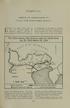 Chapter VIII AM ERI C AN OPERATIONS I N I T AL Y A N D NORT HERN R U S S IA to dissipating its strength by sending t roops to other theaters of operations, as often proposed by Allied governments. In two
2-6 13+ 120 Min. Art.No.: RIO524 Made in Germany Copyright 2015 www.riograndegames.com
 This expansion can only be played with a copy of Power Grid or Power Grid deluxe Art.No.: RIO524 Made in Germany Copyright 2015 www.riograndegames.com 6 55132 00524 1 Warning! Choking hazard - small parts.
Goal of the game. Game components
 Goal of the game In the game Mercurius, players take on the roles of powerful, wealthy Dutch burghers in the seventeenth century, whose goal is to multiply their wealth by speculating on the Amsterdam
LESSON 1. Opening Leads Against Notrump Contracts. General Concepts. General Introduction. Group Activities. Sample Deals
 LESSON 1 Opening Leads Against Notrump Contracts General Concepts General Introduction Group Activities Sample Deals 8 Defense in the 21st Century GENERAL CONCEPTS Defense The opening lead against notrump
CHAPTER SIX: FROM EMPIRE TO INDEPENDENCE, 1750-1776
 CHAPTER SIX: FROM EMPIRE TO INDEPENDENCE, 1750-1776 THE SEVEN YEARS WAR IN AMERICA The Albany Conference of 1754 Colonial Aims and Indian Interests Frontier Warfare The Conquest of Canada The Struggle
PRISONER P-09 FREE INFINITY MISSION DOWNLOAD BEASTSOFWAR.COM
 PRISONER P-09 FOR MORE INFO. ABOUT INFINITY VISIT: WWW.INFINITYTHEGAME.COM ALL NAMES, TRADEMARKS, & IMAGES ARE COPYRIGHT OF THEIR RESPECTIVE OWNERS. MISSION OBJECTIVES Prisoner P-09, an agent possessing
The Walls Came Tumbling Down The Story, Chapter 7: Joshua Sunday, October 19, 2014 Lakeside Lutheran Church Almost every Sunday morning, I post an
 The Walls Came Tumbling Down The Story, Chapter 7: Joshua Sunday, October 19, 2014 Lakeside Lutheran Church Almost every Sunday morning, I post an invitation on Lakeside s Facebook page about what will
French-speaking Canada. First Nations
 Canada The capital is Ottawa It is a constitutional monarchy: the British monarch is the head of state. Very high living standards A multicultural society The second largest country in the world (after
French Voyageurs. Fur Trade. and the. Resource packet. Metroparks Mobile Learning Center
 French Voyageurs and the Fur Trade Resource packet Metroparks Mobile Learning Center Thank you for choosing the Huron-Clinton Metroparks Mobile Learning Center for your class field trip! We strive to provide
Chapter 22: World War I. Four most powerful European nations in the early 1900s were Great Britain, France, Germany, Russia.
 Chapter 22: World War I The Beginnings of World War I World War I was fought from 1914-1918. United States entered World War I in 1917. The Origins of Europe s Great War Nationalism Four most powerful
1. Which of the following is NOT an argument in support of imperialism or expansionism?
 U.S I Quarterly Assessment Practice Test Circle the best answer to each question. 1. Which of the following is NOT an argument in support of imperialism or expansionism? A. The United States should become
The Global Economy prior to the War of 1812
 The Global Economy prior to the War of 1812 Lesson Materials Department of Education Outreach French Ambassador s Announcement Due to the current war with England, the French government announces a ban
Why a Floating Exchange Rate Regime Makes Sense for Canada
 Remarks by Gordon Thiessen Governor of the Bank of Canada to the Chambre de commerce du Montréal métropolitain Montreal, Quebec 4 December 2000 Why a Floating Exchange Rate Regime Makes Sense for Canada
Although the dominant military confrontations of the 20 th century were centered on the
 To what extent were the policies of the United States responsible for the outbreak and development of the Cold War between 1945 and 1949? Although the dominant military confrontations of the 20 th century
Words to Know before You Go!
 Words to Know before You Go! American Revolution Neutral Patriot Loyalist Traitor Conspiracy Petticoat Rebel Betray Fun Facts John Jay was the eighth of ten children. Today King s College, the school where
Using Primary Historical Resources to Discover the Location of an Archaeological Site: The Search for the French Fort sur la Rivière aux Boeufs
 Using Primary Historical Resources to Discover the Location of an Archaeological Site: The Search for the French Fort sur la Rivière aux Boeufs Modified From 2003 PA Archaeology Month Lesson Plan by: Renata
Probability and Expected Value
 Probability and Expected Value This handout provides an introduction to probability and expected value. Some of you may already be familiar with some of these topics. Probability and expected value are
Current California Math Standards Balanced Equations
 Balanced Equations Current California Math Standards Balanced Equations Grade Three Number Sense 1.0 Students understand the place value of whole numbers: 1.1 Count, read, and write whole numbers to 10,000.
Foreign Affairs in the Young Nation 1
 Foreign Affairs in the Young Nation To what extent should the United States have become involved in world affairs in the early 1800s? P R E V I E W Examine the map your teacher has projected, or look at
The Implication of TMD System in Japan to China s Security
 The Sixth ISODARCO Beijing Seminar on Arms Control October 29-Novermber 1, 1998 Shanghai, China The Implication of TMD System in Japan to China s Security Institute of World Economics & Politics Chinese
Why China s Rise Will Not Be Peaceful
 Can China Rise Peacefully John Mearsheimer September 17, 2004 Why China s Rise Will Not Be Peaceful The question at hand is simple and profound: can China rise peacefully? My answer is no. If China continues
The Southern Colonies
 The Southern Colonies About 100 men and boys sailed to Virginia in 1607. They set up a settlement. They named their new home Jamestown. They did not plant crops. They looked for gold. Just a few of the
Boston Tea Party Lithograph
 Boston Tea Party Lithograph "The Destruction of Tea at Boston Harbor." 1773. Copy of lithograph by Sarony & Major, 1846. Credit: National Archives and Records Administration Historical Context: The point
A GAME BY ROBERTO DI MEGLIO, MARCO MAGGI & FRANCESCO NEPITELLO
 TM TM A GAME BY ROBERTO DI MEGLIO, MARCO MAGGI & FRANCESCO NEPITELLO 2 The Battle of Five Armies CHAPTER I: INTRODUCTION Welcome to The Battle of Five Armies board game. The Battle of Five Armies is a
Command & Colors: Ancients. Game Design by. Richard Borg. 3rd Edition. 2009 GMT Games, LLC
 Command & Colors: Ancients RULE BOOK Game Design by Richard Borg 3rd Edition Command & Colors: Ancients 1. INTRODUCTION The Commands & Colors: Ancients game system allows players to portray important engagements
Download a huge range of popular boardgame rules summaries, reference sheets and player aids at www.headlesshollow.com
 Another boardgame player aid by Download a huge range of popular boardgame rules summaries, reference sheets and player aids at www.headlesshollow.com Universal Head Design That Works www.universalhead.com