
Emergency Preparedness Guide for Child Care Providers
|
|
|
- Hortense Todd
- 10 years ago
- Views:
Transcription

1 Emergency Preparedness Guide for Child Care Providers

2 It Pays to Prepare! Table of Contents Goal and Objectives of this Guide...page 4 Emergency Numbers Chart...page 5 Emergency Evacuation Plan...page 6 Emergency Kits and Supplies...page 7 Guidelines on Handling Medical Emergencies...page 8 Roles and Responsibilities of Staff...page 10 Special Considerations for Children with Special Health Care Needs...page 11 Disease Preparedness: being prepared for communicable disease outbreaks in your center...page 12 Emergency Information Form...page 13 Sample Letter for Families about Exposure to a Communicable Disease...page 15 Sources and References...page 16 3

3 Emergency Preparedness Guide for Child Care Providers Goal and Objectives Often times, the outcome of an emergency is directly affected by how well the people involved are prepared. In any emergency, whether it is a natural disaster or an act of terrorism, children may not understand what is happening and may be physically or developmentally unable to protect themselves. Child care programs that have an Emergency Preparedness Plan are better able to react and protect the lives of those involved. The goal of this publication is to provide basic preparedness and planning information that can be used in a variety of child care settings. The five objectives of the guide are to educate providers in developing an emergency response plan in the following areas: 1. Collecting and posting emergency numbers 2. Creating and executing an emergency evacuation plan 3. Reviewing and posting guidelines on how to handle a medical emergency within the child care setting 4. Train staff on specific roles and responsibilities during an emergency 5. Review special considerations for children with special health needs during an emergency. Use this guide as a planning tool. Forms may be reproduced as needed. Programs that have a plan in place in the event of an emergency are better able to protect lives and return to normal operations in less time. 4

4 First Steps First Steps All child care settings must have a written emergency response plan. It is important to keep it simple so that you are able to recall the steps easily and relay the information to others. Now is the time to develop relationships with your local emergency workers. This includes fire, law enforcement and public works workers. These people would most likely be the first to respond to an emergency at or near your facility or home. They can assist you in developing a plan. Using the following checklists and templates will help guide you in developing an Emergency Preparedness Plan for your child care facility: EMERGENCY NUMBERS Name/Company Contact/Town Telephone Number Director Ambulance Fire Poison Control Police Local Health Dept Building Inspector Building Security Dept. of Social Services Health Consultant State Licensor 5

5 Emergency Evacuation Plan In the event of an emergency situation that requires an evacuation of, one of the following plans shall be implemented. In all situations, the caregiver in charge when evacuating shall: Take an accurate attendee list; Account for all children and staff as they board/depart vehicles; Bring any necessary medications/supplies and emergency records; Take a cellular phone if available to be used for emergency notifications. 1. If the emergency environment is confined to the immediate area of the child care facility, e.g. fire or toxic fumes and the children cannot stay on the premises, the children will be brought to, by where they will remain accompanied by caregivers while family/guardian/emergency contacts are notified of the situation and arrangements are made for either the transporting home or care taking for the remainder of the day. The place of safety should be close by and within walking distance if appropriate. 1A. In the event of exposure to toxic materials or gases, and a physical examination is recommended, children will be transported by to where they will be examined by a health provider and family/guardian/emergency contacts will be notified. 2. If the emergency is more widespread and encompasses a larger area such as a neighborhood or several homes due to a non-confined environmental threat, e.g. toxic fumes from a spill, flood waters, brush fires, etc. and the children cannot remain in the area, the children will be brought to, by (method of transportation) where they will remain accompanied by caregiver(s) while family/guardian/emergency contacts are notified and arrangements for either transportation home or a continuation of care are made. 3. In the event of a major environmental hazard that necessitates a larger area evacuation such as several neighborhoods, a city/town or geographical area, due to a large non-confined hazard, e.g. earthquake, hurricane, etc., children will be transported to: a Red Cross designated mass shelter by where they will remain accompanied by caregiver(s) while family/ guardian/emergency contacts are notified and arrangements are made for their pick up. Staff will remain with and care for the children at all times during an event. Attendance will be checked whenever children are moved. Staff will bring any necessary medications, supplies, and emergency records. 6

6 Emergency Kits and Supplies This list contains the minimum items you should have in your center in case of an emergency. Please check your licensing regulations to determine if your state requires any additional items. Center Emergency Kit (Should be packed in a backpack or other container that is mobile in the event of an evacuation and be located in a central and easily accessible location) Copies of all contact lists For families and staff, include the name, phone number, and as well as information for someone preferably out-ofstate, at least out of the immediate area Phone numbers and s for your immediate supervisor when applicable Flashlights with extra batteries Long-life, emergency flashlights Battery-operated radio and extra batteries AM/FM, weatherband/tv band Manual can-opener Notepad, pens/pencils, scissors Hand-sanitizer and cleansing agent/disinfectant Whistle Disposable Cups Wet Wipes and Tissues First Aid kit Virginia s Minimum Standards for Licensed Child Day Centers specify the First Aid Kit must contain the following: Scissors, tweezers, gauze pads, adhesive tape, band-aids, antiseptic cleansing solution, thermometer, triangular bandages, disposable gloves and a first aid instructional manual. Keep in Facility at all Times Charged cell phone or walkie talkies One gallon of water for every four children and staff Disposable cups Non-perishable food items like soft granola bars, cereal, cheese and crackers, cans of fruit, and special infant items, etc. should be nut-free in case of allergies Extra supplies of critical medication such as insulin, epi-pens, etc. for children and staff Each Child Should Have: A change of seasonally appropriate clothing and blanket Extra diapers (one-day supply as space allows) Extra formula (one-day supply as space allows) Location of Emergency Kits: Locations of Additional Emergency Supplies: Location of Cell Phone: 7

7 Guidelines on Handling Medical Emergencies The following information is provided as a quick reference to help you make decisions in a stressful emergency situation. This information is by no means intended to substitute for adequate first aid training. Staff involved in the direct care of children should maintain current certification in First Aid and CPR for infants and children. By applying standard principles of action in every medical situation, staff can prevent further harm and avoid overlooking factors that may affect a child. It is important for staff to recognize signs and symptoms requiring immediate action and ambulance transport to the nearest hospital emergency department, as opposed to those that are not emergencies and can be treated at the Center and/or while waiting for the child to be picked up. The teacher who is with the child should provide first aid according to the principles of emergency action. Medical Emergency Conditions Listed below are some examples of conditions that are considered serious medical emergencies requiring immediate medical care by a health care professional. Call an ambulance and then notify the child s parent/guardian immediately for any of the following: semi consciousness (able to arouse but extremely lethargic) or unusual confusion breathing difficulties including: rapid, noisy breathing (barking, gurgling or crowing sounds, severe wheezing) labored breathing (takes so much effort that child cannot talk, cry, drink, or play) severe bleeding (large or multiple wounds that cannot be controlled with direct pressure) unequal pupils first-time seizure or seizure lasting more than 15 minutes in a child with a known seizure disorder injury that causes loss of consciousness neck or back injury continuous clear drainage from the nose or ears after a blow to the head non-injury-related severe headache, stiff neck, or neck pain when the head is moved hives (a rash that looks like welts) that appear quickly, especially if hives involve face, lips, tongue, and/or neck very sick-looking or sick-acting child who seems to be getting worse quickly 8

8 repeated forceful vomiting after eating in an infant under four months of age severe abdominal pain that causes the child to double up and scream abdominal pain without vomiting or diarrhea after a recent blow to the abdomen or hard fall possible broken bones, especially if the child shows symptoms of shock or the body part cannot be adequately splinted or otherwise immobilized for transport by parent/guardian The teacher should apply appropriate first aid measures for all medical emergencies and minor illnesses or injuries as outlined in publication received with approved First Aid training. The parent/guardian of a sick or injured child should be contacted by telephone as soon as possible. The Center Director or a staff member should continue to try to reach a parent/ guardian or emergency contact. However, whether or not he or she is able to contact a parent/guardian, the child should still be taken to the hospital whenever a medical emergency exists. 9

9 Roles and Responsibilities of Staff List all staff names, addresses, and phone numbers (regular and emergency) as well as position in the program. For each person, list whom that person reports to, in order of responsibility. Be able to show at a glance who is in charge if someone above is unable to respond. List roles and responsibilities in an emergency. Consider overlaps in case someone is not able to fulfill their role. Answer these questions: Who will provide first aid? Who will take any medications? Who will take the first aid kit? Who will take emergency information on each child? Who will call for help? Who will carry the cellular phone? Who will carry the emergency kits? Which groups of children go with which staff? Who makes sure everyone is out of the building? Share and discuss the list with the staff so there is no surprise during an emergency. Everyone should know their primary and back up responsibilities. Maintain an attendance list at all times; do not put children, staff, visitors, or emergency personnel at risk by not knowing these three things: Who is in the building? When did they arrive? When did they leave? Have emergency information with the attendance list. Make sure you know health information and have permission for emergency medical treatment and know of any special requirements or medications for children and staff. Make sure each Child Information Card has accurate and up-to-date emergency contact information. Have parents review these cards at least once a year. 10

10 Special Considerations for Children with Special Health Care Needs Be sure all children are considered in any emergency preparedness plans and education. The following information helps ensure the inclusion of children with special needs. Does your emergency plan account for action steps to assist evacuation of a child with special needs and to transport any necessary medical equipment or medications to a meeting place outside the building? Many emergency agencies maintain systems that alert emergency workers that a child with special needs resides or is cared for at a facility. It is important to update this information, once it is on file, so that accurate decisions can be made by staff to help a child in an emergency. The American Academy of Pediatrics has developed an Emergency Information Form to be added to your emergency materials. You may make copies of the form at the end of this booklet, or visit to download blank forms. 11

11 Disease Preparedness being prepared for communicable disease outbreaks in your center: If a communicable disease is suspected or is diagnosed in your child care setting, please take the following steps: 1. Notify the local health department of any illness shown on the Reportable Diseases in Virginia list. Contact your local health department for this list. For information regarding the changes on the reporting requirements of communicable disease visit: From there, click on the List of Regulation Word Documents under June 28, From the list, click on Regulations for Disease Reporting and Control under State Board of Health. 2. Communicate with parents on when to exclude a child suspected of having a communicable disease. Under some special circumstances and in coordination with the health department, children ill with a specific disease may be asked to remain in the group care setting. Please see the sample letter to families about exposure to communicable disease at end of this booklet. 3. Report to all other parents and staff what illness children have been exposed to and what symptoms to watch for. 4. When a diagnosed communicable disease is present in a child care setting or a known problem in the community, perform health screenings on all children on arrival so symptomatic children can be quickly identified and care arrangements made. 5. Sanitation procedures must be strictly followed and extra precautions taken regarding food handling, dish washing and hand washing by staff and children; as well as general cleanliness of toys in the environment. 6. Re-admission to child care should be a combination of the advice of the child s doctor, center policy, and, when appropriate, the local health department. For information on communicable disease fact sheets visit: For information on universal or standard precautions visit: or 12

12 Emergency Information Form For Children With Special Needs American College of Emergency Physicians* American Academy of Pediatrics Date form Revised Initials completed Revised Initials By Whom Last Name: Name: Birth Date: Nickname: Home Address: Parent/Guardian: Home/Work Phone: Emergency Contact Names & Relationship: Signature/Consent*: Primary Language: Phone Number(s): Physicians: Primary Care Physician: Emergency Phone: Fax: Current Specialty Physician: Specialty: Current Specialty Physician: Specialty: Anticipated Primary ED: Emergency Phone: Fax: Emergency Phone: Fax Pharmacy: Anticipated Tertiary Care Center: Diagnoses/Past Procedures/Physical Exam: 1. Baseline Physical Findings: Baseline Vital Signs: 4. Synopsis: Baseline Neurological Status: *Consent for release of this form to health care providers 13

13 Diagnoses/Past Procedures/Physical Exam continued: Medications 1. Significant Baseline Ancillary Findings (lab, x-ray, ECG): Last Name: Prostheses/Appliances/Advanced Technology Devices: Management Data: Allergies: Medications/Foods to be avoided and why: Procedures to be avoided and why: Immunizations Dates DPT OPV MMR HIB Dates Hep B Varicella TB status Other Antibiotic Prophylaxis: Indication: Medication and dose Common Presenting Problems/Findings with Specific Suggested Managements Problem Suggested Diagnostic Studies Treatment Considerations Comments on child, family, or other specific medical issues: Physician/Provider Signature: Print Name: 14 American College of Emergency Physicians and American Academy of Pediatrics. Permission to reprint granted with acknowledgement.

14 Sample Letter to Families about Exposure to Communicable Disease Name of Child Care Program: Address of Child Care Program: Telephone Number of Child Care Program: Date: Dear Parent or Legal Guardian: A child in our program has or is suspected of having: Information about this disease: The disease is spread by: The symptoms are: The disease can be prevented by: What the program is doing: What you can do at home: If your child has any symptoms of this disease, call your doctor to find out what to do. Be sure to tell your doctor about this notice. If you do not have a regular doctor to care for your child, you may ask other parents for names of their children s doctors or contact your local health department or Medical Home Plus, Inc. at [email protected], who will direct you to a pediatric or family practice in your area. If you have any questions, please contact: at ( ) (Caregiver s name) (Telephone number) Source: Model Child Care Health Policies, 3rd Ed. American Academy of Pediatrics; Pennsylvania Chapter

15 Sources: Emergency Response Planning Guide for Child Care, Child care Services Division and Healthy Child Care Vermont. Ready to Respond Emergency Preparedness Plan for Early Care and Education Centers, Bright Horizons Family Solutions. References: Federal Emergency Management Association s official Web site for emergency preparedness. This Web site specifically directs parents to consult with their child s school/child care facility about their emergency plans. Bright Horizons website has useful information including Talking with children about war and terror and the original Emergency Preparedness Plan for Child Care Centers as a downloadable MS Word document. Virginia Department of Emergency Management, Developing Your Disaster Plan US Dept of Education - Emergency Planning for America's Schools: information to plan for any emergency including natural disasters, violent incidents and terrorist acts. The Collaborative for Academic Social and Emotional Learning (CASEL) has resources for helping children and students handle trauma and crises. 16

16 Notes It Pays to Prepare! 17

17 18 Notes

South Carolina Child Care Services. Child Care Emergency Plan Template
 South Carolina Child Care Services Child Care Emergency Plan Template South Carolina Department of Social Services regulations require child care facilities to have a plan in place that addresses emergency
A PUBLIC HEALTH GUIDE TO EMERGENCY PLANNING
 A PUBLIC HEALTH GUIDE TO EMERGENCY PLANNING A United Front New Jersey s Department of Health (DOH) has made it a priority to strengthen our state s health care infrastructure to prepare for any public
READY? are you. Become a Ready Hero and learn how to plan for emergencies.
 are you READY? Become a Ready Hero and learn how to plan for emergencies. Once you have completed your readiness plan and built your emergency kit, have each family member sign the certificate (see inside
EMERGENCY NURSING SERVICES GUIDELINES
 MONONA GROVE SCHOOL DISTRICT Board Rule 453.1 EMERGENCY NURSING SERVICES GUIDELINES A. School Nurse Certification and Duties 1. The name and educational preparation of the School Nurse shall be provided
Helping Children Cope with Disaster
 Helping Children Cope with Disaster This booklet offers parents, caregivers, and other adults suggestions on how to help children cope with the effects of disaster, as well as how to be prepared before
EMERGENCY PROCEDURES
 EMERGENCY PROCEDURES In an Emergency Call 911 Using County Telephone System Call 9-911 Fresno County Sheriff 600-3111 Fresno County Security 600-6785 TABLE OF CONTENTS Introduction 3 Accidents 4 Serious
SELF-STUDY SERIES. UNDERSTANDING THE REGULATIONS: What Alaskan Foster Parents Need to Know. Updated January 2013. 1.0 Hour Training Credit
 SELF-STUDY SERIES UNDERSTANDING THE REGULATIONS: What Alaskan Foster Parents Need to Know UNIT #10: Fire Safety, First Aid and Emergency Preparedness in the Foster Home Updated January 2013 1.0 Hour Training
Comprehensive Care Planning
 Comprehensive Care Planning CMHI Comprehensive Care Plan Children with Special Health Care Needs This folder contains information about the essentials of comprehensive care planning for children with special
Pandemic Influenza: A Guide for Individuals and Families
 Pandemic Influenza: A Guide for Individuals and Families GET INFORMED. BE PREPARED. This guide is designed to help you understand the threat of a pandemic influenza outbreak in our community. It describes
Emergency Planning Template. A Guide for Family and Large Family
 Emergency Planning Template A Guide for Family and Large Family Child Care Homes Emergency Planning Template: A Guide for Family and Large Family Child Care Homes June, 2009 The purpose of this template
Community Emergency Response Teams (CERT) & Individual and Family Preparedness
 Community Emergency Response Teams (CERT) & Individual and Family Preparedness Good Morning Vicki Garfola Michael Loper Points of Discussion Community Emergency Response Teams (CERT) Family Preparedness/Creating
Emergency procedures instructions to farm staff
 Emergency procedures instructions to farm staff The first priority in the event of an emergency is for the safety of all people present. Emergency phone numbers Dial 111 for Fire/Police/Ambulance 1. Tell
Creating a Business Continuity Plan
 Family Office Information Creating a Business Continuity Plan Hurricanes, fires, terrorist attacks, earthquakes and tsunamis aren t the only kinds of events that can cripple a family office. More common
EMERGENCY PREPAREDNESS PLAN FOR
 EMERGENCY PREPAREDNESS PLAN FOR Name of Child Care Center Provided by: 2014 Emergency Preparedness Plan Page 1 TABLE OF CONTENTS Page I: Introduction... 3 II: Emergency Response Organization... 3 III:
Contractor s Injury Management Toolbox RISK CONTROL
 Contractor s Injury Management Toolbox managing job site accidents and injuries RISK CONTROL Your Role in Workplace Safety As a superintendent or foreman, you play an important role in helping our company
Evacuation Planning Form for Child Care Emergency/Disaster Preparedness
 (R.8/12) COMMONWEALTH OF KENTUCKY Cabinet for Health and Family Services Department for Community Based Services Division of Child Care N Evacuation Planning Form for Child Care Emergency/Disaster Preparedness
EMERGENCY PREPAREDNESS
 EMERGENCY PREPAREDNESS REQUIREMENTS: Wind makes kites fly, fire can keep us warm, and rain helps the flowers and plants to grow. But sometimes the wind can blow too hard, fires can get too big or it can
Children s Ministry Handbook
 Children s Ministry Handbook TRINITY BAPTIST CHURCH Reaching Locally, Effecting Globally, Through the Word of Life. 02.05.2013 MISSION STATEMENT The goal of Trinity Baptist Church s Children s Ministry
Continual Readiness Guide Staff in Emergency or Disaster Events Human Resource Questions and Answers
 Continual Readiness Guide Human Resource Questions and Answers # Question Answer Emergency Operations Plan? As WakeMed provides essential healthcare services to the community, it has the responsibility
Emergency Preparedness and Conference Emergency Plan Form
 In order to maintain a safe environment for all visitors at Pacific University, it is important for your program s staff and participants to understand the procedures to follow in the unlikely event of
SCHOOL DISTRICT #43 (COQUITLAM) MEDICAL ALERT FORMS FORM(S) MUST BE COMPLETED AT THE START OF EACH SCHOOL YEAR
 SCHOOL DISTRICT #43 (COQUITLAM) MEDICAL ALERT FORMS FORM(S) MUST BE COMPLETED AT THE START OF EACH SCHOOL YEAR Please read instructions below carefully. Feel free to contact your school if you need any
Factors to Consider When Developing an Evacuation Plan
 The following should be viewed only as suggestions: Factors to Consider When Developing an Evacuation Plan 1. You must identify your document with a specific title and explanation. Example: Evacuation
Things to Think About
 Why Do People with Thalassemia Need an Emergency Preparedness Checklist? Emergencies and natural disasters are thankfully rare, but they do happen. It s important that all families develop a plan of action
INCIDENT, INJURY, TRAUMA AND ILLNESS POLICY
 INCIDENT, INJURY, TRAUMA AND ILLNESS POLICY Mandatory Quality Area 2 Policy Statement is committed to: providing a safe and healthy environment for all children, staff, volunteers, students on placement
Incident, Injury, Trauma, Illness Policy
 Incident, Injury, Trauma, Illness Policy 1. Authorisation This policy was approved by the Poets Grove Family and Children s Centre Committee of Management on 26 November 2014 2. Review Date This policy
MEDICAL AND HEALTH EMERGENCIES
 IX.041 MEDICAL AND HEALTH EMERGENCIES POLICY The Board shall provide medically appropriate, immediate, quality emergency care in the event of an accident or illness that may compromise the well-being of
Sanitary Food Preparation & Safe Food Handling
 70 Feeding Infants 10 Sanitary Food Preparation & Safe Food Handling Babies are more susceptible to bacteria than older children, and unsanitary food conditions can cause serious infections. General cleanliness,
Safety Issue: OSHA requires most employers to maintain. Recording and Reporting Occupational Injuries and Illnesses
 Overview Safety Issue: Is your organization currently in compliance with OSHA s occupational injury and illness recording and reporting requirements? OSHA requires most employers to maintain occupational
When 911 is called, the person making the call will stay on the phone until the dispatcher hangs up and all questions have been answered.
 Emergency Preparedness Plan In all scenarios below, the situation, with specific details, will be documented in the client s file. The client s case management agency and client s family/representative
Child and Adult Care Food Program Sponsoring Organization
 BIOSECURITY / SECURITY CHECKLIST For the Food Service Director Child and Adult Care Food Program Sponsoring Organization Biosecurity and security are part of an all-hazards approach to Food Safety. BE
A Trip to the. Emergency Room. Help Us Help You
 A Trip to the Emergency Room Help Us Help You No one plans to have a medical emergency however there are things that you can do ahead of time to help make the process easier and faster once you arrive
Taking Care of Your Children
 Taking Care of Your Children Planning on who will take care of your children is the most important thing you can do to prepare your family for a disaster situation. Talk with your family, friends and neighbors
SHELTER-IN-PLACE OR EVACUATE
 SHELTER-IN-PLACE OR EVACUATE WOULD YOU KNOW WHAT TO DO? A PREPAREDNESS GUIDE FOR THE HOME No matter where you live, your community may experience a natural or man-made disaster a tornado, floor, winter
Chapter 12: MEDICAL CARE
 Chapter 12: MEDICAL CARE Purpose Of These Requirements To ensure the health, safety and well-being of all children in child care by administering policies and procedures that address medical care issues
Emergency Room (ER) Visits: A Family Caregiver s Guide
 Family Caregiver Guide Emergency Room (ER) Visits: A Family Caregiver s Guide Your family member may someday have a medical emergency and need to go to a hospital Emergency Room (ER), which is also called
Remove this cover sheet before redistributing and replace it with your own. Please ensure that DPHHS is included on your HAN distribution list.
 State of Montana Health Alert Network DPHHS HAN ADVISORY Cover Sheet DATE: May 15, 2012 SUBJECT: Pertussis INSTRUCTIONS: DISTRIBUTE to your local HAN contacts. This HAN is intended for general sharing
LIFE-THREATENING ALLERGIES POLICY
 CODE: C.012 Program LIFE-THREATENING ALLERGIES POLICY CONTENTS 1.0 PRINCIPLES 2.0 POLICY FRAMEWORK 3.0 AUTHORIZATION 1.0 PRINCIPLES 1.1 Halifax Regional School Board will maximize the safety of students
Application for Childcare
 261 Sky River Parkway Monroe, WA 98272 Tel: (360) 794 4775 DSHS Provider #: 827175 Application for Childcare Child s Name: Grade (current/going into): School: Please indicate which program you will be
Emergency Preparedness Plan Checklist for Foster Care Homes
 Aging and People with Disabilities Office of Developmental Disabilities Services Emergency Preparedness Plan Checklist for Foster Care Homes Licensing/Certification Notes Comments Yes No Training documentation
What Is. Norovirus? Learning how to control the spread of norovirus. Web Sites
 Web Sites Centers for Disease Control and Prevention (CDC) http://www.cdc.gov/norovirus/index.html Your Local Health Department http://www.azdhs.gov/diro/lhliaison/countymap.htm What Is Ocument dn Norovirus?
Accidents, incidents and first aid
 Accidents, incidents and first aid Emergency Contacts Index Branch name: Branch chair: Local A+E dept: Address: PAGE Emergency contacts 2 Introduction 4 Accident reporting 4 Accident investigation 6 Local
N F C S R E S O U R C E S. Just In Case. National Family Caregiver Support Program. Emergency Readiness for Older Adults and Caregivers
 N F C S U.S. Department of Health and Human Services Administration on Aging National Family Caregiver Support Program Just In Case Emergency Readiness for Older Adults and Caregivers P R E S O U R QUICK
How To Care For A Sick Person
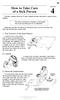 39 How to Take Care of a Sick Person Sickness weakens the body. To gain strength and get well quickly, special care is needed. Medicines are often not necessary. But good care is always important. The
TIPS FOR CHOOSING A CHILDCARE PROGRAM
 TIPS FOR CHOOSING A CHILDCARE PROGRAM www.childhealthonline.org Copyright 2006 Locating a Childcare Program Begin your search by calling your local experts your child care resource and referral (CCR&R)
Emergencies and Incident Investigation FOR SCHOOLS
 Emergencies and Incident Investigation FOR SCHOOLS When an emergency occurs it is too late to decide who will do what, and what equipment you need. With your staff, plan how you will manage emergencies
3/24/2014. Waubonsee Community College Safety Day 2014. Why do we need a First Aid Program?
 Waubonsee Community College Safety Day 2014 Why do we need a First Aid Program? 4,383 workers were killed on the job in 2012 Total recordable non fatal cases: 2,976,400 in 2012 Cases involving days away
MCC Child Development Center Emergency Procedures
 MCC Child Development Center Emergency Procedures MCC Child Development Center is committed to uphold the highest standards of health and safety practices for every child in attendance. Staff train and
A Trip To The Emergency Room Help Us Help You As the only full-service health care system and trauma center in the region, United Regional understands
 A Trip to the Emergency Room Help Us Help You unitedregional A Trip To The Emergency Room Help Us Help You As the only full-service health care system and trauma center in the region, United Regional understands
Frequently asked questions about whooping cough (pertussis)
 Frequently asked questions about whooping cough (pertussis) About whooping cough What is whooping cough? Whooping cough is a highly contagious illness caused by bacteria. It mainly affects the respiratory
First Aid Policy. A. Introduction. B. Purpose. A copy of this policy is published in the following areas: The school s intranet The school s website
 First Aid Policy A copy of this policy is published in the following areas: The school s intranet The school s website Date created: September 2015 Date for review: September 2016 Created by: Matthew Lovett,
Section I New Policy with copy of updated Epipen Order, and protocol. Section II Anaphylaxis Management Algorithm
 Anaphylaxis Policy Contents Section I New Policy with copy of updated Epipen Order, and protocol Section II Anaphylaxis Management Algorithm Section III Demonstration of Epipen use for all staff members
Emergency Evacuation Assistance Program
 URS 8.5x11 ENG 4_12_Layout 1 May/7/2012 12:46 PM Page 1 Additional Resources 9-1-1 Emergencies 3-1-1 Government Information Toll-free outside Miami-Dade County 1-888-311-DADE (3233); TTY/TTD 305-468-5402
EMERGENCY PREPAREDNESS & RESPONSE PROCEDURE
 1 of 12 DOCUMENT REVISION HISTORY Revision No. Date DESCRIPTION OF CHANGES Pages Affected By 00 01/07/2003 Draft Issued For Comment All HSEQ Dept. 01 01/09/2003 Total Change First Approved Issue All HSEQ
PERSONAL DISASTER PREPAREDNESS GUIDE
 PERSONAL DISASTER PREPAREDNESS GUIDE This document is available in English and in Spanish at www.operationhope.org. For additional information call 888-388-HOPE (4673) Revised 09-01-2005 PERSONAL DISASTER
OPTIONAL LESSON Anaphylaxis and Epinephrine Auto-Injector
 OPTIONAL LESSON Anaphylaxis and Epinephrine Auto-Injector Lesson Length: 54 minutes GUIDANCE FOR THE INSTRUCTOR To complete this lesson and meet the lesson objectives, you must: Discuss all points in the
Administration of Medication Policy
 Administration of Medication Policy Best Practice Quality Area 2 PURPOSE This policy will clearly define the: procedures to be followed when a child requires medication while attending Montessori Early
CHILD CARE LICENSING REGULATION
 Province of Alberta CHILD CARE LICENSING ACT CHILD CARE LICENSING REGULATION Alberta Regulation 143/2008 With amendments up to and including Alberta Regulation 62/2013 Office Consolidation Published by
Pennsylvania School Immunization Requirements
 Pennsylvania School Immunization Requirements The Commonwealth of Pennsylvania has minimum immunization requirements for all students. The Pennsylvania Department of Health states that for attendance in
READY FREDDIE! HI I M READY. AND I M FREDDIE. CLICK!
 POP! This book was developed by a steering committee of emergency preparedness public educators in King County, Washington representing the following agencies: HI I M READY. READY FREDDIE! American Red
This document contains the text of Secretary of the State regulations concerning
 1 This document contains the text of Secretary of the State regulations concerning Emergency Contingency Model Plan for Elections (Sections 9-174a-1 to 9-174a-34) This document was created by the Office
Union College Campus Safety Emergency Action Guide
 Union College Campus Safety Emergency Action Guide Emergency Telephone Numbers At Union College, for all campus emergencies dial Campus Safety at ext. 911. (If the line is busy on a second try, dial "6911".)
Accident Prevention. and Crisis Management. Learning Objectives
 13 1 1 Accident Prevention 2 and Crisis Management Learning Objectives How can you prevent accidents? What should you do when a food recall or food crisis occurs? What should you do if the establishment
DISASTER PLANNING Self-Assessment Guide for CHILD CARE CENTERS and FAMILY CHILD CARE HOMES
 Child Care Advocate Program California Department of Social Services DISASTER PLANNING Self-Assessment Guide for CHILD CARE CENTERS and FAMILY CHILD CARE HOMES COMMUNITY CARE LICENSING DIVISION Promoting
EMERGENCY NURSING SERVICES PROCEDURES A.
 EMERGENCY NURSING SERVICES PROCEDURES A. 453-Rule Definitions 1. "Emergency Nursing Services" - The services and procedures for handling accidents and illnesses, and for administering necessary medications.
Accident Policy. Accident Procedure & Injury Report Form
 Accident Policy 1. To create a safe, enjoyable space for staff, children and parents. 2. To ensure that all children, staff, parents and visitors to the Centre receive appropriate first aid and follow
2 P age. Babies from Birth to Age 2
 Contents Babies from Birth to Age 2... 2 Vaccines give parents the power... 2 Vaccines are recommended throughout our lives... 3 Talk to your doctor... 3 Vaccines are very safe... 3 Whooping Cough (Pertussis)...
Emergency Action Plans
 Emergency Action Plans Clearly the most effective way to deal with an injury- emergency is to plan ahead and to practice the appropriate procedures. An emergency action plan is a written plan of action
Policy: Anaphylaxis PURPOSE. Rationale. Procedure
 Policy: Rev Oct 14 PURPOSE (PCCC) is committed to the safety, wellbeing and inclusion of all children enrolled in its services. PCCC will ensure all staff involved in the delivery of services to children
5420.1-R ALLERGY/ANAPHYLAXIS REGULATION. Definitions. Allergen: A substance that triggers an allergic reaction.
 ALLERGY/ANAPHYLAXIS REGULATION Definitions Allergen: A substance that triggers an allergic reaction. Allergies: An exaggerated response to a substance or condition produced by the release of histamine
Decontamination of the victim. Protection of medical personnel. Disposing of contaminated protective equipment and wash solutions.
 Decontamination: Standard Operating Procedure This procedure should be followed in the event of an emergency where a victim or equipment should need to be decontaminated due to a chemical, biological,
Guide for family day carers Responsibilities under the Children s Services Act 1996 and the Children s Services Regulations 2009
 Guide for family day carers Responsibilities under the Children s Services Act 1996 and the Children s Services Regulations 2009 Please note: The Web version of this guide has been specifically designed
Emergency Preparedness Plan
 Early Childhood Center Emergency Preparedness Plan 2013-2014 100 Welsh Park Drive, Rockville MD 20850 9/10/2013 Table of Contents ECC Emergency Plan Development... 3 Distribution of Emergency Plan... 3
Tuberculosis and You A Guide to Tuberculosis Treatment and Services
 Tuberculosis and You A Guide to Tuberculosis Treatment and Services Tuberculosis (TB) is a serious disease that can damage the lungs or other parts of the body like the brain, kidneys or spine. There are
There to help when you need us most.
 There to help when you need us most. Preparing your home and family for the unthinkable. Disaster can strike anywhere, anytime with little or no warning. Are you really prepared? Disaster can strike quickly
HEMOPHILIA WHAT SCHOOL PERSONNEL SHOULD KNOW
 HEMOPHILIA WHAT SCHOOL PERSONNEL SHOULD KNOW TABLE OF CONTENTS Introduction p. 3 What Is Hemophilia p. 4 Common Bleeds p. 5 Superficial Bruising p. 8 Lacerations p. 8 Life-Threatening Bleeds p. 9 Sports
Milford Academy Admissions Office P.O. Box 878, New Berlin, NY 13411 Tel: (607) 847-9260 Fax: (607) 847-9250 www.milfordacademy.
 Milford Academy Admissions Office P.O. Box 878, New Berlin, NY 13411 Tel: (607) 847-9260 Fax: (607) 847-9250 www.milfordacademy.org Health Insurance Information Notification (Please Print) This is to inform
The effects of a pandemic can be lessened, however, if preparations are made ahead of time.
 PANDEMIC FLU FAMILY GUIDE TO PREPARATIONS A flu pandemic is a global outbreak of influenza that occurs when a new flu virus appears to which people have little or no immunity. Pandemic flu spreads easily
INSULIN-DEPENDENT DIABETES HEALTH CARE PLAN: II
 INSULIN-DEPENDENT DIABETES HEALTH CARE PLAN: II DATE: SCHOOL: GRADE: STUDENT: BIRTHDATE: HOME ADDRESS: PARENT/GUARDIAN: PARENT S PHONE: Home: Mom s work: Dad s work: EMERGENCY CONTACT (NAME, NUMBER and
Lesson 3 Managing Food Allergies
 Lesson 3 Managing Food Allergies Lesson at a Glance Time Allowed (1 hour) 5 minutes Introduction to Managing Food Allergies 15 minutes Objective 1: Creating a Food Allergy Policy Topic Activity Materials
Christian Learning Center
 Christian Learning Center at First United Methodist Church Milan, Tennessee Registration Packet Where we help your children grow and learn in a Christian environment! Revised November 2012 Check it out!
SOUTHEAST MISSOURI STATE UNIVERSITY COURSE SYLLABUS. Title of Course: Child Health, Safety and Nutrition New: Fall 2000
 SOUTHEAST MISSOURI STATE UNIVERSITY COURSE SYLLABUS Department of: Human Environmental Studies Course No.: CF124 Title of Course: Child Health, Safety and Nutrition New: Fall 2000 I. Catalog Description
First aid guidance note
 Document control information First aid guidance note Published document name: First-aid-gn.pdf Date issued: July 2012 Version: 2.0 Previous review dates: Next review date: Related documents: Governing
DIVISION OF CHILD DEVELOPMENT NC DEPARTMENT OF HEALTH AND HUMAN SERVICES EMERGENCY PLAN TEMPLATE
 DIVISION OF CHILD DEVELOPMENT NC DEPARTMENT OF HEALTH AND HUMAN SERVICES EMERGENCY PLAN TEMPLATE December 2004 Child Care Facility Table of Contents Emergency Plan Template Section Topic Page Emergency
Camp Nursing: Guidelines for Registered Nurses
 Camp Nursing: Guidelines for Registered Nurses June 2015 Approved by the College and Association of Registered Nurses of Alberta Provincial Council, June 2015. Permission to reproduce this document is
Guidelines for Hand Foot and Mouth Disease HFMD
 Guidelines for Hand Foot and Mouth Disease HFMD Hand, foot, and mouth disease, or HFMD, is a contagious illness caused by different viruses. Infants and children younger than 5 years are more likely to
Child Care Emergency Preparedness Training. Participant Manual
 Child Care Emergency Preparedness Training Participant Manual Contents Introduction.... 5 Description.... 6 Goal.... 6 Objectives.... 6 Audience... 7 Prerequisite.... 7 Accompanying Materials...........................................................