
Animal Bites and Rabies
|
|
|
- Shanna Ryan
- 10 years ago
- Views:
Transcription
1 1. REPORTING AND FOLLOW-UP Animal Bites and Rabies 1.1 Purpose of Reporting and Surveillance 1. To assess the risk of rabies exposure in persons bitten or otherwise exposed to animal saliva, recommend post-exposure rabies prophylaxis (PEP) to those who need it and to provide counseling and reassurance to those who do not. 2. As necessary, to assess risk and arrange for the capture and either confinement (10-day observation) of a live dog cat or ferret, or the laboratory examination of an animal head. This may involve coordination with other agencies, e.g., the Humane Society, county sanitarians, animal control and local law enforcement. 1.2 Reporting Requirements 1. Anyone with knowledge of humans being bitten by potentially rabid animals (e.g., physicians, veterinarians, animal control personnel, law enforcement officials or animal owners) is required to report such incidents to the Local Health Department (LHD) within one working day. 2. Any confirmed case of rabies in animals and any suspected or confirmed case of human rabies must be reported immediately (day or night) to the LHD, or, if LHD staff cannot be contacted, to the Oregon Health Authority (OHA). 1.3 Local Health Department Reporting and Follow-Up Responsibilities 1. Whenever possible, animal bites should be investigated on the day they were reported. 2. Animal bite case reports information should be entered electronically through Orpheus to the OHA Communicable Disease (CD) Section. Suspicions about human rabies cases should be phoned in immediately to Decisions about the disposition of animals that have bitten humans are the responsibility of the local health officer. CD Section epidemiologists are always available to consult on bite situations and may make executive decisions under unusual circumstances or when local personnel are unavailable. 4. The Oregon State Public Health Lab (OSPHL) must be notified by phone or in advance of all animal heads being sent in for rabies testing by calling County or LHD personnel are responsible for the supervision of confined animals. 6. Any case of human rabies will be investigated by the local health department in cooperation with OHA epidemiologists or Oregon Department of Fish and Wildlife. 2. RABIES AND ITS EPIDEMIOLOGY 2.1 Etiologic Agent The rabies virus is a member of the Rhabdovirus family. 2.2 Description of Illness Rabid animals can show a range of symptoms, often described as either dumb or furious rabies and they may progress from one state to the other. Dumb rabies is characterized by reclusive behavior, drooling, anorexia, a startle response to sudden noise or light exposure and irritation around the site of the bite, resulting in frequent licking and biting of the area. Furious rabies is marked by excitation and marked aggressiveness, notably biting of objects, animals, humans, or even self. Salivation is profuse and there is usually a change in voice. Central nervous system (CNS) signs of rabies may include an ascending paralysis, incoordination, convulsions and blindness. Wildlife often seems to lose their fear of people and nocturnal and crepuscular creatures may be out during daylight hours. Infected bats may act strangely (e.g. crawling around, hissing, etc.). It is important to remember that these signs and behaviors are not pathognomonic for rabies. Behavioral changes and clinical signs caused by a variety of infectious and non-infectious processes (e.g., pesticide Investigative Guidelines 1

2 exposure, heavy metal poisoning, trauma) can mimic those associated with rabies. Human rabies is not unlike rabies in other mammals. Prodromal symptoms include parasthesias, notably at or near the site of the original wound, irritability, and other disquieting neurological, behavioral, and mood changes. Rabies is virtually always fatal. 2.3 Reservoirs Almost all terrestrial mammals can be infected in theory, but in practice only one or two species tend to be significant reservoirs in endemic areas. In Oregon, Washington, and Idaho, bats are the only reservoir species, and other animals notably bat predators such as foxes or cats are only rarely infected as spillover from rabid bat populations. In other parts of the U.S., skunks, raccoons and foxes are important reservoirs in addition to bats. In some parts of the world, dogs and other carnivores may be important reservoirs. 2.4 Modes of Transmission Rabies is spread by the inoculation of virus-containing saliva into broken tissue or onto mucous membranes almost exclusively via animal bite. Person-to-person transmission of rabies has never been confirmed (except via corneal and organ transplants). Twenty-three cases of human rabies were acquired in the U.S. between 2000 and (The use of standard precautions for all patients should all but eliminate the need for PEP among hospital staff.) 2.5 Incubation Period The incubation period is typically two to eight weeks, but highly variable. Reports as short as 5 days and >1 year have been reported for non-human animals, and an incubation period of 7 years was inferred for one human. This variation may depend on the species exposed, the size of viral inoculum, and other factors. The proximity of the bite to the brain may also be a factor; virus inoculated into the head has a relatively short distance to travel, thus face bites are particularly urgent. The incubation period is not to be confused with the period of communicability. 2.6 Period of Communicability Infected animals can transmit rabies only after the infection has spread to the salivary glands, which typically occurs close to or after the time that CNS signs develop. In fact, many animals will die of rabies before they begin to shed virus. Laboratory studies have established that, in dogs, shedding begins at most 3 days before signs occur in cats, it is 1 day before. Shedding may persist until the animal dies, which is typically a few days. Little or nothing is known about the shedding period in other species. The rationale for a 10-day confinement period for dogs, cats and ferrets rests on this observed [maximal] interval between viral shedding and onset padded by a healthy margin of safety and has nothing to do with incubation period per se. 2.7 Treatment Treatment for rabies is essentially palliative. Once symptoms attributable to infection occur (in both humans and other animals), the chance of survival is virtually nil. 3. ASSESSING THE NEED FOR PROPHYLAXIS AND FOLLOW-UP With respect to rabies concern, animal bites can be classified into three categories: high risk, low risk, and no risk. The boundaries between these categories can be difficult to spell out exact definitions that cover all scenarios. Risk assessment hinges on the answers to two questions: 1. Was there a significant exposure to animal saliva? 2. Is there a significant risk that the animal in question was shedding rabies virus in saliva at the time of the bite/exposure? 3.1 Was there a Human Exposure? Rabies virus does not penetrate intact skin or clothing. Thus, unless there is a history of a bite that broke the skin, or saliva contact with broken skin or mucous membranes (including the eyes), there was no exposure. Those who merely pet a dog or pick up a bat later found to be rabid, for example, have not had a significant exposure. If there was no exposure, then there is no risk. 2 Oregon Health Authority

3 3.2 Is there a Significant Risk the Animal was Rabid and Secreting Virus? This question can be answered by a combination of knowledge about the natural history of rabies in Oregon, the circumstances of the exposure, knowledge and observation of the offending animal (if possible) and, sometimes, laboratory testing. A healthy dose of common sense is helpful, too. If there is no significant risk that the animal in question was secreting rabies virus, then it is a no risk exposure. Because of the prevalences of rabies in bats, all bat bites are considered high risk, regardless of circumstances. 1. Natural History As noted above, only bats or animals that might have been exposed to infected bats are potential sources of transmission in Oregon (if there is no evidence that a biting animal has recently come from out-of-state). Bats are less active in Oregon during cold weather, so there is relatively little risk of animals being bitten by bats between the months of November and April. By the same token, indoor pets cannot be exposed unless a bat flies into the house, bites them, and escapes unnoticed, which is not a very plausible situation. While almost all mammals can be experimentally infected with the rabies virus, in real life many species are essentially rabies-free, due to both behavioral and dietary characteristics as well as innate resistance to the virus. Lagomorphs (e.g., rabbits, hares), small rodents (e.g., mice, rats, squirrels, gerbils, hamsters) and cervids (e.g., deer, elk) all fall into this category. Absent extraordinary circumstances (for genuinely unprovoked bites, see next section), bites by these animals do not merit follow-up for rabies. 2. Circumstances of the Bite Talk to the person bitten and other witnesses to get a first-hand account of what was happening when the bite occurred. Differentiate unprovoked and provoked bites. A bite is considered unprovoked when an animal crosses neutral space and attacks for no reason. Such incidents are rare. Almost all bites are provoked, meaning that in context the bite was normal under the given circumstances. Typical provoked bite situations include: persons bitten by unfamiliar or non-domesticated animals they were interacting with (e.g., petting a stray cat, feeding squirrels, breaking up a fight between animals, cornering a raccoon on the porch, etc.); persons bitten by injured animals (e.g., dogs hit by cars); persons bitten by dogs protecting their space (e.g., a front yard, their food). Bites to the head or neck increase the urgency of the situation, as they decrease the time when prophylaxis is likely to be effective. 3. Knowledge of the Offending Animal Bites by animals with a history of menacing or biting behavior are less likely to reflect changes in behavior that might be attributable to rabies. Although vaccine failure is possible, dogs, cats, and ferrets with a documentable history of up-to-date rabies vaccinations are unlikely to be rabid. Vaccines given to other species, including hybrids such as wolf-dog crosses, are of unknown efficacy and should be disregarded as mitigating factors. They have no legal standing in Oregon. 4. Laboratory Testing Animals can only be tested for rabies by euthanizing them, decapitating them, and assaying brain tissue for the presence of virus. Testing is available only at the OSPHL or the Oregon State University Veterinary Diagnostics Laboratory (OSUVDL) (see 4 below). Antemortem testing for humans is available at the Centers for Disease Control and Prevention with consultation with an epidemiologist at OHA. Required specimens will include serum, cerebrospinal fluid, saliva, and a skin biopsy from the nape of the neck that contains one or more hair follicles. Contact the OHA oncall epidemiologist for instructions on collection, handling and shipping of human specimens. 3.3 Making a Decision CD Section epidemiologists are always available for consultation. LHD personnel are strongly encouraged to consult about all high risk bites. Bat bites are always high risk and should always be investigated as a potential rabies exposure. Investigative Guidelines 3

4 4. CONFINEMENT AND HEAD TESTING 4.1 Confinement To avoid needless euthanasia of pets, and to minimize the considerable expense of animal testing, confinement and observation is the preferred follow-up for dogs and cats that have bitten people. Such animals should never be killed if they can be held under observation. Without the approval of local health officials, veterinarians and others are prohibited from killing possibly rabid animals that have bitten someone (see OAR and 0027). If a dog, cat or ferret appears healthy and is eating and drinking normally 10 days after a bite occurred, there is no chance that rabies transmission occurred. Should an animal that has been confined following a bite develop any signs of neurological/cns disease, however, it should be killed immediately and the head submitted for testing. Such symptoms include: hind leg paralysis, aimless movement, seizures, unusual voice sounds, blindness, inability to swallow and persistent dilation of pupils. The mechanics of confinement are left to the discretion of the LHD. Confinement may be at a county animal pound or a local humane society. At the discretion of the LHD, responsible owners may be allowed to confine low-risk dogs or cats on their own premises. 4.2 Head Testing The OSPHL must be notified in advance of all heads being submitted for testing at Advise them of the mode of transportation and expected time of arrival for all specimens. If it is outside of regular business hours, contact the on-call epidemiologist at Oregon State University is also available to test animals for rabies for a fee. Please contact them at ( ) for prices and shipment information. 1. Lab Schedule High Risk. Express tests for high risk situations are run as needed, with results available within 36 hours. Express testing can be expensive (air freight charges, etc.), so be sure you are dealing with a high-risk situation and not just a hysterical citizen. Contact the OSPHL (or, if unavailable, the on-call epidemiologist) immediately to coordinate arrangements for express testing. The main point of express testing is to save the patient some or all of the cost of unnecessary PEP. Coordinating the transportation of heads to the lab is often the most important step in assuring a satisfactory and timely result. Transportation alternatives include air freight, drive-in to the lab (by the person bitten, the animal owner, or a county employee, for example), bus service, or same- or next-day courier service (FedEx, Express Mail, etc.). Your local hospital or medical lab is another potential source of information about emergency specimen transportation options. Health departments that are outside the Portland area should investigate these alternatives before the need arises. Collect the relevant information (route schedules, fees, payment options, phone numbers, etc.) and keep it current and available to the appropriate personnel. Low Risk. Heads from low risk situations are batched twice a week (currently on Mondays and Wednesdays; earlier if there is a Thursday or Friday holiday). Specimens for the batch run should arrive at the lab by noon on Wednesday or later by special arrangement. No risk. No risk heads are not run at the OSPHL. 2. Specimen Handling and Shipping Animals should be killed by lethal injection, gas or other means that do not damage the brain and that do not place people at risk of further exposure. Heads received in poor condition (e.g., riddled with bullet holes, frozen, or decomposed) often cannot be satisfactorily tested. Send animal heads only with the exception of bats (whole bats are acceptable). Caution should be exercised when decapitating animals; the working assumption should be that the animal is rabid. Wear heavy gloves and use goggles or a face shield to avoid splashing brain/cns tissue into the eyes or mouth. Pack the head in a leak-proof container and seal it with tape. If plastic bags are used, use at least two and make sure they are sealed. The sealed head should go into another leak-proof container with enough cold packs to maintain refrigerator temperatures until the specimen reaches the lab. DO NOT freeze heads. Dry ice is not recommended, as it may freeze the head. Label the outside of the container with REFRIG- ERATED SPECIMEN and include the lab s phone number ( ) and a notation to CALL ON ARRIVAL. 4 Oregon Health Authority

5 Containers must be shipped prepaid, and addressed to: Oregon State Public Health Laboratory th Ave., Ste. 100 Hillsboro, OR Oregon State University Veterinary Diagnostic Laboratory 30th & Washington Way Magruder Hall, Room 134 PO Box 429 Corvallis, OR Reporting of Results The OSPHL will notify the LHD of all test results. Positive tests will also be reported to the OHA CD Section. It is the responsibility of the LHD to communicate results to the person bitten and other interested parties (i.e. doctors, veterinarians, etc.). For high risk situations, make sure you know how to contact these persons promptly. 4.3 Veterinary Diagnostics Laboratory (VDL) For a fee, the Oregon State University Veterinary Diagnosis Laboratory (OSUVDL) in Corvallis will test animal heads for rabies. This alternative can be suggested to persons who are not satisfied with the determination that theirs is a no risk situation. Generally speaking, OSUVDL will not test animals that have bitten people without the prior approval of OHA CD epidemiologists, but this approval is readily obtained for no risk situations. OSUVDL will also test wild animals in which an alternative diagnosis may be requested or needed by other agencies. Specimen preparation and shipping is best left to interested parties and/or their veterinarians. Requirements are similar to those outlined above for the OSPHL. Questions should be referred to the OSUVDL at PROPHYLAXIS 5.1 Wound Treatment All bite wounds should be thoroughly and immediately washed with soap, water and copious flushing. Betadine or similar disinfectants can be applied. If possible, the wound should be left open to heal. Animal bite wounds often become infected (especially cat bites) and may require antibiotic therapy. Check tetanus immunization status, and provide a booster to persons who are out of date. Patients should be encouraged to seek medical attention promptly if signs of wound infection occur. 5.2 Post-Exposure Rabies Prophylaxis (PERP) LHD and OHA staff can only make recommendations to patients and physicians about the advisability of PEP. Rabies immune globulin (RIG) and rabies vaccine are freely available by prescription, and physicians are free to take or leave our advice. For many people, the prospect of PEP conjures up images of dozens of painful injections given with giant needles, often in the stomach. Understandably, these myths may contribute to the natural anxiety felt by many people after animal bites, and should be quickly debunked. Modern PEP is a simple, extremely effective and relatively painless procedure. PEP can be given by anyone capable of giving IM injections; there is no good reason for patients being dispatched to distant emergency rooms. Therapy consists of passive immunization with rabies immune globulin (RIG, Imogam ; 20 IU/kg), given as soon as possible after exposure, combined with active immunization with Imovax Rabies by Sanofi Pasteur, a human diploid cell vaccine (HDCV) or RabAvert by Novartis, a purified chick embryo cell vaccine (PCECV) administered in 1-ml doses on four days (days 0, 3, 7, 14 ). These biologics are stocked at some LHDs, hospital pharmacies and several emergency rooms in Oregon; they can be ordered for next-day delivery at most locations. As many as 50% of vaccines may experience Investigative Guidelines 5

6 local reactions including pain, erythema, and swelling or itching at the injection site, and/or systemic reactions such as headache, nausea, abdominal pain, myalgias, and dizziness PEP should not be interrupted or discontinued because of side effects except in the case of anaphylactic reaction. Pregnancy is not a contraindication. 5.3 Pre-Exposure (Human) Persons who live in an area with a high rate of terrestrial rabies and are at risk of being bitten or exposed to infected tissues (e.g., veterinarians, wildlife workers, laboratory personnel, animal control officers) may benefit from pre-exposure rabies prophylaxis. The regimen consists of three doses of HDCV or PCECV (IM) on days 0, 7, and 28. Should immunized persons subsequently be bitten by a possibly rabid animal, they will need only two 1-ml boosters of HDCV, three days apart. 5.4 Rabies Vaccine for Animals There are formulations of rabies vaccine licensed for cats, dogs, ferrets, horses, cows and sheep. Oregon laws require that dogs be vaccinated for rabies by the time they reach 6 months of age. (This vaccination is required for licensure in all Oregon counties.) Dogs that are immunized at <1 year of age must be revaccinated within the following year, and every 3 years thereafter. Cat vaccination in Oregon is required by individual counties. Please check with your local county animal services for the most update information. It is highly recommended to vaccinate cats again rabies because cats are bat predators. The schedule for cats is the same as for dogs. Only a 1-year vaccine is approved for ferrets. 6. FOLLOW-UP TO ANIMAL RABIES CASES; BAT-PROOFING 6.1 Public Education and Awareness Publicity surrounding the identification of a rabid animal often provides an opportunity to educate citizens about the importance of ongoing animal control measures, including the following recommendations. 1. Avoid physical contact with healthy, sick, alive or dead bats. 2. Do not hand feed or otherwise handle stray animals and wildlife. 3. Report all animal bites promptly to the local health department. 4. Every effort should be made to capture stray or wild animals that have bitten people, if it can be done safely, in order that they can tested for rabies if indicated. 5. Vaccinate all dogs and cats, in order to create an immune barrier between these frequently handled animals and wildlife. 6. Control populations of stray or unwanted animals. 6.2 Animals Exposed to Known or Suspected Rabid Animals 1. If an unimmunized dog, cat or ferret has known contact with a rabid animal, the bitten animal should be humanely euthanized. If the owner will not permit this, the animal must undergo a supervised quarantine for 6 months, with the vaccine administered either as soon a quarantine starts or 1 month prior to release. 2. A dog, cat or ferret with a current rabies vaccination that has had a known contact with a rabid animal should be revaccinated and confined at home for 45 days (indoors, in a fenced yard, or on a leash at all times). 3. See the American Veterinary Medical Association's Compendium of Animal Rabies Prevention and Control by the National Association of State Public Health Veterinarians (NASPHV) web site at: for information on animal confinement and other recommendations. Oregon OARS was amended to bring Oregon rules in line with the National Association of Public Health Veterinarians and CDC guidelines (contained in the Compendium). 6.3 Bat Control 1. Houses and out buildings can be bat-proofed by covering large openings with screen wire and caulking or closing holes to less than 1 cm (3/8 in.) in diameter. Doors and windows should be screened. Fireplace dampers should be closed during warm months. 6 Oregon Health Authority

7 2. For those interested in encouraging bat colonies, bat boxes are easily constructed (plans are available from various sources). They should be located away from human habitations. 3. With care, bats can be removed safely from a dwelling. Wait for the bat to settle on a reasonably flat surface, and trap it under a wide-mouthed jar or can. Use a piece of cardboard as a temporary cover. When the bat settles to the bottom of the jar, slide the cardboard off and immediately put the jar lid in place. Turn the bat loose in another location or, if sick or injured, humane euthanasia should be used; gas anesthesia, 4% CO, or CO2. Please note that putting the jar or can in the freezer is not considered to be humane euthanasia. 7. MANAGING SPECIAL SITUATIONS 7.1 Curious Animal Behavior Rabies is only one of many conditions that can affect animal behavior. Trauma, pesticide and other poisons and infectious diseases can all trigger rabies-like signs. Unless humans are bitten by these animals, there should be no public health concern about rabies. Canine distemper, for example, often affects Oregon raccoons, causing muscle twitching, convulsions with salivation and chewing movements, and ascending paralysis with ataxia. Foxes, coyotes, mink and skunks are also susceptible to canine distemper, but outbreaks in these species have not been reported in Oregon. Infected animals may come out during the day and may approach humans or domestic pets without fear. (A definitive diagnosis of distemper can be made, and public fears allayed, by sending fresh raccoon carcasses to the OSUVDL at for necropsy and histopathology studies. Call to find out the cost per animal.) 7.2 Wildlife Die-offs Local Health Departments are often called because of a real or perceived animal die-off. These seldom have public health significance, and are best handled by contacting the nearest area office of the Department of Fish and Wildlife. Their staff is well versed on the ecology of the area and trained in these investigations. 7.3 Suspected Human Rabies Contact the OHA CD Section immediately at Antemortem confirmation of human rabies is often not possible. Nuchal skin biopsies, corneal impression smears, neutralizing antibody titers and other tests on human material must by performed at the CDC by arrangement through OSPHL. Postmortem testing is the same as for other animals. UPDATE LOG : Updated human vaccine information section 5.2 and 5.3 and revised the website for the compendium for animal rabies (DeBess) March 2011: Clarified language (overall). Updated ACIP recommendation on the number of rabies vaccines required for post exposure prophylaxis and updated time of vaccination when animals are quarantined for 6 months (animal to animal rabies exposure). (DeBess) Investigative Guidelines 7

Questions & Answers on Rabies
 BUCKS COUNTY DEPARTMENT OF HEALTH Neshaminy Manor Center, Health Building 1282 Almshouse Road Doylestown, PA 18901 215-345-3318 Questions & Answers on Rabies Q: What is rabies? A: Rabies is a deadly disease
Connie Austin June 2012
 Rabies Exposures: When is Prophylaxis Recommended and Update on Communicable Disease Rule Changes Connie Austin June 2012 Rabies Transmission Bite from infected mammal (not birds, amphibians, reptiles)
RULES PERTAINING TO RABIES CONTROL
 RULES PERTAINING TO RABIES CONTROL Arkansas State Board of Health Effective January 1, 2010 RULES AND REGULATIONS PERTAINING TO RABIES CONTROL Table of Contents AUTHORITY... 1 SECTION I. DEFINITIONS...
Guidance Document for the Management of Suspected Rabies Exposures
 Guidance Document for the Management of Suspected Rabies Exposures This document is in support of the Rabies Prevention and Control Protocol, 2008 (or as current) under the Ontario Public Health Standards.
FREQUENTLY ASKED QUESTIONS ABOUT RABIES
 Human Rabies FREQUENTLY ASKED QUESTIONS ABOUT RABIES What is rabies and how do people get it? Rabies is an infectious viral disease that affects the nervous system of humans and other mammals. People get
Bites, Bats, and being safe a a quiz about RABIES. Dr. Emily Beeler, DVM Los Angeles County Public Health Veterinary Public Health and Rabies Control
 Bites, Bats, and being safe a a quiz about RABIES Dr. Emily Beeler, DVM Los Angeles County Public Health Veterinary Public Health and Rabies Control Overview What is rabies? What animals transmit rabies?
Animal Bites. The role and responsibilities of Town Health Officers
 Animal Bites The role and responsibilities of Town Health Officers What is rabies? Rabies is a fatal viral disease that affects humans and other mammals. People get rabies by and large from the bite of
Maine Rabies Management Guidelines
 Maine Rabies Management Guidelines A compendium of rabies control measures and planning strategies compiled by the Maine Rabies Workgroup 3 rd Edition, 2012 ~This Manual is Available in Alternative Formats~
RABIES CONTROL REGULATIONS 2012
 RABIES CONTROL REGULATIONS 2012 Adopted July 31, 2012 Effective Date September 1, 2012 Be it ordered by the Board of Health of the Delaware General Health District, State of Ohio. CONTENTS OF REGULATIONS:
How To Control A Dog
 TITLE 8: AGRICULTURE AND ANIMALS CHAPTER I: DEPARTMENT OF AGRICULTURE : ANIMALS AND ANIMAL PRODUCTS (EXCEPT MEAT AND POULTRY INSPECTION ACT REGULATIONS) PART 30 ANIMAL CONTROL ACT Section 30.10 Definitions
Rabies Virus, Epidemiology, Transmission and Free-roaming Cats
 Rabies Virus, Epidemiology, Transmission and Free-roaming Cats How did Rabies Get its Name? The Greeks called rabies lyssa or lytta, which means frenzy or madness. They named human rabies hydrophobia,
RABIES CONTROL PLAN FOR CITIES AND TOWNS
 COMMONWEALTH OF MASSACHUSETTS RABIES CONTROL PLAN FOR CITIES AND TOWNS This document was prepared by: Massachusetts Department of Public Health Massachusetts Department of Agricultural Resources Massachusetts
Laws and Regulations Relating to RABIES. Excerpts from the. California Health and Safety Code. and the. California Code of Regulations
 Laws and Regulations Relating to RABIES Excerpts from the California Health and Safety Code and the California Code of Regulations CALIFORNIA DEPARTMENT OF PUBLIC HEALTH DIVISION OF COMMUNICABLE DISEASE
Exposure. What Healthcare Personnel Need to Know
 Information from the Centers for Disease Control and Prevention National Center for Infectious Diseases Divison of Healthcare Quality Promotion and Division of Viral Hepatitis For additional brochures
RABIES Questions and Answers. May 2014
 RABIES Questions and Answers May 2014 PICTURES OF RABIES CONTROL An MNR Twin Otter aircraft is used to distribute rabies vaccine baits in southern Ontario An electron microscope image of the rabies virus
WEST NILE VIRUS DEPARTMENT OF HEALTH AND HUMAN SERVICES
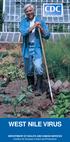 WEST NILE VIRUS DEPARTMENT OF HEALTH AND HUMAN SERVICES Centers for Disease Control and Prevention West Nile Virus West Nile virus was first recognized in the United States in 1999 as the cause of severe
STATE RABIES AND ANIMAL CONTROL STATUTES (effective November 20, 2002) TITLE IV of the state health law RABIES
 STATE RABIES AND ANIMAL CONTROL STATUTES (effective November 20, 2002) TITLE IV of the state health law RABIES Section 2140. Definitions. 2141. Compulsory vaccination. 2142. Rabies; emergency provisions.
Blood borne Pathogens
 Blood borne Pathogens What Are Blood borne Pathogens? Blood borne pathogens are microorganisms such as viruses or bacteria that are carried in blood and can cause disease in people. Types of Blood borne
OCCUPATIONAL SAFETY AND HEALTH ADMINISTRATION (OSHA)
 OCCUPATIONAL SAFETY AND HEALTH ADMINISTRATION (OSHA) The OSHA/VOSH 1910.1030 Blood borne Pathogens Standard was issued to reduce the occupational transmission of infections caused by microorganisms sometimes
Animal Bites / Injuries Table of Contents
 Division of Environmental Health and Communicable Disease Prevention Subsection: Animal Bites Page 1 of 14 Animal Bites / Injuries Table of Contents Animal Bites / Injuries Sample Letter of Notification
FLORENCE TOWNSHIP BOARD OF EDUCATION FILE CODE: 4112.4/4212.4 Florence, New Jersey
 FLORENCE TOWNSHIP BOARD OF EDUCATION FILE CODE: 4112.4/4212.4 Florence, New Jersey Regulation Exposure Control Administration BLOODBORNE PATHOGENS A. The district safety and health program officer, district
OCCUPATIONAL HEALTH, DISABILITY AND LEAVE SECTOR MEASURES TO MINIMIZE EXPOSURE TO BLOODBORNE PATHOGENS AND POST-EXPOSURE PROPHYLAXIS POLICY
 UNIVERSITY OF OTTAWA OCCUPATIONAL HEALTH, DISABILITY AND LEAVE SECTOR MEASURES TO MINIMIZE EXPOSURE TO BLOODBORNE PATHOGENS AND POST-EXPOSURE PROPHYLAXIS POLICY Prepared by the Occupational Health, Disability
FREQUENTLY ASKED QUESTIONS
 FREQUENTLY ASKED QUESTIONS 1. What are all these acronyms & abbreviations? 2. What is the Animal Welfare Assurance Number for Rosalind Franklin University for grant submission? 3. Do I need an Animal Protocol?
Comments from the National Association of State Public Health Veterinarians (NASPHV) on Proposed Revision of HHS/CDC Animal-Importation Regulations
 November 30, 2007 Comments from the National Association of State Public Health Veterinarians (NASPHV) on Proposed Revision of HHS/CDC Animal-Importation Regulations Response to Section 2, Other Animal
Bloodborne Pathogens. San Diego Unified School District Nursing & Wellness Program August 2013
 Bloodborne Pathogens San Diego Unified School District Nursing & Wellness Program August 2013 Why Another In-service?? Cal/OSHA mandates that employees with occupational exposure are informed at the time
The policy of the Metropolitan Police Department is to take the appropriate enforcement action to handle animal related calls for service.
 GENERAL ORDER DISTRICT OF COLUMBIA Title Animal Complaints and Reporting Animal Bitings Series / Number GO OPS 401.07 Effective Date Distribution September 3, 2004 A Replaces / Rescinds General Order 401.7
Training on Standard Operating Procedures for Health Care Waste Management Swaziland 12 May, 2011
 Training on Standard Operating Procedures for Health Care Waste Management Swaziland 12 May, 2011 Safe Infectious Waste Handling and Transport Objective Waste Overview Roles and Responsibilities of Waste
POLICY 08:18:00 BLOODBORNE PATHOGENS CONTROL PLAN
 POLICY 08:18:00 BLOODBORNE PATHOGENS CONTROL PLAN I. Purpose and Scope The purpose of this plan is to establish guidelines and precautions for the handling of materials which are likely to contain infectious
West Nile Virus and Workers
 West Nile Virus and Workers What is West Nile virus (WNv)? The West Nile Virus (WNv) is a mosquito-borne virus that can cause swelling and inflammation of the brain and spinal cord in horses, birds, and
Rabies Immune Globulin (Human) USP, Heat Treated Imogam Rabies HT
 194 94237-0 AHFS Category: 80:04 Rabies Immune Globulin (Human) USP, Heat Treated Imogam Rabies HT Page 1 of 6 FOR INTRAMUSCULAR USE ONLY DESCRIPTION Rabies Immune Globulin (Human) USP, Heat Treated, Imogam
Guidance Document Infectious Substances
 Guidance Document Infectious Substances Note: 1. The following Guidance Document was developed by the ICAO DGP. The original ICAO document reflects references to the ICAO Technical Instructions these have
POLICY ON THE RELOCATION OF WILDLIFE
 State of New Jersey Department of Environmental Protection Mail Code 501-03 Division of Fish and Wildlife PO Box 420 / 501 East State Street Trenton, NJ 08625-0420 POLICY ON THE RELOCATION OF WILDLIFE
Protocol for Needle Stick Injuries Occurring to NY Medical College Students In Physicians Offices
 Protocol for Needle Stick Injuries Occurring to NY Medical College Students In Physicians Offices Procedures to be followed by physicians for needle stick incidents to medical students rotating through
The CIWEC Clinic Health News
 Immunizations Recommended for Travel in Nepal Name of vaccine Dosage Booster Comment Hepatitis A - brand names (Havrix, Vaqta, Avaxim) or Twinrix (combined A&B) Hepatitis B - Engerix, Recombivax or Twinrix
Roger Williams University. Bloodborne Pathogens Exposure Control Plan
 Roger Williams University Bloodborne Pathogens Exposure Control Plan Revised 12/2010 ROGER WILLIAMS UNIVERSITY BLOODBORNE PATHOGENS EXPOSURE CONTROL PLAN I. STATEMENT OF POLICY It is the policy of Roger
Advice for Colleges, Universities, and Students about Ebola in West Africa For Colleges and Universities
 Advice for Colleges, Universities, and Students about Ebola in West Africa For Colleges and Universities Advice for Study Abroad, Foreign Exchange, or Other Education-related Travel Is it safe to travel
Needle-Stick Policy. http://www.utdallas.edu/ehs
 Needle-Stick Policy Department of Environmental Health and Safety 800 West Campbell Rd., SG10 Richardson, TX 75080-3021 Phone 972-883-2381/4111 Fax 972-883-6115 http://www.utdallas.edu/ehs Modified: May
Remove this cover sheet before redistributing and replace it with your own. Please ensure that DPHHS is included on your HAN distribution list.
 State of Montana Health Alert Network DPHHS HAN ADVISORY Cover Sheet DATE: May 15, 2012 SUBJECT: Pertussis INSTRUCTIONS: DISTRIBUTE to your local HAN contacts. This HAN is intended for general sharing
Chapter No. 765] PUBLIC ACTS, 2004 1 CHAPTER NO. 765 HOUSE BILL NO. 3229. By Representatives West, Marrero. Substituted for: Senate Bill No.
![Chapter No. 765] PUBLIC ACTS, 2004 1 CHAPTER NO. 765 HOUSE BILL NO. 3229. By Representatives West, Marrero. Substituted for: Senate Bill No.](/thumbs/24/3801421.jpg "Chapter No. 765] PUBLIC ACTS, 2004 1 CHAPTER NO. 765 HOUSE BILL NO. 3229. By Representatives West, Marrero. Substituted for: Senate Bill No.") Chapter No. 765] PUBLIC ACTS, 2004 1 CHAPTER NO. 765 HOUSE BILL NO. 3229 By Representatives West, Marrero Substituted for: Senate Bill No. 2840 By Senator Cohen AN ACT to amend Tennessee Code Annotated,
Chapter No. 765] PUBLIC ACTS, 2004 1 CHAPTER NO. 765 HOUSE BILL NO. 3229 By Representatives West, Marrero Substituted for: Senate Bill No. 2840 By Senator Cohen AN ACT to amend Tennessee Code Annotated,
Bloodborne Pathogens (BBPs) Louisiana Delta Community College
 Bloodborne Pathogens (BBPs) Louisiana Delta Community College 1 Bloodborne Pathogens Rules & Regulations Office of Risk Management (ORM) requires development of a bloodborne pathogens plan low risk employees
THIS IS AN OFFICIAL NH DHHS HEALTH ALERT
 THIS IS AN OFFICIAL NH DHHS HEALTH ALERT Distributed by the NH Health Alert Network [email protected] December 11, 2014; 1030 EST (10:30 AM EST) NH-HAN 20141211 Start of Norovirus Season in New Hampshire
APPENDIX A GUIDANCE DOCUMENT
 APPENDIX A GUIDANCE DOCUMENT Infectious Substances International Civil Aviation Organization Technical Instructions for the Safe Transport of Dangerous Goods by Air, 2005-2006 Note: This guidance document
WOOD COUNTY HEALTH DEPARTMENT
 WOOD COUNTY HEALTH DEPARTMENT POLICY & PROCEDURE TITLE: Rabies Control Policy and Procedure EFFECTIVE DATE: 12/93 DATE REVIEWED/REVISED: 8/05, 11/08, 2/09, 5/09 AUTHORIZED BY: Sue Kunferman, Director/Health
Public Health and Primary Health Care. Director, Communicable Disease Control
 Public Health and Primary Health Care Communicable Disease Control 4th Floor, 300 Carlton St, Winnipeg, MB R3B 3M9 T 204 788-6737 F 204 948-2040 www.manitoba.ca January 15, 2016 Dear Health Care Provider:
Domestic Animals: Biting and Being Bitten
 Domestic Animals: Biting and Being Bitten Nancy Frank, DVM, MPH Michigan Department of Agriculture Animal Industry Division Michigan Rabies Conference April 24, 2006 Michigan Department of Agriculture
Management Plan For Control of Blood-borne Pathogens, Infectious Wastes and Other Potentially Hazardous Biological Agents
 Management Plan For Control of Blood-borne Pathogens, Infectious Wastes and Other Potentially Hazardous Biological Agents 1.0 Executive Summary 1.1 The Bloodborne Pathogen standard, initiated by OSHA,
What Is. Norovirus? Learning how to control the spread of norovirus. Web Sites
 Web Sites Centers for Disease Control and Prevention (CDC) http://www.cdc.gov/norovirus/index.html Your Local Health Department http://www.azdhs.gov/diro/lhliaison/countymap.htm What Is Ocument dn Norovirus?
Managing Bloodborne Pathogens Exposures
 Managing Bloodborne Pathogens Exposures House Staff Orientation 2015 Phillip F. Bressoud, MD, FACP Associate Professor of Medicine and Executive Director Campus Health Services University of Louisville
C. difficile Infections
 C. difficile Infections Introduction C. difficile is a type of bacteria that can cause diarrhea and infection of the colon. This bacterium is more likely to infect patients at hospitals and other healthcare
TdaP-Booster (tee-dee-ay-pee boo-ster)
 New Zealand Consumer Medicine Information TdaP-Booster (tee-dee-ay-pee boo-ster) Tetanus, diphtheria and pertussis (acellular mono-component) vaccine (adsorbed, reduced antigen content) CONSUMER MEDICINE
EXPOSURE CONTROL PLAN (sample) 1 Child Care Directors and Employers
 EXPOSURE CONTROL PLAN (sample) 1 Child Care Directors and Employers The Model Exposure Control Plan is intended to serve as an employer guide to the OSHA Bloodborne Pathogens standard. A central component
Post-Exposure Prophylaxis
 Post-Exposure Prophylaxis Health Worker Safety Training Module 4: Post-Exposure Prophylaxis Health Worker Safety Training Module 2 Topics What is PEP? Infectious body fluids Types of exposures requiring
Rabies. A recurrent risk to the EU from dogs introduced from endemic countries (case studies)
 Rabies A recurrent risk to the EU from dogs introduced from endemic countries (case studies) Seminar for EU Veterinary Students - 20-21 November 2013 Hélène KLEIN Legislative Veterinary Officer - DG SANCO
Bloodborne Pathogens (HIV, HBV, and HCV) Exposure Management
 Bloodborne Pathogens Exposure Policy and Procedures Employees of the State of South Dakota Department of Health Bloodborne Pathogens (HIV, HBV, and HCV) Exposure Management PEP Hotline 1-888-448-4911 DOH
Pensacola State College. Veterinary Technology Program. Information Packet
 Pensacola State College Veterinary Technology Program Information Packet Contact Information: Jeannie Peden, CVT Program Director [email protected] Health Programs Admissions Office 850-484-2210
Appendix 3 Exposure Incident Report Form
 Appendix 3 Exposure Incident Report Form January, 2015 Page 1 of 6 Please see the following pages for the Exposure Incident Report Form. Guidelines for the Management of Exposure to Blood and Body Fluids
OSHA s Bloodborne Pathogens Standard 1910.1030
 OSHA s Bloodborne Pathogens Standard 1910.1030 Jens Nissen & Kennan Arp Iowa OSHA Enforcement 515-281-3122 [email protected] or [email protected] Bloodborne Pathogens Standard Federal Law 29 CFR 1910.1030
Bloodborne Pathogens. Scott Anderson CCEMTP. Materials used with permission from the Oklahoma State University
 Bloodborne Pathogens Scott Anderson CCEMTP Materials used with permission from the Oklahoma State University What is a Bloodborne Pathogen? Microorganisms that are carried in the blood that can cause disease
COMMUNICABLE DISEASE
 Public Health Activities & Services Inventory Technical Notes COMMUNICABLE DISEASE CLINICAL SERVICES, SURVEILLANCE AND CONTROL In 2014, decision was made to adopt number of national public health activities
FREQUENTLY ASKED QUESTIONS ABOUT PERTUSSIS (WHOOPING COUGH)
 FREQUENTLY ASKED QUESTIONS ABOUT PERTUSSIS (WHOOPING COUGH) What is pertussis? General Questions About Pertussis Pertussis, or whooping cough, is a contagious illness that is spread when an infected person
Canine Distemper Virus
 Canine Distemper Virus Canine Distemper (CD) is a highly contagious infectious disease of dogs worldwide caused by the canine distemper virus (CDV). It is often fatal. CD is a multisystemic disease that
Mercyhurst University Athletic Training Program Bloodborne Pathogens Exposure Control Plan
 Mercyhurst University Athletic Training Program Bloodborne Pathogens Exposure Control Plan In accordance with the Occupational Safety Health Administration (OSHA) Bloodborne Pathogens Standard, 29 CFR
Illinois Long Term Care Facilities and Assisted Living Facilities
 TO: FROM: RE: Illinois Long Term Care Facilities and Assisted Living Facilities Richard Dees, Chief, Bureau of Long Term Care Karen McMahon, Immunization Section Chief Craig Conover, MD, Medical Director,
BLOODBORNE PATHOGENS EXPOSURE CONTROL PROGRAM
 BLOODBORNE PATHOGENS EXPOSURE CONTROL PROGRAM Purpose: The purpose of this program is to eliminate or minimize employee and student exposure to blood and other potentially infectious materials. This exposure
Didactic Series. Updated Post-Exposure Prophylaxis (PEP) Guidelines. Daniel Lee, MD UCSD Medical Center, Owen Clinic January 9, 2014
 Didactic Series Updated Post-Exposure Prophylaxis (PEP) Guidelines Daniel Lee, MD UCSD Medical Center, Owen Clinic January 9, 2014 ACCREDITATION STATEMENT: University of California, San Diego School of
Bloodborne Pathogens Program Revised July, 5 2012
 Bloodborne Pathogens Program Revised July, 5 2012 Page 1 of 16 Table of Contents 1.0 INTRODUCTION...3 1.1 Purpose...3 1.2 Policy.3 2.0 EXPOSURE CONTROL METHODS 4 2.1 Universal Precautions.4 2.2 Engineering
WHY ARE WE HERE? OSHA BB Pathogen standard. The more you know, the better you will perform in real situations!
 WHY ARE WE HERE? OSHA BB Pathogen standard anyone whose job requires exposure to BB pathogens is required to complete training employees who are trained in CPR and first aid The more you know, the better
COMMONWEALTH of VIRGINIA Department of Health
 COMMONWEALTH of VIRGINIA Department of Health MARISSA J. LEVINE, MD, MPH, FAAFP PO BOX 2448 TTY 7-1-1 OR STATE HEALTH COMMISSIONER RICHMOND, VA 23218 1-800-828-1120 Dear Colleague: Emerging Infections
Business Continuity Plan for Equine Events
 Business Continuity Plan for Equine Events Authors: Jamee L. Amundson, MS Josie Traub-Dargatz, DVM Carl C. Heckendorf, DVM Created with assistance from the Colorado Department of Agriculture Business Continuity
When an occupational exposure occurs, the source patient should be evaluated for both hepatitis B and hepatitis C. (AII)
 XI. OCCUPATIONAL EXPOSURES TO HEPATITIS B AND C RECOMMENDATION: When an occupational exposure occurs, the source patient should be evaluated for both hepatitis B and hepatitis C. (AII) The risk of transmission
Sentinel Chicken Screening Here are the mosquito larvae! Ground Application Aerial Larvicide Applications
 County of San Diego Vector Control Program Mosquitoes, Rats, Ticks and More! What is a Vector? Any organism capable of carrying and transferring a disease Common vectors: Mosquitoes Ticks Rats Flies Mosquito
Black Hills Healthcare System
 Black Hills Healthcare System Methicillin Resistant Staphylococcal Aureus (MRSA) Patient and Family Information What is MRSA? Staphylococcus Aureus, often referred to simply as staph, is a bacteria commonly
Frequently Asked Questions on Rabies
 Frequently Asked Questions on Rabies SEA-CD-278 Frequently asked questions on Rabies World Health Organization 2013 All rights reserved. Requests for publications, or for permission to reproduce or translate
The Jefferson County Board of Supervisors does ordain as follows:
 ORDINANCE NO. 24 The Jefferson County Board of Supervisors does ordain as follows: 24.1 TITLE. This ordinance shall be known and cited as the Jefferson County Rabies Control Ordinance. 24.2 PURPOSE. Medical
Who is Hector Hernandez
 517-712-5012 Who is Hector Hernandez Hector L. Hernandez is an author, former law enforcement officer, speaker and trainer. Located in U.S.A. He has over 20 years of experience and is recognized as the
FAQs HIV & AIDS. What is HIV? A virus that reduces the effectiveness of your immune system, meaning you are less protected against disease.
 HIV & AIDS What is HIV? A virus that reduces the effectiveness of your immune system, meaning you are less protected against disease. What does HIV stand for? Human Immunodeficiency Virus Where did HIV
What You Should Know About Lyme Disease and Other Tick-Borne Diseases. Sudbury Board of Health
 What You Should Know About Lyme Disease and Other Tick-Borne Diseases Sudbury Board of Health Goals of presentation Be aware of Lyme disease and other tick-borne diseases Recognize basic signs and symptoms
Interim Illinois Department of Public Health Guidance for Monitoring and Movement of Persons with Potential Ebola Virus Exposure
 Interim Illinois Department of Public Health Guidance for Monitoring and Movement of Persons with Potential Ebola Virus Exposure Updated: November 10, 2014 The world is facing the biggest and most complex
Controlling rats and mice. A guide to preventing infestations and getting rid of them
 Controlling rats and mice A guide to preventing infestations and getting rid of them General information about rats and mice The house mouse and the brown rat are common rodent pests. We all have a responsibility
4A. Types of Laboratory Tests Available and Specimens Required. Three main types of laboratory tests are used for diagnosing CHIK: virus
 4. LABORATORY 4A. Types of Laboratory Tests Available and Specimens Required Three main types of laboratory tests are used for diagnosing CHIK: virus isolation, reverse transcriptase-polymerase chain reaction
Have you ever wanted to help animals and people stay healthy? Have you ever thought about working in veterinary medicine? Well, I m here to explain
 Have you ever wanted to help animals and people stay healthy? Have you ever thought about working in veterinary medicine? Well, I m here to explain what veterinarians do and answer some of your questions.
Multiple Myeloma. This reference summary will help you understand multiple myeloma and its treatment options.
 Multiple Myeloma Introduction Multiple myeloma is a type of cancer that affects white blood cells. Each year, thousands of people find out that they have multiple myeloma. This reference summary will help
Precautions for Handling and Disposal of Dead Bodies
 Precautions for Handling and Disposal of Dead Bodies Department of Health Hospital Authority Food and Environmental Hygiene Department The 8 th edition This set of guidelines is prepared by Infection Control
PERTUSSIS SURVEILLANCE AND RESPONSE PROTOCOL
 PERTUSSIS SURVEILLANCE AND RESPONSE PROTOCOL Public Health Action 1. Educate the public, particularly parents of infants, about the dangers of whooping cough and the advantages of initiating immunization
You are planning to travel on vacation or business does your destination require a vaccination?
 Disease, travel and vaccinations You are planning to travel on vacation or business does your destination require a vaccination? If you are planning to stay in a resort or a city and you are in good health,
High Dose Radioactive Iodine (I-131) Therapy for Treatment of Thyroid Cancer
 12 High Dose Radioactive Iodine (I-131) Therapy for Treatment of Thyroid Cancer Please arrive 15 minutes early to allow for parking and registration. If you have questions or need to cancel your appointment
CONSENT FORM. Procedure: Descemet s Stripping Automated Endothelial Keratoplasty (DSAEK)
 CONSENT FORM Procedure: Descemet s Stripping Automated Endothelial Keratoplasty (DSAEK) Surgeon: Jeffrey W. Liu, M.D. Peninsula Laser Eye Medical Group 1174 Castro Street, Ste. 100 Mountain View, CA 94040
www.macdillfss.com 7804 Blackbird St., Bldg. 936 MacDill AFB, FL 33621 (813) 828-3558/3559 Monday - Friday 8 am to 4 pm
 7804 Blackbird St., Bldg. 936 MacDill AFB, FL 33621 (813) 828-3558/3559 Monday - Friday 8 am to 4 pm www.macdillfss.com NOTE: Clinic services are limited to those personnel in possession of a military