
Extracorporeal Life Support Organization (ELSO) Guidelines for Adult Cardiac Failure
|
|
|
- Elijah Bates
- 9 years ago
- Views:
Transcription
1 Extracorporeal Life Support Organization (ELSO) Guidelines for Adult Cardiac Failure Introduction This adult cardiac failure guideline is a supplement to ELSO s General Guidelines for all ECLS Cases which describes prolonged extracorporeal life support (ECLS, ECMO). This supplement addresses specific discussion for adult cardiac failure patients. This guideline describes prolonged extracorporeal life support (ECLS, ECMO). This guideline describes useful and safe practice, but these are not necessarily consensus recommendations. These guidelines are not intended as a standard of care, and are revised at regular intervals as new information, devices, medications, and techniques become available. The background, rationale, and references for these guidelines are found in "ECMO: Extracorporeal Cardiopulmonary Support in Intensive Care (The Red Book)" published by ELSO. These guidelines address technology and patient management during ECLS. Equally important issues such as personnel, training, credentialing, resources, follow up, reporting, and quality assurance are addressed in other ELSO documents or are center-specific. Version 1.3 December 2013 Page 1
2 Table of Contents I. Patient condition... 3 A. Indication for ECMO in adult cardiac failure is cardiogenic shock:... 3 B. Contraindications to ECMO... 3 II. Vascular Access... 3 A. Postcardiotomy... 3 B. Non-postcardiotomy... 4 III. Management... 4 IV. Weaning... 5 A. Bridge to recovery (postcardiotomy, acute MI, myocarditis)... 5 B. Bridge to VAD... 5 V. Expected results:... 5 Version 1.3 December 2013 Page 2
3 Adult Cardiac Cases I. Patient condition A. Indication for ECMO in adult cardiac failure is cardiogenic shock: 1. Inadequate tissue perfusion manifested as hypotension and low cardiac output despite adequate intravascular volume. 2. Shock persists despite volume administration, inotropes and vasoconstrictors, and intraaortic balloon counterpulsation if appropriate. 3. Typical causes: Acute myocardial infarction, Myocarditis, Peripartum Cardiomyopathy, Decompensated chronic heart failure, Post cardiotomy shock. 4. Septic Shock is an indication in some centers. Guidelines on relative survival without ECMO: IABP score postcardiotomy(hausmann H Circ 2002) Samuels score postcardiotomy (Samuels LE J Cardiac Surg 1999) Options for temporary circulatory support Surgical temporary VAD: Abiomed, Levitronix Percutaneous VAD:TandemHeart, Impella ECMO: Advantages: Biventricular support, bedside immediate application, oxygenation, Biventricular failure, Refractory malignant arrythmias, Heart failure with severe pulmonary failure ECMO is a bridge to Recovery: Acute MI after revascularization, Myocarditis, Postcardiotomy Transplant: Unrevascularizable acute MI, Chronic heart failure Implantable circulatory support: VAD, TAH B. Contraindications to ECMO 1. Absolute: Unrecoverable heart and not a candidate for transplant or VAD, Advanced age, Chronic organ dysfunction (emphysema, cirrhosis, renal failure), Compliance (financial, cognitive, psychiatric, or social limitations), Prolonged CPR without adequate tissue perfusion. 2. Relative: Contraindication for anticoagulation, Advanced age, Obesity. II. Vascular Access A. Postcardiotomy Intrathoracic cannulae: ensure site hemostasis, Patch chest open for frequent exploration. Version 1.3 December 2013 Page 3
4 B. Non-postcardiotomy Percutaneous femoral artery and vein, Typically most rapid access, Fr arterial, Fr venous (advance to right atrium if possible). Percutaneous jugular vein, Fr to right atrium, Common carotid via surgical exploration, 10-15% watershed cerebral infarction with carotid ligation, 8-10 mm end to side polyester graft Femoral arterial cannulation associated with ipsilateral leg ischemia, Percutaneous distal cannulation of superficial femoral artery (may require ultrasound or fluoroscopic guidance), Surgical exploration of superficial femoral artery, Surgical exploration of posterior tibial artery 8Fr retrograde cannula. III. Management Maintain left ventricular ejection. Avoid left ventricular distension. Promote recovery. Avoid pulmonary edema/hemorrhage. Avoid intracardiac/aortic root thrombosis. Continue inotropes. Minimize vasoconstrictors. Avoid unnecessary flow. Liberal use of intraaortic balloon pump. Frequent assessment by echocardiography. Ventricular distension. Refractory left ventricular distension. Mean PA pressures >30. Nonpulsatile arterial line tracing. Aortic valve does not open. Decompress left ventricle. Open chest postcardiotomy. Insert LV vent. Closed chest cannulation. Transeptal left atrial decompression. Cerebral hypoxia. Femoral arterial ECMO infusion with severe respiratory failure. Hypoxia to coronaries. brain and right upper extremity. PaO2 measured in femoral artery or left radial artery may be elevated. Measure saturations in right hand. Arterial line preferably in right radial artery. Adjust ventilator to maintain adequate oxygenation. May require maximum ECMO flow. Cerebral perfusion may be improved with hybrid VVA. Version 1.3 December 2013 Page 4
5 IV. Weaning A. Bridge to recovery (postcardiotomy, acute MI, myocarditis) 1. Expect early signs of recovery within one week of support. 2. With evidence of improved aortic pulsatility and contraction on echocardiography, optimize inotropes and reduce flow to 50%, then 25% of adequate cardiac output. 3. Use echo to visualize ventricular function and major valvular pathology. 4. Clamp circuit and allow recirculation for trial period of 30 minutes to 4 hours. 5. Flush cannulae with heparinized saline continuously or flash from the circuit every 10 minutes to avoid cannula thrombosis. 6. If hemodynamics and oxygen delivery are adequate on less then maximum inotropic infusions, consider decannulation. B. Bridge to VAD Transition to VAD when end organs resuscitated, Neurologically intact, Restoration of renal hepatic function, Pulmonary edema resolved, Ideally within one week. V. Expected results: 40% survival to discharge (may be less with postcardiotomy) Version 1.3 December 2013 Page 5
Extracorporeal Life Support Organization (ELSO) Guidelines for Neonatal Respiratory Failure
 Extracorporeal Life Support Organization (ELSO) Guidelines for Neonatal Respiratory Failure Introduction This neonatal respiratory failure guideline is a supplement to ELSO s General Guidelines for all
Policies and Procedures. Related to. IABP Therapy
 Policies and Procedures Related to IABP Therapy Courtesy of Datascope Corp. Clinical Support Services The following policies and procedures are intended to serve as guidelines for developing hospital policy.
Chapter 16. Learning Objectives. Learning Objectives 9/11/2012. Shock. Explain difference between compensated and uncompensated shock
 Chapter 16 Shock Learning Objectives Explain difference between compensated and uncompensated shock Differentiate among 5 causes and types of shock: Hypovolemic Cardiogenic Neurogenic Septic Anaphylactic
F.E.E.A. FONDATION EUROPEENNE D'ENSEIGNEMENT EN ANESTHESIOLOGIE FOUNDATION FOR EUROPEAN EDUCATION IN ANAESTHESIOLOGY
 créée sous le Patronage de l'union Européenne Detailed plan of the program of six courses 1. RESPIRATORY 1. ESPIRATORY AND THORAX 1.1 Physics and principles of measurement 1.1.1 Physical laws 1.1.2 Vaporizers
12 Lead ECGs: Ischemia, Injury & Infarction Part 2
 12 Lead ECGs: Ischemia, Injury & Infarction Part 2 McHenry Western Lake County EMS Localization: Left Coronary Artery Right Coronary Artery Right Ventricle Septal Wall Anterior Descending Artery Left Main
Resuscitation in congenital heart disease. Peter C. Laussen MBBS FCICM Department Critical Care Medicine Hospital for Sick Children Toronto
 Resuscitation in congenital heart disease Peter C. Laussen MBBS FCICM Department Critical Care Medicine Hospital for Sick Children Toronto Evolution of Congenital Heart Disease Extraordinary success: Overall
Acute heart failure may be de novo or it may be a decompensation of chronic heart failure.
 Management of Acute Left Ventricular Failure Acute left ventricular failure presents as pulmonary oedema due to increased pressure in the pulmonary capillaries. It is important to realise though that left
Ischemia and Infarction
 Harvard-MIT Division of Health Sciences and Technology HST.035: Principle and Practice of Human Pathology Dr. Badizadegan Ischemia and Infarction HST.035 Spring 2003 In the US: ~50% of deaths are due to
ELSO GUIDELINES FOR TRAINING AND CONTINUING EDUCATION OF ECMO SPECIALISTS
 ELSO GUIDELINES FOR TRAINING AND CONTINUING EDUCATION OF ECMO SPECIALISTS PURPOSE The "" is a document developed by the Extracorporeal Life Support Organization (ELSO) as a reference for current and future
Section Four: Pulmonary Artery Waveform Interpretation
 Section Four: Pulmonary Artery Waveform Interpretation All hemodynamic pressures and waveforms are generated by pressure changes in the heart caused by myocardial contraction (systole) and relaxation/filling
Update on Small Animal Cardiopulmonary Resuscitation (CPR)- is anything new?
 Update on Small Animal Cardiopulmonary Resuscitation (CPR)- is anything new? DVM, DACVA Objective: Update on the new Small animal guidelines for CPR and a discussion of the 2012 Reassessment Campaign on
Cardiac Catheterization Curriculum for Fellows in Cardiology Dartmouth-Hitchcock Medical Center Level 1 and Level 2 Training 2008-2009
 Cardiac Catheterization Curriculum for Fellows in Cardiology Dartmouth-Hitchcock Medical Center Level 1 and Level 2 Training 2008-2009 I. Overview of Training in Cardiac Catheterization Cardiac catheterization
Utilizing the Cath Lab for Cardiac Arrest
 Utilizing the Cath Lab for Cardiac Arrest Khaled M. Ziada, MD Director, Cardiovascular Catheterization Laboratories Gill Heart Institute, University of Kentucky UK/AHA Strive to Revive Symposium May 2013
Guideline Title: ICU Management of Intra-Aortic Balloon Pump
 Guideline Title: ICU Management of Intra-Aortic Balloon Pump Campus: The Alfred Control No.: Category: ICU Related Policy No.: Responsibility for Review: ICU Clinical Nurse Educator Rev.: 00# ICU Medical
Specific Basic Standards for Osteopathic Fellowship Training in Cardiology
 Specific Basic Standards for Osteopathic Fellowship Training in Cardiology American Osteopathic Association and American College of Osteopathic Internists BOT 07/2006 Rev. BOT 03/2009 Rev. BOT 07/2011
Waveforms. INTRODUCTION TO THE HEARTWARE WAVEFORM ipad APP
 Waveforms INTRODUCTION TO THE HEARTWARE WAVEFORM ipad APP WELCOME Did you ever wonder how you can use the HeartWare System waveforms? Use this app to find out. The HeartWare Waveform App will help you
Coding Updates for 2013: Cardiology
 Coding Updates for 2013: Cardiology Presented by: David Dunn, MD, FACS CIRCC, CPC-H, CCVTC, CCC, CCS, RCC National Coding Standards Sources of information Centers for Medicare and Medicare (CMS) Provider
PHC4 35 Diseases, Procedures, and Medical Conditions for which Laboratory Data is Required Effective 10/1/2015
 PHC4 35 Diseases, Procedures, and Medical Conditions for which Laboratory Data is Required Effective 10/1/2015 Laboratory data is to be submitted for discharges in the following conditions: 1. Heart Attack
Appendix. Costing Case Samples for OOHCA
 Appendix Costing Case Samples for OOHCA The patient (ICD-1) Treatment Codes (OPCS 4) Patient 27 Admitted to ICU following percutaneous cardiac intervention (PCI) with 2 drugeluting stents following a VF
NAME OF THE HOSPITAL: 1. Coronary Balloon Angioplasty: M7F1.1/ Angioplasty with Stent(PTCA with Stent): M7F1.3
 1. Coronary Balloon Angioplasty: M7F1.1/ Angioplasty with Stent(PTCA with Stent): M7F1.3 1. Name of the Procedure: Coronary Balloon Angioplasty 2. Select the Indication from the drop down of various indications
2014 Procedural Reimbursement Guide Select Percutaneous Coronary Interventions
 2014 Procedural Reimbursement Guide Select Percutaneous Coronary Interventions IC-221010-AA Jan 2014 Page 1 of 10 Interventional Cardiology This for interventional cardiology procedures provides coding
The MEDOS VAD System
 The MEDOS VAD System On the market since 1994 more than 500 operations in about 80 heart centres short and medium therm use one of the leading systems in Europe Application field not as a matter of routine,
California Health and Safety Code, Section 1256.01
 California Health and Safety Code, Section 1256.01 1256.01. (a) The Elective Percutaneous Coronary Intervention (PCI) Pilot Program is hereby established in the department. The purpose of the pilot program
The Cardiac Society of Australia and New Zealand
 The Cardiac Society of Australia and New Zealand Guidelines on Support Facilities for Coronary Angiography and Percutaneous Coronary Intervention (PCI) including Guidelines on the Performance of Procedures
Thoracoabdominal aortic aneurysm
 Thoracoabdominal aortic aneurysm Patient (1) - 69 PMH: 2013 - MVP, aortic root replacement with biological valve (Perimount) and subtotal aortic arch replacement Analysis for oppressive chest complaints
The Sepsis Puzzle: Identification, Monitoring and Early Goal Directed Therapy
 The Sepsis Puzzle: Identification, Monitoring and Early Goal Directed Therapy Cindy Goodrich RN, MS, CCRN Content Description Sepsis is caused by widespread tissue injury and systemic inflammation resulting
Diagnosis Code Crosswalk : ICD-9-CM to ICD-10-CM Cardiac Rhythm and Heart Failure Diagnoses
 Diagnosis Code Crosswalk : to 402.01 Hypertensive heart disease, malignant, with heart failure 402.11 Hypertensive heart disease, benign, with heart failure 402.91 Hypertensive heart disease, unspecified,
ACLS PHARMACOLOGY 2011 Guidelines
 ACLS PHARMACOLOGY 2011 Guidelines ADENOSINE Narrow complex tachycardias or wide complex tachycardias that may be supraventricular in nature. It is effective in treating 90% of the reentry arrhythmias.
Automatic External Defibrillators
 Last Review Date: May 27, 2016 Number: MG.MM.DM.10dC2 Medical Guideline Disclaimer Property of EmblemHealth. All rights reserved. The treating physician or primary care provider must submit to EmblemHealth
Section Two: Arterial Pressure Monitoring
 Section Two: Arterial Pressure Monitoring Indications An arterial line is indicated for blood pressure monitoring for the patient with any medical or surgical condition that compromises cardiac output,
Adult Cardiac Surgery ICD9 to ICD10 Crosswalks
 164.1 Malignant neoplasm of heart C38.0 Malignant neoplasm of heart 164.1 Malignant neoplasm of heart C45.2 Mesothelioma of pericardium 198.89 Secondary malignant neoplasm of other specified sites C79.89
CARDIOLOGY Delineation of Privileges
 CARDIOLOGY Delineation of Privileges APPLICANT: INITIAL APPOINTMENT REQUIREMENTS: BASIC EDUCATION: M.D. or D.O. from an accredited school of medicine or osteopathy. Successful completion of an ACGME or
Dr Bashir Alaour, Dr William English, Royal Cornwall Hospitals NHS Trust, UK Correspondence: [email protected]
 INTRA-AORTIC BALLOON PUMP COUNTERPULSATION ANAESTHESIA TUTORIAL OF THE WEEK 220 25 TH APRIL 2011 Dr Bashir Alaour, Dr William English, Royal Cornwall Hospitals NHS Trust, UK Correspondence: [email protected]
ANESTHESIA FOR MYOCARDIAL REVASCULARIZATION. Alla Klimova, M.D UAMS, Little Rock, AR
 ANESTHESIA FOR MYOCARDIAL REVASCULARIZATION Alla Klimova, M.D UAMS, Little Rock, AR Objectives Historical perspective of CABG Stent or surgery Indication for CABG surgery On pump CABG : design and pathophysiology
Scott Hubbell, MHSc, RRT-NPS, C-NPT, CCT Clinical Education Coordinator/Flight RRT EagleMed
 Scott Hubbell, MHSc, RRT-NPS, C-NPT, CCT Clinical Education Coordinator/Flight RRT EagleMed Identify the 12-Lead Views Explain the vessels of occlusion Describe the three I s Basic Interpretation of 12-Lead
Cardiovascular System & Its Diseases. Lecture #4 Heart Failure & Cardiac Arrhythmias
 Cardiovascular System & Its Diseases Lecture #4 Heart Failure & Cardiac Arrhythmias Dr. Derek Bowie, Department of Pharmacology & Therapeutics, Room 1317, McIntyre Bldg, McGill University [email protected]
ELSO GUIDELINES FOR ECMO CENTERS
 ELSO GUIDELINES FOR ECMO CENTERS PURPOSE These guidelines developed by the Extracorporeal Life Support Organization, outline the ideal institutional requirements needed for effective use of extracorporeal
Normal Intracardiac Pressures. Lancashire & South Cumbria Cardiac Network
 Normal Intracardiac Pressures Lancashire & South Cumbria Cardiac Network Principle Pressures recorded from catheter tip Electrical transducer - wheatstone bridge mechanical to electrical waveform display
Diagnostic and Therapeutic Procedures
 Diagnostic and Therapeutic Procedures Diagnostic and therapeutic cardiovascular s are central to the evaluation and management of patients with cardiovascular disease. Consistent with the other sections,
CARDIOHELP BASIC TRAINING
 CARDIOHELP BASIC TRAINING PRESENTATION OVERVIEW Topic 1 CARDIOHELP Movie Presentation Topic 2 Areas of Application with CARDIOHELP Topic 3 Different Therapy Application with CARDIOHELP Topic 4 CARDIOHELP
Universitätsklinik für Kardiologie. Test. Thomas M. Suter Akute Herzinsuffizienz Diagnostik und Therapie [email protected] 1
 Test Thomas M. Suter Akute Herzinsuffizienz Diagnostik und Therapie [email protected] 1 Heart Failure - Definition European Heart Journal (2008) 29, 2388 2442 Akute Herzinsuffizienz Diagnostik und
PHARMACOLOGICAL Stroke Prevention in Atrial Fibrillation STROKE RISK ASSESSMENT SCORES Vs. BLEEDING RISK ASSESSMENT SCORES.
 PHARMACOLOGICAL Stroke Prevention in Atrial Fibrillation STROKE RISK ASSESSMENT SCORES Vs. BLEEDING RISK ASSESSMENT SCORES. Hossam Bahy, MD (1992 2012), 19 tools have been identified 11 stroke scores 1
GUIDELINE. Staff involved in management of patients receiving Extracorporeal Membrane Oxygenation (ECMO) in ICU
 TARGET AUDIENCE Staff involved in management of patients receiving in ICU PURPOSE This document describes the standardised management of patients receiving ECMO in ICU. TABLE OF CONTENTS TARGET AUDIENCE...
Extracorporeal Life Support Organization (ELSO) Guidelines for Adult Respiratory Failure
 Extracorporeal Life Support Organization (ELSO) Guidelines for Adult Respiratory Failure Introduction This adult respiratory failure guideline is a supplement to ELSO s General Guidelines for all ECLS
Normal & Abnormal Intracardiac. Lancashire & South Cumbria Cardiac Network
 Normal & Abnormal Intracardiac Pressures Lancashire & South Cumbria Cardiac Network Principle Pressures recorded from catheter tip Electrical transducer - wheatstone bridge mechanical to electrical waveform
Children's Medical Services (CMS) Regional Perinatal Intensive Care Center (RPICC) Neonatal Extracorporeal Life Support (ECLS) Centers Questionnaire
 Children's Medical Services (CMS) Regional Perinatal Intensive Care Center (RPICC) Neonatal Extracorporeal Life Support (ECLS) Centers Questionnaire Date: RPICC Facility: CMS use only Include the following
Mechanical Circulatory Support and End of Life Care. 10 th Annual Interdisciplinary Transplant Symposium 24 September 2015
 Mechanical Circulatory Support and End of Life Care 10 th Annual Interdisciplinary Transplant Symposium 24 September 2015 Nicole Huhn, APRN VAD Coordinator Center for Advanced Heart Failure & Transplant
BASIC STANDARDS FOR RESIDENCY TRAINING IN CARDIOLOGY
 BASIC STANDARDS FOR RESIDENCY TRAINING IN CARDIOLOGY American Osteopathic Association and the American College of Osteopathic Internists Specific Requirements For Osteopathic Subspecialty Training In Cardiology
Heart Failure EXERCISES. Ⅰ. True or false questions (mark for true question, mark for false question. If it is false, correct it.
 Heart Failure EXERCISES Ⅰ. True or false questions (mark for true question, mark for false question. If it is false, correct it. ) 1. Heart rate increase is a kind of economic compensation, which should
LIFEFLIGHT OF MAINE GUIDELINES FOR HELICOPTER TRANSPORT
 LIFEFLIGHT OF MAINE GUIDELINES FOR HELICOPTER TRANSPORT I. GENERAL GUIDELINES Many patients who require transport to centers with specialized or tertiary level resources are appropriate for transport by
Traumatic Cardiac Tamponade. Shane KF Seal 19 November 2003 POS
 Traumatic Cardiac Tamponade Shane KF Seal 19 November 2003 POS Objectives Definition Pathophysiology Diagnosis Treatment Cardiac Tamponade The decompensated phase of cardiac compression resulting from
Extracorporeal life support PLS System
 Extracorporeal life support PLS System This document is intended to provide information to an international audience outside of the US. PLS Set and ROTAFLOW Console A therapy option for critically ill
LEADING-EDGE Cardiovascular Care
 LEADING-Edge Cardiovascular Care Coral Gables Hospital North Shore Medical Center Hialeah Hospital Delray Medical Center Good Samaritan Medical Center Palm Beach Gardens Medical Center St. Mary s Medical
Fort Hamilton Hospital Specialty: Cardiology Department of Medicine Delineation of Privileges
 NAME Fort Hamilton Hospital Specialty: Cardiology Department of Medicine Delineation of Privileges GENERAL CARDIOLOGY Required Qualifications for General Cardiology Education/Training/Experience Must have
Exchange solutes and water with cells of the body
 Chapter 8 Heart and Blood Vessels Three Types of Blood Vessels Transport Blood Arteries Carry blood away from the heart Transport blood under high pressure Capillaries Exchange solutes and water with cells
How To Understand What You Know
 Heart Disorders Glossary ABG (Arterial Blood Gas) Test: A test that measures how much oxygen and carbon dioxide are in the blood. Anemia: A condition in which there are low levels of red blood cells in
Reporting Transcatheter Aortic Valve Replacement (TAVR) Procedures in 2013
 Reporting Transcatheter Aortic Valve Replacement (TAVR) Procedures in 2013 There are nine new CPT codes effective January 1, 2013, for reporting TAVR procedures. Five of these codes are Category I codes
CMS Limitations Guide - Radiology Services
 CMS Limitations Guide - Radiology Services Starting October 1, 2015, CMS will update their existing medical necessity limitations on tests and procedures to correspond to ICD-10 codes. This limitations
2015 Procedural Reimbursement Guide Select Percutaneous Coronary Interventions Interventional Cardiology
 IC-282006-AA Nov 2014 Page 1 of 11 2015 Procedural Reimbursement Guide Select Percutaneous Coronary Interventions Interventional Cardiology This for interventional cardiology provides coding and reimbursement
Cardiac and Pulmonary Issues in the Elite Athlete. Keep Your Edge Hockey Sports Medicine 2015 Toronto August 28-30 2015
 Cardiac and Pulmonary Issues in the Elite Athlete Keep Your Edge Hockey Sports Medicine 2015 Toronto August 28-30 2015 THORACIC EMERGENCIES Hockey related thoracic trauma is blunt Injury to the boney
Safe Zone: CV PIP < 26; HFOV: MAP < 16; HFJV: MAP < 16 Dopamine infusion up to 20 mcg/kg/min Epinephrine infusion up to 0.1 mcg /kg/min.
 Congenital Diaphragmatic Hernia: Management Guidelines 5-2006 Issued By: Division of Neonatology Reviewed: Effective Date: Categories: Chronicity Document Congenital Diaphragmatic Hernia: Management Guidelines
Levels of Critical Care for Adult Patients
 LEVELS OF CARE 1 Levels of Critical Care for Adult Patients STANDARDS AND GUIDELINES LEVELS OF CARE 2 Intensive Care Society 2009 All rights reserved. No reproduction, copy or transmission of this publication
INTRODUCTION TO EECP THERAPY
 INTRODUCTION TO EECP THERAPY is an FDA cleared, Medicare approved, non-invasive medical therapy for the treatment of stable and unstable angina, congestive heart failure, acute myocardial infarction, and
Cardiac Arrest: General Considerations
 Andrea Gabrielli, MD, FCCM Cardiac Arrest: General Considerations Cardiopulmonary resuscitation (CPR) is described as a series of assessments and interventions performed during a variety of acute medical
Minimally Invasive Mitral Valve Surgery
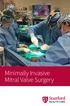 Minimally Invasive Mitral Valve Surgery Stanford Health Care offers leading, superior options in cardiac surgery, including the latest techniques and research for Minimally Invasive Cardiac surgery. Advanced
Perioperative Cardiac Evaluation
 Perioperative Cardiac Evaluation Caroline McKillop Advisor: Dr. Tam Psenka 10-3-2007 Importance of Cardiac Guidelines -Used multiple times every day -Patient Safety -Part of Surgical Care Improvement Project
UNIVERSITA' DEGLI STUDI DI ROMA TOR VERGATA
 SYSTEMATIC PATHOLOGY I IIIYear Scientific Field DISCIPLINE TUTOR Systematic Pathology I MED/21 MED/10 Thoracic Surgery Respiratory Diseases Tommaso Claudio Mineo Paola Rogliani MED/10 Respiratory Diseases
NORTH WALES CRITICAL CARE NETWORK
 NORTH WALES CRITICAL CARE NETWORK LEVELS OF CRITICAL CARE FOR ADULT PATIENTS Throughout the work of the North Wales Critical Care Network reference to Levels of Care for the critically ill are frequently
Practical class 3 THE HEART
 Practical class 3 THE HEART OBJECTIVES By the time you have completed this assignment and any necessary further reading or study you should be able to:- 1. Describe the fibrous pericardium and serous pericardium,
A Patient s Guide to Primary and Secondary Prevention of Cardiovascular Disease Using Blood-Thinning (Anticoagulant) Drugs
 A Patient s Guide to Primary and Secondary Prevention of PATIENT EDUCATION GUIDE What Is Cardiovascular Disease? Cardiovascular disease (CVD) is a broad term that covers any disease of the heart and circulatory
How To Teach An Integrated Ultrasound
 University of South Carolina School of Medicine Integrated Ultrasound Curriculum iusc Richard Hoppmann The Integrated Ultrasound Curriculum Initiated 2006 First (M1) and Second (M2) Year Medical Students
Fetal Responses to Reduced Oxygen Delivery
 Fetal Responses to Reduced Oxygen Delivery Abraham M Rudolph Fetal Cardiology Symposium May 2016, Phoenix Faculty Disclosure Information I have no financial relationship with any manufacturer of any commercial
AND SYLLABUS FOR INTERVENTIONAL CARDIOLOGY SUBSPECIALITY TRAINING IN EUROPE
 CURRICULUM AND SYLLABUS FOR INTERVENTIONAL CARDIOLOGY SUBSPECIALITY TRAINING IN EUROPE Document prepared by: Carlo Di Mario, FESC Germano Di Sciascio, FESC Jean-Luc Dubois-Rande,FESC Rolf Michels, FESC
Guidelines: Congenital Aortic Valve Stenosis
 Guidelines: Congenital Aortic Valve Stenosis PD Dr. med. Peter Ewert Senior Physician, Department of Congenital Heart Disease / Pediatric Cardiology, Deutsches Herzzentrum Berlin Guidelines: Congenital
Direct Arterial Blood Pressure Monitoring Angel M. Rivera CVT, VTS (ECC) Animal Emergency Center Glendale, WI March 2003
 Direct Arterial Blood Pressure Monitoring Angel M. Rivera CVT, VTS (ECC) Animal Emergency Center Glendale, WI March 2003 Introduction Direct measurement of arterial blood pressure is obtained via a peripheral
ACLS PRE-TEST ANNOTATED ANSWER KEY
 ACLS PRE-TEST ANNOTATED ANSWER KEY June, 2011 Question 1: Question 2: There is no pulse with this rhythm. Question 3: Question 4: Question 5: Question 6: Question 7: Question 8: Question 9: Question 10:
SARASOTA MEMORIAL HOSPITAL NURSING PROCEDURE
 SARASOTA MEMORIAL HOSPITAL NURSING PROCEDURE TITLE: ISSUED FOR: (crc13-nursing) (crc.013-respiratory) Nursing, Special Care Areas Respiratory Care Services Perioperative Services DATE: REVIEWED: PAGES:
Medical examination report
 Medical examination report Vision assessment To be filled in by a doctor or optician/optometrist Doctors You MUST read the notes in the INF4D leaflet so that you can decide whether you are able to fully
SUTTER MEDICAL CENTER, SACRAMENTO Department of Cardiovascular Disease Cardiology - Delineation of Privileges
 INITIAL: [ ] RENEWED: [ ] DATE: ADDITIONAL: [ ] Privileges are granted for Sutter General Hospital, Sutter Memorial Hospital, Sutter Center for Psychiatry, Sutter Oaks Midtown and the Capitol Pavilion
CHAPTER 9 DISEASES OF THE CIRCULATORY SYSTEM (I00-I99)
 CHAPTER 9 DISEASES OF THE CIRCULATORY SYSTEM (I00-I99) March 2014 2014 MVP Health Care, Inc. CHAPTER 9 CHAPTER SPECIFIC CATEGORY CODE BLOCKS I00-I02 Acute rheumatic fever I05-I09 Chronic rheumatic heart
Atrial Fibrillation An update on diagnosis and management
 Dr Arvind Vasudeva Consultant Cardiologist Atrial Fibrillation An update on diagnosis and management Atrial fibrillation (AF) remains the commonest disturbance of cardiac rhythm seen in clinical practice.
Medical management of CHF: A New Class of Medication. Al Timothy, M.D. Cardiovascular Institute of the South
 Medical management of CHF: A New Class of Medication Al Timothy, M.D. Cardiovascular Institute of the South Disclosures Speakers Bureau for Amgen Background Chronic systolic congestive heart failure remains
STAGES OF SHOCK. IRREVERSIBLE SHOCK Heart deteriorates until it can no longer pump and death occurs.
 STAGES OF SHOCK SHOCK : A profound disturbance of circulation and metabolism, which leads to inadequate perfusion of all organs which are needed to maintain life. COMPENSATED NONPROGRESSIVE SHOCK 30 sec
Purpose Members of the Department of Cardiology will provide cardiology services to patients of McLaren Greater Lansing.
 Purpose Members of the Department of Cardiology will provide cardiology services to patients of McLaren Greater Lansing. Qualifications To be eligible for core privileges in the Department of Cardiology,
LIMITED BENEFIT HEALTH COVERAGE FOR SPECIFIED CRITICAL ILLNESS. OUTLINE OF COVERAGE (Applicable to Policy Form CI-1.0-NC)
 COLONIAL LIFE & ACCIDENT INSURANCE COMPANY 1200 Colonial Life Boulevard, P.O. Box 1365, Columbia, South Carolina 29202 1.800.325.4368 www.coloniallife.com A Stock Company LIMITED BENEFIT HEALTH COVERAGE
Inpatient Heart Failure Management: Risks & Benefits
 Inpatient Heart Failure Management: Risks & Benefits Dr. Kenneth L. Baughman Professor of Medicine Harvard Medical School Director, Advanced Heart Disease Section Brigham & Women's Hospital Harvard Medical
TACO vs. TRALI: Recognition, Differentiation, and Investigation of Pulmonary Transfusion Reactions
 TACO vs. TRALI: Recognition, Differentiation, and Investigation of Pulmonary Transfusion Reactions Shealynn Harris, M.D. Assistant Medical Director American Red Cross Blood Services Southern Region Case
RGN JOY LAUDE WATFORD GENERAL HOSPITAL, ENGLAND
 RGN JOY LAUDE WATFORD GENERAL HOSPITAL, ENGLAND Monitor patient on the ward to detect trends in vital signs and to manage accordingly To recognise deteriorating trends and request relevant medical/out
Berlin Heart EXCOR Ventricular Assist Device
 First transportation on a Berlin Heart LVAD as a bridge to transplantation to Arkansas Children s Hospital Dorothy Garbin, CCP Berlin Heart EXCOR Ventricular Assist Device Pediatric pulsatile assist device
How To Treat A Heart Attack
 13 Resuscitation and preparation for anaesthesia and surgery Key Points 13.1 MANAGEMENT OF EMERGENCIES AND CARDIOPULMONARY RESUSCITATION ESSENTIAL HEALTH TECHNOLOGIES The emergency measures that are familiar
Medtronic Cardiac Rhythm and Heart Failure ICD-10 Coding for Physicians
 Medtronic Cardiac Rhythm and Heart Failure ICD-10 Coding for Physicians May 19, 2015 Disclaimer This presentation is intended for educational use. Any duplication is prohibited without written consent
Heart Disease: Diagnosis & Treatment
 How I Treat Cardiology Peer Reviewed Heart Disease: Diagnosis & Treatment Amara Estrada, DVM, DACVIM (Cardiology) University of Florida Background Clinical heart disease is the stage of disease when a