
Guideline Title: ICU Management of Intra-Aortic Balloon Pump
|
|
|
- Fay Richardson
- 9 years ago
- Views:
Transcription
1 Guideline Title: ICU Management of Intra-Aortic Balloon Pump Campus: The Alfred Control No.: Category: ICU Related Policy No.: Responsibility for Review: ICU Clinical Nurse Educator Rev.: 00# ICU Medical Consultant Date Approved: Aug 2011 Review Date: Aug 2013 GUIDELINES These guidelines should be read in conjunction with the: PURPOSE Bayside Clinial Care Standards Policy Mutual Obligation for Patient Safety and Quality of Services at Bayside Health ICU Management of Ankle Brachial Index Measurement This document is intended for ICU residents, registrars and specialist nurses, and is to be used as a basic guide to managing an Intra Aortic Balloon Pump (IABP) in ICU. This guideline should be used in conjunction with further educational resources found as hyperlinks throughout this document. INTRODUCTION An IABP is placed in the proximal descending aorta, just distal to the (L) Subclavian artery. The Balloon is automatically inflated during diastole and deflated just prior to, and during systole. Inflation and deflation is triggered by the ECG, (common) arterial pressure waveform or asynchronously. An IABP improves myocardial function by: Increasing coronary artery perfusion pressure and myocardial oxygen supply Decreasing myocardial work load and myocardial oxygen demand/consumption Decreasing Left Ventricular (LV) afterload and increasing LV stroke volume INDICATIONS Left ventricular failure or cardiogenic shock Mechanical complication post acute myocardial infarction (e.g. Ventricular Septal Defect) Weaning from cardiopulmonary bypass or Extracorporeal Membrane Oxygenation (ECMO) Bridge to heart transplant Left ventricular compromise secondary to septic shock and/or severe myocardial contusion Prophylactic support for high risk Percutaneous Coronary Intervention (e.g. Coronary Angioplasty) Page 1 of 10
2 CONTRAINDICATIONS Severe Aortic Calcification/Stenosis Valvular incompetence Aortic Aneurysm Severe Peripheral Vascular Disease Severe Coagulopathy COMPLICATIONS Limb ischemia due to occlusion of the femoral artery, vascular injury or arterial embolisation Aortic dissection during insertion or rupture during pumping Haemorrhage from insertion site Renal failure from incorrect IABP positioning causing arterial obstruction or arterial embolisation Helium emboli from the balloon Infection at site of insertion or catheter related RESOURCES Emergency IABP Trolley located in ICU at Cardiac Desk. The IABP catheter size is determined by the patient s height: If height > 190 cm use 50cc balloon If height cm use 40cc balloon If height < 165 cm use 30cc balloon Arrow Cat II console (perfusion services in OT) Insertion kit (introducer & sheath) Slave cable, ECG Skin leads & Pressure cable Arterial pressure transducer line and flush bag (0.9% saline) & pressure bag Major Procedure tray, sterile drapes, sutures & local anaesthetic Gown, gloves & mask Page 2 of 10
3 MANAGEMENT OF IABP IABP safety checklist to be completed at start of each shift. file:///\\alfapps01\apps\icuapps\icunet\equipment Checklists_and_Stickers\ArrowAutoCATIABPChecklist.doc Hourly recording of systolic/diastolic/mean arterial pressures and diastolic augmentation on IABP 1/24 observation sticker. 1/24 Neurovascular observation performed, including L) radial pulse, and Dorsalis Pedis pulse of the limb that the IABP is in. A Doppler may be necessary to assess pulses. Assess position of IABP on CXR - ensure tip of IABP is between 2 nd 3 rd Ant rib space (5-6 posterior rib space) Measure distance between catheter fixation hubs and record each shift to assess for catheter migration or position change Ensure SaO2 probe on left hand to monitor for left Subclavian occlusion caused by catheter migration Nursing staff to conduct IABP timing assessment at start of every shift or as clinically relevant (see correct timing of IABP below) Initial ABI at start of shift and then every 4/24 hyperlink to ABI protocol IABP transducer line is NOT to be used for blood sampling, as occlusion of the lumen may occur, nor is it to be used as an infusion port. It should be zeroed once per shift and relevelled to mid chest point after position change The limb containing the catheter should always be held straight upon rolling and pressure area care. The head of the bed should be elevated no more than 30 degrees to prevent catheter migration and/or arterial puncture Monitor renal function: Creatinine & Urea levels and Urine output Assess insertion site each shift for redness, ooze, Change dressing prn The IABP should not remain immobile (off) for > 20min due to risk of thrombus formation. Page 3 of 10
4 Procedure Pre-insertion assessment: Full haemodynamic & physical assessment. Circulation observations/ultrasound of both legs. Obtain consent Preparation of pump console: Ensure console is plugged in to AC power Turn console on and select auto mode Place pump in standby Check helium supply on Ensure all appropriate cables are attached to the machine the ECG skin leads attached to the patient, the arterial pressure cable attached to the transducer and slave cable attached to monitor in lead II (optional) Prepare the patient by shaving both groins. Prepare equipment. Lie patient flat. Medical officer and assistant perform 2-minute surgical scrub and don gown and gloves. Following cleaning and draping, the femoral artery is accessed and the guide wire inserted through the access needle. The assistant helps maintain the sterility of the guide wire. Prepare the balloon catheter for insertion by attaching the one-way valve to the end. Using the 60ml syringe, ensure that the balloon is completely deflated by pulling the plunger of the syringe all the way out. Remove the stylet from the central lumen of the catheter. This can be used to judge the insertion distance needed for the catheter measure from the puncture site to the patient s Manubriosternal angle. Insert the catheter over the guide-wire. Once in place, aspirate blood from the central lumen and flush with 5 ml 0.9% saline. Connect the end of the repositioning sleeve to the sheath and stitch in place. Connect the primed pressure transducer and line to the catheter. Zero Transducer at this stage and assess for appropriate arterial waveform. Ensure arterial pressure waveform and ECG trace are present on Autocat II monitor prior to commencement of pumping. Press on and initiate pumping Ensure timing ratio 1:2 selected and Autocat II in Auto mode SEE CORRECT TIMING OF IABP BELOW. Once timing assessed initiate 1:1 ratio for full support Perform Chest Xray ensure tip of IABP is between 2 nd 3 rd Ant intercostal (5-6 posterior rib space) Suture the distal end of the catheter after adjusting the position if necessary Rationale Provides baseline for evaluation of treatment efficacy. To determine best side for insertion of catheter. Legal requirement Ensure machine is operational prior to the balloon catheter being inserted. Facilitates safe insertion of IABP. Maintains asepsis The majority of insertions are sheathless. If a sheath is to be used, do not open the balloon kit until the sheath is insitu. Minimises the risk of accidental damage to the balloon during insertion. Removing the stylet allows the catheter to pass over the guide-wire. Primes the central lumen of the catheter. Maintains correct position The transducer needs to be at the level of the mid chest (4 th intercostal space, mid axilla) for accurate monitoring. Ensures ECG and pressure cables connected to IABP console Take out of standby Allows appropriate trigger selection and assessment of optimal timing Ensures correct positioning of IABP Secures IABP catheter to inhibit migration Page 4 of 10
5 CORRECT TIMING OF IABP AUTOCAT II: BALLOON PUMP WAVEFORM CHARACTERISTICS Timing should always be conducted in a ratio of 1:2 file:///\\alfapps01\apps\icuapps\icunet\equipment\iabp\part 2 AutoCAT 2 WAVE IABP 2006.ppt Diastolic Augmentation (Highest peak represents balloon inflation, should occur just after dicrotic notch) Unassisted Systole (should be higher than Assisted systole) Assisted Systole (should be lower than Unassisted systole) There must be a sharp V on the waveform at the dicrotic notch. The Dicrotic notch should not be visible. PDP = Peak Diastolic Pressure DN = Dicrotic Notch PAEDP = Patient Aortic End Diastolic Pressure (should always be higher than BAEDP) BAEDP = Balloon Aortic End Diastolic Pressure (systolic afterload reduction caused by balloon deflation, should always be lower than PAEDP if afterload reduction effective.) Balloon pressure waveform characteristics: C = peak inflation (static) B = IAB inflation (dynamic) A = fill pressure baseline (10-15 MM Hg) D = plateau pressure E = IAB deflation F = negative undershoot For Further waveform troubleshooting refer to following link. file:///\\alfapps01\apps\icuapps\icunet\equipment\iabp\part 2 AutoCAT 2 WAVE IABP 2006.ppt Page 5 of 10
6 Anticoagulation and IABP Management Introduction Published IABP registry reviews demonstrate that therapeutic anti-coagulation with un-fractionated heparin is commonly used in the management of the patient with an IABP. The rationale is to minimize the risk of peripheral arterial thrombotic occlusion and ischaemic injury. However, this possible benefit has not been proven to occur; nor has the optimal method of therapeutic coagulation been established. In the light of paucity of evidence, the commencement of the heparin infusion and the therapeutic APTT target range is always at the discretion of the treating ICU Consultant and dependent upon specific clinical circumstances such as: Coagulopathy Bleeding Heparin Induced Thrombosis Thrombocytopenia (HITTS) Low Platelet Count Removal of IABP Anti-Coagulation Guidelines 1. Non-Surgical Patients a. All patients, unless contra-indicated, should receive therapeutic anti-coagulation with heparin. 2. Surgical Patients a. No systemic therapeutic anticoagulation is necessary within the first 24 hour post operation, unless specifically indicated (e.g. Pulmonary Thrombo-embolism). b. Unless contra-indicated all patients should receive therapeutic anti-coagulation with a heparin infusion after 24 hours post insertion of IABP or at such a time when any existing post operative coagulopathy and/or bleeding has normalized or ceased. 3. Suggested initial Heparin regime a units Heparin Subcutaneously TDS b. In otherwise uncomplicated surgical patients where systemic Heparinisation is deemed necessary, a suggested starting dose of 500 units per hour is recommended with an APTT range of Page 6 of 10
7 Anticoagulation (cont) 4. IABP Removal a. Therapeutic anticoagulation should be ceased at least 4 hours prior to removal of the IABP. NOTE: In particular circumstances some patients may require alternative anti-coagulation regimens. For example, LMWH if at risk of HITTS; or direct thrombin inhibitors with suspected/proven HITTS. Coagulation tests should be performed to measure APTT every six hours whilst on a continuous heparin infusion, until therapeutic range met and twice daily (bd) thereafter. WEANING Counter pulsation may be reduced from 1:1 to 1:2 and finally 1:3 depending on the patient s hemodynamic status. Do not set the pump at 1:3 unless for weaning and prior to removal. There is an increased risk of thrombus formation at an IABP frequency of 1:3 CARDIAC ARREST In the event of cardiac arrest, switch to AP trigger due to loss of ECG rhythm. During CPR, an arterial pressure tracing is generated therefore the pressure trigger may be used. If the console does not recognize the arterial pressure tracing, the compressions may not be adequate. The balloon pump does not need to be disconnected during defibrillation. Page 7 of 10
8 TRANSPORT Ensure the battery is fully charged prior to transport. When the green indicator LED below the power switch is lit, this denotes AC power is being received by the pump. The amber indicator LED denotes that the battery is at least 80 % charged. An audio alarm and display message will appear if the available battery power is <20mins, <10mins and <5mins. If a battery inoperative message appears or the pump fails upon AC disconnection, check the circuit breaker in the helium tank compartment it may be off. Ensure skin leads are secured adequately to patient. If unable to use ECG as trigger, you can change to AP waveform. A fully charged battery will last approximately 90 mins Ensure adequate helium supply and spare tank is available Ensure IABP plugged into AC power and check the LED light indicator is on and that the battery is charging when patient is not being transported or is at destination. Personnel required for transport Senior ICU registrar or consultant Critical Care RN Perfusionists are NOT required for routine transports. REMOVAL OF IABP Prior to removal check patient FBE/COAGS within acceptable range. If anticoagulated, consider ceasing 4 hours prior to removal. Determine if surgically or peripherally inserted. If insertion was surgical, patient must have IABP removed in theatre. Peripherally inserted balloon catheters are to be removed by medical officers only. When the catheter is removed, allow a very small volume of arterial bleed to occur to expel any small clots. Medical staff to apply pressure to site for at least 20 minutes. Then cover site with a sandbag or pressure dressing for 2-4 hours (with frequent checks for signs of bleeding). The patient must remain stationary during this time to reduce risk of bleeding. Page 8 of 10
9 RELATED DOCUMENTATION Ankle Brachial Index guideline in ICU ICU Equipment IABP powerpoint presentations Central Venous Catheter (CVC) Management Guideline Bayside Health Infection Control Requirements Policy Bayside Health Standard Precautions Guideline ICU Net ICU Net Intranet Intranet Intranet REFERENCES Charter of Human Rights and Responsibilities Act 2006 (Vic) 1 Western Sydney Health 2004 Intensive Care Evidence Based Practice Guidelines Wentworth Area Health Service 2002, Insertion of Intra-Aortic Balloon Catheter Arrow International, 2005, AutoCAT 2 Series Intra Aortic Balloon Pump: Timing, Triggering, and Troubleshooting. Tips for successful intra-aortic balloon pumping vol 2 issue 1 Arrow AutoCAT 2 wave IABP check list for start up or handover Contact person: Mat Reid Position: Clinical Educator Andrew Hilton Position: ICU Intensivist [email protected] [email protected] Phone: REMINDER: Charter of Human Rights and Responsibilities Act 2006 All those involved in decisions based on this guideline have an obligation to ensure that all decisions and actions are compatible with relevant human rights. Page 9 of 10
10 Page 10 of 10
Policies and Procedures. Related to. IABP Therapy
 Policies and Procedures Related to IABP Therapy Courtesy of Datascope Corp. Clinical Support Services The following policies and procedures are intended to serve as guidelines for developing hospital policy.
SARASOTA MEMORIAL HOSPITAL NURSING PROCEDURE
 SARASOTA MEMORIAL HOSPITAL NURSING PROCEDURE TITLE: ISSUED FOR: (crc13-nursing) (crc.013-respiratory) Nursing, Special Care Areas Respiratory Care Services Perioperative Services DATE: REVIEWED: PAGES:
Section Two: Arterial Pressure Monitoring
 Section Two: Arterial Pressure Monitoring Indications An arterial line is indicated for blood pressure monitoring for the patient with any medical or surgical condition that compromises cardiac output,
Dr Bashir Alaour, Dr William English, Royal Cornwall Hospitals NHS Trust, UK Correspondence: [email protected]
 INTRA-AORTIC BALLOON PUMP COUNTERPULSATION ANAESTHESIA TUTORIAL OF THE WEEK 220 25 TH APRIL 2011 Dr Bashir Alaour, Dr William English, Royal Cornwall Hospitals NHS Trust, UK Correspondence: [email protected]
Emergency Insertion of Temporary Trans-venous Pacing Catheter in ICU
 TARGET AUDIENCE Junior Medical Staff Critical Care Trained ICU Nurses PURPOSE This document is intended as a basic guide to managing patients who require insertion of Temporary Trans-venous Cardiac Pacing
Arterial pressure monitoring Direct arterial pressure monitoring permits continuous measurement of systolic, diastolic, and mean pressures and allows
 Arterial pressure monitoring Direct arterial pressure monitoring permits continuous measurement of systolic, diastolic, and mean pressures and allows arterial blood sampling. Because direct measurement
Paediatric Intensive Care Unit Nursing Procedure: Care of Arterial Lines.
 Paediatric Intensive Care Unit Nursing Procedure: Care of Arterial Lines. Definition: Arterial Line Placement of an indwelling arterial catheter for the purpose of continuous monitoring of intra arterial
Policies & Procedures. I.D. Number: 1073
 Policies & Procedures Title:: CENTRAL VENOUS CATHETERS INSERTION ASSISTING I.D. Number: 1073 Authorization [] Pharmacy Nursing Committee [] MAC Motion #: [x] SHR Nursing Practice Committee Source: Nursing
Troubleshooting Beyond the Basics. Intra-Aortic Balloon Pump
 Troubleshooting Beyond the Basics Intra-Aortic Balloon Pump Arrow International Intra-Aortic Balloon Pumping Troubleshooting Beyond the Basics ACAT 1 Series pump Part Number: TBB-TG, Revision 7/99 Document
A PROCEDURAL GUIDE TO MIDLINE CATHETER INSERTION
 A PROCEDURAL GUIDE TO MIDLINE CATHETER INSERTION See Also CPG midline catheters for indications, contraindications and post insertion management What is a midline A midline catheter is an 8-12 cm catheter
I. Questions for VAD slide program
 I. Questions for VAD slide program 1. The rate of central line associated blood stream infections (CLABSI) in the adult ICUs in Johns Hopkins Hospital is lower than the national average. 2. The mortality
A PATIENT S GUIDE TO CARDIAC CATHETERIZATION
 A PATIENT S GUIDE TO CARDIAC CATHETERIZATION The science of medicine. The compassion to heal. This teaching booklet is designed to introduce you to cardiac catheterization. In the following pages, we will
PERIPHERALLY INSERTED CENTRAL CATHETERS (PICC) Fong So Kwan APN, Haematology unit Medical Department, QMH
 PERIPHERALLY INSERTED CENTRAL CATHETERS (PICC) Fong So Kwan APN, Haematology unit Medical Department, QMH 1 What is a PICC catheter? Primary vascular access device since their introduction in the mid-1970s,
Nursing Education and Research
 Melissa Meloche Meloche, RN RN, MSN MSN, CCRN Nursing Education and Research Describe the purpose p of common clinical equipment found in the Intensive Care Unit and how this equipment could impact a patient
X-Plain Subclavian Inserted Central Catheter (SICC Line) Reference Summary
 X-Plain Subclavian Inserted Central Catheter (SICC Line) Reference Summary Introduction A Subclavian Inserted Central Catheter, or subclavian line, is a long thin hollow tube inserted in a vein under the
INTERDISCIPLINARY CLINICAL MANUAL Policy and Procedure
 INTERDISCIPLINARY CLINICAL MANUAL Policy and Procedure TITLE: Arterial Catheter Blood Sampling/Blood NUMBER: CC 80-005 Pressure Monitoring/Catheter Removal Effective Date: October 2014 Page 1 of 11 Applies
Direct Arterial Blood Pressure Monitoring Angel M. Rivera CVT, VTS (ECC) Animal Emergency Center Glendale, WI March 2003
 Direct Arterial Blood Pressure Monitoring Angel M. Rivera CVT, VTS (ECC) Animal Emergency Center Glendale, WI March 2003 Introduction Direct measurement of arterial blood pressure is obtained via a peripheral
A4.7 Management of a totally occluded central catheter and persistent withdrawal occlusion (PWO)
 A4.7 Management of a totally occluded central catheter and persistent withdrawal occlusion (PWO) Types of Catheter Related Thrombotic A catheter-related thrombus may be intraluminal (inside the catheter)
PRACTICE GUIDELINE TITLE: INTRAVENOUS LINE INSERTION: PERIPHERAL AND CENTRAL
 PRACTICE GUIDELINE Effective Date: 9-17-04 Manual Reference: Deaconess Trauma Services TITLE: INTRAVENOUS LINE INSERTION: PERIPHERAL AND CENTRAL PURPOSE: To outline the indications and options for intravenous
An Overview of Transradial Patient Set-up. Susan R. Cooney RN,BSN,CCRN Durham VAMC Cardiac Catheterization Lab Duke University School of Nursing
 An Overview of Transradial Patient Set-up Susan R. Cooney RN,BSN,CCRN Durham VAMC Cardiac Catheterization Lab Duke University School of Nursing Advantages of the Transradial Approach from a Nursing Perspective!!
Section Four: Pulmonary Artery Waveform Interpretation
 Section Four: Pulmonary Artery Waveform Interpretation All hemodynamic pressures and waveforms are generated by pressure changes in the heart caused by myocardial contraction (systole) and relaxation/filling
PICC & Midline Catheters Patient Information Guide
 PICC & Midline Catheters Patient Information Guide medcompnet.com 1 table of contents Introduction 4 What is a PICC or Midline Catheter? 4 How is the PICC or Midline Catheter Inserted? 6 Catheter Care
Introduction to Cardiac Catheterisation The Nurse s Role
 Introduction to Cardiac Catheterisation The Nurse s Role OVERVIEW Definition of the Catheter Lab Nurse Nursing Responsibilities Nurse Profile Nursing Skills OVERVIEW Definition of the Catheter Lab Nurse
TRANSPORT PROTOCOLS FOR PATIENTS ON AN INTRA-AORTIC BALLOON PUMP
 TRANSPORT PROTOCOLS FOR PATIENTS ON AN INTRA-AORTIC BALLOON PUMP Courtesy of Datascope Corp. Clinical Support Services Department TABLE OF CONTENTS Objectives of the Transport Team 2 Interfacility Transfer
Vaxcel PICCs Valved and Non-Valved. A Patient s Guide
 Vaxcel PICCs Valved and Non-Valved A Patient s Guide Information about your Vaxcel PICC is available by calling the Navilyst Medical Vascular Access Information Line 800.513.6876 Vaxcel Peripherally Inserted
Normal Intracardiac Pressures. Lancashire & South Cumbria Cardiac Network
 Normal Intracardiac Pressures Lancashire & South Cumbria Cardiac Network Principle Pressures recorded from catheter tip Electrical transducer - wheatstone bridge mechanical to electrical waveform display
Normal & Abnormal Intracardiac. Lancashire & South Cumbria Cardiac Network
 Normal & Abnormal Intracardiac Pressures Lancashire & South Cumbria Cardiac Network Principle Pressures recorded from catheter tip Electrical transducer - wheatstone bridge mechanical to electrical waveform
Measuring central venous pressure
 Elaine Cole Senior lecturer ED/Trauma, City University Barts and the London NHS Trust 1 Learning outcomes That the clinician can: Describe the sites of central venous catheterisation Understand why central
Planning: Patient Goals and Expected Outcomes The patient will: Remain free of unusual bleeding Maintain effective tissue perfusion Implementation
 Obtain complete heath history including allergies, drug history and possible drug Assess baseline coagulation studies and CBC Assess for history of bleeding disorders, GI bleeding, cerebral bleed, recent
Oxford Centre for Respiratory Medicine Bronchial-Artery Embolisation Information for patients
 Oxford Centre for Respiratory Medicine Bronchial-Artery Embolisation Information for patients This leaflet tells you about the bronchial-artery embolisation procedure. It explains what is involved and
Clinician Competency:
 Thanks to CR Bard Clinician Competency: INS (Intravenous Nursing Society) recommends that an institution create a set criteria to evaluate the competency of nurses learning to place PICC Line / Midline
CLINICAL PROCEDURE FOR THE SAFE REMOVAL OF FEMORAL ARTERIAL SHEATHS USING A DIGITAL APPROACH 1. Aim/Purpose of this Guideline
 CLINICAL PROCEDURE FOR THE SAFE REMOVAL OF FEMORAL ARTERIAL SHEATHS USING A DIGITAL APPROACH 1. Aim/Purpose of this Guideline 1.1. To aide registered nurses in the safe removal of arterial femoral sheaths
Recommendations: Other Supportive Therapy of Severe Sepsis*
 Recommendations: Other Supportive Therapy of Severe Sepsis* K. Blood Product Administration 1. Once tissue hypoperfusion has resolved and in the absence of extenuating circumstances, such as myocardial
NORTH WALES CRITICAL CARE NETWORK
 North Wales Critical Care Network Critical Care Nurses Forum ARTERIAL LINE GUIDELINES Version 2 1 Contents Contents Page Chief of Staff for Anaesthetics Critical Care & Pain Management CPG 3 Approval Introduction
Policy and Procedure Flushing and / or Blood withdrawal Aspiration Procedure For PICC Line and Midline Catheters
 Policy and Procedure Flushing and / or Blood withdrawal Aspiration Procedure For PICC Line and Midline Catheters Purpose: Blood Withdrawal: To obtain blood samples for laboratory evaluation, eliminating
Central Venous Catheters for Veterinary Technicians
 Central Venous Catheters for Veterinary Technicians Erica Mattox, CVT, VTS (ECC) Central venous catheterization is passing a long catheter into a large vein, such as the jugular or caudal vena cava. This
Cardiac Catheterization Lab Procedures
 UW MEDICINE PATIENT EDUCATION Cardiac Catheterization Lab Procedures This handout describes how cardiac catheterization works. It also explains how to prepare for your procedure and the self-care needed
UW MEDICINE PATIENT EDUCATION. Aortic Stenosis. What is heart valve disease? What is aortic stenosis?
 UW MEDICINE PATIENT EDUCATION Aortic Stenosis Causes, symptoms, diagnosis, and treatment This handout describes aortic stenosis, a narrowing of the aortic valve in your heart. It also explains how this
Christopher M. Wright, MD, MBA Pioneer Cardiovascular Consultants Tempe, Arizona
 Christopher M. Wright, MD, MBA Pioneer Cardiovascular Consultants Tempe, Arizona Areas to be covered Historical, current, and future treatments for various cardiovascular disease: Atherosclerosis (Coronary
0.9% Sodium Chloride injection may be used in most cases.
 Table 2. Alternatives to Heparin Sodium in Selected Situations 12-14 Situation Alternative Dose Maintain patency of peripheral venous catheters* 21-26 0.9% Sodium Chloride injection may be used in most
INTRODUCTION TO EECP THERAPY
 INTRODUCTION TO EECP THERAPY is an FDA cleared, Medicare approved, non-invasive medical therapy for the treatment of stable and unstable angina, congestive heart failure, acute myocardial infarction, and
Peripherally Inserted Central Catheter (PICC) for Outpatient
 Peripherally Inserted Central Catheter (PICC) for Outpatient Introduction A Peripherally Inserted Central Catheter, or PICC line, is a thin, long, soft plastic tube inserted into a vein of the arm. It
Medical Education Policy: Central Venous Catheter (CVC) Placement
 Medical Education Policy: Central Venous Catheter (CVC) Placement Facility: CMC Origin Date: June 2015 Revision Date: Sponsor: GMEC 1. PURPOSE: Carilion Clinic is committed to excellent patient care, with
Cardiac Catheterization
 Page 1 Cardiac Catheterization What Other Terms Are Used To Describe Cardiac Catheterization? Heart Cath (catheter) Angiogram What Is Cardiac Catheterization? This procedure is nonsurgical and is performed
Acute heart failure may be de novo or it may be a decompensation of chronic heart failure.
 Management of Acute Left Ventricular Failure Acute left ventricular failure presents as pulmonary oedema due to increased pressure in the pulmonary capillaries. It is important to realise though that left
Section III. Heart Mate II (2 nd Generation) III.41.1 EMT-BASIC EMT-INTERMEDIATE EMT-PARAMEDIC
 EMT-BASIC EMT-INTERMEDIATE EMT-PARAMEDIC A Ventricular Assist Device, or VAD, is a mechanical device used to substantially support circulation in a patient with significant cardiac ventricular dysfunction.
PATIENT GUIDE. Understand and care for your peripherally inserted central venous catheter (PICC). MEDICAL
 PATIENT GUIDE Understand and care for your peripherally inserted central venous catheter (PICC). MEDICAL Introduction The following information is presented as a guideline for your reference. The best
REMOVAL OF A PICC. Possible Cause Nursing Actions Prevention
 REMOVAL OF A PICC PICC lines are removed following a physician order, when therapy is completed or complications such as line sepsis, thrombosis or phlebitis, require removal. The removal of a PICC line
Anticoagulant therapy
 Anticoagulation: The risks Anticoagulant therapy 1990 2002: 600 incidents reported 120 resulted in death of patient 92 deaths related to warfarin usage 28 reports related to heparin usage Incidents in
Cardiac Arrest Pediatric Ventricular Fibrillation / Pulseless Ventricular Tachycardia Protocol revised October 2008
 Cardiac Arrest Pediatric Ventricular Fibrillation / Pulseless Ventricular Tachycardia Protocol revised October 2008 Preamble In contrast to cardiac arrest in adults, cardiopulmonary arrest in pediatric
Cardiac Catheterization Curriculum for Fellows in Cardiology Dartmouth-Hitchcock Medical Center Level 1 and Level 2 Training 2008-2009
 Cardiac Catheterization Curriculum for Fellows in Cardiology Dartmouth-Hitchcock Medical Center Level 1 and Level 2 Training 2008-2009 I. Overview of Training in Cardiac Catheterization Cardiac catheterization
Hemodynamic Monitoring: Principles to Practice M. L. Cheatham, MD, FACS, FCCM
 SUMMARY HEMODYNAMIC MONITORING: FROM PRINCIPLES TO PRACTICE Michael L. Cheatham, MD, FACS, FCCM Director, Surgical Intensive Care Units Orlando Regional Medical Center Orlando, Florida Fluid-filled catheters
Procedure -8. Intraosseous Infusion Adult and Pediatric EZIO. Page 1 of 7 APPROVED:
 Page 1 of 7 Intraosseous Infusion Adult and Pediatric APPROVED: EMS Medical Director EMS Administrator 1. Goals/Introduction: 1.1 Intraosseous (IO) infusion provides an effective alternative means of providing
Guy s, King s and St Thomas Cancer Centre The Cancer Outpatient Clinic Central venous catheter: Peripherally inserted central catheter
 Guy s, King s and St Thomas Cancer Centre The Cancer Outpatient Clinic Central venous catheter: Peripherally inserted central catheter This information leaflet aims to help answer some of the questions
Inpatient Anticoagulation Safety. To provide safe and effective anticoagulation therapy through a collaborative approach.
 Inpatient Anticoagulation Safety Purpose: Policy: To provide safe and effective anticoagulation therapy through a collaborative approach. Upon the written order of a physician, Heparin, Low Molecular Weight
RGN JOY LAUDE WATFORD GENERAL HOSPITAL, ENGLAND
 RGN JOY LAUDE WATFORD GENERAL HOSPITAL, ENGLAND Monitor patient on the ward to detect trends in vital signs and to manage accordingly To recognise deteriorating trends and request relevant medical/out
Patient Information Guide Morpheus CT Peripherally Inserted Central Catheter
 Patient Information Guide Morpheus CT Peripherally Inserted Central Catheter IC 192 Rev C A measure of flexibility and strength. Table of Contents 1. Introduction 2. What is the Morpheus CT PICC? 3. What
Utilizing the Cath Lab for Cardiac Arrest
 Utilizing the Cath Lab for Cardiac Arrest Khaled M. Ziada, MD Director, Cardiovascular Catheterization Laboratories Gill Heart Institute, University of Kentucky UK/AHA Strive to Revive Symposium May 2013
Ultrasound Technologies. PD1v. vascular pocket doppler. Operating Instructions
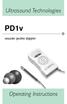 Ultrasound Technologies PD1v vascular pocket doppler Operating Instructions Before using your Pocket Doppler for the first time, please read these operating instructions carefully. 1 INTRODUCTION The UltraTec
NHS FIFE WIDE POLICY - HAEMATOLOGY MANAGEMENT OF ANTICOAGULATION THERAPY DURING MAJOR AND MINOR ELECTIVE SURGERY
 MANAGEMENT OF ANTICOAGULATION THERAPY DURING MAJOR AND MINOR ELECTIVE SURGERY The scope of this guideline is to simplify the management of patients on oral anticoagulation undergoing major and minor surgery.
ELSO GUIDELINES FOR TRAINING AND CONTINUING EDUCATION OF ECMO SPECIALISTS
 ELSO GUIDELINES FOR TRAINING AND CONTINUING EDUCATION OF ECMO SPECIALISTS PURPOSE The "" is a document developed by the Extracorporeal Life Support Organization (ELSO) as a reference for current and future
Vascular Access. Chapter 3
 Vascular Access Chapter 3 Vascular Access Introduction Obtaining vascular access in infants and children can be difficult even under optimal conditions. Attempting emergent access in a hypotensive, struggling
Coding Updates for 2013: Cardiology
 Coding Updates for 2013: Cardiology Presented by: David Dunn, MD, FACS CIRCC, CPC-H, CCVTC, CCC, CCS, RCC National Coding Standards Sources of information Centers for Medicare and Medicare (CMS) Provider
FEMORAL ARTERY SHEATH MANAGEMENT
 Centre for Education & Practice Development Learning Module FEMORAL ARTERY SHEATH MANAGEMENT For Registered Nurses Division 1 February 2008 Acknowledgment This document has been compiled utilising the
Peripherally Inserted Central Venous Catheter (PICC) Invasive Devices Clinical Nurse Specialist Chief Nurse
 Peripherally Inserted Central Venous Catheter (PICC) Invasive Devices Clinical Nurse Specialist Chief Nurse This leaflet has been designed to give you important information about your condition / procedure,
Care of your peripherally inserted central catheter
 Care of your peripherally inserted central catheter A guide for patients and their carers We care, we discover, we teach Contents What is a PICC?.... 1 How is it put in?.... 1 What are the benefits of
Enoxaparin for long term anticoagulation in patients unsuitable for oral anticoagulants
 Enoxaparin for long term anticoagulation in patients unsuitable for oral anticoagulants Traffic light classification- Amber 2 Information sheet for Primary Care Prescribers Relevant Licensed Indications
Understanding your Renal Stent Procedure. A patient Guide (COVER PAGE) TABLE OF CONTENTS (inside front page)
 Understanding your Renal Stent Procedure. A patient Guide (COVER PAGE) TABLE OF CONTENTS (inside front page) The Kidney and the Renal Arteries... 1 Renal Artery Disease... 2 Diagnosis of Renal.Artery Disease...
Procedure for Inotrope Administration in the home
 Procedure for Inotrope Administration in the home Purpose This purpose of this procedure is to define the care used when administering inotropic agents intravenously in the home This includes: A. Practice
NHS FORTH VALLEY Chest Drain Insertion by Seldinger Method (Pigtail drains)
 NHS FORTH VALLEY Chest Drain Insertion by Seldinger Method (Pigtail drains) Date of First Issue 12/12/2012 Approved 12/12/2012 Current Issue Date 12/12/2012 Review Date 12/12/2014 Version 1 EQIA Yes 14/12/2012
Liposuction GUIDELINE
 .goo NON HOSPITAL MEDICAL AND SURGICAL FACILITIES PROGRAM College of Physicians and Surgeons of British Columbia Liposuction GUIDELINE You may download, print or make a copy of this material for your noncommercial
National Patient Safety Goals Effective January 1, 2015
 National Patient Safety Goals Goal 1 Nursing are enter ccreditation Program Improve the accuracy of patient and resident identification. NPSG.01.01.01 Use at least two patient or resident identifiers when
I-140 Venipuncture for Blood Specimen Collection
 I-140 Venipuncture for Blood Specimen Collection Purpose Obtain a blood specimen by venipuncture for laboratory analysis using aseptic technique. Applies To Registered Nurses Licensed Practical/Vocational
Crash Cart Drugs Drugs used in CPR. Dr. Layla Borham Professor of Clinical Pharmacology Umm Al Qura University
 Crash Cart Drugs Drugs used in CPR Dr. Layla Borham Professor of Clinical Pharmacology Umm Al Qura University Introduction A list of the drugs kept in the crash carts. This list has been approved by the
Cardiac Catheter Lab Information for patients having a Coronary Angiogram
 Cardiac Catheter Lab Information for patients having a Coronary Angiogram Page 1 of 5 What is a Coronary Angiogram? This is a test that uses dye and special x-rays to show the inside of your coronary arteries.
12 Lead ECGs: Ischemia, Injury & Infarction Part 2
 12 Lead ECGs: Ischemia, Injury & Infarction Part 2 McHenry Western Lake County EMS Localization: Left Coronary Artery Right Coronary Artery Right Ventricle Septal Wall Anterior Descending Artery Left Main
New Oral Anticoagulants. How safe are they outside the trials?
 New Oral Anticoagulants How safe are they outside the trials? Objectives The need for anticoagulant therapy Indications for anticoagulation Traditional anticoagulant therapies Properties of new oral anticoagulants
National Patient Safety Goals Effective January 1, 2015
 National Patient Safety Goals Effective January 1, 2015 Goal 1 Improve the accuracy of resident identification. NPSG.01.01.01 Long Term are ccreditation Program Medicare/Medicaid ertification-based Option
Heart Center Packages
 Heart Center Packages For more information and appointments, Please contact The Heart Center of Excellence at the American Hospital Dubai Tel: +971-4-377-6571 Email: [email protected] www.ahdubai.com
California Health and Safety Code, Section 1256.01
 California Health and Safety Code, Section 1256.01 1256.01. (a) The Elective Percutaneous Coronary Intervention (PCI) Pilot Program is hereby established in the department. The purpose of the pilot program
Resuscitation in congenital heart disease. Peter C. Laussen MBBS FCICM Department Critical Care Medicine Hospital for Sick Children Toronto
 Resuscitation in congenital heart disease Peter C. Laussen MBBS FCICM Department Critical Care Medicine Hospital for Sick Children Toronto Evolution of Congenital Heart Disease Extraordinary success: Overall
AND SYLLABUS FOR INTERVENTIONAL CARDIOLOGY SUBSPECIALITY TRAINING IN EUROPE
 CURRICULUM AND SYLLABUS FOR INTERVENTIONAL CARDIOLOGY SUBSPECIALITY TRAINING IN EUROPE Document prepared by: Carlo Di Mario, FESC Germano Di Sciascio, FESC Jean-Luc Dubois-Rande,FESC Rolf Michels, FESC
Aspira* Pleural Drainage Catheter
 Aspira* Pleural Drainage Catheter Instructions For Use Access Systems Product Description: The Aspira* Pleural Drainage Catheter is a tunneled, long-term catheter used to drain accumulated fluid from the
Using a Graseby MS26 Syringe Driver for Continuous Subcutaneous Infusions (CSCI) Protocol
 Using a Graseby MS26 Syringe Driver for Continuous Subcutaneous Infusions (CSCI) Protocol Who Division 1 Registered Nursing staff for the purposes of administering and monitoring of infusion Division 2
Lifecath Midline. A Nurses Guide to Lifecath Midline
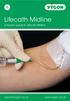 Lifecath Midline A Nurses Guide to Lifecath Midline [email protected] www.vygon.co.uk Lifecath Midline A Nurses Guide to Lifecath Midline This booklet provides guidance in the care and maintenance of Midline
Section 6: Your Hemodialysis Catheter
 Section 6: Your Hemodialysis Catheter What you should know about your dialysis catheter How to change your catheter TEGO connectors Starting dialysis using a catheter End of dialysis using a catheter Changing
Waveforms. INTRODUCTION TO THE HEARTWARE WAVEFORM ipad APP
 Waveforms INTRODUCTION TO THE HEARTWARE WAVEFORM ipad APP WELCOME Did you ever wonder how you can use the HeartWare System waveforms? Use this app to find out. The HeartWare Waveform App will help you
Current Status: Draft PolicyStat ID: 1547809 EZIO
 Current Status: Draft PolicyStat ID: 1547809 Originated: Reviewed: Last Revised Or Downloaded: Expiration: Document Area: N/A N/A N/A N/A Nursing POLICY STATEMENT: EZIO In the event that peripheral venous
Treating your abdominal aortic aneurysm by open repair (surgery)
 Patient information Abdominal aortic aneurysm open surgery Treating your abdominal aortic aneurysm by open repair (surgery) Introduction This leaflet tells you about open repair of abdominal aortic aneurysm,
Endovascular Repair of an Axillary Artery Aneurysm: A Novel Approach
 Endovascular Repair of an Axillary Artery Aneurysm: A Novel Approach Bao- Thuy D. Hoang, MD 1, Jonathan- Hien Vu, MD 2, Jerry Matteo, MD 3 1 Department of Surgery, University of Florida College of Medicine,
3/23/12. Learning Objectives. Continuing Education Credit (CE) Arterial Catheter Insertion, Care and Maintenance. Amy Bardin, MS, RRT, VA-BC
 Arterial Catheter Insertion, Care and Maintenance Amy Bardin, MS, RRT, VA-BC 2012 Saxe Healthcare Communications Sponsored by Teleflex Learning Objectives Discuss insertion techniques for arterial catheter
Provided by the American Venous Forum: veinforum.org
 CHAPTER 1 NORMAL VENOUS CIRCULATION Original author: Frank Padberg Abstracted by Teresa L.Carman Introduction The circulatory system is responsible for circulating (moving) blood throughout the body. The
Management of Pacing Wires After Cardiac Surgery
 Management of Pacing Wires After Cardiac Surgery David E. Lizotte, Jr. PA C, MPAS, FAPACVS President, Association of Physician Assistants in Cardiovascular Surgery Conflicts: None Indications 2008 Journal
How To Use An Ekosonic Endovascular System
 EkoSonic Endovascular System Nursing Presentation Imagine where we can go. Imagine where we can go. Forward-looking statement This presentation and information communicated verbally to you may contain
V: Infusion Therapy. Alberta Licensed Practical Nurses Competency Profile 217
 V: Infusion Therapy Alberta Licensed Practical Nurses Competency Profile 217 Competency: V-1 Knowledge of Intravenous Therapy V-1-1 V-1-2 V-1-3 V-1-4 V-1-5 Demonstrate knowledge and ability to apply critical
RACE I Rapid Assessment by Cardiac Echo. Intensive Care Training Program Radboud University Medical Centre NIjmegen
 RACE I Rapid Assessment by Cardiac Echo Intensive Care Training Program Radboud University Medical Centre NIjmegen RACE Goal-directed study with specific questions Excludes Doppler ultrasound Perform 50
Central Venous Access
 Central Venous Access Ian Rigby, Daniel Howes, Jason Lord, Ian Walker Resuscitation Education Consortium/Kingston Resuscitation Institute Introduction A great deal of this course is geared toward making
The Cardiac Society of Australia and New Zealand
 The Cardiac Society of Australia and New Zealand Guidelines on Support Facilities for Coronary Angiography and Percutaneous Coronary Intervention (PCI) including Guidelines on the Performance of Procedures
INSERTION OF UMBILICAL LINES ARTERIAL (UAC) and VENOUS (UVC) - NEONATAL CLINICAL GUIDELINE 1. Aim/Purpose of this Guideline
 INSERTION OF UMBILICAL LINES ARTERIAL (UAC) and VENOUS (UVC) - NEONATAL CLINICAL GUIDELINE 1. Aim/Purpose of this Guideline This guideline applies to all staff undertaking the procedure of umbilical line