
RECENT ADVANCES IN SOIL LIQUEFACTION ENGINEERING AND SEISMIC SITE RESPONSE EVALUATION
|
|
|
- Peregrine Stevens
- 10 years ago
- Views:
Transcription
1 RECENT ADVANCES IN SOIL LIQUEFACTION ENGINEERING AND SEISMIC SITE RESPONSE EVALUATION Seed, R. B. Cetin, K. O. Moss, R. E. S. University of California Middle East Technical University Kammerer, A. M. Berkeley, California Ankara, Turkey Wu, J. Pestana, J. M. Riemer, M. F. University of California, Berkeley, California ABSTRACT Over the past decade, major advances have occurred in both understanding and practice with regard to engineering treatment of seismic soil liquefaction and assessment of seismic site response. Seismic soil liquefaction engineering has evolved into a sub-field in its own right, and assessment and treatment of site effects affecting seismic site response has gone from a topic of controversy to a mainstream issue addressed in most modern building codes and addressed in both research and practice. This rapid evolution in the treatment of both liquefaction and site response issues has been pushed by a confluence of lessons and data provided by a series of earthquakes over the past eleven years, as well as by the research and professional/political will engendered by these major seismic events. Although the rate of progress has been laudable, further advances are occurring, and more remains to be done. As we enter a new millenium, engineers are increasingly well able to deal with important aspects of these two seismic problem areas. This paper will highlight a few major recent and ongoing developments in each of these two important areas of seismic practice, and will offer insights regarding work/research in progress, as well as suggestions regarding further advances needed. The first part of the paper will address soil liquefaction, and the second portion will (briefly) address engineering assessment of seismic site response. INTRODUCTION Soil liquefaction is a major cause of damage during earthquakes. Modern engineering treatment of liquefactionrelated issues evolved initially in the wake of the two devastating earthquakes of 1964, the 1964 Niigata and 1964 Great Alaska Earthquakes, in which seismically-induced liquefaction produced spectacular and devastating effects. Over the nearly four decades that have followed, significant progress has occurred. Initially, this progress was largely confined to improved ability to assess the likelihood of initiation (or triggering ) of liquefaction in clean, sandy soils. As the years passed, and earthquakes continued to provide lessons and data, researchers and practitioners became increasingly aware of the additional potential problems associated with both silty and gravelly soils, and the issues of post-liquefaction strength and stress-deformation behavior also began to attract increased attention. Today, the area of soil liquefaction engineering is emerging as a semi-mature field of practice in its own right. This area now involves a number of discernable sub-issues or subtopics, as illustrated schematically in Figure 1. As shown in Figure 1, the first step in most engineering treatments of soil liquefaction continues to be (1) assessment of liquefaction potential, or the risk of triggering (initiation) of liquefaction. There have been major advances here in recent years, and some of these will be discussed. Once it is determined that occurrence of liquefaction is a potentially serious risk/hazard, the process next proceeds to assessment of the consequences of the potential liquefaction. This, now, increasingly involves (2) assessment of available post-liquefaction strength and resulting post-liquefaction overall stability (of a site, and/or of a structure or other built facility, etc.). There has been considerable progress in evaluation of post-liquefaction strengths over the past fifteen years. If post-liquefaction stability is found wanting, then deformation/displacement potential is large, and engineered remediation is typically warranted. If post-liquefaction overall stability is not unacceptable, then attention is next directed towards (3) assessment of anticipated deformations and displacements. This is a very soft area of practice, and much remains to be done here with regard to development and calibration/verification of engineering tools and methods. Similarly, relatively little is known regarding Paper No. SPL-2 1

2 1. Assessment of the likelihood of triggering or initiation of soil liquefaction. 2. Assessment of post-liquefaction strength and overall post-liquefaction stability. 3. Assessment of expected liquefaction-induced deformations and displacements. 4. Assessment of the consequences of these deformations and displacements. 5. Implementation (and evaluation) of engineered mitigation, if necessary. Fig. 1: Key Elements of Soil Liquefaction Engineering (4) the effects of liquefaction-induced deformations and displacements on the performance of structures and other engineered facilities, and criteria for acceptable performance are not well established. Finally, in cases in which the engineer(s) conclude that satisfactory performance cannot be counted on, (5) engineered mitigation of liquefaction risk is generally warranted. This, too, is a rapidly evolving area, and one rife with potential controversy. Ongoing evolution of new methods for mitigation of liquefaction hazard provides an ever increasing suite of engineering options, but the efficacy and reliability of some of these remain contentious, and accurate and reliable engineering analysis of the improved performance provided by many of these mitigation techniques continues to be difficult. It is not possible, within the confines of this paper, to fully address all of these issues (a textbook would be required!) Instead, a number of important recent/ongoing advances will be highlighted, and resultant issues and areas of controversy, as well as areas in urgent need of further advances either in practice or understanding, will be noted. ASSESSMENT OF LIQUEFACTION POTENTIAL Liquefiable soils: The first step in engineering assessment of the potential for triggering or initiation of soil liquefaction is the determination of whether or not soils of potentially liquefiable nature are present at a site. This, in turn, raises the important question regarding which types of soils are potentially vulnerable to soil liquefaction. It has long been recognized that relatively clean sandy soils, with few fines, are potentially vulnerable to seismicallyinduced liquefaction. There has, however, been significant controversy and confusion regarding the liquefaction potential of silty soils (and silty/clayey soils), and also of coarser, gravelly soils and rockfills. Coarser, gravelly soils are the easier of the two to discuss, so we will begin there. The cyclic behavior of coarse, gravelly soils differs little from that of sandy soils, as Nature has little or no respect for the arbitrary criteria established by the standard #4 sieve. Coarse, gravelly soils are potentially vulnerable to cyclic pore pressure generation and liquefaction. There are now a number of well-documented field cases of liquefaction of coarse, gravelly soils (e.g.: Evans, 1987; Harder, 1988; Hynes, 1988; Andrus, 1994). These soils do, however, often differ in behavior from their finer, sandy brethren in two ways: (1) they can be much more pervious, and so can often rapidly dissipate cyclically generated pore pressures, and (2) due to the mass of their larger particles, the coarse gravelly soils are seldom deposited gently and so do not often occur in the very loose states more often encountered with finer sandy soils. Sandy soils can be very loose to very dense, while the very loose state is uncommon in gravelly deposits and coarser soils. The apparent drainage advantages of coarse, gravelly soils can be defeated if their drainage potential is circumvented by either; (1) their being surrounded and encapsulated by finer, less pervious materials, (2) if drainage is internally impeded by the presence of finer soils in the void spaces between the coarser particles (it should be noted that the D 10 particle size, not the mean or D 50 size, most closely correlates with the permeability of a broadly graded soil mix), or (3) if the layer or stratum of coarse soil is of large dimension, so that the distance over which drainage must occur (rapidly) during an earthquake is large. In these cases, the coarse soils should be considered to be of potentially liquefiable type, and should be evaluated accordingly. Questions regarding the potential liquefiability of finer, cohesive soils (especially silts ) are increasingly common at meetings and professional short courses and seminars. Over the past five years, a group of approximately two dozen leading experts has been attempting to achieve concensus regarding a number of issues involved in the assessment of liquefaction potential. This group, referred to hereafter as the NCEER Working Group, have published many of their consensus findings (or at least near-consensus findings) in the NSF-sponsored workshop summary paper (NCEER, 1997), and additional views are coming in a second paper scheduled for publication this year in the ASCE Journal of Geotechnical and Geoenvironmental Engineering (Youd et al., 2001). The NCEER Working Group addressed this issue, and it was agreed that there was a need to reexamine the Modified Chinese Criteria (Finn et al., 1994) for defining the types of Paper No. SPL-2 2

3 50 35% 0 Liquid Limit, LL (%) 100 SAFE Natural Water Content, W n (%) Fig. 2: Modified Chinese Criteria (After Finn et al., 1994) fine cohesive soils potentially vulnerable to liquefaction, but no improved concensus position could be reached, and more study was warranted. Some of the confusion here is related to the definition of liquefaction. In this paper, the term liquefaction will refer to significant loss of strength and stiffness due to cyclic pore pressure generation, in contrast to sensitivity or loss of strength due to monotonic shearing and/or remolding. By making these distinctions, we are able to separately discuss classical cyclically-induced liquefaction and the closelyrelated (but different) phenomenon of strain-softening or sensitivity. Figure 2 illustrates the Modified Chinese Criteria for defining potentially liquefiable soils. According to these criteria, soils are considered to be of potentially liquefiable type and character if: (1) there are less than 15% clay fines (based on the Chinese definition of clay sizes as less than mm), (2) there is a Liquid Limit of LL 35%, and (3) there is a current in situ water content greater than or equal to 90% of the Liquid Limit. Andrews and Martin (2000) have re-evaluated the liquefaction field case histories from the database of Seed et al. (1984, 1985), and have transposed the Modified Chinese Criteria to U.S. conventions (with clay sizes defined as those less than about mm). Their findings are largely summarized in Figure 3. Andrews and Martin recommend that soils with less than about 10% clay fines (< mm) and a Liquid Limit (LL) in the minus #40 sieve fraction of less than 32% be considered potentially liquefiable, that soils with more than about 10% clay fines and LL 32% are unlikely to be susceptible to classic cyclically-induced liquefaction, and that soils intermediate between these criteria should be sampled and tested to assess whether or not they are potentially liquefiable. This is a step forward, as it somewhat simplifies the previous Modified Chinese criteria, and transposes it into terms more familiar to U.S practitioners. We note, however, that there is a common lapse in engineering practice inasmuch as engineers often tend to become distracted by the presence of potentially liquefiable soils, and then often neglect cohesive soils (clays and plastic silts) that are highly sensitive and vulnerable to major loss of strength if sheared or remolded. These types of sensitive soils often co-exist with potentially liquefiable soils, and can be similarly dangerous in their own right. Both experimental research and review of liquefaction field case histories show that for soils with sufficient fines (particles finer than mm, or passing a #200 sieve) to separate the coarser (larger than mm) particles, the characteristics of the fines control the potential for cyclicallyinduced liquefaction. This separation of the coarser particles typically occurs as the fines content exceeds about 12% to 30%, with the precise fines content required being dependent principally on the overall soil gradation and the character of the fines. Well-graded soils have lesser void ratios than uniformly-graded or gap-graded soils, and so require lesser fines contents to separate the coarser particles. Similarly, clay fines carry higher void ratios than silty particles and so are more rapidly effective at over-filling the void space available between the coarser (larger than 0.074mm) particles. In soils wherein the fines content is sufficient as to separate the coarser particles and control behavior, cyclically-induced soil liquefaction appears to occur primarily in soils where these fines are either non-plastic or are low plasticity silts and/or silty clays (PI 10 to 12%). In fact, low plasticity or non-plastic silts and silty sands can be among the most dangerous of liquefiable soils, as they not only can cyclically Clay Content 2 < 10% Clay Content 2 10% Liquid Limit 1 < 32 Liquid Limit 32 Further Studies Susceptible Required Further Studies Required (Considering nonplastic clay sized grains such as mine and quarry tailings) (Considering plastic non-clay sized grains such as Mica) Not Susceptible Notes: 1. Liquid limit determined by Casagrande-type percussion apparatus. 2. Clay defined as grains finer than mm. Fig. 3: Liquefaction Susceptibility of Silty and Clayey Sands (after Andrews and Martin, 2000) Paper No. SPL-2 3

4 liquefy; they also hold their water well and dissipate excess pore pressures slowly due to their low permeabilities. Soils with more than about 15% fines, and with fines of moderate plasticity (8% PI 15%), fall into an uncertain range. These types of soils are usually amenable to reasonably undisturbed (e.g.: thin-walled, or better) sampling, however, and so can be tested in the laboratory. It should be remembered to check for sensitivity of these cohesive soils as well as for potential cyclic liquefiability. The criteria of this section do not fully cover all types of liquefiable soils. As an example, a well-studied clayey sand (SC) at a site in the southeastern U.S. has been clearly shown to be potentially susceptible to cyclic liquefaction, despite a clay content on the order of 15 %, and a Plasticity Index of up to 30% (Riemer et al., 1993). This is a highly unusual material, however, as it is an ancient sand that has weathered in place, with the clay largely coating the individual weathered grains, and the overall soil is unusually loose. Exceptions must be anticipated, and judgement will continue to be necessary in evaluating whether or not specific soils are potentially liquefiable. maturity as to represent viable tools for this purpose, and these are (1) the Standard Penetration Test (SPT), (2) the cone penetration test (CPT), (3) measurement of in-situ shear wave velocity (V s ), and (4) the Becker penetration test (BPT). The oldest, and still the most widely used of these, is the SPT, and this will be the focus of the next section of this paper. Existing SPT-Based Correlations: The use of SPT as a tool for evaluation of liquefaction potential first began to evolve in the wake of a pair of devastating earthquakes that occurred in 1964; the 1964 Great Alaskan Earthquake (M = 8+) and the 1964 Niigata Earthquake (M 7.5), both of which produced significant liquefaction-related damage (e.g.: Kishida, 1966; Koizumi, 1966; Ohsaki, 1966; Seed and Idriss, 1971). Numerous additional researchers have made subsequent progress, and these types of SPT-based methods continue to evolve today. As discussed by the NCEER Working Group (NCEER, 1997; Youd et al., 2001), one of the most widely accepted and used SPT-based correlations is the deterministic relationship proposed by Seed, et al. (1984, 1985). Figure 4 shows this Two additional conditions necessary for potential liquefiability are: (1) saturation (or at least near-saturation), and (2) rapid (largely undrained ) loading. It should be remembered that phreatic conditions are variable both with seasonal fluctuations and irrigation, and that the rapid cyclic loading induced by seismic excitation represents an ideal loading type. Assessment of Triggering Potential: Quantitative assessment of the likelihood of triggering or initiation of liquefaction is the necessary first step for most projects involving potential seismically-induced liquefaction. There are two general types of approaches available for this: (1) use of laboratory testing of undisturbed samples, and (2) use of empirical relationships based on correlation of observed field behavior with various in-situ index tests. The use of laboratory testing is complicated by difficulties associated with sample disturbance during both sampling and reconsolidation. It is also difficult and expensive to perform high-quality cyclic simple shear testing, and cyclic triaxial testing poorly represents the loading conditions of principal interest for most seismic problems. Both sets of problems can be ameliorated, to some extent, by use of appropriate frozen sampling techniques, and subsequent testing in a high quality cyclic simple shear or torsional shear apparatus. The difficulty and cost of these delicate techniques, however, places their use beyond the budget and scope of most engineering studies. Accordingly, the use of in-situ index testing is the dominant approach in common engineering practice. As summarized in the recent state-of-the-art paper (Youd et al., 1997, 2001), four in-situ test methods have now reached a level of sufficient Fig. 4: Correlation Between Equivalent Uniform Cyclic Stress Ratio and SPT N 1,60 -Value for Events of Magnitude M W 7.5 for Varying Fines Contents, With Adjustments at Low Cyclic Stress Ratio as Recommended by NCEER Working Group (Modified from Seed, et al., 1986) Paper No. SPL-2 4

5 relationship, with minor modification at low CSR (as recommended by the NCEER Working Group; NCEER, 1997). This familiar relationship is based on comparison between SPT N-values, corrected for both effective overburden stress and energy, equipment and procedural factors affecting SPT testing (to N 1,60 -values) vs. intensity of cyclic loading, expressed as magnitude-weighted equivalent uniform cyclic stress ratio (CSR eq ). The relationship between corrected N 1,60 -values and the intensity of cyclic loading required to trigger liquefaction is also a function of fines content in this relationship, as shown in Figure 4. Although widely used in practice, this relationship is dated, and does not make use of an increasing body of field case history data from seismic events that have occurred since It is particularly lacking in data from cases wherein peak ground shaking levels were high (CSR > 0.25), an increasingly common design range in regions of high seismicity. This correlation also has no formal probabilistic basis, and so provides no insight regarding either uncertainty or probability of liquefaction. Efforts at development of similar, but formally probabilistically-based, correlations have been published by a number of researchers, including Liao et al. (1988, 1998), and more recently Youd and Noble (1997), and Toprak et al. (1999). Figures 5(a) through (c) shows these relationships, expressed as contours of probability of triggering of liquefaction, with the deterministic relationship of Seed et al. from Figure 4 superimposed (dashed lines) for reference. In each of the figures on this page, contours of probability of triggering or initiation of liquefaction for P L = 5, 20, 50, 80 and 95% are shown. The probabilistic relationship proposed by Liao et al. employs a larger number of case history data points than were used by Seed et al. (1984), but this larger number of data points is the result of less severe screening of points for data quality, and so includes a number of low quality data. This relationship was developed using the maximum likelihood estimation method for probabilistic regression (binary regression of logistic models). The way the likelihood function was formulated did not permit separate treatment of aleatory and epistemic sources of uncertainty, and so overstates the overall variance or uncertainty of the proposed correlation. This can lead to large levels of over-conservatism at low levels of probability of liquefaction. An additional shortcoming was that Liao et al. sought, but failed to find, a significant impact of fines content on the regressed relationship between SPT penetration resistance and liquefaction resistance, and so developed reliable curves (Figure 5(a)) only for sandy soils with less than 12% fines. The relationship proposed by Youd and Noble employs a number of field case history data points from earthquakes which have occurred since the earlier relationships were developed, and excludes the most questionable of the data used by Liao et al. The basic methodology employed, maximum likelihood estimation, is the same, however, and as a result this correlation continues to overstate the overall uncertainty. The effects of fines content were judgmentally prescribed, a priori, in these relationships, and so were not developed as part of the regression. This correlation is applicable to soils of variable fines contents, and so can be employed for both sandy and silty soils. As shown in Figure 5(b), however, uncertainty (or variance) is high. The relationship proposed by Toprak et al. also employs an enlarged and updated field case history database, and deletes the most questionable of the data used by Liao et al. As with the studies of Youd et al., the basic regression tool was binary regression, and the resulting overall uncertainty is again very large. Similarly, fines corrections and magnitude correlated duration weighting factors were prescribed a priori, rather than regressed from the field case history data, further decreasing model fit (and increasing variance and uncertainty). Overall, these four prior relationships presented in Figures 4 and 5(a) through (c) are all excellent efforts, and are among the best of their types. It is proposed that more can now be achieved, however, using more powerful and flexible probabilistic tools, and taking fullest possible advantage of the currently available field case histories and current knowledge affecting the processing and interpretation of these. Proposed New SPT-Based Correlations: This section presents new correlations for assessment of the likelihood of initiation (or triggering ) of soil liquefaction (Cetin, et al., 2000; Seed et al., 2001). These new correlations eliminate several sources of bias intrinsic to previous, similar correlations, and provide greatly reduced overall uncertainty and variance. Figure 5(d) shows the new correlation, with contours of probability of liquefaction again plotted for P L = 5, 20, 50, 80 and 95%, and plotted to the same scale as the earlier correlations. As shown in this figure, the new correlation provides greatly reduced overall uncertainty. Indeed, the uncertainty is now sufficiently reduced that the principal uncertainty now resides where it belongs; in the engineer s ability to assess suitable CSR and representative N 1,60 values for design cases. Key elements in the development of this new correlation were: (1) accumulation of a significantly expanded database of field performance case histories, (2) use of improved knowledge and understanding of factors affecting interpretation of SPT data, (3) incorporation of improved understanding of factors affecting site-specific ground motions (including directivity effects, site-specific response, etc.), (4) use of improved methods for assessment of in-situ cyclic shear stress ratio (CSR), (5) screening of field data case histories on a quality/uncertainty basis, and (6) use of higher-order probabilistic tools (Bayesian Updating). These Bayesian methods (a) allowed for simultaneous use of more descriptive variables than most prior studies, and (b) allowed for appropriate treatment of various contributing sources of aleatory and epistemic uncertainty. The resulting relationships Paper No. SPL-2 5

6 (a) Liao et al., 1988 (b) Youd et al., 1998 P L P L % 80% 50% 20% 5% % 80% 50% 20% 5% FC 35% 15% 5% FC 35% 15% 5% CSRN CSRN Liao, et al. (1988) Youd, et al. (1998) 0.1 Deterministic Bounds, Seed, et al. (1984) 0.1 Deterministic Bounds, Seed, et al. (1984) (N 1 ) (N 1) 60,cs (c) Toprak et al., 1999 (d) This Study (σ v =1300 psf.) % P L 80% 50% 20% FC 35% 15% 5% 0.4 5% 0.3 CSRN Toprak et al. (1999) Deterministic Bounds, Seed, et al. (1984) (N 1) 60,cs Fig. 5: Comparison of Best Available Probabilistic Correlations for Evaluation of Liquefaction Potential (All Plotted for M w =7.5, σ v ' = 1300 psf, and Fines Content 5%) not only provide greatly reduced uncertainty, they also help to resolve a number of corollary issues that have long been difficult and controversial, including: (1) magnitude-correlated duration weighting factors, (2) adjustments for fines content, and (3) corrections for effective overburden stress. As a starting point, all of the field case histories employed in the correlations shown in Figures 4 and 5(a) through (c) were obtained and studied. Additional cases were also obtained, including several proprietary data sets. Eventually, approximately 450 liquefaction (and non-liquefaction ) field case histories were evaluated in detail. A formal rating system was established for rating these case histories on the basis of data quality and uncertainty, and standards were established for inclusion of field cases in the final data set used to establish the new correlations. In the end, 201 of the field Paper No. SPL-2 6

7 case histories were judged to meet these new and higher standards, and were employed in the final development of the proposed new correlations. A significant improvement over previous efforts was the improved evaluation of peak horizontal ground acceleration at each earthquake field case history site. Specific details are provided by Cetin et al. (2001). Significant improvements here were principally due to improved understanding and treatment of issues such as (a) directivity effects, (b) effects of site conditions on response, (c) improved attenuation relationships, and (d) availability of strong motion records from recent (and well-instrumented) major earthquakes. In these studies, peak horizontal ground acceleration (a max ) was taken as the geometric mean of two recorded orthogonal horizontal components. Whenever possible, attenuation relationships were calibrated on an earthquake-specific basis, based on local strong ground motion records, significantly reducing uncertainties. For all cases wherein sufficiently detailed data and suitable nearby recorded ground motions were available, site-specific site response analyses were performed. In all cases, both local site effects and rupturemechanism-dependent potential directivity effects were also considered. (a) A second major improvement was better estimation of in-situ CSR within the critical stratum for each of the field case histories. All of the previous studies described so far used the simplified method of Seed and Idriss (1971) to estimate CSR at depth (within the critical soil stratum) as CSR peak a = g max σ v σ v ( r ) where a max = the peak horizontal ground surface acceleration, g = the acceleration of gravity, σ v = total vertical stress, σ v = effective vertical stress, and r d = the nonlinear shear mass participation factor. d (Eq. 1) The original r d values proposed by Seed and Idriss (1971) are shown by the heavy lines in Figure 6(a). These are the values used in the previous studies by Seed et al. (1984), Liao et al. (1988, 1998), Youd et al. (1997), and Toprak et al. (1999). Recognition that r d is nonlinearly dependent upon a suite of factors led to studies by Cetin and Seed (2000) to develop improved correlations for estimation of r d. The numerous light gray lines in Figures 6(a) and (b) show the results of 2,153 seismic site response analyses performed to assess the variation of r d over ranges of (1) site conditions, and (2) ground motion excitation characteristics. The mean and +1 standard deviation values for these 2,153 analyses are shown by the heavy lines in Figure 6(b). As shown in Figures 6(a) and (b), the earlier r d proposal of Seed and Idriss (1971) understates the variance, and provides biased (generally high) estimates of r d at depths of between 10 and 50 feet (3 to 15 m.) Unfortunately, it is in this depth range that the critical (b) Fig. 6: R d Results from Response Analyses for 2,153 Combinations of Site Conditions and Ground Motions, Superimposed with Heavier Lines Showing (a) the Earlier Recommendations of Seed and Idriss (1971), and (b) the Mean and + 1 Standard Deviation Values for the 2,153 Cases Analyzed (After Cetin and Seed, 2000). Paper No. SPL-2 7

8 d < 65 ft: r (d, M d w d 65 ft:, a max, V a 1 + max ( d V s, ) e s,40 ) = ± σ ε rd a max M w V s, e a 1 + max M w ( V s, ) V s,40 (Eq 2) ( V s, ) e d (d, M w, a max, V s,40 ) = (d 65) ± σ ε rd a max M w V s,40 r where e M w V ( V s, ) σ ε (d) = d [for d < 40 ft], and σ ε (d) = [for d 40 ft] r d s,40 r d soil strata for most of the important liquefaction (and nonliquefaction) earthquake field case histories occur. This, in turn, creates some degree of corresponding bias in relationships developed on this basis. Cetin and Seed (2000, 2001) propose a new, empirical basis for estimation of r d as a function of; (1) depth, (2) earthquake magnitude, (3) intensity of shaking, and (4) site stiffness (as expressed in Equation 2). Figure 7 shows the values of r d from the 2,153 site response analyses performed as part of these studies sub-divided into 12 bins as a function of peak ground surface acceleration (a max ), site stiffness (V S,40ft ), earthquake magnitude (M w ), and depth (d). [V S,40ft is the average shear wave velocity over the top 40 feet of a site (in units of ft./sec.), taken as 40 feet divided by the shear wave travel time in traversing this 40 feet.] Superimposed on each figure are the mean and + 1 standard deviation values central to each bin from Equation 2. Either Equation 2, or Figure 7, can be used to derive improved (and statistically unbiased) estimates of r d. It is noted, however, that in-situ CSR (and r d ) can jump or transition irregularly within a specific soil profile, especially near sharp transitions between soft and stiff strata, and that CSR (and r d ) are also a function of the interaction between a site and each specific excitation motion. Accordingly, the best means of estimation of in-situ CSR within any given stratum is to directly calculate CSR by means of appropriate site-specific, and event-specific, seismic site response analyses, when this is feasible. As the new correlations were developed using both directly-calculated r d values (from site response analyses) as well as r d values from the statistically unbiased correlation of Equation 2, there is no intrinsic a priori bias associated with either approach. In these new correlations, in-situ cyclic stress ratio (CSR) is taken as the equivalent uniform CSR equal to 65% of the single (one-time) peak CSR (from Equation 1) as CSR eq = (0.65) CSR peak (Eq. 3) In-situ CSR eq was evaluated directly, based on performance of full seismic site response analyses (using SHAKE 90; Idriss and Sun, 1992), for cases where (a) sufficient sub-surface data was available, and (b) where suitable input motions could be developed from nearby strong ground motion records. For cases wherein full seismic site response analyses were not performed, CSR eq was evaluated using the estimated a max and Equations 1 and 2. In addition to the best estimates of CSR eq, the variance or uncertainty of these estimates (due to all contributing sources of uncertainty) was also assessed (Cetin et al., 2001). At each case history site, the critical stratum was identified as the stratum most susceptible to triggering of liquefaction. When possible, collected surface boil materials were also considered, but problems associated with mixing and segregation during transport, and recognition that liquefaction of underlying strata can result in transport of overlying soils to the surface through boils, limited the usefulness of some of this data. Paper No. SPL-2 8
![999 M w + 0.016 V s,40 r where 1 + 16.258 + 0.201 e + 0.999 M w + 0.016 V 0.104 (0.0785 V s,40 + 24.888) σ ε (d) = d 0.0072 [for d < 40 ft], and σ ε (d) = 40 0. 0072 [for d 40 ft] r d 0.](/docs-images/41/309416/images/page_8.jpg "850 s,40 r d 0.850 soil strata for most of the important liquefaction (and nonliquefaction) earthquake field case histories occur.")
9 (a) M w 6.8, a max 0.12g, V s,40 ft. 525 fps (b) M w 6.8, a max 0.12g, V s,40 ft. >525 fps (c) M w <6.8, a max 0.12g, V s,40 ft. 525 fps (d) M w <6.8, a max 0.12g, V s,40 ft. >525 fps Fig. 7: R d Results for Various Bins Superimposed with the Predictions (Mean and Mean ±1σ) Based on Bin Mean Values of V s,40 ft, M w, and a max (continued ) Paper No. SPL-2 9

10 (e) M w 6.8, 0.12< a max 0.23g, V s,40 ft. 525 fps (f) M w 6.8, 0.12< a max 0.23g, V s,40 ft. >525 fps (g) M w <6.8, 0.12< a max 0.23g, V s,40 ft. 525 fps (h) M w <6.8, 0.12< a max 0.23g, V.s,40 ft. >525 fps Fig. 7: R d Results for Various Bins Superimposed with the Predictions (Mean and Mean ±1σ) Based on Bin Mean Values of V s,40 ft, M w, and a max (continued ) Paper No. SPL-2 10

11 (i) M w 6.8, 0.23< a max, V s,40 ft. 525 fps (j) M w 6.8, 0.23< a max, V s,40 ft. >525 fps (k) M w <6.8, 0.23< a max, V s,40 ft. 525 fps (l) M w <6.8, 0.23< a max, V s,40 ft. >525 fps Fig. 7: R d Results for Various Bins Superimposed with the Predictions (Mean and Mean ±1σ) Based on Bin Mean Values of V s,40 ft, M w, and a max Paper No. SPL-2 11

12 The N 1,60 -values employed were truncated mean values within the critical stratum. Measured N-values (from one or more points) within a critical stratum were corrected for overburden, energy, equipment, and procedural effects to N 1,60 values, and were then plotted vs. elevation. In many cases, a given soil stratum would be found to contain an identifiable sub-stratum (based on a group of localized low N 1,60 -values) that was significantly more critical than the rest of the stratum. In such cases, the sub-stratum was taken as the critical stratum. Occasional high values, not apparently representative of the general characteristics of the critical stratum, were considered non-representative and were deleted in a number of the cases. Similarly, though less often, very low N 1,60 values (very much lower than the apparent main body of the stratum, and often associated with locally high fines content) were similarly deleted. The remaining, corrected N 1,60 values were then used to evaluate both the mean of N 1,60 within the critical stratum, and the variance in N 1,60. For those cases wherein the critical stratum had only one single useful N 1,60 -value, the coefficient of variation was taken as 20%; a value typical of the larger variances among the cases with multiple N 1,60 values within the critical stratum (reflecting the increased uncertainty due to lack of data when only a single value was available). All N-values were corrected for overburden effects (to the hypothetical value, N 1, that would have been measured if the effective overburden stress at the depth of the SPT had been 1 atmosphere) [1 atm. 2,000 lb/ft 2 1 kg/cm lb/in kpa] as N 1 = N C N (Eq. 4(a)) where C N is taken (after Liao and Whitman, 1986) as C N = 1 σ v 0.5 (Eq. 4(b)) where σ v is the actual effective overburden stress at the depth of the SPT in atmospheres. The resulting N 1 values were then further corrected for energy, equipment, and procedural effects to fully standardized N 1,60 values as where N 1,60 = N1 CR CS CB CE (Eq. 5) C R = correction for short rod length, C S = correction for non-standardized sampler configuration, C B = correction for borehole diameter, and C E = correction for hammer energy efficiency. The corrections for C R, C S, C B and C E employed correspond largely to those recommended by the NCEER Working Group (NCEER, 1997). Table 1 summarizes the correction factors used in these studies. The correction for short rod length between the driving hammer and the penetrating sampler was taken as a nonlinear curve (Figure 8), rather than the incremental values of the NCEER Workshop recommendations, but the two agree well at all NCEER mid-increments of length. C S was applied in cases wherein a nonstandard (though very common) SPT sampler was used in which the sampler had an internal space for sample liner rings, but the rings were not used. This results in an indented interior liner annulus of enlarged diameter, and reduces friction between the sample and the interior of the sampler, resulting in reduced overall penetration resistance (Seed et al., 1984 and 1985). The reduction in penetration resistance is on the order of ~10 % in loose soils (N 1 <10 blows/ft), and ~30 % in very dense soils (N 1 >30 blows/ft), so C S varied from 1.1 to 1.3 over this range. Borehole diameter corrections (C B ) were as recommended in the NCEER Workshop Proceedings. Corrections for hammer energy (C E ), which were often significant, were largely as recommended by the NCEER Working Group, except in those cases where better hammer/system-specific information was available. Cases where better information was available included cases where either direct energy measurements were made during driving of the SPT sampler, or where the hammer and the raising/dropping system (and the operator, when appropriate) had been reliably calibrated by means of direct driving energy measurements. Within the Bayesian updating analyses, which were performed using a modified version of the program BUMP (Geyskins Rod Length (m) C R Fig. 8: Recommended C R Values (rod length from point of hammer impact to tip of sampler). Paper No. SPL-2 12

13 C R C S Table 1: Recommended Corrections for SPT Equipment, Energy and Procedures (See Fig. 8 for Rod Length Correction Factors) For samplers with an indented space for interior liners, but with liners omitted during sampling, N1,60 Cs = (Eq. T-2) With limits as 1.10 C S 1.30 C B Borehole diameter Correction (C B ) 65 to 115 mm mm mm 1.15 C E CE = ER 60% where ER (efficiency ratio) is the fraction or percentage of the theoretical SPT impact hammer energy actually transmitted to the sampler (Eq. T-1) The best approach is to directly measure the impact energy transmitted with each blow. When available, direct energy measurements were employed. The next best approach is to use a hammer and mechanical hammer release system that has been previously calibrated based on direct energy measurements. Otherwise, ER must be estimated. For good field procedures, equipment and monitoring, the following guidelines are suggested: Equipment Approx ER (see Note 3) C E (see Note 3) -Safety Hammer to to 1.2 -Donut Hammer to to 1.0 -Donut Hammer to to 1.4 -Automatic-Trip Hammer 0.5 to to 1.4 (Donut or Safety Type) For lesser quality fieldwork (e.g. irregular hammer drop distance, sliding friction of hammer on rods, wet or worn rope on cathead, etc.) further judgmental adjustments are needed. Notes: (1) Based on rope and cathead system, two turns of rope around cathead, normal release (not the Japanese throw ), and rope not wet or excessively worn. (2) Rope and cathead with special Japanese throw release. (See also Note 4) (3) For the ranges shown, values roughly central to the mid-third of the range are more common than outlying values, but ER and C E can be even more highly variable than the ranges shown if equipment and/or monitoring and procedures are not good. (4) Common Japanese SPT practice requires additional corrections for borehole diameter and for frequency of SPT hammer blows. For typical Japanese practice with rope and cathead, donut hammer, and the Japanese throw release, the overall product of C B C E is typically in the range of 1.0 to 1.3. Paper No. SPL-2 13

Standard Penetration Test-Based Probabilistic and Deterministic Assessment of Seismic Soil Liquefaction Potential
 Standard Penetration Test-Based Probabilistic and Deterministic Assessment of Seismic Soil Liquefaction Potential K. Onder Cetin, M.ASCE 1 ; Raymond B. Seed, M.ASCE 2 ; Armen Der Kiureghian, M.ASCE 3 ;
Chapter 7 Analysis of Soil Borings for Liquefaction Resistance
 Chapter 7 Analysis of Soil Borings for Liquefaction Resistance 7.1. Introduction. This chapter addresses the analysis of subsurface soil data to determine the factor of safety against liquefaction and
CONE PENETRATION TESTING AND SITE EXPLORATION IN EVALUATING THE LIQUEFACTION RESISTANCE OF SANDS AND SILTY SANDS ABSTRACT
 CONE PENETRATION TESTING AND SITE EXPLORATION IN EVALUATING THE LIQUEFACTION RESISTANCE OF SANDS AND SILTY SANDS E. J. Newman 1, T. D. Stark 2, and S. M. Olson 3 ABSTRACT Refined relationships between
c. Borehole Shear Test (BST): BST is performed according to the instructions published by Handy Geotechnical Instruments, Inc.
 Design Manual Chapter 6 - Geotechnical 6B - Subsurface Exploration Program 6B-2 Testing A. General Information Several testing methods can be used to measure soil engineering properties. The advantages,
Evaluation of Post-liquefaction Reconsolidation Settlement based on Standard Penetration Tests (SPT)
 RESEARCH ARTICLE OPEN ACCESS Evaluation of Post-liquefaction Reconsolidation Settlement based on Standard Penetration Tests (SPT) AlketaNdoj*,VeronikaHajdari* *Polytechnic University of Tirana, Department
STABILITY ANALYSIS OF AN EARTH DAM FOUNDATION IN TUNISIA
 Int. J. of GEOMATE, June, 1, Vol., No. (Sl. No. 1), pp. 919-9 Geotech., Const. Mat. & Env., ISSN:1-9(P), 1-99(O), Japan STABILITY ANALYSIS OF AN EARTH DAM FOUNDATION IN TUNISIA El Ouni Mohamed Ridha 1,
NEW DEVELOPMENTS AND IMPORTANT CONSIDERATIONS FOR STANDARD PENETRATION TESTING FOR LIQUEFACTION EVALUATIONS. Jeffrey A Farrar M.S.
 NEW DEVELOPMENTS AND IMPORTANT CONSIDERATIONS FOR STANDARD PENETRATION TESTING FOR LIQUEFACTION EVALUATIONS Jeffrey A Farrar M.S., P E 1 ABSTRACT Standard Penetration Tests (SPT) are often used for evaluating
INDIRECT METHODS SOUNDING OR PENETRATION TESTS. Dr. K. M. Kouzer, Associate Professor in Civil Engineering, GEC Kozhikode
 INDIRECT METHODS SOUNDING OR PENETRATION TESTS STANDARD PENETRATION TEST (SPT) Reference can be made to IS 2131 1981 for details on SPT. It is a field edtest to estimate e the penetration e resistance
Geotechnical Measurements and Explorations Prof. Nihar Ranjan Patra Department of Civil Engineering Indian Institute of Technology, Kanpur
 Geotechnical Measurements and Explorations Prof. Nihar Ranjan Patra Department of Civil Engineering Indian Institute of Technology, Kanpur Lecture No. # 13 (Refer Slide Time: 00:18) So last class, it was
Figure 2.31. CPT Equipment
 Soil tests (1) In-situ test In order to sound the strength of the soils in Las Colinas Mountain, portable cone penetration tests (Japan Geotechnical Society, 1995) were performed at three points C1-C3
KWANG SING ENGINEERING PTE LTD
 KWANG SING ENGINEERING PTE LTD 1. INTRODUCTION This report represents the soil investigation works at Aljunied Road / Geylang East Central. The objective of the soil investigation is to obtain soil parameters
INTERNATIONAL JOURNAL OF CIVIL AND STRUCTURAL ENGINEERING Volume 3, No 3, 2013
 INTERNATIONAL JOURNAL OF CIVIL AND STRUCTURAL ENGINEERING Volume 3, No 3, 2013 Copyright by the authors - Licensee IPA- Under Creative Commons license 3.0 Research article ISSN 0976 4399 Reliability of
ASSESSMENT OF TWO CONE PENETRATION TEST BASED METHODS FOR EVALUATING THE LIQUEFACTION POTENTIAL OF TAILINGS DAMS
 ASSESSMENT OF TWO CONE PENETRATION TEST BASED METHODS FOR EVALUATING THE LIQUEFACTION POTENTIAL OF TAILINGS DAMS Luis Alberto Torres Cruz Interim research report. University of the Witwatersrand. Faculty
Measurement of In-Place Relative Density in Coarse Grained Alluvium for Comparison to Penetration Tests DSO-99-01
 Measurement of In-Place Relative Density in Coarse Grained Alluvium for Comparison to Penetration Tests DSO-99-01 Department of the Interior Bureau of Reclamation Earth Sciences and Research Laboratory
Module 1 : Site Exploration and Geotechnical Investigation. Lecture 4 : In-situ tests [ Section 4.1: Penetrometer Tests ] Objectives
![Module 1 : Site Exploration and Geotechnical Investigation. Lecture 4 : In-situ tests [ Section 4.1: Penetrometer Tests ] Objectives](/thumbs/26/8734290.jpg "Module 1 : Site Exploration and Geotechnical Investigation. Lecture 4 : In-situ tests [ Section 4.1: Penetrometer Tests ] Objectives") Lecture 4 : In-situ tests [ Section 4.1: Penetrometer Tests ] Objectives In this section you will learn the following Penetrometer Tests Standard penetration test Static cone penetration test Dynamic cone
Lecture 4 : In-situ tests [ Section 4.1: Penetrometer Tests ] Objectives In this section you will learn the following Penetrometer Tests Standard penetration test Static cone penetration test Dynamic cone
Site Investigation. Some unsung heroes of Civil Engineering. buried right under your feet. 4. Need good knowledge of the soil conditions
 This is an attempt to create a stand alone self learning module on site investigation. Fasten your seat belts. Sit back, relax and enjoy. 1 2 Site Investigation Some unsung heroes of Civil Engineering
ASSESSMENT OF SHEAR WAVE VELOCITY FROM INDIRECT INSITU TESTS
 Proceedings of Indian Geotechnical Conference IGC-2014 December 18-20, 2014, Kakinada, India ASSESSMENT OF SHEAR WAVE VELOCITY FROM INDIRECT INSITU TESTS Kant, L., M. Tech Student, Department of Earthquake
Soil Mechanics. Soil Mechanics
 Soil is the most misunderstood term in the field. The problem arises in the reasons for which different groups or professions study soils. Soil scientists are interested in soils as a medium for plant
How To Design A Foundation
 The Islamic university - Gaza Faculty of Engineering Civil Engineering Department CHAPTER (2) SITE INVESTIGATION Instructor : Dr. Jehad Hamad Definition The process of determining the layers of natural
SEISMIC SETTLEMENT OF SHALLOW FOUNDATIONS
 10NCEE Tenth U.S. National Conference on Earthquake Engineering Frontiers of Earthquake Engineering July 21-25, 2014 Anchorage, Alaska SEISMIC SETTLEMENT OF SHALLOW FOUNDATIONS S. Prakash 1, V.K. Puri
Soil behaviour type from the CPT: an update
 Soil behaviour type from the CPT: an update P.K. Robertson Gregg Drilling & Testing Inc., Signal Hill, California, USA ABSTRACT: An initial application of CPT results is to evaluate soil type and soil
Washington 98102-3699, [email protected]
 LESSONS LEARNED FROM A STONE COLUMN TEST PROGRAM IN GLACIAL DEPOSITS Barry S. Chen 1, P.E., Member, Geo-Institute and Michael J. Bailey 2, P.E., Member, Geo-Institute ABSTRACT A stone column test program
Cone Penetration Testing in Geotechnical Practice. Tom Lunne Peter K. Robertson John J.M. Powell
 Cone Penetration Testing in Geotechnical Practice Tom Lunne Peter K. Robertson John J.M. Powell BLACKIE ACADEMIC & PROFESSIONAL An Imprint of Chapman & Hall London Weinheim New York Tokyo Melbourne Madras
Using Combination of SPT, DMT and CPT to Estimate Geotechnical Model for a Special Project in Turkey
 Using Combination of SPT, DMT and CPT to Estimate Geotechnical Model for a Special Project in Turkey Figen Orhun Onal GE, M.Sc., Site Works Manager, Zemin Etud ve Tasarım A.Ş., Istanbul, [email protected]
AN INVESTIGATION INTO WHY LIQUEFACTION CHARTS WORK: A NECESSARY STEP TOWARD INTEGRATING THE STATES OF ART AND PRACTICE
 AN INVESTIGATION INTO WHY LIQUEFACTION CHARTS WORK: A NECESSARY STEP TOWARD INTEGRATING THE STATES OF ART AND PRACTICE by Ricardo Dobry Tarek Abdoun Department of Civil and Environmental Engineering Rensselaer
Caltrans Geotechnical Manual
 Cone Penetration Test The cone penetration test (CPT) is an in-situ sounding that pushes an electronic penetrometer into soil and records multiple measurements continuously with depth. Compared with rotary
Table of Contents 10.1 GENERAL... 10.1-1
 Table of Contents Section Page 10.1 GENERAL... 10.1-1 10.1.1 Overview... 10.1-1 10.1.2 Role of Uncertainty in Property Interpretation... 10.1-1 10.1.3 Role of Drainage in Property Interpretation... 10.1-2
Instrumented Becker Penetration Test for Liquefaction Assessment in Gravelly Soils
 Instrumented Becker Penetration Test for Liquefaction Assessment in Gravelly Soils Mason Ghafghazi 1, PhD, PEng. Jason DeJong 2, Professor Department of Civil and Environmental Engineering University of
CIVL451. Soil Exploration and Characterization
 CIVL451 Soil Exploration and Characterization 1 Definition The process of determining the layers of natural soil deposits that will underlie a proposed structure and their physical properties is generally
ANNEX D1 BASIC CONSIDERATIONS FOR REVIEWING STUDIES IN THE DETAILED RISK ASSESSMENT FOR SAFETY
 ANNEX D1 BASIC CONSIDERATIONS FOR REVIEWING STUDIES IN THE DETAILED RISK ASSESSMENT FOR SAFETY ANNEX D1: BASIC CONSIDERATIONS FOR REVIEWING STUDIES IN DRA FOR SAFETY D1-1 ANNEX D1 BASIC CONSIDERATIONS
product manual HS-4210 HS-4210_MAN_09.08 Digital Static Cone Penetrometer
 HS-4210_MAN_09.08 product manual HS-4210 Digital Static Cone Penetrometer Introduction This Manual covers the measurement of bearing capacity using the Humboldt Digital Static Cone Penetrometer (DSCP).
Chittagong Hill Tract Development Facilities (CHTDF) United Nations Development Programme
 Chittagong Hill Tract Development Facilities (CHTDF) United Nations Development Programme Main Report Deliverable 02 Sub-Surface Properties of Soil Development in Rangamati, Bandarban and Khagrachari Municipality
LABORATORY CLASSIFICATION OF SOILS FOR ENGINEERING PURPOSES
 Test Procedure for LABORATORY CLASSIFICATION OF SOILS FOR ENGINEERING PURPOSES TxDOT Designation: Tex-142-E Effective Date: August 1999 1. SCOPE 1.1 This method is a system for classifying disturbed and
PAPAMOA EAST URBAN DEVELOPMENT PART 1 AREA LIQUEFACTION HAZARD REVIEW Technical Report
 PAPAMOA EAST URBAN DEVELOPMENT PART 1 AREA LIQUEFACTION HAZARD REVIEW Technical Report Tauranga District Council Papamoa East Urban Development Strategy Part 1 Area Liquefaction Hazard Review Technical
Ingeniería y Georiesgos Ingeniería Geotécnica Car 19 a Nº 84-14 of 204 ; TEL : 6916043 E-mail: [email protected]
 The plot below presents the cross correlation coeficient between the raw qc and fs values (as measured on the field). X axes presents the lag distance (one lag is the distance between two sucessive CPT
Drained and Undrained Conditions. Undrained and Drained Shear Strength
 Drained and Undrained Conditions Undrained and Drained Shear Strength Lecture No. October, 00 Drained condition occurs when there is no change in pore water pressure due to external loading. In a drained
Numerical Analysis of Texas Cone Penetration Test
 International Journal of Applied Science and Technology Vol. 2 No. 3; March 2012 Numerical Analysis of Texas Cone Penetration Test Nutan Palla Project Engineer, Tolunay-Wong Engineers, Inc. 10710 S Sam
Geotechnical Testing Methods II
 Geotechnical Testing Methods II Ajanta Sachan Assistant Professor Civil Engineering IIT Gandhinagar FIELD TESTING 2 1 Field Test (In-situ Test) When it is difficult to obtain undisturbed samples. In case
LIQUEFACTION RESISTANCE OF SOILS: SUMMARY REPORT FROM THE 1996 NCEER AND 1998 NCEER/NSF WORKSHOPS ON EVALUATION
 LIQUEFACTION RESISTANCE OF SOILS: SUMMARY REPORT FROM THE 1996 NCEER AND 1998 NCEER/NSF WORKSHOPS ON EVALUATION OF LIQUEFACTION RESISTANCE OF SOILS a By T. L. Youd, 1 Member, ASCE, and I. M. Idriss, 2
Geotechnical Investigation using Standard Penetration Test (SPT) in Rangamati, Bandarban and Khagrachari Towns
 1. Introduction 1.1 Scope of Work The Asian Disaster Preparedness Centre (ADPC) is implementing the project Seismic Hazard and Vulnerability Mapping for Rangamati, Bandarban and Khagrachari Municipality.
Period #16: Soil Compressibility and Consolidation (II)
 Period #16: Soil Compressibility and Consolidation (II) A. Review and Motivation (1) Review: In most soils, changes in total volume are associated with reductions in void volume. The volume change of the
Standard penetration test (SPT)
 Standard penetration test (SPT) Evolution of SPT Test methods and standards Influence of ground conditions on penetration resistance SPT energy measurement and corrections for SPT Use of SPT results Profiling
ENCE 4610 Foundation Analysis and Design
 This image cannot currently be displayed. ENCE 4610 Foundation Analysis and Design Shallow Foundations Total and Differential Settlement Schmertmann s Method This image cannot currently be displayed. Strength
INTRODUCTION TO SOIL MODULI. Jean-Louis BRIAUD 1
 INTRODUCTION TO SOIL MODULI By Jean-Louis BRIAUD 1 The modulus of a soil is one of the most difficult soil parameters to estimate because it depends on so many factors. Therefore when one says for example:
GUIDELINE FOR HAND HELD SHEAR VANE TEST
 GUIDELINE FOR HAND HELD SHEAR VANE TEST NZ GEOTECHNICAL SOCIETY INC August 2001 CONTENTS Page 1.0 Introduction 2 2.0 Background 2 3.0 Recommended Practice 3 4.0 Undrained Shear Strength 3 5.0 Particular
TECHNICAL Summary. TRB Subject Code:62-7 Soil Foundation Subgrades February 2003 Publication No.: FHWA/IN/JTRP-2002/30, SPR-2362
 INDOT Research TECHNICAL Summary Technology Transfer and Project Implementation Information TRB Subject Code:62-7 Soil Foundation Subgrades February 3 Publication No.: FHWA/IN/JTRP-2/3, SPR-2362 Final
Physical, mechanical, and hydraulic properties of coal refuse for slurry impoundment design
 Physical, mechanical, and hydraulic properties of coal refuse for slurry impoundment design Y.A. Hegazy, A.G. Cushing, & C.J. Lewis D Appolonia Engineering, Monroeville, PA, USA Keywords: coal, refuse,
Numerical Simulation of CPT Tip Resistance in Layered Soil
 Numerical Simulation of CPT Tip Resistance in Layered Soil M.M. Ahmadi, Assistant Professor, [email protected] Dept. of Civil Engineering, Sharif University of Technology, Tehran, Iran Abstract The paper
HAULBOWLINE, CORK STATIC CONE PENETRATION TESTS FACTUAL REPORT
 HAULBOWLINE, CORK STATIC CONE PENETRATION TESTS FACTUAL REPORT CONE PENETRATION TESTS Cone resistance Local friction Porewater pressure Dissipations REPORT NO: RRM CONTRACT NO: GLOVER SITE INVESTIGATIONS
Evaluation of Properties of Soil Subgrade Using Dynamic Cone Penetration Index A Case Study
 International Journal of Engineering Research and Development e-issn: 2278-067X, p-issn: 2278-800X Volume 4, Issue 4 (October 202), PP. 07-5 Evaluation of Properties of Soil Subgrade Using Dynamic Cone
Cone Penetration Testing (CPT) Michael Bailey, P.G. U.S. Army Corps of Engineers, Savannah District
 Cone Penetration Testing (CPT) Michael Bailey, P.G. U.S. Army Corps of Engineers, Savannah District Recommended publications ASTM D 5778-07 Standard Test Method for Electronic Friction Cone and Piezocone
ON THE INTERPRETATION OF SEISMIC CONE PENETRATION TEST (SCPT) RESULTS
 Studia Geotechnica et Mechanica, Vol. XXXV, No. 4, 213 DOI: 1.2478/sgem-213-33 ON THE INTERPRETATION OF SEISMIC CONE PENETRATION TEST (SCPT) RESULTS IRENA BAGIŃSKA Wrocław University of Technology, Faculty
GEOTECHNICAL ENGINEERING II. Subject Code : 06CV64 Internal Assessment Marks : 25 PART A UNIT 1
 GEOTECHNICAL ENGINEERING II Subject Code : 06CV64 Internal Assessment Marks : 25 PART A UNIT 1 1. SUBSURFACE EXPLORATION 1.1 Importance, Exploration Program 1.2 Methods of exploration, Boring, Sounding
INSITU TESTS! Shear Vanes! Shear Vanes! Shear Vane Test! Sensitive Soils! Insitu testing is used for two reasons:!
 In-situ Testing! Insitu Testing! Insitu testing is used for two reasons:! To allow the determination of shear strength or penetration resistance or permeability of soils that would be difficult or impossible
ABSTRACT 2. TAILINGS TYPES AND TESTS 1. INTRODUCTION. the Ball Penetration Test (BPT) and the Field Vane Test (FVT).
 CORRELATIONS OF SHEAR STRENGTHS OF SOFT OIL SANDS TAILINGS ASSESSED BY DIFFERENT IN SITU METHODS Srboljub Masala, Barr Engineering, Calgary, Alberta Navdip Dhadli, Shell Canada Energy, Calgary, Alberta
How To Prepare A Geotechnical Study For A Trunk Sewer Project In Lincoln, Nebraska
 APPENDIX B Geotechnical Engineering Report GEOTECHNICAL ENGINEERING REPORT Preliminary Geotechnical Study Upper Southeast Salt Creek Sanitary Trunk Sewer Lincoln Wastewater System Lincoln, Nebraska PREPARED
CPTic_CSM8. A spreadsheet tool for identifying soil types and layering from CPTU data using the I c method. USER S MANUAL. J. A.
 CPTic_CSM8 A spreadsheet tool for identifying soil types and layering from CPTU data using the I c method. USER S MANUAL J. A. Knappett (2012) This user s manual and its associated spreadsheet ( CPTic_CSM8.xls
Tests and Analyses on Shear Strength Increment of Soft Soil under Embankment Fill
 Tests and Analyses on Shear Strength Increment of Soft Soil under Embankment Fill Guanbao Ye Professor Key Laboratory of Geotechnical and Underground Engineering,Tongji University, Ministry of Education,
NOTES on the CONE PENETROMETER TEST
 GE 441 Advanced Engineering Geology & Geotechnics Spring 2004 Introduction NOTES on the CONE PENETROMETER TEST The standardized cone-penetrometer test (CPT) involves pushing a 1.41-inch diameter 55 o to
Strength Determination of "Tooth-Paste" Like Sand and Gravel Washing Fines Using DMT
 Strength Determination of "Tooth-Paste" Like Sand and Gravel Washing Fines Using DMT David L. Knott, P.E. and James M. Sheahan, P.E. HDR Engineering, Inc. 3 Gateway Center Pittsburgh, PA 15222-1074 Phone:
SPECIFICATION FOR DYNAMIC CONSOLIDATION / DYNAMIC REPLACEMENT
 SPECIFICATION FOR DYNAMIC CONSOLIDATION / DYNAMIC REPLACEMENT 1.0 SOIL IMPROVEMENT 1.1 General Soil Investigation Information are provided in Part B1 annex as a guide to the Contractor for his consideration
USE OF CONE PENETRATION TEST IN PILE DESIGN
 PERIODICA POLYTECHNICA SER. CIV. ENG. VOL. 47, NO. 2, PP. 189 197 (23) USE OF CONE PENETRATION TEST IN PILE DESIGN András MAHLER Department of Geotechnics Budapest University of Technology and Economics
When to Use Immediate Settlement in Settle 3D
 When to Use Immediate Settlement in Settle 3D Most engineers agree that settlement is made up of three components: immediate, primary consolidation and secondary consolidation (or creep). Most engineers
DYNAMIC CONE PENETRATION TEST INSTRUCTIONAL MANUAL GEOTECHANICAL
 DYNAMIC CONE PENETRATION TEST INSTRUCTIONAL MANUAL GEOTECHANICAL J. P. Scientific Instruments 7, Civil Lines, Roorkee-247667 DYNAMIC CONE PENETRATION TEST CONTENTS: PAGE NO. 1.0 INTRODUCTION 03 2.0 PROBLEM
Geotechnical Investigation Test Report
 Geotechnical Investigation Test Report Report No. htsc/rcd/ 3457 Dated: - 20/03/2010 Asphalt Standard Penetration Test as per IS 2131 ------------- IS 6403 Soil Job Card No - 1649 Cement Client/Department
PACIFIC EARTHQUAKE ENGINEERING RESEARCH CENTER
 PACIFIC EARTHQUAKE ENGINEERING RESEARCH CENTER Guidelines for Estimation of Shear Wave Velocity Profiles Bernard R. Wair Jason T. DeJong Department of Civil and Environmental Engineering University of
Soil Classification Through Penetration Tests
 Pak. J. Engg. & Appl. Sci. Vol. 9, Jul., 2011 (p. 76-86) Soil Classification Through Penetration Tests A. H. Khan, A. Akbar, K. Farooq, N. M. Khan, M. Aziz and H. Mujtaba Department of Civil Engineering,
GUIDE TO CONE PENETRATION TESTING
 GUIDE TO CONE PENETRATION TESTING www.greggdrilling.com Engineering Units Multiples Micro (μ) = 10-6 Milli (m) = 10-3 Kilo (k) = 10 +3 Mega (M) = 10 +6 Imperial Units SI Units Length feet (ft) meter (m)
A study on the Effect of Distorted Sampler Shoe on Standard Penetration Test Result in Cohesionless soil
 ISSN: 319-53 (An ISO 39: 00 Certified Organization) A study on the Effect of Distorted Sampler Shoe on Standard Penetration Test Result in Cohesionless soil Utpal Kumar Das Associate Professor, Department
Standard Test Method for Mechanical Cone Penetration Tests of Soil 1
 Designation: D 3441 98 AMERICAN SOCIETY FOR TESTING AND MATERIALS 100 Barr Harbor Dr., West Conshohocken, PA 19428 Reprinted from the Annual Book of ASTM Standards. Copyright ASTM Standard Test Method
CHAPTER 1 INTRODUCTION
 CHAPTER 1 INTRODUCTION 1.1 Introduction The design and construction of foundations require a good knowledge of the mechanical behaviour of soils and of their spatial variability. Such information can be
Eurocode 7 - Geotechnical design - Part 2 Ground investigation and testing
 Brussels, 18-20 February 2008 Dissemination of information workshop 1 Eurocode 7 - Geotechnical design - Part 2 Ground investigation and testing Dr.-Ing. Bernd Schuppener, Federal Waterways Engineering
A Ground Improvement Update from TerraSystems
 TERRANOTES A Ground Improvement Update from TerraSystems SOIL MODULUS AFTER GROUND IMPROVEMENT Evaluation of ground improvement is accomplished using a variety of methods, from simple elevation surveys
REPORT. Earthquake Commission. Christchurch Earthquake Recovery Geotechnical Factual Report Merivale
 REPORT Earthquake Commission Christchurch Earthquake Recovery Geotechnical Factual Report Merivale REPORT Earthquake Commission Christchurch Earthquake Recovery Geotechnical Factual Report Merivale Report
Abstract. Keywords. Pouya Salari 1, Gholam Reza Lashkaripour 2*, Mohammad Ghafoori 2. Email: * [email protected]
 Open Journal of Geology, 2015, 5, 231-2 Published Online May 2015 in SciRes. http://www.scirp.org/journal/ojg http://dx.doi.org/./ojg.2015.55021 Presentation of Empirical Equations for Estimating Internal
TECHNICAL REPORT ON SCALA DYNAMIC CONE PENETROMETER IRREGULARITY
 TECHNICAL REPORT ON SCALA DYNAMIC CONE PENETROMETER IRREGULARITY CETANZ Technical Report TR 1 Author(s) SJ Anderson, Geotechnics Ltd Report Date First Issue May 2010 Report Revision Date September 2011
DRAFT REGULATORY GUIDE DG-1105 PROCEDURES AND CRITERIA FOR ASSESSING SEISMIC SOIL LIQUEFACTION AT NUCLEAR POWER PLANT SITES
 U.S. NUCLEAR REGULATORY COMMISSION March 2001 OFFICE OF NUCLEAR REGULATORY RESEARCH Division 1 Draft DG-1105 DRAFT REGULATORY GUIDE Contact: J. Philip (301)415-6211 DRAFT REGULATORY GUIDE DG-1105 PROCEDURES
PART TWO GEOSYNTHETIC SOIL REINFORCEMENT. Martin Street Improvements, Fredonia, Wisconsin; Keystone Compac Hewnstone
 GEOSYNTHETIC SOIL REINFORCEMENT Martin Street Improvements, Fredonia, Wisconsin; Keystone Compac Hewnstone DESIGN MANUAL & KEYWALL OPERATING GUIDE GEOSYNTHETIC SOIL REINFORCEMENT Keystone retaining walls
COMPENDIUM OF INDIAN STANDARDS ON SOIL ENGINEERING PART 2
 (PREVIEW) SP 36 (Part 2) : 1988 COMPENDIUM OF INDIAN STANDARDS ON SOIL ENGINEERING PART 2 IS 1893 : 1979 (Reaffirmed 1987) CODE OF PRACTICE FOR SUBSURFACE INVESTIGATION FOR FOUNDATIONS 1.1 This code deals
Ground Failure in Adapazari, Turkey
 INTRODUCTION Ground Failure in Adapazari, Turkey J. D. BRAY, Professor, University of California, Berkeley R. B. SANCIO, Doctoral Candidate, University of California, Berkeley H.T. DURGUNOGLU, Professor,
GUIDE TO CONE PENETRATION TESTING
 GUIDE TO CONE PENETRATION TESTING www.greggdrilling.com Engineering Units Multiples Micro (μ) = 10-6 Milli (m) = 10-3 Kilo (k) = 10 +3 Mega (M) = 10 +6 Imperial Units SI Units Length feet (ft) meter (m)
EARTH PRESSURE AND HYDRAULIC PRESSURE
 CHAPTER 9 EARTH PRESSURE AND HYDRAULIC PRESSURE - C9-1 - CHAPTER 9 EARTH PRESSURE AND HYDRAULIC PRESSURE General This chapter deals with earth pressure and hydraulic pressure acting on exterior basement
LABORATORY DETERMINATION OF CALIFORNIA BEARING RATIO
 LABORATORY DETERMINATION OF CALIFORNIA BEARING RATIO STANDARD IS: 2720 (Part 16) 1979. DEFINITION California bearing ratio is the ratio of force per unit area required to penetrate in to a soil mass with
COSMOS 2012: Earthquakes in Action COSMOS 2012
 COSMOS 2012 What is SFSI and why is it important? Soil issues in Earthquakes Structures where SFSI important Retaining structures (lateral earth pressure) Foundations (spread and pile footings, bearing
UNDER DRAINAGE AND FILTER DESIGN
 UNDER DRAINAGE AND FILTER DESIGN Tailings and HLP Workshop 28 April to 1 May 2010 INTRODUCTION The internal drainage is of crucial importance to the reliability and safety of a tailings dam throughout
Anirudhan I.V. Geotechnical Solutions, Chennai
 Anirudhan I.V. Geotechnical Solutions, Chennai Often inadequate In some cases, excess In some cases, disoriented Bad investigation Once in a while good ones Depends on one type of investigation, often
Comprehensive Design Example 2: Foundations for Bulk Storage Facility
 Comprehensive Design Example 2: Foundations for Bulk Storage Facility Problem The project consists of building several dry product storage silos near an existing rail siding in an open field presently
Penetration rate effects on cone resistance measured in a calibration chamber
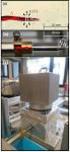 Penetration rate effects on cone resistance measured in a calibration chamber K. Kim Professional Service Industries, Inc, Houston, TX, USA M. Prezzi & R. Salgado Purdue University, West Lafayette, IN,
CHAPTER: 6 FLOW OF WATER THROUGH SOILS
 CHAPTER: 6 FLOW OF WATER THROUGH SOILS CONTENTS: Introduction, hydraulic head and water flow, Darcy s equation, laboratory determination of coefficient of permeability, field determination of coefficient
Use and Application of Piezocone Penetration Testing in Presumpscot Formation
 Use and Application of Piezocone Penetration Testing in Presumpscot Formation Craig W. Coolidge, P.E. Summit Geoengineering Services, Rockland, Maine ABSTRACT: This paper examines the advantages and limitations
FINAL REPORT ON SOIL INVESTIGATION
 FINAL REPORT ON SOIL INVESTIGATION FOR PROPOSED CONSTRUCTION AT SS-6B AREA AT HPCL VISAKH REFINERY VISAKHAPATNAM ANDHRA PRADESH J.J. ASSOCIATES(VISAKHAPATNAM) AETP(P) LIMITED #11-6-3, RockDale Layout,
Dyanmic Cone. for Shallow
 Dyanmic Cone for Shallow George F. Sowers' and Charles S. Hedge* REFERENCE: George F. Sowers and Charles S. Hedges, "Dynamic Cone for Shallow In-Situ Penetration Testing," Vane Shear and Cone Penetration
Correlation of Standard and Cone Penetration Tests for Sandy and Silty Sand to Sandy Silt Soil
 Correlation of Standard and Cone Penetration Tests for Sandy and Silty Sand to Sandy Silt Soil Bashar Tarawneh Ph.D, P.E Assistant Professor Civil Engineering Department The University of Jordan Amman,
Method Statement FOR. Soil Investigation
 Method Statement FOR Soil Investigation PREPARED BY JUNE 2010 Infratech ASTM CO., LTD. TABLE OF CONTENTS Chapter Title Page Table of Contents..1 List of Appendix... 2 List of Table... 2 List of Figures...
Module5: Site investigation using in situ testing
 Module5: Site investigation using in situ testing Topics: Introduction Penetration testing 1. Standard penetration test 2. Cone penetration test Strength and compressibility testing 1. Field vane shear
Module 7 (Lecture 24 to 28) RETAINING WALLS
 Module 7 (Lecture 24 to 28) RETAINING WALLS Topics 24.1 INTRODUCTION 24.2 GRAVITY AND CANTILEVER WALLS 24.3 PROPORTIONING RETAINING WALLS 24.4 APPLICATION OF LATERAL EARTH PRESSURE THEORIES TO DESIGN 24.5
Pavements should be well drained both during and upon completion of construction. Water should not be allowed to pond on or near pavement surfaces.
 Project No. 208-8719 January, 2009 Ref: 2-8719BR Anthony Hudson - Broadscale Geotechnical Investigation - Proposed Commercial Development - 52 Old Pacific Highway, Pimpama Page 32 iii) Pavements should