
Depression. Information for primary health practitioners. Published by the New Zealand Guidelines Group
|
|
|
- Cory Walker
- 10 years ago
- Views:
Transcription
1 Depression Information for primary health practitioners Published by the New Zealand Guidelines Group
2 The National Depression Initiative (NDI) is a campaign to help reduce the impact of depression on the lives of New Zealanders ( The focus of the NDI campaign is on depression of mild to moderate severity. The information in this booklet is provided to help primary health practitioners support the initiative. This resource does not explicitly e plicitly address depression in children, adolescents or the elderly, as presentation and management differs in these groups. Nor does it address postnatal depression, dysthymia, atypical depression or depression with other medical illnesses. The information in this booklet has been developed through consensus by an expert panel. Reference is made to pertinent evidence relating to mild and moderate depression available at the time of publishing. A comprehensive evidence-based best practice guideline to support the assessment and management of mild to moderate depression in primary care is in development. The New Zealand Guidelines Group wishes to thank all those individuals and groups who contributed to and advised on the development of this resource. ISBN: (Print) / ISBN: (Electronic) /
3 CONTENTS Introduction 2 Risk factors for depression 3 Issues in diagnosis 4 Treatment options 6 Management of depression 7 Specific interventions References Further information 0 2 Back cover
4 Introduction Depression accounts for the largest burden of non-fatal disease in the world, 1 due to its high prevalence, high level of associated disability and young age of onset. It may be a recurrent disorder. 2 Most people who present to health care services with depression present in general practice. 3 Other community providers, such as counselling services, employment assistance services and spiritual support services may also have a critical role in the identification and management of depression. Depression affects about 6% of the general population, % of women postnatally 5,6 and 18% of the general practice population 7 in New Zealand each year. 4 The recent New Zealand Mental Health Survey found that the 12-month prevalence of depression was similar for Mäori and non-mäori when adjusted for age, sex, education and household income. 4 There was criticism that the DSM-IV tool used for the survey was too blunt to accommodate Mäori understandings of mental incapacity. Prevalence in Pacific Island peoples in this survey was lower than for Mäori and non-mäori. Significant barriers to recognition and disclosure of depression include people s belief that they should deal with their problems themselves and that a general practitioner is not the right person to help with mental health problems. 8 Also, the expectation of stigmatisation from others reduces the likelihood of seeking help for depression. 9 There are significant limitations to the current evidence base about depression. As outlined in the recent UK NICE guideline, 10 the concept of depression itself is problematic. As practitioners are aware, it is a very broad and heterogeneous category, 10 which may in some cases limit validity for effective treatment planning in primary care. 2
5 Risk factors for depression Female sex Age Recent childbirth Ongoing conflict, including spiritual or cultural conflict A past personal history of depression Any lifetime anxiety disorder or other previous mental health problems Family history of depressive illness Loss or stress, including unemployment, loneliness and divorce History of physical or sexual abuse Substance abuse Socioeconomic deprivation Significant illness causing chronic pain or disability Some prescription medications 3

6 Issues in diagnosis Depression is a very broad and mixed diagnostic grouping with a variety of presentations, and comorbidities with overlapping symptoms. It frequently manifests in primary care with vague physical complaints or symptoms of anxiety. In New Zealand, up to 50% of people with depression also have an anxiety disorder and about 20% of people with depression also have a substance use disorder. 7 A US study found that over 50% of people with depression had a concurrent medical condition. 11 Screening for depression The cost-effectiveness of routine screening is controversial. A New Zealand study found that general practitioners recognised most cases of depression in patients with whom they had regular contact. 8 Therefore, it is suggested that screening is restricted to the following groups: where there is clinical suspicion those who are new to the primary health care setting or infrequent attenders 8 those with risk factors, such as a past personal history of depression, a physical illness causing significant disability or other mental health problems. 10 The following three questions will detect most cases of depression in primary practice. Given a positive response to either questions 1 or 2 and also to question 3, the test has a sensitivity of 96% (95% CI 86 99%), specificity of 89% (87 91%) and positive likelihood ratio of 9.1 ( ). 12 Screening questions 1. During the past month have you often felt down, depressed or hopeless? 2. During the past month have you had little interest or pleasure in doing things? 3. Is this something with which you would like help? While many patients with depression in primary care do not present in clear-cut ways, in some instances it may also be helpful to assess patients according to criteria, such as the ICD-10 classification. 4

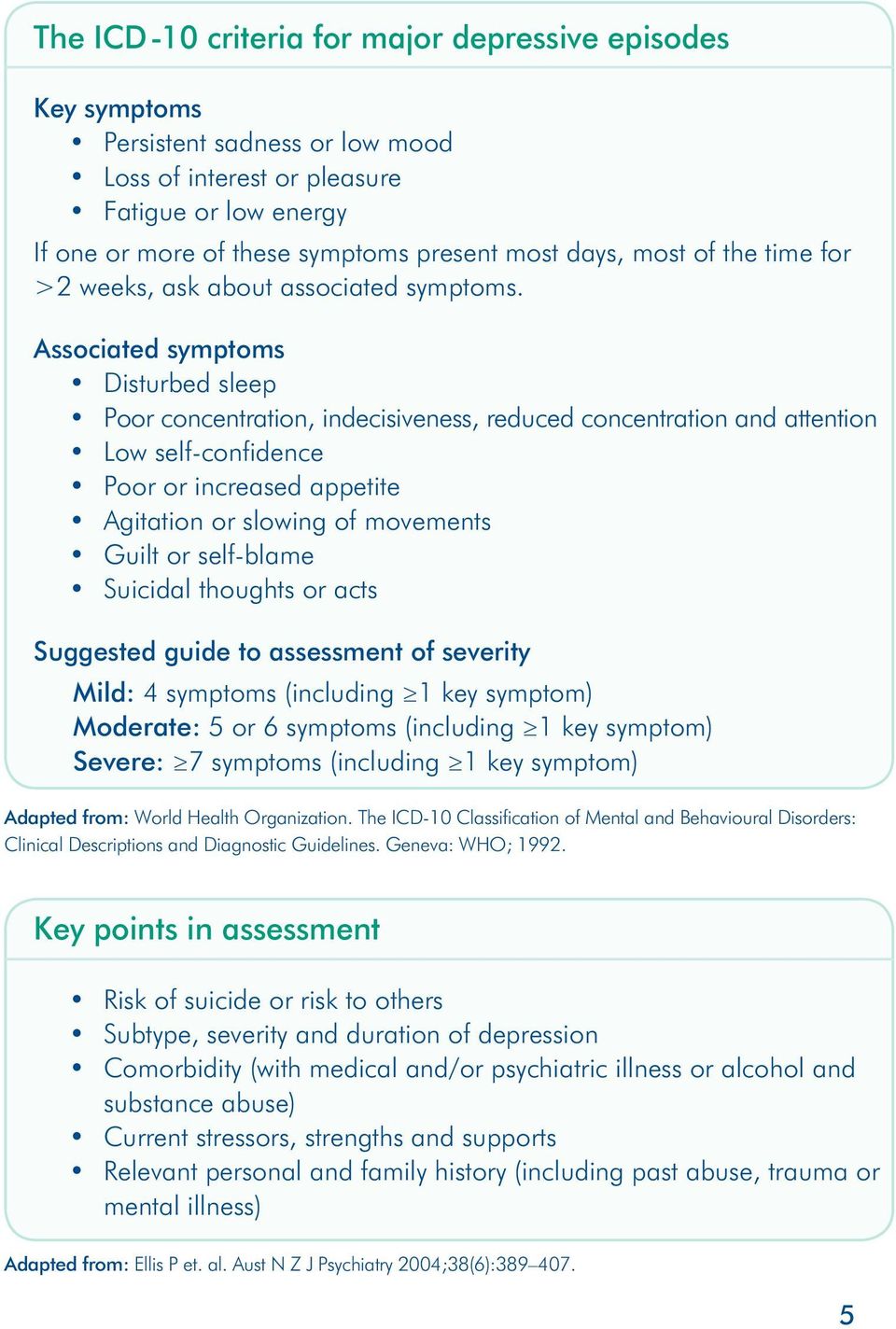
7 The ICD-10 criteria for major depressive episodes Key symptoms Persistent sadness or low mood Loss of interest or pleasure Fatigue or low energy If one or more of these symptoms present most days, most of the time for >2 weeks, ask about associated symptoms. Associated symptoms Disturbed sleep Poor concentration, indecisiveness, reduced concentration and attention Low self-confidence Poor or increased appetite Agitation or slowing of movements Guilt or self-blame Suicidal thoughts or acts Suggested guide to assessment of severity Mild: 4 symptoms (including 1 key symptom) Moderate: 5 or 6 symptoms (including 1 key symptom) Severe: 7 symptoms (including 1 key symptom) Adapted from: World Health Organization. The ICD-10 Classification of Mental and Behavioural Disorders: Clinical Descriptions and Diagnostic Guidelines. Geneva: WHO; Key points in assessment Risk of suicide or risk to others Subtype, severity and duration of depression Comorbidity (with medical and/or psychiatric illness or alcohol and substance abuse) Current stressors, strengths and supports Relevant personal and family history (including past abuse, trauma or mental illness) Adapted from: Ellis P et. al. Aust N Z J Psychiatry 2004;38(6):
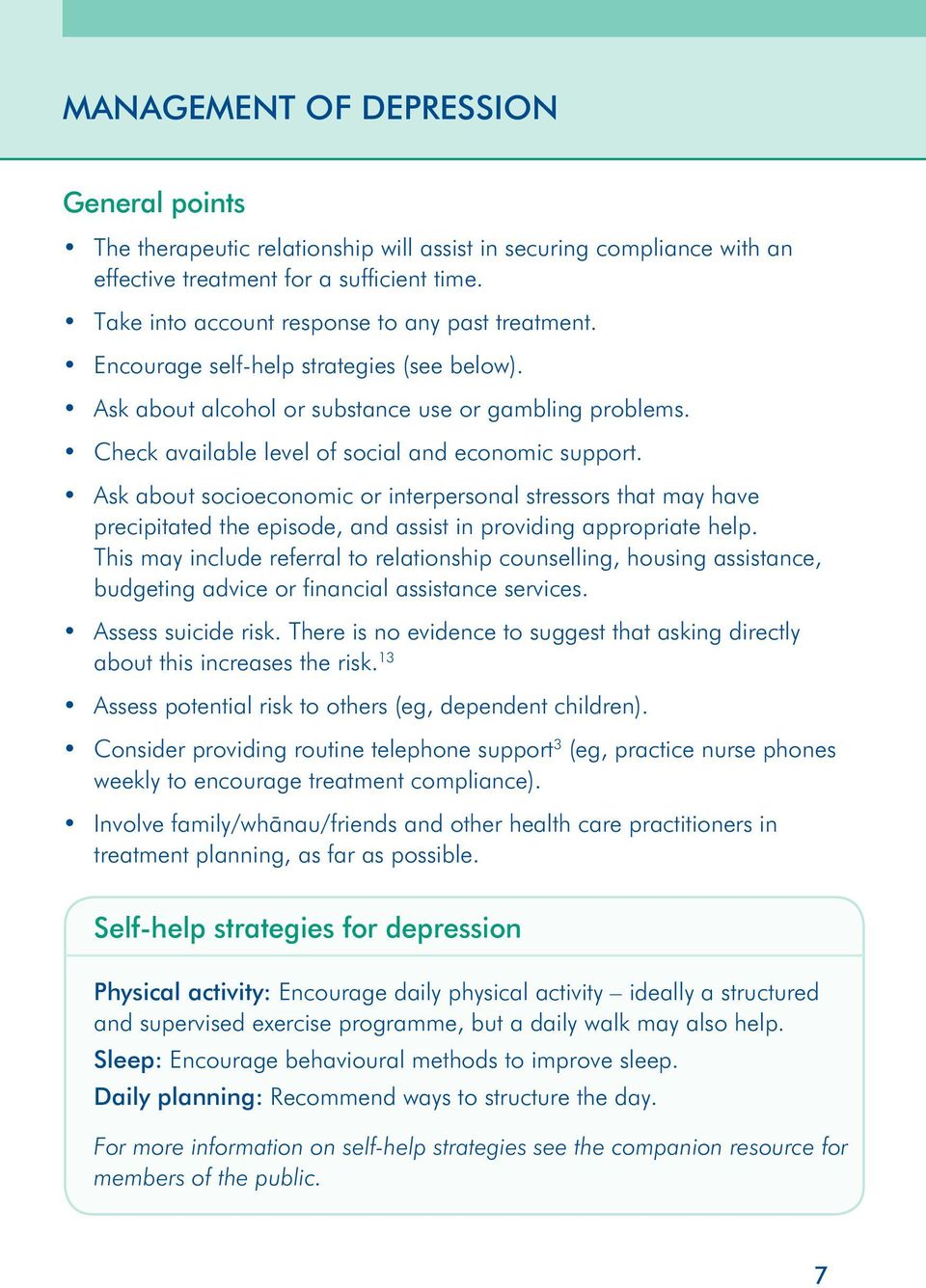
8 Treatment options The following guidance needs to be viewed in the light of local service constraints. However, there are an increasing range of options available for treating depression, both publicly and privately, in the primary care setting including counselling networks, psychotherapists and psychologists. The table below can be used in association with the ICD-10 classification, to help guide treatment planning. 10 Guide to treatment planning for depression Treatment plan General advice and watchful waiting More active treatment* in primary care Referral to a secondary mental health care team Urgent referral to a secondary mental health care team Factors in the history and presentation 4 ICD-10 symptoms no past personal or family history of depression social support available symptoms intermittent, or <2 weeks duration no suicidal thoughts little associated disability 5 ICD-10 symptoms past personal or family history of depression low social support suicidal thoughts associated social disability poor or incomplete response to two interventions recurrent episode within 1 year of last one person or relatives request referral self-neglect actively suicidal psychotic symptoms severe agitation accompanying severe ( 10 ICD-10) symptoms severe self-neglect * This may involve consulting with a specialist mental health team by phone if there are any questions about the person s safety and/or management. Adapted from: National Institute for Clinical Evidence. Depression: Management of Depression in Primary and Secondary Care. Clinical Guideline 23. London: Appendix E. 6
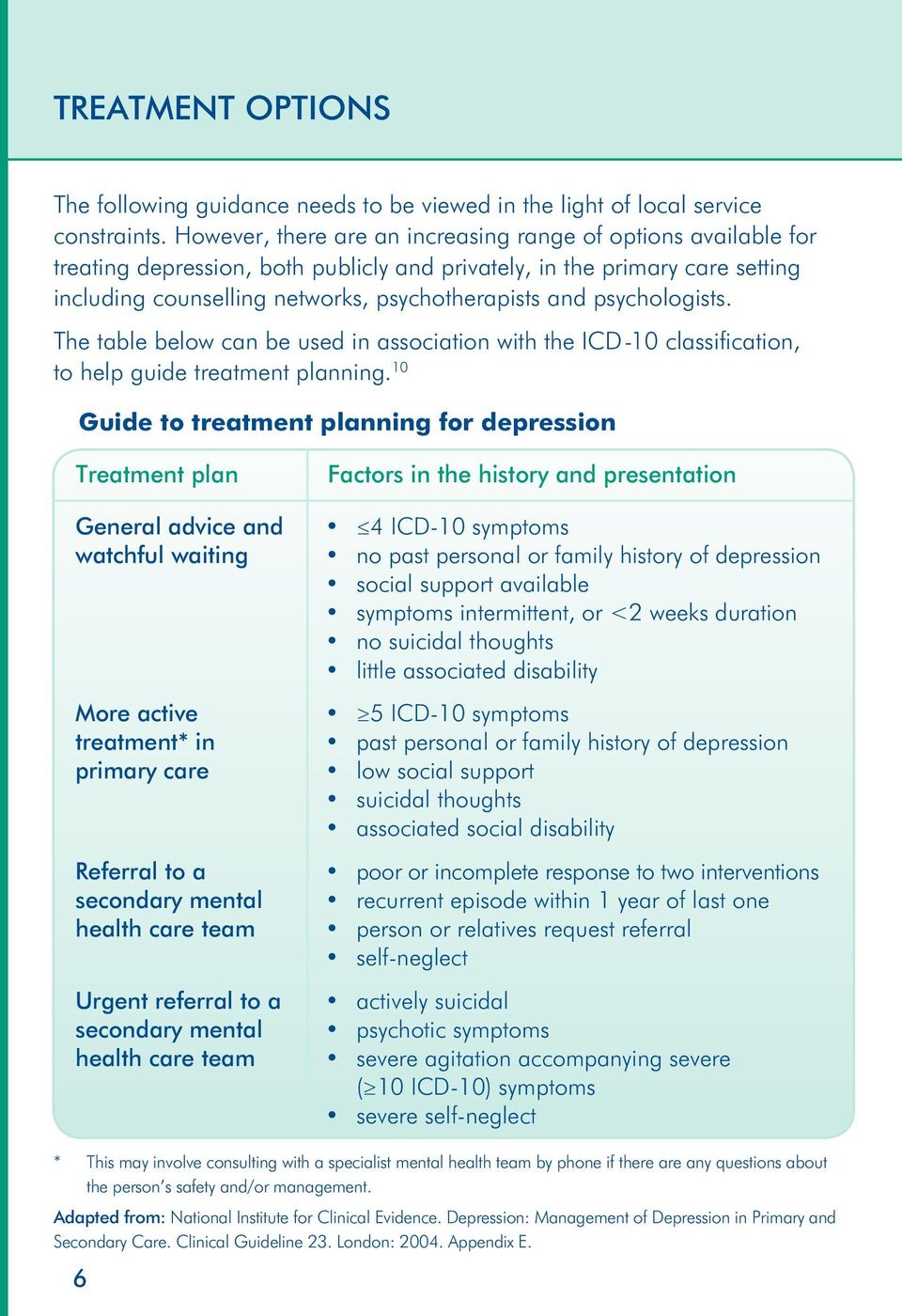
9 Management of depression General points The therapeutic relationship will assist in securing compliance with an effective treatment for a sufficient time. Take into account response to any past treatment. Encourage self-help strategies (see below). Ask about alcohol or substance use or gambling problems. Check available level of social and economic support. Ask about socioeconomic or interpersonal stressors that may have precipitated the episode, and assist in providing appropriate help. This may include referral to relationship counselling, housing assistance, budgeting advice or financial assistance services. Assess suicide risk. There is no evidence to suggest that asking directly about this increases the risk. 13 Assess potential risk to others (eg, dependent children). Consider providing routine telephone support 3 (eg, practice nurse phones weekly to encourage treatment compliance). Involve family/whänau/friends and other health care practitioners in treatment planning, as far as possible. Self-help strategies for depression Physical activity: Encourage daily physical activity ideally a structured and supervised exercise programme, but a daily walk may also help. Sleep: Encourage behavioural methods to improve sleep. Daily planning: Recommend ways to structure the day. For more information on self-help strategies see the companion resource for members of the public. 7
10 Mild depression Advise on self-help strategies Consider: watchful waiting (supportive monitoring and reassessment at 2 weeks) problem-solving therapy (see psychological interventions, page 11) contacting someone who does not attend the follow-up appointment brief psychological therapy or an antidepressant if symptoms persist beyond about 8 weeks 3 or if the person has a history of more severe depression. 10 Moderate depression Advise on self-help strategies Consider: either an antidepressant or brief psychological therapy. 2,10 Monitor at least weekly, by phone or face-to-face revising treatment if symptoms persist beyond 8 weeks 2 involving a member of the Community Mental Health team, if available. Severe depression Consider: referral to secondary care, based on suicide risk, functional impairment and comorbidities an antidepressant and a psychological therapy together, as this is more effective than antidepressants alone. 10

11 Continuing treatment Encourage compliance with an effective treatment until full remission, in order to reduce the risk of relapse. If relapse occurs, reinstate an effective therapy and continue for at least 2 years. 3 Monitor suicide risk. Discuss when and how to seek urgent help with the person. Comorbidity with anxiety and/or substance abuse When depressive symptoms are accompanied by anxiety, the first priority is usually to treat the depression. Often, this also alleviates the anxiety. 10 When depression is accompanied by substance abuse, concurrent treatment directly targeting the substance abuse is advisable. 14

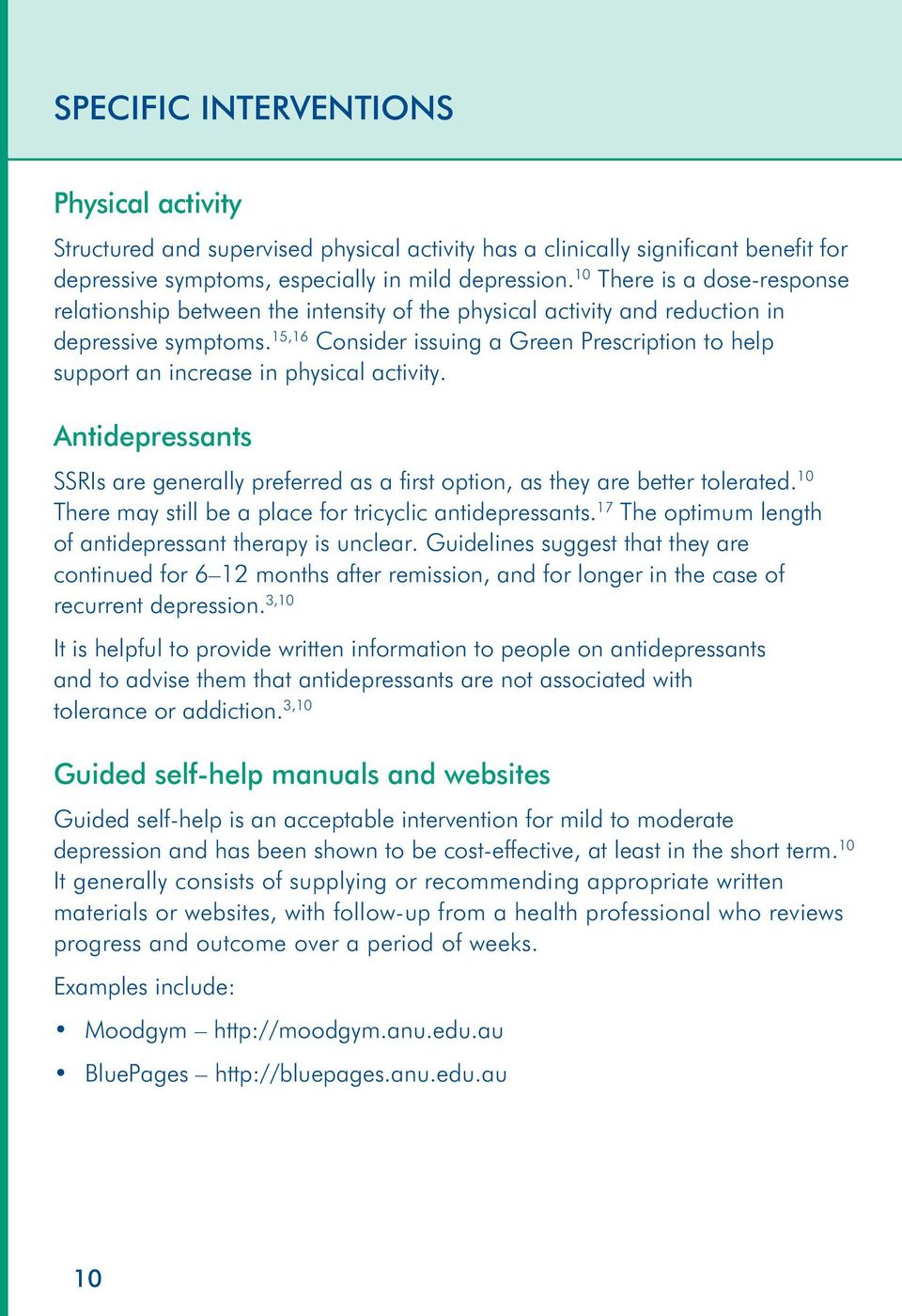
12 Specific interventions Physical activity Structured and supervised physical activity has a clinically significant benefit for depressive symptoms, especially in mild depression. 10 There is a dose-response relationship between the intensity of the physical activity and reduction in depressive symptoms. 15,16 Consider issuing a Green Prescription to help support an increase in physical activity. Antidepressants SSRIs are generally preferred as a first option, as they are better tolerated. 10 There may still be a place for tricyclic antidepressants. 17 The optimum length of antidepressant therapy is unclear. Guidelines suggest that they are continued for 6 12 months after remission, and for longer in the case of recurrent depression. 3,10 It is helpful to provide written information to people on antidepressants and to advise them that antidepressants are not associated with tolerance or addiction. 3,10 Guided self-help manuals and websites Guided self-help is an acceptable intervention for mild to moderate depression and has been shown to be cost-effective, at least in the short term. 10 It generally consists of supplying or recommending appropriate written materials or websites, with follow-up from a health professional who reviews progress and outcome over a period of weeks. Examples include: Moodgym BluePages 10
13 Psychological interventions Evidence on psychological therapies is currently limited to the small range of interventions described below, and derives from studies of their purest forms as described in treatment manuals. However, clinical psychologists, counsellors and psychotherapists are also trained in a wide range of other modalities. In practice, most therapists treating depression in primary care use a combination of approaches. Brief psychological interventions usually comprise 6 12 treatments. Problem solving therapy (PST) is effective for mild depression. Both interpersonal psychotherapy (IPT) and cognitive behavioural therapy (CBT) are effective for mild and moderate depression, with less side effects than antidepressants. 10 PST teaches how to identify key problem areas and break them down into achievable tasks. IPT seeks to reduce symptoms by identifying and addressing underlying problems related to interpersonal conflict, role transition, grief, loss or poor social skills. CBT teaches how to challenge and change negative thoughts and unhelpful behaviours. Computerised programmes based on CBT are emerging as a promising resource for the management of depression in primary care. 18 While there are no locally developed New Zealand programmes, the following are overseas examples: Beating the Blues go to products Climate It is important that all psychological therapies are provided by competent trained practitioners. Membership lists can be obtained from the relevant professional associations. Complementary and alternative medicine There are various complementary and alternative medicines that people use for depression. Some examples are massage, acupuncture and food supplements. St John s wort is a herbal therapy that some people use. However, there is However, there is uncertainty about the appropriate dose and there can be serious interactions with other drugs, including oral contraceptives, anticoagulants and anticonvulsants

14 References 1. Ustun TB, Ayuso-Mateos JL, Chatterji S, et al. Global burden of depressive disorders in the year Br J Psychiatry 2004; May(184): Ellis P, Royal Australian and New Zealand College of Psychiatrists Clinical Practice Guidelines Team for Depression. Australian and New Zealand clinical practice guidelines for the treatment of depression. Aust N Z J Psychiatry 2004;38(6): Ellis P, Smith D. Treating Depression: The BeyondBlue guidelines for treating depression in primary care. Med J Aust 2002;176:S Ministry of Health. Te Rau Hinengaro: The New Zealand Mental Health Survey. Wellington; McGill H, Burrows VL, Holland LA, et al. Postnatal depression: A Christchurch study. N Z Med J 1995;108(999): Webster ML, Thompson JM, Mitchell EA, et al. Postnatal depression in a community cohort. Aust N Z J Psychiatry 1994;28(1): MaGPIe Research Group, University of Otago at Wellington School of Medicine Health Sciences New Zealand. The nature and prevalence of psychological problems in New Zealand primary healthcare: A report on mental health and general practice investigation (MaGPIe). N Z Med J 2003;116(1171):U Bushnell J, Group MR. Frequency of consultations and general practitioner recognition of psychological symptoms. [erratum in Br J Gen Pract Jan;55(510):56]. Br J Gen Pract 2004;55(508): Barney LJ, Griffiths KM, Jorm AF, et al. Stigma about depression and its impact on help-seeking intentions. Aust N Z J Psychiatry 2006;40(1): National Institute for Clinical Evidence. Depression: Management of Depression in Primary and Secondary Care. Clinical Guideline 23. London: Yates WR, Mitchell J, Rush AJ, et al. Clinical features of depressed outpatients with and without co-occurring general medical conditions in STAR*D. Gen Hosp Pscyhiatry 2004;26(6): Arroll B, Goodyear-Smith F, Kerse N, et al. Effect of the addition of a help question to two screening questions on specificity for diagnosis of depression in general practice: Diagnostic validity study. BMJ 2005;331(7521):15. 12
15 13. New Zealand Guidelines Group. The Assessment and Management of People at Risk of Suicide. Best Practice Evidence-based Guideline. Wellington: New Zealand Guidelines Group and Ministry of Health; go to Publications then Mental Health. 14. Nunes EV, Levin FR. Treatment of depression in patients with alcohol or other drug dependence: A meta-analysis. JAMA 2004;291(15): Dunn AL, Trivedi MH, Kampert JB, et al. Exercise treatment for depression: Efficacy and dose response. Am J Prev Med 2005;28(1): Singh NA, Stavrinos TM, Scarbek Y, et al. A randomized controlled trial of high versus low intensity weight training versus general practitioner care for clinical depression in older adults. J Gerontol A Biol Sci Med Sci 2005;60(6): Arroll B, Macgillivray S, Ogston S, et al. Efficacy and tolerability of tricyclic antidepressants and SSRIs compared with placebo for treatment of depression in primary care: A meta-analysis. Ann Fam Med 2005;3(5): National Institute for Clinical Evidence. Computerised Cognitive Behaviour Therapy for Depression and Anxiety. Technology Appraisal 97. London: National Institute for Clinical Evidence; Linde K, Mulrow CD, Berner M, et al. St John s wort for depression. Cochrane Database Syst Rev 2005(2):CD DOI: / CD pub2. 13

16 Further information General information about depression Guidelines for depression and suicide prevention click on Publications then Mental Health Crisis phone services Mental Health Services Crisis Response Team your local team is listed under Hospitals and other Health Service Providers in the green section of your local phone book. Copies of this resource and the companion resource on depression for the general public are available free from: Freephone Wickliffe Order Nos. HP: 4308 (practitioner) and HP: 4309 (public) (online) (to request a copy) This resource has been funded by the Ministry of Health NZGG
Step 2: Recognised depression in adults persistent subthreshold depressive symptoms or mild to moderate depression
 Step 2: Recognised depression in adults persistent subthreshold depressive symptoms or mild to moderate depression A NICE pathway brings together all NICE guidance, quality standards and materials to support
in young people Management of depression in primary care Key recommendations: 1 Management
 Management of depression in young people in primary care Key recommendations: 1 Management A young person with mild or moderate depression should typically be managed within primary care services A strength-based
Depression Assessment & Treatment
 Depressive Symptoms? Administer depression screening tool: PSC Depression Assessment & Treatment Yes Positive screen Safety Screen (see Appendix): Administer every visit Neglect/Abuse? Thoughts of hurting
Costing statement: Depression: the treatment and management of depression in adults. (update) and
 Costing statement: Depression: the treatment and management of depression in adults (update) and Depression in adults with a chronic physical health problem: treatment and management Summary It has not
Amendments to recommendations concerning venlafaxine
 Amendments to recommendations concerning venlafaxine On 31 May 2006 the MHRA issued revised prescribing advice for venlafaxine*. This amendment brings the guideline into line with the new advice but does
Managing depression after stroke. Presented by Maree Hackett
 Managing depression after stroke Presented by Maree Hackett After stroke Physical changes We can see these Depression Emotionalism Anxiety Confusion Communication problems What is depression? Category
Step 4: Complex and severe depression in adults
 Step 4: Complex and severe depression in adults A NICE pathway brings together all NICE guidance, quality standards and materials to support implementation on a specific topic area. The pathways are interactive
Depre r s e sio i n o i n i a dults Yousuf Al Farsi
 Depression in adults Yousuf Al Farsi Objectives 1. Aetiology 2. Classification 3. Major depression 4. Screening 5. Differential diagnosis 6. Treatment approach 7. When to refer 8. Complication 9. Prognosis
NICE Pathways bring together all NICE guidance, quality standards and other NICE information on a specific topic.
 bring together all NICE guidance, quality standards and other NICE information on a specific topic. are interactive and designed to be used online. They are updated regularly as new NICE guidance is published.
Presently, there are no means of preventing bipolar disorder. However, there are ways of preventing future episodes: 1
 What is bipolar disorder? There are two main types of bipolar illness: bipolar I and bipolar II. In bipolar I, the symptoms include at least one lifetime episode of mania a period of unusually elevated
Depression in adults with a chronic physical health problem
 Depression in adults with a chronic physical health problem Treatment and management Issued: October 2009 NICE clinical guideline 91 guidance.nice.org.uk/cg91 NICE has accredited the process used by the
MOLINA HEALTHCARE OF CALIFORNIA
 MOLINA HEALTHCARE OF CALIFORNIA MAJOR DEPRESSION IN ADULTS IN PRIMARY CARE HEALTH CARE GUIDELINE (ICSI) Health Care Guideline Twelfth Edition May 2009. The guideline was reviewed and adopted by the Molina
Depression: management of depression in primary and secondary care
 Issue date: December 2004 Quick reference guide Depression: management of depression in primary and secondary care Clinical Guideline 23 Developed by the National Collaborating Centre for Mental Health
Depression and its Treatment in Older Adults. Gregory A. Hinrichsen, Ph.D. Geropsychologist New York City
 Depression and its Treatment in Older Adults Gregory A. Hinrichsen, Ph.D. Geropsychologist New York City What is Depression? Everyday use of the word Clinically significant depressive symptoms : more severe,
DEPRESSION Depression Assessment PHQ-9 Screening tool Depression treatment Treatment flow chart Medications Patient Resource
 E-Resource March, 2015 DEPRESSION Depression Assessment PHQ-9 Screening tool Depression treatment Treatment flow chart Medications Patient Resource Depression affects approximately 20% of the general population
Depression & Multiple Sclerosis
 Depression & Multiple Sclerosis Managing specific issues Aaron, diagnosed in 1995. The words depressed and depression are used so casually in everyday conversation that their meaning has become murky.
Preferred Practice Guidelines Bipolar Disorder in Children and Adolescents
 These Guidelines are based in part on the following: American Academy of Child and Adolescent Psychiatry s Practice Parameter for the Assessment and Treatment of Children and Adolescents With Bipolar Disorder,
Assessment of depression in adults in primary care
 Assessment of depression in adults in primary care Adapted from: Identification of Common Mental Disorders and Management of Depression in Primary care. New Zealand Guidelines Group 1 The questions and
Depression. The treatment and management of depression in adults. This is a partial update of NICE clinical guideline 23
 Issue date: October 2009 Depression The treatment and management of depression in adults This is a partial update of NICE clinical guideline 23 NICE clinical guideline 90 Developed by the National Collaborating
Clinical guideline Published: 28 October 2009 nice.org.uk/guidance/cg90
 Depression in adults: recognition and management Clinical guideline Published: 28 October 2009 nice.org.uk/guidance/cg90 NICE 2009. All rights reserved. Last updated April 2016 Your responsibility The
Elizabeth A. Crocco, MD Assistant Clinical Professor Chief, Division of Geriatric Psychiatry Department of Psychiatry and Behavioral Sciences Miller
 Elizabeth A. Crocco, MD Assistant Clinical Professor Chief, Division of Geriatric Psychiatry Department of Psychiatry and Behavioral Sciences Miller School of Medicine/University of Miami Question 1 You
Depression & Multiple Sclerosis. Managing Specific Issues
 Depression & Multiple Sclerosis Managing Specific Issues Feeling blue The words depressed and depression are used so casually in everyday conversation that their meaning has become murky. True depression
Registered Charity No. 5365
 THE MULTIPLE SCLEROSIS SOCIETY OF IRELAND Dartmouth House, Grand Parade, Dublin 6. Telephone: (01) 269 4599. Fax: (01) 269 3746 MS Helpline: 1850 233 233 E-mail: [email protected] www.ms-society.ie
NICE clinical guideline 90
 Depression in adults The treatment and management of depression in adults Issued: October 2009 NICE clinical guideline 90 guidance.nice.org.uk/cg90 NHS Evidence has accredited the process used by the Centre
Depression in children and young people. Quick reference guide. Issue date: September 2005
 Quick reference guide Issue date: September 2005 Depression in children and young people Identification and management in primary, community and secondary care Clinical Guideline 28 Developed by the National
NICE Clinical guideline 23
 NICE Clinical guideline 23 Depression Management of depression in primary and secondary care Consultation on amendments to recommendations concerning venlafaxine On 31 May 2006 the MHRA issued revised
There are four groups of medications most likely to be used for depression: Antidepressants Antipsychotics Mood stabilisers Augmenting agents.
 What this fact sheet covers: Physical treatments (medication, ECT and TMS) Psychological treatments Self-help & alternative therapies Key points to remember Where to get more information. Introduction
Asthma, anxiety & depression
 Anxiety and are common in people with asthma. The good news is that there are effective treatments both for asthma and for anxiety and. With careful management, the symptoms of anxiety and can be treated
`çããçå=jéåí~ä= aáëçêçéêëw=^åñáéíó=~åç= aééêéëëáçå. aêk=`=f=lâçåü~ jéçáå~ä=aáêéåíçê lñäé~ë=kep=cçìåç~íáçå=qêìëí=
 `çããçå=jéåí~ä= aáëçêçéêëw=^åñáéíó=~åç= aééêéëëáçå aêk=`=f=lâçåü~ jéçáå~ä=aáêéåíçê lñäé~ë=kep=cçìåç~íáçå=qêìëí= Overview: Common Mental What are they? Disorders Why are they important? How do they affect
Depression in children and young people. Identification and management in primary, community and secondary care
 NICE guideline May 2005 Issue date: September 2005 Depression in children and young people Identification and management in primary, community and secondary care Clinical Guideline 28 Developed by the
Major Depressive Disorder (MDD) Guideline Diagnostic Nomenclature for Clinical Depressive Conditions
 Major Depressive Disorder Major Depressive Disorder (MDD) Guideline Diagnostic omenclature for Clinical Depressive Conditions Conditions Diagnostic Criteria Duration Major Depression 5 of the following
Table of Contents. Preface...xv. Part I: Introduction to Mental Health Disorders and Depression
 Table of Contents Visit www.healthreferenceseries.com to view A Contents Guide to the Health Reference Series, a listing of more than 16,000 topics and the volumes in which they are covered. Preface...xv
Dr. Anna M. Acee, EdD, ANP-BC, PMHNP-BC Long Island University, Heilbrunn School of Nursing
 Dr. Anna M. Acee, EdD, ANP-BC, PMHNP-BC Long Island University, Heilbrunn School of Nursing Overview Depression is significantly higher among elderly adults receiving home healthcare, particularly among
MOH CLINICAL PRACTICE GUIDELINES 6/2011 DEPRESSION
 MOH CLINICAL PRACTICE GUIDELINES 6/2011 DEPRESSION Executive summary of recommendations Details of recommendations can be found in the main text at the pages indicated. Clinical evaluation D The basic
DEPRESSION CARE PROCESS STEP EXPECTATIONS RATIONALE
 1 DEPRESSION CARE PROCESS STEP EXPECTATIONS RATIONALE ASSESSMENT/PROBLEM RECOGNITION 1. Did the staff and physician seek and document risk factors for depression and any history of depression? 2. Did staff
TREATING MAJOR DEPRESSIVE DISORDER
 TREATING MAJOR DEPRESSIVE DISORDER A Quick Reference Guide Based on Practice Guideline for the Treatment of Patients With Major Depressive Disorder, Second Edition, originally published in April 2000.
Depression Pathway. Patient Education Box 4. Guided self help Box 18. pg 11
 LCFT localised Map pathway June 2009 Depression Pathway Instructions: Throughout this pathway if you click on the Bookmarks tab to the left of the screen and then click on the various documents you will
See also www.thiswayup.org.au/clinic for an online treatment course.
 Depression What is depression? Depression is one of the common human emotional states. It is common to experience feelings of sadness and tiredness in response to life events, such as losses or disappointments.
How to Identify and Diagnose Depression
 Depression Spirella Building, Letchworth, SG6 4ET 01462 476700 www.mstrust.org.uk reg charity no. 1088353 Depression and MS Date of issue: March 2010 Review date: March 2011 Contents Introduction 2 1.
Professional Reference Series Depression and Anxiety, Volume 1. Depression and Anxiety Prevention for Older Adults
 Professional Reference Series Depression and Anxiety, Volume 1 Depression and Anxiety Prevention for Older Adults TA C M I S S I O N The mission of the Older Americans Substance Abuse and Mental Health
echat: Screening & intervening for mental health & lifestyle issues
 echat: Screening & intervening for mental health & lifestyle issues Felicity Goodyear-Smith Professor & Academic Head Dept of General Practice & Primary Health Care Faculty of Medicine & Health Science
Treatment and management of depression in adults, including adults with a chronic physical health problem
 Issue date: October 2009 Depression Treatment and management of depression in adults, including adults with a chronic physical health problem This is an update of NICE clinical guideline 23 Developed by
Coping with depression. Australian treatment guide for consumers and carers
 August 2009 Coping with depression Australian treatment guide for consumers and carers Contents The Royal Australian and New Zealand College of Psychiatrists, 2009 Compiled by The Royal Australian and
More than just feelings of unhappiness, clinical or major depression is a mood disorder a medical illness that involves both the body and mind.
 What is depression? More than just feelings of unhappiness, clinical or major depression is a mood disorder a medical illness that involves both the body and mind. 1,2 The difference between clinical depression
SPECIALIST ARTICLE A BRIEF GUIDE TO PSYCHOLOGICAL THERAPIES
 SPECIALIST ARTICLE A BRIEF GUIDE TO PSYCHOLOGICAL THERAPIES Psychological therapies are increasingly viewed as an important part of both mental and physical healthcare, and there is a growing demand for
Primary mental health care for the elderly
 Guides to specific issues 1 This issues guide is linked to the vignette Mental health needs of the elderly. From a system perspective the elderly represent another invisible population as far as the management
Post-traumatic stress disorder overview
 Post-traumatic stress disorder overview A NICE pathway brings together all NICE guidance, quality standards and materials to support implementation on a specific topic area. The pathways are interactive
Understanding. Depression. The Road to Feeling Better Helping Yourself. Your Treatment Options A Note for Family Members
 TM Understanding Depression The Road to Feeling Better Helping Yourself Your Treatment Options A Note for Family Members Understanding Depression Depression is a biological illness. It affects more than
The Field of Counseling. Veterans Administration one of the most honorable places to practice counseling is with the
 Gainful Employment Information The Field of Counseling Job Outlook Veterans Administration one of the most honorable places to practice counseling is with the VA. Over recent years, the Veteran s Administration
Depression is a medical illness that causes a persistent feeling of sadness and loss of interest. Depression can cause physical symptoms, too.
 The Family Library DEPRESSION What is depression? Depression is a medical illness that causes a persistent feeling of sadness and loss of interest. Depression can cause physical symptoms, too. Also called
Depression: Facility Assessment Checklists
 Depression: Facility Assessment Checklists A facility system assessment is a starting point for a quality improvement project. The checklists included in this booklet will be most useful if you take a
How to Recognize Depression and Its Related Mood and Emotional Disorders
 How to Recognize Depression and Its Related Mood and Emotional Disorders Dr. David H. Brendel Depression s Devastating Toll on the Individual Reduces or eliminates pleasure and jo Compromises and destroys
Bipolar Disorder. When people with bipolar disorder feel very happy and "up," they are also much more active than usual. This is called mania.
 Bipolar Disorder Introduction Bipolar disorder is a serious mental disorder. People who have bipolar disorder feel very happy and energized some days, and very sad and depressed on other days. Abnormal
Depression in patients with coronary heart disease (CHD): screening, referral and treatment. 2014 Na)onal Heart Founda)on of Australia
 Depression in patients with coronary heart disease (CHD): screening, referral and treatment Screening, referral and treatment for depression in patients with CHD A consensus statement from the National
A Depression Education Toolkit
 A Depression Education Toolkit Facts about Depression in Older Adults What is Depression? Depression is a medical illness. When sadness persists or interferes with everyday life, it may be depression.
Depression in the Elderly: Recognition, Diagnosis, and Treatment
 Depression in the Elderly: Recognition, Diagnosis, and Treatment LOUIS A. CANCELLARO, PhD, MD, EFAC Psych Professor Emeritus and Interim Chair ETSU Department of Psychiatry & Behavioral Sciences Diagnosis
Mental Health Needs Assessment Personality Disorder Prevalence and models of care
 Mental Health Needs Assessment Personality Disorder Prevalence and models of care Introduction and definitions Personality disorders are a complex group of conditions identified through how an individual
CARE MANAGEMENT FOR LATE LIFE DEPRESSION IN URBAN CHINESE PRIMARY CARE CLINICS
 CARE MANAGEMENT FOR LATE LIFE DEPRESSION IN URBAN CHINESE PRIMARY CARE CLINICS Dept of Public Health Sciences February 6, 2015 Yeates Conwell, MD Dept of Psychiatry, University of Rochester Shulin Chen,
Sunderland Psychological Wellbeing Service
 Sunderland Psychological Wellbeing Service Information for Referrers Offering a range of psychological therapies across Sunderland. To make a referral call 0191 566 5454 A partnership between Northumberland,
This factsheet covers:
 Depression This factsheet might be useful to you if you have depression or if you think you might have depression. It gives information on the symptoms and causes of depression, as well as the treatments
Depression Signs & Symptoms
 Depression Signs & Symptoms Contents What Is Depression? What Are The Signs And Symptoms Of Depression? How Do The Signs And Symptoms Of Depression Differ In Different Groups? What Are The Different Types
Depression Flow Chart
 Depression Flow Chart SCREEN FOR DEPRESSION ANNUALLY Assess for depression annually with the PHQ-9. Maintain a high index of suspicion in high risk older adults. Consider suicide risk and contributing
Antidepressant Skills @ Work Dealing with Mood Problems in the Workplace
 Antidepressant Skills @ Work Dealing with Mood Problems in the Workplace Dr. Joti Samra PhD, R.Psych. Adjunct Professor & Research Scientist CARMHA www.carmha.ca Dr. Merv Gilbert PhD, R.Psych. Principal
Seniors and. Depression. What You Need to Know. Behavioral Healthcare Options, Inc.
 Seniors and Depression What You Need to Know Behavioral Healthcare Options, Inc. Depression More Than Just The Blues ou may not know exactly what is wrong with you, but you do know that you just don t
Contents. Overview Treatments Inpatient Services Day Programs The Clinic What are the Costs? How to Get Started How to Find Us
 Lakeside Clinic Contents Overview Treatments Inpatient Services Day Programs The Clinic What are the Costs? How to Get Started How to Find Us Overview At some point in their lives, as many as one-in-five
Psychology Externship Program
 Psychology Externship Program The Washington VA Medical Center (VAMC) is a state-of-the-art facility located in Washington, D.C., N.W., and is accredited by the Joint Commission on the Accreditation of
Borderline personality disorder
 Understanding NICE guidance Information for people who use NHS services Borderline personality disorder NICE clinical guidelines advise the NHS on caring for people with specific conditions or diseases
Treatment of Depression in Older Adults Evidence-Based Practices (EBP) Kit
 Treatment of Depression in Older Adults Evidence-Based Practices (EBP) Kit Substance Abuse and Mental Health Services Administration. The Treatment of Depression in Older Adults: How to Use the Evidence-
Depression, Mental Health and Native American Youth
 Depression, Mental Health and Native American Youth Aisha Mays, MD UCSF Department of Family And Community Medicine Native American Health Center Oakland, CA July 8, 2015 Presenter Disclosures No relationships
Borderline personality disorder
 Borderline personality disorder Treatment and management Issued: January 2009 NICE clinical guideline 78 guidance.nice.org.uk/cg78 NICE 2009 Contents Introduction... 3 Person-centred care... 5 Key priorities
How To Treat A Mental Illness At Riveredge Hospital
 ABOUT US n Riveredge Hospital maintains the treatment philosophy of Trauma Informed Care. n Our commitment to providing the highest quality of care includes offering Animal Assisted Therapy, and Expressive
3.5 Guidelines, Monitoring and Surveillance of At Risk Groups
 3.5 Guidelines, Monitoring and Surveillance of At Risk Groups 3.5.6 Children of Parents who are Affected by Drug and Alcohol Misuse Background There is overwhelming evidence that the misuse of drugs and
Definition of Terms. nn Mental Illness Facts and Statistics
 nn Mental Illness Facts and Statistics This section contains a brief overview of facts and statistics about mental illness in Australia as well as information that may be useful in countering common myths.
Bipolar Disorder. Mania is the word that describes the activated phase of bipolar disorder. The symptoms of mania may include:
 Bipolar Disorder What is bipolar disorder? Bipolar disorder, or manic depression, is a medical illness that causes extreme shifts in mood, energy, and functioning. These changes may be subtle or dramatic
Algorithm for Initiating Antidepressant Therapy in Depression
 Algorithm for Initiating Antidepressant Therapy in Depression Refer for psychotherapy if patient preference or add cognitive behavioural office skills to antidepressant medication Moderate to Severe depression
mpv`elildf`^i=qob^qjbkqp=ñçê= ^åñáéíó=~åç=aééêéëëáçå h~íó=dê~òéäêççâ `äáåáå~ä=ié~çi=dêééåïáåü=qáãé=qç=q~äâ `çåëìäí~åí=`äáåáå~ä=mëóåüçäçöáëí
 mpv`elildf`^i=qob^qjbkqp=ñçê= ^åñáéíó=~åç=aééêéëëáçå h~íó=dê~òéäêççâ `äáåáå~ä=ié~çi=dêééåïáåü=qáãé=qç=q~äâ `çåëìäí~åí=`äáåáå~ä=mëóåüçäçöáëí Plan of the presentation Summary of NICE recommended psychological
Intensive Outpatient Psychotherapy - Adult
 Intensive Outpatient Psychotherapy - Adult Definition Intensive Outpatient Psychotherapy services provide group based, non-residential, intensive, structured interventions consisting primarily of counseling
Major Depressive Disorders Questions submitted for consideration by workshop participants
 Major Depressive Disorders Questions submitted for consideration by workshop participants Prioritizing Comparative Effectiveness Research Questions: PCORI Stakeholder Workshops June 9, 2015 Patient-Centered
TEEN MARIJUANA USE WORSENS DEPRESSION
 TEEN MARIJUANA USE WORSENS DEPRESSION An Analysis of Recent Data Shows Self-Medicating Could Actually Make Things Worse Millions of American teens* report experiencing weeks of hopelessness and loss of
UNDERSTANDING CO-OCCURRING DISORDERS. Frances A. Campbell MSN, PMH CNS-BC, CARN Michael Beatty, LCSW, NCGC-1 Bridge To Hope November 18, 2015
 UNDERSTANDING CO-OCCURRING DISORDERS Frances A. Campbell MSN, PMH CNS-BC, CARN Michael Beatty, LCSW, NCGC-1 Bridge To Hope November 18, 2015 CO-OCCURRING DISORDERS What does it really mean CO-OCCURRING
Depression Screening in Primary Care
 Depression Screening in Primary Care Toni Johnson, MD Kristen Palcisco, BA, MSN, APRN MetroHealth System Our Vision Make Greater Cleveland a healthier place to live and a better place to do business. 2
Post-traumatic stress disorder (PTSD): the treatment of PTSD in adults and children
 Post-traumatic stress disorder (PTSD): the treatment of PTSD in adults and children Understanding NICE guidance information for people with PTSD, their advocates and carers, and the public March 2005 Information
MANAGING DEPRESSIVE SYMPTOMS IN SUBSTANCE ABUSE CLIENTS DURING EARLY RECOVERY
 MANAGING DEPRESSIVE SYMPTOMS IN SUBSTANCE ABUSE CLIENTS DURING EARLY RECOVERY Presented by: William L. Mock, Ph.D., LISW,LICDC, SAP Professional Training Associates Inc North Ridgeville, Ohio 1 (216) 299-9506
Making sense of cognitive behaviour therapy (CBT)
 Making sense of cognitive behaviour therapy (CBT) Making sense of cognitive behaviour therapy What is cognitive behaviour therapy? 4 How does negative thinking start? 6 What type of problems can CBT help
Treating Depression to Remission in the Primary Care Setting. James M. Slayton, M.D., M.B.A. Medical Director United Behavioral Health
 Treating Depression to Remission in the Primary Care Setting James M. Slayton, M.D., M.B.A. Medical Director United Behavioral Health 2007 United Behavioral Health 1 2007 United Behavioral Health Goals
THE DEPRESSION RESEARCH CLINIC Department of Psychiatry and Behavioral Sciences Stanford University, School of Medicine
 THE DEPRESSION RESEARCH CLINIC Department of Psychiatry and Behavioral Sciences Stanford University, School of Medicine Volume 1, Issue 1 August 2007 The Depression Research Clinic at Stanford University
Mental Disorders (Except initial PTSD and Eating Disorders) Examination
 Mental Disorders (Except initial PTSD and Eating Disorders) Examination Name: Date of Exam: SSN: C-number: Place of Exam: The following health care providers can perform initial examinations for Mental
SOMERSET DUAL DIAGNOSIS PROTOCOL OCTOBER 2011
 SOMERSET DUAL DIAGNOSIS PROTOCOL OCTOBER 2011 This document is intended to be used with the Somerset Dual Diagnosis Operational Working guide. This document provides principles governing joint working
DEPARTMENT OF PSYCHIATRY. 1153 Centre Street Boston, MA 02130
 DEPARTMENT OF PSYCHIATRY 1153 Centre Street Boston, MA 02130 Who We Are Brigham and Women s Faulkner Hospital (BWFH) Department of Psychiatry is the largest clinical psychiatry site in the Brigham / Faulkner
General Hospital Information
 Inpatient Programs General Hospital Information General Information The Melbourne Clinic is a purpose built psychiatric hospital established in 1975, intially privately owned by a group of psychiatrists
Dealing with depression
 Dealing with depression 1 Dealing with depression Every year, one person in ten will suffer from some form of depression. That s about 10% of the population. Depression is different from feeling down or
Depression Treatment Guide
 Depression Treatment Guide DSM V Criteria for Major Depressive Disorders A. Five (or more) of the following symptoms have been present during the same 2-week period and represent a change from previous
American Society of Addiction Medicine
 American Society of Addiction Medicine Public Policy Statement on Treatment for Alcohol and Other Drug Addiction 1 I. General Definitions of Addiction Treatment Addiction Treatment is the use of any planned,