
Assessment of the Newborn Infant
|
|
|
- Emory Lee
- 9 years ago
- Views:
Transcription
1 Approved by: of the Newborn Infant Gail Cameron Senior Director, Operations, Maternal, Neonatal & Child Health Programs Dr. Santiago Ensenat Medical Director, Neonatology Neonatal Nursery Policy & Procedures Manual : Date Effective Next Review April 2018 Dr. Sharif Shaik Medical Director, Neonatology Policy Statement 1. Registered Nurses will perform a complete assessment of each patient assigned to her care at the beginning of the shift and with changes in patient condition and when appropriate from a developmental perspective. The initial assessment gives the RN/LPN a baseline for normal for the patient to compare changes in condition with. 2. A complete assessment is individualized to each patient s condition focusing more intently on the patient s diagnosis. For example, if the baby has been admitted for a skull fracture or asphyxia, a more detailed neurological assessment is required. 3. If there is something in the assessment that is of concern, the nurse will notify the person in charge and there will be collaboration with the appropriate team members for intervention. This will be documented on the patient s chart. 4. A gestational assessment is performed on all infants within 24 hours of admission to the Neonatal Nursery. 5. The assessment uses observation, auscultation and palpation. Procedure A. PHYSICAL ASSESSMENT Central Nervous System Activity level, movement, muscle tone, response to handling, state regulation Abnormalities of suck, swallow and gag reflexes Pupil reaction, level of consciousness Anterior fontanel and head circumference Presence and description of seizures Sedation score, pain score and withdrawal scores as appropriate Presence and condition of external ventricular drains, V/P shunts, reservoirs Body temperature, incubator temperature Medication-sedation, analgesics, relaxants, anticonvulsant, non-depolarizing muscle relaxants
2 Page 2 of 7 Procedure Respiratory System Respiratory rate, work of breathing (nasal flaring, grunting, retractions, stridor) Air entry and adventitious sounds Patency of airway including nares Respiratory Assistance ventilator parameters and changes made Patency of airway management (nasal cannula, ETT, nasal prongs/mask) Oxygen requirements and trends Blood gas results and non-invasive monitoring values Chest tubes location, type and amount of drainage; suction level, drainage replacement Chest physio/suction (frequency; type & amount of secretions) Apnea/bradycardia/desaturations Medications Nitric oxide, bronchodilators, steroids, caffeine, surfactant Cardiovascular Heart rate and rhythm; description of heart sounds Blood Pressure Perfusion/CFT/quality of pulses Presence of murmur and description Type and amount of blood products given. Current Hct/Hgb Type and amount of any medications given e.g. Digoxin, anti-hypertensive s, inotropes, Indomethacin, steroids, anticoagulants, anti-arrhythimic Gastrointestinal Feeds (type, volume, amount, frequency, route, tolerance) Abdominal assessment contour, firmness, colour, distension, and tenderness Presence of bowel sounds, bowel movement Gastric tubes and drainage from same, replacement for gastric drainage Stoma appearance and function, ostomy effluent colour, consistency and volume of losses Size of liver/spleen Medications-motility drugs, antacids, proton pump inhibitors
3 Page 3 of 7 B. EQUIPMENT CHECK Each shift, equipment will be checked for safety: Bedside monitors should be checked to ensure that the alarms are on, limits set, and calibrations done as required All electrical plugs are inserted into outlet properly Check to see that Smart Pump is in the NICU mode Respiratory equipment: - Suction set is complete and functional. - Bagger capable of delivering FiO at bedside. - Correct size masks. - Blended oxygen source to bag if available. - Oxygen analyzers should be calibrated at least once per shift. - T-piece resuscitator is functional and set to patient parameters. - Artificial airways are secured and in the correct position. - Emergency airways are kept at the bedside if one is in use on the patient (oral airways, trumpets). Incubator/Radiant Warmers - The incubator/radiant warmer is on. - The ISC/ISO control point setting is correct for the infant. - The incubator temperature and humidity is appropriate for the infant (neutral thermal environment). - The ISC probe is positioned correctly. C. EMERGENCY DRUG SHEET Complete and accurate with current calculation weight. Verified and signed by two nurses. D. IDENTIFICATION BANDS Two correct identification bands are on the infant. For easier patient identification, one band will be applied to the infant s wrist. BBIN band is attached as applicable. Allergy/alert band attached as applicable E. VITAL SIGNS Unstable Patients Every hour the heart rate, respiratory rate, saturation level, and inspired oxygen level should be noted and charted on any unstable patient or a patient in oxygen. The nurse may use her discretion if vital signs need to done more frequently.
4 Page 4 of 7 Convalescent Infants ON Monitors Infants have continuous heart rate monitoring. every hour the heart rate, respiratory rate, saturation level, and inspired oxygen level should be noted and charted. Convalescent Infants OFF Monitors Full assessments including heart rate and respiratory rate and the amount of supplemental oxygen are done at least once per shift (8 hours). Temperature Monitoring 1. Temperature is taken via the axilla. Infants older than 2 months of age may have rectal temperatures done to determine the presence of fever. 2. Temperatures are monitored as follows: All infants on admission. Healthy Term Every 4 hours until stable, then every 8 hours. Preterm/LBW Every 1 to 3 hours, then every 6 hours when greater than 2 weeks of age. Critically ill/unstable Every 1 to 2 hours in radiant heat environment; every 3 to 4 hours in incubator. Unstable infants in an incubator may have an ISC probe to monitor axilla temperature. 3. In the event of temperature instability or low temperature, axilla temperatures are taken every 30 minutes until stable. 4. Infants under phototherapy are monitored every hour for 3 hours and then every 4 hours. 5. Incubator temperatures and humidity levels must be checked and charted every hour. Incubator water levels should be checked at this time. 6. Infants nursed on a heated radiant warmer need to have the ISC temperature and probe placement checked visually every fifteen minutes to ensure that the probe is attached to the skin. The ISC temperature should be recorded hourly. 7. Ventilator heater temperatures are recorded every hour. 8. Transition to Cot refer to policy for guidelines. Blood Pressure 1. A blood pressure is recorded on admission. It may be a cuff BP or from an arterial line. 2. Blood pressures are monitored continuously and charted hourly for patients with arterial lines. 3. Infants receiving respiratory support should have a BP done every shift or as ordered. 4. Cuff blood pressures should be taken every 15 minutes or as ordered if an infant is unstable or the blood pressure is not within normal limits. 5. Blood pressures may be taken more frequently with specific medication administrations as per policy.
5 Page 5 of 7 6. Blood pressure monitoring for patients without arterial lines and receiving continuously infusing inotropes or afterload reducing agent; Every 5 minutes with epinephrine infusion. Every 10 minutes during initiation and stabilization phase of inotropes and afterload reducing agent. Every 15 minutes during weaning phase of medication administration As ordered for long-term use of continuously infusing inotropes and afterload reducing agents. Neuro-vital Signs 1. Neuro-vital signs should be taken every 1 to 4 hours in infants with neurological compromise. These include pupil size, and reaction to light, eye opening, level of response to stimulation, and best motor response. 2. Pain and sedation scores are done on admission, near the start of each shift when appropriate developmentally and every four hours for patients who could be expected to experience pain. More frequent scoring may be indicated by condition and response of patient as directed by scale. 3. Withdrawal scores are done as ordered on at-risk patients. F. MEASUREMENTS 1. Each infant is weighed daily. Some convalescent babies may be weighed less frequently as ordered. 2. Head circumference is done on admission, weekly on Wednesday day shift and on discharge. The values are charted and plotted on the growth graph. 3. The infant s length is measured on admission and weekly on Wednesday day shift and at discharge. The values are charted and plotted on a postnatal growth chart. Related Documents References Adapted with permission from Stollery Children s Policy and Procedure Manual: Basic, July 2012 American Academy of Pediatrics and American College of Obstetricians and Gynecologists Guidelines for Perinatal Care, Perry, A. G., & Potter, P. A. (2014). Chap. 5 Vital Signs, (pp65-104) Chap 6 Health (pp ) Clinical Nursing Skills & Techniques (8 th ed). (pp ). St. Louis, Missouri: MOSBY Elsevier. Revisions January, 2001
6 Page 6 of 7 December, 2008 April 2014
7 Page 7 of 7 Signing original signed GAIL CAMERON SENIOR DIRECTOR, OPERATIONS MATERNAL, NEONATAL & CHILD HEALTH PROGRAMS COVENANT HEALTH GREY NUNS & MISERCORDIA HOSPITALS May 4, 2015 DATE DR. SANTIAGO ENSENAT MEDICAL DIRECTOR NEONATAL PROGRAM COVENANT HEALTH GREY NUNS HOSPITAL DATE original signed DR. SHARIF SHAIK MEDICAL DIRECTOR NEONATAL PROGRAM COVENANT HEALTH MISERCORDIA HOSPITAL May 1, 2015 DATE
NICU Level of Care Criteria
 Introduction The NICU Criteria were developed to assist in the authorization for various levels of Neonatal Intensive Care Unit (NICU), as well as assistance in determining the appropriate level of care.
SARASOTA MEMORIAL HOSPITAL NURSING DEPARTMENT POLICY
 PS1006 SARASOTA MEMORIAL HOSPITAL NURSING DEPARTMENT POLICY TITLE: NEONATAL INTENSIVE CARE UNIT: ADMISSION AND TRANSFER PROCEDURE AND ACUITY GUIDELINES Job Title of Reviewer: EFFECTIVE DATE: REVISED DATE:
1.4.4 Oxyhemoglobin desaturation
 Critical Care Therapy and Respiratory Care Section Category: Clinical Section: Clinical Monitoring Title: Monitoring of Patients Undergoing Conscious Sedation Policy #: 09 Revised: 05/00 1.0 DESCRIPTION
 GUIDELINES FOR HOSPITALS WITH NEONATAL INTENSIVE CARE SERVICE : REGULATION 4 OF THE PRIVATE HOSPITALS AND MEDICAL CLINICS REGULATIONS [CAP 248, Rg 1] I Introduction 1. These Guidelines serve as a guide
Children's Medical Services (CMS) Regional Perinatal Intensive Care Center (RPICC) Neonatal Extracorporeal Life Support (ECLS) Centers Questionnaire
 Children's Medical Services (CMS) Regional Perinatal Intensive Care Center (RPICC) Neonatal Extracorporeal Life Support (ECLS) Centers Questionnaire Date: RPICC Facility: CMS use only Include the following
CUESTA COLLEGE REGISTERED NURSING PROGRAM CRITICAL ELEMENTS
 CUESTA COLLEGE REGISTERED NURSING PROGRAM CRITICAL ELEMENTS LEVELS I through IV A. OVERRIDING CRITICAL ELEMENTS Violation of an overriding area will result in termination and failure of the particular
PARAMEDIC TRAINING CLINICAL OBJECTIVES
 Page 1 of 21 GENERAL PATIENT UNIT When assigned to the General Patient unit paramedic student should gain knowledge and experience in the following: 1. Appropriate communication with patients and members
Standard of Care: Neonatal Intensive Care Unit (NICU) Physical and Occupational Therapy Management of the high risk infant.
 BRIGHAM & WOMEN S HOSPITAL Department of Rehabilitation Services Standard of Care: Neonatal Intensive Care Unit (NICU) Case Type / Diagnosis: The high-risk infant is defined as the baby with any event
5/30/2014 OBJECTIVES THE ROLE OF A RESPIRATORY THERAPIST IN THE DELIVERY ROOM. Disclosure
 THE ROLE OF A RESPIRATORY THERAPIST IN THE DELIVERY ROOM Ona Fofah, MD FAAP Assistant Professor of Pediatrics Director, Division of Neonatology Department of Pediatrics Rutgers- NJMS, Newark OBJECTIVES
NURSING SERVICES DEPARTMENT
 NURSING SERVICES DEPARTMENT TITLE: Mechanical Ventilation PATIENT CARE PLAN DIAGNOSIS: DISCHARGE CRITERIA: 1 The patient will: Maintain adequate mechanics of PERTINENT INFORMATION:. ventilation as demonstrated
Levels of Critical Care for Adult Patients
 LEVELS OF CARE 1 Levels of Critical Care for Adult Patients STANDARDS AND GUIDELINES LEVELS OF CARE 2 Intensive Care Society 2009 All rights reserved. No reproduction, copy or transmission of this publication
Intro Who should read this document 2 Key Messages 2 Background 2
 Classification: Policy Lead Author: Nathan Griffiths, Consultant Nurse Paediatric Emergency Medicine Additional author(s): N/A Authors Division: Salford Healthcare Unique ID: DDCPan04(14) Issue number:
Medical Surgical Nursing Skills List
 Medical Surgical Nursing Skills List Read each of the required clinical skills for a Registered Nurse working on a typical acute medical-surgical unit. Write the number that corresponds to the level of
Why is prematurity a concern?
 Prematurity What is prematurity? A baby born before 37 weeks of pregnancy is considered premature. Approximately 12% of all babies are born prematurely. Terms that refer to premature babies are preterm
Procedure for Inotrope Administration in the home
 Procedure for Inotrope Administration in the home Purpose This purpose of this procedure is to define the care used when administering inotropic agents intravenously in the home This includes: A. Practice
Title/Description: Admission Criteria, Discharge Criteria, and Standards of Operation of the Pediatric Intensive Care Unit.
 University of Kentucky / UK HealthCare Policy and Procedure Policy # CH02-02 Title/Description: Admission Criteria, Discharge Criteria, and Standards of Operation of the Pediatric Intensive Care Unit.
NICU Information Guide
 NICU Information Guide A guide to understanding your baby s care and experience with The Medical Center Neonatal Intensive Care Unit (NICU) This book belongs to: My Baby is in the NICU, Now What? As a
Challenges of Foster Parents who Care for Infants with Neonatal Abstinence Syndrome
 Challenges of Foster Parents who Care for Infants with Neonatal Abstinence Syndrome All Health Care Providers are required by law to make a referral to the Department of Children s Services (DCS) Child
Nurses Competencies in Caring for Mechanically Ventilated Patients, What does the Evidence Say? Dr. Samah Anwar Dr. Noha El-Baz
 Nurses Competencies in Caring for Mechanically Ventilated Patients, What does the Evidence Say? Dr. Samah Anwar Dr. Noha El-Baz The mechanically ventilated patient presents many challenges for the intensive
OVERALL PERFORMANCE. Pediatrics In-Training History and Physical Examination (HPE) Assessment
 OVERALL PERFORMANCE Pediatrics In-Training History and Physical Examination (HPE) Assessment Name: University: This resident completed the standardized assessment of history -taking, physical examination
NRP 2012 Putting New Resuscitation Guidelines into Practice
 Outreach Education Online Video Library for Healthcare Professionals NRP 2012 Putting New Resuscitation Guidelines into Practice. Jeanette Zaichkin, RN, MN, NNP-BC December 2, 2010 Program Handouts This
404 Section 5 Shock and Resuscitation. Scene Size-up. Primary Assessment. History Taking
 404 Section 5 and Resuscitation Scene Size-up Scene Safety Mechanism of Injury (MOI)/ Nature of Illness (NOI) Ensure scene safety and address hazards. Standard precautions should include a minimum of gloves
Premature Infant Care
 Premature Infant Care Introduction A premature baby is born before the 37th week of pregnancy. Premature babies are also called preemies. Premature babies may have health problems because their organs
How To Improve Care For Bronchiolitis
 Implementation of an Evidence- Based Care Guideline for Inpatient Bronchiolitis Management J E A N E T T E J O N E S, R N + T H O M A S M A Y E S, M D, M B A * + M A R I S S A M A R T I N E Z, M D + S
National Registry Skill Sheets
 Bleeding Control/Shock Management BVM Ventilation of an Apneic Adult Patient Cardiac Arrest Management/AED Joint Immobilization Long Bone Immobilization Oxygen Administration By Non-Rebreather Mask Patient
Emergency Medical Services Advanced Level Competency Checklist
 Emergency Services Advanced Level Competency Checklist EMS Service: Current License in State of Nebraska: # (Copy of license kept in file at station) Date of joining EMS Service: EMS Service Member Name:
SARASOTA MEMORIAL HOSPITAL DEPARTMENT POLICY
 PS1006 SARASOTA MEMORIAL HOSPITAL DEPARTMENT POLICY TITLE: NON-INVASIVE POSITIVE PRESSURE (NPPV) VENTILATION (CPAP/BIPAP) Job Title of Reviewer: EFFECTIVE DATE: REVISED DATE: POLICY TYPE: Director, Respiratory
Milliman Guidelines NICU Levels*
 Milliman Guidelines NICU Levels* Neonatal Intensive Care Unit Level IV If the following conditions/procedures exist, in addition to the fulfillment of Level III Criteria, the approved inpatient days should
TRACHEOSTOMY TUBE PARTS
 Page1 NR 33 TRACHEOSTOMY CARE AND SUCTIONING Review ATI Basic skills videos: Tracheostomy care and Endotracheal suction using a closed suction set. TRACHEOSTOMY TUBE PARTS Match the numbers on the diagram
SOUTHERN HEALTH & SOCIAL CARE TRUST. Children & Young People s Directorate Procedure/Guidelines/Protocol Checklist & Version Control Sheet
 Children & Young People s Directorate Procedure/Guidelines/Protocol Checklist & Version Control Sheet 1 Name of Procedure/Guidelines/ Protocol: 2 Purpose of Procedure/ Guidelines/ Protocol: Temperature
EMERGENCY MEDICAL RESPONDER (EMR) PRACTICAL SKILLS EXAMINATION REPORT State Form 54407 (R / 5-13)
 EMERGENCY MEDICAL RESPONDER (EMR) PRACTICAL SKILLS EXAMINATION REPT State Form 54407 (R / 5-3) INDIANA DEPARTMENT OF HOMELAND SECURITY EMERGENCY MEDICAL SERVICES CERTIFICATION 302 West Washington Street,
Neonatal Reference Guide
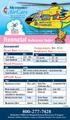 Operated by REACH Air Medical Services Assessment Heart Rate (beats/min.) Rate
Neonatal Reference Guide
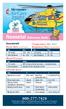 Operated by REACH Air Medical Services Assessment Heart Rate (beats/min.) Age Rate
*Reflex withdrawal from a painful stimulus is NOT considered a purposeful response.
 Analgesia and Moderate Sedation This Nebraska Board of Nursing advisory opinion is issued in accordance with Nebraska Revised Statute (NRS) 71-1,132.11(2). As such, this advisory opinion is for informational
2008 Coding Questions and Answers
 2008 Coding Questions and Answers 1. An infant is born at 29 wks gestation and has RDS. His birthweight is 1200 gms. He is admitted to the NICU. It is evident that he has severe RDS and a decision is made
PHSW Procedural Sedation Post-Test Answer Key. For the following questions, circle the letter of the correct answer(s) or the word true or false.
 PHSW Procedural Sedation Post-Test Answer Key 1 1. Define Procedural (Conscious) Sedation: A medically controlled state of depressed consciousness where the patient retains the ability to continuously
RGN JOY LAUDE WATFORD GENERAL HOSPITAL, ENGLAND
 RGN JOY LAUDE WATFORD GENERAL HOSPITAL, ENGLAND Monitor patient on the ward to detect trends in vital signs and to manage accordingly To recognise deteriorating trends and request relevant medical/out
National Registry of Emergency Medical Technicians Emergency Medical Technician Psychomotor Examination BLEEDING CONTROL/SHOCK MANAGEMENT
 BLEEDING CONTROL/SHOCK MANAGEMENT Candidate: Examiner: Date: Signature: Possible Applies direct pressure to the wound 1 NOTE: The examiner must now inform the candidate that the wound continues to bleed.
Addendum to the NRP Provider Textbook 6 th Edition Recommendations for specific modifications in the Canadian context
 Addendum to the NRP Provider Textbook 6 th Edition Recommendations for specific modifications in the Canadian context A subcommittee of the Canadian Neonatal Resuscitation Program (NRP) Steering Committee
Obstetrical Emergencies
 Date: July 18, 2014 Page 1 of 5 Obstetrical Emergencies Purpose: To provide the process for the assessment and management of the patient with an obstetrical related emergency. Pre-Medical Control 1. Follow
National Registry of Emergency Medical Technicians Emergency Medical Responder Psychomotor Examination PATIENT ASSESSMENT/MANAGEMENT TRAUMA
 PATIENT ASSESSMENT/MANAGEMENT TRAUMA Scenario # Note: Areas denoted by ** may be integrated within sequence of Primary Survey/Resuscitation SCENE SIZE-UP Determines the mechanism of injury/nature of illness
Regions Hospital Delineation of Privileges Nurse Practitioner
 Regions Hospital Delineation of Privileges Nurse Practitioner Applicant s Last First M. Instructions: Place a check-mark where indicated for each core group you are requesting. Review education and basic
Clinical Instructor Orientation Competency Validation Tool
 Name: Department: Date Orientation Began: Signature of Preceptor or Evaluators/Initials Levels of Performance: Novice: Novice clinical instructors are gaining knowledge and experience in clinical and technical
POLICIES & PROCEDURES. ID Number: 1115
 POLICIES & PROCEDURES Title: OXYGEN ADMINISTRATION ID Number: 1115 Authorization [X] SHR Nursing Practice Committee Source: Nursing, Respiratory Therapy, Physiotherapy Date Revised: March 2015 Date of
SARASOTA MEMORIAL HOSPITAL STANDARDS OF CARE STANDARDS OF PRACTICE
 UNIT: INTENSIVE CARE UNIT - ICU SARASOTA MEMORIAL HOSPITAL STANDARDS OF CARE STANDARDS OF PRACTICE STANDARD #: EFFECTIVE DATE: REVISED DATE: STANDARD TYPE: INTENSIVE CARE UNIT-ICU STANDARD I - SAFETY 3/88
National Registry of Emergency Medical Technicians Emergency Medical Responder Psychomotor Examination BVM VENTILATION OF AN APNEIC ADULT PATIENT
 BVM VENTILATION OF AN APNEIC ADULT PATIENT Candidate: Examiner: Date: Signature: Possible Points Checks responsiveness NOTE: After checking responsiveness and breathing for at least 5 but no 1 Checks breathing
The patient s response to therapy within the first hour in the Emergency Room is one of the most reliable ways to predict need for hospitalization.
 Emergency Room Asthma Management Algorithm The Emergency Room Asthma Management Algorithm is to be used for any patient seen in the Emergency Room with the diagnosis of asthma. (The initial history should
Bladder Catheterization
 Approved by: Bladder Catheterization Gail Cameron Senior Director, Operations, Maternal, Neonatal & Child Health Programs Dr. Ensenat Medical Director, Neonatology Neonatal Nursery Policy & Procedures
MINI - COURSE On TEMPERATURE CONTROL IN THE NEWBORN
 MINI - COURSE On TEMPERATURE CONTROL IN THE NEWBORN Instructions: Read each sheet and answer any questions as honestly as possible The first sheets have four questions to allow you to give your thoughts
Guidelines for the Management of the Obstetrical Patient for the Certified Registered Nurse Anesthetist
 American Association of Nurse Anesthetists 222 South Prospect Avenue Park Ridge, IL 60068 www.aana.com Guidelines for the Management of the Obstetrical Patient for the Certified Registered Nurse Anesthetist
The Challenge of Aero-medical Critical Care Transport. Focus on critical cases air-ambulance only
 The Challenge of Aero-medical Critical Care Transport. Focus on critical cases air-ambulance only In-flight 8,000 Ft. Logistics of intrahospital transfers Is the transfer absolutely necessary? What are
Oxygenation. Chapter 21. Anatomy and Physiology of Breathing. Anatomy and Physiology of Breathing*
 Oxygenation Chapter 21 Anatomy and Physiology of Breathing Inspiration ~ breathing in Expiration ~ breathing out Ventilation ~ Movement of air in & out of the lungs Respiration ~ exchange of O2 & carbon
BLS TREATMENT GUIDELINES - CARDIAC
 BLS TREATMENT GUIDELINES - CARDIAC CARDIOPULMONARY ARREST - NON-TRAUMATIC (SJ-B101) effective 07/01/99 Defibrillation CPR Apply S-AED and assess rhythm as trained. Defib as indicated Simultaneous OXYGEN:
Management of Neonatal Abstinence Syndrome and Iatrogenic Drug Withdrawal
 Management of Neonatal Abstinence Syndrome and Iatrogenic Drug Withdrawal Kirsten H. Ohler, Pharm.D., BCPS Clinical Assistant Professor Neonatal / Pediatric Clinical Pharmacist University of Illinois at
NURSING 500.105 Effective Date Title: 6/12 SCOPE OF PRACTICE FOR STUDENT NURSES AND NURSING ASSISTANTS
 XXX DAYTONA XXX _OCEANSIDE HEALTH CARE PARTNERS Department: Page 1 of 5 POLICY & PROCEDURE Policy Number NURSING 500.105 Effective Date Title: 6/12 SCOPE OF PRACTICE FOR STUDENT NURSES AND NURSING ASSISTANTS
GE Healthcare. The Giraffe Family. Helping make sick babies well
 GE Healthcare The Giraffe Family Helping make sick babies well Visionary design. Revolutionary performance. Easy baby access. An unobstructed view. Reliable clinical performance. Technically sophisticated,
College of Applied Medical Sciences\ Department of Nursing
 2 nd Edition 2014/2015 College of Applied Medical Sciences\ Department of Nursing CAMS/ Department of Nursing/ Internship Training Logbook 2 nd Edition 1 INTERNSHIP TRAINING LOGBOOK Nurse Intern Name:
Guidelines for Specialized Health Care Procedures (Revision 2004)
 Guidelines for Specialized Health Care Procedures (Revision 2004) Vickie H. Southall, MSN, RN Family, Community, and Mental Health Systems Department School of Nursing University of Virginia for the Virginia
AHA/AAP Neonatal Resuscitation Guidelines 2010: Summary of Major Changes and Comment on its Utility in Resource-Limited Settings
 AHA/AAP Neonatal Resuscitation Guidelines 2010: Summary of Major Changes and Comment on its Utility in Resource-Limited Settings Resuscitation step Recommendations (2005) Recommendations (2010) Comments/LOE
PEDIATRIC TREATMENT GUIDELINES
 P1 Pediatric Patient Care P2 Cardiac Arrest Initial Care and CPR P3 Neonatal Resuscitation P4 Ventricular Fibrillation / Ventricular Tachycardia P5 PEA / Asystole P6 Symptomatic Bradycardia P7 Tachycardia
Oxygen Therapy. Oxygen therapy quick guide V3 July 2012.
 PRESENTATION Oxygen (O 2 ) is a gas provided in a compressed form in a cylinder. It is also available in a liquid form. It is fed via a regulator and flow meter to the patient by means of plastic tubing
CH CONSCIOUS SEDATION
 Summary: CH CONSCIOUS SEDATION It is the policy of Carondelet Health that moderate conscious sedation of patients will be undertaken with appropriate evaluation and monitoring. Effective Date: 9/4/04 Revision
RESPIRATORY THERAPIST CLASSIFICATION SERIES
 STATE OF WISCONSIN CLASSIFICATION SPECIFICATION RESPIRATORY THERAPIST CLASSIFICATION SERIES Effective Date: June 16, 1985 Modified Effective: November 5, 2000 Modified Effective: May 6, 2001 I. INTRODUCTION
Reading Assignment: Tasks for the Veterinary Assistant, pages 467-473, Appendix L, O and P
 Patient Monitoring Reading Assignment: Tasks for the Veterinary Assistant, pages 467-473, Appendix L, O and P Patient monitoring during surgery is an extremely important task that is commonly the responsibility
Management of airway burns and inhalation injury PAEDIATRIC
 Management of airway burns and inhalation injury PAEDIATRIC A multidisciplinary team should provide the management of the child with inhalation injury. Childhood inhalation injury mandates transfer to
Neonatal Emergencies. Care of the Neonate. Care of the Neonate. Care of the Neonate. Student Objectives. Student Objectives continued.
 Student Objectives Neonatal Emergencies After completing this section the student will be able to: 1. Identify three physiologic and/or anatomic features unique to the newborn 2. List three perinatal factors
Competency Indicator Tool Level II Nursery Care Registered Nurse
 Name: INTRODUCTION Competency Indicator Tool Level II Nursery Care Registered Nurse This Competency Indicator Tool was designed by the Southwestern Ontario Maternal Newborn Child and Youth Network in collaboration
Respiratory Therapy Program Technical Standards
 Respiratory Therapy Program Technical Standards Technical Standards define the observational, communication, cognitive, affective, and physical capabilities deemed essential to complete this program and
NORTH WALES CRITICAL CARE NETWORK
 NORTH WALES CRITICAL CARE NETWORK LEVELS OF CRITICAL CARE FOR ADULT PATIENTS Throughout the work of the North Wales Critical Care Network reference to Levels of Care for the critically ill are frequently
RESPIRATORY CRITICAL CARE UNIT STUDENT INTERNSHIP SKILLS LIST Provo School District
 RESPIRATORY CRITICAL CARE UNIT STUDENT INTERNSHIP SKILLS LIST Provo School District The following procedures and items of equipment should be noted, observed and studied during this clinical rotation period.
EMERGENCY MEDICAL ASSISTANTS REGULATION 562/2004
 PDF Version [Printer friendly ideal for printing entire document] EMERGENCY MEDICAL ASSISTANTS REGULATION 562/2004 Published by DISCLAIMER: These documents are provided for private study or research purposes
SARASOTA MEMORIAL HOSPITAL NURSING PROCEDURE
 SARASOTA MEMORIAL HOSPITAL NURSING PROCEDURE TITLE: MAGNESIUM SULFATE ADMINISTRATION FOR ANTEPARTUM AND INTRAPARTUM PATIENTS WITH PRE-TERM LABOR DATE: REVIEWED: PAGES: 6/92 08/11 1 of 6 ISSUED FOR: Nursing
Respiratory Syncytial Virus (RSV)
 Respiratory Syncytial Virus (RSV) What is? is a common virus that infects the linings of the airways - the nose, throat, windpipe, bronchi and bronchioles (the air passages of the lungs). RSV is found
PROCEDURAL SEDATION/ANALGESIA NCBON Position Statement for RN Practice
 PROCEDURAL SEDATION/ANALGESIA NCBON Position Statement for RN Practice P.O. BOX 2129 Raleigh, NC 27602 (919) 782-3211 FAX (919) 781-9461 Nurse Aide II Registry (919) 782-7499 www.ncbon.com Issue: Administration
DISCHARGE CRITERIA FOR PHASE I & II- POST ANESTHESIA CARE
 REFERENCES: The Joint Commission Accreditation Manual for Hospitals American Society of Post Anesthesia Nurses: Standards of Post Anesthesia Nursing Practice (1991, 2002). RELATED DOCUMENTS: SHC Administrative
TRANSPORT OF CRITICALLY ILL PATIENTS
 TRANSPORT OF CRITICALLY ILL PATIENTS Introduction Inter-hospital and intra-hospital transport of critically ill patients places the patient at risk of adverse events and increased morbidity and mortality.
Epinephrine Auto Injector Interim Policy (Amended March 12, 2008)
 Epinephrine Auto Injector Interim Policy (Amended March 12, 2008) Pursuant to the authority conferred by N.J.S.A. 26:2K-47.1, et seq., the Department of Health and Senior Services (the Department) shall
BRITISH ASSOCIATION OF PERINATAL MEDICINE
 BRITISH ASSOCIATION OF PERINATAL MEDICINE Categories of Care 2011 Introduction The 2001 categories of care replaced the 1996 categories of care. In the subsequent 10 years, neonatal care changed and it
Institutional Handbook of Operating Procedures Policy 9.1.10
 Section: Clinical Policies Institutional Handbook of Operating Procedures Policy 9.1.10 Responsible Vice President: EVP & CEO Health System Subject: Admission, Discharge, and Transfer Responsible Entity:
Brenda Neff MSN, RN, NE BC
 Brenda Neff MSN, RN, NE BC 1400 s newborns have a soul 1600 s estimated that only 10% of the abandoned infants reached the age of 5 years. 1857 first incubator documented in western lit 1857 first incubator
ELSO GUIDELINES FOR TRAINING AND CONTINUING EDUCATION OF ECMO SPECIALISTS
 ELSO GUIDELINES FOR TRAINING AND CONTINUING EDUCATION OF ECMO SPECIALISTS PURPOSE The "" is a document developed by the Extracorporeal Life Support Organization (ELSO) as a reference for current and future
Careful collection, organization and review of medical information
 Preparing Birth Injury Case Prior To Expert Review of Causation Careful collection, organization and review of medical information essential to documentation of injury By RICHARD A. SILVER When analyzing
BASIC SKILLS: BLOOD PRESSURE
 Precepted clinical skills checklist Pre Experience (Medical/Surgical, ICU, ED, Telemetry Unit, Or Psychiatry) Student Name Facility THE LIST BELOW INCORPORATES NURSING ASSESSMENTS AND INTERVENTIONS. COMPLETE
Pediatric Airway Management
 Pediatric Airway Management Dec 2003 Dr. Shapiro I., PICU Adult Chain of Survival EMS CPR ALS Early Defibrillation Pediatric Chain of Survival Prevention CPR EMS ALS Out-of-Hospital Cardiac Arrest SIDS
More detailed background information and references can be found at the end of this guideline
 Neonatal Intensive Care Unit Clinical Guideline Oxygen Over the past few years there have been significant changes, based on high quality research, in our understanding of how to give the right amount
Southern Stone County Fire Protection District Emergency Medical Protocols
 TITLE Pediatric Medical Assessment PM 2.4 Confirm scene safety Appropriate body substance isolation procedures Number of patients Nature of illness Evaluate the need for assistance B.L.S ABC s & LOC Focused
Thermal protection in neonates
 Thermal protection in neonates Slide NT-1,2,3 Importance of temperature regulation Warmth is one of the basic needs of a newborn baby; it is critical to the baby s survival and well being. Unlike adults,
Nursing. Management of Spinal Trauma. Content. Objectives. Objectives
 7 cervical vertebrae Content 12 thoracic vertebrae Nursing 5 sacral vertebrae Management of Spinal Trauma Kwai Fung Betty Siu Ward Manager O&T Dept TKOH Date : 22nd April 2007 5 lumbar vertebrae 4 coccygeal
Cardiac Arrest Pediatric Ventricular Fibrillation / Pulseless Ventricular Tachycardia Protocol revised October 2008
 Cardiac Arrest Pediatric Ventricular Fibrillation / Pulseless Ventricular Tachycardia Protocol revised October 2008 Preamble In contrast to cardiac arrest in adults, cardiopulmonary arrest in pediatric
Cardiac Catheterisation. Cardiology
 Cardiac Catheterisation Cardiology Name: Cardiac catheterisation Version: 1 Page 1 of 7 Contents Page Number(s) 1. Introduction 3 2. Management pre operative 3 3. Management post operative 5 4. Discharge
NEONATAL CLINICAL PRACTICE GUIDELINE
 NEONATAL CLINICAL PRACTICE GUIDELINE Title: Routine Screening of Neonates Approval Date: January 2015 Approved by: Neonatal Patient Care Teams, HSC & SBH Child Health Standards Committee Pages: 1 of 6
VOCATIONAL NURSE PROGRAM EXPECTED CLINICAL ROTATION PERFORMANCE GUIDELINES
 VN: Objective 01 EXPECTED CLINICAL ROTATION PERFORMANCE GUIDELINES Clinical rotation expected performances are reflected in the clinical objectives. Clinical objectives are posted by instructor at each
Guidelines for Transport of the Critically Ill
 Page 1 of 16 Guidelines for Transport of the Critically Ill Version Effective Date 1 May 1994 2 Feb 2002 3 Apr 2014 Document Number Prepared by College Guidelines Committee Endorsed by HKCA Council Next
EYE, EAR, NOSE, and THROAT INJURIES
 T6 EYE, EAR, NOSE, and THROAT INJURIES Management of injuries of the eyes, ears, nose, and throat focuses on airway management and initial stabilization of the injury. Bilateral comparisons can assist
HLTEN609B Practise in the respiratory nursing environment
 HLTEN609B Practise in the respiratory nursing environment Release: 1 HLTEN609B Practise in the respiratory nursing environment Modification History Not Applicable Unit Descriptor Descriptor This unit addresses
Bachelor s degree in Nursing
 Tbilisi State Medical University Faculty of Physical Medicine and Rehabilitation The first level of academic higher education Bachelor s degree in Nursing Tbilisi 2012 Name of program Nursing Name of qualification