
Chapter 3. Waste. 1] Background 139 2] Pressure: Waste generation 140 3] Response to the Waste Generation Pressure 156
|
|
|
- Justin Osborne
- 10 years ago
- Views:
Transcription
1 138 chapter 3 waste

2 Chapter 3 Waste 1] Background 139 2] Pressure: Waste generation 140 3] Response to the Waste Generation Pressure 156
![Waste generation 140 3]](/docs-images/41/2476603/images/page_2.jpg "Response to the Waste")
3 [ HIERARCHICAL WASTE STRATEGY ] A Prevention B Reuse C Recicling A Actions or measures aimed at avoiding or reducing waste generation, diminishing the presence of hazardous material or of the pollutants in them, and minimizing the significant impacts that these might generate on the environment or people s health. D Energy Valorization C Valorization actions through which wastes are transformed into new products, excluding energy valorization. B Action consisting on the use of a material or product previously utilized as an input in the production process that originated it. D Use of a residue as fuel in a production process. E Disposal Actions aimed at a final waste disposal in places authorized for this purpose complyeing with current regulations.

4 139 waste chapter 3 Introduction Abstract Even though waste generation is inherent to any social organization, it gains more relevance with the appearence of major human settlements, requiring an adequate management in order to avoid negative impacts on health and the environment. Background 1 In nature there are no wastes, everything is reincorporated into the cycle through trophic chains and biochemical cycles, only ecosystems with anthropic presence generate waste. Wastes are substances or objects that are discarded once they reach the end of their useful lives and are then treated through valorization or elimination. The main environmental impacts that final waste disposal (adapted from IDB, 2009) may generate include the following: Effects on water quality and alteration of the hydraulic characteristics, on both surface and underground water; Change in biomass quantity, type of vegetation and fauna; Change in the physical, chemical and fertility properties of soil (e.g., pollution by oils, fats, heavy metals, and acids, among other residues, and activation of erosion by changes in topography); Atmospheric emissions of dioxins and furans, hydrogen sulfide, among others; Emission of greenhouse gases, such as methane and carbon dioxide, as a result of anaerobic biodegradation processes in sanitary landfills; Diseases caused by sanitary vectors, whose appearance and permanence

5 140 chapter 3 waste % 60% Landfills and Dumps 100% Landfills and Dumps 2005 Sanitary Landfills 1] Sanitary Landfill: Place set aside for the final disposal of waste, which complies with the current regulation (Sanitary Authorization, according to S.D. N 189, in addition to the Environmental Qualification Resolution). Landfill: Place set aside for the final disposal of waste that does not comply with the current regulation, but has Sanitary Authorization according to Resolution N Garbage Dump and Municipal or Urban Landfill: place set aside for the final disposal of waste that does not comply with the regulation in force and does not have a Sanitary Authorization, according to Resolution N can be directly related to the inadequate execution of one of the stages of waste management; Landscape impacts; Risk of accidents, such as explosions or cave-ins; Mental and mood deterioration of people directly affected due to the proximity of the waste; Bad smell; Acoustic pollution derived from waste transportation. Although this is a complex matter, Chile has made significant improvements in this area. In 1995, all residential waste was disposed of in landfills and dumps; however, by 2005 more than 60 percent of waste was disposed of in sanitary landfills that comply with a series of sanitary and environmental technical requirements 1 (CONAMA, 2005, p.12). Despite this progress, it is necessary to improve current environmental and sanitary regulations, address existing legal loopholes, enhance inspection, and develop public institutional capacity to coordinate all of the stakeholders with competence in waste management. However, it is worth noting that waste management has been approached mainly in a reactive manner, thus limiting it only to collection and final disposal, without further attention to other valorization alternatives. Pressure: Waste Generation Waste generation at the national level In Chile, for decades, waste management has been approached as a concern in different social sectors, but with no effective solutions. The complexity of this issue still confronts us, also, to production and consumption patterns that favor an increasing waste generation. Among the main causes are the following:

6 141 waste chapter 3 The process of population growth, distribution and concentration; The physical characteristics of the country and the distribution of the economic activities, that result in the presence of many sites located far away from populated areas that make inspection difficult and facilitate the creation of illegal garbage dumps; An increased consumption as a result of higher incomes; The existence of institutional, regulatory, inspection, and management deficiencies. Information on the generation and management of wastes in the country is limited. Different studies have been carried out on waste generation by origin and destination which, in most cases, correspond to registries of final disposal sites. The study "Collection, Analysis, Generation and Publication of National Information on Solid Wastes in Chile" was carried out between 2009 and Based on the revision of previous studies and surveys to municipalities and companies that generate and receive wastes, the results of the study show the following estimates for 2009; a generation of 16.9 million tons of waste, from which 6.5 million tons are municipal waste and 10.4 million tons are industrial waste. This data does not include massive mining wastes 2. However, it is important to point out that this study was performed on the basis of surveys and estimates, therefore, the information on some topics is incomplete and imprecise. Municipal Waste Generation million municipal waste million million industrial waste 2] This report does not incluide information about massive mining wastes, because not data were available about it Residential waste management, understood as collection, transportation and disposal, is a service that is operated by each municipality. This activity, even though it is regulated and supervised by the State, requires additional standards to address waste management as a whole. There are two factors that have significant influence on residential waste generation: the number of inhabitants and their income level. The number of inhabitants is the key factor on which the total municipal waste generation depends. At an individual level, income is the variable that most affects per capita waste generation. Figure 1 shows how the Metropolitan Region, where almost 50 percent of the nation's population is concentrated, generates the highest amount of municipal waste with a participation of 43 percent, followed by the Biobío Region with 10 percent and the Valparaíso Region with 7.4 percent.

7 142 chapter 3 waste Arica and Parinacota Tarapacá Antofagasta 114, , ,289 1 Municipal waste generation per region, Source: Own elaboration, based on the "Primer reporte sobre manejo de residuos sólidos en Chile", CONAMA, 2010a. 103,433 Atacama 220,860 Coquimbo 483,739 Valparaíso Metropolitan Libertador Gral. B. O Higgins 2,807,247 Biobío Araucanía Maule 343, ,862 Los Ríos 645,875 Los Lagos 425,234 Aysén del Gral. Carlos Ibañez 147, ,925 44,918 Magallanes and Chilean Antarctica 64,669 50,000 tons/year 100,000 tons/year "The maps published in this report that refer to or are related to limits or boundaries of Chile do not commit the State of Chile in any way, according to Article 2, letter g of the Decree with Force of Law N 83 of 1979 of the Ministry of Foreign Affairs. The Cartographic information is based on Datum WGS84 and it is mearly referential".

8 143 residuos capítulo waste chapter 3

9 144 chapter 3 waste At the local level, the influence of the number of inhabitants and their income level can be more clearly appreciated. Figures 2 and 3 present the total generation of municipal waste, population, and per capita generation of the communes of the Metropolitan Region. The most populated commune of the Region is Puente Alto, which also corresponds to the one with the highest total waste generation. Municipal waste generation per communes in the Metropolitan Region, Source: Own elaboration, based on the "Primer reporte sobre manejo de residuos sólidos en Chile", CONAMA, 2010a. 2 Puente Alto Maipú La Florida San Bernardo Las Condes Pudahuel Peñalolén Quilicura Santiago El Bosque Providencia Recoleta Renca Vitacura Ñuñoa Estación Central Cerro Navia La Pintana Lo Barnechea La Granja Quinta Normal Macul Conchalí Pedro Aguirre Cerda La Reina Lo Espejo San Miguel Melipilla La Cisterna Lo Prado Huechuraba Cerrillos Colina San Ramón Independencia Penaflor San Joaquín Talagante Lampa Buin Padre Hurtado Paine Isla de Maipo El Monte Calera de Tango Tiltil Pirque San José de Maipo Curacaví María Pinto San Pedro Alhué 284,934 Puente Alto 1,909 tons Alhué 0 50, , , , , ,000 tons 45,664 tons Pedro Aguirre Cerda Tons

10 145 waste chapter 3 At the same time, the commune of Vitacura has the highest rate of per capita waste generation. Figure 4 shows a national geographical projection of the average income per inhabitant and of the per capita residential waste generation per inhabitant, respectively, up to Puente Alto Maipú La Florida San Bernardo Las Condes Pudahuel Peñalolén Quilicura Santiago El Bosque Providencia Recoleta Renca Vitacura Ñuñoa Estación Central Cerro Navia La Pintana Lo Barnechea La Granja Quinta Normal Macul Conchalí Pedro Aguirre Cerda La Reina Lo Espejo San Miguel Melipilla La Cisterna Lo Prado Huechuraba Cerrillos Colina San Ramón Independencia Penaflor San Joaquín Talagante Lampa Buin Padre Hurtado Paine Isla de Maipo El Monte Calera de Tango Tiltil Pirque San José de Maipo Curacaví María Pinto San Pedro Alhué 0.54 kg/day/inhab Curacaví 2.09 kg/day/inhab Vitacura kg/day/inhab 3 Per capita waste generation by communes of the Metropolitan Region, Source: Own elaboration, based on the "Primer reporte sobre manejo de residuos sólidos en Chile", CONAMA, 2010a

11 146 chapter 3 waste N N Average per capita income ($) Waste Generation (ton/year) 75, , , , ,000 28,001-79, , ,000 79, , ,001-1,500, , ,000 No information Average per capita income and municpal waste generation, Note: It is important to note that the data was obtained from surveys and estimates, therefore information is incomplete and imprecise. 4 Source: Own elaboration, based on the "Primer reporte sobre manejo de residuos sólidos en Chile", CONAMA, 2010 and the CASEN 2009 survey, MIDEPLAN. "The maps published in this report that refer to or are related to limits or boundaries of Chile do not commit the State of Chile in any way, according to Article 2, letter g of the Decree with Force of Law N 83 of 1979 of the Ministry of Foreign Affairs. The Cartographic information is based on Datum WGS84 and it is mearly referential" km km

12 147 waste chapter 3 Currently, most municipalities limit their management to final waste disposal on their own or through contracts with private companies. In general, such organizations have not shown a real willingness to manage their waste issues as a whole and they usually try to eliminate them without considering strategies such as promoting the prevention of their generation or their potential valorization. Likewise, contracts for final disposal usually discourage recycling initiatives, due to the fact that the costs per ton diminish as the amount disposed increases. Despite this fact, some municipalities have formalized recycling through contracts for differentiated collection. Moreover, there is an informal market of recyclers and intermediaries for paper and cardboard, junk and other recyclable waste collection, and there is also a formal market with companies that recover paper and cardboard, junk, plastic, and tinplate, in the main cities of the country. Figure 5 shows that more than 50 percent of municipal waste generated in the country could be valued, which would substantially reduce the waste sent to final disposal sites, and thus lower the costs invested by municipalities on this item. 3% 3% 7% 48% 7% 10% 5 Composition of Municipal Waste Generation, Source: Own elaboration, based on the "Primer reporte sobre manejo de residuos sólidos en Chile", CONAMA, 2010a. 11% 11% Metals Fabrics Bulk Glass Paper, cardboard and paper products Other Plastics Organic matter

13 148 chapter 3 waste In terms of final waste disposal sites where municipal solid wastes are deposited, it is estimated that 69 percent were dumped in sanitary landfills, which are facilities that comply with current regulations, 22 percent in landfills, which are facilities that comply with the regulation dating from 1980, and 9 percent in garbage dumps, which are facilities that do not comply with any type of regulations. These are located mainly in rural areas and municipalities with a low number of inhabitants. To better illustrate this problem, the regions of the country with a complete registry of waste disposal sites were identified. With this information, maps were developed to include, for every commune, final waste disposal sites and per capita income, obtained from the CASEN survey carried out by MIDEPLAN in 2009 (Figure 6). The Metropolitan Region of Santiago currently has three sanitary landfills: Loma los Colorados (Til Til), Santiago Poniente (Maipú) and Santa Marta (San Bernardo), which cover the needs of most of the communes of the region. Figure 6 shows that the communes with the highest incomes do not have final waste disposal sites, exporting their waste to other communes. It also reveals that in some communes, such as Puente Alto, there are still many small illegal garbage dumps. Per capita income and final waste disposal sites for the Metropolitan Region, Note: Illegal landfills and small garbage dumps in the Metropolitan Region are not authorized. Source: MIDEPLAN, CASEN Survey, Ministerio del Medio Ambiente, Catastro de Sitios de Disposición Final de Residuos, Type of waste disposal Garbage Dump Sanitary Landfill Landfill Illegal Landfill and small garbage dumps Average Per Capita Income ($) 75, , , , , , ,001-1,500,000 San Pedro Melipilla Tiltil Paine Colina Curacaví Lo Barnechea Quilicura Huechuraba Vitacura Pudahuel Las Condes Santiago La Reina María Pinto Maipú Peñalolen La Florida Padre Hurtado Calera Puente Peñaflorde Tango Alto San Bernardo El Monte Talagante Pirque San José de Maipo Isla de Maipo Buin "The maps published in this report that refer to or are related to limits or boundaries of Chile do not commit the State of Chile in any way, according to Article 2, letter g of the Decree with Force of Law N 83 of 1979 of the Ministry of Foreign Affairs. The Cartographic information is based on Datum WGS84 and it is mearly referential". Alhué Km

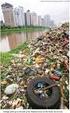
14 149 waste chapter 3 Final disposal in sanitary landfills presents significant economies of scale and, thus, regulation discourages having more disposal sites from an economic point of view. However, it is important to note that since 2006 there has been little progress in the improvement of final waste disposal in sanitary landfills. Illegal landfills and small garbage dumps are mostly located in peripheral urban areas, mainly affecting low-income communes and generating a negative impact on their budgets; forcing them to allocate economic resources, equipment and staff to classify, extract, transport, and remove waste that has been illegally disposed of in public spaces. In some cases, this coincides with the lack of spaces available to devlop outdoor entertainment activities, a situation that damages the quality of life of their inhabitants. 7 Small dump on a river bank. Photograph by Víctor Rojas, Small dumps in the commune of Puente Alto Source: Ministerio del Medio Ambiente, Quick Bird Image, 2008.

15 150 chapter 3 waste Promoting a higher waste valorization, without disregarding sanitary aspects, would allow a reduction in the demand for final waste disposal sites. Figure 9 shows the Araucania Region, which has communes with lower urban density and of more rural characteristics. The per capita income observed is homogeneous and there are final waste disposal sites in almost all the communes of the region. Three of these sites are sanitary landfills: Villarrica Private Sanitary Landfill (Villarrica), Coipué Sanitary Landfill (Freire) and Nueva Imperial Private Sanitary Landfill (Nueva Imperial). Per capita income and final waste disposal sites in the Araucanía Region, Source: MIDEPLAN, CASEN Survey, Ministerio del Medio Ambiente, Catastro de Sitios de Disposición Final de Residuos, Purén Angol Los Sauces Renaico Ercilla Collipulli Lumaco Traiguén Victoria Type of waste disposal Garbage dump Landfill Sanitary Landfill Average per capita income ($) 75, , , , , , ,001-1,500,000 No information Carahue Saavedra Teodoro Schmidt Nueva Imperial Toltén Cholchol Galvarino Temuco Pitrufquén Gorbea Loncoche Padre las Casas Perquenco Lautaro Freire Vilcún Curacautín Melipeuco Tipo disposición de residuos Basural Cunco Relleno sanitario Vertedero Ingreso promedio per cápita ($) Pucón Villarica Curarrehue Lonquimay "The maps published in this report that refer to or are related to limits or boundaries of Chile do not commit the State of Chile in any way, according to Article 2, letter g of the Decree with Force of Law N 83 of 1979 of the Ministry of Foreign Affairs. The Cartographic information is based on Datum WGS84 and it is mearly referential" Km 50

16 151 waste chapter 3 Figure 10 illustrates the case of Los Lagos Region, which only has landfills and dumps in the main populated areas. Garbage dumps do not seem concentrated in just one particular commune. San Juan de la Costa Río Negro Purranque Fresia San Pablo San Pablo San Juan de la Costa Osorno Osorno Puyehue Río Negro Puerto Octay Frutillar Purranque Frutillar Puerto Varas LlanquihueFresia Llanquihue Puyehue Puerto Octay 10 Puerto Varas Per capita income and final waste disposal sites for Los Lagos Region, Source: MIDEPLAN, CASEN Survey, Ministerio del Medio Ambiente, Catastro de Sitios de Disposición Final de Residuos, Los Muermos Puerto Montt Los Muermos Puerto Montt Ancud Dalcahue Castro Chonchi Maullín Ancud Dalcahue Castro Maullín Cochamó Hualaihué Cochamó Hualaihué Type of waste disposal Garbage dump Landfill Sanitary Landfill Average per capita income ($) 75, , , , , , ,001-1,500,000 No information Chonchi Quellón Futalelfú Quellón Chaitén Futalelfú Chaitén Palena Palena Km Km "The maps published in this report that refer to or are related to limits or boundaries of Chile do not commit the State of Chile in any way, according to Article 2, letter g of the Decree with Force of Law N 83 of 1979 of the Ministry of Foreign Affairs. The Cartographic information is based on Datum WGS84 and it is mearly referential".

17 152 chapter 3 waste Industrial Waste Generation 3] Another case is that of manufacturers and importers of pesticides, who are at a stage of promoting the triple rinse of their containers, to later proceed with their elimination, thus avoiding their illegal disposal in rural areas. Information on industrial waste is even more limited. Although there are estimates on industrial, hospital, mining, construction, and sylvo-agriculturallivestock waste generation, according to which in 2009 they represented 61.5 percent of the total national waste, information regarding their current management is still insufficient. One exception is the generation and management of radioactive waste, which is regulated and inspected by the Chilean Commission of Nuclear Energy 3. However, because the scarce information available is incomplete or broadly estimated, it is not possible to break down industrial waste generation by region. Figure 11 shows an overview in terms of this type of waste distribution at a national level, which does not include massive mining waste. It is important to note that this data has been obtained mostly from surveys, and that it has not been validated with the respective sectors. National Industrial Waste Generation per Sector, Note: Construction waste includes excavation. Industrial waste information is outdated, incomplete or broadly estimated. Source: Own elaboration, based on the "Primer reporte sobre manejo de residuos sólidos en Chile", CONAMA, % Water Treatment and Distribution 4% Energy Production 6% Mining and Quarries 56% Construction 18% Manufacturing Industry 15% Agriculture and Forestry

18 153 waste chapter 3 Hazardous Waste Generation Before the entry into force of the regulation (Supreme Decree N 148 of Ministry of Health) on hazardous waste management, dated from 2005, the estimate on the generation of this type of waste was of approximately 30,000 tons, mainly due to the lack of specific regulations. The Organisation for the Economic Co-operation and Development (OECD) recommended in its 2005 Environmental Performance Review of Chile to: "Strengthen chemical and hazardous waste management according to international agreements, notably the Stockholm, Rotterdam and Basel Conventions; complete and implement national plans for persistent organic pollutants and hazardous waste; strengthen enforcement activities, develop pollutant release and transfer registers and improve the regulatory framework to better manage chemicals throughout their life cycle" (Recommendation 49). According to this recommendation, the above mentioned regulation established a definition for hazardous waste and created a declaration and follow-up system for large waste generators (one or more kilograms per month for acute hazardous waste, and 1 or more tons per month for other hazardous wastes). The Hazardous Waste Declaration and Follow-up System (SIDREP, by its acronym in Spanish) has been implemented since The data obtained from the SIDREP shows a continuous increase in waste declarations up to a total of 422,800 tons per year in 2010, as shown in Figure 12. Tons/year 450, , , , , , , ,000 50, Annual Generation of Declared Hazardous Waste Source: SIDREP Year

19 154 chapter 3 waste National Generation of Hazardous Waste, Source: RETC, Figures 13 and 14 illustrate the generation of hazardous waste by sectors, composition and generation by regions, respectively. In the SIDREP, there are 72 facilities for disposal and/or valorization of hazardous waste, which during 2010 managed the declared waste. However, the total amount received is even higher since there are still hazardous wastes being declared in paper and this information has not been digitalized yet. 2% Transportation, storage and communications D 3% Electricity, gas and water supply Mix of different waste Mix of various residues 123,894 Residues containing hexavalent chromium compounds 46,438 Acid solutions or solid acid 39,639 Residues with arsenic compounds 35,671 Mineral oils unfit for their originally intended use 21,964 Residues from waste disposal or treatment operations 21,518 Waste oils/water, hydrocarbons/water mixtures, emulsions Waste chemical substances arising from research and development which are not identified and/or are new Waste resulting from surface treatment of metals and plastics 8,603 12,645 9,942 Tarry residues resulting from refining 4,041 Lead Residues Basic solutions or bases in solid form Contaminated soils or materials 3,747 3,157 3,099 Contaminated packages and containers Wastes from resin production, preparation and use 2,667 2,638 Residuos with cooper compounds 842 Residues from ink production, preparation and use ,000 80, , Hazardous Waste Composition, Source: MMA, Tons

20 155 waste chapter 3 Figure 15 shows that the main destination of hazardous waste during 2010 was the Metropolitan Region, with a total registry of 204,032 tons, followed by the Antofagasta Region, with a total of approximately 135,000 tons. 1% Wholesale and retail trade 52% Manufacturing industries 34% Exploitation of mines and quarries 8% Others Arica y Parinacota Tarapacá Antofagasta Atacama 15 Regional Origin and Destination of Hazardous Waste, Source: SIDREP, 2011 Coquimbo Valparaíso Metropolitana Libertador Gral. Bernardo O'Higgins Maule Bío-Bío Araucania Los Rios Disposal Generation Los Lagos Aisén y Gral. Carlos Ibáñez del Campo Magallanes 0 50, , , , ,000 Tons/year

21 156 chapter 3 waste 3 Response to Waste Generation Pressure In Chile, the regulatory framework associated to waste dates back to 1967, with the publication in the Legal Gazette of the Sanitary Code, which regulates specific aspects regarding hygiene and safety of the environment and the workplace. Relevant laws and decrees are listed in Table 1. The emphasis of waste management has historically been placed on properly solving its final disposal. However, it has become evident that it is not enough to concentrate efforts on solving the final disponsal issue with sanitary and environmental adequacy and it is necessary to redefine the waste management approach in our country. In order to address the complexity of this problem, in 2005 the Directive Council of the National Commission for the Environment, approved the Policy for Integrated Management of Solid Waste, prepared by a Technical Committee with representatives of the Ministry General Secretariat of the Presidency, the Ministry of Health, Ministry of Economy, Undersecretariat of Regional and Administrative Development, and the National Commission for the Environment. This policy has the objective of "achieving that the management of solid waste is performed with a minimum risk for the population's health and the environment, triggering an integrated view of waste, that ensures a sustainable and efficient development of the sector". Executive secretariats were created to implement this Policy, both at a national and regional level. One of the relevant aspects included in this policy is the need to have integrated waste management that covers all of the stages of a product, from its elaboration to its disposal. This model, generally used in developed countries, has proven its effectiveness through time.
22 157 waste chapter 3 Table 1 Entry into Force Laws and Decrees Related to Solid Waste Management Laws and Decrees Decree with Force of Law (D.F.L.) N 725, of the Ministry of Health, that establishes the Sanitary Code. Supreme Decree (SD) N 685 in which Chile ratifies the Basel Convention that regulates transboundary movements of hazardous wastes and stipulates the obligations of the Parties to ensure the environmentally sound management of them, particularly their disposal. Law N Environmental Framework Law, which incorporates the topic of waste in the Environmental Impact Assessment System, article 10, (letters i and o). SD N 594 of the MINSAL on basic sanitary and environmental conditions in the workplace (derived from SD N 745 from 1993). SD N 148 of the MINSAL, which establishes the Sanitary Regulation on Hazardous Waste Management. SD N 45, of MINSEGPRES, which establishes the emission standard for incineration and co-incineration. SD N 189 of MINSAL, which regulates basic sanitary and safety conditions in sanitary landfills. SD N 6 of MINSAL, on the management of waste generated in healthcare facilities. SD N 4 of MINSEGPRES, for the management of sludge generated in wastewater treatment plants. Law N Environmental Framework Law modified by Law N , which establishes the Role of the Ministry of the Environment in proposing policies and creating regulations, plans and programs related to waste (article 70 letter g).
23 158 chapter 3 waste In terms of waste management, the first objective is to avoid its generation; if this is not possible, efforts must concentrate on minimizing it; and, if this is not possible, only then potential final disposal must be assessed. This sequence in waste management is known as hierarchy and is illustrated in Figure 16. The hierarchy considers the following stages: π Prevention: Actions or measures aimed at avoiding or reducing waste generation, diminishing the presence of hazardous material or of the pollutants in them, and minimizing the significant impacts that these generate on the environment or human health. π Reuse: Action consisting of the use of a material or product previously utilized as an input in the production process that originated it. π Recycling: Valorization actions through which wastes are transformed into new products, excluding energy valorization. Prevention Reuse Hierarchichal Waste Strategy Source: Adapted from Hertfordshire Waste Partnership, Recycling Energy Valorization Disposal
24 159 waste chapter 3 π Energy valorization: Use of a residue as fuel in a production process. π Disposal: Actions aimed at a final waste disposal in places authorized for this purpose that comply with current regulations. Annual follow up on valorization and elimination programs allows monitoring to see if there are reductions in the amounts disposed of, favoring valorization. Figure 17 shows the trend to recover wastes for valorization and disposal, respectively, during the period, while Figure 18 reports on the distribution of recovered and valorized wastes among different options. Recycling 43% Composting 52% Municipal Waste Collected at a National Level and Destination, Million tons Vermiculture 4% Other 1% Recovery - Other Recovery - Vermiculture Recovery - Recicling Recovery - Composting Disposal - Garbage Dumps Disposal - Sanitary Landfills and Landfills Source: Own elaboration, based on the "Primer reporte sobre manejo de residuos sólidos en Chile", CONAMA, Recovery of Municipal Waste, Source: Own elaboration, based on the "Primer reporte sobre manejo de residuos sólidos en Chile", CONAMA, Year
25 160 chapter 3 waste 4] Valorization is understood as actions aimed at recovering residues or one of their components, with the purpose of reincorporating them into production processes and/or generating new materials, products or energy. Since it is not mandatory for all regions to declare waste flows and management to authorities, the valorization figures of the main waste fractions, such as paper and cardboard, scrap and glass, among others, were estimated based on information provided by the main companies dedicated to the valorization of industrial and/or municipal waste, as shown in Figure 19. One of the pending challenges is enhancing the adequate valorization 4 of generated waste. It is estimated that the valorization rate of waste generated in Chile is still incipient, close to 10 percent (CONAMA, 2010a). However, the development of markets for valorization of wastes such as paper and cardboard, glass, plastic and metals, has experienced an important growth during recent years. Some experiences have been implemented at a local level, encouraging citizen participation and commitment for waste valorization. For example, there are outstanding initiatives in the municipalities of La Pintana, La Reina, Ñuñoa, Peñalolén, Viña del Mar, Talcahuano, Las Condes and Vitacura, among others. Type of Waste Ferrous metals Amount Generated (million tons) 286,000 Percentage Valorized (%) 82% Mineral and synthetic oils 74,000 54% National Generation and Valorization by Type of Industrial and Municipal Waste, 2009 Source: Own elaboration, based on the "Primer reporte sobre manejo de residuos sólidos en Chile", CONAMA, 2010a. 19 Papers and Cardboards Plastics 913,000 41% Aluminum 10,000 40% Glass 266,000 29% Organics 3,008,000 10% 668,000 4% Other non-ferrous metals 64,000 3% Tetrapak 18,000 2%
26 161 residuos capítulo waste chapter 3 Modifying the vision towards an integrated approach to waste, without disregarding sanitary aspects, will allow us to reduce the demand for final disposal sites, particularly for those with no environmental standards or regulations.
27 162 chapter 3 waste 5) Recommendation 3 Review the scope for introducing new economic instruments (e.g. product charges on hazardous waste, air emission charges, water pollution charges) and improve trading mechanisms. Recommendation 4 Further apply the polluter pays and user pays principles through appropriate charges (e.g. on waste management, for access to protected areas, for natural resources), with due regard to social constraints. The OECD, in its 2005 Environmental Performance Review for Chile, also establishes a series of recommendations 5 to promote waste valorization such as: "Further the application of 'the polluter pays' and 'user pays' principles through appropriate charges on waste management" and "review the scope for introducing new economic instruments such as charges on hazardous waste, among others" (Recommendations 3 and 4). The Ministry of the Environment is currently working on a draft bill for waste management that includes a new instrument, called Extended Producer Responsibility (EPR). The EPR implies that a producer, manufacturer or importer must take responsibility for the product, once its life cycle is over. This concept, developed in Europe in the 90s, is especially applicable to mass consumption products such as oils, tires, computing equipment, batteries, containers and packaging, lamps, and electric devices. The positive results obtained with this policy have resulted in its application to a greater number of products. By transferring the responsibility of managing waste derived from products from the municipality to the producer, the latter must consider the costs for its management in its market price. Therefore, the producer is motivated to consider improvements in the product design regarding, for example, its life cycle, the presence of hazardous substances, and its disassembly, in order to facilitate its valorization. On the other hand, when considering the costs for the management of the product at the end of its life cycle in the sale price, the principle of "the polluter pays" is then being put into practice. In 2009, pilot EPR projects were started in Chile with four selected products: Disused tires, used lubricant oils, electronic devices (computing equipment and cellular phones), and lead-acid batteries. Besides the need to change the approach in waste management, a process of continuous improvement for waste disposal sites must also be sought. In this regard, the Undersecretariat of Regional and Administrative Development (SUBDERE) of the Ministry of Interior started the National Solid Waste Program in 2007, whose objective is to improve the sanitary conditions and environmental quality of urban and rural areas, as well as to implement integrated and sustainable systems for the efficient management of Domestic Solid Residues (DSR). Among the actions included in this program are the construction of new sanitary landfills, purchase of machinery and equipment for their operations, landfill closure, training and assessment for municipal technical departments, improvement of the regional planning capacity for residential solid waste management, stregthening of the inspection capacity, State sanitary and environmental control, among others. Table 2 shows the progress of the Program up to 2011.
28 163 waste chapter 3 Table 2 National Solid Waste Program at a Regional Level, 2011 Landfill Closure Landfill Construction Management Plans Minimization Projects Region Assessment studies of closure plans Closed landfills Studies Designed landfills Landfills under construction Communal plans Regional plans under development Approved plans Arica and Parinacota Tarapacá 2 Antofagasta Atacama Coquimbo Valparaíso Metropolitan 1 7 O Higgins El Maule 2 9 Biobío Araucanía Los Ríos Los Lagos Aysén Magallanes 1 1 Total Source: SUBDERE, 2011
29 164 chapter 3 waste 6] The Pollutant Release and Transfer Register (PRTR) is a public access database, aimed at recording, gathering, systematizing, preserving and disseminating information on emissions and waste that are potentially hazardous fo health and the environment that are released into the environment, generated through industrial or non-industrial activities or transferred for their valorization or disposal. The information on releases, waste and/or transfer of pollutants, will be provided by the different sources or institutions forced to report this data to the responsible State agency, through the One-Stop-Shop System. The registry must also include the estimation of releases and wastes of those pollutants that are not included in the current regulation, in the case of releases from diffuse sources, or that are estimated because they are part of international agreements signed by Chile. Estimates will be made by the Ministry of the Environment, with the information provided by the different State agencies. On the other hand, to achieve an adequate waste management it is necessary to revise, update and complement the scarce and dispersed information available. It is essential to improve data on the amount and characteristics of generated waste, its generation sources, and current management, considering all stages, from generation to valorization or disposal, passing through its collection, storage, transportation and pre-treatment. Besides the country's needs for information, there are also the commitments with the OECD, an organization that requires that the information be in-sync to that available from other member countries. At the same time, Chile must meet, within previously set deadlines, a series of requirements from this organization regarding definitions, regulations, transboundary waste movements, among others. The Ministry of the Environment has made efforts to record municipal waste generation. The initiatives that have already been executed until now are listed in Table 3. The Ministry of the Environment is in the process of developing the National System of Waste Declaration (SINADER by its acronym in Spanish), with the objective of integrating the declaration of wastes in a single platform, which will be implemented through the Regulation of the Pollutant Release and Transfer Register (PRTR). 6 Table 3 Municipal Waste Registries Years Product The Ministry (CONAMA) prepared an annual registry of domestic solid residues, based on the information provided by the municipalities and the Regional Ministerial Health Secretariats (Health Services). The information was restricted to deposited waste and there was a lack of information from several municipalities and final disposal facilities. At the same time, the data was not validated, except for the Metropolitan Region. Revision of the data in the registry of domestic solid residues, completion with data missing from municipalities and final disposal facilities, generation and final disposal factors were also applied. The study "Gathering, Analysis, Generation and Publication of National Information on Solid Wastes in Chile" was carried out. This included the revision of previous studies as well as sending surveys to municipalities, to companies that generate waste and to waste receptors. The main findings of this study were presented in the Report on Solid Waste Management in Chile, released in 2010.
30 165 waste chapter 3 References Comisión Nacional del Medio Ambiente (CONAMA), Política integrada de gestión de residuos sólidos. Santiago, Chile. Comisión Nacional del Medio Ambiente (CONAMA), Inventario nacional de fuentes de emisión de dioxinas y furanos. Santiago, Chile. Comisión Nacional del Medio Ambiente (CONAMA), 2010a. Primer reporte sobre manejo de residuos sólidos en Chile. Santiago, Chile: Conama. Comisión Nacional del Medio Ambiente (CONAMA), 2010b. Levantamiento, análisis, generación y publicación de información nacional sobre residuos sólidos de Chile. Santiago, Chile: Conama. Hertfordshire Waste Partnership, Hertfordshire municipal waste management strategy: draft core strategy. Available at: wasteaware.org.uk/strategy/corestrategy.pdf. Meijer, J. ([email protected]), 13 September RE: Información Residuos. to M. SERRANO ([email protected]). Ministerio del Medio Ambiente (MMA), Registro de emisiones y transferencias de contaminantes. Available at: Organización para la Cooperación y Desarrollo Económicos (OCDE), Evaluaciones de desempeño ambiental, Chile. Paris, France. Terraza, H., Manejo de residuos sólidos. lineamientos para un servicio integral, sustentable e inclusivo. Banco Inter-Americano de Desarrollo. Departamento de Infraestructura y Medio Ambiente. Technical note N IDB-TN-101. Available at: aspx?docnum=
Chapter 1. Air Pollution. 1] Background 49 2] Diagnosis: Air Quality 52 3] Causes: Air Pollutant Emissions 60 4] Actions: Air Pollution Control 67
![Chapter 1. Air Pollution. 1] Background 49 2] Diagnosis: Air Quality 52 3] Causes: Air Pollutant Emissions 60 4] Actions: Air Pollution Control 67](/thumbs/18/713116.jpg "Chapter 1. Air Pollution. 1] Background 49 2] Diagnosis: Air Quality 52 3] Causes: Air Pollutant Emissions 60 4] Actions: Air Pollution Control 67") Chapter 1 Air Pollution 1] Background 49 2] Diagnosis: Air Quality 52 3] Causes: Air Pollutant Emissions 60 4] Actions: Air Pollution Control 67 50 chapter 1 air pollution Air Quality PM2.5 Maximum Permissible
Chapter 1 Air Pollution 1] Background 49 2] Diagnosis: Air Quality 52 3] Causes: Air Pollutant Emissions 60 4] Actions: Air Pollution Control 67 50 chapter 1 air pollution Air Quality PM2.5 Maximum Permissible
DEVELOPMENT AND CURRENT STATE OF WASTE SECTOR
 WASTE MANAGEMENT DEVELOPMENT AND CURRENT STATE OF WASTE SECTOR Municipal Waste In accordance with Law on Environment, Solid Waste Management Regulation, Metropolitan Municipalities Law and Municipal Law;
Introduction to Waste Treatment Technologies. Contents. Household waste
 Contents Introduction to waste treatment technologies 3 Section 1: The treatment of recyclable waste 4 Bulking facilities 5 Materials Reclamation Facility (MRF) 6 Reuse and recycling centres 8 Composting
Economic and Social Council
 UNITED NATIONS E Economic and Social Council Distr. GENERAL CEP/AC.10/2005/5 12 April 2005 ORIGINAL: ENGLISH ECONOMIC COMMISSION FOR EUROPE COMMITTEE ON ENVIRONMENTAL POLICY Working Group on Environmental
WASTE QUESTIONNAIRE. Legal basis Council Directive 75/442/EEC of 15 July 1975 on waste (OJ L 194 25.07.1975 p. 39) EUR-Lex hyperlink html
 WASTE QUESTIONNAIRE Waste Framework Directive Legal basis Council Directive 75/442/EEC of 15 July 1975 on waste (OJ L 194 25.07.1975 p. 39) EUR-Lex hyperlink html A. Which parts of the provisions of the
Use of Substitute Fuels in Large Combustion Plants (LCPs)
 Use of Substitute Fuels in Large Combustion Plants (LCPs) By Pat Swords Content of the Presentation What are substitute fuels What is the experience to date with these fuels What are the regulatory implications
Physical flow accounts: principles and general concepts
 Physical flow accounts: principles and general concepts Julian Chow United Nations Statistics Division 1 st Sub-Regional Course on SEEA 23-27 September 2013 Malaysia SEEA Conceptual Framework Outside territory
WASTE INCINERATION IN CEMENT KILNS A local and global problem
 WASTE INCINERATION IN CEMENT KILNS A local and global problem Mariel Vilella Casaus Zero Waste Europe/GAIA Barletta, 8th November 2014 GAIA: INTERNATIONAL ALLIANCE FOUNDED IN 2000 TO END ALL FORMS OF WASTE
Home Builders Conference San Pablo - Brazil October 2007
 Home Builders Conference San Pablo - Brazil October 2007 Investment Highlights Favorable economic environment in Chile Consistent growth Low interest rates and low inflation Government stability Largest
Waste Management. Background
 Waste Management Background Overview of current waste management In 1970, the main method of waste disposal in Iceland was open-pit burning. Over 50 burning pits were in operation, close to one pit per
Municipal waste management in Austria
 Municipal waste management in Austria Prepared by Márton Herczeg ETC/SCP February 2013 EEA project manager Almut Reichel Author affiliation Márton Herczeg, Copenhagen Resource Institute, http://www.cri.dk/
A. WASTE MANAGEMENT A.1. INTRODUCTION AND GENERAL ISSUES ON HAZARDOUS WASTES AND SOLID WASTES
 A. WASTE MANAGEMENT A.1. INTRODUCTION AND GENERAL ISSUES ON HAZARDOUS WASTES AND SOLID WASTES The objective of the German government s policy on waste is to achieve a recyclingbased economy that conserves
Policy measures for the prevention and minimization of hazardous wastes
 WASTE AND WASTE MANAGEMENT PROGRESS AND ACHEIVEMENTS Policy measures for the prevention and minimization of hazardous wastes 1. At the international level, Mongolia joined The Basel Convention on the Control
Monitoring & Recording Hazardous & Non-Hazardous Waste
 GIIRS Emerging Market Assessment Resource Guide: What s in this Guide? I. Definition: What is II. Methods for Disposal: Non-Hazardous Waste III. Methods for Storage and Disposal: Hazardous Waste IV. Additional
THE SUSTAINABLE WASTE MANAGEMENT IN THE CITY OF RIO DE JANEIRO
 THE SUSTAINABLE WASTE MANAGEMENT IN THE CITY OF RIO DE JANEIRO The search for environmental and economic sustainability with social responsibility José Henrique Penido Monteiro COMLURB Cia. Municipal de
Solid Waste Management in LAC: Actual and Future CH4 Emissions and Reductions
 Solid Waste Management in LAC: Actual and Future CH4 Emissions and Reductions The World Bank, August 2008 This presentation will focus on: 1. Current Situation of MSWM service provision in LAC and identification
This fact sheet provides an overview of options for managing solid
 What Is Integrated Solid Waste Management? This fact sheet provides an overview of options for managing solid waste, identifies the important issues you should consider when planning for solid waste management,
SANITATION COUNTRY PROFILE NORWAY
 SANITATION COUNTRY PROFILE NORWAY Decision-Making Programmes and Projects Status Capacity-Building, Education, Training and Awareness-Raising Information Research and Technologies Financing Cooperation
Living & Working Managing Natural Resources and Waste
 Living & Working Managing Natural Resources and Waste 5.13 Managing Natural Resources and Waste Background 5.13.1 This chapter focuses on how we manage resources within the AONB. It includes renewable
2. WASTE MANAGEMENT (1) Hazardous Waste
 2. WASTE MANAGEMENT (1) Hazardous Waste Specific actions and the implementation process Special attention is required for disposing of waste with hazardous qualities, such as infectious, flammable, or
Arecibo Resource Recovery Project
 Arecibo Resource Recovery Project Energy Answers International, Inc., through its subsidiary, Energy Answers Arecibo, LLC, is developing a 77 MW Resource Recovery Project to generate renewable energy and
Waste Management Policy
 University of Sussex Waste Management Policy May 2007 1 University of Sussex Waste Management Policy Contents 1. Introduction 2. Policy Statement 3. Policy Objectives 4. Application 5. Organisation and
Trends in Solid Waste Management: Issues, Challenges and Opportunities
 Trends in Solid Waste Management: Issues, Challenges and Opportunities International Consultative Meeting on Expanding Waste Management Services in Developing Countries 18 19 March 2010 Tokyo, Japan Surya
Water resources. The main problems of pollution that need to be addressed in the country are the following:
 Translated from Spanish Water resources 1. The issue of water resources At the present time, sustainable standards for the development and use of water resources are not maintained in many parts of the
Integrated Solid Waste Management Programme, Loja Ecuador
 Subscriber: Vervoorn, IHS Subscription Expires: 31-DEC-09 Integrated Solid Waste Management Programme, Loja Ecuador Categories: Technology, Tools and Methods: - infrastructure technology -management tools
AP ENVIRONMENTAL SCIENCE 2012 SCORING GUIDELINES
 AP ENVIRONMENTAL SCIENCE 2012 SCORING GUIDELINES Question1 Read the following article from the Fremont Gazette and answer the questions that follow. (a) Identify and describe TWO water-related environmental
Waste management of hazardous waste in Poland
 Waste management of hazardous waste in Poland Administrative structure of Poland. There are three levels of administrative structure in Poland: regions (called województwo) sub-regions (called powiat)
Understanding waste management Policy challenges and opportunities
 Briefing June 2015 Understanding waste management Policy challenges and opportunities SUMMARY Five tonnes of waste per capita are generated every year in the European Union (EU), mostly from the construction
Water resources management at the mining industry in Chile
 Water resources management at the mining industry in Chile Alejandra P. Acuña *, Reinaldo Peñailillo Environmental Group, Golder Associates S.A., Santiago, Chile, Project Engineer, 56-2 26162347, [email protected]
Healthcare Waste Management Training
 WHO Regional Office for Europe Healthcare Waste Management Training Module 6 International & national regulations, guidelines, policies Content International principles for handling waste Kenya s guidelines
NAMA Seeking Support for Implementation
 A.1 Party Chile NAMA Seeking Support for Implementation A.2 Title of Mitigation Action National Program for Catalyzing Industrial and Commercial Organic Waste Management in Chile A.3 Description of mitigation
Urban Environmental Management in Singapore. Jothieswaran P Chief Engineer Pollution Control Department National Environment Agency
 Urban Environmental Management in Singapore Jothieswaran P Chief Engineer Pollution Control Department National Environment Agency Introduction City state comprising a main island and some islets Land
Practices in China. Outline
 Waste Management Policies and Practices in China Ministry of Environmental Protection Regional Workshop of the Greater Mekong Sub-region to share the lessons learnt from the Vietnam experience on the National
How To Understand And Understand Solid And Hazardous Waste
 Learning Objectives Solid and Hazardous Wastes Gene D. Schroder PhD To understand the sources of solid and hazardous wastes. To understand methods of solid waste disposal. To evaluate the health risks
Municipal Authorities Best Practice in Engaging. Packaging and Food Waste. March 2014
 Municipal Authorities Best Practice in Engaging Communities on Packaging and Food Waste March 2014 European waste management hierarchy European Directive on Waste The Waste Directive 2008/98/EC marked
Revealing the costs of air pollution from industrial facilities in Europe a summary for policymakers
 Revealing the costs of air pollution from industrial facilities in Europe a summary for policymakers A new European Environment Agency (EEA report, Revealing the costs of air pollution from industrial
Too Good to Waste MAKING CONSERVATION A PRIORITY
 Too Good to Waste MAKING CONSERVATION A PRIORITY Contents 5 7 8 9 10 10 14 18 22 INTRODUCTION > Why Does Alberta Need a Waste Strategy Focused on Conservation? > Principles for Waste Management and Resource
Energise your waste! EU legislation pushes for a reliable alternative to landfilling for residual waste. 13 th September 2011, Birmingham
 Energise your waste! EU legislation pushes for a reliable alternative to landfilling for residual waste 13 th September 2011, Birmingham Recycling & Waste Management (RWM) Exhibition Dr.ir. Johan De Greef
Published in "Official Gazette of the Republic of Macedonia" No. 67/2004 LAW ON AMBIENT AIR QUALITY I. GENERAL PROVISIONS
 Published in "Official Gazette of the Republic of Macedonia" No. 67/2004 LAW ON AMBIENT AIR QUALITY I. GENERAL PROVISIONS Article 1 Subject of regulation (1) This Law shall regulate the measures for avoidance,
How To Help The European People
 Manifesto for proper food waste management in the Mediterranean Basin 1 This Manifesto focuses on food waste collection and recycling, having acknowledged the priority of the strategies of source reduction,
Proposed General Plan Update Goals, Policies, and Implementation Actions
 Proposed General Plan Update Goals, Policies, and Implementation Actions The construction and maintenance of infrastructure is necessary to support existing and planned land uses and to achieve Environmental
OECD WORKSHOP: THE ENVIRONMENTALLY SOUND MANAGEMENT OF RECOVERABLE WASTES (ESM) SESSION 1
 OECD WORKSHOP: THE ENVIRONMENTALLY SOUND MANAGEMENT OF RECOVERABLE WASTES (ESM) SESSION 1 ESM in the Country Undergoing Transition of Economy: Case Study: Czech Republic RNDr. V. Mikulová Ministry of Environment
Chemicals Management Policy in Korea
 Chemicals Management Policy in Korea Republic of Korea 1 C O N T E N T S 1. Overview 2. Chemicals Management System 3. Emerging Issues 4. Future Policy Direction 2 Overview 1 Background History of Chemicals
IWR Integrated Waste Recycling. Integrated System for treatment and recycling of Municipal Solid Waste
 IWR Integrated Waste Recycling Integrated System for treatment and recycling of Municipal Solid Waste 1 1. Introduction IWR is an integrated system, realised by different Italian companies, manufacturers
Green paper on the management of biowaste in the European Union
 COUNCIL OF EUROPEAN MUNICIPALITIES AND REGIONS CONSEIL DES COMMUNES ET REGIONS D EUROPE Green paper on the management of biowaste in the European Union COM (2008) 811 final CEMR RESPONSE Brussels, March
Emissions estimate from forest fires: methodology, software and European case studies
 Emissions estimate from forest fires: methodology, software and European case studies Carlo Trozzi, Rita Vaccaro, Enzo Piscitello Techne srl, Via Nicola Zabaglia, 3 I00153 Roma, Italy [email protected]
ECO-EFFICIENT RECYCLING THE RECYCLING INDUSTRY: A PERSPECTIVE FOR THE GREEN ECONOMY FACING THE ECONOMIC CRISIS. Duccio Bianchi - Ambiente Italia
 ECO-EFFICIENT RECYCLING THE RECYCLING INDUSTRY: A PERSPECTIVE FOR THE GREEN ECONOMY FACING THE ECONOMIC CRISIS Duccio Bianchi - Ambiente Italia ECO-EFFICIENT RECYCLING THE RECYCLING INDUSTRY: A PERSPECTIVE
DIVISION D ELECTRICITY, GAS, WATER AND WASTE SERVICES
 The Electricity, Gas, Water and Waste Services Division comprises units engaged in the provision of electricity; gas through mains systems; water; drainage; and sewage services. This division also includes
Thank you for being here today
 Thank you for being here today Presenter: Rob Smoot, a senior engineer for the Solid Waste division of Parks and Environmental Services here at Metro, a licensed Chemical Engineer with over 27 years working
Minamata Convention on Mercury
 Minamata Convention on Mercury The Parties to this Convention, Recognizing that mercury is a chemical of global concern owing to its long-range atmospheric transport, its persistence in the environment
Advanced Treatment of Hazardous Wastes(1) Advanced Treatment of Hazardous Wastes(2) Advanced Environmental Chemistry. Design of Solid Waste Landfill
 Course Description (전체 개설 교과목 개요) Advanced Treatment of Hazardous Wastes(1) This course is concerned with the management of hazardous materials and wastes in depth. We will deal with the physico-chemical
About this document. UPS Attention: Sustainability Report Editor 55 Glenlake Parkway N.E. Atlanta, Georgia 30328
 UPS Corporate Sustainability Report: Supplemental Data Table of Contents Water 2 Effluents and Waste 3 Compliance 5 Key Performance 7 Indicators About this document In, UPS reported its annual Corporate
RESOURCE EFFICIENCY SCOREBOARD DATA CENTRE ON NATURAL RESOURCES
 RESOURCE EFFICIENCY SCOREBOARD DATA CENTRE ON NATURAL RESOURCES NETGREEN thematic policy workshop 'Maximizing resource efficiency throughout the EU economy' 11 March 2015, CEPS, Brussels Evi Ford-Alexandraki
Sustainable Purchasing Guide Promotional Items
 Promotional Items Promotional Items Introduction This section provides information on currently available promotional item options that can help to move the University of Saskatchewan toward its sustainability
APPENDIX 4. Risk Tables
 APPENDIX 4 Tables Preliminary Qualitative Criteria The qualitative risk assessment criteria have been developed to identify key risks to the environment, society, heritage and business reputation. The
NAPCS Product List for NAICS 54162: Environmental Consulting Services
 NAPCS List for NAICS : Environmental Consulting Services National 1 Environmental consulting Providing objective information, advice, and guidance to clients concerning the preservation of air, water,
WASTE MANAGEMENT APPROACH IN THE EMIRATES OF ABU DHABI (Focus Waste to Energy) Dr. Udayan Banerjee Center of Waste Management Abu Dhabi
 WASTE MANAGEMENT APPROACH IN THE EMIRATES OF ABU DHABI (Focus Waste to Energy) Dr. Udayan Banerjee Center of Waste Management Abu Dhabi National Regulatory Framework UAE Federal Law # 24 of 1999 - Protection
PRESENTATION 2 MAJOR ENVIRONMENTAL PROBLEMS
 UNEP GLOBAL JUDGES PROGRAMME APPLICATION OF ENVIRONMENTAL LAW BY NATIONAL COURTS AND TRIBUNALS PRESENTATION 2 MAJOR ENVIRONMENTAL PROBLEMS OUTLINE OF PRESENTATION A) Major environmental issues B) Responses
PUBLISHED IN OFFICIAL GAZETTE OF THE REPUBLIC OF MACEDONIA NO. 6/2004 LAW ON WASTE MANAGEMENT
 PUBLISHED IN OFFICIAL GAZETTE OF THE REPUBLIC OF MACEDONIA NO. 6/2004 LAW ON WASTE MANAGEMENT Skopje, October 2004 CONTENTS OF THE LAW ON WASTE MANAGEMENT I. GENERAL PROVISIONS Article 1 Subject of regulation
Waste management in the Netherlands. Herman Huisman RWS Environment
 Waste management in the Netherlands Herman Huisman RWS Environment Whistler, May 29th 2014 Content Waste policy EU Netherlands performance in waste management Instruments we used Integrate waste management
1. Waste management Prevention of waste Reduced landfilling of waste together with increased sustainable recycling of waste
 1. Waste management Prevention of waste Our production and consumption lead to large quantities of waste. An important element in work on eco cycles is therefore sustainable waste management. Articles
Country specific notes on municipal waste data
 EUROPEAN COMMISSION EUROSTAT Directorate E: Sectoral and regional statistics Unit E-2: Environmental Statistics and Accounts; Sustainable Development Country specific notes on municipal waste data Last
NATIONAL ENVIRONMENTAL EMVIRONMENTAL MANAGEMENT ACT AMENDMENT BILL: WASTE. Parliament 28 th January 2014. Dr Dhiraj Rama
 NATIONAL ENVIRONMENTAL EMVIRONMENTAL MANAGEMENT ACT AMENDMENT BILL: WASTE Parliament 28 th January 2014 Dr Dhiraj Rama NATIONAL ENVIRONMENTAL MANGEMENT ACT AMENDMENT BILL: MINING CONTENTS 1. Introduction
EU Policy and Legislation for Waste Management
 EU Policy and Legislation for Waste Management IGI Seminar on EU s and the Geosciences May 12 th 2010 Jonathan Derham BSc,PhD,MA(Mgt),PGeo,EurGeol Presentation Overview EU Waste Policy Strategy Legislation
Medical Waste Management Issues in Asia
 Medical Waste Management Issues in Asia C. Visvanathan Environmental Engineering & Management Program Asian Institute of Technology Thailand 1 [email protected] Web: http://www.faculty.ait.ac.th/visu/ Asia
Indicators of Sustainable Development Principles and Practices
 Indicators of Sustainable Development Principles and Practices Division for Sustainable Development United Nations Department of Economic and Social Affairs Policy demand for SD indicators (UNCED) Chapter
Bioremediation. Introduction
 Bioremediation Introduction In the twentieth century, the ever increase in the global human population and industrialization led to the exploitation of natural resources. The increased usage of heavy metals
Chapter VI SOLID WASTE REGULATION
 Solid waste is defined as follows: Chapter VI SOLID WASTE REGULATION The term solid waste means any garbage, refuse, sludge from a waste treatment plant, water supply treatment plant, or air pollution
The economic basis of municipal waste management A comparison between Poland, Sweden and Lithuania
 The economic basis of municipal waste management A comparison between Poland, Sweden and Lithuania Team: Małgorzata Zakręcka (CUT), ([email protected]), Neringa Kedavičiūtė (KTU), ([email protected]),
Costs of air pollution from European industrial facilities 2008 2012 an updated assessment
 Costs of air pollution from European industrial facilities 2008 2012 an updated assessment Summary In 2012, air pollution from European industrial facilities cost at least EUR 59 billion (and up to EUR
A Green Idea. Reclaiming Urban Wood Waste And Urban Forest Debris. For Fuel/Combustion & Renewable Energy
 A Green Idea Reclaiming Urban Wood Waste And Urban Forest Debris For Fuel/Combustion & Renewable Energy Presentation Edward Kalebich Chief Operating Officer Robbins Community Power Facility located Chicago
Birmingham City University / Students Union Aspects and Impacts Register. Waste. Impacts description
 Birmingham City University / Students Union and Impacts Register Waste Production of non - hazardous waste Production of hazardous waste Storage of non - hazardous waste Potential for waste to be disposed
WASTE MANAGEMENT. Prevention and minimization and environmentally sound management of hazardous wastes
 ISRAEL - NATIONAL REPORT CSD-18 WASTE MANAGEMENT Introduction Integrated waste management is an important component of Israel's environmental policy. To address the challenges of both solid and hazardous
TRIPLE BOTTOM LINE ASSESSMENT OF UR-3R PROCESS
 TRIPLE BOTTOM LINE ASSESSMENT OF UR-3R PROCESS Q: What is the Triple Bottom Line Assessment of the UR- 3R Process? The Triple Bottom Line Assessment of the UR-3R Process is a study whose overall aim was
State of the Nation Report
 State of the Nation Report Landfilling Practices and Regulation in Denmark Contents 1. Summary of Solid Waste Management Sector... 2 2. Overview of Landfill Practices... 5 3. Key Stakeholders in the solid
A clean energy solution from cradle to grave
 Environmental Product Declaration A clean energy solution from cradle to grave Offshore wind power plant employing SWT-6.0-154 siemens.com / wind 2 Assessing the performance of a wind power plant The environmental
PHARMACEUTICAL AND CHEMICAL WASTE MANAGEMENT
 Medicines and Medical Devices Agency of Serbia PHARMACEUTICAL AND CHEMICAL WASTE MANAGEMENT Ivana Bozic, MSc Health, Safety and Environment ISWA Beacon Conference, Novi Sad, 08 10 December 2010 458, Vojvode
Social Guidelines: Leasing Machinery and Equipment
 PROCESS DESCRIPTION Environmental product standards Companies in this sector may be leasing a wide range of machinery and equipment. Some of the more commonly leased items include: industrial equipment
LEGAL FRAMEWORK, POTENTIAL AND OUTLOOK FOR BIOENERGY SECTOR IN VIETNAM
 Conference on Bioenergy in Viet Nam October 6 th, 2014, HCM City LEGAL FRAMEWORK, POTENTIAL AND OUTLOOK FOR BIOENERGY SECTOR IN VIETNAM By Nguyen Duc Cuong Director of Center for Renewable Energy & CDM,
CONSORZIO ITALIANO COMPOSTATORI
 The Organic Waste sector in Italy In the past few years the increase of recovered materials from the source separated system has become an encouraging factor for the Italian waste industry. However, it
ORDINANCE NO. 3 OF 2009
 PENN TOWNSHIP CUMBERLAND COUNTY BOARD OF SUPERVISORS 1301 Centerville Road Tel: 717-486-3104 Newville, PA 17241 Fax: 717-486-3522 Email: [email protected] Website: www.penntwpcc.org ORDINANCE NO. 3 OF
Amherst County Public Schools. AP Environmental Science Curriculum Pacing Guide. College Board AP Environmental Science Site
 Amherst County Public Schools AP Environmental Science Curriculum Pacing Guide College Board AP Environmental Science Site REV: 8/12 1 st 9 weeks AP Objectives Energy Resources and Consumption A. Energy
Lebanon Hotspot Report: the Garbage Mountain
 International POPs Elimination Project Fostering Active and Efficient Civil Society Participation in Preparation for Implementation of the Stockholm Convention Lebanon Hotspot Report: the Garbage Mountain
THE PROVISIONAL CENTRAL PRODUCT CLASSIFICATION
 THE PROVISIONAL CENTRAL PRODUCT CLASSIFICATION GROUP 867 ARCHITECTURAL, ENGINEERING AND OTHER TECHNICAL SERVICES Excerpt from CPCprov-en-Publication.doc - United Nation Statistic Division Group Class Subclass
UNCSD Thematic Seminar on Waste Management. January 12, 2010
 UNCSD Thematic Seminar on Waste Management January 12, 2010 WASTE MANAGEMENT IN THE CARIBBEAN This presentation will look at the Strengths, Weaknesses, Opportunities and Threats related to waste management
In the Name of God. Waste Management Law
 In the Name of God Waste Management Law Article 1- To fulfil the fiftieth Principle of the Islamic Republic of Iran Constitutional Law and in order to protect the environment form harmful effects of waste
Recycling Old Mobile Phones
 Schools Mobile Phone Recycling Program Lesson Background This lesson plan has been designed using the Australia Curriculum to engage students from Middle and Upper Primary (Years 3 to 6), with extension
CHAPTER 1: INTRODUCTION
 CHAPTER 1: INTRODUCTION 1.1 Overview of solid waste management in developing countries Solid waste management is becoming a major public health and environmental concern in urban areas of many developing
Principles of municipal waste management in Finland and their applications in Helsinki ja Tampere Regions
 Principles of municipal waste management in Finland and their applications in Helsinki ja Tampere Regions FORUM OF MUNICIPALITIES November 28, 2014, Tallinn, Estonia Simo Isoaho Senior Advisor JLY Finnish
Integrated Solid Waste Management Oran, Algeria. Program Overview by R20 Regions of Climate Action
 Integrated Solid Waste Management Oran, Algeria Program Overview by R20 Regions of Climate Action A PROGRAM BY Under the leadership of the Algerian Ministry of Environment and Land Planning, R20 Regions