
Conservation Plan for the Central American Pine-Oak Forest Ecoregion and the Golden-cheeked Warbler
|
|
|
- Edwin Ferguson
- 10 years ago
- Views:
Transcription
1 1

2 Conservation Plan for the Central American Pine-Oak Forest Ecoregion and the Golden-cheeked Warbler Alliance for the Conservation of Mesoamerican Pine-Oak Forests Coordinator: Edgar Selvin Pérez, Fundación Defensores de la Naturaleza Editors: Edgar Selvin Pérez, Fundación Defensores de la Naturaleza Estuardo Secaira, The Nature Conservancy Claudia Macias, Pronatura Sur Salvadora Morales, Alianza para las Áreas Silvestres Israel Amezcua, Pronatura Sur Revisions: Igor de la Roca, Fundación Defensores de la Naturaleza Efraín Castillejos, Pronatura Sur Oscar Rojas, Fundación Defensores de la Naturaleza Oliver Komar, SalvaNATURA Technical and financial support: The Nature Conservancy Citation: Alliance for the Conservation of Mesoamerican Pine-Oak Forests Conservation Plan for the Central American Pine-Oak Forest Ecoregion and the Golden-cheeked Warbler. Editors: E.S. Pérez, E. Secaira, C. Macías, S. Morales, and I. Amezcua. Fundación Defensores de la Naturaleza and The Nature Conservancy. Guatemala. Guatemala, February

3 Planning Team: Edgar Selvin Pérez, Fundación Defensores de la Naturaleza; Estuardo Secaira, The Nature Conservancy; Oliver Komar, SalvaNATURA; Francisco Aceituno, Fundación EDUCA; Claudia Macías, Pronatura Sur; Israel Amezcua, Pronatura Sur; Eduardo Morales, Instituto de Historia Natural y Ecología. Collaborators: Alejandra Martínez, Alianza para las Áreas Silvestres; Igor de la Roca, Fundación Defensores de la Naturaleza; Efraín Castillejos, Pronatura Sur; Salvadora Morales, Alianza para las Áreas Silvestres; Eduardo Morales, Instituto de Historia Natural y Ecología; Edgard Herrera, The Nature Conservancy; Sandra Mendoza, The Nature Conservancy. Style Correction: Ana Lucrecia de MacVean, Universidad del Valle de Guatemala Ana José Cóbar, Fundación Defensores de la Naturaleza Executive Summary (in English): Rebecca Peak, The Nature Conservancy English Translation: María José Valverde Revision (in English): Craig Farquhar, Texas Parks and Wildlife Department Rebecca Peak, The Nature Conservancy David Mehlman, The Nature Conservancy Ana José Cóbar, Fundación Defensores de la Naturaleza Claudia Macías, Pronatura Sur Jean-Michel Maes, Alianza para las Áreas Silvestres Financial Support for English Translation: Conservation International and The Nature Conservancy Cartography: Gerritt Hartman, Fundación Defensores de la Naturaleza Israel Amezcua, Pronatura Sur Cover Photos: Background: Albores, Sierra de las Minas, Fundación Defensores de la Naturaleza. Inserts: Sierra de las Minas, Fundación Defensores de la Naturaleza; Rebecca Peak, Golden-cheeked Warbler, Alliance for the Conservation of Mesoamerican Pine-Oak Forests. Design and Layout: Anny Mendoza, Fundación Defensores de la Naturaleza Participating Institutions: Chiapas: Biodiversity Conservation, Restoration and Sustainable Use in Fragmented Landscapes; El Colegio de La Frontera Sur; Instituto Nacional de Historia Natural y Ecología; Pronatura Sur; The Nature Conservancy. Guatemala: Asociación de Reservas Naturales Privadas; Consejo Nacional de Áreas Protegidas, Fundación Defensores de la Naturaleza; Instituto Nacional de Bosques; Consultora OTUS; The Nature Conservancy; Universidad de San Carlos de Guatemala. 3

4 El Salvador: Peace Corps/Asociación Pro Desarrollo Turístico de Perquín; Programa Salvadoreño de Investigación sobre Desarrollo y Medio Ambiente; Asociación del Trifinio para el Desarrollo Sostenible; SalvaNATURA; Cooperativa El Manzano. Honduras: Administración Forestal del Estado-Corporación Hondureña de Desarrollo Forestal; Fundación EDUCA; Red Hondureña de Reservas Naturales Privadas; Secretaría de Recursos Naturales y Ambiente; The Nature Conservancy. Nicaragua: Alianza para las Áreas Silvestres; Fundación de Amigos del Río San Juan; Instituto Nacional Forestal; Ministerio de Ambiente y Recursos Naturales; The Nature Conservancy; SINAI; Fundación Cocibolca; Grupo Guardabarranco. Members of the Alliance during preparation of the Conservation Plan: Alianza para la Áreas Silvestres (Nicaragua); Fundación Defensores de la Naturaleza (Guatemala); Fundación EDUCA (Honduras); Instituto Natural de Historia Natural y Ecología (Chiapas); Pronatura Sur (Chiapas); SalvaNATURA (El Salvador); Texas Parks and Wildlife Department (United States of America); The Nature Conservancy. FUNDACION EDUCA 4

5 Current Members of the Alliance (2011): Alianza para la Áreas Silvestres (Nicaragua); Comisión Nacional de Áreas Naturales Protegidas (Chiapas); Conservation International; El Colegio de la Frontera Sur (Chiapas); Fundación Defensores de la Naturaleza (Guatemala); Fundación EDUCA (Honduras); Instituto Nacional Forestal (Guatemala); Instituto Nacional de Conservación y Desarrollo Forestal, Áreas Protegidas y Vida Silvestre (Honduras); Ministerio de Medio Ambiente y Recursos Naturales (El Salvador); Pronatura Sur (Chiapas); SalvaNATURA (El Salvador); Secretaría de Recursos Naturales y Ambiente (Honduras); Texas Parks and Wildlife Department (United States of America); The Nature Conservancy. 5

6 CONTENTS FOREWORD Executive Summary Introduction Description of the Central American Pine-Oak Forest Ecoregion Biology and Ecology of the Golden-cheeked Warbler in the Neotropics Background of the Planning Process Alliance for the Conservation of Mesoamerican Pine-Oak Forests Methodology and Developmental Process for the Conservation Plan Objectives of the Conservation Plan General Specific Situational Analysis of the Ecoregion Viability Analysis of the Pine-Oak Forests Threats to the Pine-Oak Forests Opportunities in the Ecoregion Decentralization of the State: Local or Municipal Governments Green Markets Productivity of Natural Forests, Wood Industry, and International Markets Ecotourism Objectives and Strategies Description of Objectives and Strategies Monitoring and Research Biological Monitoring Plan Development of the Ecoregional Portfolio Conservation Target Definition of Cost per Analysis Unit (AU) Site Portfolio for Chiapas Site Portfolio for Guatemala Site Portfolio for Honduras Site Portfolio for Nicaragua Site Portfolio for El Salvador Chronogram and Budget for 5-year Execution Literature Cited i

7 12 Appendixes Appendix 1. List of Globally Threatened and Endemic Species in the Central American Pine-Oak Forest Ecoregion Appendix 2. Bird List of the Central American Pine-Oak Forest Ecoregion Appendix 3. Summary of Golden-cheeked Warbler Research in the Neotropics Appendix 4. Agreement Letter for the Formation of the Alliance Appendix 5. Attendees to the Consultation Meetings and Workshops for the Development of the Conservation Plan Appendix 6. Priority Strategies of the Conservation Plan TABLES Table 1. Biological Diversity of Pine and Oak Species and Other Floral Diversity Associated with the Pine-Oak Forests of Chiapas, Mexico...14 Table 2. Socioeconomic Indicators for Central America and Chiapas Table 3. Legally Declared Protected Areas with Institutional Presence in the Central American Pine-Oak Forest Ecoregion Table 4. Viability Analysis of the Pine-Oak Forests in Each Country...31 Table 5. Most Important Threats to the Region's Pine-Oak Forests...33 Table 6. Strategies for Objective Table 7. Strategies for Objective Table 8. Strategies for Objective Table 9. Strategies for Objective Table 10. Biological Monitoring Plan for Pine-Oak Forests in the Ecoregion...48 Table 11. Priority Sites and Average Area in each Country (Proposed Scenario 1)...54 Table 12. Number of Sites and Area for each Country (Proposed Scenario 2)...54 Table 13. Estimated Budget for the Implementation of the Conservation Plan...64 ii

8 FIGURES Figure 1. Geographic Location of the Central American Pine-Oak Forest Ecoregion Figure 2. Photos of the Golden-cheeked Warbler...20 Figure 3. Records of the Golden-cheeked Warbler in Winter Habitat. Data from Historical Research and Unpublished Data by Members of the Alliance for the Conservation of Mesoamerican Pine-Oak Forests during the Past 10 Years Figure 4. Potential Golden-cheeked Warbler Habitat and Protected Areas within the Central America Pine-Oak Forest Ecoregion Figure 5. Methodological Scheme of Conservation Area Planning - CAP...28 Figure 6. SPOT Analysis for 1 Million ha of Preserved Potential Golden-cheeked Warbler Winter Habitat...55 Figure 7. Site Portfolio for Chiapas, Mexico...56 Figure 8. Site Portfolio for Guatemala...58 Figure 9. Site Portfolio for Honduras...60 Figure 10. Site Portfolio for Nicaragua...61 Figure 11. Site Portfolio for El Salvador...62 iii

9 ACRONYMS AND ABBREVIATIONS ABC AFE- COHDEFOR ALAS ANAM ARNPG ATRIDEST AZE CAP CCAD CI CONABIO CONAP ECLAC ECOSUR EDUCA FAO FDN FUNDAR GIS-DEF IHNE INAB INAFOR American Bird Conservancy State Forest Administration Honduran Corporation of Forest Development (Administración Forestal del Estado Corporación Hondureña de Desarrollo Forestal) Wild Areas Alliance (Alianza para las Áreas Silvestres) Guatemala's National Association of Municipalities (Asociación Nacional de Municipalidades) Guatemala's Private Nature Reserves Association (Asociación de Reservas Naturales Privadas de Guatemala) Trifinio Association for Sustainable Development (Asociación del Trifinio para el Desarrollo Sostenible) Alliance for Zero Extinction Conservation Area Planning Central American Commission for the Environment and Development (Comisión Centroamericana de Ambiente y Desarrollo) Conservation International National Commission for the Knowledge and Use of Biodiversity in Mexico (Comisión Nacional para el Conocimiento y Uso de la Biodiversidad en México) Guatemala s National Council of Protected Areas (Consejo Nacional de Áreas Protegidas) Economic Commission for Latin America and the Caribbean College of the South Border (El Colegio de la Frontera Sur) Educational Foundation for Research and Development, Science and Technology (Fundación Educación para el Desarrollo de la Investigación, Ciencia y Tecnología) Food and Agriculture Organization of the United Nations Defenders of Nature Foundation (Fundación Defensores de la Naturaleza) Friends of the San Juan River Foundation (Fundación de Amigos del Río San Juan) Defenders of Nature Foundation s Geographic Information System (Sistema de Información Geográfico de Defensores de la Naturaleza) Institute of Natural History and Ecology (Instituto de Historia Natural y Ecología) Guatemala s National Forest Institute (Instituto Nacional de Bosques) National Forestry Institute (Instituto Nacional Forestal) IUCN International Union for Conservation of Nature iv

10 MARENA NFWF NMBCA PAHO PARPA PNR PRISMA PRODETUR REHNAP TNC TPWD UNDP UNEP URL USAC USFWS WWF Nicaragua s Ministry of Environment and Natural Resources (Ministerio de Ambiente y Recursos Naturales) National Fish and Wildlife Foundation Neotropical Migratory Bird Conservation Act Pan American Health Organization Agricultural and Productive Reconversion Program (Programa de Reconversión Agrícola y Productiva) Private Nature Reserve Salvadorean Environmental Research and Development Program (Programa Salvadoreño de Investigación sobre Desarrollo y Medio Ambiente) Pro Tourism Development Association of Perquín (Asociación Pro Desarrollo Turístico de Perquín) Honduran Private Nature Reserves Network (Red Hondureña de Reservas Naturales Privadas) The Nature Conservancy Texas Parks and Wildlife Department United Nations Development Programme United Nations Environment Programme Rafael Landívar University (Universidad Rafael Landívar) San Carlos University of Guatemala (Universidad San Carlos de Guatemala) United States Fish and Wildlife Service World Wildlife Fund for Nature v

11 FOREWORD Since tropical forests in the mountains of Mesoamerica are dominated by pines (Pinus spp.) and oaks (Quercus spp.), pine-oak forests are a key component of the Forest Bridge of the Americas, a wooded isthmus that links North America with South America. This region is officially known as the Central American pine-oak forest ecoregion (Harcourt and Sayer 1996) 1, which covers 103, km 2 and is located in the Mexican state of Chiapas, Guatemala, El Salvador, Honduras, and Nicaragua. These forests were one of the main settings for the Great American Biotic Interchange the migration of plants and animals between North and South America after the formation of the Isthmus of Panama. This interchange, along with climatic and geological forces occurring at the time, are responsible for the extraordinary richness of species, natural communities, and ecosystems that exist in the world today, especially in this ecoregion. However, the continued existence of this ecoregion is threatened not only by unsustainable forestry and agricultural practices like commercial logging, extraction of firewood, forest fires, and cattle grazing, but also global climate change. Therefore, coordinated conservation actions that ensure the survival of this unique ecoregion are urgently needed. Currently, pine-oak forests cover only 26, km of the region 2, which is 26% of the total area that they once covered in Mesoamerica. The Central American pine-oak forest ecoregion hosts 305 species of birds; 55 of them are migratory bird species and 21 of them are endemic species that inhabit only these forests. Additionally, this ecoregion is one of the most important centers of evolutionary radiation for pine and oak species in the world. The zone between Chiapas and Guatemala is the center of speciation and evolution of the genus Pinus and contains more species of pines than any place on Earth of similar acreage (Iarna 2004). According to recent studies, at least 80 species of the genus Quercus diverge in this ecoregion. Since this ecoregion provides habitat for 23 species listed as globally endangered by the International Union for Conservation of Nature, Conservation International considers it a biodiversity Hotspot. During the past few years, this ecoregion has received a lot of interest from the international community, especially from people and organizations dedicated to furthering conservation efforts to protect it and the Golden-cheeked Warbler (Dendroica chrysoparia). This globally endangered migratory bird species has a limited distribution and overwinters in the ecoregion. Populations of this species have decreased significantly, in part due to the destruction and degradation of its wintering habitat. Given the heightened interest of and recognized need by the international community to collaborate on research and monitoring activities to further conservation efforts to protect this species and its wintering habitat, the Alliance for the Conservation of Mesoamerican Pine-Oak Forests was established in This voluntary international cooperative partnership initially included members from many national nongovernmental organizations, including Pronatura Sur, Instituto Montebello and Instituto de Historia Natural y Ecología in Mexico; Fundación Defensores de la Naturaleza and Asociación de Reservas Naturales Privadas de Guatemala in Guatemala; SalvaNATURA in El Salvador; Fundación EDUCA in Honduras; and Alianza para las Áreas Silvestres in Nicaragua, as well as international organizations such as the Nature Conservancy, Texas Parks and Wildlife Department, and Zoo Conservation Outreach Program. 1 Central America is the official term used to describe the pine-oak forest ecoregion. However, since the region contains Chiapas, Mexico in addition to Central American countries, the Alliance uses the more accurate geographical term, Mesoamerica in its title. 6

12 In 2005, the Alliance began development of this conservation plan. The plan s main purpose is to provide a framework that directs and guides conservation actions in the Central American pine-oak forest ecoregion. The plan also demonstrates the regional efforts implemented by the Alliance to further conservation of pine-oak forests, presents an analysis of the current situation in the ecoregion, identifies threats to its continued existence, discusses opportunities for sustainable, profitable, economic alternatives for local communities, and proposes conservation and management strategies to protect it. As expected, this voluntary, international, cooperative initiative includes many countries, which are functioning at multiple scales, actively involving various stakeholders, and utilizing a variety of strategies to generate the tools and knowledge needed to inform decision-makers regarding the sustainable management and restoration of the Central American pine-oak forest ecoregion so threatened, yet so rich in species and necessary for human well-being. Maarten Kappelle Director, Regional Science Program Meso-American and Caribbean Region The Nature Conservancy 7

13 1 Executive Summary The Central American pine-oak forest ecoregion gets its name from forests composed of an association of pines and oaks (Pinus spp. and Quercus spp.; Harcourt and Sayer 1996). This ecoregion is found at altitudes ranging from 600 to 2,300 meters above sea level (masl). Geographically, it ranges from south and central Chiapas, Mexico to northwestern Nicaragua. This ecoregion is very important because it contains not only a high diversity of conifers and oaks, but also it provides habitat for many species that are considered globally endangered or endemic (Internet WWF 2007). According to Conservation International, the ecoregion is considered an Endemic Bird Area and a High Priority Terrestrial Ecoregion (PTE or Hotspot) because of the large number of endemic species that occur there. The region also is considered the most important trans-regional migratory route for Neotropical migratory birds ( 225 species) in the Americas (Rappole et al. 1999, Welton et al. 2006). The Golden-cheeked Warbler is one of many migratory birds present in the ecoregion. It is a Neotropical migratory songbird of restricted distribution and is considered globally endangered (Internet IUCN 2007). This species breeds exclusively in central Texas and overwinters in pine-oak forests located between 900 to 2,200 masl from Chiapas, Mexico to northwestern Nicaragua (Pulich 1976, Howell and Webb 1995, Rappole et al. 1999). The ecoregion covers an area consisting of 103, km 2 but has suffered considerable habitat loss due to forest fragmentation and degradation. Of the total area, only 26, km 2, approximately 26%, remains forested. The principle threats to the ecoregion are fires, incompatible conservation and management practices, commercial logging, and the extraction of firewood. The average deforestation rate for the ecoregion is 60,000 ha/year which, if continued, will eliminate all forest cover within the next 45 years. The Alliance for the Conservation of Mesoamerican Pine-oak Forests 2 was created in 2003 due to the richness of biodiversity and endemic species present in the ecoregion. The Alliance consists of eight institutions located in the United States, Mexico, Guatemala, El Salvador, Honduras, and Nicaragua. These institutions are working together to conserve the pine-oak forest ecosystem in order to guarantee the survival of the Golden-cheeked Warbler through joint efforts and involvement of all stakeholders. Already the Alliance has developed a regional conservation plan entitled Conservation Plan for the Central American Pine-Oak Forests and the Golden-cheeked Warbler, which is meant to guide conservation efforts for the ecoregion. The plan was developed through a series of workshops, held in each of the member countries, followed by three regional meetings, which were designed to coordinate and integrate the opinions of all the members of the Alliance, stakeholders, and other institutions interested in the conservation of pine-oak forests. This plan proposes actions and strategies that guarantee the conservation and sustainable development of priority areas within the ecoregion in the medium and long term. The actions described in the plan are aimed at strengthening the Alliance, which will be responsible for coordinating, evaluating, and developing the proposed strategies. The proposed actions of this plan also aim to decrease threats to the ecoregion by promoting sustainable forest management, including integrated fire management. The plan also takes into account the implementation of conservation actions through mechanisms that are already 2 The Alliance adopted the term Mesoamerica to accurately describe the geographic region within which conservation actions are being directed. 8

14 established in the area, such as municipal parks, private reserves, and ecological easements. This Alliance is one of a few regional conservation initiatives being implemented in the Neotropics. Its goal is to provide support for the conservation of the pine-oak forest ecosystem and all associated biodiversity and ecological processes involved with it, as well as to guarantee the survival of the Goldencheeked Warbler through joint efforts and involvement of all stakeholders at regional and national levels. Additionally, the Alliance hopes to be viewed as a model for future regional activities in Central America. Resumen Ejecutivo La Ecoregión de Bosques de Pino-Encino de Centroamérica toma su nombre por la asociación vegetal dominante de especies de Pinus spp. y Quercus spp. que ocupa el rango altitudinal de 600 a 2,300 metros sobre el nivel del mar (msnm). En términos geográficos abarca desde el centro y sur de Chiapas (México) hasta el Noroeste de Nicaragua. Esta ecoregión es de gran importancia debido a la gran diversidad de coníferas y encinos, además de ser hábitat para muchas especies catalogadas como amenazadas a nivel global y varias especies endémicas (Internet WWF 2007). Debido al alto endemismo de fauna, la ecoregión es considerada Área de endemismos de aves y una Ecoregión Terrestre Prioritaria (ETP o Hotspot, según Conservación Internacional). Además, se considera la más importante zona de reabastecimiento para aves migratorias neotropicales (al menos 225 especies) (Rappole et al. 1999, Welton et al. 2006). Entre las aves migratorias presentes en la ecoregión se encuentra el chipe mejillas doradas (Dendroica chrysoparia). Esta es una ave migratoria neotropical de distribución restringida y globalmente amenazada (Internet UICN 2007). La especie se reproduce en un área pequeña de Texas y migra durante el invierno hacia el Neotrópico (desde Chiapas hasta el Norte-centro de Nicaragua) donde habita en los bosques de pino-encino desde los 900 a 2,200 msnm (Pulich 1976, Howell and Webb 1995, Rappole et al. 1999). La ecoregión cuenta con una extensión de 103, km 2 la cual ha sufrido de la pérdida, fragmentación y degradación de los bosques; actualmente cuenta con una cobertura boscosa de 26, km², equivalente al 26% del área total. Entre las principales amenazas identificadas están: los incendios forestales, las prácticas forestales incompatibles con la conservación y la extracción de leña y madera rolliza. A nivel regional el promedio de deforestación es de 60,000 ha/año, a este ritmo la cobertura actual podría desaparecer en los próximos 45 años. Dada la riqueza de biodiversidad y endemismos existentes en estos ecosistemas, y preocupados por las amenazas que enfrentan los bosques de pino-encino de Centroamérica, en el año 2003 se crea la Alianza para la Conservación de los Bosques de Pino-Encino de Mesoamérica, la cual está conformada actualmente por ocho instituciones nacionales de los Estados Unidos, México, Guatemala, El Salvador, Honduras y Nicaragua, que buscan, a través del esfuerzo multi-institucional, la conservación de este ecosistema y del ave migratoria Dendroica chrysoparia. A partir de esta iniciativa la Alianza desarrolló el Plan de Conservación de los Bosques de Pino-Encino de Centroamérica y el ave migratoria Dendroica chrysoparia, el cual es un esfuerzo para orientar las acciones de conservación en estos ecosistemas. El Plan se realizó a través de talleres de consulta en cada uno de los países y tres reuniones de integración regional, donde participaron los miembros de la Alianza, así como otras instituciones y actores clave, interesados en la conservación de estos bosques. En este Plan se proponen acciones y estrategias que garantizan en el mediano y largo plazo la 9

15 conservación, el desarrollo sostenible y el desarrollo humano de las zonas prioritarias de la ecoregión. Las acciones en este Plan están enfocadas al fortalecimiento de la Alianza, quien fungirá como coordinador, evaluador y principal ejecutor del cumplimiento de las estrategias planteadas. Además, contribuirá a la disminución de las amenazas de la ecoregión, promoviendo el manejo forestal sostenible y el manejo integrado del fuego. También se plantean estrategias de conservación de los bosques mediante mecanismos formales (parques municipales, reservas privadas, servidumbres ecológicas, etc.), especialmente en áreas definidas como prioritarias. Esta Alianza es una de las pocas iniciativas regionales de conservación que se realizan en Centroamérica la cual, a través del esfuerzo multi-institucional y multi-sectorial a nivel regional y nacional (en cada uno de los países miembros), busca tener un impacto positivo en los bosques de pino-encino, que garanticen su conservación y la supervivencia de la especie bandera (D. chrysoparia), la biodiversidad asociada y los procesos que la mantienen. Esta Alianza se espera sirva de modelo para futuras iniciativas que se desarrollen a nivel regional. 10

16 2 Introduction This conservation plan represents the first regional management, conservation, and sustainable development effort for pine-oak forests located in the highlands of the state of Chiapas, Mexico, Guatemala, Honduras, El Salvador, and northern Nicaragua. Its purpose is to promote the actual and potential value of these forests not only in terms of biodiversity, water, timber, recreation, etc., but also as a driving force for sustainable rural development in Mesoamerica. This document will guide coordinated, regional actions and function as a foundation to initiate and strengthen national alliances or working groups, facilitate planning processes, and provide opportunites to exchange experiences and increase public involvement at a regional scale. Furthermore, it will strengthen the execution, management, and evaluation of the existing pine-oak forest programs and projects and make them more participatory. These regional actions will be achieved because the plan contains clear objectives, a threats analysis, and proposed strategies for achieving these regional actions, although each country will execute them according to its own mechanisms and dynamics. The plan is the result of the coordinated efforts of the Alliance for the Conservation of Mesoamerican Pine-Oak Forests 3, which was formed in Tuxla Gutiérrez, Chiapas, Mexico in November The Alliance includes the following institutions: Alianza para las Áreas Silvestres (Wild Areas Alliance), Fundación Defensores de la Naturaleza (Defenders of Nature), Fundación Educación para el Desarrollo de la Investigación, Ciencia y Tecnología (Fundación EDUCA, Foundation for Education, Research and Development, Science and Technology), Instituto de Historia Natural y Ecología (Natural History and Ecology Institute), Pronatura Sur, SalvaNATURA, the Nature Conservancy, and Texas Parks and Wildlife Department. One of the Alliance s principle areas of interest is the conservation of the avifauna that inhabits the Central American pine-oak forest ecoregion, especially those species whose continued existence are at risk like the Golden-Cheeked Warbler. This species is considered globally endangered and serves as an umbrella species for conservation in the ecoregion. For this reason, one of the criteria used in the identification of priority areas was the occurrence of this migratory bird. Given this specific criterion, we designated pine-oak forests ranging from 900 to 2,200 masl as priority areas to protect. However, most of the ecoregion s pine-oak forests are found within this altitudinal range. The plan s developmental process included conducting regional and national workshops in all five Mesoamerican countries that are members of the Alliance. Ministries or offices in charge of natural resources and conservation and management, non-governmental organizations, universities, protected areas, and other key stakeholders attended and supported each of these workshops. Therefore, this document represents the expert opinion of the attendees and should be viewed as an inclusive working tool designed to improve the extent to which government and civilian institutions and organizations respond to the challenges presented by the Alliance. 3 The Alliance s original name was Continental Alliance for the Conservation of the Central American Pine-Oak Forest Ecoregion and its birds but was changed to better reflect the geographic region it covers. 11

17 2.1 Description of the Central American Pine-Oak Forest Ecoregion The ecoregion is named after the predominant vegetation association that occupies altitudes between 600 to 2,300 masl (Harcourt and Sayer 1996). Some variation in structure and composition exists within the ecoregion when the pine-oak forest mixes with other broadleaf species, such as Ostrya spp., Liquidambar styraciflua, Alnus spp., etc. Montane forests are found at higher altitudes and make up a different ecoregion. This ecoregion is the result of high volcanic activity, sedimentation, and migration of animal and plant species from North and South America (ca. 3 million years ago), which created a situation that deeply changed the evolution, and likely the extinction, of some species with similar ecological niches, e.g., mammals (Coates et al. 2005; Villar Anleu 1997 quoted from Internet WWF 2007). Due to the accelerated pace of deforestation, high poverty indices, and current unsustainable use of resources in this region, World Wildlife Fund considers it critically endangered (Internet WWF 2007) Location and Area The Central American pine-oak forest ecoregion extends from southern Chiapas, Mexico to northwestern Nicaragua. This ecoregion also includes the Sierra Madre de Chiapas, a mountain range that parallels the Pacific Coast (Stattersfield et al. 1998). Geographically, the ecoregion ranges from south-central Chiapas, Mexico through the highlands of Guatemala, a large portion of central Honduras, northern El Salvador, and northwestern Nicaragua. (Figure 1) According to World Wildlife Fund, the ecoregion covers 111,400 km 2, but a recent analysis conducted by the Alliance produced a georectified estimate of 103, km 2. This estimate was produced using the database for the Ecoregions Map for the Mesoamerica Ecoregional Planning process, which was developed by Comisión Centroamericana de Ambiente y Desarrollo (Central American Commission for the Environment and Development), World Wildlife Fund, and the Nature Conservancy. With this information, the planning team established common criteria and used it to develop a conservation priorities map, which is presented later in this document. Confirmed records of Golden-Cheeked Warblers across the ecoregion were used to verify and georectify the map Ecological Characteristics The ecoregion is considered one of the richest worldwide in terms of the diversity of conifers and oaks (Quercus spp). The zone between Chiapas, Mexico and Guatemala is the center of speciation and evolution for the genus Pinus. This zone contains more species of conifers than any place on Earth of similar acreage, a consequence of a high level of hybridization. The Central American pine-oak forest ecoregion provides habitat for many globally endangered and endemic species (Appendix 1) (Internet WWF 2007). About 160 species of mammals are restricted to this and other ecoregions in Central America. Guatemala and Chiapas, Mexico are rich in endemic salamander and amphibian species and are considered a center of origin and dispersion for tropical salamanders (Order Urodela). These areas are also considered the center of evolutionary radiation for lungless salamanders (Order Plethodontidae) and thus, a large number of regional endemic species occur in the ecoregion (Internet AZE 2007, Internet Conservation International 2007). 12

18 Figure 1. Geographic Location of the Central American Pine-Oak Forest Ecoregion. Source: TNC-GIS DEF. 13

19 In terms of faunal diversity, birds are the best represented group. The ecoregion is considered an Endemic Bird Area and a Priority Terrestrial Ecoregion (PTE or Hotspot; Conservation International). Apart from endemics, this hotspot is a critical trans-regional migration route for at least 225 migratory bird species as three out of the four major migratory bird routes in the western hemisphere converge in Mesoamerica. Of the 650 species of migratory birds in North America, approximately 338 spend the winter in the Neotropics (Rappole 1995). The Central American pine-oak forest ecoregion is habitat to at least 305 bird species, of which 55 are migrants (Appendix 2). The ecoregion also serves as an important stopover site for migratory birds that overwinter in Central and South America (Rappole et al. 1999, Welton et al. 2006, Internet WWF 2007). Pine-oak forests within the ecoregion range from 600 to 2,300 masl. Montane forests occur beyond this altitude and up to 3,000 masl. The temperature of pine-oak forests varies from 14 to 25 C depending on altitude, and rainfall varies from 900 to 3,700 mm depending on exposure to moist wind currents. This variation in temperature and precipitation, along with a large variety of land types, yield high variability in the pine-oak forests composition and structure (González-Espinosa et al. 2005b). Studies conducted in Chiapas report that the pine-oak association is found only above 1,500 masl because all forest cover below this altitude has been destroyed over past decades. A study conducted from 1970 to 1990 demonstrated that Chiapas has lost around 50% of its primary forest cover. It is likely that similar changes have occurred across the entire ecoregion, although no data have been collected in other areas of the region. The diversity of Pinus spp. and Quercus spp. within the region is high. González-Espinosa et al. (2005b) demonstrated that the number and distribution of pine and oak species vary by successional stage and altitudinal distribution. Up to 36 species of oaks and 11 species of pines can be found in mature pineoak forests (Table 1). Studies conducted in Chiapas demonstrated that the diversity of oak, pine, and associated species was high between 1,000 and 2,000 masl across all successional stages of vegetation. Other genera associated with the pine-oak forests are: Acacia, Ficus, Inga, and Lonchocarpus (González- Espinosa et al. 2005a). Quercus spp. and Pinus spp. are also part of other vegetation associations, such as montane rain forests, deciduous forests, oak forests, and pine forests (Miranda and Hernández 1963 quoted by González-Espinosa et al. 1995a). Table 1. Biological Diversity of Pine and Oak Species and Other Floral Diversity Associated with the Pine-Oak Forests of Chiapas, Mexico. Altitude Range (m) Number of species ,000-1,499 1,500-1,999 2,000-2,499 2,500-3,000 By taxon Quercus spp Pinus spp Quercus and Pinus genera, combined By successional stage Early Middle Mature TOTAL Total species richness of Chiapas pine-oak forests Source: González-Espinosa et al. 2005a 14

20 2.1.3 Historical Context The history and geography of much of the Central American pine-oak forest ecoregion coincide with the distribution and occupation of the Mayan civilization during the Formative and Middle (Pre-Classic) Periods. This period of occupation is one of the longest in the history of Mayan civilization (1,000 B.C. to 1,500 A.D.) even though evidence of earlier occupations dating back to 3,500 and 1,200 B.C. exists from caves in Santa Marta, Chiapas and Quiché, Guatemala (Sharer 1998). These areas currently have the largest indigenous population, which are now geographically differentiated sub-groups with distinct languages, dialects, customs and, unfortunately, the highest poverty and extreme poverty indexes. The space- and time-related diversity of the Pre-Classic and current Mayans can be attributed, in part, to natural factors such as geomorphological and cultural variability. Apparently, this condition never unified, politically nor territorially either former or current Mayans. The result is currently seen in the many languages and dialects spoken in the highlands of Guatemala and Chiapas. The Mayan political organization was based on political headquarters or kingdoms that acted vertically, with wellstructured social classes, and horizontally, when the territories expanded through marriage between kingdoms or military conquests. But nothing defined better a kingdom s power than the abundance of resources, such as water, fertile lands, and geographic location, its military force, the Ahau 4 priest s leadership capacity, and the social structure, which was based on supernatural belief systems. All these conditions affected power- and business-related relationships with other kingdoms of the region (Sharer 1998). The highlands volcanic origin provided the Pre-Classic Mayans with fertile lands for crop farming, as well as obsidian, jadeite, and serpentine for manufacturing sharp tools and jewelry. However, volcanic eruptions and earthquakes in this unstable geological region caused disasters to crops and vegetation, as well as water pollution. Evidence from eruptions of the Ilopango Volcano around the year 450 A.D. suggests that ashes covered approximately 100 km and left the area uninhabitable for some 200 years (Sharer 1998). Even with the constant threat of natural abiotic catastrophes, many densely populated areas selfdestructed due to density-dependent factors, such as overhunting and loss of forest cover. The slashand-burn method of converting forests 5 to farmland was and still is used by the Maya and their decsendents. The availablity of this resource determined the duration of the rise and fall of the inhabited cities, which were extremely variable in time and space during their archaeological history. The condition of the area suffered greatly after Spanish occupation because its unsustainable agricultural system and excessive bovine and ovine herding left many areas without any vegetative cover and without possibilities of natural regeneration. Many inherent aspects of the Mayan ideology and cosmology are currently being rescued from within many ethnic groups of Mayan origin that are found throughout the region. In many ways, these aspects favor the conservation of nature and respect for life. Among the issues affecting these groups are the current processes of global economic change and their exclusion from sociopolitical processes in many of the region s countries. The most important cities of the Mayan civilization located in pine-oak forests include Kaminal Juyú, Iximché, Utatlán, and Zaculeu in Honduras, El Portón in Guatemala, and Chihuatán, Tenam Puente and Chinkultic in Chiapas, Mexico (Sharer 1998). 4 Ahau: social standing equivalent to a Mayan king of the Classic Period. The Ahau had political powers that came from his lineage and was the connector, priest, or shaman between the natural and supernatural world; that is, he had the power to influence each and every type of activity in the social structure. 5 The effect of this practice is less severe when population density is low. 15

21 2.1.4 Sociopolitical and Economic Context An analysis of Central America s sociopolitical and economic conditions must begin with its independence from the Spanish Empire in 1821 since, even then, the economy and policies were not designed to satisfy the minimum needs of the rural and urban poor. The huge gap between the rich and the poor is strong evidence of the modern model of economic and political power that exists in Central America today. An interesting example of this model exists in Guatemala, where disparities in the distribution of wealth have created huge inequalities among different economic classes 6 (Clement and Vivero 2006). Poverty reaches extreme levels in all the region s countries, mainly in the rural areas 7 (65 to 70% of the poor population of the region) where the poor are twice as likely to continue to live in poverty when compared to the poor living in peri-urban zones (Sauma 2004). In the international socioeconomic order, the region, like the rest of Latin America, has been affected by the international economic policies of the 1980s the Washington Consensus (Williamson 2000) and the recent globalization process 8, which is characterized mostly by the increase of financial speculation regarding the actual exchange economy (production demand commerce) (ECLAC 2002). At times, globalization processes have led to cultural identity problems, but they have also prompted positive changes in ethics, better options for consumers, quality improvement through business competition, and the incorporation of global environmental problems into public policies (ECLAC 2000). During the last 30 years, there has been an unprecedented compilation of research regarding environmental issues worldwide. This compilation shows that a higher level of ecological dependency between industrially developed countries, generally with little natural resources, and developing countries has created new cooperative relationships and opportunities, such as the renown debt-for-nature swaps, carbon sequestration, clean energy, etc. (ECLAC 2002). The adherence of Central America to various free trade agreements and globalization (Puebla-Panamá Plan, DR-CAFTA 9 ) presents both opportunities and risks to the conservation and management of natural resources in these developing countries. These risks include the developed countries lack of economic openness, protectionism over some products, oversupply of raw materials manufactured in low-income countries, ancestral intellectual property, bioprospecting, and import/export tariffs that penalize less technologically advanced, and therefore, less competitive products, such as textiles (ECLAC 2002). Guatemala and El Salvador have the best opportunity to experience the direct benefits of economic growth in the region. Hope for other countries in the region that tend to be less cared for is bleak due to the fact that the gross domestic product s (GDP) growth is lessened by population growth exceeding 2.50% (ECLAC 2005). According to the World Report on Human Development (UNDP 2005, 2006a), The Human Development Index for Guatemala, Nicaragua, and Honduras is just above medium (Table 2). This region s average Human Development Index does not exceed Latin America s average of The country s Gini Index (index used to measure inequality in income) is among the worst worldwide: Guatemala ranks 13 out of 111 countries evaluated in the year 2000 by UNDP. 7 It is very likely that the poor in these regions belong to indigenous groups, families with many members and little or no education, very limited access to land and a high vulnerability to natural disasters (Sauma 2004). 8 According to analysts (ECLAC 2002), the globalization process started at the end of the 1990s, with the emergence of financial centers worldwide, such as New York, London, Bombay, etc., the transnational enterprises capital expansion, and the creation of national and multilateral financing institutions (World Bank, International Development Bank, etc.). 9 DR-CAFTA: United States-Dominican Republic-Central American Free Trade Agreement. 16
22 The Human Development Index in El Salvador and Chiapas is above this average, but they are not considered developed countries or states compared to Costa Rica, where the average Human Development Index is >0.80 (Table 2). The mean human development ratios in Central America (Table 2) demonstrate that little investment in education, health, and technology are ultimately the factors responsible for slowing down human development. The level of human development in the region is strongly affected by the unequal sociopolitical and economic conditions that exist in rural areas. These conditions make it difficult to include indigenous and rural populations in economic and political decisions made at local and national levels (UNDP 2005). The territories and their cultural, economic, and political interconnections are key to promoting human development, from the foundation up, which is planned with a long-term perspective (Bass et al. 2005). Most importantly, all these variables must be combined and used to develop proposals that are competitive, environmentally friendly, sustainable in the long term, and allow poor rural areas, e.g., populations inhabiting areas near pine-oak forests, to be developed, yet retain their cultural identity. Indicators Table 2. Socioeconomic Indicators for Central America and Chiapas. Guatemala El Salvador Honduras Nicaragua Chiapas, Mexico Costa Rica Human Development Compound Index Life Expectancy, in years (UNDP 2005) Social Investment in Education: % GDP (state level) GDP Income per capita (US$) 4,148 4,781 2,665 3,262 15,012 9,606 Literacy Rate (%) (national level) Social Investment in Health: % GDP (state level) Population without Access to improved water sources (%), (national level) Ratio of undernourished total population (2002) Investment in Research 0.08 and Development (8% (state level) of GNP) 0.10 Research and Development Scientists and Engineers (per (national level) 533 million inhabitants) Source: UNDP 2005; UNDP 2006a, 2006b; Internet HCD s CEFP
23 2.1.5 Conservation of Natural Resources in the Region Natural resource conservation in Mesoamerica is facing a crucial moment in history during which it is imperative to act decisively in order to guarantee the conservation of currently protected areas. Proposing more flexible rural development models will allow the sustainable use of goods and services produced and extracted from these areas. Many deficiencies exist in the conservation and management of protected areas in Latin American countries. Many of these areas are protected on paper only because policies and provisions in the legal instruments that created them are never actually enforced (UNEP 2003). For example, Guatemala s Zonas de Veda Definitiva (Definite Banned Zones) were declared in 1956 to protect the volcanic cones. However, conservation measures designed to protect them have never been implemented. Most of the conservation efforts in the region have focused on moist tropical forests, while pine-oak forests have received little attention. According to an analysis carried out by members of the Alliance in 2006, only 8.30% (8, km 2 ) of the ecoregion that has been designated as a protected area has institutional presence ensuring its conservation (Table 3). One of the most promising mechanisms for the conservation of pine-oak forests is the private nature reserve model because it represents a sustainable, productive strategy for natural resources, such as water, wood, land stability, fuel, etc., as well as an opportunity to create new sources of income from ecotourism, payment for environmental services, and certification of forest products. 18
24 Table 3. Legally declared protected areas with an institutional presence in the Central American Pine-Oak Forest Ecoregion. Country Protected Areas Management Km 2 El Triunfo 1, Lagunas de Montebello Mexico (Chiapas) Huitepec 1.35 Moxviquil 0.86 La Sepultura 1, La Frailescana 1, Nicaragua Dipilto-Jalapa Cerro Tisey Celaque Pico Pinol La Tigra Honduras Montaña de Yoro Sierra de Agalta Corralitos Cusuco El Chile Sierra de las Minas 2, Cordillera Alux Guatemala Parque Municipal de Tecpán Private Nature Reserves 8.00 Municipal Reserves in the Atitlán Watershed 9.00 El Trifinio E l Sa l va do r Montecristo Total 8, Source: Information provided by members of the Alliance 2.2 Biology and Ecology of the Golden-cheeked Warbler in the Neotropics The Golden-cheeked Warbler is a Neotropical migratory bird that belongs to the Family Parulidae, Order Passeriformes (Figure 2). It is a species of restricted distribution and is globally endangered (Internet IUCN 2008). This species reproduces in a small area of central Texas and migrates to the Neotropics for the winter (Pulich 1976, Howell & Webb 1995, Rappole et al. 1999). This species migration period ranges from 7 to 8 months each year. According to Rappole (1995) and Keddy-Hector (1998), the first individuals arrive on the wintering grounds at the beginning of September and return to the breeding grounds at the end of February. Members of the Alliance, however, have recorded the presence of this species on the wintering grounds as early as July and as late as April. 19
25 a. Adult Male Photo: Rebecca Peak b. Adult Female Photo: Andrea Nájera Figure 2. Photos of the Golden-cheeked Warbler Distribution Figure 3 shows the existing occurrence records for Golden-cheeked Warblers on the wintering grounds. This map was developed from historical records (Pulich 1976, Vidal et al. 1994, Thompson 1995, Rappole et al. 1999) and unpublished records of studies carried out by members of the Alliance (Komar 2008). The map shows new records of this species in northwestern Chiapas, Mexico, the central highlands of Guatemala, and northeastern Honduras. In Nicaragua, new observations have been recorded in forests where this species had not been sighted for many decades. Furthermore, recent research by members of the Alliance demonstrated that in El Salvador the Golden-cheeked Warbler has increased its range south (Komar 2008). The sources of information of unpublished data used to develop the abovementioned map (Figure 3) are: Secretaría de Recursos Naturales y Ambiente (Secretariat of Natural Resources and Environment) Honduras. Fundación Defensores de la Naturaleza. Investigaciones de temporadas de campo (Research Studies for Field Seasons ). Guatemala. Fundación EDUCA. Temporadas de campo (Field Seasons ). Honduras. SalvaNATURA. Proyecto Quercus y Aves. Temporadas de campo (Quercus and Birds Project. Field Seasons ). El Salvador. Pronatura Sur. Temporadas de campo (Field Seasons ). Chiapas, Mexico The Nature Conservancy Honduras-Nicaragua. Temporada de campo 2007 (Field Season 2007). Alliance for the Conservation of Mesoamerican Pine-Oak Forests. Proyecto de Monitoreo de Dendroica chrysoparia en la ecoregión. Temporada de campo (Komar 2008: Field Season ). 20
26 2.2.2 Potential Habitat in the Ecoregion The planning team considered pine-oak forests and pure oak stands (Quercus spp.) ranging from 900 to 2,200 masl as potential habitat for the Golden-cheeked Warbler. The area covered by these tree species and found within this range is 19, km 2, 18.78% of the ecoregion s total area (Figure 4). The estimated potential habitat for the Golden-cheeked Warbler within the ecoregion s legally declared protected areas (Table 3) is 1, km 2, which is 1.40% of the ecoregion s total area and 16.74% of the legally declared protected areas. These percentages show that the species survival during winter is not guaranteed. Recent studies regarding the vegetation in different known sites of the species winter habitat report that the forests contain 20 to 30% encino and roble oak species and 70% pine as the dominant species (Kroll 1980, Rappole et al. 1999, Pérez and Morales 2004). Currently, the initiative of proposals to assign Important Bird Areas in Central America represents an opportunity to promote the conservation of globally threatened and endangered species, such as the Golden-cheeked Warbler. 21
27 Figure 3. Records of Golden-cheeked Warblers in Winter Habitat. Data from historical research and unpublished data by members of the Alliance for the Conservation of Mesoamerican Pine-Oak Forests during the past 10 Years. 22
28 Figure 4. Potential Golden-cheeked Warbler habitat and protected areas within the Central American pine-oak forest ecoregion. Source: GIS-DEF Pronatura Sur. 23
29 2.2.3 Ecology of Golden-cheeked Warblers in the Neotropics Studies examining the Golden-cheeked Warbler s winter ecology (Vidal et al. 1994, Rappole 1995, Thompson 1995, Keddy-Hector 1998, Rappole et al. 1999, Komar 2008) have documented the following observations: They occur in mixed pine-oak forests between 1,100 2,400 masl, but are most commonly found between 1,200 1,700 masl. They often forage in the outer middle and upper layers of encino oaks 10 as opposed to in pines and roble oaks. Quercus sapotaeifolia, Q. tristis, Q. elongata, Q. elliptica, and Q. cortesii are among the live oak species commonly used by Golden-cheeked Warblers for foraging (Rappole et al. 1999). They employ gleaning and sally-hovering foraging maneuvers (Vidal et al. 1994, Thompson 1995, Rappole et al. 1999). They are generalist insectivores (Pulich 1976, Wharton et al. 1996). According to Rappole et al. (1999), there is little segregation of habitat by sex (but see Vidal et al and Komar 2008). Generally, they occur in mixed-species foraging flocks (85.35%, n=157) with Hermit Warbler (Dendroica occidentalis), Townsend s Warbler (D. townsendi), Greater Pewee (Contopus pertinax), Black-and-white Warbler (Mniotilta varia), Painted Redstart (Myioborus pictus), Slatethroated Redstart (M. miniatus), Black-throated Green Warbler (D. virens), Acorn Woodpecker (Melanerpes formicivorus), Crescent-chested Warbler (Vermivora superciliosa), Wilson s Warbler (Wilsonia pusilla), Tufted Flycatcher (Mitrephanes phaeocercus), and Spot-crowned Woodcreeper (Lepidocolaptes affinis) (Rappole et al. 1999) History of Research on Golden-cheeked Warblers in the Ecoregion The first observations of the Golden-cheeked Warbler occurred in the Neotropics. Osbert Salvin recorded the species in Tactic, Alta Verapaz, Guatemala in Sclater & Salvin described it in Warren Pulich conducted a comprehensive study, which detailed the species life history, distribution, and habitat (Pulich 1976). He called for awareness about the species conservation status across its entire range. It was not until the following decade that Kroll (1980) conducted a study of the Golden-cheeked Warbler in the Neotropics. Fifteen years later, other researchers conducted studies about the species' winter ecology (Vidal et al. 1994, Rappole 1995, Rappole et al. 1999). Publications about the species ecology in the Neotropics, and an interest in research and conservation of the region have increased significantly since Studies of the species in the Neotropics are briefly summarized in Appendix Residents of rural areas in Latin America group oaks morphologically and these terms have been incorporated into wider use by the conservation and scientific communities. Encino oaks are non-deciduous with small, complete leaves, densely cupped foliage, and branches with an upward orientation. This group of oaks includes Quercus sapotaeifolia, Q. tristis, Q. elongata, Q. elliptica, and Q. cortesii. Roble oaks are semi-deciduous, with larger, sometimes lobed leaves, less dense foliage, and branches that are less vertically oriented than encinos. This group of oaks includes Q. rugosa, Q. conspersa, Q. skinerii, Q. peduncularis, and Q. acatenanguensis. (Rappole et al and S. Pérez unpublished data). 24
30 3 Background of the Planning Process 3.1 Alliance for the Conservation of Mesoamerican Pine-Oak Forests Worried about the conservation threats to Central American pine-oak forests, SalvaNATURA (El Salvador), Fundación Defensores de la Naturaleza (Guatemala), and Pronatura Sur (Mexico) joined efforts to promote international collaboration directed toward conservation of these forests in Each organization already was working in its own country to tackle different aspects of conservation in the region. From 1990 to 1993, Pronatura Sur carried out field studies to document the winter range of the Goldencheeked Warbler in the region of Los Altos de Chiapas, Mexico. This organization also was conducting education, inter-institutional steps, and international collaborative activities to promote conservation actions for the region s pine-oak forests during this time. In 1999, a group of natural resource professionals gathered in Los Albores, Sierra de las Minas, Guatemala. With support from the National Fish and Wildlife Foundation, the U.S. Army, and the Nature Conservancy, they designated Sierra de las Minas Biosphere Reserve as a platform site to start conservation projects related to the Golden-cheeked Warbler in the Neotropics. Between 2000 and 2003, both Fundación Defensores de la Naturaleza and Pronatura Sur independently focused their efforts on studying the winter distribution and ecology of the Golden-cheeked Warbler in Guatemala and Mexico; they also implemented many conservation actions for the pine-oak forests that comprise this species winter habitat. In 1999, SalvaNATURA initiated efforts to document the birds of the pineoak forests in El Salvador and promote the conservation of these forests. In January 2001, Fundación Defensores de la Naturaleza organized the first workshop for the conservation of the Golden-cheeked Warbler in its winter range in Río Hondo, Zacapa, Guatemala. Representatives of the Universidad Autónoma de Honduras (Honduras Autonomous University), Pronatura Sur, the Nature Conservancy, and the National Fish and Wildlife Foundation attended. Participants began developing a standardized methodology for studies of the Golden-cheeked Warbler at wintering sites and an initiative to establish the Alliance for the Conservation of the Golden-cheeked Warbler in Central America. During 2002 and 2003, SalvaNATURA, Fundación Defensores de la Naturaleza, Pronatura Sur, and the American Bird Conservancy furthered collaborative conservation efforts in Central American pine-oak forests by implementing the Quercus and Birds Project with the support of the U.S. Fish & Wildlife Service s Neotropical Migratory Bird Conservation Act. One of the project s main objectives was to establish multi-national collaborations for the conservation of temperate forests in Mesoamerica, using migratory birds as a symbol for conservation. While working together on the project, the common interests of the three organizations became apparent. This collaboration laid the foundation to start outlining conservation efforts at a regional scale to protect Central American pine-oak forests and their avifauna. The organizations chose the Golden-cheeked Warbler as an umbrella species. In 2003, Pronatura Sur initiated the formation of a working group comprised of organizations from the United States (the Nature Conservancy, Texas Parks and Wildlife Department, and Environmental Defense), Mexico (Instituto Montebello and Instituto de Historia Natural y Ecología), Guatemala (Fundación Defensores de la Naturaleza), and Honduras (Fundación EDUCA). The objectives of the workshop were to reinforce the Alliance s initiative that began in Guatemala in 2001 and carry out joint 25
31 conservation actions for Mesoamerican temperate forests and their birds. This proposal was supported financially by the Neotropical Migratory Bird Conservation Act through the Conservation of Temperate Forests and Capacity Building in Mexico, Guatemala, and Honduras project. In order to consolidate conservation efforts focused on Central American pine-oak forests and publicize the most relevant results regarding Golden-cheeked Warbler ecology, SalvaNATURA, Fundación Defensores de la Naturaleza, and Pronatura Sur organized the Conservation of Pine-oak Forests and the Golden-cheeked Warbler symposium, which took place during the VII Congress of the Mesoamerican Society for Biology and Conservation in Tuxtla Gutiérrez, Chiapas, Mexico on November 7, Nearly 120 people attended the symposium. They included students, researchers, conservationists, and public officials from eight countries (United States of America, Mexico, Guatemala, El Salvador, Honduras, Nicaragua, Costa Rica, and Panama). Members of organizations involved in the management and conservation of the region s pine-oak forests attended, as well as those organizations that carry out research and conservation actions for the Golden-cheeked Warbler in breeding and wintering areas. Presentors shared results of studies conducted prior to the symposium. After the presentations, the participating organizations held a round table discussion about establishing an alliance for the conservation of Central American pine-oak forests and using the Golden-cheeked Warbler as an umbrella species to further collaborative efforts to conserve and protect Central American pine-oak forests and the birds that inhabit them. The round table discussion allowed the attendees to analyze the advantages of forming a regional alliance and establish considerations regarding the importance, priority actions, and conservation strategies for Central American pine-oak forests. Given the richness of avifauna and endemism in the area, as well as the ecoregion s importance as a migratory route for a large number of birds, participants decided that birds would be used as an emblematic group to promote the conservation of this ecoregion s temperate forests. Special emphasis was given to the Golden-cheeked Warbler and the ecoregion s pine-oak forests, due to their conservation status and the fact that they are shared resources between North America and Mesoamerica. As a result of the symposium and round table discussion, a letter of agreement establishing the Alliance for the Conservation of Mesoamerican Pine-Oak Forests was signed by representatives of ten conservation organizations from six countries (United States, Mexico, Guatemala, Honduras, El Salvador, and Nicaragua) (Appendix 4). The Alliance s initial objectives included: Promote the conservation of pine-oak forests as habitat for threatened migratory and resident bird species. Focus research efforts on the study and conservation of the Golden-cheeked Warbler throughout its entire range. Implement training of technical staff, community leaders, and other social sectors involved in the management and conservation of the region s temperate forests. Involve all relevant stakeholders in decision-making, planning, procedures, management, and conservation of the forests and their avifauna. Establish cooperative programs to prevent, combat, and manage forest fires and plagues. Disseminate information about the importance of the conservation of the ecoregion s forests and its avifauna. Identify and secure financial resources that allow the development and implementation of the 26
32 actions proposed by the Alliance. Define the collaborative framework, as well as mechanisms for effective communication and coordination of the Alliance s efforts. 3.2 Methodology and Developmental Process for the Conservation Plan The methodology used to develop the plan is called Conservation Area Planning (CAP) and it was developed by the Nature Conservancy and its partners. The methodology is used to analyze contextual information about a specific geographic area and plan activities focused toward the area's conservation priorities. These priorities include protection or improvement of the viability of the area s biodiversity and reduction or elimination of critical threats to the area. By identifying priorities, this methodology allows planning staff and protected areas managers to better allocate human and financial resources to conserve these areas. The CAP methodology consists of five steps (Figure 5), starting with the identification of conservation targets. Conservation target is a term used to describe the species, ecologic communities or systems, and the natural processes that sustain them. Conservation targets justify the selection of a site for conservation actions. Next, the planning team conducts a series of situational and contextual analyses. Finally, the team determines strategies and measures of success. This process provides two specific results: 1. Prioritize conservation strategies to mitigate and/or eliminate the critical stresses that harm the site (mitigation of threats); restore or improve the viability of biodiversity at the site (through restoration and management); and strengthen conservation capacities at the site. 2. Develop a monitoring system to measure the impact of conservation actions at the site (measures of success) and provide feedback for the revision of conservation strategies whenever necessary. More details about the CAP methodology can be found at 27
33 (1) Conservation Targets (1a) Viability Analysis (2) Threats and Opportunities Analysis (6) Measures of Success (5) Capacities Analysis (3) Stakeholders and Situational Analysis (4) Strategies Figure 5. Methodological Scheme of Conservation Area Planning - CAP. As a first step in the plan s development, the planning team defined existing pine-oak forests in each of the ecoregion s countries as the conservation targets. Even though the Golden-cheeked Warbler is a priority conservation species for the Alliance, it was not chosen as a conservation target since preserving it requires actions that protect, manage, and conserve pine-oak forests, its main winter habitat Developmental Process for the Plan a) 1 st Regional Meeting, Guatemala, June 2005: The purpose of this meeting was to form a planning team comprised of members of the Alliance (Appendix 5) who would define a workplan for the development of the conservation plan for Central American pine-oak forests and the Golden-cheeked Warbler and agree on each country s responsibilities and commitments. During this first meeting, attendees also developed two out of the five steps of the CAP methodology: the definition of conservation targets and their viability analysis. This latter step was discussed preliminarily in order to validate and enrich the rationale behind the next step of the process. b) National Workshops: The planning team conducted five national consultation workshops within the region (one each in Chiapas, Guatemala, El Salvador, Honduras, and Nicaragua) and invited key stakeholders of the governmental and non-governmental sectors from their respective countries (Appendix 5). The team developed the objectives of the plan during these workshops and completed steps 2 through 4 of the CAP methodology. As a last step, representatives from each country integrated the strategies that they considered the most appropriate for the conservation of their own country s pine-oak forests. 28
34 c) 2 nd Regional Meeting, Guatemala, October 2005: The planning team, along with each country s stakeholders who had expertise and knowledge of the pine-oak forests current situation, held a second regional meeting (Appendix 5). The purpose of this meeting was to revise and integrate the national workshops results and create a regional plan at a Mesoamerican-scale. Also, the planning team reviewed, analyzed, and defined some of the CAP methodology s steps, strategies, and measures of success for the Central American pine-oak forest ecoregion at a regional scale. The planning team revised and defined the plan s objectives and, for the most part, completed all the steps of the CAP methodology. Additionally, they revised and analyzed the preliminary results achieved in the process of defining a portfolio of priority sites for the conservation of pine-oak forests (see Section 9). d) 3 rd Regional Meeting, Guatemala, May 2006: The planning team developed a draft document of the plan based on the results achieved in the 2 nd regional meeting. They distributed the plan to reviewers for feedback and revision. During the 3 rd regional meeting, the team revised, enriched, and edited the plan s first edition and also worked on an estimated budget to implement the plan (see Section 10, Table 13). The team also revised and enhanced the final results of the site portfolio developmental process. 4 Objectives of the Conservation Plan 4.1 General Promote the conservation, development, and sustainable use of natural resources in the Central American pine-oak forest ecoregion of Mesoamerica. 4.2 Specific Promote the conservation of the Golden-cheeked Warbler and its winter habitat. Identify and promote the most effective strategies for conservation and sustainable development at a regional scale. Involve key national and regional stakeholders in order to achieve the conservation and sustainable use of pine-oak forests. 5 Situational Analysis of the Ecoregion 5.1 Viability Analysis of the Pine-Oak Forests Only an estimated 26, km², or 26%, of the total area of the ecoregion, remains forested (Fundación Defensores de la Naturaleza 2006). This estimate is similar to the percentage (29.80%) reported in Rappole et al. (2000), in which approximately half of the ecoregion s total area was analyzed. These data are alarming not only in terms of amount of forest cover lost, but also in terms of loss of habitat quality and are the reason the forest s viability is ranked fair. However, it is important to point 29
35 out that with effective management, pine-oak forests have a great natural capacity for regeneration. Furthermore, there are also reasons to believe that with immediate action it is possible to recover large areas of this important ecosystem. Kroll (1980) suggested a structural similarity existed between wintering and breeding habitat. Recent studies by Rappole et al. (1999) and Pérez and Morales (2004) proposed that Golden-cheeked Warblers occur in the Neotropics in habitat with 30% encino (deciduous) and roble (semi-deciduous) oaks and 70% pines between 900 and 2,000 masl. Generally, the conservation targets currently ranked as fair still provide winter habitat for this species. Hence, initiatives to protect these conservation targets should be implemented immediately; otherwise, irreversible alterations may occur. The planning team analyzed ecological attributes, such as amount of available habitat, connectivity, fire regimes, etc., according to existing pine-oak forests in each of the ecoregion s countries, i.e., the conservation targets. Since the attributes vary depending on each country s condition, their rankings differed by country. In all the national workshops, the planning team attempted to use the same key attributes with some slightly noticeable variations (Table 4). Interestingly, forest fires have decreased and are viewed as less of a threat in El Salvador, Honduras, and Nicaragua. This finding is likely a result of increased interest in fire prevention and management taken by the local and central governments in these countries. Given the positive relationship that exists between biological diversity and the percentage of pine and oak species in pine-oak forests, the planning team decided that a key attribute to evaluate a forest s biological condition was presence of oaks (Quercus spp.). In each case, this attribute ranked fair (Table 4) given the existing selective felling of these trees for use as firewood and in charcoal production. 30
36 Table 4. Viability Analysis of Pine-Oak Forests in Each Country Conservation Target Category Key Attribute Indicator Poor Fair Good Very Good Current Ranking 1 Chiapas Landscape context Fire regime (season, frequency, intensity, area) % and area of forest cover affected by fires in each country s pine-oak forests Less than 40% 40-60% 60-80% More than 80% Fair 1 Chiapas Condition Quercus abundance % Quercus/ha Less than 35% More than 35% Fair 1 Chiapas Size Forest cover in the ecoregion % current forest cover in terms of the ecoregion s area in each country Less than 10% 10-30% 30-50% More than 50% Good 1 Chiapas Size Area of forests with presence of oaks % forest cover with presence of oak in terms of original area in each country Less than 10% 10-30% 30-50% More than 50% Good 1 Chiapas Size Area of potential habitat for GCWA # km 2 of potential habitat for the species Less than 3,000 From 3,000 to 15,000 From 15,000 to 25,000 More than 25,000 Fair 2 Guatemala Landscape context Connectivity between communities and ecosystems Connectivity percentage Less than 40% 40-60% 60-80% More than 80% Fair 2 Guatemala Landscape context Potential habitat for GCWA Percentage of potential habitat for the species in terms of the original landscape Less than 10% 10-30% 30-50% More than 50% Fair 2 Guatemala Landscape context Fire regime (season, frequency, intensity, area) % and area of forest cover affected by fires in each country s pine-oak forests More than 40% 10-40% 5-10% Less than 5% Fair 2 Guatemala Condition Quercus abundance % Quercus/ha Less than 10% From 10 to 20% From 20 to 30% From 30 to 40% Fair 2 Guatemala Size Forest cover in the ecoregion % current forest cover in terms of the ecoregion s area in each country Less than 10% 10-30% 30-50% More than 50% Fair 2 Guatemala Size Area of forests with presence of oaks % forest cover with presence of oak in terms of original area in each country Less than 10% 10-30% 30-50% More than 50% Fair 3 El Salvador Landscape context Connectivity between communities and ecosystems Connectivity percentage Less than 40% 40-60% 60-80% More than 80% Good 3 El Salvador Landscape context Potential habitat for GCWA Percentage of potential habitat for the species in terms of the original landscape Less than 10% 10-30% 30-50% More than 50% Fair 3 El Salvador Landscape context Fire regime (season, frequency, intensity, area) % and area of forest cover affected by fires in each country s pine-oak forests More than 40% 10-40% 5-10% Less than 5% Fair 3 El Salvador Condition Quercus abundance % Quercus/ha Less than 10% 10-20% 20-30% 30-40% Fair 31
37 Conservation Target Category Key Attribute Indicator Poor Fair Good Very Good Current Ranking 3 El Salvador Size Forest cover in the ecoregion % current forest cover in terms of the ecoregion s area in each country Less than 10% 10-30% 30-50% More than 50% Good 3 El Salvador Size Area of forests with presence of oaks % forest cover with presence of oak in terms of original area in each country Less than 10% 10-30% 30-50% More than 50% Good 4 Honduras Landscape context Connectivity between communities and ecosystems Connectivity percentage Less than 40% 40-60% 60-80% More than 80% Fair 4 Honduras Landscape context Potential habitat for GCWA Percentage of potential habitat for the species in terms of the original landscape Less than 10% 10-30% 30-50% More than 50% Good 4 Honduras Landscape context Fire regime (season, frequency, intensity, area) % and area of forest cover affected by fires in each country s pine-oak forests More than 40% 10-40% 5-10% Less than 5% Good 4 Honduras Condition Quercus abundance % Quercus/ha Less than 10% 10-20% 20-30% 30-40% Fair 4 Honduras Size Forest cover in the ecoregion % current forest cover in terms of the ecoregion s area in each country Less than 10% 10-30% 30-50% More than 50% Very good 4 Honduras Size Area of forests with presence of oaks Ratio or percentage of intervened (sparse) forest versus less disturbed, dense forests (dense) Less than 10% 10-30% 30-50% More than 50% Fair 4 Honduras Size Area and ratio of mature (dense) and intervened (sparse) forests Ratio or percentage of intervened (sparse) forest versus less disturbed, dense forests (dense) Less than 10% 10-30% 30-50% More than 50% Fair 5 Nicaragua Landscape context Connectivity between communities and ecosystems Connectivity percentage Less than 40% 40-60% 60-80% More than 80% Fair 5 Nicaragua Landscape context Potential habitat for GCWA Percentage of potential habitat for the species in terms of the original landscape Less than 10% 10-30% 30-50% More than 50% Good 5 Nicaragua Landscape context Fire regime (season, frequency, intensity, area) % and area of forest cover affected by fires in each country s pine-oak forests More than 40% 10-40% 5-10% Less than 5% Good 5 Nicaragua Condition Quercus abundance % Quercus/ha Less than 10% 10-20% 20-30% 30-40% Fair 5 Nicaragua Size Forest cover in the ecoregion % current forest cover in terms of the ecoregion s area in each country Less than 10% 10-30% 30-50% More than 50% Fair 5 Nicaragua Size Area of forests with presence of oaks % forest cover with presence of oak in terms of original area in each country Less than 10% 10-30% 30-50% More than 50% Fair 32
38 5.2 Threats to the Pine-Oak Forests Stresses to the conservation targets are mainly: a) loss and fragmentation of habitat and; b) degradation of the forests composition and structure. These two stresses have serious implications for the entire region, and if the current trends continue, they could severely deteriorate the pine-oak forests. The most important threats are shown in Table 5. Table 5. Most Important Threats to the Region's Pine-Oak Forests Threats throughout the Systems 1 Unsustainable forestry practices, incompatible with conservation Chiapas Guatemala El Salvador Honduras Nicaragua Overall Hierarchical Threat Rank High Medium High Medium High High 2 Forest fires High High Medium High Medium High 3 Agricultural expansion Medium High Medium Medium High High 4 Extraction of firewood and whole logs High High Medium Medium Medium High 5 Illegal utilization of wood Medium Medium Medium High Medium Medium 6 Forest plagues Medium Low Low Low Medium Medium 7 Construction of housing and infrastructure Medium Medium Medium 8 Extraction of non-timber forest products Medium Low Low 9 Strip mining Low Low Threat status for the conservation targets and each site High High Medium High High High Unsustainable Forestry Practices, Incompatible with Conservation During national and regional workshops (Table 5), the planning team identified unsustainable forestry practices that are incompatible with conservation as the greatest threat to the pine-oak forests. Interestingly, most of the conservation measures taken in the world s wood market originated out of the concern to maintain the biological diversity of the Neotropics and tropics worldwide. An additional concern arises for developing countries located in the Neotropics because most of these forests are in their natural state, which results in a high level of diversity that does not allow compliance with forest management and use standards. Competition with large companies that own forest plantations is difficult due to the lack of competitive management, large volumes of wood they produce, and inability to comply with established standards and certifications. The criteria used to rank forest practices as good include: conservation of biological diversity, land and water; contribution to the carbon cycle (synthesis, capture, and sequestration); maintenance of health, ecosystem viability, and production capacity; long-term maintenance and improvement of socioeconomic benefits; and development of legal and institutional frameworks for forest conservation and management (Syrie et al. 2003). Given these criteria, examples of adequate forest management in Latin America are few, and thus, the region is not positioned as a strong international competitor. Utilization of the ecoregion s natural forests is taking place without sustainable or certified forest management and reductions in natural productivity are being reported (Albuquerque et al. 2000, FAO- FRA 2000, URL 2004). 33
39 This threat ranked medium for Guatemala and Honduras because they have a legal framework and actions that favor the sustainable use of forest resources in both natural forests and plantations. These actions are oriented toward sustainable use through forest incentives to recover zones lacking vegetation. However, this legal framework allows clearcutting, which affects environmental vulnerability, soil conservation, water production, forest fragmentation, and loss of diversity resulting from the conversion of natural mixed forests into single-species plantations or plantations of exotic species, practices approved by each country s national forest institute Forest Fires The scope and damage of forest fires are sometimes overestimated because their visual impact is often alarming. The damage is cyclical and reaches catastrophic levels if no preventive measures are taken. This threat ranked high for Chiapas, Guatemala, and Honduras, and fair for El Salvador and Nicaragua. In Chiapas and Guatemala, incidence of fires is high due to agricultural activities and slash and burn farming. Also, the transformation of oak forests to pine forests occurring in this region is changing the composition and structure of the vegetation and microclimatic conditions, making these ecosystems more vulnerable to forest fires (González-Espinosa et al. 2005a). At a regional level, a tendency towards decreasing the number of forest fires can be seen even though recurring fires, both creeping and crown, can have severe effects on the ecosystem. Fire management and the maintenance of non-catastrophic conditions regarding forest fires are of vital importance for the entire pine-oak forest ecoregion. Although these forests evolved with seasonal fires, recurring forest fires in places like Sierra de las Minas, are due to extensive cattle farming 11. Global climatic events, such as La Niña and El Niño, are characterized by extended drought and rainy seasons approximately every 4 to 6 years. These conditions make the forest more vulnerable to catastrophic forest fires. In terms of habitat quality for migratory and resident birds, forest fires can alter the seasonal availability of insects, affect the seasonal survival of birds in the Neotropics (Pérez and Solórzano, in prep.), and stimulate the maintenance of tree species that tend to adapt best under these altered conditions, such as Pinus oocarpa, and compete with encino and roble oaks in the region. Therefore, it is necessary to implement a system that reduces forest fires and accumulated organic matter. The system must be managed both spatially and temporily so that the potential for catastrophic forest fires will be minimized (Mark Kaib personal communication). Residents must be trained to adopt and carry out integrated fire management measures. Social pressure encouraging complete eradication of forest fires is neither healthy nor adequate for establishing and maintaining proper forest management. 11 Extensive cattle-farming is an activity associated with human-caused creeping fires. 34
40 5.2.3 Agricultural Expansion The loss of pine-oak forest habitat is mainly due to changes in land use across the region. In Guatemala and Honduras, data obtained from historical analyses demonstrate that up to 60% of the loss of total forest cover can be attributed to poverty and deforestation (FAO-FRA 2000, Loening and Markussen 2003). Pine-oak forests are located in rural areas and are more susceptible than other forest types to slash and burn agriculture for the following reasons: i) the poorest families with the least access to services, such as water, transportation, health, education, etc., live in the area; and ii) pine-oak forests occur on steep slopes with nutrient deficient, acidic soils, and thus, do not produce the minimum amount of staple foods, i.e., corn and beans, needed to survive for one year (PAHO 2004). Consequently, rural families living in pine-oak forests rely on the combination of the illegal sale of wood and the conversion of pineoak forests to agricultural crops for their survival. How plant succession proceeds after agricultural activities have ceased in the area is not well documented. Succession depends on many variables such as altitudinal range, seasonal rain cycle, soil type, slope, etc. Recent studies of succession in Chiapas, Mexico (González-Espinosa et al. 2005) show that initially, an average of 100 species may be present in these areas, including pine and oak species. The average deforestation rates in Guatemala and Honduras are 20,700 ha/year and 58,970 ha/year, respectively (FAO-FRA 2001, Melgar 2003). According to Molina (1997), from 1964 to 1990 Honduras lost 35% of its pine-oak forests. With an average regional deforestation rate of 60,000 ha/year, the current forest cover will be gone in 45 years. Latin America has the highest deforestation rate worldwide, and it is associated with poverty indexes (ECLAC 2002) that could accelerate the abovementioned approximation as the population continues to increase Extraction of Firewood and Whole Logs In Guatemala and Chiapas, this threat ranked high because numerous rural communities have been established in pine-oak forests in these areas. These communities extract firewood and whole logs from the forests, and these activities exert a high level of stress on the forests. In the other countries, the ecoregional population density is lower so this threat ranked medium in those countries. Firewood is extracted mostly for use in homes. It is estimated that approximately 75% of the region s population uses firewood to cook their meals. Honduras and Guatemala have the largest remaining amount of pine-oak forest in the region (Table 5), but also the highest extraction rate of firewood. In 1993, Honduras reported that 7 to 7.5 million cubic meters of firewood were extracted by people living in rural communities (FAO-FRA 2000). In 1996, 92% of the wood legally extracted from Guatemalan pine-oak forests was used for cooking and only 8% for forest industry purposes (Internet INAB 2007). The tree species used most frequently as firewood, in order of importance, include: encino oaks (Quercus spp.), roble oaks (Quercus spp.), pines (Pinus spp.), sweet gum (Liquidambar spp), and alders (Alnus spp.). Encino oaks are highly valued for firewood, whole logs, and charcoal. Pérez (2001) estimated that if wood extraction took place from a single location in Sierra de las Minas, 1,985 families could use up to 170 ha of forest a year. 35
41 5.2.5 Illegal Utilization of Wood High rates of clandestine wood extraction exist in the ecoregion, both in broadleaf and pine-oak forests. A case study in Honduras revealed that in pine-oak forests, illegal utilization ranges from 350,000 to 600,000 cubic meters, which is equivalent to 30-50% of the total amount of wood extracted annually. The gross economic value for this volume of wood is estimated around million U.S. dollars (Internet Tala Ilegal en Centroamérica 2007). For this reason, illegal utilization of wood ranked high for Honduras. The illegal utilization of wood is a necessity in some rural areas where it is impossible to survive on annual farming of staple foods. However, there are some illegal actions associated with activities that are considered legal and thus, increase the prevalence of this threat throughout the ecoregion. Those illegal actions include overexploiting authorized volumes of extracted wood, duplicating use of permits, bribing authorities, forging documents, etc Forest Plagues Ineffective forest management such as cattle farming, deforestation, and selective logging, as well as natural disturbances like recurring ground and crown fires and extended droughts, increase the physiological vulnerability of forests and make them more susceptible to plagues. The most common plagues in the region include: the pine beetle (Dendroctonus spp.), other insects of the Cerambicidae family, and mistletoe (Psittacanthus spp., and Arceuthobium aureum). Forest plagues do not appear to be a strong threat in terms of the area affected annually; only Chiapas and Nicaragua ranked medium for this threat. However, the effects of a plague can be catastrophic when forest management is poor and droughts and forest fires are common. For example, research carried out in Honduras between 1962 and 1963 demonstrated that forest damage from a plague that occurred in 1962 destroyed 3,148 ha/day, 1,700,000 ha total, and resulted in a loss of over 300 million dollars. The area of outbreak has decreased since then. By 1998, the total volume affected was 8,558 cubic meters, and the volume recovered was 5,558 cubic meters (FAO-FRA 2000). In 1980, the Department of Huehuetenango, Guatemala reported a loss of up to 100,000 ha from a forest plague (URL 2004) Construction of Housing and Infrastructure During the last few years, some cities in Guatemala and Chiapas have experienced rapid population growth and a subsequent increase in construction, mainly large-scale housing projects. This increase in construction has contributed to the loss and fragmentation of scarce forest remaining around these cities. Hence, this threat ranked medium for both Chiapas and Guatemala. In rural areas, housing construction is a continuous process linked to population growth, access to new farmland, and the construction of new highways Extraction of Non-timber Resources In Chiapas and Guatemala, some non-timber resources, such as bromeliads, orchids, mosses, shrubs, and pine needles are extracted and used for cultural and religious ceremonies. 36
42 This threat ranked medium for Chiapas and low for Guatemala. However, there is inadequate documentation on the extent and impact these extractions have on the ecosystem. Efforts must be made to study this activity in order to have a sound scientific foundation with which to rank this threat Strip Mining Strip mining through traditional methods has taken place in the ecoregion since colonial times. Recently, strip mining has been industrialized in Central America. Although the environmental impact from strip mining is great, it ranked low since it happens in a very small geographical area of the ecoregion. The planning team only assessed this threat for Chiapas. 6 Opportunities in the Ecoregion 6.1 Decentralization of the State: Local or Municipal Governments Municipal governments are property owners (28% of land in Honduras is owned by municipal governments) in many countries in the ecoregion. Thus, strengthening the ability of municipal governments to enforce management and sustainable use of resources, especially those of high social importance, such as water for human use and irrigation, provides an opportunity to increase conservation efforts in the region. The management of forest cooperatives must follow the same management guidelines as any property owner must follow (Ferrouki 2003), so that the forests are competitive, efficient, and sustainable. The forest industry can be a mechanism for promoting development at rural and country levels. In Honduras, this sector currently contributes 10% of the GDP, but has the potential to contribute up to 25% (Flores 1997 quoted by Albuquerque et al. 2000). The legal framework in these countries favors the creation of municipal planning technical units and grants municipal mayors the legal authority to stop landowners from using resources when it is detrimental to the common good or when the resources are limited, e.g., water. On the other hand, there are clear examples of regionalization and association of municipal governments that have proven to be more powerful in demanding rights at national and international levels 12. To date, more than a dozen international organizations are supporting decentralization actions for management of limited resources and governance (Ferrouki, 2003). The decentralization of the administration of states in Central America and Chiapas has taken place because of internal processes of political democratization and the influence of international organizations. In every sense, this process allows for a decrease in public spending, economic liberalization, and the need to answer the demands of civil society to advance the construction of a more participatory and democratic state (Chapman and Fisher 1999). To a certain extent, local governments have started actions associated with wood exploitation, reforestation, protected areas management, forest fire management, and many other forest- and environmentally related subjects. Most of the experiences with forest resource management, participatory democratic exercises, governance, and endogenous development in rural and urban communities, have been motivated by foreign cooperation, 12 For example municipal associations in Honduras, Nicaragua, El Salvador, and Guatemala currently are receiving petroleum products from Venezuela, with extreme credit facilities, fair prices, and the possibility of investing part of the payment in Venezuela. This political position, above the national level in some cases, could not have happened without decentralization (Internet Asociación Nacional de Municipalidades de Guatemala 2007). 37
43 through civil society organizations, and rarely, through solid institutions with a long-term vision. This has greatly affected the sustainability of these projects and their binding mechanisms once financing ends. Successful models of indigenous and mestizo community forest management, such as the one that exists for the Totonicapán forests in Guatemala, are worth replicating. Decentralized municipal management, even within a legal framework, faces some deficiencies due to lack of funds and clearly defined operational mechanisms. Sometimes, highly influential people like political leaders or landowners, at a local or national level, can take advantage of these conditions and exploit natural resources to the detriment of their neighboring communities (ECLAC 2002, Ferrouki 2003). Weak resource management and a low capacity to develop and implement strategies and activities are results of the performance of governments with limited leadership and real power. The greatest challenge for municipal management to achieve balance among interests for development at national and local levels is the equity of access to resources and sustainability. 6.2 Green Markets Conservation has long been an investment sector without solid estimates of return rates. During the last years, contributions in this area have decreased to such an extent that each project should have its own financial sustainability mechanism, but they do not. There are, however, some financial mechanisms that encourage conservation and hold promise for financial sustainability. These mechanisms include the management and use of natural and planted forests, payment for environmental services, ecotourism and nature-based tourism, carbon sequestration, and the certification of timber and non-timber products. Although green markets hold promise for furthering forest management efforts in the region, they will not solve all problems related to forest management. Other variables must be taken into account, in a comprehensive manner, to guarantee the demand and sustainability of natural resources. 6.3 Productivity of Natural Forests, Wood Industry, and International Markets Although most of the region still has a reasonable amount of forest cover, the productivity of pine-oak forests has decreased across the entire region (FAO-FRA 2000). Data for Honduras show a 75% decrease in annual biomass yield overall, decreasing production from 1 to 0.60 million m 3 /year. This decrease in productivity could be due to limited natural regeneration resulting from overuse. This overuse affects the forest s genetic quality and generates genetic degradation when parent trees, with poor physical features, are left in the area. Wood processing waste rates are high across most of the ecoregion. A high percentage of trees with commercial diameter are utilized as firewood (92% in Honduras, 87% in Guatemala). Also, wood processing in sawmills ranges from 15 to 35% of the real utilizable value of this resource (FAO-FRA 2000, URL 2004, Mairena and Flores 2006). At an international level, the demand for forest products is slowing down. Except for Chile and Brazil, forest management criteria, in terms of the environment and productive sustainability, is deficient in Latin American countries (Albuquerque et al. 2000). Essentially only whole logs and wood panels are available in Latin America for processing through international markets. Additionally, almost none of the countries have positive balances of exports and imports of wood or by-products, e.g., cellulose and paper. The market for wood production in the ecoregion is not dynamic and its prospects for the future are not promising (Albuquerque et al. 2000). 38
44 The competitive culture in Central America and Chiapas has been scarce and slow since the 1980s. Until 1992, Mexico (1992) and Costa Rica (1995) were the only countries that had created laws for competition and institutions to monitor their compliance. Guatemala and Nicaragua still have not considered these laws. A competitive culture improves growth and investment in countries where it exists and, to a certain extent, guarantees the transparency of the market. The countries in this region face a great challenge regarding competition with foreign products and technology. Room in markets that are not dynamic is limited, and without a policy or strategy to become more competitive and find a special niche in the market, the prospects of income and job improvement are low. Developed countries have the capacity to easily enter dynamic markets because they often have large expanses of land, which have been converted to forest plantations, and large economies with which to finance wood production from these areas. Since these conditions do not exist in the ecoregion, it must find another strategy to enter these markets. Latin America does have a competitive advantage over the rest of the world in terms of forest products, more biological diversity, and more wintering and stopover sites for migratory birds. Even though forest certification was originally developed as an initiative to decrease the damages of selective use of forests in the tropics, Nearctic forest plantations that contain few tree species have the competitive advantage because they are certified with high standards (Syrie et al. 2003) given their low biodiversity and harvest cycles of up to 100 years. Migratory birds would not be able to survive if only monocultures of pines existed. Currently, the market and final consumers of wood are not clear as to their preference between certified pine from the northern hemisphere (93% of all certified forests worldwide) and a possible new competitor in the market, Neotropical pine products (Syrie et al. 2003). Therefore, the creation of a brand and a special certification that allows the final consumer to choose a pine or wood product from natural, managed forests, will help ensure the survival of migratory birds and the completion of their migratory cycles. If not, landowners will be forced to plant pure pine stands in order to compete with forest plantations, technology, and certification criteria and meet the demands of the international market. 6.4 Ecotourism The Mesoamerican region is known worldwide for its ecotourism, which is a source of foreign currency and an alternative to extractive industries in the region. Costa Rica was one of the first countries to take advantage of the great potential of ecotourism and organize itself to benefit from this source of income. In 2000, the country received 1.25 billion dollars from tourism-related industries and it is estimated that 70.70% of Costa Rican tourists visit protected natural areas. Considering the country has only 3.90 million inhabitants, this is a high number. There is, however, the need to find the delicate balance between tourism potential and income generated from agriculture. The potential for tourism-based industry across the entire pine-oak forest region is to Costa Rica s. This region provides opportunities for tourists to experience culture, indigenous traditions, archaeology, and landscapes, but success will require governments in the region to develop policies that improve security, quality of services, host training knowledge of indigenous cultures, ecotourism routes, etc. Currently, there are government initiatives to promote nature-related tourism, such as avitourism, hiking, and rafting in Guatemala, activities in protected areas in the northwestern section of El Salvador, and the Atlantic zone and ruins of Copán in Honduras. Adventure tourism and ecotourism can bring benefits to rural areas, but they must be well planned and the tendency to overemphasize their impact must be avoided. Currently, tourism-based industry has little impact on conservation or the standard of living of rural populations. 39
45 7 Objectives and Strategies The plan contains four main objectives that, if integrated with their own structure and functionality, guarantee the conservation, sustainable development, and human development of the priority areas in the medium term (see Section 9). These objectives will be challenging to implement. They can be adopted by civil society, central, local, regional, and international organizations, as well as others interested in the sustainable development, conservation, and management of pine-oak forests. The objectives include: Objective 1. Institutional Coordination By 2009, develop effective coordination among institutions and key stakeholders to design and implement programs and policies that promote the conservation and sustainable management of pineoak forests. Objective 2. Sustainable Forest Management By 2015, protect one million hectares of pine-oak forest under conservation-compatible management practices (20 to 30% encino oaks, connectivity between patches, 10-30% of conservation areas under forest management). Objective 3. Integrated Fire Management By 2015, attain an integrated fire management program to minimize the negative impact of forest fires in one million hectares of priority pine-oak forests. Objective 4. Formal Conservation Mechanisms By 2015, protect an additional 250,000 hectares of pine-oak forest under formal conservation mechanisms (municipal parks, private reserves, ecological easements, etc.), especially in areas defined as priorities. 7.1 Description of Objectives and Strategies The objectives are shown in order of importance for the plan s execution. The first objective is the plan s foundation. Consolidating the Alliance ensures that the objectives and strategies proposed in this plan will be carried out and reviewed. Objective 1 is a priority because the actions associated with it transversely affect objectives 2, 3, and 4, which contain the quantitive goals to be achieved in this plan. The strategies with greater impact will be emphasized in each objective. The planning team assessed the priorities in each strategic action (Appendix 6) based on their benefits, effects, and contribution to threat mitigation, feasibility, costs, etc Objective 1: Institutional Coordination The efficient coordination of this plan is based on the Alliance s proposed structure and function. The strategies associated with this objective determine whether or not the rest of the objectives are achieved in the long term. Therefore, these strategies form the foundation of the plan. It is the organization of the Alliance that will enable effective implementation of the plan. The structure of the Alliance is 40
46 subject to change and must reflect the participative consensus of its current, new, and potential members from each country within the ecoregion. In order to achieve this objective, the plan proposes three transversal strategies that rank as high priorities (Table 6). Table 6. Strategies for Objective 1 No. Strategies Overall Hierarchical Rank 1.1 Strengthen the regional Alliance for the Conservation of Mesoamerican Pine-Oak Forests (coordinator, mechanisms for communication and exchange, inclusion of key stakeholders, funds for operation and Very High advocacy). 1.2 Promote national and multi-sectoral working groups for the conservation and management of pine-oak forests in each country. Very High Implement appropriate advocacy and outreach programs to 1.3 strategically position the Alliance and this plan so that governmental institutions, civil society, and the international community recognize Very High the Alliance and adopt the plan. Other strategies that are part of this objective are strategic actions 2.2 and 2.5. The Alliance represents one of few conservation initiatives established at a continental scale and focused on priority species and ecosystems. In order to strengthen this plan s viability at priority sites and local and regional levels, it must have integrated local criteria for developmental planning. Also, the proposed actions must represent local plans and be supported by other state and private institutions, as well as by non-governmental organizations. The Alliance s strength is key to the plan s implementation. For this reason, it is imperative to define the structure, norms, and bylaws that establish the Alliance s functionality. In September 2007, members of the Alliance held a meeting in Guatemala to advance the structure, rights, and obligations of its members and the process of integrating new members. The members also developed a 2-year workplan for the Alliance. In order to fulfill the objectives and strategies of the plan, it will be necessary to create national working groups within the Alliance that are based on each country s context and conditions. These groups will determine the appropriate mechanisms to implement in a given country so that each country contributes to the regional goals at priority sites identified by the Alliance (see Section 9). The promotion of national working groups is probably the most important strategy associated with this objective since the formation of political and economic agreements within each country are integral to achieving conservation and management of natural resources in the priority conservation sites. Land use planning and other actions intended to achieve social, economic, and environmental sustainability differ among communities and local governments. The intent of this plan is to strengthen the technical capacities of local governments and leaders so that they can assist the Alliance in accomplishing the objectives of the plan. Given that each priority site will have its own agenda, the approach and strategies utilized to protect and conserve it must be a mutual commitment and jointly defined. 41
47 7.1.2 Objective 2. Sustainable Forest Management The planning team determined that 1,250,000 hectares was the minimum amount of area that needed to be protected to ensure the survival of the Golden-cheeked Warbler and other biodiversity that inhabit the region. Recent studies reported that the Golden-cheeked Warbler overwinters in forests containing 20 to 30% encino and roble oaks, and other broad-leaved species (Kroll, 1980; Rappole et al. 1999; Pérez and Morales 2004). Not surprisingly, not all pine-oak forest in the ecoregion meets this criterion 13. Some areas consist of pure pine stands, and in other locations, encino oaks have been removed for use as firewood. This objective and its strategies (Table 7) will strengthen the maintenance, continuity, and sustainable use of the forest. This is the plan s most ambitious objective. These forests have great potential to generate income in the region, but more studies are needed to determine how to guarantee the long-term sustainability of the forests. A detailed study is needed to evaluate how the proposed conservation, management, and development of priority sites will affect the natural and human resources in the region, as well as their potential for local or foreign investment. Strategic action 1 refers to landuse planning (Table 7). It is highly related to the priority conservation sites chosen at an ecoregional level, mainly because of the low threat factors, i.e, few highways, low population density, few forest fires, and good forest cover. These factors hinder management and development opportunities, forest use, and the connection of markets at a national level. The lack of highways and nearby towns, however, provide an opportunity for sustainable land use planning and program development from a strategic perspective in consensus with civil society, local governments, and aid institutions. The development of this strategy is costly both monetarily and temporally. However, as long as it is developed in cooperation with civil society, local governments, entrepreneurs, community leaders, etc., it will provide a strong foundation for strengthening an area. Thus, this strategic action must be legitimized or it will be a waste of resources in which the level of co-responsibility and appropriation of ideas by the inhabitants and local leaders will not outlive the duration of the programs and projects. 13 It is necessary to clearly state which habitat and species proportions are the most adequate for the Golden-cheeked Warbler. The percentages reported in this plan are based on vegetation studies (Pérez and Morales, 2004) at sites in Guatemala where the presence of the species has been frequently recorded (San Lorenzo Mármol, Aldea Matanzas) and other locations with few to no records of the species. 42
48 Table 7. Strategies for Objective 2 No. Strategies Overall Hierarchical Rank 2.1 Identify and promote the sustainable use of pine-oak forest resources through applied research, best management practices, certification, and training (emphasizing oak plantation management and timber and Very High non-timber products). 2.2 Promote the development and implementation of landuse planning proposals at sub-watershed, community, and property levels in priority High conservation sites. 2.3 Promote forest management, use, and restoration incentives that meet appropriate criteria for the conservation of biodiversity (20-30% High encino oaks in the canopy, individuals defined in each region, etc.). 2.4 Decrease stress on natural forests caused by extraction of firewood by establishing energy forests that contain native species and by promoting other activities, such as fuel-efficient stoves, alternative High sources of energy, etc. 2.5 Improve the conservation and sustainable management of pine-oak forests by promoting and strengthening forest management at the municipal and community levels (encourage participation of civil Medium society, provide training to municipal technical units, promote integrated management of fire and water, etc.). Other strategies that are part of this objective are strategic actions 1.1, 1.2, 3.3, 4.1, 4.3, 4.4, 4.5, and 4.6. Strategic action 2 promotes the use of applied research in the development of management and conservation guidelines for pine-oak forests (Table 7). It intends to use science as a foundation for innovation and a precursor to adequate technology to guide best management practices and competitive use of natural forests and their biodiversity. Best forest management practices must be supported by research and guarantee that goods and services from the forest, e.g., water, recreation, and land stability, will be maintained. In the local and international market, best forest management practices tend to be the basis of certified products and preferred by consumers. Based on this information and opportunities that exist in the ecoregion to promote conservation and management of forest resources, the strategy for entering North American markets must be carefully chosen. Alternatives range from a new method of certification to the creation of a brand, or special certification, accompanied by marketing plans that encourage the consumer to choose timber and nontimber products from the region s pine-oak forests. These alternatives must be promoted by the Alliance, and national governments must have an adequate legal framework so that the market is competitive and investment in it guarantees sustainable management and protection of natural forests. For example, management guidelines could require that all managed forests in the region contain 20-30% encino oaks (strategies 3 and 4). These guidelines must be accompanied by an economic return that obtained from forests without these management guidelines, such as pure pine stands. In order to be successful, this objective must be supported by a good marketing plan, applied research, and certification that establishes not only a niche in the market, but also the opportunity for the conservation of the Golden-cheeked Warbler and other biodiversity. Strategic action 3 proposes forest incentive programs and is strongly linked to actions 1 and 2. It supports the integration of forest harvest cycles using best management practices, certification, and applied research. Pilot projects in El Salvador and Honduras, and one institutional project in Guatemala, have proven successful. These projects also have been accepted by small and large property 43
49 owners including community properties, called ejidos in Latin America, with land title. Although this initiative is costly 14, it is very relevant to the ecoregion because poverty levels in rural areas do not allow forest harvest cycles >20 to 25 years. Forest incentive programs must not allow harvest in parcels that are less than 10 years old. That way, the trees have time to grow large enough so that small property owners can harvest these parcels and use the income from them to meet their basic food needs. As a complement to these strategic actions, we also must seek support and integration of activities, such as forest fire management and prevention and energy forests, at a local level to reduce the demand on both managed and unmanaged natural forests (see objective 3, strategic actions 5 and 7). Energy forests have been strongly criticized by the conservation community mainly because not enough motivation exists to guarantee the care and management 15 required of them. However, from the perspective of local governments, energy forests promote reforestation or forest management as a mechanism for generating funds, maintaining a water supply, and identifying municipal wood storage, or specific zones for the local extraction of firewood and whole logs for construction purposes. Finally, regional governments must promote laws and mechanisms, such as banning the exportation of logs in Honduras, which motivate the forestry sector to encourage, at least initially, use of the products at a national level. Governments must also promote production standards for competitive management, processing, and quality so that these forest products are eligible to enter more dynamic markets and provide a foundation for sustainable economic growth that facilitates rural development within the region Objective 3: Integrated Fire Management Forest fire management in Central American pine-oak forests is regionalized and linked to actions from the Central American Comission for the Environment and Development in Central America. Since the threat of forest fires is high throughout the region, planning and organizing to prevent them is a basic strategy for the management and conservation of the ecoregion. Because it comprises most of the actions in objectives 2 and 3, good management entails a forest without the threat of fire. Although naturally-occurring forest fires regenerate and maintain pine-oak forests, more study regarding the effect of fire on them is needed. Knowledge about the effects of forest fires will raise public awareness about integrated fire management and the actual damage fires cause to the ecosystem. Fire prevention and management can be expensive. 16 The impact of forest fires should decrease if more forested areas enter certification and incentive programs proposed as best forest management practices. Forest fires happen in the region because the forests actual importance is not truly valued. If landowners do not practice best forest management practices, it is more beneficial for them to set ground fires and use the area for extensive cattle-farming. Therefore, helping landowners understand the true value and importance of maintaining forests and their potential to generate wealth is critical to protecting forests and guaranteeing proper forest management. Unfortunatley, integrated fire management for natural forests under best forest management practices in the Central American pine- 14 Costs are reduced by creating a fund from an endowment, seed money, etc., that generates dividends distributed among the participants in the incentive programs. In Guatemala, this fund is managed through the Instituto Nacional de Bosques (National Forest Institute), an entity with political independence that has shown very good performance. 15 For years in Guatemala, all government institutions (DIGESA, DIGEBOS, INAFOR) gave away small trees to plant; in very few cases did these trees actually became part of the forests. 16 In Sierra de las Minas (240,000 hectares), this activitiy costs Q1,000,000 annually, approximately US$131,500 for equipment, salaries for fire crews, and logistics (personal comment, César Tot, 2007). 44
50 oak forest ecoregion is more costly than integrated fire management for forests located in northern latitudes because of differences in the climatic conditions and complexity of ecological interactions between these two regions. For the aforementioned reasons, these strategies (Table 8) propose researching the effects of fire on pine-oak forests and disseminating the results. Currently, only fire prevention and combat activities are carried out in the region, so this exchange will be of immeasurable benefit. Table 8. Strategies for Objective 3 No. Strategies Overall Hierarchical Rank 3.1 Systematize and share the most successful integrated fire management experiences at a regional level. Very High 3.2 Promote and disseminate applied research about the effects of forest fires and their management on the composition and structure of pineoak Very High forests. Develop and update with relevant institutions (forestry sector, 3.3 municipalities, communities, private owners, etc.), integrated fire management plans for priority areas emphasizing the sites with high High levels of forest fire recurrence. 3.4 Identify and promote incentives for the implementation of effective integrated fire management plans (restricted fund, rewards, etc.). High Other strategies that are part of this objective are strategic actions 1.1, 1.2, 1.3, 2.1, 2.2, 2.3, 2.5, 2.5, 4.1, 4.3, and Objective 4. Formal Conservation Mechanisms Populations living in poverty and extreme poverty near protected areas must be allowed to implement sustainable forestry and agricultural practices in them. Community forest concessions in the Maya Biosphere Reserve, income generated from selling sea turtle eggs, and ecotourism in the Ostional and Cahuita protected areas of Costa Rica show how important sustainable use of protected areas is to the livelihood of the surrounding rural communities. There are also many problems related to inefficient management, or no management, of protected areas, which must be corrected to ensure that their use by surrounding rural communities does not jeopardize conservation efforts in these protected areas. The main problems hindering effective management of protected areas are poor institutional capacity, insufficient equipment, limited mechanisms for local communities to capture the benefits derived from environmental services in these areas, and the permanent stress of the population on ecosystems and species, mostly in buffer and public use zones around national parks (Martínez de Anguita et al. 2006). These examples illustrate the need to create mechanisms that link conservation and sustainable development in a way that provides protection for these areas in perpetuity. The preservation of one million hectares of pine-oak forest under formal conservation measures is truly a challenge, especially when the problems associated with managing these forests are taken into account. The diversity of formal conservation mechanisms associated with the strategic actions for this objective (Table 9) must be achieved in order to ensure their financial, social, and economic sustainability. Implementation of these actions will make preserving ecosystems like pine-oak forests, which are not currently well represented in the region s protected areas system, possible. 45
51 Certification of organic products like shade-grown coffee and cardamom is an example of an innovative mechanism that links formal conservation measures to productive processes. This innovative mechanism is a result of the creation of private nature reserves, which exist across Latin America. Currently, these preserves do not protect a significant amount of area, but that could change. For example, 102 private nature reserves have been established in Guatemala, and most of them have their own management plan (Internet CONAP 2007). Table 9. Strategies for Objective 4 No. Strategies Overall Hierarchical Rank 4.1 Promote and strengthen the implementation of formal conservation mechanisms (national, state, private, community and municipal protected areas, ecological easements, conservation incentives, etc.) Very High in priority areas. Update and reprioritize areas listed as most important for the 4.2 conservation and management of pine-oak forests as new areas in the Very High region are identified. 4.3 Implement a study of the ecological, social, and economic importance of pine-oak forests in the conservation of biodiversity and sustainable development in the region, as well as threats to its continued Very High existence, and disseminate the results. 4.4 Promote and strengthen ecological corridors among priority sites designated for the conservation of pine-oak forests. High 4.5 Promote the development of mechanisms that provide payments for environmental services (water, carbon, disaster prevention, etc.) in Low pine-oak forests. Promote the development of avian tourism and ecotourism in potential 4.6 pine-oak forest sites (identify potential sites, link them with Low specialized institutions, etc.). Other strategies that are part of this objective are strategic actions 1.1, 1.2, 1.3, 2.1, 2.2, 2.3, and 2.5. Municipal corporations, or ejidos, have set aside portions of their forests for formal conservation purposes in order to maintain limited resources like drinking water. Although strategic action 3 is still in the developmental stage, some countries in the region have been successful in developing mechanisms that provide payments for environmental services. For example, Programa para la Reconversión Agrícola y Productiva (Agricultural and Productive Reconversion Program) and the Instituto Nacional de Bosques (National Forest Institute) have developed an incentive program that pays property owners to retain forest cover located within water recharge zones that are important for agricultural and energy use in Guatemala. These organizations allocate funds from their conservation budget to use as payment for this environmental service. Many of the areas included in the incentive program would likely have been unsustainably exploited, but now they are being used as regional municipal parks. Similar programs are taking place in Honduras, such as the Los Corralitos Wildlife Refuge. In Chiapas, government programs coordinated by the Comisión Nacional Forestal (CONAFOR, National Forest Commission) provide payment for environmental services. These payments are focused on hydrological concepts, carbon capture, biodiversity protection, and agroforestry systems with shadegrown crops (Internet CONAFOR 2007). 46
52 Strategies that are complementary to the ones described in objectives 2 and 3 must be developed at specific sites that meet the appropriate criteria for other activities, such as avian tourism and ecotourism. Potential for these activities to act as mechanisms for pine-oak forest conservation has increased during the last two decades; it should be taken advantage of by implementing these actvities in sites that meet the appropriate criteria. The ecoregion also contains tourist attractions, such as nature adventure, moutain climbing, bird watching, volcanism, archaeology, indigenous culture, etc. The analysis of current protected areas (Section 2.1.5) shows that not all areas declared as protected are actually protected. It also is important to add that not all the land included in these protected areas is potential habitat for the Golden-cheeked Warbler Monitoring and Research 8.1 Biological Monitoring Plan Research and monitoring are an essential component of this plan because they will enable natural resource professionals to assess the effects of implementing the conservation goals and strategies. The biological monitoring plan will measure changes in a variety of environmental variables associated with the conservation strategies for protecting Central American pine-oak forests (Table 10). The monitoring plan is a result of the viability analysis carried out during the development of the plan and will assist members of the Alliance in assessing progress in the implementation of the strategies proposed in it. With the support of key stakeholders, the results of this research will encourage the adoption and application of new techniques, criteria, methods, and processes to manage pine-oak forests, their products, by-products, and determine the best mechanisms to market these products. Monitoring the effects of these conservation strategies on aspects of human development also will be an important component of assessing their efficacy to protect Central American pine-oak forests in the long term. 17 For example, Sierra de las Minas Biosphere Reserve, Guatemala covers 2,448 km², but only 1,430 km² of it is pine-oak forest. 47
53 Table 10. Biological Monitoring Plan for Pine-Oak Forests in the Ecoregion Category Indicator Key Attribute Method Frequency Annual Cost Baseline Last Update Landscape Context Landscape Context Landscape Context Condition Size Size Size Percentage of connectivity/fragmentation index Percentage of potential habitat with respect to the original Percentage and area of forest cover of pine-oak forests affected by fires in each country Percentage of Quercus/ha Percentage of current forest cover with respect to the ecoregion s area in each country Percentage/number of ha under formal conservation mechanisms a) Relative abundance of GCWA in priority areas b) Annual count of GCWA in each country Connectivity between communities and ecosystems Potential habitat for GCWA Fire regime (season, frequency, intensity, recurrence, area) Abundance of Quercus Forest cover in the ecoregion Connectivity between communities and ecosystems a) Population dynamics b) Number of individuals/man-hour Through recent analysis of satellite images, with "Fragstat" program Analysis of satellite images available in CCAD Unifying reports from the countries in the region, with annual statistics and hot spots of recurrence (in countries where this does not happen, it will be done through the analysis of hot spots) Abundance of oaks (Quercus spp.) by unit of area. Using Montes/FAO national forest inventory. Based on setting up 50 1 ha parcels at 300 dollars each, in the entire ecoregion Analysis of satellite images available at CCAD Compilation of reports of conservation area systems (private and governmental) for each country and amount of pine-oak forests. This can be a constant process of database collection that the regional coordinator carries out Estimation of relative density of GCWA and other species with the Alliance s standardized methodology. Annual count of GCWA, writing down the number of individuals/man-hour (to be carried out the same day in the entire region) Every 3 years Every 3 years Annual Every 5 years Every 5 years Every 3 years a) Every 3 years b) Annual observations US$5, US$5, US$2, US$15, a) US$51, every 3 years b) US$4, every year (annual counting) TNC, Informe de Priorización de Sitios en los bosques de pino en la región (Report on Site Prioritization in the Region s Pine Forests) TNC, Informe de Priorización de Sitios en los bosques de pino en la región (Report on Site Prioritization in the Region s Pine Forests) FAO reports for each country/research studies for natural protected areas that include monitoring TNC, Informe de Priorización de Sitios en los bosques de pino en la región (Report on Site Prioritization in the Region s Pine Forests) a) TNC, Informe de Priorización de Sitios en los bosques de pino en la región (Report on Site Prioritization in the Region s Pine Forests). b) Support from promoting group to assess which or what amount of protected natural areas is currently under an administrative entity c) Reports from CCAD d) Environmental Profiles for each country Baseline from the project s first year (TPWD) 48
54 9 Portfolio of Conservation and Development of Priority Sites Site portfolios are a planning and decision-making tool that natural resource professionals can use to select areas with the appropriate characteristics and/or conditions for initiating conservation strategies when resources are limited. They are a starting point for large-scale conservation. These portfolios are the result of a georeferenced information analysis based on quantitative and/or qualitative criteria. The planning team used the methodology proposed in Designing a Geography of Hope and The 5-S Framework for Site Conservation to design the site portfolio. First, the team defined the conservation targets and goals they wanted to achieve with the portfolio. For this specific study, Golden-cheeked Warbler habitat is the conservation target and there are two goals: 1) preserve 1 million hectares of potential habitat in the entire ecoregion in an eight-year period 2) preserve 250,000 hectares of potential habitat within sites outside natural protected areas. The team used Spatial Portfolio Optimization Tool (SPOT), an ecoregional planning tool based on SITES 18, to perform the site portfolio analysis. SPOT is based on ArcView Geographic analysis software from ESRI (Shoutis, 2003) and provides the same functionality as SITES but with a higher level of transparency, faster operations, and a more user-accessible interface. SPOT is a cost optimization tool, which produces a portfolio of sites that will achieve a conservation goal established for one or many conservation targets, with the lowest investment cost, i.e., effort, money, and time. The cost can be assessed in economic terms or it can be represented as an index of effort to achieve conservation at one site. 9.1 Conservation Target The conservation target for the ecoregion is existing pine-oak forests in each of the ecoregion s countries that are habitat for the Golden-cheeked Warbler. The planning team considered pine-oak and pure oak forests between 900-2,200 masl as potential habitat for this species. These variables correspond to the conditions where observations of Golden-cheeked Warblers have been recorded. However, it is important to point out that most of the ecoregion's pine-oak forests, from Chiapas to Nicaragua, are found within this elevational range. In order to develop a portfolio of priority sites for the conservation target, the planning team used databases that provided information about the threats to the habitat at a national and regional level. For example, high-density population centers will demand more natural resources, such as firewood and timber extraction, from the forest compared to small villages with less people. Good access roads will increase the amount of materials and products that can be transported to and from forests. The presence of private and governmental natural protected areas represents a management scheme that favors conservation when compared to nonprotected areas. 18 Site portfolio selection tool developed by Hugh Possingham and Ian Ball (University of Adelaide). 49
55 9.2 Definition of Cost per Analysis Unit Cost is a numerical reference by analysis unit (AU) and represents an economic value. The planning team calculated cost by quantifying the expenditures required to preserve the conservation target in each AU given the current threats within it. Since no detailed information on the real economic value needed per AU to preserve the conservation target exists 19, the planning team decided to generate a stochastic index (based on points) that represents a relative cost according to the presence of threats or impacts. The index was developed based on the working group's experience; one of the most important considerations was the effort required to preserve the conservation target s viability under a certain threat or conservation status. The determination of cost per AU was based on the general function: Base Cost = ΣCosts per AU ΣDiscounts per AU where Costs per AU are those threats present within an AU that impede the target s conservation and the Discounts per AU are the conditions that enable the implementation of conservation actions in each AU. Definition of Conservation Costs The planning team used the following criteria to define each threat s costs: Urban Area 1. The planning team obtained information on urban areas from BioData Ecosystems (CCAD-WB rev. 2003) coverage of the GIS Database for Mesoamerica/CCAD-WB (Internet CCAD 2007). They selected elements with the attribute urban. 2. The index the planning team used for urban area was 100 points per hectare. This factor was used as the highest reference possible in order to define indices of subsequent factors. In an urban area, land use is the most expensive conservation cost since it is practically impossible and very costly to restore forest areas. Paved Highways 1. The planning team obtained paved highway information from the Road Network Infrastructure coverage of the GIS Database for Mesoamerica/CCAD-WB (Internet CCAD 2007). They selected elements with the attribute paved highways. 2. The planning team used distance from a paved highway to weigh different levels of impact on the conservation target. For this reason, a 0 to 1- and 1 to 3-km buffer were created along paved highways. The area of influence for each AU was determined. 3. The costs per hectare of the paved highways area of influence were weighted as follows: 19 Currently, different initiatives using the cost of preserving protected areas have tried to determine the cost of preserving biodiversity in different parts of the world (Balmford et al. 2002). These data are general averages and do not allow cost estimates for the different levels of threat. 50
56 Distance from Paved Highway Weight* 0 to 1 km 50 points per hectare 1 to 3 km 25 points per hectare *Weight includes an index multiplied by one hectare. The greater the factor, the greater the cost for conservation per hectare. 4. Sites closer to paved highways were considered more likely to experience increased stress than sites farther away from paved highways. Consequently, the stress level of areas 1 km from paved highway was considered twice as high as the stress level for areas 1 to 3 km from paved highways. Unpaved Highways 1. The planning team also obtained unpaved highway information from the Road Network Infrastructure coverage of the GIS Database for Mesoamerica/CCAD-WB (Internet CCAD 2007). They selected elements with the attribute unpaved highways. 2. Just as with paved highways, distance from unpaved highways was used to weigh different levels of impact on the conservation target. A 0 to 1- and 1 to 2-km buffer were created along unpaved highways. But in this case, the area of influence was reduced since there is less vehicle traffic and a higher level of travel difficulty. The area of influence for each AU was determined. 3. The costs per hectare of the unpaved highways area of influence were weighted as follows: Distance from Unpaved Highway Weight* 0 to 1 km 25 points per Hectare 1 to 2 km 12 points per Hectare *Weight includes an index multiplied by one hectare. The greater the factor, the greater the cost for conservation per hectare. 4. Sites closer to unpaved highways were considered more likely to experience increased stress than sites farther away from unpaved highways. Consequently, the stress level of areas 1 km from unpaved highways was considered twice as high as the stress level for areas 1 to 2 km from unpaved highways. The stress level within 1 km of unpaved highways was considered twice as low as the stress level within 1 km of paved highways. Hot Spot 1. Any source of heat that emits waves in the red to near infrared spectrum is strong enough to be detected by a sensor and referred to as a hot spot. On satellite imagery, any pixel with a minimum value of 25 C during the night and 42 C during the day is considered a hot spot (Internet CONABIO 2007). Hot spots can be caused by forest fires, agricultural burns, sunheated lands, gas flames in oil wells, active volcanoes, etc. Comisión Nacional para el Conocimiento y uso de la Biodiversidad en México (National Commission for the Knowledge and Use of Biodiversity 51
57 in Mexico) uses thematic cartography and a statistical assessment to eliminate hot spots with a low probability of becoming forest fires. 2. The planning team obtained information on hot spots from the 2005 hot spots coverage generated by Comisión Nacional para el Conocimiento y uso de la Biodiversidad en México (National Commission for the Knowledge and Use of Biodiversity in Mexico). Hot spots are represented as square polygons of 100 ha that correspond to the nominal spatial resolution of 1.1 km x 1.1 km in a NOAA-AVHRR image nadir. The amount of area in each category per AU was determined with this coverage. 3. Since fire neither eliminates forest cover nor is harmful to an ecosystem, the planning team developed an index of 25 points per hectare to use for this factor s cost per AU. This value is similar to the area of influence near unpaved highways, suggesting a similar impact for forest management. Municipal Capitals 1. The planning team integrated municipal capitals from the Political-Administrative Division: Populated Centers (municipal capitals) coverage of the GIS Database for Mesoamerica/CCAD- WB (Internet CCAD 2007). 2. Given the lack of data about an urban area s size or number of inhabitants, experts attending the meeting used their personal knowledge about these factors to select a 10-km area of influence for each municipal capital. 3. The planning team used an index of 25 points per hectare to determine the amount of area in each AU. This result suggests that the areas of influence are sites that have some kind of management. Large-sized urban areas were differentiated from the same coverage used to integrate municipal capitals. Municipal capitals were not considered as large urban concentrations. Therefore, the main stress on the forest is firewood and timber extraction. Agricultural Zones 1. The planning team used the agricultural systems attribute from the BioData: Ecosystems (CCAD-WB rev. 2003) coverage of the GIS Database for Mesoamerica/CCAD-WB (Internet CCAD 2007) to determine agricultural zones. 2. The team selected a 1-km area of influence to quantify the stress that either possible growth of the agricultural frontier or management poses to the forest. 3. The planning team used an index of 20 agricultural system units per hectare to determine the amount of area present in each AU. Since the advance of the agricultural frontier is determined by land tenure, the team only considered stress from forest management in conservation cost. Agricultural zones can be designated as rest or restoration areas, so the conservation cost associated with them is much lower than conservation costs associated with urban zones. Definition of Conservation Discounts The presence of vegetation other than temperate forests in the AU is a criterion that favors its conservation. For this reason, the planning team obtained vegetation coverage from BioData: Ecosystems (CCAD-WB rev. 2003) of the GIS Database for Mesoamerica/CCAD-WB (Internet CCAD 2007). They determined the amount of area present in each category per AU and assigned an index of 15 points per hectare, which would be discounted from the cost generated by the conservation cost factors. 52
58 The presence of private or governmental natural protected areas indicates a management scheme that favors conservation when compared to areas that are not formally protected. The viability of ecosystems in natural protected areas is threatened by roads, human population, agricultural zones, etc., but this official declaration assumes that conservation measures exist for the area, whether they are resources allocated for it, restrictions placed on it in the form of an easement, or a simple acknowledgement of the importance of the resources located in it. Given the above information, a location factor was generated that decreases the conservation cost by 30% if the site is located within a natural protected area. The planning team estimated the value of a natural protected area under the current state of attention and management of natural protected areas that exists in the region. In many cases, natural protected areas are declared only on paper, and in others, the social dynamics and interests within the area create challenges for the long-term preservation of ecosystem viability. The values are as follows: Location Within a protected area Factor (VF)* 0.7 (Total cost per AU) Outside a protected area 1 (Total cost per AU) *The factor was selected under the supposition that a higher conservation cost occurs outside the reserve and a much lower cost occurs within the core zone. The coverage of natural protected areas was extracted from BioData: Natural Protected Areas of the GIS Database for Mesoamerica/CCAD-WB (Internet CCAD 2007). Definition of Final Cost In order to avoid a negative cost, an initial value of 1000 was assigned to all AUs. The final formula for base cost per AU is as follows: Final Cost = ( Cost for Urban Areas + Cost for Paved Highways + Cost for Unpaved Highways + Cost for Hot Spots + Cost for Municipal Capitals + Cost for Agricultural Zones - Discount for Vegetation) * Factor Results about Conservation Priorities and Management at a Regional Level The site portfolio for each country includes areas with the greatest management and conservation possibilities. The planning team selected sites to include in the portfolio of each country based on their distribution, representation throughout the entire ecoregion, and formation of a corridor with stopover sites along the Golden-cheeked Warbler s migration route. The team developed two scenarios from the two conservation goals established in the plan. The first scenario identified the entire ecoregion and the sites that if protected, will preserve 1 million hectares of Golden-cheeked Warbler habitat. The second scenario included sites that will form a corridor among the different forest fragments in the ecoregion (Figure 6). The team identified a total of 308 sites, with an area of 4,025 hectares each (Table 11). 53
59 Table 11. Priority sites and average area in each country (proposed scenario 1) Country Number of Sites Area (ha) Average Area per Site (ha) Guatemala , ,455 Honduras , ,192 Mexico , ,462 Nicaragua 15 77, ,165 El Salvador 6 16, ,828 TOTAL 308 1,239, ,102 Currently, approximately 70% of the pine-oak forest ecoregion occurs in Honduras and Guatemala. However, the forest s continuity is closely tied to the diversity and processes that sustain it in the long term. Because of their own nature, the priority sites represent locations where strategies to protect them must be developed under a social legitimization criterion. The second scenario involves the protection of 250,000 hectares of Golden-cheeked Warbler habitat located outside natural protected areas. The intent of the planning team here is to identify areas of importance that are not under any management scheme (Table 12). For this scenario, they identified 168 sites with an average area of 1,666 ha each and are distributed across each country as follows: Table 12. Number of sites and area for each country (proposed scenario 2) Country Number of Sites Area (ha) Guatemala 52 72, Honduras , Mexico 47 74, Nicaragua 9 14, El Salvador 3 6, TOTAL , The sites identified in this portfolio follow the same distribution that the extended portfolio with the 1 million hectare goal follows (see details in site portfolio for each country). Sites in Honduras comprise the largest areas that are not under any protection scheme, and of those sites, the one located in the municipalities of Jano and La Unión covers more area (26,500 ha) than any other site in the ecoregion. 54
60 Figure 6. SPOT analysis for 1 million ha of Golden-cheeked Warbler potential wintering habitat 55
61 9.3 Site Portfolio for Chiapas The fifteen portfolio sites in Chiapas (Figure 7) are located throughout the Sierra Madre de Chiapas and the mountain region of Los Altos de Chiapas. These areas mark the beginning of the species' wintering habitat and have the same geological origin as northern Central America. Sightings of the species have been reported in Lagunas de Montebello, Los Altos de Chiapas, and more recently, Sierra de la Sepultura. The Sierra Madre de Chiapas is an area that has not been confirmed as wintering habitat for the species yet. There are recent records of the species in this region (Pronatura Sur and Instituto de Historia Natural y Ecología 2007 personal communication), but confirmation that the species overwinters in the region is still needed. Figure 7. Site Portfolio for Chiapas, Mexico 56
62 9.4 Site Portfolio for Guatemala All of the priority sites located in Guatemala are found outside protected areas, except for the pine-oak forests of Sierra de las Minas Biosphere Reserve (Figure 8). This result reflects the low level of representation of the ecoregion s pine-oak forests within the protected areas system (see Section 2.1.5). In Guatemala, priority sites cover a larger area than those in Honduras and Mexico because the sites in Guatemala are more scattered throughout the country. The highest concentration of sites in Guateamala exists in Sierra de las Minas. These seven sites comprise a total of 83,000 ha. The rest of the sites are distributed throughout the highlandss of the Sierra Madre de Chiapas and form a corridor among the sites identified from Mexico to El Salvador and Honduras. The ecoregion and some selected priority sites are located through the central portion of the Sierra Madre de Chiapas. This region has shown high levels of human occupancy and forest cover transformations since colonial times. The distribution of priority sites for this country is highly related to the relict contiguous forest and rural zones with low human development, i.e., few unpaved highways and low population density, with the exception of the zones in the departments of Chimaltenango, which have lots of small landholdings, and Guatemala. The Guatemalan working group selected zones in the departments of Huehuetenango, Quiché, Alta and Baja Verapaz, Chiquimula, Chimaltenango, specifically Tecpán, and the southeast forests of Huehuetenango as priority sites. Sierra de las Minas Biosphere Reserve, along with its surrounding areas, constitute the most important priority site in the country; it represents the site with the highest number of historical and recent sightings of Golden-cheeked Warblers. 57
63 Figure 8. Site Portfolio for Guatemala 58
64 9.5 Site Portfolio for Honduras The largest area identified in Honduras contained 116 sites that comprise over 486,000 ha; just 26 of them comprise 370,000 ha, or 76% of the identified area in Honduras. These sites are considered the most important in Honduras because of their connectivity. The sites are located in the departments of Olancho and Yoro, mainly in the Sulaco and Agalta mountain ranges, a predominantly forested region (Figure 9). Although La Muralla National Park is the only identified natural protected area in the region, many integrated watershed management initiatives also have been established in the region since it is an important hydric recharge zone. The planning team ideantified 90 other sites in Honduras that are scattered across the southern and central portion of the country and cover a little over 116,000 ha. These sites are located together on small mountains, which create small fragmented areas with an average distance of 13 km between them. The coniferous forests of Honduras contain seven different pine species. The most useful ones for the wood industry are Pinus oocarpa, which is found in the central part of the country between 800 and 1200 masl, and Pinus maximinoii, which is found in the mountains between 1200 and 1600 masl. The Honduran government does not allow clear cutting in natural forests. Therefore, almost every natural forest in Honduras, regardless of its health status, contains a mix of coniferous and deciduous trees. The only traditional use of roble and encino oaks in the region is as firewood for cooking purposes. Thus, if these mixed forests are managed properly, they can be an important sustainable resource for the country. 59
65 Figure 9. Site Portfolio for Honduras 60
66 9.6 Site Portfolio for Nicaragua In Nicaragua, priority sites are found in the north-central region, mainly in the department of Nueva Segovia (Figure 10). This department contains the protected zones of Dipilito-Jalapa, Amerrisque, Dariense, and Isabela. These zones cover approximately 1,928.6 km 2, which is equal to 1.48% of the country s area. These zones represent the southern-most part of the Central American pine-oak forest ecoregion. They contain 9 out of the 15 priority sites for Nicaragua, and comprise 74,000 ha, or 96% of the area identified for this country. Figure 10. Site Portfolio for Nicaragua 61
67 9.7 Site Portfolio for El Salvador The planning team identified 6 priority sites in El Salvador and they comprise less than 17,000 ha (Figure 11). These sites are located in the northern part of the country and form a corridor, which originates in Quetzaltepeque Volcano, Guatemala and extends through central and southern Honduras. The sites are located in the departments of Metapán and Chalatenango, in mountain ranges that bear these same names. The area has only one recorded natural protected area, Montecristo, which is located in the department of Metapán, and the zone known as El Trifinio. Figure 11. Site Portfolio for El Salvador 62
68 10 Chronogram and Budget for 5-year Execution This budget represents an estimate of the funds required for the plan s implementation (Table 13). The working groups will develop more detailed actions at the local, territorial, national, and regional levels in the future. They will use this information to estimate costs associated with the development of the strategies, programs, and projects. In order to obtain a cost estimate for the plan s 5-year execution, the planning team listed all the strategies and proposed a budget in U.S. dollars. The total budget for the 5-year execution of the plan is US $22,000, The cost associated with the 5-year budget needed to implement the strategies ranked as very high and is US $5,455,
69 Table 13. Estimated Budget for the Implementation of the Regional Plan Strategies 01. Strengthen the regional Alliance for the Conservation of Mesoamerican Pine- Oak Forests (coordinator, mechanisms for communication and exchange, inclusion of key stakeholders, funds for operations and advocacy). 02. Promote national and multi-sector working groups for the conservation and management of pine-oak forests in each country. 03. Implement appropriate advocacy and outreach programs to strategically position the Alliance and this plan, so that governmental institutions, civil society, and the international community recognize the Alliance and adopt the plan. 04. Implement a study of the ecological, social, and economic importance of pine-oak forests in the conservation of biodiversity and sustainable development in the region, as well as threats to its continued existence, and disseminate the results. 05. Update and reprioritize areas listed as most important for the conservation and management of pine-oak forests as new areas in the region are identified. 06. Promote and strengthen the implementation of formal conservation mechanisms (national, state, private, community and municipal protected areas, ecological easements, conservation incentives, etc.) in priority areas. 07. Identify and promote the sustainable use of pine-oak forest resources through applied research, best management practices, certification and Overall Hierarchical Value 5 Years of Execution (Costs in US$) TOTAL Very High 50,000 50,000 50,000 50,000 50, ,000 Very High 25,000 25,000 15,000 15,000 10,000 90,000 Very High 10,000 10,000 10,000 10,000 10,000 50,000 Very High 10,000 30,000 20,000 60,000 Very High 50,000 50,000 50, ,000 Very High 250, , , , ,000 1,250,000 Very High 10, , , ,000 50, ,000 64
70 Strategies training (emphasizing oak plantation management and timber and non-timber products). 08. Promote and disseminate applied research about the effects of forest fires and their management on the composition and structure of pine-oak forests. 09. Systematize and share the most successful integrated fire management experiences at a regional level 10. Promote the development and implementation of landuse planning proposals at sub-watershed, community, and property levels in priority conservation sites. 11. Develop and update, with relevant institutions (forestry sector, municipalities, communities, private owners, etc.), integrated fire management plans for priority areas emphasizing the sites with high levels of forest fire recurrence. 12. Decrease stress on natural forests caused by extraction of firewood by establishing energy forests that contain native species and by promoting other activities, such as fuel-efficient stoves, alternative sources of energy, etc.* 13. Promote forest management and restoration incentives that meet appropriate criteria for the conservation of biodiversity (20-30% encino oaks in the canopy, individuals defined in each region, etc.). 14. Promote and strengthen ecological corridors among priority sites designated for the conservation of pine-oak forests. 15. Identify and promote incentives for the implementation of effective Overall Hierarchical Value 5 Years of Execution (Costs in US$) TOTAL Very High 200, ,000 50,000 50,000 20, ,000 Very High 50,000 50, ,000 High 400, , , , ,000 2,350,000 High 50,000 50,000 25,000 25, ,000 High 2,000,000 2,000, , ,000 4,200,000 High 100,000 2,000,000 2,000, , ,000 2,800,000 High 100, , , ,000 High 50,000 50,000 50,000 50,000 50, ,000 65
71 Strategies integrated fire management plans (restricted fund, rewards, etc.). 16. Improve the conservation and sustainable management of pine-oak forests by promoting and strengthening forest management at the municipal and community levels (encourage participation of civil society, provide training to municipal technical units, promote integrated management of fire and water, etc.). 17. Promote the development of mechanisms that provide payments for environmental services (water, carbon, disaster prevention, etc.) in pine-oak forests. 18. Promote the development of avian tourism and ecotourism in potential pine-oak forest sites (identify potential sites, link them with specialized institutions, etc.). 19. Carry out necessary monitoring actions in order to evaluate the ecoregion s biodiversity conservation status.* Overall Hierarchical Value 5 Years of Execution (Costs in US$) TOTAL Medium 1,000,000 1,000,000 1,000,000 1,000, ,000 4,150,000 Low 25,000 75,000 75,000 75,000 15, ,000 Low 10,000 50,000 50,000 50,000 50, ,000 2,000,000 22,000,000 *This strategy is considered very important, but was not prioritized given that it does not contribute to threat reduction. 66
72 11 Literature Cited Albuquerque, M., V. Brustein, and P. Wainez Perspectivas y restricciones al desarrollo sustentable de la producción Forestal en América Latina. Productive Development Series #85. Publication from United Nations, Santiago de Chile, Chile. Alliance for Zero Extinction, available at Asociación Nacional de Municipalidades de la República de Guatemala, available at Balmford, A., A. Bruner, P. Cooper, R. Costanza, S. Farber, R. Green, M. Jenkins, P. Jefferiss, V. Jessamy, J. Madden, K. Munro, N. Myers, S. Naeem, J. Paavola, M. Rayment, S. Rosendo, J. Roughgarden, K. Trumper, and R. Turner Economic Reasons for Conserving Wild Nature. Science 297: Bass, S., H. Reid, C. Satterthwaite, and P. Steele. (Eds.) Reducing Poverty and Sustaining the Environment: The Politics of Local Engagement. Earthscan. 318pp. Chapman J. and T. Fisher Effective Campaigning. New Economics Foundation, London. Clement, L. and J. L. Vivero La nueva seguridad alimentaria en América Latina y la lucha contra el hambre en Guatemala. In: Trueba (Ed). El fin del Hambre en Universidad Politécnica de Madrid, Spain. 922 pp. Coates, A., G. McNeill, F. Donald, M. P. Aubry, W. A. Berggren, and L. S. Collins An Introduction to the Geology of the Bocas del Toro Archipelago, Panama. Caribbean Journal of Science 41(3): Centro de Estudios de las Finanzas Públicas de la H Cámara de Diputados, available at _socioeconomicos/ Comisión Centroméricana de Ambiente y Desarrollo, available at Comisión Económica para América Latina y el Caribe Globalización y desarrollo. Chapter 1. Visión Global: El carácter histórico y multidimensional de la Globalización. Santiago de Chile, Chile. Comisión Económica para América Latina y el Caribe Más allá del consenso de Washington: una agenda de desarrollo para América Latina. J. A. Ocampo. (ed.) Studies and Perspectives Series #26. Subregional Headquarters of CEPAL, Mexico. 32pp. Comisión Nacional Forestal, available at Comisión Nacional para el Conocimiento y el Uso de la Biodiversidad en México, available at puntos_calor.html. Consejo Nacional de Áreas Protegidas, available at Conservation International, available at 67
73 Fundación Defensores de la Naturaleza Informe sobre análisis de cambios en la cobertura vegetal en Sierra de las Minas. Monitoring and Assessment Program, Parks in Peril. Developed by Edgar Selvin Pérez. Fundación Defensores de la Naturaleza, The Nature Conservancy, United States Agency for International Developmet. Ferrouki, L. (ed.) La gestión forestal municipal en América Latina. CIFOR-IDRC. 236 pp. Food and Agriculture Organization of the United Nations - Forest Resources Assessment Program Bibliografía comentada cambios en la cobertura forestal en Honduras. Forest Resources Assessment Program, Forest Resource Division. Honduras. Food and Agriculture Organization of the United Nations - Forest Resources Assessment Program Causas y tendencias de la deforestación en América Latina. Working document 52. Forest Resources Assessment Program, Forestry Department. Rome. González-Espinosa M, S. Ochoa-Gaona, N. Ramírez-Marcial, and P. F. Quintana-Ascencio. 1995a. Current Land-use Trends and Conservation of Old-growth Forest Habitats in the Highlands of Chiapas, Mexico. In: Wilson MH, Sader SA (Eds) Conservation of Neotropical Migratory Birds in Mexico. Maine Agric For Exp Sta, Misc Publ 727, Orono, Maine, pp González-Espinosa, M., N. Ramírez-Marcial, and L. Galindo-Jaimes. 2005b. Secondary Succession in Montane Pine-oak Forests of Chiapas México. In: Kapelle, M. (Ed). Ecology and Conservation of Neotropical Montane Oak Forests. Ecological Studies Series, Springer-Verlag, Heildelberg and Berlin, Germany. Harcourt, C. S. and J. A. Sayer. eds The conservation atlas of tropical forests: the Americas. Simon & Schuster. New York. Howell S. N. G. and S. Webb A Guide to Birds of Mexico and Northern Central America. Oxford University Press. Oxford UK. Instituto Nacional de Bosques, available at International Union for Conservation of Nature, Red List of Threatened Species, available at Keddy-Hector, D Conservation of the Golden-cheeked Warbler (Dendroica chrysoparia) at the Barton Creek Preserve and Balcones Canyonlands National Wildlife Refuge: Field seasons. A report for The Nature Conservancy. 37 pp. Komar, O Winter Ecology, Relative Abundance and Population Monitoring of Golden-cheeked Warblers Throughout the Known and Potential Winter Range. Unpublished data. SalvaNATURA, TPWD. Kroll, J Habitat Requirements of the Golden cheeked Warbler: Management Implications. Journal of Range Management 33 (1) Loening, L. and M. Markussen Pobreza, deforestación y sus eventuales implicaciones para la biodiversidad en Guatemala. Economía, Sociedad y Territorio, 6(14):
74 Mairena, R. and E. Flores Diagnóstico de la situación forestal en bosques de pino en Honduras. Rainforest Alliance. 87pp Martínez de Anguita, P., F. Gonzáles de Canales, D. Guerrero, and A. García Qué es Desarrollo Rural? In: Martínez de Anguita, P. Desarrollo Rural Sostenible. 1st. Edition, Mc Graw-Hill, Interamericana de España, pp Melgar, W Estado de la diversidad biológica de los árboles y bosques de Guatemala. Working documents: Recursos Genéticos Forestales. FGR/53S Forest Resources Development Service, Forest Resource Division, FAO, Rome. Molina, E. M Diagnóstico forestal de Honduras. CCAB-CCAP/UICN. Organización Panamericana de la Salud Boletín epidemiológico, Vol. 25 No.1, March. Pérez, E. S Informe Final técnico de temporada. The Golden-cheeked Warbler Conservation Project. Fundación Defensores de la Naturaleza, National Fish and Wildlife Foundation, The Nature Conservancy Golden-cheeked Warbler Conservation Project. National Fish and Wildlife Foundation and The Nature Conservancy. Executed by Fundación Defensores de la Naturaleza. Final Report. 127pp Exploración de nuevas localidades para Dendroica chrysoparia en 8 localidades del altiplano guatemalteco. Property of Fundación Defensores de la Naturaleza. Final Report of Sub-grant Agreement Project #2609 Conservation of Temperate Forests and Capacity Strengthening in Mexico, Guatemala and Honduras, under the responsibility of Pronatura Sur Exploración de Dendroica chrysoparia en el altiplano occidental de Guatemala: un análisis espacial del uso del hábitat por el grupo de especies forrajeras. Fundación Defensores de la Naturaleza. Travis Audubon Society and Pronatura Sur. Pérez, S. and E. Solórzano. In Preparation. Foliage Structure and Food Availability for the Golden cheeked Warbler in Eastern Guatemala Highlands. Pérez, S. and J. Morales Comparación de la vegetación en las localidades de Matanzas, San Lorenzo en Sierra de las Minas, Cerro Alux y 2 localidades en Chimaltenango. Project F-14 Fondo Nacional de la Conservación. Final Report. Fundación Defensores de la Naturaleza. Guatemala. Programa de las Naciones Unidas para el Desarrollo Informe sobre Desarrollo Humano México. Mundiprensa S.A. de C. V. 240pp. Programa de las Naciones Unidas para el Desarrollo. 2006a. Diversidad Étnico-cultural y el Desarrollo Humano: la ciudadanía de un Estado Plural: Informe de Desarrollo Humano Guatemala. Guatemala, United Nations Development Programme. Printed by Ediciones del Sur. pp. 450 Programa de las Naciones Unidas para el Desarrollo. 2006b. Informe de Desarrollo Humano Honduras. Litografía e Imprenta Lil, S.A., San José, Costa Rica. 257pp. 69
75 Programa de las Naciones Unidas para el Medio Ambiente Oficina Regional para América Latina y el Caribe Estado Actual de las Áreas Naturales Protegidas de América Latina y el Caribe (Preliminary Version). Quercus Consultoría Ecológica S.C. Javier de la Maza Elvira Rosaura Cadena González Celia Piguerón Wirtz. September, Pulich, W., Sr The Golden-cheeked Warbler: A Bioecological Study. Texas Parks and Wildlife Department, Austin, Texas, USA Rappole, J. H The Ecology of Migrant Birds: A Neotropical Perspective. R. Sheffield.(ed.) Smithsonian Institution Press, Washington DC pp. Rappole, J. H.; D. King, and J. Barrow Winter Ecology of the Endangered Golden-cheeked Warbler. The Condor 101: Rappole, J., I. King, and P. Leimbruber Winter Habitat and Distribution of the Endangered Golden-cheeked Warbler (Dendroica chrysoparia). Animal Conservation 2, Sauma, P La pobreza en Centroamérica en los noventa. San José, Costa Rica: Ruta, DFID, ODI. 6opp. Sharer, R La civilización Maya. 3rd Edition in Spanish; Fondo de Cultura Económica. México. 882pp. Shoutis, D SPOT: The Spatial Portfolio Optimization Tool, User Guide. The Nature Conservancy. U.S.A. 55 p. Stattersfield, A. J., M. J. Crosby; A. J.Long, and D. C. Wege Endemic Bird Areas of the World: Priorities for Biodiversity Conservation. Bird Life Conservation. Cambridge. 846 pp. Syrie, J. P., F. W. Cubbage and M. R. Ahm Sustainable Forest Management: Global Trends and Opportunities. Journal of Forest Policy and Economics 7 (4): p. Tala Ilegal en Centromérica, available at Thompson D. E Observations of Golden-cheeked Warbler Wintering in Guatemala and Honduras. Final Report. United States Fish and Wildlife Service. Contract # Austin, TX pp. Universidad Rafael Landívar Perfil Ambiental. IARNA, Department of Agricultural and Environmental Sciences. Universidad Rafael Landívar, Guatemala. U. S. Fish and Wildlife Service Golden-cheeked Warbler Recovery Plan. Albuquerque, New Mexico. Vidal, R., C. Macías-Caballero, and C. Duncan The Occurrence and Ecology of the Goldencheeked Warbler in the Highlands of Northern Chiapas, Mexico. The Condor 96: Welton, M., D. Anderson, G., Colorado, S. Pérezand D. Medina Migration Habitat for Cerulean warblers and other Neotropical Migrant Songbirds in Northern Central America. 70
76 Wharton R., E. Riley, M. Quinn, J. Woolley, J. Schaffner, and H. Burke Invertebrate Species Available as Food for the Golden-cheeked Warbler in its Nesting Habitat. Research report F, Research study N , Task 2. Research study title: Avian Predators, Available Food Species, and Williamson, J What Should the World Bank Think About the Washington Consensus? World Bank Research Observer. Washington, DC: The International Bank for Reconstruction and Development, Vol. 15, No. 2: Vocalization of the Golden-cheeked Warbler in Travis County, Texas. Texas Transportation Institute. The Texas A&M University System, College Station, Texas. World Wildlife Fund for Nature available at Personal Comments. Mark Kaib, US Forest Service, Personal Comments. Cesar Tot, Director, Sierra de las Minas Biosphere Reserve,
77 12 Appendixes Appendix 1. List of Globally Threatened and Endemic Species in the Pine-Oak Forests Ecoregion Species Common Name Endemism Category in IUCN Red List MAMMALS Balantiopteryx io Thomas s Sac-winged Bat X Molossus aztecus Aztec Mastiff Bat X Glossophaga leachii Gray s Long-Tongued Bat X Underwood s Long-tongued Hylonycteris underwoodi Bat X Carollia subrufa Gray Short-tailed Bat X Dermanura azteca X Dermanura tolteca X Bauerus dubiaquercus Van Gelder s Bat X Vulnerable Marmosa mexicana Mexican Mouse Opposum X Liomys pictus Spiny Pocket Mouse X Microtus guatemalensis Guatemalan Vole X Ototylomys phyllotis Big-eared Climbing Rat X Peromyscus aztecus Aztec Mouse X Reithrodontomys Sumichrast s Harvest sumichrasti Mouse X Scotinomys teguina Alston s Brown Mouse X Panthera onca Jaguar Almost threatened Felis concolor Puma Almost threatened Tapirus bairdii Tapir Endangered AMPHIBIANS Bolitoglossa celaque Celaque Mushroomtongue Salamander Endangered Plectrohyla psiloderma Spikethumb Frog Endangered BIRDS Dendroica chrysoparia Golden-cheeked Warbler Endangered Tangara cabanisi Azure-rumped Tanager X Endangered Megascops barbarus Bearded Screech-Owl X Almost threatened Xenotriccus callizonus Belted Flycatcher X Almost threatened Ergaticus versicolor Pink-headed Warbler X Almost threatened Carduelis atriceps Black-capped Siskin X Almost threatened Cyrtonyx ocellatus Ocellate Quail X Almost threatened Strix fulvescens Fulvous Owl X Lampornis sybillae Green-throated Mountain- Gem X Lampornis viridipallens Green-throated Mountain- Gem X Atthis ellioti Wine-throated Hummingbird X Aspatha gularis Blue-throated Motmot X Notiochelidon pileata Black-capped Swallow X Troglodytes rufociliatus Rufous-browed Wren X 72
78 Species Common Name Endemism Melanotis hypoleucus Blue-and-white Mockingbird X Turdus rufitorques Rufous-collared Robin X Icterus maculialatus Bar-winged Oriole X Cyanocorax melanocyaneus Bushy-crested Jay X Cyanolica pumilo Black-throated Jay X Notiochelidon pileata Black-capped Swallow X Source: Howell & Webb, 1995; Internet IUCN, 2007; Internet WWF, 2007 Category in IUCN Red List 73
79 Appendix 2. Bird List of the Central American Pine-Oak Forest Ecoregion Threat Category No Genus Species Sub-species Name (in English) BirdLife IUCN CITES International 1 Crypturellus cinnamomeus Thicket Tinamou 2 Ortalis vetula Plain Chachalaca AIII 3 Penélope purpurascens Crested Guan AIII 4 Penelopina nigra Highland Guan NT AIII VU 5 Crax rubra Great Curassow AIII 6 Dendrortyx leucophrys Buffy-crowned Wood-Partridge 7 Odontophorus guttatus Spotted Wood-Quail 8 Dactylortyx thoracicus Singing Quail 9 Ardea herodias Great Blue Heron 10 Bubulcus ibis Cattle Egret 11 Mycteria americana Wood Stork AI 12 Coragyps atratus Black Vulture 13 Cathartes aura Turkey Vulture 14 Sarcoramphus papa King Vulture AIII 15 Leptodon cayanensis Gray-headed Kite AII 16 Elanoides forficatus Swallow-tailed Kite AII 17 Accipiter striatus chionogaster White-breasted Hawk 18 Accipiter striatus Sharp-shinned Hawk AIII 19 Accipiter cooperii Cooper s Hawk AII 20 Buteogallus anthracinus Common Black-Hawk AII 21 Buteo magnirostris Roadside Hawk AII 22 Buteo platypterus Broad-winged Hawk AII 23 Buteo nitidus Gray Hawk AII 24 Buteo brachyurus Short-tailed Hawk AII 25 Buteo albicaudatus White-tailed Hawk AII 26 Buteo albonotatus Zone-tailed Hawk AII 27 Buteo jamaicensis Red-tailed Hawk AII 28 Spizaetus tyrannus Black Hawk-Eagle AII 29 Spizaetus ornatus Ornate Hawk-Eagle AII 30 Micrastur ruficollis Barred Forest-Falcon AII 74
80 Threat Category No Genus Species Sub-species Name (in English) BirdLife IUCN CITES International 31 Micrastur semitorquatus Collared Forest-Falcon 32 Caracara cheriway Crested Caracara AII 33 Herpetotheres cachinnans Laughing Falcon AII 34 Falco sparverius American Kestrel AII 35 Falco columbarius Merlin AII 36 Falco rufigularis Bat Falcon 37 Falco peregrinus Peregrine Falcon AI 38 Gallinula chloropus Common Moorhen 39 Áulica americana American Coot 40 Columba livia Rock Pigeon 41 Patagioenas flavirostris Red-billed Pigeon 42 Patagioenas fasciata Band-tailed Pigeon 43 Zenaida asiatica White-winged Dove 44 Columbina inca Inca Dove 45 Claravis mondetoura Maroon-chested Ground-Dove 46 Leptotila verreauxi White-tipped Dove 47 Geotrygon albifacies White-faced Quail-Dove 48 Aratinga strenua Pacific Parakeet AII 49 Aratinga canicularis Orange-fronted Parakeet AII 50 Bolborhynchus lineola Barred Parakeet AII 51 Brotogeris jugularis Orange-chinned Parakeet AII 52 Amazona albifrons White-fronted Parrot AII 53 Piaya cayana Squirrel Cuckoo 54 Tapera naevia Striped Cuckoo 55 Morococcyx erythropygus Lesser Ground-Cuckoo 56 Geococcyx velox Lesser Roadrunner 57 Crotophaga sulcirostris Groove-billed Ani 58 Megascops trichopsis Whiskered Screech-Owl AII 59 Megascops barbarus Bearded Screech-Owl NT AII NT 60 Bubo virginianus Great Horned Owl AII 61 Glaucidium gnoma Northern Pygmy-Owl AII 62 Glaucidium brasilianum Ferruginous Pygmy-Owl AII 63 Ciccaba virgata Mottled Owl 75
81 Threat Category No Genus Species Sub-species Name (in English) BirdLife IUCN CITES International 64 Aegolius ridgwayi Unspotted Saw-whet Owl AII 65 Chordeiles acutipennis Lesser Nighthawk 66 Nyctidromus albicollis Common Pauraque 67 Caprimulgus carolinensis Chuck-will s-widow 68 Caprimulgus vociferus Whip-poor-will 69 Cypseloides niger Black Swift 70 Streptoprocne zonaris White-collared Swift 71 Chaetura vauxi Vaux s Swift 72 Aeronautas saxatalis White-throated Swift 73 Panyptila sanctihieronymi Great Swallow-tailed Swift 74 Campylopterus rufus Rufous Sabrewing AII 75 Campylopterus hemileucurus Violet Sabrewing AII 76 Colibrí delphinae Brown Violet-ear AII 77 Colibrí thalassinus Green Violet-ear AII 78 Hylocharis leucotis White-eared Hummingbird AII 79 Amazilia cyanocephala Azure-crowned Hummingbird AII 80 Amazilia beryllina Berylline Hummingbird AII 81 Amazilia rutila Cinnamon Hummingbird AII 82 Lampornis viridipallens Green-throated Mountain-gem AII 83 Lampornis sybillae Green-breasted Mountain-gem AII 84 Lampornis amethystinus Amethyst-throated Hummingbird AII 85 Lamprolaima rhami Garnet-throated Hummingbird AII 86 Eugenes fulgens fulgens* Magnificent Hummingbird AII 87 Doricha enicura Slender Sheartail AII 88 Tilmatura dupontii Sparkling-tailed Hummingbird AII 89 Archilochus colubris Ruby-throated Hummingbird AII 90 Tais ellioti Wine-throated Hummingbird AII 91 Trogon violaceus Violaceous Trogon 92 Trogon mexicanus Mountain Trogon 93 Trogon elegans Elegant Trogon 94 Trogon collaris Collared Trogon 95 Pharomachrus mocinno Resplendent Quetzal NT AI NT 96 Zapata gularis Blue-throated Motmot 76
82 Threat Category No Genus Species Sub-species Name (in English) BirdLife IUCN CITES International 97 Momotus momota Blue-crowned Motmot 98 Eumomota superciliosa Turquoise-browed Motmot 99 Chloroceryle amazona Amazon Kingfisher 100 Chloroceryle americana Green Kingfisher 101 Aulacorhynchus prasinus Emerald Toucanet 102 Ramphastos sulfuratus Keel-billed Toucan AII 103 Melanerpes formicivorus Acorn Woodpecker 104 Melanerpes aurifrons Golden-fronted Woodpecker 105 Sphyrapicus varius Yellow-bellied Sapsucker 106 Picoides scalaris Ladder-backed Woodpecker 107 Picoides villosus Hairy Woodpecker 108 Piculus rubiginosus Golden-olive Woodpecker 109 Colapses auratus Northern Flicker 110 Dryocopus lineatus Lineated Woodpecker 111 Campephilus guatemalensis Pale-billed Woodpecker 112 Anabacerthia variegaticeps Scaly-throated Foliage-gleaner 113 Automolus rubiginosus Ruddy Foliage-gleaner 114 Sclerurus mexicanus Tawny-throated Leaftosser 115 Dendrocincla homochroa Ruddy Woodcreeper 116 Sittasomus griseicapillus Olivaceous Woodcreeper 117 Xiphocolaptes promeropirhynchus Strong-billed Woodcreeper 118 Dendrocolaptes picumnus Black-banded Woodcreeper 119 Xiphorhynchus flavigaster Ivory-billed Woodcreeper 120 Xiphorhynchus erythropygius Spotted Woodcreeper 121 Lepidocolaptes affinis Spot-crowned Woodcreeper 122 Thamnophilus doliatus Barred Antshrike 123 Grallaria guatimalensis Scaled Antpitta 124 Myiopagis viridicata Greenish Elaenia 125 Elaenia frantzii Mountain Elaenia 126 Tolmomyias sulphurescens Yellow-olive Flycatcher 127 Xenotriccus callizonus Belted Flycatcher NT NT 128 Mitrephanes phaeocercus Tufted Flycatcher 129 Contopus pertinax Greater Pewee 77
83 Threat Category No Genus Species Sub-species Name (in English) BirdLife IUCN CITES International 130 Contopus sordidulus Western Wood-Pewee 131 Contopus cinereus Tropical Pewee 132 Empidonax flaviventris Yellow-bellied Flycatcher 133 Empidonax albigularis White-throated Flycatcher 134 Empidonax minimus Least Flycatcher 135 Empidonax hammondii Hammond's Flycatcher 136 Empidonax affinis Pine Flycatcher 137 Empidonax flavescens Yellowish Flycatcher 138 Empidonax fulvifrons Buff-breasted Flycatcher 139 Sayornis nigricans Black Phoebe 140 Pyrocephalus rubinus Vermilion Flycatcher 141 Myiarchus tuberculifer Dusky-capped Flycatcher 142 Pitangus sulphuratus Great Kiskadee 143 Megarynchus pitangua Boat-billed Flycatcher 144 Myiozetetes similis Social Flycatcher 145 Tyrannus melancholicus Tropical Kingbird 146 Tyrannus verticalis Western Kingbird 147 Tyrannus tyrannus Eastern Kingbird 148 Tyrannus forficatus Scissor-tailed Flycatcher 149 Pachyramphus major Gray-collared Becard 150 Pachyramphus aglaiae Rose-throated Becard 151 Tityra semifasciata Masked Tityra 152 Chiroxiphia linearis Long-tailed Manakin 153 Vireo griseus White-eyed Vireo 154 Vireo bellii Bell s Vireo NT 155 Vireo flavifrons Yellow-throated Vireo 156 Vireo plumbeus Plumbeous Vireo 157 Vireo solitarius Blue-headed Vireo 158 Vireo huttoni Hutton s Vireo 159 Vireo gilvus Warbling Vireo 160 Vireo leucophrys Brown-capped Vireo 161 Vireo philadelphicus Philadelphia Vireo 162 Vireo olivaceus Red-eyed Vireo 78
84 No Genus Species Sub-species Name (in English) 163 Vireolanius melitophrys Chestnut-sided Shrike-Vireo 164 Vireolanius pulchellus Green Shrike-Vireo 165 Cyclarhis gujanensis Rufous-browed Peppershrike 166 Cyanocitta stelleri Steller s Jay 167 Calocitta formosa White-throated Magpie-Jay 168 Cyanocorax yncas Green Jay 169 Cyanocorax morio Brown Jay 170 Cyanocorax melanocyaneus Bushy-crested Jay 171 Cyanolyca cucullata Azure-hooded Jay 172 Cyanolyca pumilo Black-throated Jay 173 Aphelocoma unicolor Unicolored Jay 174 Progne chalybea Gray-breasted Martin 175 Tachycineta albilinea Mangrove Swallow 176 Tachycineta thalassina Violet-green Swallow 177 Notiochelidon pileata Black-capped Swallow 178 Stelgidopteryx serripennis Northern Rough-winged Swallow 179 Hirundo rustica Barn Swallow 180 Psaltriparus minimus Bushtit 181 Certhia americana Brown Creeper 182 Campylorhynchus zonatus restrictus* Band-backed Wren 183 Campylorhynchus rufinucha Rufous-naped Wren 184 Thryothorus rufalbus Rufous-and-white Wren 185 Thryothorus modestus Plain Wren 186 Troglodytes aedon House Wren 187 Troglodytes rufociliatus Rufous-browed Wren 188 Henicorhina leucophrys Gray-breasted Wood-Wren 189 Regulus satrapa Golden-crowned Kinglet 190 Regulus calendula Ruby-crowned Kinglet 191 Polioptila caerulea Blue-gray Gnatcatcher 192 Polioptila albiloris White-lored Gnatcatcher 193 Sialia sialis Eastern Bluebird 194 Myadestes occidentalis Brown-backed Solitaire 195 Myadestes unicolor Slate-colored Solitaire IUCN Threat Category BirdLife CITES International 79
85 Threat Category No Genus Species Sub-species Name (in English) BirdLife IUCN CITES International 196 Catharus aurantiirostris Orange-billed Nightingale-Thrush 197 Catharus frantzii Ruddy-capped Nightingale-Thrush 198 Catharus ustulatus Swainson s Thrush 199 Catharus guttatus Hermit Thrush 200 Hylocichla mustelina Wood Thrush 201 Turdus infuscatus Black Robin 202 Turdus plebejus Mountain Robin 203 Turdus grayi Clay-colored Robin 204 Turdus assimilis White-throated Robin 205 Turdus rufitorques Rufous-collared Robin 206 Dumetella carolinensis Gray Catbird 207 Mimus gilvus gracilis* Tropical Mockingbird 208 Melanotis hypoleucus Blue-and-white Mockingbird 209 Bombycilla cedrorum Cedar Waxwing 210 Ptilogonys cinereus Gray Silky-flycatcher 211 Peucedramus taeniatus Olive Warbler 212 Vermivora pinus Blue-winged Warbler 213 Vermivora chrysoptera Golden-winged Warbler NT 214 Vermivora peregrina Tennessee Warbler 215 Vermivora ruficapilla Nashville Warbler 216 Parula superciliosa Crescent-chested Warbler 217 Parula americana Northern Parula 218 Parula pitiayumi Tropical Parula 219 Dendroica petechia Yellow Warbler 220 Dendroica pensylvanica Chestnut-sided Warbler 221 Dendroica magnolia Magnolia Warbler 222 Dendroica caerulescens Black-throated Blue Warbler 223 Dendroica coronata Yellow-rumped Warbler 224 Dendroica chrysoparia Golden-cheeked Warbler EN EN 225 Dendroica virens Black-throated Green Warbler 226 Dendroica townsendi Townsend s Warbler 227 Dendroica occidentalis Hermit Warbler 228 Dendroica fusca Blackburnian Warbler 80
86 Threat Category No Genus Species Sub-species Name (in English) BirdLife IUCN CITES International 229 Dendroica dominica Yellow-throated Warbler 230 Dendroica graciae Grace s Warbler 231 Mniotilta varia Black-and-white Warbler 232 Helmitheros vermivorum Worm-eating Warbler 233 Seiurus aurocapilla Ovenbird 234 Seiurus noveboracensis Northern Waterthrush 235 Seiurus motacilla Louisiana Waterthrush 236 Oporornis formosus Kentucky Warbler 237 Oporornis tolmiei MacGillivray s Warbler 238 Geothlypis trichas Common Yellowthroat 239 Geothlypis poliocephala Gray-crowned Yellowthroat 240 Wilsonia pusilla Wilson s Warbler 241 Wilsonia canadensis Canada Warbler 242 Cardellina rubrifrons Red-faced Warbler 243 Ergaticus versicolor Pink-headed Warbler VU VU 244 Myioborus pictus Painted Redstart 245 Myioborus miniatus miniatus* Slate-throated Redstart 246 Euthlypis lachrymosa Fan-tailed Warbler 247 Basileuterus culicivorus Golden-crowned Warbler 248 Basileuterus rufifrons Rufous-capped Warbler 249 Basileuterus belli Golden-browed Warbler 250 Icteria virens Yellow-breasted Chat 251 Chlorospingus ophthalmicus Common Bush-Tanager 252 Habia fuscicauda Red-throated Ant-Tanager 253 Piranga flava Hepatic Tanager 254 Piranga rubra Summer Tanager 255 Piranga olivacea Scarlet Tanager 256 Piranga ludoviciana Western Tanager 257 Piranga bidentata Flame-colored Tanager 258 Spermagra leucoptera White-winged Tanager 259 Thraupis episcopus Blue-gray Tanager 260 Volatinia jacarina Blue-black Grassquit 261 Sporophila torqueola White-collared Seedeater 81
87 Threat Category No Genus Species Sub-species Name (in English) BirdLife IUCN CITES International 262 Tiaris olivaceus Yellow-faced Grassquit 263 Diglossa baritula Cinnamon-bellied Flowerpiercer 264 Atlapetes albinucha White-naped Brush-Finch 265 Atlapetes gutteralis Yellow-throated BrushFinch 266 Atlapetes pileatus Rufous-capped Brush-Finch 267 Buarremon brunneinucha Chestnut-capped Brush-Finch 268 Melozone biarcuata Prevost s Ground-Sparrow 269 Melozone leucotis White-eared Ground-Sparrow 270 Pipilo erythrophthalmus Eastern Towhee 271 Aimophila ruficauda Stripe-headed Sparrow 272 Aimophila rufescens Rusty Sparrow 273 Spizella passerina Chipping Sparrow 274 Melospiza lincolnii Lincoln s Sparrow 275 Zonotrichia capensis Rufous-collared Sparrow 276 Junco phaeonotus Yellow-eyed Junco 277 Saltator atriceps Black-headed Saltator 278 Pheucticus ludovicianus Rose-breasted Grosbeak 279 Passerina cyanea Indigo Bunting NT 280 Sturnella magna Eastern Meadowlark 281 Dives dives Melodious Blackbird 282 Quiscalus mexicanus Great-tailed Grackle 283 Molothrus aeneus Bronzed Cowbird 284 Icterus wagleri Black-vented Oriole 285 Icterus maculialatus Bar-winged Oriole 286 Icterus spurius Orchard Oriole 287 Icterus chrysater Yellow-backed Oriole 288 Icterus pustulatus Streak-backed Oriole 289 Icterus pectoralis Spot-breasted Oriole 290 Icterus gularis Altamira Oriole 291 Icterus galbula Baltimore Oriole 292 Amblycercus holosericeus Yellow-billed Cacique 293 Psarocolius wagleri Chestnut-headed Oropendola 294 Psarocolius montezuma Montezuma Oropendola 82
88 No Genus Species Sub-species Name (in English) 295 Euphonia affinis Scrub Euphonia 296 Euphonia elegantissima Elegant Euphonia 297 Chlorophonia occipitalis Blue-crowned Chlorophonia 298 Carpodacus mexicanus House Finch 299 Loxia curvirostra Red Crossbill 300 Carduelis pinus Pine Siskin 301 Carduelis atriceps Black-capped Siskin 302 Carduelis notata Black-headed Siskin 303 Carduelis psaltria Lesser Goldfinch 304 Coccothraustes abeillei Hooded Grosbeak 305 Passer domesticus House Sparrow EN: Endangered; VU: Vulnerable; NT: Almost Threatened AI: Appendix I; AII: Appendix II; AIII: Appendix III Source: Alliance for the Conservation of Pine-Oak Forests of Mesoamerica IUCN Threat Category BirdLife CITES International 83
89 Appendix 3. Summary of Research Studies about the Goldencheeked Warbler in the Neotropics In 1980, Kroll describes the winter habitat conditions and the similarity in structure that exists between the mixed pine-oak forests of Central America, wintering habitat, and the juniper-oak woodlands (Juniperus ashei-quercus spp.), breeding habitat in Texas, U.S.A. (Kroll 1980). In 1992, the United States Fish and Wildlife Service proposes the recovery plan for the Golden-cheeked Warbler, which shows research gaps for the Neotropics. It is from this plan that basic research begins (USFWS 1992). In 1994, Charles Duncan, Claudia Macias Caballero, and Rosa María Vidal publish a research study carried out in Chiapas, from , showing many records of Golden-cheeked Warblers, confirming its presence in the area as a winter resident, and describing some basic aspects of its ecology (Vidal et al. 1994). In 1995, Daniel Thompson starts research about the species ecology by sampling many locations in Guatemala and Honduras and specifying conservation areas. This research shows the species preference to flock and forage in live-oak trees, compared to deciduous oaks and pines (Thompson 1995). Between 1999 and 2000, John Rappole and collaborators collect data for the species over two field seasons in Guatemala, Honduras, and Chiapas, describing the winter ecology of the species and their available habitat in the Neotropics (Rappole et al and 2000). Between 2001 and 2005, Selvin Pérez carries out research studies on the ecology of the species in Sierra de las Minas and the Guatemalan highlands. This study includes ecological aspects studied by Rappole and also includes new locations for this species distribution. Studies about available food for the species in Sierra de las Minas are also carried out during this time (Pérez 2002 and 2005, Pérez and Solórzano in preparation). In 2005, Julio Morales Can and Selvin Pérez carry out a comparative study of the vegetation in the Guatemalan highlands and in Sierra de las Minas, in order to compare the structure and composition of the vegetation at locations where sightings of the species had been reported to locations where no sightings had been reported (Pérez and Morales 2004). Between 2003 and 2005, researchers initiated studies in Chiapas, Honduras, and El Salvador to monitor this species. These projects confirmed the existence of populations in Chiapas during the winter, documented the first records of the species in El Salvador, and enhanced the monitoring carried out in Honduras. At the same time, sightings of the species in Nicaragua were recorded, after a 50-year absence. In 2005, researchers conduct a workshop in Río Escondido Nature Reserve, Guatemala, which included scientists from Texas, Chiapas, Mexico, Guatemala, El Salvador, Honduras, and Nicaragua. At this workshop, the standardization of methodologies for the study of the Golden-cheeked Warbler, resident, and other migratory birds is proposed. 84
90 Between 2006 and 2007 the Conservancy increased the number of studies examining the presence of the species in Nicaragua and Honduras during the winter season. Also between 2006 and 2007, the Alliance carries out the first study focused on the winter ecology and relative abundance of the species at a regional level (Chiapas, Mexico-Nicaragua) using the standardized methodology developed by the Alliance in The project was funded by the Texas Parks and Wildlife Department (Cooperative Endangered Species Funds, Section 6, Endangered Species Act), and coordinated by Dr. Oliver Komar of SalvaNATURA s Department of Conservation Sciences. This project is funded for four seasons ( ). 85
91 Appendix 4. Agreement Letter for the Formation of the Alliance 86
92 87
93 88
94 89
95 CONTINENTAL ALLIANCE FOR THE CONSERVATION OF THE CENTRAL AMERICAN PINE-OAK FOREST ECOREGION AND ITS BIRDS Whereas: The Central American Pine-oak Ecoregion, constituted by different vegetation associations 1 contains important regional biodiversity and sustains populations of wild migratory and resident birds considered as priority. The vegetation associations of the Central American Pine-oak Ecoregion have a common geologic and evolutionary origin, share endemisms, and are biological corridors key to the region s wild flora and fauna populations. The conservation of the migratory and resident bird populations requires a continental effort that will allow the maintenance of the best possible conditions of the reproduction, stopover, and winter residence habitats. The forests of south Mexico and Central America represent the habitat of at least 500 species of resident and migratory birds, of which, approximately 30% are considered threatened. The conservation of threatened species, such as Dendroica chrysoparia (Golden-cheeked Warbler), requires a coordination of efforts in all its range of distribution, reproduction, stopover, and wintering. The effective habitat research, conservation, and management actions, as well as a greater knowledge about the distribution, abundance, and population s tendencies of the threatened bird species, are required. There are cooperation frameworks among the region s countries that favor the establishment of coordinated actions among citizens, civil society organizations, local and state governments, and research institutions, in order to increase the effectiveness of the sustainable management and biodiversity conservation efforts 2. In this ecoregion there is a diversity of human populations that have lived together with these ecosystems for centuries and depend on them for their survival; and therefore it is fundamental to work jointly on the institutional processes for their natural resources conservation and management. (Page 1 of 4) (Eleven rubrics appear on the right and lower margins of the first sheet). 1 These associations can be, among others, pine-oak, oak, sweet gum tree-oak. 2 Among them there are, the North American Bird Conservation Initiative, supported by the Commission for Environmental Cooperation, and the cooperation agreements regarding the conservation of biodiversity between Mexico and Central America. 90
96 Continental Alliance for the Conservation of the Central American Pine-Oak Forest Ecoregion and its Birds The undersigning institutions share the biodiversity conservation and the natural resources' sustainable management objectives and each one has the interest to collaborate in joint conservation programs, projects, and actions for the ecoregion and its associated species. They agree to: 1. Establish a continental alliance for the conservation of the ecoregion's forests, in order to favor the habitat of species of common interest, particularly threatened migratory and resident birds. 2. Focus their immediate efforts to promote the research and conservation of the populations of Dendroica chrysoparia (Golden-cheeked Warbler) in all its distribution range, and other species that are identified as priority for the Alliance. This includes the following actions, among others: Share and establish standardize monitoring protocols. If possible, the Alliance will integrate a continental monitoring system for the species and its habitat, including a shared geographic information system and databases. Collaborate in the design and application of studies guided to deepen the knowledge about Dendroica chrysoparia (Golden-cheeked Warbler) and, in particular, the use of winter habitat, their populations dynamics, inter-specific relationships, and all subjects considered relevant. Share information and technological resources necessary to increase the technical capacity for monitoring, research, management, and conservation of the ecoregion s forests. Integrate a conservation Plan for Dendroica chrysoparia (Golden-cheeked Warbler) and their habitats, including considerations for the region s avifauna and biological diversity, which allows increasing the number of individuals interested in the conservation and sustainable management of the ecoregion s forests and birds. Identify site conservation opportunities that are relevant as a winter habitat of Dendroica chrysoparia (Golden-cheeked Warbler) and support the local institutions in the protection efforts they carry out. 3. Collaborate in the training of technical staff, community leaders, and other social sectors involved in the management and conservation of the habitats. 4. Involve all stakeholder that are relevant for decision-making, planning, and management, and for the sustainable management and conservation of the ecoregion's forests and birds, particularly, the communities and local authorities. (Page 2 of 4) (Eleven rubrics appear on the right and lower margins of the second sheet). 91
97 Continental Alliance for the Conservation of the Central American Pine-Oak Forest Ecoregion and its Birds 5. Share experiences and establish cooperation programs for the prevention, combat, and management of forest fires and plagues. 6. Collaborate in the dissemination of the importance of the conservation of these habitats and the birds, through the publication of dissemination materials, electronic media, and campaigns appropriate to the social and cultural contexts. 7. Collaborate in the identification of financing sources and in the development of projects for the management of resources that will allow carrying out these actions. 8. Develop a document that describes the Alliance s collaboration framework and establishes an internal communication mechanism that helps coordinating the efforts. Lastly, the institutions agree that this is a letter of understanding that establishes the collaboration framework among the groups, based on the parties good will and intention. Signing this letter does not bind, neither legally or morally, any of the institutions to endorse the actions promoted by one or more of the Alliance's parties, without its full consent. The affiliation to the Alliance is free and voluntary wherefore, the separation from the Alliance can take place through a notice to the parties, explaining the reasons for said separation. Tuxtla Gutiérrez, Chiapas, Mexico. November 7, (Signature). Luis Castillo, Defensores de la Naturaleza, Guatemala. (Signature). Oliver Komar, Salva Natura, El Salvador. (Signature). Romeo Domínguez, Pronatura Chiapas A.C. (currently Pronatura Sur), Mexico. (Signature). Craig Farquhar, Texas Parks and Wildlife Department, United States of America. (Page 3 of 4) (Six rubrics appear on the right margin of the third sheet). 92
98 Continental Alliance for the Conservation of the Central American Pine-Oak Forest Ecoregion and its Birds (Signature). Miguel Moncada, Fundación EDUCA, Honduras. (Signature). Rebecca G. Peak, The Nature Conservancy, Texas, United States of America. (Signature). Salvadora Morales, Wild Areas Association, Nicaragua. (Signature). Estuardo Secaira, The Nature Conservancy, Guatemala. (Signature). Daniel Hilliard, Zoo Conservation Outreach Group, United States of America. (Signature). Pablo Muench Navarro, Instituto de Historia Natural y Ecología, Mexico. (Signature). Alejandro Hernández, The Nature Conservancy, Chiapas, Mexico. (Signature). Rafael Martínez Castellanos, Instituto Montebello, A.C., Mexico. (Page 4 of 4) 93
99 Appendix 5. Attendees to the Consultation Meetings and Workshops for the Development of the Conservation Plan Name 1 st National Workshops 2 nd 3 rd Institution/ Regional El Regional Regional Organization Chiapas Guatemala Honduras Nicaragua Workshop Salvador Workshop Worskhop Alan Meyrat INAFOR X Alejandra Martínez ALAS X Alejandro Hernández TNC X X Alma Bojórquez ECOSUR X Angélica Camacho BIOCORES X Arelis Blandón SINIA-Estelí X Claudia Macias Pronatura Sur X X X X Claudia Martínez Cooperativa El Manzano (El Manzano X Cooperative) David Angulo PRISMA X X Délmar Cancino IHNE X Edgar Selvin Pérez FDN X X X X Eduardo Morales IHNE X Eduardo Ramírez Pronatura Sur X Efraín Castellanos Pronatura Sur X X Ernesto Flores REHNAP X Estuardo Secaira TNC X X X X Evelyn Larios SalvaNATURA X Fátima Obregón X Fernando Castillo USAC X Francisco Fundación Aceituno EDUCA X X X X Guillermo Daringher Pronatura Sur X Héctor Portillo X Igor de la Roca FDN X X X 94
100 Name 1 st National Workshops 2 nd 3 rd Institution/ Regional El Regional Regional Organization Chiapas Guatemala Honduras Nicaragua Workshop Salvador Workshop Worskhop Israel Amezcua Pronatura Sur X X Jacinto Cedeño MARENA X Jaime Mauricio Talavera AFE-COHDEFOR X Jason Seagle Peace Corps/ PRODETUR X Johanna Felger SalvaNATURA X Johannes Enssle SalvaNATURA X José López CONAP X José Manuel Bojorge X José Manuel Zolotoff Fundación Cocibolca (Cocibolca Foundation) José Tobías Guevara PRODETUR X Juan Barrios AFE-COHDEFOR X Julio Morales Can USAC X Lemuel Valle Consultora OTUS (OTUS X Consulting Firm) Lety Andino SalvaNATURA X Lucky Medina Moncada AFE-COHDEFOR X Luis Cortés AFE-COHDEFOR X Luis Galindo BIOCORES X Ma. Patrocinio Alba Pronatura Sur X Dirección de Marcela Nissen Biodiversidad (Biodiversity X Office) Margarita Ocampo Pronatura Sur X Mario Delgado INAFOR-Estelí X Mario Díaz INA Bosques X Mario González ECOSUR X X X 95
101 Name 1 st National Workshops 2 nd 3 rd Institution/ Regional El Regional Regional Organization Chiapas Guatemala Honduras Nicaragua Workshop Salvador Workshop Worskhop Espinosa Marta Moreno AFE-COHDEFOR X Maynor Ovando Consultora OTUS (OTUS X Consulting Firm) Miguel Sandoval ATRIDEST- Metapán X Neptalí Ramírez Marcial ECOSUR X Oliver Komar SalvaNATURA X X X X Osmar Arróliga FUNDAR X Paul House X X Rosa María Vidal Pronatura Sur X Salvadora Morales ALAS X Sandra Mendoza TNC X Sergio Vilchez Grupo Guardabarranco X Virginia Rubio MARENA Ocotal X Pablo Herrera FDN X Edgard Herrera TNC X Marisol Mena ALAS X 96
102 Appendix 6. Priority Strategies of the Conservation Plan Strategies 01. Strengthen the regional Alliance for the Conservation of Mesoamerican Pine- Oak Forests (coordinator, mechanisms for communication and exchange, inclusion of key stakeholders, funds for operations and advocacy) 02. Promote national and multi-sector working groups for the conservation and management of pine-oak forests in each country 03. Implement appropriate advocacy and outreach programs to strategically position the Alliance and this plan, so that governmental institutions, civil society, and the international community recognize the Alliance and adopt the plan 04. Implement a study of the ecological, social, and economic importance of pine-oak forests in the conservation of biodiversity and sustainable development in the region, as well as threats to its continued existence, and disseminate the results 05. Update and reprioritize areas listed as most important for the conservation and management of pine-oak forests as new areas in the region are identified 06. Promote and strengthen the implementation of formal conservation mechanisms in priority areas (national, state, private, community and municipal protected areas, ecological easements, conservation incentives, etc.) 07. Identify and promote the sustainable use of pine-oak forest resources through applied research, best management practices, certification and training (emphasizing oak plantation management and timber and non-timber products) 08. Promote and disseminate applied research about the effects of forest fires and their management on the composition and structure of pine-oak forests 09. Systematize and share the most successful integrated fire management experiences at a regional level 10. Promote the development and implementation of landuse planning proposals at sub-watershed, community, and property levels in priority conservation sites 11. Develop and update, with relevant institutions (forestry sector, municipalities, communities, private owners, etc.), integrated fire management plans for priority areas, emphasizing the sites with high levels of forest fire recurrence 12. Decrease stress on natural forests caused by extraction of firewood by establishing energy forests that contain native species and by promoting other activities, such as fuel-efficient stoves, alternative sources of energy, etc.** 13. Promote forest management and restoration incentives that meet appropriate criteria for the conservation of biodiversity (20-30% encino oaks in the canopy, individuals defined in each region, etc.) 14. Promote and strengthen ecological corridors among priority sites designated for the conservation of pine-oak forests 15. Identify and promote incentives for the implementation of effective integrated fire management plans (restricted fund, rewards, etc.) 16. Improve the conservation and sustainable management of pine-oak forests by promoting and strengthening forest management at the municipal and community levels (encourage participation of civil society, provide training to municipal technical units, promote integrated management of fire and water, etc.) 17. Promote the development of mechanisms that provide payments for environmental services (water, carbon, disaster prevention, etc.) in pine-oak forests 18. Promote the development of avian tourism and ecotourism in potential pineoak forest sites (identify potential sites, link them with specialized institutions, etc.) 19. Carry out necessary monitoring actions in order to evaluate the ecoregion s biodiversity conservation status* Overall Hierarchical Value Very High Very High Very High Very High Very High Very High Very High Very High Very High High High High High High High Medium Low Low This strategy is considered very important, but was not prioritized given that it does not contribute to threat reduction. 97
103 98
The Colorado River Delta
 The Colorado River Delta An Invaluable Resource for People and Wildlife the colorado river delta The Colorado River Delta and its waters support a rich and diverse treasure of plants and animals in an
Doing Business, Small & Medium Enterprise Support and Information Access
 Doing Business, Small & Medium Enterprise Support and Information Access Vietnam, a nation of 92 million people, aspires to be more fully integrated into the global economy and community and an industrialized
Madagascar: Makira REDD+
 project focus Madagascar: Makira REDD+ Madagascar is considered to be one of the top five biodiversity hotspots in the world due to more than 75% of all animal and plant species being endemic while less
INTEGRATED NATIONAL ADAPTATION PILOT República de Colombia INAP
 INTEGRATED NATIONAL ADAPTATION PILOT INAP Ecosystem Based Adaptation High Mountain Ecosystems Angela Andrade Technical Coordinator INAP Klaus Schutze Páez Coordinator Comp B CLIMATE CHANGE IN COLOMBIA
How To Manage Protected Areas
 ECHOES FROM BARILOCHE: Conclusions, Recommendations and Action Guidelines The Second Latin American Congress on National Parks and other Protected Areas aimed to asses, value and project the contribution
How To Improve Environmental Education In The Galespaagos
 Environmental Education in the Galápagos: Where do we go from here? Galápagos Symposium 2009 By Carl M. Stepath, PhD, Kauai Community College, Hawaii [email protected], www.saveourseas.org/saveourseas/stepath.html
CEPF FINAL PROJECT COMPLETION REPORT
 CEPF FINAL PROJECT COMPLETION REPORT Organization Legal Name: Rainforest Alliance I. BASIC DATA Project Title (as stated in the grant agreement): Sharing Successes and Lessons Learned in the Northern Mesoamerica
Biodiversity Concepts
 Biodiversity Concepts WHAT IS BIODIVERSITY? Biodiversity is the variety of life on Earth. For any kind of animal or plant each individual is not exactly the same as any other; nor are species or ecosystems.
Food Security and Water in Central America in the context of Climate Change: Maureen Ballestero Chair GWP Costa Rica
 Maureen Ballestero Chair GWP Costa Rica Food Security and Water in Central America in the context of Climate Change: Reducing vulnerability through the construction of public policies in Central America
CHAPTER 2: APPROACH AND METHODS APPROACH
 CHAPTER 2: APPROACH AND METHODS APPROACH Given Hawaii s biological uniqueness on a global scale, the Comprehensive Wildlife Conservation Strategy (CWCS) recognizes the importance of protecting all native
Appendix : Images of Monteverde
 Appendix : Images of Monteverde The road to central Santa Elena. Photo by N. Swetnam Central Santa Elena. To the left are shops and a hotel, to the right is the Catholic Church and parochial hall. This
Constraints to investment in small-scale forestry
 Forestry Policy Brief Financing sustainable forest management Recent experiences show that many countries in Latin America are already using a wide range of financing sources and mechanisms to support
Gandoca Project. Black Beach and Cahuita Projects. Nesting 2006
 Sea Turtles & Talamanca Sea turtles are migratory reptiles that grow slowly, needing more than 10 years to reach sexual maturity. They face very high levels of mortality during their early years. Sea turtles
Lesson Overview. Biodiversity. Lesson Overview. 6.3 Biodiversity
 Lesson Overview 6.3 6.3 Objectives Define biodiversity and explain its value. Identify current threats to biodiversity. Describe how biodiversity can be preserved. THINK ABOUT IT From multicolored coral
Monitoring the Critically Endangered Bird Species (White-shouldered Ibis) in Western Siem Pang Important Bird and Biodiversity Area (IBA)
 Monitoring the Critically Endangered Bird Species (White-shouldered Ibis) in Western Siem Pang Important Bird and Biodiversity Area (IBA) Transboundary Biodiversity Landscapes (TBLs) Knowledge Meeting
Facts on biodiversity
 Facts on biodiversity What is biodiversity? Biological diversity (biodiversity) comprises diversity of species and habitats as well as the genetic diversity within the individual species of fauna and flora.
DEPARTMENT OF FORESTRY DRAFT REVISED NATIONAL FOREST POLICY OF MALAWI
 DEPARTMENT OF FORESTRY DRAFT REVISED NATIONAL FOREST POLICY OF MALAWI July, 2013 1. Foreword 2. Preface 3. Introduction 4. Policy linkages 5. Broad Policy Direction 6. Policy Priority Areas Provides the
EUROPARC-Spain and the Spanish system of Protected Areas
 EUROPARC-Spain and the Spanish system of Protected Areas Ideas in action in Spain: the Action Plan for Parks Idee in azione in Spagna: il piano di azione Dr. José V. De Lucio Director EUROPARC-Spain EUROPARC-Spain
PARAMOS Enhancing capacities and coordination to cope with climate change effects
 PARAMOS Enhancing capacities and coordination to cope with climate change effects The Challenge Photo: Robert Hofstede Cotopaxi National Park, Ecuador The paramos form a neotropical high altitude ecoregion
Physiography, Geography and Climate of Latin America (Lecture 3)
 Physiography, Geography and Climate of Latin America (Lecture 3) Natural Landmarks in Latin America World's longest and second highest mountain range, and the world's highest active volcanoes. Biggest
TOWARDS A GLOBAL STRATEGY FOR THE ENVIRONMENTAL SUSTAINABILITY OF THE PROVINCE OF CUENCA (SPAIN)
 Boletín de la Towards Asociación a global de Geógrafos strategy for Españoles the environmental N.º 59-2012, sustainability págs. 435-440 of the province of Cuenca (Spain) I.S.S.N.: 0212-9426 TOWARDS A
PARTICIPATORY ECOLOGICAL RESTORATION IN THE RIO BLANCO WATERSHED: ECOSYSTEM BASED ADAPTATION ACTIONS TO ADDRESS CLIMATE CHANGE IMPACTS IN THE
 PARTICIPATORY ECOLOGICAL RESTORATION IN THE RIO BLANCO WATERSHED: ECOSYSTEM BASED ADAPTATION ACTIONS TO ADDRESS CLIMATE CHANGE IMPACTS IN THE CHINGAZA MASSIF, HIGH MOUNTAIN ECOSYSTEMS OF COLOMBIA Angela
France s biodiversity at risk
 France s biodiversity at risk A call for action France hosts a large proportion of the species that are threatened at the European level, and has the important responsibility for protecting these species
How To Be Sustainable With Tourism
 QUÉBEC DECLARATION ON ECOTOURISM In the framework of the UN International Year of Ecotourism, 2002, under the aegis of the United Nations Environment Programme (UNEP) and the World Tourism Organization
SHAPING LAND-USE PRACTICES AND SUPPLY CHAINS THROUGH COMMODITY CERTIFICATION: THE EXPERIENCE OF THE RAINFOREST ALLIANCE
 SHAPING LAND-USE PRACTICES AND SUPPLY CHAINS THROUGH COMMODITY CERTIFICATION: THE EXPERIENCE OF THE RAINFOREST ALLIANCE Jeffrey Milder, Rainforest Alliance GEF/STAP Mainstreaming Biodiversity Workshop
Ecological Restoration Strategies for Cattle Ranching Landscapes of the Azuero
 COURSE REPORT Ecological Restoration Strategies for Cattle Ranching Landscapes of the Azuero District of Pedasi, Province of Los Santos July 27-31, 2015 A field course organized by: The Environmental Leadership
NICARAGUA Tilapia fish farming (Orechromys spp) in Floating cages in Ometepe Island, Lake Cocibolca
 NICARAGUA Tilapia fish farming (Orechromys spp) in Floating cages in Ometepe Island, Lake Cocibolca Case: Tilapia fish farming (Oreochromys spp) in floating cages in Ometepe Island, Lake Cocibolca. Municipality
FONAG The Fund for the Protection of Water, Ecuador
 FONAG The Fund for the Protection of Water, Ecuador Thomas Chiramba, Silas Mogoi and Isabel Martinez (UNEP), Tim Jones (DJEnvironmental) Type of tool: investments and fiscal measures for biodiversity protection
ENVIRONMENTAL SCIENCE CURRICULUM for CLASS IX to X
 ENVIRONMENTAL SCIENCE CURRICULUM for CLASS IX to X The Royal Society for Protection of Nature (RSPN) in collaboration with Department of Curriculum Research & Development (DCRD) of Ministry of Education
Climate Change and Sri Lanka. Ajith Silva Director/ Policy and Planning Ministry of Environment and Natural Resources Sri Lanka
 Climate Change and Sri Lanka Ajith Silva Director/ Policy and Planning Ministry of Environment and Natural Resources Sri Lanka Asia Total Area: 65610 Km Land Area : 62705 Km Inland water : 2905 Km 2 Coastal
How To Study The Horned Guan
 Distribution, Density and Population Status of the Horned Guan in México. Fernando González-García y Alejandro Abundis First report (Abril 1, 2005) INTRODUCTION The horned guan (Oreophasis derbianus) is
El Salvador Informal R-PP Presentation. June 28, 2012, Santa Marta, Colombia
 El Salvador Informal R-PP Presentation June 28, 2012, Santa Marta, Colombia OUTLINE 1. El Salvador in brief 2. Draft Review Institutional Arrangements Early Dialogue Options of REDD+ Strategy Reference
ARIMNet 2 Call 2014-15
 Coordination of the Agricultural Research In the Mediterranean Area Call i text ARIMNet 2 Call 2014-15 SUBMISSION Pre-proposal by December 1 st, 2014 Full Proposal by May 11 th 2015 on http://arimnet-call.eu/
Colorado Natural Heritage Program
 CNHP s mission is to preserve the natural diversity of life by contributing the essential scientific foundation that leads to lasting conservation of Colorado's biological wealth. Colorado Natural Heritage
Research to improve the use and conservation of agricultural biodiversity for smallholder farmers
 Research to improve the use and conservation of agricultural biodiversity for smallholder farmers Agricultural biodiversity the variability of crops and their wild relatives, trees, animals, arthropods,
Projects that promote the conservation and/or sustainable use of endemic species. 3
 OPERATIONAL PROGRAM NUMBER 4 MOUNTAIN ECOSYSTEMS 4.1 Mountain ecosystem are among the world s most vulnerable biogeographical domain. From the Andes to the Himalayas, mountain ecosystems are very distinct
Status of the World s Soil Resources
 5 December 2015 Status of the World s Soil Resources The Intergovernmental Technical Panel on Soils (ITPS), the main scientific advisory body to the Global Soil Partnership (GSP) hosted by the Food and
Extinction; Lecture-8
 I. introduction Definition Current extinction Genetic drift Extinction; Lecture-8 II. 3 types of extinction 1. background 2. mass 3. stochastic III. 5 periods of mass IV. human caused 1. on land and in
Ecological Monitoring of Forestry Management in the Humid Tropics:
 Ecological Monitoring of Forestry Management in the Humid Tropics: A Guide for Forestry Operators and Certifiers with Emphasis on High Conservation Value Forests A reference for the Wildlife Assessment
INFRASTRUCTURE: Examples from Brazil
 INTERNATIONAL APPLICATIONS OF GREEN INFRASTRUCTURE: Examples from Brazil October 12, 2011 Webinar Conservation Leadership Network The Conservation Fund Denise Levy Denise Levy Environmental Safeguards
GREAT BARRIER REEF. Climate Change Action Plan
 GREAT BARRIER REEF Climate Change Action Plan 2007 2011 Climate change is now recognised as the greatest long-term threat to the Great Barrier Reef. The Great Barrier Reef is internationally renowned as
Tourism and Biodiversity. Achieving Common Goals Towards Sustainability
 Tourism and Biodiversity Achieving Common Goals Towards Sustainability Tourism and Biodiversity Achieving Common Goals Towards Sustainability Copyright 2010 World Tourism Organization Calle Capitán Haya,
REDD+ SOCIAL AND ENVIRONMENTAL PRINCIPLES AND CRITERIA
 REDD+ SOCIAL AND ENVIRONMENTAL PRINCIPLES AND CRITERIA For development and implementation of programs and projects in the Brazilian Amazon July 2010 This document is the product of a broad process that
CHAPTER 3. A is a certain number of individuals that make up an interbreeding, reproducing group within a given area.
 Review Question-1 Answer CHAPTER 3 Basic Needs of Living Things A is a certain number of individuals that make up an interbreeding, reproducing group within a given area. a. species b. population c. organism
Ecological Restoration of an altered area at the Majuy
 Ecological Restoration of an altered area at the Majuy Mountain in Cota, Colombia Introduction Human kind's constant pressure has generated alarming transformations to the natural ecosystems, which has
Green Infrastructure Case Study Template
 Green Infrastructure Case Study Template The aim of the exercise is to provide information on how the elements of the Green Infrastructure Strategy are implemented at national level and to provide case
POLICE REFORM AND INNOVATION IN LATIN AMERICA. AN ASSESSMENT. Hugo Frühling Centro de Estudios en Seguridad Ciudadana - Universidad de Chile
 POLICE REFORM AND INNOVATION IN LATIN AMERICA. AN ASSESSMENT Hugo Frühling Centro de Estudios en Seguridad Ciudadana - Universidad de Chile Content: I. The concept of democratic policing II. Changes in
RESTORATION & REVITALIZATION
 RESTORATION & REVITALIZATION Legal preservation has not proved to be sufficient to preserve natural communities. Restoration activities are diverse and includes revitalization of natural communities which
Population Ecology. Life History Traits as Evolutionary Adaptations
 Population Ecology An Overview of Population Ecology Population ecology is the study of factors that affect population: Density Growth A population is a group of individuals of a single species that occupy
UNEP Strategy for Latin America and the Caribbean (2003-2005)
 United Nations Environment Programme Regional Office for Latin America and the Caribbean PROGRAMA DE LAS NACIONES UNIDAS PARA EL MEDIO AMBIENTE PROGRAMME DES NATIONS UNIES POUR L ENVIRONNEMENT PROGRAMA
COMPREHENSIVE PLAN SECTION B, ELEMENT 4 WATER RESOURCES. April 20, 2010 EXHIBIT 1
 COMPREHENSIVE PLAN SECTION B, ELEMENT 4 WATER RESOURCES April 20, 2010 EXHIBIT 1 ELEMENT 4 WATER RESOURCES TABLE OF CONTENTS 4.1 INTRODUCTION 4.2 GOALS AND POLICIES 4.2.A General Goals and Policies 1 4.2.B
Ecosystem-based Adaptation
 Jessica Scranton Ecosystem-based Adaptation for Smallholder Subsistence and Coffee Farming Communities in Central America (CASCADE) What is the CASCADE project? In Central America, smallholder farmers
Climate Change on the Prairie:
 Climate Change on the Prairie: A Basic Guide to Climate Change in the High Plains Region - UPDATE Global Climate Change Why does the climate change? The Earth s climate has changed throughout history and
Monitoring for Conservation Planning and Management. Environmental Evaluators Forum EPA Headquarters, USA June 14 15, 2007
 Monitoring for Conservation Planning and Management Environmental Evaluators Forum EPA Headquarters, USA June 14 15, 2007 Key Types of Decisions Prioritization (where Status to allocate scarce conservation
HLPE report on Nutrition and Food Systems
 HLPE report on Nutrition and Food Systems e-consultation on an Issues Note proposed by the HLPE Steering Committee From 9 December 2015 to 15 February 2016 Short Summary by the HLPE Secretariat 1 There
Sustainability and Wildlife Conservation Updates: the Malaysian Perspectives
 Sustainability and Wildlife Conservation Updates: the Malaysian Perspectives MPOC Reach & Remind Friends of the Industry Seminar: Challenges and Opportunities in 2012 Royale Chulan Hotel 16 January 2012
Too many reintroductions? A proposal for a decision-making system
 International workshop on proper design of avian reintroduction projects: trying to establish guidelines Baeza, 15-17 October 2012 Too many reintroductions? A proposal for a decision-making system Demasiadas
Water from the Air: Cloud Forests
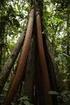 Water from the Air: Cloud Forests Alden Wicker Water from the Air: Cloud Forests In the Americas, Asia, and Africa, there s a special kind of forest. It s rare, beautiful, and incredibly important to the
The current institutional and legal context for biodiversity conservation and management is characterised by the following features:
 National BiodiversityStrategyandActionPlan (NBSAP),St. Lucia page 8 Resource tenure and access Most agricultural lands, and a majority of forest lands, are privately owned. Two significant trends can be
Abstracts. (Federalization of education, school concurrence, Casa del Pueblo, federal rural schools, rooted analysis)
 Abstracts The federalization of education. School concurrence and social alliances in rural contexts in the eastern Valley of Mexico, 1922-1947 Juan B. Alfonseca Giner de los Ríos, Instituto Superior de
Climate Change: A Local Focus on a Global Issue Newfoundland and Labrador Curriculum Links 2010-2011
 Climate Change: A Local Focus on a Global Issue Newfoundland and Labrador Curriculum Links 2010-2011 HEALTH Kindergarten: Grade 1: Grade 2: Know that litter can spoil the environment. Grade 3: Grade 4:
SELOUS TANZANIA NIASSA MOZAMBIQUE WILDLIFE- CORRIDOR
 GTZ Tanzania 2005 C oncept and text: R. D. Baldus Text: R. Hahn Design: S. Blau Map: M. Shand Photos: R. D. Baldus, C. Begg, D. Christensen, R. East, R. Hahn, H.-J. Heile, IZW, M. Lloyd-Sim, LUWIRE, G.
CONFERENCE PAPER The Problem of Financing Protected Areas in the Andes- Amazon Region
 : A Strategic Dialogue January 31 February 1, 2008 CONFERENCE PAPER The Problem of Financing Protected Areas in the Andes- Amazon Region Jared The Problem of Financing Protected Areas in the Andes-Amazon
Tumbes-Choco-Magdalena Biodiversity Hotspot Chocó-Manabi Conservation Corridor. Program for Consolidation
 Tumbes-Choco-Magdalena Biodiversity Hotspot Chocó-Manabi Conservation Corridor Program for Consolidation May 2009 The Tumbes-Chocó-Magdalena biodiversity hotspot ranks among the highest globally for its
Greening REDD+ Challenges and opportunities for forest biodiversity conservation. Workshop summary
 Greening REDD+ Challenges and opportunities for forest biodiversity conservation Workshop summary D. Benick 1 *, S. Entenmann 2 *, T. Pistorius 1, C.B. Schmitt 2 1 Institute of Forest and Environmental
TARAPOTO PROCESS ON THE AMAZON FOREST S SUSTAINABILITY CRITERIA AND INDICATORS
 TARAPOTO PROCESS ON THE AMAZON FOREST S SUSTAINABILITY CRITERIA AND INDICATORS INTERNATIONAL EXPERT MEETING ON MONITORING, ASSESSMENT AND REPORTING ON THE PROGRESS TOWARD SUSTAINABLE FOREST MANAGEMENT
Corredores oso - CORRIDORS FOR CANTABRIAN BROWN BEAR CONSERVATION LIFE07 NAT/E/000735
 Corredores oso - CORRIDORS FOR CANTABRIAN BROWN BEAR CONSERVATION LIFE07 NAT/E/000735 Project description Environmental issues Beneficiaries Administrative data Read more Contact details: Project Manager:
Sara Avila-Forcada. 201 Loetscher Pl. 206 Princeton NJ, 08540 [email protected] [email protected] (609) 945 0708
 Sara Avila-Forcada 201 Loetscher Pl. 206 Princeton NJ, 08540 [email protected] [email protected] (609) 945 0708 FIELDS OF INTEREST Environmental Economics, Project Evaluation, Mechanism Design, Institutional
Prof. Margarita Villagrán de León Faculty of MEDICINE. Universidad de San Carlos de Guatemala
 Prof. Margarita Villagrán de León Faculty of MEDICINE. Universidad de San Carlos de Guatemala SUMMARY Vulnerability & Risk Natural Hazards in C-A Change of paradigm in C-A. Geomorphology, Tectonic Plates,
ECOSISTEMAS. Luis A. Rivera M.A. Biological Education, M.A. Forestry Tropical Vegetation Specialist
 ECOSISTEMAS Luis A. Rivera M.A. Biological Education, M.A. Forestry Tropical Vegetation Specialist Ecosistemas en el Bosque Nacional El Yunque 1. Mature Tabanuco montane rain forest Ecosistemas Preliminarmente
International Integration Workshop on Sea-Level Rise, Merida, Yucatan, Oct. 21-23, 2013 Program
 Monday, October 21. City Express Merida, City 1 Meeting Room. 8:00-8:30 Registration and Breakfast (Provided in City 2 Meeting Room) 8:30-9:00 Inauguration Ceremony Romeo de Coss, Director, CINVESTAV Merida
CURRICULUM VITAE DAVID A. NOVELO PERSONAL INFORMATION EDUCATIONAL HISTORY SUMMARY OF EXPERIENCE AND SKILLS:
 PERSONAL INFORMATION Date of Birth: June 11, 1955. Place of Birth: Campeche, Mexico. Tel./Fax.: (Mexico): (525) 632 2650 E-mail: [email protected] EDUCATIONAL HISTORY CURRICULUM VITAE DAVID A. NOVELO
CLIMATE CHANGE VULNERABILITY ASSESSMENT OF CAPE VERDE
 CLIMATE CHANGE VULNERABILITY ASSESSMENT OF CAPE VERDE SUMMARY FOR POLICY MAKERS panoramio.com 1 Ministry of Environment, Housing and Territory Planning B.P. 115 Praia Cape Verde http://www.governo.cv United
TURKMENISTAN. Akmurat t muradov
 TURKMENISTAN Akmurat t muradov General observations The independent and neutral State of Turkmenistan is situated in the western part of Central Asia, bordered by Kazakhstan, Uzbekistan, the Islamic Republic
Goldman Sachs Environmental Policy Framework
 Goldman Sachs Environmental Policy Framework Goldman Sachs believes that a healthy environment is necessary for the well-being of society, our people and our business, and is the foundation for a sustainable
THE MANGROVE PROTECTION Vs. TURISM DEVELOPMENT
 THE MANGROVE PROTECTION Vs. TURISM DEVELOPMENT A mangrove is a tree and bush species group that possesses adaptation abilities, and that colonizes flooded lands that are impacted by saltwater intrusions.
SLOW ONSET EVENTS. climate change impacts on BIODIVERSITY
 Regional Gateway for Technology Transfer and Climate Change Action in Latin America and the Caribbean (ROLAC UNEP) Characterizing and addressing SLOW ONSET EVENTS climate change impacts on BIODIVERSITY
Regional Report. Sustainable Mountain Development in Meso America. From Rio 1992 to Rio 2012 and beyond
 Regional Report Sustainable Mountain Development in Meso America From Rio 1992 to Rio 2012 and beyond 2012 From Rio 1992 to 2012 and beyond: 20 years of Sustainable Mountain Development What have we learnt
Ecosystem Services in the Greater Houston Region. A case study analysis and recommendations for policy initiatives
 Ecosystem Services in the Greater Houston Region A case study analysis and recommendations for policy initiatives Ecosystem Services Ecosystems provide services through their natural processes that we
 CURRICULUM VITAE PERSONAL INFORMATION Name: Federico Peralta Bedoya Telephone: (506) 2289.01.01 Fax: (506) 2228.30.48 Address: Plaza Tempo, Lobby B, 4 Floor Street/City/Country: San Rafael de Escazú, San