
Protection and treatment of pressure ulcers. A Coloplast Wound Care quick guide
|
|
|
- Molly Fitzgerald
- 9 years ago
- Views:
Transcription
1 Protection and treatment of pressure ulcers A Coloplast Wound Care quick guide
2 Table of content Foreword... 3 Introduction to pressure ulcers... 4 Good clinical practice... 5 Pressure ulcer guide... 6 Benefits of hydrocolloid dressings... 7 Comfeel Plus for pressure ulcers Pressure ulcer treatment with - case report Practical advice References This guide has been developed in collaboration with Mark Collier. Coloplast March
3 Foreword Pressure ulcer prevention and appropriate management remains a very important issue for all practitioners, regardless of the healthcare setting in which they work. This is due to: Recent international and political focus, primarily stimulated by the associated costs and resource utilisation The enormous effects that the development of a pressure ulcer can have on an individual patient s health-related quality of life (HRQoL), their family/caregiver and the wider community Hydrocolloid dressings can be considered for both prevention and management of patients with at-risk skin or with an already developed pressure ulcer. Prevention: Hydrocolloid dressings can be used for prevention of skin (pressure) damage when placed over vulnerable anatomical areas to help reduce the effects of friction forces on the skin and to help keep the covered tissues hydrated and protected from potential contaminants. Thin versions are best suited for the achievement of this care objective. Management: For skin already compromised (a pressure ulcer has developed) hydrocolloid dressings may be considered for managing all categories of damage after careful consideration of the depth of the pressure ulcer. This quick guide will introduce you to best practice principles for patients at risk of pressure ulcer development as well as benefits of using hydrocolloid dressings to promote a moist wound healing environment when pressure damage has occurred. Mark Collier Lead Nurse Consultant Tissue Viability United Lincolnshire Hospital NHS Trust (ULHT) Lincolnshire, United Kingdom 3
4 Introduction to pressure ulcers Pressure ulcer prevention Risk assessment and documentation are an important part of pressure ulcer management and help to identify and protect patients with at-risk skin from developing a pressure ulcer. Most important risk factors for pressure ulcer development Reduced mobility or immobility Malnutrition or dehydration Sensory impairment Medical interventions Vascular disease illness or multiple co-morbidities Age and care settings Patient support surfaces High risk areas Remember! The risk of developing a pressure ulcer is highest on skin over bony prominences. However, this risk is relevant for any part of the skin under prolonged pressure, as an ulcer can start to develop in less than 1 hour. Moisture Associated Skin Damage 1 (MASD) Patient review and skin assessments are important, as MASD can be mistaken for an early stage pressure ulcer. MASD are skin injuries occurring due to prolonged exposure to wound exudate, faecal and/or urinary incontinence and perspiration More than 50% of healthcare professionals use hydrocolloid dressings to prevent wounds and to protect skin at risk* * Market research 2013 data on file. 4
5 Good clinical practice Good clinical practice involves both pro-active pressure prevention as well as treatment and management of the ulcer. A holistic approach may include the below elements Prevention Strategies Risk Factors Holistic Assessment Risk Assessment Pressure Ulcer Treatment and Prevention Pressure Re-distributing Devices Skin Care Pressure Ulcer Grading Wound Management SSKIN guide - 5 simple principles to prevent and treat pressure ulcers 2 S Surface: Make sure your patients have the right support S Skin inspection: Early inspection means early detection K Keep your patients moving: Consider frequent repositioning and the use of pressure re-distributing devices I Incontinence: Your patients need to be clean and dry N Nutrition/hydration: Help patients have the right diet and plenty of fluids NHS Midlands and East 2012 Additional management principles Treat the underlying pathology, if possible Relieve and minimise the effect of shear to avoid further damage Do NOT massage the area of the ulcer or use non-prescribed creams prophylactically as this can cause further skin damage 5
6 Pressure ulcer guide NPUAP EPUAP International Classification System 3 The classification of pressure ulcers into stages 1-4 provides support to practitioners to identify and assess pressure ulcers. Furthermore, the guideline provides recommendation for the use of hydrocolloid dressings. International NPUAP EPUAP Pressure Ulcer Classification System 3 Stage description Recommendation for use of hydrocolloid dressings Product based on treatment needs Stage I Non-blanchable redness of intact skin Intact skin with non-blanchable erythema of a localized area usually over a bony prominence. Discolouration of the skin, warmth, oedema, hardness or pain may also be present. Darkly pigmented skin may not have visible blanching. Consider using hydrocolloid dressings to protect body areas at risk of friction injury or risk of injury from tape. 3 Transparent Stage II Partial thickness skin loss Partial thickness loss of dermis presenting as a shallow open ulcer with a red-pink wound bed, without slough. May also present as an intact or open/ruptured serum-filled blister. Use hydrocolloid dressings for clean Stage II pressure ulcers in body areas where they will not roll or melt. 3 Transparent or Stage III Full thickness skin loss Full thickness tissue loss. Subcutaneous fat may be visible but bone, tendon or muscle are not exposed. Some slough may be present. May include undermining and tunneling. Shallow wound Consider hydrocolloid dressings on non-infected, shallow Stage III pressure ulcers. 3 Deep wound Consider filler dressing beneath hydrocolloid dressings in deep ulcers to fill in dead space. 3,4 + Biatain Alginate Stage IV Full thickness tissue loss Full thickness tissue loss with exposed bone, tendon or muscle. Slough or eschar may be present. Often include undermining and tunneling. In areas with no subcutaneous tissue, e.g. on the bridge of the nose and the ear, Stage IV can be shallow. 3 Use under the discretion of a healthcare professional + Biatain Alginate 6
7 Benefits of hydrocolloid dressings General benefits Protect skin at risk 3 Provides a moist wound healing environment Visual monitoring of skin and wound Protect against contaminants and bodily fluids Minimise friction and further damage to skin and wound Good dressing conformability to skin and wound Cost-effective Enhanced patient comfort Long wear time and fewer dressing changes Patient hygiene can be maintained water and shower-proof dressing Dressings are discreet, soft and comfortable to wear Gelling protects granulation tissue and nerve endings, providing the patient with a reduced sensation of pain Protect and reduce discomfort from friction against clothes and bedding Typical clinical objectives To optimise the local healing environment To protect the surrounding skin To minimise risk of complications e.g. contamination, infection and further tissue breakdown To promote angiogenesis 7
8 Ensured protection. Faster healing. Protection and treatment of pressure ulcers Comfeel Plus Transparent and hydrocolloid dressings are suitable for the protection of skin at risk 3 and for moist wound healing of pressure ulcers. Key benefits Semi-permeable protective topfilm, impermeable to water, virus and bacteria 5 Smooth topfilm for low friction and reduced shear Enhanced exudate handling capacity for long wear time 6 Mapping grid for wound size monitoring and dressing change indication Thin edges for close adhesion to the skin to reduce risk of rolling Soft and conformable for easy application Transparent Protection and visual monitoring of skin at risk and early stage pressure ulcers Protection and treatment of low-tomoderately exuding pressure ulcers 8
9 Protection and treatment of pressure ulcers The range of sizes and shapes delivers flexibility for the protection and treatment of pressure ulcers. Indications for use: For non-infected, low-to-moderately exuding pressure ulcers As primary dressing to protect and heal pressure ulcers As secondary dressing to cover hydrogel or an alginate dressing Comfeel Plus Transparent Size in cm Item no. per box NHS PIP 5x ELM x ELM x ELM x ELM Comfeel Plus Size in cm Item no. per box NHS PIP 4x ELM x ELM x ELM x ELM Comfeel Plus Transparent Size in Item cm no. per box NHS PIP 5x ELM x ELM x ELM x ELM x ELM Comfeel Plus Contour Size in cm Item no. per box NHS PIP 6x ELM x ELM Biatain Alginate Size in cm Item no. per box NHS PIP 5x ELS x ELS x ELS x ELS The range does not contain pectin, known allergens such as latex or colophony, or animal derivatives such as gelatin. Comfeel Plus Sacral Size in cm Comfeel Plus Pressure Relief Size in cm Item no. Item no. per box NHS per box NHS PIP 18x ELM PIP Ø ELP Ø ELP Ø ELM
10 Pressure ulcer treatment with Case report: 75 year old man admitted with a pressure ulcer grade 2, located over bony prominence in the sacral area. Ulcer size was 10 mm x 9 mm, shallow and low exuding. The dressing was chosen, based on wound and exudate characteristics, to provide an optimal moist wound healing environment and for wound protection. Dressing application 1. Wound was cleaned and dried gently before dressing application 2. Dressing size was selected to cover the wound with min. 2 cm wound margin. Application was with gloves, using aseptic non-touch technique 3. Dressing was placed over the wound and gently molded down on the peri-wound area to ensure good adhesion and to avoid tunnels. dressing should be changed after 5-7 days 10
11 Practical advice Dressing application Gently warming the product before use, e.g. rubbing between the hands, will increase its malleability and adhesiveness Select and apply dressing size with min. 2 cm margin around the wound Gently mould/contour on peri-wound area to ensure good adhesion and to avoid funnels Do not stretch the dressing as this will impact dressing adherence Rolling of edges can be avoided when using a thin dressing or a dressing with bevelled edges Dressing change indication Leave the dressing on the wound for up to 7 days or until the gelling covers the wound and is 1 cm from the edge, indicating time for dressing change The formed gel may be misinterpreted as pus and the smell as infection. Both is perfectly normal Use gloves and non-touch handles for aseptic dressing application Removal For gentle removal, continuously stretch the dressing edges parallel to skin and slowly release adhesion Tip: Use adhesive remover spray under the lifted dressing edges for even more gentle removal. Stretch the dressing for gentle and atraumatic removal 11
12 References 1. Dowsett C, Allen L (2013) Moisture-associated skin damage made easy, Wounds UK 9(4) National Pressure Ulcer Advisory Panel and European Pressure Ulcer Advisory Panel. Prevention and treatment of pressure ulcers: clinical practice guideline In deeper ulcers (stage III-IV) the use of alginate with hydrocolloid resulted in significantly greater reduction in size of the ulcers compared to hydrocolloid alone. Citation from Medical Advisory Secretariat. Management of chronic pressure ulcers: An evidence based analysis. Ontario Health Technology Assessment Series 2009;9( 3) 5. Bacteria and virus impermeability: Coloplast data on file 6. Thomas S et al. An in-vitro comparison of the physical characteristics of hydrocolloids, hydrogels, foams, and alginate/cmc fibrous dressings. SMTL Coloplast A/S, Holtedam 1, 3050 Humlebæk, Denmark CM672N The Coloplast logo is a registered trademark of Coloplast A/S All rights reserved Coloplast A/S
Position Statement: Pressure Ulcer Staging
 Position Statement: Pressure Ulcer Staging Statement of Position The Wound, Ostomy and Continence Nurses (WOCN) Society supports the use of the National Pressure Ulcer Advisory Panel Staging System (NPUAP).
Pressure Ulcers Assessing and Staging. Anne Pirzadeh RN CWOCN University of Colorado Hospital June 2010
 Pressure Ulcers Assessing and Staging Anne Pirzadeh RN CWOCN University of Colorado Hospital June 2010 Never Events: Pressure Ulcers Pressure Ulcer Codes: MD documentation of pressure ulcers determines
How To Stage A Pressure Ulcer
 WOCN Society Position Statement: Pressure Ulcer Staging Originated By: Wound Committee Date Completed: 1996 Reviewed/Revised: July 2006 Revised: August 2007 Reviewed/Revised: April 2011 Definition of Pressure
7/11/2011. Pressure Ulcers. Moisture-NOT Pressure. Wounds NOT Caused by Pressure
 Assessment and Documentation of Pressure Ulcers Jeri Ann Lundgren, RN, BSN, PHN, CWS, CWCN Pathway Health Services July 19, 2011 Training Objectives Describe etiologies of pressure ulcers Discuss how to
Pressure Ulcer Passport
 Pressure Ulcer Passport Information for patients This is a record of the treatment you are receiving for your pressure ulcer injury. Please bring it with you to all your healthcare appointments. This will
WOUND MANAGEMENT PROTOCOLS WOUND CLEANSING: REMOVING WOUND DEBRIS FROM WOUND BASE
 WOUND MANAGEMENT PROTOCOLS PURPOSE: Provide nursing personnel with simple guidance regarding appropriate dressing selection in the absence of wound specialist expertise Identify appropriate interventions
PRESSURE ULCER GUIDELINES FOR TOPICAL TREATMENT
 PRESSURE ULCER GUIDELINES FOR TOPICAL TREATMENT The following are suggested guidelines for treatment of pressure ulcers using products from Swiss-American Products, Inc. and are intended to supplement
Wound and Skin Assessment. Mary Carvalho RN, BSN, MBA Clinical Coordinator Johnson Creek Wound and Edema Center
 Wound and Skin Assessment Mary Carvalho RN, BSN, MBA Clinical Coordinator Johnson Creek Wound and Edema Center Skin The largest Organ Weighs between 6 and 8 pounds Covers over 20 square feet Thickness
Pressure Injury Prevention and Management Policy
 Pressure Injury Prevention and Management Policy Owner (initiating the document): Dr Amanda Ling Contact name and number: Rachel Dennis (Ph: 9222 2197) Version: 1.5 Approved by: Professor Bryant Stokes,
Reducing Hospital. of Pressure Damage. Spread the Learning and celebrate the successes
 Reducing Hospital Acquired Pressure Ulcers Prevention & Management of Pressure Damage Spread the Learning and celebrate the successes Prevalence & Cost Prevalence ranges from 10% to 18% in the UK (Clark
APPLICATION OF DRY DRESSING
 G-100 APPLICATION OF DRY DRESSING PURPOSE To aid in the management of a wound with minimal drainage. To protect the wound from injury, prevent introduction of bacteria, reduce discomfort, and assist with
OASIS-C Integument Assessment: Not for Wimps! Part I: Pressure Ulcers
 OASIS-C Integument Assessment: Not for Wimps! Part I: Pressure Ulcers Presented by: Rhonda Will, RN, BS, COS-C, HCS-D Assistant Director, OASIS Competency Institute 243 King Street, Suite 246 Northampton,
How To Prevent Pressure Ulcer
 Pressure ulcers prevention and treatment A Coloplast quick guide Table of Contents Pressure ulcers prevention and treatment... 3 What is a pressure ulcer?... 4 How do pressure ulcers occur?... 5 Who develops
Wound Classification Name That Wound Sheridan, WY June 8 th 2013
 Initial Wound Care Consult Sheridan, WY June 8 th, 2013 History Physical Examination Detailed examination of the wound Photographs Cultures Procedures TCOM ABI Debridement Management Decisions A Detailed
Pressure injuries prevention and treatment
 After 30 years in wound care, we at Coloplast believe that absorption is the key to better healing. Our Biatain portfolio brings superior absorption to daily wound care needs, making Biatain the simple
Wound Care: The Basics
 Wound Care: The Basics Suzann Williams-Rosenthal, RN, MSN, WOC, GNP Norma Branham, RN, MSN, WOC, GNP University of Virginia May, 2010 What Type of Wound is it? How long has it been there? Acute-generally
A Pocket Guide. Application and Cutting Guide
 A Pocket Guide Application and Cutting Guide Developed by Pia Carlsen, RN, Denmark Jacqui Fletcher, Principal Lecturer, MSc BSc (Hons) PG Dip (ED) RN ILT, UK Maria Mousley, AHP, Consultant Podiatrist,
WOUND OSTOMY CONTINENCE NURSES SOCIETY GUIDANCE ON OASIS-C INTEGUMENTARY ITEMS
 Wound Ostomy Continence Nurses Society Guidance on OASIS-C Integumentary Items WOCN OASIS Taskforce Members: Ben Peirce (Chairperson), RN, BA, CWOCN, COS-C Dianne Mackey, BSN, RN, PHN, CWOCN Laurie McNichol,
Pressure Ulcers in Neonatal Patients. Rene Amaya, MD Pediatric Specialists of Houston Infectious Disease/Wound Care
 Pressure Ulcers in Neonatal Patients Rene Amaya, MD Pediatric Specialists of Houston Infectious Disease/Wound Care Objectives Review skin anatomy and understand why neonatal skin is at increased risk for
SECTION M: SKIN CONDITIONS. M0100: Determination of Pressure Ulcer Risk. Item Rationale Health-related Quality of Life.
 SECTION M: SKIN CONDITIONS Intent: The items in this section document the risk, presence, appearance, and change of pressure ulcers. This section also notes other skin ulcers, wounds, or lesions, and documents
Wound, Ostomy and Continence Nurses Society s Guidance on OASIS-C1 Integumentary Items: Best Practice for Clinicians
 Wound, Ostomy and Continence Nurses Society s Guidance on OASIS-C1 Integumentary Items: Best Practice for Clinicians Acknowledgments Wound, Ostomy and Continence Nurses Society s Guidance on OASIS-C1 Integumentary
Working together to prevent pressure ulcers (prevention and pressure-relieving devices)
 Working together to prevent pressure ulcers (prevention and pressure-relieving devices) Understanding NICE guidance information for people at risk of pressure ulcers, their carers, and the public Draft
Skin & Wound Care Prevention & Treatment. By Candy Houk, RN Skin & Wound Program Manager
 Skin & Wound Care Prevention & Treatment By Candy Houk, RN Skin & Wound Program Manager OBJECTIVES Classify Stage 1 and 2 pressure ulcers Recognize suspected Stage 3, 4, DTI, and unstageable pressure ulcers
Silicone pressure-reducing pads for the prevention and treatment of pressure ulcers
 S46 Product focus Silicone pressure-reducing pads for the prevention and treatment of pressure ulcers Abstract Pressure ulcers, a key quality of care indicator, cause emotional distress to the patient,
Pressure Ulcers Risk Management and Treatment
 Pressure Ulcers Risk Management and Treatment Objectives State reasons why individuals initiate lawsuits. Define strategies to reduce the risk of litigation. Determine appropriate treatment for the patient.
Diabetic Foot Ulcers and Pressure Ulcers. Laurie Duckett D.O. Plastic and Reconstructive Surgeon Oklahoma State University Center for Health Sciences
 Diabetic Foot Ulcers and Pressure Ulcers Laurie Duckett D.O. Plastic and Reconstructive Surgeon Oklahoma State University Center for Health Sciences Lecture Objectives Identify risk factors Initiate appropriate
Pressure Ulcers: Facility Assessment Checklists
 Pressure Ulcers: Facility Assessment Checklists This is a series of self-assessment checklists for nursing home staff to use to assess processes related to managing pressure ulcers in the facility, in
Anyone who has difficulty moving can get a pressure sore. But you are more likely to get one if you:
 Patient information from the BMJ Group Pressure sores Anyone can get a pressure sore if they sit or lie still for too long without moving. People who are old or very ill are most likely to get them. Careful
Quality standard Published: 11 June 2015 nice.org.uk/guidance/qs89
 Pressure ulcers Quality standard Published: 11 June 2015 nice.org.uk/guidance/qs89 NICE 2015. All rights reserved. Contents Introduction... 6 Why this quality standard is needed... 6 How this quality standard
Cutimed PROTECT Medical skin protection. Protect Preserve Prevent
 PROTECT Medical skin protection Protect Preserve Prevent PROTECT Ordering information PROTECT is available in foam applicators and spray bottle PROTECT REF No. Size Unit of Measure HCPCS Spray 7265300
NURSING DOCUMENTATION
 NURSING DOCUMENTATION OBJECTIVES 1. The learner will be able to state 2 components of documentation that meet the 2. The learner will be able to identify 4 characteristics of a complete skin assessment
NPUAP PRESSURE ULCER ROOT CAUSE ANALYSIS (RCA) TEMPLATE
 Purpose: The development of a facility acquired pressure ulcer brings with it both a financial impact to an institution and a performance or quality of care impact that may be reportable to state or government
What dressing for what wound. Prudence Lennox National Clinical Leader Healthcare Rehabilitation Ltd
 What dressing for what wound Prudence Lennox National Clinical Leader Healthcare Rehabilitation Ltd Wound assessment Accurate wound assessment is a prerequisite to planning appropriate care & should adopt
Use of a Pressure Ulcer Protocol: Benefits and Recommendations
 Use of a Pressure Ulcer Protocol: Benefits and Recommendations Elizabeth L. Enriquez RN,BSN,MPH,CWOCN Wound Care Specialist/Infection Control Morningiside House 1000 Pellham Parkway, Bronx, NY 10461 Wound
FUNCTIONS OF THE SKIN
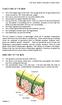 FUNCTIONS OF THE SKIN Skin is the largest organ of the body. The average adult has 18 square feet of skin which account for 16% of the total body weight. Skin acts as a physical barrier for you to the
Wound Healing. Healing is a matter of time, but it is sometimes also a matter of opportunity. Hippocrates
 C HAPTER 9 Wound Healing Healing is a matter of time, but it is sometimes also a matter of opportunity. Hippocrates As the above quote suggests, conduct regular and systematic wound assessments, and seize
Understand nurse aide skills needed to promote skin integrity.
 Unit B Resident Care Skills Essential Standard NA5.00 Understand nurse aide s role in providing residents hygiene, grooming, and skin care. Indicator Understand nurse aide skills needed to promote skin
Skin Care Educational Pocket Guide
 Skin Care Educational Pocket Guide Moisture-Associated Skin Damage Moisture-Associated Skin Damage is the injury to the skin by repeated or sustained exposure to moisture. Intertriginous dermatitis Incontinence-associated
Objectives- Participants will:
 Pressure Ulcer Staging Elizabeth A. Ayello PhD, RN, ACNS-BC, CWON, ETN, MAPWCA, FAAN Clinical Editor, Advances in Skin and Wound Care Faculty, Excelsior College School of Nursing Co-Director and Course
CHAPTER V CONCLUSION AND RECOMMENDATIONS. findings are presented, implications for nursing practice and education are discussed,
 CHAPTER V CONCLUSION AND RECOMMENDATIONS In this chapter, a summary of the findings and conclusion drawn from the findings are presented, implications for nursing practice and education are discussed,
Managing cavity wounds Journal of Community Nursing March 1998 Author: Rosemary Pudner
 Managing cavity wounds Journal of Community Nursing March 1998 Author: Rosemary Pudner It has been seen in recent years, that an increasing number of patients are being discharged early into the community,
7/30/2012. Increased incidence of chronic diseases due
 Dianne Rudolph, DNP, GNP bc, CWOCN Discuss management of wound care in older adults with focus on lower extremity ulcers Identify key aspects of prevention Explain basic principles of wound management
HCPCS AMERIGEL HYDROGEL DRESSINGS CODING GUIDANCE FOR:
 HCPCS CODING GUIDANCE FOR: AMERIGEL HYDROGEL DRESSINGS FORM 1500 MUST HAVE THE FOLLOWING: APPROPRIATE HCPCS CODE APPROPRIATE A MODIFIER ACCURATE POS = 12 The Centers for Medicare and Medicaid Services
Skin Care In Bladder And Bowel Dysfunction Wendy Ness Colorectal Nurse Specialist
 Skin Care In Bladder And Bowel Dysfunction Wendy Ness Colorectal Nurse Specialist Function Of The Skin Healthy skin serves several purposes it protects the internal organs physically, chemically and biologically
Summary of Recommendations
 Summary of Recommendations *LEVEL OF EVIDENCE Practice Recommendations Assessment 1.1 Conduct a history and focused physical assessment. IV 1.2 Conduct a psychosocial assessment to determine the client
Preventing pressure ulcers
 Golden Jubilee National Hospital NHS National Waiting Times Centre Preventing pressure ulcers Patient information guide for adults at risk of pressure ulcers Agamemnon Street Clydebank, G81 4DY (: 0141
PROCEDURE FOR PRESSURE ULCER PREVENTION AND MANAGEMENT
 PROCEDURE FOR PRESSURE ULCER PREVENTION AND MANAGEMENT First Issued Issue Version Purpose of Issue/Description of Change Planned Review Date One To outline evidence based practice for the Prevention and
Pressure Ulcers. Occupational Therapy. This leaflet is for both yourself and Carers
 Pressure Ulcers Occupational Therapy This leaflet is for both yourself and Carers Contents What is a pressure ulcer? 3 Who is at risk of developing a pressure ulcer? 4 How can I avoid developing a pressure
REGION D MEDICARE GROUP 2 PRESSURE REDUCING SUPPORT SUFACE. Documentation Checklist Local Coverage Determination (LCD)
 REGION D MEDICARE GROUP 2 PRESSURE REDUCING SUPPORT SUFACE Documentation Checklist Local Coverage Determination (LCD) Disclaimer: The ROHO Group gathered these documents from various sources as an educational
An in-vitro comparison of the physical characteristics of hydrocolloids, hydrogels, foams, and alginate/cmc fibrous dressings.
 An in-vitro comparison of the physical characteristics of hydrocolloids, hydrogels, foams, and alginate/cmc fibrous dressings. Summary This document describes the results of a testing programme that was
Inservice: Wound Care and Dressings. Friday, June 26, 2009. A. Closed Wounds tissue is injured but skin is not BROKEN
 f Inservice: Wound Care and Dressings Friday, June 26, 2009 WOUNDS: Are injuries of the skin and underlying subcutaneous tissues and muscles (Nursing Manual by Lippincott) Are disruptions in the integrity
Beverlin Allen, PhD, RN, MSN, ARNP
 Pressure Ulcers & Nutritional Deficits in Elderly Long-Term Care Patients: Effects of a Comprehensive Nutritional Protocol on Pressure Ulcer Healing, Length of Hospital Stay & Health Care Charges Beverlin
WHAT IS INCONTINENCE?
 CNA Workbook WHAT IS INCONTINENCE? Incontinence is the inability to control the flow of urine or feces from your body. Approximately 26 million Americans are incontinent. Many people don t report it because
PERFORMANCE MEASURE TECHNICAL SPECIFICATIONS
 PERFORMANCE MEASURE TECHNICAL SPECIFICATIONS 1. Rate of Emergency Department Visits The number of visits experienced by PACE participants to acute care hospital Emergency Departments, urgent care clinics,
RENFREW VICTORIA HOSPITAL SKIN AND WOUND CARE PROGRAM TRAINING RISK ASSESSMENT OF SKIN BREAKDOWN AND TREATMENT OF WOUNDS AND PRESSURE ULCERS
 RENFREW VICTORIA HOSPITAL SKIN AND WOUND CARE PROGRAM TRAINING RISK ASSESSMENT OF SKIN BREAKDOWN AND TREATMENT OF WOUNDS AND PRESSURE ULCERS SELF-LEARNING MODULE For Registered Nurses and Registered Practical
Treating Pressure Ulcers: When, How and What to expect when using MEDIHONEY and the primary topical intervention
 Treating Pressure Ulcers: When, How and What to expect when using MEDIHONEY and the primary topical intervention Presenter: Peg Manochi, RN, BSN, WCC, CWCN Clinical Field Specialist Derma Sciences, Clinical
3M Steri-Strip S Surgical Skin Closure. Commonly Asked Questions
 3M Steri-Strip S Surgical Skin Closure Commonly Asked Questions What are the indications for use of 3M Steri-Strip S Surgical Skin Closure? Steri-Strip S Surgical Skin Closures are indicated as a primary
Pressure Ulcer Grading and POVA Referral Procedure
 Pressure Ulcer Grading and POVA Referral Procedure Version Number: 1 Page 1/13 -Contents- Page 1. Introduction 3 2. Aim 3 3. Procedure 3 4. Responsibilities 4 5. Implementation and Training 4 6. Equality
Clinical Guideline for: Aseptic Technique
 Clinical Guideline for: Technique Summary This guideline provides the principles of, Non Touch, and Clean Techniques to be implemented in the hospital environment. Key Points The essential elements of
The Role of Modern Wound Dressings in Stage I Pressure Ulcers and Patients at Risk of Pressure Ulcer Formation
 The Role of Modern Wound Dressings in Stage I Pressure Ulcers and Patients at Risk of Pressure Ulcer Formation Helen Shaw, BSc (Hons), ConvaTec Research and Development Rachel Mathison, Msc, BSc (Hons),
Skin/Wound Referral Resource
 Skin/Wound Referral Resource This resource was designed by the University of Michigan Health System Multidisciplinary Pressure Ulcer Prevention Committee for nursing and physician use. This document s
5 Pressure Ulcer Classification
 5 Pressure Ulcer Classification Carol Dealey and Christina Lindholm Introduction Pressure ulcer classification is a method of determining the severity of a pressure ulcer. A classification system describes
Illinois Department of Public Health STATEMENT OF DEFICIENCIES AND PLAN OF CORRECTION. Statement of LICENSURE Violations
 (X1) PROVER/SUPPLIER/CLIA ENTIFICATION NUMBER: (X3) SURVEY D NAME OF PROVER OR SUPPLIER (X4) SUMMARY REGULATORY OR LSC ENTIFYING INFORMATION) PROVER'S PLAN OF CORRECTION Final Observations Statement of
How To Recover From A Surgical Wound From A Cast
 Care of Your Wounds After Amputation Surgery by Paddy Rossbach, RN Depending on the reason for your amputation and the state of your limb at the time of surgery, definitive closure of the wound may take
Individualized Care Plans Fully Developed
 Appendix Individualized Care Plans Fully Developed A Refer to Chapter 1 The Nursing Process: A Synopsis, p. 32: Two Individualized Care Plans Fully Developed; Care Plan 1 for Mr. John Walters, Care Plan
SKIN CARE & WOUND MANAGEMENT POLICY AND PROCEDURE
 Department: Description: Adventist Aged Care Document Name: Skin Care and Wound Management 14/04/2014 SKIN CARE & WOUND MANAGEMENT POLICY AND PROCEDURE TABLE OF CONTENTS 1.0 PURPOSE... 2 2.0 SCOPE... 2
The Role of Modern Wound Dressings in Stage I Pressure Ulcers and Patients at Risk of Pressure Ulcer Formation
 The Role of Modern Wound Dressings in Stage I Pressure Ulcers and Patients at Risk of Pressure Ulcer Formation Helen Shaw, BSc (Hons), ConvaTec Research and Development Rachel Mathison, Msc, BSc (Hons),
Scout Vessel Guard. A cover for vessels during anterior lumbar spine surgery.
 Scout Vessel Guard. A cover for vessels during anterior lumbar spine surgery. Technique Guide Instruments and implants approved by the AO Foundation Table of Contents Introduction Scout Vessel Guard 2
EPIDEMIOLOGY COMPLICATIONS FROM PRESSURE ULCERS
 CHAPTER 30 PRESSURE ULCERS EPIDEMIOLOGY COMPLICATIONS FROM PRESSURE ULCERS RISK FACTORS AND RISK-ASSESSMENT SCALES PREVENTION MANAGEMENT ANNOTATED REFERENCES Pressure ulcers are a serious and common problem
THE DEVELOPMENT OF A CARE BUNDLE FOR THE CRITICALLY ILL
 PRESSURE ULCER PROPHYLAXIS THE DEVELOPMENT OF A CARE BUNDLE FOR THE CRITICALLY ILL Barb Duncan RN, BScN Heather Harrington RN, BScN, CNCC(c) Louanne Rich vanderbij, RN, BScN, MSc., WOCN CWCN Barb Duncan
Pressure Ulcer Prevention and Management Guidelines
 A Whittington Hospital Nursing Management Policy Pressure Ulcer Prevention and Management Guidelines Date: July 2003 Review: July 2006 Author: Deborah Rogers - Assistant Director of Nursing (Surgery) Pauline
Pressure Sores (Decubitus Ulcers)
 Pressure Sores (Decubitus Ulcers) Judith Stevens, M.Ed. With thanks to Dr. Toni Benton, Jennifer Thorne-Lehman, Araceli Domingo for contributing resource information. Thanks to Ann Chase Stevens for sharing
Identifying Hard to Detect Pressure Ulcers in Individuals
 Identifying Hard to Detect Pressure Ulcers in Individuals with Dark Skin Tones Sheila Carter, MSN, RN FNP BC, CWON, CFCN Pam Damron, MSN, RN, CWON Patricia Moore, RN, ASN, CWCN Jennifer Vandiver, RN, BSN,
Preventing Pressure Ulcers and Assisting With Wound Care
 Preventing Pressure Ulcers and Assisting With Wound Care C H A P T E R 19 A nursing assistant makes an occupied bed. Providing clean, wrinkle-free linens is just one way that nursing assistants help to
Wound Management A Nurse s Guide
 VEA Bringing Learning to Life Program Support Notes Wound Management A Nurse s Guide Health Care 20 mins Teacher Notes by Tracey MacFadyen, Registered nurse is RN. Clinical Nurse Educator Produced by VEA
Common Pathology Diagnoses: ICD-9 to ICD-10 Mapping
 PERFORMANCE THAT MATTERS NUMBER OF CODES 14,000 69,000 ICD-9 DIAGNOSIS CODES ICD-10 DIAGNOSIS CODES CODE STRUCTURE ICD-9-CM CODE FORMAT ICD-10-CM CODE FORMAT X X X X X X X X X X X X CATEGORY ETIOLOGY,
Clinical Wound Assessment - A Pocket Guide
 Clinical Wound Assessment - A Pocket Guide Developed by Professor Finn Gottrup, Denmark Dr. Robert Kirsner, US Dr. Sylvie Meaume, France Dr. Christian Münter, Germany Professor Gary Sibbald, Canada The
TAKING CARE OF WOUNDS KEY FIGURE:
 Chapter 9 TAKING CARE OF WOUNDS KEY FIGURE: Gauze Wound care represents a major area of concern for the rural health provider. This chapter discusses the treatment of open wounds, with emphasis on dressing
Management of Burns. The burns patient has the same priorities as all other trauma patients.
 Management of Burns The burns patient has the same priorities as all other trauma patients. Assess: - Airway - Breathing: beware of inhalation and rapid airway compromise - Circulation: fluid replacement
How does Diabetes Effect the Feet
 How does Diabetes Effect the Feet What Skin Changes May Occur? Diabetes can cause changes in the skin of your foot. At times your foot may become very dry. The skin may peel and crack. The problem is that
Opticell Wound Dressings. Powerful Yet Gentle Moisture Management
 Wound Dressings Powerful Yet Gentle Moisture Management 1 Exclusive Forzagel TM Technology s unique gelling attributes are the result of Forzagel technology. When moistened, the absorbent fibers of the
Report a number that is zero filled and right justified. For example, 11 visits should be reported as 011.
 OASIS ITEM (M2200) Therapy Need: In the home health plan of care for the Medicare payment episode for which this assessment will define a case mix group, what is the indicated need for therapy visits (total
Introduction Suggested Citation
 Introduction This Quick Reference Guide summarizes evidence-based guidelines on pressure ulcer prevention and treatment. It was developed as a 4-year collaborative effort between the European Pressure
KINESIOLOGY TAPING GUIDE
 KINESIOLOGY TAPING GUIDE What is Kinesiology tape and how does Kinesiology tape work? How to apply Kinesiology tape Examples of application of UP Kinesiology tape for common injuries and conditions Introduction
Chapter 11. Everting skin edges
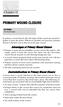 Chapter 11 PRIMARY WOUND CLOSURE KEY FIGURE: Everting skin edges In primary wound closure, the skin edges of the wound are sutured together to close the defect. Whenever possible and practical, primary
PROCEDURE FOR PRESSURE ULCER PREVENTION AND MANAGEMENT
 Multidisciplinary PROCEDURE FOR PRESSURE ULCER PREVENTION AND MANAGEMENT Issue History July 2012 Issue Version Three Purpose of Issue/Description of Change Planned Review Date To outline evidence based
COMPLIANCE WITH THIS DOCUMENT IS MANDATORY
 COVER SHEET NAME OF DOCUMENT Wound Wound Assessment and Management TYPE OF DOCUMENT Procedure DOCUMENT NUMBER SESLHDPR/297 DATE OF PUBLICATION April 2014 RISK RATING Medium LEVEL OF EVIDENCE N/A REVIEW
Almond SPAMANICURE. Step-by-Step Guide INDULGENT AND RELAXING
 Step-by-Step Guide Almond SPAMANICURE INDULGENT AND RELAXING 60 MIN A journey cradled in sweet almond and jojoba oils and vitamin E. A soothing menu entrée to comfort and indulge clients time after time.
Pressure Ulcer Prevention
 A Reference Guide for Community Health Care Teams To be used in conjunction with the; Nottingham CityCare Partnership Policy for the Prevention of Pressure Ulcers Useful links Pressure Ulcer Prevention
How can DIABETES affect my FEET? Emma Howard Community Diabetes Lead Podiatrist, Oxford Health NHS Foundation Trust
 How can DIABETES affect my FEET? By: Emma Howard Community Diabetes Lead Podiatrist, Oxford Health NHS Foundation Trust HOW CAN DIABETES AFFECT MY FEET? What is neuropathy? This leaflet explains how diabetes
Adhesives Dedicated to Better Wound Care
 Adhesives Dedicated to Better Wound Care Medical Design Joyce Laird Mon, 2014-09-08 11:50 ConvaTec strives to make life better for both short- and long-term patients. ConvaTec is a giant in the medical
Pressure Ulcers in the ICU Incidence, Risk Factors & Prevention
 Congress of the Critical Care Society of South Africa Sun City, 10-12 July 2015 Pressure Ulcers in the ICU Incidence, Risk Factors & Prevention Stijn BLOT Dept. of Internal Medicine Faculty of Medicine
Insights into Quality Improvement. Key Observations 2014-15 Quality Improvement Plans Long-Term Care Homes
 Insights into Quality Improvement Key Observations 2014-15 Quality Improvement Plans Long-Term Care Homes Introduction Ontario has now had close to four years of experience with Quality Improvement Plans
a patient s guide Physiotherapy advice and exercises from four weeks after neck dissection surgery
 Physiotherapy advice and exercises from four weeks after neck dissection surgery Patient Information Series PI 47 East and North Hertfordshire NHS Trust 2 This leaflet has been produced by professionals,