
TAKE ACTION... to prevent falls. Staying On Your Feet
|
|
|
- Frank Eaton
- 10 years ago
- Views:
Transcription
1 One in 3 Canadians aged 65 or over fall at least once a year. Many of these falls result in serious injury, and loss of mobility and independence. Most falls can be prevented. TAKE ACTION... to prevent falls. Staying On Your Feet La version française du livret est disponible de Health Links - InfoSanté au

2 Information in this booklet is based on Stay On Your Feet Western Australia and has been adapted by the Winnipeg Regional Health Authority for use in Canada with copyright permission.

3 Yes, you can reduce your risk of falling. Staying mobile and independent is an important part of healthy aging. Falls and their associated injuries are a serious health issue and are the leading cause of injury hospitalization for older people. The good news is that taking some simple and effective steps outlined in this booklet can prevent most falls. Who is this booklet for? Many people don t see falls as an important issue because they feel it is just a sign of getting older and that it will happen anyway. Those who see falls as an expected part of aging may not realize that, just like any other potential injury, there are things that can be done to reduce the likelihood of a fall. Understanding that falls can happen to anyone, whatever their age, helps everyone to take falls seriously and to find ways to prevent falls before they happen. Falls can happen without warning. The first step in preventing a fall is to learn more about the things that put you at risk of a fall. These things may be about you (such as a change in your eyesight), about your surroundings (such as a slippery floor or cracked sidewalk) or about a combination of many different factors all at the same time (wearing unsafe footwear on a slippery sidewalk). This booklet will help you identify the things you can change to lower your chance of having a fall. Staying On Your Feet 1

4 A Checklist to Help You Prevent Falls Anyone can be injured due to a fall. However, if you are 65 years or over, a fall can result in serious injuries that affect your mobility, independence and lifestyle. Here are some other facts that you should know about falling: One in three Canadians age 65 years and over fall at least once per year. Falling is not a normal part of aging. Most falls can be prevented. The following checklist can help you to determine the things that put you at risk of falling. Please read and complete the section below to help you stay on your feet and prevent falls: Do you spend less than 30 minutes per day being physically active? Do you have difficulty keeping your balance, or walking on your own or getting up from a chair? Regular physical activity can make you stronger and improve your balance and coordination. Make a plan to be active every day doing activities you like to do and are able to do safely. Staying On Your Feet Check If Yes Do you wear shoes with high heels or slippery soles, or do your shoes fit poorly? Do you wear slippers or stocking feet when you are at home? Proper footwear is a key to preventing falls. Wear shoes that fit well and provide good support. At home, wear shoes with a non-slip sole, not socks or slippers. Are you taking three or more medications a day? Are you taking sleeping pills, anti-depressants, anti-hypertensives, painkillers or other medications that make you drowsy or light headed? Have your medications reviewed by your doctor, pharmacist or nurse once per year, or whenever new medications are started. This will reduce side effects and interactions that can make you more likely to fall. This includes over-the-counter drugs and herbal supplements. 2

5 Has it been more than 12 months since your eyes were tested or your glasses checked? Do you have trouble seeing well enough to move safely at home or when you are out? Your vision may have changed without you noticing. Have your eyes checked regularly by your eye doctor, at least every second year. If you have trouble seeing, get the help you need to move around safely. Are there hazards in and around your home that could cause you to fall? Do you see hazards that could cause a fall when you are out in your community? A safe home environment can help you maintain an independent lifestyle. Assess your home for safety using the Staying On Your Feet Home Safety Checklist and take action to prevent falls. If you see hazards in your community that could cause a fall, please call Health Links - Info Santé at Do you have problems with your concentration or memory? Do you do activities that put you at risk of falling (e.g., climbing a ladder)? Do you have problems with arthritis, diabetes, your blood pressure or heart, or with bladder control? Have a physical check up once a year. If you have a change in your health, see your doctor as soon as possible. Always give your full attention to what you are doing and ask for help with activities that could put you at risk of a fall. Do you eat less than three nutritious meals every day? Do you drink less than 5 glasses of water or more than one alcohol drink per day? For good health, eat a wide variety of nutritious foods from all 4 food groups. Also, drink at least 5 glasses of water a day and limit your alcohol intake. Have you fallen in the last year? Have you had more than one fall in the past 3 months? If you have previously fallen, it increases your chance of falling again. This makes it especially important that you take action to prevent falls. Completing this checklist is a good start. Knowing your risk factors and assessing your situation is a good first step towards preventing a fall. Take steps now to reduce your risk of falling by taking the actions recommended in this booklet. Staying On Your Feet 3

6 How to use this booklet This booklet provides information and suggestions in 9 key steps listed below: Step 1: Be Active Step 2: Manage Your Medications Step 3: Take Care of Your Health Step 4: Improve Your Balance Step 5: Walk Tall Step 6: Foot Care and Safe Footwear Step 7: Regularly Check Your Eyesight Step 8: Eat Well for Life Step 9: Identify, Remove and Report Hazards The 9 steps to staying on your feet reflect the main factors that contribute to falls. You need to review all the steps to staying on your feet, but focus on the factors that relate to you, your lifestyle, independence and environment. Make the booklet work for you. At the end of each of the 9 steps, you will find a quick and simple personal review section. After reading all the steps, we suggest that you bring all of your personal review information together into a Personal Action Plan specially developed by you with you in mind. Take positive steps now to stay mobile and independent. Don t put off considering your risk of falling until you have had an injury or scare. Do it today and you can prevent falls before they happen. Falls prevention is an important part of healthy aging. Healthy aging is not just about avoiding illness and disease, it s about being able to enjoy our lives. This involves maintaining a healthy lifestyle, keeping physically and mentally active and being involved in a social network. 4

7 Table of Contents Step 1: Be Active... 7 Physical activity and falling... 7 How can you be active and reduce your risk of falling?... 8 Your personal review on physical activity Step 2: Manage Your Medications Medications and falling How can you manage your medications and reduce your risk of falling? Your personal review on managing your medications Step 3: Take Care of Your Health Health status and falling How can you manage your health and reduce your risk of falling? Your personal review on taking care of your health Step 4: Improve Your Balance Balance and falling How can you improve your balance and reduce your risk of falling? Your personal review on improving your balance Step 5: Walk Tall The way you walk and falling How can you improve the way you walk and reduce your risk of falling? Your personal review on walking tall Step 6: Foot Care and Safe Footwear Foot care, footwear and falling How can you improve your foot care and footwear and reduce your risk of falling? Your personal review on foot care and safe footwear Staying On Your Feet 5

8 Step 7: Regularly Check Your Eyesight Eyesight and falling How can you look after your eyes and reduce your risk of falling?...30 Your personal review on eyesight Step 8: Eat Well for Life What you eat and falling How can you improve your nutrition and reduce your risk of falling? Your personal review on eating well Step 9: Identify, Remove and Report Hazards Hazards and falling How can you minimize hazards and reduce your risk of falling? Your personal review on hazards Your Personal Action Plan What if I do fall?

9 Step1 Be Active Everyone knows that some form of physical activity is good for our long-term health and mobility. Being active in as many ways as we can provides many benefits, regardless of age, body weight, health condition or disability. Activity can include going for walks with family and friends, doing gardening or housework, dancing, washing the car, swimming or playing golf. Don t be discouraged if illness, injury or other commitments occasionally interrupt your regular physical activity routine. If you re finding it hard to resume your normal activities, start with light activities such as a short walk. Every bit of activity counts and will help to keep you on your feet. Physical activity and falling The best thing you can do to reduce your risk of falling is to be physically active. Physical activity: Improves balance and coordination Improves bone strength and slows osteoporosis Improves overall muscle strength, as well as the stability, flexibility and mobility of joints Increases cardiovascular endurance Improves your quality of life and helps to maintain independence Staying On Your Feet 7

10 The best kinds of physical activity use all parts of the body and get muscles, bones, heart and lungs all going at a level the body can manage. The types of activity most effective in preventing falls are those that can increase muscle strength in the lower limbs and the upper body, and improve balance, posture, coordination and endurance. Choose an activity you will enjoy and be able to do regularly The easiest activity for many people is walking. This strengthens your leg muscles and improves your balance. Going for a walk costs nothing, needs no equipment and you can choose your time and place. All you need is a good pair of shoes. See Step 6 for information on safe footwear. There are many community walking groups that you can join, including some that are designed specifically for older adults. To find out more information on walking resources, visit the Winnipeg in motion website at or call Other good forms of physical activity are: Regular household activities such as gardening, raking leaves, housework and washing the car Activities that focus on balance, strength and flexibility such as tai chi, yoga, and Pilates Recreational activities such as swimming, cycling, tennis, dancing, golf and lawn bowling Strength training or organized fitness classes such as aerobics or aqua-aerobics People with long-term health conditions can still participate in physical activity. But first, they should talk to a health provider such as a doctor or nurse, to determine which type of physical actvity is best for them. 8

11 How much is enough? Any amount of activity is better than none. Putting together at least 30 minutes of physical activity a day is recommended on most, and preferably all days. If you are just starting out or you are finding it hard to find the time, you can accumulate your 30 minutes or more throughout the day by combining shorter sessions of at least 10 minutes. If you are not doing any physical activity at present, you need to start slowly, listen to your body and build up gradually to your 30-minute a day goal. Fear of falling Sometimes being afraid of falling limits what you do. This inactivity can lead to a decrease in muscle strength, loss of coordination and/or balance. It also increases your risk of a future fall. If you have a fear of falling, talk to your health provider. For more information on this and other steps: Health Links - Info Santé at Staying On Your Feet 9

12 Your personal review on physical activity Having read through this step, develop your personal action plan by recording the positive steps you have already taken and the steps you plan to take to be active. A couple of examples are given to help you get started. What positive steps What changes might help How will you make these are you already taking? you stay on your feet? changes? Is there anyone you need to contact? Weeding the flower Find a walking partner Check with Mary next beds weekly for early morning door to see if she is walks interested in walking Walking to pick the early in the morning grandchildren up from Sign up for the school on Mondays Thursday morning tai chi class at the Recreation Centre Who else do you know that would benefit from this information? 10

13 Step2 Manage Your Medications Use of medications increases as we age. Many medications taken by older adults can contribute to falls by reducing mental alertness and causing a change in blood pressure. Medications such as sleeping pills, anti-depressants, anti-hypertensives and painkillers can make you drowsy and lightheaded and can affect your balance. Individuals taking 3 or more medications a day are at a greater risk of falling. Medications include prescription drugs, over-the-counter medications and herbal or homeopathic remedies. It is important to have these medications reviewed regularly by a health provider. This can help to reduce side effects and interactions between medications that can make you more likely to fall. Medications and falling All medications have side effects and some side effects can increase the risk of falling. Side effects will vary from person to person. They also can change when different medications are combined. For this reason, it is important for you to understand how various medications affect you. As you get older, the way medications work in your body can change, and it may be difficult to notice if you ve been affected by a new medication. Your initial reaction may be that you feel better than before and you may not notice that you are a little less steady on your feet or that your vision is slightly blurred. It is important to talk to your doctor, nurse, pharmacist or other health provider if you experience: Drowsiness Dizziness Light headedness Unsteadiness Blurred or double vision Difficulty thinking clearly Staying On Your Feet 11

14 How can you manage your medications and reduce your risk of falling? Take an active role when choosing your medications Before you take any self-selected or over-thecounter product, you should take steps to be sure it is the correct product for you. Talk with your health provider to make sure you are taking the best medication for you. Keep an up-to-date list of the medications you take Know why you are taking the medications on your list. Know the names of your medications and what they look like. Ask questions and learn about your medications Have your pharmacist, doctor or nurse review all of the medications you are taking, including prescription, alternative and overthe-counter medications. All medications can cause unwanted side effects and may interact with other medications. Make sure that you understand the medications that you are taking. Your pharmacist can provide easy-to-understand information on each prescription medication and on some medications that you can buy without prescription. This will help you to learn what the medication is for, things to consider before taking the medication, how to use the medication, the possible side effects and what to do if any side effects occur. Discuss any potential side effects with your doctor or pharmacist. Ask your pharmacist about using a special pack such as a bubble pack or a doscette to help you separate your medications into the times and days when you need to take them. Take out of date or unused medicines to your pharmacy for safe disposal. Limit the use of alcohol as it may interact with your medications. The misuse of alcohol, especially in combination with medication, can cause a fall. Get your medications reviewed regularly Having a regular medication review with your pharmacist, doctor or nurse will ensure that you are taking the right medications at the right dose and at the right time. You should do this every 6 to 12 months to help you avoid problems with your medications. For more information on this and other steps, contact: Your pharmacist Medication information line for the elderly at Health Links - Info Santé at

15 Your personal review on managing your medications Having read through this step, develop your personal action plan by recording the positive steps you have already taken and the steps you plan to take to manage your medications. A couple of examples are given to help you get started. What positive steps What changes might help How will you make these are you already taking? you stay on your feet? changes? Is there anyone you need to contact? All my medications Talk with my Go see my pharmacist are in the same pharmacist about cupboard reviewing my medications I take all medications that are past their expiry date back to the pharmacy for proper disposal Who else do you know that would benefit from this information? Staying On Your Feet 13

16 14

17 Step3 Take Care of Your Health Most long-term health conditions can be managed. They include: Heart conditions Diabetes Arthritis Osteoporosis High/low blood pressure Depression Parkinson s Disease Health status and falling The above health conditions can increase your risk of falling by causing dizziness, confusion, light-headedness, slowed reactions, reduced awareness of surroundings, blurred vision or a drop in blood pressure. Other conditions that can increase your likelihood of falling include muscle or joint stiffness, poor vision, reduced concentration, inattentiveness, pain and lack of energy. Poor posture can result in unsteadiness or poor balance. How can you manage your health and reduce your risk of falling? Take action when things don t feel right and try to find a solution. Taking control of longterm health conditions can prevent further deterioration, maintain ability and in some cases even restore any lost ability. For example, if you have low blood pressure, you will feel more in control if you understand what causes it, how it can increase your risk of falling and what you can do to deal with it. Staying On Your Feet 15

18 Listed below are some ways in which you can manage long-term health conditions and the severity of symptoms. Review your lifestyle Eat a wide variety of nutritious foods Do at least 30 minutes of physical activity each day If you drink alcohol, limit your intake Quit smoking Get to know your condition If you are diagnosed, learn as much as you can about your health condition. Be sure to have regular checkups with your doctor to discuss any concerns, prevent complications and get early treatment. For more information about your health condition, talk to your health provider, a health agency (e.g., Manitoba Arthritis Society) or a relevant support group. Don t rush, and take breaks when you start to get tired Make a point of asking for help when you need it Manage your stress. Share your thoughts and feelings with family and trusted friends Participate in suitable pain management activities (e.g., relaxation, yoga, tai chi, massage, hydrotherapy) For more information on this and other steps, contact: Your doctor or other health provider Health Links - Info Santé at Review your medications Some medications can have side effects, which can increase your risk of falling. Refer to Step 2: Manage Your Medications for more information. Participate in life Strive for a balance in life by ensuring that you participate in social and recreational activities. Do something you enjoy at least once a week Keep your full attention on what you are doing at the time, and wait to think about other things until you have finished that task 16

19 Your personal review on taking care of your health Having read through this step, develop your personal action plan by recording the positive steps you have already taken and the steps you plan to take to care for your health. A couple of examples are given to help you get started. What positive steps What changes might help How will you make these are you already taking? you stay on your feet? changes? Is there anyone you need to contact? I do meditation to Check with my doctor Get more information help with my stress to see if she thinks about my arthritis level hydrotherapy would from my doctor or help and where I from Health Links could go for it Who else do you know that would benefit from this information? Staying On Your Feet 17

20 18

21 Step4 Improve Your Balance Balance sensors are found in many places throughout your body such as the inner ear, the eyes and in the joints and muscles. Any disruption to these organs and pathways can upset your balance. Up to 25% of falls among older people can be attributed to factors that impair your balance or walking style. Balance and falling Factors that may affect your balance are: Loss of muscle strength Reduced flexibility or range of motion The side effects of some medications Vision problems Hearing problems (including wax build up) Sudden movements, especially rising quickly from a sitting or kneeling position Pain associated with a recent hip or knee replacement How can you improve your balance and reduce your risk of falling? Participate in regular physical activity that helps your strength, balance and flexibility see Step 1: Be Active for more information Manage your medications refer to Step 2: Manage Your Medications for more information Consider the use of a walking aid. Talk with your doctor, physiotherapist or occupational therapist about the best walking aid for you (e.g., a walking cane or stick) For more information on this and other steps, contact: A physiotherapist Health Links - Info Santé at Staying On Your Feet 19
22 Your personal review on improving your balance Having read through this step, develop your personal action plan by recording the positive steps you have already taken and the steps you plan to take to improve your balance. A couple of examples are given to help you get started. What positive steps What changes might help How will you make these are you already taking? you stay on your feet? changes? Is there anyone you need to contact? I do a tai chi class Talk with my doctor Call the local gym to once a week about whether I need see if they have a walking aid weight training classes for older adults Check out whether I should do some weight training at the gym Who else do you know that would benefit from this information? 20
23 Step5 Walk Tall Walking tall is about moving around while keeping your body upright and straight. Over time, changes may take place in the way you walk which is also known as your gait. Some changes come from physical conditions such as hip degeneration and others are caused by insufficient physical activity. Common changes involve: Loss of strength in leg muscles, which can lead to shuffling and changes in foot/toe clearance, and putting your feet closer together (women) or further apart (men) Poor flexibility at the hip and reduced shoulder mobility that can result in taking shorter steps Loss of strength in the upper body and back, which can make you lean forward in order to balance The changes listed can contribute to falls because they increase the likelihood of tripping (including over your own feet) and make it harder to balance. However, these changes need not be permanent. Increasing physical activity over time can help reverse these problems and help you return to being straight and upright once again. Staying On Your Feet 21
24 Go to next page This page won t be part of book
25 How can you improve the way you walk and reduce your risk of falling? Participate in regular physical activity that improves your balance, strength, endurance and flexibility. Refer to Step 1: Be Active for more information Manage your medications. Refer to Step 2: Manage Your Medications for more information If you feel unsteady when you are outdoors or need to touch furniture to feel secure or better balanced, consider the use of an assistive walking device. Talk to your doctor, physiotherapist, occupational therapist or podiatrist about the best device for your needs If you use an assistive device, such as a walking stick or cane, make sure it fits you. When you stand up in your normal posture with the cane tip on the ground, the handle of the cane should be next to the top of the leg and your elbow should be slightly bent. A device that is the incorrect height can cause balance problems, poor posture and create pain in the shoulder During the winter, consider using slip-on treads for your shoes and ice tips on the ends of your walking device. Always use caution when walking on snow or ice and whenever possible, avoid slick or icy conditions Keep your walking device clean and in good working order (especially the rubber tips or any wheels) Remove or reorganize furniture in your home so a walking device can be easily used For more information on this and other steps, contact: A physiotherapist or occupational therapist Health Links - Info Santé at
26 Your personal review on walking tall Having read through this step, develop your personal action plan by recording the positive steps you have already taken and the steps you plan to take to walk tall. A couple of examples are given to help you get started. What positive steps What changes might help How will you make these are you already taking? you stay on your feet? changes? Is there anyone you need to contact? I walk quite a bit, I ll try to walk 3 Dave next door does but not as regularly times a week early morning walks. as before I can call him to see Maybe I can try if I can join him Pilates Check out the local gym for Pilates classes Who else do you know that would benefit from this information? Staying On Your Feet 23
27 24
28 Step6 Foot Care and Safe Footwear Taking care of your feet and wearing safe footwear is an important part of preventing falls. Common foot problems such as corns, calluses, bunions, ingrown or thick nails and ulcerations can be diagnosed and treated by a podiatrist. However, if you take care of your feet and wear correctly fitted shoes, many of these problems may be prevented. Foot care, footwear and falling Foot problems can affect your balance and change the way you walk which could put you at risk of falling. Shoes with high heels, shoes with slippery soles and shoes that don t fit properly can cause you to lose your balance and are a contributing factor in many falls. If you combine unsafe footwear with foot problems, the risk of falling is even greater. How can you improve your foot care and footwear and reduce your risk of falling? Look after your feet: If you have any foot pain or foot problems, see your doctor or a podiatrist Maintain good circulation in your feet, ankles and legs by doing foot exercises ask a physiotherapist for advice Have your feet checked out, nails cut and corns dealt with Try a foot massage a friend or relative may be able to help or you can try it yourself at least give your feet a soak and a rub with moisturizer Wear safe footwear Proper footwear is a key to preventing falls and does not have to mean expensive or unattractive shoes. There are now many brands and styles of shoes that are safe and comfortable. Check your current footwear and consider the following features: A good fit can help you maintain a safe walking pattern and proper balance slippers and flip-flops are often poor fitting and can be dangerous At home, wear shoes with a non-slip sole, not socks or slippers Laces or Velcro fasteners are the best choice. If you find tying laces difficult, look for special gadgets that assist with this task Wear shoes that have a lot of contact with the ground flat shoes with low, broad heels give your feet the most contact with the ground and offer good stability The sole of your footwear should have a good grip this is provided by the material used or a pattern in the sole or both. A shoe repairer may be able to add grips to your existing shoes Staying On Your Feet 25
29 During the winter, wear boots that are designed to have better traction on ice and snow Wear shoes with a thin, firm mid-sole, unless you have been advised by your doctor to have extra cushioning in the mid-sole Shoes with very soft soles may not provide adequate support and can lead to instability A boot-style or high-collared shoe may offer better stability. However, ensure that such shoes are not too restrictive and provide enough movement to move your foot through a comfortable range of motion Generally, unsafe footwear includes: High or narrow heels Soft or stretched uppers Slip-on shoes Worn shoes or slippers Loose or ill-fitting shoes Heavy shoes For more information on this and other steps, contact: Health Links - Info Santé at
30 Your personal review on foot care and safe footwear Having read through this step, develop your personal action plan by recording the positive steps you have already taken and the steps you plan to take to ensure you have proper foot care and safe footwear. A couple of examples are given to help you get started. What positive steps What changes might help How will you make these are you already taking? you stay on your feet? changes? Is there anyone you need to contact? I wear runners, not I m going to check all I ll throw away all of slippers when I am of my shoes to make my worn shoes at home sure they are safe I ll talk to my friend about this. He wears very old sneakers which he doesn t tie up, and he nearly fell over the other day Who else do you know that would benefit from this information? Staying On Your Feet 27
31 28
32 Step7 Regularly Check Your Eyesight Over time, physical changes take place in your eyes that can affect your eyesight. The most common changes to the eyes are: Blurred or less acute vision (e.g., seeing fewer fine details when looking at nearby objects) Blurring of distance vision (e.g., difficulties seeing street signs when driving) Watering of the eyes, often because of changes in the tear film Eyes taking longer to adjust to light changes, especially in the dark Greater sensitivity to glare Less accuracy when judging distances and depth Loss of ability to see well in low-contrast situations (e.g., like trying to read black print on a grey background or see furniture in a room with poor light and contrast) The development of eye disorders such as cataracts, glaucoma or macular degeneration Many of these changes are gradual and you may not notice them immediately. It is important that you see an eye care professional (optometrist or ophthalmologist) regularly (at least every two years) so that changes in your eyesight can be detected and managed appropriately. Some eye disorders may be temporary, such as those resulting from changes in blood pressure or increased pressure within the eyeball. These conditions may reduce your vision for 5-10 minutes. If this happens, you should talk to your doctor or eye care professional as soon as possible. Staying On Your Feet 29
33 Eyesight and falling Any one of the changes that have been previously mentioned may contribute to a fall. In many cases, older people have several changes occurring at once and are therefore at a higher risk of falling. Some people assume that if they can still read the headlines in a newspaper or watch television, that their eyesight is fine. This is not necessarily true. You may be able to watch television, but still be at risk of falling from eyesight deterioration (e.g., by misjudging the depth of a step). How can you look after your eyes and reduce your risk of falling? Have your eyes checked regularly by your eye doctor, at least every second year. If you have poor vision, get the help you need to move about safely Regularly do simple eye checks for yourself for example, look at distant targets and cover one eye and then the other to see if your vision is changing Have your glasses and eyewear checked annually by your optometrist Wear your prescribed glasses or eyewear as recommended by your optometrist Allow up to two weeks to get used to new eyewear, particularly bifocals or progressive lens glasses. If, after that time, there are still difficulties, return to your optometrist If you wear bifocal or progressive lens glasses, take care when walking up and down steps and when stepping off of curbs Eat a balanced diet (yellow and green vegetables are high in vitamins A and E, which are important for maintaining good eyesight) Take breaks when you are doing close work like reading or sewing Give your eyes time to adjust when you move into a darker or much brighter area For more information on this and other steps, contact: Your eye doctor Health Links - Info Santé at
34 Your personal review on eyesight Having read through this step, develop your personal action plan by recording the positive steps you have already taken and the steps you plan to take to ensure good eyesight. A couple of examples are given to help you get started. What positive steps What changes might help How will you make these are you already taking? you stay on your feet? changes? Is there anyone you need to contact? I have my eyes tested I need to mark the I ll ask my daughter each year edge of the steps at to help me paint the back door with bright lines on the bright paint steps at my back door When I come inside from doing the gardening, I will sit down for a few minutes to help my eyes adjust to the light inside the house Who else do you know that would benefit from this information? Staying On Your Feet 31
35 32
36 Step8 Eat Well for Life Nutritious foods and an active lifestyle can help achieve optimal health throughout life. While most people know how important good nutrition is in preventing long-term health conditions like heart disease, diabetes, high blood pressure and osteoporosis, sometimes they lack the motivation to cook for one or two people. It can be easy to make do with tea and toast or find reasons not to eat fresh fruit and vegetables. What you eat and falling Poor nutrition, skipping a meal or not eating enough at meals, can cause dizziness, weakness, light headedness and reduced concentration, all of which can lead to a fall. Here are some other tips: Drinking too much alcohol impairs judgment, coordination and concentration Too much salt may contribute to calcium loss and high blood pressure Insufficient calcium causes thinning and weakening of bones, which increases your risk of developing osteoporosis and experiencing a bone fracture if you fall Vitamin D deficiency prevents optimal absorption of calcium from your diet which can contribute to osteoporosis Not drinking enough water may lead to dehydration, confusion and dizziness Inadequate protein in your diet can make it difficult to maintain muscle mass and means wounds may take a long time to heal How can you improve your nutrition and reduce your risk of falling? Try the following tips from Health Canada s Eating Well with Canada s Food Guide: Eat at least 3 meals every day, with plenty of fruits and vegetables and food high in calcium for strong bones Enjoy a wide variety of nutritious foods from the 4 food groups Enjoy meal times try to share with friends and family Drink 8 to 12 cups of fluid per day, including 5 to 8 glasses of water Everyone over the age of 50 should take a daily vitamin D supplement (400 IU) Be active to maintain muscle strength, bone strength and improve your appetite For more information on this and other steps, contact: A dietitian Health Links - Info Santé at Staying On Your Feet 33
37 Your personal review on eating well Having read through this step, develop your personal action plan by recording the positive steps you have already taken and the steps you plan to take to ensure that you eat well. A couple of examples are given to help you get started. What positive steps What changes might help How will you make these are you already taking? you stay on your feet? changes? Is there anyone you need to contact? I m eating more fruits I m going to drink an I ll get a copy of and vegetables additional glass of milk Eating Well with every day Canada s Food Guide I have dinner with my grandchildren once a week Who else do you know that would benefit from this information? 34
38 Step9 Identify, Remove and Report Hazards Everyone wants to live independently in their home as they get older. However, living at home can involve some risks. Nearly half of all injuries among older adults happen at home and most of these are due to falls. However, most falls are preventable and the risks in and around the home can be reduced. It is a matter of knowing what the potential hazards are, taking precautions and making adjustments. Inspecting your home and taking action to prevent home injuries can help you to live comfortably and safely in your own home. Hazards and falling Some common hazards that contribute to falls inside the home include: Slippery floors Loose mats or throw rugs Poor lighting Stairs without hand rails Clutter or obstacles on the floor, including unsecured electrical cords It is often difficult to recognize changing physical abilities as we get older as we do not feel any different. Sometimes we continue to take actions that greatly increase our chances of falling, such as climbing a ladder to change a light bulb or shovelling snow. We can reduce these risks by asking for help or learning to do things differently. Falls are sometimes caused by hazards in the community, such as cracks in the sidewalks, poorly lit stairs or too much snow at bus stops. It is important to report any fall risks that you identify in your community. Staying On Your Feet 35
39 Some of the common hazards that contribute to falls outside the home include: Sidewalks that are cluttered, cracked or in need of repair Icy sidewalks or steps Slippery floors in shopping centres or other premises Poorly lit stairs in public places Carpeted stairs with busy patterns that lack contrast, making the edges harder to see How can you minimize hazards and reduce your risk of falling? The first step in preventing a fall is knowing what risk factors exist in and around your home. Complete the Staying On Your Feet Home Safety Checklist to identify potential fall risks in your home. The Checklist also suggests what actions you can take to make your home safer. For a copy of the Checklist, contact Health Links - Info Santé at The best approach is to: Make a point of asking for help if you need it Be willing to learn to do things differently if your health or energy level has changed If you need to reach high places, wait for a helping hand or move the item to a lower location Keep your full attention on what you are doing at the time Don t rush and take breaks if you start to get tired Inside the home Have good lighting Remove items you could trip over Keep hallways and passages wide and clear of hazards Reduce the danger of slipping clean up spills right away Make steps safer with a handrail on both sides and edging strips on each step Outside the home Undertake any maintenance that is required to ensure that sidewalks, decks and other walking areas are well lit, level, non-slippery and free of clutter During the winter, keep entrances free of snow and ice Away from home If you see a hazard in your community that could cause a fall, please call Health Links - Info Santé at For more information on this and other steps, contact: Health Links - Info Santé at
40 Your personal review on hazards Having read through this step, develop your personal action plan by recording the positive steps you have already taken and the steps you plan to take to identify and remove hazards. A couple of examples are given to help you get started. What positive steps What changes might help How will you make these are you already taking? you stay on your feet? changes? Is there anyone you need to contact? I called Health Links I ll put in a night Call the electrician - Info Santé and told light that comes on to have the night them about dangerous automatically when light installed paving on the corner anyone goes near of my street the back steps Who else do you know that would benefit from this information? Staying On Your Feet 37
41 Your Personal Action Plan Falls are not a normal part of aging. Understanding that falls can happen to anyone, whatever their age, helps everyone to take falls seriously and to find out ways to prevent falls before they happen. Falls prevention is about realizing that you can influence your mobility and independence. You can take steps to stay mobile and independent and prevent falls before they happen. Completing your Personal Action Plan It s easy just follow a few simple steps: Refer back to the Personal Review section at the end of each of the nine steps Transfer over the actions that you identified for each step into your Personal Action Plan on page 41 Decide when you will do these things and record this as well When you have completed each action, tick it off with a check mark An example is provided on the next page 38
42 My Personal Action Plan (here s an example) Have I done Things I need to do I ll do it... it yet? Make an appointment at the gym to see what classes are available and suitable Today Ask the pharmacist to review my medications Call Health Links for information about my arthritis Get a copy of Eating Well with Canada s Food Guide Have the sunken bricks in the path at the front fixed Get a diary so I can remember when to get annual reviews of medications and eye tests (and birthdays) Monday, while shopping Tomorrow Tomorrow Next time my son visits Next time I go to the bookstore Staying On Your Feet 39
43 Making the most of your Personal Action Plan To get the most out of your Personal Action Plan, you will need to refer back to it from time to time, perhaps adding new actions or ticking off completed actions. Your Personal Action Plan is not something to complete then put aside. Try cutting it out and placing it on your fridge as a reminder. As you complete the plan, keep in mind that you can influence your own health and independence. 40
44 My Personal Action Plan Have I done Things I need to do I ll do it... it yet? Staying On Your Feet 41
45 42
46 What if I Do Fall? If you fall, it is not always possible to know how little or how much you might be injured. Most falls don t result in serious injury, but many people are unable to get up without help. Minimizing injury from a fall will depend on how, where and when you fall and how quickly help arrives. It is wise to make a plan of things you can do. This may help you feel more confident and in control in the event of a fall and will be reassuring to your family and friends. If you fall Don t panic stay calm and remain still for a moment to assess the situation Check to see if you have any injuries or pain Consider how serious these injuries are before deciding whether you should try and get up If you are not badly injured and think that you can get up, take time to make sure you are doing it safely. If you can, use stable furniture to help pull yourself up If you can t get up, try sliding or crawling to the phone, front door or a personal alarm to call for help. Then make yourself as comfortable and warm as possible and wait calmly for help to arrive If you are in doubt about how serious the injury is, call an ambulance. Stay as warm as possible until the ambulance arrives After every fall, it is important to talk with your family, neighbour, friend, or health provider to determine the cause of your fall and what actions need to be taken to prevent another fall. For additional protection, consider the use of a medical alarm. A medical alarm is a device you wear so that you can get help if you need it at the push of a button. Check under Medical Alarms in the MTS Yellow Pages for places you can call for more information. Emergency number to call Dial 911 and ask for an ambulance. Staying On Your Feet 43
47 44 notes
48
49 Staying On Your Feet December 2008
April No Falls bingo game
 April No Falls bingo game Bingo playing cards with falls prevention themes, can be used as a recreational activity and at the same time help educate participants on how to prevent falls. These cards can
Can you do this in less than 12 seconds? YES NO
 Why is falling a problem for farmers over 55? The risk of falling and being injured from a fall increases as people age. Preventing falls in older people is important because falls often result in serious
Avoiding slips, trips and falls
 Avoiding slips, trips and falls An information guide on how to avoid falls in the home. Reference No. AS13/052010 Berkshire East Primary Care Trust Many older people trip, slip or fall, and falling can
Manage cancer related fatigue:
 Manage cancer related fatigue: For People Affected by Cancer In this pamphlet: What can I do to manage fatigue? What is cancer related fatigue? What causes cancer related fatigue? How can my health care
Strength Training HEALTHY BONES, HEALTHY HEART
 Strength Training HEALTHY BONES, HEALTHY HEART No matter what your age, strength training can improve your bone health and your balance. As we age, our bones lose both tissue and strength. This condition
Action. Prevent a fall. before it happens
 TAKE Action Prevent a fall before it happens Who THIS BOOK IS FOR...adults of all ages. Slips, trips and falls happen to anyone. Many people think, it won t happen to me. They believe falls are not important
Slips, Trips and Falls. Awareness Month. February 2005. Slips, Trips and Falls
 THE SCHOOL DISTRICT OF PITTSBURGH Slips, Trips and Falls Awareness Month Joint Labor / Management Safety Committee Please open the attachment for additional information that will answer safety questions
Healthy Steps. Your guide to falls prevention and home safety
 Healthy Steps Your guide to falls prevention and home safety Are you at risk for a fall? The best way to keep yourself safe and independent in your home is to know where the risks are. Risks include: Having
Check for Safety. A Home Fall Prevention Checklist for Older Adults
 P Safety This checklist was produced with support from the MetLife Foundation. Centers Disease Control and Prevention National Center Injury Prevention and Control A Home Fall Prevention list Older Adults
If you fall or witness a fall, do you know what to do?
 If you fall or witness a fall, do you know what to do? We all fall from time to time. With age, both the number of falls and the likelihood of injury increase. So, it s important to know what to do if
How to Prevent Slips, Trips, Falls. For the Employees of Cascade County
 How to Prevent Slips, Trips, Falls For the Employees of Cascade County Walking is Risky Business Think about the things that you do frequently. Often these tasks are done without thought or planning.
Help for completing attendance allowance and disability allowance forms
 Help for completing attendance allowance and disability allowance forms Advice and guidance on applying for these benefits HOUSING AND COMMUNITY LIVING www.luton.gov.uk Luton Borough Council aims to help
Slips, Trips and Falls Prevention
 Slips, Trips and Falls Prevention Session Objectives Recognize slips, trips, and falls as a serious safety problem Identify slip, trip, and fall hazards Avoid or eliminate slip, trip, and fall hazards
LiveHealthy! Health questions are not easy to answer alone. See inside! 24/7 Nurse Advice Line for Health Choice Members. Speak with registered nurses
 LiveHealthy! Spring 2014 24/7 Nurse Advice Line for Health Choice Members Health questions are not easy to answer alone. Get the help you need to make the right choices. Speak with registered nurses Toll-free,
Falls Awareness & Prevention Guide
 Falls Awareness & Prevention Guide Prepare your home or assist a loved one today by following these fall-proofing recommendations, courtesy of the American Academy of Orthopaedic Surgeons and The Orthopaedic
Slip, Trip and Fall Prevention Manual
 Slip, Trip and Fall Prevention Manual S B e S. A. F. E. State of Wisconsin Produced in partnership with the Bureau of State Risk Management and the UW System Slip, Trip and Fall injuries continue each
North Dakota State University Slips, Trips, & Falls Program
 North Dakota State University Slips, Trips, & Falls Program I. Introduction The United States Department of Labor and North Dakota Risk Management accounts that slip, trips, and falls constitute the majority
Otago Exercise Program
 Otago Exercise Program Edited Version Exercise Booklet Created by: Genesee County Coalition Supported by a grant from the Health Foundation for Western and Central New York Otago Exercise Program to Prevent
Living With Congestive Heart Failure
 Living With Congestive Heart Failure Information for patients and their families Patient information developed by EPICORE Centre, Division of Cardiology, University of Alberta The REACT study: supported
Tool 5 Multifactorial falls risk assessment and management tool (includes an osteoporosis risk screen)
 Tool 5 Multifactorial falls risk assessment and management tool (includes an osteoporosis risk screen) Name of resident: DOB: Room no.: Name of assessor: Date of assessment: Record all risks and actions
Subject: Preventing Falls
 Patient Information Kingston Hospital Subject: Preventing Falls What You Need To Know About Preventing Falls Taking Positive Steps Information for Patients Falls Steering Group Content Introduction.. 1
Why Back Safety is Important
 Back Safety Why Back Safety is Important Back injuries are considered by OSHA (the Occupational Safety and Health Administration) as the nation's #1 workplace safety problem. Back Injuries are often: Very
Preventing Falls, Slips and Trips
 Preventing Falls, Slips and Trips Falls/Slips/Trips (FSTs) You take hundreds of steps every day, but how many of those steps do you take seriously? Please take a few minutes to understand how Falls/Slips/Trips
ABOUT CONCUSSION. Head Injury Fact sheet
 Head Injury Fact sheet 11 Somerset Street / PO Box 1168 Hamilton Telephone (07) 839 1191 Fax (07) 839 5648 Email: [email protected] ABOUT CONCUSSION CONTENTS Information compiled by D Gronwall, PhD
Sue Schuerman, PT, GCS, PhD UNLVPT
 Sue Schuerman, PT, GCS, PhD UNLVPT Exercise & Physical Activity (Your Everyday Guide from the National Institute on Aging) Go4Life Retain our physical and mental health Continue to do the things we enjoy
Transferring Safety: Prevent Back Injuries
 Transferring Safety: Prevent Back Injuries OBJECTIVES: At the end of this class you will be able to: 1. Describe the back and what it does. 2. List things that you can do everyday in your home and at work
Discussion Leaders Guide Session Slips, Trips and Falls
 Discussion Leaders Guide Session Slips, Trips and Falls 1. Preparation You will need a DVD player and a television. Review the Tell, Ask and Review portions of the Discussion Leaders Guide. You will be
Heads Up for Healthier Living
 Help for today. Hope for tomorrow... Heads Up for Healthier Living For people with Alzheimer s disease and their families Living with Alzheimer s disease can be challenging. Whether you have the disease
Pressure Ulcers. Occupational Therapy. This leaflet is for both yourself and Carers
 Pressure Ulcers Occupational Therapy This leaflet is for both yourself and Carers Contents What is a pressure ulcer? 3 Who is at risk of developing a pressure ulcer? 4 How can I avoid developing a pressure
Preventing Falls & Injuries. Dr. Gregory Gatchell Assistant Professor UC Irvine Geriatrics
 Preventing Falls & Injuries Dr. Gregory Gatchell Assistant Professor UC Irvine Geriatrics Objectives Define fall and discuss common causes of falls. Discuss consequences of falls. Discuss home safety.
MINDING OUR BODIES. Healthy Eating and Physical Activity for Mental Health
 MINDING OUR BODIES Healthy Eating and Physical Activity for Mental Health Facilitators Guide: Background Information (note: tell participants to consult with their doctor before starting to exercise) What
Catholic Mutual..."CARES"
 Catholic Mutual..."CARES" BACK INJURY LOSS CONTROL FOR HEALTH CARE FACILITIES Occupational back injuries are a major loss exposure in the health care industry. Serious back injuries can result when employees
Date Problem Goal Interventions Discipline Review 12/30/ Worried and scared since readmission Crying more frequently
 Mrs. M. Care Plan (Post Significant Change) Mrs. Cynthia M is a 90-year-old, Caucasian female, born June 22, 1920 in Germany and immigrated to the United States when she was seven years old. Mrs. M speaks
Check for Safety. A Home Fall Prevention Checklist for Older Adults
 This checklist is based on the original version printed by the Centers Disease Control and revention. Support this version was provided by MetLife Foundation. 2005 Department of Health and Human Services
High Blood Pressure in People with Diabetes:
 Prepared in collaboration with High Blood Pressure in People with Diabetes: Are you at risk? Updated 2012 People with diabetes are more likely to have high blood pressure. What is blood pressure? The force
Range of Motion. A guide for you after spinal cord injury. Spinal Cord Injury Rehabilitation Program
 Range of Motion A guide for you after spinal cord injury Spinal Cord Injury Rehabilitation Program This booklet has been written by the health care providers who provide care to people who have a spinal
Quality Measures for Long-stay Residents Percent of residents whose need for help with daily activities has increased.
 Quality Measures for Long-stay Residents Percent of residents whose need for help with daily activities has increased. This graph shows the percent of residents whose need for help doing basic daily tasks
Total Hip Replacement
 NOTES Total Hip Replacement QUESTIONS DATES PHONE NOS. Compiled by Mr John F Nolan FRCS for The British Hip Society 2009. A patient s information booklet 16 1 Introduction This booklet has been produced
Reducing Falls in a Care Environment Workbook
 Reducing Falls in a Care Environment Workbook 1 Welcome! Welcome to this workbook which goes with the scenarios from the Falls DVD or You Tube clips for East Midlands HIEC Falls Prevention project. We
FALL FACTORS: Understanding & Preventing Slips, Trips & Falls
 FALL FACTORS: Understanding & Preventing Slips, Trips & Falls This easy-to-use Leader s Guide is provided to assist in conducting a successful presentation. Featured are: INTRODUCTION: A brief description
Preventing Slips, Trips, and Falls
 Preventing Slips, Trips, and Falls A Guide for Employees Slips, trips, and falls are among the most common causes of injury on the job and at home. Everyone slips, trips, or falls on occasion. We tend
Cast removal what to expect #3 Patient Information Leaflet
 Cast removal what to expect #3 Patient Information Leaflet SM466 Now your cast is off, self help is the key! Follow the advice given to you by your doctor and the staff in the clinic. Your skin will be
Once the immune system is triggered, cells migrate from the blood into the joints and produce substances that cause inflammation.
 HealthExchange Points For Your Joints An Arthritis Talk Howard Epstein, MD Orthopaedic & Rheumatologic Institute Rheumatic & Immunologic Disease Cleveland Clinic Beachwood Family Health & Surgery Center
Auto Accident Questionnaire
 Auto Accident Questionnaire Patient s Name: Date Of Accident: Date: Social History: (please complete the following, check all boxes that apply) Are you: Married Single Divorced Widowed # of Children: #
Exercise Principles and Guidelines for Persons with Cerebral Palsy and Neuromuscular Disorders
 Exercise Principles and Guidelines for Persons with Cerebral Palsy and Neuromuscular Disorders INTRODUCTION: Health and well being are the result of many factors: Physical activity is one of these factors.
Patient Information. and Physical Activity Diary. Wythenshawe Hospital Cardiac Rehabilitation. Name:... The ticker club Registered Charity No.
 Wythenshawe Hospital Cardiac Rehabilitation Patient Information Remember : Lifelong regular physical activity - 0 minutes, five times per week is important for your general health. I feel so much better
How To Be Active
 Be Active Your Way A Guide for Adults Based on the 2008 Physical Activity Guidelines for Americans Be Active, Healthy, and Happy! Be Active Your Way A Guide for Adults Wondering about how much activity
Older Drivers Guide to Driving Safely
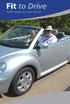 Fit to Drive Traffic Safety for Older Drivers Are you fit to drive? The aging process may increase your risk of being in a traffic crash, and it affects the severity of injuries you experience. Drivers
How To Stretch Your Body
 Exercise Module A New Leaf Choices for Healthy Living University of North Carolina at Chapel Hill 2007 Center for Health Promotion and Disease Prevention Physical Activity Exercises for Keeping Active
Brain Injury Association National Help Line: 1-800-444-6443 Brain Injury Association Web site: www.biausa.org Centers for Disease Control and
 Brain Injury Association National Help Line: 1-800-444-6443 Brain Injury Association Web site: www.biausa.org Centers for Disease Control and Prevention Web site: www.cdc.gov/ncipc/tbi Contents About Brain
Rehabilitation after shoulder dislocation
 Physiotherapy Department Rehabilitation after shoulder dislocation Information for patients This information leaflet gives you advice on rehabilitation after your shoulder dislocation. It is not a substitute
Treating symptoms. An introduction to. Everyone diagnosed with MS can get treatment for their symptoms. The symptoms of MS. Who can get treatment?
 Everyone diagnosed with MS can get treatment for their symptoms This resource is an introduction to the treatments that are available. The symbol will point you to further resources. An introduction to
DIABETES MELLITUS. By Tracey Steenkamp Biokineticist at the Institute for Sport Research, University of Pretoria
 DIABETES MELLITUS By Tracey Steenkamp Biokineticist at the Institute for Sport Research, University of Pretoria What is Diabetes Diabetes Mellitus (commonly referred to as diabetes ) is a chronic medical
Depression. What Causes Depression?
 National Institute on Aging AgePage Depression Everyone feels blue now and then. It s part of life. But, if you no longer enjoy activities that you usually like, you may have a more serious problem. Feeling
Accident Prevention: Slips, Trips & Falls
 Accident Prevention: Slips, Trips & Falls Judith Davies BSc (Hons) SROT Falls Service Development and Project Manager Central Norfolk NHS East of England Ambulance Service NHS Trust Slips, Trips & Falls
X-Plain Vertebral Compression Fractures Reference Summary
 X-Plain Vertebral Compression Fractures Reference Summary Introduction Back pain caused by a vertebral compression fracture, or VCF, is a common condition that affects thousands of people every year. A
Slips, Trips, & Falls. Supervisors Notes
 Slips, Trips, & Falls Supervisors Notes Walking is one of those things we are so accustomed to we take it for granted we will get from one place to another without incident. Unfortunately this isn t always
The road to recovery. The support available to help you with your recovery after stroke
 The road to recovery The road to recovery The support available to help you with your recovery after stroke We re for life after stroke Introduction Need to talk? Call our confidential Stroke Helpline
Controlling Pain Part 2: Types of Pain Medicines for Your Prostate Cancer
 Controlling Pain Part 2: Types of Pain Medicines for Your Prostate Cancer The following information is based on the general experiences of many prostate cancer patients. Your experience may be different.
Preventing Falls. Strength and balance exercises for healthy ageing
 Preventing Falls Strength and balance exercises for healthy ageing Exercise should be comfortable and fun. To get the most out of your home exercise book, join a class for older people to check your exercises
Slips, Trips, and Falls
 Slips, Trips, and Falls Slips, Trips, and Falls Cause Many Injuries Sometimes Serious Ones Thousands of disabling injuries- and even deaths- occur each year as a result of slips, trips, and falls: From
Incontinence. in con ti nent. adjective. 1. unable to restrain natural discharges or evacuations of urine or faeces.
 PBO 930022142 NPO 049-191 Incontinence Incontinence can be upsetting and humiliating for the person with dementia as well as stressful for the carer. However, there are many ways in which the situation
Preventing Patient Falls
 Preventing Patient Falls Patient Falls are the #1 cause of ALL sentinel events. All patients at Doctors Community Hospital are assessed for fall risk and, as appropriate, the Fall Risk Protocol is implemented.
Script/Notes for PowerPoint Presentation. Medication Use Safety Training for Seniors (MUST for Seniors)
 Script/Notes for PowerPoint Presentation Medication Use Safety Training for Seniors (MUST for Seniors) Instructions: You can use the following script to help you prepare your remarks to your organization
Preventing Slips, Trips and Falls (Basic Awareness Level 1) Staff information leaflet. RDaSH. Corporate Services
 Preventing Slips, Trips and Falls (Basic Awareness Level 1) Staff information leaflet RDaSH Corporate Services Staff Safety in the Workplace: Did you know? Slips and trips are the biggest cause of serious
CONNECTIONS CARE. Now is the time to take charge of your health! MEDICARE 2015 ISSUE II. Healthy Eating. Get Moving!
 MEDICARE 2015 ISSUE II CARE CONNECTIONS Now is the time to take charge of your health! It s important to make healthy food choices and to stay active. Here are some tips in both areas. Healthy Eating Balance
PATIENT INFORMATION. Patient Safety. Keeping you safe during your stay in hospital. For information only. do not photocopy
 PATIENT INFORMATION Patient Safety Keeping you safe during your stay in hospital i Contents Topic Page Why is patient safety important 3 How you can help 3 Your Medicine 4-5 Recognising acute illness 6
Medicines and You: A Guide for Older Adults
 Medicines and You: A Guide for Older Adults Council on Family Health Provided in cooperation with U.S. Department of Health and Human Services Food and Drug Administration and the Administration on Aging
About Real, Real-Life
 Slips, Trips & Falls About Real, Real-Life Real, Real-Life is an innovative series of programs designed to motivate employees on select work-related safety issues and requirements. Emphasis on employee
<< INSERT COMPANY NAME
 > SLIIP-TRIIP-FALL & STRAIIN IINJURY TRAIINIING > Fall Prevention Slips, trips, and falls constitute the majority of general industry accidents. They cause 15% of
Safe Lifting and Carrying
 PART 1 Basic Lifts Proper lifting and handling will help protect against injury and make your job easier. It takes training and practice to do it right. The following are basic steps in safe lifting and
Rehabilitation. Rehabilitation. Walkers, Crutches, Canes
 Walkers, Crutches, Canes These devices provide support through your arms to limit the amount of weight on your operated hip. Initially, after a total hip replacement you will use a walker to get around.
Preventing & Treating Low Back Pain
 Preventing & Treating Low Back Pain An Introduction to Low Back Pain Low back pain is the number two reason that Americans see a health care practitioner second only to colds and flu. While most people
Do s and Don ts with Low Back Pain
 Do s and Don ts with Low Back Pain Sitting Sit as little as possible and then only for short periods. Place a supportive towel roll at the belt line of the back especially when sitting in a car. When getting
This booklet is dedicated to the late Dorothy Gronwall O.B.E.
 Information about Mild Head Injury or Concussion This booklet is dedicated to the late Dorothy Gronwall O.B.E. This booklet has been produced following a research study into mild head injury, funded by
Level 4 Diploma in Dance Teaching
 International Dance Teachers Association Level 4 Diploma in Dance Teaching UNIT 1 guidance and examples 1 2 Unit 1 example documents Unit 1 requires written information to be submitted in the form of a
PATIENT HANDBOOK AND JOURNAL POST SURGERY
 PATIENT HANDBOOK AND JOURNAL POST SURGERY POST ANESTHESIA CARE UNIT (PACU) After surgery you will be moved from the Operating Room directly to a special recovery room, called the Post Anesthesia Care Unit
"SLIPS, TRIPS AND FALLS IN CONSTRUCTION ENVIRONMENTS"
 PRESENTER'S GUIDE "SLIPS, TRIPS AND FALLS IN CONSTRUCTION ENVIRONMENTS" Part of the "CONSTRUCTION SAFETY KIT" Series Quality Safety and Health Products, for Today...and Tomorrow OUTLINE OF MAJOR PROGRAM
Falls Prevention. Your Guide to. Geriatric Medicine. 2 Simei Street 3 Singapore 529889 Tel: 6788 8833 Fax: 6788 0933 www.cgh.com.sg Reg No 198904226R
 Geriatric Medicine 2 Simei Street 3 Singapore 529889 Tel: 6788 8833 Fax: 6788 0933 www.cgh.com.sg Reg No 198904226R For appointments and enquiries, please call the CGH Appointment Centre at Tel: (65) 6850
PLANTAR FASCITIS (Heel Spur Syndrome)
 PLANTAR FASCITIS (Heel Spur Syndrome) R. Amadeus Mason MD Description Plantar fascitis is characterized by stiffness and inflammation of the main fascia (fibrous connective [ligament-like] tissue) on the
Getting Older ]Wiser: safer drinking. as you age. Massachusetts Department of Public Health Office of Healthy Aging
![Getting Older ]Wiser: safer drinking. as you age. Massachusetts Department of Public Health Office of Healthy Aging](/thumbs/25/6007827.jpg "Getting Older ]Wiser: safer drinking. as you age. Massachusetts Department of Public Health Office of Healthy Aging") Massachusetts Department of Public Health Office of Healthy Aging Getting Older ]Wiser: safer drinking as you age Do you drink alcohol even just one drink now and then? Are you over 50? Do you ever take
Massachusetts Department of Public Health Office of Healthy Aging Getting Older ]Wiser: safer drinking as you age Do you drink alcohol even just one drink now and then? Are you over 50? Do you ever take
2009 10 School Bus Drivers Inservice TITLE OF LESSON: SLIPS, TRIPS, AND FALLS DON T BE A STATISTIC
 2009 10 School Bus Drivers Inservice TITLE OF LESSON: SLIPS, TRIPS, AND FALLS DON T BE A STATISTIC Objectives of Lesson: At the end of this lesson, the student will be able to: Give examples of causes
ISOMETRIC EXERCISE HELPS REVERSE JOINT STIFFNESS, BUILDS MUSCLE, AND BOOSTS OVERALL FITNESS.
 ISOMETRIC EXERCISE HELPS REVERSE JOINT STIFFNESS, BUILDS MUSCLE, AND BOOSTS OVERALL FITNESS. By Askari A. Kazmi KazmisBioscienceLabs exercise helps reverse joint stiffness, builds muscle, and boosts overall
Living with a lung condition:
 Living with a lung condition: how exercise and eating well can make a difference to your life This information is for people living with a lung condition in the UK and your family and carers. It will help
Working feet and footwear. Health and safety at work guidance
 Working feet and footwear Health and safety at work guidance Many workers face problems with their feet or legs because of the wrong footwear or because they are forced to stand for too long. Feet bear
Better Breathing with COPD
 Better Breathing with COPD People with Chronic Obstructive Pulmonary Disease (COPD) often benefit from learning different breathing techniques. Pursed Lip Breathing Pursed Lip Breathing (PLB) can be very
Lower Back Pain An Educational Guide
 Lower Back Pain An Educational Guide A publication from the Center of Pain Medicine and Physiatric Rehabilitation 2002 Medical Parkway Ste 150 1630 Main St Ste 215 Annapolis, MD 21401 Chester, MD 21619
Mobility After Stroke
 Mobility After Stroke Issues facing stroke survivors and their families Regaining Mobility Moving around safely and easily is not something you may think about, until you have had a stroke. Each year more
PHYSICAL ACTIVITY & EXERCISE STRATEGIES FOR BARIATRIC SURGERY PATIENTS
 PHYSICAL ACTIVITY & EXERCISE STRATEGIES FOR BARIATRIC SURGERY PATIENTS The University of Chicago Hospitals Center for the Surgical Treatment of Obesity (March 2005) BENEFITS OF PHYSICAL ACTIVITY In order
How To Prevent A Fall
 Slips, Trips, Falls ISABEL KRUEGER, CRSP Slips Trips and Falls HOW THEY HAPPEN AND WHAT WE CAN DO ABOUT IT. 1 Definition Slip too little friction or traction between a person s feet and the walking surface.
Colon Cancer Surgery and Recovery. A Guide for Patients and Families
 Colon Cancer Surgery and Recovery A Guide for Patients and Families This Booklet You are receiving this booklet because you will be having surgery shortly. This booklet tells you what to do before, during,
Treat Your Feet: Foot care for people with diabetes
 Treat Your Feet: Foot care for people with diabetes UHN People with diabetes often have trouble with their feet. Read this booklet to learn 7 steps to keep your feet healthy. Please visit the UHN Patient
Table of Contents. Summary of Tupler Technique Program... 2. How the Program Works... 3. Checking for Diastasis... 4. Splinting Tips...
 Tips Table of Contents Summary of Tupler Technique Program... 2 How the Program Works... 3 Checking for Diastasis... 4 Splinting Tips... 5-6 Exercise Tips... 7-8 Other Tips... 9 Ongoing Support with the