
This booklet is dedicated to the late Dorothy Gronwall O.B.E.
|
|
|
- Nicholas Shelton
- 10 years ago
- Views:
Transcription
1 Information about Mild Head Injury or Concussion

2 This booklet is dedicated to the late Dorothy Gronwall O.B.E. This booklet has been produced following a research study into mild head injury, funded by the Victorian Ministerial Implementation Committee on Head Injury. Contributors: Associate Professor Jennie Ponsford* Ms Catherine Willmott Ms Robyn Nelms Ms Carolyn Curran Bethesda Rehabilitation Centre, Epworth Hospital & *Monash University Roslyn Barnard, North Coast Head Injury Service Associate Professor Peter Cameron Department of Emergency Medicine, Alfred Hospital Thanks to Rachel Nelms for the illustrations. The booklet was adapted from one written by Dr Dorothy Gronwall & Dr Phillip Wrightson Auckland Hospital, New Zealand. Their assistance is gratefully acknowledged. The authors also wish to acknowledge the generous support of the Jack Brockhoff Foundation in providing funds for the production of this booklet. This booklet should not be reproduced or used for any other purpose without permission. 1

3 Information about Mild Head Injury or Concussion You have experienced a strong blow to the head in an accident, which has caused you to be knocked out or confused and were brought into the Emergency Department of the hospital or to the doctor s surgery. Another name for being knocked out is concussion, or mild head injury. We would like to help you understand what happens when you are knocked out and what to expect while you are getting over it. In this leaflet you will also find advice about what to do and what not to do until you are better. Concussion, or mild head injury is the result of a bang on the head which either makes you lose consciousness, or makes you giddy. It usually takes a little while for the brain to recover from concussion. Until it has recovered your brain has less energy to work on than normal. Even remembering things that happen can be difficult. In hospital you were probably asked what you remembered before and after the accident. This is because everyone who has been concussed has a memory gap. The gap stretches from a short while before you were knocked out, to some time afterwards. You will probably never be able to remember this time. You may experience some unpleasant effects in the days or weeks after your injury. These are likely to be temporary. 2

4 What are the common symptoms? Common symptoms following a mild head injury include headaches, dizziness, fatigue, being a little slower to think and difficulties with concentration and memory. Studies have shown that these symptoms generally only last a few days and then improve. There is not necessarily any need for further treatment. What can I expect? Studies have also shown that giving people information about the nature of mild head injuries and providing some strategies to deal with symptoms can be helpful in reducing problems over the long term. Some of the strategies are listed in this brochure. Having other stressful things in your life, leading a busy life, working in a demanding job or returning to study can also make it more difficult to cope with a mild head injury. You may need to take things easier and allow your brain time to recover before returning to all your activities. The signs of a mild head injury are usually not visible and so it can sometimes be difficult for other people to understand what you are experiencing. You may need to explain this to your employer, teachers, family and friends. After your injury it is wise to be alert for signs that you are not recovering well and to seek medical advice concerning this. On the back page of this booklet we give the signs to look out for. 3

5 Headaches Headaches are a common problem after being knocked out. They can be made worse by fatigue and stress. Sleeping, resting or taking a break from activities requiring concentration or effort will usually relieve headaches. If your headache gets worse, or cannot be relieved, see your doctor. Dizziness Occasionally, people find that they get a giddy feeling if they move or change their position quickly. Usually it is only a problem for a few days. If you find that things seem to spin round if you sit up suddenly after lying down, or if you turn your head sharply, it is best to avoid such sudden movements, or changes in position until it clears. If the dizziness persists for more than a week or two, see your doctor. Other symptoms may include sensitivity to light, hustle and bustle, difficulty sleeping and ringing in the ears. 4

6 Tiredness At first, even a little effort may make you feel very tired. Your brain has less energy to spare than it normally does. If you feel sleepy, go to bed. You will probably find that you need several hours more sleep than you usually do. Let your brain tell you when it needs to sleep, even if it is the middle of the day. Concentration Problems No one can concentrate well when they are tired, so it is not surprising that many people have trouble concentrating for a while after they have been knocked out. Maybe you cannot even concentrate well enough to read the newspaper. If you really need to, just read for a short time, then come back to it when you have had a break. The same thing applies to other areas where concentration is needed. Leave things that need your complete concentration until you are feeling better. If you need to concentrate on something important, do it when you are feeling fresh. 5

7 Forgetting Things You cannot expect your brain to be as good at remembering things as it usually is. Don't worry if you can't think of a name or a phone number that you ought to know, or if you go to get something, and then can't remember what it is. Your memory is only going to be a problem until you recover. In the meantime, get your family and friends to remind you of important dates and appointments, or write things down. Clumsiness You may find that you are a bit more clumsy than usual. Don't worry if you do find that you are a bit unsteady on your feet, or bump into furniture, or maybe drop things. Just take everything you do a little more slowly. Your brain is the control centre for your whole body. It has to make sense out of all the messages coming in from your eyes and ears and other senses, and to send the right signals to the right muscles for you to be able to do anything. So give yourself more time to do things 6

8 Slowness Some people who have been knocked out find their thinking is a bit slower. This means they might have some difficulty keeping up with conversations or following directions, and things take longer to get done. Encourage others to slow down by asking questions and having them repeat what they have said. Allow yourself extra time to complete tasks and avoid situations where you are under pressure to do things quickly. Irritability Some people who have been concussed find that they get annoyed easily by things that normally would not upset them. This does not last very long, but it can be difficult for you and for your family. It happens because the brain controls your emotional system as well as the rest of your body. After concussion your emotions may not be as well controlled as they usually are. There are several ways to deal with this. Some people find that going out of a room, or away from a situation as soon as it begins to get annoying is enough. Others use relaxation techniques to help them get back on an even keel. You may find that you can stop the irritability developing by using up energy with something like hitting a punchbag, or riding an exercise bicycle, or skipping hard for a while, if tiredness permits. Irritability will be worse when you are tired, so rest will also help. 7

9 Noise Problems When you want to shut out something you don't want to look at, all you have to do is close your eyes. It is much harder to shut your ears. When your brain is fully awake it uses part of its energy to damp down noises that would interfere with what you are doing. After concussion your brain may not have enough energy to spare to do this, and you may find that most noises bother you. Explain to your family and friends, and ask them to keep the noise level down if they can. If you have a very young family who could not be expected to understand, it may be more comfortable for everyone if they can have a few days' holiday away with, perhaps, obliging grandparents. Eye Problems If these occur there may be either trouble focussing, so that things look blurred or double, or you may find that your eyes are sensitive to bright light. Double vision, and needing to wear dark glasses in strong light, should both clear up within a few days. If you wear glasses, do not go back to your optician to have them changed until you have fully recovered from your concussion. It probably is not that your sight has changed, but that your brain is not putting together the messages from each eye as well as it normally does. 8

10 What NOT to do Do not stay in bed until you are better. You do need sleep at this stage, but you also need to give your brain enough to do to help it to recover. Do not drink alcohol or use drugs. Do not expect your brain to deal with alcohol and drugs in the normal way. The effect of alcohol is very similar to the effect of concussion, and after concussion drink is more likely to knock you out again. Do not drive your car or ride your motorbike until you have made sure that your concentration is good, that you can react quickly enough to handle unexpected traffic hazards, and that your ability to judge distances is back to normal. Do not play sport. Do not put yourself in a position where you are likely to get another bang on the head. Avoid activities such as football and skateboarding where you might get knocked out again, at least until you have recovered from this accident. Some sporting clubs have specific guidelines, so you may need to check with your club for advice. If riding your bicycle make sure you wear an approved helmet. 9

11 Getting Back to Work Generally, if you are not experiencing persistent headaches, have no double vision and are not experiencing ongoing dizziness, then you are probably ready to return to work. The best time to return to work will depend on how you are feeling and on the type of job that you are required to perform. For example, if you work in a noisy workplace and are still sensitive to loud noises, then it would be better to delay returning to work until you are able to cope with the noise level. Level of fatigue or tiredness will also be important in how you perform at work. If you are required to operate machinery then you need to be alert. When first returning to work it may be necessary to take extra breaks or to return on a parttime basis for a few days. Similarly, if you are in a busy office environment you may find that you fatigue quickly and need to take extra breaks. Remember that tiredness can affect your level of concentration, and you will not work as efficiently if you are not concentrating well. You may need to talk to your employer about the most suitable arrangements for returning to work. 10

12 Getting Back To Study If you go to school or university, you may also need some time off. When you return, you will need to take things a little easy at first. You may experience some of the problems that are outlined above. For example, you may find that it is harder to concentrate on lessons in class. It's also possible that you may not be able to do things as quickly as you are used to doing them, or that you forget details. You may find that a noisy classroom makes you irritable, or that you get very tired. It is important to let your lecturers and teachers know that you have been concussed. It may be helpful to provide them with some information which will give them a better understanding of the difficulties you might be experiencing. Some useful strategies * take a little extra time to complete work * take frequent breaks * make extra notes * delay examinations 11

13 Further Advice or Assistance If your symptoms continue and/or if you find you are anxious, or "stressed out", you may need more support. The first step is to see your local doctor. In some cases it may be helpful to get a referral to see a rehabilitation specialist at an agency that specialises in head injury. Sometimes an assessment with a neuropsychologist or a vocational occupational therapist may need to be arranged. 12

14 Go to your local Hospital's Emergency Department immediately if the person: Becomes unconscious or unable to be woken-up Becomes confused (they don't make sense) Has any fits or spasms of the face or limbs Vomits repeatedly Has persistent headaches Has severe dizziness 13

ABOUT CONCUSSION. Head Injury Fact sheet
 Head Injury Fact sheet 11 Somerset Street / PO Box 1168 Hamilton Telephone (07) 839 1191 Fax (07) 839 5648 Email: [email protected] ABOUT CONCUSSION CONTENTS Information compiled by D Gronwall, PhD
RECOVERING FROM A MILD TRAUMATIC BRAIN INJURY
 RECOVERING FROM A MILD TRAUMATIC BRAIN INJURY An Information Guide BRAIN INJURY REHABILITATION SERVICE CONCUSSION CLINIC BURWOOD HOSPITAL TABLE OF CONTENTS AN INFORMATION GUIDE... 3 WHAT HAPPENS IN A TRAUMATIC
Staff, please note that the Head Injury Routine is included on page 3.
 Staff, please note that the Head Injury Routine is included on page 3. This booklet explains what can happen after a concussion, how to get better and where to go for more information and help if needed.
Brain Injury Association National Help Line: 1-800-444-6443 Brain Injury Association Web site: www.biausa.org Centers for Disease Control and
 Brain Injury Association National Help Line: 1-800-444-6443 Brain Injury Association Web site: www.biausa.org Centers for Disease Control and Prevention Web site: www.cdc.gov/ncipc/tbi Contents About Brain
A patient guide to mild traumatic brain injury
 A patient guide to mild traumatic brain injury Delivering the best in care UHB is a no smoking Trust To see all of our current patient information leaflets please visit www.uhb.nhs.uk/patient-information-leaflets.htm
Mild Brain Injury Recovery
 2011 Mild Brain Injury Recovery Mild Brain Injury Recovery What is a mild brain injury? A brain injury is often caused by trauma to the head for any reason. If you had a change in your level of consciousness,
Recovering from a Mild Traumatic Brain Injury (MTBI)
 Recovering from a Mild Traumatic Brain Injury (MTBI) What happened? You have a Mild Traumatic Brain Injury (MTBI), which is a very common injury. Some common ways people acquire this type of injury are
BINSA Information on Mild Traumatic Brain Injury
 Mild traumatic brain injuries (MTBI) occur through sporting, car and workplace accidents. Mild brain injury is not easily diagnosed. This fact sheet explains how it may be recognised and assessed, and
How To Understand The Effects Of Mild Traumatic Brain Injury
 Knowing about your Mild Traumatic Brain Injury (TBI) Knowing about mild TBI There is a distinction between visible injuries to the scalp ( Head Injuries ) and internal injuries to the brain itself ( Traumatic
Recovering from Mild Traumatic Brain Injury/Concussion. A Guide for Patients and Their Families
 Recovering from Mild Traumatic Brain Injury/Concussion A Guide for Patients and Their Families Recovering From Mild Traumatic Brain Injury/Concussion: A Guide for Patients and Their Families This booklet
Concussion Management Return to Play Protocol
 Concussion Management Return to Play Protocol Returning to play following a concussion involves a stepwise progression once the individual is symptom free. There are many risks to premature return to play
Dizziness and balance problems
 Dizziness and balance problems Dizziness and balance problems, Action on Hearing Loss Information, May 2011 1 Dizziness and balance problems This factsheet is part of our Ears and ear problems range. It
The FacTs: * All concussions are serious. A Fact Sheet for School Nurses
 A Fact Sheet for School Nurses Assess the situation Be alert for signs and symptoms Contact a health care professional The FacTs: * All concussions are serious. * Most concussions occur without loss of
Antidepressant Medicines
 Antidepressant Medicines UHN Information for patients and families Read this booklet to learn: what antidepressant medicines are how they work possible side effects important points to remember The name
Non-epileptic seizures
 Non-epileptic seizures a short guide for patients and families Information for patients Department of Neurology Royal Hallamshire Hospital What are non-epileptic seizures? In a seizure people lose control
Head Injury, Age 4 and Older
 Head Injury, Age 4 and Older Table of Contents Topic Overview Check Your Symptoms Home Treatment Prevention Preparing For Your Appointment Related Information Credits Topic Overview Head injury Most injuries
A GUIDE TO IN RUGBY UNION
 A GUIDE TO The aim of this brochure is to provide information on concussion to those involved in rugby union in Ireland. Concussion MUST be taken extremely seriously. Any player with a suspected concussion
Manage cancer related fatigue:
 Manage cancer related fatigue: For People Affected by Cancer In this pamphlet: What can I do to manage fatigue? What is cancer related fatigue? What causes cancer related fatigue? How can my health care
Traumatic Brain Injury: A Guide For Patients
 Traumatic Brain Injury: A Guide For Patients Traumatic brain injury (TBI) occurs when a sudden trauma, such as a blow or jolt to the head, causes damage to the brain. Such injuries can result in impaired
Sport Concussion in New Zealand ACC National Guidelines
 Sport Concussion in New Zealand ACC National Guidelines This guideline document has been produced to inform National Sports Organisations (NSOs), and recreation, education and health sectors in their development
A Depression Education Toolkit
 A Depression Education Toolkit Facts about Depression in Older Adults What is Depression? Depression is a medical illness. When sadness persists or interferes with everyday life, it may be depression.
RECOGNISE AND REMOVE
 RECOGNISE AND REMOVE Remember the 4 R s of concussion management: RECOGNISE REMOVE RECOVER RETURN Identifying concussion is not always easy, and players may not exhibit the signs or symptoms immediately
Facts about Concussion and Brain Injury
 Facts about Concussion and Brain Injury W H E R E T O G E T H E L P About Concussion Signs and Symptoms Getting Better Where to Get Help Resources U.S. Department of Health and Human Services Centers for
Dizziness and Vertigo
 Dizziness and Vertigo Introduction When you are dizzy, you may feel lightheaded or lose your balance. If you also feel that the room is spinning, you may have vertigo. Vertigo is a type of severe dizziness.
MOTOR VEHICLE ACCIDENT QUESTIONNAIRE
 MOTOR VEHICLE ACCIDENT QUESTIONNAIRE Thank you in advance for taking the time to complete this form, this will help us to better assess all of your pain concerns and provide you with the best treatment.
MIGRAINE ADVICE FOR 7 TO 12 YEAR OLDS
 MIGRAINE ADVICE FOR 7 TO 12 YEAR OLDS You are not alone seven out of every ten children in your school will probably have had a headache at some time What is your headache like? If you are reading this
Concussion Information for Parents/Guardians
 Concussion Information for Parents/Guardians What is a concussion and what causes a concussion? A concussion is a brain injury that causes changes in how the brain cells function, leading to symptoms that
R ECOVERING F ROM M ILD B RAIN I NJURY/CONCUSSION A G UIDE FOR P ATIENTS
 R ECOVERING F ROM M ILD B RAIN I NJURY/CONCUSSION A G UIDE FOR P ATIENTS Mild brain injury (or concussion) is relatively common and typically occurs as a result of a blow to the head during sports, a motor
The road to recovery. The support available to help you with your recovery after stroke
 The road to recovery The road to recovery The support available to help you with your recovery after stroke We re for life after stroke Introduction Need to talk? Call our confidential Stroke Helpline
Your guide to. anxiety treatment. after a motor vehicle accident
 Your guide to anxiety treatment after a motor vehicle accident November 2003 ISBN 1 876958 16 2 Published by the Motor Accidents Authority of NSW Level 22, 580 George Street, Sydney 2000 Phone: 1300 137
Concussion Information Sheet
 Concussion Information Sheet A concussion is a brain injury and all brain injuries are serious. They are caused by a bump, blow, or jolt to the head, or by a blow to another part of the body with the force
Returning to Work Following Traumatic Brain Injury. Patient Information Booklet. Talis Consulting Limited
 Returning to Work Following Traumatic Brain Injury Patient Information Booklet Talis Consulting Limited Returning to Work: Returning to work following a head injury is often seen as a very important goal
Concussion Guidance for the General Public
 CONCUSSION FACTS A concussion is a brain injury. All concussions are serious. Concussions can occur without loss of consciousness. All athletes with any symptoms following a head injury must be removed
Traumatic brain injury (TBI)
 Traumatic brain injury (TBI) A topic in the Alzheimer s Association series on understanding dementia. About dementia Dementia is a condition in which a person has significant difficulty with daily functioning
EMOTIONAL AND BEHAVIOURAL CONSEQUENCES OF HEAD INJURY
 Traumatic brain injury EMOTIONAL AND BEHAVIOURAL CONSEQUENCES OF HEAD INJURY Traumatic brain injury (TBI) is a common neurological condition that can have significant emotional and cognitive consequences.
CONCUSSION AND HEAD INJURY AWARENESS POLICY TRAINING C I T Y O F S O U T H J O R D A N 9 / 2 0 1 1
 CONCUSSION AND HEAD INJURY AWARENESS POLICY TRAINING C I T Y O F S O U T H J O R D A N 9 / 2 0 1 1 UTAH STATE LEGISLATION 2011 General Legislative Session House Bill 204: Enacts the Protection of Athletes
Headaches in Children
 Headaches in Children A headache is one of the most common complaints of children and teenagers. Fussiness, crankiness and not being able to sleep may be the only signs of head pain in children who are
THE MANAGEMENT OF CONCUSSION IN AUSTRALIAN FOOTBALL
 THE MANAGEMENT OF CONCUSSION IN AUSTRALIAN FOOTBALL AFL Research board AFL MEDICAL OFFICERS' ASSOCIATION THE MANAGEMENT OF CONCUSSION IN AUSTRALIAN FOOTBALL This document has been published by the AFL
Young Person s Guide to CFS/ME
 Young Person s Guide to CFS/ME The Royal College of Paediatrics and Child Health This leaflet has been developed as part of the Evidence based guideline for management of CFS/ME (Chronic Fatigue Syndrome
INTERMEDIATE GUIDE TO CONCUSSIONS
 INTERMEDIATE GUIDE TO CONCUSSIONS (Recommended for Grade 4 Grade 8) Lesson: Recovering from a Concussion Focus: Recognizing Concussion Symptoms and Return to Play Guidelines Curriculum: - Personal and
Bipolar Disorder. Some people with these symptoms have bipolar disorder, a serious mental illness. Read this brochure to find out more.
 Bipolar Disorder Do you go through intense moods? Do you feel very happy and energized some days, and very sad and depressed on other days? Do these moods last for a week or more? Do your mood changes
IF IN DOUBT, SIT THEM OUT.
 IF IN DOUBT, SIT THEM OUT. Scottish Sports Concussion Guidance: Grassroots sport and general public Modified from World Rugby s Guidelines on Concussion Management for the General Public Introduction The
What are some of the signs that alcohol is a problem?
 Problems with Alcohol How can I tell if alcohol is a problem for me? Alcohol is a problem if it affects any part of your life, including your health, your work and your life at home. You may have a problem
IHSA Sports Medicine Acknowledgement & Consent Form. Concussion Information Sheet
 Concussion Information Sheet A concussion is a brain injury and all brain injuries are serious. They are caused by a bump, blow, or jolt to the head, or by a blow to another part of the body with the force
Read about the steps that may gradually help you to return to work. Learn about looking for and keeping a job.
 CHAPTER 10 Work In this chapter, you will: Read about the steps that may gradually help you to return to work. Learn about looking for and keeping a job. Returning to Work Survivor Matters Work is important
Brain Injury: Stages of Recovery
 Brain Injury: Stages of Recovery Recovery after brain injury is a process that occurs in stages. Some people move quickly through the stages, while others make slow, but steady gains. The Rancho Los Amigos'
The Older And Wiser Driver
 The Older And Wiser Driver AAA Foundation for Traffic Safety Sharpening Your Driving Skills Aging is inevitable, but growing older doesn t have to mean giving up an active life. While aging does impose
Hopefully this information will be useful for people with dementia, their families, carers and medical professionals.
 et ision 2020 UK The right to sight ementia and Sight Loss Interest Group Cataracts and dementia Cataracts are a very common eye condition in older people. Most people with cataracts are over the age of
Returning to Work is a Lot of Work
 Returning to Work is a Lot of Work Back in Motion Rehab Inc. January 2014 Returning to Work is a Lot of Work! There are a lot of reasons people have to take time off work. Sometimes people experience injuries
Staying on Track with TUBERCULOSIS. Medicine
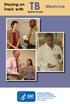 Staying on Track with TB TUBERCULOSIS Medicine What s Inside: Read this brochure to learn about TB and what you can do to get healthy. Put it in a familiar place to pull out and read when you have questions.
PARTNERING WITH YOUR DOCTOR:
 PARTNERING WITH YOUR DOCTOR: A Guide for Persons with Memory Problems and Their Care Partners Alzheimer s Association Table of Contents PARTNERING WITH YOUR DOCTOR: When is Memory Loss a Problem? 2 What
It is important that you tell your family and the people closest to you of this increased sensitivity to opioids and the risk of overdose.
 MEDICATION GUIDE VIVITROL (viv-i-trol) (naltrexone for extended-release injectable suspension) Read this Medication Guide before you start receiving VIVITROL injections and each time you receive an injection.
Your spinal Anaesthetic
 Your spinal Anaesthetic Information for patients Your spinal anaesthetic This information leaflet explains what to expect when you have an operation with a spinal anaesthetic. It has been written by patients,
What is a concussion? What are the symptoms of a concussion? What happens to the brain during a concussion?
 What is a concussion? The working definition used today for concussion is a complex pathophysiological process affecting the brain, induced by traumatic biomechanical forces (developed by the consensus
Fatigue. Version 1. Prevention in the NZ Workplace. Fatigue prevention Version 1 July 2014
 Fatigue Prevention in the NZ Workplace Version 1 1 Contents Introduction... 3 What is Fatigue?... 4 Risk Management Approach to Fatigue... 5 Appendices... 11 Toolbox Talks: A, B, C.... 122 Heat Safety
Understanding. Depression. The Road to Feeling Better Helping Yourself. Your Treatment Options A Note for Family Members
 TM Understanding Depression The Road to Feeling Better Helping Yourself Your Treatment Options A Note for Family Members Understanding Depression Depression is a biological illness. It affects more than
Approaching the End of Life. A Guide for Family & Friends
 Approaching the End of Life A Guide for Family & Friends Approaching the End of Life A Guide for Family & Friends Patrice Villars, MS, GNP and Eric Widera, MD Introduction In this booklet you will find
Breathlessness. and anxiety. Being anxious can make breathlessness feel worse. Not being able to catch your breath can be very frightening
 Breathlessness and anxiety Being anxious can make breathlessness feel worse Not being able to catch your breath can be very frightening Learning to relax and slow down can help to build your confidence
HEAD INJURIES & CONCUSSION PREVENTION AND MANAGEMENT PROTOCOL
 HEAD INJURIES & CONCUSSION PREVENTION AND MANAGEMENT PROTOCOL Policy Statement In order to effectively and consistently manage head injuries, the Brooke Charter School has established the following protocol
Understanding Relapse in Multiple Sclerosis. A guide for people with MS and their families
 Understanding Relapse in Multiple Sclerosis A guide for people with MS and their families Introduction You have been given this booklet because you have been diagnosed with Multiple Sclerosis (MS) and
Supporting your child after a burn injury
 Royal Manchester Children s Hospital Supporting your child after a burn injury Information for Parents and Carers of Young Children 2 Contents Page Introduction 4 Trauma and children 4 Normal reactions
Epilepsy and stress / anxiety
 Epilepsy and stress / anxiety Stress is a term used to describe emotional strain and tension. When we experience stress we also can become anxious. Although stress and anxiety do not cause epilepsy, for
Tips for Safer Driving
 Fleet Management Fleet Management Introduction Improvements in technology will continue to help bring auto accident numbers down, but the bottom line remains that most car accidents are the result of human
Emergency Department. Whiplash neck sprain. Advice for patients
 Emergency Department Whiplash neck sprain Advice for patients What is a whiplash neck sprain? A whiplash neck sprain occurs when your head is suddenly jolted backwards and forwards in a whip-like movement.
BRAIN INJURY. Coping with brain injury A guide for patients
 BRAIN INJURY Coping with brain injury A guide for patients Disclaimer This is general information developed by The Ottawa Hospital. It is not intended to replace the advice of a qualified health-care provider.
Driving. Returning to BRAIN INJURY SERIES IN THIS BOOKLET :
 BRAIN INJURY SERIES Returning to Driving IN THIS BOOKLET : How a brain injury affects driving Driving for a living When can I start driving? Driving assessments Seizures and epilepsy Driving licence and
CONCUSSION DEFINITION
 Return to Learn and Return to Physical Activity Plan: Information for Parents and Student s CONTEXT Recent research has made it clear that a concussion can have a significant impact on a student'ss cognitive
Auto Accident Questionnaire
 Auto Accident Questionnaire Patient s Name: Date Of Accident: Date: Social History: (please complete the following, check all boxes that apply) Are you: Married Single Divorced Widowed # of Children: #
SLEEP QUESTIONNAIRE. Name: Today s Date: Age (years): Your Sex (M or F): Height: Weight: Collar/Neck Size (inches) Medications you are taking:
 SLEEP QUESTIONNAIRE Name: Today s Date: Age (years): Your Sex (M or F): Height: Weight: Collar/Neck Size (inches) Medications you are taking: Medical conditions: High blood pressure Heart Disease Diabetes
Background on Brain Injury
 CHAPTER 1 Background on Brain Injury In this chapter, you will: Read about Alberta s definition of Acquired Brain Injury and how that affects which supports you will be able to access. Learn about the
Cerebral Palsy and Visual Impairment
 CP Factsheet Cerebral Palsy and Visual Impairment Although cerebral palsy mainly causes difficulty with movement, other conditions may also occur. This is because other parts of the brain may also be affected
Young people and drugs
 Young people and drugs Many parents worry about whether their son or daughter is taking illegal drugs, how they can tell, and what to do about it. While there s a lot of concern about illegal drugs in
Returning to School After a Concussion: A Fact Sheet for School Professionals
 Returning to School After a Concussion: A Fact Sheet for School Professionals Assess the situation Be alert for signs and symptoms Contact a health care professional What is a Concussion? A concussion
employment A guide for employees and employers
 employment A guide for employees and employers 4 4 7 11 15 17 18 20 24 health and safety law equality law for people with epilepsy telling people about your epilepsy for employers risk assessments what
Listen, Protect, and Connect
 Page 1 Listen, Protect, and Connect PSYCHOLOGICAL FIRST AID FOR CHILDREN, PARENTS, AND OTHER CAREGIVERS AFTER NATURAL DISASTERS Helping you and your child in times of disaster. Page 2 As a parent or adult
Depression in children and adolescents
 Patient information from the BMJ Group Depression in children and adolescents Depression is an illness that affects people of all ages, including children and teenagers. It can stop a child or teenager
What is Obstructive Sleep Apnoea?
 Patient Information Leaflet: Obstructive Sleep Apnoea Greenlane Respiratory Services, Auckland City Hospital & Greenlane Clinical Centre Auckland District Health Board What is Obstructive Sleep Apnoea?
Your guide to stopping smoking for good
 Your guide to stopping smoking for good Reading this is your first step to stopping smoking for good Help2Quit gives you advice and support to help stop smoking for good. Nicotine replacement therapy and
Traumatic Brain Injury for VR Counselors Margaret A. Struchen, Ph.D. and Laura M. Ritter, Ph.D., M.P.H.
 Training Session 2a: Somatosensory Changes that May Occur Following TBI, Impact on Vocational Issues, and Strategies to Address these Changes Headaches (Mild, Moderate/Severe) Fatigue (Mild, Moderate/Severe)
Head Injury in Infants, Children and Adults: Triage, Assessment, Investigation and Early Management
 Head Injury in Infants, Children and Adults: Triage, Assessment, Investigation and Early Management Information for people who have injured their head, their families and carers NICE Guideline (Patient
Fainting - Syncope. This reference summary explains fainting. It discusses the causes and treatment options for the condition.
 Fainting - Syncope Introduction Fainting, also known as syncope, is a temporary loss of consciousness. It is caused by a drop in blood flow to the brain. You may feel dizzy, lightheaded or nauseous before
Sport Concussion in New Zealand:
 Sport Concussion in New Zealand: ACC National Guidelines January 2015 Developed with our partners: This guideline document has been produced to inform National Sports Organisations (NSOs), and recreation,
Mental Health in the Workplace. Kate Hubl- Occupational Therapist
 Mental Health in the Workplace Kate Hubl- Occupational Therapist So what does the workplace have to do with mental health and mental health issues? Its not abnormal, weird, strange or weak to experience
Coping with Multiple Sclerosis Strategies for you and your family
 Patient Education Coping with Multiple Sclerosis Strategies for you and your family Most people are not prepared to deal with the changes in routine and lifestyle that MS may require. Coping with MS can
Financial advisors and Alzheimer s disease: What you need to know
 Financial advisors and Alzheimer s disease: What you need to know In today s aging society, with people living longer lives, chances are high that you ll be called upon to assist clients who are caring
Get the Facts About. Disease
 Get the Facts About TB TUBERCULOSIS Disease What s Inside: 3 PAGE Get the facts, then get the cure 4 PAGE 9 PAGE 12 PAGE Learn how TB is spread Treatment for TB disease Talking to family and friends about
SOUTHWEST FOOTBALL LEAGUE CONCUSSION MANAGEMENT PROTOCOL
 SOUTHWEST FOOTBALL LEAGUE CONCUSSION MANAGEMENT PROTOCOL NOTE: Revisions to the guidelines recommended in this Concussion Management Protocol will be made on an annual basis based upon current legislation.
Getting Older ]Wiser: safer drinking. as you age. Massachusetts Department of Public Health Office of Healthy Aging
![Getting Older ]Wiser: safer drinking. as you age. Massachusetts Department of Public Health Office of Healthy Aging](/thumbs/25/6007827.jpg "Getting Older ]Wiser: safer drinking. as you age. Massachusetts Department of Public Health Office of Healthy Aging") Massachusetts Department of Public Health Office of Healthy Aging Getting Older ]Wiser: safer drinking as you age Do you drink alcohol even just one drink now and then? Are you over 50? Do you ever take
Massachusetts Department of Public Health Office of Healthy Aging Getting Older ]Wiser: safer drinking as you age Do you drink alcohol even just one drink now and then? Are you over 50? Do you ever take
AR159 February 9, 2015
 AR159 February 9, 2015 1.0 PURPOSE AR CONCUSSION PROTOCOL The purpose of this protocol is to provide information regarding the prevention, identification and management of concussions. Everyone has a role
Heat Illnesses. Common Heat Rash Sites
 Heat Illnesses Introduction Heat illnesses happen when the body becomes too hot and cannot cool itself. There are several different types of heat-related illnesses. This includes heat cramps, heat exhaustion,
Are you feeling... Tired, Sad, Angry, Irritable, Hopeless?
 Are you feeling... Tired, Sad, Angry, Irritable, Hopeless? I feel tired and achy all the time. I can t concentrate and my body just doesn t feel right. Ray B. I don t want to get out of bed in the morning