
UN Medical Services in New York Configuring your Computer Workstation in 8 Steps
|
|
|
- Philippa Ward
- 9 years ago
- Views:
Transcription
1 UN Medical Services in New York Configuring your Computer Workstation in 8 Steps This page contains a practical description of the best way how to configure your computer workstation yourself. MSD will ask you to do this before we conduct a site visit. Please give 2 weeks for these changes to take effect. The vast majority of ergonomic issues can be resolved by these simple steps. If you still have concerns after following this guidance and making the necessary changes, then contact MSD by ([email protected]) for further assistance. Objective Here are a few brief tips on how to sit better at your workspace. Position 1 - While sitting in your task chair, please place your feet comfortably on the floor. Position 2 - Your ankles, knees and hips should be at 90 degree angles and your thigh bone parallel with the floor. Position 3 - Sit back in the chair and use the back of the chair to support your back. Try to rest your back bones on top of each other so you sit erect. Your shoulders are relaxed and arms are at your sides. Elbows are bent at 90 degrees. Hands and wrists are flat and straight in front of you. Position 4 - Computer Screen is arms length in front of you, and not too close or too far. See the picture below for an ideal workstation. An important general recommendation is variety. Try to take regular micro breaks of 20 seconds in which you stretch your hands, wrist and fingers. Standing up and walk small distances is already enough to "reset" your body. Try not to skip regular break, pauses and lunches. Of course you should spend as few as possible of your normal breaks at your computer. After using the positions as described above, you may want to review the next 8 steps to ensure your optimal position is achieved. 1: Seat Height
2 Correct posture is often most easily obtained by changing the seat height and levelling your chair to have your thigh bone parallel to the floor. Stand in front of the chair, facing the chair, and adjust the height until the seat is just below your kneecaps. At this height, when you sit down, the angle between your lower legs and your thighs will be roughly 90º. If you are shorter than 5-2, you may require a foot rest which can be obtained from an office stationary supplier. 2: Seat Depth Sit on your chair with your back against the backrest of the seat. The seat depth is correct if you can place a fist between the edge of the seat and the back of your knee. If there is too much space, your legs will be incorrectly supported and too little space can restrict the blood supply to your calves. Tilting the seat-pan a fraction downward helps give your body a slightly more open posture and relieves any pressure under the thigh. 3: Back Rest The backrest or lumbar support must be adjusted to provide sufficient support of your lumbar region and your lumbar vertebrae. This is the part of your back that you can make hollow. Use the following guideline: The point that supports your back (the curved part of the backrest) should be approximately 25 cm (10 inches) from the seat. The lumbar support is correctly positioned when you feel no pressure/support on your hips.
3 4: Arm Rests All armrests are in height adjustable, some are also horizontal adjustable. Usage of armrest is helpful to support your arm-, shoulder- and neck muscles and to avoid resting your wrists and lower arms on the worktop surface. If necessary, you can adjust the armrests yourself or ask a colleague to help. Sit up straight in the chair with your back against the backrest and place your hands flat on your stomach. Keep your shoulders straight and relaxed and your upper arms next to your body. The arm rest should now be positioned just under the elbow giving you light support. Make sure you position both arm rest on the same height. (note: most armrests have an height indicator by using numbers or stripes). The United Nations offers the following 2 chairs within the current furniture purchasing programmes. Both are able to provide ergonomic comfort for you. If you have either the adjustable Criterion, or Aeron chair, please refer to the following links for their user guide to adjust your chair: Criterion: Aeron: pl. copy and paste; Please note that if the Aeron chair is used, you should ensure that you have the correct size by checking this chart: 5: The Work Surface Most work surfaces are built at a height for 95% of the population. If your work surface is too high, you may require a foot rest and then raise your desk chair to find the right balance for your reach and eyeline. If you are taller than 6-3 you may need to contact your Executive Office for assistance. Sometimes a keyboard can provide support. 6: Foot Support Situations may arise in which you are perfectly adjusted for keyboard use, with the monitor at a correct angle, with your body in an ideal position (with thigh parallel with the floor), but your feet does not rest flat on the floor. In such circumstances, you could raise the chair, and you may wish to use a foot support.
4 A foot support should be adjusted in such a way that your knees make an angle of approximately 90º, or larger angle. The foot support should be considered as a replacement / platform for the floor, so try to adjust the foot support to be as flat as possible. A footrest should support the full feet. A feet relax bar is not a foot rest. If the angle between the foot support and the floor is too great, this will lead to unnecessary strain on your ankles and feet. (General tip: do not wear shoes with high heels) 7: The Workstation The workstation has 2 components, the keyboard and the monitor. The keyboard must be placed directly in front of the monitor, on your table top or on a keyboard tray under your table top. The legs of the keyboard should not be used in order to prevent extra strain on your wrists. You should position the keyboard to be in line with the front of the tabletop. Avoid pushing the keyboard away from you and avoid supporting your wrists or lower arms on the tabletop. Keeping your keyboard close to you will force yourself to sit up straight. The height of the monitor should be such that if you look straight ahead, when you are sitting in front of the monitor, you are looking at the top edge to middle of the monitor screen. If the monitor is too high your neck will be bent too far back while you work. This will lead to extra strain on your neck and shoulders. Take lights into account when positioning your monitor. Try to place it in such a way that no light is reflected on your monitor. Place your monitor perpendicular to the window if direct sunlight interferes with your viewing abilities. The best viewing distance for a 15"-17" monitor is centimetres (20-28 inches), about arms length. If you use a document holder, ensure it is positioned directly in front of the monitor so that you do not have to make frequent movements of the head and neck to look from the monitor to a document. Those awkward postures can lead to muscle fatigue and discomfort of the head, neck, and shoulders. 8: Mouse To prevent problems with your hands, wrists, shoulders and back, you should pay attention to a number of points when working with a mouse. These points are: Hold the mouse close to your keyboard.
5 Never use the mouse with a stretched arm. Hold your hand so that it is an extension of your lower arm (a neutral, horizontal relaxed position). Try to avoid straining the tendons above your wrist. Prevent the tabletop restricting the blood supply towards your wrists and fingers. This can't happen if you move the keyboard towards you up to the edge of the table top. Try to use the mouse left and right handed. Switch the Button functions in your Windows settings via Start/Control Panel/Printers and hardware/mouse/tab Buttons ; then adjust the buttons to suit. Office Exercises For information on simple office exercises you can do, please refer to
STANDARD OPERATING PROCEDURES (SOP) FOR COMPUTER WORK, DESK TOP
 STANDARD OPERATING PROCEDURES (SOP) FOR COMPUTER WORK, DESK TOP General Guidelines-Best Practices: The following guidelines are applicable to office workers who sit at a desk and/or work on computers.
Texas Department of Insurance. Office Ergonomics. Provided by. Division of Workers Compensation HS03-003C (03-09)
 Texas Department of Insurance Office Ergonomics Provided by Division of Workers Compensation HS03-003C (03-09) Contents Introduction 1 The Ergonomic Checklist 1 Sharp Edge Hazards 1 Equipment Adjustability
Preventing Overuse Injuries at Work
 Preventing Overuse Injuries at Work The Optimal Office Work Station Use an adjustable chair with good lumbar support. Keep your feet flat on a supportive surface (floor or foot rest). Your knees should
Proper Workstation Setup
 Proper Workstation Setup A Step by Step Guide to help you organize your workstation and reduce the risk of injury Step 1 Review Work Habits Working in a stationary position for long periods will increase
A guide for employees
 A guide for employees This booklet has been developed as a guide to assist in the prevention of muscular discomfort and strain that can sometimes be associated with computer use. The information provided
Computer Workstation Ergonomic Self Evaluation
 Computer Workstation Ergonomic Self Evaluation Use this guidance to perform a preliminary evaluation of your workstation, and make any adjustments that are necessary to achieve a correct neutral posture.
ROSA Rapid Office Strain Assessment. Michael Sonne, MHK, CK. [email protected]
 ROSA Rapid Office Strain Assessment Michael Sonne, MHK, CK. [email protected] Rapid Office Strain Assessment ROSA is a picture based posture checklist designed to quantify exposure to risk factors in
Do you sit at a desk all day? Does your 9 to 5 leave no time for structured exercise..?
 Do you sit at a desk all day? Does your 9 to 5 leave no time for structured exercise..? Staying healthy at work is easier than you might think: Try building the following desk based exercises into your
Stretching in the Office
 Stretching in the Office Legs: Quads, Hamstrings, IT band, Hip flexors, Gluts, Calves Quads: Standing @ desk maintaining upright posture, grab one leg @ a time by foot or ankle and bring it towards backside
HELPFUL HINTS FOR A HEALTHY BACK
 HELPFUL HINTS FOR A HEALTHY BACK 1. Standing and Walking For correct posture, balance your head above your shoulders, eyes straight ahead, everything else falls into place. Try to point toes straight ahead
SETTING UP THE COMPUTER WORKSTATION TO FIT YOU
 SETTING UP THE COMPUTER WORKSTATION TO FIT YOU TABLE OF CONTENTS Adjusting Your Chair...1 Adjusting an Adjustable Working Surface...2 Adjusting a Non-adjustable Working Surface...3 Adjusting Your Keyboard...3
Approachproach to Office Ergonomics
 Office Ergonomics A Practical Approachproach to Office Ergonomics ErgoSystems Consulting Group, Inc. Minneapolis, MN Voice: 952-401-9296 Web: www.ergosystemsconsulting.com Welcome to ErgoSystems! Who sits
Loss Prevention Reference Note. Adjusting the Computer Workstation. Glare Viewing Distance. Line of Sight Neck Posture Arm Posture Back Posture
 Loss Prevention Reference Note Adjusting the Computer Workstation Line of Sight Neck Posture Arm Posture Back Posture Adjustability Glare Viewing Distance Work Surfaces Mouse Position Leg Space Leg Support
Yes No Correction Date. Seated Position Do you know how to adjust your chair? Is your chair adjusted for support & comfort?
 UC Davis Health System - Computer Workstation Self Evaluation Assessment Date: Employee Name: Employee ID#: Department: Supervisor: Union Affiliation: Date of Hire (if new hire) Reason for Assessment (circle
Cardiac Rehab Program: Stretching Exercises
 Cardiac Rehab Program: Stretching Exercises Walk around the room, step side to side, ride a bike or walk on a treadmill for at least 5 minutes to warm up before doing these stretches. Stretch warm muscles
Exercise 1: Knee to Chest. Exercise 2: Pelvic Tilt. Exercise 3: Hip Rolling. Starting Position: Lie on your back on a table or firm surface.
 Exercise 1: Knee to Chest Starting Position: Lie on your back on a table or firm surface. Action: Clasp your hands behind the thigh and pull it towards your chest. Keep the opposite leg flat on the surface
Fact sheet Exercises for older adults undergoing rehabilitation
 Fact sheet Exercises for older adults undergoing rehabilitation Flexibility refers to the amount of movement possible around a joint and is necessary for normal activities of daily living such as stretching,
A Simple Guide to Health Risk Assessment Office Environment Series OE 5/2003
 A Simple Guide to Health Risk Assessment Office Environment Series OE 5/2003 Occupational Safety and Health Branch Labour Department Occupational Safety and Health Council Contents Introduction 1 Office
ERGONOMICS. Improve your ergonomic intelligence by avoiding these issues: Awkward postures Repetitive tasks Forceful exertions Lifting heavy objects
 ERGONOMICS The goal of ergonomics is to reduce your exposure to work hazards. A hazard is defined as a physical factor within your work environment that can harm your body. Ergonomic hazards include working
General Guidelines. Neck Stretch: Side. Neck Stretch: Forward. Shoulder Rolls. Side Stretch
 Stretching Exercises General Guidelines Perform stretching exercises at least 2 3 days per week and preferably more Hold each stretch for 15 20 seconds Relax and breathe normally Stretching is most effective
Exercises for older people
 Exercise for older people Exercises for older people Sitting Getting started If you ve not done much physical activity for a while, you may want to get the all-clear from a GP before starting. For the
COMPUTER ERGONOMICS: WORKSTATION LAYOUT AND LIGHTING
 COMPUTER ERGONOMICS: WORKSTATION LAYOUT AND LIGHTING An electronic copy of this publication is available on the Ministry of Labour website at www.labour.gov.on.ca A hardcopy of this publication can be
Range of Motion Exercises
 Range of Motion Exercises Range of motion (ROM) exercises are done to preserve flexibility and mobility of the joints on which they are performed. These exercises reduce stiffness and will prevent or at
A Guide to Work with Computers
 A Guide to Work with Computers This guide is prepared by the Occupational Safety and Health Branch, Labour Department This edition May 2010 This guide is issued free of charge and can be obtained from
elearning at Ramsay Online Orientation Program Guide Version 2.0 Please email any elearning questions to [email protected].
 elearning at Ramsay Online Orientation Program Guide Version 2.0 Please email any elearning questions to [email protected] Table of contents Introduction to elearning... 3 Ergonomics... 3
HEADACHES, NECK & EYE FATIGUE. Deep tissue massage. Regular upper body stretches. Consult Optometrist/Ophthalmologist
 HEADACHES, NECK & EYE FATIGUE Headaches Vision concerns Itchy and irritated eyes Overall Neck Pain Muscular tension See NECK PAIN and VISION CONCERNS below Need corrective lenses or new prescription Inadequate
ToThePOINT. Best Practices WORKER SAFETY. A Critical Factor in Workplace Safety. Understand Musculoskeletal Disorders LOSS CONTROL SERVICES
 ToThePOINT Best Practices LOSS CONTROL SERVICES Office Ergonomics A Critical Factor in Workplace Safety WORKER SAFETY The fastest growing category of workplace injury is a group of conditions called Musculoskeletal
Office Ergonomics. Guidelines for preventing Musculoskeletal Injuries
 Office Ergonomics Guidelines for preventing Musculoskeletal Injuries january 2010 Table of Contents introduction 4 The purpose of this guide Getting familiar with the jargon Good Posture versus Poor Posture
YOUR COMPUTER WORKSTATION AND YOUR OFFICE ENVIRONMENT
 WORKPLACE ERGONOMICS Your Guide to Health and Comfort at Work YOUR COMPUTER WORKSTATION AND YOUR OFFICE ENVIRONMENT CAN YOU ANSWER THESE SELF-HELP QUESTIONS? How do you adjust your chair for good posture
How To Stretch Your Body
 Exercise Module A New Leaf Choices for Healthy Living University of North Carolina at Chapel Hill 2007 Center for Health Promotion and Disease Prevention Physical Activity Exercises for Keeping Active
Passive Range of Motion Exercises
 Exercise and ALS The physical or occupational therapist will make recommendations for exercise based upon each patient s specific needs and abilities. Strengthening exercises are not generally recommended
Equipment loan arrangements and loan form
 Safety and Health Services Equipment loan arrangements and loan form Document control information Published document name: Work-equip-loan-gn Date issued: February 2016 Version: 4.1 Previous review dates:
This document fully describes the 30 Day Flexibility Challenge and allows you to keep a record of your improvements in flexibility.
 Welcome to the StretchTowel 30 Day Flexibility Challenge! You can Be More Flexible in 30 days by following our stretching program for 10 minutes a day. The best part is that you can stretch using the StretchTowel
Injuries from lifting, loading, pulling or pushing can happen to anyone in any industry. It is important to be aware of the risks in your workplace.
 Workplace safety: lifting One of the biggest concerns in the workplace is lifting and loading. When you lift something, the load on your spine increases and your spine can only bear so much before it is
ISOMETRIC EXERCISE HELPS REVERSE JOINT STIFFNESS, BUILDS MUSCLE, AND BOOSTS OVERALL FITNESS.
 ISOMETRIC EXERCISE HELPS REVERSE JOINT STIFFNESS, BUILDS MUSCLE, AND BOOSTS OVERALL FITNESS. By Askari A. Kazmi KazmisBioscienceLabs exercise helps reverse joint stiffness, builds muscle, and boosts overall
EGOSCUE CLINIC PAIN/POSTURE STRETCHES 1. Standing Arm Circles: Helps Restore Upper Body Strength
 EGOSCUE CLINIC PAIN/POSTURE STRETCHES 1. Standing Arm Circles: Helps Restore Upper Body Strength Two sets of 40 repetitions each. Stand with your feet pointed straight and hip-width apart. Place your fingertips
How To Fit Out A Hospital Bed For A Patient
 Hospital Emergency Room Ergonomic Evaluations & Recommendations Karleigh Burns Janna Burrows Chris Moe Lily Nirenberg Course taught by Professor Alan Hedge DEA 470, Spring 2004 Introduction Computers &
A Stretch-Break Program for Your Workplace! www.healthyworkplaceweek.ca
 www.healthyworkplaceweek.ca A Stretch-Break Program for Your Workplace! Why is stretching at work important? Sitting at a desk or computer; or standing at your work station for extended periods of time
Workstation and Work Area Ergonomics
 Workstation and Work Area Ergonomics If you answer "yes" to one of the following questions, you need to read further. Do you spend hours working on a computer, either at work or home? Does your computer
Low Back Pain: Exercises
 Low Back Pain: Exercises Your Kaiser Permanente Care Instructions Here are some examples of typical rehabilitation exercises for your condition. Start each exercise slowly. Ease off the exercise if you
Designed for comfort and built to last.
 Designed for comfort and built to last. Inter IKEA Systems B.V. 2015 Whether we work in an office or at home, many of us spend the majority of the day at a desk. A comfortable workspace is therefore essential
COMPUTER WORKSTATION ERGONOMICS
 COMPUTER WORKSTATION ERGONOMICS Keeping the workplace safe Table of Contents Introduction.. 2 Office Ergonomics Process at UCDHS.. 3 Completing / Conducting the Self Workstation Evaluation.. 4 Computer
Chair Exercises and Lifting Weights
 Chair Exercises and Lifting Weights Why are chair exercises and lifting weights important? Physical activity is one of the most important things you can do to maintain your diabetes control as well as
Ergonomics for Schoolchildren and Young Workers
 Ergonomics for Schoolchildren and Young Workers Schoolchildren and Backpacks Schoolchildren everywhere are being asked to carry more and more weight around on their backs. There are many reasons why children
Cornell Digital Reading Room Ergonomics Checklist
 Cornell Digital Reading Room Ergonomics Checklist The Cornell Digital Reading Room Ergonomics Checklist is intended as a quick evaluation of the working environment for radiologists who work with digital
Remote Working Policy for Juniper Users
 Remote Working Policy for Juniper Users 1 Introduction The Local Authority supports Remote Access to facilitate managers and employees to maximise their time and resources, and to provide anytime, anywhere
SAMPLE WORKOUT Full Body
 SAMPLE WORKOUT Full Body Perform each exercise: 30 secs each x 2 rounds or 2-3 sets of 8-12 reps Monday & Wednesday or Tuesday & Thursday Standing Squat Muscles: glutes (butt), quadriceps (thigh) Stand
Lower Body Exercise One: Glute Bridge
 Lower Body Exercise One: Glute Bridge Lying on your back hands by your side, head on the floor. Position your feet shoulder width apart close to your glutes, feet facing forwards. Place a theraband/mini
Workplace Job Accommodations Solutions for Effective Return to Work
 Workplace Job Accommodations Solutions for Effective Return to Work Workplace Job Accommodations Solutions for Effective Return to Work Published by 102 275 Broadway Winnipeg, MB R3C 4M6 www.mflohc.mb.ca
Injury Prevention for the Back and Neck
 Injury Prevention for the Back and Neck www.csmr.org We have created this brochure to provide you with information regarding: Common Causes of Back and Neck Injuries and Pain Tips for Avoiding Neck and
Range of Motion. A guide for you after spinal cord injury. Spinal Cord Injury Rehabilitation Program
 Range of Motion A guide for you after spinal cord injury Spinal Cord Injury Rehabilitation Program This booklet has been written by the health care providers who provide care to people who have a spinal
Strength Training HEALTHY BONES, HEALTHY HEART
 Strength Training HEALTHY BONES, HEALTHY HEART No matter what your age, strength training can improve your bone health and your balance. As we age, our bones lose both tissue and strength. This condition
Don t. Hamstrings. Calf Muscles. both legs 2-3 times. stretch is felt in the back of the calf. Repeat with both legs 2-3 times.
 Remember to: Warm-up your muscles first before stretching (e.g. stretch after walking). Stretch until you feel mild discomfort, not pain. Never bounce or force a stretch. Hold the stretch for 10-30 seconds
ERGONOMICS. University at Albany Office of Environmental Health and Safety 2010
 ERGONOMICS University at Albany Office of Environmental Health and Safety 2010 WHAT IS ERGONOMICS? From the Greek: ergon work and nomoi natural laws Defined by Webster as: Biotechnology WHAT IS ERGONOMICS?
ACL Reconstruction Rehabilitation
 ACL Reconstruction Rehabilitation The following exercises are commonly used for rehabilitation following ACL reconstruction surgery. However, each knee surgery is unique and each person s condition is
Exercises for Growing Taller
 1 Exercises for Growing Taller A Mini-Guide By Rodney Williams Copyright and Legal Notice 2 Published by: Copyright 2011. All Rights Reserved. No part of this publication may be reproduced or transmitted
Keep fit at the workplace! A simple training programme for more exercise at the workplace.
 Keep fit at the workplace! A simple training programme for more exercise at the workplace. INTRODUCTION Dear Readers, Keeping your body in one position, such as sitting or standing for a long time, results
A proper warm-up is important before any athletic performance with the goal of preparing the athlete both mentally and physically for exercise and
 A proper warm-up is important before any athletic performance with the goal of preparing the athlete both mentally and physically for exercise and competition. A warm-up is designed to prepare an athlete
Lower Body Strength/Balance Exercises
 Compliments of (Medical Group Name & Phone # to be inserted here) Lower Body Strength/Balance Exercises Hip Flexion Strengthens thigh and hip muscles. Use ankle weights, if you are ready to. Stand to the
MINDING OUR BODIES. Healthy Eating and Physical Activity for Mental Health
 MINDING OUR BODIES Healthy Eating and Physical Activity for Mental Health Facilitators Guide: Background Information (note: tell participants to consult with their doctor before starting to exercise) What
Basic Stretch Programme 3. Exercise Circuit 4
 Basic Stretch Programme 3 Exercise Circuit 4 2 1 Calves Stand approximately 1 metre away from wall with legs straight and heels on floor. Step and lean forward and slowly push hips towards wall. Should
Basic Training Exercise Book
 Basic Training Exercise Book Basic Training Exercise Book Instructions The exercises are designed to challenge the major muscles groups every day, approximately every 2 to 3 hours., for a total of 6 times
COMMON OVERUSE INJURIES ATTRIBUTED TO CYCLING, AND WAYS TO MINIMIZE THESE INJURIES
 COMMON OVERUSE INJURIES ATTRIBUTED TO CYCLING, AND WAYS TO MINIMIZE THESE INJURIES Listed are a few of the most common overuse injuries associated with cycling long distances. 1. Cervical and upper back
Display screen equipment (DSE) workstation checklist
 Display screen equipment (DSE) workstation checklist Workstation location and number (if applicable):... User:... Checklist completed by:... Assessment checked by:... Any further action needed: / This
KNEE EXERCISE PROGRAM
 KNEE PROGRAM INTRODUCT ION Welcome to your knee exercise program. The exercises in the program are designed to improve your knee stability and strength of the muscles around your knee and hip. The strength
Take a few minutes for yourself and incorporate some Office Yoga into your daily routine.
 OFFICE YOGA Working in an office or at a computer for prolonged periods of time can put strain on the neck, shoulder and back muscles which in turn can lead to tension and stiffness. This tension can cause
The Lose-the-Last-1o-Pounds Workout
 Printable Workout: www.myfitstation.com The Lose-the-Last-1o-Pounds Workout From The Women s Health Big Book of Exercises Phase 1) Week 1-4 It s time to finish off that fat for good! This 8-week plan from
stretches and exercises
 stretches and exercises The enclosed sheets contain stretches and exercises which can be used to delay and minimise the development of contractures and deformities occurring in children with Duchenne muscular
Qigong. Ba Duan Jin. The Eight Pieces of Brocade
 Qigong Ba Duan Jin The Eight Pieces of Brocade by Col and g Hamilton Yiheyuan Martial Arts Contents Page Introduction 2 Preparation 2 1. Hold up the Sky 3 2. The Archer 4 3. Join Heaven and Earth 5 4a.
he American Physical Therapy Association would like to share a secret with you. It can help you do more with less effort breathe easier feel great.
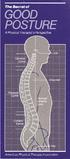 The Secret... T he American Physical Therapy Association would like to share a secret with you. It can help you do more with less effort breathe easier feel great. The secret is about good posture, which
Work Health & Safety Computer User Guide & Self Assessment Checklist
 Work Health & Safety Computer User Guide & Self Assessment Checklist TABLE OF CONTENTS Introduction Causes of computer related injuries Ergonomics Preventing workplace injuries Computer self assessment
Living Room Bodyweight Workout Week 1 March or jog in place for 1 min to increase heart rate and lubricate joints.
 Warm Up- Living Room Bodyweight Workout Week 1 March or jog in place for 1 min to increase heart rate and lubricate joints. Protocol- All exercises will be done for 2 sets of 10 repetitions. After the
Physical Agility Test Preparation and Safety
 Physical Agility Test Preparation and Safety TT DD CC JJ J How to Prepare for the PAT Prior to taking the Physical Agility Test, applicants should seek medical advice from their physician. The day of the
Avoid The Dreaded Back Injury by Proper Lifting Techniques
 Avoid The Dreaded Back Injury by Proper Lifting Techniques If you ve ever strained your back while lifting something, you ll know the importance of lifting safely. Agenda Introduction About the Back The
Lumbar/Core Strength and Stability Exercises
 Athletic Medicine Lumbar/Core Strength and Stability Exercises Introduction Low back pain can be the result of many different things. Pain can be triggered by some combination of overuse, muscle strain,
Info. from the nurses of the Medical Service. LOWER BACK PAIN Exercise guide
 Info. from the nurses of the Medical Service LOWER BACK PAIN Exercise guide GS/ME 03/2009 EXERCISE GUIDE One of the core messages for people suffering with lower back pain is to REMAIN ACTIVE. This leaflet
CHAPTER 3: BACK & ABDOMINAL STRETCHES. Standing Quad Stretch Athletic Edge - www.athleticedge.biz - (650) 815-6552
 CHAPTER : BACK & ABDOMINAL STRETCHES Standing Quad Stretch ) Stand and grasp right ankle with same hand, use a wall or chair to Lower maintain Back balance with left hand. Maintain an upright Stretches
The Advantages of Ergonomics
 The Advantages of Ergonomics Workers come in all different sizes. Ergonomics can help make the work more comfortable for the individual worker. What is ergonomics? Ergonomics is designing a job to fit
Labour Protect Your Back!
 Building Fair and Productive Workplaces Labour Protect Your Back! LT-006-07-07 Also available: Protect Your Lungs! / Protégez vos poumons! LT-168-10-05 Protect Your Skin! / Protégez votre peau! LT-158-09-05
Yoga Teacher Training Home Study Course. Part 3b. Teaching and Practicing Sun Salutations
 Yoga Teacher Training Home Study Course Part 3b Teaching and Practicing Sun Salutations Sun Salutations (Surya Namaskar) A sun salutation is a graceful sequence of positions performed as one continuous
try Elise s toning exercise plan
 try Elise s toning exercise plan Whether you want to start things off slow and gradually build up your fi tness, or begin with a challenge, Elise s toning exercise programme is designed for all levels.
Physiotherapy Database Exercises for people with Spinal Cord Injury
 Physiotherapy Database Exercises for people with Spinal Cord Injury Compiled by the physiotherapists associated with the following Sydney (Australian) spinal units : Last Generated on Mon Mar 29 16:57:20
Whole Hand Activities
 Activities Walk & Flip 5 Baton Twirl Rotate the pencil in, around and between all your fingers like it was a baton. 10 Walk your fingers up the pencil (your index will look like an inchworm climbing the
How to Make Your Computer Workstation Fit You
 How to Make Your Computer Workstation Fit You 1 About the WCB Preventing on-the-job injury and disease is the first priority of the Workers Compensation Board (WCB) of British Columbia. WCB officers inspect
Easy Ergonomics. For Desktop Computer Users. Department of Industrial Relations Cal/OSHA Consultation Service Research and Education Unit
 Easy Ergonomics For Desktop Computer Users Department of Industrial Relations Cal/OSHA Consultation Service Research and Education Unit 1 COMPUTER ERGONOMICS GUIDE Easy Ergonomics for Desktop Computer
Mike s Top Ten Tips for Reducing Back Pain
 Mike s Top Ten Tips for Reducing Back Pain The following article explains ways of preventing, reducing or eliminating back pain. I have found them to be very useful to myself, my clients and my patients.
Exercises for the Hip
 Exercises for the Hip Gluteal Sets: Lie on your back, tighten buttocks and hold for 3-5 seconds. Repeat 20 times. Supine Hip ER/IR: Lie on your back with legs straight. Gently rotate knees out and in limited
Flexibility Assessment and Improvement Compiled and Adapted by Josh Thompson
 Flexibility Assessment and Improvement Compiled and Adapted by Josh Thompson Muscles must have a full and normal range of motion in order for joints and skeletal structure to function properly. Flexibility
Safe Lifting and Carrying
 PART 1 Basic Lifts Proper lifting and handling will help protect against injury and make your job easier. It takes training and practice to do it right. The following are basic steps in safe lifting and
Physical Capability Strength Test: One Component of the Selection Process
 Physical Capability Strength Test: One Component of the Selection Process One aspect of the Power Systems Institute selection process is to successfully complete and achieve a passing score on a physical
Conditioning From Gym To Home To Gym
 Page 1 of 6 Conditioning From Gym To Home To Gym by Vladimir Artemov, Olympic and World Champion and USA Gymnastics Women's National Clinician In the beginning, and throughout the training process, conditioning
Shoulders (free weights)
 Dumbbell Shoulder Raise Dumbbell Shoulder Raise 1) Lie back onto an incline bench (45 or less) with a DB in each hand. (You may rest each DB on the corresponding thigh.) 2) Start position: Bring the DB
BEACH VOLLEYBALL TRAINING PROGRAM
 2008 ELITE PERFORMANCE ATHLETE CONDITIONING BEACH VOLLEYBALL TRAINING PROGRAM Team BC 2008 Steve Van Schubert, CAT(C), CSCS Training Schedule General Outline Phase 1 2 Weeks Phase 2 3 Weeks Phase 3 3 Weeks