
ME-SSI Series Stacking Interface
|
|
|
- MargaretMargaret Norris
- 9 years ago
- Views:
Transcription
1 ME-SSI Series Stacking Interface Owner s Manual
2 Disclaimer of Liability The use of this manual and the conditions or methods of installation, operation, use, and maintenance of the ME-SSI (Series Stacking Interface) are beyond the control of Magnum Energy, Inc. Therefore, this company assumes no responsibility and expressly disclaims any liability for loss, damage, or expense whether direct, indirect, consequential, or incidental that may arise out of or be in any way connected with such installation, operation, use, or maintenance. Due to continuous improvements and product updates, the images shown in this manual may not exactly match the unit purchased. Restrictions on Use The ME-SSI may only be used in life-support devices or systems with the express written approval of Magnum Energy. Failure of the ME-SSI can reasonably be expected to cause the failure of that life-support device or system, or to affect the safety or effectiveness of that device or system. If the ME-SSI fails, it is reasonable to assume that the health of the user or other persons may be endangered. Contact Information Magnum Energy, Inc West Casino Rd. Everett, WA Phone: (425) Fax: (425) Web: Revisions Required Your MS4024 inverter and remote control (if used) must have the correct revision level in order to work in a series stacked configuration. The MS4024 requires a revision of 2.0 or higher. To use a remote control (i.e., ME-RC50 or ME-ARC) with this product, you need a revision of 1.2 or higher. i
3 Safety symbols To reduce the risk of electrical shock, fire, or other safety hazard, the following safety symbols have been placed throughout this manual to indicate dangerous and important safety instructions. WARNING: This symbol indicates that failure to take a specified action could result in physical harm to the user. CAUTION: This symbol indicates that failure to take a specified action could result in damage to the equipment. Info: This symbol indicates information that emphasizes or supplements important points of the main text. IMPORTANT PRODUCT SAFETY INSTRUCTIONS This manual contains important safety instructions that must be followed during the installation and operation of this product. Read all instructions and safety information contained in this manual before installing or using this product. All electrical work must be performed in accordance with local, state, and federal electrical codes. This product is designed for indoor/compartment installation. DO NOT expose to rain, snow, moisture, or liquids of any type. Use insulated tools to reduce the chance of electrical shock or accidental short circuits. Remove all jewelry such as rings, watches, bracelets, etc., when installing or performing maintenance on an inverter. Always disconnect the batteries or energy source prior to installing or performing maintenance on an inverter. Live power may be present at more than one point since an inverter utilizes both batteries and AC. Turning off the inverter may not reduce this risk. As long as AC power is connected, it will pass through the inverter regardless of the ON/OFF power switch setting. Always verify proper wiring prior to starting an inverter. Do not operate an inverter if it has been damaged. Do not dismantle an inverter; there are no user-serviceable parts contained in this product. Attempting to service the unit yourself could cause electrical shock. Internal capacitors remain charged after all power is disconnected. No AC or DC disconnects are provided as an integral part of the inverter. Both AC and DC disconnects must be provided as part of the system installation. ii
4 No overcurrent protection for the supply is provided as an integral part of the inverter. Overcurrent protection of the cables must be provided as part of the installation. No overcurrent protection for the AC output wiring is provided as an integral part of the inverter. Overcurrent protection of the AC output wiring must be provided as part of the installation. IMPORTANT BATTERY SAFETY INSTRUCTIONS Wear eye protection (safety glasses) when working with batteries. Remove all jewelry such as rings, watches, bracelets, etc., when installing or performing maintenance on the inverter. Never work alone. Always have someone near you when working around batteries. Use proper lifting techniques when working with batteries. Never use old or untested batteries. Check each s label for age, type, and date code to ensure all batteries are identical. Batteries are sensitive to changes in temperature. Always install batteries in a stable environment. Install batteries in a well ventilated area. Batteries can produce explosive gasses. For compartment or enclosure installations, always vent batteries to the outside. Provide at least one inch of air space between batteries to provide optimum cooling. Never smoke when in the vicinity of batteries. To prevent a spark at the and reduce the chance of explosion, always connect the cables to the batteries first. Then connect the cables to the inverter. Use insulated tools at all times. Always verify proper polarity and voltage before connecting the batteries to the inverter. To reduce the chance of fire or explosion, do not short-circuit the batteries. In the event of accidental exposure to acid, wash thoroughly with soap and water. In the event of exposure to the eyes, flood them for at least 15 minutes with running water and seek immediate medical attention. Recycle old batteries. SAVE ALL INSTRUCTIONS iii
5 Table of Contents Introduction...1 Installation...2 DC Wiring... 2 Battery Connections for Series Stacked Inverters... 3 DC Wiring Using One Battery Cable Pair... 4 DC Wiring Using Two Battery Cable Pairs... 5 Incorrect DC Wiring... 6 The Stacker Cable... 7 Connecting the Series Stacking Cable... 7 AC Wiring... 8 AC Input Source... 8 AC Input... 9 AC Output...10 AC Terminal Block...10 Determine Which AC Wiring Configuration to Use...11 Neutral to Safety Ground Bonding (Mobile applications)...13 Grounding...14 Operation...15 Using the Remote Control...15 Functional Test...15 Power-up Sync Test...16 Testing Invert Mode...16 Testing AC Transfer/Charge Mode...17 Inverter Operation...18 Charger Operation...18 Troubleshooting...20 Inverter Faults...20 Stacking Faults...20 Troubleshooting Tips...20 Warranty/Service Information...21 How to Receive Repair Service...22 Table of Figures Figure 1, Series Stacking Interface (ME-SSI) Components... 1 Figure 2, ME-SSI Components Connected to Stacked Pair... 3 Figure 3, DC Wiring Using One Battery Cable Pair... 4 Figure 4, DC Wiring Using Two Battery Cable Pairs... 5 Figure 5, Incorrect DC Wiring... 6 Figure 6, Stack Port Location (on MS4024)... 7 Figure 7, Single In/Single Out (30A with 120/240VAC source)...11 Figure 8, Single In/Single Out (30A with 120VAC only source)...11 Figure 9, Single In/Single Out (60A with 120/240VAC source)...12 Figure 10, Single In/Single Out (60A with 120VAC only source)..12 Figure 11, AC Wiring compartment (MS4024 model)...14 iv
6 Introduction Introduction Magnum Energy s Series Stacking Interface (ME-SSI) kit allows two MS4024 models to be connected together in a series stacked configuration to provide 120VAC and 240VAC outputs. When connected together in a series, the AC output of each inverter continues to provide 120VAC, but the two 120VAC output waveforms are also phase locked and synchronized 180 out-of-phase from each other to provide 240VAC. This is commonly referred to as a 120/240VAC split-phase or as a 240VAC single-phase with a center-tap neutral, and is the same AC voltage configuration that most utility companies connect to houses. While inverting, a series stacked configuration allows you to operate 240VAC loads at twice the power that is available from a single inverter; and, the ability to provide the power of each inverter separately to operate 120VAC loads. While charging, a series stacked configuration allows the bank to be independently charged up to twice the power available from a single inverter; and if needed, provides back-up power for your 120/240VAC loads during a utility black-out. The ME-SSI kit consists of: ME-SSI Owner s Manual Two DC interconnects cables (red and black) Two DC terminal insulators (red and black) Series Stacker cable Red and Black DC Interconnects Cables Series Stacker Cable Red and Black DC Terminal Insulators Figure 1, Series Stacking Interface (ME-SSI) Components 1
7 Installation Installation When connecting inverters in a series stacked configuration, certain installation requirements are needed to obtain optimum performance. This section provides information on DC and AC wiring and connecting the stacker cable. Use the information in this section along with the installation requirements provided in the owner s manual for your inverter to ensure a successful installation. IMPORTANT - Before you begin your installation: Series stacking allows two MS4024 (120VAC inverters) to be combined to provide a higher AC voltage (two MS4024 series stacked = /240VAC). Magnum also has inverters that can be installed in a configuration known as parallel stacking. This configuration allows you to increase your inverter output power using a maximum of four MS-PAE units. For example, four MS4024PAE Series inverters (using the ME-RTR router) can be combined to provide 16,000 watts of inverter power (MS4024PAE x 4 = 16, /240VAC). DC Wiring Info: The MS4024 (120VAC unit) cannot be reconfigured to allow parallel stacking. Only the MS-PAE Series (MS4024PAE or MS4448PAE) can be paralleled stacked. CAUTION: All wiring must be done in accordance with local and national electrical safety standards. The success of an inverter system installed in a series stacked configuration is dependent on the quality and maintenance of the DC connections and proper cable sizing. When inverters are stacked and required to perform optimally, the DC connections must be tight and the cables must not be too long or undersized. Refer to the owner s manual for your inverter to determine the required cable size and overcurrent protection device for each inverter. CAUTION: Before making any DC connection, ensure the cable polarity at both the and the inverter are correct. Positive must be connected to positive; negative must be connected to negative. Reversing the positive and negative cables will damage the inverter. This type of damage is easily detected and will void your warranty. For help against accidental shorts, the ME-SSI kit provides two DC terminal insulators. These are to be used where both the cables and DC interconnects are connected (see Figure 2). Alternately, a DC Conduit Box (PN: ME-CB) or Mini Magnum Panel (MMP250-60S) may be used to protect the DC terminals. 2
8 Installation DC interconnect cables (positive and negative) Stacker Cable DC terminal insulators (negative and positive) Figure 2, ME-SSI Components Connected to Stacked Pair Battery Connections for Series Stacked Inverters When inverters are series stacked, they must operate from a single bank. A single bank configuration helps to balance charging and discharging. If your bank uses multiple strings (i.e., batteries connected together in series to provide the required DC voltage), ensure each string is connected together in parallel to form a single bank. For example: If you have eight batteries and require a 24 volt bank, connect four of the batteries together to make 24 volts. This is known as a series string. The other four batteries connected together will also make another series string. The negative ends of these two strings must be connected together. Likewise, the positive ends of the two strings must be connected together. Then, the two strings are connected together in parallel to make a single bank to power the stacked inverters (as shown in Figures 3 and 5). CAUTION: The DC negative interconnect cable provided in the ME-SSI kit is a crucial part of the DC wiring and must be used. It ensures that the negative terminals of both inverters are at the same voltage potential. This allows proper communication of the clocking signals and helps prevent damage to the stacking ports. Info: If multiple temperature sensors are installed, ensure that they are all connected to the bank in the same location. This will help balance the charging from each charger. 3
9 Installation This diagram is for a 24 VDC system. Ensure your bank is wired correctly. MS4024 L1 inverter DC Positive and Negative Interconnects (from ME-SSI kit) DC disconnect and overcurrent protection Stacker cable (from ME-SSI kit) MS4024 L2 inverter This bank uses two strings. They must be connected together in parallel to provide a single bank to the inverters. Figure 3, DC Wiring Using One Battery Cable Pair DC Wiring Using One Battery Cable Pair Both inverters share a single cable pair (one positive and negative). It is divided between the two inverters and is protected by a single DC disconnect/overcurrent device. The positive cable is connected to the positive terminal of one inverter and the negative cable is connected to the negative terminal of the other inverter. This is to ensure an even charge and discharge through the batteries. The positive and negative interconnect cables provided are used to place the inverters as close to each other as possible. 4
10 Installation This diagram is for a 24 VDC system. Ensure your bank is wired correctly. DC Negative Interconnect (from ME-SSI kit) MS4024 L1 inverter Stacker cable (from ME-SSI kit) DC disconnects and overcurrent protection MS4024 L2 inverter This bank uses two strings. They must be connected together in parallel to provide a single bank to the inverters. Figure 4, DC Wiring Using Two Battery Cable Pairs DC Wiring Using Two Battery Cable Pairs Each inverter has its own cable pair (positive and negative for each inverter) connected to the bank. There are two DC disconnect/overcurrent devices, one for each positive cable. Use only the DC negative interconnect cables from the ME-SSI kit between the two inverters in this configuration. The positive interconnect cable is not used in this installation as it may not meet electrical code requirements, and would cause performance issues if only one DC disconnect/overcurrent device inadvertently opens. 5
11 INCORRECT WAY TO CONNECT THE BATTERY BANK TO THE SERIES STACKED INVERTERS. **DO NOT WIRE THIS WAY** The bank cables are going to one inverter, this is NOT RECOMMENDED Installation DC Positive and Negative Interconnects (from ME-SSI kit) MS4024 L1 inverter Stacker cable (from ME-SSI kit) DC disconnect and overcurrent protection MS4024 L2 inverter This bank uses two strings. They must be connected together in parallel to provide a single bank to the inverters. Figure 5, Incorrect DC Wiring Incorrect DC wiring As shown in Figure 5, do not attempt to connect the positive and negative to one inverter and then jumper the negative and positive to the second inverter. This will not distribute the current into and out of the bank evenly and may not allow the second inverter to receive sufficient current if powering a heavy load. If you have a single cable pair, use Figure 3 to guide you in wiring your DC cables to the stacked pair of inverters. 6
12 Installation The Stacker Cable The stacker cable provided in the ME-SSI kit is specifically designed for series stacking two MS4024 model inverters. It allows information exchange between the two stacked inverters for two main purposes: to provide synchronization information while inverting, and to send a shut down command if a fault condition is detected. This shut down command prevents any 240VAC load from receiving only 120VAC power. CAUTION: Do not use a standard telephone or data cable in place of the stacker cable or damage may occur. Info: The stacker cable doesn t allow programming or access to the display from one inverter to the other. If changes or monitoring are necessary, a remote control must be connected to the affected inverter. It is highly recommended that you use two remotes in order to monitor and set each inverter. Connecting the Series Stacker Cable The stacker cable is a 48-inch, six-wire, twisted pair cable easily indentified with a red STACKER label on each end. This cable also has two RJ11 connectors on each end, which allows an easy connection to the Stack Port on each inverter. Once the inverters are connected as described in the DC Wiring section, the stacker cable can be installed as follows: CAUTION: Ensure that no DC power is connected to the inverter, and that the DC disconnect is open. 1. Locate the Stack Port on each inverter (see Figure 6). 2. Connect the series stacker cable from the Stack Port jack on one inverter to the Stack Port jack on the other unit. 3. Once the series stacker cable is connected gently pull on the cable at both ends, close to where they are plugged in, to ensure both connectors are secured in place. Stack Port (red label) 7 Figure 6, Stack Port Location (on MS4024)
13 Installation AC Wiring This section will discuss AC wiring that is unique to series stacking; otherwise, refer to you inverter s owner s manual for any other information on AC wiring. When wiring the AC to your series stacked inverters there are many variables that must be considered for a safe and trouble-free installation. The following options should be determined prior to any AC wiring: Info: The AC source must be connected to both inverters. An AC source connected to only one inverter in a series stacked configuration is not supported and will not work. AC Input Source When an AC source is connected to the inverter s input and passing thru both inverters (Charge mode), the AC output of the two series stacked inverters is determined by the phase and voltage of the incoming AC source (utility or generator). The series stacked inverters can be operated from the following types of 120VAC/60Hz AC sources: Split-phase (120/240VAC) This AC type provides both 120 and 240VAC. It has two 120VAC lines (L1 and L2), a neutral and a ground. The two 120VAC lines are 180 out-ofphase with each other, so that the combination of the L1 and L2 lines total 240VAC and the voltage between either L1 or L2 and neutral is 120VAC. When split-phase power is connected to the HOT 1 IN of each inverter (L1 to one inverter and L2 to the other inverter) and passing through the inverters, the incoming power is shared with the charger and the HOT 1 OUT lines continue to be 180 out-of-phase. This source is the ideal type as it will be able to provide 120/240VAC to power loads when inverting and also in Charge/Transfer mode. See Figures 7 and 9. Single-phase (120VAC only) This AC source has one 120VAC line, one neutral, and a ground. The 120VAC line is fed to both the HOT 1 IN s of each inverter and when in Charge mode, it will pass thru to the HOT 1 OUT s of each inverter. The incoming power is shared with the charger, but since the two lines come from the same source (unlike the split-phase type), the two lines are in-phase and the voltage between the HOT 1 OUT lines will be zero. While this AC source is used to charge your batteries, you must remember that you will not be able to power any 240VAC loads (voltage from L1 to L2 will be zero). Once the AC source is disconnected and the inverters again start inverting, you can reconnect your 240VAC loads. See Figures 8 and 10. Three-phase (with neutral) This AC source typically has three 120VAC lines, a neutral and a ground. The output of each line is 120 out-of-phase from each other, so the voltage from one line to another is 208VAC and the voltage between 8
14 Installation each line and neutral is 120VAC. When three-phase power is connected to the HOT 1 IN of each inverter (one line to one inverter and a different line to the other inverter) and passing through the inverter (Charge mode), the incoming power is shared with the charger. The voltage between each HOT 1 OUT and neutral will be 120VAC, and between the inverters two HOT 1 OUT lines it will be 208VAC. If this AC source is used, you must remember that you may not be able to power any 240VAC loads (voltage from L1 to L2 will be 208VAC) until the AC is disconnected and the inverters again start inverting. 240VAC only The input of the series stacked system requires either 120VAC (from hot to neutral) or 120/240VAC (with a common center neutral provided between the L1 and L2 lines). If a 240VAC only AC source is connected to the AC HOT input on the two inverters without a center neutral, the inverters will not recognize the AC source nor allow charging. If this AC source is required, an auto-transformer may be used to obtain a center neutral to allow charging/pass-through. WARNING: The output of the series stacked inverters is 120/240VAC when inverting; however, while in Charge mode (AC is connected and charging/pass-thru), the AC output voltage is determined by the input AC voltage. Be aware that this voltage may be different from the inverting voltage and the connected load may not work or could be possibly damaged. AC Input Each inverter requires a two-conductor (hot and neutral) plus ground cable, with the hot conductor fed by a circuit breaker. If you decide to use the Single In/Single Out (30A) connection (see Figures 7 and 8), each inverter would require a 120VAC hot conductor (protected by a maximum 30A circuit breaker) connected to the HOT 1 IN terminal. The neutral conductor, which must be sized to handle the total current capacity of the HOT 1 IN conductor, must be connected to the NEUT IN terminal and a ground conductor connected to the AC ground terminal on each inverter. For a Single In/Single Out (60A) connection (see Figures 9 and 10), each inverter would require a 120VAC hot conductor (protected by a maximum 60A circuit breaker) connected to the HOT 1 IN terminal and this connection jumpered to the HOT 2 IN terminal. The neutral conductor (which must be sized to handle the total current capacity of the HOT 1 IN conductor) must be connected to the NEUT IN terminal, and a ground conductor must be connected to the AC ground terminal on each inverter. In most applications, these input conductors originate from an AC distribution panel, providing a main disconnect and circuit breakers required for each conductor connected to the HOT 1 IN input 9
15 Installation on each inverter. This panel, referred to as the main panel, also provides the neutral and ground bus for connecting the neutral and ground conductors to the inverter. AC Output The AC output from each inverter when series stacked is 120VAC from HOT OUT to NEUT OUT. The inverters can be wired as a HOT 1 OUT only or HOT OUT 1 and HOT OUT 2 connected together by a jumper depending on your pass-thru current requirements. One inverter is wired to provide one 120VAC output (L1) and the other inverter is wired to provide the second 120VAC output (L2). These L1 and L2 outputs are 180 out-ofphase, so the combination of the two out-of-phase 120VAC outputs will provide 240VAC. The HOT OUT outputs of each inverter require a two-conductor (hot and neutral) plus ground cable connected to a 120/240VAC split-phase distribution panel for the loads. The panel, referred to as the sub-panel, must be equipped with a 240VAC doublepole circuit breaker rated at 30 or 60 amps maximum depending on which Single In/Single Out configuration you are using. The inverters output should be wired to this circuit breaker and will be used as the sub-panel main disconnect. The sub-panel then provides circuit breakers for the 120VAC and 240VAC branch circuits powering the loads. AC Terminal Block When wiring to the inverter s six-pole AC terminal block as a series stacked pair, four different wiring configurations can be used. These different wiring configurations depend on whether the output of your AC source can provide up to 30 or 60 amps, and whether you are using a split-phase (120/240 VAC) AC source or a 120VAC only source. If only wiring to the HOT 1 (Single In/Single 30 amps), it means you have up to 30 amps pass-thru and share the incoming power with the charger. Wiring to the HOT 1 input with a jumper to the HOT 2 input (Single In/Single 60 amps) provides up to 30 amps pass-thru on each input (60 amps total). Info: The Dual In/Dual Out wiring configuration is not recommended with a series stacked system, as they would conflict with one another. 10
16 Installation Determine Which AC Wiring Configuration to Use: Single In/Single Out (30 Amps) Using a single line (HOT 1) for the input and output provides up to 30 amps AC pass-thru and shares power with the charger. Use this configuration if your AC source is 30 amps or less. See Figures 7 and 8 below. MS4024 (L1) HOT 1 IN HOT 1 OUT AC SOURCE (120 /240 ) HOT 2 IN NEUT IN HOT 2 OUT NEUT OUT AC LOADS (120 /240 ) 240V 120V 120V L1 NEU L2 MS4024 (L2) HOT 1 IN HOT 1 OUT HOT 2 IN HOT 2 OUT L1 NEU L2 120V 240V 120V NEUT IN NEUT OUT Figure 7, Single In/Out (30A with 120/240VAC source) MS4024 (L1) HOT 1 IN HOT 1 OUT 120V AC SOURCE ( 120 only ) HOT NEU HOT 2 IN HOT 2 OUT NEUT IN NEUT OUT MS4024 (L2) HOT 1 IN HOT 1 OUT HOT 2 IN HOT 2 OUT AC LOADS ( 120 / 240) L1 NEU L2 120V 120V 240V (Invert only) NEUT IN NEUT OUT Figure 8, Single In/Out (30A w/ 120VAC only source) 11
17 Installation Single In/Single Out (60 Amps) Using both inputs (HOT 1 and HOT 2) for the input and output provides up to 60 amps AC pass-thru (30 amps each line). The HOT 1 line passes through the unit and also shares power with the charger. The HOT 2 line passes through the unit without sharing power with the charger. Use this configuration if the output from your AC source provides more than 30 amps. See Figures 9 and 10 below. MS4024 (L1) HOT 1 IN HOT 1 OUT AC SOURCE ( 120 / 240) HOT 2 IN NEUT IN HOT 2 OUT NEUT OUT AC LOADS (120 /240 ) 120V 240V 120V L1 NEU L2 MS4024 (L2) HOT 1 IN HOT 1 OUT HOT 2 IN HOT 2 OUT L1 NEU L2 120V 240V 120V NEUT IN NEUT OUT Figure 9, Single In/Out (60A with 120/240VAC source) MS4024 (L1) HOT 1 IN HOT 1 OUT 120V AC SOURCE ( 120 only ) HOT NEU HOT 2 IN HOT 2 OUT NEUT IN NEUT OUT MS4024 (L2) HOT 1 IN HOT 1 OUT HOT 2 IN HOT 2 OUT AC LOADS ( 120 / 240) L1 NEU L2 120V 240V (Invert only) 120V NEUT IN NEUT OUT Figure 10, Single In/Out (60A w/ 120VAC source only) Info: The dashed lines between the NEUT IN and NEUT OUT in Figures 7 through 10 represent the RD and MS- AE Series models. Those models have no internal relay between the NEUT IN and NEUT OUT, as they are tied together. Info: Refer to the MS4024 Owner s Manual for information on how to connect the AC terminal. 12
18 Installation Neutral to Safety Ground Bonding Electrical safety standards for wiring mobile (RV, boat, or truck) and AE (houses, cabin, or office) installations require: an AC source such as the utility feed in your home, an inverter or a generator, and the neutral conductor tied to ground. These standards also require that the AC neutral be connected to safety ground (often called a bond ) in only one place at any time (often called a bond ). If more than one bond is established, currents can circulate between neutral and ground and cause groundloop currents. These ground-loops can trip GFCIs and cause an electric shock hazard. The fundamental difference between using an inverter in a mobile installation as opposed to an AE installation is how the neutral is grounded in the AC system. There may be multiple AC sources in mobile installations, which means there is the potential of having multiple neutral to ground connections. Therefore, if you are using an inverter as one of your AC sources along with another AC source (i.e., utility power or generator), you must ensure that the inverter does not also connect the neutral to ground while the other AC source is actively powering the inverter loads. In AE installations, the main service panel provides the neutral to ground bond for the entire electrical system not in the inverter. The MS4024 inverter provides an internal relay that connects the neutral to ground while inverting and opens this neutral-to-ground connection automatically when connected to an active AC source, such as utility power or a generator. WARNING: Each MS4024 inverter in a series stacked configuration provides a neutral-to-ground connection, creating two bonds at the same time. Depending on the installation, either one or both of the neutral-to-ground connections inside the inverter must be disconnected to prevent multiple neutral to ground connections. In a mobile installation, the neutral-to-ground connection in one of the MS4024 inverters in a series stacked configuration must be disconnected; while leaving the neutral-to-ground connection in place in the other MS4024 inverter to allow the automatic neutralto-ground switching to continue for the series stacked pair. In an AE installation, the neutral-to-ground connection in both of the MS4024 inverters must be disconnected, because the neutralto-ground connection is provided in the main AC panel. WARNING: Any neutral-to-ground bond downstream from the inverter must be removed to prevent multiple bonds. If there is an inverter sub-panel separate from a main electrical panel it should have a removable wire that allows the neutral bus to be unbonded from the ground bus. 13
19 Disconnecting the Neutral-to-Ground Connection Installation The following instructions will guide you in disconnecting the neutral-to-ground connection. WARNING: Fire and Shock Hazard Disconnect all AC and DC sources before working with AC wiring. 1. Locate and remove the inverter s AC access cover plate. 2. At the top of the AC wiring compartment, locate the green wire with the insulated connector (see Figure 11). This connects the neutral and ground inside the inverter. 3. Pull the two ends of the insulated connector apart to separate the green wire. This prevents a neutral/ground connection. 4. Move the two disconnected ends away from each other and push them back out of the way. The two connector ends shouldn t have any contact with any other wires within the compartment. Use electrical tape to insulate the ends. Neutral to ground connection (green wire) Figure 11, AC Wiring Compartment (MS4024 model) Grounding Ensure all components are grounded properly for safety and codecompliance. Refer to your inverter s owner s manual for specific grounding information on your inverter. WARNING: When stacking inverters, ensure the chassis of each inverter is connected to the same common ground (i.e., in the utility or inverter panel); otherwise, a hazardous voltage difference may be present between them. The installation is complete, follow the information provided in the Operation section to test and operate the series stacked system. 14
20 Operation Operation When two inverters are series stacked and inverting, they coordinate with each other to ensure the output can power 240VAC loads. This requires that the inverters turn on together and switch to the AC source at the same time; and, both inverters should shut down if either one becomes inoperable. This Operation section provides a functional test to ensure the two inverters are working together as a series stacked pair, and also provides information pertinent to the set-up and operation of a series stacked configuration. Using the Remote Control The default settings in your inverter are adequate for most installations; however, in a series stacked configuration we highly recommend using the ME-RC50 or ME-ARC50 remote controls. These remote controls can be used to monitor the inverter s status and make set-up changes. A single remote can be used to configure each inverter, but not at the same time. If you want the ability to monitor and configure both units at the same time, each inverter will require its own remote. Info: To use a remote control, it must have revision 1.2 or higher to work properly with a series stacked configuration. Functional Test Series stacked inverters must communicate together to provide 120/240VAC to the loads and shut down if any inverter faults occur. This functional test will confirm the two units are operating correctly as a series stacked pair. Before performing the functional test, ensure the following: All DC disconnects to the inverters are turned off. All AC input and output circuit breakers are turned off. Only the stacker cable provided in the ME-SSI is used. The stacker cable is connected to each inverter s Stack Port (red label). Only MS4024 inverter models are stacked together. NEUT OUT of both inverters are connected to the same neutral bus. DC and AC grounds are both connected and properly installed. AC input connections and AC output connections are wired correctly on the terminal block and not reversed (double-check before turn-on). All DC connections are properly connected and tight. 15
21 Operation Battery voltage is within the DC voltage range for your inverter. The DC negatives of each inverter are connected together using the negative DC interconnect provided (i.e., 2/0 AWG and 3 feet max). The positive (+) cable(s) is connected to the positive (+) terminal through a DC disconnect and overcurrent device. The negative ( ) cable(s) is connected to the negative ( ) terminal. Power-up Sync Test 1. While monitoring the Status LED located on each inverter, apply DC voltage to both inverters at the same time (ensure AC is not connected). CAUTION: It is crucial that the DC voltage be connected to both inverters within 15 seconds of each other. The units go through an auto-detect when first poweredup to synchronize the units for series stacking. If both units are not powered up within this time, then series synchronization will not occur. 2. The Status LED on both inverters should blink 9 times in sync. This indicates that the two units have recognized each other and are communicating as a series stacked system. Testing Invert Mode 3. Press the Power ON/OFF switch on either inverter, this should turn on both inverters. (If using a remote control, press the INVERTER ON/OFF button on either remote, and then verify that the INV and PWR LED on both remotes come on). If either unit is Searching, you must disable the Search mode prior to making any voltage measurement. The inverters should now be providing 120/240VAC to the AC sub-panel. 4. Measure the voltage between the L1 terminal and the neutral bus in the AC sub-panel. This voltage should be 120VAC (±6VAC). 5. Measure the voltage between the L2 terminal and the neutral bus in the AC sub-panel. This voltage should be 120VAC (±6VAC). 6. Measure the voltage between the L1 and L2 terminals in the AC sub-panel. This voltage should be 240VAC (±12VAC). 7. Turn on the AC load breakers in the sub-panel which are powered by the inverters. 16
22 Operation 8. Turn on a 120VAC load powered by the inverter feeding the L1 terminal and verify that it works. Turn on a 120VAC load powered by the other inverter which feeds the L2 terminal and verify that both of these loads work. Turn on a 240VAC load powered by the hot outputs of both inverters and verify that it works correctly leave all these loads on. Testing AC Transfer/Charge Mode 9. Check the AC transfer. Apply AC power to both inverters, after a few seconds: a. If using the remote control wait till the CHG LED on the remote control for both units stops blinking and comes on solid. Press the INVERTER ON/OFF button to disable the Inverter mode and verify the INV LED turns off, and that the loads connected in Step 8 continue to work. b. Without the remote control the Status LED on both inverters will come on. Press the inverter s Power ON/OFF switch and verify that the loads connected in Step 8 continue to work. 10. Check the Charge mode. Verify the batteries are being charged may take minutes before the charge current is actually seen. a. If using the remote control monitor the CHG LED on the remote, if it is blinking on either remote, press the CHARGER ON/ OFF button on that remote to turn the charger on. Verify the CHG LED on both remotes are on solid (not blinking) and the remote display shows that they are both in Charge mode (i.e., Bulk Charging, Absorb Charging, etc.). b. Without the remote control - the Status LED on both inverters will come on (the LED will be on solid or blink depending on the Charge mode). This completes the functional test. If the inverters are functioning correctly as a series stacked pair, continue to the Inverter and Charger Operation sections. If any step did not operate correctly, refer to the Troubleshooting section in this manual or in the owner s manual for your inverter. 17
23 Operation Inverter Operation Invert Mode - The units are turned on by pressing the Power ON/ OFF switch on either inverter. Alternatively, they can also be started by pressing the INVERTER ON/OFF button on a remote control connected to either inverter. When the two inverters are inverting, they communicate over the Stacker cable. This cable communicates to monitor the AC output from each inverter and shift it 180 out of phase from each other to provide 240VAC on both units, and to verify that there are no faults on either unit to prevent only one unit from inverting. The two units also use the DC negatives as a reference point while they are communicating; hence, the reason why the DC negatives must be tied together to ensure there is no negative voltage difference between the two units. Inverter settings - When the units are inverting as a series stacked configuration, certain settings must be coordinated in each unit for proper operation. Without a remote control, the default settings on each unit will be coordinated. If using a remote control, check that the following settings are the same between the two units: 1. Ensure the Adj LowBatCutOut setting is the same for both units. 2. If the Search mode is needed, then set the Adj Search Watts setting for each inverter to determine when to start powering 120VAC loads. The two inverters are independent, which means one inverter can come out of Search mode and start inverting, while the other unit continues in the Search mode until a load exceeds the search watts threshold of that unit. If powering 240VAC loads, then the search watts sensibility is determined by combining the Search Watts setting on both units. For example: Given a 15 watt Search Watts setting on the L1 inverter and a 10 watt Search Watts setting on the L2 inverter, and a 20 watt/120vac load on the L1 inverter and no load on the L2 inverter. This would cause the L1 inverter to start inverting, but the L2 inverter would continue in Search mode. With the same Search Watts settings, a 25 watt/240vac or greater load would cause both the L1 and L2 inverters to come on and start inverting. Charger Operation Charge Mode The series stacked configuration is designed to accept 120VAC to each inverter, typically from a split-phase, 3 wire 120/240VAC power source. The HOT IN terminals of each inverter accepts one line of 120VAC each and the NEUT IN terminals of both inverters are tied together and connected to the AC power source neutral line. When the AC line voltage and frequency are good to both units, they both transfer and go to Charge mode and begin charging if enabled. However, it is not necessary for either unit to have charging enabled for the pair to operate. 18
24 Operation After the series stacked pair is in Charge mode, the remote will show Charging and begin to sample the voltage. If the voltage is 26.0 or above, the units will go into Float Charging mode. If the voltage is below 26.0, they will go into Bulk Charging mode. It is possible that if the voltage is close to the V threshold, one charger may go to float while the other may go to Bulk Charge mode. The stacked pair of chargers work independently of each other, and because of this, there can be some voltage regulation interactions. To handle this, the charge voltage regulation routine while stacked will sample twice as much as usual. This may mean that the chargers may take a minute or two before charge current is actually seen, once AC input is first applied. Once charging has started because they are independent chargers they may not share the charge current evenly, but will individually provide current to the batteries up to their maximum current rating, which is the maximum Charge Amps or Input/Shore Amps setting, whichever is less. Any power required for charging will be in addition to any AC loads being powered while AC input is present to the inverters. Info: During Bulk Charging, both inverters will attempt to balance the total current provided to the batteries. During Absorption or Float Charging the current will differ. While in Charge mode, if either unit senses a loss of AC input power, both units will transfer from Charge to Inverter mode. Once this transfer is made, 120VAC is available from each individual inverter and 240VAC is available across the HOT OUT terminals of the stacked pair. Charger settings If a remote control is used, care should be taken to insure that charger settings are the same for both inverter chargers. Without a remote control, the default settings on each unit will be coordinated. If you are using a remote control, then check that the Adj Charge Rate, Adj Batt AmpHrs, Adj Battery Type, and Adj VAC Dropout settings on the two units are the same. Charging with a generator If you manually start a generator and use it as the AC source to charge the inverter batteries, you should be aware that because both inverters will be charging the same, one may taper off first and finish the Bulk Charge stage before the other. When one inverter has reached the Float Charge stage (after both units were charging in the Bulk Charge stage), then it is best to turn off the generator; running a generator to only float charge your batteries is very inefficient and if possible, should be avoided. 19
25 Troubleshooting Troubleshooting Inverter Faults Both units will shut down if either has an auto-resetting fault condition (such as high, low, or over-temperature). Both inverters will automatically come back on when the fault condition has been cleared. If one or both units experience any of the manual reset fault conditions, like a continuous AC overload or internal faults, both units will shut down. These types of faults require a manual reset by pushing one of the inverters Power ON/OFF switch (or by pressing the INVERTER ON/OFF switch on the remote control if available). If there are remote controls used in the system, the inverter/remote combination with the fault will display the actual fault while the other inverter will display Stack Mode Fault, which means the other unit has the fault. Stacking Faults Info: Having a remote for each inverter (two remotes) makes it easier to troubleshoot stacking faults. In a series stacked configuration, your remote may display a fault condition not possible on a single inverter installation: Stack Mode Fault There is a problem with the other inverter. Check the remote display of the other unit to determine the fault condition that must be cleared. StackClock Fault There is a stacker cable problem; or, one inverter is losing synchronization with the other inverter. StackPhase Fault There is a problem with the AC input wiring; or, one phase was lost from the AC input source; or, one of the inverter s internal transfer relay is bad; or, the inverter s AC input circuit breaker may be open. Troubleshooting Tips If there is no 240VAC output, ensure that the Status LEDs on both inverters blink in synchronization (the sync detection blinks 9 times total) when DC power is first connected. This is a stacker test and signifies that both units have autoconfigured for Stacker mode. The DC voltage must be connected to both inverters within 15 seconds of each other. If both units are in Inverter mode and then shut down, inspect the stacker cable and reconnect at both ends, ensuring an audible click at both inverters. Try to watch when the shutdown happens to determine the fault. If a remote control is available, monitor its display to reveal which fault is happening. 20
26 Warranty/Service Information Warranty/Service Information 24 Month Limited Warranty Magnum Energy, Inc., warrants this ME-SSI to be free from defects in material and workmanship that result in product failure during normal usage, according to the following terms and conditions: 1. The limited warranty for the product extends for 24 months beginning from the product s original date of purchase. 2. The limited warranty extends to the original purchaser of the product and is not assignable or transferable to any subsequent purchaser. 3. During the limited warranty period, Magnum Energy will repair or replace (with factory new or remanufactured replacement items) at Magnum Energy s option any defective parts, or any parts that will not properly operate for their intended use if such repair or replacement is needed because of product malfunction or failure during normal usage. The limited warranty does not cover defects in appearance (cosmetic or decorative), or any structural or nonoperative parts. Magnum Energy s limit of liability under the limited warranty shall be the actual cash value of the product at the time the original purchaser returns the product for repair, determined by the price paid by the original purchaser. Magnum Energy shall not be liable for any other losses or damages. 4. Upon request from Magnum Energy, the original purchaser must prove the product s original date of purchase by a dated bill of sale, itemized receipt. 5. The original purchaser shall return the product prepaid to Magnum Energy in Everett, WA. After the completion of service under this limited warranty, Magnum Energy will return the product prepaid to the original purchaser via a Magnum selected nonexpedited surface freight within the contiguous United States and Canada; this excludes Alaska and Hawaii. 6. If Magnum repairs or replaces a product, its warranty continues for the remaining portion of the original warranty period or 90 days from the date of the return shipment to the original purchaser, whichever is greater. All replaced products and parts removed from repaired products become the property of Magnum Energy. 7. This limited warranty is voided if: the product has been modified without authorization the serial number has been altered or removed the product has been damaged through abuse, neglect accident, high voltage, or corrosion the product was not installed and operated according to the owner s manual BEFORE RETURNING ANY UNIT, CONTACT MAGNUM ENERGY FOR A RETURN MATERIAL AUTHORIZATION (RMA) NUMBER. 21
27 How to Receive Repair Service Warranty/Service Information If your Product requires warranty service or repair, contact either: 1. An Authorized Service Center, which are listed on the Magnum Energy Website at 2. Magnum Energy, Inc. at: Telephone: Fax: If returning your Product directly to Magnum Energy for repair, you must: return the unit in the original, or equivalent, shipping container receive a Return Materials Authorization (RMA) number from the factory prior to the return of the Product to Magnum Energy for repair place RMA numbers clearly on the shipping container or on the packing slip When sending your Product for service, please ensure it is properly packaged. Damage due to inadequate packaging is not covered under warranty. We recommend sending the Product by traceable or insured service. 22
28 Magnum Energy, Inc West Casino Rd. Everett, WA Phone: (425) Fax: (425) Web: PN: Rev A
Digital echo-charge. Owner s Manual. Xantrex Digital echo-charge Battery Charger
 Digital echo-charge Owner s Manual Xantrex Digital echo-charge Battery Charger Thank you for purchasing a Xantrex Digital echo-charge. Xantrex Technology Inc. takes pride in manufacturing quality products
XC120 XC180. Owner's Guide Conforms to / Conforme à UL std. 458, Toll Free 1 866 295 6775. www.powerbright.com
 WARNING: This Unit employs Components that tend to produce arcs or sparks To prevent fire or explosion, do not install in compartments containing batteries or flammable materials - SHOCK HAZARD. DO NOT
VLT Series 300 Watt True Sine Wave Inverter
 VLT Series 300 Watt True Sine Wave Inverter PURE SINE WAVE INVERTER I ON 0 OFF REMOTE CONTROL AC OUTPUT POWER STATUS Vout Vin Models VLT12-300 VLT24-300 300 Watt VLT Series Inverter - 1 - TABLE OF CONTENTS
ME-BMK/ME-BMK-NS. Battery Monitor Kit. Owner s Manual
 ME-BMK/ME-BMK-NS Battery Monitor Kit Owner s Manual Disclaimer of Liability The use of this manual and the conditions or methods of installation, operation, use, and maintenance of the ME-BMK is beyond
3 WATT LED SPOTLIGHT Model No. SLM - 3801
 3 WATT LED SPOTLIGHT Model No. SLM - 3801 OWNER'S MANUAL Customer Service Tel: 1-800-268-3319 Superex Canada Ltd, Toronto,M2H 3B8 Made in China Table of Contents A). Important Safety Instructions B). Charging
Troubleshooting Guide, Freedom and Fleet Power Inverter/Chargers
 Technical Note Freedom/Fleet Power 512-0084-01-01 Rev 1 Troubleshooting Guide, Freedom and Fleet Power Inverter/Chargers Overview This document is a guide for troubleshooting inverters, battery chargers,
AGS. Owner's Manual. Xantrex Automatic Generator Start Control System
 AGS Owner's Manual Xantrex Automatic Generator Start Control System TABLE OF CONTENTS INTRODUCTION...3 Main Features...3 Safety Summary...3 THINGS YOU SHOULD KNOW...4 THEORY OF OPERATION...5 System...5
Advantium 2 Plus Alarm
 ADI 9510-B Advantium 2 Plus Alarm INSTALLATION AND OPERATING INSTRUCTIONS Carefully Read These Instructions Before Operating Carefully Read These Controls Corporation of America 1501 Harpers Road Virginia
BATTERY CHARGING GUIDELINES FOR 6-VOLT DEEP CYCLE BATTERIES
 BATTERY CHARGING GUIDELINES FOR 6-VOLT DEEP CYCLE BATTERIES Introduction Your 6-volt deep cycle battery set has been specially formulated for long cycle life and has particular voltage and specific gravity
OWNER S MANUAL 2.5/3.0 ACS PANEL (ADVANCED CONTROL SYSTEM) 7725 Lougheed Highway Burnaby, BC V5A 4V8 Canada
 2.5/3.0 ACS PANEL (ADVANCED CONTROL SYSTEM) OWNER S MANUAL 7725 Lougheed Highway Burnaby, BC V5A 4V8 Canada Tel: (604) 420-1585 Fax: (604) 420-1591 http:// www. statpower.com PROsine 2.5/3.0 ACS Panel
OWNER'S MANUAL. Model 20-1050CUL AC Power Inverter/Charger System OM/A96283 REV. A
 OWNER'S MANUAL Model 20-1050CUL AC Power Inverter/Charger System OM/A96283 REV. A Table of Contents Section 1 Introduction... 1 Section 2 Installing the 20-1050CUL... 4 Section 3 Installing the IFM1 Interface
12 Volt 30 Amp Digital Solar Charge Controller
 12 Volt 30 Amp Digital Solar Charge Controller User s Manual WARNING Read carefully and understand all INSTRUCTIONS before operating. Failure to follow the safety rules and other basic safety precautions
3000W Power Inverter
 3000W Power Inverter OWNER S MANUAL Model number-4573000 TO REDUCE THE RISK OF INJURY, USER MUST READ AND UNDERSTAND THIS INSTRUCTIONAL MANUAL. THIS MANUAL CONTAINS IMPORTANT INFORMATION REGARDING THE
Solar Wind Microhydro Water Pumping Inverters Batteries Professional system design and installation
 Solar Wind Microhydro Water Pumping Inverters Batteries Professional system design and installation BATTERY CHARGING GUIDELINES FOR GLOBAL/DAVIDSON TUBULAR PLATE BATTERIES Introduction Your Global/Davidson
Installation and Operation Guide for PD4000 Series Power Control Center
 Extended warranties are available for purchase at www.progressivedyn.com Installation and Operation Guide for PD4000 Series Power Control Center Member Thank you for selecting Progressive Dynamics as your
AUTOMATIC BEST BATTERY SELECTOR INSTALLATION & OPERATION BBS-1600 BBS-1600E
 AUTOMATIC BEST BATTERY SELECTOR INSTALLATION & OPERATION BBS-1600 BBS-1600E SENS part no: 101314 Document revision: F DCN No. 106811 Date 8/3/15 1840 Industrial Circle Longmont, CO 80501 Fax: (303) 678-7504
Amps Per Bank. Total Output. Battery System. Model Name. 6 amps 12 amps 10 amps 20 amps 30 amps 40 amps 15 amps 30 amps 45 amps
 Model Name Total Output Amps Per Bank Battery System Pro XL Dual Pro XL Pro SE Dual Pro SE Three Bank Pro SE Four Bank Pro SE Pro Charger Dual Pro Charger Three Bank Pro Charger 6 amps 12 amps 10 amps
Installation/Operator Manual For use with WFCO ULTRA III Power Center Model WF-8712P and WF-8725P
 Installation/Operator Manual For use with WFCO ULTRA III Power Center Model WF-8712P and WF-8725P Distributed in the U.S.A. and Canada by CHENG USA, INC. Sales (574) 294-8997 Warranty Service (877) 294-8997
GENERATOR START CONTROL MODULE - MINI (2 Wire to 3 Wire)
 FEATURES & APPLICATIONS Inexpensive 2 wire to 3 wire start controller for electric start high speed gas generators. Optimized for use with Outback Invertors. Supports three types of 3 wire generator control
Instructions & Safety Information Models A220-20D and A220-20L Version 2
 Quick 220 Voltage Converting Power Supply Instructions & Safety Information Models A220-20D and A220-20L Version 2 Quick 220 Systems LLC PO Box 47489 Phoenix, Arizona 85068-7489 800-347-0394 602-938-6057
User Manual. English. APC Smart-UPS SC. 1000/1500 VA 110/120/230 Vac. 2U Tower/Rack-Mount Uninterruptible Power Supply
 User Manual English APC Smart-UPS SC 1000/1500 VA 110/120/230 Vac 2U Tower/Rack-Mount Uninterruptible Power Supply 990-1851C, 10/2005 Introduction The APC Uninterruptible Power Supply (UPS) is designed
Operation and Installation Manual
 Operation and Installation Manual RCM-10 Remote Control Monitor and RSM-10 Remote Status Monitor for the CNA-100 & CNA-200 Automations Revision 1.1 9/98 WARRANTY INFORMATION The RCM-10 Remote Control
Installation and Operating Instructions (for chargers shown below)
 Installation and Operating Instructions (for chargers shown below) For additional information please call our Technical Support Group 800.742.2740 PRO CHARGING SYSTEMS, LLC 1551 Heil Quaker Boulevard,
User s Manual Before using the inverter, you need to read and save the safety instructions.
 User s Manual Before using the inverter, you need to read and save the safety instructions. STI SERIES (STI200, STI300, STI500, STI700, STI1000) Power Frequency Pure Sine Wave Inverter The information
POWER TO GET THE JOB DONE
 52720 1.5 AMP SLOW 12 VOLT BATTERY CHARGER OWNER S MANUAL KEEPS BATTERIES FULLY CHARGED IN STORAGE Automatic over-charging protection Short circuit protection Reverse hook-up protection Overheat protection
LESTRONIC DV AUTOMATIC 12 OR 24 VOLT DUAL OUTPUT DUAL MODE BATTERY CHARGER MODEL 16350 TYPE 12/24EL40-10ET
 LESTRONIC DV AUTOMATIC 12 OR 2 VOLT DUAL OUTPUT DUAL MODE BATTERY CHARGER MODEL 16350 TYPE 12/2EL0-10ET PLEASE SAVE THESE IMPORTANT SAFETY AND OPERATING INSTRUCTIONS For correct operation of the equipment,
Single Station Remote Alarm
 ADI 5106G Certified ISO 9001:2000 Single Station Remote Alarm 529 5106-01-120 529 5106-01-220 INSTALLATION AND OPERATING INSTRUCTIONS Carefully Read These Instructions Before Operating Controls Corporation
Installation and Operation Guide for PD4100 Series Power Control Centers
 Installation and Operation Guide for PD4100 Series Power Control Centers Extended warranties are available for purchase at www.progressivedyn.com Member Thank you for selecting Progressive Dynamics as
User Manual. English. APC Smart-UPS 500 VA 100 VAC 750 VA 100/120/230 VAC. Tower Uninterruptible Power Supply
 User Manual English APC Smart-UPS 500 VA 100 VAC 750 VA 100/120/230 VAC Tower Uninterruptible Power Supply 990-1587A 12/2005 Introduction The APC Uninterruptible Power Supply (UPS) is designed to prevent
PathMak. Owner's Manual. Xantrex. athmaker Automatic Battery Switch
 PathMaker Owner's Manual Xantrex PathMak athmaker Automatic Battery Switch 2 The Easy-to-Install Automatic Battery Switch For Marine, RV, Alternative Energy and Car Audio use Pick the unit that s right
Battery Power Inverters
 Battery Power Inverters Renogy 500W 1000W 2000W Pure Sine Wave Inverter Manual 2775 E. Philadelphia St., Ontario, CA 91761 1-800-330-8678 1 Version 1.1 Important Safety Instructions Please save these instructions.
NSI DDR DIMMING RACK POWER DISTRIBUTION UNIT
 Main Power Connections NSI DDR DIMMING RACK POWER DISTRIBUTION UNIT Camlok style "J" series connectors are for connection of up to a 300 Amp 120/240 VAC or 120/208 VAC electrical service. These connections
CHARGING SYSTEMS INTERNATIONAL
 CHARGING SYSTEMS INTERNATIONAL INSTALLATION AND OPERATING INSTRUCTIONS FOR THE FOLLOWING BATTERY CHARGING SYSTEMS: MODELS MAX AMPS/BANK NO. OF BANKS BATTERY SYSTEM PRO XL 6 1 12 DUAL PRO XL 6 2 12/24 PRO
Universal Wireless Effects Controller USER S GUIDE SA115
 Universal Wireless Effects Controller USER S GUIDE SA115 Welcome Thank you for purchasing this Hot Hand 3 Universal Wireless Effects Controller. We hope that the new functionality of the Hot Hand 3 unit
Freedom SW Sine Wave Inverter/Chargers
 TM RESET GEN SUPPORT Freedom SW 3K2K InvChg Install Guide.book Page i Wednesday, October 9, 2013 1:32 PM TM Freedom SW 3012 shown. FREEDOM SW 3012 FREEDOM SW 3012 FREEDOM SW 3012 FREEDOM SW 3012 Freedom
Automatic taper of charge rate for superior battery life through good equalization of cells and low water use rate.
 *00151* FEATURES Automatic taper of charge rate for superior battery life through good equalization of cells and low water use rate. Silicon diodes with inherent surge protection operated at a conservative
Installation and Operation Manual Back-UPS BX800CI-AS/BX1100CI-AS
 + Installation and Operation Manual Back-UPS BX800CI-AS/BX1100CI-AS Inventory Safety and General Information bu001c This unit is intended for indoor use only. Do not operate this unit in direct sunlight,
INSTALLATION GUIDE. Card Reader & Controller with KIM Swipe Reader for Solitaire 850 / 950 / 850L Learnlok PK2930
 INSTALLATION GUIDE Card Reader & Controller with KIM Swipe Reader for Solitaire 850 / 950 / 850L Learnlok PK2930 Card Reader and Controller Model 3.5 with KIM Swipe Reader Table of Contents 1. Features..................................
Back-UPS 650 VA 120 V with AVR (BX650CI-LM)
 Back-UPS 650 VA 120 V with AVR (BX650CI-LM) Overview Do not install the unit in direct sunlight, in areas of excessive heat or humidity, or in contact with fluids ON/OFF button Battery connector Circuit
If you accidentally get battery acid on your skin, flush it with lots of water
 RV Battery Savvy To properly maintain and extend the life of your RV batteries you need to have a basic understanding of what a battery is and how it works. Batteries used in RVs are lead acid batteries.
ACCUSENSE CHARGE SERIES ON/OFF BOARD FULLY AUTOMATIC BATTERY CHARGER
 Diversified Power International 414 Century Court Piney Flats, TN 37686 (423) 538-9002 (423) 538-9202 (fax) www.dpipower.com ACCUSENSE CHARGE SERIES ON/OFF BOARD FULLY AUTOMATIC BATTERY CHARGER SPECIFICATIONS:
AUTO CHARGE 3 STEP AUTOMATIC BATTERY CHARGER
 FILE: IM_091-120-12E-20 Rev A., 05-06-08 INSTRUCTION MANUAL AUTO CHARGE 3 STEP AUTOMATIC BATTERY CHARGER R MODEL #091-120-12E-20 for ODYSSEY AGM BATTERIES CAUTION This charger is calibrated to the ODYSSEY
Mini Power Bank and Charger
 Mini Power Bank and Charger Owner s Manual Please read before using this equipment. Your charger is ETL listed to UL standards and meets all applicable FCC standards. WARNING: To reduce the risk of fire
INSTALLATION & SERVICE MANUAL. Display Panel
 INSTALLATION & SERVICE MANUAL Display Panel The PowerLine EMS TM is a specialized power distribution and energy management system intended to be used in recreational vehicles. The Control Module is housed
BATTERY CHARGER OWNER S MANUAL
 SAVE THESE INSTRUCTIONS This manual contains important safety and operating instructions for the automatic battery charger. Do not expose charger to rain or snow. Do not use and an attachment not recommended
OWNER S MANUAL. Model AE150/AE300/AE500 1.5AMP MULTI-USE SMART BATTERY CHARGER READ ENTIRE MANUAL BEFORE USING THIS PRODUCT
 Model AE150/AE300/AE500 MULTI-USE SMART BATTERY CHARGER Certified by Californiia BCS Regulations AE300E AE500E 5AMP MULTI-USE AUTOMOTIVE BATTERY CHARGER 3AMP MULTI-USE SMART BATTERY CHARGER AE500E 5AMP
OUTPUT CABLE CONNECTIONS:
 Tender Plus: Models: 12V1.25A and 6V1.25A The Tender Plus 12 Volt, 1.25 Amp 6 Volt, 1.25 Amp GENERAL DESCRIPTION: The Tender Plus battery charger is a desktop, portable, linear power converter that has
SOLAR ELECTRIC MODULE ES-124 & ES-62T Owners Manual and Installation Guide
 SOLAR ELECTRIC MODULE ES-124 & ES-62T Owners Manual and Installation Guide circuit. Reverse connection will damage the module and may result in fire. CAUTIONS Solar electric modules produce DC electricity
PART 8: FIELD WIRING. n WARNING NOTICE. Boiler Manual
 PART 8: FIELD WIRING A. INSTALLATION MUST COMPLY WITH: 1. National Electrical Code and any other national, state, provincial or local codes or regulations. 2. In Canada, CSA C22.1 Canadian Electrical Code
Battery Charger For Nickel Cadmium and Nickel-Metal Hydride Rechargeable Batteries Model PSN Series
 Battery Charger For Nickel Cadmium and Nickel-Metal Hydride Rechargeable Batteries Model PSN Series Operating Instructions WARNING CONCERNING THE REMOVAL OF COVER: CAUTION: TO PREVENT THE RISK OF ELECTRIC
Utility Distribution Systems
 Utility Distribution Systems 6/2012 A0011037 1 WARRANTY This equipment is warranted to be free from defects in materials and workmanship, under normal use and service, for a period of 12 months from date
ARCO Electric Products Installation and Maintenance Manual Low Voltage Automatic Power Factor Correction Capacitor Systems 2013
 ARCO Electric Products Installation and Maintenance Manual Low Voltage Automatic Power Factor Correction Capacitor Systems 2013 READ CAREFULLY These instructions are intended to cover good practices in
AC Coupling of Inverters for Grid Tied PV Systems
 AC Coupling of Inverters for Grid Tied PV Systems AC Coupling with Conext s, Xantrex GT Inverters, and Conext TX Inverters Application Note 976-0240-01-01 Rev B DANGER RISK OF FIRE, ELECTRIC SHOCK, EXPLOSION,
Installation and Operation Back-UPS 1250, 1300, 1500
 Installation and Operation Back-UPS 1250, 1300, 1500 Inventory bu001a Safety and General Information This unit is intended for indoor use only. Do not operate this unit in direct sunlight, in contact with
TROUBLESHOOTING GUIDE
 TROUBLESHOOTING GUIDE LESTRONIC II BATTERY CHARGER FOR MOTIVE POWER BATTERIES PLEASE SAVE THESE IMPORTANT SAFETY AND OPERATING INSTRUCTIONS For correct operation of the equipment, it is important to read
Installation and Operation Guide PD4600 Series Converter Replacement
 Installation and Operation Guide PD4600 Series Converter Replacement Extended warranties are available for purchase at www.progressivedyn.com Member Thank you for selecting Progressive Dynamics as your
www.ringautomotive.co.uk Instructions: Retain these instructions for future reference SmartChargePro35 RSCPR35-12v, 2 / 8 / 16 / 35A
 SmartChargePro7 RSCPR7-12v, 7A SmartChargePro10 RSCPR10-12v, 10A SmartChargePro15 RSCPR15-12v, 15A SmartChargePro25 RSCPR25-12v, 2 / 6 / 12 / 25A SmartChargePro35 RSCPR35-12v, 2 / 8 / 16 / 35A SmartChargePro50
Back-UPS Pro 1300/1500 Installation and Operation
 Back-UPS Pro 1300/1500 Installation and Operation Inventory Safety Do not install the Back-UPS in direct sunlight, in excessive heat, humidity, or in contact with fluids. Connect the battery bu059a bu058a
Manual. Solar Fountain Mobile Phone Charger
 EN Manual Solar Fountain Mobile Phone Charger Copyrights 2008 Victron Energy B.V. All Rights Reserved This publication or parts thereof may not be reproduced in any form, by any method, for any purpose.
User Guide. HDMI Active Cable Extender. DVI-7370c
 User Guide HDMI Active Cable Extender DVI-7370c TABLE OF CONTENTS SECTION PAGE PRODUCT SAFETY...1 PRODUCT LIABILITY...1 1.0 INTRODUCTION...2 2.0 SPECIFICATIONS...3 3.0 PACKAGE CONTENTS...4 4.0 CONNECTING
Daker DK 1, 2, 3 kva. Manuel d installation Installation manual. Part. LE05334AC-07/13-01 GF
 Daker DK 1, 2, 3 kva Manuel d installation Installation manual Part. LE05334AC-07/13-01 GF Daker DK 1, 2, 3 kva Index 1 Introduction 24 2 Conditions of use 24 3 LCD Panel 25 4 Installation 28 5 UPS communicator
Installation and Operating Instructions (for chargers shown below)
 Installation and Operating Instructions (for chargers shown below) For additional information please call our Technical Support Group 800.742.2740 PRO CHARGING SYSTEMS, LLC 1551 Heil Quaker Boulevard,
LS1024B / LS2024B/ LS3024B. Solar Charge Controller USER MANUAL
 EPSOLAR LS1024B / LS2024B/ LS3024B Solar Charge Controller USER MANUAL Thank you very much for selecting our product! This manual offers important information and suggestions with respect to installation,
Intercom and Music System Bluetooth Player Operation & User s Guide. DMC System Master with DMCBT Bluetooth Player
 Intercom and Music System Bluetooth Player Operation & User s Guide DMC System Master with DMCBT Bluetooth Player Safety Warnings CAUTION RISK OF ELECTRIC SHOCK DO NOT OPEN CAUTION: TO REDUCE THE RISK
PL-1, Pocket Logger 11-0135B
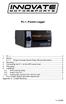 PL-1, Pocket Logger 1 PL-1... 2 2 Wiring... 3 2.1.1 Single Innovate Device Relay Wiring Instructions... 3 3 Mounting... 4 4 Connecting the PL-1 to the MTS serial chain... 4 5 Recording... 5 6 LogWorks...
user s manual Battery Case model #: SPB3200 Battery Case Charger for Samsung Galaxy S 4
 user s manual model #: SPB3200 Charger for Samsung Galaxy S 4 What s Included Unpack the battery case and make sure all accessories are put aside so they will not be lost. hello. USB to Micro USB Cable
1 For All Non-Programmable Digital Thermostat
 OWNER'S MANUAL P/N P474-0100 1 For All Non-Programmable Digital Thermostat TOTALINE 68 Dual Setpoint Very easy to program Thermoglow Backlight No batteries required Auto-Changeover Locking Keypad Meets
AMFA-27 AMFA-29. Operator s Manual & Installation Instructions. Rev. 2.5
 AMFA-27 AMFA-29 Operator s Manual & Installation Instructions Rev. 2.5 Date: 17 July, 2010 Permanently-connected, utility Interactive, single-phase, inverters Model AMFA-27 WIND TURBINE INVERTER (240 VAC
Connecting your Victron product to a computer with VE Configure
 Connecting your Victron product to a computer with VE Configure www.victronenergy.com VE configure II is a program used to configure settings/options on a Multi or Quattro. It is necessary to know several
DORMA MODEL PS-406BB POWER SUPPLY INSTALLATION INSTRUCTIONS
 Features: INSTALLATION Install in accordance with NFPA 70. DORMA MODEL PS-406BB POWER SUPPLY INSTALLATION INSTRUCTIONS Up to 1.95 Amps Load Capacity Class 2 Rated Outputs Overload, Over Voltage, and Short
Model HPX10 Series Automatic Battery Charger User s Manual Rev. 1.0 October 17, 2006
 B R A N D Model HPX10 Series Automatic Battery Charger User s Manual Rev. 1.0 October 17, 2006 For Sales, Support and Service phone: 407-331-4793 fax: 407-331-4708 website: www.xenotronix.com email: [email protected]
VK-250 WARRANTY REGISTRATION FORM
 VK-250 WARRANTY REGISTRATION FORM Unit Serial Number: Customer Name: Address: Date of Purchase: Purchased From: Dealer Name: Address: IMPORTANT NOTE: In order to receive the full five year product warranty,
Powerware 5110 UPS User s manual
 Powerware 5110 UPS 2005 Eaton Corporation All Rights Reserved The contents of this manual are the copyright of the publisher and may not be reproduced (even extracts) unless permission granted. Every care
BroadBand PowerShield. User Manual
 BroadBand PowerShield User Manual 990-0375G 12/2006 Chapter 1 General Information The PowerShield provides a power source for broadband telephony and other DC applications. Safety This Safety Guide contains
Best Methods for Safe Hipot Testing
 Best Methods for Safe Hipot Testing When working with electrical safety test equipment, instruments that output potentially dangerous voltages and currents, it is always important to regular review and
USER S MANUAL. MaxPower 400-600 UPS. Uninterruptible Power System 28-2MAXPO0018
 USER S MANUAL MaxPower 400-600 UPS Uninterruptible Power System 28-2MAXPO0018 IMPORTANT SAFETY INSTRUCTIONS SAVE THESE INSTRUCTIONS This manual contains important instructions for models MaxPower 400 and
12 Volt 30 Amp Digital Solar Charge Controller Installation & Operation Manual
 12 Volt 30 Amp Digital Solar Charge Controller Installation & Operation Manual This 30Amp charge controller is designed to protect your 12Volt Lead-acid or Gel-cell battery from being overcharge by solar
BC-5000 OPERATIONS MANUAL BATTERY CAPACITY TESTER COFKO LLC.
 BC-5000 BATTERY CAPACITY TESTER OPERATIONS MANUAL COFKO LLC. COPYRIGHT 2010 1 UNPACKING As you unpack your new BC-5000 battery capacity tester, inspect the tester for signs of shipping damage. If shipping
EMBEDDED ACCESS CONTROL Hardware Installation Guide
 EMBEDDED ACCESS CONTROL Hardware Installation Guide Lenel goentry Hardware Installation Guide, product version 1.00. This guide is item number DOC- ENHW-ENU, revision 1.003, April 2009 Copyright 2009 Lenel
EPSOLAR LS0512R / LS0524R. Solar Light Controller INSTRUCTION MANUAL. Please read this manual carefully before using the product!
 EPSOLAR LS0512R / LS0524R Solar Light Controller INSTRUCTION MANUAL Please read this manual carefully before using the product! LandStar LS0512R / LS0524R Solar Light Controller Nominal system voltage
Home Solar Kit 1800. Owner s Manual. Model: HS 1800-60
 Home Solar Kit 1800 Owner s Manual Model: HS 1800-60 For safe and optimum performance, the Home Solar Kit must be used properly. Carefully read and follow all instructions and guidelines in this manual
NSI DIGITAL DIMMING SYSTEM DDS 9800 DIMMER PACKS
 NSI DIGITAL DIMMING SYSTEM NSI DIGITAL DIMMING SYSTEM DDS 9800 DIMMER PACKS Software Revision 1.41, Version C UL, Mfg Q3/96, and above SPECIFICATIONS Number of Channels: 9800 : 8 channels Output capacity:
LITHIUM BALANCE CHARGER
 LITHIUM BALANCE CHARGER A Microprocessor controlled, high-performance charger for NiCd/NiMH/LiPo/Pb batteries with an integral individual voltage balancer (LiPo only) Operating Manual Please read this
Seven function digital multimeter
 Seven function digital multimeter 98025 Set up And Operating Instructions Distributed exclusively by Harbor Freight Tools. 3491 Mission Oaks Blvd., Camarillo, CA 93011 Visit our website at: http://www.harborfreight.com
STAGE SETTER-8. User Instructions. Elation Professional
 STAGE SETTER-8 User Instructions Elation Professional A Division of the American DJ Group of Companies 4295 Charter Street Los Angeles, CA 90058 USA Tel: 323-582-2650 Fax: 323-582-2610 Web: www.elationlighting.com
Dual Laser InfraRed (IR) Thermometer with Color Alert
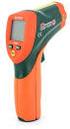 User Manual Dual Laser InfraRed (IR) Thermometer with Color Alert MODEL 42509 Introduction Congratulations on your purchase of the Model 42509 IR Thermometer with Color Alert. This Infrared thermometer
NEWTECH PRO 1-2-3 KVA ONLINE UNINTERRUPTIBLE POWER SUPPLY USER MANUAL
 NEWTECH PRO 1-2-3 KVA ONLINE UNINTERRUPTIBLE POWER SUPPLY USER MANUAL [email protected] / www.tuncmatik.com Table of Contents 1. Important Safety Warning 2 1-1. Transportation 2 1-2. Preparation 2 1-3.
CelluLine CGW-TS GSM Cellular Gateway. Installation and Programming Manual
 CelluLine CGW-TS GSM Cellular Gateway Installation and Programming Manual CelluLine CGW-TS GSM Cellular Gateway Installation and Programming Manual CGWTS-M001A Version 1, Release 1, December 2004 NOTICE
Comfort Control Relay Panel (CCRP)
 CCRP9 "Commitment to Innovation" OPERATION & INSTALLATION GUIDE FOR Comfort Control Panel (CCRP) Off-Peak System Control 9 Pole CCRP 4 Pole CCRP (Applicable to Software Version 14.0-14.9) "Manufactured
13 Watt PORTABLE SOLAR POWER KIT
 3 Watt PORTABLE SOLAR POWER KIT User s Manual Thank you for purchasing a Sunforce Portable Solar Power Kit. Please read these instructions carefully and thoroughly before using the product. Your new Portable
Owner s Manual. Not suitable for mobile applications. Important Safety Instructions 2. Quick Installation 3. Basic Operation 4. Storage & Service 7
 Register online today for a chance to win a FREE Tripp Lite product! www.tripplite.com/warranty Owner s Manual Internet Office & BC Personal UPS Systems Not suitable for mobile applications. Important
User and Installation Guide
 Connect the AC adapter with the amplifier BEFORE plugging the AC adapter into an outlet to avoid spark generation! User and Installation Guide BlueFIDELITYTM Bluetooth Audio Amplifier Model 300 Contents
User Manual for CH-PFC76810
 AA Portable Power Corp www.batteryspace.com, Email: [email protected] User Manual for CH-PFC76810 1. Overview The CH-PFC76810 charger is suitable for charging lithium ion battery packs such as those
DCX300 - DCX400 - DCX600
 Ph: 541-476-3565 Fax: 541-476-3566 DCX300 - DCX400 - DCX SEPARATELY EXCITED DC MOTOR CONROLLERS Alltrax motor controllers are designed to work with various golf cars from different manufacturers. Use the
PT-6000 Power Tower INSTALLATION MANUAL SPECIFICATIONS
 PT-6000 Power Tower INSTALLATION MANUAL 10.5 9.75 12 22.75 10.75 MAXIMUM SOIL HEIGHT: DO NOT ALLOW FILL TO EXCEED THIS LEVEL! 11.5 4 4 13 Optional PT-BASE for new installations or when previous 2000/6000
Charge Regulator SCR 12 Marine
 Charge Regulator SCR 12 Marine Manual Many thanks for purchasing a superwind product. The SCR 12 Marine is a charge regulator of highest quality and will perfectly and reliably charge your batteries for
AEROMOTIVE Part # 16302 INSTALLATION INSTRUCTIONS
 AEROMOTIVE Part # 16302 INSTALLATION INSTRUCTIONS CAUTION: Installation of this product requires detailed knowledge of automotive systems and repair procedures. We recommend that this installation be carried
OPERATOR S MANUAL 18 VOLT, 1 HOUR CHARGER
 OPERATOR S MANUAL 18 VOLT, 1 HOUR CHARGER P110 Your battery charger has been engineered and manufactured to Ryobi s high standard for dependability, ease of operation, and operator safety. When properly
SPL 2-00/-01 OPERATION INSTRUCTIONS
 SPL 2-00/-01 OPERATION INSTRUCTIONS Powerline Ethernet Adapter 500 Mbps EN Read and keep Operation Instructions SPL 2-00/-01 Safety Notes Do NOT use this product near water, for example, in a wet basement
ADA COMPLIANT BOX STYLE TELEPHONE INSTALLATION, PROGRAMMING AND OPERATING INSTRUCTIONS FOR MODEL PBX
 ADA COMPLIANT BOX STYLE TELEPHONE INSTALLATION, PROGRAMMING AND OPERATING INSTRUCTIONS FOR MODEL PBX INSTALLATION INSTRUCTIONS Step 1. Determine the position for the Hands-free phone in the elevator phone