
STEVIOL GLYCOSIDES Chemical and Technical Assessment
|
|
|
- Meghan Nichols
- 9 years ago
- Views:
Transcription
1 1. Summary STEVIOL GLYCOSIDES Chemical and Technical Assessment Revised by Harriet Wallin for the 69 th JECFA (Original prepared by Harriet Wallin for the 63 rd JECFA, revised by Paul M. Kuznesof, Ph.D., for the 68 th JECFA) The crushed leaves of the stevia plant, Stevia rebaudiana (Bertoni) are extracted with hot water and the additive is recovered from the aqueous extract using only alcohols and ion-exchange resins for the isolation and purification of the desired product. The commercial material contains at least 95% of total (seven) steviol glycosides (dried basis). Stevioside and rebaudioside A are the component glycosides of principle of interest because of their sweetening property. The newly revised specifications cover a range of compositions that include product of at least 95% stevioside or at least 95% rebaudioside A. Steviol glycoside preparations are white to light yellow powders that are freely soluble in water and ethanol. The powders can be odourless or have a slight characteristic odour. Water solutions are 200 to 300 times sweeter than sucrose. On the basis of results from thermal and hydrolytic stability studies on steviol glycosides and consideration of several summaries from the literature on the stability of stevioside and rebaudioside A, the 68 th JECFA agreed that steviol glycosides is sufficiently thermally and hydrolytically stable for use in foods, including acidic beverages, under normal conditions of processing and storage. Preparations of steviol glycosides are reported to be used principally as sweeteners in fruit and milk-based drinks, desserts, yoghurts, confectionaries, delicacies, and pickles. The use of a stevia extract as a table-top sweetener is well known. 2. Introduction Water extracts of the crushed leaves of the stevia plant, the perennial shrub Stevia rebaudiana (Bertoni) Bertoni of the family Asteraceae (Compositae), have been used for many years as a sweetener in South American and Asian countries. These substances currently are not permitted as conventional food ingredients or additives with a sweetener function in the United States nor have they yet been deemed acceptable for such use in the European Union. However, the leaves of the stevia plant or extracts have been legally marketed in the United States as dietary ingredients in dietary supplements. Stevia extracts generally contain a high percentage of the glycosides of the diterpene steviol. Stevioside and rebaudioside A are the principal sweetening compounds and are generally accompanied by smaller amounts of other steviol glycosides. Based on the data and information received by the 63 rd JECFA (2004), the Committee assigned a temporary ADI of 0-2 mg/kg bodyweight (bw) (expressed as steviol) for steviol glycosides and established tentative specifications. The temporary ADI and specifications related solely to material containing not less than 95% glycosylated derivatives of steviol, which, in addition to stevioside and rebaudioside A (summed content to be not less than 70% of total steviol glycosides), included rebaudioside C and dulcoside A, as well as minor amounts of rubusoside, steviolbioside, and rebaudiosides B, D, E, and F. Steviol glycosides (CTA) Page 1( 7)
2 In order to remove the temporary designation from the ADI and the tentative designation from the specifications, the Committee required additional information on certain pharmacological effects in humans and analytical data on and a method of analysis for those steviol glycosides not identified in the specifications. Further, the Committee requested information on the composition of the non-steviol glycoside fraction, on quantities of residual solvents from the manufacturing process, on hydrolytic stability of the additive in acidic foods and beverages. At the 68 th JECFA, the Committee reviewed responses addressing the outstanding issues from the 63 rd JECFA. Although the Committee maintained the temporary ADI of 0-2 mg/kg bw (expressed as steviol), the tentative designation for the specifications were removed and full specifications were prepared. 3. Structures of steviol glycosides The structures and Chemical Abstracts Service registry numbers for steviol and its glycosides that are the main sweetening agents of the additive steviol glycosides are given in Figure 1. O-R2 CH 3 CH 2 CH 3 COO-R1 Compound name C.A.S. No. R1 R2 1 Steviol H H 2 Steviolbioside H β-glc-β-glc(2 1) 3 Stevioside β-glc β-glc-β-glc(2 1) 4 Rebaudioside A β-glc β-glc-β-glc(2 1) 5 Rebaudioside B H β-glc-β-glc(2 1) 6 Rebaudioside C (dulcoside B) β-glc β-glc-α-rha(2 1) 7 Rebaudioside D β-glc-β-glc(2 1) β-glc-β-glc(2 1) 8 Rebaudioside E β-glc-β-glc(2 1) β-glc-β-glc(2 1) 9 Rebaudioside F β-glc β-glc-β-xyl(2 1) 10 Rubusoside β-glc β-glc 11 dulcoside A β-glc β-glc-α-rha(2 1) Steviol glycosides (CTA) Page 2( 7)
3 Figure 1. Structures of steviol and related glycosides. Glc, Xyl, and Rha represent, respectively, glucose, xylose, and rhamnose sugar moieties. 4. Description Steviol glycoside preparations are white to light yellow powders that are freely soluble in water. The powders can be odourless or have a slight characteristic odour. Water solutions are 200 to 300 times sweeter than sucrose. 5. Manufacture of steviol glycosides The basic raw materials for manufacturing steviol glycoside preparations are the crushed leaves of the perennial shrub Stevia rebaudiana (Bertoni) Bertoni of the family steraceae (Compositae). Conventional extraction processes to obtain steviol glycoside-containing extracts that are described in the literature follow similar methodologies: Stevia leaves are extracted with hot water. In some cases, the leaves are pretreated with non-polar solvents, such as chloroform or hexane to remove essential oils, lipids, chlorophyll, and other non-polar substances. The extract is clarified by precipitation with salt or alkaline solutions, concentrated, and re-dissolved in methanol or aqueous ethanol for crystallization of the glycosides. Additionally, reports of the use of supercritical fluid extraction (SCFE) using carbon dioxide to ultimately obtain product have appeared in the literature. The product is obtained from the leaves of Stevia rebaudiana Bertoni. The specified additive, however, following hot-water extraction of crushed stevia leaves, is obtained from the aqueous extract using only methanol or aqueous ethanol and ion-exchange resins for the isolation and purification of the desired product. The commercial product may be recovered by spray-drying. The Committee, at its 68 th and 69 th meetings reviewed information on additional purification steps included in the manufacturing process of steviol glycosides considered by the 63 rd JECFA. These steps included further recrystallization and separation steps; and the introduction of aqueous ethanol as a new solvent. The purity of the commercial material is not less than 95% of total (seven) steviol glycosides (on the dried basis); these include substances 2-6, 10, and 11 in Figure 1, above. 6.Chemical characterization 6.1 Composition of the food additive The composition of stevia extracts depends on the composition of the leaves, influenced by soil and climate, and on the extraction and purification processes used. In response to the call for data on stevioside for the 63 rd meeting of the Committee, submissions from several countries showed that the main components of the commercially available extracts of stevia are stevioside and rebaudioside A, in various amounts ranging from about 10-70% stevioside and 20-70% rebaudioside A. The information indicated that most commercial products contained more than 90% steviol glycosides with the two main steviol glycosides comprising about 80% of the material. The 63 rd JECFA required that the summed content of stevioside and rebaudioside A was not less than 70% and established a minimum purity of 95% total steviol Steviol glycosides (CTA) Page 3( 7)
4 glycosides. Analytical data showed that most of the remaining 5% could be accounted for by saccharides other than those associated with the individual steviol glycosides. Noting that the additive could be produced with high purity (at least 95%) and that all the steviol glycosides hydrolyze upon ingestion to steviol, on which the temporary ADI is based, the 68 th JECFA decided it was unnecessary to maintain a limit for the sum of stevioside and rebaudioside content. The Committee recognized that the newly revised specifications would cover a range of compositions that could include, on the dried basis, product that was at least 95% stevioside or at least 95% rebaudioside A. 5.2 Possible impurities Impurities occurring in extracts of stevia leaves are typical plant materials, such as pigments and saccharides. One literature study reports identification of the following substances in the nonglycosidic fractions of extracts of stevia leaves, obtained using SCFE: spathulenol; decanoic acid; 8,11,14-ecosatrienoic acid; 2-methyloctadecane; pentacosane; octacosane; stigmasterol; b- sitosterol; a- and b-amyrine; lupeol; b-amyrin acetate; and pentacyclic triterpene. These highly non-polar substances represented 56% of the total non-glycosidic extracts, 44% remaining unidentified. The specified additive (>95% total steviol glycosides) will contain, in addition to saccharides other than those associated with the individual steviol glycosides, residual extraction/recrystallization solvent and possibly residues of ion-exchange resins used in the manufacturing process. The level of the non-glycosidic fraction, because of its highly non-polar character, can be considered insignificant in the additive. The limit of not more than 4% loss-on-drying established by the 63 rd JECFA was increased to not more than 6% by the 68 th JECFA and the maximum limit for residual methanol of 100 mg/kg also established by the 63 rd JECFA was raised to 200 mg/kg. The 69 th JECFA introduced a maximum limit for residual ethanol of 5000 mg/kg. Maximum limits of 1 mg/kg for both arsenic and lead were maintained. 6.3 Analytical methods Different methods, mainly liquid chromatographic methods, are currently available for the identification and determination of the principal steviol glycosides. 7 Functional uses and reactions/fate in foods Preparations of steviol glycosides have been reported to be used principally as sweeteners in fruit and milk-based drinks, desserts, yoghurts, confectionaries, delicacies, and pickles. The use of a stevia extract as a table-top sweetener is well known; in the United States it is legally marketed only as a dietary supplement, but, consumers are known to purchase the product for its sweetening properties. Stevioside and rebaudioside A are reasonably thermally stable under the elevated temperatures used in food processing and do not undergo browning or caramelization when heated. In response to a request by the 63 rd JECFA for information on the hydrolytic stability of steviol glycosides in acidic foods, the Committee received results of thermal and hydrolytic stability Steviol glycosides (CTA) Page 4( 7)
5 studies for the specified material: It appears that citric acid solutions (ph 2-4) of steviol glycosides (ca mg/l; ca. 29% stevioside, 62% rebaudioside A) are highly stable for at least 180 days at 20 o. At elevated temperatures (80 o, in water, 8 h), however, the same samples showed 4% and 8% decomposition at, respectively, ph 4.0 and 3.0. At 100 o, decomposition was expectedly higher: 10% and 40% at, respectively, ph 4.0 and ph 3.0. Also, at 100 o decomposition was 4% at ph 6.0, but increased to about 16% at ph 8.0. And in an acidic beverage (ph 3.8) held at 24 o for one year, essentially no decomposition of steviol glycosides (ca. 94% rebaudioside) was noted. Isosteviol (Figure 2) was identified as a decomposition product in the tested samples: Figure 2. Isosteviol (C.A.S. no ) The Committee also had available a summary of literature studies that addressed the stabilities of stevioside and rebaudioside A, which it considered relevant to its evaluation because the specified material includes products that may be 95% stevioside or 95% rebaudioside. Unfortunately, information on the purities of the substances used in these studies was not provided. The studies are summarized as follows: 1) Refluxing stevioside (5 h; 0.4% hydrochloric acid (ph 1.16, aq. methanol)): identifiable hydrolysis products: 49% steviol, 29% steviolbioside, 4% 13-O-ß-D-glucopyranosyl-steviol, and 19% 13-O-ß-D-glucopyranosyl-steviol-ß-D-glucopyranosyl ester. 2) Heating stevioside or rebaudioside A (citric or phosphoric acid solutions; 5.7 days): no decomposition at 60 o ; at 100 o, decomposition products noted, but not identified. No steviol was observed. 3) Stevioside (aqueous acid, ph 2.5 and 3.0; 80 o and 100 o ): After one hour, maximum decomposition (10%) noted at ph 2.5 and 100 o. No information on the acid used. 4) Stevioside and rebaudioside A (650 mg/l; 100 o ): Decomposition in neutral solutions after 13 hours; 40% decomposition in acid solutions (citric acid, ph 2.6; phosphoric acid, ph 2.4) after 4 hours. 5) Stevioside (130 mg/l; citric acid; room temperature; 6 months): 2.5% loss at ph 4.0; 10% loss at ph ) Stevioside (1000 mg/l; ph citric acid solution,; 4 o and 22 o ): stable for up to 4 months. Rebaudioside A (22 o ; ph 2.6): slightly less stable than stevioside; some decomposition after three months. At 37 o, both substances begin to decompose after 2 months; ca. 15% decomposed at 4 months. These data also suggest that, in citric acid solutions, stevioside is more thermally stable than Rebaudioside A. 7) Rebaudioside A (1000 mg/l; phosphoric acid - ph 2.6)) showed slightly greater thermal stability than stevioside (1000 mg/l; phosphoric acid - ph 2.6)). 8) Stevioside (500 mg/l; room temp.; solutions of 10 g/l citric and phosphoric acids (ph: 2.1 and 1.6, respectively): decomposition begins after one month; stable in 5% acetic acid (ph 2.6). In the phosphoric acid solution (4 months), decomposition reached 75%; in citric acid, decomposition was 20%. The greatest stability was observed for the acetic acid solution. Steviol glycosides (CTA) Page 5( 7)
6 The 68 th JECFA concluded that steviol glycosides is sufficiently thermally and hydrolytically stable for food use, including acidic beverages, under normal conditions of processing/storage. 8 Use levels in foods The steviol glycosides are currently used as a sweetener in a number of foods consumed in Asia and South America. Table 1 summarizes the information submitted to JECFA at its 63 rd, 68 th and 69 th meeting. Table 1. Food Use Levels Reported to the Committee Reported maximum use level (mg/kg) Beverages (soft drinks, fruit drinks) 600 Desserts 500 Yogurt 500 Cold Confectionery 500 Sauces 1000 Pickles 1000 Delicacies 1000 Sweet Corn 200 Breads 160 Biscuits 300 Additional uses include use as a table-top sweetener and as a sweetener for ready-to-eat-cereals. 9. References Bahndorf, D., Huber C., and Kienle U., Report to JECFA: The Pharmacological Effects of Steviol Glycosides, International Association for Stevia Research e.v., Hirschstrasse, Germany. Chen, Junshi, Personal communication to Harriet Wallin, 5 January Extraction of Stevia Glycosides with CO 2 + Water, CO 2 + Ethanol, and CO 2 + Water + Ethanol. (Source cited as: Brazilian Journal of Chemical Engineering) accessed 14 April European Commission Decision 2000/196/EU, OJ L 61, p.14, 3 August European Scientific Committee on Food, Opinion on Stevioside as a Sweetener, adopted 17 June 1999; Opinion on Stevia Rebaudiana Bertoni plants and leaves, adopted 17 June Geuns, J.M.C., Augustijns P., Mols R., Buyse J.G., and Driessen B., Metabolism of stevioside in pigs and intestinal absorption characteristics of stevioside, rebaudioside A and steviol. Food and Chemical Toxicology 41, Information submitted to JECFA from Japan, 2003 and Riveros, T.V.J., Scientific-Technological Report on Stevioside for JECFA Evaluation. National Institute of Technology and Standardization (INTN), Asunción, Paraguay. WHO Technical Report Series no. 928, Sixty-third Report of the Joint FAO/WHO Expert Committee on Food Additives, Geneva, Switzerland. ******* Steviol glycosides (CTA) Page 6( 7)
7 The following three references were cited in Extraction of Stevia Glycosides with CO 2 + Water, CO 2 + Ethanol, and CO 2 + Water + Ethanol and relate to the composition of stevia extracts: Pasquel, A., Extração dos Glicosídeos da Estévia com Fluidos Pressurizados, Ph.D. diss., Universidade Estadual de Campinas, Campinas, SP, Brazil. Pasquel, A., Meireles, M.A.A., and Marques, M.O.M., Stevia (Stevia rebaudiana Bertoni) leaves pretreatment with pressurized CO2: an evaluation of the extract composition, Proceedings of the 6th Meeting on Supercritical Fluids: Chemistry and Materials, 501. Tan, S., Shibuta, Y., and Tanaka, O., Isolation of sweetener from Stevia rebaudiana. Jpn. Kokai, 63, 177, 764. ******* The following six references were cited in Bahndorf et al. and relate to the thermal and hydrolytic stabilities of stevioside and rebaudioside A: Angelucci, E., O Estevióside de plantas brasileiras de Stevia rebaudiana Bertoni e a potencialidade de seu emprego em alimentos. Ensaios em formulações hídricas e carbonatas. São Paulo. Chang, S.S., and Cook, J.M., Stability studies of stevioside and rebaudioside A in carbonated beverages. Journal of Agricultural and Food Chemistry 31, Iwamura, J., Kinoshita, R., and Hirao, N., Hydrolysis of stevioside and determination of total stevioside with dual-wavelength TLC scanner. Kroyer, G. T, The low calorie sweetener Stevioside: Stability and Interaction with Food Ingredients. Lebensmittelwissenschaft und Technologie 32, Nabeta, K., Ito, K., and Sugisawa, H, Acid hydrolysis of stevioside. Nippon Nogei Kagaku Kaishi 51, Sasaki, K., Application of stevia sweetener to soft drinks. New Food Industry 25, Steviol glycosides (CTA) Page 7( 7)
STEVIOL GLYCOSIDES. Chemical and Technical Assessment. Prepared by Harriet Wallin FAO 2004
 Chemical and Technical Assessment 63rdJECFA STEVIOL GLYCOSIDES Chemical and Technical Assessment Prepared by Harriet Wallin FAO 2004 1 Introduction Stevioside was evaluated for safety by the 51 st meeting
What is Stevia? Stevia is a small shrub native to the region of South America where the borders of Paraguay, Argentina, and Brazil meet.
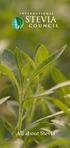 All about Stevia What is Stevia? Stevia is a small shrub native to the region of South America where the borders of Paraguay, Argentina, and Brazil meet. The scientific name for stevia is Stevia rebaudiana
Stevia rebaudiana Bertoni plants and dried leaves as Novel Food
 Stevia rebaudiana Bertoni plants and dried leaves as Novel Food Summary of the Application and Specifications of the EUSTAS Quality Label EUSTAS, Maladeta, nº 20, 22300 BARBASTRO, Huesca, SPAIN July 5
Stevia s Sweet Story
 Stevia s Sweet Story [Market Trends] Vol. 20 No. 5 May 2010 By Lynn A. Kuntz, Editor-in-Chief Stevia s history started in Paraguay, where the indigenous people used leaves of the plant known as kaa he-he
ADVANCING THE SCIENCE OF STEVIA
 ADVANCING THE SCIENCE OF STEVIA ABOUT GSI The Global Stevia Institute (GSI) provides science-based information about stevia, a plant-based, zero calorie, sustainable sweetener of natural origin. The GSI
GRAS Notice (GRN) No. 555 http://www.fda.gov/food/ingredientspackaginglabeling/gras/noticeinventory/default.htm ORIGINAL SUBMISSION
 GRAS Notice (GRN) No. 555 http://www.fda.gov/food/ingredientspackaginglabeling/gras/noticeinventory/default.htm ORIGINAL SUBMISSION ASSCICIA-rES, LLC 20482 Jacklight Lane Bend, OR 97702-3074 541-678-5522
Potassium Aluminium Silicate (Mica) Chemical and Technical Assessment (CTA) Prepared by Daniel E. Folmer, Ph.D., and reviewed by Madduri V. Rao, Ph.D.
 Potassium Aluminium Silicate (Mica) Chemical and Technical Assessment (CTA) Prepared by Daniel E. Folmer, Ph.D., and reviewed by Madduri V. Rao, Ph.D. 1. Summary Potassium aluminium silicate (PAS) was
POLYVINYL ALCOHOL. SYNONYMS Vinyl alcohol polymer, PVOH, INS No. 1203 DEFINITION DESCRIPTION FUNCTIONAL USES CHARACTERISTICS
 POLYVINYL ALCOHOL Prepared at the 68 th JECFA (2007) and published in FAO JECFA Monographs 4 (2007), superseding specifications prepared at the 63 rd JECFA (2004) and published in the Combined Compendium
OPTIMIZATION OF REBAUDIOSIDE A EXTRACTION FROM STEVIA REBAUDIANA (BERTONI) AND QUANTIFICATION BY HIGH PERFOMANCE LIQUID CHROMATOGRAPHY ANALYSIS
 Journal of Tropical Resources and Sustainable Science ISSN: 2289-3946 Volume 1 Number 1, January 2013: 62-70 Universiti Malaysia Kelantan Publisher OPTIMIZATION OF REBAUDIOSIDE A EXTRACTION FROM STEVIA
what is Fibersol-HS? Physical Characteristics Typical Essential Properties Fibersol-HS can be used to reduce calories and sugars.
 fiber fit for all! F ibersol- HS has been specially designed for applications where replacing liquid honey and sugar to reduce calories and adding fiber are beneficial! what is Fibersol-HS? Fibersol -HS
Everything You Need to Know About Sucralose
 S u c r a l o s e Everything You Need to Know About Sucralose With obesity rates among Americans at an all-time high, many people may think they have to give up sweets in order to lose weight. But there
ß-CYCLODEXTRIN SYNONYMS
 ß-CYCLODEXTRIN Prepared at the 44th JECFA (1995), published in FNP 52 Add 3 (1995) superseding specifications prepared at the 41st JECFA (1993), published in FNP 52 Add 2 (1993). Metals and arsenic specifications
Lutein from Tagetes erecta
 Chemical and Technical Assessment 63rdJECFA Lutein from Tagetes erecta Chemical and Technical Assessment (CTA) First draft prepared by Richard Cantrill FAO 2004 1 Summary Lutein from Tagetes erecta L.
TANNIC ACID. SYNONYMS Tannins (food grade), gallotannic acid, INS No. 181 DEFINITION DESCRIPTION
 TANNIC ACID Prepared at the 39th JECFA (1992), published in FNP Add 1 (1992) superseding specifications prepared at the 35th JECFA (1989), published in FNP 49 (1990) and in FNP 52 (1992). Metals and arsenic
INTRODUCTION. Such chemical substances which are added to food materials to prevent their spoilage are known as chemical preservatives.
 INTRODUCTION Growth of microorganisms in a food material can be inhibited by adding certain chemical substances. However the chemical substances should not be harmful to the human beings. Such chemical
ETHYL LAUROYL ARGINATE Chemical and Technical Assessment. Prepared by Yoko Kawamura, Ph.D. and Brian Whitehouse, Ph.D., for the 69 th JECFA
 ETHYL LAURYL ARGINATE Chemical and Technical Assessment Prepared by Yoko Kawamura, Ph.D. and Brian Whitehouse, Ph.D., for the 69 th JECFA 1. Summary Ethyl lauroyl arginate is synthesized by esterifying
α-cyclodextrin SYNONYMS α-schardinger dextrin, α-dextrin, cyclohexaamylose, cyclomaltohexaose, α- cycloamylase
 α-cyclodextrin New specifications prepared at the 57th JECFA (2001) and published in FNP 52 Add 9 (2001). An ADI not specified was established at the 57th JECFA (2001). SYNONYMS α-schardinger dextrin,
VCE CHEMISTRY UNIT 2 Environmental Chemistry SAMPLE COURSE OUTLINE
 VCE CHEMISTRY UNIT 2 Environmental Chemistry SAMPLE COURSE OUTLINE Week Area of Study Key knowledge Possible activities Key skills 1 1 Water Role of water in maintaining life in the environment unique
The functional properties of sugar
 The functional properties of sugar These days, sugar comes in many varieties and can therefore be used in many different food products. Sugar has a range of unique properties that, either individually
SODIUM CARBOXYMETHYL CELLULOSE
 SODIUM CARBOXYMETHYL CELLULOSE Prepared at the 28th JECFA (1984), published in FNP 31/2 (1984) and in FNP 52 (1992). Metals and arsenic specifications revised at the 55 th JECFA (2000). An ADI not specified
GROUP II ELEMENTS. Beryllium to Barium
 1 GROUP II ELEMENTS Beryllium to Barium Introduction Elements in Group I (alkali metals) and Group II (alkaline earths) are known as s-block elements because their valence (bonding) electrons are in s
Chapter 14 Solutions
 Chapter 14 Solutions 1 14.1 General properties of solutions solution a system in which one or more substances are homogeneously mixed or dissolved in another substance two components in a solution: solute
CERTIFICATE OF ANALYSIS Methyl 4-Hydroxybenzoate
 CERTIFICATE OF ANALYSIS Methyl 4-Hydroxybenzoate C8H8O3 Molecular Weight 152.15 1. Description White crystalline powder or colorless crystals. 2. Solubility Slightly soluble in water, freely soluble in
Water Softening for Hardness Removal. Hardness in Water. Methods of Removing Hardness 5/1/15. WTRG18 Water Softening and Hardness
 Water Softening for Removal 1 in Water High concentration of calcium (Ca2+) and magnesium (Mg2+) ions in water cause hardness Generally, water containing more than 100 mg/l of hardness expressed as calcium
Stevia rebaudiana Growth and modification of SVgly content by Red LEDs
 Stevia rebaudiana Growth and modification of SVgly content by Red LEDs Prof. Jan M.C. Geuns Lab Functional Biology, KULeuven Kasteelpark Arenberg 31, BUS 2436 3001 Heverlee-Leuven BELGIUM [email protected]
Composition of Grapes
 Composition of Grapes By Murli Dharmadhikari Grapes are the most important raw material for making wine. A good understanding of grape composition is essential to understanding the process of winemaking
CHEM 2423 Recrystallization of Benzoic Acid EXPERIMENT 4 - Purification - Recrystallization of Benzoic acid
 EXPERIMENT 4 - Purification - Recrystallization of Benzoic acid Purpose: a) To purify samples of organic compounds that are solids at room temperature b) To dissociate the impure sample in the minimum
ASPARTAME The Study of a Peptide Bond
 ASPARTAME The Study of a Peptide Bond INTRODUCTION Aspartame, commonly known as NutraSweet or Equal, is the most popular artificial, low-calorie sweetener available to consumers today. Chemically, aspartame
ISOLATION OF CAFFEINE FROM TEA
 ISLATIN F CAFFEINE FRM TEA Introduction In this experiment, caffeine is isolated from tealeaves. The chief problem with the isolation is that caffeine does not exist alone in the tealeaves, but other natural
EUDRAGIT E 100, EUDRAGIT E PO and
 Technical Information EUDRAGIT E 100, and Specification and Test Methods Ph. Eur. USP/NF JPE Basic Butylated Methacrylate Copolymer Amino Methacrylate Copolymer - NF Aminoalkyl Methacrylate Copolymer E
Production and market of Stevia Sweetener in China
 Brochure More information from http://www.researchandmarkets.com/reports/590895/ Production and market of Stevia Sweetener in China Description: From 2007 to 2009, more and more countries, including the
Applications of Organic Solvent Nanofiltration in the Process Development of Active Pharmaceutical Ingredients. Dominic Ormerod
 Applications of rganic Solvent Nanofiltration in the Process Development of Active Pharmaceutical Ingredients Dominic rmerod Introduction A non-thermal solvent exchange. Removal of Excess reagents via
Biorefinery concepts in the paper industry
 Biorefinery concepts in the paper industry Graziano Elegir, Tullia Maifreni, Daniele Bussini Innovhub, Paper Division Azienda Speciale della Camera di Commercio di Milano OUTLINE General aspects on the
What impacts blood glucose levels?
 What you eat and how much you eat has an impact on your blood glucose levels. Your blood glucose level reflects how well your diabetes is controlled. There are many aspects to eating for target BG (Blood
UNIVERSITY OF MALTA FACULTY OF MEDICINE & SURGERY PHARMACY DEPARTMENT MATERIAL SAFETY DATA SHEET CETYL ALCOHOL. Table of Contents
 Table of Contents Page 1. Chemical Product 2 2. Composition and Information on Ingredients 2 3. Hazards Identification 2 4. First Aid Measures 3 5. Fire and Explosion Data 3 6. Accidental Release Measures
Chapter 5 Classification of Organic Compounds by Solubility
 Chapter 5 Classification of Organic Compounds by Solubility Deductions based upon interpretation of simple solubility tests can be extremely useful in organic structure determination. Both solubility and
US Safety Data Sheet GEAR OIL SAE 10W/30 GEAR OIL SAE 10W/30
 Page of 5 Company BUCHER AG LANGENTHAL, MOTOREX-Schmiertechnik, CH- 49 Langenthal, Switzerland. Commercial product name and supplier Commercial product name / Designation NFPA HMIS H F R - C B.2.3.4.5.6
DOW CORNING CORPORATION Material Safety Data Sheet
 Page: 1/7 1. IDENTIFICATION OF THE SUBSTANCE AND OF THE COMPANY Dow Corning Corporation South Saginaw Road Midland, Midland 48686 24 Hour Emergency Telephone: Customer Service: Product Disposal Information:
How To Use Lactose In Confectionery
 Importance of whey ingredients in confectionery products Andréa Pernot-Barry Technical Director ZDS Central College of the German Confectionery Industry Whey ingredients in confectionery Lactose Whey powder
Chapter 5 Student Reading
 Chapter 5 Student Reading THE POLARITY OF THE WATER MOLECULE Wonderful water Water is an amazing substance. We drink it, cook and wash with it, swim and play in it, and use it for lots of other purposes.
ETHYL LAUROYL ARGINATE
 ETHYL LAURYL ARGINATE New specifications prepared at the 69th JECFA (2008), published in FA JECFA Monographs 5 (2008). An ADI of 0-4 mg/kg bw was established at the 69th JECFA (2008). SYNNYMS DEFINITIN
experiment5 Understanding and applying the concept of limiting reagents. Learning how to perform a vacuum filtration.
 81 experiment5 LECTURE AND LAB SKILLS EMPHASIZED Synthesizing an organic substance. Understanding and applying the concept of limiting reagents. Determining percent yield. Learning how to perform a vacuum
What s really in sugary drinks? Ingredient lists: Decoded
 What s really in sugary drinks? Common sugary drink ingredients more than just sugar. Many sugary drinks contain artificial colors and sweeteners, artificial flavors, and preservatives in addition to sugar.
DOW CORNING CORPORATION Material Safety Data Sheet
 Page: 1 of 7 1. PRODUCT AND COMPANY IDENTIFICATION Dow Corning Corporation South Saginaw Road Midland, Michigan 48686 24 Hour Emergency Telephone: Customer Service: Product Disposal Information: CHEMTREC:
Quality. Now Certified to ISO 9001:2008
 Quality Now Certified to ISO 90012008 Quality Policy It is Peptides International's goal is to achieve complete customer satisfaction by addressing customer needs and delivering what we promise. The company
The Solubility of Calcium Carbonate
 1 The Solubility of Calcium Carbonate Lesson Plan Developed by: John Thurmond, Plainfield North High School, Plainfield, Illinois Based on Presentation June, 2011. Northwestern University, Climate Change
Chapter 8: Chemical Equations and Reactions
 Chapter 8: Chemical Equations and Reactions I. Describing Chemical Reactions A. A chemical reaction is the process by which one or more substances are changed into one or more different substances. A chemical
BRIEFING 661.2 Plastic Packaging Systems for Pharmaceutical Use.
 BRIEFING 661.2 Plastic Packaging Systems for Pharmaceutical Use. USP proposes the revision and development of a suite of plastic packaging system standards in the current issue of PF. General test chapter
GPS Safety Summary. Hydrogen Chloride/Hydrochloric Acid. HCl
 GPS Safety Summary Hydrogen Chloride/Hydrochloric Acid This Product Safety Summary is intended to provide a general overview of the chemical substance in the context of ICCA Global Product Strategy. The
Figure 3-1-1: Alkaline hydrolysis (saponification) of oil to make soaps.
 Chapter 3 CHEMICAL MODIFICATION OF OILS AND FATS From the fats and oils obtained from natural resources, the majority of them are used directly or just after refinement. While the others are used after
Nutrients: Carbohydrates, Proteins, and Fats. Chapter 5 Lesson 2
 Nutrients: Carbohydrates, Proteins, and Fats Chapter 5 Lesson 2 Carbohydrates Definition- the starches and sugars found in foods. Carbohydrates are the body s preferred source of energy providing four
Tiered Activity: Elements, Compounds, and Mixtures
 Tiered Activity: Elements, Compounds, and Mixtures Goals/Standards: S8P1b. Describe the difference between pure substances (elements and compounds) and mixtures Pre-assessment/Formative Assessment: At
The grapes were harvested at full technological maturity and processed according to white wines production protocol. The must obtained from
 ABSTRACT Key words: pre-fermentative treatments, oxalic acid, activated carbon, papain. Currently, winemaking has the necessary technologies, oenological practices and products that enable the development
EXPERIMENT 9 (Organic Chemistry II) Pahlavan - Cherif Synthesis of Aspirin - Esterification
 EXPERIMENT 9 (rganic hemistry II) Pahlavan - herif Materials Hot plate 125-mL Erlenmeyer flask Melting point capillaries Melting point apparatus Büchner funnel 400-mL beaker Stirring rod hemicals Salicylic
THE FOLLOWING TEXT ON BIO-OIL EXTRACTION IS AN EXCERPT FROM THE FINAL TECHNICAL REPORT SUBMITTED BY HNEI TO OFFICE OF NAVAL RESEARCH UNDER GRANT
 THE FOLLOWING TEXT ON BIO-OIL EXTRACTION IS AN EXCERPT FROM THE FINAL TECHNICAL REPORT SUBMITTED BY HNEI TO OFFICE OF NAVAL RESEARCH UNDER GRANT AWARD NUMBER N00014-09-1-0709, DECEMBER 2011 2.4 Novel Solvent-Based
An efficient condition of Saponification of Lutein ester from marigold flower
 Available online at www.scholarsresearchlibrary.com Annals of Biological Research, 2012, 3 (3):1461-1466 (http://scholarsresearchlibrary.com/archive.html) ISSN 0976-1233 CODEN (USA): ABRNBW An efficient
LYCOPENE EXTRACT FROM TOMATO Chemical and Technical Assessment (CTA)
 LYCOPENE EXTRACT FROM TOMATO Chemical and Technical Assessment (CTA) Prepared by Susanne Rath, Ph.D., and reviewed by Zofia Olempska-Beer, Ph.D, and Paul M. Kuznesof, Ph.D. 1. Summary Lycopene extract
SPE and HPLC. Dr Iva Chianella Lecturer in Analytical Chemistry Cranfield Health +44 (0) 1234 758322. [email protected].
 SPE and HPLC Dr Iva Chianella Lecturer in Analytical Chemistry Cranfield Health +44 (0) 1234 758322 [email protected] Solid-Phase Extraction- SPE Simple, fast and efficient sample preparation
IMPURITIES IN NEW DRUG PRODUCTS
 INTERNATIONAL CONFERENCE ON HARMONISATION OF TECHNICAL REQUIREMENTS FOR REGISTRATION OF PHARMACEUTICALS FOR HUMAN USE ICH HARMONISED TRIPARTITE GUIDELINE IMPURITIES IN NEW DRUG PRODUCTS Q3B(R2) Current
MATERIAL SAFETY DATA SHEET Version : -
 Page : 1 / 5 1. CHEMICAL PRODUCT AND COMPANY IDENTIFICATION PRODUCT NAME : Recommended uses : : : Additive for dry mix mortar, paints, calcium sulfate application This product has not been designed as
PECTINS. SYNONYMS INS No. 440 DEFINITION DESCRIPTION. FUNCTIONAL USES Gelling agent, thickener, stabilizer, emulsifier CHARACTERISTICS
 PECTINS SYNONYMS INS No. 440 Prepared at the 71 st JECFA (2009) and published in FAO JECFA Monographs 7 (2009), superseding specifications prepared at the 68 th JECFA (2007) and published in FAO JECFA
Experiment 3: Extraction: Separation of an Acidic, a Basic and a Neutral Substance
 1 Experiment 3: Extraction: Separation of an Acidic, a Basic and a Neutral Substance Read pp 142-155, 161-162, Chapter 10 and pp 163-173, Chapter 11, in LTOC. View the videos: 4.2 Extraction (Macroscale);
USING THE FOOD LABEL TO FIND ITEMS THAT MEET THE EAT SMART IN PARKS GUIDELINES
 USING THE FOOD LABEL TO FIND ITEMS THAT MEET THE EAT SMART IN PARKS GUIDELINES FOOD LABELS Food Nacho chips label Although one serving of chips (1 ounce) meets the calorie guideline, 3 ounces of chips
WHEY PRODUCTS. Demineralised whey powder is made by removing dissolved salts and water.
 WHEY PRDUCTS Whey is the portion of milk left after cheese or casein is made. Whey is about 96% water but contains some valuable protein, much lactose (milk sugar) and various dissolved salts. Years ago,
VULCOFAC TAIC-70 O N O . N CAS : 1025 15 6. N EINECS : 213 834 7. . Main function :. Crosslinking agent for peroxide cure elastomers
 - Composition :. Active ingredient :. Triallyl isocyanurate. Formula : ( C12 H15 N3 O3 ) O N O N N O. N CAS : 1025 15 6. N EINECS : 213 834 7 - Supplier :. Origin : Safic-Alcan UK. Availability : regularly
SUCRALOSE. White to off-white, practically odourless crystalline powder
 SUCRALOSE Prepared at the 41st JECFA (1993), published in FNP 52 Add 2 (1993). Metals and arsenic specifications revised at the 63rd JECFA (2004). An ADI of 0-15 mg/kg bw was established at the 37th JECFA
Exp 13 Volumetric Analysis: Acid-Base titration
 Exp 13 Volumetric Analysis: Acid-Base titration Exp. 13 video (time: 47:17 minutes) Titration - is the measurement of the volume of a standard solution required to completely react with a measured volume
POLYDIMETHYLSILOXANE
 POLYDIMETHYLSILOXANE Prepared at the 37th JECFA (1990), published in FNP 52 (1992) superseding specifications prepared at the 29th JECFA (1985), published in FNP 34 (1986). Metals and arsenic specifications
*** SAFETY DATA SHEET ***
 *** SAFETY DATA SHEET *** 1. IDENTIFICATION OF THE SUBSTANCE/PREPARATION AND OF THE COMPANY/UNDERTAKING PRODUCT NAME ECCOBOND 50126 FC PART A RECOMMENDED USE SUPPLIER Adhesive ICI Belgium nv (Emerson &
Organic Chemistry Lab Experiment 4 Preparation and Properties of Soap
 Organic Chemistry Lab Experiment 4 Preparation and Properties of Soap Introduction A soap is the sodium or potassium salt of a long-chain fatty acid. The fatty acid usually contains 12 to 18 carbon atoms.
SODIUM SACCHARIN E-954
 MATERIAL SAFETY DATA SHEET According to European Regulation 1907/2006 (REACH), European Regulation 1272/2008 (CLP) and European Regulation 453/2010 SODIUM SACCHARIN E-954 Issued: February 2003 Version:
Wastewater Reuse. Typical treated wastewater is:
 Wastewater Reuse Most metal finishing industries have in-house wastewater treatment to economically dispose of the acids, alkali, oils, and dissolved metals in the rinse water and occasional tank solution
Determination of Fat in Dried Milk Products Using Accelerated Solvent Extraction (ASE)
 Application Note 340 Determination of Fat in Dried Milk Products INTRODUCTION Many extraction techniques for the determination of fat in food are labor-intensive or require long extraction times. The Roese-Gottlieb
Chapter 2. The Chemistry of Life Worksheets
 Chapter 2 The Chemistry of Life Worksheets (Opening image courtesy of David Iberri, http://en.wikipedia.org/wiki/file:camkii.png, and under the Creative Commons license CC-BY-SA 3.0.) Lesson 2.1: Matter
Simultaneous determination of aspartame, benzoic acid, caffeine, and saccharin in sugar-free beverages using HPLC
 Simultaneous determination of aspartame, benzoic acid, caffeine, and saccharin in sugar-free beverages using HPLC Mackenzie Ree and Erik Stoa Department of Chemistry, Concordia College, 901 8 th St S,
NATURAL DYEING WITH HIBISCUS ANTHOCYANIN
 NATURAL DYEING WITH HIBISCUS ANTHOCYANIN INTRODUCTION Dye It is any substance, natural or synthetic, used to color various materials. Adye can generally be described as a colored substance that has an
Experiment #10: Liquids, Liquid Mixtures and Solutions
 Experiment #10: Liquids, Liquid Mixtures and Solutions Objectives: This experiment is a broad survey of the physical properties of liquids. We will investigate solvent/solute mixtures. We will study and
LUMEFANTRINE Draft proposal for The International Pharmacopoeia (October 2006)
 October 2006 RESTRICTED LUMEFANTRINE Draft proposal for The International Pharmacopoeia (October 2006) DRAFT FOR DISCUSSION World Health Organization 2006 All rights reserved. This draft is intended for
Solubility Product Constant
 Solubility Product Constant Page 1 In general, when ionic compounds dissolve in water, they go into solution as ions. When the solution becomes saturated with ions, that is, unable to hold any more, the
IB Chemistry. DP Chemistry Review
 DP Chemistry Review Topic 1: Quantitative chemistry 1.1 The mole concept and Avogadro s constant Assessment statement Apply the mole concept to substances. Determine the number of particles and the amount
PRODUCT SAFETY DATA SHEET According to 91/155 EC 1. IDENTIFICATION OF THE SUBSTANCE / PREPARATION AND OF THE COMPANY / UNDERTAKING
 G.W.B.PRODUCT LTD, 276 YORK WAY, LONDON N79PH TEL:020 7619 1650 FAX:020 7609 9196 EMAIL:[email protected] www.gwbproducts.co.uk -1-1. IDENTIFICATION OF THE SUBSTANCE / PREPARATION AND OF THE COMPANY /
Additional Lecture: TITRATION BASICS
 Additional Lecture: TITRATION BASICS 1 Definition and Applications Titration is the incremental addition of a reagent solution (called titrant) to the analyte until the reaction is complete Common applications:
Questions for Discussion. Introduction. What is ph? Neutralization
 Questions for Discussion Why do leaves change color in autumn? What are acids and bases? How does red cabbage fit in? How are all these things related? Introduction The questions above may not seem related,
Aspartame. Everything You Need to Know About Aspartame
 Aspartame Everything You Need to Know About Aspartame With obesity rates among Americans at an all-time high, many people may think they have to give up sweets in order to lose weight. But, there s good
Hardness - Multivalent metal ions which will form precipitates with soaps. e.g. Ca 2+ + (soap) Ca(soap) 2 (s)
 Water Softening (Precipitation Softening) (3 rd DC 178; 4 th DC 235) 1. Introduction Hardness - Multivalent metal ions which will form precipitates with soaps. e.g. Ca 2+ + (soap) Ca(soap) 2 (s) Complexation
Experiment 8 Synthesis of Aspirin
 Experiment 8 Synthesis of Aspirin Aspirin is an effective analgesic (pain reliever), antipyretic (fever reducer) and anti-inflammatory agent and is one of the most widely used non-prescription drugs. The
CALCIUM LIGNOSULFONATE (40-65)
 CALCIUM LIGNOSULFONATE (40-65) Chemical and Technical Assessment Prepared by M. Cecilia F. Toledo, Ph.D., and Paul M. Kuznesof, Ph.D., for the 69 th JECFA 1 1. Summary Calcium lignosulfonate (40-65) is
ROSE ANTHOCYANINS AS ACID BASE INDICATORS
 ROSE ANTHOCYANINS AS ACID BASE INDICATORS ph/acid Base Indicators A ph indicator is halochromic chemical compound that is added in small amounts to a solution so that the ph (acidity or basicity) of the
Material Safety Data Sheet. Quil-A Saponin lyophilized powder with ascorbic acid
 Material Safety Data Sheet Quil-A Saponin lyophilized powder with ascorbic acid 1. Identification of the substance and the supplier Trade name Formula Supplier Quil-A, purified saponin with asc. acid Triterpenoid
ACIDS AND BASES SAFETY PRECAUTIONS
 ACIDS AND BASES Mild acids and bases are used in cooking (their reaction makes biscuits and bread rise). Acids such as those in our stomachs eat away at food or digest it. Strong acids and bases are used
SCH 4C1 Unit 2 Problem Set Questions taken from Frank Mustoe et all, "Chemistry 11", McGraw-Hill Ryerson, 2001
 SCH 4C1 Unit 2 Problem Set Questions taken from Frank Mustoe et all, "Chemistry 11", McGraw-Hill Ryerson, 2001 1. A small pin contains 0.0178 mol of iron. How many atoms of iron are in the pin? 2. A sample
Dissolved and precipitated oxalate
 Accepted 2005 Process liquors from bleach plants Dissolved and precipitated oxalate Using Ion Chromatography 0 Introduction In bleach plants of pulp mills with a high degree of system closure, there is
SAFETY DATA SHEET DALER ROWNEY 1. IDENTIFICATION OF THE SUBSTANCE/PREPARATION AND OF THE COMPANY/UNDERTAKING. Primer for Acrylic Paint
 1. IDENTIFICATION OF THE SUBSTANCE/PREPARATION AND OF THE COMPANY/UNDERTAKING Product Name Supplier DALER-ROWNEY LTD, PEACOCK LANE, BRACKNELL, RG12 8SS, ENGLAND. Emergency tel : +44 (0) 1344 461000/ fax
Material Safety Data Sheet POOL TIME TOTAL ALKALINITY INCREASER
 SECTION 1. PRODUCT AND COMPANY IDENTIFICATION Product name: Product Use Description: Alkalinity Increaser Chemical nature: Carbonates Company: Recreational Water Products Pool Time PO Box 1449 Buford,
Balancing chemical reaction equations (stoichiometry)
 Balancing chemical reaction equations (stoichiometry) This worksheet and all related files are licensed under the Creative Commons Attribution License, version 1.0. To view a copy of this license, visit
SAFETY DATA SHEET according to EC directive 91/155/EEC
 1. IDENTIFICATION OF THE SUBSTANCE/PREPARATION AND OF THE COMPANY/UNDERTAKING Product information Trade name : ZF-Lifeguardfluid 5 Company : ZF Getriebe GmbH Südring 66117 Saarbrücken Deutschland Telephone
Sugars, Starches, and Fibers Are All Carbohydrates
 Sugars, Starches, and Fibers Are All Carbohydrates What are carbohydrates? Today's food advertisements call them carbs, but they are not all the same. They are a group of compounds that have some similarities
Chemical Equations & Stoichiometry
 Chemical Equations & Stoichiometry Chapter Goals Balance equations for simple chemical reactions. Perform stoichiometry calculations using balanced chemical equations. Understand the meaning of the term
ANALYSIS OF FOOD AND NATURAL PRODUCTS LABORATORY EXERCISE
 ANALYSIS OF FOOD AND NATURAL PRODUCTS LABORATORY EXERCISE Determination of carbohydrates in foodstuff (LC/RID method) Exercise guarantor: Assoc. Prof. Karel Cejpek, Ph.D. CONTENT Required knowledge...