
Stretching for Dancers
|
|
|
- Adam Riley
- 9 years ago
- Views:
Transcription
1 Stretching for Dancers by the International Association for Dance Medicine and Science This paper is intended to provide information on stretching, more formally known as flexibility training. It will discuss briefly the different types of stretching, along with their advantages and their disadvantages. It will also provide practical applications to the dancer: when to stretch, which tissues to stretch, how much and how often to stretch, as well as information on age and gender differences. Flexibility Versus Range of Motion Range of motion (ROM) is the degree of movement that occurs at a given joint. It is determined by each joint s unique anatomical structure and the movements required at that joint. 1 This anatomical structure provides stability and structure to the body, and allows for everyday movement. The ROM is determined by a number of anatomical, biomechanical and physiological factors such as shape of bones involved, the connective tissues (joint capsule and ligaments) which stabilize and restrict joint movement to a safe range, muscle mass and neurological tissue. Flexibility is the ability of the soft tissue structures (muscles, tendons and connective tissue) to elongate smoothly and easily through the available ROM. 2 Flexibility is divided into two components, dynamic and static flexibility. Simply expressed, dynamic flexibility is the available active range of motion (AROM) the body s ability to move the joint by contracting muscles. Static flexibility is the total movement achieved during a passive movement an external force producing movement without the muscle contracting. 3,4 For example, a dancer s dynamic flexibility is exhibited in the height of a grand battement. Static flexibility is demonstrated when a dancer uses a hand to pull the passive leg up further than the maximum height of the grand battement. While both are important components of flexibility, static flexibility is important in injury prevention since it is the amount the muscle can stretch when an external force is placed upon it. 2 Types of Stretching There are several different techniques for stretching muscles including ballistic, dynamic, static and Proprioceptive Neuromuscular Facilitation (PNF). Each type of stretch has advantages and disadvantages, as described in the scientific literature. They are all effective at increasing range of motion; however, some of them are better than others, either for effectiveness, or to reduce the risk of injury. There are numerous research articles that compare short-term and long-term gains in flexibility from using the various types of stretch Dancers should experiment carefully under the direction of experienced teachers or health care professionals to find the optimal stretching technique for their physique. Ballistic Stretch Ballistic stretch consists of repetitive bouncing, or using the swinging momentum of the trunk or limb, to provide a stretch force. The end position of the stretch is not held. 11 Dance involves many ballistic movements. For example, a grand battement involves a ballistic stretch of the hamstrings. Similarly, swinging the trunk toward the front of the thighs and then bouncing to touch the floor is also ballistic stretching of the hamstrings. Ballistic stretching can increase flexibility in the shortterm. 2 However, the problem with ballistic stretching is that is not well controlled, so it is easy to exceed the extensibility limit of the soft tissue. These movements should only be performed when the dancer is well warmed up or they could potentially cause an injury to muscle tissue, tendon or muscle connective tissue. 12,13 Sensory receptors throughout the muscle, tendon and connective tissues constantly inform the central nervous system of joint position, pressure, temperature and forces sustained by muscles and tendons. The stretch receptors that detect changes in skeletal muscle length are called muscle spindles, due to their microscopic shape. The more rapid the stretch is, the greater is the spindles firing back to the central nervous system. This, in turn, causes a reflex contraction of the stretched muscle as a safety mechanism to protect the muscle from injury. During a ballistic stretch, the fast stretch rate produces a high muscle tension and requires more of the stretch energy to be absorbed by the muscle at the end of the motion. 13 Consequently,

2 muscle spindle activation causes the muscles to react to a rapid stretch by tightening rather than relaxing. Dynamic Stretch Dynamic stretch is often confused with ballistic stretch; however there are some important distinguishing factors. Dynamic stretch is a controlled stretching exercise that uses dance-specific movements to prepare the body for activity. These stretches emphasize the movement requirements of rehearsals, classes and performances. As an example of dynamic stretching, a controlled développé to the front or side dynamically stretches the hamstrings as it reaches maximal height. Advantages of dynamic stretching are: it promotes dynamic flexibility; it involves multiple joints; it replicates movement patterns that are required during dancing; it provides neuromuscular training to improve coordination; 14 it strengthens the contracting muscle; and it keeps the core body temperature elevated so that muscles and surrounding tissues remain pliable. 1 Dynamic stretching is not as effective as static stretching for producing long-term gains in muscle length and flexibility, but it serves a purpose in getting the body ready for activity. Dynamic stretching should be performed only after a proper warm-up (elevated body core temperature indicated by a light sweat). Dynamic stretching should start slowly and gradually increase in the speed and power of the movement. Static Stretch Static stretch involves elongating the muscle to its tolerance. Once in the stretch position, remain in that position for 30 seconds, then relax. Each stretch should be repeated three to four times. 15 Static stretches should never create a sharp or painful feeling. As one relaxes into the stretch, there may be a very slight lengthening of the muscle (stress-relaxation), 13 but there is no rapid limb movement as in ballistic stretch. The stretching force is often created by gravity acting on the body, but the force can be generated by another external force such as a wall, the floor, the barre or a friend. This force is applied in a slow and steady manner, and it is important to continue regular breathing throughout the stretch. Static stretching is gentler than ballistic or dynamic methods, so it is less likely to cause muscle, tendon or muscle connective tissue tears or strains. 1,13,16 There have been numerous scientific studies to determine how long a static stretch should be held. 14,17-19 It is recommended that the stretch be held for 30 seconds. It provides sufficient time for the muscle to relax, but probably not enough time to produce permanent connective tissue lengthening (see How Long to Stretch below). There are short-term gains in flexibility and decreases in muscle resistance to stretch when using a 30- second static stretch, but these adaptations disappear quickly (within one hour). 19 If the stretch is used consistently, flexibility gains can be maintained. Prolonged Stretch Prolonged stretch is very similar to static stretch, in that the stretch is held without moving. However, it is held for a significantly longer period of time, several minutes instead of seconds. 20,21-24 These stretches are used by medical professionals for very specific and serious medical pathologies and are not appropriate for dancers. They elongate anatomical structures that are supposed to stabilize the joints, i.e. ligaments and joint capsules. Dancers should avoid these stretches as they can lead to loss of stability and serious injury (See Which tissues to stretch ). Dancers frequently use these stretches (either intentionally or unintentionally) when they sit on the floor between classes or while doing homework, maintaining their legs in various stretch positions for long periods of time. For example, lying forward while in second position for extended periods places undue compression of the hip labrum, potentially contributing to future injury. Proprioceptive Neuromuscular Facilitation (PNF) PNF techniques were developed by physical therapists in the 1950s to treat patients who were weakened by diseases such as polio. 25,26 These techniques have now been modified (straight planes versus diagonals) for use in athletes and dancers. There are many types of PNF stretching techniques; each technique has three phases with variations on contracting and relaxing opposite muscle groups. PNF techniques are effective for producing short-term increases in flexibility; 5,6 however, it takes some skill and creativity to perform them correctly. As they do present risk of injury, they should only be undertaken under the guidance of a health-care professional. When to Stretch Stretching is not the same as warming up. The purpose of a warm-up is to increase the temperature of the core and muscle tissue. An indication that the body temperature has increased is a slight sweat appearing on the skin. The time prior to class should not be used to increase flexibility. Warm muscles are more extensible and responsive, so it is far better to stretch immediately AFTER class or rehearsal when muscles have been exercised for 1-2 hours. Research Stretching for Dancers 2

3 has shown that applying a small amount of stretch force to warm connective tissues lengthened them more effectively than larger stretch forces (four times larger) applied to the same tissues at normal body temperature. 27 Long-term retention of tissue length lasted more than twice as long when the low-load stretch was applied to warm tissue. Additionally, stretching with higher tissue temperatures, as seen following class or rehearsal, resulted in fewer injuries. 27 Holding the stretch while cooling down allows even greater increases in tissue length to be achieved. 28 Even when warm, it is not advisable to do major stretching before a demanding class, performance or rehearsal. Stretching has been shown to impair subsequent performance parameters, such as strength, 29,30 power, 31 endurance, 32 balance, 33 grip strength, 34 sprint time, 35 jumping height, reaction time and movement time. 33 Probably of most concern to dancers, the magnitude of the jumping deficit is 5-30%, 39 accompanied by a decrease in ankle plantar-flexion strength (25% decline straight after a 30 minute stretch). 30,39 The deficit in jump height does not differ amongst short stretch durations; 40 however, longer duration of stretch seems to cause progressively more impairment in jump height. 38 Jump height decrement was shown to be greatest at 28% straight after a 30 minute stretch. It significantly declined as stretches shortened, to a 4% decrement after a 30 second stretch. 37,40-42 However, even a second stretch can cause a decline in muscle force. 40 These changes within the muscle during a stretch are thought to be both mechanical and neurological. 30 Mechanically, a stretched muscle may not transmit force as effectively to the bones. 43 Neurologically, a recently stretched muscle may exhibit less activation of the stretch reflex of the muscle s contractile force. 44,45 Certain positions of stretch compromise nerves more than others, and subsequently interfere with muscle activation. A sign of nerve compromise is a feeling of pins and needles in the toes or fingers during a hamstring stretch or a shoulder stretch, respectively, and stretches that elicit these symptoms should be avoided, especially prior to performing demanding choreography where fine control is important. Luckily, the detrimental effect of stretching on subsequent muscle performance dissipates over time. The neural activation recovers approximately 15 minutes after a static stretch, but the muscle properties may not recover for up to one hour after a they have been stretched for 30 minutes, according to some researchers. 30 Additional activity between stretch and performance has NOT been shown to prevent these stretch-induced problems, but this question is still a topic of current research. The effects may also be less detrimental in trained athletes than in untrained recreational athletes There are no gender differences in these performance deficits. 51 In summary, it is safe and effective to move through the body s normal range of motion before class, rehearsals and before performances. Brief stretches of less than 15 seconds are unlikely to cause performance problems. Dynamic stretches, such as dance movements, are less detrimental to performance than static stretching. 45 If increasing flexibility is a goal, it should occur over time (at least six weeks) and should occur following class, rehearsal or performance when the muscles are already warm and more likely to make permanent changes to increase flexibility. Research in this area is likely to continue to evolve as we learn more about the effects of stretching and performance. Which Tissues to Stretch Stretching is useful for increasing the flexibility of muscles and their associated connective tissues (fascia). The connective tissues in muscle include the muscle cell membrane (sarcolemma), the covering around individual muscle fibers (endomysium), the covering around and between bundles of muscle fibers (perimysium) and the covering around the whole muscle (epimysium). Although some resistance to stretch comes from stable bonds between the muscle s contractile filaments (actin and myosin), 52 the majority of the resistance to stretch comes from these fascia layers. 53,54 In order to increase the length of the muscle, thus increasing the flexibility, these connective tissues need to be stretched. Tendons connect the muscle to bone, producing a lever system within the body to cause movement. They are made up of connective tissue; however, they are bundles of dense connective tissue, which do not stretch as easily as the loose connective coverings surrounding the muscle. Therefore, most of the changes from stretching occur in the muscle itself and the fascia surrounding it, and not in the tendon. 55 Conversely, it is important NOT to stretch (elongate) ligaments and joint capsules. Ligaments and joint capsules are intended to provide stability to the joints. If ligaments and capsules are healthy (not injured), they are the correct length for this purpose. Stretching these tissues can permanently elongate them, making a joint hyper-mobile and less stable. 56 Less joint stability requires muscles to work harder to hold the joint in a stable position, thus making the joint s movement properties less efficient. For example, the fibular (peroneal) muscles may need to work harder to stabilize an ankle that has become unstable after being over-stretched through repetitive sprains. 57 Stretching for Dancers 3

4 How Much to Stretch Every dancer s body is different. Some dancers are inherently less flexible. Dancers with tight bodies are built for stability, with dense connective tissues. Their muscles are less extensible. 63 Conversely, some dancers are innately more flexible. The hyper-mobile physique has an increased risk of injury They have a larger joint range of motion, but they are also more vulnerable to serious ligament sprains. 63, 64 Hence loose dancers should spend less time stretching than tight dancers. Loose dancers should spend that time on strengthening exercises instead. It is important to avoid comparing the flexibility of one dancer with that of other dancers. Instead, work on what each individual dancer needs strengthening/stabilizing exercise for the loose dancer, stretching/flexibility for the tight dancer. When stretching, it is vital to not push the body too hard. Pushing stretches too hard may cause a muscle strain (tear), so is important to be cautious. Stretches should be held to a point of mild discomfort, not pain. How Long to Stretch Holding a static stretch for 30 seconds is enough to maintain joint range of motion and current flexibility. Typically, each stretch is repeated 3 to 5 times in a single stretching bout. But, if increasing flexibility is the goal, then deformation of the connective tissue is necessary to produce permanent muscle length change. When trying to increase flexibility, it is important to employ stretching AFTER dancing or other activity when muscles and connective tissues are warm. Avoid stretching structures that shouldn t be stretched (see above Prolonged Stretch and Which Tissues to Stretch ). How Often to Stretch The benefits gained from a single bout of stretching last for a brief period of time, approximately five minutes. In contrast to a single bout, a multi-week program of stretching creates benefits that last for several weeks after stretching is discontinued Stretching just once a week is sufficient to maintain current flexibility. 67 Other research showed that increasing the frequency of stretch from once per day to three times per day did not increase range of motion. 68 Additional benefits can be gained by doing up to four repetitions within a bout of stretching. 13 There appears to be little benefit in doing more than four repetitions of stretch per bout. Age and Gender Issues In general, females are more flexible than males at the same age. 69 While it may not be desirable to make males as flexible as female dancers, male dancers need to develop enough flexibility to prevent injuries. The most comprehensive study of childhood flexibility was performed on 4,500 Baltimore (USA) school children, ages 5-18 years. 70 Boys and girls performed two flexibility tests: sitting reach for toes and sitting head to knees. For each age, Kendall recorded the percentage of children who could successfully perform each test. On the sitting reach (sitting with knees straight and reaching fingers toward toes), 100% of 5-year-olds could do it. However, by age 12, only 30% of children could do so. The low point in flexibility occurred at age 12 for boys and age 13 for girls. Flexibility then increased again, with approximately 60% success on this test in 18-year-olds. Graphs of more detailed results, with each gender plotted separately at each year, are available in the article for the interested reader. (On the forehead to knees test, very few children of any age could perform the test, unless they had dance or gymnastics training.) Why is there a loss of flexibility in children of both genders, with minimum flexibility being reached at years? 69 This age coincides with the skeletal growth spurt, so muscle tissues are shorter relative to bone length until muscle growth catches up to bone growth. Dance teachers need to recognize that young dancers will go through a phase of apparent loss in flexibility. During this time there is also an increased chance of injury to muscles. 71 The age at which this occurs in dancers may be different from nondancers, since female dancers may have delayed onset of puberty. Additionally, age at puberty has also changed in the 60 years since Kendall s study, tending to occur earlier now. At the other end of the age spectrum, aged adults also become less flexible with the passing years. Allander et al. found that males lose 1.8 degrees of hip motion and 2.2 degrees in shoulder and wrist motion every five years. 71 These age-related flexibility losses are likely to be because the connective tissue loses elasticity. 56 There is reduced maximum tensile strength (resistance to stretching before tearing), and the rate of adaptation to stress is lower with age. 72 This paper is dedicated to the memory of Marjorie Moore, Ph.D. Stretching for Dancers 4

5 Stretching for Dancers Summary Ballistic stretch: A brief, bouncing, swinging stretch Advantage useful for coordination Disadvantage high risk of injury Dynamic stretch: Controlled, dance-like movements that prepare the body for activity Advantage improves coordination without risk of injury Disadvantage not as effective as static stretch in producing long-term gains in flexibility Static stretch: Held for 30 seconds Advantage useful in maintaining flexibility Disadvantage needs to be regular to produce long-term gains in flexibility Prolonged stretch: Held for 20 minutes or more Should be avoided PNF (Proprioceptive Neuromuscular Facilitation) Advantage effective in producing long-term flexibility over time Disadvantage needs professional guidance to avoid risk of injury When to stretch DO stretch after class when muscles are warm DO NOT stretch preceding performance or a major rehearsal, due to detrimental effects on jumping What to stretch DO stretch muscles and their connective tissue (fascia) DO NOT elongate ligaments and joint capsules How long to stretch Three to five bouts of 30 seconds static stretches are sufficient to stretch muscle tissue How much to stretch Depends on your body Tight dancers need to stretch more than loose dancers Increasing loose dancers hyper-mobility can reduce their joint stability How often to stretch Once a week to maintain joint range of motion Three to five times per week to increase range Gender issues Females are generally more flexible than males of similar ages Age issues Children become less flexible during their skeletal growth spurt Adults become less flexible with increasing age References 1. Baechle T, Earle R. Essentials of Strength Training and Conditioning (3rd ed). Champaign, Illinois, USA: Human Kinetics, 2008, pp Alter M. The Science of Flexibility. Champaign, Illinois, USA: Human Kinetics, Fox E. Sports Physiology. Philadelphia, Pennsylvania, USA: Saunders, Getchell B. Physical Fitness: A Way of Life. New York, USA: Wiley, Stretching for Dancers 5

6 5. Moore MA, Hutton RS. Electromyographic investigation of muscle stretching techniques. Med Sci Sports Ex. 1980;12(5): Tanigawa MC. Comparison of the hold-relax procedures and passive mobilization on increasing muscle length. Phys Ther. 1972;52(7): Prentice WE. A comparison of static stretching and PNF stretching for improving hip joint flexibility. J Athl Train. 1983;18: Condon SM, Hutton RS. Soleus muscle electromyographic activity and ankle dorsiflexion range of motion during four stretching procedures. Phys Ther. 1987;67: Etnyre BR, Lee JA. Chronic and acute flexibility of men and women using three different stretching techniques. Res Quart Exerc Sport. 1988;59: Sullivan MK, Dejulia JJ, Worall TW. Effect of pelvic position and stretching method on hamstring muscle flexibility. Med Sci Sport Exerc. 1992;24(12): McFarland B. Developing maximum running speed. Natl Strength Condit Assoc J. 1984;6(5): DeVries HA. Physiology of exercise for physical education and athletics (3rd ed). Dubuque, Iowa, USA: WC Brown, Taylor DC, Dalton JD Jr, Seaber AV, et al. Viscoelastic properties of muscle-tendon units: The biomechanical effects of stretching. Am J Sports Med. 1990; 18(3): Malone T, Garrett W, Zachazewski J. Muscle: deformation, injury and rehabilitation. In: Zachazeski J, Magee D, Quillen W (eds): Athletic Injuries and Rehabilitation. Philadelphia, Pennsylvania, USA: WB Saunders, Bandy WD, Irion JM, Briggler M. The effect of static stretch and dynamic range of motion training on the flexibility of the hamstring muscles. J Orthop Sports Phys Ther. 1998;27(4): DeVries HA. Evaluation of static stretching procedures for improvement of flexibility. Res Q. 1962;33(2): Magnusson SP et al. Mechanical and physiological responses to stretching with and without preisometric contraction in human skeletal muscle. Arch Phys Med Rehabil. 1996;77: Madding SW et al. Effect of duration of passive stretch on hip abduction range of motion. J Orthop Sports Phys Ther. 1987;8(8): Bandy WD, Irion JM. The effects of time on static stretch on the flexibility of the hamstring muscles. Phys Ther. 1994;74(9): Kottke FJ, Pauley DL, Ptak RA. The rationale for prolonged stretching for correction of shortening of connective tissue. Arch Phys Med Rehabil. 1966;47: Bohannon RW et al. Effectiveness of repeated prolonged loading for increasing flexion in knees demonstrating postoperative stiffness: A clinical report. Phys Ther. 1985;65(4): Starring DT et al. Comparison of cyclic and sustained passive stretching using a mechanical device to increase resting length of hamstring muscles. Phys Ther. 1988;68(3): Warren CG, Lehmann JF, Koblanski JN. Heat and stretch procedures: An evaluation using rat tail tendon. Arch Phys Med. 1976;57(3): Light KE et al. Low-load prolonged stretch vs. high-load brief stretch in treating knee contractures. Phys Ther. 1984;64: Voss DE, Ionta MK, Myers BJ. Proprioceptive Neuromuscular Facilitation (3rd ed). Philadelphia, Pennsylvania, USA: Harper & Row, Levine MG et al. Relaxation of spasticity by physiological techniques. Arch Phys Rehabil. 1954;35(4): Warren CG, Lehmann JF, Koblanski JN. Elongation of rat tail tendon: effect of load and temperature. Arch Phys Med. 1971;52: Lehmann JF et al. Effect of therapeutic temperatures on tendon extensibility. Arch Phys Med. 1970;51(8): Kokkonen J, Nelson AG, Cornwall A. Acute muscle stretching inhibits maximal strength performance. Res Q Exerc Sport. 1998;69: Fowles JR, Sale DG, MacDougall JD. Reduced strength after passive stretch of the human plantar-flexors. J Appl Physiol. 2000;89: Cramer JT et al. The acute effects of static stretching on peak torque, mean power output, electromyography and mechanomyography. Eur J Appl Physiol. 2005;93: Nelson AG, Kokkonen J, Amall DA. Acute muscle stretching inhibits muscle strength endurance performance. J Strength Cond Res. 2005;19(2): Behm DG et al. Effect of acute static stretching on force, balance, reaction time and movement time. Med Sci Sports Exerc. 2004;36: Knudson D, Noffal G. Time course of stretch-induced isometric strength deficits. Eur J Appl Physiol. 2005;94: Nelson AG et al. Acute effects of passive muscle stretching on sprint performance. J Sports Sci. 2005;23(5): Hennig EM, Podzielny S. Die auswirkungen von dehn-und aufwarmubungen auf die vertical-sprungliestung (The effect of stretching and warm-up exercises on vertical jump height performance). Dtsch Zeitschr Sportsmed. 1994;45: Cornwell A et al. Acute effects of passive muscle stretching on vertical jump performance. J Hum Mov Stud. 2011;40: Power K. An acute bout of static stretching: Effects on force and jumping performance. Med Sci Sports Ex. 2004;36: Young W, Elias G, Power J. Effects of static stretching volume and intensity on plantar flexion explosive force production and range of motion. J Sports Med Phys Fitness. 2006;46: Brandenburg JP. Duration of stretch does not influence the degree of force loss following static stretching. J Sports Med Phys Fitness. 2006;46: Behm DG, Button DC, Butt JC. Factors affecting force loss with prolonged stretching. Can J Appl Physiol. 2001;26(3): Stretching for Dancers 6

7 42. Weir DE, Tingley J, Elder GC. Acute passive stretching alters the mechanical properties of human plantar flexors and the optimal angle for maximum voluntary contraction. Eur J Appl Physiol. 2005;93(5-6): Cramer JT et al. Acute effects of static stretching on characteristics of the isokinetic angle-torque relationship, surface electromyography, and mechanomyography. J Sports Sciences. 2007;25(6): Avela J, Kyröläinen H, Komi PV. Altered reflex sensitivity after repeated and prolonged passive muscle stretching. J Appl Physiol. 1999;86(4): Viale F, Nana-Ibrahim S, Martin RJ. The effect of active recovery on acute strength deficits induced by passive stretching. J Strength Cond Res. 2007;21(4): Beckett JR et al. Effects of static stretching on repeated sprint and change of direction performance. Med Sci Sports Ex. 2009;41(2): Pearce AJ et al. Effects of secondary warm-up following stretching. Eur J Appl Physiol. 2009;105(2): Unick J et al. Acute effects of static and ballistic stretch on vertical jump performance in trained women. J Strength Cond Res. 2005;19: Egan AD et al. Acute effects of static stretch on peak torque and mean power output in national collegiate athletic association division 1 women s basketball players. J Strength Cond Res. 2006;20(4): Chaouachi A et al. Stretch and sprint training reduces stretch-induced sprint performance deficits. Eur J Appl Physiol.2008;104(3): Yagi N, Matsubara I. Cross-bridge movements during a slow length change of active muscle. Biophys J. 1984;43: Ramsey RW, Street SF. The isometric length tension diagram of isolated skeletal muscle fibers of the frog. J Cellular Comp Physiol. 1940;15(1): Johns RJ, Wright V. Relative importance of various tissues in joint stiffness. J Appl Physiol. 1962;17: Halar EM et al. Gastrocnemius muscle belly and tendon length in stroke patients and able-bodied persons. Arch Phys Med Rehabil. 1978;59: Kisner C, Colby LA. Therapeutic Exercise: Foundations & Techniques. Philadelphia, Pennsylvania, USA: Saunders, 1990, pp Ritter S, Moore MA. The relationship between lateral ankle sprain and ankle tendinitis in ballet dancers. J Dance Med Sci. 2008;12(1): Carter C, Sweetnam R. Familial joint laxity and recurrent dislocation of the patella. J Bone Joint Surg. 1958;40- B: Nicholas JA. Injuries to knee ligaments. J Am Med Assoc. 1970;212: Grahame R. Joint hypermobility: clinical aspects. Proc R Soc Med. 1971;64(6): Scott D, Bird H, Wright V. Laxity leading to osteoarthritis. Rheumatol Rehabil. 1979;18: Klemp P, Stevens JE, Isaacs S. A hypermobility study in ballet dancers. J Rheumatol. 1984;11(5): Worrell TD et al. Comparison of isokinetic strength and flexibility measures between hamstring injured and noninjured athletes. J Orthop Sports Phys Ther. 1991;13: Nicholas JA. Injuries to knee ligaments. J Am Med Assoc. 1970;212: Zebas CJ, Rivera MS. Retention of flexibility in selected joints after cessation of a stretching exercise program. In: Dotson CO, Humphrey JH (eds): Exercise Physiology: Current Selected Research. New York, USA: AMS Press Inc., 1985, pp Cieminski CJ. Knee extension range of motion loss after cessation of a hamstring stretching program: A comparison of three stretches. J Orthop Sports Phys Ther. 2003;33(2):A Wallin D et al. Improvement of muscle flexibility: A comparison between two techniques. Am J Sports Med. 1985;13(4): Bandy W, Irion J, Briggler M. The effect of time and frequency of static stretching on the flexibility of the hamstring muscles. Phys Ther. 1997;77(10): Kirchner G, Glines D. Comparative analysis of Eugene Oregon elementary school children using the Kraus-Weber test of minimum muscular fitness. Res Q. 1957;28: Kendall HO, Kendall FP. Normal flexibility according to age groups. J Bone & Joint Surg. 1948;30A: Mirwald RL, Baxter-Jones AD, Bailey DA. An assessment of maturity from anthropometric measurements. Med Sci Sports Exerc. 2002;34(4): Allander E et al. Normal range of joint movements in shoulder, hip, wrist, and thumb with special reference to side: A comparison between two populations. Int J Epidemiol. 1974;3(3): Noyes FR et al. Advances in understanding of knee ligament injury, repair and rehabilitation. Med Sci Sports Exerc. 1984;16(5): Written by Brenda Critchfield, MS, ATC, under the auspices of the Education and Media Committees of IADMS. This paper may be reproduced in its entirety for educational purposes, provided acknowledgement is given to the International Association for Dance Medicine and Science IADMS and Brenda Critchfield, MS, ATC. About the author: Brenda Critchfield works as an athletic trainer for the 35th Engineer Battalion, 1st Engineer Brigade, United States Army at Fort Leonard Wood, Missouri, USA Design: David S. Weiss 19 February 2012 Stretching for Dancers 7

Flexibility, Static and Dynamic Stretching, and Warm-Up
 Readings: Flexibility, Static and Dynamic Stretching, and Warm-Up NSCA text: Chapter 12 pp 251 260, 266-274 Course web site: Supplemental optional reading articles on course web site discussed and cited
How To Train For Flexibility
 FLEXIBILITY It has been proven that participating in a flexibility program will have numerous benefits. A flexibility-training program is a planned and deliberate program of specific stretching exercises
Passive Range of Motion Exercises
 Exercise and ALS The physical or occupational therapist will make recommendations for exercise based upon each patient s specific needs and abilities. Strengthening exercises are not generally recommended
Plyometric Training. Plyometric Training. chapter
 chapter 16 Plyometric Training Plyometric Training David H. Potach, PT; MS; CSCS,*D; NSCA-CPT,*D Donald A. Chu, PhD; PT; ATC; CSCS,*D; NSCA-CPT,*D; FNSCA Chapter Objectives Explain the physiology of plyometric
Exercise Physiologist
 Considerations in Designing a Rehab Program Philosophy of Sports Medicine Healing Process Pathomechanics of Injury Psychological Aspects Goals of Rehab Reading: Chapter 1 Quiz 1: Anatomy review Group effort
Preventing Knee Injuries in Women s Soccer
 Preventing Knee Injuries in Women s Soccer By Wayne Nelson, DC, CCRS The United States has recently seen a rapid increase in participation of young athletes with organized youth soccer leagues. As parents
Prevention & Management of ACL Injury. Ian Horsley PhD, MCSP Lee Herrington PhD, MCSP
 Prevention & Management of ACL Injury Ian Horsley PhD, MCSP Lee Herrington PhD, MCSP ACL injury ACL injury 30/100,000, 40% sports injuries (NHS) Limited statistics in UK related to sport Rugby Union 2002-2004
Musculoskeletal System
 CHAPTER 3 Impact of SCI on the Musculoskeletal System Voluntary movement of the body is dependent on a number of systems. These include: The brain initiates the movement and receives feedback to assess
Range of Motion Exercises
 Range of Motion Exercises Range of motion (ROM) exercises are done to preserve flexibility and mobility of the joints on which they are performed. These exercises reduce stiffness and will prevent or at
Sports Injury Treatment
 Sports Injury Treatment Participating in a variety of sports is fun and healthy for children and adults. However, it's critical that before you participate in any sport, you are aware of the precautions
Self Management Program. Ankle Sprains. Improving Care. Improving Business.
 Ankle Sprains Improving Care. Improving Business. What is an ankle sprain? Ligaments attach to the ankle bones and allow for normal movement and help prevent too much motion within the joint. Ankle sprains
Although many clinicians and authors currently advise that. Does Stretching Improve Performance? A Systematic and Critical Review of the Literature
 CRITICAL REVIEW A Systematic and Critical Review of the Literature Ian Shrier, MD, PhD Objective: The purpose of this article was to evaluate the clinical and basic science evidence surrounding the hypothesis
Chapter 6. Components of Elasticity. Musculotendinous Unit. Behavioral Properties of the Musculotendinous Unit. Biomechanics of Skeletal Muscle
 Chapter 6 Behavioral Properties of the Musculotendinous Unit 1) extensibility: ability to be stretched or to increase in length 2) elasticity: ability to return to normal resting length following a stretch
By Agnes Tan (PT) I-Sports Rehab Centre Island Hospital
 By Agnes Tan (PT) I-Sports Rehab Centre Island Hospital Physiotherapy Provides aids to people Deals with abrasion and dysfunction (muscles, joints, bones) To control and repair maximum movement potentials
Athletic/Sports Massage
 CHAPTER18 Athletic/Sports Massage COMPLETION: In the space(s) provided, write the word(s) that correctly complete(s) each statement. 1. The 1972 Olympic gold medalist who was known as the flying Finn and
Rehabilitation after shoulder dislocation
 Physiotherapy Department Rehabilitation after shoulder dislocation Information for patients This information leaflet gives you advice on rehabilitation after your shoulder dislocation. It is not a substitute
The Rehabilitation Team
 Considerations in Designing a Rehab Program Philosophy of Sports Medicine Healing Process Pathomechanics of Injury Psychological Aspects Goals of Rehab Chapter 1 Group effort The Rehabilitation Team AEP/Athletic
What is Osteoarthritis? Who gets Osteoarthritis? What can I do when I am diagnosed with Osteoarthritis? What can my doctor do to help me?
 Knee Osteoarthritis What is Osteoarthritis? Osteoarthritis is a disease process that affects the cartilage within a joint. Cartilage exists at the surface of the ends of the bones and provides joints with
ACL Reconstruction Rehabilitation Program
 ACL Reconstruction Rehabilitation Program 1. Introduction to Rehabilitation 2. The Keys to Successful Rehabilitation 3. Stage 1 (to the end of week 1) 4. Stage 2 (to the end of week 2) 5. Stage 3 (to the
5TH GRADE FITNESS STUDY GUIDE
 PHYSICAL EDUCATION 5 TH GRADE FITNESS STUDY GUIDE PART I. Revised 5-13 DIRECTIONS: Review the following terms and concepts. Do not try to memorize the definitions, rather think about and understand: 1)
Aerobics: Knowledge and Practice
 Aerobics: Knowledge and Practice Brought to you by the Wellness Center and Vanderbilt Recreation Group Fitness Program Overview The goal of this self-study course is to provide aspiring aerobics instructors
The Science Behind MAT
 The Science Behind MAT Muscle Activation Techniques (MAT) is a system designed to evaluate and treat muscular imbalances, I will expand on the process of evaluation in response and the use of isometrics
adj., departing from the norm, not concentric, utilizing negative resistance for better client outcomes
 Why Eccentrics? What is it? Eccentric adj., departing from the norm, not concentric, utilizing negative resistance for better client outcomes Eccentrics is a type of muscle contraction that occurs as the
Biomechanics of Joints, Ligaments and Tendons.
 Hippocrates (460-377 B.C.) Biomechanics of Joints, s and Tendons. Course Text: Hamill & Knutzen (some in chapter 2 and 3, but ligament and tendon mechanics is not well covered in the text) Nordin & Frankel
ACCELERATED REHABILITATION PROTOCOL FOR POST OPERATIVE POSTERIOR CRUCIATE LIGAMENT RECONSTRUCTION DR LEO PINCZEWSKI DR JUSTIN ROE
 ACCELERATED REHABILITATION PROTOCOL FOR POST OPERATIVE POSTERIOR CRUCIATE LIGAMENT RECONSTRUCTION DR LEO PINCZEWSKI DR JUSTIN ROE January 2005 Rationale of Accelerated Rehabilitation Rehabilitation after
Rehabilitation Documentation and Proper Coding Guidelines
 Rehabilitation Documentation and Proper Coding Guidelines Purpose: 1) Develop a guide for doctors in South Dakota to follow when performing reviews on rehabilitation cases. 2) Provide doctors in South
Mary LaBarre, PT, DPT,ATRIC
 Aquatic Therapy and the ACL Current Concepts on Prevention and Rehab Mary LaBarre, PT, DPT,ATRIC Anterior Cruciate Ligament (ACL) tears are a common knee injury in athletic rehab. Each year, approximately
Flexibility Exercises
 6 Flexibility Exercises In this chapter Lesson 6.1 Flexibility Exercises: Level 3 of the Physical Activity Pyramid Moving Together: Feeling Comfortable in Physical Activity Take It Home: TEAM (Together,
ISOMETRIC EXERCISE HELPS REVERSE JOINT STIFFNESS, BUILDS MUSCLE, AND BOOSTS OVERALL FITNESS.
 ISOMETRIC EXERCISE HELPS REVERSE JOINT STIFFNESS, BUILDS MUSCLE, AND BOOSTS OVERALL FITNESS. By Askari A. Kazmi KazmisBioscienceLabs exercise helps reverse joint stiffness, builds muscle, and boosts overall
Rehabilitation Guidelines for Patellar Tendon and Quadriceps Tendon Repair
 UW Health Sports Rehabilitation Rehabilitation Guidelines for Patellar Tendon and Quadriceps Tendon Repair The knee consists of four bones that form three joints. The femur is the large bone in the thigh
Preventing Volleyball Injuries: Knees, Ankles, and Stress Fractures
 Preventing Volleyball Injuries: Knees, Ankles, and Stress Fractures William W. Briner, Jr., MD, FACSM,FAAFP, Head Team Physician, U.S. Volleyball National Teams and Flavia Pereira Fortunately the risk
PLANTAR FASCITIS (Heel Spur Syndrome)
 PLANTAR FASCITIS (Heel Spur Syndrome) R. Amadeus Mason MD Description Plantar fascitis is characterized by stiffness and inflammation of the main fascia (fibrous connective [ligament-like] tissue) on the
ILIOTIBIAL BAND SYNDROME
 ILIOTIBIAL BAND SYNDROME Description The iliotibial band is the tendon attachment of hip muscles into the upper leg (tibia) just below the knee to the outer side of the front of the leg. Where the tendon
Stretching the Major Muscle Groups of the Lower Limb
 2 Stretching the Major Muscle Groups of the Lower Limb In this chapter, we present appropriate stretching exercises for the major muscle groups of the lower limb. All four methods (3S, yoga, slow/static,
Knee Conditioning Program. Purpose of Program
 Prepared for: Prepared by: OrthoInfo Purpose of Program After an injury or surgery, an exercise conditioning program will help you return to daily activities and enjoy a more active, healthy lifestyle.
or to swimming may make the muscle flexibility, re- shoulder less stable, increasor duce the risk of musculoskeletal
 TABILITY Swimmers often Incorrect stretching to increase joint flexibility just pri- stretch with the idea that they will increase or to swimming may make the muscle flexibility, re- shoulder less stable,
Stretching has long been touted as an important
 Journal of Strength and Conditioning Research, 2006, 20(4), 799 803 2006 National Strength & Conditioning Association BALLISTIC STRETCHING INCREASES FLEXIBILITY AND ACUTE VERTICAL JUMP HEIGHT WHEN COMBINED
Strength Training HEALTHY BONES, HEALTHY HEART
 Strength Training HEALTHY BONES, HEALTHY HEART No matter what your age, strength training can improve your bone health and your balance. As we age, our bones lose both tissue and strength. This condition
Non-Contact ACL Injury Prevention for Females Jason D. Vescovi, PhD, CSCS
 Non-Contact ACL Injury Prevention for Females Jason D. Vescovi, PhD, CSCS This paper was presented as part of the NSCA Hot Topic Series. All information contained herein is copyright of the NSCA. Non-Contact
Dr. Enas Elsayed. Brunnstrom Approach
 Brunnstrom Approach Learning Objectives: By the end of this lab, the student will be able to: 1. Demonstrate different reflexes including stimulus and muscle tone response. 2. Demonstrate how to evoke
Rehabilitation after ACL Reconstruction: From the OR to the Playing Field. Mark V. Paterno PT, PhD, MBA, SCS, ATC
 Objectives Rehabilitation after ACL Reconstruction: From the OR to the Playing Field Mark V. Paterno PT, PhD, MBA, SCS, ATC Coordinator of Orthopaedic and Sports Physical Therapy Cincinnati Children s
The Santa Monica Orthopaedic and Sports Medicine Research Foundation. The PEP Program: Prevent injury and Enhance Performance
 The Santa Monica Orthopaedic and Sports Medicine Research Foundation The PEP Program: Prevent injury and Enhance Performance This prevention program consists of a warm-up, stretching, strengthening, plyometrics,
Hip Rehab: Things to Consider. Sue Torrence, MS, PT, ATC Lead Physical Therapist
 Hip Rehab: Things to Consider Sue Torrence, MS, PT, ATC Lead Physical Therapist Where to Start? Objectives: Discuss injuries related to hip dysfunction Review commonly used functional tests for posteriolateral
Foot and Ankle Conditioning Program. Purpose of Program
 Prepared for: Prepared by: OrthoInfo Purpose of Program After an injury or surgery, an exercise conditioning program will help you return to daily activities and enjoy a more active, healthy lifestyle.
Self-Myofascial Release Foam Roller Massage
 How it works. Self-Myofascial Release Foam Roller Massage Traditional stretching techniques simply cause increases in muscle length and can actually increase your chances of injury. Self-myofascial release
MUSCLES G.C.S.E. PHYSICAL EDUCATION. Unit 1. Factors Affecting Participation and Performance. G.C.S.E. P.E. Teacher:.
 G.C.S.E. PHYSICAL EDUCATION Unit 1 Factors Affecting Participation and Performance MUSCLES Name: G.C.S.E. P.E. Teacher:. By the end of this booklet you should: Be able to describe and explain how muscles
Biomechanics of cycling - Improving performance and reducing injury through biomechanics
 Biomechanics of cycling - Improving performance and reducing injury through biomechanics Biomechanics is the science concerned with the forces that act on the human body and the effects these forces produce.
Shoulder Tendonitis. Brett Sanders, MD Center For Sports Medicine and Orthopaedic 2415 McCallie Ave. Chattanooga, TN (423) 624-2696
 Shoulder Tendonitis Brett Sanders, MD Center For Sports Medicine and Orthopaedic 2415 McCallie Ave. Chattanooga, TN (423) 624-2696 Shoulder tendinitis is a common overuse injury in sports (such as swimming,
Pre - Operative Rehabilitation Program for Anterior Cruciate Ligament Reconstruction
 Pre - Operative Rehabilitation Program for Anterior Cruciate Ligament Reconstruction This protocol is designed to assist you with your preparation for surgery and should be followed under the direction
Low Back Pain: Exercises
 Low Back Pain: Exercises Your Kaiser Permanente Care Instructions Here are some examples of typical rehabilitation exercises for your condition. Start each exercise slowly. Ease off the exercise if you
Warm up revisited the ramp method of optimising performance preparation
 Warm up revisited the ramp method of optimising performance preparation Ian Jeffreys BA(Hons), MSc, CSCS*D, ASCC, NSCA-CPT*D Ian Jeffreys is currently Director of Athletics and Athletic Performance at
Stretching for Young Athletes. Shawn P. Anderson, SPT Duke University Doctor of Physical Therapy
 Stretching for Young Athletes Shawn P. Anderson, SPT Duke University Doctor of Physical Therapy Sports and exercise are usually integral parts of many adolescents life. Whether they play at school or in
Reflex Physiology. Dr. Ali Ebneshahidi. 2009 Ebneshahidi
 Reflex Physiology Dr. Ali Ebneshahidi Reflex Physiology Reflexes are automatic, subconscious response to changes within or outside the body. a. Reflexes maintain homeostasis (autonomic reflexes) heart
KINESIOLOGY TAPING GUIDE
 KINESIOLOGY TAPING GUIDE What is Kinesiology tape and how does Kinesiology tape work? How to apply Kinesiology tape Examples of application of UP Kinesiology tape for common injuries and conditions Introduction
Flat foot and lower back pain
 Flat foot and lower back pain Dr James Tang, MBA, BDS, LDS RCS General Dental Practitioner, NASM Corrective Exercise Specialist with special interest in postural dysfunction & lower back problems, Level
Coccydynia. (Coccyx Pain) Information for patients. Outpatients Physiotherapy Tel: 01473 703312
 Information for patients Coccydynia (Coccyx Pain) Outpatients Physiotherapy Tel: 01473 703312 DPS ref: 4508-12(RP) Issue 1: February 2013 Review date: January 2016 The Ipswich Hospital NHS Trust, 2013.
Ankle Sprain. Information and Rehabilitation. Grade II. Grade I. Grade III
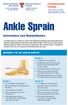 514-412-4400, ext. 23310 2300 Tupper street, C-831, Montreal (Quebec) H3H 1P3 Ankle Sprain Information and Rehabilitation An ankle sprain is a stretch or a tear of the ligaments (bands of tissue that hold
COMMON OVERUSE INJURIES ATTRIBUTED TO CYCLING, AND WAYS TO MINIMIZE THESE INJURIES
 COMMON OVERUSE INJURIES ATTRIBUTED TO CYCLING, AND WAYS TO MINIMIZE THESE INJURIES Listed are a few of the most common overuse injuries associated with cycling long distances. 1. Cervical and upper back
Platelet-Rich Plasma Rehabilitation Guidelines
 UW Health Sports Rehabilitation Platelet-Rich Plasma Rehabilitation Guidelines What is Tendinopathy? Tendons are strong bands of connective tissue comprised primarily of a substance called collagen. Mechanically,
Fitness Training A Sensible Guide to Preparing for Selection in the Gurkhas
 Fitness Training A Sensible Guide to Preparing for Selection in the Gurkhas Background Physical fitness has a number of components: aerobic endurance (stamina), strength, speed, flexibility, muscle endurance,
Strength and conditioning professionals
 Practical Guidelines for Plyometric Intensity William P. Ebben, PhD, CSCS,*D Strength and conditioning professionals have long relied on plyometrics as one of the primary tools for developing athletic
Fact sheet Exercises for older adults undergoing rehabilitation
 Fact sheet Exercises for older adults undergoing rehabilitation Flexibility refers to the amount of movement possible around a joint and is necessary for normal activities of daily living such as stretching,
What Are the Health Benefits Associated with Strength Training?
 Strength Training Program Necessary Basic information to obtain results. -- Most of the information contained in this handout is based on information gathered, researched, and presented by the National
THE SPEED PROGRAM THE following is A list Of POinTS THAT PRODucE RESulTS in SPEED improvement: CHANGE THE GAME
 THE SPEED PROGRAM Remember, perfect technique is the #1 emphasis with the BFS Speed Program. Faster times will follow perfect technique. The Speed Program is as follows: 1. Start with a Sprint Learning
Sit stand desks and musculo skeletal health. Katharine Metters
 Sit stand desks and musculo skeletal health Katharine Metters Topics Sitting Standing Movement and activity Work and human change Sitting uses less energy Sitting provides support for the body to reduce
A compressive dressing that you apply around your ankle, and
 Ankle Injuries & Treatment The easiest way to remember this is: R.I.C.E. Each of these letters stands for: Rest. Rest your ankle. Do not place weight on it if it is very tender. Avoid walking long distances.
Basic Principles of Strength Training and Conditioning
 Basic Principles of Strength Training and Conditioning John M. Cissik, MS, CSCS Whether you are a recreational weight trainer, a weekend athlete, or a strength coach working with elite athletes, it is
EXCESSIVE LATERAL PATELLAR COMPRESSION SYNDROME (Chondromalacia Patella)
 EXCESSIVE LATERAL PATELLAR COMPRESSION SYNDROME (Chondromalacia Patella) Description Maintain appropriate conditioning: Excessive lateral patellar compression syndrome is characterized by pain in the knee
ACL Injury Prevention Through Proprioceptive & Neuromuscular Training Arlington Soccer Club April 1, 2010
 ACL Injury Prevention Through Proprioceptive & Neuromuscular Training Arlington Soccer Club April 1, 2010 Matthew R. McManus, PT Co-Owner & Regional Clinical Director - Massachusetts ProEx Physical Therapy
JUNIPERO SERRA VOLLEYBALL OFF SEASON TRAINING SCHEDULE
 JUNIPERO SERRA VOLLEYBALL OFF SEASON TRAINING SCHEDULE 2007 OFF SEASON WORKOUT Our off season workout is centered around Speed, Agility & Quickness which are athletic attributes that are very trainable
Plantar Fasciitis Information Leaflet. Maneesh Bhatia. Consultant Orthopaedic Surgeon
 Plantar Fasciitis Information Leaflet Maneesh Bhatia Consultant Orthopaedic Surgeon What is plantar fasciitis? The plantar fascia is a strong band of tissue that stretches from the heel to the toes. It
Flexibility Assessment and Improvement Compiled and Adapted by Josh Thompson
 Flexibility Assessment and Improvement Compiled and Adapted by Josh Thompson Muscles must have a full and normal range of motion in order for joints and skeletal structure to function properly. Flexibility
How To Stretch Your Body
 Exercise Module A New Leaf Choices for Healthy Living University of North Carolina at Chapel Hill 2007 Center for Health Promotion and Disease Prevention Physical Activity Exercises for Keeping Active
Physical Therapy Corner: Knee Injuries and the Female Athlete
 Physical Therapy Corner: Knee Injuries and the Female Athlete Knee injuries, especially tears of the anterior cruciate ligament, are becoming more common in female athletes. Interest in women s athletics
Lumbar/Core Strength and Stability Exercises
 Athletic Medicine Lumbar/Core Strength and Stability Exercises Introduction Low back pain can be the result of many different things. Pain can be triggered by some combination of overuse, muscle strain,
Routine For: OT - General Guidelines/Energy Conservation (Caregiver)
 GENERAL GUIDELINES - 9 Tips for Exercise: Body Mechanics for Helper - To protect back, stay as upright as possible and keep head in line with trunk. - Always position yourself as close as possible to the
No Equipment Agility/Core/Strength Program for Full Body No Equip Trainer: Rick Coe
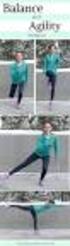 No Equipment Agility/Core/Strength Program for Full Body No Equip Trainer: Rick Coe Introduction Program designed to be performed in a circuit. Perform exercises in sequence without rest 2-3 times. Increase
A proper warm-up is important before any athletic performance with the goal of preparing the athlete both mentally and physically for exercise and
 A proper warm-up is important before any athletic performance with the goal of preparing the athlete both mentally and physically for exercise and competition. A warm-up is designed to prepare an athlete
Therapeutic Canine Massage
 Meet our Certified Canine Massage Therapist, Stevi Quick After years of competitive grooming and handling several breeds in conformation, I became interested in training and competing with my dogs in the
Implementing Effective Team / Group Warm-Ups
 Implementing Effective Team / Group Warm-Ups October 2007 www.strengthpowerspeed.com Warming-up has always been and continues to be an important component of training and competing in all sports. There
THE BENJAMIN INSTITUTE PRESENTS. Excerpt from Listen To Your Pain. Assessment & Treatment of. Low Back Pain. Ben E. Benjamin, Ph.D.
 THE BENJAMIN INSTITUTE PRESENTS Excerpt from Listen To Your Pain Assessment & Treatment of Low Back Pain A B E N J A M I N I N S T I T U T E E B O O K Ben E. Benjamin, Ph.D. 2 THERAPIST/CLIENT MANUAL The
Rehabilitation Guidelines for Posterior Shoulder Reconstruction with or without Labral Repair
 Rehabilitation Guidelines for Posterior Shoulder Reconstruction with or without Labral Repair The anatomic configuration of the shoulder joint (glenohumeral joint) is often compared to a golf ball on a
Range of Motion. A guide for you after spinal cord injury. Spinal Cord Injury Rehabilitation Program
 Range of Motion A guide for you after spinal cord injury Spinal Cord Injury Rehabilitation Program This booklet has been written by the health care providers who provide care to people who have a spinal
Contact us for more info: 020 7736 8191 /
 Winter Sports Advanced Ski Exercises - Introduction The following exercises are for individuals who already have a significant level of fitness. If you are unsure as to whether they are appropriate for
Rehabilitation. Modalities and Rehabilitation. Basics of Injury Rehabilitation. Injury Rehabilitation. Vocabulary. Vocabulary
 Modalities and Rehabilitation Rehabilitation Chapter 12: Basics of Injury Rehabilitation Vocabulary Balance: ability to maintain our center of gravity over a base of support Kinesthesia: the ability to
Knee sprains. What is a knee strain? How do knee strains occur? what you ll find in this brochure
 what you ll find in this brochure What is a knee strain? How do knee strains occur? What you should do if a knee strain occurs. What rehabilitation you should do. Example of a return to play strategy.
Chair Exercises and Lifting Weights
 Chair Exercises and Lifting Weights Why are chair exercises and lifting weights important? Physical activity is one of the most important things you can do to maintain your diabetes control as well as
Always warm up before commencing any exercise. Wear the correct clothing and footwear; do not train if you are unwell or injured.
 SUGGESTED FITNESS PROGRAMME General Exercise Guidance Good exercise training advice is highly specific to the individual. It should be understood, therefore, that the advice provided here can only be general.
Myofit Massage Therapy Stretches for Cycling
 Guidelines for Stretching Always assume the stretch start position and comfortably apply the stretch as directed. Think Yoga - gently and slowly, no ballistic actions or bouncing at joint end range. Once
What is Pilates? Pilates for Horses?
 What is Pilates? Pilates is a conditioning system that increases core stability, strength and body awareness; redresses imbalances, and re aligns the body from the inside out. It can improve posture, achieve
Exercises for Low Back Injury Prevention
 DIVISION OF AGRICULTURE RESEARCH & EXTENSION University of Arkansas System Family and Consumer Sciences Increasing Physical Activity as We Age Exercises for Low Back Injury Prevention FSFCS38 Lisa Washburn,
total hip replacement
 total hip replacement EXCERCISE BOOKLET patient s name: date of surgery: physical therapist: www.jointpain.md Get Up and Go Joint Program Philosophy: With the development of newer and more sophisticated
Elbow Injuries and Disorders
 Elbow Injuries and Disorders Introduction Your elbow joint is made up of bone, cartilage, ligaments and fluid. Muscles and tendons help the elbow joint move. There are many injuries and disorders that
CHAPTER 3: BACK & ABDOMINAL STRETCHES. Standing Quad Stretch Athletic Edge - www.athleticedge.biz - (650) 815-6552
 CHAPTER : BACK & ABDOMINAL STRETCHES Standing Quad Stretch ) Stand and grasp right ankle with same hand, use a wall or chair to Lower maintain Back balance with left hand. Maintain an upright Stretches
A small roller with a big effect. The mini roller for massaging, strengthening, stretching and warming up
 A small roller with a big effect The mini roller for massaging, strengthening, stretching and warming up Suva Preventative products P. O Box, 6002 Lucerne Enquiries Tel. 041 419 58 51 Orders www.suva.ch/waswo
Plyometric Training for Track and Field Indiana High School Clinic 2008 Larry Judge, Ph.D. Ball State University
 Plyometric Training for Track and Field Indiana High School Clinic 2008 Larry Judge, Ph.D. Ball State University What is Plyometric Training? Exercises like hopping, skipping, jumping, bounding, depth
.org. Achilles Tendinitis. Description. Cause. Achilles tendinitis is a common condition that causes pain along the back of the leg near the heel.
 Achilles Tendinitis Page ( 1 ) Achilles tendinitis is a common condition that causes pain along the back of the leg near the heel. The Achilles tendon is the largest tendon in the body. It connects your
Speed is one of the most sought
 Off-Ice Speed and Quickness for Ice Hockey Shane Domer, MEd, CSCS, NSCA-CPT Speed is one of the most sought after characteristics in athletics. The athlete that possesses both speed and quickness will