
Preventing Volleyball Injuries: Knees, Ankles, and Stress Fractures
|
|
|
- Darrell Chapman
- 10 years ago
- Views:
Transcription
1 Preventing Volleyball Injuries: Knees, Ankles, and Stress Fractures William W. Briner, Jr., MD, FACSM,FAAFP, Head Team Physician, U.S. Volleyball National Teams and Flavia Pereira Fortunately the risk of injury in volleyball is lower than that of most other sports. Women s volleyball had the second lowest injury rate during competition among 15 sports studied by the NCAA. Serious injury resulting in many days missed from training is also thankfully rare. While these statistics are reassuring, they offer small solace to a team that loses a starting player to injury before an important match, or for an entire season. If there were strategies that could be employed to further reduce injury risk, most coaches would be interested in using them. Fortunately, there are some strategies for volleyball injury prevention that can be gleaned from the sports medicine literature. The NCAA Injury Surveillance System (ISS) is the most comprehensive database available for assessing injury risk. The ISS defines injury as a traumatic incident that results in time lost from at least one practice or competition. The ISS has provided current and reliable statistical data on injury trends in intercollegiate athletics since 1982, with injury rates given for each exposure during practice or competition. The last ISS report, from 1988 to 2004, showed football had the highest rate of injuries with 36 per 1,000 games and 9.6 per 1,000 practices. Women s soccer was next with rates of 16 and 5.27 injuries per 1,000 games and practices, respectively, followed by women s gymnastics then women s basketball.

2 Women s volleyball had just 4.10 injuries/1,000 practices and 4.58 injuries/1,000 competitions. The main focus here is to review the concepts behind a successful injury prevention program in volleyball athletes, particularly ankle sprains, patellar tendonitis, ACL tears, and stress fractures. Important concepts for coaches are primary and secondary injury prevention, pain vs. injury, jump rate, stretching, and overuse injuries in volleyball players. These concepts should help build framework for injury prevention in volleyball. Primary prevention is defined as measures taken to prevent injury before it ever occurs. This type of prevention is essential for severe season ending injury such as anterior cruciate ligament (ACL) injury. Secondary prevention focuses on preventing a reinjury after a previous injury has occurred. Studies have shown this to be the most effective type of prevention for ankle sprains. Volleyball injury studies suffer from the same problem that is seen in injury data in many sports, namely a lack of a consistent definition of injury. In 1992, Schafle found an injury rate of 1per 50 hours among participants in the 1987 U.S. Open Amateur Volleyball Tournament. She defined injury as any condition for which a player sought medical evaluation. Using a similar definition, at the 1995 U.S. Olympic Festival, the rate was 1 injury per 25 hours of practice and competition. These athletes were NCAA All American level players, who may have subjected themselves to greater stresses during competition, increasing their injury risk. Perhaps these athletes pain tolerance also played a role in their higher injury rate.

3 There are data to show that athletes may have a higher tolerance for pain than nonathletes, which in turn can make it difficult to sort out the difference between pain and injury. The difficulty of this distinction has been demonstrated in volleyball players. The International Volleyball Federation(FIVB) conducted a study of players on the FIVB beach tour in A vast majority of athletes were playing with pain in their lower back, shoulders, and/or knees. However, only a few of these athletes had seen a physician or had taken time off from training. Some were even considering surgery during the off season. So there certainly may be situations when it makes sense to try to prevent injury before an athlete presents to the medical staff an incident that would be defined as an injury. Jump rate is a major concern for volleyball players, and is a significant contributor to injuries in all sports. In 1991, Backx, et al., investigated Dutch school children and found those who participated in sports with the highest jump rate had the greatest chance of being injured. Of course, volleyball is the sport with the highest jump rate, and in this study volleyball practice had the highest injury rate of any sport activity. Goodwin Gerberich, et al., in 1987, evaluated the records of 106 patients treated for volleyball injuries and found that 63% were associated with jumping or landing. It may be that volleyball players spend more time stretching than they need to. The sports medicine literature on stretching has not shown that it is necessarily beneficial in preventing injury. According to recent comprehensive reviews, static stretching does not seem to prevent injury. Static stretching is the time honored

4 practice of holding a joint at the limit of its range of motion for several seconds. Dynamic stretching involves placing a joint on stretch, then moving it up and back (sagittal plane), side to side (coronal plane) and in a rotational motion (transverse plane). Dynamic stretching is more functional for athletic movement, and physical therapists feel that it is superior in improving range of motion. Studies have also shown that it can improve muscle strength and performance to a greater extent than other types of stretching, especially in high level athletes. It also takes less time than static stretching. Warm muscles can be stretched more effectively, so a reasonable recommendation might be five minutes of warmup, using the muscles involved in volleyball (jogging, shuffling, carioca), followed by five minutes of dynamic stretching at the start of practice. A few minutes of dynamic stretching at the end of practice is also a good idea, because muscles adapt to a shorter functional length during training. 1 The Coronal Plane divides the body into front and back halves.

5 2 The Sagittal Plane divides the body into left and right halves. 3 The Transverse Plane divides the body into upper and lower halves Lastly, a major risk factor for the development of injuries is the volume of training or number of repetitions of a given skill which results in overuse injuries. Such injuries occur for two reasons. The first is tissue that fails because of weakness. This failure often occurs at the growth plate of long bones in athletes in their early teens. Injury may also result from overstress to normal tissue, which may occur if too many repetitions are performed without enough rest in between. Rest should be incorporated into each training session, between sets of multiple repetitions; each week, taking a day off or scheduling lighter training sessions during competition; and each year, giving players time off before they return to training. As noted above, it is particularly important that players rest from jumping during the course of each year. When the stress is applied at a rate exceeding that of tissue repair, progressive damage occurs to the structures at risk. Club volleyball players may be particularly at risk for overuse injuries since the growth plates in their bones are still open. If they experience year round stresses through their high school and club seasons, these vulnerable structures are subject to greater risk of injury. Hopefully, it will not be a controversial recommendation to suggest that high school athletes be given three months off after their fall season. If the junior clubs could all agree to start practice in mid February, it would give the players bones and soft tissue the chance

6 to recover. This could significantly decrease the risk of injury for these young athletes. Ankle Injuries The ankle is the most common site for acute injury in volleyball players. This injury accounts for 30% of time loss injuries and can result in significant downtime from volleyball. Ankle sprains usually occur at the volleyball net when a player lands on the foot of an opponent or teammate after blocking or attacking. A primary prevention suggestion has been to change the centerline rule, so any contact with the line would be considered a violation. In Norway, this rule was experimented with for several weeks. The study found a two fold decrease in ankle sprains; however, the experiment had to be abandoned because players felt that too many interruptions in play occurred. The authors suggested that avoiding any contact with the center line during practice would decrease ankle sprain risk. It may also be reasonable to suggest this rule be used during warm ups. Players should be aware that when they hit a ball and then duck under the net they are practicing for their next ankle sprain. The most common risk situation in this study involved tight sets, when an attacker broad jumps and lands across the center line, and the opposing blocker lands on her foot. These problem attackers can be coached to take a longer final approach step and jump up instead of forward. It is usually easy to convince attackers to do this, since this technique results in a higher jump and greater chance of winning the point. Ankle sprains are much more likely to recur during the first year following an initial injury. Compared to an ankle with no prior injury, the risk of injury is fourfold

7 greater for an ankle that has been previously sprained. A secondary prevention program is crucial in order to decrease this risk of re injury. A ten week program of balancing and strength training for the foot and ankle has been shown to decrease the chance of recurrent ankle sprain. Ten minutes daily of neuromuscular rehabilitation, such as balance board training, decreases the risk of ankle sprain to almost the same level as an ankle that has not been previously injured. These programs can be designed by a sports medicine physician, certified athletic trainer or physical therapist. Finally, the use of ankle braces and taping have been widely investigated. Taping and bracing seem to increase proprioceptive awareness in the ankle joint, and these effects seem to be limited to athletes with previous injury. Stirrup braces, such as the Active Ankle or, have the best data to support their use in decreasing the chance of recurrence of injury, especially during the first year after a sprain. Knee Injuries Patellar tendinosis/tendonitis is the most frequent overuse injury in volleyball. The most common site for pain is at the bottom of the kneecap, where the tendon originates. Tendinosis is the more accurate term since the injured tendon actually consists of fibrosis or scar tissue, not inflammatory cells. Volleyball athletes at all levels are committed to jump training as part of their regimen, perhaps more so than athletes in any other sport. The biggest challenge for coaches and strength and conditioning personnel seems to be finding the fine line between performance enhancement and risk of injury. If we could clearly define this line for each athlete, it would be easier to prevent tendinosis. Athletes who generate the greatest power

8 during vertical jumping seem to be at greatest risk. Since these are the athletes who already jump the highest, it may be advisable for them to devote less time to jump training and plyometrics. Athletes with increased external tibial torsion and deeper than 90 degree knee flexion at takeoff are also at increased risk. So coaching attention to technique and amount of time spent jump training should help decrease the risk of patellar tendinosis. Adequate strength training prior to high impact jump training and plyometrics is believed to be an important part of decreasing the risk of tendon injury. An essential emphasis when the focus is on prevention of kneecap tendinosis, is to eccentrically load the muscles during strength training. This means working the negative during resistance exercise. This is best done in a closed chain fashion, with the foot in contact with the ground. So leg presses, for example, are much more beneficial than quadriceps extensions. Wall slides are a simple preventive exercise that does not require any special equipment. The athlete starts with her knees straight and back flat against a wall, then slowly slides down the wall into a wall sit position, holding for few seconds, then sliding back up; she should do two sets of 15 repetitions. Half squats and power clean exercises may also be beneficial, but athletes must be coached to emphasize the negative phase of the contraction going up fast and down slowly, work against gravity on the way down. Some evidence suggests that volleyball injury is less likely to occur on softer surfaces. The 1995 U.S. Olympic Festival participants reported five fold fewer injuries per hour playing on sand than on hard court surfaces. Doing plyometric or jump training on sand should help to decrease the risk of tendinosis.

9 Biomechanically correct landing may help to decrease the incidence of patellar tendon problems, and it has also been shown to decrease the chance of anterior cruciate injury. According to NCAA Injury Surveillance data, the frequency of ACL injury is considered lower in volleyball than in most other team sports. Ferreti et al. reported on 52 serious knee ligament injuries and found the most common mechanism of injury was landing from a jump in the attack zone. Most of these involved the ACL and there were more women than men in this case series. There are certain athletes who may be at greater risk, and who should be targeted for an ACL injury prevention program. Coaches should pay special attention to girls whose knees come together in knock kneed fashion when landing from a jump. A simple screening test is to have the athlete jump from an 18 inch box and observe her landing. If the knees come in towards each other, kissing knees, then the ligaments are absorbing too much of the landing forces. This has been referred to as ligament dominant landing, which puts the ligaments at greater risk. Girls who land with their knees straight, in extension, also seem to be at increased risk. A prevention program should emphasize strengthening the hamstring muscles, since those muscles work in conjunction with the ACL. The hamstrings can be trained to fire rapidly during landing from a jump, making the ACL less vulnerable. Hitters often reach high with their hitting hand and shoulder, so that the foot on that side is lifted higher up off the ground. Then they land on their opposite leg, putting that ACL at greater risk. However, there is no advantage to be gained from landing on one foot, so hitters should be coached to land with both feet together, to effectively dissipate landing forces. There are also studies that show that if players try to land

10 softly like a feather, there is less force transmitted to the joints in their legs. So players should land softly, with both feet at once, and their knees bent directly over their feet. There are even some data to suggest that this sort of landing maximizes eccentric training of the muscles used in jumping, resulting in greater jumping power. For a variety of reasons, it may be just as important to coach players on how they land as it is to train them how to jump. Stress Fractures A stress fracture is the inability of the skeleton to withstand repetitive bouts of mechanical loading, which results in structural fatigue, causing bone pain. If these forces continue, the bone cortex may fail and a true fracture will occur. Volleyball players appear to be at an increased risk for developing lower limb stress fractures, as well as lumbar spine spondylolysis, which is essentially a stress fracture in the pars interarticularis of the vertebra in the low back. This type of injury may occur in athletes who increase their volume of training quickly or continue training through muscle fatigue. Ideally, landing forces are absorbed by muscles, but as the muscles fatigue they become less effective shock absorbers. The consequence is that landing forces are transmitted to the bones causing a greater load which results in stress fracture. Women are more likely than men to get stress fractures, possibly because of the female athlete triad. The three aspects of the triad are: 1) oligoamenorrhea less frequent menstrual periods during training; 2) disordered eating when athletes take in inadequate calories for their energy needs; and 3) osteoporosis bone mineral loss. Any volleyball player suspected of having any of these three

11 conditions should be evaluated by a primary care sports medicine physician. A multidisciplinary treatment program may help to decrease the risk of stress fracture. A common method of training used to increase vertical jump in volleyball athletes is plyometrics. When done correctly, plyometrics have been shown to improve vertical jump, while decreasing stress to the bones, probably because of the maximal eccentric contraction prior to takeoff. However, teams often see increased stress fracture rates with a new plyometric program. The reason might be that tired muscles are stressed beyond the point where they can function as effective shock absorbers. What makes a plyometric program safe? The first step is to do adequate strength training prior to starting a program. Not all strength coaches agree on how strong is strong enough. A conservative recommendation might be for the athlete is able to perform two sets of 10 leg presses with twice her body weight. Her landing form should be biomechanically correct, as noted in the previous section. Athletes should take at least one day off in between sessions, and they should not perform plyometrics more than two or three times in a week. Plyometrics should be done early in practice, when muscles are fresh, and jump training should never be used for fitness training. Conclusion Injuries are almost an inescapable aspect of sports. Fortunately, the risk of injury in volleyball is among the lowest of the team sports. The most common acute injuries seen in volleyball are ankle sprains. Ankle re injury can be prevented with a rehabilitation program including balancing exercises and a stirrup type ankle brace.

12 Patellar tendinosis/tendinitis is the most frequent overuse injuries in volleyball. Adequate strength training and careful attention to the volume of jumping, as well as rest from jumping during training, may minimize the risk of this injury. ACL injury risk can be decreased by targeting athletes with flawed biomechanics of jumping and emphasizing correct landing technique with them. Similarly, stress fracture risk can be deceased by allowing enough rest, especially from jumping during the competitive season. Certified Athletic Trainers are often familiar with these injury prevention principles. Involving them in the strength and conditioning program of a volleyball team may be an effective way to minimize injury risk.

Prevention & Management of ACL Injury. Ian Horsley PhD, MCSP Lee Herrington PhD, MCSP
 Prevention & Management of ACL Injury Ian Horsley PhD, MCSP Lee Herrington PhD, MCSP ACL injury ACL injury 30/100,000, 40% sports injuries (NHS) Limited statistics in UK related to sport Rugby Union 2002-2004
KNEEFIT ACL Injury Prevention Program
 The Bad News Anterior Cruciate Ligament (ACL) injuries have become extremely common in athletics. From golfer Tiger Woods to Tom Brady of the New England Patriots to Michael Owen of Manchester United F.C.
ACL Non-Operative Protocol
 ACL Non-Operative Protocol Anatomy and Biomechanics The knee is a hinge joint connecting the femur and tibia bones. It is held together by several important ligaments. The most important ligament to the
Preventing Knee Injuries in Women s Soccer
 Preventing Knee Injuries in Women s Soccer By Wayne Nelson, DC, CCRS The United States has recently seen a rapid increase in participation of young athletes with organized youth soccer leagues. As parents
Pre - Operative Rehabilitation Program for Anterior Cruciate Ligament Reconstruction
 Pre - Operative Rehabilitation Program for Anterior Cruciate Ligament Reconstruction This protocol is designed to assist you with your preparation for surgery and should be followed under the direction
ACL Reconstruction Rehabilitation Program
 ACL Reconstruction Rehabilitation Program 1. Introduction to Rehabilitation 2. The Keys to Successful Rehabilitation 3. Stage 1 (to the end of week 1) 4. Stage 2 (to the end of week 2) 5. Stage 3 (to the
Common Injuries in Volleyball. Approximately 50-80% of volleyball injuries occur from overuse Injury Statistics.
 Edgar 1 Kayley Edgar Mrs. Jackson Advanced Lit. /Comp 1 11 December 2013 Common Injuries in Volleyball Approximately 50-80% of volleyball injuries occur from overuse Injury Statistics. Volleyball is one
Physical Therapy Corner: Knee Injuries and the Female Athlete
 Physical Therapy Corner: Knee Injuries and the Female Athlete Knee injuries, especially tears of the anterior cruciate ligament, are becoming more common in female athletes. Interest in women s athletics
Mary LaBarre, PT, DPT,ATRIC
 Aquatic Therapy and the ACL Current Concepts on Prevention and Rehab Mary LaBarre, PT, DPT,ATRIC Anterior Cruciate Ligament (ACL) tears are a common knee injury in athletic rehab. Each year, approximately
Sport-specific Rehabilitation and Performance Programs
 Sport-specific Rehabilitation and Performance Programs At Cleveland Clinic, we understand athletes. That s why we ve designed an entire range of sport-specific rehabilitation and performance programs to
LADIES GAA ACL PREVENTION PROGRAM
 LADIES GAA ACL PREVENTION PROGRAM Enda King Clinical Specialist Physiotherapist SSC 19 th March 2012 TOPICS Anatomy ACL Injury Mechanism ACL Injury Risk Factors ACL Injury Consequences ACL Injury Prevention
Strength Training for the Knee
 Strength Training for the Knee This handout is to help you rebuild the strength of the muscles surrounding the knee after injury. It is intended as a guideline to help you organize a structured approach
ACL Injury Risk Factors and Prevention An Update. Kevin Latz, MD CMH Section of Sports Medicine [email protected]
 ACL Injury Risk Factors and Prevention An Update Kevin Latz, MD CMH Section of Sports Medicine [email protected] Case Scenario 14 yo female soccer player Changed directions quickly when ball was taken from
Anterior Cruciate Ligament Reconstruction Rehabilitation Protocol
 Anterior Cruciate Ligament Reconstruction Rehabilitation Protocol GENERAL CONSIDERATIONS * This handout serves as a general outline for you as a patient to better understand guidelines and time frames
William J. Robertson, MD UT Southwestern Orthopedics 1801 Inwood Rd. Dallas, TX 75390-8882 Office: (214) 645-3300 Fax: (214) 3301 billrobertsonmd.
 Anterior Cruciate Ligament Reconstruction Postoperative Rehab Protocol You will follow-up with Dr. Robertson 10-14 days after surgery. At this office visit you will also see one of his physical therapists.
Rehabilitation of Sports Hernia
 Rehabilitation of Sports Hernia (Involving Adductor Tenotomy, Ilioinguinal Neurectomy and Osteitis Pubis) An appendix follows this protocol for examples of exercises in each phase of rehabilitation. There
Patellofemoral/Chondromalacia Protocol
 Patellofemoral/Chondromalacia Protocol Anatomy and Biomechanics The knee is composed of two joints, the tibiofemoral and the patellofemoral. The patellofemoral joint is made up of the patella (knee cap)
Post-Operative ACL Reconstruction Functional Rehabilitation Protocol
 Post-Operative ACL Reconstruction Functional Rehabilitation Protocol Patient Guidelines Following Surgery The post-op brace is locked in extension initially for the first week with the exception that it
ILIOTIBIAL BAND SYNDROME
 ILIOTIBIAL BAND SYNDROME Description The iliotibial band is the tendon attachment of hip muscles into the upper leg (tibia) just below the knee to the outer side of the front of the leg. Where the tendon
By Agnes Tan (PT) I-Sports Rehab Centre Island Hospital
 By Agnes Tan (PT) I-Sports Rehab Centre Island Hospital Physiotherapy Provides aids to people Deals with abrasion and dysfunction (muscles, joints, bones) To control and repair maximum movement potentials
Anterior Cruciate Ligament Reconstruction Rehabilitation Protocol
 The First Two Weeks After Surgery You will go home with crutches and be advised to use ice. Goals 1. Protect reconstruction 2. Ensure wound healing 3. Maintain full knee extension 4. Gain knee flexion
Knee sprains. What is a knee strain? How do knee strains occur? what you ll find in this brochure
 what you ll find in this brochure What is a knee strain? How do knee strains occur? What you should do if a knee strain occurs. What rehabilitation you should do. Example of a return to play strategy.
PREVENTING ACL INJURIES IN SOCCER. By Brian Goodstein, MS, ATC, CSCS
 PREVENTING ACL INJURIES IN SOCCER By Brian Goodstein, MS, ATC, CSCS ACL injuries can be devastating to a soccer player s competitive season. For this reason, reputable medical institutions like the Cincinnati
UK HealthCare Sports Medicine Patient Education December 09
 LCL injury Description Lateral collateral knee ligament sprain is a sprain (stretch or tear) of one of the four major ligaments of the knee. The lateral collateral ligament (LCL) is a structure that helps
Providence ACL Injury Prevention and Sports Performance Program. Presented by: Providence Sports Therapy 503-29-SPORT. Keeping athletes in the game
 Providence ACL Injury Prevention and Sports Performance Program Presented by: Providence Sports Therapy 503-29-SPORT Keeping athletes in the game Welcome! Providence Sports Therapy wants to keep athletes
Knee Conditioning Program. Purpose of Program
 Prepared for: Prepared by: OrthoInfo Purpose of Program After an injury or surgery, an exercise conditioning program will help you return to daily activities and enjoy a more active, healthy lifestyle.
Basic Principles of Strength Training and Conditioning
 Basic Principles of Strength Training and Conditioning John M. Cissik, MS, CSCS Whether you are a recreational weight trainer, a weekend athlete, or a strength coach working with elite athletes, it is
Rehabilitation Guidelines for Patellar Tendon and Quadriceps Tendon Repair
 UW Health Sports Rehabilitation Rehabilitation Guidelines for Patellar Tendon and Quadriceps Tendon Repair The knee consists of four bones that form three joints. The femur is the large bone in the thigh
Sports Injury Treatment
 Sports Injury Treatment Participating in a variety of sports is fun and healthy for children and adults. However, it's critical that before you participate in any sport, you are aware of the precautions
ACL Reconstruction Rehabilitation
 ACL Reconstruction Rehabilitation The following exercises are commonly used for rehabilitation following ACL reconstruction surgery. However, each knee surgery is unique and each person s condition is
Interval Throwing Program for Baseball Players Phase I
 Interval Throwing Program for Baseball Players Phase I The interval Throwing Program (ITP) is designed to gradually return motion, strength and confidence in the throwing arm after injury or surgery by
ACCELERATED REHABILITATION PROTOCOL FOR POST OPERATIVE POSTERIOR CRUCIATE LIGAMENT RECONSTRUCTION DR LEO PINCZEWSKI DR JUSTIN ROE
 ACCELERATED REHABILITATION PROTOCOL FOR POST OPERATIVE POSTERIOR CRUCIATE LIGAMENT RECONSTRUCTION DR LEO PINCZEWSKI DR JUSTIN ROE January 2005 Rationale of Accelerated Rehabilitation Rehabilitation after
Rehabilitation after ACL Reconstruction: From the OR to the Playing Field. Mark V. Paterno PT, PhD, MBA, SCS, ATC
 Objectives Rehabilitation after ACL Reconstruction: From the OR to the Playing Field Mark V. Paterno PT, PhD, MBA, SCS, ATC Coordinator of Orthopaedic and Sports Physical Therapy Cincinnati Children s
KNEES A Physical Therapist s Perspective American Physical Therapy Association
 Taking Care of Your KNEES A Physical Therapist s Perspective American Physical Therapy Association Taking Care of Your Knees When the mother of the hero Achilles dipped him in the river Styx, she held
Kelly Corso MS, ATC, CES, FMSC, CSST
 ACL Injury Prevention Program Kelly Corso MS, ATC, CES, FMSC, CSST What is the ACL??? The ACL or anterior cruciate ligament, attaches the front top portion of the shin bone (tibia) to the back bottom portion
THE BIG SIX. Six Best Volleyball Strength Training Exercises. By Dennis Jackson, CSCS www.strength-and
 THE BIG SIX Six Best Volleyball Strength Training Exercises By Dennis Jackson, CSCS www.strength-and and-power power-for for-volleyball.com THE SQUAT What it is The two most common squatting exercises
Theodore B. Shybut, M.D. 7200 Cambridge St. #10A Houston, Texas 77030 Phone: 713-986-5590 Fax: 713-986-5521. Sports Medicine
 Anterior Cruciate Ligament Reconstruction Accelerated Rehab This rehabilitation protocol has been designed for patients with ACL reconstruction who anticipate returning to a high level of activity as quickly
PREOPERATIVE: POSTOPERATIVE:
 PREOPERATIVE: ACL RECONSTRUCTION RECOVERY & REHABILITATION PROTOCOL If you have suffered an acute ACL injury and surgery is planned, the time between injury and surgery should be used to regain knee motion,
Self Management Program. Ankle Sprains. Improving Care. Improving Business.
 Ankle Sprains Improving Care. Improving Business. What is an ankle sprain? Ligaments attach to the ankle bones and allow for normal movement and help prevent too much motion within the joint. Ankle sprains
ACL INJURIES IN THE FEMALE ATHLETE
 ACL INJURIES IN THE FEMALE ATHLETE Jeffrey L. Mikutis, D.O. Surgical Director, Sports Medicine Pediatric Orthopaedic Surgeon Orthopaedic Center for Spinal & Pediatric Care, Inc. Dayton Children s Hospital
PLANTAR FASCITIS (Heel Spur Syndrome)
 PLANTAR FASCITIS (Heel Spur Syndrome) R. Amadeus Mason MD Description Plantar fascitis is characterized by stiffness and inflammation of the main fascia (fibrous connective [ligament-like] tissue) on the
Women s. Sports Medicine Program
 Women s Sports Medicine Program The Froedtert & The Medical College of Wisconsin Sports Medicine Center The Sports Medicine Center is a leading provider of comprehensive sports-based programs to treat
Hip Bursitis/Tendinitis
 Hip Bursitis/Tendinitis Anatomy and Biomechanics The hip is a ball and socket joint that occurs between the head of the femur (ball) and the acetabulum of the pelvis (socket). It is protected by several
ANKLE STRENGTHENING INTRODUCTION EXERCISES SAFETY
 ANKLE STRENGTHENING INTRODUCTION Welcome to your Ankle Strengthening exercise program. The exercises in the program are designed to improve your ankle strength, fitness, balance and dynamic control. The
ANKLE STRENGTHENING PROGRAM Program Time: 20 min. Recommended: 3x a week
 ANKLE STRENGTHENING PROGRAM Program Time: 20 min. Recommended: 3x a week Manuel A. Escalante, Jr. BS, ATC, EMT Model: Nathan Swift BS Note: This program is not meant to replace an evaluation by your coach,
Anterior Cruciate Ligament Reconstruction Progression Rehabilitation Program By Jenna Hennebry, Erin Stiefel, and Lauren Schmidt
 Anterior Cruciate Ligament Reconstruction Progression Rehabilitation Program By Jenna Hennebry, Erin Stiefel, and Lauren Schmidt Case Study: 18 year old female soccer player Isolated ACL rupture (planted
Anterior Cruciate Ligament (ACL) Rehabilitation
 Thomas D. Rosenberg, M.D. Vernon J. Cooley, M.D. Charles C. Lind, M.D. Anterior Cruciate Ligament (ACL) Rehabilitation Dear Enclosed you will find a copy of our Anterior Cruciate Ligament (ACL) Rehabilitation
Stretching for Young Athletes. Shawn P. Anderson, SPT Duke University Doctor of Physical Therapy
 Stretching for Young Athletes Shawn P. Anderson, SPT Duke University Doctor of Physical Therapy Sports and exercise are usually integral parts of many adolescents life. Whether they play at school or in
A compressive dressing that you apply around your ankle, and
 Ankle Injuries & Treatment The easiest way to remember this is: R.I.C.E. Each of these letters stands for: Rest. Rest your ankle. Do not place weight on it if it is very tender. Avoid walking long distances.
Implementing Effective Team / Group Warm-Ups
 Implementing Effective Team / Group Warm-Ups October 2007 www.strengthpowerspeed.com Warming-up has always been and continues to be an important component of training and competing in all sports. There
Anterior Cruciate Ligament Reconstruction Accelerated Rehabilitation Protocol Dr. Mark Adickes
 Anterior Cruciate Ligament Reconstruction Accelerated Rehabilitation Protocol Introduction: This rehabilitation protocol is designed for patients with ACL injuries who anticipate returning early to a high
Ankle Injury/Sprains in Youth Soccer Players Elite Soccer Community Organization (ESCO) November 14, 2013
 Ankle Injury/Sprains in Youth Soccer Players Elite Soccer Community Organization (ESCO) November 14, 2013 Jeffrey R. Baker, DPM, FACFAS Weil Foot and Ankle Institute Des Plaines, IL Ankle Injury/Sprains
ACL Reconstruction Physiotherapy advice for patients
 Oxford University Hospitals NHS Trust ACL Reconstruction Physiotherapy advice for patients Introduction This booklet is designed to provide you with advice and guidance on your rehabilitation after reconstruction
Brian P. McKeon MD Jason D. Rand, PA-C, PT Patient Information Sheet: Anterior Cruciate Ligament
 Brian P. McKeon MD Jason D. Rand, PA-C, PT Patient Information Sheet: Anterior Cruciate Ligament The anterior cruciate ligament or ACL is one of the major ligaments located in the knee joint. This ligament
Injury Prevention for the Back and Neck
 Injury Prevention for the Back and Neck www.csmr.org We have created this brochure to provide you with information regarding: Common Causes of Back and Neck Injuries and Pain Tips for Avoiding Neck and
THE BADMINTON ASSOCIATION OF ENGLAND MISSION STATEMENT
 THE BADMINTON ASSOCIATION OF ENGLAND MISSION STATEMENT Badminton is an Olympic Sport It is played by groups, families and individuals of all ages and it provides a healthy, lifelong sport activity that
EXCESSIVE LATERAL PATELLAR COMPRESSION SYNDROME (Chondromalacia Patella)
 EXCESSIVE LATERAL PATELLAR COMPRESSION SYNDROME (Chondromalacia Patella) Description Maintain appropriate conditioning: Excessive lateral patellar compression syndrome is characterized by pain in the knee
Adolescent Female Knee/ACL Injuries and Prevention. Camille Clinton, MD ProOrtho
 Adolescent Female Knee/ACL Injuries and Prevention Camille Clinton, MD ProOrtho Background Native Seattlelite Played most sports, but primarily soccer High school, select, ODP, college College at Notre
ACL RECONSTRUCTION POST-OPERATIVE REHABILITATION PROGRAMME
 ACL RECONSTRUCTION POST-OPERATIVE REHABILITATION PROGRAMME ABOUT THE OPERATION The aim of your operation is to reconstruct the Anterior Cruciate Ligament (ACL) to restore knee joint stability. A graft,
Return to same game if sx s resolve within 15 minutes. Return to next game if sx s resolve within one week Return to Competition
 Assessment Skills of the Spine on the Field and in the Clinic Ron Burke, MD Cervical Spine Injuries Sprains and strains Stingers Transient quadriparesis Cervical Spine Injuries Result in critical loss
Strength Training HEALTHY BONES, HEALTHY HEART
 Strength Training HEALTHY BONES, HEALTHY HEART No matter what your age, strength training can improve your bone health and your balance. As we age, our bones lose both tissue and strength. This condition
JUNIPERO SERRA VOLLEYBALL OFF SEASON TRAINING SCHEDULE
 JUNIPERO SERRA VOLLEYBALL OFF SEASON TRAINING SCHEDULE 2007 OFF SEASON WORKOUT Our off season workout is centered around Speed, Agility & Quickness which are athletic attributes that are very trainable
The Insall Scott Kelly Center for Orthopaedics and Sports Medicine 210 East 64th Street, 4 th Floor, New York, NY 10065
 ANTERIOR CRUCIATE LIGAMENT RECONSTRUCTION POST-OPERATIVE REHABILITATION PROTOCOL 2003 AUTOGRAFT BONE-PATELLA TENDON-BONE and ALLOGRAFT PROTOCOL PHASE I-EARLY FUNCTIONAL (WEEKS 1-2) Goals: 1. Educate re:
Physical & Occupational Therapy
 In this section you will find our recommendations for exercises and everyday activities around your home. We hope that by following our guidelines your healing process will go faster and there will be
Bringing Back the Shoulders
 Bringing Back the Shoulders Mike Kamal Peak performance in competition should always be the primary goal of training. The unfortunate and sometimes unavoidable consequences of sport are fatigue, breakdown
Ankle Sprain. Information and Rehabilitation. Grade II. Grade I. Grade III
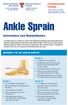 514-412-4400, ext. 23310 2300 Tupper street, C-831, Montreal (Quebec) H3H 1P3 Ankle Sprain Information and Rehabilitation An ankle sprain is a stretch or a tear of the ligaments (bands of tissue that hold
-Balance on hands and feet rolling the upper hamstring area.
 -Begin w/roller around mid balance w/ back flat on ground, put hands behind head. -Slowly roll to mid/upper shoulder blade area. -Roll to right or left to emphasize one side. Thoracic Spine Mobility -Sit
Neck Injuries and Disorders
 Neck Injuries and Disorders Introduction Any part of your neck can be affected by neck problems. These affect the muscles, bones, joints, tendons, ligaments or nerves in the neck. There are many common
ANTERIOR CRUCIATE LIGAMENT INJURY PREVENTION IN NEW ZEALAND. Barry Tietjens Unisports Sports Medicine Auckland
 ANTERIOR CRUCIATE LIGAMENT INJURY PREVENTION IN NEW ZEALAND Barry Tietjens Unisports Sports Medicine Auckland NO DISCLOSURES ACL INJURY PREVENTION Knee injuries involving the ACL are common in sport ACL
What muscles do cyclists primarily use?
 Stress & Injury The following information has been taken from freely available articles from British Cycling and other Cycling organisations. Sources are noted at the end of this document. Please note
THE PREVENTION AND REHABILITATION OF SPORTS INJURIES THE PREVENTION AND REHABILITATION OF SPORTS INJURIES. NO, there isn t.
 THE PREVENTION AND REHABILITATION OF SPORTS INJURIES VILMOS DANI M.D. Department of Family Medicine Faculty of Medicine, Semmelweis University Budapest, Hungay GIZELLA PERÉNYI M.D. Department of Rehabilitation
Rehabilitation Guidelines for Meniscal Repair
 UW Health Sports Rehabilitation Rehabilitation Guidelines for Meniscal Repair There are two types of cartilage in the knee, articular cartilage and cartilage. Articular cartilage is made up of collagen,
Platelet-Rich Plasma Rehabilitation Guidelines
 UW Health Sports Rehabilitation Platelet-Rich Plasma Rehabilitation Guidelines What is Tendinopathy? Tendons are strong bands of connective tissue comprised primarily of a substance called collagen. Mechanically,
Medial Collateral Ligament Sprain: Exercises
 Medial Collateral Ligament Sprain: Exercises Your Kaiser Permanente Care Instructions Here are some examples of typical rehabilitation exercises for your condition. Start each exercise slowly. Ease off
Foot and Ankle Injuries in the Adolescent Athlete
 Foot and Ankle Injuries in the Adolescent Athlete Kevin Latz, MD Children s Mercy Hospital Center for Sports Medicine Foot and Ankle Injuries Very common Influenced by the unique properties of growth plates
Athletic Training. Athletic Training is becoming a fast growing career among young adults due to the
 Gleason 1 Courtney Gleason Mr. Kellerman English: IJK 19 November 2012 Athletic Training Athletic Training is becoming a fast growing career among young adults due to the increase of boys and girls of
ACL Reconstruction: Patellar Tendon Graft/Hamstring Tendon Graft
 ACL Reconstruction: Patellar Tendon Graft/Hamstring Tendon Graft Patellar Tendon Graft/Hamstring Tendon Graft General Information: The intent of these guidelines is to provide the therapist with direction
Sports Health. Dedicated to building champions
 Sports Health Dedicated to building champions Dedicated to Building Focus The Competitive Edge All athletes deserve the very best sports-related care and treatment that s one-on-one and state-of-the-art.
ACL Reduction Helping you Keep it Together
 ACL Reduction Helping you Keep it Together What is the training program used in the ACL reduction Program? The ACL Reduction Program will be using the PEP (Prevent injury, Enhance Performance) Program
COMMON OVERUSE INJURIES ATTRIBUTED TO CYCLING, AND WAYS TO MINIMIZE THESE INJURIES
 COMMON OVERUSE INJURIES ATTRIBUTED TO CYCLING, AND WAYS TO MINIMIZE THESE INJURIES Listed are a few of the most common overuse injuries associated with cycling long distances. 1. Cervical and upper back
Dr Doron Sher MB.BS. MBiomedE, FRACS(Orth)
 Dr Doron Sher MB.BS. MBiomedE, FRACS(Orth) Knee, Shoulder, Elbow Surgery ACL REHABILITATION PROGRAM (With thanks to the Eastern Suburbs Sports Medicine Centre) The time frames in this program are a guide
ANTERIOR CRUCIATE LIGAMENT RECONSTRUCTION Hamstring Graft/PTG-Accelerated Rehab
 The rehabilitation protocol has been designed for patients with ACL reconstruction who anticipate returning early to a high level of activity postoperatively. The ACL Rehabilitation protocol for all three
PATELLOFEMORAL TRACKING AND MCCONNELL TAPING. Minni Titicula
 PATELLOFEMORAL TRACKING AND MCCONNELL TAPING Minni Titicula PF tracking disorder PF tracking disorder occurs when patella shifts out of the femoral groove during joint motion. most common in the US. affects
Passive Range of Motion Exercises
 Exercise and ALS The physical or occupational therapist will make recommendations for exercise based upon each patient s specific needs and abilities. Strengthening exercises are not generally recommended
dotfit Certification Integrated Training
 The Scientific Rationale Today s Society To understand the rationale behind integrated training, it s imperative for the health and fitness professional to first understand the current state of today s
Biomechanical Analysis of the Deadlift (aka Spinal Mechanics for Lifters) Tony Leyland
 Biomechanical Analysis of the Deadlift (aka Spinal Mechanics for Lifters) Tony Leyland Mechanical terminology The three directions in which forces are applied to human tissues are compression, tension,
The Santa Monica Orthopaedic and Sports Medicine Research Foundation. The PEP Program: Prevent injury and Enhance Performance
 The Santa Monica Orthopaedic and Sports Medicine Research Foundation The PEP Program: Prevent injury and Enhance Performance This prevention program consists of a warm-up, stretching, strengthening, plyometrics,
Frequently Asked Questions following Anterior Cruciate Ligament Reconstruction Surgery 1
 Frequently Asked Questions following Anterior Cruciate Ligament Reconstruction Surgery 1 Will my knee be normal after surgery and recovery? Unfortunately, even with an ACL reconstructive procedure, it
Overhead Strength Training for the Shoulder: Guidelines for Injury Prevention and Performance Training Success
 Overhead Strength Training for the Shoulder: Guidelines for Injury Prevention and Performance Training Success Robert Panariello MS, PT, ATC, CSCS Strength training is an important component in the overall
Anterior Cruciate Ligament Reconstruction. ACL Rehab Protocol
 Anterior Cruciate Ligament Reconstruction Rehab Protocol This rehabilitation protocol has been designed for patients following ACL reconstruction who anticipate returning to a high level of activity as
Spine Injury and Back Pain in Sports
 Spine Injury and Back Pain in Sports DAVID W. GRAY, MD 1 Back Pain Increases with Age Girls>Boys in Teenage years Anywhere from 15 to 80% of children and adolescents have back pain depending on the studies
Lumbar/Core Strength and Stability Exercises
 Athletic Medicine Lumbar/Core Strength and Stability Exercises Introduction Low back pain can be the result of many different things. Pain can be triggered by some combination of overuse, muscle strain,
ACL Injury Prevention Through Proprioceptive & Neuromuscular Training Arlington Soccer Club April 1, 2010
 ACL Injury Prevention Through Proprioceptive & Neuromuscular Training Arlington Soccer Club April 1, 2010 Matthew R. McManus, PT Co-Owner & Regional Clinical Director - Massachusetts ProEx Physical Therapy
What is Osteoarthritis? Who gets Osteoarthritis? What can I do when I am diagnosed with Osteoarthritis? What can my doctor do to help me?
 Knee Osteoarthritis What is Osteoarthritis? Osteoarthritis is a disease process that affects the cartilage within a joint. Cartilage exists at the surface of the ends of the bones and provides joints with
SCRIPT NUMBER 82 SPRAINED ANKLE (TWO SPEAKERS)
 SCRIPT NUMBER 82 SPRAINED ANKLE (TWO SPEAKERS) PROGRAM NAME: HEALTH NUGGETS PROGRAM TITLE: SPRAINED ANKLE PROGRAM NUMBER: 82 SUBJECT: PATHOLOGY, CAUSES, DIAGNOSIS, TREATMENT, PREVENTION OF SPRAINED ANKLES
AGILITY LADDER IMPORTANT INFORMATION PLEASE READ AND KEEP DISCLAIMER
 AGILITY LADDER IMPORTANT INFORMATION PLEASE READ AND KEEP DISCLAIMER The following guidelines should be observed when using the Agility Ladder. Always consult your physician before participating in any
2002 Functional Design Systems
 1. Proprioceptive sensitivity has to do with not being too sensitive but being sensitive enough. 2. The hammies have a lot to do with all three planes of function. 3. In upright function, knee flexion