
Recommendations for Extraction of Chronically Implanted Transvenous Pacing and Defibrillator Leads: Indications, Facilities, Training
|
|
|
- Audrey Ellis
- 9 years ago
- Views:
Transcription
1 Reprinted with permission from PACING AND CLINICAL ELECTROPHYSIOLOGY, Volume 23, No. 4, Part 1, April Copyright 2000 by Futura Publishing Company, Inc., Armonk, NY NASPE POLICY STATEMENT Recommendations for Extraction of Chronically Implanted Transvenous Pacing and Defibrillator Leads: Indications, Facilities, Training NORTH AMERICAN SOCIETY OF PACING AND ELECTROPHYSIOLOGY LEAD EXTRACTION CONFERENCE FACULTY: CHARLES J. LOVE, BRUCE L. WILKOFF, CHARLES L. BYRD, PETER H. BELOTT, JEFFREY A. BRINKER, NEAL E. FEARNOT, RICHARD A. FRIEDMAN, SEYMOUR FURMAN, LOUIS B. GOODE DAVID L. HAYES, DAVID T. KAWANISHI, VICTOR PARSONNET, CHRISTOPHER REISER, and HEIDI J. VAN ZANDT, (ADDITIONAL CONSULTANT) Introduction In the years following the commercial introduction of chronically implanted transvenous pacing leads, a wide variety of methods for removing such leads began to appear in the literature. 1 5 The simplest in concept is traction applying a longitudinal force to the lead body after exteriorizing the proximal end of the lead. In some instances, manipulation of the lead and only gentle traction is required. For patients with exuberant fibrotic overgrowth, 6 more aggressive methods were developed, including traction applied by weights, elastic bands, or other inventive methods. A few reports describe grasping the lead with forceps 7 or catheters in an effort to overcome the limited tensile strength or the short length of some leads. Complications 8 11 and difficulties encountered when using traction for lead removal led some investigators to surgical approaches. 11,15 17 Exposing the heart and great veins via sternotomy or thoracotomy allows extraction of a lead via a transmural incision in the atrium or ventricle. A limited surgical technique, via the right intercostal space, has also been described. 18 In experienced hands these techniques produced high success rates, but required skills not typically practiced by the majority of implanting physicians. In addition, these techniques are associated with the morbidity and economic impact of thoracotomy. The desire for safe extraction techniques, performed via the implant vein and compatible with the pectoral-pocket transvenous implant method, Address for reprints: NASPE c/o Marilyn Bishop, Six Strathmore Road, Notch, MA Fax: (508) Received January 11, led to the development of intravascular counterpressure and countertraction. 5,19 30 By using telescoping sheaths made of polymer and/or steel material which slide over the lead body, a countering force is applied to the intravascular fibrotic overgrowth that resists the traction force applied to the lead. 5,21 25 This technique of intravascular counterpressure localizes shear stress on the fibrotic tissue and aids in blunt dissection or dilation of the tissue away from the lead circumference. Use of a locking stylet within the inner coil is fundamental to this system so that adequate forces can be generated to overcome tissue adhesion, despite the limited tensile strength inherent in most lead designs. At the lead tip, the sheath is held in position near the heart wall while traction is applied to the lead in the countertraction maneuver. By minimizing the inversion of the ventricular cavity, the lead tip is sheared from the fibrotic tissue while minimizing the risk of heart wall tear. Recent introduction of the laser sheath has increased the ease of extractions from the implant vein. When access or removal is not possible from the implantation vein, extraction has been achieved by a femoral venous approach using intravascular catheter-based tools ,41 45 Various snares, deflecting wires, and grasping means have been deployed via the inferior vena cava to grasp the lead body in the right atrium. Traction and/or countertraction can be applied to free the lead and remove it through the femoral vein access sheath ,46 The development, training, and use of the procedure for removal of chronically implanted transvenous lead systems has proceeded without formal guidelines since the market release of the transvenous tools in the early 1990s. Since that time the number of physicians and centers where the procedure of lead removal is performed has 544 April 2000, Part I PACE, Vol. 23

2 grown rapidly Clinical experience accumulated by the U.S. Lead Extraction Database, the Accufix Research Institute Database, 58 and the results of the PLEXES Trial 34,35,40 have highlighted the lack of formalized standards for (1) training physicians in extraction techniques, (2) availability of equipment and emergently needed support staff at each institution, and (3) indications and contra-indications for lead extractions. Standard definitions and recommendations for the clinical practice of lead extraction are clearly needed. 35,51,57 60 To achieve these goals, a Policy Conference was held on May 11, 1997 in New Orleans, LA. The conclusions of that conference have been supplemented in this summary paper by ongoing experience and new device development. The purpose of this publication is to elucidate the consensus of the Conference in the form of standardizing language and forward-looking recommendations. I. Definitions Definition of the Procedure Within the general category of lead removal, distinctions must be made between simple procedures that can be performed via the implant vein without specialized tools ( lead explant ), and removal of leads involving more complex procedures ( lead extraction ). This is necessary when designing training programs, for classification of procedures in registries and databases, as well as for the goal of appropriate reimbursement levels for the different procedures. Lead Removal: Removal of a pacing or defibrillator lead using any technique. Lead Explant: Manipulation of a pacing or defibrillator lead so that the lead exits the vasculature via the implant vein using tools typically supplied for lead implant with the addition of manual traction, for a lead that has been implanted for less than one year. Lead Extraction: 1. Removal of a lead with the assistance of specialized equipment regardless of the implant duration. This may include but is not limited to the use of specialized stylets that are not included as part of the typical implant package, sheaths with or without additional cutting capability (e.g., metal composition, laser, and radiofrequency current), snares, grasping devices, or other devices used to engage or entrap and remove the lead or lead fragments. 2. Removal of a lead from a route other than via the implant vein. 3. Removal of any lead that has been implanted for more than one year. Definition of Success Though most leads are removed safely and completely, 32,40,51,57 some portion of the lead may be left in situ. In many instances this, nevertheless, results in the desired clinical outcome, which may include many separate clinical goals. Such goals may include preservation of the implant site, implantation of leads and generator, elimination of infection, etc. Thus, the success may be defined in the following ways: Radiographic Outcome (considered for each lead): Complete Success: Removal of all lead material from the vascular space. Partial Success: Removal of all but a small portion of the lead. This may be the electrode, 4 cm or less of conductor coil and/or insulation, or the latter two combined. Failure: Abandoning a significant length of lead (more than 4 cm) after attempting to remove it. Clinical Outcome (considered for the entire procedure): Success: Achieved all clinical goals associated with the indication for lead removal. At a minimum, the clinical goals should include: 1. Resolution of the clinical indication for lead removal, such as: a. elimination of infection at a previously infected incision site if the indication for extraction was infection b. access for new leads if the indication was obliteration of all useable veins c. removal of the identified risk if the indication was a recalled lead 2. Absence of major complications. 3. Control of pacing status. Failure: Inability to achieve all of the clinical goals. Definition and Classification of Complications The assessment of complications requires both a time frame and a level of severity. Several procedures may be performed on the patient in rapid succession, for example, removal of several leads and implantation of replacement leads. Because the cause of the complication cannot always be attributed to a specific procedure, reporting consistency will be improved if complications are considered for the entire patient admission categorized by time of occurrence. The definitions for time frames are: PACE, Vol. 23 April 2000, Part I 545

3 Intra-operative: Any event related to the performance of a procedure that occurs or becomes evident from the time the patient enters the operating room until the time the patient leaves the operating room. This includes complications related to the preparation of the patient and the delivery of anesthesia, opening and closing, and the intervening time period. Peri-operative: Any event related to the procedure that occurs or becomes evident during the 24 hour period following the procedure. Post-operative: Any event related to the procedure that occurs or becomes evident after the peri-operative period (24 hours after the procedure) and within the 30-day period following the procedure. Late: Any event related to the procedure (such as infection or venous thrombosis) that occurs or becomes evident after the 30 day post-operative period. Events are classified as major complications, minor complications, or observations, according to their severity, as described below. Examples of classifications using these definitions are shown in Table I. Major: Any complication related to the procedure that requires procedural intervention or transfusion to prevent death or threat to life, or any complication related to the procedure that results in death or serious harm to bodily function or structure. Minor: Any complication related to the procedure that requires medical or minor procedural intervention to remedy, or prolongs hospital stay, or limits the patient s function, but does not threaten life, cause death, or cause serious harm to bodily function or structure. Observation: Unintended result that does not require intervention, prolong hospital stay or impair the patient s function. Table I. Examples of Complications Classification Major Complication Minor Complication Observation Examples 1. Death* 2. Cardiac avulsion or tear requiring thoracotomy, pericardiocentesis, chest tube, or surgical repair 3. Vascular avulsion or tear requiring thoracotomy, pericardiocentesis, chest tube, or surgical repair 4. Hemothorax or severe bleeding from any source requiring transfusion 5. Pneumothorax requiring chest tube drainage 6. Pulmonary embolism requiring surgical intervention 7. Respiratory arrest 8. Septic shock 9. Stroke 1. Pericardial effusion not requiring pericardiocentesis or surgical intervention. 2. Hemodynamically significant air embolism 3. Pulmonary embolism not requiring intervention 4. Vascular repair near the implant site or venous entry site 5. Arrhythmia requiring cardioversion 6. Hematoma at the pocket requiring drainage 7. Arm swelling or thrombosis of implant veins resulting in medical intervention 8. Sepsis in a previously non-septic patient with infection 9. Pacing system related infection of a previously non-infected site 1. Transient hypotension that responds to fluids or minor pharmacologic intervention 2. Non-significant air embolism 3. Small pneumothorax not requiring intervention 4. Ectopy not requiring cardioversion 5. Arm swelling or thrombosis of implant veins without need for medical intervention 6. Pain at cut-down site 7. Myocardial avulsion without sequelae 8. Migrated lead fragment without sequelae * Death from multisystem or associated patient conditions would be included if the procedure caused or contributed to the final event. Death clearly unrelated to the procedure would not be included. For example, death in a septic patient who had a perforation and could not be resuscitated would be included. However, death in a septic patient who underwent extraction and later died of sepsis would not be included. 546 April 2000, Part I PACE, Vol. 23

4 II. Indications for Lead Removal The indications for lead removal have generally been described according to the Byrd Classification. 5 The categories of Mandatory, Necessary, and Discretionary have served well during the developmental phase of lead extraction technology and physician skills. At this time it is appropriate to formalize the classes of indications for lead removal procedures using transvenous techniques. Indications for Lead Removal Using Transvenous Techniques *The lead can be cut and the clean incision closed; then, the infected area can be opened, the clean distal portion of the lead pulled into the infected area, and that portion removed. This allows a total separation of the retained lead fragment from the infected area. Class I (conditions for which there is general agreement that leads should be removed) a. Sepsis (including endocarditis) as a result of documented infection of any intravascular part of the pacing system, or as a result of a pacemaker pocket infection when the intravascular portion of the lead system cannot be aseptically separated from the pocket. b. Life-threatening arrhythmias secondary to a retained lead fragment. c. A retained lead, lead fragment, or extraction hardware that poses an immediate or imminent physical threat to the patient. d. Clinically significant thromboembolic events caused by a retained lead or lead fragment. e. Obliteration or occlusion of all useable veins, with the need to implant a new transvenous pacing system. f. A lead that interferes with the operation of another implanted device (e.g., pacemaker or defibrillator). Class 2 (conditions for which leads are often removed, but there is some divergence of opinion with respect to the benefit versus risk of removal) a. Localized pocket infection, erosion, or chronic draining sinus that does not involve the transvenous portion of the lead system, when the lead can be cut through a clean incision that is totally separate from the infected area.* b. An occult infection for which no source can be found, and for which the pacing system is suspected. c. Chronic pain at the pocket or lead insertion site that causes significant discomfort for the patient, is not manageable by medical or surgical technique without lead removal, and for which there is no acceptable alternative. d. A lead that, due to its design or its failure, may pose a threat to the patient, though is not immediate or imminent if left in place. e. A lead that interferes with the treatment of a malignancy. f. A traumatic injury to the entry site of the lead for which the lead may interfere with reconstruction of the site. g. Leads preventing access to the venous circulation for newly required implantable devices. h. Non-functional leads in a young patient. Class 3 (conditions for which there is general agreement that removal of leads is unnecessary) a. Any situation where the risk posed by removal of the lead is significantly higher than the benefit of removing the lead. b. A single non-functional transvenous lead in an older patient. c. Any normally functioning lead that may be reused at the time of pulse generator replacement, provided the lead has a reliable performance history. In addition to the primary indication, several clinical factors must be taken into consideration when deciding whether or not to remove a lead, such as: 1. Age of the patient 2. Gender of the patient 51,57 3. Overall health (physical and mental) of the patient, such as: comorbidities, cardiovascular status, previous family and surgical history, ability to receive transfusion (religious-based limitations), surgical candidacy, and presence of malignancy 4. Presence of calcification involving the lead(s) 5. Presence of vegetations in the heart 6. Number of leads in the intravascular space 7. Duration of the implant 8. Fragility, condition, and physical characteristics of the lead 9. Experience of physician 10. Desires of the patient PACE, Vol. 23 April 2000, Part I 547

5 Relative Contra-Indications for Transvenous Lead Removal The overall clinical state of the patient may lead to relative contraindications for lead removal using transvenous techniques as follows: 1. Presence of calcification visible by x-ray involving the lead in the atrium or superior vena cava. 2. Unavailability of required equipment. 3. Patient is unsuitable candidate for emergent thoracotomy. 4. Known anomalous placement of the lead through structures other than the normal venous and cardiac structures (e.g., subclavian artery, pericardial space). III. Physician Qualifications Lead extraction is an invasive procedure requiring training and experience to perform safely and effectively. Physicians wishing to perform this procedure should be properly trained in technique. The simple act of watching an instructional video demonstration or observing an operator performing the procedure is not adequate. Other procedures with similar operator skill requirements and patient risk (e.g., percutaneous angioplasty of coronary or peripheral vessels) require at least an additional year of training. The following issues must be considered when determining a minimal number of extraction procedures that should be performed under supervision. 1. Analysis of lead extraction outcomes suggests that the frequency of procedural (radiographic) failure drops dramatically after the first procedures have been performed. 35,49,51 2. Lower complication rates are associated with prior experience of 50 procedures A minimal number of procedures should be performed on an annual basis to maintain skills. 4. Performing a specific number of procedures does not guarantee proficiency, competency, or safety; outcome data are necessary to assess performance. 5. Training should be obtained at centers with adequate volume, experience, and expertise. 6. The number of lead extractions that need to be performed annually does not justify a wide dissemination of this technique. Therefore, based on the available data, it is recommended that physicians being trained in this technique perform a minimum of 20 lead extractions as the primary operator under the direct supervision of a qualified training physician. Exposure to venous entry site as well as femoral retrieval techniques should be included. The supervisor should have in excess of 100 lead extractions performed with an efficacy and safety record that is consistent with published data. IV. Minimal Requirements for Facilities for the Performance of Lead Extraction Intra-operative and peri-operative complications observed during lead extraction include lifethreatening events, such as hemothorax and cardiac tamponade, leading to death in less than 1% of patients. 51,57 As the possibility of vascular catastrophe is very real, the physician and the institution must both be capable of responding immediately and appropriately. To achieve this level of preparedness, the hospital must have the following services on site and immediately available during the lead extraction procedure: Facility Requirements for Lead Extraction 1. An accredited cardiac surgery program on site. 2. An accredited cardiac catheterization program. 3. At least one physician who is properly trained and proficient in the technique of transvenous lead extraction. 4. Cardiothoracic surgeon on site and capable of initiating an emergent procedure promptly. 5. Anesthesiologist with working anesthesia equipment. 6. A full set of basic instruments for lead extraction. 7. High quality fluoroscopy. 8. Transthoracic ultrasound and transesophageal ultrasound capability immediately available. 9. Monitoring equipment for arterial pressure (invasive or noninvasive) and oxygen saturation. 10. Pericardiocentesis tray in the procedure room, and availability of personnel trained in the technique of pericardiocentesis. 11. Thoracotomy tray immediately available. 12. Temporary pacing and defibrillation/cardioversion equipment in the procedure room. 13. Fluids, pressors, and other emergency medication available in the procedure room. Of these items, the value of a high-quality fluoroscopy system cannot be overstressed. Visualization of small lead components, such as the position of fixation screws on leads with retractable screws, is necessary for the safe application of extraction technique. It is also recommended that a 548 April 2000, Part I PACE, Vol. 23

6 designated extraction coordinator be identified to coordinate the procurement, storage and reordering of the extraction equipment. This person would also be responsible for maintaining protocols, in concert with the hospital s requirements, that insure patient safety throughout the procedure. V. Patient Preparation As this procedure may result in life-threatening complications, it is imperative that the patient be prepared and that the conditions noted in section IV of this document be present. Patient Preparation Requirements for Lead Extraction 1. Patient should be informed of the procedure, the risks, benefits and alternatives to the intended procedure. 2. Patient history and physical examination should be performed with attention to any anatomic details that may influence the efficacy and safety of the procedure. 3. The models and implant dates of the devices should be obtained. 4. The degree of pacemaker dependency should be assessed and stable temporary pacing should be established if necessary. 5. External pacing and defibrillation capability, preferably with pre-applied pads, should be established as well. 6. Basic lab studies including coagulation status must be evaluated. 7. The patient should be screened or crossmatched for blood. 8. Chest X-ray and/or fluoroscopic images of the lead(s), vasculature, and heart should be evaluated, including ilio-femoral access site. 9. Continuous blood pressure monitoring, preferably by intra-arterial catheter, should be used. Automatic non-invasive monitoring may be used, but does not provide the immediate feedback that may be required. 10. Large bore intravenous access should be established. 11. Adequate anesthesia should be provided to prevent significant patient discomfort during the procedure. VI. Lead Extraction Patient Registry (Quality Assurance) Maintenance of a physician s privileges should include participation in a Joint Commission on Accreditation of Health Care Organizations-mandated quality assurance program. A data registry should be established at each hospital site where lead extraction is performed; participation in a national database is strongly recommended. Lead Extraction Registry Requirements 1. Enroll all patients who undergo procedures in which lead removal is attempted using transvenous techniques. 2. Compile patient statistics regarding clinical characteristics. 3. Record lead extraction data on the procedure, success and complications, consistent with the data requirements of the national registry. 4. Obtain follow-up at the end of the post-operative period (30 days). 5. Data analysis should be reviewed at least on an annual basis. Review of individual physician s data should be done in a confidential manner and compared to national or regional statistics. 6. Submission of all cases to a national registry. The individual physician may be identified by name or code, at the discretion of the physician and the reporting institution. VII. Reimbursement The current CPT codes have recently been modified to deal with routine lead explant, but currently there are no CPT codes that adequately describe or address lead extraction. These codes do not reflect the additional effort, risk, expertise or time required to perform lead extraction. Thus, new codes must be developed in the near future to address the growing use of these techniques. It is recommended that a single code for lead extraction that utilizes these specialized techniques be assigned. This code may be utilized multiple times for multiple lead removal procedures performed during an operative session. VIII. New Devices and Techniques The introduction of new devices and their use is regulated in the United States by the Food and Drug Administration. The purpose of this oversight is to assure that newly released devices are safe and effective when used according to the device labeling. It must be understood that a single device or technique is unlikely to be proven safe and effective in all situations. Rather, as with many surgical techniques, the instruments used are chosen in a given situation due to the specific needs as they present during the procedure. Further, devices are often used in combination, such as locking stylets and telescoping sheaths, or in tandem, such as laser sheaths followed by polymer sheaths. PACE, Vol. 23 April 2000, Part I 549

7 This makes the design of a clinical trial to test a new device or technique somewhat problematic because the effects of the new device or technique alone may be difficult to separate from the effects of all the devices and techniques used as a group. The interpretation of results from such trials is further complicated by difficulties in the definitions of success and complications, by the lack of adequate data, by sources of bias such as unbalanced crossover, and by patient selection criteria. These considerations suggest that guidelines for evaluation of new lead extraction devices and techniques may be advantageous. Guidelines for Clinical Evaluation of Lead Extraction Devices 1. The clinical trial design should be appropriate to assess the marginal effects of a new device on safety and effectiveness, given the combined use with existing devices. 2. The clinical trial design should have a statistical plan addressing adequate sample size, stratification (e.g., ICD vs pacing lead), crossover bias if applicable, assessment of covariates, and appropriate methods for hypothesis testing. 3. Clinical studies should use the definitions of indications, success, and complications (including time period and severity) listed above, and use written definitions for other measures. 4. The clinical trial Case Report Form should acquire at the least the data obtained in institution and national registries, and data and factors known to predict outcome. IX. Summary The procedure of lead removal has recently matured into a definable, teachable art with its own specific tools and techniques. It is now time to recognize and formalize the practice of lead removal according to the current methods of medicine and the health care industry. In addition, since at this time the only prospective scientific study of lead extraction is the PLEXES trial, we suggest that studies relating to the techniques of and indications for lead extraction be designed. Recommendations for a common set of definitions, for a framework of training and reviewing physicians in the art, for general methods of reimbursement, and for consistency among clinical trials have been made. Implementation of these recommendations will require additional effort and cooperation from practicing physicians, medical societies, hospital administrations, and industry. References 1. Wallace H, Sherafat M, Blakemore WS. The stubborn pacemaker catheter. Surgery 1970; 68: Bilgutay AM, Jensen NK, Schmidt WR, et al. Incarceration of transvenous pacemaker electrode. Removal by traction. Am Heart J 1969; 77: Imparato A, Kim GE. Electrode complications in patients with permanent cardiac pacemakers. Arch Surg 1972; 105: Myers MR, Parsonnet V, Bernstein AD. Extraction of implanted transvenous pacing leads: a review of a persistent clinical problem. Am Heart J 1991; 121: Byrd CL, Schwartz SJ, Hedin N. Lead extraction: Indications and techniques. Cardiol Clin 1992; 10: Smith HJ, Fearnot NE, Byrd CL, et al. Where does scar tissue form to inhibit extraction of chronic pacemaker leads? (abstract) J Am Coll Cardiol 1992; 19(3):148A. 7. Kratz JM, Leman R, Gillette, P. Forceps extraction of permanent pacing leads. Ann Thorac Surg 1990; 49(4): Garcia-Jiménez A, Albá CMB, Cortés JMG, et al. Myocardial rupture after pulling out a tined atrial electrode with continuous traction. PACE 1992; 15: Sonnhag C, Walfridsson H. Extraction of chronically infected pacemaker leads: two cases with serious complications. (abstract) PACE 1989; 12: Lee ME, Chaux A, Matloff JM. Avulsion of a tricuspid valve leaflet during traction on an infected, entrapped endocardial pacemaker electrode. J Thorac Cardiovasc Surg 1977; 74: Järvinen A, Harjula A, Verkkala K. Intrathoracic surgery for retained endocardial electrodes. Thorac Cardiovasc Surgeon 1986; 34: Madigan NP, Curtis JJ, Sanfelippo JF, et al. Difficulty of extraction of chronically implanted tined ventricular endocardial leads. JACC 1984; 3: Rettig G, Doenecke P, Sen S, et al. Complications with retained transvenous pacemaker electrodes. Am Heart J 1979; 98: Shennib H, Chiu R, Rosengarten M, et al. The nonextractable tined endocardial pacemaker lead. Can J Cardiol 1989; 5: Dubernet J, Irarrazaval MJ, Lema G, et al. Surgical removal of entrapped endocardial pacemaker electrodes. Clin Prog Electrophysiol Pacing 1986; 4: Yarnoz MD, Attai LA, Furman S. Infection of pacemaker electrode and removal with cardiopulmonary bypass. J Thorac Cardiovasc Surg 1974; 68: Frame R, Brodman R, Furman S, et al. Surgical removal of infected transvenous pacemaker leads. PACE 1993; 16: Byrd CL, Schwartz SJ, Sivina M, et al. Technique for the surgical extraction of permanent pacing leads and electrodes. J Thorac Cardiovasc Surg 1985; 89: Meibom J. A new method for transvenous electrode explantation. (abstract) PACE 1985; 8:A Byrd CL, Schwartz SJ, Sivina M, et al. Experience with 127 pacemaker lead extractions. (abstract) PACE 1986; 9: Byrd CL, Schwartz SJ, Ciraldo RJ, et al. Update on transvenous countertraction lead extraction experience. (abstract) PACE 1987; 10: Byrd CL, Schwartz SJ, Hedin NB, et al. Intravascular lead extraction using locking styles and sheaths. PACE 1990; 13: Byrd CL, Schwartz SJ, Hedin N. Intravascular techniques for extraction of permanent pacemaker leads. J Thorac Cardiovasc Surg 1991; 101: Byrd CL, Schwartz SJ, Hedin NB. Lead extraction: techniques and indications. In Barold SS and Mugica J, eds. New Perspectives in Cardiac Pacing, 3. Mt. Kisco, NY: Futura, 1993: Byrd CL. Management of implant complications. In Ellenbogen KA, Kay GN, Wilkoff BL, eds. Clinical Cardiac Pacing. Philadelphia: W.B. Saunders Company, 1995: Brodell GK, Castle LW, Maloney JD, et al. Chronic transvenous pacemaker lead removal using a unique, sequential transvenous system. Am J Cardiol 1990; 66: Fearnot NE, Smith HJ, Goode LB, et al. Intravascular lead extraction using locking stylets, sheaths, and other techniques. PACE 1990; 13: Goode LB, Byrd CL, Wilkoff BL, et al. Development of a new tech- 550 April 2000, Part I PACE, Vol. 23

8 nique for explantation of chronic transvenous pacemaker leads: five initial case studies. Biomedical Instrumentation & Tech 1991; 25: Love CJ, Nelson SD, Schaal SF. Extraction of permanent pacemaker leads using the Cook extraction set; initial clinical experience. (abstract) JACC 1990; 15(2):50A. 30. Colavita PG, Zimmem SH, Gallagher JJ, et al. Intravascular extraction of chronic pacemaker leads: efficacy and follow-up. PACE 1993; 16: Alt E, Theres H, Reinhard J. First clinical use of a new extraction stylet for removal of infected leads. (abstract) PACE 1992; 15: Alt E, Neuzner J, Binner L, et al. Three-year experience with a stylet for lead extraction: a multicenter study. PACE 1996; 19: Byrd CL. Extracting chronically implanted pacemaker leads using the Spectranetics excimer laser: initial clinical experience. (abstract) PACE 1996; 19: Byrd CL, Wilkoff BL, Love CJ, et al. Update of the PLEXES trial: two-year experience. (abstract) PACE 1998; 21: Bracke FA, Meijer A, Van Gelder, B. Learning curve characteristics of pacing lead extraction with a laser sheath. PACE 1998; 21: Al-Khadra AS, Wilkoff BL, Byrd CL, et al. Extraction of nonthoracotomy defibrillator leads using the Spectranetics LASER sheath: the US experience. (abstract) PACE 1998; 21: Krishnan S, Epstein L. Initial experience with a laser sheath to extract chronic transvenous implantable cardioverter-defibrillator leads. Am J Cardiol 1998; 82: Reiser C, Taylor K, Lippincott R. Large laser sheaths for pacing and defibrillator lead removal. Lasers Surg Med 1998; 22: Varma N, Selke FW, Epstein LM. Chronic atrial lead explantation using a staged percutaneous laser and open surgical approach. PACE 1998; 21: Wilkoff BL, Byrd CL, Love CJ, et al. Pacemaker lead extraction with the laser sheath: results of the pacing lead extraction with the excimer sheath (PLEXES) trial. J Am Coll Cardiol 1999; 33(6): Foster CJ, Brownlee WC. Percutaneous removal of ventricular pacemaker electrodes using a Dormier basket. Int J Cardiol 1988; 21: Hayes DL, Vlietstra RE, Neubauer S. Snare retrieval of entrapped infected transvenous pacing leads to avoid thoracotomy. (abstract) PACE 1987; 10: Tallercio CP, Vlietstra RE, Hayes DL. Pigtail catheter for extraction of pacemaker lead. (letter) J Am Coll Cardiol 1985; 5: Ramsdale DR, Arumugam N, Pidgeon JW. Removal of fractured pacemaker electrode tip using Dotter basket. PACE 1985; 8: Espinosa RE, Hayes DL, Vlietstra RE, et al. The Dotter retriever and pigtail catheter: efficacy in extraction of chronic transvenous pacemaker leads. PACE 1993; 16: Byrd CL, Schwartz SJ, Hedin NB, et al. Inferior vena cava extraction technique. (abstract) PACE 1992; 15: Weinberg D, Shaner S, Smith C, et al. Pacemaker lead extraction experience at a community hospital. (abstract) PACE 1992; 15: Smith CW, Messenger JC, Schaner SP, et al. Cardiac pacemaker electrodes: improved methods of extraction. Radiology 1994; 193: Smith HJ, Fearnot NE, Byrd CL, et al. Intravascular extraction of chronic pacing leads: the effect of physician experience. (abstract) PACE 1992; 15: Wilkoff BL, Smith HJ, Fearnot NE, et al. Intravascular lead extraction: multicenter update for 523 patients. (abstract) PACE 1992; 15: Smith HJ, Fearnot NE, Byrd CL, et al. Five-years experience with intravascular lead extraction. PACE 1994; 17: Maloney JD, Wilkoff BL, Smith HJ, et al. Feasibility of percutaneous extraction of transvenous defibrillator leads. (abstract) Circulation 1995; 92(Suppl.): Wilkoff BL, Morant VA, Kidwell GA, et al. Seven year single center analytical experience of transvenous lead extraction. (abstract) PACE 1996; 19: Friedman RA, Van Zandt H, Collins E, et al. Lead extraction in young patients with and without congenital heart disease using the subclavian approach. PACE 1996; 19: Niebauer M, Wilkoff B, Van Zandt H, et al. Nonthoracotomy defibrillator lead extraction: comparison with ventricular pacing leads. (abstract) PACE 1997; 20: Wilkoff BL, Byrd CL, Love CJ, et al. Risks of intravascular extraction of chronic pacemaker and ICD leads: a multicenter analysis of 1895 patients. (abstract) PACE 1998; 21: Byrd CL, Wilkoff BL, Love CJ, et al. Intravascular extraction of problematic or infected permanent pacemaker leads: PACE 1999; 22: Love C, Brinker J, Gross, J, et al. Predictors of life threatening and major intravascular extraction complications with an ACCUFIX atrial J lead. (abstract) PACE 1998; 21: Belott P. Endocardial Lead Extraction. Armonk, NY: Futura Publishing Company, Pinski SL, Ching EA, Sgarbossa EB, et al. Pacemaker lead replacement without extraction is not a trivial operation. (abstract) PACE 1996; 19:577. PACE, Vol. 23 April 2000, Part I 551

The techniques and tools for percutaneous removal of
 Initial Experience With Larger Laser Sheaths for the Removal of Transvenous Pacemaker and Implantable Defibrillator Leads Laurence M. Epstein, MD; Charles L. Byrd, MD; Bruce L. Wilkoff, MD; Charles J.
Disclosures. Anesthesia and Lead Extractions. Lead Extractions: Objectives. Lead Removal Techniques. None
 Anesthesia and Lead Extractions Disclosures None Bryan Ahlgren DO Assistant Professor University of Colorado Dept of Anesthesiology Objectives Define lead extraction procedures and why Anesthesiologists
1547-5271/$ -see front matter 2009 Heart Rhythm Society. All rights reserved. doi:10.1016/j.hrthm.2009.05.020
 Transvenous Lead Extraction: Heart Rhythm Society Expert Consensus on Facilities, Training, Indications, and Patient Management This document was endorsed by the American Heart Association (AHA). Bruce
Minimizing and Managing Lead Complications. Eric Buch MD Assistant Professor of Medicine Director, Specialized Program for Atrial Fibrillation
 Minimizing and Managing Lead Complications Eric Buch MD Assistant Professor of Medicine Director, Specialized Program for Atrial Fibrillation Topics History of lead management Surveillance of implanted
New Cardiothoracic Surgery CPT Codes for 2013
 New Cardiothoracic Surgery CPT Codes for 2013 There were several changes to the cardiothoracic surgery CPT codes for 2013. There are five new codes in the general thoracic surgery section, with one revised
BASIC STANDARDS FOR RESIDENCY TRAINING IN CARDIOLOGY
 BASIC STANDARDS FOR RESIDENCY TRAINING IN CARDIOLOGY American Osteopathic Association and the American College of Osteopathic Internists Specific Requirements For Osteopathic Subspecialty Training In Cardiology
Ch. 138 CARDIAC CATHETERIZATION SERVICES 28 138.1 CHAPTER 138. CARDIAC CATHETERIZATION SERVICES GENERAL PROVISIONS
 Ch. 138 CARDIAC CATHETERIZATION SERVICES 28 138.1 CHAPTER 138. CARDIAC CATHETERIZATION SERVICES Sec. 138.1 Principle. 138.2. Definitions. GENERAL PROVISIONS PROGRAM, SERVICE, PERSONNEL AND AGREEMENT REQUIREMENTS
Management of Pacing Wires After Cardiac Surgery
 Management of Pacing Wires After Cardiac Surgery David E. Lizotte, Jr. PA C, MPAS, FAPACVS President, Association of Physician Assistants in Cardiovascular Surgery Conflicts: None Indications 2008 Journal
SUTTER MEDICAL CENTER, SACRAMENTO Department of Cardiovascular Disease Cardiology - Delineation of Privileges
 INITIAL: [ ] RENEWED: [ ] DATE: ADDITIONAL: [ ] Privileges are granted for Sutter General Hospital, Sutter Memorial Hospital, Sutter Center for Psychiatry, Sutter Oaks Midtown and the Capitol Pavilion
Reporting Transcatheter Aortic Valve Replacement (TAVR) Procedures in 2013
 Reporting Transcatheter Aortic Valve Replacement (TAVR) Procedures in 2013 There are nine new CPT codes effective January 1, 2013, for reporting TAVR procedures. Five of these codes are Category I codes
Christopher M. Wright, MD, MBA Pioneer Cardiovascular Consultants Tempe, Arizona
 Christopher M. Wright, MD, MBA Pioneer Cardiovascular Consultants Tempe, Arizona Areas to be covered Historical, current, and future treatments for various cardiovascular disease: Atherosclerosis (Coronary
Minimally Invasive Mitral Valve Surgery
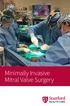 Minimally Invasive Mitral Valve Surgery Stanford Health Care offers leading, superior options in cardiac surgery, including the latest techniques and research for Minimally Invasive Cardiac surgery. Advanced
Specific Basic Standards for Osteopathic Fellowship Training in Cardiology
 Specific Basic Standards for Osteopathic Fellowship Training in Cardiology American Osteopathic Association and American College of Osteopathic Internists BOT 07/2006 Rev. BOT 03/2009 Rev. BOT 07/2011
PRACTICE GUIDELINE TITLE: INTRAVENOUS LINE INSERTION: PERIPHERAL AND CENTRAL
 PRACTICE GUIDELINE Effective Date: 9-17-04 Manual Reference: Deaconess Trauma Services TITLE: INTRAVENOUS LINE INSERTION: PERIPHERAL AND CENTRAL PURPOSE: To outline the indications and options for intravenous
California Health and Safety Code, Section 1256.01
 California Health and Safety Code, Section 1256.01 1256.01. (a) The Elective Percutaneous Coronary Intervention (PCI) Pilot Program is hereby established in the department. The purpose of the pilot program
Purpose Members of the Department of Cardiology will provide cardiology services to patients of McLaren Greater Lansing.
 Purpose Members of the Department of Cardiology will provide cardiology services to patients of McLaren Greater Lansing. Qualifications To be eligible for core privileges in the Department of Cardiology,
Fort Hamilton Hospital Specialty: Cardiology Department of Medicine Delineation of Privileges
 NAME Fort Hamilton Hospital Specialty: Cardiology Department of Medicine Delineation of Privileges GENERAL CARDIOLOGY Required Qualifications for General Cardiology Education/Training/Experience Must have
X-Plain Subclavian Inserted Central Catheter (SICC Line) Reference Summary
 X-Plain Subclavian Inserted Central Catheter (SICC Line) Reference Summary Introduction A Subclavian Inserted Central Catheter, or subclavian line, is a long thin hollow tube inserted in a vein under the
Inferior Vena Cava filter and removal
 Inferior Vena Cava filter and removal What is Inferior Vena Cava Filter Placement and Removal? An inferior vena cava filter placement procedure involves an interventional radiologist (a specialist doctor)
Educational Goals & Objectives
 Educational Goals & Objectives The Cardiology rotation will provide the resident with an understanding of cardiovascular physiology and its broad systemic manifestations. The resident will have the opportunity
Appendix. Costing Case Samples for OOHCA
 Appendix Costing Case Samples for OOHCA The patient (ICD-1) Treatment Codes (OPCS 4) Patient 27 Admitted to ICU following percutaneous cardiac intervention (PCI) with 2 drugeluting stents following a VF
UnitedHealthcare, UnitedHealthcare of the River Valley and Neighborhood Health Partnership Cardiology Notification and Prior Authorization Program:
 UnitedHealthcare, UnitedHealthcare of the River Valley and Neighborhood Health Partnership Cardiology Notification and Prior Authorization Program: Electrophysiology Implant Code Classification Table The
ECG may be indicated for patients with cardiovascular risk factors
 eappendix A. Summary for Preoperative ECG American College of Cardiology/ American Heart Association, 2007 A1 2002 A2 European Society of Cardiology and European Society of Anaesthesiology, 2009 A3 Improvement,
Heart Rhythm UK. Standards for Implantation and Follow-up of Cardiac Rhythm Management Devices HRUK, February 2011
 Heart Rhythm UK Standards for Implantation and Follow-up of Cardiac Rhythm Management Devices HRUK, February 2011 1) Introduction 2) Definitions 3) Treatment indications 4) Requirements for performing
Advantages of Right-Sided Implantation of Permanent Cardiac Pacemakers Performed by a Surgeon
 Advantages of Right-Sided Implantation of Permanent Cardiac Pacemakers Performed by a Surgeon 7 Davor Horvat General Hospital in Karlovac, Croatia 1. Introduction A pacemaker is a medical device which
Liau DW : Injuries and Liability Related to Peripheral Catheters: A Closed Claims Analysis. ASA Newsletter 70(6): 11-13 & 16, 2006.
 Citation Liau DW : Injuries and Liability Related to Peripheral Catheters: A Closed Claims Analysis. ASA Newsletter 70(6): 11-13 & 16, 2006. Full Text An anesthesiologist inserted a 14-gauge peripheral
GENERAL HEART DISEASE KNOW THE FACTS
 GENERAL HEART DISEASE KNOW THE FACTS WHAT IS Heart disease is a broad term meaning any disease affecting the heart. It is commonly used to refer to coronary heart disease (CHD), a more specific term to
CARDIOLOGY Delineation of Privileges
 CARDIOLOGY Delineation of Privileges APPLICANT: INITIAL APPOINTMENT REQUIREMENTS: BASIC EDUCATION: M.D. or D.O. from an accredited school of medicine or osteopathy. Successful completion of an ACGME or
Practical class 3 THE HEART
 Practical class 3 THE HEART OBJECTIVES By the time you have completed this assignment and any necessary further reading or study you should be able to:- 1. Describe the fibrous pericardium and serous pericardium,
UW MEDICINE PATIENT EDUCATION. Aortic Stenosis. What is heart valve disease? What is aortic stenosis?
 UW MEDICINE PATIENT EDUCATION Aortic Stenosis Causes, symptoms, diagnosis, and treatment This handout describes aortic stenosis, a narrowing of the aortic valve in your heart. It also explains how this
Aspira* Pleural Drainage Catheter
 Aspira* Pleural Drainage Catheter Instructions For Use Access Systems Product Description: The Aspira* Pleural Drainage Catheter is a tunneled, long-term catheter used to drain accumulated fluid from the
Suffering from varicose veins? Patient Information. ELVeS Radial Minimally invasive laser therapy of venous insufficiency
 Suffering from varicose veins? Patient Information ELVeS Radial Minimally invasive laser therapy of venous insufficiency Do you suffer from heavy legs or visible veins? This makes diseases of the veins
Purpose: To outline the care of patients with permanent or temporary pacemakers.
 University of Kentucky / UK HealthCare Policy and Procedure Policy # NR08-03 Title/Description: Care of Patients with Pacemakers Purpose: To outline the care of patients with permanent or temporary pacemakers.
NHS FORTH VALLEY Chest Drain Insertion by Seldinger Method (Pigtail drains)
 NHS FORTH VALLEY Chest Drain Insertion by Seldinger Method (Pigtail drains) Date of First Issue 12/12/2012 Approved 12/12/2012 Current Issue Date 12/12/2012 Review Date 12/12/2014 Version 1 EQIA Yes 14/12/2012
Reimbursement Information For Electrophysiology and Arrhythmia Service Procedures 1
 GE Healthcare Information For Electrophysiology and Arrhythmia Procedures 1 2011 Update www.gehealthcare.com/reimbursement This overview addresses coding, coverage, and payment for electrophysiology procedures
Electrophysiology study (EPS)
 Patient information factsheet Electrophysiology study (EPS) The normal electrical system of the heart The heart has its own electrical conduction system. The conduction system sends signals throughout
Traumatic Cardiac Tamponade. Shane KF Seal 19 November 2003 POS
 Traumatic Cardiac Tamponade Shane KF Seal 19 November 2003 POS Objectives Definition Pathophysiology Diagnosis Treatment Cardiac Tamponade The decompensated phase of cardiac compression resulting from
The science of medicine. The compassion to heal.
 A PATIENT S GUIDE TO ELECTROPHYSIOLOGY STUDIES OF THE HEART The science of medicine. The compassion to heal. This teaching booklet is designed to introduce you to electrophysiology studies of the heart.
Name: DEPARTMENT OF CARDIOLOGY CRITERIA FOR RECOMMENDATION AND CATEGORIZATION OF MEDICAL STAFF PRIVILEGES
 Name: DEPARTMENT OF CARDIOLOGY CRITERIA FOR RECOMMENDATION AND CATEGORIZATION OF MEDICAL STAFF PRIVILEGES A. Applicants (Full Privileges) 1. Satisfactory completion of an application, including documentation
Peripherally Inserted Central Catheter (PICC) Benefits Long-term access - dwell time varies (can be > one year) Decreased length of stay in hospital a
 Nursing Management of Venous Access Devices: Peripherally Inserted Central Catheter (PICC) Mimi Bartholomay, RN, MSN, AOCN Denise Dreher, RN, CRNI, VA-BC Theresa Evans, RN, MSN Susan Finn, RN, MSN, AOCNS
PEDIATRIC CARDIOLOGY CLINICAL PRIVILEGES
 Name: Page 1 Initial Appointment Reappointment All new applicants must meet the following requirements as approved by the governing body effective: 08/05/2015. Applicant: Check off the Requested box for
Emergency Insertion of Temporary Trans-venous Pacing Catheter in ICU
 TARGET AUDIENCE Junior Medical Staff Critical Care Trained ICU Nurses PURPOSE This document is intended as a basic guide to managing patients who require insertion of Temporary Trans-venous Cardiac Pacing
Introduction. Planned surgical procedures
 Guidelines for the perioperative management of patients with implantable pacemakers or implantable cardioverter defibrillators, where the use of surgical diathermy/electrocautery is anticipated. Introduction
ACLS Defibrillation Protocols With the ZOLL Rectilinear Biphasic Waveform AHA/ERC Guidelines 2005
 ACLS Defibrillation Protocols With the ZOLL Rectilinear Biphasic Waveform AHA/ERC Guidelines 2005 Introduction: The purpose of this document is to outline the equivalent biphasic protocols specific to
Mitral valve repair current Status and the modern Sternotomy
 Mitral valve repair current Status and the modern Sternotomy David L Saint MD, FACS Tallahassee Memorial Hospital Clinical Assistant Professor Florida State University School of Medicine History of Mitral
Cardiac Catheterization Curriculum for Fellows in Cardiology Dartmouth-Hitchcock Medical Center Level 1 and Level 2 Training 2008-2009
 Cardiac Catheterization Curriculum for Fellows in Cardiology Dartmouth-Hitchcock Medical Center Level 1 and Level 2 Training 2008-2009 I. Overview of Training in Cardiac Catheterization Cardiac catheterization
UNMH Cardiothoracic Surgery Clinical Privileges
 All new applicants must meet the following requirements as approved by the UNMH Board of Trustees effective: 02/20/2015 INSTRUCTIONS Applicant: Check off the "Requested" box for each privilege requested.
Steven J. Yakubov, MD FACC For the CoreValve US Clinical Investigators
 Long-Term Outcomes Using a Self- Expanding Bioprosthesis in Patients With Severe Aortic Stenosis Deemed Extreme Risk for Surgery: Two-Year Results From the CoreValve US Pivotal Trial Steven J. Yakubov,
Surgeons Role in Atrial Fibrillation
 Atrial Fibrillation Surgeons Role in Atrial Fibrillation Steven J Feldhaus, MD, FACS 2015 Cardiac Symposium September 18, 2015 Stages of Atrial Fibrillation Paroxysmal (Intermittent) Persistent (Continuous)
Measure #257 (NQF 1519): Statin Therapy at Discharge after Lower Extremity Bypass (LEB) National Quality Strategy Domain: Effective Clinical Care
 Measure #257 (NQF 1519): Statin Therapy at Discharge after Lower Extremity Bypass (LEB) National Quality Strategy Domain: Effective Clinical Care 2016 PQRS OPTIONS FOR INDIVIDUAL MEASURES: REGISTRY ONLY
Position Statement: The Use of VTED Prophylaxis in Foot and Ankle Surgery
 Position Statement: The Use of VTED Prophylaxis in Foot and Ankle Surgery Position Statement There is currently insufficient data for the (AOFAS) to recommend for or against routine VTED prophylaxis for
ST. DAVID S MEDICAL CENTER CARDIOLOGY - Special, Invasive, Diagnostic, or High-Risk Procedure Requirements
 ST. DAVID S MEDICAL CENTER CARDIOLOGY - Special, Invasive, Diagnostic, or High-Risk Procedure Requirements Cardiac Catheterization & Peripheral Angiography Completion of a fellowship in Cardiovascular
Regions Hospital Delineation of Privileges Cardiology
 Regions Hospital Delineation of s Cardiology Applicant s Name: Last First M. Instructions: Place a check-mark where indicated for each core group you are requesting. Review education and basic formal training
Atrial Fibrillation and Cardiac Device Therapy RAKESH LATCHAMSETTY, MD DIVISION OF ELECTROPHYSIOLOGY UNIVERSITY OF MICHIGAN HOSPITAL ANN ARBOR, MI
 Atrial Fibrillation and Cardiac Device Therapy RAKESH LATCHAMSETTY, MD DIVISION OF ELECTROPHYSIOLOGY UNIVERSITY OF MICHIGAN HOSPITAL ANN ARBOR, MI Outline Atrial Fibrillation What is it? What are the associated
Endovascular Repair of an Axillary Artery Aneurysm: A Novel Approach
 Endovascular Repair of an Axillary Artery Aneurysm: A Novel Approach Bao- Thuy D. Hoang, MD 1, Jonathan- Hien Vu, MD 2, Jerry Matteo, MD 3 1 Department of Surgery, University of Florida College of Medicine,
Treating AF: The Newest Recommendations. CardioCase presentation. Ethel s Case. Wayne Warnica, MD, FACC, FACP, FRCPC
 Treating AF: The Newest Recommendations Wayne Warnica, MD, FACC, FACP, FRCPC CardioCase presentation Ethel s Case Ethel, 73, presents with rapid heart beating and mild chest discomfort. In the ED, ECG
WATCHMAN Left Atrial Appendage Closure Device
 WATCHMAN Left Atrial Appendage Closure Device Patient Information Guide WATCHMAN Left Atrial Appendage Closure Device PATIENT INFORMATION GUIDE Your doctor has recommended that you consider undergoing
Section Four: Pulmonary Artery Waveform Interpretation
 Section Four: Pulmonary Artery Waveform Interpretation All hemodynamic pressures and waveforms are generated by pressure changes in the heart caused by myocardial contraction (systole) and relaxation/filling
Cardiac Masses and Tumors
 Cardiac Masses and Tumors Question: What is the diagnosis? A. Aortic valve myxoma B. Papillary fibroelastoma C. Vegetation from Infective endocarditis D. Thrombus in transit E. None of the above Answer:
2014 Procedural Reimbursement Guide Select Percutaneous Coronary Interventions
 2014 Procedural Reimbursement Guide Select Percutaneous Coronary Interventions IC-221010-AA Jan 2014 Page 1 of 10 Interventional Cardiology This for interventional cardiology procedures provides coding
The Hybrid Cath Lab: A Revolution in Cardiac Care
 Surgery Artis zee in the OR In the interest of improved patient outcomes, increased workflow efficiency, and implementation of cutting-edge technology, The Prince Charles Hospital in Brisbane, Australia
Automatic External Defibrillators
 Last Review Date: May 27, 2016 Number: MG.MM.DM.10dC2 Medical Guideline Disclaimer Property of EmblemHealth. All rights reserved. The treating physician or primary care provider must submit to EmblemHealth
Catheter Embolization and YOU
 Catheter Embolization and YOU What is catheter embolization? Embolization therapy is a minimally invasive (non-surgical) treatment that occludes or blocks one or more blood vessels or vascular channels
Components of CVC Care Bundle. selection
 Components of CVC Care Bundle Catheter site selection Site of insertion influences the subsequent risk for CR-BSI and phlebitis The influence of site is related in part to the risk for thrombophlebitis
STONY BROOK UNIVERSITY HOSPITAL VASCULAR CENTER CREDENTIALING POLICY
 STONY BROOK UNIVERSITY HOSPITAL VASCULAR CENTER CREDENTIALING POLICY Per Medical Board decision March 18, 2008: These credentialing standards do NOT apply to peripheral angiography performed in the context
YALE UNIVERSITY SCHOOL OF MEDICINE: SECTION OF OTOLARYNGOLOGY PATIENT INFORMATION FUNCTIONAL ENDOSCOPIC SINUS SURGERY
 YALE UNIVERSITY SCHOOL OF MEDICINE: SECTION OF OTOLARYNGOLOGY PATIENT INFORMATION FUNCTIONAL ENDOSCOPIC SINUS SURGERY What is functional endoscopic sinus surgery (FESS)? Functional endoscopic sinus surgery
Tachyarrhythmias (fast heart rhythms)
 Patient information factsheet Tachyarrhythmias (fast heart rhythms) The normal electrical system of the heart The heart has its own electrical conduction system. The conduction system sends signals throughout
STANDARDS FOR IMPLANTATION AND FOLLOW-UP OF CARDIAC RHYTHM MANAGEMENT DEVICES IN ADULTS January 2013
 1. INTRODUCTION STANDARDS FOR IMPLANTATION AND FOLLOW-UP OF CARDIAC RHYTHM MANAGEMENT DEVICES IN ADULTS January 2013 This document replaces the previous Heart Rhythm UK documents Clinical Guidance by Consensus
NEEDLE THORACENTESIS Pneumothorax / Hemothorax
 NEEDLE THORACENTESIS Pneumothorax / Hemothorax By: Steven Jones, NREMT-P Pneumothorax Pneumothorax is a collection of air or gas in the pleural space of the lung, causing the lung to collapse. Pneumothorax
Listen to Your Heart. What Everyone Needs To Know About Atrial Fibrillation & Stroke. The S-ICD System. The protection you need
 Listen to Your Heart The S-ICD System What Everyone Needs To Know About Atrial Fibrillation & Stroke The protection you need without Stroke. touching Are you your at heart risk? Increase your knowledge.
PLASTIC SURGERY RESIDENTS HANDBOOK
 PLASTIC SURGERY RESIDENTS HANDBOOK I. PLASTIC SURGERY REQUIREMENTS a. AACPS Post Interview Communication Guidelines b. General Competencies c. Plastic Surgery Goals & Objectives d. ACGME Required Index
Catheter Ablation. A Guided Approach for Treating Atrial Arrhythmias
 Catheter Ablation A Guided Approach for Treating Atrial Arrhythmias A P A T I E N T H A N D B O O K This brochure will provide an overview of atrial arrhythmias (heart rhythm problems affecting the upper
INFORMED CONSENT DERMABRASION
 INFORMED CONSENT DERMABRASION INSTRUCTION This is an informed-consent document which has been prepared to help your plastic surgeon inform you about dermabrasion, its risks, and alternative treatments.
Tunneled hemodialysis catheters can lead to
 CASE REPORT Contamination of Transvenous Pacemaker Leads Due to Tunneled Hemodialysis Catheter Infection: A Report of 2 Cases Roger G. Carrillo, MD, 1 Juan D. Garisto, MD, 1 Loay Salman, MD, 2 Donna Merrill,
Percutaneous Abscess Drainage
 Scan for mobile link. Percutaneous Abscess Drainage An abscess is an infected fluid collection within the body. Percutaneous abscess drainage uses imaging guidance to place a thin needle through the skin
The largest clinical study of Bayer's Xarelto (rivaroxaban) Wednesday, 14 November 2012 07:38
 Bayer HealthCare has announced the initiation of the COMPASS study, the largest clinical study of its oral anticoagulant Xarelto (rivaroxaban) to date, investigating the prevention of major adverse cardiac
NAME OF THE HOSPITAL: 1. Coronary Balloon Angioplasty: M7F1.1/ Angioplasty with Stent(PTCA with Stent): M7F1.3
 1. Coronary Balloon Angioplasty: M7F1.1/ Angioplasty with Stent(PTCA with Stent): M7F1.3 1. Name of the Procedure: Coronary Balloon Angioplasty 2. Select the Indication from the drop down of various indications
ANESTHESIA FOR PATIENTS WITH CORONARY STENTS FOR NON CARDIAC SURGERY. Dr. Mahesh Vakamudi. Professor and Head
 ANESTHESIA FOR PATIENTS WITH CORONARY STENTS FOR NON CARDIAC SURGERY Dr. Mahesh Vakamudi Professor and Head Department of Anesthesiology, Critical Care and Pain Medicine Sri Ramachandra University INTRODUCTION
Atrial Fibrillation 2014 How to Treat How to Anticoagulate. Allan Anderson, MD, FACC, FAHA Division of Cardiology
 Atrial Fibrillation 2014 How to Treat How to Anticoagulate Allan Anderson, MD, FACC, FAHA Division of Cardiology Projection for Prevalence of Atrial Fibrillation: 5.6 Million by 2050 Projected number of
Objectives. Preoperative Cardiac Risk Stratification for Noncardiac Surgery. History
 Preoperative Cardiac Risk Stratification for Noncardiac Surgery Kimberly Boddicker, MD FACC Essentia Health Heart and Vascular Center 27 th Heart and Vascular Conference May 13, 2011 Objectives Summarize
CARDIOLOGY ROTATION GOALS AND OBJECTIVES
 CARDIOLOGY ROTATION GOALS AND OBJECTIVES PGY-1 Core Medicine Rotation The trainee will have the opportunity to develop clinical skills, the ability to analyze patients problems, and make treatment plans
I) Rotation Goals. Teaching Methods
 I) Rotation Goals UNMC Anesthesia Rotation Rotation Goals and Objectives Pulmonary/Critical Care Medicine Fellowship Program University of Nebraska Medical Center Revised: 3/2016 A) To manage patients
CHEST TUBES AND CHEST DRAINAGE SYSTEMS
 CHEST TUBES AND CHEST DRAINAGE SYSTEMS Central Nursing Orientation April 2008 Revised September 2011 OBJECTIVES Describe common tubes and indications for use at LHSC Review indications and contraindications,
ICD leads under advisory What should be done?
 ICD leads under advisory What should be done? Shu Zhang, MD, PhD, FHRS, FESC Beijing Fu Wai Hospital Present by Chu-Pak Lau, MD Director, Cardiac Health Heart Centre Honorary Clinical Professor Queen Mary
Y O U R S U R G E O N S. choice of. implants F O R Y O U R S U R G E R Y
 Y O U R S U R G E O N S choice of implants F O R Y O U R S U R G E R Y Y O U R S U R G E O N S choice of implants F O R Y O U R S U R G E R Y Your Surgeon Has Chosen the C 2 a-taper Acetabular System The
Tunneled Hemodialysis Catheters: Placement and complications
 Tunneled Hemodialysis Catheters: Placement and complications Arif Asif, M.D. Director, Interventional Nephrology Associate Professor of Medicine University of Miami, FL Tunneled Hemodialysis Catheters:
PERIPHERALLY INSERTED CENTRAL CATHETERS (PICC) Fong So Kwan APN, Haematology unit Medical Department, QMH
 PERIPHERALLY INSERTED CENTRAL CATHETERS (PICC) Fong So Kwan APN, Haematology unit Medical Department, QMH 1 What is a PICC catheter? Primary vascular access device since their introduction in the mid-1970s,
COVERAGE GUIDANCE: ABLATION FOR ATRIAL FIBRILLATION
 COVERAGE GUIDANCE: ABLATION FOR ATRIAL FIBRILLATION Question: How should the EGBS Coverage Guidance regarding ablation for atrial fibrillation be applied to the Prioritized List? Question source: Evidence
Perioperative Cardiac Evaluation
 Perioperative Cardiac Evaluation Caroline McKillop Advisor: Dr. Tam Psenka 10-3-2007 Importance of Cardiac Guidelines -Used multiple times every day -Patient Safety -Part of Surgical Care Improvement Project
The Initial and 24 h (After the Patient Rehabilitation) Deficit of Arterial Blood Gases as Predictors of Patients Outcome
 Biomedical & Pharmacology Journal Vol. 6(2), 259-264 (2013) The Initial and 24 h (After the Patient Rehabilitation) Deficit of Arterial Blood Gases as Predictors of Patients Outcome Vadod Norouzi 1, Ali
The Sepsis Puzzle: Identification, Monitoring and Early Goal Directed Therapy
 The Sepsis Puzzle: Identification, Monitoring and Early Goal Directed Therapy Cindy Goodrich RN, MS, CCRN Content Description Sepsis is caused by widespread tissue injury and systemic inflammation resulting
Central Venous Lines, PICCs, Ports and Pumps
 Central Venous Lines, PICCs, Ports and Pumps 2012 CODING AND REIMBURSEMENT GUIDE Placement of a non-tunneled or tunneled device requires that the site of entry, type of device, age of patient and tunneling
Department of Surgery
 What is emphysema? 2004 Regents of the University of Michigan Emphysema is a chronic disease of the lungs characterized by thinning and overexpansion of the lung-like blisters (bullae) in the lung tissue.
Thoracoabdominal aortic aneurysm
 Thoracoabdominal aortic aneurysm Patient (1) - 69 PMH: 2013 - MVP, aortic root replacement with biological valve (Perimount) and subtotal aortic arch replacement Analysis for oppressive chest complaints
Inferior Vena Cava Filter Placement and Removal
 Scan for mobile link. Inferior Vena Cava Filter Placement and Removal What is Inferior Vena Cava Filter Placement and Removal? In an inferior vena cava filter placement procedure, interventional radiologists