
Tunneled hemodialysis catheters can lead to
|
|
|
- Jade Ball
- 10 years ago
- Views:
Transcription
1 CASE REPORT Contamination of Transvenous Pacemaker Leads Due to Tunneled Hemodialysis Catheter Infection: A Report of 2 Cases Roger G. Carrillo, MD, 1 Juan D. Garisto, MD, 1 Loay Salman, MD, 2 Donna Merrill, RN, 2 and Arif Asif, MD 2 Catheter-related bacteremia is a frequent complication associated with the use of tunneled hemodialysis catheters. Catheter-related bacteremia can lead to metastasis of infection to other sites. This article presents 2 patients with transvenous pacemakers (placed 2 years ago) who were receiving long-term hemodialysis therapy using tunneled hemodialysis catheters. Both were admitted to the hospital with catheter-related bacteremia. Blood cultures showed methicillin-resistant Staphylococcus aureus (MRSA) in both cases. Transesophageal echocardiography was negative for the presence of valvular endocarditis, but showed lead-associated vegetation in both cases. Intravenous antibiotic therapy was initiated, and both the tunneled hemodialysis catheters and cardiac devices were removed by a cardiothoracic surgeon. The catheter tip and leads cultures showed MRSA in both cases. After resolution of bacteremia, both patients received an epicardial cardiac device. Antibiotic therapy was continued for 6 weeks. Renal physicians providing dialysis therapy should be aware that catheter-related bacteremia could cause contamination of transvenous pacemaker leads. Because catheter-related bacteremia is a frequent complication, epicardial leads might be considered as an alternative route to provide cardiac support to catheter-consigned patients. Epicardial leads do not navigate through the central veins, lie in the path of blood flow, or cause central venous stenosis. Am J Kidney Dis 55: by the National Kidney Foundation, Inc. INDEX WORDS: Hemodialysis; pacemaker; tunneled dialysis catheter; catheter-related bacteremia. Tunneled hemodialysis catheters can lead to the hematogenous spread of infection to distant sites, such as cardiac valves (endocarditis), vertebral column (discitis), or joints (septic arthritis). 1 This report presents 2 cases of tunneled dialysis catheter related bacteremia that showed contamination of the transvenous pacemaker leads of these patients. CASE REPORTS Case 1 A 72-year-old long-term hemodialysis patient was admitted with fever, chills, and hypotension. His medical history included hypertension, diabetes, and left ventricular dysfunction. Surgical history was remarkable for multiple failed arteriovenous accesses, right internal jugular catheter (single body, step tip) insertion (6 months ago), and transvenous pacemaker and cardiac resynchronization therapy device placement 4 years previous. There have been no episodes of cardiac device related infection. Physical examination of the catheter site showed warmth, tenderness, and minimal drainage through the exit site. The rest of the examination findings were unremarkable, including the pacemaker pocket site. The emergency department physician inserted a central catheter in the left internal jugular vein. After withdrawing blood culture specimens, intravenous antibiotics (vancomycin and ceftazidime) and fluids were administered. The initial attempt at catheter removal by an interventionalist failed. Because the patient had a pacemaker, the interventionalist did not put excessive traction to pull the catheter out for fear that the catheter might be stuck to the cardiac device leads. A cardiothoracic surgeon was consulted, and computed tomography was performed that showed tethering of the catheter and leads to the vascular wall (Fig 1). This was considered to be the cause of the stuck catheter. The cardiothoracic surgeon documented lead involvement (vegetation) on transesophageal echocardiography (TEE) and removed the 2 devices simultaneously (Fig 2). The cardiac valves were free of vegetation. Both the catheter and pacemaker were removed. A laser sheath device (Spectranetics Corp, was used to remove the leads and catheter. Open thoracotomy was not required. The leads were found to be infected upon gross examination at the time of extraction. Temporary pacing was provided in the interim. Blood culture results were positive before catheter and lead removal. After resolution of fever at 24 hours, a new tunneled catheter was inserted. Bacteremia resolved at 48 From the 1 Division of Cardiothoracic Surgery and 2 Section of Interventional Nephrology, University of Miami Miller School of Medicine, Miami, FL. Received September 13, Accepted in revised form January 8, Originally published online as doi: / j.ajkd on April 5, Address correspondence to Arif Asif, MD, Interventional Nephrology, University of Miami Miller School of Medicine, 1600 NW 10th Ave (Ste 7168), Miami, FL [email protected] 2010 by the National Kidney Foundation, Inc /10/ $36.00/0 doi: /j.ajkd American Journal of Kidney Diseases, Vol 55, No 6 (June), 2010: pp

2 1098 Carrillo et al the stuck catheter. The cardiothoracic surgeon documented lead involvement (vegetation) using TEE and removed the 2 devices simultaneously. The cardiac valves were free of vegetation. The leads and Tesio catheter were removed using the laser sheath device. As in case 1, the leads were found to be infected at the time of extraction. Temporary pacing was provided in the interim. Blood culture results were positive before catheter and lead removal. After resolution of fever at 12 hours, a new tunneled catheter was inserted. A subcutaneous epicardial system was placed on day 3 of admission after resolution of bacteremia (at 24 hours). The catheter tip and pacemaker leads were positive for MRSA. The patient was treated for 6 weeks with 1 g of vancomycin after each dialysis session. The patient has had 1 episode of tunneled dialysis catheter infection, and the epicardial system has been infection free for the past 18 months. Figure 1. Three-dimensional color computed tomographic scan of patient 1. A tunneled dialysis catheter (TDC) is seen in the right internal jugular vein. A central venous line (CVL) is seen in the left internal jugular vein; this was placed by the emergency department physician at the time of admission. A pacemaker (PM)-chronic resynchronization therapy (CRT) device is seen on the left side of the chest. Leads of the PM-CRT device are seen traversing through the subclavian and brachiocephalic veins and superior vena cava. Notice the intimate proximity and intertwining of the catheter with the PM-CRT leads (arrow). Fibrous tissue wrapping these structures also is seen (arrow). hours, and a permanent subcutaneous epicardial system replaced the transvenous pacemaker at day 4 of admission. The catheter tip and leads showed methicillin-resistant Staphylococcus aureus (MRSA). The patient was treated for 6 weeks with 1 g of vancomycin after each dialysis session. Although the patient has had 2 episodes of catheter-related infection, there has been no infection of the epicardial system during follow-up of 11 months. Case 2 A 75-year-old Hispanic woman was admitted with fever and chills during hemodialysis therapy. She had been dialyzing with a right internal jugular Tesio hemodialysis twin catheter system (Medcomp, Harleysville, PA) that was placed 7 months ago. Her medical history included hypertension, coronary artery disease, and diabetes. Surgical history was remarkable for insertion of a transvenous pacemaker 2 years ago and multiple failed arteriovenous accesses. Physical examination of the catheter site showed warmth and tenderness without drainage through the exit sites. The rest of the examination findings were unremarkable, including the pacemaker site. After withdrawing blood culture specimens, intravenous vancomycin therapy was initiated. As in case 1, the initial attempt at catheter removal by an interventionalist failed, and a cardiothoracic surgeon was consulted. Computed tomography showed tethering of the catheter and leads to the vascular wall, which was considered to be the cause of DISCUSSION The present cases show that catheter-related bacteremia can lead to contamination of cardiac device leads. In general, the incidence of pacemaker infection ranges from 0.8%-5.7%. 2,3 However, many reports have highlighted that patients with chronic kidney disease are at increased risk of infection. 3-5 Although the incidence of pacemaker infection in hemodialysis patients has not been well studied, a recent case-control study (n 152) by Bloom et al 6 found that moderate to severe kidney disease (glomerular filtration rate 60 ml/min/1.73 m 2 [ 1 ml/s/1.73 m 2 ]) was the most potent risk factor for infection of a pacemaker, with a prevalence of 42% in infected patients compared with 13% in the control group (odds ratio, 4.8). Cardiac device infection can be a potentially life-threatening complication. 2,7-9 Lead infection can occur alone or in association with the involvement of cardiac valves. 2,10,11 Both are managed as endocarditis and require lead removal. 2,7-9 Cardiac device lead infection can be confirmed if TEE shows lead vegetation. 2,10,11 TEE can identify lead vegetation in 90%-96% of cases. 2,10,11 Leadassociated endocarditis, a major contributor to high mortality, is not uncommon and has been known to occur in approximately 50% of patients presenting with device-related infection. 8 Staphylococcus species continue to be a major culprit, causing 60% of cases of lead-induced endocarditis. 9 In 1 study of lead-induced endocarditis caused by staphylococci, 60% were MRSA. 9 The 2 patients presented in this report had MRSA. Fortunately, neither patient presented here had valvular vegetation or dysfunction.

3 Tunneled Catheter and Pacemaker Infection 1099 Figure 2. Multiplanar transesophageal echocardiogram of patient 1 at 119 rotation shows the pacemaker lead, superior vena cava (SVC), and right (RA) and left atrium (LA). Lead-associated vegetation (Veg) is observed. Instead of navigating through the central veins and tricuspid valve, epicardial leads traverse through the subcutaneous tissue and are inserted into the epicardium Transvenous leads can cause central venous stenosis by causing endothelial injury The leads and fibrous tissue that cover them also can augment stenosis by occupying the available space in the central veins (Fig 1). 21,24 Because catheter-related bacteremia is a frequent occurrence that imposes the risk of spread of infection to the transvenous leads, and on account of the previously mentioned factors, it is not unreasonable to consider epicardial leads as the preferred system in hemodialysis patients using tunneled hemodialysis catheters. These leads are not directly exposed to blood flow or the infected catheter and do not cause central venous stenosis. Some differences between the transvenous endocardial and subcutaneous epicardial leads are listed in Table 1. In both cases, laser sheaths were used to remove the leads. It is worth mentioning that fibrotic tissue develops on the leads over time and binds the leads to the vascular wall and in the Table 1. Advantages and Disadvantages of Subcutaneous Epicardial and Transvenous Endocardial Cardiac Devices Subcutaneous Epicardial Cardiac Devices Transvenous Endocardial Cardiac Devices Central venous stenosis Not observed Common Infection Uncommon a Not uncommon a Placement Easily accomplished Easily accomplished Placed by CT surgeon CT surgeons & cardiologists Effectiveness Very effective Very effective Surgical complications Minimal Minimal Major vascular injury Rare Rare Anesthesia General Sedation & local anesthesia Length of hospitalization (d) Procedure setting Inpatient Generally outpatient Preservation of central veins Available Compromised Abbreviation: CT, cardiothoracic. a Infection in a transvenous endocardial system ranges from 0.8%-5.6%. 5 In contrast, 9 studies evaluating 253 epicardial leads failed to show a single episode of infection. To the best of our knowledge, no specific information exists in the literature regarding infection in long-term hemodialysis patients who harbor epicardial cardiac devices.

4 1100 endocardium. 24 Removal of these leads requires freeing the lead body from the fibrotic tissue. A variety of tools, including telescoping sheaths, have been used to remove cardiac leads. 25,26 However, application of excessive force to detach the leads carries the risk of vascular or endocardial avulsion. In contrast, the laser sheath delivers the laser energy to the distal end of the sheath to release the lead. This technique offers a low complication rate, high success rate of complete lead removal, and efficient procedural time compared with nonlaser techniques. 2,27,28 In the present report, the catheter and leads were removed simultaneously because the leads were found to be infected using TEE. However, in the absence of lead involvement, the catheter should be removed first, antibiotic therapy should be continued, and the patient should be observed closely. The leads should be considered for removal if the patient remains bacteremic after catheter removal. The duration of antibiotic therapy with lead vegetation is the same as for endocarditis (ie, 6 weeks). 2 Catheter-related bacteremia can lead to contamination of transvenous pacemaker leads. The catheter and leads should be removed simultaneously if the leads are found to be infected (lead or cardiac valve vegetation). The epicardial route instead of a transvenous pacemaker might be a better option for such patients. ACKNOWLEDGEMENTS Support: None. Financial Disclosure: The authors declare that they have no relevant financial interests. REFERENCES 1. Gersch MS. Treatment of dialysis catheter infections in J Vasc Access. 2004;5: Karchmer AW. Infection of cardiac pacemaker and implantable cardioverter defibrillator. com. Accessed June 1, Kessler M, Hoen B, Mayeux D, Hestin D, Fontenaille C. Bacteremia in patients on chronic hemodialysis. A multicenter prospective survey. Nephron. 1993;64: Robinson DL, Fowler VG, Sexton DJ, Corey RG, Conlon PJ. Bacterial endocarditis in hemodialysis patients. Am J Kidney Dis. 1997;30: Sarnak MJ, Jaber BL. Mortality caused by sepsis in patients with end-stage renal disease compared with the general population. Kidney Int. 2000;58: Bloom H, Heeke B, Leon A, et al. Renal insufficiency and the risk of infection from pacemaker or defibrillator surgery. PACE. 2006;29: Carrillo et al 7. Uslan DZ. Infections of electrophysiologic cardiac devices. Expert Rev Med Devices. 2008;5: Greenspon AJ, Rhim ES, Mark G, Desimone J, Ho RT. Lead-associated endocarditis: the important role of methicillin-resistant Staphylococcus aureus. Pacing Clin Electrophysiol. 2008;31: Anselmino M, Vinci M, Comoglio C, et al. Bacteriology of infected extracted pacemaker and ICD leads. J Cardiovasc Med. 2009;10: Durack DT, Lukes AS, Bright DK. New criteria for diagnosis of infective endocarditis: utilization of specific echocardiographic findings. Am J Med. 1994;96: Chamis LA, Peterson GE, Cabell CH, et al. Staphylococcus aureus bacteremia in patients with permanent pacemakers or implantable cardioverter-defibrillators. Circulation. 2001;104: Molina EJ. Surgical options for endocardial lead placement when upper veins are obstructed or nonusable. J Intervent Card Electrophysiol. 2004;11: Cannon BC, Friedman RA, Fenrich AL, Fraser CD, McKenzie ED, Kertesz NJ. Innovative techniques for placement of implantable cardioverter-defibrillator leads in patients with limited venous access to the heart. Pacing Clin Electrophysiol. 2006;29: Molina JE, Benditt DG. An epicardial subxiphoid implantable defibrillator lead: superior effectiveness after failure of standard implants. PACE. 2004;27: Kettering K, Mewis C, Dörnberger V, et al. Longterm experience with subcutaneous ICD leads: a comparison among three different types of subcutaneous leads. Pacing Clin Electrophysiol. 2004;27: Higgins SL, Alexander DC, Kuypers CJ, Brewster SA. The subcutaneous array: a new lead adjunct for the transvenous ICD to lower defibrillation thresholds. Pacing Clin Electrophysiol. 1995;18: Gabor S, Prenner G, Wasler A, Schweiger M, Tscheliessnigg KH, Smolle-Jüttner FM. A simplified technique for implantation of left ventricular epicardial leads for biventricular re-synchronization using video-assisted thoracoscopy (VATS). Eur J Cardiothorac Surg. 2005;28: Fernández AL, García-Bengochea JB, Ledo R, et al. Minimally invasive surgical implantation of left ventricular epicardial leads for ventricular resynchronization using videoassisted thoracoscopy. Rev Esp Cardiol. 2004;57: Stephenson EA, Batra AS, Knilans TK, et al. A multicenter experience with novel implantable cardioverter defibrillator configurations in the pediatric and congenital heart disease population. J Cardiovasc Electrophysiol. 2006;17: Jaroszewski DE, Altemose GT, Scott LR, et al. Nontraditional surgical approaches for implantation of pacemaker and cardioverter defibrillator systems in patients with limited venous access. Ann Thorac Surg. 2009;88: Asif A, Salman L, Carrillo RG, et al. Patency rates for angioplasty in the treatment of pacemaker-induced central venous stenosis in hemodialysis patients: results of a multicenter study. Semin Dial. 2009;22: Teruya TH, Abou-Zamzam AM Jr, Limm W, Wong L, Wong L. Symptomatic subclavian vein stenosis and occlusion in hemodialysis with transvenous pacemaker. Ann Vasc Surg. 2003;17:

5 Tunneled Catheter and Pacemaker Infection Tourret J, Cluzel P, Tostivint I, Barrou B, Deray G, Bagnis CI. Central venous stenosis as a complication of ipsilateral haemodialysis fistula and pacemaker. Nephrol Dial Transplant. 2005;20: Stokes K, Chem B, Anderson J, McVenes TR, McClay C. The encapsulation of polyurethane-insulated transvenous cardiac pacemaker leads. Cardiovasc Pathol. 1995;4: Byrd CL, Schwartz SJ, Hedin NB, Goode LB, Fearnot NE, Smith HJ. Intravascular lead extraction using locking stylets and sheaths. PACE. 1990;13: Byrd CL, Schwartz SJ, Hedin N. Intravascular techniques for extraction of permanent pacemaker leads. J Thorac Cardiovasc Surg. 1991;101: Wilkoff BL, Byrd CL, Love CJ, et al. Pacemaker lead extraction with the laser sheath: results of the Pacing Lead Extraction with Excimer Sheath (PLEXES) Trial. J Am Coll Cardiol. 1999;33: Byrd CL, Wilkoff BL, Love CJ, Sellers TD, Reiser C. Clinical study of the laser sheath for lead extraction: the total experience in the United States. Pacing Clin Electrophysiol. 2002;25:

Disclosures. Anesthesia and Lead Extractions. Lead Extractions: Objectives. Lead Removal Techniques. None
 Anesthesia and Lead Extractions Disclosures None Bryan Ahlgren DO Assistant Professor University of Colorado Dept of Anesthesiology Objectives Define lead extraction procedures and why Anesthesiologists
Tunneled Hemodialysis Catheters: Placement and complications
 Tunneled Hemodialysis Catheters: Placement and complications Arif Asif, M.D. Director, Interventional Nephrology Associate Professor of Medicine University of Miami, FL Tunneled Hemodialysis Catheters:
Hemodialysis catheter infection
 Hemodialysis catheter infection Scary facts In 2006, 82% of patients in the United States initiated dialysis via a catheter The overall likelihood of Tunneled cuffed catheters use was 35% greater in 2005
The techniques and tools for percutaneous removal of
 Initial Experience With Larger Laser Sheaths for the Removal of Transvenous Pacemaker and Implantable Defibrillator Leads Laurence M. Epstein, MD; Charles L. Byrd, MD; Bruce L. Wilkoff, MD; Charles J.
1547-5271/$ -see front matter 2009 Heart Rhythm Society. All rights reserved. doi:10.1016/j.hrthm.2009.05.020
 Transvenous Lead Extraction: Heart Rhythm Society Expert Consensus on Facilities, Training, Indications, and Patient Management This document was endorsed by the American Heart Association (AHA). Bruce
Fort Hamilton Hospital Specialty: Cardiology Department of Medicine Delineation of Privileges
 NAME Fort Hamilton Hospital Specialty: Cardiology Department of Medicine Delineation of Privileges GENERAL CARDIOLOGY Required Qualifications for General Cardiology Education/Training/Experience Must have
Minimizing and Managing Lead Complications. Eric Buch MD Assistant Professor of Medicine Director, Specialized Program for Atrial Fibrillation
 Minimizing and Managing Lead Complications Eric Buch MD Assistant Professor of Medicine Director, Specialized Program for Atrial Fibrillation Topics History of lead management Surveillance of implanted
Components of CVC Care Bundle. selection
 Components of CVC Care Bundle Catheter site selection Site of insertion influences the subsequent risk for CR-BSI and phlebitis The influence of site is related in part to the risk for thrombophlebitis
Christopher M. Wright, MD, MBA Pioneer Cardiovascular Consultants Tempe, Arizona
 Christopher M. Wright, MD, MBA Pioneer Cardiovascular Consultants Tempe, Arizona Areas to be covered Historical, current, and future treatments for various cardiovascular disease: Atherosclerosis (Coronary
BASIC STANDARDS FOR RESIDENCY TRAINING IN CARDIOLOGY
 BASIC STANDARDS FOR RESIDENCY TRAINING IN CARDIOLOGY American Osteopathic Association and the American College of Osteopathic Internists Specific Requirements For Osteopathic Subspecialty Training In Cardiology
Are venous catheters safe in terms of blood tream infection? What should I know?
 Are venous catheters safe in terms of blood tream infection? What should I know? DIAGNOSIS, PREVENTION AND TREATMENT OF HAEMODIALYSIS CATHETER-RELATED BLOOD STREAM INFECTIONS (CRBSI): A POSITION STATEMENT
Staphyloccus aureus sepsis: follow- up practice guidelines
 Staphyloccus aureus sepsis: follow- up practice guidelines March 17, 2012 National Study Day Hospital Antibiotic Stewardship prof. dr. Dirk Vogelaers, Ghent University Hospital apr. Franky Buyle, Ghent
Reimbursement Information For Electrophysiology and Arrhythmia Service Procedures 1
 GE Healthcare Information For Electrophysiology and Arrhythmia Procedures 1 2011 Update www.gehealthcare.com/reimbursement This overview addresses coding, coverage, and payment for electrophysiology procedures
UnitedHealthcare, UnitedHealthcare of the River Valley and Neighborhood Health Partnership Cardiology Notification and Prior Authorization Program:
 UnitedHealthcare, UnitedHealthcare of the River Valley and Neighborhood Health Partnership Cardiology Notification and Prior Authorization Program: Electrophysiology Implant Code Classification Table The
SUTTER MEDICAL CENTER, SACRAMENTO Department of Cardiovascular Disease Cardiology - Delineation of Privileges
 INITIAL: [ ] RENEWED: [ ] DATE: ADDITIONAL: [ ] Privileges are granted for Sutter General Hospital, Sutter Memorial Hospital, Sutter Center for Psychiatry, Sutter Oaks Midtown and the Capitol Pavilion
Regions Hospital Delineation of Privileges Cardiology
 Regions Hospital Delineation of s Cardiology Applicant s Name: Last First M. Instructions: Place a check-mark where indicated for each core group you are requesting. Review education and basic formal training
Heart Rhythm UK. Standards for Implantation and Follow-up of Cardiac Rhythm Management Devices HRUK, February 2011
 Heart Rhythm UK Standards for Implantation and Follow-up of Cardiac Rhythm Management Devices HRUK, February 2011 1) Introduction 2) Definitions 3) Treatment indications 4) Requirements for performing
Advanced Heart Failure & Transplantation Fellowship Program
 Advanced Heart Failure & Transplantation Fellowship Program Curriculum I. Patient Care When on the inpatient Heart Failure and Transplant Cardiology service, the cardiology fellow will hold primary responsibility
ST. DAVID S MEDICAL CENTER CARDIOLOGY - Special, Invasive, Diagnostic, or High-Risk Procedure Requirements
 ST. DAVID S MEDICAL CENTER CARDIOLOGY - Special, Invasive, Diagnostic, or High-Risk Procedure Requirements Cardiac Catheterization & Peripheral Angiography Completion of a fellowship in Cardiovascular
Purpose Members of the Department of Cardiology will provide cardiology services to patients of McLaren Greater Lansing.
 Purpose Members of the Department of Cardiology will provide cardiology services to patients of McLaren Greater Lansing. Qualifications To be eligible for core privileges in the Department of Cardiology,
Specific Basic Standards for Osteopathic Fellowship Training in Cardiology
 Specific Basic Standards for Osteopathic Fellowship Training in Cardiology American Osteopathic Association and American College of Osteopathic Internists BOT 07/2006 Rev. BOT 03/2009 Rev. BOT 07/2011
10. Treatment of peritoneal dialysis associated fungal peritonitis
 10. Treatment of peritoneal dialysis associated fungal peritonitis Date written: February 2003 Final submission: July 2004 Guidelines (Include recommendations based on level I or II evidence) The use of
SPONTANEOUS PNEUMOTHORAX AS A COMPLICATION OF SEPTIC PULMONARY EMBOLISM IN AN INTRAVENOUS DRUG USER: A CASE REPORT
 Spontaneous pneumothorax in an IV drug user SPONTANEOUS PNEUMOTHORAX AS A COMPLICATION OF SEPTIC PULMONARY EMBOLISM IN AN INTRAVENOUS DRUG USER: A CASE REPORT Chau-Chyun Sheu, Jhi-Jhu Hwang, Jong-Rung
Strategies to Reduce Catheter Use in 2014
 Strategies to Reduce Catheter Use in 2014 Timothy A. Pflederer, MD Chair, Network 10 MRB (I have no commercial affiliations or conflicts of interest to report) Fibrin Sheathing Central Venous Stenosis
Right-sided infective endocarditis:tunisian experience
 Right-sided infective endocarditis:tunisian experience L. Ammari, A. Ghoubontini, A. Berriche, R. Abdelmalek, S.Aissa, F.Kanoun, B.Kilani, H.Tiouiri Benaissa, T.Ben chaabane Department of Infectious diseases,
Recommendations for Extraction of Chronically Implanted Transvenous Pacing and Defibrillator Leads: Indications, Facilities, Training
 Reprinted with permission from PACING AND CLINICAL ELECTROPHYSIOLOGY, Volume 23, No. 4, Part 1, April 2000. Copyright 2000 by Futura Publishing Company, Inc., Armonk, NY 10504-0418. NASPE POLICY STATEMENT
Atrial Fibrillation and Cardiac Device Therapy RAKESH LATCHAMSETTY, MD DIVISION OF ELECTROPHYSIOLOGY UNIVERSITY OF MICHIGAN HOSPITAL ANN ARBOR, MI
 Atrial Fibrillation and Cardiac Device Therapy RAKESH LATCHAMSETTY, MD DIVISION OF ELECTROPHYSIOLOGY UNIVERSITY OF MICHIGAN HOSPITAL ANN ARBOR, MI Outline Atrial Fibrillation What is it? What are the associated
STANDARDS FOR IMPLANTATION AND FOLLOW-UP OF CARDIAC RHYTHM MANAGEMENT DEVICES IN ADULTS January 2013
 1. INTRODUCTION STANDARDS FOR IMPLANTATION AND FOLLOW-UP OF CARDIAC RHYTHM MANAGEMENT DEVICES IN ADULTS January 2013 This document replaces the previous Heart Rhythm UK documents Clinical Guidance by Consensus
Understanding Your. Hemodialysis. Access Options
 Understanding Your Hemodialysis Access Options aakp American Association of Kidney Patients 3505 E. Frontage Road, Suite 315 Tampa, FL 33607 Toll-Free: 800-749-2257 Fax: 813-636-8122 www.aakp.org Overview
Upper Extremity Vein Mapping for Placement of a Dialysis Access
 VASCULAR TECHNOLOGY PROFESSIONAL PERFORMANCE GUIDELINES Upper Extremity Vein Mapping for Placement of a Dialysis Access This Guideline was prepared by the Professional Guidelines Subcommittee of the Society
Steven J. Yakubov, MD FACC For the CoreValve US Clinical Investigators
 Long-Term Outcomes Using a Self- Expanding Bioprosthesis in Patients With Severe Aortic Stenosis Deemed Extreme Risk for Surgery: Two-Year Results From the CoreValve US Pivotal Trial Steven J. Yakubov,
Diagnostic and Therapeutic Procedures
 Diagnostic and Therapeutic Procedures Diagnostic and therapeutic cardiovascular s are central to the evaluation and management of patients with cardiovascular disease. Consistent with the other sections,
Patient Information Guide Morpheus CT Peripherally Inserted Central Catheter
 Patient Information Guide Morpheus CT Peripherally Inserted Central Catheter IC 192 Rev C A measure of flexibility and strength. Table of Contents 1. Introduction 2. What is the Morpheus CT PICC? 3. What
Minimally Invasive Mitral Valve Surgery
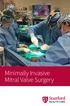 Minimally Invasive Mitral Valve Surgery Stanford Health Care offers leading, superior options in cardiac surgery, including the latest techniques and research for Minimally Invasive Cardiac surgery. Advanced
New Cardiothoracic Surgery CPT Codes for 2013
 New Cardiothoracic Surgery CPT Codes for 2013 There were several changes to the cardiothoracic surgery CPT codes for 2013. There are five new codes in the general thoracic surgery section, with one revised
2. What HCPCS Level II code describes Ensure HN therapy with an enteral infusion pump with alarm?
 Sample test questions for the CPC exam The following 20 questions were developed by Lisa Rae Roper, MHA, CPC, CCS-P, an instructor for HCPro s Certified Coder Boot Camp, for preparation of the Certified
The Cardiac Society of Australia and New Zealand
 The Cardiac Society of Australia and New Zealand Guidelines on Support Facilities for Coronary Angiography and Percutaneous Coronary Intervention (PCI) including Guidelines on the Performance of Procedures
Dialysis Vascular Access Coverage, Coding and Reimbursement Overview Physician / Hospital / ASC
 Dialysis Vascular Access Coverage, Coding and Reimbursement Overview Physician / Hospital / ASC 2015 Edition All Reimbursement Amounts are Listed at National Rates and Do Not Include the 2% Sequestration
Emergency Insertion of Temporary Trans-venous Pacing Catheter in ICU
 TARGET AUDIENCE Junior Medical Staff Critical Care Trained ICU Nurses PURPOSE This document is intended as a basic guide to managing patients who require insertion of Temporary Trans-venous Cardiac Pacing
CARDIAC CARE. Giving you every advantage
 CARDIAC CARE Giving you every advantage Getting to the heart of the matter The Cardiovascular Program at Northwest Hospital & Medical Center is dedicated to the management of cardiovascular disease. The
2015 Subcutaneous Implantable Defibrillator (the S-ICD TM System) Coding Guide Rhythm Management
 2015 Subcutaneous Implantable Defibrillator (the S-ICD TM System) Coding Guide Rhythm Management Contents Physician Coding... 2 Hospital Outpatient Coding and Payment... 3 Ambulatory Surgery Center (ASC)
RATE VERSUS RHYTHM CONTROL OF ATRIAL FIBRILLATION: SPECIAL CONSIDERATION IN ELDERLY. Charles Jazra
 RATE VERSUS RHYTHM CONTROL OF ATRIAL FIBRILLATION: SPECIAL CONSIDERATION IN ELDERLY Charles Jazra NO CONFLICT OF INTEREST TO DECLARE Relationship Between Atrial Fibrillation and Age Prevalence, percent
Section Four: Pulmonary Artery Waveform Interpretation
 Section Four: Pulmonary Artery Waveform Interpretation All hemodynamic pressures and waveforms are generated by pressure changes in the heart caused by myocardial contraction (systole) and relaxation/filling
Appendix. Costing Case Samples for OOHCA
 Appendix Costing Case Samples for OOHCA The patient (ICD-1) Treatment Codes (OPCS 4) Patient 27 Admitted to ICU following percutaneous cardiac intervention (PCI) with 2 drugeluting stents following a VF
Management of Pacing Wires After Cardiac Surgery
 Management of Pacing Wires After Cardiac Surgery David E. Lizotte, Jr. PA C, MPAS, FAPACVS President, Association of Physician Assistants in Cardiovascular Surgery Conflicts: None Indications 2008 Journal
Name: DEPARTMENT OF CARDIOLOGY CRITERIA FOR RECOMMENDATION AND CATEGORIZATION OF MEDICAL STAFF PRIVILEGES
 Name: DEPARTMENT OF CARDIOLOGY CRITERIA FOR RECOMMENDATION AND CATEGORIZATION OF MEDICAL STAFF PRIVILEGES A. Applicants (Full Privileges) 1. Satisfactory completion of an application, including documentation
Non-surgical treatment of severe varicose veins
 Non-surgical treatment of severe varicose veins Yasu Harasaki UCHSC Department of Surgery General Surgery Grand Rounds March 19, 2007 Definition Dilated, palpable, subcutaneous veins generally >3mm in
MEDICAL POLICY SUBJECT: CARDIAC REHABILITATION. POLICY NUMBER: 8.01.14 CATEGORY: Therapy/ Rehabilitation
 MEDICAL POLICY SUBJECT: CARDIAC REHABILITATION PAGE: 1 OF: 6 If the member's subscriber contract excludes coverage for a specific service it is not covered under that contract. In such cases, medical policy
Ch. 138 CARDIAC CATHETERIZATION SERVICES 28 138.1 CHAPTER 138. CARDIAC CATHETERIZATION SERVICES GENERAL PROVISIONS
 Ch. 138 CARDIAC CATHETERIZATION SERVICES 28 138.1 CHAPTER 138. CARDIAC CATHETERIZATION SERVICES Sec. 138.1 Principle. 138.2. Definitions. GENERAL PROVISIONS PROGRAM, SERVICE, PERSONNEL AND AGREEMENT REQUIREMENTS
Lesley C. Dinwiddie, MSN, RN, FNP,CNN
 The Vascular Access Coordinator: A Patient and Treatment Team s Best Friend Lesley C. Dinwiddie, MSN, RN, FNP,CNN Greetings and Thanks to Network 14 for this exciting opportunity! Purpose The purpose of
X-Plain Subclavian Inserted Central Catheter (SICC Line) Reference Summary
 X-Plain Subclavian Inserted Central Catheter (SICC Line) Reference Summary Introduction A Subclavian Inserted Central Catheter, or subclavian line, is a long thin hollow tube inserted in a vein under the
How To Treat Heart Valve Disease
 The Valve Clinic at Baptist Health Madisonville The Valve Clinic at Baptist Health Madisonville Welcome to the Baptist Health Madisonville Valve Clinic at the Jack L. Hamman Heart & Vascular Center. We
HEART CENTER. Touching Lives
 HEART CENTER Touching Lives with INNOVATIVE TOOLS and an EXPERIENCED TEAM THE HEART MATTERS If you or someone you love is faced with a heart problem, you want to put your trust in experienced professionals
Understanding Your Hemodialysis Access Options UNDERSTANDING YOUR HEMODIALYSIS ACCESS OPTIONS
 Understanding Your Hemodialysis Access Options UNDERSTANDING YOUR HEMODIALYSIS ACCESS OPTIONS What is a vascular access? A vascular access is a place on your body close to a vein and artery. This place
The Emerging Atrial Fibrillation Epidemic: Treat It, Leave It or Burn It?
 The Emerging Atrial Fibrillation Epidemic: Treat It, Leave It or Burn It? Indiana Chapter-ACC 17 th Annual Meeting Indianapolis, Indiana October 19, 2013 Deepak Bhakta MD FACC FACP FAHA FHRS CCDS Associate
CARDIOLOGY Delineation of Privileges
 CARDIOLOGY Delineation of Privileges APPLICANT: INITIAL APPOINTMENT REQUIREMENTS: BASIC EDUCATION: M.D. or D.O. from an accredited school of medicine or osteopathy. Successful completion of an ACGME or
Cardiac Masses and Tumors
 Cardiac Masses and Tumors Question: What is the diagnosis? A. Aortic valve myxoma B. Papillary fibroelastoma C. Vegetation from Infective endocarditis D. Thrombus in transit E. None of the above Answer:
PATIENT INFORMATION GUIDE TO ATRIAL FIBRILLATION
 PATIENT INFORMATION GUIDE TO ATRIAL FIBRILLATION A Comprehensive Resource from the Heart Rhythm Society AF 360 provides a single, trusted resource for the most comprehensive and relevant information and
GUIDE TO ATRIAL FIBRILLATION
 PATIENT INFORMATION GUIDE TO ATRIAL FIBRILLATION Atrial Fibrillation (AF) Atrial Flutter (AFL) Rate and Rhythm Control Stroke Prevention This document is endorsed by: A Comprehensive Resource from the
Update on Indications, Techniques and Controversies for Lead Extraction
 Update on Indications, Techniques and Controversies for Lead Extraction W Boston 100 Stuart Street, Boston, MA Course Directors Avi Fischer, MD Laurence M. Epstein, MD Brigham and Women s Hospital Sponsored
Antibiotic Prophylaxis for the Prevention of Infective Endocarditis and Prosthetic Joint Infections for Dentists
 PRACTICE ADVISORY SERVICE FAQ 6 Crescent Road, Toronto, ON Canada M4W 1T1 T: 416.961.6555 F: 416.961.5814 Toll Free: 1.800.565.4591 www.rcdso.org Antibiotic Prophylaxis for the Prevention of Infective
Atrial Fibrillation An update on diagnosis and management
 Dr Arvind Vasudeva Consultant Cardiologist Atrial Fibrillation An update on diagnosis and management Atrial fibrillation (AF) remains the commonest disturbance of cardiac rhythm seen in clinical practice.
Purpose: To outline the care of patients with permanent or temporary pacemakers.
 University of Kentucky / UK HealthCare Policy and Procedure Policy # NR08-03 Title/Description: Care of Patients with Pacemakers Purpose: To outline the care of patients with permanent or temporary pacemakers.
HEART & VASCULAR SERVICES. Heart & Vascular Services www.mhsystem.org
 HEART & VASCULAR SERVICES Heart & Vascular Services www.mhsystem.org Heart Services Testing Before Your Procedure If you are scheduled for a procedure in the catheterization lab, there will be blood work
Heart Center Packages
 Heart Center Packages For more information and appointments, Please contact The Heart Center of Excellence at the American Hospital Dubai Tel: +971-4-377-6571 Email: [email protected] www.ahdubai.com
Michigan Heart & Vascular Institute ON THE ST. JOSEPH MERCY HOSPITAL CAMPUS, ANN ARBOR, MICHIGAN
 ON THE ST. JOSEPH MERCY HOSPITAL CAMPUS, ANN ARBOR, MICHIGAN Dear Colleague: Cardiovascular medicine has marked an important milestone in the battle against heart disease. The latest available data indicates
Stenosis Surveillance 2009
 5 Diamond Patient Safety Program Stenosis Surveillance 2009 *This presentation was collaboratively developed by the Mid-Atlantic Renal Coalition (MARC) and the ESRD Network of New England for the 5-Diamond
Suffering from varicose veins? Patient Information. ELVeS Radial Minimally invasive laser therapy of venous insufficiency
 Suffering from varicose veins? Patient Information ELVeS Radial Minimally invasive laser therapy of venous insufficiency Do you suffer from heavy legs or visible veins? This makes diseases of the veins
Educational Goals & Objectives
 Educational Goals & Objectives The Cardiology rotation will provide the resident with an understanding of cardiovascular physiology and its broad systemic manifestations. The resident will have the opportunity
 STRATEGIES FOR SUCCESSFUL MANAGEMENT OF THE CKD AND ESRD - LEAH ATCHER, RN, BSN -EMILY DEXTER, RN, BSN November 11, 2007 PATIENT STRATEGIES FOR SUCCESSFUL MANAGEMENT OF THE CKD AND ESRD PATIENT DEMOGRAPHICS
CARDIOLOGY ROTATION GOALS AND OBJECTIVES
 CARDIOLOGY ROTATION GOALS AND OBJECTIVES PGY-1 Core Medicine Rotation The trainee will have the opportunity to develop clinical skills, the ability to analyze patients problems, and make treatment plans
Guidelines for the Operation of Burn Centers
 C h a p t e r 1 4 Guidelines for the Operation of Burn Centers............................................................. Each year in the United States, burn injuries result in more than 500,000 hospital
Echocardiography Guided Cardiac Resynchronization Therapy in Patients with Symptomatic Heart Failure and Narrow QRS Complex
 Echocardiography Guided Cardiac Resynchronization Therapy in Patients with Symptomatic Heart Failure and Narrow QRS Complex Johannes Holzmeister, M.D. University of Zurich, Zurich, Switzerland on behalf
Advantages of Right-Sided Implantation of Permanent Cardiac Pacemakers Performed by a Surgeon
 Advantages of Right-Sided Implantation of Permanent Cardiac Pacemakers Performed by a Surgeon 7 Davor Horvat General Hospital in Karlovac, Croatia 1. Introduction A pacemaker is a medical device which
Transcatheter Mitral Valve-in-Valve and Valve-in-Ring Implantations. Danny Dvir, MD On behalf of VIVID registry investigators
 Transcatheter Mitral Valve-in-Valve and Valve-in-Ring Implantations Danny Dvir, MD On behalf of VIVID registry investigators Introduction Bioprosthetic valves are increasingly implanted in open-heart surgeries.
Bayfront. Heart Center. www.bayfrontheart.org
 Bayfront Heart Center www.bayfrontheart.org THE HEART OF THE MATTER At the Bayfront Heart Center, the leading cardiac facility in the area, we are fully equipped to treat all aspects of cardiovascular
ENTITLEMENT ELIGIBILITY GUIDELINES VARICOSE VEINS AND SUPERFICIAL THROMBOPHLEBITIS
 ENTITLEMENT ELIGIBILITY GUIDELINES VARICOSE VEINS AND SUPERFICIAL THROMBOPHLEBITIS 1. VARICOSE VEINS MPC 00727 ICD-9 454 DEFINITION Varicose Veins of the lower extremities are a dilatation, lengthening
Type II Pulmonary Hypertension: Pulmonary Hypertension due to Left Heart Disease
 Heart Failure Center Hadassah University Hospital Type II Pulmonary Hypertension: Pulmonary Hypertension due to Left Heart Disease Israel Gotsman MD The Heart Failure Center, Heart Institute Hadassah University
CCAD Training Manual. Cardiac Rhythm Management (CRM)
 CCAD Training Manual Cardiac Rhythm Management (CRM) Version 1.0 A D Cunningham 19/3/2008 Introduction This manual is intended to assist users of the Notes Client version of the CCAD Cardiac Rhythm Management
Cardiac Rhythm Device Summit:
 Division of Cardiovascular Diseases Cardiac Rhythm Device Summit: Implantation, Management, and Follow Up June 17-19, 2016 Swissotel Chicago Course Directors: LEARN. ADVANCE. CONNECT. celinks.mayo.edu/cardiacdevice2016
California Health and Safety Code, Section 1256.01
 California Health and Safety Code, Section 1256.01 1256.01. (a) The Elective Percutaneous Coronary Intervention (PCI) Pilot Program is hereby established in the department. The purpose of the pilot program
Papworth Hospital NHS Foundation Trust
 Papworth Hospital NHS Foundation Trust About Papworth Hospital Papworth Hospital is the UK s largest provider of specialist cardiothoracic services including cardiology, respiratory medicine and cardiothoracic
Treating AF: The Newest Recommendations. CardioCase presentation. Ethel s Case. Wayne Warnica, MD, FACC, FACP, FRCPC
 Treating AF: The Newest Recommendations Wayne Warnica, MD, FACC, FACP, FRCPC CardioCase presentation Ethel s Case Ethel, 73, presents with rapid heart beating and mild chest discomfort. In the ED, ECG
The science of medicine. The compassion to heal.
 A PATIENT S GUIDE TO ELECTROPHYSIOLOGY STUDIES OF THE HEART The science of medicine. The compassion to heal. This teaching booklet is designed to introduce you to electrophysiology studies of the heart.
Post-surgical V.A.C. VeraFlo Therapy with Prontosan Instillation on Inpatient Infected Wounds * COLLECTION OF CASE STUDIES
 COLLECTION OF CASE STUDIES Post-surgical V.A.C. VeraFlo Therapy with Prontosan Instillation on Inpatient Infected Wounds * *All patients were treated with systemic antibiotics Post-surgical V.A.C. VeraFlo
Darlene J. Rodgers, BSN, RN, CNN, CHN, CPHQ Littleton, Colorado 80127 Cell: (303) 507-7919
 Darlene J. Rodgers, BSN, RN, CNN, CHN, CPHQ Littleton, Colorado 80127 Cell: (303) 507-7919 Education 1975--1976 University of Denver, Denver, Colorado 1976--1978 University of Colorado at Boulder, Boulder,
Atrial Fibrillation 2014 How to Treat How to Anticoagulate. Allan Anderson, MD, FACC, FAHA Division of Cardiology
 Atrial Fibrillation 2014 How to Treat How to Anticoagulate Allan Anderson, MD, FACC, FAHA Division of Cardiology Projection for Prevalence of Atrial Fibrillation: 5.6 Million by 2050 Projected number of
CODING AND COMPLIANCE NEW APPOINTMENT AND REAPPOINTMENT MODULE FOR ANESTHESIA FACULTY
 CODING AND COMPLIANCE NEW APPOINTMENT AND REAPPOINTMENT MODULE FOR ANESTHESIA FACULTY ANESTHESIA BILLING: MUST BE DOCUMENTED AS: Personally performed: you perform the case without a resident or a CRNA