
Introducing the New Direction Very Low Calorie Diet (VLCD)
|
|
|
- Tyler Lucas
- 9 years ago
- Views:
Transcription
1 Introducing the New Direction Very Low Calorie Diet (VLCD) For New Direction VLCD and New Direction LCD Weight Control Programs Welcome to New Direction VLCD a program that will help you lose weight and live a healthy life for years to come! We re glad you re here and ready to begin. A very low calorie diet like the one used in the New Direction VLCD will jump start your weight loss and lead you on the road to a healthy lifestyle. Research shows, however, that losing weight by diet alone doesn t work, at least not in the long run. To manage your weight for a lifetime, you need to make permanent changes in your eating and exercise habits and the role food plays in your life. The New Direction VLCD offers weekly group meetings that provide you with the support and skills needed to help you manage your weight. These meetings, led by a behavior counselor, registered dietitian, and exercise specialist, are offered during all four phases of the New Direction VLCD: Phase I: Screening Congratulations you ve completed the screening phase and are on your way to a new healthier you! Phase 2: Reducing During this time of rapid weight loss, New Direction products will be your only food. These products are nutritionally complete, but they supply fewer calories than your body needs to function. Other needed calories come from your body s fat stores. Phase 3: Adapting During this phase, you will gradually decrease the use of the New Direction products and begin to add more food to your daily diet. The calories you consume will be adjusted so that you stop losing, but continue to manage your weight. Phase 4: Sustaining In the Sustaining Phase of the program, you ll be eating regular foods and practicing your new lifestyle and weight management skills under the guidance of the New Direction support staff. You ll continue to work with a dietitian to adjust your calories and meal plan, so you can maintain your new body weight and meet your nutritional needs. During the Sustaining Phase, it s important to continue attending your classes. A combination of regular activity, sensible eating and support from others can help you maintain your weight loss. For best results, you need to commit to all four phases of the New Direction VLCD. Think of the program as one long stretch of highway where the road conditions and driving rules change along the way, but the road keeps on going. There s a definite starting point, but an ambiguous finish line because weight management is a life-long process. NDM39

2 The Importance of Medical Supervision While on VLCD Medical monitoring is essential while on the New Direction VLCD to ensure that you remain in good health as you lose weight. Also, by checking your physical responses to the diet, the staff can determine whether you need more New Direction servings or an electrolyte or mineral supplement. Monitoring consists of a number of tests and examinations that are performed regularly. Every week, your weight and blood pressure will be measured. Your blood will be drawn at regular intervals to measure levels of minerals, cholesterol, triglycerides and other medical indicators. Occasionally, an electrocardiogram will be performed to check your heart. Although these tests and examinations are intended mainly as safety measures, they also have motivational value. For example, if you have hypertension you may see your blood pressure drop as you lose weight and become more fit. You may also see improvements in your blood glucose and cholesterol levels. These positive changes provide incentives to stick with the New Direction VLCD. Medications Appropriate for Use with the New Direction VLCD For headaches: Non-aspirin pain relievers, pain relievers containing ibuprofen (Motrin, Advil ), pain relievers containing acetaminophen (Tylenol ) For colds: Antihistamines For constipation: Sugar-free psyllium compounds (take with a lot of water), Milk of Magnesia, Dulcolax suppository, glycerin suppository. For indigestion or heartburn: Tums, Mylanta, Maalox, Rolaids, Riopan Medications to Avoid While Using the New Direction VLCD Aspirin and aspirin-containing compounds; cough and cold medications that contain alcohol, codeine, or sugar; amphetamines; general anesthetics; tranquilizers; any medication not reviewed and approved by your New Direction physician.

3 Facts About the New Direction VLCD Program Q. What kind of diet will I follow? A. During the Reducing Phase of the program, all participants follow a very low calorie diet (also called a VLCD modified fast), consisting of New Direction products. This very low calorie, high protein, low carbohydrate diet causes the body to burn fat for energy. Since VLCDs produce rapid weight loss, medical supervision is necessary. Q. How does this diet help me lose body fat? A. Ordinarily, your body uses glucose from carbohydrates in your diet for fuel (energy). When calories are limited, as during a VLCD, your body starts burning fat. The fat is released into the bloodstream and travels to the liver where it is converted to ketones. The ketones are then released back into the bloodstream where they are picked up by other tissues such as muscle and used for energy. This process is called ketosis. Q. How will I know if I am in ketosis? A. Because some of the ketones leave the body in urine, you ll be able to tell when you re in ketosis by taking a simple urine test that detects ketones. Initially, you ll undergo this test each week. After 8 to 10 weeks on the VLCD (or sometimes earlier) your body adapts to burning ketones for energy and fewer ketones are excreted in the urine. At that time, your urine tests may show only a trace of ketones or none at all. Q. Why is protein important in a VLCD? A. To help meet its energy needs, your body can use protein, either from dietary sources or from body tissues, like muscle and organs. Obviously, it s healthier to get the energy from the protein in the diet. Without the added protein from New Direction products, your body would break down its own muscle and organ tissues. Such a breakdown can result in serious health consequences, even death. You need to take in enough dietary protein to spare your muscles and organs. Q. Aren t carbohydrates and fat also important? A. Yes, both carbohydrates and fat are important in a VLCD, but present at lower levels than typically seen in moderately reduced-calorie diets. A minimal amount of carbohydrates is required to make energy for your cells which are unable to use ketones. Carbohydrates help spare protein and are also important to maintain electrolyte and fluid balance. A moderate amount of fat in a VLCD provides essential fatty acids, which are needed for good health. Q. How much weight can I expect to lose? A. That depends on several factors, including your current weight, age and sex. During the first week, an average weight loss of 4 to 7 pounds is common, with water loss accounting for many of these pounds. After the first week, the rate of weight loss decreases to about 2 to 3 pounds per week. If you are losing weight too quickly, your New Direction physician may advise you to increase the number of beverages you are taking and/or to modify your exercise plan. Q. What is covered during the group meetings? A. The New Direction VLCD offers weekly group meetings that cover the following topics: Behavior Modification. This component of the program helps you identify and change behaviors that led to overeating. You ll learn how to get support from others and deal with situations that could challenge your weight loss efforts. The Behavior modules, which you ll receive at your group meetings, will help reinforce what your learn each week. Nutrition Education. Through discussions with staff and other group members, you ll learn how to make food choices that will help you manage your weight. Additionally, the Nutrition modules offer practical information on healthy eating and good nutrition, which is so important for weight management. Exercise. The exercise component of the program helps you build physical activity into your day. With the support of your exercise specialist, you ll learn how regular physical activity can benefit your weight control efforts.

4 Q. What are the health benefits of a VLCD? A. For individuals who are appropriate candidates for a VLCD, the resulting weight loss can improve medical conditions, such as diabetes, high blood pressure and high cholesterol. Q. What are the New Direction Products? A. New Direction products are specially formulated to provide all of the protein, carbohydrate, fat and essential vitamins and minerals you need while on a VLCD. New Direction products beverages, puddings, hot drink and soups are offered in a variety of flavors. Q. How many calories will I be consuming? A. Most clients on a VLCD follow a 600 or 800 calorie reducing plan, depending on the protein needs for their ideal body weight. Three or four New Direction products provide enough protein/calories for most clients. It is important to consume the prescribed number each day. You won t lose weight faster by consuming fewer products. In fact, it could be dangerous to do so. Q. Will I be hungry? A. Most clients in the program report that their hunger lessens or disappears after the first few days on the diet. There are several theories as to why this may occur; however, there is no definitive reason. Some evidence suggests that ketones reduce the feeling of hunger. Others suggest that when dieters eat only one or two foods instead of a variety, their appetite may be diminished. It is also possible that high protein, low carbohydrate foods, such as New Direction products, may curb appetite. Q. Are the beverages/soup lactose-free? A. No. They contain about two grams of lactose per packet, compared to one cup of milk which contains about 12 grams of lactose. Most people who are lactose-intolerant can use the New Direction products without developing any gastrointestinal problems. However, if you are extremely sensitive to lactose, ask your dietitian how to use a lactase enzyme (e.g., Lactaid tablets). Q. Are the beverages/soup caffeine free? A. Only the chocolate-flavored beverages contain caffeine from the added cocoa powder. The chocolate and hot cocoa beverages contain 12 and 22 milligrams of caffeine, respectively. In comparison, a 5-ounce cup of brewed drip coffee contains 60 to 180 milligrams. The average 12-ounce diet cola soft drink contains 30 to 60 milligrams of caffeine. Q. Do the New Direction products contain aspartame? A. Some New Direction products contain aspartame. The level in each product varies, please speak with a New Direction staff member for details. Q. Can I use the soups instead of the cold beverages or hot cocoa? A. Because the New Direction soups contain more sodium than the other products, it is recommended that a maximum of two servings per day of the soup be used. The remaining daily product intake should be made up of one or two servings of the other flavors. If you are sensitive to salt, discuss the use of the soups with your dietitian.

5 Potential Side Effects from a VLCD People on very low calorie diets sometimes experience mild, temporary side effects while their bodies adjust to this major change in diet. You may experience some, none or all of these: Dizziness. During the first few days or weeks on the program, you may feel dizzy or light-headed at times. As you begin to lose weight, you lose a lot of water as urine, and this lowers the volume of blood. When blood volume drops, blood pressure drops, and blood sometimes doesn t reach the brain fast enough. As a result, when you sit down or stand up quickly, you feel dizzy. If you feel dizzy or light-headed, avoid changing positions quickly. Don t use whirlpools, saunas and steam baths, because they can make it worse. Also, drink at least 1-1/2 to 2 quarts of water daily, in addition to the water you mix with the New Direction products. This amount of fluid helps keep your blood volume normal. Fruity breath. You may notice that your breath has a fruity odor while you re consuming New Direction beverages. It results from ketosis and burning body fat for energy. If the odor bothers you, use a mouthwash. This side effect will probably subside as you continue the program. Gastrointestinal upset. Some people develop diarrhea; some develop constipation. We know that the change from solid food to a liquid diet affects people in different ways. Both diarrhea and constipation respond to a variety of over-thecounter medications. If the condition doesn t clear up, inform your New Direction physician. Gallstones. Obesity increases the risk of gallstones. Scientific studies have shown that nearly all significantly overweight people have some degree of gallbladder abnormality. Medical experts predict that up to half will develop symptoms of gallbladder disease, including upper abdominal discomfort, bloating, belching and intolerance to foods. Rapid weight reduction can temporarily increase conditions that may lead to gallstones. However, these conditions are reduced if weight is lost and then maintained. It s essential that you inform the New Direction physician of symptoms or a history of gallstones; he/she may decide to perform additional tests or prescribe treatment. If you experience any symptoms during the Program, inform the New Direction staff immediately. Other side effects. Less common side effects of a VLCD are fatigue, dry skin and sensitivity to cold. These side effects can be treated with extra rest, lotions and creams, and extra clothing. Some people also experience leg cramps and missed or late menstrual periods. These conditions should be evaluated by the New Direction physician. Leg cramps can often be relieved by drinking more fluid and getting more of certain minerals. Women who miss or have late menstrual periods should immediately be tested for pregnancy. Some women with irregular menstrual cycles may become regular while on the diet. While most side effects occur early in the program, as the body begins to adjust to the diet, temporary hair loss is one side effect that can occur later. Very few people experience it, but it can be frustrating for those who do. This side effect usually occurs from 3 to 6 months after the Reducing Phase of the program begins. Only a small percentage of the hair follicles are affected, and hair loss doesn t occur in just one spot. It s also not permanent; in fact, new hair is likely to grow in as the old hair is lost. But there is no way to predict who will develop this side effect, nor is there a treatment other than time for hair to grow back. If you need more information, speak with your New Direction physician.

6 Guidelines for Losing Weight Safely Consume all of the New Direction servings prescribed for you. Consuming less than the prescribed amount will jeopardize your health. Attend all doctor appointments, laboratory screenings and Lifestyle Skills classes. Space your New Direction servings throughout the day. Have the beverages at the times you would ordinarily eat breakfast, lunch and dinner. If you re taking a fourth beverage, have it as a midmorning, mid afternoon or bedtime snack. Drink at least 1 1/2 to 2 quarts of water daily, in addition to the water you add to your packets of New Direction beverages. Plain tap or bottled water is best, but other liquids are acceptable if they contain few or no calories. Keep your carbohydrate intake at less than 10 grams a day (not including New Direction). Your dietitian can provide you with a select list of items and their related carbohydrate content. Don t cross your legs. When this is done, you compress a nerve at the back of the knee that can cause numbness in the lower part of the leg. This nerve becomes more exposed as you lose fat and is more sensitive to pressure. Take prescribed mineral or electrolyte supplements as ordered, if the New Direction physician prescribes them for you. Some participants may need supplements, as indicated by their blood tests. Use only prescribed or approved medications. Report any medications you re taking to the New Direction physician. Keep taking them, unless the doctor recommends a change. If the need for any over-the-counter drug arises, review the list of acceptable medications. Avoid taking extended trips during your first few months on the New Direction VLCD, since close monitoring is an essential part of the program. If you must be away from home, let the New Direction staff know so they can help you plan your diet. If you become seriously ill or are injured while you re on the New Direction VLCD, be sure to tell your primary care physician that you re on a VLCD or modified fast. The physician may need to reverse your state of ketosis so other medical treatments can be effective, or may want to contact the New Direction staff about the program.

YOUR LAST DIET IDEAL PROTEIN
 YOUR LAST DIET IDEAL PROTEIN OBJECTIVES Explain the science and history that supports the Ideal Protein Diet method. Describe the risks and benefits of diet participation. Give you the details of what
Frequently Asked Questions: Gastric Bypass Surgery at CMC
 Frequently Asked Questions: Gastric Bypass Surgery at CMC Please feel free to talk with any member of the Obesity Treatment Center team at Catholic Medical Center regarding any questions, concerns or comments
High Blood Pressure and Chronic Kidney Disease. For People With CKD Stages 1 4
 High Blood Pressure and Chronic Kidney Disease For People With CKD Stages 1 4 National Kidney Foundation s Kidney Disease Outcomes Quality Initiative (NKF-KDOQI ) The National Kidney Foundation s Kidney
High Blood pressure and chronic kidney disease
 High Blood pressure and chronic kidney disease For People with CKD Stages 1 4 www.kidney.org National Kidney Foundation's Kidney Disease Outcomes Quality Initiative Did you know that the National Kidney
Understanding Diabetes
 Patient Education Understanding Diabetes This handout describes diabetes, the complications related to the disease, and how you can prevent these complications. Blood Sugar Control Diabetes is a disease
MEDICATION GUIDE ACTOPLUS MET (ak-tō-plus-met) (pioglitazone hydrochloride and metformin hydrochloride) tablets
 MEDICATION GUIDE (ak-tō-plus-met) (pioglitazone hydrochloride and metformin hydrochloride) tablets Read this Medication Guide carefully before you start taking and each time you get a refill. There may
Problems of the Digestive System
 The American College of Obstetricians and Gynecologists f AQ FREQUENTLY ASKED QUESTIONS FAQ120 WOMEN S HEALTH Problems of the Digestive System What are some common digestive problems? What is constipation?
The Family Library. Understanding Diabetes
 The Family Library Understanding Diabetes What is Diabetes? Diabetes is caused when the body has a problem in making or using insulin. Insulin is a hormone secreted by the pancreas and is needed for the
Surgical Weight Loss. Mission Bariatrics
 Surgical Weight Loss Mission Bariatrics Obesity is a major health problem in the United States, with more than one in every three people suffering from this chronic condition. Obese adults are at an increased
HCG Protocol. Why is it necessary to follow a 500 calorie diet on the HCG diet protocol?
 HCG Protocol Will HCG Make Me Lose Weight No Matter What I Eat? No. For the HCG Protocol to properly work, you must comply with a regimented menu of specific foods. Any deviation from the authorized food
Sick Day Management for People with Type 2 Diabetes Using Insulin
 Sick Day Management for People with Type 2 Diabetes Using Insulin When you are sick, controlling your blood sugar (glucose) can be a challenge. Nausea, vomiting, illness and changes in eating will affect
GASTRIC SLEEVE INSTRUCTIONS
 GASTRIC SLEEVE INSTRUCTIONS 3-6 months after surgery What you are likely to be experiencing Appetite you are probably getting hungry on most days, though not necessarily for 3 regular meals every day.
High blood sugars caused by steroids
 High blood sugars caused by steroids Your blood sugars are high because you are taking a medication called steroids. Steroids are used to: decrease swelling decrease the natural response of your immune
Nutrients: Carbohydrates, Proteins, and Fats. Chapter 5 Lesson 2
 Nutrients: Carbohydrates, Proteins, and Fats Chapter 5 Lesson 2 Carbohydrates Definition- the starches and sugars found in foods. Carbohydrates are the body s preferred source of energy providing four
Welcome to Diabetes Education! Why Should I Take Control of My Diabetes?
 Welcome to Diabetes Education! Why Should I Take Control of My Diabetes? NEEDS and BENEFITS of SELF-MANAGEMENT You make choices about your life and health Controlling diabetes needs every day decisions
Healthy Eating During Pregnancy
 Healthy Eating During Pregnancy Pregnancy is a time of great change. Your body is changing to allow your baby to grow and develop. Good nutrition will help you meet the extra demands of pregnancy while
Calories. 23 calories from fat + 48 calories from carbohydrates + 32 calories from protein = 103 Calories in 1 cup of 1% milk
 Calories What's the magical formula to achieve your weight goals? Calorie needs are based on individual needs. In order for your weight to stay the same, the energy (or Calories) you consume must equal
Managing Sick Days for Type 1 Diabetes
 Managing Sick Days for Type 1 Diabetes 1. Contact the Diabetes Program if you have questions about your diabetes management. We are here to help! 2. Take your insulin as prescribed. If you are at risk
Bulimia Nervosa. This reference summary explains bulimia. It covers symptoms and causes of the condition, as well as treatment options.
 Bulimia Nervosa Introduction Bulimia nervosa, or bulimia, is an eating disorder. A person with bulimia eats a large amount of food in a short amount of time. To prevent weight gain, the person then purges.
You may continue to use your old manuals by writing in the detailed changes below:
 STANFORD PATIENT EDUCATION RESEARCH CENTER: CHANGES TO THE DSMP LEADER MANUAL (2012 version to the 2015 version) Stanford has corrected the DSMP manuals with the new ADA guidelines. Call- out icons and
Causes, incidence, and risk factors
 Causes, incidence, and risk factors Insulin is a hormone produced by the pancreas to control blood sugar. Diabetes can be caused by too little insulin, resistance to insulin, or both. To understand diabetes,
High Blood Pressure and Chronic Kidney Disease
 High Blood Pressure and Chronic Kidney Disease For People with CKD Stages 1 4 www.kidney.org National Kidney Foundation's Kidney Disease Outcomes Quality Initiative Did you know that the National Kidney
Diabetes means you have too much sugar in
 WHAT IS DIABETES? Diabetes means you have too much sugar in your blood. The medical word for sugar in the blood or blood sugar is glucose, but most people just say sugar. Your body changes most of the
University of California, Berkeley 2222 Bancroft Way Berkeley, CA 94720 Appointments 510/642-2000 Online Appointment www.uhs.berkeley.
 Constipation Why Am I Constipated? Constipation is passage of small amounts of hard, dry bowel movements, usually fewer than three times a week. People who are constipated may find it difficult and painful
DRUG INTERACTIONS: WHAT YOU SHOULD KNOW. Council on Family Health
 DRUG INTERACTIONS: WHAT YOU SHOULD KNOW Council on Family Health Drug Interactions There are more opportunities today than ever before to learn about your health and to take better care of yourself. It
BuyNuezdelaIndia.com
 BuyNuezdelaIndia.com The information provided in this guide is intended for your general knowledge only and is not a substitute for professional medical advice or treatment for specific medical conditions.
For the Patient: Dasatinib Other names: SPRYCEL
 For the Patient: Dasatinib Other names: SPRYCEL Dasatinib (da sa' ti nib) is a drug that is used to treat many types of cancer. It is a tablet that you take by mouth. Tell your doctor if you have ever
Insulin is a hormone produced by the pancreas to control blood sugar. Diabetes can be caused by too little insulin, resistance to insulin, or both.
 Diabetes Definition Diabetes is a chronic (lifelong) disease marked by high levels of sugar in the blood. Causes Insulin is a hormone produced by the pancreas to control blood sugar. Diabetes can be caused
For the Patient: Paclitaxel injection Other names: TAXOL
 For the Patient: Paclitaxel injection Other names: TAXOL Paclitaxel (pak'' li tax' el) is a drug that is used to treat many types of cancer. It is a clear liquid that is injected into a vein. Tell your
Blood Pressure Management and Your Pregnancy
 Patient Education Blood Pressure Management and Your Pregnancy This handout explains: How your blood pressure is checked during pregnancy. What preeclampsia is, including risk factors, treatments, and
FOLFOX Chemotherapy. This handout provides information about FOLFOX chemotherapy. It is sometimes called as FLOX chemotherapy.
 FOLFOX Chemotherapy This handout provides information about FOLFOX chemotherapy. It is sometimes called as FLOX chemotherapy. What is chemotherapy? Chemotherapy is a method of treating cancer by using
For the Patient: GDP Other names: LYGDP
 1 For the Patient: GDP Other names: LYGDP G D P Gemcitabine Dexamethasone (taken by mouth) CISPlatin Uses: GDP is a drug treatment given for Non-Hodgkins and Hodgkin Lymphoma with the expectation of destroying
Nutrition and Chronic Kidney Disease
 Nutrition and Chronic Kidney Disease I have been told I have early kidney failure. What does this mean? What can I expect? This means that your kidneys are not doing as good a job as they should to help
X-Plain Hypoglycemia Reference Summary
 X-Plain Hypoglycemia Reference Summary Introduction Hypoglycemia is a condition that causes blood sugar level to drop dangerously low. It mostly shows up in diabetic patients who take insulin. When recognized
Perioperative Bariatric Surgery Instructions
 Perioperative Bariatric Surgery Instructions Thank you again for entrusting us with your bariatric surgery. Please review the following material BEFORE SURGERY and keep this packet with you at all times.
Preparing To Quit And Quitting: How To Stay Thin Without Cigarettes
 Preparing To Quit And Quitting: How To Stay Thin Without Cigarettes Many people are concerned that they will gain weight if they quit smoking. Concern about weight gain is a major reason many people, especially
Cardiac Rehabilitation
 Cardiac Rehabilitation Introduction Experiencing heart disease should be the beginning of a new, healthier lifestyle. Cardiac rehabilitation helps you in two ways. First, it helps your heart recover through
What to Expect While Receiving Radiation Therapy for Prostate Cancer
 What to Expect While Receiving Radiation Therapy for Prostate Cancer Princess Margaret Information for patients who are having radiation therapy Read this pamphlet to learn about: The main steps in planning
X-Plain Diabetes - Introduction Reference Summary
 X-Plain Diabetes - Introduction Reference Summary Introduction Diabetes is a disease that affects millions of Americans every year. Your doctor may have informed you that you have diabetes. Although there
Feeling Better, Living Healthier With Diabetes
 Feeling Better, Living Healthier With Diabetes A guide for self management 761 S. Nelson Ave. Wilmington, Ohio 45177 (937) 382-9307 www.cmhregional.com What is Diabetes? Those who have diabetes are often
How to Get and Stay Healthy with Diabetes
 How to Get and Stay Healthy with Diabetes Target Audience: People with diabetes Objectives: Participants will be able to: 1. Recognize and treat high and low blood glucose levels. 2. Better control wide
Myth vs. Reality: Diabetes Related
 Myth: Only medication can control my diabetes. Reality: Lifestyle changes such as good nutrition, increased physical activity, weight loss and limiting alcohol/cigarette consumption can have a positive
Frequently Asked Questions: Ai-Detox
 What is Ai-Detox? Frequently Asked Questions: Ai-Detox Ai-Detox is a Chinese herbal medicinal formula, produced using state of the art biotechnology, which ensures the utmost standards in quality and safety.
4 Week Body Contour / Lipo Light Program
 Natural Health Solutions 14698 Galaxie Ave. Apple Valley, MN 55124 (952) 891-22225 4 Week Body Contour / Lipo Light Program Welcome and Congratulations! This is an important decision towards improving
Dieting and Gallstones
 Dieting and Gallstones WIN Weight-control Information Network What are Gallstones are clusters of solid material that form in the gallbladder. The most common type is made mostly of cholesterol. Gallstones
Personal Health Assessment
 Personal Health Assessment The purpose of this assessment is to determine your risk of developing the degenerative diseases common among Americans. Although diagnostic testing can sometimes be important,
Screening Tests for Gestational Diabetes
 Screening Tests for Gestational Diabetes 50 Gram glucose challenge test If you choose to be screened for gestational diabetes, you may have one of several different tests. The most commonly used screening
Nutrition After Weight Loss Surgery
 Nutrition After Weight Loss Surgery Gastric Bypass Sleeve Gastrectomy Gastric Banding HOW YOU WILL USE YOUR NEW TOOL SUCCESSFULLY TEXAS CENTER FOR MEDICAL & SURGICAL WEIGHT LOSS What We ll Cover Today
Healthy Weight Loss Program
 Healthy Weight Loss Program NEW! SlimStyles PGX Granules SlimStyles PGX SlimStyx: Available in convenient single-serving Slimstyx packets (2.5 g each) All the products in this brochure are available at
Diabetes Fundamentals
 Diabetes Fundamentals Prevalence of Diabetes in the U.S. Undiagnosed 10.7% of all people 20+ 23.1% of all people 60+ (12.2 million) Slide provided by Roche Diagnostics Sources: ADA, WHO statistics Prevalence
Eating Well with Diabetes. Cassie Vanderwall UW Health Nutrition Registered Dietitian Certified Personal Trainer Certified Diabetes Educator
 Eating Well with Diabetes Cassie Vanderwall UW Health Nutrition Registered Dietitian Certified Personal Trainer Certified Diabetes Educator Outline What is Diabetes? Diabetes Self-Management Eating Well
Diet and haemodialysis
 Diet and haemodialysis This leaflet is for patients with kidney disease who are receiving haemodialysis treatment. If you have any further questions, please contact us using the details below and on the
Type 2 diabetes Definition
 Type 2 diabetes Definition Type 2 diabetes is a lifelong (chronic) disease in which there are high levels of sugar (glucose) in the blood. Type 2 diabetes is the most common form of diabetes. Causes Diabetes
Hypoglycemia and Diabetes
 My Doctor Says I Should Avoid Low Blood Glucose Reactions... How Can I Prevent Them? BD Getting Started Hypoglycemia and Diabetes What You Should Know About Low Blood Glucose Reactions If you are taking
Borgess Diabetes Center PATIENT REGISTRATION/DEMOGRAPHICS
 Borgess Diabetes Center PATIENT REGISTRATION/DEMOGRAPHICS Please complete the following form by filling in the blanks or by circling the answer provided. Last Name: First Name M.I. Address: City, State,
Do You Know Your GI Risks?
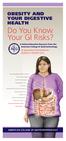 OBESITY AND YOUR DIGESTIVE HEALTH Do You Know Your GI Risks? A Patient Education Resource from the American College of Gastroenterology GI Specialists Committed to Quality in Patient Care Gastroesophageal
Presentation Prepared By: Jessica Rivers, BASc., PTS
 Presentation Prepared By: Jessica Rivers, BASc., PTS Presentation Outline Why should we care about our eating habits? Why is nutrition so important as we age? How do we know if we are eating healthy? What
MEDICATION GUIDE KOMBIGLYZE XR (kom-be-glyze X-R) (saxagliptin and metformin HCl extended-release) tablets
 MEDICATION GUIDE KOMBIGLYZE XR (kom-be-glyze X-R) (saxagliptin and metformin HCl extended-release) tablets Read this Medication Guide carefully before you start taking KOMBIGLYZE XR and each time you get
Medical Assistant s Diabetes Survey
 Medical Assistant s Diabetes Survey Instructions: Circle one answer for each question. Thank-you. Basic Knowledge 1. Risk factors for developing Type 2 diabetes include: a. Family members with diabetes
Obesity Affects Quality of Life
 Obesity Obesity is a serious health epidemic. Obesity is a condition characterized by excessive body fat, genetic and environmental factors. Obesity increases the likelihood of certain diseases and other
FAQs about Warfarin (brand name Coumadin )
 FAQs about Warfarin (brand name Coumadin ) What is warfarin? Warfarin is the most commonly used anticoagulant in the US. An anticoagulant is a drug used to prevent unwanted and harmful blood clots. Although
Gestational diabetes. Information to help you stay healthy during your pregnancy. What is gestational diabetes?
 Gestational diabetes Information to help you stay healthy during your pregnancy What is gestational diabetes? How gestational diabetes can affect my baby How to take care of myself and my baby during pregnancy
LIMU LEAN NUTRITION + BENEFITS + FACTS FREQUENTLY ASKED QUESTIONS
 NUTRITION DUTCH CHOCOLATE CREAMY VANILLA BURN CELLULAR CLEANSE Supplement Facts Amount Per Serving % Daily Value * APPETITE CONTROLLER Supplement Facts Amount Per Serving % Daily Value * (Orange Peko Tea,
Am I at Risk for type 2 Diabetes? Taking Steps to Lower the Risk of Getting Diabetes NATIONAL DIABETES INFORMATION CLEARINGHOUSE
 NATIONAL DIABETES INFORMATION CLEARINGHOUSE Am I at Risk for type 2 Diabetes? Taking Steps to Lower the Risk of Getting Diabetes U.S. Department of Health and Human Services National Institutes of Health
CONGESTIVE HEART FAILURE PATIENT TEACHING
 CONGESTIVE HEART FAILURE PATIENT TEACHING What is Heart Failure? Congestive Heart Failure occurs when the heart loses its ability to pump enough blood to meet the body s needs. Because the heart is not
Sinclair Community College, Division of Allied Health Technologies
 Sinclair Community College, Division of Allied Health Technologies Health Promotion for Community Health Workers Cardiovascular disease, stroke, and cancer Class #5 High Blood Cholesterol (date) Course
Starting mealtime insulin
 Starting mealtime insulin This booklet is designed for people with type 2 diabetes who are moving from a basal insulin regimen to a mealtime insulin regimen. A mealtime insulin regimen may include an insulin
Beating insulin resistance through lifestyle changes
 Beating insulin resistance through lifestyle changes This information is relevant to people at risk for type 2 diabetes, those who already have type 2 diabetes, pre- diabetes, polycystic ovary syndrome
14 Day Diet DIETARY GUIDELINES
 14 Day Diet DIETARY GUIDELINES The diet suggested for the Program is easy to follow and is vitally important for the success of this program. It consists of restricted, low fat, high protein daily intakes
Warfarin. (Coumadin, Jantoven ) Taking your medication safely
 Warfarin (Coumadin, Jantoven ) Taking your medication safely Welcome This booklet is designed to provide you with important information about warfarin to help you take this medication safely and effectively.
SICK DAY PLANS FOR ALL CHILDREN WITH DIABETES
 SICK DAY PLANS FOR ALL CHILDREN WITH DIABETES High blood sugar Any child with diabetes may at times have high blood sugars; it may be for a single blood test or for several tests. High blood sugar can
Calcium and Vitamin D: Important at Every Age
 Calcium and Vitamin D: Important at Every Age National Institutes of Health Osteoporosis and Related Bone Diseases ~ National Resource Center 2 AMS Circle Bethesda, MD 20892-3676 Tel: (800) 624-BONE or
Heat Illnesses. Common Heat Rash Sites
 Heat Illnesses Introduction Heat illnesses happen when the body becomes too hot and cannot cool itself. There are several different types of heat-related illnesses. This includes heat cramps, heat exhaustion,
Cardiovascular Disease Risk Factors
 Cardiovascular Disease Risk Factors Risk factors are traits and life-style habits that increase a person's chances of having coronary artery and vascular disease. Some risk factors cannot be changed or
What impacts blood glucose levels?
 What you eat and how much you eat has an impact on your blood glucose levels. Your blood glucose level reflects how well your diabetes is controlled. There are many aspects to eating for target BG (Blood
Made in the USA exclusively for JEUNESSE 650 Douglas Avenue Altamonte Springs, FL 32714 407.215.7414 JEUNESSEGLOBAL.COM
 Made in the USA exclusively for JEUNESSE 650 Douglas Avenue Altamonte Springs, FL 32714 407.215.7414 JEUNESSEGLOBAL.COM The statements contained herein have not been evaluated by the Food and Drug Administration.
Medication Guide TASIGNA (ta-sig-na) (nilotinib) Capsules
 Medication Guide TASIGNA (ta-sig-na) (nilotinib) Capsules Read this Medication Guide before you start taking Tasigna and each time you get a refill. There may be new information. This information does
BEST & WORST FOODS FOR BELLY FAT
 Belly fat is worse for you than fat elsewhere on your body. Excess accumulation of belly fat is more dangerous than excess fat around your hips and thighs. Belly fat is associated with serious health problems,
Importance of water for weight loss
 Importance of water for weight loss Most people do not drink enough water; one reason for this is because they have gotten out of the habit. If you are trying to lose weight, drinking plenty of water is
Getting Older ]Wiser: safer drinking. as you age. Massachusetts Department of Public Health Office of Healthy Aging
![Getting Older ]Wiser: safer drinking. as you age. Massachusetts Department of Public Health Office of Healthy Aging](/thumbs/25/6007827.jpg "Getting Older ]Wiser: safer drinking. as you age. Massachusetts Department of Public Health Office of Healthy Aging") Massachusetts Department of Public Health Office of Healthy Aging Getting Older ]Wiser: safer drinking as you age Do you drink alcohol even just one drink now and then? Are you over 50? Do you ever take
Massachusetts Department of Public Health Office of Healthy Aging Getting Older ]Wiser: safer drinking as you age Do you drink alcohol even just one drink now and then? Are you over 50? Do you ever take
Diabetes and Your Kidneys
 American Kidney Fund reaching out giving hope improving lives Diabetes and Your Kidneys reaching out giving hope improving lives Diabetes: The #1 Cause of Kidney Failure Your doctor told you that you have
First Name. Profession. Weight lbs. Weight 1 year ago lbs. Min. Adult Weight lbs. at age Maximum Weight lbs. at age
 Date Time Dietary consultation involves a health profile whose purpose is not to establish a diagnosis, but rather to determine a client's health status in order to guide his or her weight loss plan. A
Nutrition and Chronic Kidney Disease
 Nutrition and Chronic Kidney Disease National Kidney Foundation s Kidney Disease Outcomes Quality Initiative (NKF-K/DOQI TM ) The National Kidney Foundation is developing guidelines for clinical care to
What is Type 2 Diabetes?
 Type 2 Diabetes What is Type 2 Diabetes? Diabetes is a condition where there is too much glucose in the blood. Our pancreas produces a hormone called insulin. Insulin works to regulate our blood glucose
WEIGHT MANAGEMENT PROGRAMS & RESOURCES
 WEIGHT MANAGEMENT PROGRAMS & RESOURCES At Tufts Health Plan, we know it s important to help our members achieve and maintain a healthy weight. Being at a healthy weight can improve your health and reduce
Calcium. 1995-2013, The Patient Education Institute, Inc. www.x-plain.com nuf40101 Last reviewed: 02/19/2013 1
 Calcium Introduction Calcium is a mineral found in many foods. The body needs calcium to maintain strong bones and to carry out many important functions. Not having enough calcium can cause many health
The first 6 weeks after gastric band/bypass surgery
 Patient information The first 6 weeks after gastric band/bypass surgery Eating and drinking In the first 4-6 weeks after the operation it is vital that you keep to the diet that we have advised in order
Is Insulin Effecting Your Weight Loss and Your Health?
 Is Insulin Effecting Your Weight Loss and Your Health? Teressa Alexander, M.D., FACOG Women s Healthcare Associates www.rushcopley.com/whca 630-978-6886 Obesity is Epidemic in the US 2/3rds of U.S. adults
HIGH BLOOD PRESSURE AND YOUR KIDNEYS
 HIGH BLOOD PRESSURE AND YOUR KIDNEYS www.kidney.org About the Information in this Booklet Did you know that the National Kidney (NKF) Foundation offers guidelines and commentaries that help your healthcare
Kidney Disease WHAT IS KIDNEY DISEASE? TESTS TO DETECT OR DIAGNOSE KIDNEY DISEASE TREATMENT STRATEGIES FOR KIDNEY DISEASE
 Kidney Disease WHAT IS KIDNEY DISEASE? Kidney disease is when your kidneys are damaged and not functioning as they should. When kidney disease is not going away it is called chronic kidney disease or CKD.
DIABETIC EDUCATION MODULE ONE GENERAL OVERVIEW OF TREATMENT AND SAFETY
 DIABETIC EDUCATION MODULE ONE GENERAL OVERVIEW OF TREATMENT AND SAFETY First Edition September 17, 1997 Kevin King R.N., B.S., C.C.R.N. Gregg Kunder R.N., B.S.N., C.C.T.C. 77-120 CHS UCLA Medical Center
Create Your Weight Program. Your personalized plan for effective weight loss
 Create Your Weight Program Your personalized plan for effective weight loss Create Your Weight Program The Katz Institute for Women s Health (KIWH) is happy to offer the Create Your Weight program, which
FUNCTIONAL BOWEL DISORDERS
 FUNCTIONAL BOWEL DISORDERS Contributed by the International Foundation for Functional Gastrointestinal Disorders (IFFGD) and edited by the Patient Care Committee of the ACG. INTRODUCTION Doctors use the
Congestive Heart Failure
 Healthy People 2010 Conference Health Education on the Internet Welcome Mr. System Administrator Congestive Heart Failure What is congestive heart failure? How does it occur? What are the symptoms? How
HOW TO CARE FOR A PATIENT WITH DIABETES
 HOW TO CARE FOR A PATIENT WITH DIABETES INTRODUCTION Diabetes is one of the most common diseases in the United States, and diabetes is a disease that affects the way the body handles blood sugar. Approximately
Patient Medication Guide Brochure
 Patient Medication Guide Brochure 1 MEDICATION GUIDE TASIGNA (ta-sig-na) (nilotinib) Capsules Read this Medication Guide before you start taking TASIGNA and each time you get a refill. There may be new
Presence and extent of fatty liver or other metabolic liver diseases
 UC San Diego Health System Patient Information Sheet: Liver Biopsy What is a Liver Biopsy? A liver biopsy is a procedure where a qualified doctor (typically a hepatologist, radiologist or gastroenterologist)
Nutrition & Transplantation
 Nutrition & Transplantation www.kidney.org National Kidney Foundation s Kidney Disease Outcomes Quality Initiative Did you know that the National Kidney Foundation s Kidney Disease Outcomes Quality Initiative
EMBRACE Your Journey Nutrition During Treatment
 Nutrition is an important part of your cancer treatment. As you prepare for treatment, it is important to focus on eating a well-balanced diet so that your body is as healthy as it can be. When your body