
Morphological variation in anoles related to Anolis kemptoni in Panama
|
|
|
- Christian Matthew Hopkins
- 9 years ago
- Views:
Transcription
1 Morphological variation in anoles Salamandra Rheinbach, 20 May 2008 ISSN Morphological variation in anoles related to Anolis kemptoni in Panama Marcos Ponce & Gunther Köhler Abstract. We examined the geographical variation in pholidosis, morphometrics, hemipenis morphology, and coloration in anoles of the anoles related to Anolis kemptoni in the highlands of western Panama. This cluster includes six nominal species (Anolis exsul, A. fortunensis, A. gruuo, A. kemptoni, A. pandoensis, and A. pseudokemptoni). On the basis of our data, we place Anolis exsul in the synonymy of A. fortunensis and A. pandoensis in the synonymy of A. kemptoni. For the four valid species we provide an identification key, colour photographs in life, standardized descriptions, and a distribution map. Key words. Reptilia, Squamata, Iguanidae, Anolis exsul, A. fortunensis, A. gruuo, A. kemptoni, A. pandoensis, and A. pseudokemptoni, distribution, morphological variation, hemipenis morphology. Resumen. Examinamos la variación geográfica en pholidosis, morfometría, morfología de los hemipenes y coloración en los anolis del complejo Anolis kemptoni de las tierras altas del oeste de Panamá. Este grupo incluye seis especies nominales (Anolis exsul, A. fortunensis, A. gruuo, A. kemptoni, A. pandoensis y A. pseudokemptoni). Basados en nuestros datos, ubicamos a Anolis exsul en la sinónimia de A. fortunensis y A. pandoensis en la sinónimia de A. kemptoni. Para las cuatro especies válidas, proveemos una clave de identificación, fotografías en color de las especies en vida, descripciones estandarizadas y un mapa de distribución. Introduction Due to its great climatic and topographical diversity, Panama supports one of the most diverse and abundant herpetofaunas of any Central American country (Myers & Duellman 1982, Ibañez et al. 2001). Thirty-four species of anoles (genus Anolis) are known to occur in Panama, 14 of which are restricted to the highlands of lower Central America (Köhler 2003, Köhler et al. 2007). However, there remain taxonomic issues to be resolved at the population and species level. This is particularly true for the A. altae complex and the species related to A. pachypus, A. pseudopachypus and A. tropidolepis. Six nominal species related to Anolis kemptoni are reported to occur in Panama: Anolis exsul, A. fortunensis, A. gruuo, A. kemptoni, A. pandoensis, and A. pseudokemptoni. Dunn (1940) described A. kemptoni on the basis of a series of specimens from Finca Lérida, Volcán Chiriquí, 5300 ft, Chiriquí, Panama. Arosemena & Ibañez (1993, 1994) named two species, A. fortunensis and A. exsul, respectively, from two nearby localities in the Reserva Forestal de Fortuna, Chiriquí, Panama. Savage & Guyer (1998) described Anolis pandoensis from La Changuinolita, 1950 m elevation, Cantón Coto Brus, Puntarenas Province, Costa Rica, close to the border with Panama. However, this species has been placed in the synonymy of A. kemptoni by Hulebak & Poe (2006). Most recently, Köhler et al. (2007) described two new species, A. gruuo and A. pseudokemptoni, from the Serranía del Tabasará that are related to this cluster of species. Here we report upon the results of our study on the geographic variation in pholidosis, morphometrics, hemipenis morphology and coloration of the anoles related to A. kemptoni in the highlands in western Panama Deutsche Gesellschaft für Herpetologie und Terrarienkunde e.v. (DGHT) 65

2 Marcos Ponce & Gunther Köhler Materials and methods A list of the specimens examined is provided in the Appendix. See Fig. 1 for assignment of the OTUs. Abbreviations for museum collections follow those of Leviton et al. (1985) except for MHCH (Museo Herpetológico de Chiriquí, David, Chiriquí, Panama) and MVUP (Museo de Vertebrados, Universidad de Panamá, Panama City, Panama). Nomenclature of scale characters follows that of Köhler (2003). Terminology for hemipenial morphology follows that of Myers et al. (1993) and Savage (1997). Scale sizes were measured using the ocular micrometer of a stereo microscope (Leica MZ 12) and rounded to the nearest 0.01 mm. All other measurements were made using precision calipers and were rounded to the nearest 0.1 mm. Head length was measured from the tip of the snout to the anterior margin of the ear opening. Snout length was measured from the tip of the snout to the anterior border of the orbit. Head width was determined as the distance between the oral ricti. Dorsal and ventral scales were counted at midbody along the midline. Tail height and width were measured at the point reached by the heel of the extended hind leg. Subdigital lamellae were counted on phalanges II to IV of the fourth toe. We considered the scale directly anterior to the circumnasal to be a prenasal. Abbreviations used are SVL (snoutvent length), HL (head length), HW (head width), SS (supraorbital semicircles), IP (interparietal plate), SO (subocular scales), SPL (supralabial scales), INL (infralabials), hdt (horizontal diameter of tail), vdt (vertical diameter of tail), DHL (dorsal scales in one head length), VHL (ventral scales in one head length), and OTU (Operational Taxonomic Unit). Abbreviations used for collectors are AB (Abel Batista), GK (Gunther Köhler), JS (Javier Sunyer) and MP (Marcos Ponce). Abbreviations used for localities PNVB (Parque Nacional Volcán Barú), PILA (Parque Internacional La Amistad ). The capitalised colours and colour codes (the latter in parentheses) are those of Smithe ( ). Statistical analyses were performed using the computer program Statistica version 6.1. We performed t-tests to assess whether the means of two groups are statistically different (p<0.05). Discriminant Function Analyses were used to test if the taxa in question could be differentiated by a combination of several morphological characters. Results The taxonomic status of Anolis exsul In 1994, Arosemena & Ibañez described A. exsul on the basis of three specimens from Reserva Forestal de Fortuna, along the Río Chiriquí, some 100 m from the mouth of Quebrada Bijau ( N, W), m elevation, Chiriquí Province, Panama. Thus the type locality of this taxon is in the close vicinity of the type locality of A. fortunensis, a taxon that was named by the same authors one year earlier. In March of 2006, MP and AB collected four specimens of an anole related to these two taxa from the general area of the respective type localities of A. fortunensis and A. exsul. While trying to identify these newly collected specimens we became suspicious of the distinctiveness of these two taxa and finally concluded that none of the supposedly diagnostic characters as proposed in the original description of A. exsul (i.e., Table 3 in Arosemena & Ibañez 1994) are useful in separating the two nominal species. MP had the privilege of examining the type material of A. exsul and A. fortunensis. We discuss these characters in turn (data from Table 3 in Arosemena & Ibañez 1994 in parentheses). Number of scales between second canthals (10-12 such scales in A. exsul and 15 in A. fortunensis): in our series this character varies from 10 to 15. Number of postrostral scales (7-9 in A. exsul, 6 in A. fortunensis): in our series this character varies from 5 to 8. Bony parietal protuberances (a characteristic stated to be present in A. exsul): we failed 66

3 Morphological variation in anoles Fig. 1. Distribution of Anolis fortunensis (triangle), A. gruuo (star), A. kemptoni (red squares), and A. pseudokemptoni (yellow circle) in western Panama. Red circle indicates La Changuinolita (= type locality of Anolis pandoensis Savage & Guyer 1998). Numbers refer to OTUs as used in the analysis. Indicated elevations: pale grey shading m above sea level, medium grey shading m above sea level, dark grey shading above 2000 m above sea level. to discern these atop the rear of the head in any of our specimens, and MP was unable to detect this characteristic in the holotype of A. exsul. Number of enlarged dorsal scales rows (no enlarged middorsal scales in A. exsul and 2-4 such scales in A. fortunensis): in our specimens the two middorsal scale rows are slightly enlarged relative to the adjacent rows. In other species of this group (e.g., A. kemptoni) we found this character to be variable. Thus we do not see any diagnostic value in this character for the two species in question. Posterior insertion of male dewlap (posterior insertion of the dewlap in A. exsul at chest level whereas in A. fortunensis the dewlap reaches to midventer): in the two males of our series (SMF ) the posterior insertion of the dewlap is between the chest and midventer. Hind leg length (the fourth toe of the adpressed hind limb reaches the ear in A. exsul and to a point between shoulder and ear in A. fortunensis): in two of our specimens (SMF 86406, 86408) the fourth toe reaches the ear, in one specimen (SMF 86405) it reaches to a point between the ear and eye, and in SMF it reaches to a point between the shoulder and ear. Enlarged postcloacal scales (absent in A. exsul, present in A. fortunensis): both males in our series have enlarged postcloacal scales. Dewlap colour in males (male dewlap in A. exsul: orange base with a cherry-red free margin; A. fortunensis: reddish orange base with a red free margin): the dewlap colour in life was recorded for the two males in our series to be Orange Yellow (colour 18 in Smithe

4 68 Marcos Ponce & Gunther Köhler

5 Morphological variation in anoles Figs. 2 a-k. Diagrams (mean value ± standard deviation) showing variation in selected scale characters and proportions in OTUs 1-9. See Fig. 1 for identification of OTUs; for abbreviations see text. 69

6 Marcos Ponce & Gunther Köhler Fig. 3. Discriminant function analysis of species of the Anolis altae complex in Panama: 1) Anolis kemptoni; 2) = Anolis fortunensis; 3) = Anolis gruuo; 4) = Anolis pseudokemptoni. See text for details. 1981) at the base with the free margin varying from Flame Scarlet (15) to Brick Red (32A). None of the supposedly diagnostic characters proposed in the original description of A. exsul appear to be valid. Furthermore, the comparison of the holotypes of these two nominal species with each other and our series did not yield any characters that distinguish A. exsul from A. fortunensis. Thus, we conclude that A. exsul Arosemena & Ibañez is a junior synonym of A. fortunensis Arosemena & Ibañez. Geographic and interspecific variation Morphological variation within and between OTUs is shown in Fig. 2. Although large overlap of ranges is observed for most characters between OTUs, we found statistically distinct differences between some of the OTUs in the following characters. OTU 8 (= A. pseudokemptoni) has distinctly more loreal scales and loreal scale rows than any other OTU. In addition the ranges of total loreal scales are almost non-overlapping between OTUs 7 (= A. fortunensis) and 9 (A. gruuo). In relative head length (HL/HW), OTUs 8 and 9 show nonoverlapping ranges. Also, the tail of OTU 7 is more compressed than in OTU 8 (non-overlapping ranges of vdt/hdt). Finally, we observe only slightly overlapping ranges in the number of dorsal scales in one head length between OTU 7 and OTUs 8 and 9. Our OTU 1 is from the close vicinity of the type locality of A. pandoensis, whereas our OTU 4 is from the close vicinity of the type locality of A. kemptoni. In all characters examined there is large overlap in the ranges between our OTUs 1 and 4, none of the characters appearing to be of diagnostic value. Although we observed some geographical variation between OTUs 1 through 6, none of these OTUs is distinct in any of these characters and we conclude that they should be regarded as representing a single species. Therefore we agree with Hulebak & Poe (2006) that A. pandoensis Savage & Guyer is a junior synonym of A. kemptoni Dunn. We also reviewed the characters pro- 70

7 Morphological variation in anoles posed as diagnostic in the original description of A. pandoensis and as a result found none of them to be valid. We conducted a discriminant function analysis (DFA) based on three pholidotic and three morphometric characters (VHL, Loreals, SPL, HL/HW, vdt/hdt, IP/ear) and included four OTUs: OTU 1: = a combined OTU comprising the former OTUs 1-6 (= A. kemptoni); OTU 2: = A. fortunensis; OTU 3: = A. gruuo; OTU 4: = A. pseudokemptoni. This DFA yielded a scatter diagram (Fig. 3) that correctly classified 100% of the specimens of OTU s 1 and 3, and 75% of OTU 4. The polygons of OTUs 3 and 4 species do not overlap with those of OTUs 1 and 2, but those of OTUs 1 and 2 largely overlap with each other. The first function is DS = (VHL) (Loreals) (SPL) (HL/HW) (vDT/ hdt) (IP/ear). The second function is DS = (VHL) (Loreals) (SPL) (HL/HW) (vDT/ hdt) (IP/ear). The data presented above document the distinctness of A. gruuo and A. pseudokemptoni. None of these characters appear to be useful for the differentiation between A. kemptoni and A. fortunensis. However, there are several characters aside from those mentioned above that readily separate the two taxa: (1) ventral scales: slightly keeled in A. kemptoni (at least on chest and anterior venter), smooth in A. fortunensis; (2) dewlap coloration in males: A. kemptoni: posterior portion of dewlap Rose Pink (colour 108D in Smithe ) to Deep Vinaceus (4), anterior portion Burnt Orange (116), with or without a basal Buff (124) blotch; A. fortunensis: posterior portion Orange Yellow (18) with a greenish cast, anterior portion varying from Flame Scarlet (153) to Brick Red (132A); (3) maximum SVL: in A. kemptoni 54 mm (males) and 57 mm (females); in A. fortunensis 47 mm (males) and 49 mm (females). On the basis of our results we recognize four species of this complex in Panama (Fig. 1): Anolis fortunensis, A. gruuo, A. kemptoni, and A. pseudokemptoni. Morphological variation between these four species is summarized in Table 1. Coloration of male dewlaps in life of the four species is shown in Fig. 4, those of female A. kemptoni and A. pseudokemptoni in Fig. 5. We provide standard descriptions of these species as well as an identification key (appendix 2). Species accounts Anolis fortunensis Arosemena & Ibañez, Anolis fortunensis Arosemena & Ibañez, Revista de Biología Tropical 41: 267; type locality: Reserva Forestal de Fortuna, along the Río Chiriquí, in front of the Estacion Hidrometereológica del Instituto de Recursos Hidráulicos y Electrificación (IRHE) in Bijau, m elevation, Chiriquí Province, Panama. Holotype: MVUP Anolis exsul Arosemena & Ibañez, Caribbean Journal of Science 30:222: type locality: Reserva Forestal de Fortuna, along the Río Chiriquí, some 100 m from the mouth of Quebrada Bijau ( N, W), m elevation, Chiriquí Province, Panama. Holotype: MVUP 901. Geographic distribution: known only from three localities, all in the close vicinity of Bijau, Reserva Forestal Fortuna, Chiriquí, Panama (Fig. 1). Diagnosis: Anolis fortunensis (Fig. 6) is a medium-sized species (SVL to 47 mm in males, 49 mm in females) of the genus Anolis (sensu Poe, 2004) which is most similar in external morphology to a cluster of Central American species that are short-legged (longest toe of adpressed hind leg reaches only to tympanum), usually have a single elongated prenasal scale, smooth to slightly keeled ventral scales, a slender habitus, and are often delicate (A. altae, A. carpenteri, A. fortunensis, A. fuscoauratus, A. gruuo, A. kemptoni, A. pseudokemptoni). Anolis fortunensis differs from the species in this cluster by the following characteristics (conditions for A. fortun- 71

8 Marcos Ponce & Gunther Köhler Tab. 1. Selected measurements, proportions and scale characters of Anolis fortunensis, A. gruuo, A. kemptoni, and A. pseudokemptoni. Range is followed by mean value and one standard deviation in parentheses. Abbreviations see text. Sex A. fortunensis A. gruuo A. kemptoni A. pseudokemptoni Sex (n) m (2), f (2) m (3), f (1) m (16), f (19) m (2), f (1) Maximum SVL m f Tail length/svl m (1.80±0.01) (2.00±0.12) f (2.00±0.10) Tail diameter vertical/ horizontal m (1.31±0.06) (1.25±0.13) (1.31±0.08) (1.15±0.10) f (1.29±0.01) (1.27±0.09) HL/SVL m (0.26±0.01) (0.27±0.01) f (0.26±0.02) (0.26±0.01) HL/HW m (1.86±0.02) (1.68±0.047) (1.82±0.08) (1.84±0.01) f (1.75±0.20) (1.79±0.04) IP/ear m (2.24±0.38) (2.30±0.65) (2.08±0.81) (3.48±0.13) f (2.18±1.07) (2.60±0.81) Shank length/svl m (0.23±0.01) (0.29±0.07) (0.23±0.01) (0.21±0.01) f (0.25±0.02) (0.22±0.08) Axilla groin distance/svl m (0.45±0.01) (0.43±0.01) (0.44±0.01) (0.45±0.00) f (0.46±0.01) (0.46±0.02) Subdigital lamellae of 4th toe m & f (25±2.00) (24.5±1.28) (24.91±1.16) (25.32±2.31) Number of scales between m & f SS (1.5±0.50) (0.75±0.50) (1.27±0.62) Number of scales between IP and SS m & f 2-3 (2.75±0.50) 2-3 (2.75±0.50) 1-4 (2.38±0.71) 2-3 (2.25±0.50) Number of scales between m & f SO and SPL Number of SPL to level below centre of eye m & f 6-9 (7.5±1.40) 8-9 (8.25±0.50) 6-9 (7.66±0.89) 6-9 (7.5±1.40) Number of INL to level below centre of eye m & f 7-9 (8.50±1.00) 8-9 (8.25±0.50) 6-9 (7.66±0.89) 7-9 (8.32±1.14) 72

9 Morphological variation in anoles Sex A. fortunensis A. gruuo A. kemptoni A. pseudokemptoni Total number of loreals m & f (50.75±5.00) (35.50±9.00) (47.75±8.40) (81.32±6.51) Number of horizontal m & f loreal scale rows (6.25±0.50) (5.25±0.96) (6.16±0.68) Number of postrostrals m & f 5-8 (6.75±1.26) 6-8 (7.25±0.96) 5-8 (6.19±0.68) 7-8 (7.32±0.58) Number of postmentals m & f 5-6 (5.75±0.50) (6.19±0.68) 4-6 (5.32±1.14) Number of scales between nasals m & f 7-9 (8±0.82) 7-8 (7.25±0.50) 6-9 (7.41±0.70) 7-9 (8.00±1.00) Number of scales between 2nd canthals m & f 8-12 (10.5±1.72) 8-9 (8.50±0.58) 6-10 (8.02±1.08) 9-10 (9.67±0.58) Number of scales between posterior canthals m & f (12±2.15) 9-12 (10.5±1.28) 7-12 (9.19±1.34) (10.32±0.58) Number of medial dorsal scales in one head length m & f (53.5±2.52) (41.5±3.42) (48.88±6.35) (44±4.00) Number of ventral scales in one head length m & f (62±5.42) (54±3.64) (55.75±7.00) (58.67±3.06) ensis in parentheses): Anolis altae: male dewlap more or less uniformly reddish orange (posterior portion greenish beige, anterior portion reddish orange); hemipenis bilobate (unilobate); number of scales between posterior canthals 7-9 (10-15). Anolis carpenteri: body greenish in life (reddish brown); male dewlap uniform orange (posterior portion greenish beige, anterior portion reddish orange). Anolis fuscoauratus: male dewlap uniform pinkish brown to red (posterior portion greenish beige, anterior portion reddish orange). Anolis gruuo: male dewlap extending to level of axilla (between chest and midventer); male dewlap more or less uniform dull orange (posterior portion greenish beige, anterior portion reddish orange); hemipenis bilobate (unilobate); shank length/svl ( ). Anolis kemptoni: posterior portion of male dewlap rose pink, anterior portion burnt orange, small cream colored basal blotch in some populations (posterior portion greenish beige, anterior portion reddish orange, basal blotch always absent); maximum SVL 57 mm (49 mm); tail length/ SVL ( ); number of scales between posterior canthals 7-12 (10-15). Anolis pseudokemptoni: posterior portion of male dewlap vinaceus, anterior portion orange, anterodorsal corner cream colour (posterior portion greenish beige, anterior portion reddish orange, including anterodorsal corner); total number of loreal scales (47-58); maximum SVL 55 mm (49 mm); hemipenis bilobate (unilobate). Description: Maximum SVL 47.0 mm in males, 49.0 mm in females; tail length/svl ; HL/SVL in males, in females; HL/HW in males, in females; shank length/svl in males in females; longest toe of adpressed hind leg usually reaching to ear; tail slightly to distinctly laterally compressed in cross section, tail vdt/hdt in males, in females. Scales on snout keeled; 5-8 postrostrals; 7-9 scales between nasals; usually a single large prenasal, prenasal occasionally divided, in contact with supralabial and rostral; distinct frontal depression with smooth and flattened or slightly granular scales; supraorbital semicircles well developed, composed of keeled scales; 0-2 rows of scales separating supraorbital semicircles at narrowest point; 2-3 rows 73

10 Marcos Ponce & Gunther Köhler Fig. 4. Dewlaps of males in life of a) Anolis fortunensis (SMF 86407); b) A. gruuo (SMF 85416); c) A. kemptoni; d) A. pseudokemptoni (SMF 85420). of scales separating supraorbital semicircles and interparietal at narrowest point; supraorbitals composed of 5-7 distinctly enlarged, keeled scales; 4-5 rows of granular scales between enlarged supraoculars and superciliaries at level of mid-orbit; usually 1 elongate superciliary; interparietal scale well developed relative to adjacent scales, surrounded by scales of moderate size; canthal ridge distinct, composed of 4-5 large scales; 8-12 scales present between second canthals; scales present between posterior canthals; loreal region slightly convex, smooth loreal scales in a maximum of 6-7 horizontal rows; subocular scales in contact with supralabials; 6-9 supralabials to level below centre of eye; mental partial divided medially, bordered posteriorly by 5-6 postmentals; 7-9 infralabials to level below centre of eye; keeled scales present on chin and granular scales present 74 on throat; lateral head scales anterior to the ear opening about same size as those posterior to the ear opening; ear opening usually vertically oval. Dorsum of body with granular scales, 3658 dorsal scales in one head length; 0-4 median rows of dorsal scales slightly enlarged; ventral scales smooth; ventral scales in one head length; all caudal scales strongly keeled except at base of tail; caudal middorsal scales slightly enlarged, without whorls of enlarged scales, although an indistinct division in segments is discernible; ventral medial caudal scales larger than dorsal scales; limb scales keeled, imbricate; digital pads dilated, about three times as wide as non-dilated distal portion of toe; distal phalanx narrower than and raised from, dilated pad; lamellae under phalanges II IV of fourth toe. The completely everted hemipenis (SMF

11 Morphological variation in anoles 86408) is a small unilobate organ; the truncus and the lobes are not calyculate; several transverse folds present on asulcate surface of apex; sulcus spermaticus bifurcates at the base of the apex and the branches continue obliquely to the tip. Colour in life of a specimen from near Río Hornito, Reserva Forestal Fortuna (SMF 86408): dorsal ground color of body and head Raw Umber (223); ventral surface of body dirty white, with small Walnut Brown (221B) punctations; posterior portion of male dewlap Orange Yellow (18) with a greenish cast, anterior portion varying from Flame Scarlet (153) to Brick Red (132A). Natural history notes: our specimens were collected at night at the edge of the forest while they were sleeping on vegetation about 1.5 m above the ground. Anolis gruuo Köhler, Ponce, Sunyer & Batista, Anolis gruuo Köhler, Ponce, Sunyer & Batista, Herpetologica 63: 376; type locality: near the headwaters of Río San Félix, ca. 2 km N Escopeta Camp, Serranía del Tabasará, 900 m elevation, Comarca Ngöbe Buglé, Distrito de Nole Düima, Corregimiento de Jadeberi, Panama. Holotype: SMF Geographic distribution: known only from the type locality. Diagnosis: Anolis gruuo is a medium-sized species (SVL to 47 mm in males, 42 mm in females) of the genus Anolis (sensu Poe, 2004) that is most similar in external morphology to a cluster of Central American species that are short-legged (longest toe of adpressed hind leg reaches only to tympanum), usually have a single elongated prenasal scale, smooth to slightly keeled ventral scales, a slender habitus, and are often delicate (i.e., A. altae, A. carpenteri, A. fortunensis, A. fuscoauratus, A. gruuo, A. kemptoni, A. pseudokemptoni). Anolis gruuo differs from the species in this cluster by the following characteristics (conditions for A. gruuo Fig. 5. Dewlaps of females in life of a) Anolis kemptoni; b) A. pseudokemptoni (SMF 85421); c) A. fortunensis (SMF 86406). in parentheses): Anolis altae: male dewlap more or less uniformly reddish orange (more or less uniformly dull orange); no dewlap in females (a small orange dewlap in females); tail not conspicuously contrastingly dark and pale banded (contrasting banding present). Anolis carpenteri: tail not conspicuously contrastingly dark and pale banded (contrasting 75

12 Marcos Ponce & Gunther Köhler banding present); dorsal coloration with a greenish cast in life (no greenish cast in life); no dewlap in females (a small orange dewlap in females). Anolis fortunensis: male dewlap extending to a point between chest and midventer (to level of axilla); posterior portion of male dewlap greenish beige, anterior portion reddish orange (more or less uniformly dull orange); tail length/svl (1.74); number of scales between posterior canthals (9-12). Anolis fuscoauratus: male dewlap uniform pinkish brown to red (more or less uniformly dull orange); hemipenis unilobate (bilobate). Anolis kemptoni: posterior portion of male dewlap rose pink, anterior portion orange, a small cream colored basal blotch in some populations (more or less uniformly dull orange); hemipenis unilobate (bilobate); maximum SVL 57 mm (47) in females; shank length/svl ( ). Anolis pseudokemptoni: posterior portion of male dewlap vinaceus, anterior portion orange, anterodorsal corner cream color (more or less uniformly dull orange); total number of loreal scales (28-48); shank length/svl ( ). Description: maximum SVL 47.0 mm in males, 42.0 mm in females; tail length/svl 1.74 in males 1.73 in females; HL/SVL 0.26 in both males and females; HL/HW in males, 1.63 in females; shank length/svl in males 0.24 in females; longest toe of adpressed hind leg reaching to point between tympanum and eye; tail slightly to distinctly laterally compressed in cross section, tail vdt/hdt in males 1.09 in females. Scales on snout keeled; 6-8 postrostrals; 7-8 scales between nasals; usually a single large prenasal, prenasal occasionally divided, in contact with supralabial and rostral; scales in distinct prefrontal depression slightly tuberculate; supraorbital semicircles well developed, composed of keeled scales; 0-1 rows of scales separating supraorbital semicircles at narrowest point; 2-3 rows of scales separating supraorbital semicircles and interparietal at narrowest point; supraorbitals composed of distinctly enlarged, keeled scales; 3 4 rows of small keeled scales extending between enlarged supraorbitals and superciliaries at level of mid-orbit; usually 1 elongate superciliary; interparietal scale well developed relative to adjacent scales, surrounded by scales of moderate size; canthal ridge distinct, composed of 3-6 large scales; 8-9 scales present between second canthals; 9-12 scales present between posterior canthals; loreal region slightly convex, smooth loreal scales in a maximum of 4-6 horizontal rows; subocular scales in contact with supralabials; 8-9 supralabials to level below centre of eye; mental partial divided medially, bordered posteriorly by 6 postmentals; 8-9 infralabials to level below centre of eye; keeled scales present on chin and granular scales present on throat; lateral head scales anterior to ear opening about same size as those posterior to ear opening; ear opening usually vertically oval. Dorsum of body with granular scales, dorsal scales in one head length; 2-3 median rows of dorsal scales slightly enlarged; ventrals scales smooth; ventral scales in one head length; all caudal scales strongly keeled except at base of tail; caudal middorsal scales slightly enlarged, without whorls of enlarged scales, although an indistinct division in segments is discernible; a pair of enlarged postanal scales present (width mm); limb scales keeled, imbricate; digital pads dilated, about three times as wide as non-dilated distal portion of toe; distal phalanx narrower than, and raised from dilated pad; lamellae under phalanges II-IV of fourth toe. The completely everted hemipenis (SMF 85416) is a medium-sized bilobate organ; sulcus spermaticus bordered by well developed sulcal lips and bifurcating at base of apex; branches of sulcus spermaticus continue to tips of lobes, bordered by well-developed sulcal lips; surface of apex and distal truncus strongly calyculate, base of truncus with transverse folds; no asulcate processes present. 76

13 Morphological variation in anoles Colour in life of the holotype (SMF 85416): Dorsal ground colour Light Drab (119C) suffused with Hair Brown (119A); dorsal surface of head Light Drab; chin white with Warm Sepia (221A) flecks; venter dirty white with Dark Drab (119B) mottling, mottling more intensive towards sides; tail Drab grey (119D) with contrasting transverse Fuscous (21) bands; iris Robin Rufous (340); dewlap Spectrum Orange (17) grading to Chrome Orange (16) anteriorly, gorgetals greyish Brown (20). Natural history notes: All specimens were active during the day in a shaded coffee plantation. One of the adults was on a tree (Lauraceae) about 5-6 m above the ground, whereas most of the others were collected on a citrus tree about 5 m above the ground. One juvenile was in a coffee tree 1 m above the ground. Anolis kemptoni Dunn, Anolis kemptoni Dunn, Proc. Acad. nat. Sci. Philad. 92: 111; type locality: Finca Lérida, Volcán Chiriquí, 5300 ft, Chiriquí, Panama. Holotype: ANSP (examined by GK: this info not included in other accounts) Norops pandoensis Savage & Guyer, Rev. Biol. Trop. 46 (3): 805; type locality: La Changuinolita, 1950 m elevation, Cantón Coto Brus, Puntarenas Province, Costa Rica. Holotype: CRE 5290 (not examined by authors: this info not included in other accounts). Geographic distribution: eastern portion of the Cordillera de Talamanca in western Panama and adjacent Costa Rica (Fig. 3). Diagnosis: Anolis kemptoni is a mediumsized species (SVL to 54 mm in males, 57 mm in females) of the genus Anolis (sensu Poe, 2004) that is most similar in external morphology to a cluster of Central American species that are short-legged (longest toe of adpressed hind leg reaches only to tympanum), usually have a single elongated prenasal scale, smooth to slightly keeled ventral scales, a slender habitus, and are often delicate (Anolis altae, A. carpenteri, A. fortunensis, A. fuscoauratus, A. gruuo, A. kemptoni, A. pseudokemptoni). Anolis kemptoni differs from the species in this cluster by the following characteristics (conditions for A. kemptoni in parentheses): Anolis altae: maximum SVL 50 mm (57 mm); dewlap more or less uniformly reddish orange (posterior portion rose pink, anterior portion burnt orange, small cream colored basal blotch present in some populations); hemipenis bilobate (unilobate). Anolis carpenteri: body greenish in life (greyish brown), yellow with numerous small dark punctations in preservative, resulting in a fine speckled appearance (uniform without dark punctations); male dewlap uniform orange (posterior portion rose pink, anterior portion burnt orange, small cream colored basal blotch present in some populations); maximum SVL 45 mm (57 mm). Anolis fortunensis: posterior portion of male dewlap greenish beige, anterior portion reddish orange (posterior portion rose pink, anterior portion burnt orange, small cream colored basal blotch present in some populations); maximum SVL 49 mm (57 mm); tail length / SVL ( ); number of scales between posterior canthals (7-12); ventral scales smooth (slightly keeled). Anolis fuscoauratus: male dewlap uniform pinkish brown to red (posterior portion rose pink, anterior portion burnt orange, small cream colored basal blotch present in some populations); maximum SVL 50 mm (57 mm); no dewlap in females (a small dewlap present). Anolis gruuo: male dewlap more or less uniformly dull orange (posterior portion rose pink, anterior portion burnt orange, small cream colored basal blotch present in some populations); hemipenis bilobate (unilobate); maximum SVL 47 mm (57 mm); shank length / SVL ( ); ventral scales smooth (slightly keeled). Anolis pseudokemptoni: hemipenis bilobate (unilobate); total number of loreal scales (33-66); ventral scales smooth (slightly keeled); female dewlap orange (white). Description: maximum SVL 54.0 mm in 77

14 Marcos Ponce & Gunther Köhler Fig. 6. Adult male of Anolis fortunensis (SMF 86408; SVL 44 mm) from near Río Hornito, Reserva Forestal Fortuna, Chiriquí, Panama. Fig. 7. Adult male of Anolis gruuo (SMF 85416; SVL 47 mm) from near Campamento Escopeta, Comarca Ngöbe Buglé, Panama. males, 57.0 mm in females; tail length/svl ; HL/SVL in males, in females; HL/HW in males, in females; shank length/svl in males in females; longest toe of adpressed hind leg usually reaching to ear; tail slightly to distinctly laterally compressed in cross section, tail vdt/hdt Scales on snout keeled; 5-8 postrostrals; 6-9 scales between nasals; usually a single large prenasal present, prenasal occasionally divided, in contact with supralabial and rostral; scales in distinct frontal depression keeled; supraorbital semicircles well developed, composed of keeled scales; 0-2 rows of scales separating supraorbital semicircles at 78 Fig. 8. Adult male of Anolis kemptoni from Alto Chiquero, Chiriquí, Panama. Fig. 9. Adult male of Anolis pseudokemptoni (SMF 85420; SVL 54mm) from La Nevera, Comarca Ngöbe Buglé, Panama. narrowest point; 1-4 rows of scales separating supraorbital semicircles and interparietal at narrowest point; supraorbitals composed of 5-10 distinctly enlarged, keeled scales; 2-4 rows of granular scales between enlarged supraoculars and superciliaries at level of midorbit; usually 1 elongate superciliary, interparietal scale well developed relative to adjacent scales, surrounded by scales of moderate size; canthal ridge distinct, composed of 3-6 large scales; 6-10 scales present between second canthals; 7-12 scales present between posterior canthals; loreal region slightly convex, smooth loreal scales in a maximum of 5-8 horizontal rows; subocular scales in contact with supralabials; 6-9 supralabials to level below centre of eye; mental partial divided medially, bordered posteriorly by 4-8 postmentals; 6-9 infralabials to level below cen-

15 Morphological variation in anoles tre of eye; keeled scales present on chin and granular scales present on throat; lateral head scales anterior to the ear opening about same size as those posterior to ear opening; ear opening usually vertically oval; weak nuchal ridge present in males Dorsum of body with granular scales, except some scales in vertebral row keeled and subimbricate, dorsal scales in one head length; 0-4 median rows of dorsal scales slightly enlarged; ventrals at midbody slightly keeled, ventral scales in one head length; all caudal scales strongly keeled except at base of tail; caudal middorsal scales slightly enlarged, without whorls of enlarged scales, although indistinct division in segments discernible; limb scales keeled, imbricate; digital pads dilated, about three times as wide as non-dilated distal portion of toe; distal phalanx narrower than, and raised from, dilated pad; lamellae under phalanges II-IV of fourth toe. The completely everted hemipenis (SMF 85406) is a small unilobate organ; the truncus has a few transverse folds and the apex is strongly calyculate; on the asulcate surface a processus is present at the base of the apex; sulcus spermaticus opens in two concave areas at the base of the apex. Colour in life of a specimen from near the type locality (MHCH 700): dorsal ground colour of body and head Cinnamon (123A); head with a Hair Brown (119A) interorbital bar; ventral surface of body Cream Color (54); chin dirty white; iris Raw Sienna (136); posterior portion of male dewlap Rose Pink (108D), anterior portion Burnt Orange (116). Colour in life of a specimen from Jurutungo (MHCH 701) agrees with that description, except in the following details: Ground colour of head and body Light Drab (119C), iris Verona Brown (223B); the posterior portion of the male dewlap Deep Vinaceus (4), anterior portion Burnt Orange (116) with a Buff (124) basal blotch. Females have a small dirty white dewlap. Natural history notes: The majority of the specimens were collected at night while the animals were sleeping on low vergetation ( m above the ground). One adult male was sitting upside-down on a fence post exposed to direct sunlight. Other individuals were encountered on low vegetation during the daytime. Anolis pseudokemptoni Köhler, Ponce, Sunyer & Batista, Anolis pseudokemptoni Köhler, Ponce, Sunyer, Batista, Herpetologica 63: 380; type locality: Cerro La Nevera, N, W, 1600 m elevation, Serranía del Tabasará, Comarca Ngöbe Buglé, Distrito de Nole Düima, Corregimiento de Jadeberi, Panama. Holotype: SMF Geographic distribution: known only from the type locality. Diagnosis: Anolis pseudokemptoni is a medium-sized species (SVL to 54 mm in males, 55 mm in females) of the genus Anolis (sensu Poe, 2004) that is most similar in external morphology to a cluster of Central American species that are short-legged (longest toe of adpressed hind leg reaches only to tympanum), usually have a single elongated prenasal scale, smooth to slightly keeled ventral scales, a slender habitus, and are often delicate (A. altae, A. carpenteri, A. fortunensis, A. fuscoauratus, A. gruuo, A. kemptoni, A. pseudokemptoni). Anolis pseudokemptoni differs from the species in this cluster by the following characteristics (conditions for A. pseudokemptoni in parentheses): Anolis altae: male dewlap more or less uniformly reddish orange (male dewlap tricolored: posterior portion vinaceous, anterior portion orange, anterodorsal corner chamois); no dewlap in females (a small orange dewlap in females); total number loreal scales (75-88). Anolis carpenteri: body greenish in life (greyish brown), yellow with numerous small dark punctations in preservative, resulting in a fine speckled appearance (uniform greyish brown without dark punctations); male dewlap orange (male dewlap tricolored: posterior 79

16 Marcos Ponce & Gunther Köhler portion vinaceous, anterior portion orange, anterodorsal corner chamois); no dewlap in females (a small orange dewlap in females); maximum SVL 45 mm (55 mm); total number loreal scales (75-88). Anolis fortunensis: posterior portion of male dewlap greenish beige, anterior portion reddish orange (male dewlap tricolored: posterior portion vinaceous, anterior portion orange, anterodorsal corner chamois); maximum SVL 49 mm (55 mm); total number of loreal scales (75-88); number of scales between posterior canthals (10-11). Anolis fuscoauratus: male dewlap uniform pinkish brown to red (male dewlap tricolored: posterior portion vinaceous, anterior portion orange, anterodorsal corner chamois); maximum SVL 50 mm (55 mm). Anolis gruuo: male dewlap uniformly dull orange (male dewlap tricolored: posterior portion vinaceous, anterior portion orange, anterodorsal corner chamois); maximum SVL 47 mm (55 mm); shank length/ SVL ( ). Anolis kemptoni: hemipenis unilobate (bilobate); total number of loreal scales (75-88); ventral scales slightly keeled (smooth). Description: maximum SVL 54.0 mm in males, 55.0 mm in females; tail length/svl ; HL/SVL 0.26 in males, 0.25 in females; HL/HW in males, 1.86 in females; shank length/svl in males 0.21 in females; longest toe of adpressed hind leg reaching to ear; tail slightly compressed in cross section, tail vdt/hdt in males 1.1 in females. Scales on snout keeled; 4-6 postrostrals; 7-9 scales between nasals; usually a single large prenasal present, prenasal occasionally divided, in contact with supralabial and rostral; distinct frontal depression with smooth scales; supraorbital semicircles well developed, composed of keeled scales; 1 row of scales separating supraorbital semicircles at narrowest point; 2-3 rows of scales separating supraorbital semicircles and interparietal at narrowest point; supraorbitals composed of 6-10 distinctly enlarged, keeled scales; 3-4 rows of granular scales between enlarged supraoculars and superciliaries at level of midorbit; usually a single elongated superciliary; interparietal scale well developed relative to adjacent scales, surrounded by scales of moderate size; canthal ridge distinct, composed of 4-6 large scales; 9-10 scales present between second canthals; scales present between posterior canthals; loreal region slightly convex, smooth loreal scales in a maximum of 8-9 horizontal rows; subocular scales in contact with supralabials; 6-9 supralabials to level below centre of eye; mental partial divided medially, bordered posteriorly by 4-6 postmentals; 7-9 infralabials to level below centre of eye; keeled scales present on chin and granular scales on throat; lateral head scales anterior to the ear opening about same size as those posterior to ear opening; ear opening usually vertically oval. Dorsum of body with granular scales, dorsal scales in one head length; 0-4 median rows of dorsal scales slightly enlarged; ventral scales smooth, ventral scales in one head length; all caudal scales strongly keeled except at base of tail; caudal middorsal scales slightly enlarged, without whorls of enlarged scales, although indistinct division in segments discernible; limb scales keeled, imbricate; digital pads dilated, about three times as wide as non-dilated distal portion of toe; distal phalanx narrower than, and raised from dilated pad; lamellae under phalanges II-IV of fourth toe. The completely everted hemipenis (SMF 85420) is a medium-sized bilobate organ with a short and stout truncus; sulcus spermaticus bordered by well developed sulcal lips and bifurcating at base of apex; branches of sulcus spermaticus continue to tips of lobes, bordered by well-developed sulcal lips, tip of lobe of each branch opens into a broad concave area; surface of apex and sulcate side of truncus strongly calyculate, asulcate side of truncus with folds; a large asulcate process present. Colour in life of the holotype (SMF 85420): ground colour of dorsal surfaces of body, limbs and tail Citrine (51), suffused 80

17 Morphological variation in anoles with Dark Drab (119B) in vertebral area and with indistinct Cinnamon (123A) transverse bands in flank region; a Prout s Brown (121A) interorbital bar present; tail with Hair Brown (119A) bands, edged with Sepia (119); venter dirty white with Army Brown (219B) flecks; cloacal region and ventral surface of base of tail Olive Yellow (52); iris Cinnamon; posterior portion of dewlap Vinaceous (3) with Deep Vinaceous (4) tint, anterior portion Burnt Orange (116), anterodorsal corner Chamois (123). Acknowledgements Collecting and exportation permits were provided by Yariela Hidalgo, Autoridad Nacional del Ambiente (ANAM), Panama City, Panama. Querube D. Fuenmayor, Panama City, Panama, provided valuable assistance with acquisition of these permits. Meike Piepenbring, Botanisches Institut J. W. Goethe-Universität, Frankfurt, Germany, provided logistic support for our studies in Panama and was instrumental in enabling Abel Batista and Marcos Ponce to visit Frankfurt, Germany, for a three month research stay. We thank Pedro Caballero (Director of Instituto de Ciencias Ambientales y Desarrollo Sostenible) and Boris E. Sanjur, Facultad de Ciencias Naturales y Exactas de la Universidad Autónoma de Chiriquí (UNACHI), David, Panama, for their support. This paper is based in part upon work for which support was given by the Deutscher Akademischer Austauschdienst (DAAD) to Marcos Ponce and to Gunther Köhler through the Partnership Program between the J. W. Goethe- Universität Frankfurt am Main, Deutschland, und der Facultad de Ciencias Naturales y Exactas der Universidad Autónoma de Chiriquí (UNACHI), David, Panama. We are grateful to Alfred A. Schmidt for his financial support of this study. We thank Abel Batista for field assistance. For the loan of or access to specimens we thank L. Ford and D. R. Frost (AMNH); W. E. Duellman and J. E. Simmons (KU); J. Seigel (LACM); A. Rossman (LSUMZ); J. Hanken and J. P. Rosado (MCZ); V. H. Tejera N. (MVUP); J. P. Caldwell, A. D. Estep and L. J. Vitt (OMNH); and R. W. McDiarmid and W. R. Heyer (USNM). References Arosemena, F.A. & R. Ibañez D. (1993): Una nueva especie de Anolis (Squamata:Iguanidae) del grupo fuscoauratus de Fortuna, Panamá. Revista de Biología Tropical, 41(2): Arosemena, F.A. & R. Ibañez D. (1994): Una Saurio nuevo del Género Anolis (Reptilia Polychrotidae), grupo fuscoauratus, de las tierras altas de Chiriquí, Panamá. Caribbean Journal of Science, 30(3-4): Dunn, E.R. (1940): New and noteworthy herpetological material fom Panama. Proceedings of the Academy of Natural Sciences of Philadelphia, 92: Guyer, C. & J.M. Savage (1987): Cladistic relationships among anoles (Sauria: Iguanidae). Systematic Zoology, 35: Guyer, C. & J.M. Savage (1992). Anole systematics revisited. Systematic Biology, 41: Hulebak, E. & S. Poe (2006): Anolis (Norops) pandoensis Savage and Guyer 1998 is a junior synonym of Anolis kemptoni Dunn Caribbean Journal of Science 42(2): Ibáñez D.R., F.A. Solís, C.A. Jaramillo & A.S. Rand (2001): An overview of the herpetology of Panama. In: Johnson, J.D., R.G. Webb & O.A Flores-Villela (eds.): Mesoamerican herpetology: Systematics, zoogeography, and conservation. El Paso (The University of Texas El Paso): Köhler, G. (2003): Reptiles of Central America. Offenbach (Herpeton): 367 pp. Köhler, G., M. Ponce, J. Sunyer & A. Batista (2007): Four new species of anoles (genus Anolis) from the Serranía de Tabasará, west-central Panama (Squamata: Polychrotidae). Herpetologica, 63(3): Leviton, A.E., R.H. Gibbs jr., E. Heal & C.E. Dawson (1985): Standards in herpetology and ichthyology: part I. Standard symbolic codes for institutional resource collections in herpetology and ichthyology. Copeia, 1985: Myers, C.W. & W.E. Duellman (1982): A new species of Hyla from Cerro Colorado, and other tree frog records and geographic notes from western Panama. American Museum Novitates, 2752:

18 Marcos Ponce & Gunther Köhler Myers, C., E.E. Williams & R.W. McDiarmid (1993): A new anoline lizard (Phenacosaurus) from the highland of Cerro de la Neblina, southern Venezuela. American Museum Novitates, 3070: Poe, S. (2004): Phylogeny of anoles. Herpetological Monographs, 18: Savage, J.M. (1997): On terminology for the description of the hemipenes of squamate reptiles. Herpetological Journal, 7: Savage, J.M. & C. Guyer (1998): A new species of anole lizard, genus Norops (Squamata: Polychrotidae), from the Cordillera de Talamanca, Costa Rica. Revista de Biología Tropical, 46(3): Smithe, F.B. ( ): Naturalist s color guide. Part I. Color guide. 182 color swatches. New York (American Museum of Natural History). Appendix 1 Specimens examined Anolis altae Costa Rica: Alajuela: Cinchona, 1600 m: KU ; between La Cinchona and Angel Falls, 1370 m: LACM ; Heredia: San Rafael de Vara Blanca, N, W, 1675 m: SMF 85555; Paso Llano, S slope Volcan Barba, 2230 m: KU 66933; 2.5 km N Vara Blanca, 1900 m: KU 66934; Vara Blanca: KU ; San José: Alto La Palma: LACM ; 2 km N La Palma on road La Palma-La Hondura, 1500 m: LACM ; 0.5 mi S Alto La Palma, 1500 m: LACM ; 1.4 mi S Alto La Palma, 1500 m: LACM Anolis carpenteri Costa Rica: Cartago: Turrialba, IICA Experimental Cacao Grove: MCZ ; Heredia: OTS Finca La Selva: MCZ ; Finca La Suerte: SMF 81823; Limón: Finca La Lola: MCZ ; Tortuguero, next to Caribbean Conservation Commission Camp: USNM ; San José: Caspirola: LSUMZ Nicaragua: Matagalpa: 12 km NE Matagalpa, 1100 m: KU ; Finca Tepeyac, 10.5 km N and 9 km E Matagalpa, 960 m: KU 85722; Río San Juan: by Isla de Diamante on Río San Juan: OMNH 36370; Bartola, N, W, 30 m: SMF 80958, Panama: Bocas del Toro: southern end of Isla Popa, 1 km E of Sumwood Channel: USNM ; Rambala: ZFMK 52204; Laguna de Tierra Oscura, 3.7 km S of Tiger Key: USNM ; Colón: Colón : USNM ; Rio Frijoles and Pipeline Road: USNM Norops fortunensis PANAMA: Chiriquí, Gualaca, Reserva Forestal Fortuna, 8º N, 82º W, 1074 m: SMF ; Reserva Forestal de Fortuna, along the Río Chiriquí, some 100 m from the mouth of Quebrada Bijau ( N, W), m: MVUP 901 (holotype of Anolis exsul); Reserva Forestal de Fortuna, along the Río Chiriquí, in front of the Estacion Hidrometereológica del Instituto de Recursos Hidráulicos y Electrificación (IRHE) in Bijau, m: MVUP 756 (holotype of Anolis fortunensis). Anolis fuscoauratus BOLIVIA: Bení: Tributary of upper Río Bení: SMF Ecuador: Tena, 518 m: SMF 77252; near Mera: SMF 77253; near Misahualli, 420 m: SMF 77254; Arutam, S, S, 760 m: SMF Panama: Darién: Río Chíco, near Avolinos: AMNH Venezuela: Iguapo, upper Orinoco: SMF Anolis gruuo PANAMA: Comarca Ngöbe Buglé: Nole Düima, Jadeberi, Serranía de Tabasará, from near the headwaters of Río San Félix, ca. 2 km N Escopeta Camp ca N, W, 900 m: SMF Anolis kemptoni PANAMA: Chiriquí: Boquete, PNVB, 8º50 56 N, 82º29 11 W, 1610 m: SMF ; Bugaba, Bambito, Cerro La Pelota: SMF , ; Parque Nacional La Amistad, 08º54 02,9 N, 82º W, 1890 m: SMF ; Parque Nacional La Amistad, N, W, 1700 m: MHCH , ; headwaters of Río Chevo, 08º52 27,6 N, 82º W, 1615 m: SMF Anolis pseudokemptoni PANAMA: Comarca Ngöbe Buglé: Nole Düima, Jadeberi, Serranía de Tabasará, La Nevera, N, W, 1600 m: SMF

19 Morphological variation in anoles Appendix 2 Key to the species related to Anolis kemptoni in Panama 1a Usually a single elongated prenasal scale; short-legged (longest toe of adpressed hind leg reaches only to tympanum); ventral scales smooth to slightly keeled; dorsal ground colour greyish-brown; habitus slender, often delicate b Combination of characters not as above.... all other Panamanian species of Anolis 2a Total number of loreal scales from 75 to 88; hemipenis bilobate.... Anolis pseudokemptoni 2b Total number of loreal scales from 33 to 66; hemipenis unilobate or bilobate a Ventral scales slightly keeled; SVL to 54 mm in males, to 57 mm in females; hemipenis unilobate; posterior portion of dewlap rose pink, anterior portion burnt orange, small cream colored basal blotch in some populations.... Anolis kemptoni 3b Ventral scales smooth; SVL to 47 mm in males, to 49 mm in females; hemipenis unilobate or bilobate; male dewlap colour not as above a Hemipenis unilobate; posterior insertion of male dewlap between chest and midventer; posterior portion of male dewlap greenish beige, anterior portion reddish orange; tail without conspi cuous dark and pale vertical banding.... Anolis fortunensis 4b Hemipenis bilobate; posterior insertion of male dewlap at level of axilla; male dewlap more or less uniform dull orange; tail with conspicuous dark and pale vertical banding.... Anolis gruuo Manuscript received: 29 November 2006 Authors addresses: Marcos Ponce, Instituto de Ciencias Ambientales y Desarrollo Sostenible de la Universidad Autónoma de Chiriquí, David, Panamá. [email protected]; Gunther Köhler, Forschungsinstitut und Naturmuseum Senckenberg, Senckenberganlage 25, D Frankfurt a.m., Germany, [email protected]. 83

20 84 Marcos Ponce & Gunther Köhler

ON A NEW SPECIES OF DENISONIA (REPTILIA, SERPENTES) FROM NEW GUINEA
 ON A NEW SPECIES OF DENISONIA (REPTILIA, SERPENTES) FROM NEW GUINEA by L. D. BRONGERSMA and M. S. KNAAP-VAN MEEUWEN Until now the Elapid genus Denisonia had not been recorded from New Guinea, and this
THREE NEW AGAMID LIZARDS FROM WESTERN AUSTRALIA
 Rec. West. Aust. Mus. 1981,8 (4) THREE NEW AGAMID LIZARDS FROM WESTERN AUSTRALIA G.M. STORR* ABSTRACT Three recently discovered species are described as new: Tympanocryptis aurita from east Kimberley,
Reptiles and Amphibians of Curaçao
 33 Reptiles and Amphibians of Curaçao BY Dr. Nelly de Rooij (With 2 Figures). The Zoological Museum of Amsterdam received some collections of reptiles from Curaçao made by Dr. J. BOEKE in 1905, by Dr.
Inductive Reasoning Free Sample Test 1
 Inductive Reasoning Free Sample Test 1 Solutions Booklet Difficulty Rating: Difficult Instructions This inductive reasoning test comprises 22 questions. You will have 25 minutes in which to correctly answer
IDENTIFICATION OF ADULT CORIXIDS 25
 IDENTIFICATION OF ADULT CORIXIDS 25 THE IDENTIFICATION OF BRITISH ADULT SPECIMENS OF SIGARA LATERALIS (LEACH), SIGARA CONCINNA (FIEBER), CALLICORIXA PRAEUSTA (FIEBER) AND CALLICORIXA WOLLASTONI (DOUGLAS
FIELD RECOGNITION OF THE LARVAE OF NATIVE COCCINELLIDAE, COMMON TO THE POTATO FIELDS OF AROOSTOOK COUNTY
 FIELD RECOGNITION OF THE LARVAE OF NATIVE COCCINELLIDAE, COMMON TO THE POTATO FIELDS OF AROOSTOOK COUNTY R. H. Storch Department of Entomolgy, University of Maine TECHNICAL BULLETIN 43 MAINE AGRICULTURAL
A new araneid genus from the Galapagos Islands (Araneae: Araneidae)
 A new araneid genus from the Galapagos Islands (Araneae: Araneidae) Herbert W. Levi ABSTRACT Contrib. Nat. Hist. 12: 893 898. A new araneid, Galaporella thaleri sp. nov., similar to species of the genus
A new species of Ohilimia Strand, 1911 from New Guinea (Araneae: Salticidae)
 Genus Vol. 21(4): 625-629 Wrocław, 27 XII 2010 A new species of Ohilimia Strand, 1911 from New Guinea (Araneae: Salticidae) Joanna Gardzińska 1 & Barbara Patoleta 2 Katedra Zoologii, Uniwersytet Przyrodniczo-Humanistyczny
Introduction. Lourdes Y. Echevarría, 2 Andy C. Barboza, and 3 Pablo J. Venegas
 Official journal website: amphibian-reptile-conservation.org Amphibian & Reptile Conservation 9(1) [Special Section]: 34 44 (e109). Publication LSID: urn:lsid:zoobank.org:pub:ebc93ede-b09b-407c-92de-966bbd2cc2a2
Insect identification sheet
 information leaflet Insect identification sheet To enable you to identify the insect you have in your home, we have provided some identification sheets. These depict the most common pest species that you
Key to the Snakes of South Australia
 Key to the Snakes of South Australia Austrelaps labialis Mark Hutchinson & Ian Williams Version: 24 October, 2014 KEY TO THE SNAKES OF SOUTH AUSTRALIA ELAPIDAE, PYTHONIDAE 1. a. Eyes rudimentary, visible
Part 4. Development of raptor chicks. Raptors: a field guide for surveys and monitoring 281
 Part 4 Development of raptor chicks Raptors: a field guide for surveys and monitoring 281 Development of raptor chicks The photographs in this part of the book illustrate the development of nestlings for
SCOTTISH TERRIER. FEDERATION CYNOLOGIQUE INTERNATIONALE (AISBL) SECRETARIAT GENERAL: 13, Place Albert 1 er B 6530 Thuin (Belgique) 10.01.
 FEDERATION CYNOLOGIQUE INTERNATIONALE (AISBL) SECRETARIAT GENERAL: 13, Place Albert 1 er B 6530 Thuin (Belgique) 10.01.2011/EN FCI-Standard N 73 SCOTTISH TERRIER M.Davidson, illustr. NKU Picture Library
Table S1. List of Institutional Abbreviations. AMNH, American Museum of Natural History, New York, New York; ANSP, Academy of National Science of
 Table S1. List of Institutional Abbreviations. AMNH, American Museum of Natural History, New York, New York; ANSP, Academy of National Science of Philadelphia, Philadelphia, Pennsylvania; BHI, Black Hills
floridanum Banks, the only species of the genus previously
 1944] Three Species o[ Coleosoma ]rom Florida 51 THREE SPECIES OF COLEOSOMA FROM FLORIDA (ARANE/E; THERIDIID.E) x BY ELIZABETH B. BRYANT Among material recently sent the Museum of Comparative Zoology by
A New Species of Anolis (Sauria: Iguanidae) from Eastern Cuba
 Caribbean Journal of Science, Vol. 31, No. 1-2, 65-72, 1995 Copyright 1995 College of Arts and Sciences University of Puerto Rico, Mayaguez A New Species of Anolis (Sauria: Iguanidae) from Eastern Cuba
SPECIES DESCRIPTION Picture
 SPECIES DESCRIPTION Picture German Cockroach Cockroach egg case & nymphs 12-15mm (Adult Stage)Mid to dark brown body. Lighter area with 2 dark bars behind head. Wings. Very long antennae. Young are smaller
263 Turtle Dove. TURTLE DOVE (Streptopelia turtur)
 Collared Dove Turtle Dove. Adult. Female (22-VI). TURTLE DOVE (Streptopelia turtur) IDENTIFICATION 26-29 cm. Pale upperparts; grey and bluish underparts; wing coverts fringed rufous with black centre;
How To Identify A Hyla Tadpole
 OCCASIONAL PAPERS OF THE MUSEUM OF ZOOLOGY UNIVERSITY OF MICHIGAN SOME PANAMANIAN FROGS1 While Mr. C. B. Duryea and I were collecting for the Museum of Comparative Zoology in Panam5 and Costa Rica in the
Snakes of Massachusetts
 Snakes of Massachusetts Of the roughly 3,000 known species of snake found worldwide, only 15% are considered dangerous to humans. Luckily here in Massachusetts we only have two types of dangerous venomous
Noteworthy Records of Amphibians from Western Panama
 Geographic Distribution 245 on Gunsmoke Rd (34.1670151 N, 103.9969887 W, NAD 83; elev. 1295 m). 11 May 2010. M. T. Hill. Verified by J. T. Giermakowski. Museum of Southwestern Biology (MSB 78054). New
CONTRIBUTION TO THE KNOWLEDGE OF DERMESTIDAE (COLEOPTERA) FROM CHILE CONTRIBUCIÓN AL CONOCIMIENTO DE LOS DERMESTIDAE (COLEOPTERA) DE CHILE
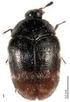 Rev. Chilena Ent. 2012, 37: 17-21 CONTRIBUTION TO THE KNOWLEDGE OF DERMESTIDAE (COLEOPTERA) FROM CHILE CONTRIBUCIÓN AL CONOCIMIENTO DE LOS DERMESTIDAE (COLEOPTERA) DE CHILE Jiří Háva 1 and Jaime Solervicens
Volume of Pyramids and Cones
 Volume of Pyramids and Cones Objective To provide experiences with investigating the relationships between the volumes of geometric solids. www.everydaymathonline.com epresentations etoolkit Algorithms
An enigmatic frog of the genus Atelopus (Family Bufonidae) from Parque Nacional Chirripó, Cordillera de Talamanca, Costa Rica
 An enigmatic frog of the genus Atelopus (Family Bufonidae) from Parque Nacional Chirripó, Cordillera de Talamanca, Costa Rica Jay M. Savage 1 & Federico Bolaños 2 1. Department of Biology, San Diego State
MD5-26 Stacking Blocks Pages 115 116
 MD5-26 Stacking Blocks Pages 115 116 STANDARDS 5.MD.C.4 Goals Students will find the number of cubes in a rectangular stack and develop the formula length width height for the number of cubes in a stack.
FCI-Standard N 105 / 29. 03. 2006 /GB FRENCH WATER DOG. (Barbet)
 FCI-Standard N 105 / 29. 03. 2006 /GB FRENCH WATER DOG (Barbet) 2 TRANSLATION : Jennifer Mulholland. ORIGIN : France DATE OF PUBLICATION OF ORIGINAL VALID STANDARD : 21.02.2006. UTILIZATION: Water dog
New Mites in the Family Caeculidae
 BULLETIN OF THE U N IV E R SIT Y OF UTAH Vol. 35 March 15, 1945 No. 17 New Mites in the Family Caeculidae B Y STANLEY M ULAIK BIOLOGICAL SERIES, Vol. VIII, No. 6 PUBLISHED BY THE UNIVERSITY OF UTAH SALT
4. How many integers between 2004 and 4002 are perfect squares?
 5 is 0% of what number? What is the value of + 3 4 + 99 00? (alternating signs) 3 A frog is at the bottom of a well 0 feet deep It climbs up 3 feet every day, but slides back feet each night If it started
MUSEUM STREET, CHARLES W. MYERS' ABSTRACT. currently recognized. Dendrobates fantasticus. and D. reticulatus, both described by Boulenger
 AMERICAN MUSEUM Novitates PUBLISHED BY THE AMERICAN CENTRAL PARK WEST AT 79TH Number 2721, pp. 1-23, figs. 1-12 MUSEUM STREET, OF NATURAL HISTORY NEW YORK, N.Y. 10024 January 27, 1982 Spotted Poison Frogs:
LABRADOR RETRIEVER. FEDERATION CYNOLOGIQUE INTERNATIONALE (AISBL) SECRETARIAT GENERAL: 13, Place Albert 1 er B 6530 Thuin (Belgique) 12.01.
 12.01.2011/EN FEDERATION CYNOLOGIQUE INTERNATIONALE (AISBL) SECRETARIAT GENERAL: 13, Place Albert 1 er B 6530 Thuin (Belgique) FCI-Standard N 122 LABRADOR RETRIEVER M.Davidson, illustr. NKU Picture Library
PICCOLO LEVRIERO ITALIANO
 17.12.2015/EN FEDERATION CYNOLOGIQUE INTERNATIONALE (AISBL) SECRETARIAT GENERAL: 13, Place Albert 1 er B 6530 Thuin (Belgique) (VALID FROM 01/01/2016) FCI-Standard N 200 PICCOLO LEVRIERO ITALIANO (Italian
FINNISH SPITZ. FEDERATION CYNOLOGIQUE INTERNATIONALE (AISBL) SECRETARIAT GENERAL: 13, Place Albert 1 er B 6530 Thuin (Belgique) 27.05.
 27.05.2015/ EN FEDERATION CYNOLOGIQUE INTERNATIONALE (AISBL) SECRETARIAT GENERAL: 13, Place Albert 1 er B 6530 Thuin (Belgique) FCI-Standard N 49 FINNISH SPITZ (Suomenpystykorva) 2 TRANSLATION: Finnish
Anatomy PHL 212. By Dr Tajdar Husain Khan
 Anatomy PHL 212 By Dr Tajdar Husain Khan Overview of Anatomy Anatomy(from the Greek word anatome,"dissection") is a branch of natural science dealing with the structural organization of living things The
Geometry Unit 6 Areas and Perimeters
 Geometry Unit 6 Areas and Perimeters Name Lesson 8.1: Areas of Rectangle (and Square) and Parallelograms How do we measure areas? Area is measured in square units. The type of the square unit you choose
A new fish, Peristedion nesium (Scorpaeniformes: Peristediidae) from Isla del Coco, Costa Rica
 A new fish, Peristedion nesium (Scorpaeniformes: Peristediidae) from Isla del Coco, Costa Rica William A. Bussing Escuela de Biología & Centro de Investigaciones en Ciencias del Mar y Limnología (CIMAR),
30 August 1985. PROC. BIOL. SOC. WASH. 98(3), 1985, pp. 615-621
 30 August 1985 PROC. BIOL. SOC. WASH. 98(3), 1985, pp. 615-621 FRESHWATER SHRIMPS FROM VENEZUELA III: MACROBRACHIUM QUELCHI (DE MAN) AND EURYRHYNCHUS PEMONI, N. SP.; (CRUSTACEA: DECAPODA: PALAEMONIDAE)
Body Planes & Directions Anatomic Reference Systems (Unit 6, pp. 110-112)
 Name: Period: Date: Body Planes & Directions Anatomic Reference Systems (Unit 6, pp. 110-112) The Anatomic Position In the anatomic position, the individual is: 1. Standing up/sitting down (circle one)
Transverse Sections of the Spinal Cord
 Transverse Sections of the Spinal Cord The spinal cord is perhaps the most simply arranged part of the CNS. Its basic structure, indicated in a schematic drawing of the eighth cervical segment (Figure
JACK RUSSELL TERRIER
 05.12.2012 / EN FEDERATION CYNOLOGIQUE INTERNATIONALE (AISBL) SECRETARIAT GENERAL: 13, Place Albert 1 er B 6530 Thuin (Belgique) FCI-Standard N 345 JACK RUSSELL TERRIER SMOOTH COATED VARIETY BROKEN COATED
Advanced MakeUp Tips by Kathy Whittington
 Advanced MakeUp Tips by Kathy Whittington Applying Eye Shadow Eyes are the windows to your soul. The right make up can add to the beauty of your eyes if you know how to accent the positive and minimize
CHEM 107. Hair handout. Basic Structure of Hair. 3-22-05 and 3-24-05
 CHEM 107 Hair handout. 3-22-05 and 3-24-05 Basic Structure of Hair A hair can be defined as a slender, thread-like outgrowth from a follicle in the skin of mammals. Composed mainly of keratin, it has three
Lab 5 Overview of the Skeleton: Classification and Structure of Bones and Cartilages Exercise 9 The Axial Skeleton Exercise 10
 Lab 5 Overview of the Skeleton: Classification and Structure of Bones and Cartilages Exercise 9 The Axial Skeleton Exercise 10 Overview of the Skeleton Locate the important cartilages in the human skeleton
Invasive Reptiles and Amphibians of Florida!
 1 Invasive Reptiles and Amphibians of Florida! 2 Created by: Thompson Antony Lauren Diaz Sean McKnight Alana Palau JoAnna Platzer Illustrated by Lauren Diaz Invasive Ecology of Reptiles and Amphibians
MICROSCOPY. To demonstrate skill in the proper utilization of a light microscope.
 MICROSCOPY I. OBJECTIVES To demonstrate skill in the proper utilization of a light microscope. To demonstrate skill in the use of ocular and stage micrometers for measurements of cell size. To recognize
Munsell Soil Color. Munsell Gradient No. Code
 Munsell Gradient No. Munsell Soil Color Code Munsell Soil Color Description 10.0 10R 2.5/1 Reddish Black 10.0 10R 2.5/2 Very Dusky Red 10.0 10R 3/1 Dark Reddish 10.0 10R 3/2 Dusky Red 10.0 10R 3/3 Dusky
CSE511 Brain & Memory Modeling. Lect04: Brain & Spine Neuroanatomy
 CSE511 Brain & Memory Modeling CSE511 Brain & Memory Modeling Lect02: BOSS Discrete Event Simulator Lect04: Brain & Spine Neuroanatomy Appendix of Purves et al., 4e Larry Wittie Computer Science, StonyBrook
Descriptions of two new species of Gyrocarisa (Trichoptera: Petrothrincidae)
 Zootaxa : 15 20 (2005) www.mapress.com/zootaxa/ Copyright 2005 Magnolia Press ISSN 1175-5326 (print edition) ZOOTAXA ISSN 1175-5334 (online edition) Descriptions of two new species of Gyrocarisa (Trichoptera:
What role does the nucleolus have in cell functioning? Glial cells
 Nervous System Lab The nervous system of vertebrates can be divided into the central nervous system, which consists of the brain and spinal cord, and the peripheral nervous system, which contains nerves,
A Morphological Study On Endemic Malabaila lasiocarpa Boiss. (Apiaceae) From Bingol (Turkey)
 Araştırma Makalesi/Research Article A Morphological Study On Endemic Malabaila lasiocarpa Boiss. (Apiaceae) From Bingol (Turkey) Ömer KILIÇ 1 Abstract- In this study morphological characters of Malabaila
Welcome to Anatomy & Physiology
 Welcome to Anatomy & Physiology Chapter 1 -Human Organization What do you need to do to pass this class? MEMORIZE! The Scope of Human Anatomy Human anatomy is the study of the structure of the human body.
TWO NEW CRYPTIC SPECIES OF TAKYDROMUS (SQUAMATA: LACERTIDAE) FROM TAIWAN
 Herpetologica, 64(3), 2008, 379 395 E 2008 by The Herpetologists League, Inc. TWO NEW CRYPTIC SPECIES OF TAKYDROMUS (SQUAMATA: LACERTIDAE) FROM TAIWAN KUANG-YANG LUE AND SI-MIN LIN * Department of Life
Central American Countries
 n Countries Color each country a different color, then study the countries names and locations. A Belize A B Guatemala C El Salvador B D D Honduras C E Nicaragua E F Costa Rica G Panama F G Answer the
Valley fold 1/4 at the left side, again creasing only at the edge, and unfold. Valley fold, connecting the tops of the angle bisectors, and unfold.
 Triceratops by Jerry Harris 1. Begin with a square, white side up, with the vertical diagonal precreased. A square of 10" results in a model of approximately 5.8" long and 1.67" tall at the hip. 2. 3.
Surgical Art. Formulaic Drawing Method. DRAWING WORKSHOP Learning to sketch for patient notes
 DRAWING WORKSHOP Learning to sketch for patient notes Surgical Art Formulaic Drawing Method Formulaic figure drawing systems involve using abstract rhythms and interlocking shapes to construct the human
PURPOSE OF GRAPHS YOU ARE ABOUT TO BUILD. To explore for a relationship between the categories of two discrete variables
 3 Stacked Bar Graph PURPOSE OF GRAPHS YOU ARE ABOUT TO BUILD To explore for a relationship between the categories of two discrete variables 3.1 Introduction to the Stacked Bar Graph «As with the simple
Digital Image Requirements for New Online US Visa Application
 Digital Image Requirements for New Online US Visa Application As part of the electronic submission of your DS-160 application, you will be asked to provide an electronic copy of your photo. The photo must
A NEW LARGE-FLOWERED ODONTOGLOSSUM (ORCHIDACEAE: ONCIDIINAE) FROM THE CUSCO REGION IN PERU
 LANKESTERIANA 13(3): 395 399. 2014. A NEW LARGE-FLOWERED ODONTOGLOSSUM (ORCHIDACEAE: ONCIDIINAE) FROM THE CUSCO REGION IN PERU Stig Dalström 1,3 & Saul Ruíz Pérez 2 1 2304 Ringling Boulevard, unit 119,
Writing a Dichotomous Key to Wildflowers
 Writing a Dichotomous Key to Wildflowers Objectives: 1. Understand how to use and make dichotomous keys. 2. Understand common terminology of plant morphology. 3. Learn to recognize some fall wildflowers.
Session 7 Bivariate Data and Analysis
 Session 7 Bivariate Data and Analysis Key Terms for This Session Previously Introduced mean standard deviation New in This Session association bivariate analysis contingency table co-variation least squares
A new record of the rare alpheid shrimp Coronalpheus natator from Isla Coiba, Panama, with remarks on Coronalpheus and Automate (Crustacea: Decapoda)
 A new record of the rare alpheid shrimp Coronalpheus natator from Isla Coiba, Panama, with remarks on Coronalpheus and Automate (Crustacea: Decapoda) Denis Poddoubtchenko 1, Arthur Anker 1 & Ingo S. Wehrtmann
CHAPTER 9 CONCLUSIONS AND RECOMMENDED MITIGATION
 CHAPTER 9 CONCLUSIONS AND RECOMMENDED MITIGATION 9.1 Conclusions Based on the stability cross-sections down the SE flank of Snodgrass Mountain, most landslides on low- to moderate-gradient slopes have
Using and Constructing a Dichotomous Key
 Name Class Date Chapter 18 Classification Using and Constructing a Dichotomous Key You may want to refer students to Chapter 18 in the textbook for a discussion of the classification system used in biology.
Worksheets for Teachers. The Lowry
 Worksheets for Teachers The Lowry Worksheets LS Lowry Worksheets for Primary & Secondary Pupils The following pages contain worksheets for you to use with your class. They can be photocopied for each person
Variations on a Human Face Lab
 Variations on a Human Face Lab Introduction: Have you ever wondered why everybody has a different appearance even if they are closely related? It is because of the large variety or characteristics that
Identifying Vertebrates Using Classification Keys
 Name Class Date Chapter 18 Classification Identifying Vertebrates Using Classification Keys Introduction Organisms such as vertebrates (animals with backbones) are classified into groups according to certain
ISOPERLA UMPQUA A NEW SPECIES OF WESTERN NEARCTIC STONEFLY (PLECOPTERA: ISOPERLINAE)
 Szczytko, S.W. and K.W. Stewart. 2013. Isoperla umpqua, a new species of western Nearctic stonefly (Plecoptera: Isoperlinae). http://zoobank.org/ urn:lsid:zoobank.org:pub:2dca0e5d-15be-4f6b-af64-3ac7aa19b1f4
THE BEATIFUL FACE. Beauty. Esthetics. Beauty ESTHETICS LOCAL FASHIONS. Notion of beauty. Looking good. Orthodontics 2005
 THE BEATIFUL FACE Orthodontics 2005 Malcolm E. Meistrell,, Jr., D.D.S. Clinical Professor of Dentistry Division of Orthodontics School of Dental and Oral Surgery Columbia University Beauty Beauty Esthetics
Chapter 17: Light and Image Formation
 Chapter 17: Light and Image Formation 1. When light enters a medium with a higher index of refraction it is A. absorbed. B. bent away from the normal. C. bent towards from the normal. D. continues in the
2nd Semester Geometry Final Exam Review
 Class: Date: 2nd Semester Geometry Final Exam Review Multiple Choice Identify the choice that best completes the statement or answers the question. 1. The owner of an amusement park created a circular
Template-based Eye and Mouth Detection for 3D Video Conferencing
 Template-based Eye and Mouth Detection for 3D Video Conferencing Jürgen Rurainsky and Peter Eisert Fraunhofer Institute for Telecommunications - Heinrich-Hertz-Institute, Image Processing Department, Einsteinufer
THE BENJAMIN INSTITUTE PRESENTS. Excerpt from Listen To Your Pain. Assessment & Treatment of. Low Back Pain. Ben E. Benjamin, Ph.D.
 THE BENJAMIN INSTITUTE PRESENTS Excerpt from Listen To Your Pain Assessment & Treatment of Low Back Pain A B E N J A M I N I N S T I T U T E E B O O K Ben E. Benjamin, Ph.D. 2 THERAPIST/CLIENT MANUAL The
Name That Adaptation. Background: Link to the Plan Read Section 5 (Whooping Crane Ecology and Biology) in the Management Plan
 Summary Students will explore structural, physiological, and behavioral adaptations of whooping cranes. Objectives: Students will be able to: Define an adaptation Describe several whooping crane adaptations
LIZARDS WITH NORTHERN AFFINITIES THE MOUNTAINS OF OMAN
 LIZARDS WITH NORTHERN AFFINITIES THE MOUNTAINS OF OMAN FROM by E. N. ARNOLD British Museum (Natural History), London With two plates and one map SYNOPSIS Oman material of four lizard species is described
Physiography, Geography and Climate of Latin America (Lecture 3)
 Physiography, Geography and Climate of Latin America (Lecture 3) Natural Landmarks in Latin America World's longest and second highest mountain range, and the world's highest active volcanoes. Biggest
Pink & White Gel Tip Overlay Rules, Judges Instructions & Criteria Student Division Competition Rules
 Competition Rules 1. Total time allowed 3 hours (180 minutes) 2. These are traditional square style competition nails. 3. The nails must be applied with Tips and Gel overlay 4. The competitor must apply
Ultrasonographic Determination of Equine Fetal Gender (31 Mar 2000)
 In: Recent Advances in Equine Theriogenology, B.A. Ball (Ed.) Publisher: International Veterinary Information Service (www.ivis.org) Ultrasonographic Determination of Equine Fetal Gender (31 Mar 2000)
TMMC&RC, Teerthanker Mahaveer University, Moradabad, Uttar Pradesh, India, 244001 Mobile No.: +91-9997605146, E Mail drnidhivarshney@gmail.
 SEXUAL DIMORPHISM IN CERVICAL VERTEBRAL CANAL MEASUREMENTS OF HUMAN FOETUSES Nidhi Sharma *, Farah Ghaus, Nafis Ahmad Faruqi, Raghuveer Singh Mandloi * Correspondence to: Dr. Nidhi Sharma, Assistant Professor,
A Step-by-Step Colored Pencil Tutorial by Carol Moore
 A Step-by-Step Colored Pencil Tutorial by Carol Moore Materials and Tools: Reference photo Ruler X-Acto Knife Makeup Brush (to brush away debris) Small wooden stylus Fixatif Canson Mi Tientes paper (smooth
UNDERSTANDING DIFFERENT COLOUR SCHEMES MONOCHROMATIC COLOUR
 UNDERSTANDING DIFFERENT COLOUR SCHEMES MONOCHROMATIC COLOUR Monochromatic Colours are all the Colours (tints, tones and shades) of a single hue. Monochromatic colour schemes are derived from a single base
Techniques for Measuring Sea Turtles
 Research and Management Techniques for the Conservation of Sea Turtles K. L. Eckert, K. A. Bjorndal, F. A. Abreu-Grobois, M. Donnelly (Editors) IUCN/SSC Marine Turtle Specialist Group Publication No. 4,
Clarification of Terms
 Shoulder Girdle Clarification of Terms Shoulder girdle = scapula and clavicle Shoulder joint (glenohumeral joint) = scapula and humerus What is the purpose (or function) of the shoulder and entire upper
Distribution, natural history, and morphology of the rare snake, Caaeteboia amarali (Serpentes: Dipsadidae)
 SALAMANDRA 48(1) 51 57 30 April 2012 ISSN 0036 3375 Distribution, natural history, and morphology of the rare snake, Caaeteboia amarali (Serpentes: Dipsadidae) Paulo Passos 1, Luciana Ramos 1 & Donizete
Galaxy Classification and Evolution
 name Galaxy Classification and Evolution Galaxy Morphologies In order to study galaxies and their evolution in the universe, it is necessary to categorize them by some method. A classification scheme generally
Distributional Comments on the Teiid Lizards (Squamata: Teiidae) of Florida with a Key to Species
 Caribbean Journal of Science, Vol. 43, No. 2, 260-265, 2007 Copyright 2007 College of Arts and Sciences University of Puerto Rico, Mayagüez Distributional Comments on the Teiid Lizards (Squamata: Teiidae)
Brand Guidelines Visual Identity
 Brand Guidelines Visual Identity June 2014 1.2 The Signature Colour version Black Colour reverse Shield alone Reverse Colour reverse on red Our signature system is comprised of two elements; the MUHC wordmark
Exhibit Inquiry. Rainforest. Aug 11
 Exhibit Inquiry Exhibit Inquiry Have students look for the following exhibits related to living things during their visit to the Ontario Science Centre: Where to go: (Level 6) What it's about: Tropical
Veterinary List of Recommended Microchip Implantation Sites Update - October 1999
 Veterinary List of Recommended Microchip Implantation Sites Update - October 1999 Introduction Issues pertaining to microchip technology (i.e., communication protocol) have been the thrust of standardization
A NEW GENUS OF THE SPIDER SUBFAMILY GNAPHOSINA E FROM THE VIRGIN ISLANDS (ARANEAE, GNAPHOSIDAE ) Norman I. Platnick and Mohammad U.
 Platnick, N. I., and M. U. Shadab. 1977. A new genus of the spider subfamily Gnaphosinae from th e Virgin Islands (Araneae, Gnaphosidae). J. Arachnol. 3 :191-194. A NEW GENUS OF THE SPIDER SUBFAMILY GNAPHOSINA
Self-Portrait Steps Images taken from Andrew Loomis Drawing Head & Hands (there are many sites to download this out of print book for free)
 Self-Portrait Steps Images taken from Andrew Loomis Drawing Head & Hands (there are many sites to download this out of print book for free) First of all- put the idea of it doesn t look like me! out of
Using Microsoft Word. Working With Objects
 Using Microsoft Word Many Word documents will require elements that were created in programs other than Word, such as the picture to the right. Nontext elements in a document are referred to as Objects