
GLASS REINFORCED PLASTIC (GRP) IN THE DESIGN OF A BORE WATER TRANSFER SYSTEM
|
|
|
- Emma Skinner
- 9 years ago
- Views:
Transcription
1 GLASS REINFORCED PLASTIC (GRP) IN THE DESIGN OF A BORE WATER TRANSFER SYSTEM Alan Lawson 1, Liz Hobart 1 1 Parsons Brinckerhoff, Adelaide, SA ABSTRACT Glass Reinforced Plastic (GRP) was selected for the design of a bore water transfer pipeline to service the Jacinth-Ambrosia (J-A) mineral sands mine, currently under development in South Australia. The transfer pipeline is required for the conveyance of untreated bore water from a borefield to the mine process area, at a total distance of approximately 32 kilometres. Although relatively new to the Australian market, particularly for large-diameter and long-distance applications, GRP was found to have many advantageous properties over traditional pipe materials in relation to this specific application. GRP comprises a series of composite laminar layers, the raw materials of which include glass fibres, polyester resins and fillers such as silica. This paper discusses the improvement in performance of the J-A water supply infastructure, as a result of selecting GRP pipe for the transfer pipeline. INTRODUCTION Project description The Jacinth-Ambrosia (J-A) mineral sands mine site is located in the Eucla Basin, north-west of Ceduna in South Australia. The mine site is currently under development by Iluka Resources for the exploitation of the mineral zircon, with production scheduled to commence in early The design and construction of the J-A mine is being completed by an Alliance between Iluka and Parsons Brinckerhoff (PB). A reliable source of water is required for both the construction and operational phases of the mine. The water will be sourced from an aquifer located approximately 32 kilometres south-west of the mine process area. The groundwater has been extensively sampled, and was found to be hyper-saline and moderately acidic. The groundwater will be extracted from a linear configuration of twelve production bores, and then pumped through a collector pipeline approximately four kilometres in length to a transfer pumping station. This collector pipeline will be constructed from a combination of Orientated Polyvinyl Chloride (opvc) and GRP, and will telescope in size from DN250 to DN450. The use of opvc was required as GRP is not readily available in sizes less than DN375. Water will be pumped from the transfer pumping station along a DN600 GRP transfer pipeline (the subject of this paper) to the process plant, where it will be stored in a 96 ML terminal storage dam. A portion of the water will be diverted prior to discharge into the dam, and treated using reverse osmosis (RO) technology in order to meet the potable water demands of the mine. The GRP transfer pipeline has a total length of kilometres, with an increase in elevation of approximately 75 metres between the transfer pumping station and the terminal storage dam. The transfer pipeline was sized at DN600 with a pressure rating of PN20 (200 metre pressure head) in order to transfer water as efficiently as possible, with regard to both hydraulics and expected power costs over the design life of the mine. Taking into account the demands for both process and potable water, the average expected flow rate during normal operating conditions for the first seven years of mining operations is 262 L/s. This will increase to 300 L/s for the remaining life of the mine, a further four to eight years. In addition, a flow rate of 360 L/s will be required during peak processing times, for a maximum period of approximately three months per year. Prior to installation of the permanent water supply infastructure, temporary construction water infrastructure will be installed to provide water for construction activities at the mine site.

2 Application of GRP PB s design engineers have traditionally selected metallic pipe materials for largediameter water conveyance projects such as mining operations. Materials used have typically been steel or ductile iron, with an internal cement mortar lining to protect against corrosion from poor water quality. Although plastic pipes such as High Density Polyethylene (HDPE) and PVC are hydraulically smoother than metallic pipes, the primary reason for their exclusion in large diameter applications is that they are not cost-competitive with metallic pipes. For the above reasons, the original material specification for the J-A transfer pipeline called for Ductile Iron, Cement-mortar Lined (DICL) pipe. However, the recent emergence of an Australian-based and Australian-owned manufacturer of GRP now provides a costcompetitive alternative to metallic pipe materials for large diameter applications. As such, both DICL and GRP were evaluated during the detailed design phase of the project, and the advantageous properties of GRP for this application became apparent. This paper will describe in detail the major benefits for the J-A project arising from the selection of GRP for the transfer pipeline. In summary, the key benefits are as follows: GRP pipe is highly resistant to internal and external corrosion from the aggressive (hyper-saline and moderately acidic) groundwater, which removed the need to apply protective coatings or sleeving; GRP pipe is non-conductive, and given the proximity of the transfer pipeline to a highvoltage powerline along much of its alignment, this removed the need for earthing; Multiple fittings may be cast monolithically into a single length of GRP pipe, thereby reducing the number of individual fittings and flange connections required. This reduced supply costs, as well as the cost and time associated with installation of the pipeline; The modulus of elasticity for GRP is significantly lower than for DICL pipe, resulting in lower transient wave speeds during water hammer events. This meant that expensive water hammer mitigation infrastructure was no longer required, resulting in significant cost savings; costs for the J-A transfer pumps and also resulting in energy savings during their operation; GRP pipe can be supplied in lengths of 12 metres, which is double the standard length of metallic pipes. Consequently fewer pipe connections were required, resulting in faster installation time and associated cost savings; GRP pipe is approximately half the weight of metallic pipe per unit length, which results in faster transportation (as more pipe can be transported in a single load) and pipe installation; GRP pipe can be stored outdoors in aggressive environments indefinitely without any effect on performance. This was advantageous as the J-A site is located in an arid environment, and is subject to extreme UV exposure and high temperature fluctuations; The standard jointing system for GRP pipe consists of a spigot and removable rubberring-joint socket coupling. This method of jointing has several advantages including compatibility with Australian Standard fittings in all materials, and the ability of each spigotcoupling joint to be deflected by up to 3 (1.5 per pipe). This meant that the most cost-effective combination of valves, fittings, and sweep bends could be incorporated into the design; The dimensions of each length of GRP pipe is checked at the factory, and those within the required tolerance for diameter are marked adjustment pipe. These may be cut on-site to any length required, which was useful for accomodating minor design changes as required by conditions on-site; GRP pipe is manufactured in Adelaide, South Australia. Due to its relative proximity to the J-A site, the pipe lengths could be delivered approximately 10 weeks earlier than DICL. This allowed the pipeline to be incorporated into the construction water infrastructure, thus removing the need for a temporary pipeline. GRP pipe has a smoother internal surface than DICL pipe, resulting in fewer friction losses along the transfer pipeline. This in turn reduced the required pumping head by approximately 10 metres, lowering the capital

3 DISCUSSION The selection of GRP for the transfer pipeline has resulted in numerous benefits to the J-A project, as previously summarised. These benefits are described in greater detail below. Non-corrositivity One of the most important aspects to consider with regard to the material selection for the transfer pipeline was the quality of the water to be conveyed. The water extracted from the J-A borefield is characterised by high salinity (TDS > 50,000 ppm) and moderate acidity (ph 5.5). As such, the resistance of the pipeline to internal corrosion was an important consideration. Testing has shown that GRP pipe can withstand long-term exposure to aggressive internal and external enviornments. An investigation was conducted by Amiantit Fiberglass Industries, a Norweigan manufacturer, who excavated a 25- year-old GRP pipe from salt-laden soils, immediately downstream of a sewerage discharge tank. This pipe was subjected to a series of tests, after which it was found that the physical and chemical integrity of the pipe had not diminished (Amiantit 2005). The non-corrositivity of GRP negated the need for additional protection measures against internal and external corrosion, such as inert coatings and sleeving. The selection of DICL would have required an internal calcium-alumina cement lining, as well as external protection by means of loose polyethylene sleeving. The soil conditions on-site were found to be slightly alkaline, with a ph of approximately 8.5. The chemical integrity of the GRP pipes allowed the trench backfill to be conditioned with untreated groundwater. This was important, as the groundwater was the only water source available on-site during installation of the transfer pipeline This removed the need to import water during pipeline installation. Had the pipeline been constructed from DICL, potablequality water would have been required for soil conditioning. Figure 1 shows the backfilled trench along the J-A transfer pipeline being conditioned with water to assist with soil compaction. Figure 1: Conditioning of trench backfill with untreated groundwater from the J-A borefield. Non-conductivity The pipeline alignment runs adjacent to a highvoltage powerline for much of its length. Since GRP pipe is non-conductive, earthing of the pipe for protection against induced currents from the powerlines and transformers was not required. This would have been necessary if the transfer pipeline was constructed from DICL. Monolithic pipe specials A distinctive advantage of GRP pipe over DICL for the J-A project was the ability to construct custom-designed monolithic pipe specials. This allowed any configuration of required tees, elbows, reducers and flanges to be cast into a single length of pipe. Pipe specials were incorporated into the design of the transfer pipeline in a range of configurations, including isolation valve assemblies, scour tees, air valve assemblies, pipe bends and thrust flanges. This design approach resulted in a significant reduction to the quantity of fittings, flange connections and thrust restraints required for installation of the transfer pipeline. This created an important cost benefit to the project, attributed to a reduction in supply and installation costs arising from a reduction in the number of joints required. Figure 2 provides an example of a monolithic pipe special constructed from GRP. The fittings shown were designed for the isolation valve assemblies located along the transfer pipeline.

4 Figure 2: GRP monolithic pipe specials serving as isolation valve assemblies. Each fitting contains a scour and air valve tee, one flanged end and one spigot end. Modulus of elasticity As for the majority of plastic pipes, GRP pipe has a modulus of elasticity that is much lower than for metallic pipe materials such as DICL or steel (24,000 MPa for GRP compared to 165,000 MPa for DICL). This property has a direct effect on the transient wave speed (celerity) propagating through the fluid medium during water hammer events. The lower modulus of elasticity associated with GRP considerably reduces the celerity and therefore the impact on the water supply infrastructure associated with water hammer effects. The calculated celerity in a DN600, PN20 GRP pipe is approximately 610 m/s, compared to approximately 955 m/s for the equivalent size and pressure rating in DICL. This was a significant factor in the decision to select GRP over DICL for the J-A transfer pipeline, as the lower celerity associated with GRP pipe negated the need for expensive water hammer mitigation infrastructure. This resulted in a potential saving in excess of $0.5 million for the project. Smooth internal surface The most significant advantage of GRP with regard to operational efficiency is the smooth internal surface that is characteristic of plastic pipes. GRP pipes have a roughness height of approximately mm (Iplex Pipelines Australia 2008) whilst DICL pipes have a roughness height of approximately 0.15 mm (Tyco Flow Control 2000). GRP pipe will maintains its smooth surface for a number of years, whilst DICL is prone to pitting and scaling of the internal concrete surface over time. The smooth internal surface of GRP pipe results in significantly lower frictional head-loss during operation. Consequently, a lower pressure head is required to pump the water through the transfer pipeline during the life of the mine. This will create cost benefits through the selection of a smaller pump, leading to a reduction in power consumption during operation, as well as the immediate savings in terms of capital cost. For the J-A project, approximately 10 metres less pumping head was required to transfer water along the 32 kilometre length of GRP transfer pipeline, compared to the equivalent length in DICL. Reduced power consumption will also result in lower Carbon Dioxide (CO 2 ) emissions. This contributes towards demonstrating a commitment to environmental sustainability, an expectation of current mining operations in Australia. Optimal design of engineering systems through reduction of energy usage can has an important role in achieving these goals. The reduction in operational pumping head whilst maintaining the size of the transfer pipeline also creates the opportunity to increase the flow rate in future without compromising the pressure rating of the pipe. Given the nature of the mining industry in which the size and quality of the deposits are not certain from the outset, this was an important consideration for the J-A project. Furthermore, during the design phase of the project, the client was investigating the viability of an additional mineral deposit in close proximity to the J-A deposits, which could potentially increase the water requirements of the mining operation. Pipe lengths GRP pipes are manufactured by means of a continuous winding process, and so can be produced to any length required. However, pipe lengths are generally limited to 12 metres due to the logistics of transportation. This is double the standard length for metallic pipes, including DICL. Where possible, 12 metre GRP pipe lengths were specified for the transfer pipeline, which resulted in fewer joints per unit length. This reduced the time required for installation, with associated cost-savings. Pipe weight GRP pipe is less than half the weight per unit length for an equivalent size and pressure rating of DICL pipe. The GRP pipe used for the J-A transfer pipeline, (which is of size DN600 and pressure rating PN20), is approximately 40% of the equivalent weight of DICL per unit length. This lightweight characteristic of GRP pipe allows the pipes to be transported and installed more quickly and with greater ease. Figure 3 shows a truck delivering a batch of 12 metre length GRP pipes to the J-A site.

5 Figure 3: A batch of 12 metre length GRP pipes being delivered to the J-A site. Longer pipes require fewer joints per unit length, simplifying the installation process. Storage requirements GRP pipe can be stored outdoors and unsheltered for an indefinite period with no impact to the integrity of the pipe, even in arid environmental conditions. The only effect is some weathering to the outer layer manifest by increased external roughness and discolouration of the pipe. This has no effect on the structural or chemical integrity of the pipeline. In contrast, DICL pipe cannot be left exposed for any prolonged period of time. DICL pipe requires a sheltered storage area, with airtight plugs fitted to the end of each pipe in order to prevent the cement mortar lining from drying out and the subsequent formation of cracks. GRP pipe was therefore better suited to storage in the environmental conditions encounted at the J-A site. Lengths of pipe were able to be delivered and strung out adjacent to the pipe alignment prior to installation, without the need for an intermediate storage location. Figure 4 shows a batch of pipes laid alongside the trench, ready for installation. Rubber-ring jointing system The standard jointing system for GRP consists of a spigot and rubber-ring coupling. This is a flexible jointing system which allows for a maximum deflection of 3 per joint for a DN600 PN20 pipe. This feature was exploited in the design of the J-A transfer pipeline, which incorporated long-radius sweeps into the design in order to change the pipeline direction. This approach removed the need to incorporate additional bends into the pipeline, thus avoiding increased costs for additional fittings and associated thrust restraints. It is noted that the permissible deflection range of GRP pipe may not be useful for installations in which there are tight space constraints. However, the J-A transfer pipeline was installed within a Miscellaneous Purpose Lease (MPL) corridor of width ranging from 50 metres to 100 metres, which was ample space. Although the standard jointing system for GRP pipes is spigot-coupling, it is possible to incorporate flanged connections as required. However, the cost of manufacturing flanged GRP pipes is high compared with DICL pipe, and as such the production of these is limited. As an alternative, GRP flange-spigot couplings can be fitted to the end of regular spigot-end GRP pipes. This allows for greater design flexibility, as the flanged coupling can be placed at any location along the pipeline by cutting the pipe as required. Pipeline systems are modular in configuration and often constitute a variety of pipework and material constituents. The ability of GRP pipe to connect to a variety of Australian Standard metallic and plastic fittings was important, as this increased the options available in the selection of valves and fittings. GRP pipe is compatible for connection to ductile iron, PVC- U, PVC-M, PVC-O, and many asbestos cement (AC) pipe materials. Since all GRP fittings, including pipe flanges, are manufactured by hand, non-standard sizes may also be constructed if required. This flexibility allowed a greater range of fittings and pipes to be incoprorated into the design of the J-A transfer pipeline, allowing the design team to minimise costs and lead-times for its supply. Figure 4: Pipe lengths strung along the alignment, ready for installation.

6 Adjustment pipes As part of its quality assurance process, the pipe manufacturer specified that at least 10% of supplied pipes would lie within a specified tolerance on diameter along their entire length. These pipes are marked adjustment pipe and may be cut on-site to any length required, which is useful for accomodating minor design changes as required by conditions on-site. The pipe may be cut with simple machining and chamfering of the pipe ends in order to create a spigot connection for connection to a coupling. This feature of GRP pipe has proved useful for the J-A project. For example, the diameter of receiving tanks at the transfer pumping station, and hence the location of the inlet valve, was unknown. Consequently, the length of the final pipe was not certain at the time of ordering, and so an adjustment pipe was specified such that the length may be cut to suit on-site, thus accomodating a range of tank sizes. Delivery time A final notable benefit for the J-A project attributed to the selection of GRP for the transfer pipeline relates to its delivery time. Due to the relative proximity of the manufacturing plant to the J-A site and the expedient manufacture and delivery, GRP pipe would be available approximately 10 weeks earlier than DICL pipe. This had important implications for the construction philosphy of the J-A transfer pipeline. The water supply infrastructure for the J-A project was constructed and utilised in two stages. Stage 1 construction water infastructure was to provide water required for the construction of the mine-site, whilst Stage 2 permanent infrastructure would provide water for ongoing mining operations. It was originally envisaged that a temporary HDPE transfer pipeline would be installed as part of the construction water infrastructure. However, the expedient delivery time for GRP pipe led to the decision to install the permanent transfer pipeline as part of the construction water infrastructure. This removed the need for the temporary pipeline, resulting in a cost saving of approximately $1.4 million for the project. Furthermore, the relative proximity of the GRP manufacturing plant to the mine site led to a reduction in transportation distance, with corresponding reductions in both transportation cost and greenhouse gas-emissions. CONCLUSION GRP pipe has physical and chemical characteristics that make it suitable for a range of applications. For the reasons discussed in this paper, it was clear that GRP pipe was the best option for supply of the J-A transfer pipeline. The benefits to the project resulting from the selection of GRP were significant and wide ranging. The total cost savings for the project that is attributed to the selection of GRP has been estimated at $2.8 million. This does not include many of the non-quantifiable aspects such as logistical and environmental benefits. ACKNOWLEDGMENT We would like to acknowledge Iluka Resources Limited for its permission to allow the publication of this paper. REFERENCES Amiantit, GRP Division Fibre Reinforced Plastic (FRP) Pipe in Sewerage and Salt laden or Corrosive Soils Environments. Amiantit Fibreglass Industries Ltd, Saudi Arabia. Iplex Pipelines Australia Flowtite Engineering Design and Installation Guidelines for GRP Pressure and Non Pressure Pipes (revision no. 8c). Iplex Pipelines Australia Pty Ltd, Brendale, QLD, Australia. Tyco Flow Control Ductile Iron Pipeline Systems: Design Manual (4 th edition). Tyco Water Pty Ltd, Yennora, NSW, Australia.

7

Pipeline Replacement using Relining
 Pipeline Replacement using Relining Mark Heathcote, March 2006 Relining of old pipeline systems is becoming an increasingly attractive option to asset owners and operators as an effective alternative to
Appendix A: Acceptable pipe and fitting materials
 Watercare Services Limited Water and Code of Practice Content from the NZS 4404:2010 Land development and subdivision infrastructure has been reproduced for use in the Infrastructure Design s Manual for
The surface roughness of the polyurethane lining is 10 times lower than cement-lined pipes.
 QUALITY INSIDE When it comes to long life piping for drinking water, sewage, industrial water or gas, there is one name that continues to lead the way - ECOPUR by vonroll. Delivering precision-engineered
Module 3 : Sewer Material. Lecture 3 : Sewer Material
 1 P age Module 3 : Sewer Material Lecture 3 : Sewer Material 2 P age 3.1 Important Factors Considered for Selecting Material for Sewer Following factors should be considered before selecting material for
TG 105 ALLOWABLE PIPE SIZE, CLASS AND MATERIALS FOR WATER MAINS TECHNICAL GUIDELINE. Manager Asset Management SOUTH AUSTRALIAN WATER CORPORATION
 TG 105 SOUTH AUSTRALIAN WATER CORPORATION TECHNICAL GUIDELINE ALLOWABLE PIPE SIZE, CLASS AND MATERIALS FOR WATER MAINS Issued by: Manager Asset Management Issue Date: SA WATER 2007 This document is copyright
Module 3: Sewer Material Lecture 3: Sewer Material
 Module 3: Sewer Material Lecture 3: Sewer Material [NPTEL, IIT Kharagpur, Prof. M.M.Ghangrekar, Department of Civil Engineering Page 1 3.0 SEWER MATERIAL 3.1 Important Factors Considered for Selecting
Pipes and Fittings for Gravity Sewer Mains. SewerMAX
 SewerMAX High resistance to tree root intrusion and groundwater infiltration lightweight for ease of installation low embodied energy for environmental benefits long service life Excellent chemical resistance
Greater Dublin Strategic Drainage Study Regional Drainage Policies - Volume 2 New Development
 7 SPECIFICATIONS There is currently no Irish specification for construction of drainage works, or water supply works. There are several publications that give guidance on drainage works, such as the Building
GRP Pipe systems. for Water, Sewage and Industrial Applications
 GRP Pipe systems for Water, Sewage and Industrial Applications AMIANTIT Group of Companies The AMIANTIT Group is an internationally operating organization with a track record of growth-oriented success.
DIVISION 2 - SEWERAGE AND DRAINAGE SECTION 02720 - STORM DRAIN SYSTEMS PART 1 - GENERAL
 DIVISION 2 - SEWERAGE AND DRAINAGE SECTION 02720 - STORM DRAIN SYSTEMS PART 1 - GENERAL 1.01 DESCRIPTION A. Furnish and install all storm drains, including manholes, inlets, service lines and other appurtenant
San Antonio Water System Standard Specifications for Construction ITEM NO. 1100 SLIP-LINING SANITARY SEWERS
 ITEM NO. 1100 SLIP-LINING SANITARY SEWERS 1100.1 DESCRIPTION: This item shall consist of slip-lining sanitary sewer pipe, which is accomplished by pulling or pushing liner pipe into existing sewers by
BEST PRACTICE GUIDELINES FOR CULVERT LINER SELECTION
 BEST PRACTICE GUIDELINES FOR CULVERT LINER SELECTION GENERAL Rehabilitation of culverts with pipe liners is one of several methods available for extending the life of an existing culvert. It is often cost
Quality ISO 9001. Engineering Design and Installation Guidelines for Flowtite GRP Pressure and Non Pressure Pipes
 Quality ISO 9001 Engineering Design and Installation Guidelines for Flowtite GRP Pressure and Non Pressure Pipes Important Disclaimer The information, opinions, advice and recommendations contained in
DISTRIBUTION PIPING MATERIALS: BUILDING HYDRONIC SYSTEM MANAGEMENT. Jim Riley, Texas A&M University February 10, 2015
 DISTRIBUTION PIPING MATERIALS: BUILDING HYDRONIC SYSTEM MANAGEMENT Jim Riley, Texas A&M University February 10, 2015 Piping at Texas A&M 2 History of Distribution Piping at Texas A&M Concrete reinforced
TECHNICAL SPECIFICATION
 THOMAS - G-FLEX GFLEX TECH SPEC CONNECTING INNOVATION JOHANNESBURG TEL: +27 11 794 7594 CAPE TOWN TEL: +27 21 556 5258 POLOKWANE TEL: 015 298 9142 DESIGNER, MANUFACTURER AND DISTRIBUTOR OF PIPE CONNECTION,
VdS 2100-09en. VdS Guidelines for water extinguishing systems. Non-return valves. Requirements and test methods. VdS 2100-09en : 2011-05 (01)
 VdS Guidelines for water extinguishing systems VdS 2100-09en Requirements and test methods VdS 2100-09en : 2011-05 (01) Publishing house: VdS Schadenverhütung GmbH Amsterdamer Str. 172-174 50735 Köln,
SPECIFICATION FOR PIPE SUBSOIL DRAIN CONSTRUCTION
 SPECIFICATION FOR PIPE SUBSOIL DRAIN CONSTRUCTION 1. SCOPE Pipe subsoil drains shall be constructed in accordance with this specification and in conformity with the lines, grades and cross-sections shown
LEE S SUMMIT USES PIPE BURSTING TO BROADEN ITS ASSET MANAGEMENT TOOLBOX AND REHABILITATE POTABLE WATER DISTRIBUTION SYSTEM
 North American Society for Trenchless Technology (NASTT) No-Dig Show 2010 Chicago, Illinois May 2-7, 2010 Paper D-4-02 LEE S SUMMIT USES PIPE BURSTING TO BROADEN ITS ASSET MANAGEMENT TOOLBOX AND REHABILITATE
Relining of Water Mains with. Flexible High Pressure Pipelines. Raedlinger Primus Line, Inc. Ivan Zubiaga Executive Vice President 2014
 Relining of Water Mains with Flexible High Pressure Pipelines Raedlinger Primus Line, Inc. Ivan Zubiaga Executive Vice President 2014 Aging water main infrastructure The American Society of Civil Engineers
SECTION 33 11 00.11 POLYVINYL CHLORIDE (PVC) PIPE
 SECTION 33 11 00.11 POLYVINYL CHLORIDE (PVC) PIPE PART 1: GENERAL 1.01 SECTION INCLUDES PVC pressure pipe and fabricated fittings in nominal sizes 4-inches through 12-inches with cast iron pipe equivalent
WATER MAIN CONSTRUCTION TECHNIQUES DEPARTMENT OF PUBLIC WORKS WATER & WASTEWATER DIVISION
 WATER MAIN CONSTRUCTION TECHNIQUES Overview Water Main - Materials Specifications Installation Future? Water Main Materials Material Types There are various material types used for water mains, these include:
State of Illinois Department Of Transportation CONSTRUCTION INSPECTOR S CHECKLIST FOR STORM SEWERS
 State of Illinois Department Of Transportation CONSTRUCTION INSPECTOR S CHECKLIST FOR STORM SEWERS While its use is not required, this checklist has been prepared to provide the field inspector a summary
SECTION 02400 - STORM DRAIN SYSTEM
 SECTION 02400 - STORM DRAIN SYSTEM CONTENTS: Part 1 - General... 1 1.01 Work Included... 1 1.02 Related Requirements... 1 1.03 Reference Standards... 1 1.04 Quality Assurance... 1 1.05 Measurement And
Transport and Main Roads Specifications MRTS25 Steel Reinforced Precast Concrete Pipes
 Technical Specification Transport and Main Roads Specifications MRTS25 Steel Reinforced Precast Concrete Pipes September 2014 Copyright http://creativecommons.org/licenses/by/3.0/au/ State of Queensland
STRUCTURES. 1.1. Excavation and backfill for structures should conform to the topic EXCAVATION AND BACKFILL.
 STRUCTURES 1. General. Critical structures may impact the integrity of a flood control project in several manners such as the excavation for construction of the structure, the type of foundation, backfill
Pressure drop in pipes...
 Pressure drop in pipes... PRESSURE DROP CALCULATIONS Pressure drop or head loss, occurs in all piping systems because of elevation changes, turbulence caused by abrupt changes in direction, and friction
SECTION 15105 DUCTILE IRON PIPE AND FITTINGS
 SECTION 15105 DUCTILE IRON PIPE AND FITTINGS PART 1 GENERAL.01 COORDINATION OF WORK Connection to existing pipelines may require shutdown of Owner facilities. Closely coordinate construction work and connections
More inside :: Tackle even the toughest water treatment piping challenges with
 More inside :: Tackle even the toughest water treatment piping challenges with Corzan Industrial Systems Corrosion to pipes, valves and fittings caused by chemicals and microbes can greatly impact the
DESIGN AND CONSTRUCTION GUIDELINES AND STANDARDS DIVISION 33 UTILITIES 33 00 00 SITE UTILITIES
 SECTION INCLUDES Domestic Water Fire Water Service Water Well Sanitary Sewer Storm Drains Foundation Drainage RELATED SECTIONS 03 30 00 Concrete 21 00 00 Fire Suppression - Sprinklers 22 00 00 Plumbing
Sewer network renovation using glass-fiber reinforced (GRP) pipe liners
 Sewer network renovation using glass-fiber reinforced (GRP) pipe liners The BONEX method 1./ Antecedents Several hundred or thousand kilometers is the total length of the communal and industrial sewer
District Cooling Best Practices Piping Systems
 District Cooling Best Practices Piping Systems International District Cooling Conference January 14-17, 2007 Abu Dhabi, United Arab Emirates Bryan Kleist Agenda Chiller Water Piping Materials Pipe Insulation
Access chambers and maintenance shafts. Issue 1
 Access chambers and maintenance shafts Issue 1 Contents Access chambers (worker-entry) 1 Applications 2 Benefits 2 Design information 3 Components 3 Precast base 3 Shaft 3 Taper top (option one) 3 Squat
2.0 DESIGN CRITERIA FOR WATER DISTRIBUTION SYSTEMS
 2.0 DESIGN CRITERIA FOR WATER DISTRIBUTION SYSTEMS Water system improvements proposed for inclusion into Western s service area shall be designed in accordance with all appropriate AWWA standards, include
The Manitoba Water Services Board SECTION 027030 Standard Construction Specifications September 2013 Page 1 of 21
 September 2013 Page 1 of 21 Part 1 General 1.1 DESCRIPTION OF WORK.1 The work described herein shall consist of the construction of sewers including: the supply and installation of pipe, saddles, tees,
HYDRAULIC ANALYSIS OF PIPE LINED WITH MADISON S 100% SOLIDS STRUCTURAL POLYURETHANE COATINGS
 HYDRAULIC ANALYSIS OF PIPE LINED WITH MADISON S 100% SOLIDS STRUCTURAL POLYURETHANE COATINGS Shiwei William Guan, Ph.D. Vice President, R&D and International Business Madison Chemical Industries Inc. 490
SECTION 15125 HIGH DENSITY POLYETHYLENE (HDPE) PIPE AND FITTINGS FOR WATER DISTRIBUTION AND TRANSMISSION
 SECTION 15125 HIGH DENSITY POLYETHYLENE (HDPE) PIPE AND FITTINGS FOR WATER DISTRIBUTION AND TRANSMISSION PART 1 GENERAL.01 SECTION INCLUDES Furnishing and installing 4 inch through 16 inch high density
Series 4000 Fiberglass Pipe and Fittings
 Series 4000 Fiberglass Pipe and Fittings for corrosive industrial service Uses and applications Listings Performance Acid drains Chemical process piping Corrosive slurries Food processing Geothermal Nonoxidizing
Special Linings for unusual service conditions. Please contact ACIPCO.
 Linings Linings Along with technical and metallurgical advancement in piping materials, research on lining requirements for pipe and fittings has resulted in the development of linings to meet many different
Prepare a drainage system layout and specification notes for a low- rise building.
 STUDENT MATERIALS Prepare a drainage system layout and specification notes for a low- Outcome 1 - rise building. In this outcome you will study the technology of below and above ground drainage systems.
SERIES ASM NEOPRENE/EPMD FLANGED SINGLE SPHERE CONNECTOR CONNECTORS. Pressures to 225 PSIG (15.51 barg) Temperatures to 230ºF (110ºC)
 APPLICATIONS Process Industry Weak Acids Alkalies Compressed Air Pulp & Paper MODELS ASM - Flanged Connection OPTIONS Control Rods Oil & Gas Water & Waste Pump suction & discharge Sea water Chemical lines
SUBDRAINS AND FOOTING DRAIN COLLECTORS. A. Construct subdrains, subdrain cleanouts and outlets, and footing drain collectors.
 SUBDRAINS AND FOOTING DRAIN COLLECTORS PART 1 - GENERAL 1.01 SECTION INCLUDES A. Subdrains B. Subdrain Cleanouts and Outlets C. Footing Drain Collectors D. Storm Sewer Service and Connections 1.02 DESCRIPTION
Native InDesign 2890 SaniTite Brochure 1/8" 100 300 CMYK April 17, 07
 Sanitary Sewer Pipe Tough pipe for a tough environment SaniTite Sanitary Sewer Pipe delivers the features that engineers, contractors and municipalities demand durability, performance, handling, toughness
SECTION 08000 STORM DRAINAGE TABLE OF CONTENTS
 SECTION 08000 STORM DRAINAGE 08010 DESIGN A. Location B. Sizing TABLE OF CONTENTS 08020 MATERIALS A. Pipe Materials B. Structure Materials C. Installation D. Inlets and Outlets 08030 INSPECTIONS AND TESTING
SECTION 02630 STORM DRAINAGE SYSTEM
 SECTION 02630 PART 1 - GENERAL 1.01 DESCRIPTION A. Section includes specifications for storm drainage systems including modifications and connections to existing storm drainage systems. 1.02 REFERENCE
Corrosion protection linings. Issue 1
 Corrosion protection linings Issue 1 Introduction While Humes sewerage pipes and products are designed to serve over 100 years in accordance with AS/NZS 4058, we offer corrosion protection linings to increase
INTERNATIONAL. Technical journal for piping system integrity and efficiency
 INTERNATIONAL Technical journal for piping system integrity and efficiency Special 2/2011 ISSN 0340-3386 K 1252 E Vulkan-Verlag, Essen, Germany Special Issue: Water & gas distribution Sewer systems Rehabilitation
Ridgistorm-XL - the latest innovative
 Ridgistorm-XL - the latest innovative solution to SUDS and stormwater management Combined with the technical expertise, knowledge and support of Polypipe, Ridgistorm-XL is designed as a bespoke application
High Density Polyethylene Liners for Rehabilitation of Corroded Pipelines
 High Density Polyethylene Liners for Rehabilitation of Corroded Pipelines Jeff Schell General Manager United Pipeline Middle East, Inc. Introduction HDPE Liners A cost effective and environmentally beneficial
TECHNICAL NOTE Lining of Casings with SaniTite HP Pipe
 TECHNICAL NOTE Lining of Casings with SaniTite HP Pipe TN 5.18 October 2015 In sanitary sewer, it is often necessary to use trenchless technology methods to install a casing pipe under high volume roads,
STANDARD SPECIFICATIONS SECTION 02512 CLEANING AND LINING WATER MAINS
 STANDARD SPECIFICATIONS SECTION 02512 CLEANING AND LINING WATER MAINS PART 1 GENERAL 1.1 DESCRIPTION A. Section includes requirements for cleaning and lining existing cast iron and ductile iron water mains
The work of this Section includes furnishing and installing Reinforced Concrete Pressure Pipe as shown on the Drawings and as specified.
 Section 33 0200- Page 1 of 4 PART 1 - GENERAL 1.1 DESCRIPTION OF WORK The work of this Section includes furnishing and installing Reinforced Concrete Pressure Pipe as shown on the Drawings and as specified.
LIFELINE PIPELINE RESTORATION AND SEISMIC MITIGATION
 LIFELINE PIPELINE RESTORATION AND SEISMIC MITIGATION Le Val LUND 1 And P E M ASCE 2 SUMMARY A number of methods are discussed which can be used for lifeline pipeline rehabilitation and improving the seismic
SECTION 33 11 00.15 DUCTILE IRON PIPE AND FITTINGS
 SECTION 33 11 00.15 DUCTILE IRON PIPE AND FITTINGS PART 1: GENERAL 1.01 COORDINATION OF WORK Connection to existing pipelines may require shutdown of AW facilities. Closely coordinate construction work
SECTION 724 PIPE CULVERTS
 SECTION 724 PIPE CULVERTS 724.1 Description. This work shall consist of providing pipe or pipe arch of the diameter or shape designated, laid upon a firm bed and backfilled as specified. Where appropriate
Section 2. Planning, Material and Design
 Section 2 Planning, Material and Design 2.1 Sewers 2.1.1 Pipe Material Selection Factors The following considerations are the important factors to be considered before selecting or approving any pipe
Comparison of multiple port and end port connections for pressure vessels
 Desalination 221 (2008) 202 206 Comparison of multiple port and end port connections for pressure vessels Nadav Shachaf*, Tobias Haarburger BEL Group Ltd. email: [email protected] Received 24 January 2007;
RUBBER SLEEVE KNIFE GATE VALVE
 RUBBER SLEEVE KNIFE GATE VALVE The model knife gate is a wafer valve designed for a wide range of industrial applications. The double-seated design provides bi-directional shut off. The design of the valve
LS 2540 SEWER LATERALS AND INSPECTION TEES
 LS 2540 SEWER LATERALS AND INSPECTION TEES A. Summary B. Submittals C. Site Information D. Sewer Pipe and Fittings E. Lateral Locations F. Lateral Installation G. Inspection Tee Installation H. Removal
PIPE REHABILITATION. Industrial Wastewater Municipal Wastewater Drinking Water Pressure Pipes
 PIPE REHABILITATION Industrial Wastewater Municipal Wastewater Drinking Water Pressure Pipes About Us An HDPE after mechanical insertion into an egg-shaped brick work sewer sized 1400 x 2100 mm (or 56
SECTION 6 SANITARY SEWER MAIN 6.01 SCOPE
 6.01 SCOPE The work covered by this section of the specifications consists of the furnishing of all plant, labor, materials, equipment and supervision and performing all operations involved in the construction
BUILDING OVER OR NEAR WATER & SEWER MAINS POLICY
 MURRAY SHIRE COUNCIL BUILDING OVER OR NEAR WATER & SEWER MAINS POLICY ADOPTED: 1 May 2012 1 BUILDING OVER OR NEAR WATER AND SEWER MAINS POLICY CONTENTS 1. Objective... 2 2. Requirements for Building Near
Flowtite Jacking Pipe
 U.S. COMPOSITE PIPE SOUTH, LLC. MEMBER OF KTI PIPE GROUP OF COMPANIES Flowtite Jacking Pipe 18585 Samuels Rd. Zachary, La. 70791 PH. 225-658-6166 Fax 225-658-0947 www.flowtitepipe.com Flowtite GRP Pipe
1.3.2 Method of construction and restoration of existing water service connections. This shall include:
 1.0 GENERAL 1.1 DESCRIPTION: This specification shall cover the rehabilitation of existing water lines using the GRUNDOCRACK PIPE BURSTING SYSTEM. Pipe bursting is a system by which the pneumatic bursting
2013 Edition. Flanged fittings 30"-64" NSF. industrial Applications, water & Wastewater. Certified to ANSI/NSF 61
 30"-64" Ductile Iron industrial Applications, water & Wastewater 2 Table of Contents Flanged Fittings for Water 3 Flange Details 5 Flanged Fittings 6 90º and 45º Bend 6 22-1/2º and 11-1/4º Bends 7 Tees
SECTION 15076 CEMENT-MORTAR LINED AND COATED STEEL PIPE
 SECTION 15076 CEMENT-MORTAR LINED AND COATED (CML&C) STEEL PIPE PART 1 GENERAL 1.01 DESCRIPTION This section designates the requirements for steel pipe fabrication, test in shop, installation of steel
32-02.05 Precast Manhole Sections and Castings. These items shall conform to Section 31, "Storm Drain Installation," of these Standard Provisions.
 SECTION 32: SANITARY SEWER INSTALLATION 32-01 SCOPE. The Work shall consist of furnishing and installing sewer mains, manholes, laterals, cleanout fittings and appurtenances; and testing, flushing and
SANITARY SEWER SPECIFICATIONS
 SANITARY SEWER SPECIFICATIONS OCTOBER 2003 HARVEST-MONROVIA WATER, SEWER, AND FIRE PROTECTION AUTHORITY SECTION 1.00 1.10 Purpose The purpose of this document is to assemble the sewer specifications, policies,
Polyethylene Pressure Pipe
 -25 Pipe Systems dvantages Pipe made from polyethylene is a cost-effective solution to a broad range of piping problems in municipal, industrial, marine, mining, and agricultural applications. It has proven
SECTION 55 PIPE FOR STORM DRAINS AND CULVERTS (FAA D-701)
 SECTION 55 PIPE FOR STORM DRAINS AND CULVERTS (FAA D-701) 55-1 GENERAL The Contractor shall perform all work required by the plans for construction of pipe for storm drains, precast polymer trench drains
STANDARD SPECIFICATIONS FOR PRIVATE BUILDING SEWER LINES IN PUBLIC RIGHT-OF-WAY
 STANDARD SPECIFICATIONS FOR PRIVATE BUILDING SEWER LINES IN PUBLIC RIGHT-OF-WAY Approved and adopted as Official Document Number 800576 this 10th day of December, 1980 Donald R. Boyd, P.E., Director Water
Introduction to Pressure Pipe Rehabilitation with CIPP
 Introduction to Pressure Pipe Rehabilitation with CIPP Founded in early 1990 s RS Technik is a global leader in the rehabilitation of underground pipes RS Technik uses Cured-in- Place (CIPP) technology
60.12. Depend-O-Lok FxE Expansion Coupling. System No. Submitted By Spec Sect Para Location Date Approved Date. DEPEND-O-LOK FxE EXPANSION COUPLING
 60.1 D-O-L FxE expansion couplings are a bolted, split-sleeve design that provides for expansion and contraction at the coupled joint. These couplings are furnished with restraint rings that, when affixed
Section 02702 SEWER PIPE INSTALLATION AND TESTING
 PART 1 - GENERAL Section 02702 SEWER PIPE INSTALLATION AND TESTING 1-1. SCOPE. This section covers the installation and testing of all sewer pipe furnished under the following specification sections: Concrete
For drinking water pipe distribution systems, both main and supply lines Sewer and discharge pipe systems
 Technical Information UPVC upvc (unplasticized polyvinylchloride) pipes and fittings exhibit excellent resistance to aggressive environments both naturally occurring and as a result of industrial activity.
1 WATERFLUX - Comparisonon COO 2010-08-17. Rectangular Magmeter in water applications
 1 WATERFLUX - Comparisonon COO 2010-08-17 Rectangular Magmeter in water applications Jef Neven KROHNE WATERMETERS $3000 EMF Price C&I (mechanical) water meters Residential water meters $30 Water Metering
Before H 2 Town of South Windsor, CT Evaluates Large Diameter Concrete Pipe
 Before H 2 Town of South Windsor, CT Evaluates Large Diameter Concrete Pipe September 11, 2012 NEWEA Collection Systems Conference Presented by: Laurie L. Perkins, PE Dennis A. Dievert, PE C. Frederick
Concrete Pipes. Concrete Pipes
 Various Types of Manufactured and Supplied by the Wolfman Company 1. Data Concrete pipes of all types are manufactured at Wolfman according to IS-27 (May 2010). IS 27 is the Israeli Standard that adopted
Mainline Pipe Rehabilitation Using Cured-in-Place Pipe (CIPP) & Folded Pipe Technology
 2007 Pumper & Cleaner Environmental Expo International Wednesday February 7, 2007 Mainline Pipe Rehabilitation Using Cured-in-Place Pipe (CIPP) & Folded Pipe Technology What is Cured-In-Place Pipe (CIPP)
Water Supply Code of Australia WSA 03 2011-3.1
 Supplement to Water Supply Code of Australia Melbourne Retail Water Agencies Edition Version 2.0 This work is the property of Gippsland Water and is protected by copyright. The work and information herein
LARGE DIAMETER PIPELINE INNOVATIVE FAST TRACKED REPAIR
 LARGE DIAMETER PIPELINE INNOVATIVE FAST TRACKED REPAIR ABSTRACT Phil Hubbard, P.E., HRSD Paul Wilson, P.E., Brown and Caldwell* Mark Harber, P.E., Brown and Caldwell *301 Bendix Road, Suite 400 Virginia
The most complete solutions in GRP PIPES AND FITTINGS. ABRERA WATER TREATMENT PLANT (Barcelona) PROJECT REPORT DWTP 2010 / D - 7
 The most complete solutions in GRP PIPES AND FITTINGS 1 ABRERA WATER TREATMENT PLANT (Barcelona) 2010 / D - 7 PROJECT REPORT DWTP ABRERA DRINKING WATER TREATMENT PLANT Project Managers Plant Owner: Aigües
Wastewater Collection System Supplemental Design Standards for Capital Improvement Program Projects
 Wastewater Collection System Supplemental Design Standards for Capital Improvement Program Projects March 2013 i Metropolitan Sewer District of Greater Cincinnati Wastewater Collection System Supplemental
STAYFLEX CORROSION CONTROL AND THERMAL INSULATION SYSTEM
 STAYFLEX CORROSION CONTROL AND THERMAL INSULATION SYSTEM Installed in Pre-engineered Steel Buildings Provides Lowest Cost Construction Method for CORROSIVE AND WET Environments PREFERRED SOLUTIONS, INC.
Use of Corrugated HDPE Products
 Chapter 3 Use of Corrugated HDPE Products Orin Bennett USE OF CORRUGATED HDPE PRODUCTS Corrugated HDPE Pipe Characteristics High-density polyethylene (HDPE) is a versatile material and has some ideal characteristics
Ontario Fire Code SECTION 5.13 DIP TANKS. Illustrated Commentary. Office of the Ontario Fire Marshal
 Ontario Fire Code SECTION 5.13 DIP TANKS Illustrated Commentary Office of the Ontario Fire Marshal Dip Tanks Illustrated Commentary 1 5.13.1. Location 5.13.1.1. Dip tank operations involving flammable
CONSTRUCTION MATERIAL TESTING WWW.AU.SGS.COM/INDUSTRIAL
 CONSTRUCTION MATERIAL TESTING WWW.AU.SGS.COM/INDUSTRIAL Introduction For over 20 years, we have offered a full range of materials testing to suit the requirements of local, national and international civil
Emerging Technologies in Wastewater Collection Systems
 Keville Enterprises Emerging Technologies in Wastewater Collection Systems Douglas McCutchen, CCM Brian Karmasin, P.E., BCEE CMAA Annual Conference Oct 2008 San Francisco, California Today s s Presentation
A. Contractor shall furnish, to the Engineer, all materials certifications available from the manufacturer for all required materials.
 PART 1 GENERAL 1.1 SCOPE A. This item shall include the work necessary for the installation of storm sewer line construction. B. Reference Section 3800 Trenching and Backfill and the General Conditions,
ABOUT US ABOUT PE THE DEFINITION OF POLYETHYLENE
 ABOUT US ABOUT PE We have been manufacturing polyethylene (HDPE- High Density Polyethylene) pipes, fittings and Butt Welding Machines in addition to design and montage Infrastructure-Waterworks since 1994.
Module 7: Hydraulic Design of Sewers and Storm Water Drains. Lecture 7 : Hydraulic Design of Sewers and Storm Water Drains
 1 P age Module 7: Hydraulic Design of Sewers and Storm Water Drains Lecture 7 : Hydraulic Design of Sewers and Storm Water Drains 2 P age 7.1 General Consideration Generally, sewers are laid at steeper
SECTION 5: SANITARY SEWER SYSTEM DESIGN
 SECTION 5: SANITARY SEWER SYSTEM DESIGN 5.01 GENERAL Sanitary sewer improvements shall be designed to serve the ultimate level of City development as defined in the General Plan and the Wastewater Facilities
Flange Insulation Sets
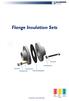 Insulation sets are used to limit corrosion in pipeline systems. Where dissimilar metals are present, the sets remove the possibility of the system acting as a galvanic cell and reduce the risk of galvanic
Nebraska Department of Roads Drainage and Erosion Control Manual December 2011 Appendix C: Pipe Material Policy Page C-1 PIPE MATERIAL POLICY
 Appendix C: Pipe Material Policy Page C-1 PIPE MATERIAL POLICY Policy: This policy will replace all previous policies regarding the selection of pipe material for cross drains, drive pipe, drop pipe, storm
Rehabilitation or Replacement? That Is The Question
 Rehabilitation or Replacement? That Is The Question Chris L. Windley PE Greg Anderson, PE 94th Annual Conference November 18, 2014 Overview Project Background Existing Sewer Condition Flow Projections
SECTION 02110 - ASBESTOS CEMENT PIPE REPAIRS, DEMOLITION, AND DISPOSAL
 SECTION 02110 - ASBESTOS CEMENT PIPE REPAIRS, DEMOLITION, AND DISPOSAL PART 1 - GENERAL 1.1 WORK INCLUDED IN THIS SECTION A. The WORK of this Section includes the repair, demolition, and disposal of asbestos