
Train Rhythms & Pentatonic Scales
|
|
|
- Jewel Campbell
- 9 years ago
- Views:
Transcription
1 Train Rhythms & Pentatonic Scales Richard Sleigh A simple, powerful system of breathing exercises to relax and release your rich natural tone, focus your energy, and give you a rock solid foundation in rhythm and melody patterns for the diatonic harmonica. 1

2 "Making the simple complicated is commonplace; making the complicated simple, awesomely simple, that s creative". - Charles Mingus Welcome to Train Rhythms and Pentatonic Scales! (Please read through at least once before starting) I used to take no pain, no gain way too seriously. I played major scales in all keys on my Marine Band harmonica, forcing the overblows and overdraws to get through the process. It felt like it would take a million years to get even halfway decent at it and that most of what I was learning would fall apart instantly if I actually tried to use it on stage. There is nothing wrong with doing this, BUT I got tired of beating myself up and looked for things to practice that would give me results I could feel and skills I could use NOW. When you seek, you find. I wish I had learned these scales and rhythms when I first started playing the harmonica. They have given me more control over my instrument than all the other methods I have used put together. Here is a list of some things you will find easier to do when you practice these exercises: Balance your in-breath with your out-breath. When you do this, your blow notes and draw notes match each other in volume, tone, and timing. Be able to play faster and smoother. Find it much easier to think of a note and find it instantly Have patterns to play that work over all sorts of keys and chord changes, and use three basic patterns to play and improvise in 6 positions on the diatonic harmonica. Relax and use control, not force, to play the harmonica. Be able to play longer with less effort. Smooth out the differences between three octaves of the standard diatonic harmonica so you can move freely between them. The train rhythms are one of the best ways to learn how to control your breath, tone, and volume so you can go from a whisper to a scream, keep a killer beat, and play all night long if you want to. Plus playing a steam train imitation on a harmonica is so much fun that it probably should be illegal! Pentatonic scales are the superhighways of the harmonica. Here s why- they get rid of the two notes that cause most of the problems in seven note scales. It s easier to add these extra notes when you want them than to subtract them when you don t. You can add notes to a pentatonic scale and create other scales, but if you remove one note from a pentatonic scale it is no longer a scale. That is how basic they are. Pentatonic scales have been around for thousands of years in folk music from every corner of the world. They also show up in Western Classical music in the work of Claude Debussy, Nicolo Paganini, and others. Jazz musicians, Pop, Rock and Blues players love pentatonic scales because they make it easy to shred over all sorts of chord changes. 2

3 The Train Rhythms The train rhythms are on the A harmonica and are focused on holes 1,2, &3. I prefer lower keys for chord exercises. You hear more of the rich overtones when you play chords on a low harp, so you hear a big difference between bass tone and treble tone that you don t get on the high harmonicas. There are two main things to focus on when you practice train rhythms: 1. Relaxing! Relax your shoulders and the muscles in your throat to allow the breath to move freely. Relax every muscle that you do not need to use, and you create space for big tone, free up energy, and clear your mind so it can focus on playing music. Check yourself in the mirror to see if your shoulders are rising or if you are tensing up in your face or throat. Get in touch with what it feels like to let your throat open up and make that your normal way of playing. 2. Support. Support your breathing with your lower abdominal muscles. Think of them as hands holding the lower part of your lungs. They hold the lower part of your lungs in place, so you move less air with more control. Use your diaphragm (the large muscle under your lungs) to move air and to change from in breath to out breath. Use the words Ha Ha for your basic rhythm. When you use the same words for in-breath and out-breath it is easier to develop the balance between in-breath and out-breath. Start slow and relaxed with your throat wide open. Breathe from the bottom of your lungs and make your throat an open channel. This is how the deepest tone is created. Build your tone from the bottom up, from the base of your lungs to your mouth and tongue. It takes a lot of persistence and attention to keep your throat and upper body loose and your midsection tight. A little effort daily is ten times more effective than once in a while efforts, of course. You will make the most of throat articulation or throat vibrato after you can control rapid shifts from the bottom of your lungs. Keep your attention on your lower abdominal muscles. Get a rhythm going from the bottom of your lungs and as you speed up the train rhythm you will naturally add throat articulation to increase definition. The goal is to go faster and faster from the bottom of your lungs before the throat muscles kick in. This exercise sets you up for smooth fast melodic playing with fat tone. When you can control your diaphragm breathing as I describe above, then you are ready to focus on throat articulation. Throat articulation is when you close off the air in your throat using the muscles that you use when you hold your breath or cough. The difference here is that you are opening and closing them in rhythm. If you articulate Ah Ah in breath followed by Ah Ah out breath this is a good way to get started. 3

4 Tracks 1 9 will give you practice on the basic train rhythm as described above. Tracks introduce the triplet rhythm 3 in breaths followed by 3 out breaths. This breathing pattern is tabbed out underneath the tab for the pentatonic scales exercises. The shuffle rhythm is based on the triplet rhythm the middle beat or breath is left out. Working with these rhythms will give you the basis for playing a convincing blues shuffle. Pentatonic Scale Exercises (on the C harmonica) 4

5 If you look at the tab on page 3, you will see three sections: -Major Pentatonic scale on the top, written in scale degrees. -Harmonica tab in the middle (number of hole followed by an arrow pointing up for blow note or an arrow pointing down for draw note) -Minor pentatonic scale on the bottom, written in scale degrees. The number 1 scale degree in the tablature is the first note of the scale you are playing when you follow the tablature. This chart also shows the draw notes in reverse type (white on black background) to make the breathing patterns stand out. This makes it very obvious why it is faster to play in second position than most other positions. You don t have as many shifts from blow notes to draw notes. The formula for the Major Pentatonic scale (in scale degrees) is: The formula for the minor pentatonic scale (in scale degrees) is: 1 b3 4 5 b7 1 What are Scale Degrees? Scale degrees use numbers to tell you what note to play. If you sing Do, Re, Mi, Fa, So, La, Ti, Do like the song Do, a deer, a female deer, Re, a touch of golden sun,, then you are singing the notes of a major scale. If you sing 1, 2, 3, 4, 5, 6, 7, instead of Do, Re, Mi, for the same notes then you are now singing scale degrees. 1 is the first note of the scale, 2 the second note of the scale, and on it goes. The beauty of this system is that once you learn the numbers and can think in the numbers, then they are the same for all of your harmonicas. Learn the first position major pentatonic scale on a C harmonica, and the same numbers describe the first position pentatonic scale degrees on a G harmonica, F# Harmonica, or any other standard diatonic harmonica. If you see a scale degree number with the flat (b) symbol before it, that note is ½ step lower than the scale degree note in a major scale. For example, in the A minor pentatonic scale, the 3 rd note scale degree is b3. This means that it is a half step lower than the 3 rd scale degree of the A major scale. New Jersey based blues harmonica player extraordinaire Dennis Gruenling has a book coming out soon that will really get into scale degrees and the harmonica in a big way. Dennis has been teaching and developing ways to think in scale degrees on the harmonica for years and this book really puts it all together in a system that is easy and fun to use. I know that the music theory and numbers can be boring, but it helps to learn enough of this to understand what you are doing and talk to other musicians. The beauty of these exercises is that you just get these scales drilled into your head so completely that you don t have to think about them anymore, they just become automatic. That is when they start to become really powerful. 5

6 The CD Tracks: 1. Train Rhythm #1 Basic breathing - slow tempo 2. Train Rhythm #2 Basic breathing medium tempo 3. Train Rhythm - Bass to treble tone 4. Train Rhythm - Treble to bass tone 5. Train Rhythms with dynamics changes 6. Train Rhythm - consistent up-tempo 7. Train Rhythm - Slow to fast to slow 8. Train Rhythm - Slow to medium to slow with steam 9. Train Rhythm - slow to medium & back with whistles 10. Triplet Train Rhythm slow tempo 11. Triplet Train Rhythm - faster tempo 12. Shuffle Train Rhythm - slow tempo 13. Shuffle Train alternating with Triplet Train Rhythms 14. C Major Pentatonic Scale - middle octave slow 15. C Major Pentatonic scale - top octave slow 16. C Major Pentatonic scale - upper two octaves 17. C Major Pentatonic scale - 1 st octave with bent note 18. C Major Pentatonic scale - Whole Harp 19. A minor Pentatonic Scale upper octave 20. A minor Pentatonic Scale 2 octaves, one bent note 21. A minor Pentatonic Scale whole harp 22. G Major Pentatonic Scale upper octave 23. G Major Pentatonic Scale lower octave with bent note 24. G Major Pentatonic Scale 2 octaves, one bent note 25. G Major Pentatonic Scale whole harp 26. E minor Pentatonic Scale upper octave 27. E minor Pentatonic Scale 2 octaves one bent note 28. E minor Pentatonic Scale whole harp 29. F Major Pentatonic Scale upper octave 30. F Major Pentatonic Scale lower octave 2 bent notes 31. F Major Pentatonic Scale - 2 octaves, 2 bent notes 32. F Major Pentatonic Scale whole harp 33. D minor Pentatonic Scale upper octave 34. D minor Pentatonic Scale - lower octave 2 bent notes 35. D minor Pentatonic Scale whole harp 36. Thoughts on selective relaxation 37. Thoughts on tone production 38. Expanding the use of Pentatonic scales 39. G Pentatonic scale exercise 40. Cross harp I IV V progression in 12 bars using G, C and Dm Pent. Scales nd or 5th position triplet pattern # nd or 5th position triplet pattern # st or 4th position triplet pattern # st or 4th position triplet pattern # th or 3rd position triplet pattern # th or 3rd position triplet pattern #2 47. C major pentatonic scale over chord changes (continued on next page) 48. E minor pentatonic scale patterns on C harp played over chord changes for Help Me (continued on next page) 6

7 49. Guitar jam track for Help Me in E minor 50. E minor pentatonic scale on C and A harmonica 51. E minor Pentatonic scale on A harmonica, holes E minor pentatonic scale on A harmonica with overblow on hole Thoughts on creating your own patterns and exercises nd position E minor pentatonic scale on A harp, entire harmonica nd position E blues scale on A harp, entire harmonica Once you master the basic patterns here for the scales, you can cut down the practice to the whole harp patterns for each scale. Try playing them tongue blocked as well as pucker. When you can tongue block the notes on one side of your mouth, try the other side! When you can do that, try playing the whole harp scales using different hand positions and mic / hand combinations. You will find it easier and easier to get anywhere you want to on the harp while maintaining the tone and hand position you want. The rhythms also grow with you keep working to increase your speed while maintaining relaxed shallow breathing and great timing. Try varying the accents Accent the first beat, the second beat, the third beat. You will never run out of ways to expand your techniques with these exercises. You will also have a great short workout to get you psyched and ready for a gig. Don t forget to contact me and arrange your phone consultation after you have worked on these exercises. Please feel free to contact me with comments or questions! There is no such thing as a stupid question! Tracks on the CD are advanced pattern exercises that cover the whole harmonica. They are all played on a C harmonica. If you want bite size or slower versions of these patterns, contact me & I will send you mp3s as attachments in an . Track 47 is the C major pentatonic scale played over a series of chord changes that include C, F, and G major chords and A, D, and E minor chords. This shows how well this one pattern can work with a variety of chord changes. Track 48 is an example of playing the E minor pentatonic scale as patterns over the chord changes for the songs Help Me or Green Onions. Track 49 is a jam track of the same song with no harmonica. Tracks 50, 51, and 52 take you to the next logical place with your pentatonic scales. Playing a minor pentatonic scale in second position. The example here is playing the E minor pentatonic scale on an A harmonica. This also leads you to playing an overblow on hole number 6 to complete the E minor pentatonic scale. This is a whole new ball game, and it helps a lot if your harmonica reeds are adjusted carefully for overblows. Even if you end up skipping the number 6 overblow, knowing this scale up and down the entire harmonica will give you plenty of new ideas for blues improvisation. 7

8 Thanks for your interest in my work! Richard Sleigh P.O. Box 23 Boalsburg PA Check out the website for updates on new developments in tools, harps and instruction, and contact information for Joe Filisko, James Gordon, and Richard Sleigh. Special thanks to Joe Filisko for his inspiration and guidance to me on train rhythms. Be sure to catch his masterful playing when you can. Details on his gigs can be found at: 8

9 Speed Techniques Most harmonica players I know would like to be able to play fast, to be able to "dump the clutch" from time to time, and some harmonica players have made it an obsession to see how fast they can go. It is all part of the game and the general advancement of the instrument. When I hear a harmonica player like Howard Levy, Charlie McCoy, James Conway, or Jason Ricci playing a thousand miles an hour, it is astonishing and seems impossible. But like most techniques, speed playing is a matter of focusing on a few core mechanical skills and then practicing more than anyone else. I can't make you practice more than anyone else, but I can make sure you know the mechanical or muscle techniques The train rhythm chord exercises install the relaxed shallow breathing that makes it easy to shift smoothly and quickly from blow to draw notes. Practice these exercises carefully to get that part of speed playing covered. Always practice up to the speed that you can handle smoothly, and then go a little faster, but quit or slow down when you start to lose control. You do not, repeat, do not want to practice mistakes or sloppy technique. This only slows your progress down. Practice your train rhythms daily, and your speed for the chord rhythms will keep going up AND your melodic playing will speed up as well. Are there other ways to pick up speed? Glad you asked and the answer is: Yes! One of the other mechanical problems for smooth, fast playing is how do you move from side to side quickly and efficiently. One of the most effective techniques for doing this is called the jaw flick. Charlie McCoy, Brendan Power, Mark Graham, and many other harmonica players use this technique to grab notes from side to side without the effort that it takes to move your whole face or the harmonica in a series of short moves. One of the earliest examples of this technique that I know of is from an Irish family of harmonica players, The Murphy's. So, what am I talking about? Try this: look in a mirror, put a harmonica in your mouth and play a long single note. You can use pursed lips or tongue blocking - it doesn't matter. Keep your upper lip in the same place while you move your lower jaw and lower lip to the right and left. This technique lets you play the notes on either side of your starting note with far less effort than if you move your entire mouth or the harmonica. That's it in a nutshell. Practice this technique with the pentatonic scales and patterns and watch your speed go up dramatically while your stress level goes down. When you get really good at this, it looks like an optical illusion - the notes are flying out at death-defying speed, but the harmonica seems to be standing still. Good fun! 9

10 Tablature for tracks The notes in these patterns tend to arrange themselves in triplet patterns, and there is more than one way to accent the notes. I have grouped the notes as closely as possible to the way I play them on the recordings. In some places, you will find groups of 4 or 5 notes. This is something that is hard to analyze, but it makes sense rhythmically. In other words, it feels right. These groups with the extra notes are at the point where the pattern changes direction because you are at the top of the harmonica. They set you up to go down with a corresponding pattern. Use the tablature and recordings as a way to get started and for reference, but remember - the real goal here is to play the patterns with a strong rhythm. It don t mean a thing if it ain t got that swing! Once you memorize the pattern, play without the recording. Concentrate on finding the groove and the timing of the notes will sort themselves out as you play the patterns. Try fitting the patterns into different beats and you will really start to master them. Have fun! Focus, but relax. If you want to play music, it really helps to be playful! How to read the tablature I use the same harmonica tab here as I used for the other page with the scales and rhythms. The arrows point up for blow notes and down for draw notes. A diagonal line across the arrow means a bent note. There is one slash for each half-step of a bend. For example: 2 is 2 draw bent down a whole step, or two half-steps. 2 is 2 blow Track # 41-2 nd or 5 th position triplet pattern # Track # 42 2 nd or 5 th position triplet pattern #

11 Track # 43 1 st or 4 th position triplet pattern # Track # 44 1 st or 4 th position triplet pattern # Track # th position or or 3 rd position triplet pattern # Track # th position or 3 rd position triplet pattern #

12 E minor Pentatonic Scale on A harp (2 nd Position minor Pentatonic Scale) and the Blues Scale I tabbed out the scale for the entire harmonica below.(the little circle above the number indicates an overblow or overdraw) The root note is 2 draw. ( Track # 54 on CD) Add one more note and you have a blues scale. Once again, the root note is 2 draw. Here it is tabbed out for the entire harmonica. (Track #55 on CD) As you continue to advance and get comfortable with the other major and minor pentatonic scales, you can begin to modify the other scales that you have learned. Once you get the notes in your head, it becomes easier to begin changing the other major pentatonic scales into minor pentatonic scales or blues scales. And once you know the basic process for creating patterns, you can take these scales and start creating patterns with them. P.S. Take a Stance! The following message is one that I sent out recently to my list that you can join by going to It relates to breathing exercises and how to bring up your consciousness and energy up for anything, including playing the harmonica Take a Stance! I know I promised you short s, but today I am breaking this rule. Cause I m a rebel. Don t fence me in. I have nothing to sell today but air. I hope you buy it cause it s freeeee. One of the things I do with the harmonica is bring it into the schools in my area with a couple of programs The History of the Harmonica and variations on Songs and Tales of Trains and Rails. Both of these programs include teaching students to breathe through the harmonica by playing steam train imitations. By the way, if you want to teach some kids how to play a steam train imitation, I can give you some great ideas 12

13 Part of the process of working with the schools is creating study guides for teachers to help students get the most out of my programs. The study guides highlight the educational value of the program. The study guides have all sorts of requirements that make them a pain to write most of the time, but they always make me dig deeper and find some good ideas. This time, I did more research on the human body and how the lungs work to be able to talk in new ways about breathing in general and how it ties in with the harmonica. I ended up realizing a couple of things that really blew my mind when I reflected on them. We all know in a vague sort of way that good posture is, well, good. But most of my life it has annoyed me when people tell me to straighten up, sit up, stop slouching. I associate it with a rigid, joy-free military sort of mind-set. Rebels slouch as one way of showing defiance to a world they see as pointless and unfair. Well, I live with three females that have all studied dance (my wife and two daughters), and they correct my posture a lot. Plus I have studied yoga and I should know better. But some part of my early associations with slouching being cool and standing up straight means you are some sort of dork still linger on in my mind in some form. I finally hit on a really good reason to maintain good posture, and if you can hang in here with me. I will relate it to playing the harmonica. It happened while I was trying to extract one more good reason for the schools to hire me to come in and work with their kids. I decided to sell them on the fact that I could teach the students a thing or two about their lungs and how to use them. If you look at the structure of the lungs, you learn some really interesting things. Your right lung has three lobes; the left side has two lobes with your heart taking up the rest of the space. The lungs are basically pyramid shaped, and wider at the bottom. The bottom of the lungs has a much greater air capacity than the top part of the lungs. Here is the kicker when you slouch, you instantly cripple your lung capacity. Even a mild slouch has a big effect, because you are collapsing the large area at the base of your lungs. Good posture gives your lungs a lot more room to expand with each breath, and so they do. Excellent posture gives you even more lung capacity. Add deep breathing to the mix, and you get the Rolls Royce of energy states: increased alertness, energy, AND a calmer, more focused state. More oxygen = more energy. Slower rate of breathing = relaxation. Slouching induces shallow breathing, which is closer to the panic state. Less oxygen = more anxiety and less energy. OK, so I look at videos of me playing the harp with a bullet mic and half the time I am bent over like someone that just got sucker punched in the gut. It is embarrassing. I have been working at changing this for years, as well as my overall posture. I even went through a series of Rolfing sessions a couple of years ago to get myself straightened up. It has been a real process for me, and I really believe it has something to 13

14 do with James Dean and Rebel Without a Cause, and other counterculture images I absorbed as a kid. So I am in the middle of writing this study guide, and my whole idea of what is cool and what is not cool suddenly shifts in a huge way. Oxygen is the breakfast of champions. Having full lung capacity is a powerful way to show up. And then I remember Dennis Gruenling and his stance when he plays the harmonica. This guy is the epitome of relaxed power in reserve. And he keeps his back straight most of the time. Find some of his youtube videos and you will see what I am talking about I hope that you don t have the posture issues that I have had to deal with, but if you do find yourself giving in to gravity and general laziness in this department, I am here to tell you it is worth the effort to Straighten Up and Fly Right! Check it out! It Don't Mean a Thing if it Ain't Got That Swing... When I started working with the train rhythms and pentatonic scales, I thought that I had a great way to build a foundation for playing the diatonic harmonica. I still do. But there was something missing. Some days I found it hard to practice the scales. I wanted something that was more interesting and fun. Playing scales can be boring and lifeless, unless you have a groove to get you going. Some days I had a groove, some days I did not. It finally hit me that I had fallen into the trap of focusing on the notes and forgetting- RYHTHM COMES FIRST!. Just playing notes and patterns that you hope to use some day is not enough. You need to be engaged. I looked for ways to make these exercises more fun AND more productive. Then I remembered a gig I did years ago playing fiddle tunes with a conga player. It was a blast! Drums give you a groove, make things move, and just naturally install a sense of rhythm all at the same time. With drums it also doesn't matter what key harmonica you are playing. I found a professional drummer and got some rhythm tracks to play along with. On the second CD, you will find a series of shuffle rhythm tracks. They go from 40% of the 14

15 original speed to 150% of the original speed. These rhythm tracks give you a way to practice every thing on the first CD with a drum track that will give you a groove to work with. Go to track #15 and listen to the examples of how to use the drum tracks for your practice. Since I started working with these drum tracks, I am having a lot more fun and I am also making more progress getting comfortable with new patterns. Plus it becomes a game to track your progress - how fast can you go before you lose the rhythm? When the drummer does the fills and then comes back to the main groove, are you still in sync? These drum tracks will get you on the good foot as James Brown likes to say, and let you know right away if you are dropping the beat. Plus, they were done by a real live human being (Pat Bautz at so you know they ve got soul. You can't get this kind of feel with a beat box. That's my story and I m sticking to it! When you find a part of a scale or pattern that is tricky for you, start with a slow drum track and work out at that speed until you have down, then move up a notch. Put these tracks on your ipod and you can have a portable practice lab in your pockets along with your favorite harmonica. Here are all the Tracks on CD #2: 1. Steam Train Imitation Techniques This gives you an overview of how to use the train rhythms and other effects to create a steam train imitation. This is a great solo harmonica piece to develop and when you get good at it, sometimes you can steal the show with it! 2. Tribute to Lonnie Glossen Steam Train Imitation. This is my version of a steam train imitation based on the great Lonnie Glossen's "Fast Passenger Train" 3. The Shuffle tracks (3 14) are a traditional Texas shuffle going from 40% - 150% of the original recorded speed % % % % % % % % % 15

16 % % 15. Ideas and examples for how to use the shuffle rhythms. More notes about the drum tracks on CD #2 Below are short descriptions of the different grooves. from the Drummer, Pat Bautz. 16. Cajun Two beat - Some Jump blues for Ya'll 17. Straight Eights (Funk) - A continuation of Straight 8ths 2 with just a little more spice added 18. Straight Eights 2 - Think Mustang Sally with some funk added. 19. Swinging Eights - Really a shuffel funk groove 20. Second Line Funk - Think of a cool new orleans evening down in the quarter. 21, Six-Eight (slow blues) - A slow blues standard 22. Straight Eights #1 - Straight eighth groove that works for so many things 23. Second Line 1 -The Bo Diddley groove 24. Waltz- A Traditional Texas Waltz 25. Rumba- A Rumba groove with some more spice added 26. Jeff's Funk - Think BB King's The Thrill is gone PAT BAUTZ Real Drum Studio Please let me know how you get on with the drum tracks. If you like them, let me know, and I will work at getting more grooves available. I find these drum tracks a lot of fun to play along with. I hope you do, too. Thanks for your interest in my work! Richard Sleigh [email protected] Check out the website for updates on new developments in tools, harps and instruction, and contact information for Joe Filisko, James Gordon, Richard Sleigh, and Johnny Bishop. I would like to give special thanks to Joe Filisko for his inspiration and guidance to me on train rhythms. Be sure to catch his masterful playing when you can. Details on his gigs can be found at: 16

17 17

How to create bass lines
 First rule: always memorize the melody of the song! Always. Always. Always. You should be able to sing and play it in the original key. If you really want to be totally extra, extra awesome, you will be
The concept and purpose of this program has four goals:
 Essential Music Theory for Fiddle is a program designed to help a first-year Fiddle student to learn how to play from the heart and rely less on printed sheet music and tablature. It is a practical application
Advanced Techniques for the Walkingbass
 Advanced Techniques for the Walkingbass I have seen guys with 5 string basses who can t get half the sounds that you are getting out of just three. -Buddy Fo of the Invitations If you have read the Beginners
Guitar Method Beginner: Book 1
 Guitar Method Beginner: Book 1 This book has been a project in the works for over a year, and now my dream of releasing it has finally come true. I would like to thank everyone who has encouraged or helped
Contents. Introduction. Musical Patterns. 1) The Secrets of Scales. 2) Play With the Patterns. 3) The Secrets of Chords. 4) Play With the Shapes
 Contents Introduction Musical Patterns 1) The Secrets of Scales 2) Play With the Patterns 3) The Secrets of Chords 4) Play With the Shapes 5) Every Semitone Has a Name 6) Build Your 2-Note Chords 7) The
Study Kit No 9. Aura Lee (Love Me Tender)
 Study Kit No 9 Aura Lee (Love Me Tender) Reharmonization Study Kit No. 9 Aura Lee Author: Rosablanca Suen Web: www.learnpianowithrosa.com Email: [email protected] Cover Design: Raymond Suen Copyright
A MUSICAL APPROACH TO LEARNING THE BANJO NECK
 A MUSICAL APPROACH TO LEARNING THE BANJO NECK Introduction One of the things that has become clear to me, after a number of years of playing banjo, is that if I have any hope of improvising creatively
family games Taking the kids swimming is a great way of making sure they re moving around and having fun. And to help you get them into
 swim family games Taking the kids swimming is a great way of making sure they re moving around and having fun. And to help you get them into the pool, we ve come up with loads of great swimming games to
GUITAR THEORY REVOLUTION
 GUITAR THEORY REVOLUTION The Major and Minor Pentatonic Scales Copyright Guitar Theory Revolution 2011 1 Contents Introduction 3 What are the Major and Minor Pentatonic Scales 3 Diagrams for all the Pentatonic
GEORGE GOODMAN S HARMONICA CHEAT SHEET By George Goodman. Copyright 2014 George Goodman GeorgeGoodman.com 2 nd Edition, License Notes
 GEORGE GOODMAN S HARMONICA CHEAT SHEET By George Goodman Copyright 2014 George Goodman GeorgeGoodman.com 2 nd Edition, License Notes Thank you for downloading this free ebook. Although this is a free book,
Learning to play the piano
 Learning to play the piano INTRODUCTION TO THE KEYBOARD... 2 STEPPING UP... 2 TREBLE SPACES... 7 BASS SPACES... 9 TIME SIGNATURE... 12 UP AND DOWN THE HILLS... 15 UP AND DOWN THE HILLS IN G MAJOR... 16
THE WINNING ROULETTE SYSTEM.
 THE WINNING ROULETTE SYSTEM. Please note that all information is provided as is and no guarantees are given whatsoever as to the amount of profit you will make if you use this system. Neither the seller
C Chord. Play these three notes at the same time with your right hand. These three notes make up a C chord.
 This book will get you playing keyboard instantly-whether you read music or not. We put together a band with some of our friends and recorded some really fun music. The Instant Keyboard CD has songs ready
Beginners Guide to the Walkingbass
 Beginners uide to the Walkingbass Learning to play a new instrument can open up a whole new world of creativity. It certainly has for me. The 3-string Walkingbass is an easy instrument to learn, yet it
Southern Gospel Collection. Rehearsal Tips By Dennis Allen
 Southern Gospel Collection Rehearsal Tips By Dennis Allen I m Standing on the Solid Rock with Leaning on the Everlasting Arms Southern Gospel music has several wonderful things going for it: memories and
Rehearsal Strategies A Night in Tunisia By Reginald Thomas, Professor of Jazz Piano Michigan State University, East Lansing, MI
 Rehearsal Strategies A Night in Tunisia By Reginald Thomas, Professor of Jazz Piano Michigan State University, East Lansing, MI Do you remember the first time you heard this jazz classic, A Night In Tunisia?
Grade 2 Lesson 3: Refusing Bullying. Getting Started
 Getting Started Lesson Concepts You can refuse to let bullying happen to you or to others. Being assertive is one way to refuse bullying. Key Words Refuse, assertive Objectives Students will be able to:
This PDF is designed to go right along with the DVD. Print it out and keep it in front of you while working through the lessons.
 Beginner Strumming This PDF is designed to go right along with the DVD. Print it out and keep it in front of you while working through the lessons. Introduction You don t need to know much to get started
California Treasures High-Frequency Words Scope and Sequence K-3
 California Treasures High-Frequency Words Scope and Sequence K-3 Words were selected using the following established frequency lists: (1) Dolch 220 (2) Fry 100 (3) American Heritage Top 150 Words in English
2010 Barry Liesch ch8 Drumming Guide for 10 Worship Styles 1
 2010 Barry Liesch ch8 Drumming Guide for 10 Worship Styles 1 9 pages 63 examples Chapter 8 Drumming Guide for 10 Worship Styles This chapter explores ways drumming can be performed in ten worship styles.
Suitable for: Beginners with absolutely no previous experience. Beginners who appear particularly shy or nervous.
 Lesson plan 1: CHORD STRUMMING FOR THE BEGINNER Suitable for: Beginners with absolutely no previous experience. Beginners who appear particularly shy or nervous. Prerequisites: None General Objective:
How To Play The Harmonica
 How To Play The Harmonica CONTENTS 1. What kind of harmonica should I use? 2. How do I use the numbers over the words to the songs? 3. So what if I am not familiar with a song? 4. So how do I improve
BEGINNER GUITAR - LESSON 1
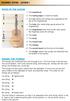 BEGINNER GUITAR - LESSON 1 PARTS OF THE GUITAR 1- The headstock. 2- The tuning pegs or machine heads. 3- The nut (where the strings are supported at the top of the fingerboard). 4- The frets (the metal
THE CHOIR: SING WHILE YOU WORK. THE BASICS OF SINGING bbc.co.uk/thechoir
 THE BASICS OF ING THE BASICS OF ING Gareth Malone Welcome to The Choir: Sing While You Work guide to singing. If you re reading this, congratulations, as you have either already taken that first step and
PERPETUAL MOTION BEBOP EXERCISES
 PERPETUAL MOTION BEBOP EXERCISES Jason Lyon 2007 www.opus28.co.uk/jazzarticles.html Bebop is much more than just one particular style, it is pretty much the grammar of modern jazz, and bebop licks are
GUITAR THEORY REVOLUTION. Part 1: How To Learn All The Notes On The Guitar Fretboard
 GUITAR THEORY REVOLUTION Part 1: How To Learn All The Notes On The Guitar Fretboard Contents Introduction Lesson 1: Numbering The Guitar Strings Lesson 2: The Notes Lesson 3: The Universal Pattern For
Beginner Guitar Level I
 Welcome to Beginner Guitar Level I E A D G B E * Please fill out the student form * Who is this guy? E A D G B E Logistics, etc.. sign in / out everyday start promptly -> don t be late! breaks / bathrooms
Jim Hall Chords and Comping Techniques
 Jim Hall Chords and Comping Techniques Jazz guitar comping is an art form in its own right. The comping rhythms, melodies, and voicings of the greatest Jazz guitarists are delightful to listen to, with
Table of Contents. Creating Simple Solos Dan Denley's
 Cr eat i ngsi mpl esol os T M byda ndenl ey TheQui c kandeas ywayt opl ay Gui t arsol osfr om Sc r at c h Table of Contents Read This First... 2 How To Use This Course... 3 Pentatonic MINOR Scale... 4
The Basic Jazz Guitar Chord Book
 The Basic Jazz Guitar Chord Book By Dirk Laukens / January 25, 2005 Hello and welcome to the basic jazz guitar chord book, brought to you by www.jazzguitar.be. How are guitar chords built? What makes a
acousticguitarworkshop.com RICK PAYNE SP FINGERSTYLE BLUES More chapters in the story of how to play Fingerstyle Blues
 acousticguitarworkshop.com RICK PAYNE SP FINGERSTYLE BLUES More chapters in the story of how to play Fingerstyle Blues 2 Fingerstyle Blues 2 - Contents Welcome to Fingerstyle Blues 2! In the first course,
How to Read Music Notation
 How to Read Music Notation The New School of American Music IN JUST 30 MINUTES! C D E F G A B C D E F G A B C D E F G A B C D E F G A B C D E F G A B C D E 1. MELODIES The first thing to learn about reading
Songwriting. Geniuses. for. 25 Tips for the Genius in Everyone. By Gene Burnett
 Songwriting for Geniuses 25 Tips for the Genius in Everyone By Gene Burnett Songwriting for Geniuses iii Introduction This little book is entitled Songwriting For Geniuses and is comprised of various tips
PIANOWEB.com ( 800 ) 327-4266
 Mission Statement: Jazz Piano Lessons To Teach, in their home, on their own piano/keyboard, anywhere in the world, students how to play jazz piano, through a Non Traditional approach which emphasizes Musical
Would You Like To Earn $1000 s With The Click Of A Button?
 Would You Like To Earn $1000 s With The Click Of A Button? (Follow these easy step by step instructions and you will) This Version of the ebook is for all countries other than the USA. If you need the
A SPECIAL PROGRAM OF DISTRICT # 8 NY DAN CAVALLO DISTRICT ADMINSTRATOR
 A SPECIAL PROGRAM OF DISTRICT # 8 NY DAN CAVALLO DISTRICT ADMINSTRATOR Tips for T-Ball & Coach/Pitch Although they are two separate divisions of League, they are so close in age grouping that many of the
Time allowed: 1 hour 30 minutes
 SPECIMEN MATERIAL GCSE MUSIC 8271 Specimen 2018 Time allowed: 1 hour 30 minutes General Certificate of Secondary Education Instructions Use black ink or black ball-point pen. You may use pencil for music
Everyone cringes at the words "Music Theory", but this is mainly banjo related and very important to learning how to play.
 BLUEGRASS MUSIC THEORY 101 By Sherry Chapman Texasbanjo The Banjo Hangout Introduction Everyone cringes at the words "Music Theory", but this is mainly banjo related and very important to learning how
Developing a cohesive walking bass line 2005 Eric Elias
 Developing a cohesive walking bass line 00 Eric Elias Developing a walking bass lines is a subject that many of my students (guitarists and bassists alike) have been interested in. If you are a jazz player,
The Chord Book - for 3 string guitar
 The Chord Book - for 3 string guitar Prepared for: 3 string fretted cbg Prepared by: Patrick Curley Forward This short ebook will help you play chords on your 3 string guitar. I m tuned to G, if you re
Free Report. My Top 10 Tips to Betting Like a Pro With Zero Risk
 Free Report My Top 10 Tips to Betting Like a Pro With Zero Risk Legal Disclaimer: EVERY EFFORT HAS BEEN MADE TO ACCURATELY REPRESENT THIS PRODUCT AND IT'S POTENTIAL. EVEN THOUGH THIS INDUSTRY IS ONE OF
Cathy Benedict, Ed.D Florida International University NAfME Nashville, 2013 Doing Away With Classroom Management: Teaching for Musical Transitions
 Cathy Benedict, Ed.D Florida International University NAfME Nashville, 2013 Doing Away With Classroom Management: Teaching for Musical Transitions The following can be made appropriate for 1st-5th grade
BBC LEARNING ENGLISH 6 Minute English The Proms
 BBC LEARNING ENGLISH 6 Minute English The Proms This is not a word-for-word transcript Hello and welcome to 6 Minute English. I'm and I'm. Hello. Now,, are you doing anything interesting tonight? Well,
Ep #19: Thought Management
 Full Episode Transcript With Your Host Brooke Castillo Welcome to The Life Coach School podcast, where it s all about real clients, real problems and real coaching. And now your host, Master Coach Instructor,
Swinginʼ Transitions For Drummers
 By Keith Hall Swinginʼ Transitions For Drummers It is safe to say that all of us have either listened to or played in a young jazz group and that we are well aware of that awkward point in the music...when
Lesson Plans: Stage 3 - Module One
 Lesson Plans: Stage 3 - Module One TM Music Completes the Child 1 Stage Three Module One Contents Week One Music Time Song 2 Concept Development Focus: Tempo 4 Song Clap Your Hands 5 George the Giant Pitch
Supplemental Activity
 Materials: Test-Taking Skills Assessment on page 80 in this workbook (page 19 in the student workbook) Test-Taking Tips on page 81 in this workbook (page 20 in the student workbook) Tactics for Studying
2017 NAfME All-Northwest Jazz Audition Materials Saxophones and Brass
 2017 NAfME All-Northwest Jazz Audition Materials Saxophones and Brass Track 1 Track 2 Track 3 Basic Audition The following three tracks are required of all wind applicants ALTO SAXOPHONE (pages 5-6) TENOR
Handale Primary School Music Curriculum Year EYFS ( 4-5 year olds)
 Handale Primary School Music Curriculum Year EYFS ( 4-5 year olds) Music at EYFS stage reflects the different ways in which children learn and engage with other people. Many examples of stories, songs
Bass Clarinet 101, Bass Clarinet for Dummies. By Edward Palanker
 Bass Clarinet 101, Bass Clarinet for Dummies By Edward Palanker The bass clarinet is a unique member of the clarinet family. If you don t voice it correctly in the upper register you re in for a surprise,
Please Read This Page First
 Mandolin and Fiddle Improvisation Using the Chord Tone Scale Copyright 2008 by Pete Martin Please Read This Page First This book is distributed using the shareware system. Try it out, if you like it please
Tutorial 1J: Chords, Keys, and Progressions
 Tutorial 1J: Chords, Keys, and Progressions Welcome! In this tutorial you ll learn how to: Other Level 1 Tutorials 1. Relate chords with keys 1A: Virtual Practice 2. Use basic blues progressions & blues
Fry Phrases Set 1. TeacherHelpForParents.com help for all areas of your child s education
 Set 1 The people Write it down By the water Who will make it? You and I What will they do? He called me. We had their dog. What did they say? When would you go? No way A number of people One or two How
Whiskey Before Breakfast
 Flatpicking uitar Magazine Free Lesson une 1 Whiskey Before Breakfast by Mickey braham Hello and welcome once again to Flatpicking uitar Magazine s free lesson portion of our monthly newsletter Each month
Getting Started With Facebook
 How to Build a Facebook Guitar Teacher Page www.rgt.org By: Dr. Matthew Warnock As you may already know, Facebook has quickly become a hotbed for musicians and guitar teachers to connect with fans/students,
Standard 1: Skills and Techniques 1
 1 Standard 1: Skills and Techniques 1 CB.1.1 Instrument Knowledge Skills CB.1.1.1 Instrument in good playing condition- including proper assembly, reed care, and cleaning. CB.1.2 Playing Posture Skills
Learning To Play The Guitar An Absolute Beginner s Guide By Anthony Pell
 Learning To Play The Guitar An Absolute Beginner s Guide By Anthony Pell http://www.learningtoplaytheguitar.net All Rights Reserved. No part of this publication may be reproduced in any form or by any
Coaching Tips Tee Ball
 Coaching Tips Tee Ball Tee Ball Overview The great thing about tee ball is that there are very few rules to learn and that the game is all about involving lots of kids. It s about making sure all players
Module 6.3 Client Catcher The Sequence (Already Buying Leads)
 Module 6.3 Client Catcher The Sequence (Already Buying Leads) Welcome to Module 6.3 of the Client Catcher entitled The Sequence. I recently pulled over 300 of the local lead generation explosion members
Parameters for Session Skills Improvising Initial Grade 8 for all instruments
 Parameters for Session Skills Improvising Initial for all instruments If you choose Improvising, you will be asked to improvise in a specified style over a backing track that you have not seen or heard
Phonics. High Frequency Words P.008. Objective The student will read high frequency words.
 P.008 Jumping Words Objective The student will read high frequency words. Materials High frequency words (P.HFW.005 - P.HFW.064) Choose target words. Checkerboard and checkers (Activity Master P.008.AM1a
The Dance Lesson. A good dance lesson should contain some or all of the following:-
 The Dance Lesson The Primary School Curriculum says:- Dance in education involves the child in creating, performing and appreciating movement as a means of expression and communication. Dance differs from
unplugged let s jam! $9 95 take your playing to the next level full band on your: full band on your: guitar keyboard percussion saxophone
 unplugged let s jam! take your playing to the next level full band on your: guitar keyboard percussion saxophone jam jam along along with with a full band on your: flute voice harmonica I N C L U D E S
The Easy Way To Flipping Domain Names
 The Easy Way To Flipping Domain Names Published by http://rebirthmediagroup.com Disclaimer: The rights of this ebook are owned by Rebirth Media Group. You are not allowed to copy, reprint, or sell this
Lesson 26: Reflection & Mirror Diagrams
 Lesson 26: Reflection & Mirror Diagrams The Law of Reflection There is nothing really mysterious about reflection, but some people try to make it more difficult than it really is. All EMR will reflect
2015 Pride Percussion TECHNIQUE & EXERCISE PROGRAM
 2015 Pride Percussion TECHNIQUE & EXERCISE PROGRAM Table of Contents Technique..3 Matched Grip Traditional Grip Bass Drum Grip Set Positions/Playing Areas..6 Snare Drum Keyboards Tenor Drums Bass Drum
PUSD High Frequency Word List
 PUSD High Frequency Word List For Reading and Spelling Grades K-5 High Frequency or instant words are important because: 1. You can t read a sentence or a paragraph without knowing at least the most common.
Intervals Harmony Chords and Scales. Workbook
 Intervals Harmony Chords and Scales Workbook Introduction In writing this book I was able to make many discoveries for myself both in methods of teaching and basic use of music theory. In every discipline
Helping your child with Reading
 Helping your child with Reading Some ways that you can support. Getting Started Sharing books - We teach phonics to help our children learn to read and write and in order to do this successfully they need
A Step By Step Guide On How To Attract Your Dream Life Now
 A Step By Step Guide On How To Attract Your Dream Life Now This guide is about doing things in a step by step fashion every day to get the results you truly desire. There are some techniques and methods
Kickass JV Interview Generator
 Kickass JV Interview Generator How to make it easy and fun for your JV partners to interview you during teleseminars and webinars!. Any time I am invited to interview a JV partner to my audience I find
Easy Casino Profits. Congratulations!!
 Easy Casino Profits The Easy Way To Beat The Online Casinos Everytime! www.easycasinoprofits.com Disclaimer The authors of this ebook do not promote illegal, underage gambling or gambling to those living
Definitive Piano Improvisation Course
 Definitive Piano Improvisation Course By Yoke Wong 2007 Harmony and Melody Studio Inc Contents Pages Introduction Pentatonic Scale Improvisation 1 Country Western Style Made Easy 4 Left Hand Harmonizing
Multiplication Rules! Tips to help your child learn their times tables
 Multiplication Rules! Tips to help your child learn their times tables 1. Have fun! We want relaxed kids and plenty of giggles. 2. Go slowly and relax. 3. Do the preliminary review, all the preliminary
Chapter 2 How To Cheat A Barre Chord
 Chapter 2 How To Cheat A Barre Chord Now that you ve learned a variety of chords in different positions, there are times that we want to eliminate some of the notes. I know, in the previous chapter I explained
FREE CHORD BOOK Introduction
 FREE CHORD BOOK Introduction Hi, I m Andy and welcome to my chord book for beginners! Most chord books are packed full hundreds of chord diagrams, so many in fact it could take literally years to play
WHY DO WE GET ANGRY? EVERYONE FEELS ANGRY SOMETIMES
 FEELING ANGRY? WHY DO WE GET ANGRY? There are lots of things that can make us angry. Here are a few examples... EVERYONE FEELS ANGRY SOMETIMES It s normal and healthy to get angry when there is a good
Put Your Song to the Tests
 Put Your Song to the Tests By Pat & Pete Luboff We ve been listening to songs in a professional capacity for over 20 years, as songwriting consultants, workshop leaders, contest judges and Taxi screeners.
Guitar Rubric. Technical Exercises Guitar. Debut. Group A: Scales. Group B: Chords. Group C: Riff
 Guitar Rubric Technical Exercises Guitar Debut In this section the examiner will ask you to play a selection of exercises drawn from each of the three groups shown below. Groups A and B contain examples
Glossary Of Diatonic Harmonica Techniques Preparation by JP Allen & Evan Curtain - Presented by Harmonica.com
 Glossary Of Diatonic Harmonica Techniques Preparation by JP Allen & Evan Curtain - Presented by Harmonica.com Below you will find a list of the most common diatonic harmonica techniques. I have organized
FIND YOUR FAST 8-WEEK MILE TRAINING PROGRAM
 FIND YOUR FAST 8-WEEK MILE TRAINING PROGRAM YOUR FASTEST MILE STARTS NOW INSPIRED BY NIKE S FASTEST RUNNERS AND DEVELOPED BY NIKE+ RUN CLUB COACHES, THIS EIGHT- WEEK PROGRAM INCLUDES WORKOUTS, MUSIC AND
The Top 5 Lessons Every Small Business Owner Needs to Learn to be Successful in Today s Unforgiving Business Climate TOP
 5The TOP LESSONS EVERY SMALL BUSINESS OWNER NEEDS TO LEARN TO BE SUCCESSFUL IN TODAY S UNFORGIVING BUSINESS CLIMATE Lessons learned Change happens to you or with you We ve been working with small businesses
Foundation Course. Study Kit No 1. Away In A Manger
 Foundation Course Study Kit No 1 Away In A Manger Reharmonization Study Kit No. 1 Away In A Manger Author: Rosablanca Suen Web: www.learnpianowithrosa.com Email: [email protected] Cover Design:
LearnToRun10K Program
 LearnToRun10K Program So you ve decided you d like to LearnToRun10K! If you ve never run before, or if you ve not done any running for 3 months or longer, then this is the program for you! You ll notice
Qigong. Ba Duan Jin. The Eight Pieces of Brocade
 Qigong Ba Duan Jin The Eight Pieces of Brocade by Col and g Hamilton Yiheyuan Martial Arts Contents Page Introduction 2 Preparation 2 1. Hold up the Sky 3 2. The Archer 4 3. Join Heaven and Earth 5 4a.
GRADE THREE THEORY REVISION
 GRADE THREE THEORY REVISION Note Pitches Use flashcards to make sure you know all your notes including leger lines. Whenever you name a note remember to check the clef, keysignature, and for accidentals
How To Proofread
 GRADE 8 English Language Arts Proofreading: Lesson 6 Read aloud to the students the material that is printed in boldface type inside the boxes. Information in regular type inside the boxes and all information
Playing By Ear Who Can Play By Ear?... 2 How To Play By Ear... 3 Happy Birthday To You (By Ear)... 4 Match Tones... 5 Add Chords...
 Playing By Ear Who Can Play By Ear?... 2 How To Play By Ear... 3 Happy Birthday To You (By Ear)... 4 Match Tones... 5 Add Chords... 6 Allcanplay TM Piano * MaxLearning.Net 2009 * Playing By Ear * 4/6/2009
Team Defending. Understand the terms that describe the roles of players and parts of the field. The person you are marking.
 Team Defense is a Dance Team Defending Dancers must learn individual dance steps, but must also learn to dance in rhythm with other dancers, and must never miss a beat. Team defense is a dance. The individual
The Tuning CD Using Drones to Improve Intonation By Tom Ball
 The Tuning CD Using Drones to Improve Intonation By Tom Ball A drone is a sustained tone on a fixed pitch. Practicing while a drone is sounding can help musicians improve intonation through pitch matching,
Brain Yoga - Instruction Guide. Congratulations!
 Brain Yoga - Instruction Guide Brain Yoga offers real help to those with learning difficulties, autism, Alzheimer s disease and anyone whose memory is not as sharp as it should be. This report is the companion
Fun Learning Activities for Mentors and Tutors
 Fun Learning Activities for Mentors and Tutors Mentors can best support children s academic development by having fun learning activities prepared to engage in if the child needs a change in academic/tutoring
Companion Workbook to the bonus section with Glenn Pearce
 Companion Workbook to the bonus section with Glenn Pearce Page 1 of 21 Page 2 of 21 Chapter 1 leadworship.com title page Chapter 2 main menu and Paul s introduction Electric guitar players - what to play
Keyboard FUNdamentals James Lambert & Judy Moonert
 1 I. BASIC MUSIC THEORY A beginning mallet percussionist must memorize the 12 major scales. These scales relate to other harmonic information that the student will need. With each marimba bar one half
Tee Ball Practice Plans and Drills
 Tee Ball Practice Plans and Drills Introduction: Whether you are a parent whose child is about to start Tee Ball for the first time or you are about to take on the responsibility of coaching a Tee Ball
The Fruit of the Spirit is Love
 The Fruit of the Spirit is Love Pre-Session Warm Up (Galatians 5:22-23) Today we are going to learn more about the fruit of the Spirit called, Love. What do you think of when you hear the word love? A
Self-Acceptance. A Frog Thing by E. Drachman (2005) California: Kidwick Books LLC. ISBN 0-9703809-3-3. Grade Level: Third grade
 Self-Acceptance A Frog Thing by E. Drachman (2005) California: Kidwick Books LLC. ISBN 0-9703809-3-3 This Book Kit was planned by Lindsay N. Graham Grade Level: Third grade Characteristic Trait: Self Acceptance
How to Practice Scales
 How to Practice Scales Step #1). Make a 5-Day Practice Plan In order to cycle through as many areas of scale practice as possible (and not get bored) it is important to have a plan. Your plan should cover
Music Theory for Cajun Accordionists
 1 Music Theory for Cajun Accordionists Right off the bat, I need to make clear that I m no expert; far from it. I ve had to piece together what little I know about music theory from here and there, mostly
My Favorite Futures Setups. By John F. Carter www.tradethemarkets.com
 My Favorite Futures Setups By John F. Carter www.tradethemarkets.com Recognizing Momentum Incredibly easy to do in hindsight. Get in Before the Move? I m a big believer in not chasing markets. By the time