
Bladder Wall Thickness on Ultrasonographic Cystourethrography
|
|
|
- Anne Rosamond Murphy
- 9 years ago
- Views:
Transcription
1 Article Bladder Wall Thickness on Ultrasonographic Cystourethrography Affecting Factors and Their Implications Jenn-Ming Yang, MD, Wen-Chen Huang, MD Objective. To explore factors affecting bladder wall thickness on ultrasonographic cystourethrography in female patients with lower urinary tract symptoms. Methods. The records of 492 female patients with lower urinary tract symptoms who had undergone a urodynamic study and ultrasonography of the lower urinary tract and who had normal urinalysis findings, negative urine culture results, or both were identified from our urogynecologic database. These included 248 patients with urodynamic stress incontinence, 38 with detrusor overactivity, 39 with mixed incontinence, 35 with a hypersensitive bladder, 42 with voiding difficulty, and 90 with normal urodynamic findings. Results. Age, resting bladder neck angle, urethral mobility, and maximum urethral closure pressure were significantly associated with bladder wall thickness at the trigone and dome. Bladder wall thickness at the trigone was correlated with that at the dome (P <.0001). Bladder wall thickness at the trigone was positively correlated with pressure transmission ratios in the first and second quarters of the urethra (P <.0001; P =.002, respectively), whereas that at the dome was positively correlated with intravesical pressure at maximum flow and with detrusor opening pressure (P =.027; P =.046, respectively). Age and intravesical pressure at maximum flow were independently associated with bladder wall thickness at the trigone and dome (P =.007; P =.028), respectively. A thickened bladder wall was a common finding in female lower urinary tract symptoms, except in the patients with a hypersensitive bladder. Conclusions. Demographic, anatomic, and urodynamic factors may affect the bladder wall thickness at the trigone, dome, or both. Key words: bladder wall thickness; lower urinary tract symptoms; urodynamics. Abbreviations LUTS, lower urinary tract symptoms Received January 16, 2003, from the Division of Urogynecology, Department of Obstetrics and Gynecology, Mackay Memorial Hospital, Taipei Medical University, Taipei, Taiwan, Republic of China (J.-M.Y.); and Department of Obstetrics and Gynecology, Cathay General Hospital, Taipei, Taiwan, Republic of China (W.-C.H.). Revision requested February 25, Revised manuscript accepted for publication March 4, Address correspondence and reprint requests to Jenn-Ming Yang, MD, Division of Urogynecology, Department of Obstetrics and Gynecology, Mackay Memorial Hospital, 92 Chung-Shan N Rd, Section 2, Taipei 104, Taiwan, Republic of China. [email protected]. Ultrasonography has recently replaced other radiologic methods in the anatomic evaluation of urinary incotinence 1,2 and has been used to explore the morphologic implications of female lower urinary tract symptoms (LUTS). 3,4 Khullar et al 3 reported that an increase in mean bladder wall thickness is unique to detrusor overactivity. With a cutoff value of 5 mm, bladder wall thickness had sensitivity of 84% and specificity of 89% for detecting detrusor overactivity. 3 Khullar et al 3 speculated that the increased bladder wall thickness in this disorder is secondary to detrusor hypertrophy associated with increased isometric detrusor contraction, urethral sphincter volume, and urethral closure pressure. A cystocele causing urethral obstruction has also been cited as a cause of a thickened bladder wall. Our findings from a previous study, 4 however, were different. In an investigation of the morphologic features of 2003 by the American Institute of Ultrasound in Medicine J Ultrasound Med 22: , /03/$3.50

2 Bladder Wall Thickness on Ultrasonographic Cystourethrography 1049 female patients with a single urodynamic diagnosis of urodynamic stress incontinence, detrusor overactivity, or hypersensitive bladder, increased mean bladder wall thickness was present in the first 2 conditions but not in the hypersensitive bladder. Age, parity, menopause, bladder neck position, and urethral mobility may all exert different effects on bladder wall thickness at the trigone, dome, or both. Urethral hypermobility may distort the urethral axis and perhaps may result in a thickened bladder wall. Alteration of the anatomic structures of the lower urinary tract may result in functional disorders and vice versa. When the urethra, which is the urinary conduit and controller of continence, malfunctions, it may cause urinary symptoms and may induce subsequent morphologic changes in the lower urinary tract. Anatomically, the bladder trigone and dome develop from different embryologic structures, and physiologically, they have different functions. 5 Therefore, changes in bladder wall thickness at either the trigone or dome may reflect different pathophysiologic mechanisms. The aim of this study was to explore the association between a thickened bladder wall at either the trigone or dome on ultrasonography and demographic, anatomic, and urodynamic variables. We postulated that different alterations in urethral function may cause different morphologic changes in the bladder wall. Materials and Methods We retrospectively reviewed the records of consecutive female patients who visited our urogynecologic clinic from August 1996 to August Those who had undergone a urodynamic study, ultrasonographic evaluation of the lower urinary tract, urinalysis, urine culture, or a combination thereof were identified. Records were excluded from the study if there was evidence of (1) hematuria, recurrent dysuria, abnormal urinalysis findings, or positive urine culture results; (2) a history of pelvic surgery, neuropathy (central or peripheral), diabetes mellitus, or radiation therapy; or (3) greater than 50 ml of residual urine on urodynamic studies, ultrasonographic studies, or both. 6 With the patient in a supine position and with a comfortably full bladder, transvaginal ultrasonographic cystourethrography was performed with a Toshiba SSA-260A scanner (Toshiba Medical Systems Co, Ltd, Tokyo, Japan) and a 5.0-MHz vaginal probe. The morphologic characteristics of the lower urinary tract were evaluated at rest and during a maximum Valsalva maneuver. Data recorded included the bladder neck position, development of bladder neck funneling, opening of the proximal urethra, and formation of a cystocele, prolapse, or herniation of the bladder base below the urethrovesical junction. 4 The images were frozen at rest and during the maximum Valsalva maneuver for measurement of the bladder neck position. Two lines were drawn on the frozen images, 1 from the lower border of the pubic symphysis to the bladder neck (internal urethral orifice) and the other denoting the midline of the pubic symphysis. The position of the bladder neck was quantified by measuring the angle between these 2 lines. The rotational angle was defined as the difference between the angles during resting and straining. After the bladder emptied, bladder wall thickness at the trigone and dome was measured at the thickest part, perpendicular to the luminal surface (Fig. 1). Urodynamic studies included spontaneous uroflowmetry, filling and voiding phase cystometry, and a urethral pressure profile during both resting and straining. Cystometry was performed at a filling rate of 80 ml/min with the patient seated upright in a birthing chair. The intravesical pressure was measured with a fluid-filled catheter (4.5F), and the intra-abdominal pressure was measured transrectally with a latex rectal catheter. A voiding study was carried out with the bladder filled to its maximum cystometric capacity, the patient in the seated position, and the catheters still in place. Static and stress urethral pressure profiles were obtained with the patient sitting at 45. Data were recorded continuously on a Medical Measurement Systems UD-2000 multichannel recorder (Medical Measurement Systems BV, Enschede, the Netherlands). The parameters examined for association with bladder wall thickness included age, gravidity, parity, menopausal status, bladder neck position at rest and during straining, urethral mobility (i.e., rotational angle of the bladder neck), and urodynamic variables on the pressure flow study and urethral pressure profile (Table 1). Associations between bladder wall thickness at either the dome or trigone and each examined parameter were summarized with the Pearson or Spearman rank correlation coefficient. Multivariate analysis was used to evaluate the 778 J Ultrasound Med 22: , 2003

3 Yang and Huang influence of various parameters on bladder wall thickness. Analysis of variance was used to test for differences among multiple groups for continuous measured variables. Multiple comparisons were conducted with the Scheffé test if means varied significantly. To test the distribution of discrete variables, the χ 2 test was used. All analyses were conducted in SPSS 10.0 for Windows (SPSS Inc, Chicago, IL). P <.05 was considered significant. The terminology, definitions, and units conformed to the standards recommended by the International Continence Society, 7 except where specifically noted. Results The records of 492 patients were evaluated in this study. These included 248 patients with a diagnosis of urodynamic stress incontinence, 38 with detrusor overactivity (having a detrusor contraction in association with urgency, urinary leakage, or both during the filling phase of cystometry), 39 with mixed incontinence (having criteria for both urodynamic stress incontinence and detrusor overactivity), 35 with a hypersensitive bladder (having a volume at the first desire to void of Figure 1. Measurement of bladder wall thickness at the trigone (T) and dome (D). The margin of the anterior bladder wall is obscured by an acoustic shadow originating from the pubic symphysis (sp); cx indicates cervix; u, urethra; and Ut, uterine corpus. Table 1. Urodynamic and Anatomic Findings in 492 Female Patients With LUTS Variable Mean ± SE Range Urodynamic investigation Pressure flow study Maximum flow rate, ml/s 22.2 ± Time to maximum flow, s 26.5 ± P ves O 48.9 ± P det O 25.8 ± Micturition resistance O/(mL/s) ± Intravesical opening pressure O 50.2 ± Detrusor opening pressure O 25.9 ± Urethral pressure profile Functional profile length, mm 30.4 ± Maximum urethral closure pressure O 71.0 ± Length to maximum urethral pressure, mm 15.7 ± AUC total O cm 158 ± AUC proximal O cm 85 ± Q 1, % 103 ± Q 2, % 102 ± Ultrasonographic evaluation Resting bladder neck angle, 97.8 ± Straining bladder neck angle, ± Rotational angle of the bladder neck, 50.2 ± Bladder wall thickness at trigone, mm 5.8 ± Bladder wall thickness at dome, mm 5.9 ± AUC proximal indicates proximal area under the urethral pressure profile curve; AUC total, total area under the urethral pressure profile curve; P det, detrusor pressure at maximum flow; P ves, intravesical pressure at maximum flow; Q 1, pressure transmission ratio in the first quarter of the urethra; and Q 2, pressure transmission ratio in the second quarter of the urethra. J Ultrasound Med 22: ,

4 Bladder Wall Thickness on Ultrasonographic Cystourethrography <100 ml and a maximum cystometric capacity of <300 ml), 8 42 with voiding difficulty (having a maximum flow rate of <15 ml/s for patients younger than 60 years or <10 ml/s for patients older than 60 years), 9 and 90 with normal findings from urodynamic studies. The mean age of the subjects was 48.1 years (range, years); the mean gravidity was 4 (range, 0 15); and the mean parity was 2.9 (range, 0 8); 177 women (36%) were postmenopausal. The urodynamic results and ultrasonographic findings are shown in Table 1. Factors Affecting Bladder Wall Thickness Table 2 shows the correlation between bladder wall thickness and demographic, anatomic, and urodynamic variables by univariate and multivariate analyses. Bladder wall thicknesses at the trigone and dome correlated with each other. Age, resting bladder neck angle, urethral mobility, and maximum urethral closure pressure were associated with bladder wall thickness at both the trigone and dome. Urodynamically, thickness at the trigone was positively associated with pressure transmission ratios in the first and second quarters of the urethra; thickness at the dome was positively associated with intravesical pressure at maximum flow and with detrusor opening pressure. Age and intravesical pressure at maximum flow were independently associated with bladder wall thickness at the trigone and dome (r = 0.370; P =.007; and r = 0.316; P =.028), respectively. Bladder Wall Thickness in Different Urodynamic Groups As displayed in Figure 2, patients with a hypersensitive bladder had a significantly thinner bladder wall at the dome, trigone, or both than patients in the other diagnostic groups, except for those with mixed incontinence. Compared with all other patients, those with a hypersensitive bladder were significantly younger (mean age, 40.2 versus 48.6 years; P <.00001), had lower mean parity (2.1 versus 2.9; P =.0013), were less likely to be postmenopausal (20% versus 39%; P <.00001), had lower mean resting and straining bladder neck angles (87 versus 98 and 113 versus 148 ; P <.00001; P <.00001, respectively), and had a lower mean rotational angle of the bladder neck (26 versus 50 ; P <.00001). Discussion Less invasive measures for assessing female LUTS would be welcome additions to the urologic and urogynecologic fields. Currently, videocystourethrography is the criterion standard for urodynamic investigation because it simultaneously offers both urodynamic and anatomic assessment of the lower urinary tract. 10 However, it is not widely available because of its sophistication and concerns about radiation exposure. In addition, measuring bladder wall thickness on videocystourethrography is diffi- Table 2. Significant Associations Between Bladder Wall Thickness and Demographic, Anatomic, and Urodynamic Variables by Univariate and Multivariate Analyses Variable BWt BWd Age 1 * r = 0.356; SE = 0.047; P <.0001 r = 0.155; SE = 0.050; P =.002 Parity r = 0.302; SE = 0.049; P <.0001 NS Menopause r = 0.212; SE = 0.068; P =.002 NS RBN r = 0.132; SE = 0.046; P =.004 r = 0.107; SE = 0.046; P =.021 ROBN r = 0.119; SE = 0.046; P =.01 r = 0.156; SE = 0.046; P =.001 BWt 2 * r = 0.419; SE = 0.042; P <.0001 BWd 1 * r = 0.419; SE = 0.042; P <.0001 MUCP r = 0.277; SE = 0.115; P =.019 r = 0.370; SE = 0.111; P =.001 P ves 2 * NS r = 0.222; SE = 0.098; P =.027 P det.open NS r = 0.202; SE = 0.099; P =.046 Q 1 r = 0.201; SE = 0.053; P <.0001 NS Q 2 r = 0.169; SE = 0.054; P =.002 NS BWd indicates bladder wall thickness at the dome; BWt, bladder wall thickness at the trigone; MUCP, maximum urethral closure pressure; NS, not significant; P det.open, detrusor opening pressure; P ves, intravesical pressure at maximum flow; Q 1, pressure transmission ratio in the first quarter of the urethra; Q 2, pressure transmission ratio in the second quarter of the urethra; r, Pearson or Spearman rank correlation coefficient; RBN, resting bladder neck angle; ROBN, rotational angle of the bladder neck; and SE, SE of the slope. *The different superscript number indicates the independent factor for the bladder wall thickness at a specific site after multivariate analysis ( 1 for BWt and 2 for BWd). 780 J Ultrasound Med 22: , 2003

5 Yang and Huang cult. Cystourethroscopy is another option for detecting bladder wall lesions, but it is an invasive procedure. 11 Transvaginal ultrasonography provides serial noninvasive examinations for assessing the condition of the bladder wall, which is why we find it a useful method for examining the lower urinary tract in women with LUTS. The normal bladder wall is 3 to 6 mm thick, 12 although it may vary with intravesical volume. It may be thickened secondary to chronic infection, inflammation after surgery, or radiation. A decrease in bladder wall thickness may suggest clearing of an infection or inflammation. 13,14 Because an infection may increase bladder wall thickness and may lead to detrusor overactivity, 15 we excluded patients with any evidence of infection or residual urine. In their study, Khullar et al 3 averaged the bladder wall thickness at the trigone, dome, and anterior bladder wall to develop criteria for detection of detrusor overactivity. This approach, however, fails to take into account the developmental and functional differences of the surpratrigonal and trigonal porions of the bladder. We did not measure the thickness of the anterior bladder wall in our study because of its imprecise image on ultrasonography. The anterior bladder wall is shaded by the acoustic shadow from the pubic symphysis, making measurement inaccurate. We assumed, too, that the supratrigonal portion of the bladder wall, if not affected by a local inflammatory lesion, may function with the dome as a single unit, so that measurement of the dome alone is sufficient. As stated in our previous report, 4 age, parity, menopause, resting bladder neck position, urethral mobility, and different urodynamic parameters have variable effects on thickness at the trigone or dome. Functionally, bladder wall thickness at different sites was associated with specific urodynamic variables. Increased detrusor opening pressure and intravesical pressure at maximum flow, indicating compressive urethral obstruction, were correlated with a thickened bladder wall at the dome, and increased pressure transmission ratios in the first and second quarters of the urethra, signifying extraurethral compression, 19 were associated with increased thickness at the trigone. Anatomically, the bladder wall thickness was negatively associated with the resting bladder neck angle but was positively correlated with the rotational angle of Figure 2. Scatterplots of bladder wall thickness at the trigone and dome in different urodynamic diagnostic groups. Asterisks indicate significant mean differences when compared between the hypersensitive bladder group and other diagnostic groups by Scheffé test (P <.05); DO, detrusor overactivity; HB, hypersensitive bladder; MI, mixed incontinence; NE, normal findings on a urodynamic study; USI, urodynamic stress incontinence; and VD, voiding difficulty. the bladder neck. A high resting position and a greater rotational angle of the bladder neck imply urethral hypermobility, 4 which may distort the urethral axis and may result in a thickened wall at the dome. Urethral hypermobility is significantly associated with a cystocele, 4 pelvic organ prolapse, or both, which may exert external compression on the urethra 18 and may lead to a thickened wall at the trigone. A thickened bladder wall in different areas may denote specific pathophysiologic changes related to urethral obstruction. Urethral resistance, an index of constrictive urethral obstruction, was not correlated with bladder wall thickness in any diagnostic category in this study group. Unlike Khullar et al, 3 we did not find that women with detrusor overactivity had an appreciably thicker bladder wall than those in other diagnostic groups. In this study, a thickened bladder wall was a common finding in female patients with LUTS except in those with a hypersensitive bladder. Younger age, lower parity, premenopausal status, and a smaller rotational angle of the bladder neck are characteristics of women with a hypersensitive bladder and are responsible for the thinner bladder wall. Overall, this study shows that the bladder wall may be thickened when different pathologic entities are present in the bladder. Although dif- J Ultrasound Med 22: ,

6 Bladder Wall Thickness on Ultrasonographic Cystourethrography ferentiation of various urodynamic diagnoses simply on the basis of bladder wall thickness seems impossible, in combination with the association between the thickness and urodynamic variables, bladder wall thickness may be helpful for detecting differences in thickness in patients treated for urinary problems and for monitoring changes over time. Verification of its clinical significance, however, will be the subject of another study. In conclusion, our findings indicate that the pathogenesis of a thickened bladder wall is multifactorial and that thickening at the trigone or dome may imply different urodynamic changes. References 1. Petri E, Koelbl H, Schaer G. What is the place of ultrasound in urogynecology? A written panel. Int Urogynecol J Pelvic Floor Dysfunct 1999; 10: Schaer GN, Perucchini D, Munz E, Peschers U, Koechli OR, Delancey JO. Sonographic evaluation of the bladder neck in continent and stress-incontinent women. Obstet Gynecol 1999; 93: Khullar V, Cardozo LD, Salvatore S, Hill S. Ultrasound: a noninvasive screening test for detrusor instability. Br J Obstet Gynaecol 1996; 103: Yang JM, Huang WC. Discrimination of bladder disorders in female lower urinary tract symptoms on ultrasonographic cystourethrography. J Ultrasound Med 2002; 21: Walters MD. Anatomy of the lower urinary tract and pelvic floor. In: Walters MD, Karram MM (eds). Clinical Urogynecology. St Louis, MO: CV Mosby Co; 1993: Haylen BT, Frazer MI, MacDonald JH. Assessing the effectiveness of different urinary catheters in emptying the bladder: an application of transvaginal ultrasound. Br J Urol 1989; 64: Ramsay IN, Ali HM, Hunter M, Stark D, Donaldson K. A randomized controlled trial of urodynamic investigation prior to conservative treatment of urinary incontinence in the female. Int Urogynecol J Pelvic Floor Dysfunct 1995; 6: Stanton SL, Ozsoy C, Hilton P. Voiding difficulties in the female: prevalence, clinical and urodynamic review. Obstet Gynecol 1983; 61: McLellan A, Cardozo L. Urodynamic techniques. Int Urogynecol J Pelvic Floor Dysfunct 2001; 12: Cundiff GW, Bent AE. The contribution of urethrocystoscopy to evaluation of lower urinary tract dysfunction in women. Int Urogynecol J Pelvic Floor Dysfunct 1996; 7: Chang TS, Bohm-Velez M, Mendelson EB. Nongynecologic applications of transvaginal sonography. AJR Am J Roentgenol 1993; 160: Hung WC, Yang JM. Transvaginal sonography in the treatment of a rare case of total urethral stenosis with a vesicovaginal fistula. J Ultrasound Med 2002; 21: Yang JM, Su TH, Wang KG. Transvaginal sonographic findings in vesicovaginal fistula. J Clin Ultrasound 1994; 22: Moore KH, Simons A, Mukerjee C, Lynch W. The relative incidence of detrusor instability and bacterial cystitis detected on the urodynamic-test day. BJU Int 2000; 85: Yang JM, Huang WC. Implications of abdominal straining in women with lower urinary tract symptoms. Urology 2002; 60: Griffiths DJ. Pressure-flow studies of micturition. Urol Clin North Am 1996; 23: Carr LK, Webster GD. Bladder outlet obstruction in women. Urol Clin North Am 1996; 23: Bump RC, Fantl JA, Hurt WG. The mechanism of urinary continence in women with severe uterovaginal prolapse: results of barrier studies. Obstet Gynecol 1988; 72: Abrams P, Cardozo L, Fall M, et al. The standardization of terminology of lower urinary tract function: report from the standardization subcommittee of the International Continence Society. Neurourol Urodyn 2002; 21: J Ultrasound Med 22: , 2003

Urinary incontinence during sexual intercourse: a common, but rarely volunteered, symptom
 British Journal of Obstetrics and Gynaecology April 1988, Vol. 95, pp. 77-81 Urinary incontinence during sexual intercourse: a common, but rarely volunteered, symptom PAUL HILTON Summary. A total of 4
Mixed urinary incontinence - sling or not sling
 Mixed urinary incontinence - sling or not sling 吳 銘 斌 Ming-Ping Wu, M.D.,Ph.D. Director, Div. Urogynecology & Pelvic Floor Reconstruction, Chi Mei Foundation Hospital, Tainan, Taiwan Assistant Professor,
Beverly E Hashimoto, M.D. Virginia Mason Medical Center, Seattle, WA
 Pelvic Floor Relaxation Beverly E Hashimoto, M.D. Virginia Mason Medical Center, Seattle, WA Disclosures Beverly Hashimoto: GE Medical Systems: research support and consultant (all fees given to Virginia
Classification of Mixed Incontinence
 european urology supplements 5 (2006) 837 841 available at www.sciencedirect.com journal homepage: www.europeanurology.com Classification of Mixed Incontinence Christopher Chapple * Sheffield Hallam University,
Lower Urinary Tract Symptoms (LUTS) in Middle-Aged and Elderly Men
 Prostatic Diseases Lower Urinary Tract Symptoms (LUTS) in Middle-Aged and Elderly Men JMAJ 47(12): 543 548, 2004 Tomonori YAMANISHI Associate Professor, Department of Urology, Dokkyo University School
Adult Urodynamics: American Urological Association (AUA)/Society of Urodynamics, Female Pelvic Medicine & Urogenital Reconstruction (SUFU) Guideline
 Adult Urodynamics: American Urological Association (AUA)/Society of Urodynamics, Female Pelvic Medicine & Urogenital Reconstruction (SUFU) Guideline RECOMMENDATIONS 1 Conditional: Clinicians who are making
Urodynamic study (UDS) is used to determine the
 Original Article 596 The Prevalence of Urinary Incontinence and Associated Risk Factors in Taiwanese Women with Lower Urinary Tract Symptoms Ling-Hong Tseng 1,2, MD; Ching-Chung Liang 1,2, MD; Han-Po Lo
URINARY INCONTINENCE CASE PRESENTATION #1. Urinary Incontinence - History 2014/10/07. Structure of the Female Lower Urinary Tract
 Bladder pressure 2014/10/07 Structure of the Female Lower Urinary Tract Ureter URINARY INCONTINENCE Clinical Clerkship Lecture Series Outer peritoneal coat Detrusor smooth muscle Mucosa Trigone Proximal
URINARY INCONTINENCE IN WOMEN
 URINARY INCONTINENCE IN WOMEN Definition Urinary incontinence (UI) is defined as involuntary loss of urine that is a social or hygienic problem (International Continence Society, 1973) Magnitude of the
Postoperative. Voiding Dysfunction
 Postoperative Voiding Trial Voiding Dysfunction Stephanie Pickett, MD Fellow Female Pelvic Medicine and Reconstructive Surgery Objectives Define postoperative voiding dysfunction Describe how to evaluate
Sonographic Evaluation of Anatomic Results After the Pubovaginal Sling Procedure for Stress Urinary Incontinence
 Article Sonographic Evaluation of Anatomic Results After the Pubovaginal Sling Procedure for Stress Urinary Incontinence Hann-Chorng Kuo, MD Objective. To investigate the anatomic changes after the pubovaginal
Urinary Incontinence. Anatomy and Terminology Overview. Moeen Abu-Sitta, MD, FACOG, FACS
 Urinary Incontinence Anatomy and Terminology Overview Moeen Abu-Sitta, MD, FACOG, FACS Purpose Locate and describe the anatomy of the Female Urinary System Define terminology related to Incontinence Describe
Urinary Incontinence in Women. Susan Hingle, M.D. Department of Medicine
 Urinary Incontinence in Women Susan Hingle, M.D. Department of Medicine Background Estimated 13 million Americans with urinary incontinence Women are affected twice as frequently as men Only 25% will seek
Female Urinary Disorders and Pelvic Organ Prolapse
 Female Urinary Disorders and Pelvic Organ Prolapse Richard S. Bercik, M.D. Director, Division of Urogynecology & Reconstruction Pelvic Surgery Department of Obstetrics, Gynecology & Reproductive Sciences
Topic review: Clinical presentation and diagnosis of urinary incontinence in the elderly. Prapa Pattrapornpisut 7 June 2012
 1 Topic review: Clinical presentation and diagnosis of urinary incontinence in the elderly Prapa Pattrapornpisut 7 June 2012 2 Urinary incontinence Definition the complaint of any involuntary leakage of
Urinary incontinence poses major medical
 ONE SIZE DOES NOT FIT ALL: MANAGEMENT OF THE DIFFICULT PATIENT * Karl J. Kreder, Jr, MD ABSTRACT Although the prevalence of urinary incontinence varies greatly depending on the criteria used to define
Urodynamic Studies. Urinary flow rate Cystometry (CMG) Urethral pressure profile (UPP)
 Paediatric Urodynamics 小 兒 尿 動 力 學 Frances Sit NS Dept. of Surgery, PWH Urodynamic Studies Urodynamic investigations study the pressure, volume & flow relationships in the lower urinary tract 3 investigations
COMMITTEE FOR PROPRIETARY MEDICINAL PRODUCTS (CPMP)
 The European Agency for the Evaluation of Medicinal Products Evaluation of Medicines for Human Use London, 18 December 2002 COMMITTEE FOR PROPRIETARY MEDICINAL PRODUCTS (CPMP) NOTE FOR GUIDANCE ON THE
Pelvic Symptoms in Women With Pelvic Organ Prolapse
 Pelvic Symptoms in Women With Pelvic Organ Prolapse Lara J. Burrows, MD, Leslie A. Meyn, MS, Mark D. Walters, MD, and Anne M. Weber, MD, MS From the Department of Obstetrics, Gynecology, and Reproductive
Guidelines on Neurogenic Lower Urinary Tract Dysfunction
 Guidelines on Neurogenic Lower Urinary Tract Dysfunction (Text update March 2009) M. Stöhrer (chairman), B. Blok, D. Castro-Diaz, E. Chartier- Kastler, P. Denys, G. Kramer, J. Pannek, G. del Popolo, P.
FEMALE INCONTINENCE REVIEW
 200 S. Wenona Suite 298 Steven L. Jensen, M.D. 5400 Mackinaw, Suite 4302 Bay City, MI 48706 Frank H. Kim, M.D. Saginaw, MI 48604 Telephone (989) 895-2634 Adult & Pediatric Urologists (989) 791-4020 Fax
Name of Policy: Urodynamic Testing to Evaluate Urinary Incontinence
 Name of Policy: Urodynamic Testing to Evaluate Urinary Incontinence Policy #: 315 Latest Review Date: September 2011 Category: Medical Policy Grade: Active Policy but no longer scheduled for regular literature
EVALUATION OF URINARY INCONTINENCE IN WOMEN
 Urological Neurology Brazilian Journal of Urology Official Journal of the Brazilian Society of Urology Vol. 27 (2): 165-170, March - April, 2001 EVALUATION OF URINARY INCONTINENCE IN WOMEN STEVEN P. PETROU,
Urinary Continence. Second edition FAST FACTS. by Julian Shah and Gary Leach. Anatomy and physiology 7. Investigations and diagnosis 11
 FAST FACTS Urinary Continence Second edition Indispensable Guides to by Julian Shah and Gary Leach Clinical Practice Anatomy and physiology 7 Investigations and diagnosis 11 Detrusor instability 28 Primary
1 ST JAMAICAN PAEDIATRIC NEPHROLOGY CONFERENCE
 in association with 1 ST JAMAICAN PAEDIATRIC NEPHROLOGY CONFERENCE Jamaica Conference Centre Kingston, Jamaica October 4 th 2014 VOIDING DISORDERS IN CHILDREN Dr. Colin Abel Paediatric Urologist Bustamante
Case Based Urology Learning Program
 Case Based Urology Learning Program Resident s Corner: UROLOGY Case Number 21 CBULP 2011 068 Case Based Urology Learning Program Editor: Associate Editors: Manager: Case Contributors: Steven C. Campbell,
The correlation of symptoms severity and objective measures in patients with lower urinary tract symptoms
 Clinical Medicine Research 2013; 2(6): 135-139 Published online October 20, 2013 (http://www.sciencepublishinggroup.com/j/cmr) doi: 10.11648/j.cmr.20130206.14 The correlation of symptoms severity and objective
Normal bladder function requires a coordinated effort between the brain, spinal cord, and the bladder.
 .. Urinary Incontinence Urinary incontinence is not an inevitable part of aging, and it is not a disease. The loss of bladder control - called urinary incontinence - affects between 13 and 17 million adult
Stress Urinary Incontinence: Treatment Manisha Patel, MD April 10, 2006
 Stress Urinary Incontinence: Treatment Manisha Patel, MD April 10, 2006 What treatment options are available for a woman with stress urinary incontinence (SUI)? Behavioral therapy, medication, pessary,
Urinary Incontinence Dr. Leffler
 Urinary Incontinence Dr. Leffler The involuntary loss of urine at socially unacceptable times occurs in both women and men, but more commonly in women. It has multiple, far-reaching effects on daily activities,
Effects of Pregnancy & Delivery on Pelvic Floor
 Effects of Pregnancy & Delivery on Pelvic Floor 吳 銘 斌 M.D., Ph.D. 財 團 法 人 奇 美 醫 院 婦 產 部 婦 女 泌 尿 暨 骨 盆 醫 學 科 ; 台 北 醫 學 大 學 醫 學 院 婦 產 學 科 ; 古 都 府 城 台 南 Introduction Pelvic floor disorders (PFDs) include
Women suffer in silence
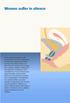 Women suffer in silence Stress urinary incontinence is the involuntary loss of urine resulting from increased intra-abdominal pressure. In people who suffer with this condition, forms of exertion such
THE EVALUATION OF STRESS INCONTINENCE PRIOR TO PRIMARY SURGERY
 SOGC CLINICAL PRACTICE GUIDELINES No. 127, April 2003 THE EVALUATION OF STRESS INCONTINENCE PRIOR TO PRIMARY SURGERY These guidelines have been prepared by the Urogynaecology Committee and were approved
PROCEEDINGS INCIDENCE AND PREVALENCE OF STRESS URINARY INCONTINENCE * Ananias C. Diokno, MD ABSTRACT
 INCIDENCE AND PREVALENCE OF STRESS URINARY INCONTINENCE * Ananias C. Diokno, MD ABSTRACT Urinary incontinence is a worldwide problem that affects millions of women, although the magnitude of the problem
Urinary Incontinence (Involuntary Loss of Urine) A Patient Guide
 Urinary Incontinence (Involuntary Loss of Urine) A Patient Guide Urinary Incontinence (Urine Loss) This booklet is intended to give you some facts on urinary incontinence - what it is, and is not, and
Learning Resource Guide. Understanding Incontinence. 2000 Prism Innovations, Inc. All Rights Reserved
 Learning Resource Guide Understanding Incontinence 2000 Prism Innovations, Inc. All Rights Reserved ElderCare Online s Learning Resource Guide Understanding Incontinence Table of Contents Introduction
symptoms of Incontinence
 Types, causes and symptoms of Urinary Incontinence Aims and Objectives Aim: To have an understanding of the types and causes of urinary incontinence. Objectives: To be aware of the incidence and prevalence
Fecal incontinence (Encopresis) It is the fecal incontinence condition observed in children with chronic constipation over 1-2 years.
 WHAT IS DYSFUNCTIONAL URINATION (URINATION FUNCTION DISORDER)? It stands for the urination phase disorders, which appear due to wrongly acquired urination habits during the toilet training of some neurologically
Should SUI Surgery be Combined with Pelvic Organ Prolapse Surgery?
 Should SUI Surgery be Combined with Pelvic Organ Prolapse Surgery? Geoffrey W. Cundiff, M.D. 36 th National Congress of the South African Society of Obstetricians and Gynaecologists SASOG 2014 Learning
GENUINE STRESS AND URGE INCONTINENCE PROTOCOL
 GENUINE STRESS AND URGE INCONTINENCE PROTOCOL Using the NeuroTrac ETSTM in combination of electrostimulation and EMG Biofeedback in the treatment of female urinary incontinence. Anna Pawlaczyk Specialist
Stress Urinary Incontinence & Sexual Function
 Stress Urinary Incontinence & Sexual Function Lior Lowenstein, MD, MS Associate Professor Deputy Chairman of Obstetrics and Gynecology Department Rambam Health Care Campus Haifa Israel No Disclosures Disclosures
Bladder Injury during Cesarean Section: A Case Control Study for 10 Years
 Bahrain Medical Bulletin, Vol., No., September Bladder Injury during Cesarean Section: A Case Control Study for Years Mesfer Al-Shahrani, MD, FRCSC* Objective: To determine the incidence, risk factors
Evaluation and Follow-up of Fetal Hydronephrosis
 Evaluation and Follow-up of Fetal Hydronephrosis Deborah M. Feldman, MD, Marvalyn DeCambre, MD, Erin Kong, Adam Borgida, MD, Mujgan Jamil, MBBS, Patrick McKenna, MD, James F. X. Egan, MD Objective. To
Acute urinary retention evaluated with urodynamic assessment in elder male W23, 16 October 2012 09:00-10:30
 Acute urinary retention evaluated with urodynamic assessment in elder male W23, 16 October 2012 09:00-10:30 Start End Topic Speakers 09:00 09:05 Introduction Jianquan Hou 09:05 09:20 Acute urinary retention
Urinary Incontinence
 Urinary Incontinence Q: What is urinary Urinary (YOOR-in-air-ee) incontinence (in-kahn-tih-nens) is when urine leaks out before you can get to a bathroom. If you have urinary incontinence, you re not alone.
Overactive Bladder (OAB)
 Overactive Bladder (OAB) Overactive bladder is a problem with bladder storage function that causes a sudden urge to urinate. The urge may be difficult to suppress, and overactive bladder can lead to the
Female Urinary Incontinence
 Female Urinary Incontinence Molly Heublein, MD Assistant Professor Clinical Medicine UCSF Women s Health Primary Care Disclosures I have nothing to disclose. 1 Objectives Review the problem Feel confident
Incontinence. What is incontinence?
 Incontinence What is incontinence? Broadly speaking, the medical term incontinence refers to any involuntary release of bodily fluids, but many people associate it strongly with the inability to control
FEMALE UROLOGY Suprapubic sling adjustment: minimally invasive method of curing recurrent stress incontinence after sling surgery
 FEMALE UROLOGY Suprapubic sling adjustment: minimally invasive method of curing recurrent stress incontinence after sling surgery Choe JM Urodynamics and Continence Center, Division of Urology, University
Complications of the tension-free vaginal tape procedure for stress urinary incontinence
 Int Urogynecol J (2010) 21:1353 1357 DOI 10.1007/s00192-010-1210-5 ORIGINAL ARTICLE Complications of the tension-free vaginal tape procedure for stress urinary incontinence Ingrid Kristensen & Maysoon
SOGC Recommendations for Urinary Incontinence
 The quality of evidence is rated, and recommendations are made using the criteria described by the Canadian Task Force on Preventive Health Care. Clinical Practice Guidelines: The Evaluation of Stress
Improving access and reducing costs of care for overactive bladder through a multidisciplinary delivery model
 Improving access and reducing costs of care for overactive bladder through a multidisciplinary delivery model Trafford Crump, Ph.D. Department of Surgery, University of Calgary Presentation to: Canadian
In the mid-1990s, Ulmsten and Petros 1 introduced the synthetic,
 Surgical Intervention for Stress Urinary Incontinence: Comparison of Midurethral Sling Procedures Joseph M. Novi, DO Beth H.K. Mulvihill, DO Context: The synthetic, tension-free midurethral sling was introduced
Committee 7. Urodynamics. Chairman Y. HOMMA (JAPAN)
 Committee 7 Urodynamics Chairman Y. HOMMA (JAPAN) Members J. BATISTA (SPAIN), S. BAUER (USA), D. GRIFFITHS (USA), P. HILTON (U.K), G. KRAMER (GERMANY), G. LOSE (DENMARK), P. ROSIER (THE NETHERLAND) 317
COMPLICATIONS OF FISTULA REPAIR SURGERY. Sherif Mourad
 COMPLICATIONS OF FISTULA REPAIR SURGERY Sherif Mourad In the developing world, the true incidence of obstetric fistulas is unknown, as many patients with this condition suffer in silence and isolation.
Primary Care Management Guidelines Female Urinary Incontinence. Overview of Lecture
 Primary Care Management Guidelines Female Urinary Incontinence Professor Don Wilson Department of Women s and Children s Health Dunedin School of Medicine University of Otago GP Teaching for Roy Morris,
Clinical audit of the use of tension-free vaginal tape as a surgical treatment for urinary stress incontinence, set against NICE guidelines
 GYNAECOLOGY Clinical audit of the use of tension-free vaginal tape as a surgical treatment for urinary stress incontinence, set against NICE guidelines NATALIA PRICE and SIMON R JACKSON The John Radcliffe
CHAPTER 7. Summary and conclusions
 CHAPTER 7 Summary and conclusions 88 Summary 7.1 SUMMARY 7.1.1 Introduction 7.1.1.1 Incontinence in pregnancy and after childbirth Pelvic floor dysfunction in women is a major health problem. Symptoms
Overactive Bladder (OAB) Content of the lecture
 Overactive bladder (OAB) : Introduction and Medical Management R.J. Opsomer Cliniques St Luc, labo d urodynamique, UCL - Bruxelles Overactive Bladder (OAB) Content of the lecture The syndrome of Overactive
Regain Control of Your Active Life Treatment Options for Incontinence and Pelvic Organ Prolapse
 Regain Control of Your Active Life Treatment Options for Incontinence and Pelvic Organ Prolapse Nearly one quarter of all women in the United States have some sort of pelvic floor disorder such as urinary
Eastern Mediterranean Health Journal, Vol. 10, No. 3, 2004 437
 Eastern Mediterranean Health Journal, Vol. 10, No. 3, 2004 437 Report Normal uterine size in women of reproductive age in northern Islamic Republic of Iran S. Esmaelzadeh, 1 N. Rezaei 1 and M. HajiAhmadi
Prevention & Treatment of De Novo Stress Incontinence after POP. Andy Vu, DO, FACOG UNT Health Science Center Fort Worth, TX.
 Prevention & Treatment of De Novo Stress Incontinence after POP Andy Vu, DO, FACOG UNT Health Science Center Fort Worth, TX Surgery Presenter Disclosure No Conflict of Interest to disclose No Financial
REVIEW ARTICLE. Neurourology and Urodynamics 29:213 240 (2010) Key words: incontinence; LUTS; pelvic organ prolapse. ß 2009 Wiley-Liss, Inc.
 Neurourology and Urodynamics 29:213 240 (2010) REVIEW ARTICLE Fourth International Consultation on Incontinence Recommendations of the International Scientific Committee: Evaluation and Treatment of Urinary
Bladder and Bowel Control
 Bladder and Bowel Control Dr Sue Woodward Lecturer, Florence Nightingale School of Nursing and Midwifery 2 Why do we need to understand anatomy? Normal physiology Normal adult bladder capacity = 450-500mls
1 in 3 women experience Stress Urinary Incontinence.
 A PATIENT S GUIDE 1 in 3 women experience Stress Urinary Incontinence. It s time to talk about SUI Get the facts. This Patient s Guide is intended as a public resource on the issue of Stress Urinary Incontinence
Transobturator mid urethral sling surgery for stress urinary incontinence: our experience
 International Journal of Reproduction, Contraception, Obstetrics and Gynecology Bettaiah R et al. Int J Reprod Contracept Obstet Gynecol. 2015 Dec;4(6):1831-1835 www.ijrcog.org pissn 2320-1770 eissn 2320-1789
NICE Pathways bring together all NICE guidance, quality standards and other NICE information on a specific topic.
 Initial assessment and investigation of urinary incontinence bring together all NICE guidance, quality standards and other NICE information on a specific topic. are interactive and designed to be used
Get the Facts, Be Informed, Make YOUR Best Decision. Pelvic Organ Prolapse
 Pelvic Organ Prolapse ETHICON Women s Health & Urology, a division of ETHICON, INC., a Johnson & Johnson company, is dedicated to providing innovative solutions for common women s health problems and to
Canine Urinary Incontinence
 Urinary Incontinence in the Bitch Laurie Edge-Hughes, BScPT, MAnimSt, CAFCI, CCRT Urinary Incontinence = Involuntary leakage of urine during storage Micturation disorders (non-neurologic): 61% = Urethral
surg urin Surgery: Urinary System 1
 Surgery: Urinary System 1 This section contains information to assist providers in billing for surgical procedures related to the urinary system. Extracorporeal Shock Wave Lithotripsy Medi-Cal covers Extracorporeal
Overactive bladder and urgency incontinence
 Overactive bladder and urgency incontinence As a health care provider you can make a significant difference to the quality of life of patients like these by addressing urinary incontinence, introducing
Bard: Continence Therapy. Stress Urinary Incontinence. Regaining Control. Restoring Your Lifestyle.
 Bard: Continence Therapy Stress Urinary Incontinence Regaining Control. Restoring Your Lifestyle. Stress Urinary Incontinence Becoming knowledgeable about urinary incontinence Uterus Normal Pelvic Anatomy
Prolapse Repair Systems. a guide To correcting PELVIC ORGAN PROLAPSE
 Anterior PROLAPSE & Posterior REPAIR SYSTEM Prolapse Repair Systems a guide To correcting PELVIC ORGAN PROLAPSE Restore Your Body Pelvic organ prolapse occurs when pelvic structures, like the bladder or
Consumer summary Minimally invasive techniques for the relief of stress urinary incontinence
 ASERNIP S Australian Safety and Efficacy Register of New Interventional Procedures Surgical Consumer summary Minimally invasive techniques for the relief of stress urinary incontinence (Adapted from the
Patient. Frequently Asked Questions. Transvaginal Surgical Mesh for Pelvic Organ Prolapse
 Patient Frequently Asked Questions Transvaginal Surgical Mesh for Pelvic Organ Prolapse Frequently Asked Questions WHAT IS PELVIC ORGAN PROLAPSE AND HOW IS IT TREATED? Q: What is pelvic organ prolapse
Urinary Incontinence FAQ Sheet
 Urinary Incontinence FAQ Sheet Are you reluctant to talk to your doctor about your bladder control problem? Don t be. There is help. Loss of bladder control is called urinary incontinence. It can happen
Case 1: Classification of Lower Urinary Tract Symptoms (LUTS) and Urinary Incontinence (UI)
 cme case presentation For more information see below. Case 1: Classification of Lower Urinary Tract Symptoms (LUTS) and Urinary Incontinence (UI) David R. Staskin, MD Associate Professor of Urology Director,
Urinary Incontinence: an overview!! Neil Harris Consultant Urological Surgeon, Leeds
 Urinary Incontinence: an overview!! Neil Harris Consultant Urological Surgeon, Leeds Content 1. Epidemiology of pelvic floor dysfunction Urinary incontinence Bowel dysfunction Sexual dysfunction 2. Treatment
Urinary incontinence and Prolapse. Dr Zeelha Abdool Consultant OBGYN Steve Biko Academic Hospital
 Urinary incontinence and Prolapse Dr Zeelha Abdool Consultant OBGYN Steve Biko Academic Hospital Definitions: IUGA/ICS standardized terminology Urinary incontinence (symptom): complaint of involuntary
Three-Dimensional Endovaginal Sonography of Synthetic Implanted Materials in the Female Pelvic Floor
 PICTORIAL ESSAY Three-Dimensional Endovaginal Sonography of Synthetic Implanted Materials in the Female Pelvic Floor Lindsay Denson, BS, RDMS, S. Abbas Shobeiri, MD The objective of this pictorial essay
International Journal of Case Reports in Medicine
 International Journal of Case Reports in Medicine Vol. 2013 (2013), Article ID 340925, 18 minipages. DOI:10.5171/2013.340925 www.ibimapublishing.com Copyright 2013. Massinde Anthony. Distributed under
Low Back Pain and Urinary Incontinence. Mary Ka Mei LEUNG Physiotherapist Kwong Wah Hospital Hong Kong SAR, China
 Low Back Pain and Urinary Incontinence Mary Ka Mei LEUNG Physiotherapist Kwong Wah Hospital Hong Kong SAR, China Hong Kong Background Prevalence of LBP in HK 39%: LBP at some time 21%: LBP in the past