
The State Hospital HIV / AIDS
|
|
|
- Marcus Boone
- 9 years ago
- Views:
Transcription
1 The State Hospital HIV / AIDS The red ribbon is the international symbol of HIV & AIDS awareness.

2 What is HIV? HIV stands for Human Immunodeficiency Virus: H is for Human - This virus infects human beings. I is for Immunodeficiency - This virus attacks your immune system. Your immune system is your body's defence against infections such as bacteria and viruses. Once attacked by HIV, your immune system becomes deficient and doesn't work properly. V is for Virus - A virus is a type of germ too small to be seen even with a microscope. HIV is a virus. Some viruses, like the ones that cause colds or flu, stay in the body for only a few days. HIV however, never goes away. If you are infected with HIV you are said to be HIV positive. If you are HIV positive, you will always be HIV positive. What does the virus do? All viruses must infect living cells to reproduce. HIV takes over certain immune system cells that are supposed to defend the body. These cells are called CD4 cells, or T cells. When HIV takes over a CD4 cell, it turns the cell into a virus factory. It forces the cell to produce thousands of copies of the virus.

3 These copies infect other CD4 cells. Infected cells don t work well and die early. Over time, the loss of CD4 cells weakens the immune system, making it harder for the body to stay healthy. What is AIDS? AIDS stands for Acquired Immunodeficiency Syndrome: A is for Acquired The condition is acquired, meaning that you become infected with it. I is for Immuno It affects your immune system, the part of the body that fights off germs such as bacteria or viruses. D is for Deficiency - The immune system becomes deficient and does not work properly. S is for Syndrome If you have AIDS you may experience other diseases and infections because of a weakened immune system. AIDS is the most advanced stage of infection caused by HIV. Most people who are HIV positive do not have AIDS. If you are HIV-positive you will have AIDS when your immune system becomes so weak it can't fight off certain kinds of infections and cancers.

4 Even without one of these infections, if you are HIV-positive, you will be diagnosed with AIDS if your immune system becomes severely weakened. This is measured by a lab test that determines the number of CD4 cells you have. If you are HIV-infected and have a CD4 cell count less than 200, this counts as a diagnosis of AIDS. If you are HIV-positive, it can take between 2 to 10 years, or longer, to develop AIDS even without treatment. How is HIV spread? HIV is spread though four body fluids: Semen Vaginal fluid Blood Breast milk HIV is NOT spread through: Tears Sweat Faeces Urine You can get infected from sexual contact with someone who is infected with HIV. If you have sex, the best thing to do is to practice safer sex all the time. To do so, always use a condom.

5 How is HIV spread through blood? You can become infected if you have contact with the blood of someone who is infected with HIV. Blood-borne infection with HIV can occur through: Sharing needles when injecting drugs. Tattoos or body piercings with unsterilised needles. Accidental needlesticks. Blood transfusions. Splashing blood in your eyes. HIV is NOT spread by blood passed through insect bites. Pregnant women who are HIV positive can give the virus to their babies in the womb and during birth. What are the symptoms? You can t tell if a person is HIV positive by looking at them. Most people with HIV infection don t look sick. Even so, when a person first becomes infected, they may get certain symptoms. This period of early infection is called acute HIV infection. Symptoms can be different for each person. Sometimes there are no symptoms at all. Other times symptoms are strong. You may feel as if you have a cold or the flu.

6 What is a HIV test? The HIV test is designed to determine whether you have been infected with HIV - the virus that causes AIDS. When you get infected with HIV, your body sees the virus as an invader and begins to produce cells and particles to fight it. These particles are called antibodies. The HIV antibodies are different from antibodies for the flu, a cold, or other infections. If you have HIV antibodies, then you have been infected with HIV. Should you get tested? Most experts recommend that everyone who is sexually active should be tested for HIV. If you are infected you will be diagnosed early. That way, you can get the most benefit from treatment and can take steps to avoid spreading the disease to others. How is HIV treated? There are many treatments now that can help people with HIV. As a result, many people with HIV are living much longer and healthier lives than before. For further information, please contact the Hospital s Infection Control Department. The State Hospital Carstairs, Lanark ML11 8RP Tel: Fax: Web: Version 2

BASIC INFORMATION ABOUT HIV, HEPATITIS B and C, and TUBERCULOSIS Adapted from the CDC
 BASIC INFORMATION ABOUT HIV, HEPATITIS B and C, and TUBERCULOSIS Adapted from the CDC HIV What are HIV and AIDS? HIV stands for Human Immunodeficiency Virus. This is the virus that causes AIDS. HIV is
HIV/AIDS: General Information & Testing in the Emergency Department
 What Is HIV? HIV/AIDS: General Information & Testing in the Emergency Department HIV is the common name for the Human Immunodeficiency Virus. HIV is a retrovirus. This means it can enter the body s own
FAQs HIV & AIDS. What is HIV? A virus that reduces the effectiveness of your immune system, meaning you are less protected against disease.
 HIV & AIDS What is HIV? A virus that reduces the effectiveness of your immune system, meaning you are less protected against disease. What does HIV stand for? Human Immunodeficiency Virus Where did HIV
Chapter 21. What Are HIV and AIDS?
 Section 1 HIV and AIDS Today What Are HIV and AIDS? Human immunodeficiency virus (HIV) is the virus that primarily affects cells of the immune system and that causes AIDS. Acquired immune deficiency syndrome
HIV/AIDS PAPER OUTLINE. 0.Introduction. -Definitions. 1. AIDS as a stigma. -Factors to the AIDS stigma. 2. Transmission to HIV
 HIV/AIDS PAPER OUTLINE 0.Introduction -Definitions 1. AIDS as a stigma -Factors to the AIDS stigma 2. Transmission to HIV - The most common ways that people get HIV 3. Where you can not get AIDS 4. Conclusion
Name Date Class. This section explains what kinds of organisms cause infectious disease and how infectious diseases are spread.
 Fighting Disease Name Date Class Infectious Disease This section explains what kinds of organisms cause infectious disease and how infectious diseases are spread. Use Target Reading Skills Before you read,
Accent on Health Obgyn, PC HERPES Frequently Asked Questions
 1. What is herpes? 2. How common is herpes? 3. Is there a cure for herpes? 4. What is oral herpes (cold sores)? 5. How is oral herpes spread? 6. What is genital herpes? 7. How is genital herpes spread?
Patient Information Sheet
 Healthcare Worker exposure to a patient s blood What is a healthcare worker exposure? Patient Information Sheet Occasionally, health care workers come into contact with the blood or body fluids of their
AIDS Knowledge Test. Instructions
 AIDS Knowledge Test Instructions This survey has True/False questions. For example: Pittsburgh's hockey team is the Bruins. We want you to do two things: First, answer the question. In this example, you
Hepatitis C. Screening, Diagnosis and Linkage to Care
 Hepatitis C Screening, Diagnosis and Linkage to Care Diagnosis If your hepatitis C antibody test is reactive, a second test will be needed to diagnose and determine if you are currently infected. Screening
Basic Presentation HIV/AIDS. For Use by Students, Teachers and the Public Seeking Basic Information About HIV/AIDS
 Basic Presentation HIV/AIDS For Use by Students, Teachers and the Public Seeking Basic Information About HIV/AIDS Objectives- Define and understand the difference between HIV Infection and AIDS Describe
Tuberculosis and You A Guide to Tuberculosis Treatment and Services
 Tuberculosis and You A Guide to Tuberculosis Treatment and Services Tuberculosis (TB) is a serious disease that can damage the lungs or other parts of the body like the brain, kidneys or spine. There are
HIV/AIDS. Information booklet
 HIV/AIDS Information booklet Content Introduction 1 What is HIV/AIDS 2 How is HIV spread? 4 Symptoms of HIV infection 7 Testing for HIV 8 Preventing the spread of HIV 10 Sexually Transmitted Infections
HIV -The Facts BLT 043
 Human Im munodeficiency Virus HIV -The Facts NHS Dumfries & Galloway would like to acknowledge NHS Greater Glasgow for the use of information contained in this leaflet. This leaflet is also available on
If you have a cold or the flu, you can spread the sickness to someone else. How does the sickness spread? Write your ideas on the lines below.
 The Immune System Textbook pages 100 109 Before You Read Section 3.1 Summary If you have a cold or the flu, you can spread the sickness to someone else. How does the sickness spread? Write your ideas on
HIV. Looking after your sexual health
 HIV Looking after your sexual health 2 HIV HIV stands for Human Immunodeficiency Virus. Once someone is infected with HIV the virus will remain in their body for the rest of their life. There is currently
Why it is Important to Talk with Young People about HIV and AIDS 2. Facts about HIV and AIDS 3. How to Get Started 7
 Table of Contents Why it is Important to Talk with Young People about HIV and AIDS 2 Facts about HIV and AIDS 3 How to Get Started 7 What to Say to Your Children About HIV and AIDS 8 Talking with Young
You. guide to tuberculosis treatment and services
 Adapted from TB and You: A Guide to Tuberculosis Treatment and Services with permission from Division of Public Health TB Control Program State of North Carolina Department of Health and Human Services
Bloodborne Pathogens
 Bloodborne Pathogens Learning Objectives By the end of this section, the participant should be able to: Name 3 bloodborne pathogens Identify potentially contaminated bodily fluids Describe 3 safe work
PLUS MAY EQUAL. Flu-Like Symptoms SORE THROAT, SWOLLEN GLANDS, FEVER, JOINT AND MUSCLE ACHES
 What is acute HIV infection? Acute HIV infection is the very early stage of infection with HIV (human immunodeficiency virus), the virus that causes AIDS. This is also called primary HIV infection. Acute
The link between cervical cancer and HPV (human papillomavirus)
 The link between cervical cancer and HPV (human papillomavirus) The link between cervical cancer and HPV Key facts: HPV is a virus (the human papillomavirus). Almost all abnormal Pap smear results are
The challenge of herpes
 The challenge of herpes Herpes is a common and personally challenging disease Herpes is very common. One out of four adults has genital herpes. When people first hear that they are infected, many become
DO YOU WORK AROUND BLOOD OR BODY FLUIDS? Cal/OSHA s New Rules
 DO YOU WORK AROUND BLOOD OR BODY FLUIDS? Cal/OSHA s New Rules Labor Occupational Health Program University of California, Berkeley 1994 ACKNOWLEDGMENTS This booklet is a publication of the Labor Occupational
Cancer of the Cervix
 Cancer of the Cervix WOMENCARE A Healthy Woman is a Powerful Woman (407) 898-1500 A woman's cervix (the opening of the uterus) is lined with cells. Cancer of the cervix occurs when those cells change,
Learning about Hepatitis C and Chronic Kidney Disease
 Learning about Hepatitis C and Chronic Kidney Disease Hepatitis C and Chronic Kidney Disease If you have chronic kidney disease (CKD), you want to learn all you can about your disease and what you can
HIV/AIDS 101 Teens and Young Adults. Chara McGill
 HIV/AIDS 101 Teens and Young Adults Chara McGill 1 Disclosure AS MANDATED BY ACCME SPEAKERS ARE ASKED TO DISCLOSE ANY REAL OR APPARENT CONFLICT RELATED TO THE CONTENT OF THEIR PRESENTATION TODAYS SPEAKER
Blood-borne viruses in the workplace Guidance for employers and employees
 Blood-borne viruses in the workplace Guidance for employers and employees Is this guidance useful to me? If you are an employer or employee, self-employed or a safety representative, and involved in work
Hepatitis B. What I need to know about. National Digestive Diseases Information Clearinghouse NATIONAL INSTITUTES OF HEALTH
 What I need to know about Hepatitis B U.S. Department of Health and Human Services NATIONAL INSTITUTES OF HEALTH National Digestive Diseases Information Clearinghouse What I need to know about Hepatitis
MANAGING ANEMIA. When You Have Kidney Disease or Kidney Failure. www.kidney.org
 MANAGING ANEMIA When You Have Kidney Disease or Kidney Failure www.kidney.org About the Information in this Booklet Did you know that the National Kidney Foundation (NKF) offers guidelines and commentaries
General information about HIV
 HIV and pregnancy 1 To the reader The brochure is intended for women and families that are either pregnant or planning a pregnancy. The brochure discusses the matters that must be taken into consideration
Tuberculosis: FAQs. What is the difference between latent TB infection and TB disease?
 Tuberculosis: FAQs What is TB disease? Tuberculosis (TB) is a disease caused by bacteria (germs) that are spread from person to person through the air. TB usually affects the lungs, but it can also affect
Blood, Lymphatic and Immune Systems
 Component 3-Terminology in Healthcare and Public Health Settings Unit 4-Blood, Lymphatic and Immune Systems This material was developed by The University of Alabama at Birmingham, funded by the Department
Blood Transfusion. There are three types of blood cells: Red blood cells. White blood cells. Platelets.
 Blood Transfusion Introduction Blood transfusions can save lives. Every second, someone in the world needs a blood transfusion. Blood transfusions can replace the blood lost from a serious injury or surgery.
The Immune System and Disease
 Chapter 40 The Immune System and Disease Section 40 1 Infectious Disease (pages 1029 1033) This section describes the causes of disease and explains how infectious diseases are transmitted Introduction
What you should. know
 H e p a t i t i s C What you should know Table of Contents Hepatitis C: a part of life for many people.......4 What is hepatitis C?.......................6 What does my liver do?....................8 How
Rhesus Negative 10:Rhesus Negative July 06. rhesus negative. what it means
 Rhesus Negative 10:Rhesus Negative July 06 14/04/2010 rhesus negative what it means This leaflet contains important information which may affect your pregnancy. Please read it very carefully. 16:15 P When
CHAPTER 35 HUMAN IMMUNE SYSTEM STANDARDS:SC.912.L.14.52 & SC.912.L.14.6
 CHAPTER 35 HUMAN IMMUNE SYSTEM STANDARDS:SC.912.L.14.52 & SC.912.L.14.6 SECTION 1 - Infectious Disease 1.Identify the causes of infectious disease. 2.Explain how infectious diseases are spread. Causes
The Hepatitis B virus (HBV)
 The Hepatitis B virus (HBV) There are 400 million people in the world who live with chronic hepatitis B, including France. Most people don t even know they are infected. But there are several important
HPV is very common and usually clears up on its own
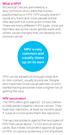 What is HPV? All cervical cancers are linked to a very common virus called the human papillomavirus or HPV. HPV usually doesn t cause any harm and most people will be infected with it at some point in
What is HIV? What is AIDS? The HIV pandemic HIV transmission Window period Stages of HIV infection
 Module 1 Overview of HIV Infection Purpose Pre-requisite Modules Learning Objectives To provide you with the basic terms and concepts related to HIV infection. None At the end of this module, you will
Making Sense of Your Pap and HPV Test Results
 Making Sense of Your Pap and HPV Test Results Keep this booklet until you get your test results back from your doctor. U.S. DEPARTMENT OF HEALTH AND HUMAN SERVICES Centers for Disease Control and Prevention
HPV and HPV Testing. Human Papilloma Virus (HPV) What are viruses? What is HPV?
 HPV and HPV Testing Human Papilloma Virus (HPV) What are viruses? Viruses are very small organisms most cannot even be seen with a regular microscope. They cannot reproduce on their own. They must enter
HIV/AIDS: Basic Facts Grade 7, Lesson #21
 HIV/AIDS: Basic Facts Grade 7, Lesson #21 Time Needed One 50-minute class period Student Learning Objectives To be able to 1. Describe how the human immunodeficiency virus (HIV) affects the immune system.
Newly Diagnosed: HEPATITIS C. American Liver Foundation Support Guide
 Newly Diagnosed: HEPATITIS C American Liver Foundation Support Guide T he American Liver Foundation's mission is to facilitate, advocate, and promote education, support, and research for the prevention,
Severe Combined Immune Deficiency (SCID)
 Severe Combined Immune Deficiency (SCID) ASCIA EDUCATION RESOURCES (AER) PATIENT INFORMATION Severe combined immune deficiency (SCID) is the most serious form of primary immune deficiency and is usually
Core Competencies: HIV/AIDS: HIV Basics HIV/AIDS JEOPARDY* Overview. To change category names: Instructions. 2. Introduce session.
 Core Competencies: HIV/AIDS: HIV Basics HIV/AIDS JEOPARDY* ABOUT THIS ACTIVITY Time: 60 minutes Objectives: By the end of this session, participants will be able to: Reviewed their knowledge of HIV/AIDS
english facts about hepatitis A, B and C
 english facts about hepatitis A, B and C What is hepatitis? Hepatitis means inflammation of the liver. Many viruses can cause liver inflammation, including the hepatitis A, B and C viruses. Some people
Immunity Unit Test Z
 Immunity Unit Test Z Name MB Multiple Choice Identify the choice that best completes the statement or answers the question. 1. Which of the pathogens in Figure 31.1 cause disease by taking over healthy
COMMUNICABLE DISEASE
 Public Health Activities & Services Inventory Technical Notes COMMUNICABLE DISEASE CLINICAL SERVICES, SURVEILLANCE AND CONTROL In 2014, decision was made to adopt number of national public health activities
How can herpes simplex spread to an infant?
 CHAPTER 3 HERPES AND PREGNANCY As an expectant parent eagerly awaiting the birth of your new baby, you are probably taking a number of steps to ensure your baby s health. One step many experts recommend
Hepatitis C. What I need to know about. National Digestive Diseases Information Clearinghouse NATIONAL INSTITUTES OF HEALTH
 What I need to know about Hepatitis C U.S. Department of Health and Human Services NATIONAL INSTITUTES OF HEALTH National Digestive Diseases Information Clearinghouse What I need to know about Hepatitis
cancer cervical What women should know about and the human papilloma virus
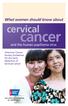 What women should know about cervical cancer and the human papilloma virus American Cancer Society Guidelines for the Early Detection of Cervical Cancer I take care of myself so I can take care of my family.
Thymus Cancer. This reference summary will help you better understand what thymus cancer is and what treatment options are available.
 Thymus Cancer Introduction Thymus cancer is a rare cancer. It starts in the small organ that lies in the upper chest under the breastbone. The thymus makes white blood cells that protect the body against
Body Fluid Exposure:
 Focus on CME at the University of Manitoba Focus on CME at the University of Manitoba Body Fluid Exposure: What To Do? John Sokal, MD, CFPC Presented at Bug Day 2003, Health Sciences Centre, Winnipeg (October
Zika Virus. Fred A. Lopez, MD, MACP Richard Vial Professor Department of Medicine Section of Infectious Diseases
 Zika Virus Fred A. Lopez, MD, MACP Richard Vial Professor Department of Medicine Section of Infectious Diseases What is the incubation period for Zika virus infection? Unknown but likely to be several
Related KidsHealth Links. Discussion Questions
 PreK to Grade 2 Human Body Series KidsHealth.org/classroom Teacher s Guide This guide includes: Standards Related Links Discussion Questions Activities for Students Reproducible Materials Standards This
Belgian development agency
 Belgian development agency AIDS WHAT YOU SHOULD KNOW KEY PRINCIPLES Respect Respect yourself and others. Testing Do not wait until tomorrow. Adherence Adhere to treatment and enjoy a long and happy life.
Information about hepatitis C for patients and carers
 Information about hepatitis C for patients and carers What is hepatitis C? Hepatitis C is an illness caused by a virus which can be passed through blood from one person to another. It mainly affects the
Cervical cancer screening with the HPV test and the Pap test in women ages 30 and older
 Cervical cancer screening with the HPV test and the Pap test in women ages 30 and older When to get tested and how to make sense of your test results If you are 30 years or older and your Pap test is normal
Why you and your Family Should Get the Flu Shot
 Why you and your Family Should Get the Flu Shot Why Get VaCCinated against influenza? Influenza (flu) is a virus that can lead to serious complications, hospitalization, or even death. Even healthy children
www.hepinfo.ie Are you Hep C aware? awareness information support prevention To find out more visit
 Are you Hep C aware? awareness information support prevention To find out more visit www.hepinfo.ie What is Hepatitis C? Hepatitis C is a viral infection that affects the liver, causing it to become inflamed
HEPATITIS C. The Facts. Get Tested. Get Cured! Health
 HEPATITIS C The Facts Get Tested. Get Cured! Health EVEN IF YOU FEEL HEALTHY, HEPATITIS C MAY BE DAMAGING YOUR LIVER. Your liver keeps you healthy in many ways, such as by removing toxins from your blood
CMV: Your questions answered
 The basics about the virus CMV: Your questions answered What is CMV? CMV, or Cytomegalovirus, is a common virus that can infect people of all ages. Once CMV is in a person s body, it stays there for life.
 You can get more information about TB from the following: Local Public Health Nurse Community Clinic Nurse Communicable Disease Control Nurse Your Family or Community Doctor Your Infection Control Practitioner
What is HPV? Low-risk HPV types. High-risk HPV types
 HPV and Cancer What is HPV? HPV is short for human papilloma (PAP-uh-LO-muh) virus. HPVs are a large group of related viruses. Each HPV virus in the group is given a number, which is called an HPV type.
Medication Guide TRUVADA (tru-vah-dah) (emtricitabine and tenofovir disoproxil fumarate) tablets Read this Medication Guide before you start taking
 Medication Guide TRUVADA (tru-vah-dah) (emtricitabine and tenofovir disoproxil fumarate) tablets Read this Medication Guide before you start taking TRUVADA and each time you get a refill. There may be
Multiple Myeloma. This reference summary will help you understand multiple myeloma and its treatment options.
 Multiple Myeloma Introduction Multiple myeloma is a type of cancer that affects white blood cells. Each year, thousands of people find out that they have multiple myeloma. This reference summary will help
National 3- Multicellular Organisms Revision
 National 3- Multicellular Organisms Revision Key Area 1: Structure and function of organs and organ systems and their role in sustaining life. What you must know: The basic structure and functions of main
Mycophenolate mofetil (CellCept ): risks of miscarriage and birth defects. Patient guide. Key points to remember
 Mycophenolate (CellCept ): risks of miscarriage and birth defects Patient guide Key points to remember Mycophenolate (CellCept ) causes birth defects and miscarriages Follow the contraceptive advice given
THE A, B, C S OF HEPATITIS. Matt Eidem, M.D. Digestive Health Associates of Texas 1600 Coit Road Suite #301 Plano, Texas 75075 (972) 867-0019
 THE A, B, C S OF HEPATITIS Matt Eidem, M.D. Digestive Health Associates of Texas 1600 Coit Road Suite #301 Plano, Texas 75075 (972) 867-0019 WHAT IS HEPATITIS? Hepatitis means inflammation of the liver
Viral load testing. medical monitoring: viral load testing: 1
 medical monitoring: viral load testing: 1 medical monitoring: viral load testing Viral load testing medical monitoring: viral load testing: 2 Slide 1 Viral load The viral load test measures HIV in the
Guidelines for Viral Hepatitis CTR Services
 Guidelines for Viral Hepatitis CTR Services During the 2007 North Dakota Legislative Assembly, legislation that called for the creation of a viral hepatitis program was introduced and approved. The North
MEDICATION GUIDE STELARA
 MEDICATION GUIDE STELARA (stel ar a) (ustekinumab) Injection What is the most important information I should know about STELARA? STELARA is a medicine that affects your immune system. STELARA can increase
NHS cervical screening Helping you decide
 NHS cervical screening Helping you decide What is cervical cancer? 2 What causes cervical cancer? 2 What is cervical screening? 3 Cervical screening results 6 What is a colposcopy? 8 What are the benefits
Borderless Diseases By Sunny Thai
 Borderless Diseases By Sunny Thai Millennium Development Goal #6 6. Combat HIV/AIDS, malaria and other borderless diseases. A. Halt and begin reversing spread of HIV by 2015. B. Achieve universal access
A handbook for people who have injected drugs
 A handbook for people who have injected drugs Introduction This handbook has been written for current and ex-drug injectors. It gives information and advice about the hep C virus, and the tests you can
10. T and B cells are types of a. endocrine cells. c. lymphocytes. b. platelets. d. complement cells.
 Virus and Immune System Review Directions: Write your answers on a separate piece of paper. 1. Why does a cut in the skin threaten the body s nonspecific defenses against disease? a. If a cut bleeds, disease-fighting
Methamphetamine. Like heroin, meth is a drug that is illegal in some areas of the world. Meth is a highly addictive drug.
 Methamphetamine Introduction Methamphetamine is a very addictive stimulant drug. People who use it can form a strong addiction. Addiction is when a drug user can t stop taking a drug, even when he or she
CONTENTS: WHAT S IN THIS BOOKLET
 Q Questions & A & Answers About Your Prostate Having a biopsy test to find out if you may have prostate cancer can bring up a lot of questions. This booklet will help answer those questions. CONTENTS:
What actually is the immune system? What is it made up of?
 This is a radio interview with Ken Sell, M.D., scientific director of the National Institute of Allergy and Infectious Diseases, National Institutes of Health (NIH), and Co-Chairman of the NIH Working
WHAT YOU NEED TO KNOW ABOUT HEPATITIS C: A GUIDE FOR PEOPLE WITH HIV INFECTION
 WHAT YOU NEED TO KNOW ABOUT HEPATITIS C: A GUIDE FOR PEOPLE WITH HIV INFECTION Did you know that in the United States, at least 1 in 4 people with HIV is also infected with hepatitis C? Hepatitis C is
The Immune System. How your immune system works. Organs of the Immune System
 UW MEDICINE PATIENT EDUCATION The Immune System How your immune system works The immune system is a network of special cells, tissues, and organs that defend the body against attacks from foreign invaders,
100 Questions and answers about HiV/aids. Questions Answers. about HIV/AIDS. New York State Department of Health
 100 Questions and answers about HiV/aids 1 Questions Answers about HIV/AIDS New York State Department of Health 2 new York state department of HealtH 100 Questions and answers about HiV/aids 3 Contents
Immunity. Humans have three types of immunity innate, adaptive, and passive: Innate Immunity
 Immunity Humans have three types of immunity innate, adaptive, and passive: Innate Immunity Everyone is born with innate (or natural) immunity, a type of general protection. Many of the germs that affect
Facts About Chickenpox and Shingles for Adults
 Facts About Chickenpox and Shingles for Adults What is chickenpox? Chickenpox, also known as varicella, is a very contagious disease caused by the varicella-zoster virus. It is spread easily through the
Lesson 7: Respiratory and Skeletal Systems and Tuberculosis
 Glossary 1. asthma: when the airways of the lungs narrow, making breathing difficult 2. bacteria: tiny living creatures that can only be seen with a microscope; some bacteria help the human body, and other
Cocaine. Like heroin, cocaine is a drug that is illegal in some areas of the world. Cocaine is a commonly abused drug.
 Cocaine Introduction Cocaine is a powerful drug that stimulates the brain. People who use it can form a strong addiction. Addiction is when a drug user can t stop taking a drug, even when he or she wants
Cytotoxic Precautions at Home A Guide for Cancer Patients and Families
 Cytotoxic Precautions at Home A Guide for Cancer Patients and Families Your cancer treatment... 1 What are cytotoxic precautions?... 1 What body fluids are cytotoxic?... 1 How do I handle my body wastes?...
Mother s blood test to check her unborn baby s blood group
 Mother s blood test to check her unborn baby s blood group This leaflet explains why it is important to have a blood test to check the baby s blood group, so that only those who need it, receive anti-d
Bloodborne Pathogens (BBPs) Louisiana Delta Community College
 Bloodborne Pathogens (BBPs) Louisiana Delta Community College 1 Bloodborne Pathogens Rules & Regulations Office of Risk Management (ORM) requires development of a bloodborne pathogens plan low risk employees
CANCER OF THE LIVER HEPATOCELLULAR CARCINOMA
 CANCER OF THE LIVER HEPATOCELLULAR CARCINOMA WHAT IS CANCER OF THE LIVER? Hepatocellular carcinoma is the most common form and it comes from the main type of liver cell, the hepatocyte. About 3 out 4
Testing for Prostate Cancer
 Testing for Prostate Cancer Should I be tested? Is it the right choice for me? Prostate cancer affects many men. There are tests to find it early. There may be benefits and risks with testing. Research
GENERAL INFORMATION. Hepatitis B Foundation - Korean Chapter Pg. 3 www.hepb.org
 GENERAL INFORMATION What is hepatitis B? Hepatitis B is the world's most common liver infection that can lead to cirrhosis and liver cancer. It is caused by the hepatitis B virus (HBV), which attacks and