
Let s Play. Clarinet. by Andrew Scott
|
|
|
- Muriel Wiggins
- 9 years ago
- Views:
Transcription
1

2 Let s Play Clarinet by Andrew Scott

3 Parts of the Clarinet... 3 Lesson 1 Assembling the Clarinet Making a Sound on the Mouthpiece... 4 The Note E... 7 Tonguing... 6 Lesson 2 The Staff, Treble Clef... 9 The Half Note (Minim)... 9 Bar Lines, Half Rests The Quarter Note (Crotchet) The Time Signature Quarter Rest, Final Bar Line Lesson 3 How to Tune the Clarinet Lesson 4 Contents The Note D Repeat Sign, Bar Numbers Two Note Samba Basic Blues (duet)...17 Lesson 5 The Note F The Dotted Half Note Lesson 6 The Note C Satellite Song Note Blues The Common Time Signature All too Common Lesson 7 The Note G Love Me Tender The Slur Ode to Joy Batucada Blues Lesson 8 The Lead-In The Banks of the Ohio When the Saints Go Marchin In The Whole Note Good Evening Friends Rhythm Review Count Me In Lesson 9 The Note B Six Note Bossa The Three Four Time Signature Three in a Row Three to the Bar The Tie Tied Up Barcarolle Lesson 9 (continued) Tied Down Lesson 10 Breathing and Blowing Mary Ann...36 Lesson 11 The Eighth Note (Quaver) Shave and a Haircut Mick s Mexican Mix The Galway Piper Eight Enough Lesson 12 The Note A...40 The Volga Boatman Blues in A...41 Lesson 13 The Note Low G We Wish You a Merry Christmas Sweet Blues A Bicycle Built for Two Happy Birthday Lesson 14 The Dotted Quarter Note (Dotted Crotchet).. 44 Cornpicking Dreamy Waltz Dotted Ballad Ode to Joy Lesson 15 The Note A (in the 2nd space) When Johnny Comes Marching Home Auld Lang Syne Blues with A Bolivian Rhapsody For He s a Jolly Good Fellow O Susanna Lesson 16 The Note Low F Arpeggio Pattern Morning Has Broken Lesson 17 The Note Bb F Major Scale Staccato The Can-Can...56 Tips Musician Jokes Glossary Fingering Index Transposing Table

4 4 Parts of the Clarinet e l p m a S ligature mouthpiece reed cork barrel upper joint e l p m a S lower joint bell

5 Lesson 1 Preparing the Reed The reed must be damp for it to vibrate properly. Some players soak their reeds in a glass of water for a few minutes before playing, but you can usually get away with holding the thin end in your mouth for about thirty seconds. Fitting the Mouthpiece Apply some cork grease to the cork at the top of the mouthpiece. Push the mouthpiece all the way into the barrel with a twisting action. The mouthpiece should slide smoothly but very firmly over the cork. You may not need to apply grease every time you assemble the clarinet. Fitting the Reed After you have dampened the reed, place it on the mouthpiece. Secure it loosely with the ligature, then adjust it so that there is only a hairline of mouthpiece showing behind the tip. Tighten the ligature screws. Making a Sound with the Reed on the Mouthpiece Hold the barrel with one hand. Make an O shape with your lips. Put the end of the mouthpiece into your mouth so that your bottom lip becomes a cushion to support the reed. Your top teeth should touch the mouthpiece about eight millimetres (three eighths of an inch) from the end. Blow gently and smoothly. The mouthpiece should make a buzzing noise. Buzzing Sounds When you can make a sound, vary it by tightening and loosening your lips. You can hear this on Track 2 of the CD. Buzzing Sounds Track 2 This track contains the sound of the reed and mouthpiece attached to the barrel. The pitch is bent down and up as the player loosens and tightens her lips. 5

6 6 Attaching the Bell to the Lower Joint Place the mouthpiece and barrel aside. Attach the bell to the end of the lower joint that has the cork, again with a twisting motion. Try not to squeeze very hard on any keys or rods, because too much pressure can bend them. Ataching the Middle Joint After attaching the upper and middle joints. twist the upper joint gently so that the finger holes on the front of the clarinet make a straight line. Be careful to prevent any levers from becoming tangled. Connecting the Barrel and Middle Joint Apply grease to the remaining cork on the the upper joint. Twist it into the barrel. Line up the single hole at the back of the clarinet with the reed side of the mouthpiece.

7 Tonguing Use your tongue to start and stop the notes. As you play the note E, whisper the word doo, several times. The tip of your tongue will push the end of the reed against the mouthpiece, blocking the flow of air. When you release your tongue, the air flow will start instantly, creating the syllable doo. This technique is called tonguing. Clarinet players use it all the time to make notes start and stop cleanly. Listen to Track 3 on the CD. Tongued Notes Track 3 First you will hear four E notes played without tonguing. Then follow four notes with tonguing. You can hear the difference. Without tonguing, the attack on the note sounds more like a foo than a doo. 7 Thumb Support t at the Back Right Thumb here all the time.

8 8 1 Fingering Diagram for the Note E 1st Finger of Left Hand Left Thumb T T Back of Clarinet T Left eft Hand Above the Right Hand 4

9 Holding the Clarinet Whenever you pick up the clarinet, make sure you hold it with both hands. One hand should grip it across the join between the upper joint and the barrel. The other hand should lift the clarinet under the bell. This technique reduces the risk of the clarinet falling to pieces if the joints do not fit together snugly. Cleaning the Clarinet Clean your clarinet after every practice session. Use the weight, cord and cloth that came with your clarinet. 9 Care e for Your our Reeds Reeds are fragile and delicate. It doesn t take much to split one, making it useless. They are also expensive. As you play more, you will learn that some reeds are much better than others. Be very careful when you handle your reeds not to touch the thin tip. Keep your reeds safe in flat holder when you are not playing your clarinet. Tips Fingers which are not pressing a key closed should hover above their home keys, ready to close the key when necessary.

10 10 Lesson 2 The Staff (or Stave) A staff (plural: staves) is a set of five lines and four spaces upon which music can be written. The lines and spaces are numbered from the bottom. 5th line 4th line 3rd line 2nd line 1st line The Treble Clef 4th space 3rd space 2nd space 1st space The symbol at the left end of the staff is called a treble clef. Every line of clarinet music has these clefs to show you how notes are named. There are other clefs, such as bass and alto clefs, but for clarinet playing you only need to know this one. The Half Note (or Minim) The half note (or minim in some countries) symbol looks like a hollowed out egg, with a stick on one side. A half note has a value of two beats. The Half Note E The position of a note in the staff tells us its name. 1st line The note above, written on the first line of the staff, is the E note you learned in the previous lesson.

11 Lesson 2 The Note G George the Giraffe 1 Tongue each note. 11 G for Me 2 Tongue each note.

12 12 Dark Blue Tongue Two Beat G

13 Lesson 3 The Note A Ann the Ant 2 13 Ask an Ant 2

14 14 Creepy Crawl 2 Tots in Tutus 2 Tip of My Tongue 2

15 T Lesson 4 The Note F Two Beat F 2 15 George and Fred 2

16 16 Two Note Rock 2 Ann and George 2

17 Hot Cross Buns 17 Yankee Doodle

18 18 In the Light of the Moon Merrily rily

19 1 T Ellen the Elephant George and Ellen Lesson 5 The Note E 19

20 20 Ellen and Fred Stomp Walk and Talk

21 1 2 T Dan the Dog Run, Dan, Run Lesson 5 The Note D 21
22 22 Dan Likes a Pat FED Song Four Note Song
23 1 2 3 T Lesson 6 The Note C Coco the Cat T 23 Coco Sat on a Mat
24 24 Hot Cross Buns - Key of C - Twinkle, Twinkle Little Star
25 Shave and a Haircut Mary Had a Little Lamb 25
26 26 Ode to Joy Lesson 7 Lightly Row
27 When the Saints Go Marchin chin In 27
28 28 Oats, Peas, Beans
29 T Ben the Bee Lesson 8 The Note B 29 Fly About Ben
30 30 Mary Ann
31 Old Macdonald Had a Far arm 31
32 T Lesson 9 The Note Low A Alan the Antelope C & A Exercise
33 ABC Song 33 2 The Volga Boatmen
34 34 The Animals Went in Two by Two
35 35 e l p m a S e l p m a S
36 T Lesson 10 The Note Low G 1 Georgia the Gorilla Hot Cross Buns - Key of G
37 Twinkle Twinkle Little Star - Key of G 37
38 38 Lesson 11 We Wish You a Merry Christmas
39 39 Happy Birthday Dotted Eighth Note (or Dotted Quaver) Sixteenth Note (or Semiquaver)
40 40
41 The Slur A slur is a curved line written over or below several notes. When a slur is applied to notes it means that you play them smoothly. To do this, keep blowing as you change the fingering for the different notes. Only tongue the first note of the group enclosed by the slur. Another word for playing smoothly, often used in music, is legato. Slur Exercise 1 Track 31 Slur Exercise 2 Track 32 Ode to Joy Track 33 Ludwig van Beethoven Ludwig Classical van Style Beethoven lived in Europe from 1770 to This piece is an an excerpt from his 9th Symphony. Slur 41
42 42 This G is written beneath the second ledger line below the staff. Lesson 13 The Note Low G Low G Exercise Track 63 Bossa Nova Style Low G Exercise 2 Track 64 Swing Jazz Style
43 We Wish You a Merry Christmas Track 65 Waltz Style 43 Sweet Blues Track 66 Jugband Style
44 44 A Bicycle Built for Two Track 67 Waltz Style Happy Birthday Track 68 Gospel Style
45 Lesson 14 The Dotted Quarter Note (or Dotted Crotchet) Adding a dot after a quarter note increases its length to one and half beats. quarter note (or crotchet) 1 beat dotted quarter note (or dotted crotchet) 1½ beats half note (or minim) 2 beats Dotted Quarter Note Exercise 1 Track 69 dotted half note (or dotted minim) 3 beats Dotted Quarter Note Exercise 2 Track 70 4 rest 4 rest Dotted Quarter Note Exercise 3 Track Dotted Quarter Note Exercise 4 Track
46 46 Cornpicking Track 73 Chet Atkins Style Dreamy Waltz Track 74 Moon River Style Dotted Ballad Track 75 Serena Style
47 Ode to Joy Track 76 Gospel Style 47
48 48 This A is written in the second space of the staff. Lesson 15 The Note A (in the Second Space) 2nd Space A Exercise 1 Track 77 2nd Space A Exercise 2 Track 78 Jam Session Style 2nd Space A Exercise 3 Track 79 Bluegrass Style
49 When Johnny Comes Marching Home Track 80 March Style On the CD there are five beats to introduce this song. 49
50 50 Auld Lang Syne Track 81 Fingerpicking Folk Style On the CD there are three beats to introduce this song. Blues with A Track 81 Traditional Jazz Style This song gives you good practice at taking breaths quickly between notes.
51 Blolivian Rhapsody Track 81 Perro Style 51 For He s a Jolly Good Fellow Track 86 Old Style Waltz Above bar 24 is the instruction D. C. al Fine (pronounced fee-nay ). This is an abbreviation of Da Capo al Fine, which means that you play the song again from the start until you reach the word Fine (bar 16). Five beats introduction.
52 52 O Susanna Track 82 Fingerpicking Folk Style On the CD there are three beats to introduce this song.
53 Lesson 16 The Note Low F There are two fingerings for this note. Choose the one that is more comfortable for you. This F is written on the third ledger line below the staff. 53 Low F Exercise 1 Track 82 Teddy Wilson Style Low F Exercise 2 Track 83 Folk Style
54 54 Arpeggio Pattern Track 84 J. S. Bach Style Morning Has Broken Track 85 Folk Waltz Style
55 Lesson This note is lower than B, but not as low as A. Its pitch is halfway between B and A. The sign b in music notation is pronounced flat. The flat sign is written after the note in text, (e.g. B b ) but before it on the staff. b The Note B Flat (B ) B b Exercise 1 Track 86 Classy Swing Style The flat signs in bars 1 and 4 apply to all the B s in those bars. F Major Scale Track 87 Son-Montuno Style When the flat sign is written on the middle line at the beginning of the staff, it applies to all the B notes in that staff, including B s below the staff.
56 56 Staccato You have seen that a dot written after a note lengthens the note (pages 19 and 45). A dot written above or below a note means that you play the note short and detached from other notes. This method of playing is called staccato. It is the complete opposite of playing legato, or smoothly. To play notes staccato, think of the letter d when you tongue the note, instead of the syllable doo. Staccato Exercise 1 Track 88 Orchestral Style Staccato Exercise 2 Track 89 Bossa Nova Style The Can- Can Track 90 Orchestral Style Jacques Offenbach ( ) began his musical career as a cello player. This is part of his most famous composition. Remember to play all B notes as B b.
57 The Can- Can (continued) 57
58 58 Tips ips General It is normal to feel dizzy from all the blowing. You may also get pains in your arms, neck and shoulders. The clarinet may seem unbearably heavy, especially on your right thumb. Most of these problems go away as you build up new strength in muscles which were hitherto hardly used. Cleaning the Clarinet Clean and dry your clarinet by pulling a cloth through it after each practice session. Pay particular attention to the mouthpiece and reed. You will need to take the reed off to clean the mouthpiece properly. Failure to do this will result in a buildup of stale, green mould. Do you really want that in your mouth next time you play? If your mouthpiece has already reached the disgusting stage, merely soaking it in a basin of warm soapy water will not work. Scrub it clean with an old toothbrush. Reeds If your reeds become wrinkled after you moisten them in hot weather, you can iron them flat with your thumb. Press the thin end against the flat part of your mouthpiece for about half a minute, or until the reed regains its normal shape. Reed Strength The best reed to start playing the clarinet with is one that has a strength rating of 1 or 1½. The lower the rating on the reed, the softer and more flexible it is, and the easier it is to blow. Reeds with a higher number beome progressively stiffer and harder to blow but produce a bigger volume of sound. Allow yourself plenty of time to build up your mouth muscles before you consider changing to a reed with a higher rating. Reed Quality There is enormous variation in the quality of reeds. When you begin playing clarinet, you will not be able to tell the difference between one reed and another. As you become more experienced, you will begin to notice differences in the quality of sound that reeds produce, and also how some reeds are easier to blow than others. The worst reeds are very difficult to blow, produce a sound that is rough and feel downright stubborn to play. The best reeds are easy to blow, produce a sweet sound and feel as though they enjoy being played. Choosing a Good Reed Unfortunately, it is almost impossible to tell by looking how a reed is going to perform. As a general rule, favor reeds that have a greenish tinge, which means they have been cut from cane that is young and flexible.
59 Lesson How to Tune the Clarinet You will need to be able tune the clarinet to make it sound at its best when you play with other instruments or recordings. You can do this by playing a note and then comparing it to a reference tone. Step 1 Listen to Track 1 on the CD, following the music on the chart below. Tuning Track 1 59 Step 2 Start Track 1 again. Play your E, then listen to the clarinet on the CD. Step 3 Was your E at exactly the same pitch, or was it higher or lower? Step 4 If your note sounds the same as the CD note, your clarinet is already in tune. Go to Step 7.
60 Step 5 60 If your note sounds lower than the CD, your saxophone is said to be flat. Raise its pitch by pushing the mouthpiece further onto the cork, then repeat Steps 2 and 3. Step 6 If your note sounds higher than the CD, your saxophone is said to be sharp. Lower its pitch by pulling the mouthpiece out along the cork, then repeat Steps 2 and 3. Step 7 As a final check, play your A at the same time as the saxophone on the CD. If the two notes are in tune they will sound like one instrument. If not, there will be a harsh, irritating beating sound, somewhat like two blowflies sparring. Return to Steps 2 and 3. Pushing the mouthpiece on raises the pitch. Pulling the mouthpiece off lowers the pitch. Tuning Tips 1. Don t be too concerned if you can t tell whether you are sharp or flat. It can take a long time before you hear the difference. 2. Hot weather makes the saxophone sharp. Cold weather will make it flat. You will need to adjust your mouthpiece more on very hot or cold days.
61 61
62 62
63 63 Fingering
64 64 Glossary accidental - a sign indicating a note from outside a particular key. E.g., the natural sign in bar 4 of Cuban Nights on page 46, or the flat sign in bar 1 of Staccato Blues on page 42. arpeggio - the notes of a chord played one at a time. chord - a group of two or more different notes played together. dissonant - clashing, not harmonious. D. S. al Coda - go back to the sign, play again as far as the Coda sign fi, then jump to the second Coda sign, and play to the end. embouchure - the position of the lips and mouth when playing a brass or wind instrument. key - a pitch that forms the tonal centre of a piece of music. harmonize - to combine notes to produce a pleasant sounding blend. lick - a short musical phrase. measure e - same as bar. octave - the interval between two notes where the frequency of one is either half or double that of the other. E.g., the two A notes on the staff at right are one octave apart. Notes that are one octave apart usually have the same letter name. phrase - a group of notes that form the musical equivalent of a sentence. vibrato - a throbbing in the sound of a note. On the saxophone this is achieved by tightening and loosening the pressure on the reed from the jaw. register - a range of notes on a particular instrument. riff - a short musical phrase, usually repeated or varied several times within a song. sustain - to hold a note or chord for its full value. syncopation - emphasis given to a normally unaccented beat. transpose - to change music from one pitch or key to another.
65 Transposing Table The table below shows you which note you must play to sound the same as another instrument, such as a guitar or piano, or another clarinet. For example, if you are playing an A on the clarinet, the guitar s note will be G, and the alto saxophone s note will be E. If the flute player blows an A, the clarinet must play B. Clarinet Concert Instruments Also Tenor Sax, Trumpet D # b D or E E F F # or G b G G # or A b A A # or B b B C C # or D b E.g. Guitar, flute piano, keyboard C C # or D b D D # or E b E F F # or G b G G # or A b A A # or B b B Alto Saxophone A A # or B b B C C # or D b D D # or E b E F F # or G b G G # or A b 65
BEGINNER GUITAR - LESSON 1
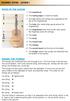 BEGINNER GUITAR - LESSON 1 PARTS OF THE GUITAR 1- The headstock. 2- The tuning pegs or machine heads. 3- The nut (where the strings are supported at the top of the fingerboard). 4- The frets (the metal
Beginners Guide to the Walkingbass
 Beginners uide to the Walkingbass Learning to play a new instrument can open up a whole new world of creativity. It certainly has for me. The 3-string Walkingbass is an easy instrument to learn, yet it
Standard 1: Skills and Techniques 1
 1 Standard 1: Skills and Techniques 1 CB.1.1 Instrument Knowledge Skills CB.1.1.1 Instrument in good playing condition- including proper assembly, reed care, and cleaning. CB.1.2 Playing Posture Skills
Intonation Tendencies of Band Instruments. Whitney Brainard MUS 461 Winter 2011
 + Intonation Tendencies of Band Instruments Whitney Brainard MUS 461 Winter 2011 + Daily tuning In band, make sure you warm up BEFORE tuning. If you are waiting to perform (ex. Festival), have students
GRADE THREE THEORY REVISION
 GRADE THREE THEORY REVISION Note Pitches Use flashcards to make sure you know all your notes including leger lines. Whenever you name a note remember to check the clef, keysignature, and for accidentals
Learning to play the piano
 Learning to play the piano INTRODUCTION TO THE KEYBOARD... 2 STEPPING UP... 2 TREBLE SPACES... 7 BASS SPACES... 9 TIME SIGNATURE... 12 UP AND DOWN THE HILLS... 15 UP AND DOWN THE HILLS IN G MAJOR... 16
Top 10 (+) Things That Beginning Clarinet Players Do Wrong. and How to Correct Them
 Top 10 (+) Things That Beginning Clarinet Players Do Wrong and How to Correct Them Marilyn Mattei www.matteimusicservices.com [email protected] 972-838-2443 Preface 1. Why did I develop this clinic?
B Flat Marching Flute
 AN INTRODUCTION TO THE B Flat Marching Flute LESSONS FOR BEGINNERS This instruction manual aims to provide a structured learning programme to assist the novice flute player to progress steadily on the
Bass Clarinet 101, Bass Clarinet for Dummies. By Edward Palanker
 Bass Clarinet 101, Bass Clarinet for Dummies By Edward Palanker The bass clarinet is a unique member of the clarinet family. If you don t voice it correctly in the upper register you re in for a surprise,
Bell Music Reading Course #1 Introduction 101. D. Rod Lloyd Columbia River Handbells 2010
 Bell Music Reading Course #1 Introduction 101 D. Rod Lloyd Columbia River Handbells 2010 1 How Music Works Music is a graphical presentation of sounds played in a precise, predetermined order. Music is
Advanced Techniques for the Walkingbass
 Advanced Techniques for the Walkingbass I have seen guys with 5 string basses who can t get half the sounds that you are getting out of just three. -Buddy Fo of the Invitations If you have read the Beginners
The Tuning CD Using Drones to Improve Intonation By Tom Ball
 The Tuning CD Using Drones to Improve Intonation By Tom Ball A drone is a sustained tone on a fixed pitch. Practicing while a drone is sounding can help musicians improve intonation through pitch matching,
Students' guide: Area of study 1 (The Western classical tradition 1650-1910)
 Students' guide: Area of study 1 (The Western classical tradition 1650-1910) This resource gives students a breakdown of Haydn's Symphony 101 in D major 'The Clock' movt. 2. It also offers guidance on
2017 NAfME All-Northwest Jazz Audition Materials Saxophones and Brass
 2017 NAfME All-Northwest Jazz Audition Materials Saxophones and Brass Track 1 Track 2 Track 3 Basic Audition The following three tracks are required of all wind applicants ALTO SAXOPHONE (pages 5-6) TENOR
Viola Time Book 2. RGP (Release, Glide and Press) Shifting Method 2
 Viola Time Book RGP (Release, Glide and Press) Shifting Method st Finger shifting without accidentals Exercise : st-rd Position shifting in C major Scale and arpeggio of C major Kayaking Down the Tarwin
MUSIC GLOSSARY. Accompaniment: A vocal or instrumental part that supports or is background for a principal part or parts.
 MUSIC GLOSSARY A cappella: Unaccompanied vocal music. Accompaniment: A vocal or instrumental part that supports or is background for a principal part or parts. Alla breve: A tempo marking indicating a
From Beginner to Intermediate Clarinetist. Crossing the Break. Going from the Chalumeau to the Clarion Register. William R.
 From Beginner to Intermediate Clarinetist Crossing the Break Going from the Chalumeau to the Clarion Register Chalumeau Register Clarion Register Beginner Intermediate William R. Higgins 2012 William R.
KODÁLY METHOD AND ITS INFLUENCE ON TEACHING WIND INSTRUMENTS IN HUNGARY
 KODÁLY METHOD AND ITS INFLUENCE ON TEACHING WIND INSTRUMENTS IN HUNGARY Jozsef Csikota Midwest Clinic Chicago, Illinois U.S.A. 15th December 2004 KODÁLY METHOD IN HUNGARIAN SCHOOLS In Hungary, every student
Music Theory. Level 1. Printable Music Theory Books. A Fun Way to Learn Music Theory. Student s Name: Class:
 A Fun Way to Learn Music Theory Printable Music Theory Books Music Theory Level 1 Student s Name: Class: American Language Version Printable Music Theory Books Level One Published by The Fun Music Company
SYMPHONY #9 ANTONIN DVORAK
 SYMPHONY #9 ANTONIN DVORAK Dvorak s Symphony #9 is one of the most beloved works in the symphonic repertoire. Having had the experience of conducting it many times, I have accumulated a list of ideas,
FREE CHORD BOOK Introduction
 FREE CHORD BOOK Introduction Hi, I m Andy and welcome to my chord book for beginners! Most chord books are packed full hundreds of chord diagrams, so many in fact it could take literally years to play
Study Kit No 9. Aura Lee (Love Me Tender)
 Study Kit No 9 Aura Lee (Love Me Tender) Reharmonization Study Kit No. 9 Aura Lee Author: Rosablanca Suen Web: www.learnpianowithrosa.com Email: [email protected] Cover Design: Raymond Suen Copyright
Beginner Flute Playing
 Beginner Flute Playing Created in partnership by Kent Bush & Merry Axtell Learning to Play the Native American Flute When compared with most other musical instruments, playing the Native American flute
Playing By Ear Who Can Play By Ear?... 2 How To Play By Ear... 3 Happy Birthday To You (By Ear)... 4 Match Tones... 5 Add Chords...
 Playing By Ear Who Can Play By Ear?... 2 How To Play By Ear... 3 Happy Birthday To You (By Ear)... 4 Match Tones... 5 Add Chords... 6 Allcanplay TM Piano * MaxLearning.Net 2009 * Playing By Ear * 4/6/2009
How to Read Music Notation
 How to Read Music Notation The New School of American Music IN JUST 30 MINUTES! C D E F G A B C D E F G A B C D E F G A B C D E F G A B C D E F G A B C D E 1. MELODIES The first thing to learn about reading
KAWAI VERTICAL PIANO REGULATION MANUAL
 KAWAI VERTICAL PIANO REGULATION MANUAL Vol 1.0 2011 1 25 KAWAI MUSICAL INSTRUMENTS MFG. CO., LTD. 1 Regulation Process Index 1 Tighten Screws, Check Action, Strike Point, Hammer Blow P3 2 Keys P4 3 Travel,
At the piano; learning a natural hand position; the steady beat; pre-reading: two black keys Learning finger numbers, posture, and arm weight;
 PREPARATORY 0 1 At the piano; learning a natural hand position; the steady beat; pre-reading: two black keys Learning finger numbers, posture, and arm weight; pre-reading: three black keys; double bar
Basic Music Theory for Junior Cert.
 1 Reading Different Clefs Basic Music Theory for Junior Cert. The most commonly used clefs are the treble and bass. The ability to read both of these clefs proficiently is essential for Junior Cert. Music.
Guitar Method Beginner: Book 1
 Guitar Method Beginner: Book 1 This book has been a project in the works for over a year, and now my dream of releasing it has finally come true. I would like to thank everyone who has encouraged or helped
The Secret Weapon for Bar Chords
 Created by BCM The Secret Weapon for Bar Chords This handy device will make it much easier to form bar chords on your guitar. It is an effective tool that will give you immediate results. No more hours
TEACHER S GUIDE to Lesson Book 1B
 Alfred s Basic Piano Library TEACHER S GUIDE to Lesson Book 1B PURPOSE To suggest an order of lesson activities that will result in a systematic and logical presentation of the material in Lesson Book,
Lesson 7 Contents. Overview of Lesson 7 1. F Chord Variation. G7 Chord Variation
 Lesson 7 Contents Use this table of contents to make sure your book pages are in correct order. You will need highlighters and/or colored pencils and a pencil or pen. If you have internet access, you can
C Chord. Play these three notes at the same time with your right hand. These three notes make up a C chord.
 This book will get you playing keyboard instantly-whether you read music or not. We put together a band with some of our friends and recorded some really fun music. The Instant Keyboard CD has songs ready
2010 Barry Liesch ch8 Drumming Guide for 10 Worship Styles 1
 2010 Barry Liesch ch8 Drumming Guide for 10 Worship Styles 1 9 pages 63 examples Chapter 8 Drumming Guide for 10 Worship Styles This chapter explores ways drumming can be performed in ten worship styles.
The concept and purpose of this program has four goals:
 Essential Music Theory for Fiddle is a program designed to help a first-year Fiddle student to learn how to play from the heart and rely less on printed sheet music and tablature. It is a practical application
22. Mozart Piano Sonata in B flat, K. 333: movement I
 22. Mozart Piano Sonata in B flat, K. 333: movement I (for Unit 3: Developing Musical Understanding) Background Information and Performance Circumstances Biography Mozart was born in Austria on the 27
How To Play The Harmonica
 How To Play The Harmonica CONTENTS 1. What kind of harmonica should I use? 2. How do I use the numbers over the words to the songs? 3. So what if I am not familiar with a song? 4. So how do I improve
Getting Started on the Hawaiian Steel Guitar
 Getting Started on the Hawaiian Steel Guitar Acoustic Hawaiian Steel Guitar Played in the Old Taro Patch Open G Tuning by Konabob - [email protected] When Hawaiians began playing guitars flat on their laps,
An Introduction to Chords
 1 An Introduction to Chords by David Gilson A chord is the musical sound produced by playing a number of notes at the same time. The sound of the chord is different depending on the key you are playing
The Instant Impresario Guitar Instruction Guide
 The Instant Impresario Guitar Instruction Guide (Everything you need to know to get playing right away!) First Things First: This guitar can either be powered by the AC Adapter (included) or via eight
Fry Phrases Set 1. TeacherHelpForParents.com help for all areas of your child s education
 Set 1 The people Write it down By the water Who will make it? You and I What will they do? He called me. We had their dog. What did they say? When would you go? No way A number of people One or two How
RECRUITMENT AND BALANCED INSTRUMENTATION by Vince Corozine
 RECRUITMENT AND BALANCED INSTRUMENTATION by Vince Corozine Most successful band programs do not appear by chance but are the result of careful planning, teaching experience, and professional expertise.
Musical Literacy. Clarifying Objectives. Musical Response
 North Carolina s Kindergarten Music Note on Numbering/Strands: ML Musical Literacy, MR Musical Response, CR Contextual Relevancy Musical Literacy K.ML.1 Apply the elements of music and musical techniques
Piano Accordion vs. Chromatic Button Accordion
 Piano Accordion vs. Chromatic Button Accordion Which is best, piano accordion (PA), or five row chromatic button accordion (CBA)? This is a question which is often debated in newsgroups. The question should
The Orchestra Woodwind and Brass
 The Orchestra 2009 29 minutes Program Synopsis Have you ever wondered what instruments make up an orchestra? In this program, Bobby, a young aspiring musician is introduced to different elements, roles
Arizona Music Standards
 Introduction Music is a subject with its own unique skills and knowledge, a respected repertoire of quality literature, an advanced system of notation and literacy, and a challenging form of cognition.
A MUSICAL APPROACH TO LEARNING THE BANJO NECK
 A MUSICAL APPROACH TO LEARNING THE BANJO NECK Introduction One of the things that has become clear to me, after a number of years of playing banjo, is that if I have any hope of improvising creatively
2012 Music Standards GRADES K-1-2
 Students will: Personal Choice and Vision: Students construct and solve problems of personal relevance and interest when expressing themselves through A. Demonstrate how musical elements communicate meaning
Learning To Play The Guitar An Absolute Beginner s Guide By Anthony Pell
 Learning To Play The Guitar An Absolute Beginner s Guide By Anthony Pell http://www.learningtoplaytheguitar.net All Rights Reserved. No part of this publication may be reproduced in any form or by any
Beginner Guitar Level I
 Welcome to Beginner Guitar Level I E A D G B E * Please fill out the student form * Who is this guy? E A D G B E Logistics, etc.. sign in / out everyday start promptly -> don t be late! breaks / bathrooms
Southern Gospel Collection. Rehearsal Tips By Dennis Allen
 Southern Gospel Collection Rehearsal Tips By Dennis Allen I m Standing on the Solid Rock with Leaning on the Everlasting Arms Southern Gospel music has several wonderful things going for it: memories and
Time allowed: 1 hour 30 minutes
 SPECIMEN MATERIAL GCSE MUSIC 8271 Specimen 2018 Time allowed: 1 hour 30 minutes General Certificate of Secondary Education Instructions Use black ink or black ball-point pen. You may use pencil for music
The Keyboard in Black and White
 Chapter 3 The yboard in Black and White In This Chapter Understanding the basics of the black and white key layout Learning about octaves and the range of a piano Discovering half steps and whole steps
Kino, Juana and Coyotito
 1 Kino, Juana and Coyotito K ino woke up early in the morning. The stars were still shining in the sky. The cockerels were beginning to crow 1 and the pigs were looking for something to eat. Outside the
Tonal Analysis of Different Materials for Trumpet Mouthpieces
 Greg Formosa PHYS 199 POM Project Write-up Tonal Analysis of Different Materials for Trumpet Mouthpieces INTRODUCTION: Trumpets have been noted as one of the oldest instruments in the world, and ever since
Keyboard Basics. By Starling Jones, Jr. http://www.starlingsounds.com& http://www.smoothchords.com
 Keyboard Basics By Starling Jones, Jr. In starting on the piano I recommend starting on weighted keys. I say this as your fingers will be adjusted to the stiffness of the keys. When you then progress to
For maximum effectiveness and safety, please read this Owner's Manual before using your Torso Track 2.
 For maximum effectiveness and safety, please read this Owner's Manual before using your Torso Track 2. TABLE OF CONTENTS Introduction...2 Important Safety Tips...3 Product Specifications...4 Set Up...5-6
MUSIC A. PROGRAM RATIONALE AND PHILOSOPHY
 MUSIC A. PROGRAM RATIONALE AND PHILOSOPHY The systematic development of musical skills, knowledge and perception is fundamental to the total development of the individual. Music education should begin
Everyone cringes at the words "Music Theory", but this is mainly banjo related and very important to learning how to play.
 BLUEGRASS MUSIC THEORY 101 By Sherry Chapman Texasbanjo The Banjo Hangout Introduction Everyone cringes at the words "Music Theory", but this is mainly banjo related and very important to learning how
Jim Hall Chords and Comping Techniques
 Jim Hall Chords and Comping Techniques Jazz guitar comping is an art form in its own right. The comping rhythms, melodies, and voicings of the greatest Jazz guitarists are delightful to listen to, with
How To Play Clarinet For Beginners
 How To Play Clarinet For Beginners Everything you need to get started on the clarinet with the best habits that will help you to play more easily and succeed quickly! Michelle Anderson Copyright @ 2014
acousticguitarworkshop.com RICK PAYNE SP FINGERSTYLE BLUES More chapters in the story of how to play Fingerstyle Blues
 acousticguitarworkshop.com RICK PAYNE SP FINGERSTYLE BLUES More chapters in the story of how to play Fingerstyle Blues 2 Fingerstyle Blues 2 - Contents Welcome to Fingerstyle Blues 2! In the first course,
GUITAR THEORY REVOLUTION. Part 1: How To Learn All The Notes On The Guitar Fretboard
 GUITAR THEORY REVOLUTION Part 1: How To Learn All The Notes On The Guitar Fretboard Contents Introduction Lesson 1: Numbering The Guitar Strings Lesson 2: The Notes Lesson 3: The Universal Pattern For
Sample of Version 2.0 of Swing & Jump Blues Guitar
 The Charlie Christian Approach Charlie Christian (1916 1942) was one of the first real swing guitar players that had a lasting influence on all other swing and jump guitar players after him. Even more
UKULELE CHORD SHAPES. More Strumming, Less Memorizing BRAD BORDESSA
 UKULELE CHORD SHAPES More Strumming, Less Memorizing BRAD BORDESSA TABLE OF CONTENTS GRATITUDES 2 9th 26 13th 26 INTRODUCTION 3 Altered 27 HOW TO USE THIS BOOK 4 Suspended 2 28 The Fingerboard 5 Suspended
Electric Guitar/Electric Bass/Acoustic Guitar/Classic Guitar Produced by ARIA Owner s Manual
 Electric Guitar/Electric Bass/Acoustic Guitar/Classic Guitar Produced by ARIA Owner s Manual Thank you for choosing an Aria instrument. Please take a moment to read through this owners manual. We will
Teach Sopranino Recorder
 Lesson Plans for Sopranino Recorder file://c:\users\user\appdata\local\temp\21847-020404-202323-80.a2k\index.html Page 1 of 1 Pages 1, 2 3, 4 5, 6 7, 8 9, 10 11, 12 13, 14 15, 16 17, 18 19, 20 21, 22 23,
6) Minor Seventh & Suspended Chords. 7) Barre Chords on the 6 th String. 8) Barre Chords on the 5 th String. 9) The Secret to Great Strumming
 Table of Contents SESSIONS 1) Starting Off Right Overview 3 Finger Exercise 1 5 Finger Exercise 2 6 Finger Exercise 3 7 Alternating Finger Exercise 8 C & G7 Chord Exercise 9 2) Reading Music & Notes on
GUITAR THEORY REVOLUTION
 GUITAR THEORY REVOLUTION The Major and Minor Pentatonic Scales Copyright Guitar Theory Revolution 2011 1 Contents Introduction 3 What are the Major and Minor Pentatonic Scales 3 Diagrams for all the Pentatonic
Expanding Your Harmonic Horizons
 2016 American String Teachers National Conference Expanding Your Harmonic Horizons Harmony Clinic for Harpists Presented By Felice Pomeranz Publications used as resources from Felice's Library of Teaching
2.13 Guitar notation and tab
 reference.book Page 103 Sunday, March 9, 2008 11:12 PM! 1.5 Guitar tab input, 2.7 Chord diagrams, 2.17 Lute tablature, 8.16 ASCII tab files. Guitar music features a wide array of special markings including
How to create bass lines
 First rule: always memorize the melody of the song! Always. Always. Always. You should be able to sing and play it in the original key. If you really want to be totally extra, extra awesome, you will be
Silver Burdett Making Music
 A Correlation of Silver Burdett Making Music Model Content Standards for Music INTRODUCTION This document shows how meets the Model Content Standards for Music. Page references are Teacher s Edition. Lessons
California Treasures High-Frequency Words Scope and Sequence K-3
 California Treasures High-Frequency Words Scope and Sequence K-3 Words were selected using the following established frequency lists: (1) Dolch 220 (2) Fry 100 (3) American Heritage Top 150 Words in English
GEORGE GOODMAN S HARMONICA CHEAT SHEET By George Goodman. Copyright 2014 George Goodman GeorgeGoodman.com 2 nd Edition, License Notes
 GEORGE GOODMAN S HARMONICA CHEAT SHEET By George Goodman Copyright 2014 George Goodman GeorgeGoodman.com 2 nd Edition, License Notes Thank you for downloading this free ebook. Although this is a free book,
Dear Trumpet Teacher,
 Dear Trumpet Teacher, I hope you enjoy this free sample of Sound Habits Brass Builder for Trumpet. Included you will find some of the introductory text, the table of contents, instructions for the first
Guitar Reference. By: Frank Markovich
 Guitar Reference By: Frank Markovich Guitar Reference Introduction The purpose of this book is to give the student the reference materials for learning how to play the guitar. In this book you will find
Mathematical Harmonies Mark Petersen
 1 Mathematical Harmonies Mark Petersen What is music? When you hear a flutist, a signal is sent from her fingers to your ears. As the flute is played, it vibrates. The vibrations travel through the air
Setting Up Synthetic Drone Reeds The Kinnaird Way By Rob Kinnaird
 www.kinnairdbagpipes.com 923 Emmeline Terrace Saskatoon, SK. Canada S7J 5G7 Phone: 306-249-2939 Fax: 306-249-2933 [email protected] Setting Up Synthetic Drone Reeds The Kinnaird Way By Rob Kinnaird
Instructions for Using the Watch Works Tool Kit to Change a Watch Battery
 Instructions for Using the Watch Works Tool Kit to Change a Watch Battery Click on this link http://www.allamericanwatches.com/site/626101/product/e2306-a to purchase the Watch Battery Replacement Tool
The open strings. There are notes all up and down the neck of the ukulele when you put your finger behind any of the frets and play just one string.
 The open strings It is important to tune your ukulele each time that you play it When your ukulele is in tune, it trains your ear to hear the right notes. Each string sounds a single note. You can remember
Foundation Course. Study Kit No 1. Away In A Manger
 Foundation Course Study Kit No 1 Away In A Manger Reharmonization Study Kit No. 1 Away In A Manger Author: Rosablanca Suen Web: www.learnpianowithrosa.com Email: [email protected] Cover Design:
STRINGS OF THE ORCHESTRA WORKSHEET
 STRINGS OF THE ORCHESTRA WORKSHEET THE VIOLIN The development of the modern violin stems from of instruments available in Europe during the middle Ages. Some historians even suggest that the origins of
Guitar Rubric. Technical Exercises Guitar. Debut. Group A: Scales. Group B: Chords. Group C: Riff
 Guitar Rubric Technical Exercises Guitar Debut In this section the examiner will ask you to play a selection of exercises drawn from each of the three groups shown below. Groups A and B contain examples
PUSD High Frequency Word List
 PUSD High Frequency Word List For Reading and Spelling Grades K-5 High Frequency or instant words are important because: 1. You can t read a sentence or a paragraph without knowing at least the most common.
Swing & Jump Blues Guitar Matthieu Brandt
 Swing & Jump Blues Guitar Matthieu Brandt Goto www.swingblues.com for more on Swing and Jump Blues Guitar. 1997-2016 No part of this material (book/cd/website) may be reproduced in any way without prior
Keyboard FUNdamentals James Lambert & Judy Moonert
 1 I. BASIC MUSIC THEORY A beginning mallet percussionist must memorize the 12 major scales. These scales relate to other harmonic information that the student will need. With each marimba bar one half
Sample Entrance Test for CR125-129 (BA in Popular Music)
 Sample Entrance Test for CR125-129 (BA in Popular Music) A very exciting future awaits everybody who is or will be part of the Cork School of Music BA in Popular Music CR125 CR126 CR127 CR128 CR129 Electric
Appendix C. Sample Lesson Plans and Templates
 Appendix C Sample Lesson Plans and Templates 571 Lesson Plan - Sample Template I Lesson Overview: Level Suitability: Learning Outcomes: Students will: Supplies: Instructional Plan: Introductory Activity(ies)
Definitive Piano Improvisation Course
 Definitive Piano Improvisation Course By Yoke Wong 2007 Harmony and Melody Studio Inc Contents Pages Introduction Pentatonic Scale Improvisation 1 Country Western Style Made Easy 4 Left Hand Harmonizing
Chords and More Chords for DGdg Tenor Banjo By Mirek Patek
 Chords and More Chords for DGdg Tenor Banjo By Mirek Patek This tenth article about the fingerstyle tenor banjo in DGdg tuning will be focused on banjo accompaniment, i.e. on playing chords. The goal is
1. interpret notational symbols for rhythm (26.A.1d) 2. recognize and respond to steady beat with movements, games and by chanting (25.A.
 FIRST GRADE CURRICULUM OBJECTIVES MUSIC I. Rhythm 1. interpret notational symbols for rhythm (26.A.1d) 2. recognize and respond to steady beat with movements, games and by chanting (25.A.1c) 3. respond
www.ptg.org Visit the Piano Learning Center of the Piano Technicians Guild at www.ptg.org for more fun ways to learn about the piano.
 Piano Science Connect Music and Science Age: Elementary, Middle School The piano is one of the most interesting musical instruments you can learn to play. www.ptg.org It is also one of the most versatile
Introduction to Guzheng
 Introduction to Guzheng Guzheng is a Chinese musical instrument that has a history dating back to 500 BC It has many descendants all over Asia, such as the koto of Japan, the kayagum of Korea, and the
Ho Sin Sul. Defense against wrist grabs:
 Ho Sin Sul Ho Sin Sul are ways to escape from attackers who grab, choke or attempt some other form of assault, especially one where they get hold of your body or clothes. While these moves are a memorized
Rehearsal Strategies A Night in Tunisia By Reginald Thomas, Professor of Jazz Piano Michigan State University, East Lansing, MI
 Rehearsal Strategies A Night in Tunisia By Reginald Thomas, Professor of Jazz Piano Michigan State University, East Lansing, MI Do you remember the first time you heard this jazz classic, A Night In Tunisia?
National Standards for Music Education
 National Standards for Music Education 1. Singing, alone and with others, a varied repertoire of music. 2. Performing on instruments, alone and with others, a varied repertoire of music. 3. Improvising
How to Improvise Jazz Melodies Bob Keller Harvey Mudd College January 2007 Revised 4 September 2012
 How to Improvise Jazz Melodies Bob Keller Harvey Mudd College January 2007 Revised 4 September 2012 There are different forms of jazz improvisation. For example, in free improvisation, the player is under