
Poverty in Nigeria: Some Dimensions and Contributing Factors
|
|
|
- Gerard Webb
- 9 years ago
- Views:
Transcription
1 Global Majority E-Journal, Vol. 1, No. 1 (June 2010), pp Poverty in Nigeria: Some Dimensions and Contributing Factors Chimobi Ucha Abstract Unemployment, corruption, non-diversification of the economy, income inequality, laziness, and a poor education system can be considered to be some of the key factors contributing to poverty in Nigeria. This article analyzes these factors after reviewing some of the most recent contributions to the literature and summarizing some of the key dimensions of poverty in Nigeria. It also shows that there are various linkages between the six key factors as well as enforcing feedbacks from the various dimensions of poverty in Nigeria. I. Introduction Poverty is a multidimensional phenomenon. The World Development Report 2000/2001 (see World Bank, 2001) summarizes the various dimensions as a lack of opportunity, lack of empowerment and a lack of security. The window of opportunity remains closed to the poor masses, and this makes them practically inactive in the society. Their lack of empowerment limits their choices in almost everything and their lack of security makes them vulnerable to diseases, violence and so on. Similarly, a United Nations statement says: Poverty is a denial of choices and opportunities, a violation of human dignity. It means lack of basic capacity to participate effectively in society. It means not having enough to feed and clothe a family, not having a school or clinic to go to; not having the land on which to grow one s food or a job to earn one s living, not having access to credit. It means insecurity, powerlessness and exclusion of individuals, households and communities. It means susceptibility to violence, and it often implies living on marginal or fragile environments, without access to clean water or sanitation. 1 1 United Nations Statement of June 1998, which was signed by the heads of all UN agencies; see: 46

2 In Nigeria, widespread and severe poverty is a reality. It is a reality that depicts a lack of food, clothes, education and other basic amenities. Severely poor people lack the most basic necessities of life to a degree that it can be wondered how they manage to survive. There are several effects and deficiencies associated with poverty in Nigeria. One of the main effects of poverty is poor health, as is reflected in Nigeria s high infant mortality and low life expectancy. Poor people in Nigeria face several health issues as they lack basic health amenities and competent medical practitioners. Most children do not have the opportunity of being immunized and this leads to certain physical defects in some of the children. Their health has become low priority and as they have little or no choices, they live with whatever they are provided with, whether healthy or not. This article focuses on some of the key factors that contribute to poverty in Nigeria: (1) unemployment, especially among young graduates; (2) corruption, especially among political office holders; (3) non-diversification of the economy; (4) income inequality; (5) laziness, especially among those who come from wealthy households; and (6) a poor education system. Some of these could also be considered to be causes of poverty. While the distinction between causes and effects of poverty is fuzzy, our discussion below will show that these factors seem more likely to be causes than effects of poverty in Nigeria. Some of the more obvious effects or dimensions of poverty in Nigeria are provided in the section on empirical background. II. Literature Review: There is a relatively large literature addressing poverty in Nigeria. The following three publications are some of the most recent contributions. According to Garcia, Kohl, Ruengsorn and Zislin (2006), Nigeria s main challenges include, reducing poverty, diversifying its economy from the oil and gas sector towards more labor intensive sectors, and improving health and education. The oil has increased economic volatility and inflation while those living in poverty being most vulnerable to volatility and inflation. To add to it, instability of government revenues and a crowding out of agriculture (which provides the source of income to the poor) have made the situation worsen. The oil industry does not employ a sizeable number of unskilled workers, thereby contributes little to reducing poverty. 2 Ford (2007) discusses the oil crisis in the oil producing region of Nigeria. He states that poverty has been linked to high crime rates, especially in the Niger Delta region where there is a sharp contrast between the rich and the poor. The masses cause social unrest because the wealth gotten from their territory does not get to them. In the Nigerian society, the best way to acquire wealth is to enter the political sphere. Most of the time political success is tied to criminal activities. He ends the article by stating that the link between economic and political power must me broken for progress to be made. Nnadi (2008) discusses the various impacts of globalization on the Nigerian economy. These impacts have resulted to social and economic problems in the 2 Garcia, Kohl, Ruengsorn and Zislin (2006), p

3 country such as inequality, the emergence of a social underclass and low development. He also states that globalization has affected Nigeria s economic growth through a decline of foreign direct investment and that for unemployment, poverty and inequality to be alleviated Nigeria s economic policies need to be changed. III. Empirical Background: Some Dimensions of Poverty in Nigeria Nigeria is a West African country with about 152 million people (as of 2008). It is by far the most populous country in the whole of Africa. Although Nigeria s GDP per capita has been increasing through the course of time in nominal US dollar terms (see Figure 1), many Nigerians are still living in poverty. Obviously, the average income per capita does not give the real picture due to Nigeria s high income inequality, which will be discussed in more details in the next section. According to the World Resources Institute s environmental resource portal Earth Trends, about 71 percent of Nigerians live on less than $1 a day and about 92 percent live on less than $2 a day. 3 Figure 1: GDP per capita in current international dollars, Source: World Bank (2008) World Development Indicators 2008, CD-Rom. Though data on poverty is many times controversial, this seems to be confirmed by the data provided by the United States Central Intelligence Agency s World Factbook (henceforth CIA Factbook), 4 which stated that 70 percent of the Nigerian population lived below the poverty line in On the other hand, based on the World Bank s 3 See

4 World Development Indicators 2008 CD-Rom, Nigeria s prevalence of undernourished is with about 10 percent of the population over the last decade inconsistent with 70 percent of the people living below the poverty line, especially as the prevalence of undernourished in Sub-Saharan Africa is given to be at around 30 percent over the last decade. Anyway, it is clear that given the rich natural resources, the level of poverty in Nigeria is remarkably high. While data on Nigeria s poverty over time remains scattered, there is some evidence that Nigeria s poverty has actually increased over time. 5 Nigeria also ranks third in the world for the most people living with HIV/AIDS and has the third highest death rate as a result of HIV/AIDS (CIA Factbook). Nigeria s infant mortality rate has been estimated to be currently 99 per 1000 births, which implies that Nigeria has the thirteenth highest infant mortality rate in the world (CIA Factbook). The infant mortality of children under the age of 5 was 189 per 1000 births in These high mortality rates are mostly due to mothers not having enough money to take care of their children. Many mothers are also ignorant of some preventive measures such as immunizations and vaccines. The immunization rate against diphtheria, pertussis and tetanus (DPT) for children between months was about 54 percent in Many children in Nigeria die as a result of malaria, diarrhea, tetanus and similar diseases. Most of these are preventable and curable diseases, but due to inadequate health care facilities and lack of money far too many children die off from them. Like the grown-up population, many children also lack access to safe water and sanitation, which typically leads to several diseases. When compared to Sub-Saharan Africa, Nigeria seems to be better off in a few economic and social aspects but worse off in most. This is illustrated with some selected economic and social data in Table 1. First of all, the average Nigerian is slightly poorer in terms of GDP per capita than the average person in Sub-Saharan Africa. Second, the life expectancy of an average Nigerian at birth has been estimated to be as low as 47 years, which is again slightly topped by that of Sub-Saharan Africa (51 years). In terms of gross primary enrollment in 2006, Nigeria was with 96.2 percent slightly better off than Sub- Saharan Africa (93.2 percent), though Nigeria s gross primary enrollment for girls was slightly below that of Sub-Saharan Africa. Nigeria s immunization rates for both DPT and measles are relatively low compared to Sub-Saharan Africa which rates as high as 72 percent in DPT and 71 percent in measles, while Nigeria s immunization rates are still at 54 percent and 62 percent, respectively for DPT and measles. 5 For example, according to the Encyclopedia of Nations [ Nigeria s GDP per capita declined from $1,200 in 1981 to about $300 in It also states that while the standard of living has declined for many Nigerians, it has improved substantially for a few, mostly the already better off. It has also been stated that the number of people below the poverty line has been on the rise in Sub- Saharan Africa, with 45 percent of the population living below the international poverty line of $1 a day. The region is said to have the highest level of intra-regional poverty as half of its population is classified as poor (see the Organization of the Islamic Conference (OIC), Statistical, Economic and Social Research and Training Centre for Islamic Countries (SESRTCIC) (2007), p. 8). 49

5 Table 1: Selected Poverty and Social Data for Nigeria and Sub-Saharan Africa Nigeria Sub-Saharan Africa Basic Data (2007) Population, mid-year (millions) GNI per capita (Atlas method, US $) GNI (Atlas method, US $) Average Annual Growth ( ) Population (%) Labor Force (%) Most Recent Estimate ( ) Life expectancy at birth (years) Infant mortality (per 1000 live births) Child Malnutrition (% of children under 5) Access to an improved water source (% of population) Literacy (% of population age 15+) Gross primary enrollment (% of school-age population) Male Female Source: World Bank (2008), Nigeria at a glance, available at: As Figure 2 shows, Nigeria s infant mortality rate stood at 140 per 1000 births in Although there was some progress during the 1970s, an increase was noticed by During the subsequent ten years, Nigeria made zero progress in reducing infant mortality. Following some progress in the late 1990s and early 2000s, Nigeria s infant mortality rate is today about the same as it was since Figure 2 also shows that Sub-Saharan Africa has been making more progress on the issue of infant mortality than Nigeria. Figure 2: Infant Mortality (per 1000 live births) in Nigeria and SSA, Nigeria SSA Source: World Bank (2008) World Development Indicators 2008, CD-Rom. 50

6 IV. Some Key Factors Contributing to Poverty in Nigeria IV.1. Unemployment Unemployment is a major factor contributing to poverty in Nigeria. There is a strong correlation between unemployment and poverty. When people are unemployed, their source of livelihood depletes over time. The cost of living becomes high and the standard of living goes down. There are many people in Nigeria who lack the opportunity of being employed. The formal unemployment rate in Nigeria as estimated by the World Bank in 2007 was 4.9 percent and Nigeria ranked 61 st across the worlds countries (CIA Factbook). As reported by Teshome (2008), the then newly released African Development Indicators report of the World Bank showed that education, once seen as the surest, undisputed gateway to employment, no longer looks so certain. This is very true in the case of Nigeria. The fact that you are an educated Nigerian is no guarantee that you will be employed. Furthermore, according to the World Bank report, unemployment in Africa is higher among those who have attained a higher education of some kind, and also those in wealthy households because they depend solely on the wealth of their families and do not consider employment a priority. Many graduates in Nigeria wander the streets without anything reasonable to do for a living. The government is capable but unwilling to provide jobs for them. Employment in Nigeria is usually not based on merit but depends on how connected you are with people that have power. This leaves many highly qualified people in poverty as seemingly no one cares to know what they are capable of achieving. These people are missing out on the income they would have gotten if they were employed. The number of quality jobs in the economy is low and many government resources are misallocated. Unemployment-induced poverty tends to increase the crime rate and violence in the country. Most unemployed youths resort to crimes such as armed robbery, kidnapping for ransom, internet fraud and other forms of fraudulent activities. The reservation wage they get from these activities is typically barely enough to take care of their basic necessities. IV.2 Corruption Transparency International defines corruption as the abuse of entrusted power for private gain. 6 This has become a common act in Nigeria and it has destabilized the political system drastically. Government funds are being misappropriated on a daily basis by the leaders, who only put the interest of their family and friends at heart while ignoring the masses. The corruption has eaten so deeply into the government and economy that everyone seems to be blinded by it. Corruption has almost become an accepted way of life in Nigeria. In Nigeria, the government s income is generated mostly from natural resource revenues. This income, instead of being used for developmental purposes, is then circulated among the political office holders and their families, leaving the rest of the people to wallow in poverty. Political leaders practically ignore the affairs and wellbeing of their people who 6 See 51

7 elected them into office. They mismanage and embezzle funds. There are several issues involved with bad governance in Nigeria, use of wrong policies, adaptation to wrong policies and implementation of those wrong policies. In any case, it is clear that Nigeria s corruption has increased poverty and inequality as well as contributed to high crime rates. IV.3. Non-Diversification of the Economy Oil Over-Dependency While Nigeria s poverty has been identified to be caused by many factors, Nigeria s nondiversification of the economy can be seen as a major factor. Before 1970, the Nigerian economy was driven by the agricultural sector. The oil sector which only constituted 1 percent of the country s export revenue in 1958 rose to 97 percent by 1984 and has since then not gone below 90 percent. In 2008, the oil and gas sector constituted about 97.5 percent of their export revenues, 81 percent of government revenues and about 17 percent of GDP. 7 In Nigeria, those in power have practically ignored other sources of income, and today, Nigeria depends heavily on exporting oil. This dependency on natural resources is often referred to as Dutch disease, whereby natural resources make a country less competitive. Excluding the few working in the oil sector, the majority of the people have been impoverished as their products have become irrelevant. The agricultural sector, which was their major means of income before the discovery of oil, is considered almost useless. Beyond the Dutch disease, Nigeria s abundance of a natural resource has led to what is known as a resource course, which is reflected in the Niger Delta Crisis (reflecting the region of the country where most of the oil is coming from). The people in this region are fighting for resource control as they claim the government is not fulfilling their promise of giving them the large part of the oil revenues. The wealth from natural resources in Nigeria is supposed to be working with the derivation policy, but this policy is not functional in any way, as the oil-producing states are still impoverished and this policy is supposed to work in a way such that these states with these natural resources should be able to get a large part of the countries revenue as they contribute a lot to the national wealth. According to Collier (2007), resource wealth sometimes contributes to a conflict trap and the surplus from natural resource exports reduces growth. He goes on to discuss the case of Nigeria in the 1970s, when other exports of the country like agriculture became nonprofitable due to increase oil revenues. He explains how the Dutch disease can damage the growth process by closing out on the exports in other promising sectors of the economy. The first half of the 1980s gave rise to a huge oil boom in Nigeria and also led to excessive government borrowing and investment on wasteful projects that made the corruption in the country more apparent. As the world price of oil crashed in 1986, Nigeria s oil revenues reduced drastically and Nigeria s external debt increased drastically. The introduction of the structural adjustment program (SAP) was one of the 7 The relatively low contribution of the oil and gas sectors to GDP has been due to the ongoing security crisis in the Niger delta region. According to Nigeria s National Bureau of Statistics ( the share of the oil and gas sector in GDP has typically been between 25 to 30 percent in most of the recent years. 52

8 government reforms advocated by the international financial institutions to reduce Nigeria s oil dependency. Despite increased national output in non-oil sectors, poverty and social indicators worsened as most of the revenues generated were used for servicing Nigeria s external debt. Nigerians have blamed the soaring poverty level despite the increase in output to the introduction of the reforms and policies introduced during the late 1980s. Nigerians hence came to the conclusion that there was a conspiracy by world financial institutions to take their country down. IV.4. Inequality Inequality implies a concentration of a distribution, whether one is considering income, consumption or some other welfare indicators or attributes (see Oyekale, Oyekale and Adeoti, 2007). There was an increase in income disparity after the economic growth which Nigeria experienced between , and this income inequality has increased the dimension of poverty in the country (Oluwatayo, 2008, p. 1). The income inequality between the people in rural and urban areas in Nigeria is remarkably high, as those who live in the rural areas base all their income on agriculture which is today not a thriving sector in Nigeria as oil has taken over the economy. They do not invest their money to acquire skills as people in the urban areas would and this makes them more vulnerable to poverty and leads to some social and economic problems such as violence, corruption and so on (Oluwatayo, 2008, p. 2). Table 2 shows that there is a very high disparity between the income of the richest 10 and 20 percent and the poorest 10 and 20 percent. In 2003, the income of the poorest 10 percent of Nigeria s population was only 1.9 percent, while that of the richest 10 percent was 33.2 percent. Table 2 also shows that the income share of the richest 10 percent has decreased slightly compared to 1996 (37.1 percent), though the 2003 share remains higher than what it was in 1993 (32.5 percent). A more equal distribution of Nigeria s income would go a long way in reducing the rate of poverty, but because it is typically the rich people who hold political offices or are related to those holding political office, income remains concentrated among the rich. Table 2: Nigeria s Income Inequality, Income Shared by Lowest 10% Income Shared by Lowest 20% Income Shared by Highest 10% Income Shared by Highest 20% Source: World Bank (2008) World Development Indicators 2008, CD-Rom. 53

9 IV.5. Laziness Laziness is a common disease which is virtually suffered by many Nigerians today, especially those from wealthy households. Everyone wants to be comfortable but they are not ready to work towards it. This often leads to greed where people will do whatever they can to keep the family wealth for themselves. In most families, everyone depends on the bread winner, who works so much to keep the family going and when he dies the family is likely to become poor because of mismanagement of funds. In most Nigerian families, the death of the bread winner means the death of the whole family fortunes; because everyone was depending on him/her to provide everything. IV.6. Poor Education System Education can play a major role in reducing poverty. According to the World Bank, education is central to development. It promotes economic growth, national productivity and innovation, and values of democracy and social cohesion. In Nigeria, the population with no education account for most of the poor. The education system in Nigeria can be regarded as a failure compared to other countries in the world. The United Nations Universal Declaration of Human Rights 8 states that everyone has the right to an education. This right to education has been denied to many Nigerians, of which many of them can be considered invisible to the society now. This deprivation of education applies more to females than males, because they are considered the inferior sex. Hence educating them is seen as unnecessary as they are expected to marry as early as possible. V. Conclusion Poverty is multi-dimensional and even though it is difficult to separate the various dimensions of poverty from the various causes of poverty, in the case of Nigeria, we have shown that unemployment, corruption, the non-diversification of Nigeria s economy, inequality, laziness, and a poor education system are some of the key determinants of poverty. These determinants are many times related to each other and also enforce each other. For example, unemployment, poor education and poverty can be seen as vicious cycle. Today, people who are not educated lack the opportunity of being hired for good jobs, and the poor masses today still cannot afford to go to school which makes them the poor unemployed masses tomorrow. Hence, all these factors are correlated and must all be tackled together if any progress wants to be made. Being educated does not necessarily mean you will be employed. Many people graduate from school and stay for years without a job. This is partly due to a lack of employment opportunities as well as corruption. Many offices hire solely by preference, not by merit. Preferential treatments have become the order of the day, and this increases the number of unemployed graduates. Nigeria needs to do more for the employment of young graduates, which will also help in reducing crime rates, as many youths resort to crime for survival. A factor that is very critical for Nigeria is the need for economic diversification. As the Niger Delta crisis suggests, if there is a problem in the oil sector, the whole country is 8 See 54

10 facing economic and social problems as oil contributes about 97 percent of Nigeria s export revenues. More investments need to be made in the agricultural sector and other promising sectors of the economy. Finally, there are various aspects of poverty that have not been discussed in this article. For example, the area of health care also needs more attention, especially with regards to reducing Nigeria s high rate of infant mortality. Many children are dying from several preventable diseases, such as cholera, malaria and so on. By providing clean water and adequate health care services, the government can save the lives of these infants. References Collier, Paul (2007) The Bottom Billion: Why the Poorest Countries are Failing and What Can Be Done About It (Oxford and New York: Oxford University Press). Ford, Neil (2007) Nigeria: Pouring Oil on Delta s Troubled Waters? African Business, Wednesday, August 1, 2007; available at: Garcia, Rose Mary; Richard Kohl; Ann Ruengsorn; and Julia Zislin (2006) Nigeria: Economic Performance Assessment (Washington, DC: United States Agency for International Development (USAID), February); available at: Nnadi, Stanley E. (2008) The Impact of Globalization on the Nigerian Economy, Minneapolis, Minnesota: Walden University, Dissertation; available at: Oluwatayo, I. B. (2008) Explaining Inequality and Welfare Status of Households in Rural Nigeria: Evidence from Ekiti State, Humanity & Social Science Journal, Vol. 3, No. 1, pp ; available at: Oyekale, A. S.; T. O. Oyekale; and A. I. Adeoti (2007) Regression-Based Approach to Income Inequality Decomposition in Rural and Urban Nigeria, International Journal of Economic Perspectives, Vol. 1, No. 2, pp Organization of the Islamic Conference (OIC), Statistical, Economic and Social Research and Training Centre for Islamic Countries (SESRTCIC) (2007) Poverty in Sub- Saharan Africa: The Situation in the OIC Member Countries (Ankara, Turkey: OIC, Statistical, Economic and Social Research and Training Centre for Islamic Countries (SESRTCIC), A Preliminary Report (February)); available at: Teshome, Mekonnen (2008) Multi-sectoral Approach to Cope with African Youth Unemployment, waltainfo of Tuesday, December 9, 2008; available at: &Itemid=82. World Bank (2001) World Development Report 2000/2001 Attacking Poverty (New York: Oxford University Press). 55

11 World Bank (2008) Nigeria at a Glance, Washington, DC: The World Bank; available at: World Bank (2008) World Development Indicators 2008, CD-Rom (Washington, DC: The World Bank). 56

Briefing note for countries on the 2015 Human Development Report. Niger
 Human Development Report 2015 Work for human development Briefing note for countries on the 2015 Human Development Report Niger Introduction The 2015 Human Development Report (HDR) Work for Human Development
Briefing note for countries on the 2015 Human Development Report. Burkina Faso
 Human Development Report 2015 Work for human development Briefing note for countries on the 2015 Human Development Report Burkina Faso Introduction The 2015 Human Development Report (HDR) Work for Human
Congo (Democratic Republic of the)
 Human Development Report 2015 Work for human development Briefing note for countries on the 2015 Human Development Report Congo (Democratic Republic of the) Introduction The 2015 Human Development Report
Hunger and Poverty: Definitions and Distinctions
 Hunger and Poverty: Definitions and Distinctions The Hunger Project 5 Union Square West New York, NY 10003 www.thp.org Hunger and poverty are powerful but familiar terms. Everyone knows what they mean,
Sierra Leone. Country coverage and the methodology of the Statistical Annex of the 2015 HDR
 Human Development Report 2015 Work for human development Briefing note for countries on the 2015 Human Development Report Sierra Leone Introduction The 2015 Human Development Report (HDR) Work for Human
Tanzania (United Republic of)
 Human Development Report 2015 Work for human development Briefing note for countries on the 2015 Human Development Report Tanzania (United Introduction The 2015 Human Development Report (HDR) Work for
Briefing note for countries on the 2015 Human Development Report. Mozambique
 Human Development Report 2015 Work for human development Briefing note for countries on the 2015 Human Development Report Mozambique Introduction The 2015 Human Development Report (HDR) Work for Human
Malawi. Country coverage and the methodology of the Statistical Annex of the 2015 HDR
 Human Development Report 2015 Work for human development Briefing note for countries on the 2015 Human Development Report Malawi Introduction The 2015 Human Development Report (HDR) Work for Human Development
Madagascar. Country coverage and the methodology of the Statistical Annex of the 2015 HDR
 Human Development Report 2015 Work for human development Briefing note for countries on the 2015 Human Development Report Madagascar Introduction The 2015 Human Development Report (HDR) Work for Human
Nepal. Country coverage and the methodology of the Statistical Annex of the 2015 HDR
 Human Development Report 2015 Work for human development Briefing note for countries on the 2015 Human Development Report Nepal Introduction The 2015 Human Development Report (HDR) Work for Human Development
Education is the key to lasting development
 Education is the key to lasting development As world leaders prepare to meet in New York later this month to discuss progress on the Millennium Development Goals, UNESCO s Education for All Global Monitoring
An overview of Zambia's economic and poverty situation
 Chapter 1: An overview of Zambia's economic and poverty situation Introduction Poverty is the most profound challenge that Zambia faces today. It is a social crisis with the majority of people denied a
Thailand. Country coverage and the methodology of the Statistical Annex of the 2015 HDR
 Human Development Report 2015 Work for human development Briefing note for countries on the 2015 Human Development Report Thailand Introduction The 2015 Human Development Report (HDR) Work for Human Development
El Salvador. Country coverage and the methodology of the Statistical Annex of the 2015 HDR
 Human Development Report 2015 Work for human development Briefing note for countries on the 2015 Human Development Report El Salvador Introduction The 2015 Human Development Report (HDR) Work for Human
Russian Federation. Country coverage and the methodology of the Statistical Annex of the 2015 HDR
 Human Development Report 2015 Work for human development Briefing note for countries on the 2015 Human Development Report Russian Federation Introduction The 2015 Human Development Report (HDR) Work for
Briefing note for countries on the 2015 Human Development Report. Philippines
 Human Development Report 2015 Work for human development Briefing note for countries on the 2015 Human Development Report Philippines Introduction The 2015 Human Development Report (HDR) Work for Human
Health and Longevity. Global Trends. Which factors account for most of the health improvements in the 20th century?
 8 Health and Longevity The health of a country s population is often monitored using two statistical indicators: life expectancy at birth and the under-5 mortality rate. These indicators are also often
UNICEF in South Africa
 UNICEF in South Africa A message from the Representative 47,900,000 people live in South Africa 20,200,000 are children 294,000 children are HIV-positive 1 in 17 children die before their fifth birthday
United Kingdom. Country coverage and the methodology of the Statistical Annex of the 2015 HDR
 Human Development Report 2015 Work for human development Briefing note for countries on the 2015 Human Development Report United Kingdom Introduction The 2015 Human Development Report (HDR) Work for Human
Goal 1: Eradicate extreme poverty and hunger. 1. Proportion of population below $1 (PPP) per day a
 Annex II Revised Millennium Development Goal monitoring framework, including new targets and indicators, as recommended by the Inter-Agency and Expert Group on Millennium Development Goal Indicators At
Chapter 1. What is Poverty and Why Measure it?
 Chapter 1. What is Poverty and Why Measure it? Summary Poverty is pronounced deprivation in well-being. The conventional view links well-being primarily to command over commodities, so the poor are those
Briefing note for countries on the 2015 Human Development Report. Palestine, State of
 Human Development Report 2015 Work for human development Briefing note for countries on the 2015 Human Development Report Palestine, State of Introduction The 2015 Human Development Report (HDR) Work for
Trinidad and Tobago Strategic Actions for Children and GOTT-UNICEF Work Plan 2013-2014 1
 Trinidad and Tobago Strategic Actions for Children and GOTT-UNICEF Work Plan 2013-2014 1 The Trinidad and Tobago Strategic Actions for Children and the Government of Trinidad and Tobago-UNICEF Work Plan
30% Opening Prayer. Introduction. About 85% of women give birth at home with untrained attendants; the number is much higher in rural areas.
 This is the second of four studies on maternal health M AT E R N A L a n d C H I L D H E A LT H : A f g h a n i s t a n b y K a r e n B o k m a About 85% of women give birth at home with untrained attendants;
What Is Poverty and Why Measure It?
 Chapter What Is Poverty and Why Measure It? Summary Poverty is pronounced deprivation in well-being. The conventional view links wellbeing primarily to command over commodities, so the poor are those who
Canada and Africa: A Contrast
 Canada and Africa: A Contrast In this lesson, students will examine statistics pertaining to nations in Sub-Saharan Africa to which Canada contributes foreign aid. The students will be expected to summarize
INDICATOR REGION WORLD
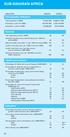 SUB-SAHARAN AFRICA INDICATOR REGION WORLD Demographic indicators Total population (2005) 713,457,000 6,449,371,000 Population under 18 (2005) 361,301,000 2,183,143,000 Population under 5 (2005) 119,555,000
Nigeria: Population and Demographic trends
 Nigeria: Population and Demographic trends Bolatito Ogunbiyi Atlas Fellow, Population Action International Nigeria Beyond the Headlines: Population Health, Natural Resources, and Governance The Woodrow
Economic Planning in China by Gregory C. Chow, Princeton University CEPS Working Paper No. 219 June 2011
 Economic Planning in China by Gregory C. Chow, Princeton University CEPS Working Paper No. 219 June 2011 Economic Planning in China Gregory C. Chow This paper provides an up-to-date study of economic planning
HUMAN RESOURCES AND ECONOMIC DEVELOPMENT IN NIGERIA OGUNLEYE-ADETONA, C.I.
 Journal of Sustainable Development in Africa (Volume 12, No.3, 2010) ISSN: 1520-5509 Clarion University of Pennsylvania, Clarion, Pennsylvania HUMAN RESOURCES AND ECONOMIC DEVELOPMENT IN NIGERIA OGUNLEYE-ADETONA,
Population, Health, and Human Well-Being-- Benin
 Population, Health, and Human Well-Being-- Benin Demographic and Health Indicators Benin Sub- Saharan Africa World Total Population (in thousands of people) 1950 2,046 176,775 2,519,495 2002 6,629 683,782
Households Wages, profit, interest, rent = $750. Factor markets. Wages, profit, interest, rent = $750
 KrugmanMacro_SM_Ch07.qxp 11/9/05 4:47 PM Page 87 Tracking the Macroeconomy 1. Below is a simplified circular-flow diagram for the economy of Micronia. a. What is the value of GDP in Micronia? b. What is
MALAWI YOUTH DATA SHEET 2014
 MALAWI YOUTH DATA SHEET 2014 2 of Every 3 People in Malawi Are Under Age 25 Age 80+ 75-79 70-74 65-69 60-64 55-59 50-54 45-49 40-44 35-39 30-34 25-29 Male Female 20-24 POPULATION 700,000 700,000 0 POPULATION
Shell s Corporate Social Responsibility in the Niger Delta
 Shell s Corporate Social Responsibility in the Niger Delta Attn: Basil Omiyi, Country Chair for Shell Companies in Nigeria and Managing Director Shell Petroleum Development of Nigeria (SPDC) By: Breane
Economics 212 Principles of Macroeconomics Study Guide. David L. Kelly
 Economics 212 Principles of Macroeconomics Study Guide David L. Kelly Department of Economics University of Miami Box 248126 Coral Gables, FL 33134 [email protected] First Version: Spring, 2006 Current
Comparing Levels of Development
 2 Comparing Levels of Development Countries are unequally endowed with natural capital. For example, some benefit from fertile agricultural soils, while others have to put a lot of effort into artificial
How s Life in Ireland?
 October 2015 How s Life in Ireland? Additional information, including the data used in this country note, can be found at: www.oecd.org/statistics/hows-life-2015-country-notes-data.xlsx HOW S LIFE IN IRELAND
India. Country coverage and the methodology of the Statistical Annex of the 2015 HDR
 Human Development Report 2015 Work for human development Briefing note for countries on the 2015 Human Development Report India Introduction The 2015 Human Development Report (HDR) Work for Human Development
Population, Health, and Human Well-Being-- Nigeria
 Population, Health, and Human Well-Being-- EarthTrends Country Profiles Demographic and Health Indicators Total Population (in thousands of people) 195 29,79 176,775 2,519,495 22 12,47 683,782 6,211,82
Effects of the Global Economic Crisis on Health: Ghana's Experience
 Effects of the Global Economic Crisis on Health: Ghana's Experience Felix Ankomah Asante Ama Pokuaa Fenny November 16-19, 2009 OUTLINE Introduction Economic Situation and Global Crisis Ghana- Background
Agricultural Growth Is the Key to Poverty Alleviation in Low-Income Developing Countries
 International Food Policy Research Institute 2020 Brief 15, April 1995 Agricultural Growth Is the Key to Poverty Alleviation in Low-Income Developing Countries by Per Pinstrup-Andersen and Rajul Pandya-Lorch
Accuplacer Reading Comprehension Practice
 Accuplacer Reading Comprehension Practice Part I For the first part of the Reading Comprehension practice, read the following paragraph excerpted from the United Nation s website. After reading the paragraph,
Poverty in Central America and Mexico
 Courtney Taglauer, Student Participant Fairfield High School, Iowa Poverty in Central America and Mexico According to the World Food Bank, Food security exists when all people, at all times, have physical
Professor Christina Romer. LECTURE 17 MACROECONOMIC VARIABLES AND ISSUES March 17, 2016
 Economics 2 Spring 2016 Professor Christina Romer Professor David Romer LECTURE 17 MACROECONOMIC VARIABLES AND ISSUES March 17, 2016 I. MACROECONOMICS VERSUS MICROECONOMICS II. REAL GDP A. Definition B.
Child Labour What is child labour? What is the difference between child labour and child slavery?
 Child Labour What is child labour? In 2010, the International Labor Organization estimated that there are over 306 million children aged 5-17 in the world who are economically active. This includes most
Human Development Index (HDI)
 Human Development Report 2015 Work for human development Briefing note for countries on the 2015 Human Development Report Iraq Introduction The 2015 Human Development Report (HDR) Work for Human Development
Summary. Accessibility and utilisation of health services in Ghana 245
 Summary The thesis examines the factors that impact on access and utilisation of health services in Ghana. The utilisation behaviour of residents of a typical urban and a typical rural district are used
The Role of Government in the Economy
 The Role of Government in the Economy The government provides the legal framework and services needed for the effective operation of a market economy. In the context of economic development, that mission
Bolivia (Plurinational State of)
 Human Development Report 2015 Work for human development Briefing note for countries on the 2015 Human Development Report Bolivia (Plurinational Introduction The 2015 Human Development Report (HDR) Work
Malawi Population Data Sheet
 Malawi Population Data Sheet 2012 Malawi s Population Is Growing Rapidly Malawi Population (Millions) 26.1 19.1 13.1 9.9 8.0 4.0 5.5 1966 1977 1987 1998 2008 2020 2030 Malawi s population is growing rapidly,
How s Life in the United States?
 October 2015 How s Life in the United States? Additional information, including the data used in this country note, can be found at: www.oecd.org/statistics/hows-life-2015-country-notes-data.xlsx HOW S
Population, Health, and Human Well-Being-- Kuwait
 Population, Health, and Human Well-Being-- EarthTrends Country Profiles Demographic and Health Indicators Total Population (in thousands of people) 195 152 111,647 2,519,495 22 2,23 423,296 6,211,82 225
Ethiopia. HDI values and rank changes in the 2013 Human Development Report
 Human Development Report 2013 The Rise of the South: Human Progress in a Diverse World Explanatory note on 2013 HDR composite indices Ethiopia HDI values and rank changes in the 2013 Human Development
The dichotomy of Kenya is that among the. appropriate technology. gender equity. human rights. health. youth education & development
 environmental microfinance & enterprise The dichotomy of Kenya is that among the striking backdrops of the savannah, mountains, and coast lurk the devastating problems of environmental degradation, infectious
INDICATOR REGION WORLD
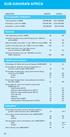 SUB-SAHARAN AFRICA INDICATOR REGION WORLD Demographic indicators Total population (2006) 748,886,000 6,577,236,000 Population under 18 (2006) 376,047,000 2,212,024,000 Population under 5 (2006) 125,254,000
Sustainable Development Strategy: Egypt Vision 2030
 Sustainable Development Strategy: Egypt Vision 2030 Nihal El Megharbel, PhD First Assistant to the Minister of Planning, Monitoring and Administrative Reform Workshop on National Development Strategies
The role of population on economic growth and development: evidence from developing countries
 MPRA Munich Personal RePEc Archive The role of population on economic growth and development: evidence from developing countries Akinwande A. Atanda and Salaudeen B. Aminu and Olorunfemi Y. Alimi Datatric
Chapter 24. What will you learn in this chapter? Valuing an economy. Measuring the Wealth of Nations
 Chapter 24 Measuring the Wealth of Nations 2014 by McGraw-Hill Education 1 What will you learn in this chapter? How to calculate gross domestic product (GDP). Why each component of GDP is important. What
Economic Growth, Poverty and The Child*
 2 Economic Growth, Poverty and The Child* INTRODUCTION In spite of rapid economic growth in many Third World countries, a disturbingly high rate of death due to child malnutrition continues. The physical
HEALTH TRANSITION AND ECONOMIC GROWTH IN SRI LANKA LESSONS OF THE PAST AND EMERGING ISSUES
 HEALTH TRANSITION AND ECONOMIC GROWTH IN SRI LANKA LESSONS OF THE PAST AND EMERGING ISSUES Dr. Godfrey Gunatilleke, Sri Lanka How the Presentation is Organized An Overview of the Health Transition in Sri
A version of this essay was published as "Reduziert die Globalisierung die Kinderarbeit?" in Neue Zürcher Zeitung, February 23/24, 2002 p29.
 Globalization and the Economics of Child Labor A version of this essay was published as "Reduziert die Globalisierung die Kinderarbeit?" in Neue Zürcher Zeitung, February 23/24, 2002 p29. Eric V. Edmonds
Fact Sheet: Youth and Education
 Fact Sheet: Youth and Education 11% of the world s youth (15-24 years old) are non-literate. Data from 2005-2008 indicates that in developing countries, the percentage of nonliterate youth is 13%, with
FEED THE FUTURE LEARNING AGENDA
 FEED THE FUTURE LEARNING AGENDA OBJECTIVE OF THE LEARNING AGENDA USAID s Bureau of Food Security will develop Feed the Future s (FTF) Learning Agenda, which includes key evaluation questions related to
An update to the World Bank s estimates of consumption poverty in the developing world *
 An update to the World Bank s estimates of consumption poverty in the developing world * The World Bank has been regularly monitoring the progress of developing countries against absolute poverty. Drawing
Official Development Aid (ODA) is defined as flows to countries and territories which are
 Stephanie Page. Registration Number 1101079 Foreign aid is driven largely by political and strategic considerations of donor countries. Poverty levels and good policy management in recipient countries
United Nations Educational, Scienti c and Cultural Organization EDUCATION COUNTS. Towards the Millennium Development Goals
 United Nations Educational, Scienti c and Cultural Organization EDUCATION COUNTS Towards the Millennium Development Goals The original artwork presented in the brochure was designed by Zago, New York,
A HOW-TO GUIDE: UNDERSTANDING AND MEASURING INFLATION
 A HOW-TO GUIDE: UNDERSTANDING AND MEASURING INFLATION By Jim Stanford Canadian Centre for Policy Alternatives, 2008 Non-commercial use and reproduction, with appropriate citation, is authorized. This guide
The Elderly in Africa: Issues and Policy Options. K. Subbarao
 The Elderly in Africa: Issues and Policy Options K. Subbarao The scene prior to 1990s The elderly were part of the extended family and as such enjoyed care and protection. The informal old age support
Turkey. HDI values and rank changes in the 2013 Human Development Report
 Human Development Report 2013 The Rise of the South: Human Progress in a Diverse World Explanatory note on 2013 HDR composite indices Turkey HDI values and rank changes in the 2013 Human Development Report
Trade justice or free trade?
 Trade justice or free trade? Key points Trade justice campaigners are today holding a mass lobby of MPs, ahead of the key WTO meeting in Hong Kong in December. The lobby, organised by the Trade Justice
The labour market, I: real wages, productivity and unemployment 7.1 INTRODUCTION
 7 The labour market, I: real wages, productivity and unemployment 7.1 INTRODUCTION Since the 1970s one of the major issues in macroeconomics has been the extent to which low output and high unemployment
Tanzania: Population, Reproductive Health & Development. Photo credits: IFAD / Christine Nesbitt and Robert Grossman and USAID.
 Tanzania: Population, Reproductive Health & Development Photo credits: IFAD / Christine Nesbitt and Robert Grossman and USAID. Hosted by the Government Population Planning Section President s s Office,
Child Marriage and Education: A Major Challenge Minh Cong Nguyen and Quentin Wodon i
 Child Marriage and Education: A Major Challenge Minh Cong Nguyen and Quentin Wodon i Why Does Child Marriage Matter? The issue of child marriage is getting renewed attention among policy makers. This is
Gender Based Violence
 Gender Based Violence Background and problem statement Background Gender-based violence (GBV) is violence that is directed against a person on the basis of gender (European Institute for Gender Equality,
Macroeconomics 2301 Potential questions and study guide for exam 2. Any 6 of these questions could be on your exam!
 Macroeconomics 2301 Potential questions and study guide for exam 2 Any 6 of these questions could be on your exam! 1. GDP is a key concept in Macroeconomics. a. What is the definition of GDP? b. List and
Chapter 10 Fiscal Policy Macroeconomics In Context (Goodwin, et al.)
 Chapter 10 Fiscal Policy Macroeconomics In Context (Goodwin, et al.) Chapter Overview This chapter introduces you to a formal analysis of fiscal policy, and puts it in context with real-world data and
Income is the most common measure
 Income Goal A healthy standard of living for all Income is the most common measure of socioeconomic status, and a strong predictor of the health of an individual or community. When assessing the health
Gender inequalities in South African society
 Volume One - Number Six - August 2001 Gender inequalities in South African society South Africa's national policy framework for women's empowerment and gender equality, which was drafted by the national
Capacity Statement Youth Enterprise and Vocational Training 1
 Capacity Statement Youth Enterprise and Vocational Training 1 Nearly 90% of today s youth, those aged 15 to 24, live in developing countries 2, and these youth represent more than 40% of the world s unemployed
Development of Social Statistics in Indonesia: a brief note
 Development of Social Statistics in Indonesia: a brief note Wynandin Imawan [email protected] BPS Statistics Indonesia 29 September 2011 1 Legal Setting Institutional: Statistics Law No 16 1997; BPS Statistics
YOUNG BLACK MEN DON T FIT COMMON STEREOTYPES. Experiences of Young Black Men. Optimistic Views of Young Black Men
 Survey Snapshot: Views and Experiences of Young Black Men Findings from the Washington Post/Kaiser Family Foundation/Harvard University African American Men Survey The Washington Post/Kaiser Family Foundation/Harvard
VI. IMPACT ON EDUCATION
 VI. IMPACT ON EDUCATION Like every other sector of the social and economic life of an AIDS-afflicted country, the education sector has felt the impact of the HIV/AIDS epidemic. An increasing number of
Social protection and poverty reduction
 Social protection and poverty reduction Despite the positive economic growth path projected for Africa, the possibility of further global shocks coupled with persistent risks for households make proactive
Unemployment: Causes and its Economics Outcomes during Recent Years in Afghanistan
 Unemployment: Causes and its Economics Outcomes during Recent Years in Afghanistan Summary, Conclusion and Recommendations The objective of the paper is to study the current situation of labor market in
Fact Sheet: Girls and Young Women
 Fact Sheet: Girls and Young Women There are 1.8 billion young people in the world. Approximately half of them 900 million are adolescent girls and young women. Girls primary school completion rates are
As of 2010, an estimated 61 million students of primary school age 9% of the world total - are out of school vi.
 YOUTH AND EDUCATION HIGHLIGHTS 10.6% of the world s youth (15-24 years old) are non-literate i. Data from 2011 indicates that in developing countries, the percentage of non-literate youth is 12.1%, with
Miami Dade College ECO 2013.003 Principles of Macroeconomics - Fall 2014 Practice Test #2
 Miami Dade College ECO 2013.003 Principles of Macroeconomics - Fall 2014 Practice Test #2 1. Whose analysis serves as the foundation of modern macroeconomics? A) Milton Friedman B) John Maynard Keynes
The IBIS Education for Change strategy states the overall objective
 CONCEPT PAPER: YOUTH EDUCATION & TRAINING 1 Concept Paper youth education & training Photo: Ricardo Ramirez The IBIS Education for Change strategy states the overall objective of IBIS work with education
2014-2017. UNICEF/NYHQ2012-1868/Noorani
 UNICEF STRATEGIC PLAN 2014-2017 UNICEF/NYHQ2012-1868/Noorani UNICEF s Strategic Plan 2014-2017 is a road map for the realization of the rights of every child. The equity strategy, emphasizing the most
Dimensions of Poverty
 Social and Economic Dimensions Dimensions of Poverty Economic and social development is necessary for achieving poverty reduction. Sustained high rates of economic growth are a prerequisite to this end.
NATURAL RESOURCES WEALTH AND DIVERSIFICATION CREATING JOBS AND SHARING PROSPERITY WIDELY
 NATURAL RESOURCES WEALTH AND DIVERSIFICATION CREATING JOBS AND SHARING PROSPERITY WIDELY Ndiame Diop Lead Economist, Indonesia World Bank WHY IMPORTANT? Jobs! Quality of specialization Long-term growth
CHAPTER 11: The Problem of Global Inequality
 CHAPTER 11: The Problem of Global Inequality MULTIPLE CHOICE 1. The claim that poverty is unethical is essentially a. Normative c. political b. theoretical d. scientific 2. Self-interest is an important
SIERRA LEONE UPDATES FROM THE INSTANBUL PRIORITY AREAS OF ACTION
 SIERRA LEONE UPDATES FROM THE INSTANBUL PRIORITY AREAS OF ACTION 1 OUTLINE OF PRESENTATION Recent Developments Istanbul Priority Areas of Action Poverty Levels Agenda for Prosperity Challenges Conclusion
Chapter 12: Gross Domestic Product and Growth Section 1
 Chapter 12: Gross Domestic Product and Growth Section 1 Key Terms national income accounting: a system economists use to collect and organize macroeconomic statistics on production, income, investment,
ALLEVIATING POVERTY IN NIGERIA: INVESTING IN EDUCATION AS A NECESSARY RECIPE
 ALLEVIATING POVERTY IN NIGERIA: INVESTING IN EDUCATION AS A NECESSARY RECIPE Gaffar T. Ijaiya Department of Economics, University of Ilorin, Nigeria. ABSTRACT Since the global economic crisis of 1980s,