
Great Horned Owl (Bubo virginianus)
|
|
|
- Mae Carpenter
- 9 years ago
- Views:
Transcription
1 Great Horned Owl (Bubo virginianus) Range: The Great Horned Owl is found in North and South America from northern Alaska and Canada through Mexico to the tropical rainforest to Tierra del Fuego. It is one of the most widespread and common owls in North America Found throughout Arizona. Generally they will stay year round in their territory, but those in the far north will move southward in the fall or winter. Habitat: Probably no other North American owl lives in so many habitats and in so many climates. Being such an adaptable bird, generally the Great Horned Owl prefers open country to hunt and sites close to the edge of wooded areas for nesting. They can be found in agricultural areas, forests, deserts, and suburban and urban areas. They share the same habitat as the Red- Tailed Hawk. Description: The Great Horned Owl is a large owl that is easily recognized by its feather tufts on its head, referred to as horns and its deep hooting call. Generally its body is brown and gray with dark barring. Some variations may have pale gray to white plumage. It has a white patch on its throat and large yellow eyes surrounded by a large facial disk of orangish-brown feathers outlined by black feathers. The legs are feathered to the talons. The wingspan measures 3 to 4½ feet. Typically this owl weighs between 2 and 5 pounds, with the female weighing up to 1/3 more than the male. The higher weight is usually found in the northern parts of its range. The Great Horned Owl stands 18 to 25 inches tall. The most common call is a 5-syllable soft hooting with a cadence like Don t kill owls: save owls. Shorter 3-syllable sequences Don t kill owls are also common. Although the female is larger in size, it has the higher pitched hoot. The Great Horned Owl is usually inconspicuous during the day, roosting silently against the bark of a tree or in vegetation. 1


2 Hunting/Prey: The Great Horned Owl will hunt anytime during the night, but is most active at dawn and dusk - crepuscular. As the day ends, from its perch in the tree, it will watch and listen for prey. It has good eye sight, but hunts primarily by sound. Its facial disk consisting of very fine feathers funnel sounds to its ears on each side of the disk to help it hunt. One ear opening tilts up and the other points down. The ears are located asymmetrically below its tufts allowing the owl to triangulate the location of its prey by sound alone. The owl s body and flight feathers are softer and less rigid than a hawk s to allow it to hunt its prey without making a sound. Its leading flight feather is comb-like to allow wind to pass thought it without a sound. Once the food is located the owl will swoop down noiselessly and pounce on its prey. It can exert up to 80 pounds of pressure with its talons. The owl s diet consists of a wide variety of prey from raccoons, rabbits, squirrels, mice, snakes, insects, geese and other birds to the occasional cat or small dog. One of its favorite foods is the skunk, a slow moving nocturnal animal with a large white stripe down its back like a neon sign that says to the owl, Eat me! Breeding/Nesting: Great Horned Owls are one of the earliest spring nesting birds; eggs may be laid as early as January or February through April. Courting will have occurred throughout the winter months, marked by the nighttime hooting between the pairs. Owls do not build nests and either take over abandoned nest of hawk or other large birds or will simply lay the eggs in alcoves, tree hollows, abandoned buildings or even on the ground. Generally the female will lay 2-3 white eggs, but could have a brood as large as 6. Both parents will feed the young. Both will guard the nest site fiercely against intruders including humans. The young fledge in days. Fledgling will still have down around head and may not have noticeable ear tufts. Lifespan: Typically this owl will mature in two years. Great Horned Owls can live more than 12 years in the wild. Some captive birds have lived as long as 29 years. Threats: Some of the main threats are: Red-Tailed Hawk predation on the young, illegal shooting, electrocution, pesticide poisoning, automobiles and barbed wire entanglement. Other Great Horned Owl Facts: The Great Horned Owl is referred to as the tiger of the sky because of its fierce nature and ability to capture a wide variety of prey that may be larger or heavier than the owl. Four good field marks of a Great Horned Owl are its size, yellow eye color, ear tufts and white collar. It is speculated that the Great Horned Owl s ear tufts may convey body language - when they are irritated the tufts lie flat and when they are inquisitive the ears stand upright; or they may 2

3 aid the owl in camouflaging its outline when sitting in a tree by breaking up the circle feature of its head.. The Great Horned Owl s eyes are fixed in their sockets. This provides them with a field of binocular vision which assists in locating prey by sight, but provides limited to no peripheral vision. Because their eyes are fixed in their sockets, they cannot move them up or down or side to side. To compensate for this, the owls are able to move their heads 270 in order to see peripherally and behind them. This dexterity is accomplished by having 14 vertebrae in their necks compared to the human s 7. Like all birds of prey, the owl eats all of its prey including bones, feathers, skin, etc. It will then produce a pellet of undigested parts of its meal which it casts up several hours after eating. Because the Great Horned Owl s digestive system is not as acidic as other birds of prey and it typically eats its prey whole, its pellets will contain the undigested bones of its prey. With patience, scientists and students can piece together the skeleton of the Owl s last eaten prey. The owl does not have a crop like many other birds. I The owl s feathers are softer than other birds of prey s. This allows them to fly soundlessly when they hunt in limited light. Like all birds of prey, the Great Horned Owl has four toes on each foot. However, unlike other birds of prey that have three toes in front and one in back, its outer toe is reversible. It can rotate it so that it has two toes in front and two in back. This gives the owl a larger grasp to capture prey. The Great Horned Owl s eye is almost as large as a human s and allows a great deal of light to pass through to the pupil, allowing it so see in dark conditions better than humans. If a Great Horned Owl were as large as a human, its eye would be the size of an orange. The Great Horned Owl, like other birds of prey has a third eye lid called the nictitating membrane. It protects and cleans the eye. Like other birds of prey, the owl has four toes. However the owl s outer toe is flexible allowing it to have two toes in front and two in the back. This gives the owl a wider grasp when hunting. It is estimated the Great Horned Owl can exert up to 90 pounds of pressure when it closes it talons and is able to maintain it. A human can exert up to 50 pounds but only for a short period. As in all birds of prey, the owl s leg tendons are ridged as are the tendon sheaths. When the owl closes it talons, the tendon locks in place against the sheath until the owl relaxes its leg. 3

4 Tendon Tendon Sheath (HawkQuest) Red-Tail Hawks will hunt the owl s nestlings. Crows will mob it for hours. The Latin name Bubo virginianus means owl of Virginia where the first specimen was collected. Hedwig Great Horned Owl Hedwig was found at a park in Queen Creek in It was obvious from her behavior of seeking food from people that she was an imprint who had escaped or been released. She was taken from the park by a kind hearted man who did not know much about birds of prey. He placed her in with his 4

5 chickens until he discovered that Great Horned Owls eat chickens. Following his call to Liberty Wildlife, Hedy, as she was affectionately called, was transported to Liberty. As an imprint, Hedy cannot be released because she will continue to seek out humans to feed her and she will not interact with her own species. Hedy weighs approximately1250 grams or 2.7 pounds. She is a higher level bird because of the difficulty of getting her on the glove. Wearing a right hand glove agitates her. Magellan Snickers Snickers and Magellan arrived at Liberty at about the same time in Both were nestlings. Magellan was found on the ground with severe wounds to his head. They appeared to be talon marks. It was speculated that a bird of prey, possibly a Red-Tailed Hawk had tried to take him from the nest and could not carry him. Magellan was transported to Liberty Wildlife as soon as he was found. His wounds were filled with maggots. For weeks, the medical staff had to clean and rinse the wounds to rid them of the maggots and prevent infection. Initially, there was some concern that the injuries had affected his hearing, but that proved not to be the case. As a result of the extent of the care and the amount of time he received treatment, Magellan became imprinted and could not be released. Snickers was also found on the ground by well meaning rescuers. He had no apparent injuries. He arrived from his rescuers as an imprint. Sources: Cornell Lab of Ornithology, Desert USA, National Geographic, The Peregrine Fund, University of Minnesota Raptor Center, North American Owls, 2 nd Edition Paul Johnsgard 5

Silent, Nighttime Hunters By Guy Belleranti
 By Guy Belleranti Owls are raptors, or birds of prey. They are carnivores who quickly and silently swoop down on their prey from above. Most raptors such as eagles, hawks and falcons are day hunters. They
Name That Adaptation. Background: Link to the Plan Read Section 5 (Whooping Crane Ecology and Biology) in the Management Plan
 Summary Students will explore structural, physiological, and behavioral adaptations of whooping cranes. Objectives: Students will be able to: Define an adaptation Describe several whooping crane adaptations
Owls. Choose words from the list at the end of the page to fill in the blank spaces.
 Owls Choose words from the list at the end of the page to fill in the blank spaces. Owls are _ of prey. A bird of prey is one that catches its food in its Owls hunt for their at night. A bird that hunts
feet that are used for hunting prey and to defend against predators at the nest.
 Anatomy of Owls: Function of Wing Feathers: o Primary Feathers propel an owl into flight. o Secondary Feathers keep an owl in flight through gliding. o On both the primary and secondary feathers, there
Activity 1 Exploring Animal Diets and Sizes
 Activity 1 Exploring Animal Diets and Sizes Objective & Overview: Using measurement and books, students will gain a better understanding of animal size, diversity, and diet through the fun study of wildlife.
Common Backyard Birds of Alabama
 Common Backyard Birds of Alabama Alabama Ornithological Society (AOS) state list includes 420 species: 158 species regularly breed in Alabama 174 species regularly winter 80 species migrate through Alabama
A Most Colorful Mammal by Guy Belleranti
 Name: In the tropical rainforests of western Africa lives a mammal with a most colorful face and rump. This mammal is the mandrill, the world's largest monkey. The skin on a male mandrill's face has a
2. Identify each using the letters below using BD for the Bald Eagle, G for the Golden Eagle, H for the Harpy Eagle, and BT for the Bateleur Eagle.
 Eagle Quest Name SITE: American Eagle Foundation 1. How many species of eagles are found on Earth? 2. Identify each using the letters below using BD for the Bald Eagle, G for the Golden Eagle, H for the
Part 4. Development of raptor chicks. Raptors: a field guide for surveys and monitoring 281
 Part 4 Development of raptor chicks Raptors: a field guide for surveys and monitoring 281 Development of raptor chicks The photographs in this part of the book illustrate the development of nestlings for
Mammal Scavenger Hunt Activity
 Mammal Scavenger Hunt Activity Materials: Mammal questions worksheet (pages 2-3) 18 Mammal fact cards (pages 4-8) Tape and scissors Preparation: Print the fact cards on card stock or brightly-colored paper
Name Class Date. Adapting to the Environment Adaptations and Survival
 CHAPTER 3 4 SECTIN Adapting to the Environment Adaptations and Survival EFRE YU READ After you read this section, you should be able to answer these questions: What adaptations help animals survive? What
Owl Pellets. This hands-on classroom workshop introduces students to the ins and outs of barn owls.
 Owl Pellets This hands-on classroom workshop introduces students to the ins and outs of barn owls. They will have a chance to discover what s inside the pellet that barn owls leave behind and why they
Fry Phrases Set 1. TeacherHelpForParents.com help for all areas of your child s education
 Set 1 The people Write it down By the water Who will make it? You and I What will they do? He called me. We had their dog. What did they say? When would you go? No way A number of people One or two How
Small Scale Poultry Housing
 Small Scale Poultry Housing Phillip J. Clauer, Poultry Extension Specialist, Animal and Poultry Sciences Small scale poultry coops seem to be built in almost every possible shape and size. Those building
PUSD High Frequency Word List
 PUSD High Frequency Word List For Reading and Spelling Grades K-5 High Frequency or instant words are important because: 1. You can t read a sentence or a paragraph without knowing at least the most common.
Zoo Activity Packet Grades 3-5. Thank you for choosing Reid Park Zoo for a field trip this year!
 Zoo Activity Packet Grades 3-5 Thank you for choosing Reid Park Zoo for a field trip this year! 22ND STREET AFRICAN ELEPHANT Expedition Tanzania Adaptation Zone S. RANDOLPH WAY ALDABRA TORTOISE LEE H.
Structures of animals
 Structures of animals Name: All animals have been designed with different parts, which we call structures, that make up their bodies. Each of these structures is important as it is used to perform a specific
Bird Scavenger Hunt Activity
 Bird Scavenger Hunt Activity Materials: Bird questions worksheet (pages 2-3) 18 Bird fact cards (pages 4-8) Tape and scissors Preparation: Print the fact cards on card stock or brightly-colored paper and
Grade 5 Standard 5 Unit Test Heredity. 1. In what way will a kitten always be like its parents? The kitten will...
 Grade 5 Standard 5 Unit Test Heredity Multiple Choice 1. In what way will a kitten always be like its parents? The kitten will... A. be the same color. B. learn the same things. C. have the same body structures.
Animal Adaptations -- Vocabulary
 Section 1 Objectives o Children will understand what animal adaptations are. o Children will be able to explain why animal adaptations are important. o Children will be able to explain different types
Poultry Sample Questions from Animals In Pursuit
 Q. What is barring on a chicken s feather? A. Two alternating colors on a feather, running across its width Q. What commercial strain of layers is best for egg production? A. White Leghorn strains Q. How
Burrowing Owls in the Pacific Northwest
 Burrowing Owls in the Pacific Northwest Athene cunicularia ESRM 350 Autumn 2014 Laurel Peelle Overview 1) Introducing the Oddball Owl 2) Burrowing Owl Population Status 3) Why the Decline? 4) Conservation
Roots & Shoots Raptor Care EcoTeam Lesson 4: Predator/Prey Relationships
 Roots & Shoots Raptor Care EcoTeam Lesson 4: Predator/Prey Relationships Time needed 30 minutes for journal page. Project is ongoing. Cost None Weather requirement None Advance preparation Locate and contact
Emerald Tree Boa: Emerald Tree Boas are bright green to blend in with their habitat. They are part of the boa family and are constrictors.
 Anaconda: The anaconda lives in the swamps and rivers. Anacondas can also climb trees. Adults can get as big as 20 feet long. Anacondas are good swimmers. They have scales and can swim quickly. They kill
ELEMENTARY-LEVEL SCIENCE TEST
 4THE UNIVERSITY OF THE STATE OF NEW YORK SPRING 2008 GRADE 4 ELEMENTARY-LEVEL SCIENCE TEST WRITTEN TEST Student Name School Name Print your name and the name of your school on the lines above. The test
Where Do Birds Live?
 Objectives You will learn about 1) where birds build nests, 2) the materials they use, 3) different nest characteristics and 4) how to observe nesting activity. Introduction Birds hatch their young in
A guide to living with Urban Coyotes
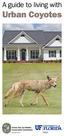 A guide to living with Urban Coyotes Living with coyotes ThinkStock Coyotes are found throughout Florida. This adaptable animal belongs to the dog family and resembles a small German shepherd. In Florida,
WEATHER, CLIMATE AND ADAPTATIONS OF ANIMALS TO CLIMATE
 7 WEATHER, CLIMATE AND ADAPTATIONS OF ANIMALS TO CLIMATE TEXTBOOK QUESTIONS AND ANSWERS Q.1. Why weather changes so frequently? Ans. All changes in the weather are caused by the sun. The movement of the
China The Giant Panda
 China The Giant Panda China The Giant Panda Deep in a forest, a black-and-white bear sits peacefully. It chews the green leaves of a plant. The bear is alone, but there are others not too far away. Later,
ACTIVITY. pbsparents.com/catinthehat/
 Overview The Cat in the Hat Knows a Lot About That! Have you ever noticed how your child explores the world by using all of his senses? You can help him think more about how he sees, hears, smells, feels,
My favourite animal is the cheetah. It lives in Africa in the savannah, It eats and gazel es. It is big and yel ow with black spots.
 The crocodile is big and green. It has got a long tail, a long body and a big mouth with big teeth. It has got four short legs. The crocodile eats fish and other animals. He lives in Africa and America,
Investigating Adaptations
 Investigating Adaptations 4 th Grade Duration Pre-Visit: 40 minutes Museum Visit: 60 minutes Post Visit: 50 minutes Concepts Adaptations reveal what organisms need in their environment to survive. Location
Desert Communities Third Grade Core: Standard 2 Objective 2 Describe the interactions between living and nonliving things in a small environment.
 Desert Communities Third Grade Core: Standard 2 Objective 2 Describe the interactions between living and nonliving things in a small environment. (Discovering Deserts NatureScope: page 40, 43, 44) Objective:
How To Understand The Features And Behaviours Of Animals And Plants
 Childrenʼs Farmyard and Animal Nursery Teacher Resource Pack Curriculum linked worksheets and activities SACSA Band: Early Years Learning Area: Science Strand: Life systems Key Idea Children investigate
6. Which of the following is not a basic need off all animals a. food b. *friends c. water d. protection from predators. NAME SOL 4.
 NAME SOL 4.5 REVIEW - Revised Habitats, Niches and Adaptations POPULATION A group of the same species living in the same place at the same time. COMMUNITY-- All of the populations that live in the same
Prairie Food Chains & Webs Producers, Consumers & Decomposers
 Kansas Prairies s, s & Decomposers Science, Life Science, Reading, Math Materials Vocabulary worksheet Food Chain worksheet Overview To explore the organisms found on a prairie and identify the various
Living with Foxes and Skunks Goose Hunting: CWS
 Ministry of Natural Resources and Forestry Living with Foxes and Skunks Goose Hunting: CWS November 19 th, 2015 Town of Tecumseh Kathryn Markham, A/Management Biologist Steven Rowswell, A/Wildlife Technician
Grade Level Content Expectations addressed: Activities: Schedule of Field Trip Activities at the Detroit Zoo 8:15 am Board Bus at School
 Title: Comparing and Contrasting Ecosystem Biodiversity Submitted by: Tracy Ortiz Email: [email protected] School: Coffey K-8 Educational Learning Community Date: May 12, 2010 Target Grade: 6 Duration:
KNOW THE BEAR FACTS FOR KIDS
 KNOW THE BEAR FACTS FOR KIDS New Jersey Department of Environmental Protection Black Bears in New Jersey Activity Guide Black bears live in New Jersey. They were here long before people were. About 100
Grade 8 English Language Arts 59B Reading and Responding Lesson 23
 GRADE 8 English Language Arts Reading and Responding: Lesson 23 Read aloud to the students the material that is printed in boldface type inside the boxes. Information in regular type inside the boxes and
Seattle is -- FOR THE BIRDS. How to Identify Common Seattle Birds
 Seattle is -- FOR THE BIRDS How to Identify Common Seattle Birds Want to learn more about birds? Join Seattle Audubon s Family and Youth Programs Mailing List to hear about upcoming opportunities. Name:
Crotophaga ani (Smooth-billed Ani)
 Crotophaga ani (Smooth-billed Ani) Family: Cuculidae (Cuckoos and Anis) Order: Cuculiformes (Cuckoos, Anis and Turacos) Class: Aves (Birds) Fig. 1. Smooth-billed ani, Crotophaga ani. [http://www.hoteltinamu.com/wp-content/uploads/crotophaga-ani-garrapatero-piquiliso-smooth-billed-ani-
The H-Map: An Alternative to the Venn Diagram
 The H-Map: An Alternative to the Venn Diagram H Fossil Fuels 1. 2. 3. 4. 5. Both? 1. 2. 3. Solar Power 1. 2. 3. 4. 5. Venn Diagram Fossil Fuels Solar Energy Source: Holt Elements of Literature (2005) Word
... Date Starting your search in the Rainforest if it s open, keep an eye out for:
 Museum-Wide Reptiles include turtles, lizards, snakes, crocodiles, and all of their relatives. There are over 9,000 different kinds of reptiles with amazing adaptations that help them find food and protect
Region of Georgia : Mountains
 Region of Georgia : Mountains Northern most region of GA Cold weather in the winter Brasstown Bald is the highest point in Georgia Lots of creeks and streams High above sea level Poor soil for farming
Prairie Food Chains & Webs Producers, Consumers, & Decomposers
 Kansas Prairies Prairie Food Chains & Webs Producers, s, & Decomposers Life Science, Math, Reading, Science Materials Student Worksheet A: Vocabulary Student Worksheet B: Food Chain Overview To explore
Lesson Overview. Biodiversity. Lesson Overview. 6.3 Biodiversity
 Lesson Overview 6.3 6.3 Objectives Define biodiversity and explain its value. Identify current threats to biodiversity. Describe how biodiversity can be preserved. THINK ABOUT IT From multicolored coral
honey bee By Henry Touray
 honey bee By Henry Touray Introduction For my project I have chosen to research Bees. I chose to find out about the bee because bees have been in the news lately. Lots of hives have died out and scientists
World Oceans Day at ZSL Whipsnade Zoo
 World Oceans Day at ZSL Whipsnade Zoo Teachers notes KS 1 & KS 2 This booklet will help you to focus your self guided trail on ocean animals, looking at the adaptations of the species and focusing in on
Lesson 3: Fish Life Cycle
 Lesson 3: Fish Life Cycle Activity: Diagram fish life cycle. Grade level: 4-8 Subjects: Science, social studies Setting: Classroom Duration: 50 minutes Key Terms: Fry, life cycle, life history, spawn,
Fishy Adaptations. Adapted from: Fashion a Fish in Project Wild Aquatic Education Activity Guide. The Council for Environmental Education, 1992
 Fishy Adaptations Adapted from: Fashion a Fish in Project Wild Aquatic Education Activity Guide. The Council for Environmental Education, 1992 Physical Structure Grade Level: Basic Duration: 45 minutes
Learning expeditions
 Learning expeditions Same and different Where do I fit in? Introduction: On this Expedition, your students will explore the question, Where do I fit in? by learning how to compare identifying characteristics
Giant Pandas. Name. Date. www.schoolexpress.com. Copyright@ 2012 Comp Ed, Inc.
 Name Date Copyright@ 2012 Comp Ed, Inc. www.schoolexpress.com There are two kinds of panda bears, the giant panda and the lesser or red panda. They do not look alike. This Unit is about the giant panda.
Exhibit Inquiry. Rainforest. Aug 11
 Exhibit Inquiry Exhibit Inquiry Have students look for the following exhibits related to living things during their visit to the Ontario Science Centre: Where to go: (Level 6) What it's about: Tropical
9/14/2015. Innate behavior. Innate behavior. Stimuli that trigger innate behaviors are called releasers.
 & & has a fixed, genetic component. Despite differing environments, the behavior develops in all individuals. Learned behavior is acquired and modified over development. s can be triggered or enhanced
Timneh Grey Parrots are smaller, darker and have maroon colored tail feathers. Their upper beak is a dark horn color with a black tip.
 Congo African Grey Scientific name Psittacus erithacus erithacus Also known as Grey Parrot African gray parrots are stocky, short tailed birds. The body coloration is varying shades of gray depending on
Kakapo Recovery Plan 1996-2005
 Kakapo Recovery Plan 1996-2005 Threatened Species Recovery Plan No.21 Kakapo Management Group Department of Conservation P.O. Box 10-420 Wellington New Zealand CONTENTS 1. Background 5 2. Distribution
Threatened, Endangered & Extinct Lesson Plan
 Threatened, Endangered & Extinct Lesson Plan Keywords: habitat, ecosystem, food,, shelter, space, basic needs, threatened, endangered, extinct Grade level: 3 rd & 4 th Grades Setting: classroom Subjects
Umbrella cockatoo. Also known as white cockatoo
 Umbrella cockatoo Cacatua alba Indonesia Also known as white cockatoo Umbrellas are large white cockatoos with recumbent crests. The crest feathers conform to shape of the head, lying down unless the crest
First Grade Reading Street Unit 1.1: Sam, Come Back! - Taken from www.freidalewis.com
 Blend & Segment Phonemes Isolate Final Sounds Identify Position of Sounds Short a and Final ck Character Monitor & Fix Up 1. at 2. can 3. cat 4. back 5. dad 6. am First Grade Reading Street Unit 1.1: Sam,
Talking About Penguins by Guy Belleranti
 Talking About Penguins Penguins are one of the world s most interesting birds. They waddle when they walk, and have flippers instead of wings. The bones in a penguin s flippers are heavier and more solid
Mountain Lion Identification Course
 MONTANA FISH, WILDLIFE & PARKS Mountain Lion Identification Course MONTANA FISH, WILDLIFE & PARKS 1420 East 6th Avenue - PO Box 200701 Helena MT 59620-0701 406-444-2535 http://fwp.mt.gov Montana Fish,
Brownies. It s Your Planet Love It! WOW: Wonders of Water. Ice Cold (page 25) Extinct (page 39)
 Exhibit Guide WOW: Wonders of Water Ice Cold (page 25) The Earth has two poles, a North Pole and a South Pole. Both are extremely cold and covered in ice. Sometimes you might see huge masses of moving
Key Idea 2: Ecosystems
 Key Idea 2: Ecosystems Ecosystems An ecosystem is a living community of plants and animals sharing an environment with non-living elements such as climate and soil. An example of a small scale ecosystem
The Cricket Lab. Introduction
 The Cricket Lab Introduction Humans have always been fascinated by crickets, mostly because crickets sing. Movie producers add their songs to sound tracks. The Chinese have used them for medicinal purposes,
Discover a Species. Smoky Mountain Diversity. Episode: For a follow-along viewing guide for students, see Viewing Guide 12.
 Episode: Smoky Mountain Diversity EXPLORING NORTH CAROLINA Discover a Species MATERIALS & PREPARATION Computers with Internet access Make copies of Fact Sheet and Assignment Sheet, one per group of four.
Pond Vocabulary Words and Meanings
 Pond Vocabulary Words and Meanings Adapt: to adjust to a use or situation Aquatic: from or in the water Bacteria: tiny organisms, too small to be seen with the naked eye Carnivore: an animal that eats
Turkey Habitat. Welcome to the. Who Are Turkeys? Turkey Classification
 Welcome to the Turkey Turkey Classification Class: Aves Order: Galliformes Family: Phasianidae Genus: Meleagris Species: gallopavo Subspecies (Southern U.S.): osceloa Who Are Turkeys? The wild turkey is
Grassland Food Webs: Teacher Notes
 Grassland Food Webs: Teacher Notes Alan Henderson ecosystem Objectives After completing this activity students will be able to: Create a food web and identify producers and consumers. Assign organisms
Can You Tell a 'Gator From a Croc? by Guy Belleranti
 Can You Tell a 'Gator From a Croc? Look closely at the reptiles pictured below. Can you tell which one is the crocodile and which is the alligator? Many people confuse crocodiles and alligators, and it's
Female Child s date of birth: Last name: State/ Province: Home telephone number:
 60 Ages & Stages Questionnaires 57 months 0 days through 66 months 0 days Month Questionnaire Please provide the following information. Use black or blue ink only and print legibly when completing this
Reading Comprehension Screening For 4 th Grade
 NEUHAUS COMPREHENSION SCREENING Fourth Grade Name Date Reading Comprehension Screening For 4 th Grade Suzanne Carreker, Ph.D. Regina Boulware-Gooden, Ph.D. Check Suggested Activities for recommendations
Irish Owls. Barn Owl Tyto alba
 Irish Owls Barn Owl Tyto alba Irish name: Scréachóg reilige The Barn Owl is the most threatened species of owl in Ireland and has recently been Red-listed in the Birds of Conservation Concern in Ireland.
Major Mitchell s cockatoo
 Major Mitchell s cockatoo Cacatua leadbeateri Australia Also known as Leadbeater s cockatoo, Pink Cockatoo. The Major Mitchell s cockatoo is a strikingly beautiful species. They are medium sized pink cockatoos
JEFFERSON COUNTY PUBLIC SCHOOLS (JCPS) PEST CONTROL PLAN
 JEFFERSON COUNTY PUBLIC SCHOOLS (JCPS) PEST CONTROL PLAN Each facility shall implement a pesticide registry program, as required by Kentucky Department of Agriculture 302 KAR 29 29.050 Section 12, JCPS
Animals and Adaptation
 Animals and Adaptation From: http://www.learninghaven.com/science/articles/animals_and_adaptation.htm In order for animals to survive, they need to be able to adapt. In this lesson we will look at the
CHICKENS 101 INTRODUCTORY COURSE HOUSING AND PREDATOR CONTROL
 CHICKENS 101 INTRODUCTORY COURSE HOUSING AND PREDATOR CONTROL THE BASICS: HOUSING 1 3 THE BASICS: HOUSING 1 Protect from rain and cold when first outside. After about three weeks, chickens can tolerate
Animal Colors and Shapes Teacher s Guide
 Teacher s Guide Grade Level: K 2 Curriculum Focus: Math, Science Lesson Duration: 1 2 class periods Program Description Animals come in all colors, shapes, and sizes. Learn about the shapes animals have
Learning Centre PARALLELISM
 Learning Centre PARALLELISM Using parallelism helps to reduce repetition in writing, so it is very useful for writers. However, it is easy to have faulty (bad) parallelism. In this handout, you will learn
Kacy Blackham Fall, 2002. Introductory Lesson: Grade Level: 10 th
 Kacy Blackham Fall, 2002 Introductory Lesson: The Interdependence of Birds and the Great Salt Lake Ecosystem Abstract: Students will participate in the Checks and Balances game. This game will allow the
Mini Dinosaurs. Grades K 1 2. Compiled by
 Mini Dinosaurs Grades K 1 2 Compiled by Leanne M. Burrow, Extension educator, 4 H/ Youth development, Purdue University Cooperative Extension Service Henry County Resources and References Exploring 4 H,
Woodcock Ringing Guide Owen Williams
 Woodcock Ringing Guide Owen Williams All bird ringing in the UK is controlled by the British Trust for Ornithology. Ringing is only allowed by those granted a permit by the BTO or who are undergoing training
MACMILLAN READERS ELEMENTARY LEVEL JACK LONDON. White Fang. Retold by Rachel Bladon MACMILLAN
 MACMILLAN READERS ELEMENTARY LEVEL JACK LONDON White Fang Retold by Rachel Bladon MACMILLAN Contents A Note About the Author 4 A Note About This Story 5 The Places in This Story 6 A Picture Dictionary
Invasive Reptiles and Amphibians of Florida!
 1 Invasive Reptiles and Amphibians of Florida! 2 Created by: Thompson Antony Lauren Diaz Sean McKnight Alana Palau JoAnna Platzer Illustrated by Lauren Diaz Invasive Ecology of Reptiles and Amphibians
Animals all around. Lesson 1. What s Alfie got? He s got a stick insect. 1 Say. $ CD2. 3 Read and match. 1 What s Liam got?
 Lesson 1 Animals all around Lesson 1 1 Say. $ CD2 21 2 Listen and say the number. $ CD2 22 3 tortoise 1 2 hamster iguana 5 6 8 guinea pig 7 spider canary 3 Read and match. 1 What s Liam got? a She s got
Worksheets. (Caterpillars of Singapore s Butterflies) Worksheet Title Recommended level. Adaptations of the caterpillar defence mechanism
 Worksheets (Caterpillars of Singapore s Butterflies) Worksheet Title Recommended level 1 Life cycle of a butterfly P3 2 Am I an insect? P3 3 4 Adaptations of the caterpillar defence mechanism The butterfly
Dear Educator: Sincerely, Rachel Larimore Director of Education. o Vocabulary. o Food Chain Highs and Lows. o Rabbits and Foxes Story
 Dear Educator: Included in this packet are various materials to use before and after your Chippewa Nature Center (CNC) program. Some of these materials may not be appropriate for the grade level you teach,
Animal Care and Control Bite Prevention Consultation Education Registration Vaccination
 Animal Care and Control Bite Prevention Consultation Education Registration Vaccination Can you identify these animal tracks? 9. 1. 2. 5. 7. 10. 3. 4. 6. 8. Find answers on Be Smart About Animals page
English Language Arts Book 3
 English Language Arts Grade 6 Sample Test 2005 Name TIPS FOR TAKING THE SAMPLE TEST Here are some suggestions to help you do your best: Be sure to read carefully all the directions in the test book. Plan
The Wonderful World of Wetlands BINGO
 The Wonderful World of Wetlands BINGO Time: 10-15 minutes to create Bingo board; 5-10 minutes to play one-round of Bingo Scituate Reservoir Watershed Education Program 17 Smith Ave Greenville, RI 02828
ENDANGERED AND THREATENED
 ENDANGERED AND THREATENED Understand how species in the Sonoran Desert Region may become endangered or threatened and what is being done to protect them. ARIZONA SCIENCE STANDARDS SC03-S4C3-03&04, SC08-S1C3-07,
Last name: State/ Province: Home telephone number:
 60 Ages & Stages Questionnaires 57 months 0 days through 66 months 0 days Month Questionnaire Please provide the following information. Use black or blue ink only and print legibly when completing this
The Toledo Zoo Aviary
 The Toledo Zoo Aviary Look at the Birdie Bird Adaptations Lesson Learning Strategies Background Knowledge Vocabulary Comprehension Application/ Extension Problem Solution Guide Personal Clues Questions