
SYSTEM 236 Installation Manual
|
|
|
- Shanon Underwood
- 9 years ago
- Views:
Transcription
1 Direct Conn JP2 Watch Dog DS1 Slow Blow WARNING: For continued protection against risk of fire, replace fuses only with fuses of same type and rating. Disconnect AC, battery, and phone cord BEFORE servicing. Capacity for emergency standby at least four hours PHONE CORD 9.X PCF Red = Incoming Ring (R) Green = Incoming Tip (T) Grey = Seized Ring (R1) Brown = Seized Tip (T1) Blue = Tamper Orange = Tamper 16.5 VAC VA 50 or 60 Hz AUDIBLE VDC Protected by Fuse F1: 3AG, 1.0 A 12 VDC, 6.5 A-H or 12 VDC, 4.0 A-H Sealed Lead-acid POWER SUPPLY INFORMATION SWITCHED AUX POWER VDC KEYPAD Do not exceed 3 keypads Protected by Fuse F2: 3AG, 0.5 A CAUTION: Total Power from terminals BELL, AUX, and KEY+ NOT to exceed 800 ma, combined. (Also see NOTE: below.) Use only 12 VDC, 6.5 A-H or 4.0 A-H sealed lead-acid battery Replace battery every 4-6 years with C&K Model 1265 or Model A-H standby battery time with 1 keypad is 14 hours at 300 ma 4.0 A-H standby battery time with 1 keypad is 7 hours at 400 ma Power demand for AUX POWER, keypads, and sounders not to exceed maximum ratings. Install transformer on unswitched power receptacle Maximum battery charge current = 350 ma This equipment should be installed in accordance with the National Fire Protection Association's Standard 72 Chapter 2 (National Fire Protection Association, Batterymarch Park, Quincy, MA 02269). Printed information describing proper installation, operation, testing maintenance, evacuation planning and repair service is to be provided with the equipment. GENERAL INFORMATION Connect ground wire from door hinge to earth ground using 16 AWG, green jacketed, solid-conductor wire All outputs are power limited If programmed for EOL or Supervised Loop, the 2.2K ohm EOL resistor (Model 9.X, 2.2K) must be at end of circuit Loop voltages: VDC = short VDC = normal VDC = open are electrically common When used as a fire warning system, use a 4-wire smoke detector (Sentrol ES-449C) with a Power Supervisory EOL Relay Module (System Sensor A Series) at the end of the detector power loop. Consider the maximum detector alarm load when confirming that the total alarm load is less than 800 ma. All ratings on this page are in compliance with UL 985, UL 1023, and UL NOTE: Total power from terminals AUX and KEY+ NOT to exceed 400 ma, combined Rev F

2 Table of Contents Subject Page No. System 236 Terminal Label Front Cover UL Compliance 2 Installation 2-3 Wiring the Panel 3-4 System Start-Up 4 Keypad Setup 4-5 Addressing Keypads 5 Factory Default Settings 5 Programming Options (Alphabetical List) 5-6 Programming the Panel 6-7 Programming with the LED Keypad 6 Programming with the Alpha Keypad 6 Entering Hexidecimal Numbers 7 Programming the Alpha Keypad 7-8 Programming Letters & Numbers 7 Special Function Keys 8 Programming Options (Numerical Order) 9-23 Keypad Label Drawer 24 Telephone Line Problems 24 Watchdog Indicator 25 Keypad Operation Command Summary 25 Help with Common Problems (Troubleshooting) Reducing False Alarms 28 Warranty Information 28 Programming Worksheets BEFORE YOU START Scope of This Manual This manual contains basic installation and programming information for the SYSTEM 236 control/communicator. For detailed information about remote programming, please refer to the Commander II/Monitor II Operating Manual (P/N ). Accuracy This manual has been carefully checked for accuracy. However, C&K SYSTEMS assumes no liability for inaccuracies or actions resulting from the use of this manual. In addition, C&K reserves the right to modify the SYSTEM 236 hardware, software, and manuals without prior notice. UL COMPLIANCE The SYSTEM 236 is in compliance with Underwriters Laboratories, Inc. Standards UL 985, Household Warning System Units; UL 1023, Household Burglar Alarm System Units; and UL 1635, Digital Burglar Alarm Communicator System Units. The following programming restrictions must be observed to meet UL standards: 1. The audible must be programmed to sound at least four minutes before silencing. 2. No zone may be programmed for silent alarm. 3. Fire zones must be programmed for pulsing audible alarm. 4. Burglar zones must be programmed for a steady audible. 5. Burglar loops (non-24-hour loops) must be programmed for NO/NC. 6. No Entry Delay may be greater than 45 seconds. 7. No Exit Delay may be greater than 60 seconds. 8. The Dynamic Battery Test must be enabled. UL Compliance (continued) 9. The Unit Status Report must be enabled. 10. The 24-hour Check-in must be enabled. 11. No Delay Before Dial may be programmed for the communicator. 12. The unit must not be programmed to dial a police station. 13. Use screws (supplied) to secure cover or a lock must be installed on the cabinet. 14. All devices must be UL listed. 15. Loop Response Time must be set to 500mS. INSTALLATION Mounting The SYSTEM 236 should be mounted in a location which allows convenient access to AC power, telephone connections, and earth ground.. Remove the circuit board from the cabinet. This will prevent possible damage to the circuit board when removing the knockouts. Remove the knock-outs. Mark the screw mounting holes on the wall.... Mount the cabinet at the desired height and pass the cables.. Zone Programming FIRE LOOP BURGLAR LOOP No Delay Before Dial No Delay Before Dial. 24-hour arming. Steady audible. Pulsing audible. NO/NC with EOL. Supervised. 500mS Loop Response Time - latching for heat - resetting for smoke Not shuntable. 500mS Loop Response Time Keypad Requirements The keypad may not have the EMERGENCY symbol ( ) on it. If your keypad has this symbol, remove the key and replace it with one of the blank keys provided. through the knock-outs. Replace the circuit board, remembering to connect the ground lug to the lower left corner of the circuit board. Reconnect the spade lug to the lower door hinge. This provides the earth ground connection for the door. Earth Ground To ensure the effectiveness of the lightning and transient protection circuits, the control panel must be connected to "Earth Ground". Ideally, this should be a common ground to the power lines, telephone system, and security system. This type of ground, called a "Unified Earth Ground", provides the best protection. The ground connection, from a grounding rod, cold water pipe or other established ground point, is made to the green jacketed wire providing a ground to the panel housing. 2

3 WIRING THE PANEL STANDBY BATTERY The SYSTEM 236 is designed to operate using a 12 V, 6.5 A-H (Model 1265) or 12 V, 4.0 A-H (Model 1240) sealed lead-acid battery. Do not use non-rechargeable batteries or batteries other than sealed lead-acid. It is recommended that you replace the standby battery every four to six years. Install the battery with the terminals oriented toward the hinge side of the case and the battery mounted as close to the hinge as possible. Connect the red lead to the positive terminal of the battery and the black lead to the negative battery terminal. The panel is electronically protected against reverse battery polarity. WARNING: Improper placement of the battery may result in ground trace shorting on the PCB. AC POWER Precautions AUDIBLE OUTPUT Terminal Label: AC AC power is supplied from a 16.5 VAC, VA transformer at 50 or 60 Hz. A UL listed Class 2 transformer must be used. Connect the secondary of the transformer to the terminals labelled AC on the SYSTEM 236. Use at least 18 AWG (1.02 mm) wire to reduce voltage drops. The primary side of the transformer must be connected to an unswitched receptacle. Secure the transformer to the wall. AC Power Failure If an AC power failure lasts more than 15 minutes, the keypads will display a system trouble. An AC failure report will be sent, if programmed. When AC is restored for five minutes, a restoral report will be sent. DO NOT share the secondary of the transformer with other devices. A foreign ground can damage the power supply, voiding the warranty. DO NOT use any transformer other than that specified in the AC POWER section above. Available Power The maximum total power available at the BELL(+), AUX(+), and KEY (+) terminals is 800 ma. The switched auxiliary and keypads share the same power bus. The combined power for the AUX(+) and KEY(+) terminals is 400 ma. Do not exceed 400 ma for all keypads and auxiliary devices. Terminal Label: BELL & C The BELL(+) Terminal (Audible output) provides up to 800 ma at VDC. Fuse F1 The BELL(+) Terminal is protected by a 3 AG, 1.0 A, slow-blow fuse (F1). If any fuse opens, remove AC and DC power, remove the short or overload condition, then replace the fuse before restoring power. Do not substitute a higher rated fuse. Electromagnetic Interference Vibrating horns can produce electromagnetic interference (EMI). While EMI will not damage the SYSTEM 236, it can cause transmission errors and mis-dialing. To minimize EMI, install a 0.01 mfd, 100 V capacitor across the terminals of the horn. The capacitor must be located in the horn. SWITCHED AUXILIARY POWER Terminal Label: Aux & C The AUX(+) Terminal provides a positive VDC for auxiliary devices that require switched power for resetting. Typical devices include glassbreak and smoke detectors. The Terminal labelled C provides the power common. ARMING STATIONS Terminal Label: KEY, C, & DATA KEY (+) Terminal (red) provides VDC keypad power. C (-) Terminal (black) is common. DATA Terminal (green) is for keypad data. Maximum wire length for connecting any keypad is 500' (152 m) of 22 AWG (0.643 mm) copper wire. The SYSTEM 236 is capable of addressing up to seven Alpha II and four LED keypads. Each LED keypad uses 40 ma of current. Each Alpha II keypad uses 64 ma of current. See Available Power for current limitations. See pages 4-5 for additional information on keypad setup. Fuse F2 KEY (+) Terminal is protected by a 3 AG, 0.5 A, fast-blow fuse. LOOP INPUTS + - N.C. Alarm Terminal Labels: Z 1 - Z 6 & C N.O. Alarm EOL Loop Loops 1-6: VDC = short VDC = normal VDC = open Each loop is independently configured through programming. Loops can be wired with an open circuit switch, or closed circuit switch, or with a 2.2K ohm endof-line (EOL) resistor. When programmed as EOL, either an open or a short will be reported as an alarm if the system is in an armed state. 3

4 + - N.C. Trouble Supervised Loop N.O. Alarm When operated as a Supervised Loop, an open will be reported as a Trouble, whether the system is armed or disarmed. A short on a Supervised Loop will be reported as an alarm if the system is armed, but will have no effect if the system is disarmed. 9.X PCF The 9.X PCF has eight flying leads on one end. RED = ring (R) BLUE and ORANGE = tamper GREEN = tip (T) YELLOW and BLACK = not used GRAY = ring seized (R1) BROWN = tip seized (T1) T R T1 R1 RJ-38X Wiring Diagram TAMPER SWITCH INSTALLATION C&K has designed the SYSTEM 236 cabinet to use the Ademco Model 19 tamper switch. The cabinet is constructed in order to accommodate two switches. One tamper for the cover and a second switch for a wall tamper. To install the tamper switches: 1. Position the tamper switch inside the cabinet at the lower right corner of the cabinet. For the wall tamper, the plunger should go through the small hole in the back of the cabinet. For the door tamper, the plunger should face out from the cabinet. Refer to the drawing below. 2. Connect the tamper switches in series and wire the tamper terminals to a dedicated zone of the control panel. 3. Program the dedicated zone as desired: NC, EOL, 24-hour, etc. Once the tamper switches are installed, opening the cabinet door or removing the cabinet from the wall will result in a tamper signal at the panel. Tamper Switches installed in the SYSTEM 236 cabinet TB1 PRINTED CIRCUIT BOARD R1 = Seized Ring T1 = Seized Tip Protector R1 Ring Red Incoming Green Telco Line House Phones Tip T Tamper Jumper SYSTEM START-UP Fifteen minutes after the panel is powered up, it will dynamically test the standby battery by interrupting AC power for two minutes and monitoring the battery under load. Standby Battery Time with One LED Keypad AUX POWER DRAIN* 50 ma 70 ma 150 ma 300 ma 400 ma STANDBY TIME 6.5 A-H Battery 32 hours 24 hours 14 hours 12 hours *Total power for all keypads and auxiliary 4.0 A-H Battery 24 hours 7 hours LEAD-ACID BATTERY DOOR TAMPER SWITCH WALL TAMPER SWITCH If you replace the battery after a SYSTEM TROUBLE - LOW BATTERY message, you must re-test the battery under load conditions. Press [*] [6] [4] [] to start the Dynamic Battery Test. NOTE: Some Alpha keypads may use [SHIFT] and [ENTER] in place of the [*] and [] keys, respectively. Voltage Variations Output voltages will vary between 9 and 14.4 VDC (worst case), depending on the load and battery condition. TELEPHONE INTERFACE Use the 9.X PCF cord to connect the SYSTEM 236 to the phone line. The cord has a modular connector on one end to plug into the wall outlet and flying leads on the other end to connect to the panel. Wire the phone connector as follows: KEYPAD SETUP ALPHA II KEYPAD INFORMATION The Alpha II keypad uses a top viewing display. This means the display reads most clearly when viewed from a top angle rather than straight on or from below. Mounting the keypad at the light switch level and adjusting the viewing angle gives the best results. 4

5 Adjusting the LCD Display To adjust the viewing angle, remove the keypad from the back mounting plate. Towards the bottom center of the circuit board is a small hole. Insert a small screwdriver into the hole and adjust R23, while holding the keypad at its mounting height. Adjust the potentiometer as necessary for optimum viewing. ADDRESSING KEYPADS Each Alpha II and LED keypad installed in the system must have an address. Addresses must not be repeated. When replacing a keypad, make sure the replacement has the same address as the previous keypad. Once all keypads have been addressed, reset the panel by pressing [Master Combination] [*] [6] [8] [] or by removing and restoring both AC and DC power. Addressing Alpha II Keypads The first time you power up the system, unaddressed Alpha II keypads will display KEYPAD ADDRESS?. Press any number from 0 through 7 at each keypad. The exact number you press is not important, as long as each keypad has a different address number. The keypad will not accept values outside of this range. Should you accidentally use the same address for more than one keypad, the system will fail to properly respond to keypad input. Refer to page 24 for assistance in correcting this problem. Addressing LED Keypads The LED keypad also requires an address. The address on the LED keypad is set by two jumpers (W1 and W2) on the printed circuit board. W2 W1 The chart below shows how to set Jumpers W1 and W2 to set the address of LED keypads. Any address from 8 to 11 can be used. The exact number is not important, as long as each LED keypad in the system has a different address number. In the event that two keypads are accidently given the same address, the system will fail to respond to keypad input. Refer to page 24 for assistance in correcting this problem. W1 W2 KEYPAD ADDRESS Installed Installed 8 Removed Installed 9 Installed Removed 10 Removed Removed 11 FACTORY SETTINGS DEFAULT VALUES The default programming of the SYSTEM 236 will allow you to use it as a local panel without any additional programming. The actual default programming values are shown on the Programming Worksheet (last 2 pages of this manual). NOTE: If you connect power before wiring the loops, install a 2.2K EOL resistor across each loop. Combinations Installer combination: User 1 (Master) combination: User 2-6: disabled Default installer combination: yes Combinations (cont.) Combination required: no Faulted Arming type: goof-proof Opening/closing: no Users authorized to send O/C reports Reporting Account 1: Dialing type: pulse RPS allowed: yes Zones Zone 1 = entry/exit delay, EOL circuit Zone 2 = interior, EOL circuit Zone 3 = doors or windows, EOL circuit Zone 4 = doors or windows, EOL circuit Zone 5 = doors or windows, EOL circuit Zone 6 = fire or smoke - supervised EOL circuit Panic soft zone: pulsed audible, non-reporting Testing Test report interval: 7 days, disabled Timing Entry time: 60 seconds, prewarn Exit time: 30 seconds, prewarn Bell time: 5 minutes Unit Control: Local system: yes Dynamic battery test: off PROGRAMMING OPTIONS The following is an alphabetical listing of all SYSTEM 236 programming options, including Command Locations and Digit Positions. Digit Positions are inside parentheses ( ). Option Location AC Fail Report Code 18 (3) AC Line Frequency 08 (6) AC Restore Report Code 18 (4) Account Number 0B (1-6) Audible Time 1B (3) Autohome Enable 1B (6) Bell Fuse Fail Report Code 18 (1) Bell Fuse Restore Report Code 18 (2) Cancel Report Code 15 (3) Closing Report Code 16 (3) Combination Command 08 (5) Completed Programming Report Code 17 (4) Daily Battery Test Enable 08 (4) Default Installer Combination 08 (3) Delay Before Dial Enable 25 (1-6) Delay Before Dial Time 1B (4) Dial Attempts 09 (2) Dial Type 09 (6) Disable Instant/Home Exit Delay 1B (5) Disable Loop LEDs 08 (1) Door Chime Enable 23 (1-6) Entry Delay Time 1B (1) Event Report Receiver Select 15 (1) Exit Delay Time 1B (2) 5

6 Option Location Failed To Communicate Report Code 17 (3) Faulted Arming Type 08 (2) Installer Combination 00 (1-6) Keypad RPS Enable 09 (4) Local System Only 09 (1) Loop Alarm Report Code 1C (1-6) Loop Arming Type 1D - 22 (4) Loop Audible Type 1D - 22 (5) Loop Circuit Type 1D - 22 (6) Loop Receiver Select 1D - 22 (2) Loop Response Time 1D - 22 (1) Loop Restore Reporting Code 15 (5) Loop Restore Type 1D - 22 (3) Loop Shunting Enable 24 (1-6) Loop Shunt Report Code 15 (2) Low Battery Report Code 18 (5) Low Battery Restore Report Code 18 (6) Master Code 01 (1-4) Opening Report Code 16 (2) Opening/Closing Report Receiver Select 16 (1) Panic Audible Type 19 (4) Panic Report Code 19 (1-2) Panic Report Receiver Select 19 (3) Phone Ring Type 09 (5) Receiver 1 Message Format 0A (2) Receiver 1 Phone Number 0C - 0E (1-6) Receiver 1 Receive Format 0A (1) Receiver 2 Message Format 0A (4) Receiver 2 Phone Number 0F - 11 (1-6) Receiver 2 Receive Format 0A (3) RPS Enable 09 (3) RPS Phone Number (1-6) Set Test Report Countdown Timer A0 (1) Test Report Code 1A (1-2) Test Report Interval 1A (4) Test Report Receiver Select 1A (3) Trouble Report Code 15 (4) Trouble Restore Code 15 (5) Unit Status Report Code 17 (1) User Arming Type 07 (1-6) User Combinations (1-4) Watchdog Reset Report Code 17 (2) PROGRAMMING THE PANEL You can program the SYSTEM 236 from the LED or Alpha II keypad, or remotely using the Commander II software. This manual provides you with a brief discription of each programming option beginning on page 9. Remote Programming information can be found in the Commander II/Monitor II Operating Manual. To Start Keypad Programming Key in the [Installer Combination][*][0][]. The default installer combination is: On the LED keypad, the ARM, SERVICE, and AC LED's will flash to indicate programming mode. The Alpha II keypad will display CMD DATA across the top of the LCD display to indicate programming mode. NOTE: Some Alpha keypads may have a [SHIFT] key and an [ENTER] key in place of the [*] and [] keys, respectively. This manual uses the [*] for the [SHIFT] key and the [] for the [ENTER] key. Programming with the LED Keypad Programming with the LED keypad is a one-step process. Key in the two-digit address (Command Location) followed by the desired programming values (program data), then press the [] key to store the data. The LED keypad does not display programmed values. If you are not sure that the correct programming values have been entered, program the Command Location again. System 236 LED Keypad Layout NOTE: To program Command Location A0 with an LED keypad, remember to enter the Command Location, followed by the program data, then press the [] key. Warning: If you enter a Command Location and then press the [] key without entering any data, the keypad will beep 5 times, indicating an error. To correct this problem, simply re-enter the Command Location and Data, then press the [] key. Programming with the Alpha II Keypad Entering program data with an Alpha II keypad is a two-step process. First, key in the two-digit address (Command Location) to be programmed and press the [] (or [ENTER]) key. The Alpha II keypad displays the Command Location and the data previously stored. Enter the new data you wish to store and press the [] (or [ENTER]) key to write the data. You can also scroll through the Command Locations in numerical order by alternately pressing and releasing the [ENTER] key. NOTE: Command Location A0 must be addressed directly. When programming this Command Location with an Alpha II keypad, the previously stored data is not displayed. To program this location, enter the Command Location followed by the [] key. Then enter the data to be stored and again press the [] key. Programming Hexidecimal Numbers The Alpha II Programming Template is double-sided. On one side is the Panel Programming Template. (See below.) Use this side when programming the control panel. Panel Programming Keys B C D E F A 0 NOTE: The EMERGENCY key may be blank. NOTE: Some keypads may have the and in place of the and. * 6

7 Data is programmed into the panel using the hexidecimal number system, which consists of the digits 0-9 and the letters A - F. The digits 0-9 are entered directly from the keypad. The chart below shows how to enter the hexidecimal digits A through F. PROGRAMMING CONVERSIONS Hexadecimal Value Key Strokes A B C D E F NOTE: Some Keypads may use the key in place of the key. The same procedure is used with both the LED and the Alpha II keypads. End of Programming Segment The last two Command Locations are CL 25 and CL A0. When you press the [] (or [ENTER]) key at these locations, the program will advance to CL 26 or CL A1. These locations are not used in the SYSTEM 236. If you enter CL 26 or CL A1, either press [*][] ([SHIFT] [ENTER] on some Alpha keypads) to exit programming, or press the Command Location followed by the [] key for the desired programming location. To Exit Panel Programming When you have finished programming, press [*][]. The panel will also exit the programming mode if you do not press any key within a five minute period. Programming the ALPHA II Keypad You must have the Alpha II keypad wired to the SYSTEM 236. Apply power to the panel. You can only program when the panel is disarmed. NOTE: The Alpha II Keypad You can program Alpha II keypads with labels for each of the 6 zones and special messages. Zone labels display during the walk-test and when the [] (or [ENTER]) key is pressed during alarm memory or faults. The Service Message is displayed during AC failure, fuse failure, communication failure, low battery, or Watchdog reset. The Dealer Message displays whenever the system is disarmed. The messages can be programmed directly from the Alpha II keypad or remotely using the Commander II/Monitor II software package. For detailed information about remote programming, refer to the Commander II/Monitor II Operating Manual (P/N ). To enter Keypad Programming, press [Installer Combination] [*] [0] [1] []. The Alpha II will display SERVICE MESSAGE?. If you do not wish to enter a Service Message, press the [BYPASS] key to scroll to the desired message. If you scroll past the desired message, press and release the [BYPASS] key until you scroll around to it again. You can also scroll in reverse by pressing the [*] key followed by the [BYPASS] key. Remember: Programming the Keypad is not the same as Keypad Programming Some keypads may use [SHIFT] and [ENTER] instead of [*] and [], respectively. The Scrolling order of the Alpha II messages is:. SERVICE MESSAGE DEALER MESSAGE. SOFT ZONE IDENTIFIER (C). HARDWIRED LOOP IDENTIFIERS. KEYPAD ADDRESS For example, to change the Keypad Address: Enter keypad programming, as described previously, then press [*] [BYPASS]. This will step backwards one step to Keypad Address. Enter the [New Address] followed by the [] key. NOTE: If you do not press any key for 5 minutes, the keypad will automatically exit the programming mode. How To Program Letters and Numbers Alpha II keypads can be customized to display different messages for the loops and special functions. On one side of the Programming Template, you'll find the Alpha Programming Template. Once you place the Alpha Template over the keys, you'll be able to easily program 6 hardwired loop identifiers, 1 soft zone identifier, a Dealer Message, Service Message, and the keypad address. Up to 16 characters can be programmed on the bottom line of the display. A B C J K L S T U ALPHA II Programming Template D E F M N O V W X G H I P Q R Y Z EXIT 0 SCROLL TOP CENTER BOTTOM SCROLL NOTE: Some Alpha keypads may have a [SHIFT] key and an [ENTER] key in place of the [*] and [] keys, respectively. This manual uses the [*] for the [SHIFT] key and the [] for the [ENTER] key. Letters may easily be entered from the Alpha II keypad by using a combination of the soft zone keys and the number keys. A color coded template is used to make entering letters easier. Referring to the figure above, the top letter of each group is red. The [E] key also has a red border. Pressing the [E] key followed by the [1] key will program the letter A into the keypad. Pressing the [F] key (color-coded black) and the [1] will program the letter B and pressing the [P] key (color-coded green) and the [1] will program the letter C. The soft zone keys are also labelled Top, Center, and Bottom, respectively. To Exit Keypad Programming When you have finished programming, press [*] []. The keypad will also exit the programming mode if you do not press any key within a five minute period. 7

8 SPECIAL FUNCTION KEYS The Alpha II keypad also has special function keys available during programming. The function of each key is outlined below: STAR (Shift) * The star (*) key is used as a SHIFT key, and allows you to shift the 1, 2, 3, 4, 5, and 0 keys to other values or functions. Press and release the key first. On some keypads, this key is labelled. * POUND (Enter) The pound () key is used like the ENTER key on a computer. It signals that you are finished entering data. This key may be labelled on some keypads. MOVE CURSOR RIGHT ( ) * + During programming, a combination of the STAR E (*) key and the EMERGENCY (E) key is used to move the cursor one space to the right. The data which is passed over is not changed. The EMERGENCY key may be labelled on some keypads. If your keypad has this symbol, remove the key and replace it with one of the blank keys provided. MOVE CURSOR LEFT ( ) A combination of the STAR (*) and the POLICE * + P (P) key is used to move the cursor one space to the left. The data which is passed over is not changed. This key may be shown with the symbol on some keypads. ERASE P SCROLL + 9 A combination of the POLICE (P) key and the [9] key is used as the erase key. It erases the program value at the cursor position, then moves the cursor one position to the right. The BYPASS key is used to scroll through the messages and zone locations for keypad programming. To scroll backwards, press the STAR (*) key followed by the [BYPASS] key. To Exit Alpha Keypad Programming When you have finished programming, press [*] []. The keypad will also exit the programming mode if you do not press any key within a five minute period. 8

9 CL SYSTEM 236 Installation Manual Command Location 00: Installer Combination Digit Positions (1) - (6): Installer Combination Combination must have 6 digits. Valid entries are 0-9. Command Locations 01-06: User Arming Combination (PIN) 01 = User 1 (Master) 02 = User 2 03 = User 3 04 = User 4 05 = User 5 06 = User (1) (2) (3) (4) Digit Position (1) - (4): Arming Combination Combination must have 4 digits. Valid entries are 0-9. Master Combination can be used to change other combinations. To delete a PIN, enter Command Location 07: User Opening/Closing Report Enable Digit Position (1): User 1 O/C Report Enable Opening and No Closing Reports 1 = Opening and Closing Reports Digit Position (2): User 2 O/C Report Enable Opening and No Closing Reports 1 = Opening and Closing Reports Digit Position (3): User 3 O/C Report Enable Opening and No Closing Reports 1 = Opening and Closing Reports Digit Position (4): User 4 O/C Report Enable Opening and No Closing Reports 1 = Opening and Closing Reports Digit Position (5): User 5 O/C Report Enable Opening and No Closing Reports 1 = Opening and Closing Reports Digit Position (6): User 6 O/C Report Enable Opening and No Closing Reports 1 = Opening and Closing Reports NOTE: Some Alpha keypads may have a [SHIFT] key and an [ENTER] key in place of the [*] and [] keys, respectively. This manual uses the [*] for the [SHIFT] key and the [] for the [ENTER] key. 9

10 Command Location 08: Panel Control Options Digit Position (1): Disable Loop LEDs 1 = Yes: shuts zone LEDs off after 5 minutes Digit Position (2): Faulted Arming Type 0 = Goof-proof: zones must be normal or shunted to arm 1 = Force Arm: faulted zones will be shunted at end of Exit Delay Digit Position (3): Default Installer Combination ; this enables the Pirate-Guard TM feature for added security 1 = Yes; combination reverts to factory value on power loss Digit Position (4): Daily Battery Test Enable 1 = Yes: tests battery under load every 24 hours 0 8 CL 08 and Digit Position (5): Combination Command 1 = Yes; requires combination for Bypass, Instant Arm, keypad-activated RPS, and Test (central station and bell) Digit Position (6): AC Line Frequency 0 = 50 Hz 1 = 60 Hz *Pirate Guard is a trademark of C&K Systems, Inc. Command Location 09: Telco Control Options Digit Position (1): Local System Only 1 = Yes: disables all communications except RPS Digit Position (2): Dialing Attempts 0 = 4 attempts 1 = 8 attempts 2 = 14 attempts Digit Position (3): RPS Enable 1 = Yes: allows remote programming to start from off-premise location Digit Position (4): Enable Keypad RPS 1 = Yes: allows remote programming to start from on-site keypad command Digit Position (5): Phone Ring Type 0 = Single ring; uniformly timed rings with long pauses between rings 1 = Double ring; rings twice quickly followed by a long pause then rings twice again Digit Position (6): Dial Type 0 = Touch Tone* DTMF 1 = Pulse Dialing *Touch Tone is a trademark of AT&T 10

11 CL 0A and 0B SYSTEM 236 Installation Manual Command Location 0A: Communications Format 0 A (1) (2) (3) (4) Digit Position (1): Receiver 1 Receiver Format 1 = Fast "A", 2300 Hz 2 = Slow "B", 1400 Hz 3 = SumCheck, 1400 Hz 4 = SumCheck, 2300 Hz 5 = CFSK III 6 = Ademco DTMF, 1400 Hz Digit Position (2): Receiver 1 Message Format 1 = 3/1 Extended 2 = 4/2 (2-digit reporting code) 3 = CFSK III Digit Position (3): Receiver 2 Receiver Format 1 = Fast "A", 2300 Hz 2 = Slow "B", 1400 Hz 3 = SumCheck, 1400 Hz 4 = SumCheck, 2300 Hz 5 = CFSK III 6 = Ademco DTMF, 1400 Hz Digit Position (4): Receiver 2 Message Format 1 = 3/1 Extended 2 = 4/2 (2-digit reporting code) 3 = CFSK III Valid combinations of Receiver Format and Message Format are listed below. Message Format Receiver Format 3/1 Extended All formats, except CFSK III and DTMF, 1400 Hz 4/2 (2-digit reporting) All formats, except CFSK III CFSK III CFSK III only Command Location 0B: Account Number 0 B Digit Positions (1) - (6): Account Number Valid entries are 0 - F. The account number is right justified. The last digit must be in Position (6). The SYSTEM 236 will read the account number using: Digit Positions (4) - (6) in 3-digit accounts Digit Positions (3) - (6) in 4-digit accounts Digit Positions (1) - (6) in 6-digit accounts Fill all unused Digit Positions with 0's. NOTE: Some Alpha keypads may have a [SHIFT] key and an [ENTER] key in place of the [*] and [] keys, respectively. This manual uses the [*] for the [SHIFT] key and the [] for the [ENTER] key. PROGRAMMING CONVERSIONS Hexadecimal Value Key Strokes A B C D E F

12 CL 0C - 0E Command Locations 0C - 0E: Receiver 1 Phone Number Order in which the numbers will be dialed Command Location 0C Command Location 0D Command Location 0E Command Location 0C: Receiver 1 Phone Number (digits 1-6) 0 C E Digit Positions (1) - (6): Receiver 1 Phone Number (Digits 1-6) 0-9 = dialing digits 0 = dial tone detect (use if more than one dial tone must be detected) 2 = * (DTMF dialing only, not used in pulse dialing) 3 = (DTMF dialing only, not used in pulse dialing) 4 = end of number 5 = 5 second delay Digit (1) is dialed first. You must place a 4 (EON) after the last digit to be dialed. Fill in remaining Positions with "0". Zeroes after EON will not be dialed. Command Location 0D: Receiver 1 Phone Number (digits 7-12) 0 D Command Location 0E: Receiver 1 Phone Number (digits 13-18) 0 E NOTE: Some Alpha keypads may have a [SHIFT] key and an [ENTER] key in place of the [*] and [] keys, respectively. This manual uses the [*] for the [SHIFT] key and the [] for the [ENTER] key. PROGRAMMING CONVERSIONS Hexadecimal Value A B C D E F Key Strokes

13 CL 0F - 11 SYSTEM 236 Installation Manual Command Locations 0F - 11: Receiver 2 Phone Number Order in which the numbers will be dialed Command Location 0F Command Location 10 Command Location 11 Command Location 0F: Receiver 2 Phone Number (digits 1-6) 0 F E Digit Positions (1) - (6): Receiver 2 Phone Number (Digits 1-6) 0-9 = dialing digits 0 = dial tone detect (use if more than one dial tone must be detected) 2 = * (DTMF dialing only, not used in pulse dialing) 3 = (DTMF dialing only, not used in pulse dialing) 4 = end of number 5 = 5 second delay Digit (1) is dialed first. You must place a 4 (EON) after the last digit to be dialed. Fill in remaining Positions with "0". Zeroes after EON will not be dialed. Command Location 10: Receiver 2 Phone Number (digits 7-12) Command Location 11: Receiver 2 Phone Number (digits 13-18) NOTE: Some Alpha keypads may have a [SHIFT] key and an [ENTER] key in place of the [*] and [] keys, respectively. This manual uses the [*] for the [SHIFT] key and the [] for the [ENTER] key. PROGRAMMING CONVERSIONS Hexadecimal Value A B C D E F Key Strokes

14 CL Command Locations 12-14: RPS Phone Number Order in which the numbers will be dialed Command Location 12 Command Location 13 Command Location 14 Command Location 12: RPS Phone Number (digits 1-6) 1 2 E Digit Positions (1) - (6): RPS Phone Number (Digits 1-6) 0-9 = dialing digits 0 = dial tone detect (use if more than one dial tone must be detected) 2 = * (DTMF dialing only, not used in pulse dialing) 3 = (DTMF dialing only, not used in pulse dialing) 4 = end of number 5 = 5 second delay Digit (1) is dialed first. You must place a 4 (EON) after the last digit to be dialed. Fill in remaining Positions with "0". Zeroes after EON will not be dialed. Command Location 13: RPS Phone Number (digits 7-12) Command Location 14: RPS Phone Number (digits 13-18) NOTE: Some Alpha keypads may have a [SHIFT] key and an [ENTER] key in place of the [*] and [] keys, respectively. This manual uses the [*] for the [SHIFT] key and the [] for the [ENTER] key. PROGRAMMING CONVERSIONS Hexadecimal Value A B C D E F Key Strokes

15 CL 15 and 16 SYSTEM 236 Installation Manual Command Location 15: Event Reports 1 9 D F E 1 5 (1) (2) (3) (4) (5) Digit Position (1): 0 = Receiver 1 with Receiver 2 as back-up 1 = Receiver 1 only Event Report Receiver Select Shunts, All Restores, Status, Trouble, and Cancel 2 = Receiver 2 only 3 = Receiver 1 and Receiver 2 (Dual Reporting) Digit Position (2): Loop Shunt Report Code Valid entries are 1 - F. This is a 1-digit reporting code used for all loops. For 2-digit reporting formats, the loop number will be automatically added as an extension. Programming a "0" in Position (2) disables shunt reporting for all loops. Digit Position (3): Cancel Report Code Valid entries are 1 - F. This is a 1-digit reporting code used for all loops. For 2-digit reporting formats, the User ID Number will be automatically added as an extension. Programming a "0" in Position (3) disables cancel reporting for all loops. Digit Position (4): Trouble Report Code Valid entries are 1 - F. This is a 1-digit reporting code used for all loops. For 2-digit reporting formats, the loop number will be automatically added as an extension. Programming a "0" in Position (4) disables trouble reporting for all loops. Digit Position (5): Loop Restore Reporting Code Restores are sent for alarm, shunt, and trouble. Valid entries are 1 - F. This is a 1-digit reporting code used for all loops. For 2-digit reporting formats, the loop number will be automatically added as an extension. Programming a "0" in Position (5) disables restore reporting for all loops. Command Location 16: Opening/Closing Reports 1 B C 1 6 (1) (2) (3) Digit Position (1): Opening/Closing Receiver Select 0 = Receiver 1 with Receiver 2 as back-up 1 = Receiver 1 only 2 = Receiver 2 only 3 = Receiver 1 and Receiver 2 (Dual Reporting) Digit Position (2): Opening Report Code Valid entries are 1 - F. This is a 1-digit reporting code. For 2-digit reporting formats, the User ID Number will be automatically added as an extension. Programming a "0" in Position (2) disables opening reports. Digit Position (3): Closing Report Code Valid entries are 1 - F. This is a 1-digit reporting code. For 2-digit reporting formats, the User ID Number will be automatically added as an extension. Programming a "0" in Position (3) disables closing reports. 15

16 CL 17 and 18 Command Location 17: Status Events Reporting Codes - 1 Digit Position (1): Unit Status Report Code This is a global command for CL 17 and CL 18. If Position (1) is programmed with a "0", all Status Reports in CL 17 and CL 18 will be disabled. If Position (1) is programmed with any value other than 0, all Status Reports in CL 17 and CL 18 which have been enabled (not programmed with 0) will send reports. Status Reporting Codes will be a 2-digit code. The first digit is the contents of CL 17 (1) and the second digit is the respective Report Code programmed into the panel. Digit Position (2): Watchdog Reset Report Code 1 - F = Yes: this report code sent after each Watchdog reset Digit Position (3): Failed To Communicate Report Code 1 - F = Yes: this report code sent after each failure to communicate Digit Position (4): Completed Programming Report Code 1 - F = Yes: this report code sent on completion of panel programming (1) (2) (3) (4) Command Location 18: Status Events Reporting Codes Digit Position (1): Bell Fuse Fail Report Code 1 - F = Yes: this report code sent at Bell Fuse failure Digit Position (2): Bell Fuse Restore Report Code 1 - F = Yes: this report code sent at Bell Fuse restoral Digit Position (3): AC Fail Report Code 1 - F = Yes: this report code sent at AC failure Digit Position (4): AC Restore Report Code 1 - F = Yes: this report code sent at AC restoral Digit Position (5): Low Battery Report Code 1 - F = Yes: this report code sent at low battery voltage Digit Position (6): Low Battery Restore Report Code 1 - F = Yes: this report code sent when battery voltage returns to normal PROGRAMMING CONVERSIONS Hexadecimal Value Key Strokes A B C D E F

17 CL 19 and 1A SYSTEM 236 Installation Manual Command Location 19: Panic Report (1) (2) (3) (4) Digit Positions (1) - (2): Panic Report Code Valid entries are 0 - F Program a "00" to disable Panic Reports. Digit Position (3): Panic Receiver Select 0 = Receiver 1 with Receiver 2 as back-up 1 = Receiver 1 only 2 = Receiver 2 only 3 = Receiver 1 and Receiver 2 (Dual Reporting) Digit Positions (4): Panic Audible Type 1 = Pulsing 2 = Steady 3 = Chirp 4 = Silent Command Location 1A: Test Report A (1) (2) (3) (4) Digit Positions (1) - (2): Test Report Code Valid entries are 0 - F Program a "00" to disable Test Reports. Digit Position (3): Test Report Receiver Select 0 = Receiver 1 with Receiver 2 as back-up 1 = Receiver 1 only Digit Position (4): Test Report Interval 2 = Receiver 2 only 3 = Receiver 1 and Receiver 2 (Dual Reporting) 0 = Manual (See NOTE) 1 = 1 hour 2 = 4 hours 3 = 12 hours 4 = 24 hours 5 = 7 days 6 = 14 days 7 = 30 days 8 = 1 hour, if armed 9 = 4 hours, if armed 0 = 12 hours, if armed 1 = 24 hours, if armed NOTE: When the Test Report Interval is programmed with a "0", automatic Test Reporting is disabled. To send a Manual Test Report to the Central Station, refer to the System Test procedures outlined in the Keypad End User Manual supplied with this System. PROGRAMMING CONVERSIONS Hexadecimal Value Key Strokes A B C D E F

18 CL 1B and 1C Command Location 1B: Panel Timing 1 B Digit Position (1): Entry Delay 1 = 10 seconds 2 = 30 seconds Digit Position (2): Exit Delay 1 = 10 seconds 2 = 30 seconds 3 = 60 seconds 4 = 90 seconds 3 = 60 seconds 4 = 90 seconds Digit Position (3): Audible Time 1 = 2 minutes 2 = 5 minutes 3 = 10 minutes 4 = 15 minutes Digit Position (4): Delay Before Dial Time 1 = 10 seconds 2 = 20 seconds 3 = 30 seconds 4 = 40 seconds 5 = 120 seconds 6 = 150 seconds 5 = 120 seconds 6 = 150 seconds 5 = 30 minutes 5 = 50 seconds 6 = 60 seconds Digit Position (5): Disable Instant/Home Exit Delay 1 = Yes: no exit delay when system is Instant, Home, or Instant/Home armed Digit Position (6): Autohome Enable 1 = Yes: interior zones automatically shunted when the system is armed and the exit door is not used Command Location 1C: Loop Alarm Reporting Codes 1 C Digit Position (1): Loop 1 Alarm Report Code Valid entries are 1 - F. Zone number is automatically added as the second digit. Program a "0" to disable Alarm Reports for this loop. Digit Position (2): Loop 2 Alarm Report Code See Digit Position (1) for programming information. Digit Position (3): Loop 3 Alarm Report Code See Digit Position (1) for programming information. Digit Position (4): Loop 4 Alarm Report Code See Digit Position (1) for programming information. Digit Position (5): Loop 5 Alarm Report Code See Digit Position (1) for programming information. Digit Position (6): Loop 6 Alarm Report Code See Digit Position (1) for programming information. PROGRAMMING CONVERSIONS Hexadecimal Value A B C D E F Key Strokes

19 CL 1D - 23 SYSTEM 236 Installation Manual Command Locations 1D - 22: Loop Control 1D = Loop 1 1E = Loop 2 1F = Loop 3 20 = Loop 4 21 = Loop 5 22 = Loop 6 1 D Digit Position (1): Loop Response Time 0 = 10 milliseconds 1 = 500 milliseconds Digit Position (2): Loop Receiver Select 0 = Receiver 1 with Receiver 2 as back-up 1 = Receiver 1 only Digit Position (3): Loop Restore Type restoral 1 = Return to normal Digit Position (4): Loop Arming Type 0 = Instant 1 = Interior 2 = Delay 2 = Receiver 2 only 3 = Receiver 1 and Receiver 2 (Dual Reporting) 2 = Return to normal, bell silences 3 = Return to normal, system disarmed 3 = Long Delay 4 = 24 hours (always armed) Digit Position (5): Loop Audible Type 1 = Pulsing 2 = Steady 3 = Chirp 4 = Silent with no LED 5 = Silent with LED Digit Position (6): Loop Circuit Type 0 = EOL: alarm on open or short 1 = Supervised: trouble on open; alarm on short; follows bell time 2 = Supervised, bell latched: trouble on open; alarm on short; bell latched NOTE: A Loop programmed as type 1 or 2 will report any open as a Trouble condition, regardless of panel armed status. Command Location 23: Door Chime Enable Digit Position (1): Loop 1 Door Chime Enable 1 = Yes: keypads beep two seconds when loop is faulted Digit Position (2): Loop 2 Door Chime Enable Digit Position (3): Loop 3 Door Chime Enable Digit Position (4): Loop 4 Door Chime Enable Digit Position (5): Loop 5 Door Chime Enable Digit Position (6): Loop 6 Door Chime Enable 19

20 CL and A0 Command Location 24: Shunting Enable Digit Position (1): Loop 1 Shunting Enable : makes this zone a priority zone (not shuntable) 1 = Yes: authorized users can bypass or force arm Digit Position (2): Loop 2 Shunting Enable Digit Position (3): Loop 3 Shunting Enable Digit Position (4): Loop 4 Shunting Enable Digit Position (5): Loop 5 Shunting Enable Digit Position (6): Loop 6 Shunting Enable Command Location 25: Delay Before Dial Enable Digit Position (1): Loop 1 Delay Before Dial Enable 1 = Yes: this loop will delay dialing on alarm for time programmed in CL 1B (4) Digit Position (2): Loop 2 Delay Before Dial Enable Digit Position (3): Loop 3 Delay Before Dial Enable Digit Position (4): Loop 4 Delay Before Dial Enable Digit Position (5): Loop 5 Delay Before Dial Enable Digit Position (6): Loop 6 Delay Before Dial Enable Command Location A0: Test Report Countdown Timer Digit Position (1): Set Test Report Countdown Timer A 0 (1) This command sets the time when the first Test Report is transmitted to the central station. The SYSTEM 236 will use this transmission time whenever it is powered up or the CPU is reset (unless CL A0 is reprogrammed). 0 = 1/4 hour 1 = 1/2 hour 2 = 1 hour 3 = 2 hours 4 = 3 hours 5 = 4 hours 6 = 6 hours 7 = 8 hours 8 = 10 hours 9 = 24 hours 0 = 14 hours 1 = 16 hours 2 = 18 hours 3 = 20 hours 4 = 22 hours 5 = 24 hours Example: The time is 1500 hours (3:00 pm). You want the first Test Report to transmit at 0100 hours (1:00 am). 3:00 pm + 10 hours = 1:00 am. Program the value "8" in Position (1) of CL A0. 20

21 TESTING Once the installation is complete, connect AC and DC power. Complete programming, if required. Test all panel operations. TO THE INSTALLER Regular maintenance and inspection (at least monthly) by the installer, and frequent testing by the user, are vital to the continuous and satisfying operation of any alarm system. The installer should assume the responsibility for developing and offering a regular maintenance program to the user, as well as acquainting the user with the proper operation and limitations of the alarm system and its component parts. Recommendations must include a specific program of regular testing (at least weekly) to insure that the system is operating properly. TELEPHONE LINE PROBLEMS In the event of telephone line problems, disconnect the SYSTEM 236 by removing the modular connector plug from the Telco interface jack. Do not disconnect the connection inside the SYSTEM 236 cabinet. Doing so will prevent the premise phones from operating. If the phone works correctly after the control panel has been disconnected from the phone line, the control panel has a problem and should be returned for repair. If the phone does not work correctly after the control panel has been disconnected from the phone line, notify the telephone company and request prompt repair. The user may not under any circumstances, in or out of warranty, attempt any service or repairs on the SYSTEM 236. The control panel must be returned to C&K SYSTEMS or an authorized service agency for repairs. WATCHDOG INDICATOR DS1 WATCH DOG The SYSTEM 236 is protected by an advanced circuit that constantly monitors the microprocessor. As long as the panel is powered and operating normally, the DS1 LED on the circuit board will flash. If the Watchdog circuit detects a failure, it will attempt to reset the panel and make the DS1 LED light steadily. If the panel resumes normal operations after a Watchdog reset, clear the DS1 LED by resetting the panel or pressing [*] [1] [], then test the system. No further action is required. If the panel does not operate properly after a Watchdog reset, call the C&K Technical Support Hotline at WARNING: FCC NOTICE This device is intended to be installed by a professional alarm installer. The user shall be cautioned that changes or modifications not expressly approved by C&K SYSTEMS could void the user's authority to operate the equipment. This equipment has been tested and found to comply with the limits for a Class B digital device, pursuant to Part 15 of the FCC Rules. These limits are designed to provide reasonable protection against harmful interference in a residential installation. This equipment generates, uses and can radiate radio frequency energy, and if not installed and used in accordance with the manufacturer's instructions, may cause harmful interference to radio communications. However, there is no guarantee that interference will not occur in a particular installation. If this equipment does cause harmful interference to radio or television reception, which can be determined by turning the equipment off and on, the user is encouraged to try to correct the interference by one or more of the following measures:... Re-orient the receiving antenna. Connect the equipment to a different outlet so that the control panel and receiver are on different branch circuits. Increase the separation between the equipment and the receiver. Consult the alarm dealer or an experienced radio/television technician for help. In accordance with Part 68 of the FCC Rules, this device must not be used on party lines or coin operated phone lines. If you experience trouble with the telephone lines, disconnect the panel from the line to determine the source of the trouble. If it is determined that the control panel is malfunctioning, discontinue its use until the malfunction has been corrected. CANADIAN EMISSION REQUIREMENTS This digital apparatus does not exceed the Class B limits for radio noise emmissions from digital apparatus set out in the Radio Interference Regulations of the Canadian Department of Communications. Le présent appariel numérique n'émet pas de bruits radioélectriques dépassant les limites applicables aux appareils numériques de la Class B prescrites dans le Règlement sur le brouillage radioélectrique édicté par le ministère des Communications du Canada. 21
22 Keypad Operation Command Summary The majority of the keypad commands apply equally to the LED and Alpha II keypads. Some keypad commands, however, apply to the LCD keypad only. The following Keypad Commands apply to both the LED and Alpha II keypads: Function Comments Keystroke Sequence Arm/Disarm Delays active [Combination] [] Bypass Zone (n) [n] is zone 1-6; Combo may be required [Combination] [*] [2] [n] [] Chime On/Off [*] [5] [] Change Combo Must be done from Master Combination [Master Combo] [*] [0] [] [User No.] [] (User 1) [New Combo] [] [New Combo] [] Clear Alarm Memory [*] [1] [] Entry/Exit Pre-Alarm Toggle Pre-Alarm tones on and off [*] [5] [2] [] Error Tones Toggle Error Tones on and off [*] [5] [4] [] Exit Programming [*] [] Home Arm All interior zones are shunted simultaneously; [Combination] [*] [4] [] Exterior zones armed; Combo may be required Instant Arm Converts all delayed zones to instant; Combo [Combination] [*] [7] [] may be required Instant Home Arm Arms exterior zones, shunts interior zones, [Combination] [*] [4] [7] [] (or) Entry delays converted to Instant; Combo [Combination] [*] [7] [4] [] may be required Keypad Activated RPS If enabled, CL 09(4); Combo may be required [Combination] [*] [0] [2] [] Keypad Tone Disable Toggle Entry/Exit Pre-Alarm and Confirmation/ [*] [5] [1] [] Error tones on and off Panic Alarm Keypad activated [9] (Hold for 3 seconds) Reset Aux Power If resettable devices are connected to [*] [6] [2] [] Terminals labelled AUX (+) and C Reset Panel Panel must be disarmed [Master Combination] [*] [6] [8] [] Test - Battery Use after correcting Low Battery problem [*] [6] [4] [] Test - Bells Combo may be required [Combination] [*] [6] [3] [] Test - Central Station Combo may be required [Combination] [*] [6] [1] [] Test - Local Walk Test Combo may be required [Combination] [*] [6] [0] [] NOTE: For additional information about Combination Command requirements, see page 26 and CL 08 (5). The following Keypad Commands apply to the Alpha II keypad only: Function Comments Keystroke Sequence Arm Tones Toggle On/Off [*] [5] [4] [] Audible Feedback Toggle [*] [5] [1] [] Backlight Toggle On/Off [*] [8] [] Display Keypad Model [*] [9] [] & Revision Number Chime Toggle [*] [5] [3] [] Pre-warn Toggle On/Off [*] [5] [2] [] The following Keypad Commands are Installer Only Commands: Function Comments Keystroke Sequence Alpha Keypad Programming Start Programming the Keypad [Installer Combination] [*] [0] [1] [] Alpha Keypad Test Keypad must be disconnected from panel [*] [6] [7] [] Kill/Revive Panel Panel must be disarmed [Installer Combination] [*] [6] [9] [] Panel Programming Start Programming the Panel [Installer Combination] [*] [0] [] 22
23 Survey of Most Common Questions The following is a summary of the questions most frequently asked of our Technical Support Department. QUESTION: How do I program the panel with the LED keypad? ANSWER: To program with the LED keypad, enter the Command Location to be programmed, the Data to be programmed and the press the [] key. (See also page 6.) For Example: To program User 2 with a PIN of , enter the following keystrokes: CL Data to Store Write Data [0][2] [4] [5] [3] [5] [] Question: Answer: Question: Answer: Question: Answer: Question: Answer: How do I access Alpha Keypad Programming to enter Zone Labels? To begin Alpha Keypad Programming (you cannot program the LED keypad), enter [Installer Combination] [*] [0] [1] []. Then scroll to the desired message location. (See also page 7.) How do I interpret a Trouble on the LED keypad? How do I clear a Trouble on the LED keypad? A number of conditions may cause the Service LED to light. See the chart below for additional information. Service LED Power LED Zone LED's Cause Flash Slow On Off Watchdog On On Flash Slow Zone Trouble On Off Off AC Failure On Flash Slow Off Low Battery Flash Fast On Off System Trouble (Comm Fail) On On Off System Trouble (Bell Fuse Fail) How do I enter hexidecimal numbers when using keypad programming? Hexidecimal values are entered through the use of the [*] key and one of the digits [0] - [5]. For additional help with entering hexidecimal numbers, refer to pages 6-7. The hexidecimal conversion chart is also found at various locations throughout the programming section of the manual. What is an "Interface error 1" and how do I correct the error? This error is caused by a problem with the Data line (Green wire) between the panel and the keypad. Check the connection to ensure that the wire is not pinched or loose. Also try disconnecting all keypads from the panel (one at a time), resetting the panel after each keypad is removed. Remember, to reset the panel press: [Master Code] [*] [6] [8] []. Question: How do I reset Alarm Memory? Answer: To Clear Alarm Memory, press [*] [1] []. Question: Answer: How do I address an Alpha Keypad for the first time? If you have an Alpha keypad that has never been addressed, when power is initially applied, the display will read KEYPAD ADDRESS?. To enter the address, simply press a number between 0 and 7. Remove panel power for 3 seconds and then re-apply power to reset the system. For additional information about Keypad addressing, see page 5. NOTE: If operating at or near the limit of AUX Power and Keypad Power, you may need to remove power for up to 30 seconds in order for the system to reset properly. Question: Answer: Why do my loops fail to respond after changing the programming? In order for the panel to recognize the programming changes for the loops, either the loops have to be tripped and restored or the panel must be reset ( [Master Combination] [*] [6] [8] [] ). 23
24 Question: Answer: Question: Answer: How do I interpret the Unit Status Reports? Can the codes be changed? Status Reporting is divided between CL 17 and CL 18. Each Reporting Code of the Unit Status Report is a two-digit code. The first digit is the data programmed into CL 17 Digit Position (1) and may be any value from 0 - F. The second digit is the data programmed into the respective Status Report Code. Please note that programming a 0 into CL 17 (1) will disable all Unit Status Reports in CL 17 and CL 18. Additional information about Unit Status Reporting Codes can be found on page 16 in the programming section. How do I enter Receiver and RPS Phone Numbers? Why do I have to enter the E at the end of the number? The System 236 is designed to handle phone numbers up to 18 digits long, but the firmware can only handle 6 digits per Command Location. This means that 3 Command Locations are required to store a phone number. With variations in number length and special characters which may need to be included, the software needs some method of determining the end of the number. The E (entered by pressing [*][4]) tells the software that it has reached the end of the phone number and to ignore any additional digits. For Example: To program the panel for Receiver 1 with a phone number of and disable the call waiting feature using *70, enter the following sequence: Command Location 0C Command Location 0D Command Location 0E C E NOTE: Entering [*] [2] in CL 0C (1) will display the value "C" and entering [*] [4] in CL 0D (5) will display the value "E". Question: Answer: Question: Answer: How can I correct the problem of two Alpha keypads with the same address? When two keypads have been given the same address, a conflict occurs on the data bus since two keypads are trying to communicate at the same time. The only way to correct the problem is to disconnect both keypads and then re-address one of them, making sure that the address is not used by any other keypad. To re-address the keypad, enter Alpha Keypad Programming ( [Installer Combination] [*] [0] [1] [] ) and scroll backward one step ( [*] [BYPASS] ). Then enter the new address. Don't forget to reset the panel ([Master Code] [*] [6] [8] ]]) after changing the address, so the panel knows how to properly address the keypad. For additional information about keypad addressing, see page 5. Why can't my panel communicate with the Central Station? There are several reasons for the panel not communicating. The first place to look is CL 09 (1). This is the Telco Control, if Digit Position (1) is programmed with a 1, all communication except RPS is disabled. If 09 (1) is programmed with a 0, check to ensure that all of the following parameters are properly set: Account Number 1 is programmed into CL 0B Receiver 1 Phone Number is correctly programmed into CL 0C - 0E Receiver Format and Message Format agree CL 0A Telco Control Options (CL 09) are correctly programmed The RJ-31X jack is correctly wired (pins 4 & 5 are not switched with 1 & 8) 24
25 Recommendations for Reducing False Alarms The recommendations contained in this section are designed to assist you in reducing false alarms. The first column contains the Command Locations and Digit Positions in parentheses ( ). The second column is the recommended program option followed by a brief explanation. Program Option CL Program Function Comments Arming/Combination 08 (5) Combination This feature is enabled to prevent unauthorized users from Options Command activating certain keypad functions. When activated, this command will require a valid User Combination to perform such functions as Bypassing a Zone, Group Bypassing, Keypad Activated RPS, Central Station and Bell Testing, and Instant Arming. For more help with commands requiring User Combinations, see page 22(Command Summary). Loop Control 1D - 22 (1) Loop Response This option determines the response time of the loop itself. It acts Time as a buffer on the loop to minimize the possibility of fast acting sensors, such as swingers or window foil, producing false alarms. Loop Control 1D - 22 (3) Loop Restore This option is used in conjunction with CL 15 Digit Posi- Type tion (5), Restore Reporting Code, and CL 15 (1), Event Report Receiver Select. The panel can be programmed to send a Restoral Report only when the loop is normal and the system is disarmed. With this arrangement, any loop which is triggered multiple times while armed will only send one alarm report until the system is disarmed. This prevents the system from tieing up the phone line with continuous alarm and restoral reports. Loop Control 1D - 22 (4) Loop Arming There may be occassion where it is desirable to program all doors Type and interior points as delayed. Or you may need to program interior zones to be delayed only during the Entry/Exit Delay Time. This Command Location allows a variety of Arming Types to help minimize false alarms. Event Reporting 15 (1 & 3) Cancel Report This feature should always be enabled on reporting systems, Code/Cancel especially if the system does not send Opening and Closing Report Receiver Reports. A Cancel Report is sent to the monitoring station in Select the event that an Authorized User clears the alarm while the bell is still active. The Cancel Report Code (Digit Position 3) is actually a two-digit code with the first digit being programmed by the installer and the second digit being the User ID when the report is sent. Digit Position (1) determines which receiver gets the Cancel Report. Loop Switches 25 (1-6) Delay Before This option programs the loops to have a delay after they are Dial triggered to allow the User time to shut down the system in the event of an accidental triggering of the zone. The amount of time is determined by the value programmed into CL 1B Digit Position (4). The time delay may be between 10 and 60 seconds, in 10 second intervals. 25
26 THE LIMITATIONS OF YOUR ALARM SYSTEM While the SYSTEM 236 is an advanced design security system, it does not offer guaranteed protection against burglary, fire, or other losses. Any alarm system, whether commercial or residential, is subject to compromise or failure-to-warn for a variety of reasons. These include:. Intruders may gain access through unprotected openings or have the technical sophistication to bypass an alarm sensor or disconnect an alarm warning device.. Intrusion detectors, smoke detectors, and many sensing devices will not operate without power. Devices powered by AC will not work if their AC power supply is off for any reason and their back-up batteries are missing, dead, or improperly installed.. Alarm warning devices such as sirens, bells, and horns may not alert people or wake up sleepers if they are located on the other side of closed or partly closed doors. If warning devices are on a different level of the residence from bedrooms, there are less likely to waken or alert people inside the bedrooms.. Telephone lines needed to transmit alarm signals from a premise to a central monitoring station may be out of service or temporarily out of service. Telephone lines are subject to compromise by sophisticated methods of attack.. Smoke detectors used in conjunction with the alarm system may not sense fires that start where smoke cannot reach the detectors, such as chimneys, walls, or roofs, or on the other side of closed doors. Smoke detectors also may not sense a fire on another level of the residence or building. A second-floor detector, for example, may not sense a first-floor or basement fire. Finally, smoke detectors have sensing limitations. No smoke detector can sense every kind of fire every time. In general, detectors may not always warn you about fires caused by carelessness and safety hazards, like smoking in bed, violent explosions, escaping gas, improper storage of flammable materials, overloaded electronic circuits, children playing with matches, arson, etc... The most common cause of an alarm system not functioning properly when an intrusion or fire occurs is inadequate maintenance. Your alarm system should be tested weekly to make sure all sensors are operating properly. The SYSTEM 236 and all keypads should also be tested. Installing an alarm system may make you eligible for lower insurance rates. However, an alarm system is not a substitute for insurance. Homeowners, property owners, and renters should continue to insure their lives and property , Rev F C&K is a registered trademark of C&K Components, Inc C&K Systems, Inc. All Rights Reserved 26
27 236 Programming Worksheet Client: SYSTEM 236 Phone Number: Address: Installer: Date: VOLTS AC volts (AC terms): CONTROL LOCATION: KEYPADS Address Location AUX POWER VOLTS (terms AUX+ and C): BATTERY VOLTS Under load - AC off: CURRENT Keypads AUX POWER TOTAL (400 ma allowed): + = BREAKER AND LOCATION: Installer Combination User 1 - Master Name: User 2 Name: User 3 Name: User 4 Name: User 5 Name: User 6 Name: User Arming Type Panel Control Options Telco Control Options 0 A Communications Format 27
28 0 B Account Number 0 C Phone 1 (1st 6 digits) (Middle 6 digits) (Last 6 digits) E D 0 E 0 F Phone 2 (1st 6 digits) (Middle 6 digits) (Last 6 digits) E RPS Phone (1st 6 digits) (Middle 6 digits) (Last 6 digits) E D F E 1 B C Event Reports 1 6 Opening/Closing Reports Status Event Reporting Codes Status Events Reporting Codes Panic/Duress 1 A Test Report 1 B Timing/Keypad Control 1 C Loop Alarm Reporting Codes 1 D Loop 1 Control 1 E Loop 2 Control 1 F Loop 3 Control Loop 4 Control Loop 5 Control Loop 6 Control Door Chime Enable Shunt Enable Delay Before Dial 28
Using your LED Plus keypad
 Using your LED Plus keypad System 238 System 2316 System 238i System 2316i Part Number 5-051-372-00 Rev B Thank you for purchasing this C&K alarm system Your system is one of the most powerful and advanced
466-1936 Rev E October 2004 ZZZ*(6HFXULW\FRP. Part No: 60-883-95R. CareGard. User Guide
 ) *(6HFXULW\ 466-1936 Rev E October 2004 ZZZ*(6HFXULW\FRP Part No: 60-883-95R CareGard User Guide FCC Notices FCC Part 15 Information to the User Changes or modifications not expressly approved by GE Security
Security System Owner s Manual
 Security System Owner s Manual Interactive Technologies Inc. 2266 North 2nd Street North St. Paul, MN 55109 FCC Notices FCC Part 15 Information to the User Changes or modifications not expressly approved
TABLE OF CONTENTS FEATURES
 TABLE OF CONTENTS FEATURES 2 Keypad Programmable... 2 EEPROM Memory... 2 Static/Lightning Protection... 2 Supervision... 2 Operation... 2 SPECIFICATIONS 2 PC1550 Control Panel... 2 PC1500RK Keypad... 2
INSTALLATION MANUAL PC2525. Version 1.1
 INSTALLATION MANUAL PC2525 Version 1.1 TABLE OF CONTENTS FEATURES 1 SPECIFICATIONS 1 INSTALLATION 2 Mounting the Panel... 2 Mounting the Keypad... 2 Auxiliary Power Connection... 2 Bell/Siren Connection...
www.ealarm.com.my P/N 5-051-371-00 Rev D
 System 236 System 236i P/N 5-051-371-00 Rev D Thank you for purchasing this C&K alarm system Your system is one of the most powerful and advanced alarm systems on the market today, designed to provide
TABLE OF CONTENTS FEATURES 2 SPECIFICATIONS 2
 TABLE OF CONTENTS FEATURES 2 SPECIFICATIONS 2 INSTALLATION 3 Mounting the Panel... 3 Mounting the Keypad... 3 Auxiliary Power Connection... 3 PGM Terminal Connections... 3 Bell/Siren Connection... 3 Keypad
Using your Alpha Plus keypad With your
 Using your Alpha Plus keypad With your q q q System 236 System 238 System 2316 q q q System 236i System 238i System 2316i Part Number 5-051-373-00 Rev B Thank you for purchasing this C&K alarm system Your
NetworX Series. NX-216E Zone Expander Module Installation and Startup
 NetworX Series NX-E Zone Expander Module Installation and Startup 00 GE Security All rights reserved. These instructions do not purport to cover all details or variations in equipment nor to provide every
INSTRUCTION MANUAL PC5OO WITH PC5OORK KEYPAD
 INSTRUCTION MANUAL PC5OO WITH PC5OORK KEYPAD TABLE OF CONTENTS SYSTEM INFORMATION 2 INTRODUCTION 3 Test Your System Regularly...3 Important Notice...3 Glossary...3 BASIC OPERATION 4 Arming Your System...4
Control/Communicator Installation Manual
 DAS NETWORX NX-8 Control/Communicator Installation Manual Page General Description... 2 Ordering Information... 2 Option Definitions... 2 Programming the LED Code Pads... 4 Programming the NX-8... 8 Types
PC Tab Security System INSTRUCTION MANUAL
 PC Tab Security System INSTRUCTION MANUAL This manual is intended as a Quick Start manual covering the basic functions that have been enabled on the alarm panel. The alarm panel is capable of extensive
SECTION 13850 DETECTION AND ALARM
 SECTION 13850 DETECTION AND ALARM PART 1 GENERAL 1.01 SUMMARY A. Section Includes 1. Control Panel 2 Associated Equipment B. Products Installed But Not Supplied Under This Section 1. Section 16140 - Wiring
XP-600 Programming Instructions
 Hexadecimal Data Entry To Enter a hexadecimal digit enter the following A= A1 D= A4 B= A2 E= A5 C= A3 F= A6 XP-600 Programming Instructions Note These Programming Instructions are intended to be used in
INSTRUCTION MANUAL DSC 1550
 INSTRUCTION MANUAL DSC 1550 A WORD ABOUT YOUR SYSTEM The PC1550 Security System has been designed to give you the greatest possible flexibility and convenience. Read this manual carefully and become familiar
User s Information Guide R1A
 HSC505-R Home Security Controller - User Manual Release R1a Pi HSC505 and Pi HSC505R Home Security Controller User s Information Guide R1A Page 1 QD Dynamics (Pty) Ltd reserves the right to make changes
INSTALLATION GUIDE. Card Reader & Controller with KIM Swipe Reader for Solitaire 850 / 950 / 850L Learnlok PK2930
 INSTALLATION GUIDE Card Reader & Controller with KIM Swipe Reader for Solitaire 850 / 950 / 850L Learnlok PK2930 Card Reader and Controller Model 3.5 with KIM Swipe Reader Table of Contents 1. Features..................................
INSTRUCTION MANUAL PC255O
 INSTRUCTION MANUAL PC255O Canadian Department of Communications Notice NOTICE: The Canadian Department of Communications label identifies certified equipment. This certification means that the equipment
Security System. User Guide for the LED Command Center
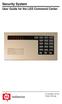 Security System User Guide for the LED Command Center MY SECURITY COMPANY IS: CALL BEFORE TEST: THIS SECURITY SYSTEM IS CONNECTED TO TELEPHONE NUMBER: THE SECURITY CONTROL PANEL IS CONNECTED TO THE PHONE
Installation Guide. Wyse VX0L and VX0LE Thin Clients 1-GB RAM Upgrade Option Kit. Issue: 022808 PN: 883884-07L Rev. A
 Installation Guide Wyse VX0L and VX0LE Thin Clients 1-GB RAM Upgrade Option Kit Issue: 022808 PN: 883884-07L Rev. A ii Copyright Notice 2008, Wyse Technology Inc. All rights reserved. This manual and the
SPECIAL CODES AUXILIARY CODES SYSTEM NOTES
 Installing/Service Company Monitoring Center SPECIAL CODES Master Code Duress Code AUXILIARY CODES "Quick Arm" " Chime" 08 02 09 03 10 04 11 05 12 06 13 07 14 SYSTEM NOTES Exit Delay Time Entry Delay Time
Dialog Telephone Interface Module Installation Sheet
 Dialog Telephone Interface Module Installation Sheet Description The Dialog Telephone Module (DTIM), model number 60-879- 95R, is a battery operated communication link between the security system control
INSTRUCTION MANUAL SOFTWARE VERSION 1.0R
 INSTRUCTION MANUAL SOFTWARE VERSION 1.0R FCC COMPLIANCE STATEMENT CAUTION: Changes or modifications not expressly approved by Digital Security Controls Ltd. could void your authority to use this equipment.
INSTRUCTION MANUAL. DSC Security Products PC1500/PCI550
 INSTRUCTION MANUAL DSC Security Products PC1500/PCI550 ABOUT YOUR SECURITY SYSTEM Your DSC security equipment has been designed to give you the greatest possible flexibility and convenience. Read this
INSTRUCTION MANUAL LCD-6OO SECURITY STATION
 INSTRUCTION MANUAL 1993 Digital Security Controls Ltd. 1645 Flint Road, Downsview, Ontario, Canada M3J 2J6 Printed in Canada 29000144 R1 LCD-6OO SECURITY STATION Table of Contents Introduction 1 About
SECURITY SYSTEM NOTES
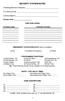 SECURITY SYSTEM NOTES Installing/Service Company For Service Call Central Station Duress Code FUNCTION CODES Function Code Controls Function EMERGENCY ACTIVATION KEYS (check if enabled) Fire Auxiliary
HONEYWELL COMMERCIAL FIRE/BURG PANEL UL LISTING REQUIREMENTS (Compiled from VistaFBPT Installation Instructions 800-09617V1 Rev A 11/12)
 HONEYWELL COMMERCIAL FIRE/BURG PANEL UL LISTING REQUIREMENTS (Compiled from VistaFBPT Installation Instructions 800-09617V1 Rev A 11/12) UL864 (Commercial Fire) Compliance General Requirements The VISTA-128FBPT/VISTA250FBPT
How To Use A Powerline On A Iphone Or Ipa (Aero) With A Powerpoint (A2) On A Blackberry) With An Iphones 2 (A3) Or Ipad (A4) With
 NOTE After 15 minutes of keypad inactivity the keypad will emit a steady tone indicating the panel has been left in Dealer Program Mode. Enter Dealer Code to exit or press the C key to return to Dealer
Using Your. Security System With Icon Keypad S5020, S5021, S5022
 Using Your Security System With Icon Keypad S5020, S5021, S5022 Contents 1 Overview Your Security System... 1 How Your Security System Works... 2 Your System's Programming... 3 Getting Used to Your System...
SECURITY SYSTEM NOTES. Security System Configuration
 Installing / Service Company: For Service Call: SECURITY SYSTEM NOTES Security System Configuration Master Code: Auxiliary Code(s) 2 3 4 5 6 "Quick Arm" Digit: Exit Delay Time Auxiliary Exit Delay Time
Solution-16 Operators Manual ISSUE 1.60
 Solution-16 Operators Manual ISSUE 1.60 !"#$%&"'()*+ Operators Manual Copyright 2002 by, SYDNEY, AUSTRALIA Document Part Number MA880O DOCUMENT ISSUE 1.60 Printed 22 March 2002 This documentation is provided
SECURITY SYSTEM NOTES SPECIAL CODES ENTRY / EXIT DELAY TIMES ARM / DISARM CODES
 SECURITY SYSTEM NOTES Installing/Service Company For Service Call SPECIAL CODES "Chime" Digit 1 "Partial Arm" Digit 2 "Quick Arm" Digit 3 ENTRY / EXIT DELAY TIMES Exit Delay Time Entry Delay Time Secondary
PROGRAMMING GUIDE. XR6 COMMAND PROCESSOR PANEL and XR10 COMMAND PROCESSOR PANEL
 PROGRAMMING GUIDE XR6 COMMAND PROCESSOR PANEL and XR10 COMMAND PROCESSOR PANEL MODEL XR6/XR10 COMMAND PROCESSOR PROGRAMMING GUIDE FCC NOTICE This equipment generates and uses radio frequency energy and,
NetworX NX-6V2. LED Keypad User Manual
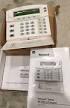 NetworX NX-6V2 LED Keypad User Manual POWER Light is on when AC power is present; flashes to indicate a low battery condition. ARMED Light is on when armed; off when disarmed; flashes to indicate a previous
System Programming Guide
 & System Programming Guide Software Versions 5.0 (728ULT) and 5.0 (738ULT) Installer Code (default - 728 Ultra: 282828; 738 Ultra: 383838) Full access to programming, except user access codes (PINs). No
e-ask electronic Access Security Keyless-entry
 e-ask electronic Access Security Keyless-entry e-fob Keyless-entry entry System Full-Function Function Installation Manual FCC ID: TV2EFOB1 (UM20 ~ 22793-02) Table of Contents Introduction... 1 e-fob Operation
SECURITY SYSTEM NOTES SPECIAL CODES AUXILIARY ARM / DISARM CODES ENTRY / EXIT DELAY TIMES ZONE DESCRIPTIONS
 SECURITY SYSTEM NOTES Installing/Service Company For Service Call SPECIAL CODES Master Code Duress Code "Quick Arm" Digit "Chime" Digit "Entry-Guard" Digit AUXILIARY ARM / DISARM CODES 02 12 22 03 13 23
IDS. Users Guide to Keypad Functions S E C U R I T Y MANUAL NO. 700-171-01B ISSUED AUG 2002 VERSION 1.18
 INHEP DIGITAL IDS S E C U R I T Y Users Guide to Keypad Functions MANUAL NO. 700-171-01B ISSUED AUG 2002 VERSION 1.18 Summary of Operation A rm/ disarm [#] + [USER CODE] Quick Quick Quick Away Arm Stay
Reference & Installation Manual
 & Versions 4.4 (728ULT) & 4.1 (738ULT) 728ULT 738ULT Reference & Installation Manual Table of Contents Introduction... 1 About This Manual... 1 New Features... 1 Main Features... 1 Specifications... 1
SECURITY SYSTEM NOTES SPECIAL CODES. Security System Configuration
 Installing / Service Company: SECURITY SYSTEM NOTES For Service Call: Master Code SPECIAL CODES Duress Code Security System Configuration Auxiliary Code(s) Quick Arm" Digit: 2 9 3 10 4 11 5 12 6 13 7 14
SECURITY SYSTEM MANUAL
 SECURITY SYSTEM MANUAL CONTACT NUMBERS: Phase 3 Security 403-783-2199 Technical Difficulties, Account Updates, & Any Other Inquiries: Consolidated Monitoring 1-800-232-7290 False Alarms & Holiday Procedures
NESS D16. 16 Zone Control Panel and Dialler OWNER S MANUAL
 NESS D16 16 Zone Control Panel and Dialler OWNER S MANUAL REVISION 2, JULY 2001 Ness Security Products Pty Ltd Quality Endorsed Company ISO9001 LIC.No. QEC2074 NSW Head Office only WWW.NESS.COM.AU Australia
PC4020 v3.3 Instruction Manual
 PC4020 v3.3 Instruction Manual WARNING: This manual contains information on limitations regarding product use and function and information on the limitations as to liability of the manufacturer. The entire
9452/9453 Installation and User Guide
 9452/9453 Installation and User Guide Compatible Equipment 9425 Remote Keypad 9040 Internal Sounder 660 Speech Communicator 8440 4-Channel Minicom 496330 Issue 1 1 of 10 9452/3 Introduction The 9452 and
616, 626, 636 & 646 Keypads
 616, 626, 636 & 646 Keypads User s Manual TABLE OF CONTENTS 1.0 BASIC OPERATION...2 2.0 ACCESS CODES...4 3.0 ARMING & DISARMING...6 4.0 PANIC ZONES...13 5.0 KEY ACCESS PROGRAMMING.14 6.0 ADDITIONAL FEATURES...15
500r+ Installation and User Guide
 500r+ Installation and User Guide Compatible Equipment 502rUK-50 Watch/Pendant PA. 509rUK-50 Smoke Detector 515rUK-00 10 metre passive infra red movement detector. 525rUK-00 Remote Set/Unset (Full and
SECURITY SYSTEM NOTES
 SECURITY SYSTEM NOTES Installing/Service Company For Service Call Central Station Duress Code FUNCTION CODES Function Code Controls Function This system is is not partitioned. EMERGENCY ACTIVATION KEYS
Using Your. Security System. With LED Keypad S5030, S5031, S5032
 Using Your Security System With LED Keypad S5030, S5031, S5032 Contents 1 Overview Your Security System... 1 How Your Security System Works... 2 Your System's Programming... 3 Getting Used to Your System...
INSTALLATION/PROGRAMMING INSTRUCTIONS 928 ENTRYCHECK
 3580 Willow Lane, Westlake Village, CA 91361-4921 (805) 494-0622 Fax: (805) 494-8861 www.sdcsecurity.com E-mail: [email protected] INSTALLATION/PROGRAMMING INSTRUCTIONS 928 ENTRYCHECK INTRODUCTION
CM705B - Universal Expander Module CM707B - Plug On Zone Expander Security Systems
 CM705B - Universal Expander Module CM707B - Plug On Zone Expander Security Systems EN Security System CM705B CM705B - Universal Expander Module The CM705B universal expander provides a cost effective way
Maintenance Manual PC6010. WARNING This manual contains information on limitations regarding product use and function
 WARNING This manual contains information on limitations regarding product use and function and information on the limitations as to liability of the manufacturer. The entire manual should be carefully
SECURITY SYSTEM NOTES. EMERGENCY ACTIVATION KEYS (check if enabled) PROGRAMMED FUNCTIONS
 SECURITY SYSTEM NOTES Installing/Service Company For Service Call Installation Date / / Central Station Duress Code EMERGENCY ACTIVATION KEYS (check if enabled) Fire Auxiliary Emergency Police PROGRAMMED
SCORPION. micron security products
 SCORPION 4120 6020 & 8020 USER INSTRUCTIONS Thank you for purchasing a Quality Micron Security Alarm Controller. Micron product is manufactured to exacting quality standards. We understand the importance
GE Concord 4 Quick User Guide
 GE Concord 4 Quick User Guide GE Concord 4 Quick User Guide Page 1 Before Calling Is the keypad beeping? Press *. This will silence the beeping and let you know where the trouble is. Is there a flashing
Simon XTi Installation Guide
 Simon XTi Installation Guide Content Contact information... 1 Description... 1 Installation... 1 Connecting hardwired devices... 2 Wiring phone lines... 3 Wiring the power transformer... 4 Resetting memory
System Introduction S E C T I O N 1
 System Introduction S E C T I O N 1 1.1 Specifications Flexible Zone Configuration Six fully programmable zones; system expandable to eight zones using keypad zone inputs and wireless zones 38 access codes:
NX-8V2 Control Panel Installation Manual
 NX-8V2 Control Panel Installation Manual P/N I-NX8V2-IM REV H ISS NOV12 Copyright Disclaimer Trademarks and patents Intended use Contact information Customer support 2012 UTC Fire & Security Americas Corporation,
BARDIC. 4 & 8 Zone Fire Panels Zircon range. Data, installation, operation and maintenance. by Honeywell
 Data, installation, operation and maintenance 4 & 8 Zone Fire Panels Zircon range BARDIC by Honeywell LED flashing LED Continuous FAULT DISABLE/TEST Power General Fault Sounder Fault/ Disable System Fault
D1260/D1260B. Keypad. National Security Systems Inc (800)457-1999. Owner's Manual
 D1260/D1260B EN Owner's Manual Keypad National Security Systems Inc (800)457-1999 D1260/D1260B Owner's Manual This system includes a telephone line seizure feature. The system may be programmed to communicate
Power Over Ethernet Adapters POE101
 Power Over Ethernet Adapters POE101 Installation Guide Introduction NETGEAR POE101 Power over Ethernet adapters are designed to supply operational power to devices through an Ethernet cable. These adapters
Wireless Alarm System. Wireless Keypad. User s Manual. Choice ALERT. Control all sensors, accessories and remote transmitters from one location
 Wireless Alarm System Wireless Keypad User s Manual 1 2 3 4 Choice ALERT Control all sensors, accessories and remote transmitters from one location Table of Contents Important Safeguards 4 Introduction
Fire Alarm Control Panel. Family. Operating Manual
 Fire Alarm Control Panel Family Operating Manual CONTENTS System Description AH-03312 System Characteristics... Fire Signal Receiving Board Description-4L... Fire Signal Receiving Board Description-8L...
Changes or modifications not expressly approved by Interlogix, Inc. can void the user s authority to operate the equipment.
 9-4 5 ) 7 ) 8 A HI E = @ = JA H 6 D A 2 A =? A A A F A H 1 FCC Notices FCC Part 15 Information to the User Changes or modifications not expressly approved by Interlogix, Inc. can void the user s authority
ADEMCO LYNXR-I Security Systems
 K14117 3/06 Rev. A ADEMCO LYNXR-I Security Systems Quick Start Guide UL LYNXR-I is not intended for UL985 Household Fire applications unless a 24-hour backup battery (P/N LYNXRCHKIT-HC or LYNXRCHKIT-SHA)
Users Guide to Keypad Functions
 Users Guide to Keypad Functions MANUAL NO. 700-175-01J ISSUED JAN 2002 VERSION 1.41 Summary of Operation A rm/ disarm [#] + [USER CODE] Quick Quick Quick Panic Fire Medical Away Arm Stay Arm Stay Arm &
User's Manual 5120XM N8031 6/96
 Fire and Burglary System User's Manual 5120XM N8031 6/96 SYSTEM OVERVIEW...3 General...3 Zones...3 Fire & Emergency Protection...3 Burglary Protection...4 Alarms...4 Memory of Alarm...4 ABOUT THE KEYPADS...5
tattletale User Guide Consumer unit version 2.48 1 P a g e
 tattletale User Guide Consumer unit version 2.48 1 P a g e Contents Basic 1... 4 Base Unit Features... 4 Initial Setup... 4 Arming... 5 Disarming... 5 Quiet Button... 5 Settings... 5 Settings 2... 6 Quick
IDS X-Series User Manual 700-398-01D Issued July 2012
 1 2 Contents 1. Introduction to the IDS X-Series Panels... 7 2. Before Operating Your Alarm System... 7 3. Understanding the Keypad LEDs... 8 3.1 Viewing Data on an LED Keypad... 12 3.1.1 LED Status Indicators...
Microprocessor Home Security System
 numbers of sensor s activations in the zone and after which activations the zone will be discarded (ignored). On every system s arming the counter is cleared in self. 6.3.11. 2 - Triger Timer - enter a
ACTIVE 5 ENGINEERING MANUAL
 ACTIVE 5 ENGINEERING MANUAL C & K Systems Ltd C031-066 Issue 3 THE ACTIVE 5 INSTALLATION MANUAL. Date: Feb 1997 INTRODUCTION. The Active 5 is a microprocessor controlled intruder alarm panel. It features
Changes or modifications not expressly approved by Interactive Technologies, Inc. can void the user s authority to operate the equipment.
 0 FCC Notices FCC Part 15 Information to the User Changes or modifications not expressly approved by Interactive Technologies, Inc. can void the user s authority to operate the equipment. FCC Part 15 Class
NX-591NE-GSM NetworX GSM 3G HSPA+ Module Installation Sheet
 NX-591NE-GSM NetworX GSM 3G HSPA+ Module Installation Sheet The NX-591NE-GSM is a microprocessor-controlled GSM interface module used to connect the NetworX series of control panels to GSM cellular networks
Model 70A00-1. GSM Cellular Communications Center
 Home Automation, Inc. Model 70A00-1 GSM Cellular Communications Center Operation Manual Document Number 70I00-1 Rev A August, 2009 Contents Description... 1 Use with security systems...1 Everyday use...2
ICP-CC404 ICP-CC404 EN. Control Panel. User s Guide
 ICP-CC404 EN User s Guide ICP-CC404 Control Panel ICP-CC404 User's Guide Copyright Notice Copyright Notice Unless otherwise indicated, this publication is the copyright of Bosch Security Systems, Inc.
AC-115 Compact Networked Single Door Controller. Installation and User Manual
 AC-115 Compact Networked Single Controller Installation and User Manual December 2007 Table of Contents Table of Contents 1. Introduction...5 1.1 Key Features... 6 1.2 Technical Specifications... 7 2.
MONITOR ISM / AFx Multi-Tenant Security System User Guide V1.3
 MONITOR ISM / AFx Multi-Tenant Security System User Guide V.3 Multi-Tenant Security System User Guide Welcome New Users! There are two types of suite security keypads. Follow the instructions in the proceeding
User Guide for the DS7060 Control/Communicator
 DS7060 User Guide Copyright 1996-97 Detection Systems, Inc. User Guide for the DS7060 Control/Communicator Copyright 1996-97 Detection Systems, Inc. Detection Systems, Inc., 130 Perinton Parkway, Fairport,
CONTENTS QUICK SETUP & INSTALLATION USER MANUAL. SUPA8 Quick Setup & User Manual
 SUPA8 Quick Setup & User Manual QUICK SETUP & INSTALLATION CONTENTS FACTORY DEFAULTS... 1 INSTALLATION OF THE SECURITY SYSTEM... 2 COMMISSIONING THE DIALLER PANEL... 5 ZONE INPUT CONNECTIONS... 7 PANEL
Wireless Home Security System Product Manual (Model #80355)
 Wireless Home Security System Product Manual (Model #80355) Installation Instructions During set-up, if no key is pressed for 15 seconds it will come out of the setup mode and you will have to start over.
PK5500 v1.1 Installation Instructions
 PK5500 v1.1 Installation Instructions 1 2 3 4 5 6 7 8 9 * 0 # WARNING: Please refer to the System Installation Manual for information on limitations regarding product use and function and information on
NetworX Series. NX- 4/8 Code Pad. User Manual (Australian Version)
 NetworX Series NX- 4/8 Code Pad User Manual (Australian Version) Table Of Contents Code Pad Diagram... Inside Front Glossary of Terms...2 Understanding the Code Pad lights...3 Code Pad Tones...4 Fully
FIRST ALERT INSTRUCTION MANUAL FOR FA 270 KEYPADS SECURITY SYSTEM
 FIRST ALERT INSTRUCTION MANUAL FOR FA 270 KEYPADS SECURITY SYSTEM Page 0 Table of Contents Introduction 1 System Basics.. 1 Burglary Protection.. 1 Fire Protection.. 1 Security Codes. 1 Zones and Partitions
Firmware version: 1.10 Issue: 7 AUTODIALER GD30.2. Instruction Manual
 Firmware version: 1.10 Issue: 7 AUTODIALER GD30.2 Instruction Manual Firmware version: 2.0.1 Issue: 0.6 Version of the GPRS transmitters configurator: 1.3.6.3 Date of issue: 07.03.2012 TABLE OF CONTENTS
9448 Installation and User Guide
 9448 Installation and User Guide Compatible Equipment 9040 Internal Sounder 660 Speech communicator 496327 Issue 1 1 of 6 9448 INTRODUCTION The 9448 is a 3 zone control panel with separate Entry/Exit and
728 SERIES REFERENCE & INSTALLATION MANUAL 728+ VERSION 3.2. 728 series
 728 SERIES 728+ VERSION 3.2 728 series REFERENCE & INSTALLATION MANUAL TABLE OF CONTENTS INTRODUCTION... 2 About This Manual... 2 Features... 2 Specifications... 3 Accessories and Keypads... 3 About Paradox...
HM-W536 Install Guide
 HM-W536 Install Guide 9/13/2013 IMPORTANT SAFETY INSTRUCTIONS Warning - When using electrical devices, basic safety precautions should be followed to reduce the risk of fire, electrical shock or injury.
User's Manual. For use with ProSYS 16, ProSYS 40, and ProSYS 128
 User's Manual For use with ProSYS 16, ProSYS 40, and ProSYS 128 Important Notice This manual is delivered subject to the following conditions and restrictions: This manual contains proprietary information
Security System. User's Guide. Keypad
 Security System EN User's Guide Keypad Security System User's Guide This system includes a telephone line seizure feature. The system can be programmed to communicate with a central monitoring station
PC Tab INSTALLATION MANUAL SECURE-IT, INC. EAST LONGMEADOW, MA 01028. 800-451-7592 / 413-525-7039 (fax) 413-525-8807 http://www.secure-it.
 PC Tab INSTALLATION MANUAL SECURE-IT, INC. EAST LONGMEADOW, MA 01028 800-451-7592 / 413-525-7039 (fax) 413-525-8807 http://www.secure-it.com IMPORTANT READ ENTIRE MANUAL BEFORE STARTING!!! System Overview
INTRODUCTION 2 Features... 2 Specifications... 2
 TABLE OF CONTENTS INTRODUCTION 2 Features... 2 Specifications... 2 INSTALLATION 3 Mounting the Panel... 3 Mounting the Keypad... 3 Wiring... 4 Burglary Zone Wiring... 4 Auxiliary Power Connection... 4
ICP-CC488 ICP-CC488 EN. Control Panel. Quick Reference Guide
 ICP-CC488 EN Quick Reference Guide ICP-CC488 Control Panel ICP-CC488 Quick Reference Guide Notices EN 2 Copyright Notice Unless otherwise indicated, this publication is the copyright of Bosch Security
System Programming Guide (728ULT)
 System Programming Guide (728ULT) Software Version 4.4 Installer Code (Default: 282828) Full access to programming, except user access codes (PINs). No access to arming/disarming. Use only numeric keys
HARDWIRED CONTROL PANELS
 USER GUIDE 9651 HARDWIRED CONTROL PANELS Contents 1. Introduction...3 The Alarm System...3 The Keypad...3 About This Guide...5 2. Everyday Operation...6 How Do I Know if the System is Working?...6 Setting
Table of Contents Function Keys of Your RF Remote Control Quick Setup Guide Advanced Features Setup Troubleshooting
 Congratulations on your purchase of the AT&T U-verse TV Point Anywhere RF Remote Control. This product has been designed to provide many unique and convenient features to enhance your AT&T U-verse experience.
Elite 8D/Lite Version 8 Zone Controller. Arrowhead Alarm Products Ltd. Operating Guide. Proudly Designed and Manufactured in New Zealand
 Elite 8D/Lite Version 8 Zone Controller 8 Arrowhead Alarm Products Ltd Operating Guide 1 Proudly Designed and Manufactured in New Zealand 2 CONTENTS Page No. INTRODUCTION 4 About your Alarm 4 OPERATING
Application Notes. 1.21 Partition Programming (PC1616/1832/1864 V4.2) Page 42. Panels: POWER SERIES (PC1616/1832/1864 V4.
 Application Notes 1.21 Partition Programming (PC1616/1832/1864 V4.2) Panels: POWER SERIES (PC1616/1832/1864 V4.2) Overview: The PC1616 supports 2 true partitions. The PC1832 supports 4 true partitions.
INSTALLATION GUIDE. www.security.soundstream.com FCC ID NOTICE
 AL.1 AUTO SECURITY SYSTEM INSTALLATION GUIDE www.security.soundstream.com FCC ID NOTICE This device complies with Part 15 of the FCC rules. Operation is subject to the following conditions: 1. This device
Ademco Vista-20P/First Alert FA-168C Basic Commands
 Zones 64 total Ademco Vista-20P/First Alert FA-168C Basic Commands Wireless Yes, Zones 09 to 48 + 16 Keyfob Zones (Zones 49 to 64) Batteries Downloadable Partitions 2 12 volt Rechargable inside main Panel,