
TRAINING COURSE PROSPECTUS
|
|
|
- Curtis Rolf Hall
- 9 years ago
- Views:
Transcription
1 TRAINING COURSE PROSPECTUS Tel: +44 (0) SOLID Applications Limited Old Market Place Market Street Oldbury West Midlands B69 4DH


2 Page 2 of 82 Revision 17

3 Contents Introduction... 5 Training Details... 6 Training Course Costs... 7 Training Grants... 8 SOLIDWORKS Courses... 9 SOLIDWORKS Transition... 9 SOLIDWORKS Essentials SOLIDWORKS New Version Update Training SOLIDWORKS Drawings SOLIDWORKS Assembly Modelling SOLIDWORKS Advanced Part Modelling SOLIDWORKS Surface Modelling SOLIDWORKS Mould Design SOLIDWORKS Sheet Metal SOLIDWORKS Weldments SOLIDWORKS Routing Electrical SOLIDWORKS Routing Piping and Tubing SOLIDWORKS File Management SOLIDWORKS API Fundamentals SOLIDWORKS Electrical Courses SOLIDWORKS Electrical Schematic SOLIDWORKS Electrical 3D SOLIDWORKS Simulation Courses SOLIDWORKS Plastics Professional SOLIDWORKS Plastics Premium SOLIDWORKS Simulation SOLIDWORKS Simulation Professional SOLIDWORKS PDM Courses Using SOLIDWORKS PDM Professional Administering SOLIDWORKS PDM Professional Administering SOLIDWORKS PDM Standard SOLIDWORKS Workgroup PDM Courses SOLIDWORKS Workgroup PDM Contributor SOLIDWORKS Workgroup PDM CAD Editor Administering SOLIDWORKS Workgroup PDM SOLIDWORKS Composer Courses Using SOLIDWORKS Composer KeyShot Courses KeyShot Training Registration Procedure Fees and Invoicing Terms and Conditions Cancellation Terms Training Course Registration Form Revision 17 Page 3 of 82

4 Page 4 of 82 Revision 17

5 Introduction As a SOLID Applications Ltd customer, your design system can and will make a significant contribution towards increased efficiency and productivity. Effective training of all personnel involved with the system is a key factor in obtaining the maximum return on your investment. By continuing to invest in high quality, relevant training for your personnel you will: Ensure that your organisation gains the optimum benefit from your system Maximise users personal productivity through in-depth knowledge of system functionality Enhance your business operation through innovative and effective system usage Identify scope for system applications that may not have been part of the initial justification for your investment Deliver personal satisfaction and motivation to system users through increased skills and expertise. It is our aim at SOLID Applications Ltd to assist you in achieving these goals through the provision of purposedeveloped, specialised training courses designed to enhance the skill and expertise of your system users and to maximise the benefit you gain from your investment in a SOLID Applications Ltd solution. All SOLID Applications Ltd training courses are structured so that your staff may learn not only the theoretical but also the practical aspects of system usage. SOLID Applications Ltd is able to provide training of the necessary high quality because: We listen to the needs of our customers and gain an understanding of your business and training needs so that training courses are relevant and develop effective skills We are able to respond to changing market demands Our instructors are highly professional, experienced tutors who are fully aware of product capabilities and how these may best be applied to meet your business needs Our training courses are designed to require total delegate participation in a distraction free training environment, conducive to effective learning. Should you need further details about any of the courses outlined in this document, require assistance identifying the most appropriate courses to meet your training needs, or need any help in developing your training programme please contact us. Revision 17 Page 5 of 82

6 Training Details Courses are scheduled on demand and the frequency of any course will reflect that demand. Therefore, although a course you desire may not be included in the current schedule, please do call and enquire about the course. If sufficient demand is shown then a course will be scheduled. Training courses are to pre-set formats and each is designed to train delegates in specific aspects of the product as outlined in this prospectus. Please check the pre-requisites of the course before you enrol delegates. Although specific SOLID Applications Ltd courses may be stated as having pre-requisites, delegates may have attained the required background via other channels. It is the delegates' responsibility to ensure that they have the required knowledge for a course before enrolling. If you have any queries regarding course pre-requisites we will be pleased to advise you. Training at our site: All courses are conducted at SOLID Applications Ltd s fully equipped training rooms with dedicated facilities. On the first day of the course, delegates should report to the reception area for registration at 9.15am. Delegates are requested to arrive promptly and a map will be sent showing the location of our Oldbury Training Centre when course bookings are confirmed. Classes are conducted from 9.30am to 5.00pm each day with a break of approximately one hour for lunch. Lunch is provided each day of the training. Delegates are responsible for all personal expenses such as travel, accommodation and evening meals. Lunch will be provided each day. Details of local accommodation will be provided with confirmation of your booking. Courses include classroom lecture, demonstration and supervised "hands on" exercises. Training course manuals will be provided per workstation/laptop for use whilst on the course. Training at your site: The customer is responsible for providing a suitable training room, white-board, and projector. Unless specified, the customer is responsible for providing a suitable training workstations/laptops with the appropriate software installed and licensed. If SOLID Applications Ltd provides training workstations/laptops, the customer is responsible for securely storing them during non-training periods such as breaks or overnight, with the appropriate insurance in place. Classes can be conducted to start/end based on the customer s normal working hours each day, with a break of approximately one hour for lunch (subject to confirmation). It is assumed that the customer will provide lunches each day of the training. For standard courses, manuals will be provided per workstation/laptop for use whilst on the course. Page 6 of 82 Revision 17

7 Training Course Costs The training rate for all training held at the SOLID Applications Ltd training centre in Birmingham is 375 per person, per day. This excludes any training offers or promotions, or special rates negotiated on a per client basis. The training rate for all training held at the client s site is 1200 per day (excluding expenses). Standard training courses at our offices include training manuals for the delegates, however, for client site training, the training manuals will be need to be added to the cost of the course. All prices stated are subject to VAT. Revision 17 Page 7 of 82

8 Training Grants SOLID Applications Ltd works with an impartial training broker who liaise closely with Train to Gain, Skills Funding Agency, European Social Funding, Manufacturing Advisory Services, Individual Regional Grant Funds and a variety of individual awarding bodies to distribute relevant training grants within ALL sectors nationally. An example of some of the sectors that have had specialist grants are the Engineering, Manufacturing, Energy Related, Hi-tech, Automotive, Design, Architectural, Creative, Pharmaceutical and Construction industries and sectors (this list is not restrictive or exhaustive). These Grants can really help elevate your business, staff and products as well as safe guard jobs and boost your company s image and output. Grants change very frequently, and can be for Match funding, Training for Leaders, Managers and Key/Principle decision makers, and also Business Critical Training. The funding is dependent on the region of the UK you are in; If you would like to check if you are eligible for any funding, please contact us. Please be aware this is a FREE NO OBLIGATION SERVICE to check eligibility, and in most cases the application process is also free or on a no win no fee basis. Page 8 of 82 Revision 17

9 SOLIDWORKS Courses SOLIDWORKS Transition Code: Duration: Cost: Prerequisites: Description: The topics covered in this course are: Generic User Interface Part Modelling Assembly modelling Drafting Lesson 1: SOLIDWORKS user interface Overview of the user interface Opening files Part and Sheet Metal environment Basic settings Options to speed up your workflows SA-SWT 1 Day 375 per person Solid Edge experience The aim of the course is to seamlessly transition existing Solid Edge users to SOLIDWORKS, ensuring minimal disruption to current working practices. This course will train the users the most commonly used tools to create some basic part components, to be then used in the assembly environment to create a finished product. This product will then be taken into the drafting environment to produce a detailed production drawing. Lesson 2: Introduction to Part Modelling Planes Manipulating FeatureManager Design Tree to access reference planes Use of design panes Sketching Variants to create a sketch Solid Edge similarity settings Centre line and construction lines Trim command Constraining sketches Aligning to origin/planes Sketch dimensioning Sketch relationships Part Modelling features Solid from existing sketch Solid from feature selection Solid from instant 3D Editing sketches Instant 3D edit Solid from open profiles Revision 17 Page 9 of 82

10 Hole command Fillet command and fillet expert Draft command Revolve base /cut Sheet Metal Modelling features Tabs Flanges Holes and Cutouts Flat pattern Convert to sheet metal Lesson 3: SOLIDWORKS basic Assembly Modelling Insert components Mates/smart mates Movement Planar align with angle Lesson 4: SOLIDWORKS Drawings Importing items from environment or folder structure Creating views Sectioning and detail views Dimensioning Parts list and ballooning Lesson 5: Data Migration Feature Recogniser Strategy for migrations Page 10 of 82 Revision 17


11 SOLIDWORKS Essentials Code: Duration: Cost: Prerequisites: Description: The topics covered in this course are: SA-TR40 4 Days 1500 per person (includes course manual) Mechanical design experience; experience with the Windows operating system SOLIDWORKS Essentials teaches you how to use the SOLIDWORKS mechanical design automation software to build parametric models of parts and assemblies, and how to make drawings of those parts and assemblies. Lesson 1: SOLIDWORKS Basics and the User Interface What is the SOLIDWORKS Software Design Intent File References Opening Files The SOLIDWORKS User Interface Using the Command Manager Lesson 2: Introduction to Sketching 2D Sketching Stages in the Process Saving Files What are We Going to Sketch? Sketching Sketch Entities Basic Sketching Rules That Govern Sketches Design Intent Sketch Relations Dimensions Extrude Sketching Guidelines Lesson 3: Basic Part Modelling Basic Modelling Terminology Choosing the Best Profile Choosing the Sketch Plane Details of the Part Boss Feature Sketching on a Planar Face Cut Feature Using the Hole Wizard View Options Filleting Editing Tools Detailing Basics Drawing Views Center Marks Dimensioning Changing Parameters Revision 17 Page 11 of 82

12 Lesson 4: Symmetry and Draft Case Study: Ratchet Design Intent Boss Feature with Draft Symmetry in the Sketch Sketching Inside the Model View Options Using Model Edges in a Sketch Creating Trimmed Sketch Geometry Lesson 5: Patterning Why Use Patterns? Linear Pattern Circular Patterns Reference Geometry Planes Mirror Patterns Using Pattern Seed Only Up to Reference Sketch Driven Patterns Lesson 6: Revolved Features Case Study: Handwheel Design Intent Revolved Features Building the Rim Building the Spoke Edit Material Mass Properties File Properties SOLIDWORKS SimulationXpress Using SOLIDWORKS SimulationXpress The SimulationXpress Interface Lesson 7: Shelling and Ribs Shelling and Ribs Analyzing and Adding Draft Other Options for Draft Shelling Ribs Full Round Fillets Thin Features Lesson 8: Editing: Repairs Part Editing Editing Topics Sketch Issues FilletXpert DraftXpert Page 12 of 82 Revision 17

13 Lesson 9: Editing: Design Changes Part Editing Design Changes Information from a Model Rebuilding Tools Replace Sketch Entity Sketch Contours Lesson 10: Configurations Configurations Using Configure Dimension/Feature Other Methods to Create Configurations Using Global Variables and Equations Creating Equalities Global Variables Defining the Overall Width Creating a Minimum Edge Distance Modeling Strategies for Configurations Editing Parts that Have Configurations Design Library Lesson 11: Using Drawings More About Making Drawings Section View Model Views Broken View Detail Views Drawing Sheets and Sheet Formats Projected Views Annotations Lesson 12: Bottom-Up Assembly Modelling Case Study: Universal Joint Bottom-Up Assembly Creating a New Assembly Position of the First Component FeatureManager Design Tree and Symbols Adding Components Mating Components Using Part Configurations in Assemblies Sub-assemblies Smart Mates Inserting Subassemblies Pack and Go Lesson 13: Using Assemblies Using Assemblies Analyzing the Assembly Checking for Clearances Changing the Values of Dimensions Exploded Assemblies Explode Line Sketch Revision 17 Page 13 of 82

14 Bill of Materials Assembly Drawings Appendix A: Templates Options Settings Document Templates Page 14 of 82 Revision 17

15 SOLIDWORKS New Version Update Training Code: Duration: Cost: Prerequisites: SA-SWU14 1 Day 375 per person SOLIDWORKS Experience. SOLIDWORKS 2016 Make Great Design Happen DESIGN FOCUS ON DESIGN, NOT SOFTWARE Work smarter and get the CAD system out of your way with fewer picks and clicks, increased modeling flexibility, a more intuitive interface, and easier access to commands Topic covered include: User Interface Bread crumbs Confirmation corner shortcut Sketching Part Modeling 3D Thread Feature Assembly Modeling Simplified mate selection VALIDATE SOLVE COMPLEX PROBLEMS QUICKLY Innovative design simulation makes analysis more efficient to help you solve complex problems, visualize and verify functionality, and find potential errors before they occur Topic covered include: Complex Part Design Performance Validation Plastics Validation Flow Simulation Revision 17 Page 15 of 82

16 COLLABORATE STREAMLINE YOUR PARALLEL DESIGN PROCESS Communicate, collaborate, and work concurrently across teams, disciplines, customers, and vendors with mechatronic design, concurrent design, and streamlined electrical/mechanical design Topic covered include: SOLIDWORKS PDM Standard & Professional SOLIDWORKS Electrical Routing Mate Controller Costing edrawings Treehouse BUILD FAST-TRACK YOUR DESIGNS THROUGH MANUFACTURING Create more detailed outputs for manufacturing and shorten product development to manufacture while you save time and reduce errors Topic covered include: PhotoView 360 SOLIDWORKS Visualize 3D Printing Drawings Model Based Definition Page 16 of 82 Revision 17


17 SOLIDWORKS Drawings Code: Duration: Cost: Prerequisites: Description: SA-TR41 2 Days 750 per person (includes course manual) SOLIDWORKS Essentials This course teaches you how to make drawings of SOLIDWORKS parts and assemblies. The topics covered in this course are: Lesson 1: Drawing Sheets and Views Drawing Sheets and Views Sheets and Formats Terminology Drawing Views Sketching in Drawing Views View Settings Centermarks and Centerlines Model Edges in the View Lesson 2: Dimensions Dimensions Manipulating Dimensions Dimension Properties Lesson 3: Annotations Adding Annotations Annotation Types Blocks Lesson 4: Assembly Drawing Views Assembly Drawing Views Creating Views of Assemblies Lesson 5: Sheet Formats and Templates Sheet Formats and Templates Drawing Templates Properties in the Template User Defined Properties Customizing a Sheet Format Define Title Block Updating Sheet Formats Lesson 6: Bill of Materials and Tables Creating and Managing a Bill of Materials The Bill of Materials Adding a BOM Modifying the BOM Tabulated Bill of Materials Balloons Tables in the Drawing Revision 17 Page 17 of 82

18 Lesson 7: Performance and Display Issues Performance and Display Issues Large Assembly Mode Lightweight Drawings Detached Drawings Display Issues in Drawing Views Lesson 8: Drawing References and Comparison Reusing a Drawing File Changing Drawing References Using DrawCompare SOLIDWORKS Design Checker Appendix A: Preparations for Detailing Page 18 of 82 Revision 17

19 SOLIDWORKS Assembly Modelling Code: Duration: Cost: Prerequisites: Description: SA-TR42 2 Days 750 per person (includes course manual) SOLIDWORKS Essentials Assembly modelling teaches you how to maximize your use of the assembly modelling capabilities of SOLIDWORKS mechanical design automation software. The topics covered in this course are: Lesson 1: Advanced Mate Techniques SOLIDWORKS Assemblies Assembly File Structure File References External Reference Search Order Solving Mates Advanced Mate Techniques Case Study: SmartMates and Mate References Mate References Capture Mate References Multiple Mate Mode Using Copy with Mates Copy with Mate Options Fixed Components Summary: Inserting and Mating Components Advanced Mate Features Profile Center Mate Rack Pinion Mate Lesson 2: Top-Down Assembly Modeling Top-Down Assembly Modeling Stages in the Process Making Changes to Dimensions Case Study: Editing and Building In-context Adding Features In-context Inserting a New Part into an Assembly Building In-context Features Propagating Changes Saving Virtual Parts as External External References Breaking and Locking External References Machine_Vise Design Intent Removing External References Lesson 3: Assembly Features, Smart Fasteners, and Smart Components Assembly Features and Smart Fasteners Assembly Features Case Study: Assembly Features Smart Fasteners Revision 17 Page 19 of 82

20 Smart Components Lesson 4: Assembly Editing Assembly Editing Key Topics Editing Activities Case Study: Assembly Editing Replacing and Modifying Components Troubleshooting an Assembly Replacing Components Using Save As Reloading Components Component Patterns Lesson 5: Using Configurations with Assemblies Using Configurations with Assemblies Case Study: Assembly Configurations Creating Configurations Manually Configuration Properties Using the Modify Configurations Dialog Changing Configurations using the Context Toolbar Assembly Evaluation Tools Case Study: Hole Alignment Controlling Dimensions in an Assembly Creating an Equality Equations With Functions Comments Sensors Lesson 6: Display States and Appearances Display States Bulk Selection Tools Case Study: Display States Advanced Select Envelopes Appearances, Materials and Scenes Case Study: Appearances and Materials Lesson 7: Large Assemblies Large Assemblies Key Topics Lightweight Components Large Assembly Mode Case Study: Large Assembly Options Using SpeedPak Using Configurations with Large Assemblies Defeature Assembly Visualization Large Design Review Tips for Faster Assemblies Drawing Considerations Page 20 of 82 Revision 17

21 Lesson 8: Using SOLIDWORKS Treehouse SOLIDWORKS Treehouse Setting Treehouse Instances Exporting Treehouse Data Lesson 9: Layout-based Assembly Design Key Topics Case Study: Clamp Blocks Inserting Blocks Creating a Part from a Block Gear and Pulley Motion in Blocks Case Study: Gears and Pulleys Revision 17 Page 21 of 82
22 Page 22 of 82 Revision 17
23 SOLIDWORKS Advanced Part Modelling Code: Duration: Cost: Prerequisites: Description: SA-TR43 3 Days 1125 per person (includes course manual) SOLIDWORKS Essentials Advanced Part Modelling teaches you how to use multibody solids, sweeping and lofting features, and the more advanced shaping capabilities of SOLIDWORKS. The topics covered in this course are: Lesson 1: Multibody Solids: How They Work Multibody Solids Multibody Design Techniques Case Study:Multibody Design Contour Selection Introducing: Solid Bodies Folder Feature Scope Patterning Bodies Tool Body Technique Introducing: Insert Part Introducing: Move/Copy Bodies Combining Bodies Introducing: Combine Common Bodies Intersect with Solid Bodies Introducing: Intersect Local Operations Indent Feature Introducing: Indent Deleting Solid Bodies Introducing: Delete/Keep Body Lesson 2: Saving Solid Bodies Multibody Part vs. Assembly Saving Bodies Functions Using Cut to Create Multiple Bodies Insert into New Part Introducing: Insert into New Part Saving Bodies Introducing: Save Bodies Modeling for Rapid Tooling Splitting a Part into Multiple Bodies Introducing: Split Creating an Assembly Introducing: Create Assembly Using Split Part with Legacy Data Lesson 3: Sketching with Splines Curves in Sketches Splines Revision 17 Page 23 of 82
24 Introducing: Spline Introducing: Spline Tools Evaluating Curvature Combs Introducing: The Control Polygon Introducing: Spline Handles Analyzing Solid Geometry Introducing: Display Curvature Introducing: Zebra Stripes Surface Curvature Combs Sketch Picture Introducing: Sketch Picture Style Spline Introducing: Style Spline Case Study: Watering Can Handle Style Spline Tools Fit Spline Introducing: Fit Spline Lesson 4: Introduction to Sweeping Sweeping Case Study: Faux Raised Panel Door Sweep with Guide Curves Case Study: Bottle Body Pierce Relation Sweep with Guide Curves The SelectionManager Introducing: SelectionManager Case Study: Hanger Bracket Symmetrical Splines Introducing: Dome Lesson 5: Working with Curves Curve Features Case Study: Modeling a Spring Sweeping Along a 3D Path 3D Sketching Helix Curve Introducing: Helix and Spiral Introducing: Projected Curve Composite Curve Introducing: Composite Curve Adding Features to the Bottle Performance Considerations Modeling Threads Thread Profile Blower Housing Sweeping Along Model Edges Introducing: Split Line Lesson 6: Advanced Sweeping Sweep Options Additional Sweep Settings Page 24 of 82 Revision 17
25 Orientation and Twist Control Visualizing Sweep Sections Introducing: Face Curves Align with End Faces Solid Sweep Introducing: Equation Driven Curve Lesson 7: Boundary Feature and Lofting Comparing Complex Features How Lofting and Boundary Work Loft vs Boundary Feature Introducing: Loft Boundary Feature Introducing: Boundary Feature Using Derived and Copied Sketches Copying a Sketch Modify Sketch Introducing: Modify Sketch Derived Sketches Introducing: Derived Sketch Boundary Preview Options Sketch Block and Library Feature Profiles Additional Curves in Loft and Boundary Centerline Lofting Loft Preview Options Adding Sketch Segments Introducing: Segment Introducing: Split Entities Cleaning Up a Model Deleting Faces Introducing: Delete Face Evaluating Edges Introducing: Deviation Analysis Lofting with Guide Curves Curve Influence Hook Using Boundary Conics Introducing: Conic Introducing: Curve Through XYZ Sketch Blocks Introducing: Sketch Blocks Lesson 8: Advanced Filleting and Other Features Fillet Settings Fillet Parameters Constant Size Fillets Delete Face: Delete and Fill Fillet Options Variable Size Fillets Face Fillets Other Advanced Features Wrap Feature Introducing: Wrap Revision 17 Page 25 of 82
26 Deform Feature Introducing: Deform Introducing: Knit Surface Direct Editing Introducing: Move Face Page 26 of 82 Revision 17
27 SOLIDWORKS Surface Modelling Code: Duration: Cost: Prerequisites: Description: SA-TR44 2 Days 750 per person (includes course manual) SOLIDWORKS Essentials, Advanced Part Modelling Surface Modelling teaches you how to build freeform shapes using SOLIDWORKS mechanical design automation software. The topics covered in this course are: Lesson 1: Understanding Surfaces Solids and Surfaces Working with Surface Bodies Why Use Surfaces? Continuity Explained Workflow with Surfaces Lesson 2: Introduction to Surfacing Similarities Between Solid and Surface Modelling Basic Surfacing Lesson 3: Solid-Surface Hybrid Modelling Hybrid Modelling Using Surfaces to Modify Solids Interchanging Between Solids and Surfaces Performance Implications Surfaces as Construction Geometry Alternative to Trim, Knit, and Thicken Making Copies of Faces Lesson 4: Repairing and Editing Imported Geometry Importing Data Repairing and Editing Imported Geometry Lesson 5: Advanced Surface Modelling Stages in the Process Ruled Surfaces Lofting Surfaces Modeling the Lower Half Conclusion Design Changes Lesson 6: Blends and Patches Complex Blends Smoothing Patches Boundary Surface Freeform Feature Corner Blends Revision 17 Page 27 of 82
28 Lesson 7: Master Model Techniques Introduction to Master Models Surface Master Model Technique Working with a Solid Master Model Specialized Features for Plastic Parts SOLIDWORKS Explorer Page 28 of 82 Revision 17
29 SOLIDWORKS Mould Design Code: Duration: Cost: Prerequisites: Description: SA-TR45 2 Days 750 per person (includes course manual) Advanced Part Modelling Mould Design Using SOLIDWORKS teaches you several manual mould creation techniques and how to use the Mould Tools in SOLIDWORKS mechanical design automation software. The topics covered in this course are: Lesson 1: Surface Concepts and Imported Geometry Importing Data 3D Model Types Definitions Case Study: Solids vs. Surfaces Terminology File Translators Modeling Systems File Translation Why Do Imports Fail? Diagnosis and Repair Case Study: Repairing and Editing Imported Geometry Checking Solid Bodies Making Copies of Faces Case Study: Import Diagnostics Repairing Gaps Repairing Faces Lesson 2: Core and Cavity Core and Cavity Mold Design Case Study: A Simple Two Plate Mold Design SOLIDWORKS Mold Tools Mold Analysis Tools Analyzing Draft on a Model Draft Analysis Colors Scale the Part to Allow for Shrinkage Establish the Parting Lines Manual Selection Of Parting Lines Automation Modeling the Parting Surfaces Smoothing the Parting Surface Surface Bodies Interlocking the Mold Tooling Creating the Mold Tooling Lesson 3: Side Cores and EDM Design Multiple Parting Directions Revision 17 Page 29 of 82
30 Trapped Molding Areas Side Cores Feature Freeze Lifters Core Pins Case Study: Electrode Design Electrode Clearances Keeping the Sharp Edges Lesson 4: Advanced Parting Lines, Shut-Off Surfaces, and Cores Parting Lines and Shut-Off Surfaces Draft Analysis Options Parting Line Options Core and Cavity Surfaces Shut-Off Surfaces Parting Surface Tooling Split Seeing Inside the Mould Lesson 5: Using Surfaces for Model Prep and Interlocks Surfaces in Mold Making Case Study: Cordless Drill Bezel Creating New Drafted Faces Interlock Surfaces Lesson 6: Using Surfaces for Mold Design Features Surfaces in Mould Making Case Study: Router Bottom The Mixer Case Study: Mixer Upper Half Case Study: Manual Parting Surface Mold Split Folders Lesson 7: Alternative Methods for Mold Design Alternate Methods for Mold Design Using Combine and Split Creating a Cavity Case Study: Cavity Using Surfaces Techniques for Mold Tooling Using the Up To Surface Method Using the Split Method Manually Creating Shut-off Surfaces Lesson 8: Reusable Data Reusing Data Task Pane SOLIDWORKS Resources Design Library File Explorer Case Study: 3D ContentCentral Library Features Page 30 of 82 Revision 17
31 Case Study: Create A Library Feature Configurations in Library Features Case Study: Water Line Smart Components Lesson 9: Completing the Mold Base Case Study: Mold Base Organizing the Assembly Modifying the Lifters Ejector Pins Cooling the Mold Making the Drawing Making Changes Completing the Process Revision 17 Page 31 of 82
32 Page 32 of 82 Revision 17
33 SOLIDWORKS Sheet Metal Code: Duration: Cost: Prerequisites: Description: SA-TR46 2 Days 750 per person (includes course manual) SOLIDWORKS Essentials Sheet Metal teaches you how to build sheet metal parts using SOLIDWORKS mechanical design automation software. Building standalone sheet metal parts, and converting conventional parts to sheet metal, including in assembly context, are covered. The topics covered in this course are: Lesson 1: Basic Flange Features What are Sheet Metal Parts? Sheet Metal Methods Unique Sheet Metal Items Flange Method Edge FlangesBase Flange/Tab Sheet Metal Parameters Editing Sheet Metal Parameters Sheet Metal Bend Features Flat-Pattern Feature Additional Flange Features Edge Flanges Editing the Flange Profile Edge Flanges on Curved Edges Miter Flanges Hem Feature Tab Features Cuts in Sheet Metal Lesson 2: Working with the Flat Pattern Working with the Flat Pattern Flat Pattern Settings Features for Manufacture Corner-Trim Feature Corners in the Formed State Closed Corner Corner Relief Break Corner/Corner Trim Producing the Flat Pattern Sheet Metal Cut List Properties Flat Pattern Drawing Views Flat Pattern View Properties Drawing Document Properties Sheet Metal Tables Cut List Properties as a Note Lesson 3: Additional Sheet Metal Techniques Additional Sheet Metal Methods Designing from the Flat Revision 17 Page 33 of 82
34 Sketched Bend Feature Jog Feature Adding Features in an Unfolded State Unfold and Fold Swept Flange Swept Flange Flat Pattern Options Lofted Bends Lofted Bends in the Design Library Lesson 4: Converting to Sheet Metal Sheet Metal Conversion Insert Bends Method Imported Geometry to Sheet Metal Adding Rips Insert Bends Making Changes Welded Corner Converting Cones and Cylinders Convert to Sheet Metal Lesson 5: Multibody Sheet Metal Parts Multibody Sheet Metal Parts Multibodies with Base Flange Sheet Metal Parameters for Multibodies Cut List Item Properties for Multibodies Flat Pattern Drawing Views for Multibodies Cut List Balloon Annotations Exporting to DXF/DWGs with Multibodies Convert with Multibodies Hiding and Showing Bodies Using Split with Sheet Metal Parts Patterning for Multibodies Using Edge Flanges to Merge Bodies Interfering Bodies Combining Sheet Metal with Other Bodies Lesson 6: Forming Tools and Gussets Sheet Metal Forming Tools Standard Forming Tools Form Tool Features in the Flat Part Document Properties Custom Form Tools Split Line Forming Tool Form Tools in Drawings Sheet Metal Gusset Lesson 7: Additional Sheet Metal Functions Additional Sheet Metal Functions Cross-Breaks Vent Features Mirror Part Page 34 of 82 Revision 17
35 Process Plans Sheet Metal Costing Revision 17 Page 35 of 82
36 Page 36 of 82 Revision 17
37 SOLIDWORKS Weldments Code: Duration: Cost: Prerequisites: Description: SA-TR47 1 Day 375 per person (includes course manual) SOLIDWORKS Essentials Weldments teaches you how to create welded structures with standard structural members. Weld beads are also covered. The topics covered in this course are: Lesson 1: Weldments Features Weldments Structural Members Groups vs. Structural Members Adding Plates and Holes Gussets and End Caps Using Symmetry Advantages of a Multibody Part Limitations of a Multibody Part Lesson 2: Working with Weldments Managing the Cut List Cut List Item Names Accessing Properties Cut-List Properties Dialog Structural Member Properties Adding Cut List Properties Bounding Boxes in Weldments Options for Generating Cut List Items Custom Structural Member Profiles Defining Material Creating Custom Profiles Standard or Configured Profiles Inserting Existing Parts When to Use an Assembly Lesson 3: Configuring and Detailing Weldments Weldment Configurations Post-Assembly Machining Features Weldment Drawings Drawing Views of Individual Bodies Representing Welds Lesson 4: Working with Bent Structural Members Working with Bent Structural Members 3D Sketching Revision 17 Page 37 of 82
38 Page 38 of 82 Revision 17
39 SOLIDWORKS Routing Electrical Code: Duration: Cost: Prerequisites: Description: SA-TR48 2 Days 750 per person (includes course manual) SOLIDWORKS Essentials Routing - Electrical explains how to create, edit and manage Electrical routes, from the critical routing components and their design requirements to the sub-assemblies that contain the routes. The topics covered in this course are: Lesson 1: Fundamentals of Routing What is Routing? Routing Setup General Routing Settings Lesson 2: Basic Electrical Routing Basic Electrical Routing Adding Routing Components Start by Drag and Drop Connector Auto Route Save to External File Lesson 3: Routing with Clips Routing with Clips Routing Through Existing Clips Adding Clips while Auto Routing Editing a Route Working with Clips Splitting a Route Lesson 4: Electrical Routing Components Routing Library Parts Introduction Electrical Routing Library Parts Libraries Routing Component Wizard Routing Component Attributes Electrical Libraries Lesson 5: Standard Cables Using Standard Cables Standard Cables Excel File Modifying Standard Cables Creating a Standard Cable Routing Templates Lesson 6: Electrical Data Import Importing Data Routing Library Manager From/To Lists Revision 17 Page 39 of 82
40 Route Properties Route Guidelines Using Guidelines and Clips Lesson 7: Electrical Drawings Route Flattening and Detailing Annotation Flattening Flatten Route Highlight Search Manufacture Flattening Lesson 8: Electrical Ribbon Cables Electrical Ribbon Cables Ribbon Cable Components Auto Routing Ribbon Cables Using Ribbon Cable Clips Through Connectors Ribbon Cable Libraries Lesson 9: Electrical Conduits Electrical Conduits Rigid Conduit Orthogonal Routing with Auto Route Electrical Data in Conduits Manual Sketch Routing Flexible Electrical Conduit Appendix A: Review Section Review of Configurations A Note About File References Design Tables Review of Top Down Design Editing Options Review of Design Library Task Pane Review of 3D Sketching Page 40 of 82 Revision 17
41 SOLIDWORKS Routing Piping and Tubing Code: Duration: Cost: Prerequisites: Description: SA-TR49 2 Days 750 per person (includes course manual) SOLIDWORKS Essentials Routing - Piping and Tubing explains how to create, edit and manage Piping and Tubing routes, from the critical routing components and their design requirements to the subassemblies that contain the routes. The topics covered in this course are: Lesson 1: Fundamentals of Routing What is Routing? Routing Setup General Routing Settings Lesson 2: Piping Routes Piping Routes Pipes and Piping Components Routing Templates Creating a Piping Route Auto Route Using Routing Components with Auto Route Editing a Route Drag and Drop a Component Creating Custom Components Interferences and Clearances Lesson 3: Tubing Routes Tubing Routes Tubes and Tubing Components Flexible Tubing with Auto Route Orthogonal Tubing Routes with Auto Route Bend and Spline Errors Starting a Tube Route On the Fly Tubing Drawings Lesson 4: Piping and Tubing Changes Piping and Tubing Changes Pipe Penetrations Flange to Flange Connections Copying Routes Editing Piping Routes Editing for Obstructions Piping Drawings Lesson 5: Pipe and Tube Routing Components Routing Library Parts Libraries Revision 17 Page 41 of 82
42 Creating Routing Library Parts Pipe and Tube Parts Pipe Parts Fitting Parts Routing Functionality Points Elbow Parts Tube Parts Multi-Body Components Equipment Assembly Fittings Lesson 6: Using P&ID Files Piping and Instrumentation Adding a Pipe Pipe with Multiple Lines Pipes with In-line Fittings Process Drawings Lesson 7: Piping Skids Piping Skids Grid System Feature Weldments Walk-through Animations Avatar Paths Lesson 8: Using SOLIDWORKS Content Using SOLIDWORKS Content Creating a Routing Settings File Appendix A: Review Section Review of Configurations A Note About File References Design Tables Review of Top Down Design Editing Options Review of Design Library Task Pane Review of 3D Sketching Page 42 of 82 Revision 17
43 SOLIDWORKS File Management Code: Duration: Cost: Prerequisites: Description: SA-TR50 1 Day 375 per person (includes course manual) General experience with the SOLIDWORKS software. General experience with the Windows operating system. SOLIDWORKS File Management teaches you how to manage files within SOLIDWORKS. This course should be taken before any of the SOLIDWORKS Enterprise PDM courses, and is also ideal for any SOLIDWORKS user not using SOLIDWORKS Enterprise PDM. It includes explanations of the SOLIDWORKS file structure, file references, file associativity, and how to manage a multi-user environment. The topics covered in this course are: Lesson 1: SOLIDWORKS File Structure Understanding SOLIDWORKS Files SOLIDWORKS File Structure Case Study: Reducing File Size File Shadowing Configuration Bodies Case Study: External References File References File Reference Example SOLIDWORKS File Conversion Case Study: File Conversion Opening Files Case Study: RAM Resident Reload Case Study: Quick View Case Study: Read-only Lesson 3: File References External Reference Search Order Case Study: Searching for References Recursive Searches Changing References Case Study: In-context Features Locking and Breaking References SOLIDWORKS Explorer Case Study: SOLIDWORKS Explorer Lesson 2: Saving Files Saving Files Case Study: Save Options Editing References Automatic File Backup Case Study: Backup/Recover File Properties Property Tab Builder Case Study: File Properties Additional Data Design Binder Lesson 4: Shared Files Working in a Collaborative Environment Production Files Case Study: Sharing Files Reload Multiple In-context References To The Same Part Case Study: Motor Mounting Bracket Support Files Case Study: Shared File Locations SOLIDWORKS Add-Ins Toolbox Case Study: Toolbox Parts PhotoWorks Files Case Study: PhotoWorks Files SOLIDWORKS Explorer For Revision Management Case Study: Revision Management Revision 17 Page 43 of 82
44 Page 44 of 82 Revision 17
45 SOLIDWORKS API Fundamentals Code: Duration: Cost: Prerequisites: Description: SA-TR51 3 Days 1125 per person (includes course manual) SOLIDWORKS Essentials, Visual Basic programming API Fundamentals teaches you how to use the SOLIDWORKS API (Application Programming Interface) to automate and customize SOLIDWORKS. The topics covered in this course are: Lesson 1: Using the Macro Recorder Macro Recording Macro Toolbar Understanding How Macro Code Works Understanding How to Call Members on API Interfaces Passing Parameters Cleaning Up Code Adding Forms to a Macro Lesson 2: The API Object Model SOLIDWORKS API Object Model Application Objects Case Study: Connecting to New Documents Case Study: Connecting to Existing Documents Lesson 3: Setting System Options and Document Properties User Preferences - System Options User Preferences - Document Properties Locating the Correct APIs and Enumeration Values UserPreference Tables For System Options, Document Properties, and Menu Items Lesson 4: Automating Part Design Case Study: Automation Tool for Parts Lesson 5: Assembly Automation Case Study: Automation Tool for Assemblies Lesson 6: Drawing Automation Case Study: Automating Drawing Creation Lesson 7: Selection and Traversal Techniques Case Study: Programming With a Selected Object The SOLIDWORKS BREP Model Case Study: Body and Face Traversal Case Study: Feature Manager Traversal Lesson 8: Adding Custom Properties and Attributes Case Study: Custom Properties Case Study: Configurations With Custom Properties Case Study: File Summary Information Revision 17 Page 45 of 82
46 Case Study: Document Attributes The Attribute Objects Case Study: Face Attributes Lesson 9: The SOLIDWORKS API SDK The API SDK Case Study: Creating a VB.NET Add-In Case Study: Creating a C# Add-In Case Study: C++ Add-Ins Choosing a Programming Language Lesson 10: Customizing the SOLIDWORKS User Interface Case Study: Customizing the UI With VB.NET Understanding The Add-in Code Property Pages Property Page Groups and Controls Removing Menus and Toolbars Other Areas of Customization Lesson 11: Notifications Notifications Notifications in VBA Case Study: Simple Notification Case Study: Using Notifications in.net Appendix Macro Feature Batch Conversion 1 Batch Conversion 2 Assembly Traversal Custom Model View Page 46 of 82 Revision 17


47 SOLIDWORKS Electrical Courses SOLIDWORKS Electrical Schematic Code: Duration: Cost: Prerequisites: Description: SA-TR60 2 Days 750 per person (includes course manual) Completed SOLIDWORKS Essentials training, Electrical Engineering Experience The goal of this course is to teach you how to use SOLIDWORKS Electrical to optimize your drawings and designs for manufacturability so you can maximize quality, avoid rework and decrease time to market. The topics covered in this course are: Lesson 1: Projects Projects Locations Zooming and Scrolling Lesson 2: Single Line Diagrams Archived projects Opening an existing project Line diagram symbols Adding cables Drawing tools Lesson 3: Cabling Detailed cabling Adding manufacturer parts Terminal Strip Pin to Pin Connections Using Copy and Paste Lesson 4: Creating Schematics Schematics Drawing multiple wires Schematic symbols Symbol properties Creating new symbols Lesson 5: Cross Referencing the Single Line Diagram Cross referencing drawings Inserting multiple terminals Location outlines Lesson 6: Control Drawings Drawing single wires Using the cross reference list Using functions Inserting single terminals Function outlines Revision 17 Page 47 of 82
48 Lesson 7: Managing Origin-Destination Arrows Replacing wires Origin-destination arrows Lesson 8: Programmable Logic Controllers Adding a new scheme Adding a PLC mark Inserting a PLC Editing a PLC Lesson 9: Macros Creating macros Using macros Lesson 10: Editing the PLC Drawing Associate cable cores Adding a part manually Assigning a part Wire style manager Numbering wires Lesson 11: Reports Using the report manager Drawing terminal strips Page 48 of 82 Revision 17
49 SOLIDWORKS Electrical 3D Code: Duration: Cost: Prerequisites: Description: SA-TR61 1 Days 375 per person (includes course manual) Completed SOLIDWORKS Essentials training, Electrical Engineering Experience The goal of this course is to teach you how to use SOLIDWORKS Electrical to optimize your drawings and designs for manufacturability so you can maximize quality, avoid rework and decrease time to market. The topics covered in this course are: Lesson 1: Adding a Cabinet Adding a cabinet Insert component Inserting rails and ducts Lesson 2: Inserting Components in the Cabinet Inserting electrical components Converting a part to an electrical component Inserting terminals Lesson 3: Adding Door Components Smart components Inserting smart features Lesson 4: Propagating 2D Changes to 3D Changes in SOLIDWORKS Electrical 2D Changes at the assembly level Lesson 5: Routing Wires Routing path Route wires Revision 17 Page 49 of 82
50 Page 50 of 82 Revision 17
51 SOLIDWORKS Simulation Courses SOLIDWORKS Plastics Professional Code: Duration: Cost: Prerequisites: Description: SA-TR62 1 Day 375 per person (includes course manual) Completed SOLIDWORKS Essentials training and a fundamental knowledge of plastic materials, plastic part design, and/or injection mould design The SOLIDWORKS Plastics course teaches you how to use specialized simulation software tools to predict how melted plastic flows during the injection moulding process. Predicting how the plastic will flow enables you to predict manufacturing defects such as weld lines, air traps, short shots, and sink marks. By predicting these defects, you can change the part or mould geometry, the processing conditions, or the plastic material itself to eliminate or minimize them, saving energy, material, time, and money. The topics covered in this course are: Introduction About This Course Use of Colour Lesson 1: Basic Flow Analysis Basic Flow Analysis Stages in the Process Element Types Meshing The PlasticsManager Tree Input Options Gates Running a Flow Analysis Flow Results Lesson 2: Detecting Air Traps Detecting Air Traps Stages in the Process Air Traps Switching Modes for Design Changes Design Changes Parts Created Using Mold Design Tools Lesson 3: Detecting Short Shots Detecting Short Shots Stages in the Process Flow Settings Flow Front Central Temperature Revision 17 Page 51 of 82
52 Lesson 4: The Model Manager The Model Manager Stages in the Process Using the Model Manager Copying Parts and Results Batch Manager Summary and Report Page 52 of 82 Revision 17
53 SOLIDWORKS Plastics Premium Code: Duration: Cost: Prerequisites: Description: SA-TR63 1 Day 375 per person (includes course manual) Completed SOLIDWORKS Essentials and SOLIDWORKS Plastics Professional training, and a fundamental knowledge of plastic materials, plastic part design, and/or injection mould design The SOLIDWORKS Plastics course teaches you how to use specialized simulation software tools to predict how melted plastic flows during the injection moulding process. Predicting how the plastic will flow enables you to predict manufacturing defects such as weld lines, air traps, short shots, and sink marks. By predicting these defects, you can change the part or mould geometry, the processing conditions, or the plastic material itself to eliminate or minimize them, saving energy, material, time, and money. The topics covered in this course are: Lesson 1: Gate Locations and Sink Marks Gate Locations and Sink Marks Stages in the Process Gate Selection Rules Sink Marks Lesson 2: Multiple Cavity Moulds Multiple Cavity moulds Stages in the Process Mirroring Cavities Sketching Runners Runner Design X-Y Plots Lesson 3: Runner-Balancing Runner-Balancing Stages in the Process Local Refinement of Mesh Using Runner-Balancing Lesson 4: Gate Freeze Gate Freeze Stages in the Process Solid Mesh Pack Settings Flow and Pack Analysis Pack Results Lesson 5: Optimizing Cooling Time Optimizing Cooling Time Stages in the Process Multiple Gates Revision 17 Page 53 of 82
54 Page 54 of 82 Revision 17
55 Lesson 6: Using Inserts Using Inserts Stages in the Process Cavities and Inserts Materials for Inserts Lesson 7: Mesh Repairs Mesh Repairs Stages in the Process Element Issues Edit Mesh Revision 17 Page 55 of 82
56 SOLIDWORKS Simulation Code: SA-TR64 Duration: 3 Days Cost: 1,125 Prerequisites: Completed SOLIDWORKS Essentials training and basic mechanical engineering concepts is recommended. Description: This course is designed to make SOLIDWORKS users productive more quickly with the SOLIDWORKS Simulation Bundle. This course will provide an in-depth coverage on the basics of Finite Element Analysis (FEA), covering the entire analysis process from meshing to evaluation of results for parts and assemblies. The class discusses linear stress analysis, gap/contact analysis, and best practices. The topics covered in this course are: Introduction About This Course What is SOLIDWORKS Simulation? What Is Finite Element Analysis? Build Mathematical Model Build Finite Element Model Solve Finite Element Model Analyze Result Errors in FEA Finite Elements Degrees of Freedom Calculations in FEA Interpretation of FEA Results Units of Measurement Limitations of SOLIDWORKS Simulation Lesson 1: The Analysis Process Objectives The Analysis Process Case Study: Stress in a Plate Project Description SOLIDWORKS Simulation Options Preprocessing Meshing Postprocessing Multiple Studies Reports Lesson 2: Mesh Controls, Stress Concentrations and Boundary Conditions Objectives Mesh Control Case Study: The L Bracket Project Description Case Study: Analysis of Bracket with a Fillet Case Study: Analysis of a Welded Bracket Understanding the Effect of Boundary Conditions Page 56 of 82 Revision 17
57 Lesson 3: Assembly Analysis with Contacts Objectives Contact Analysis Case Study: Pliers with Global Contact Pliers with Local Contact Lesson 4: Symmetrical and Free Self-Equilibrated Assemblies Objectives Shrink Fit Parts Case Study: Shrink Fit Project Description Analysis with Soft Springs Lesson 5: Assembly Analysis with Connectors Objectives Connecting Components Connectors Case Study: Vise Grip Pliers Lesson 6: Compatible/Incompatible Meshes Objectives Compatible / Incompatible Meshing Case Study: Rotor Lesson 7: Assembly Analysis Mesh Refinement Objectives Mesh Control in an Assembly Case Study: Cardan Joint Problem Statement Part 1: Draft Quality Coarse Mesh Analysis Part 2: High Quality Mesh Analysis Lesson 8: Analysis of Thin Components Objectives Thin Components Case Study: Pulley Part 1: Mesh with Solid Elements Part 2: Refined Solid Mesh Solid vs. Shell Creating Shell Elements Part 3: Shell Elements - Mid-plane Surface Results Comparison Case Study: Joist Hanger Lesson 9: Mixed Meshing Shells & Solids Objectives Mixed Meshing Solids and Shells Case Study: Pressure Vessel Lesson 10: Mixed Meshing Solids, Beams & Shells Objectives Revision 17 Page 57 of 82
58 Mixed Meshing Case Study: Particle Separator Lesson 11: Design Scenarios Objectives Design Study Case Study: Suspension Design Part 1: Multiple Load Cases Part 2: Geometry Modification Lesson 12: Thermal Stress Analysis Objectives Thermal Stress Analysis Case Study: Bimetallic Strip Examining Results in Local Coordinate Systems Saving Model in its Deformed Shape Lesson 13: Adaptive Meshing Objectives Adaptive Meshing Case Study: Support Bracket h-adaptivity Study p-adaptivity Study h vs. p Elements - Summary Lesson 14: Large Displacement Analysis Objectives Small vs. Large Displacement Analysis Case Study: Clamp Part 1: Small Displacement Linear Analysis Part 2: Large Displacement Nonlinear Analysis Appendix A: Meshing, Solvers, and Tips & Tricks Meshing Strategies Geometry Preparation Mesh Quality Mesh Controls Meshing Stages Failure Diagnostics Tips for Using Shell Elements Hardware Considerations in Meshing Solvers in SOLIDWORKS Simulation Choosing a Solver Appendix B: Customer Help and Assistance Customer Help and Assistance Page 58 of 82 Revision 17
59 Revision 17 Page 59 of 82
60 SOLIDWORKS Simulation Professional Code: Duration: Cost: Prerequisites: Description: SA-TR65 1 Day 375 per person (includes course manual) Students must have attended the introductory SOLIDWORKS Simulation course (3 days) or must have working knowledge of the SOLIDWORKS Simulation software. Knowledge of SOLIDWORKS and basic mechanical engineering concepts is recommended. This course is designed to make SOLIDWORKS Simulation users productive with the SOLIDWORKS Simulation Professional extension. This 1 day course will provide an indepth coverage on the advanced topics in Finite Element Analysis (FEA) including heat transfer analysis, frequency analysis, fatigue, stability analysis based on the linear buckling concepts, 2D simulations (plane stress, strain and axisymmetry) and pressure vessel modulus. Example or parts and assemblies including those with various gap/contact conditions are reviewed. (1 day) The topics covered in this course are: Lesson 1: Frequency Analysis of Parts Objectives Modal Analysis Basics Case Study: The Tuning Fork Project Description Frequency Analysis With Supports Frequency Analysis Without Supports Frequency Analysis with Load Lesson 2: Frequency Analysis of Assemblies Case Study: The Engine Mount Project Description All Bonded Contact Conditions Bonded and Allow Penetration Contacts Lesson 3: Buckling Analysis Buckling Analysis Case Study: Particle Separator Project Description Lesson 4: Thermal Analysis Thermal Analysis Basics Case Study: Microchip Assembly Project Description Steady-State Thermal Analysis Transient Thermal Analysis Transient Analysis with Time Varying Load Transient Thermal Analysis using a Thermostat Page 60 of 82 Revision 17
61 Lesson 5: Thermal Analysis with Radiation Case Study: Spot Light Assembly Project Description Steady State Analysis Lesson 6: Advanced Thermal Stress2D Simplification Thermal Stress Analysis Case Study: Metal Expansion Joint Project Description Thermal Analysis Thermal Stress Analysis 3D model Lesson 7: Fatigue Analysis Fatigue Stress-life (S-N) Based Fatigue Case Study: Pressure Vessel Thermal Study Thermal Stress Study Fatigue Terminology Fatigue Study Fatigue study with dead load Lesson 8: Advanced Fatigue Analysis Case Study: Suspension Project Description Fatigue Study Lesson 9: Drop Test Analysis Drop Test Analysis Case Study: Camera Project Description Rigid Floor Drop Test Elastic Floor Drop Test Elasto-Plastic Material Model Drop Test with Contact Lesson 10: Optimization Analysis Optimization Analysis Case Study: Press Frame Project Description Static and Frequency Analyses Optimization Analysis Design Study Lesson 11: Pressure Vessel Analysis Case Study: Pressure Vessel Project Description Pressure Vessel Analysis Manhole Nozzle Flange and Cover Revision 17 Page 61 of 82
62 SOLIDWORKS PDM Courses Using SOLIDWORKS PDM Professional Code: Duration: Cost: Prerequisites: Description: The topics covered in this course are: Introduction About This Course Lesson 1: SOLIDWORKS PDM Concepts The Fundamentals of PDM What is SOLIDWORKS PDM? SOLIDWORKS PDM Overview SOLIDWORKS PDM Modules SOLIDWORKS PDM Components SA-TR52 1 Day 375 per person Basic experience with the SOLIDWORKS software, experience with the Windows operating system, and knowledge of SOLIDWORKS file structure and referencing. The focus of this course is on the fundamental skills and concepts central to the successful use of SOLIDWORKS PDM. The intended audience for this course is anyone who will manage files with SOLIDWORKS PDM. Lesson 2: SOLIDWORKS Enterprise PDM User Interface SOLIDWORKS PDM User Interface Case Study: Exploring SOLIDWORKS PDM Lesson 3: Document Creation and Check In Document Creation and Check In Case Study: Checking in Documents Advanced Document Check In Case Study: Checking in Documents with References Lesson 4: Versioning Files Versioning Files Case Study: Versioning Files Lesson 5: File References File References Case Study: File References Case Study: Copy File and References Lesson 6: Searching Searching SOLIDWORKS PDM Case Study: Search Page 62 of 82 Revision 17
63 Lesson 7: Workflow and Notification SOLIDWORKS PDM Workflow Case Study: Workflow Lesson 8: Managing Local Cache Managing Local Cache Lesson 9: Working in SOLIDWORKS Versioning CAD Files Case Study: Versioning Files Appendix A: Working with Bill of Materials Bill of Materials (BOM) Case Study: Modify a Computed BOM Case Study: Create and Modify a Named BOM Revision 17 Page 63 of 82
64 Administering SOLIDWORKS PDM Professional Code: Duration: Cost: Prerequisites: Description: The topics covered in this course are: Introduction About This Course Lesson 1: Installation Planning Planning for SOLIDWORKS PDM The Planning Process Training Scenario The Installation Process Lesson 2: The Administration Tool SOLIDWORKS PDM Administration Tool Creating a SOLIDWORKS PDM File Vault Case Study: Create a New File Vault Create a Local File Vault View Setup Overview Lesson 3: Users and Groups Users Case Study: Creating Users Groups Case Study: Create a New Group Lesson 4: Folder Card Creation Data Cards Anatomy of a Data Card Case Study: Design a Folder Data Card Lesson 5: File and Search Cards Importing Data Cards Case Study: Design a File Data Card Case Study: Design a Search Data Card SA-TR54 3 Days 1125 per person Using SOLIDWORKS PDM course, basic experience with the SOLIDWORKS PDM software, experience with the Windows operating system, and knowledge of SOLIDWORKS PDM file structure and referencing. The focus of this course is on the fundamental skills and concepts central to the successful use of SOLIDWORKS PDM. The intended audience for this course is anyone who will setup and/or administer SOLIDWORKS PDM. Lesson 6: Column and Bill of Materials (BOM) Views Columns Case Study: Column Bill Of Material Page 64 of 82 Revision 17
65 Lesson 7: Workflow Categories Case Study: Create Categories Case Study: Create New Workflows Revisions Case Study: Create New Revision Schemes Case Study: CAD Files Revision Scheme Lesson 8: Notifications and Tasks Notifications Case Study: Assign Notifications Case Study: Convert Task Lesson 9: Folder Templates Templates Case Study: Folder Templates Lesson 10: File Templates File Templates Case Study: File Template Lesson 11: Data Migration Migrating Legacy Data Case Study: Data Migration Migrating Revisions Lesson 12: Vault Backup Backing Up File Vaults Appendix A: File Types and Settings File Types User Settings Appendix B: Data Import Import and Export ERP Data Case Study: Alias Set Case Study: Export Rule Case Study: Import Rule Appendix C: Toolbox Setup Appendix D: Routing Setup Appendix E: CircuitWorks Setup Revision 17 Page 65 of 82
66 Administering SOLIDWORKS PDM Standard Code: Duration: Cost: Prerequisites: Description: The topics covered in this course are: Introduction About This Course Lesson 1: Installation Planning Planning for SOLIDWORKS PDM The Planning Process Training Scenario The Installation Process Lesson 2: The Administration Tool SOLIDWORKS PDM Administration Tool Creating a SOLIDWORKS PDM File Vault Case Study: Create a New File Vault Create a Local File Vault View Setup Overview Lesson 3: Users and Groups Users Case Study: Creating Users Groups Case Study: Create a New Group Lesson 4: Folder Card Creation Data Cards Anatomy of a Data Card Case Study: Design a Folder Data Card Lesson 5: File and Search Cards Importing Data Cards Case Study: Design a File Data Card Case Study: Design a Search Data Card SA-TR58 2 Days 750 per person Using SOLIDWORKS PDM course, basic experience with the SOLIDWORKS PDM software, experience with the Windows operating system, and knowledge of SOLIDWORKS PDM file structure and referencing. The focus of this course is on the fundamental skills and concepts central to the successful use of SOLIDWORKS PDM. The intended audience for this course is anyone who will setup and/or administer SOLIDWORKS PDM Standard. Lesson 6: Column and Bill of Materials (BOM) Views Columns Case Study: Columns Bill Of Material Case Study: BOM Page 66 of 82 Revision 17
67 Lesson 7: Workflow Workflows Case Study: Create New Workflow Revisions Case Study: Create New Revision Schemes Case Study: CAD Files Revision Scheme Lesson 8: Notifications Notifications Case Study: Assign Notifications Lesson 9: Data Migration Migrating Legacy Data Case Study: Data Migration Migrating Revisions Lesson 10: Vault Backup Backing Up File Vaults Appendix A: File Types and Settings File Types User Settings Appendix B: Toolbox Setup Appendix C: Routing Setup Appendix D: CircuitWorks Setup Revision 17 Page 67 of 82
68 SOLIDWORKS Workgroup PDM Courses SOLIDWORKS Workgroup PDM Contributor Code: Duration: Cost: Prerequisites: Description: The topics covered in this course are: Introduction About This Course Windows Use of Colour SA-TR55 1 Day 375 per person Basic experience with the SOLIDWORKS file structure and referencing, and the Windows operating system. The focus of this course is on the fundamental skills and concepts central to the successful use of SOLIDWORKS Workgroup PDM. The intended audience is people who do not use SOLIDWORKS software, but still manage SOLIDWORKS files. Lesson 1: PDM Concepts and File Management The Four Pillars of PDM What is the SOLIDWORKS Workgroup PDM Software? SOLIDWORKS Workgroup PDM Overview SOLIDWORKS Workgroup PDM Components Basic Rules SOLIDWORKS File Management File References File Reference Example Opening Files Saving Files File Properties External Reference Search Order Lesson 2: SOLIDWORKS Explorer and SOLIDWORKS Workgroup PDM Add-In SOLIDWORKS Workgroup PDM Contributor Case Study: SOLIDWORKS Explorer Renaming Components SOLIDWORKS Workgroup PDM Add-In Case Study: SOLIDWORKS Workgroup PDM Add-In Lesson 3: Managing Files with SOLIDWORKS Workgroup PDM Add-In Document Check In Process Case Study: Check in Documents Revision Scheme Case Study: Change Project Working on Vaulted Documents Case Study: Working on Documents Reporting Searching Searching for Documents Page 68 of 82 Revision 17
69 Case Study: Windows Search Searching for Documents in the Vault Case Study: Searching the Vault Case Study: Renaming Documents Explain Access Lesson 4: SOLIDWORKS Workgroup PDM Viewer SOLIDWORKS Workgroup PDM Viewer Case Study: Accessing the SOLIDWORKS Workgroup PDM Viewer Revision 17 Page 69 of 82
70 SOLIDWORKS Workgroup PDM CAD Editor Code: Duration: Cost: Prerequisites: Description: The topics covered in this course are: Introduction About This Course Windows Use of Colour SA-TR56 1 Day 375 per person Basic experience with the SOLIDWORKS file structure and referencing, and the Windows operating system. The focus of this course is on the fundamental skills and concepts central to the successful use of SOLIDWORKS Workgroup PDM. The intended audience for this course is SOLIDWORKS users. Lesson 1: PDM Concepts and File Management The Four Pillars of PDM What is the SOLIDWORKS Workgroup PDM Software? SOLIDWORKS Workgroup PDM Overview SOLIDWORKS Workgroup PDM Components Basic Rules SOLIDWORKS File Management File References File Reference Example Opening Files Saving Files File Properties External Reference Search Order Lesson 2: Document Check In SOLIDWORKS Workgroup PDM User Interface Starting SOLIDWORKS Workgroup PDM SOLIDWORKS User Interface Getting Help Setting up SOLIDWORKS Workgroup PDM Users Accounts Case Study: Checking In SOLIDWORKS Documents User Options Document Check In Process Revision Scheme Lifecycle Checking in References Logging In/Out Creating Sub-projects Reporting Lesson 3: Accessing Documents Working on Vaulted Documents Case Study: Modify an assembly Page 70 of 82 Revision 17
71 Non-SOLIDWORKS Documents Lesson 4: SOLIDWORKS Workgroup PDM Environment Searching for Documents Case Study: Setting Up Windows Search Searching for Documents in the Vault Case Study: Advanced Search Other SOLIDWORKS Workgroup PDM Activities Reports Custom Properties Case Study: Adding Properties Drawing Revisions Case Study: Drawing Revisions Collaboration Case Study: Collaboration Printing Drawings From The Vault Case Study: Batch Print Exporting SOLIDWORKS Workgroup PDM Files Automated File Properties Case Study: Custom Properties in Templates Bulk Loading Files Alternate Methods to Access the Vault Case Study: Using SOLIDWORKS Explorer Functional Differences User Options SOLIDWORKS Workgroup PDM Viewer Case Study: Accessing the SOLIDWORKS Workgroup PDM Viewer Software Updates Lesson 5: Toolbox and Files that are Not Revision Managed Toolbox Parts Toolbox Case Studies Case Study: Adding Toolbox Parts Files That are Not Revision Managed Case Study: Not Revision Managed Files Case Study: The Toolbox Flag Standard Parts Drag and Drop Case Study: Common Parts Project Case Study: Design Library Revision Bumping Adding Notes Case Study: Revision Bumping Removing Files From the Vault Explain Access Case Study: Remove Files From The Vault Managing Configuration Revisions Case Study: Configuration Revisions Revision 17 Page 71 of 82
72 Administering SOLIDWORKS Workgroup PDM Code: Duration: Cost: Prerequisites: Description: The topics covered in this course are: Introduction About This Course Windows Use of Colour SA-TR57 1 Day 375 per person Basic experience with the SOLIDWORKS software and the Windows operating system, and knowledge of SOLIDWORKS file structure and referencing. The focus of this course is on the fundamental skills and concepts central to the successful use of SOLIDWORKS Workgroup PDM. The intended audience for this course is vault administrators. Lesson 1: Planning for PDM Planning for SOLIDWORKS Workgroup PDM The Planning Process Data Management Plan Transition Plan The VaultAdmin Tool Lesson 2: SOLIDWORKS Workgroup PDM Setup Administrator Topics The Vault Vault Backup Vault Restoration Case Study: Replace The Vault VaultAdmin Tool VaultAdmin Settings User Accounts Case Study: User Accounts Case Study: Groups Projects Project Access Project Settings Case Study: Copy Project Settings Revision Scheme Lifecycles Case Study: Create Lifecycles Standard Libraries Case Study: Common Parts Case Study: Toolbox Parts Vault Settings Case Study: Global Settings Custom Properties Case Study: Adding Custom Properties Search Case Study: Index the Vault Page 72 of 82 Revision 17
73 Revision Table Case Study: Revision Table Properties Triggers Lesson 3: Maintaining the Vault Maintaining The Vault Case Study: Vault Backup Case Study: Log Files Tree Options Maintaining User Accounts Case Study: Modify Users Case Study: Passwords Regaining Disk Space Case Study: Obsolete Folders Archiving Files Case Study: Archiving Files Update Software File Conversion Case Study: Converting Files In The Vault Lesson 4: Administration Tasks Administrator Tasks Mapping Custom Properties Case Study: Property Mapping Copy Project Case Study: Copy Project Bulk Loading Files Case Study: Bulk Check In Files Transferring Projects between Vaults Case Study: Exporting Projects Appendix Best Practices Revision 17 Page 73 of 82


74 SOLIDWORKS Composer Courses Using SOLIDWORKS Composer Code: Duration: Cost: Prerequisites: Description: SA-TR70 3 Days 1,125 per person Experience with the Windows operating system. Teaches you how to use the SOLIDWORKS Composer software to create 2D and 3D output from CAD design data. This course is compatible with versions V6R2013. The topics covered in this course are: Lesson 1: Quick Start Quick Look at SOLIDWORKS Composer Lesson 2: Getting Started What is the SOLIDWORKS Composer Application? Starting SOLIDWORKS Composer SOLIDWORKS Composer Terminology SOLIDWORKS Composer User Interface Preferences and Document Properties Creating 2D Output Exercise 1: User Interface Exercise 2: Terminology Lesson 3: Creating Cover and Detail Images Overview Views Rendering Tools Navigation Tools Camera Alignment Tools Create 2D Output Digger Exercise 3: Navigation Tools Exercise 4: Digger Exercise 5: Updating Views Lesson 4: Creating an Exploded View Overview Visibility Tools Exploded Views Collaborative Actors Styles Vector Graphics Output Exercise 6: Exploded View Exercise 7: Styles Exercise 8: Markups and Annotations Exercise 9: Visibility and Rendering Tools Page 74 of 82 Revision 17

75 Lesson 5: Creating Additional Exploded Views Overview Paper Space Importing Files File Types Update Views with Selected Actors Align Actors Explode Lines Custom Views Linking Between Views Exercise 10: Importing Assemblies Exercise 11: Merging and Aligning Actors Exercise 12: Custom Views Lesson 6: Creating Bills of Materials Overview Bill of Materials Vector Graphics Output Another BOM Table Assembly Level BOM Exercise 13: Exploded Views, BOMs, and Callouts Exercise 14: Assembly Level BOMs Exercise 15: Vector Graphics Files Lesson 7: Creating a Marketing Image Overview Selections Textures Lighting Scenes High Resolution Image Exercise 16: Lights and Textures Exercise 17: Render Effects Lesson 8: Creating an Animation Overview Timeline Pane Position Keys Exercise 18: Creating an Explode Animation Lesson 9: Creating Interactive Content Overview Selections in the Key Track Position and Property Keys Filters Animating Collaborative Actors Digger Keys Events Exercise 19: Managing the Timeline Pane Exercise 20: Animating Changes to Actors Exercise 21: Events Revision 17 Page 75 of 82
76 Lesson 10: Creating a Walkthrough Animation Overview Camera Keys Adding Views to the Timeline Grids Additional Camera Functionality Exercise 22: Camera Keys 1 Exercise 23: Camera Keys 2 Lesson 11: Creating an Explode and Collapse Animation Overview Assembly Selection Mode Scenarios Exercise 24: Animating Actors and the Digger Exercise 25: Compound Motion and Scenarios Lesson 12: Updating 3DVIA Composer Files Overview Update an Entire Assembly Changing the Geometry of an Actor Exercise 26: Updating from CAD Lesson 13: Publishing from 3DVIA Composer Overview Preparing a File for Publishing Publishing to PDF Publishing inside Microsoft Word Publishing to HTML Exercise 27: Publishing to PDF Exercise 28: Publishing inside Microsoft Word Exercise 29: Publishing inside HTML Appendix A: Additional Applications and Workshops Overview SOLIDWORKS Sync and SOLIDWORKS Enterprise Sync SOLIDWORKS Composer Check SOLIDWORKS Composer Path Planning Simplification Workshop Page 76 of 82 Revision 17
77 Revision 17 Page 77 of 82
78 KeyShot Courses KeyShot Training Code: Duration: Cost: Prerequisites: Description: The topics covered in this course are: Lesson 1: Importing Models Techniques for preparing the CAD models ready for import. SA-KST 1 Day 850 per day (for up to 5 attendees) None KeyShot Training teaches you how to use KeyShot in conjunction with any CAD package to bring 3D models in and apply the correct materials before creating photo realistic renderings. Importing options for single parts and assemblies Once imported look at the structures within the KeyShot environment Manipulate the model for positioning, rotating and zooming. Lesson 2: Assigning Materials Assign materials from the predefined library with a simple drag and drop. Assign material directly to components in the Project. Create new materials and add to the Library Understand and work with textures and bumps. Add decals directly to the model and explain which graphics file to use Lesson 3: Adjusting Environments Using Environments to create the desired lighting effect. Manipulate the Environments to rotate the light and shadow around the model. Work with or without the environments within KeyShot to create stunning shots Lesson 4: Position the Camera Look at photographic techniques used by studio photographers that can be applied in KeyShot. Adding Perspective Other creative camera techniques Lesson 5: Tune Backgrounds Use photographs as backdrops in the image to add realism to shot. Lesson 6: Save the Shot Speed options for test renderings/images Queuing options for remote rendering Quality settings Page 78 of 82 Revision 17
79 Revision 17 Page 79 of 82
80 Registration Procedure Choose the appropriate course, or courses, using the information provided in this prospectus. Telephone us on to confirm the course availability. Once a date has been agreed, a place on the course will be provisionally booked for you. This will remain provisional until receipt of the Training Course Registration Form enclosed with this prospectus and a purchase order or cheque to confirm the booking. Fees and Invoicing In order to confirm all provisional bookings, we will require either a purchase order, or alternatively, a cheque along with your Training Course Registration forms (enclosed with this prospectus). If you submit a purchase order, you will receive an invoice for the required sum and payment in full is due by return. Terms and Conditions SOLID Applications Ltd reserve the right to cancel the enrolment of any delegate for whom payment has not been received one week prior to the start of the course. In such circumstances our standard cancellation terms will apply. SOLID Applications Ltd reserves the right to cancel a course: Through any circumstance beyond its control Through any circumstances deemed by SOLID Applications Ltd to affect its ability to provide training to the normal standard If it does not attract the minimum number of delegates In such circumstances, delegates will be given the maximum possible notice and offered enrolment on the next available course. Courses are scheduled on demand and the frequency of any course will reflect that demand. Cancellation Terms When a confirmed booking has been accepted by SOLID Applications Ltd and it is subsequently cancelled or transferred to a later course at the request of the customer, SOLID Applications Ltd reserves the right to apply the charges set out below: Where the request is received in writing Cancellation Transfer to later course More than five weeks before commencement No charge No charge Three or Four weeks before commencement 25% of fee No charge One or Two weeks before commencement 100% of fee 50% of fee Page 80 of 82 Revision 17
81 Training Course Registration Form PLEASE COMPLETE THIS FORM IN BLOCK CAPITALS AND RETURN TO SOLID APPLICATIONS LTD BY FAX ( ) OR Company: Address: Contact: Position: Department: Tel. No.: Postcode: Delegate Name (s) Course Code/Title Date and Location Purchase Order Number * Special dietary requirements? YOUR PLACE CANNOT BE CONFIRMED UNTIL WE HAVE A PURCHASE ORDER. ONCE WE RECEIVE YOUR COMPLETED REGISTRATION FORM AND PURCHASE ORDER NUMBER, WE CAN SECURE YOUR BOOKING AND SEND CONFIRMATION AND JOINING INSTRUCTIONS. *WE REGRET WE CANNOT ACCEPT ATTENDANCE ON ANY SOLID APPLICATIONS TRAINING COURSE WITHOUT A PURCHASE ORDER. Purchase Order No(s): Order Value: Name: Company: Signature: Date: Revision 17 Page 81 of 82
82 Page 82 of 82 Revision 17
SOLIDWORKS CAD Software Training Catalog COURSES FOCUS ON FUNDAMENTAL SKILLS AND CONCEPTS KEY TO INSURING SUCCESS
 SOLIDWORKS CAD Software Training Catalog COURSES FOCUS ON FUNDAMENTAL SKILLS AND CONCEPTS KEY TO INSURING SUCCESS SOLIDWORKS CAD Software Course Index Course Number Course Title Course Length 100 SOLIDWORKS
AutoCAD 3D. MicroStation. Courseware Issued (Optional) AutoCAD (30 Days Trial Version) Reference Guide Project Workbook
 2D CAD Introduction Isometric drawings File management Perspective drawings Orthographic drawings Annotations and Dimensions View management Team work Display management Layout management Layer management
Online Training Program Offered by CADCIM Technologies
 Online Training Program Offered by CADCIM Technologies CADCIM Technologies provides effective and affordable online training on various software packages including Computer Aided Design and Manufacturing
T-FLEX Parametric CAD is a full-function software system providing mechanical design professionals with the tools they need for today's complex
 T-FLEX Parametric CAD is a full-function software system providing mechanical design professionals with the tools they need for today's complex design challenges. It unites powerful parametric 3D modeling
How SolidWorks Speeds Consumer Product Design
 white paper How SolidWorks Speeds Consumer Product Design inspiration SUMMARY SolidWorks Premium bridges the gap between industrial design and engineering by providing powerful surfacing capabilities,
CATIA Wireframe & Surfaces TABLE OF CONTENTS
 TABLE OF CONTENTS Introduction... 1 Wireframe & Surfaces... 2 Pull Down Menus... 3 Edit... 3 Insert... 4 Tools... 6 Generative Shape Design Workbench... 7 Bottom Toolbar... 9 Tools... 9 Analysis... 10
Introduction to Autodesk Inventor for F1 in Schools
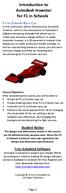 Introduction to Autodesk Inventor for F1 in Schools F1 in Schools Race Car In this course you will be introduced to Autodesk Inventor, which is the centerpiece of Autodesk s digital prototyping strategy
Creativity with NX Mold Wizard
 Creativity with NX Mold Wizard Jim Davis SIEMENS PLM Software Technical Sales Solution Consultant [email protected] Knowledge Based Solutions Strength Wizard Mold Wizard Progressive Die Wizard
Solid Edge structural frames and weldments
 Solid Edge structural frames and weldments White Paper Intelligent, process-specific applications that speed time to manufacturing. White Paper Solid Edge structural frames and weldments 2 Contents Solid
What s New in Autodesk Revit 2014
 Building Design Suite 2014 What s New in Revit 2014 * Revit 2014 software is only available as part of the Building Design Suite 2014 Premium and Ultimate Editions. New & Enhanced Features Platform & For
BRINGING INNOVATIVE MEDICAL PRODUCTS TO MARKET FASTER
 W H I T E P A P E R BRINGING INNOVATIVE MEDICAL PRODUCTS TO MARKET FASTER Overview To succeed in today s medical device manufacturing industry, product designers must not only create innovative medical
CATIA Drafting TABLE OF CONTENTS
 TABLE OF CONTENTS Introduction...1 Drafting...2 Drawing Screen...3 Pull-down Menus...4 File...4 Edit...5 View...6 Insert...7 Tools...8 Drafting Workbench...9 Views and Sheets...9 Dimensions and Annotations...10
Pro/ENGINEER Wildfire 4.0 Basic Design
 Introduction Datum features are non-solid features used during the construction of other features. The most common datum features include planes, axes, coordinate systems, and curves. Datum features do
Creating 2D Drawings from 3D AutoCAD Models
 Creating 2D Drawings from 3D AutoCAD Models David Piggott CrWare, LP GD205-2P This class explores the various techniques in creating 2D part and assembly drawings from 3D AutoCAD models. As part of the
SOLIDWORKS FILE MANAGEMENT
 SUBJECT: FILE MANAGEMENT KEYWORDS: DATA MANAGEMENT, FILE STRUCTURING SOLIDWORKS FILE MANAGEMENT The aim of this document is to provide the reader with an understanding of how the SolidWorks file structure
Creo Simulate 1.0 April 2011
 Creo Simulate 1.0 April 2011 Creo Simulate a Creo family app Installed / Un-installed separately Creo Simulate in two modes: Embedded mode module of Creo Parametric Standalone mode In Standalone mode:
Sheet Metal Design: Beyond Bends and Flanges
 11/30/2005-8:00 am - 9:30 am Room:Pelican 1 (Swan) Walt Disney World Swan and Dolphin Resort Orlando, Florida Sheet Metal Design: Beyond Bends and Flanges Anthony B. Rodriguez - KETIV Technologies MA31-2
SOLUTIONS FOR MOLD DESIGNERS
 SOLUTIONS FOR MOLD DESIGNERS White Paper Abstract For CAE analysis tools to be truly useful, they must provide practical information that drives design decisions. Moldflow Plastics Advisers (MPA ) solutions
Getting Started with ANSYS ANSYS Workbench Environment
 Getting Started with ANSYS ANSYS Workbench Environment Overview The purpose of this tutorial is to get you started with the ANSYS Workbench environment. We will use a simple, static analysis of a single
SpaceClaim Introduction Training Session. A SpaceClaim Support Document
 SpaceClaim Introduction Training Session A SpaceClaim Support Document In this class we will walk through the basic tools used to create and modify models in SpaceClaim. Introduction We will focus on:
Modeling Tools Objectives. Sweeps and Lofts. Loft Feature
 Modeling Tools Objectives When you complete this module, you will be able to recognize the more advanced modeling tools in Solid Edge as well as the tools that require more input than typical Solid Edge
CATIA V5R21 - FACT SHEET
 CATIA V5R21 - FACT SHEET Introduction What s New at a Glance Overview Detailed Description INTRODUCTION CATIA V5 is the leading solution for product success. It addresses all manufacturing organizations;
SolidWorks Implementation Guides. Sketching Concepts
 SolidWorks Implementation Guides Sketching Concepts Sketching in SolidWorks is the basis for creating features. Features are the basis for creating parts, which can be put together into assemblies. Sketch
Chapter 9. Editing Features. Learning Objectives
 Chapter 9 Editing Features Learning Objectives After completing this chapter, you will be able to: Edit features. Edit sketches of the sketch based features. Edit the sketch plane of the sketch based features.
SolidWorks. SolidWorks Teacher Guide. and Student Courseware
 SolidWorks SolidWorks Teacher Guide and Student Courseware SolidWorks Corporation Outside the U.S.: +1-978-371-5011 300 Baker Avenue Fax: +1-978-371-7303 Concord, Massachusetts 01742 USA Email: [email protected]
Introduction to Autodesk Inventor for F1 in Schools
 F1 in Schools race car Introduction to Autodesk Inventor for F1 in Schools In this course you will be introduced to Autodesk Inventor, which is the centerpiece of Autodesk s Digital Prototyping strategy
Creating Drawings in Pro/ENGINEER
 6 Creating Drawings in Pro/ENGINEER This chapter shows you how to bring the cell phone models and the assembly you ve created into the Pro/ENGINEER Drawing mode to create a drawing. A mechanical drawing
SolidWorks Tutorial 3 MAGNETIC BLOCK
 SolidWorks Tutorial 3 MAGNETIC BLOCK Magnetic Block In this exercise you will make a magnetic block. To do so, you will create a few parts, which you will assemble. You will learn the following new applications
Publication Number spse01660
 Assembly reports Publication Number spse01660 Assembly reports Publication Number spse01660 Proprietary and restricted rights notice This software and related documentation are proprietary to Siemens
Solid Edge ST3 Advances the Future of 3D Design
 SUMMARY AND OPINION Solid Edge ST3 Advances the Future of 3D Design A Product Review White Paper Prepared by Collaborative Product Development Associates, LLC for Siemens PLM Software The newest release
How To Make A Solid Body In A Part Of A Part In A Model In A Toybox
 Imported Files Turning Surfaces into Solids in SolidWorks Problem Many times when you import a customer s part or assembly and it opens as a part that has a ton of surfaces or it may open as a multi level
Suggested Application Options Settings for Autodesk Inventor
 Suggested Application Options Settings for Autodesk Inventor TEL: 0165 666 24 14 [email protected] PLEASE NOTE, THIS IS ONLY A GUIDE ANY QUESTIONS AT ALL PLEASE RING The following are suggested application
Design & Drafting Services
 Design & Drafting Services 1. Mechanical CAD Services 1. Mechanical CAD Services Mechanical Design Services: Custom machine design Packaging machine design Mechanism design Machine tool design Material
TABLE OF CONTENTS. INTRODUCTION... 5 Advance Concrete... 5 Where to find information?... 6 INSTALLATION... 7 STARTING ADVANCE CONCRETE...
 Starting Guide TABLE OF CONTENTS INTRODUCTION... 5 Advance Concrete... 5 Where to find information?... 6 INSTALLATION... 7 STARTING ADVANCE CONCRETE... 7 ADVANCE CONCRETE USER INTERFACE... 7 Other important
Mastering Autodesk Inventor 2012 and Autodesk Inventor LT 2012
 Brochure More information from http://www.researchandmarkets.com/reports/2247205/ Mastering Autodesk Inventor 2012 and Autodesk Inventor LT 2012 Description: Master the "Inventor" way of 3D mechanical
Learning Module 4 - Thermal Fluid Analysis Note: LM4 is still in progress. This version contains only 3 tutorials.
 Learning Module 4 - Thermal Fluid Analysis Note: LM4 is still in progress. This version contains only 3 tutorials. Attachment C1. SolidWorks-Specific FEM Tutorial 1... 2 Attachment C2. SolidWorks-Specific
Modeling Curved Surfaces
 Modeling Cylindrical and Curved Theory Views of Cylinders Contour Lines Extruded Surfaces Revolved Surfaces & Cutouts Profile Shape Axis of Revolution Swept Surfaces & Cutouts Profile Shape Path Curves
Advanced Surface Modeling
 This sample chapter is for review purposes only. Copyright The Goodheart-Willcox Co., Inc. ll rights reserved. Chapter dvanced Modeling Learning Objectives fter completing this chapter, you will be able
Autodesk Inventor. Technical What s New. Autodesk Inventor Routed Systems. Autodesk Inventor Simulation. Autodesk Inventor Tooling
 Autodesk Inventor 2010 Autodesk Inventor Autodesk Inventor Routed Systems Autodesk Inventor Simulation Autodesk Inventor Tooling Autodesk Inventor Professional Contents Welcome to Inventor 2010 2 Plastic
NX for Tooling and Fixture Design Transforming today s processes for designing and manufacturing injection molds, dies and fixtures
 for Tooling and Fixture Design Transforming today s processes for designing and manufacturing injection molds, dies and fixtures fact sheet Siemens PLM Software www.siemens.com/nx Summary The software
Creating detailed drawings
 Creating detailed drawings Publication Number spse01545 Creating detailed drawings Publication Number spse01545 Proprietary and restricted rights notice This software and related documentation are proprietary
Learning Autodesk. Modeling, Analysis and Animation SDC. Randy H. Shih. Better Textbooks. Lower Prices. PUBLICATIONS www.sdcpublications.
 Learning Autodesk Inventor 2012 Modeling, Analysis and Animation Randy H. Shih SDC Better Textbooks. Lower Prices. PUBLICATIONS www.sdcpublications.com Schroff Development Corporation Learning Autodesk
Solid shape molding is not desired in injection molding due to following reasons.
 PLASTICS PART DESIGN and MOULDABILITY Injection molding is popular manufacturing method because of its high-speed production capability. Performance of plastics part is limited by its properties which
MET 306. Activity 8a. Mechanism Design Creo 2.0 Level 7 POINT A GROUND LINK LINK 1 LINK 2 LINK 3 POINT B 10/15/2010 1
 Mechanism Design Creo 2.0 Level 7 POINT A LINK 1 GROUND LINK LINK 2 LINK 3 POINT B 10/15/2010 1 Download parts ground, key, link_1, link_2, link_3 and pulley from the V:/MET_306/Activity_8_Creo drive.
Computer Aided Design (CAD), ME 530.414, JHU Professor Dan Stoianovici, [email protected]
 Computer Aided Design (CAD), ME 530.414, JHU Professor Dan Stoianovici, [email protected] COURSE DESCRIPTION: The course outlines modern solid modeling design, analysis, simulation, and manufacturing of mechanical
Kankakee Community College
 Kankakee Community College Course prefix and number: DRFT 2134 Course title: AutoCAD III Semester: Fall 2014 Credit hours: 4 Lecture hours: 2.5 Lab hours: 3 Catalog description: Prerequisite: DRFT 2114,
Welcome to CorelDRAW, a comprehensive vector-based drawing and graphic-design program for the graphics professional.
 Workspace tour Welcome to CorelDRAW, a comprehensive vector-based drawing and graphic-design program for the graphics professional. In this tutorial, you will become familiar with the terminology and workspace
What s new in Solid Edge
 What s new in Solid Edge Publication Number MU29005 Proprietary and restricted rights notice; Trademarks Proprietary and restricted rights notice This software and related documentation are proprietary
PARAMETRIC MODELING. David Rosen. December 1997. By carefully laying-out datums and geometry, then constraining them with dimensions and constraints,
 1 of 5 11/18/2004 6:24 PM PARAMETRIC MODELING David Rosen December 1997 The term parametric modeling denotes the use of parameters to control the dimensions and shape of CAD models. Think of a rubber CAD
PTC Creo Elements/Direct Comparison. Modeling Version
 PTC Creo Elements/Direct Comparison Modeling Version Formerly CoCreate PTC Creo Elements/Direct Modeling is the world s #1 direct 3D CAD system. This table highlights the primary product capabilities delivered
AutoCAD 2009. New Icon Quick Reference
 AutoCAD 2009 New Quick Reference Contents Chapter 1 New Quick Reference..................... 1 Toolbars................................... 1 3D Navigation Toolbar........................ 1 CAD Standards
DIESEL EFFECT PROBLEM SOLVING DURING INJECTION MOULDING
 RESEARCH PAPERS FACULTY OF MATERIALS SCIENCE AND TECHNOLOGY IN TRNAVA SLOVAK UNIVERSITY OF TECHNOLOGY IN BRATISLAVA 2014 Volume 22, Special Number DIESEL EFFECT PROBLEM SOLVING DURING INJECTION MOULDING
Table of contents. What is new in Advance Steel 2011
 Table of contents WELCOME TO ADVANCE STEEL 2011, PART OF THE GRAITEC BIM SOLUTION... 5 NEW COMMON INSTALLATION PROCESS... 6 GRAITEC ADVANCE MANAGER... 7 Easy to use GUI to customize settings...7 Settings...8
Introduction to CATIA V5
 Introduction to CATIA V5 Release 16 (A Hands-On Tutorial Approach) Kirstie Plantenberg University of Detroit Mercy SDC PUBLICATIONS Schroff Development Corporation www.schroff.com www.schroff-europe.com
Generative Shape Optimizer
 CATIA V5 Training Foils Generative Shape Optimizer Version 5 Release 19 January 2009 EDU_CAT_EN_GSO_FI_V5R19 1 About this course Objectives of the course Upon completion of the course you will learn to:
Geomagic Design. Release Notes. Get to Market Faster with Better Products at a Lower Cost V17
 Geomagic Design Get to Market Faster with Better Products at a Lower Cost Release Notes V17 TABLE OF CONTENTS 1 INTRODUCTION 1 COPYRIGHT 1 2 INSTALLATION 2 SOFTWARE IDENTIFICATION 2 UPGRADING TO GEOMAGIC
SolidWorks 2006 What s New
 SolidWorks 2006 What s New 1995-2005, SolidWorks Corporation 300 Baker Avenue Concord, Massachusetts 01742 USA All Rights Reserved U.S. Patents 5,815,154; 6,219,049; 6,219,055; 6,603,486; 6,611,725; and
NX electrical and mechanical routing Accelerating design of electrical and mechanical routed systems in complex assemblies
 electrical and mechanical routing Accelerating design of electrical and mechanical routed systems in complex assemblies fact sheet Siemens PLM Software www.siemens.com/plm Summary digital product development
What's New SOLIDWORKS 2013
 What's New SOLIDWORKS 2013 Contents Legal Notices...10 1 Welcome to SolidWorks 2013...13 Highlights...13 Top Enhancements...13 For More Information...15 2 User Interface...16 Customizing Shortcut Bars...16
Weld Design. CATIA V5 Training Foils. Weld Design. Copyright DASSAULT SYSTEMES 1. Instructor Notes:
 CATIA V5 Training Foils Weld Design Version 5 Release 19 January 2009 EDU_CAT_EN_WD1_FI_V5R19 1 About this course Objectives of the course Upon completion of this course you will be able to: - Weld parts,
10.0-2. Finite Element Modeling
 What s New in FEMAP FEMAP 10.0 and 10.0.1 include enhancements and new features in: User Interface on page 3 Meshing on page 23 Mesh Associativity on page 33 Properties on page 33 Functions on page 35
Introduction to ANSYS
 Lecture 3 Introduction to ANSYS Meshing 14. 5 Release Introduction to ANSYS Meshing 2012 ANSYS, Inc. March 27, 2014 1 Release 14.5 Introduction to ANSYS Meshing What you will learn from this presentation
PTC Creo Elements/Direct Modeling Express
 Modeling Express Edition Comparison Chart Learn how upgrading to 19.0, the leading direct 3D CAD design software, can deliver faster design cycles and responsiveness to change throughout your design process.
CATIA Functional Tolerancing & Annotation TABLE OF CONTENTS
 TABLE OF CONTENTS Introduction...1 Functional Tolerancing and Annotation...2 Pull-down Menus...3 Insert...3 Functional Tolerancing and Annotation Workbench...4 Bottom Toolbar Changes...5 3D Grid Toolbar...5
511 - Creating Structural Frame Designs
 4 th Generation VLC courtesy of Edison2 511 - Creating Structural Frame Designs Rahul Kulkarni, Manager, Product Design, Pune Center, Siemens PLM Software #SEU13 Agenda: 511 - Creating Structural Frame
Structural Integrity Analysis
 Structural Integrity Analysis 1. STRESS CONCENTRATION Igor Kokcharov 1.1 STRESSES AND CONCENTRATORS 1.1.1 Stress An applied external force F causes inner forces in the carrying structure. Inner forces
CATIA Tubing and Piping TABLE OF CONTENTS
 TABLE OF CONTENTS Introduction...1 Manual Format...2 Tubing and Piping design...3 Log on/off procedures for Windows...4 To log on...4 To logoff...8 Pull-down Menus...9 Edit...9 Insert...12 Tools...13 Analyze...16
SolidWorks Tutorial 4 CANDLESTICK
 SolidWorks Tutorial 4 CANDLESTICK Candlestick In this tutorial you will make a simple container and a candlestick out of sheetmetal. You will learn about working with sheet metal in SolidWorks. We will
Certified Instructors & Curriculum
 Our Promise. TPM is dedicated to provide the most extensive and high-quality training programs to help you maximize your investment. Although the investment in time and money may seem substantial, it will
INJECTION MOLDING COOLING TIME REDUCTION AND THERMAL STRESS ANALYSIS
 INJECTION MOLDING COOLING TIME REDUCTION AND THERMAL STRESS ANALYSIS Tom Kimerling University of Massachusetts, Amherst MIE 605 Finite Element Analysis Spring 2002 ABSTRACT A FEA transient thermal structural
Chapter 1 What's New in Inventor 2013... 1
 Contents Chapter 1 What's New in Inventor 2013................... 1 User Interface................................ 1 Help Experience........................... 1 Welcome screen............................
3D Printed Injection Molding Tool ("PIMT") Guide. Objet Ltd.
 3D Printed Injection Molding Tool ("PIMT") Guide Objet Ltd. 2 Injection molding is a high speed, automated and versatile process that can produce high precision complex three dimensional parts from a fraction
Wireframe and Surface
 Wireframe and Surface Preface What's New Getting Started Basic Tasks Workbench Description Glossary Index Dassault Systèmes 1994-99. All rights reserved. Preface CATIA Version 5 Wireframe and Surface allows
Optimized NC programming for machinery and heavy equipment. Summary NX CAM software redefines manufacturing productivity with a full range of NC
 Siemens PLM Software NX CAM for machinery Optimized NC programming for machinery and heavy equipment Benefits Effectively program any type of machinery part Program faster Reduce air cutting Automate programming
Alphacam Art combines Vectric s Aspire artistic design software with the market leading Alphacam manufacturing software.
 Alphacam Art Alphacam Art - CNC Routing For Artists & Ideal Jewellery Cad Cam Software Alphacam Art combines Vectric s Aspire artistic design software with the market leading Alphacam manufacturing software.
Part Design. Preface What's New? Getting Started Basic Tasks Advanced Tasks Workbench Description Customizing Glossary Index
 Part Design Preface What's New? Getting Started Basic Tasks Advanced Tasks Workbench Description Customizing Glossary Index Dassault Systèmes 1994-99. All rights reserved. Preface The CATIA Version 5 Part
An Overview of the Finite Element Analysis
 CHAPTER 1 An Overview of the Finite Element Analysis 1.1 Introduction Finite element analysis (FEA) involves solution of engineering problems using computers. Engineering structures that have complex geometry
Sheet Metal Stamping Dies & Processes
 Training Objectives After watching the program and reviewing this printed material, the viewer will gain knowledge and understanding of the stamping process and the die systems used to form sheet metal.
LEAVING CERT DCG SCHEME OF WORK
 2010-11 LEAVING CERT DCG SCHEME OF WORK ST OLIVER S COMMUNITY COLLEGE Mission statement The technology department aspires to provide a safe, stimulating environment where all students can develop their
imc FAMOS 6.3 visualization signal analysis data processing test reporting Comprehensive data analysis and documentation imc productive testing
 imc FAMOS 6.3 visualization signal analysis data processing test reporting Comprehensive data analysis and documentation imc productive testing www.imcfamos.com imc FAMOS at a glance Four editions to Optimize
Chapter 1. Creating Sketches in. the Sketch Mode-I. Evaluation chapter. Logon to www.cadcim.com for more details. Learning Objectives
 Chapter 1 Creating Sketches in Learning Objectives the Sketch Mode-I After completing this chapter you will be able to: Use various tools to create a geometry. Dimension a sketch. Apply constraints to
Autodesk Fusion 360: Assemblies. Overview
 Overview In this module you will learn how different components can be put together to create an assembly. We will use several tools in Fusion 360 to make sure that these assemblies are constrained appropriately
List of Problems Solved Introduction p. 1 Concept p. 1 Nodes p. 3 Elements p. 4 Direct Approach p. 5 Linear Spring p. 5 Heat Flow p.
 Preface p. v List of Problems Solved p. xiii Introduction p. 1 Concept p. 1 Nodes p. 3 Elements p. 4 Direct Approach p. 5 Linear Spring p. 5 Heat Flow p. 6 Assembly of the Global System of Equations p.
Rule-Based Ship Design
 Rule-Based Ship Design A White Paper Process, Power & Marine, a division of Intergraph Table of Contents 1. Introduction... 1 2. Advantages to Rule-Based Design... 2 2.1 Embedding Design Practices...2
Computer Aided Design and Drafting (CAD)
 Oakland Community College 2015-2016 Catalog 1 Computer Aided Design and Drafting (CAD) CAD 1050 Geometric Dimensioning and Tolerancing (GD&T) This course is designed to cover the fundamentals as well as
Creating Your Own 3D Models
 14 Creating Your Own 3D Models DAZ 3D has an extensive growing library of 3D models, but there are times that you may not find what you want or you may just want to create your own model. In either case
DataPA OpenAnalytics End User Training
 DataPA OpenAnalytics End User Training DataPA End User Training Lesson 1 Course Overview DataPA Chapter 1 Course Overview Introduction This course covers the skills required to use DataPA OpenAnalytics
Customer Training Material. Lecture 4. Meshing in Mechanical. Mechanical. ANSYS, Inc. Proprietary 2010 ANSYS, Inc. All rights reserved.
 Lecture 4 Meshing in Mechanical Introduction to ANSYS Mechanical L4-1 Chapter Overview In this chapter controlling meshing operations is described. Topics: A. Global Meshing Controls B. Local Meshing Controls
After completing this tutorial, you will be able to: Use the new 3D Modeling tools in AutoCAD 2007 for basic Lofting.
 TUTORIAL 3 Lofted Solid Learning Objectives After completing this tutorial, you will be able to: Use the new 3D Modeling tools in AutoCAD 2007 for basic Lofting. Required Competencies Before starting this
Hybrid 2D/3D design The right tool for the right job at the right time
 Siemens PLM Software Hybrid 2D/3D design The right tool for the right job at the right time White Paper Incorporating the benefits of 2D and 3D design technologies into a single effective design approach,
CHAPTER 4 4 NUMERICAL ANALYSIS
 41 CHAPTER 4 4 NUMERICAL ANALYSIS Simulation is a powerful tool that engineers use to predict the result of a phenomenon or to simulate the working situation in which a part or machine will perform in
Autodesk Fusion 360 Badge Guide: Design an F1 in Schools Trophy
 Autodesk Fusion 360 Badge Guide: Design an F1 in Schools Trophy Abstract: Gain basic understanding of creating 3D models in Fusion 360 by designing an F1 in Schools trophy. This badge may be claimed by
Creating tables of contents and figures in Word 2013
 Creating tables of contents and figures in Word 2013 Information Services Creating tables of contents and figures in Word 2013 This note shows you how to create a table of contents or a table of figures
JumpStart Guide. Trimble QuickPen PipeDesigner 3D Software
 L JumpStart Guide Trimble QuickPen PipeDesigner 3D Software Revision A February 2013 F Englewood Office Trimble Navigation Limited 384 Inverness Parkway, Suite 200 Englewood, Colorado 80112 (800) 234-3758
Sheet Metal Design. Preface What's New? Getting Started Basic Tasks Workbench Description Customizing Glossary Index
 Sheet Metal Design Preface What's New? Getting Started Basic Tasks Workbench Description Customizing Glossary Index Dassault Systèmes 1994-99. All rights reserved. Preface The V5 CATIA - Sheet Metal Design
Technical What s New. Autodesk Alias Product Line
 Autodesk Alias Product Line Purpose-built for industrial designers and creative professionals, digital modelers/sculptors, and automotive/transportation designers, the Autodesk Alias 2010 product line
STRUCTURAL ANALYSIS SKILLS
 STRUCTURAL ANALYSIS SKILLS ***This document is held up to a basic level to represent a sample for our both theoretical background & software capabilities/skills. (Click on each link to see the detailed