
The Role of Speech-Language Pathologists with Respect to Augmentative and Alternative Communication (AAC)
|
|
|
- Edwin Barrett
- 9 years ago
- Views:
Transcription
1 SAC Position Paper on The Role of Speech-Language Pathologists with Respect to Augmentative and Alternative Communication (AAC) Speech-Language and Audiology Canada # rue Nicholas St. Ottawa, ON K1N 7B March i -

2 Committee Members 1. Ben Adaman, M.Sc.A., S-LP, Chair 2. Karen Derry, M.Sc., RSLP, S-LP(C) 3. Sharon Lenz, M.Sc., R. SLP, S-LP(C) 4. Anne MacCallum, M.Sc., RSLP, S-LP(C) 5. Lois Turner, MS, RSLP, S-LP(C) 6. Bill Wallace, M.Sc., S-LP(C) 7. Carla Di Gironimo, MS, S-LP(C), CCC-SLP, SAC staff liaison and Director of Speech-Language Pathology and Standards A position paper represents the direction SAC has taken on a particular topic or provides guidelines for particular areas of practice. These positions are time-bound, representing the thinking at a particular point in time. - ii -

3 Position Rationale It is the position of Speech-Language and Audiology Canada (SAC) that all speech-language pathologists (S-LPs), regardless of their work settings, should have basic knowledge of the augmentative and alternative communication (AAC) tools and strategies that can support the expressive and receptive communication needs of their clients. All S-LPs should be prepared to apply their knowledge of AAC strategies in the course of assessment and intervention. S-LPs also have a responsibility to refer to specialized AAC services where required. Recognizing that some AAC interventions involve complex technology and require access to specialists, SAC advocates for ready access across Canada to specialized, interprofessional AAC services in order to ensure that all clients, regardless of the complexity of their needs, are well served. Communication is essential to participation in life, including meaningful social, learning and vocational activities across one s lifespan. AAC tools and strategies can play an important role in enabling individuals with limited or no speech to live independent, dignified lives, commensurate with their abilities and desires. Because individuals who require augmentative and alternative communication represent a highly diverse but low incidence population (Beukelman & Mirenda, 2012a), AAC is a domain of speechlanguage pathology that may be relatively unfamiliar to many S-LPs. Students in speech-language pathology frequently receive minimal education or training in AAC (Hurtig, 2013). Consequently, many S-LPs report discomfort or a lack of confidence when assessing an individual who requires AAC (Marvin, Montano, Fusco, & Gould, 2003; Dietz, Quach, Lund, & McKelvey, 2012). Generalist S-LPs may find themselves increasingly involved in AAC interventions due to a number of converging factors. First, national and international efforts to make society more inclusive continue to gain speed. The United Nations Convention on the Rights of Persons with Disabilities recognizes the importance of ensuring accessibility to effective means of communication, including AAC. Accessibility legislation now exists in Canada that specifically addresses communication needs. For example, the 2005 Accessibility for Ontarians with Disabilities Act has mandated accessibility standards, applicable to both public and private organizations, to ensure all residents have equal access to information, regardless of disability. In Manitoba, similar legislation, the Accessibility for Manitobans Act, came into force in Attempts to address organizational and other barriers to full participation have come alongside changes in legislation. For example, Communication Disabilities Access Canada ( a national non-profit organization that promotes human rights and accessibility for individuals with communication disabilities, has, in response to documented needs (Collier, Blackstone, & Taylor, 2012), developed a number of initiatives that support businesses and organizations in becoming more accessible to individuals with communication disabilities, including access to essential services such as legal and justice services. Additionally, in health-care settings, there is growing recognition that effective communication between the provider and recipient of care is critical to patient safety and quality care. One recent study found that hospital inpatients with a communication disorder are three times more likely to experience a preventable adverse medical event than those without, resulting in extended hospital stays, readmissions and other negative sequelae (Bartlett, Blais, & Tamblyn, 2008). The Joint Commission, the largest US hospital accreditation organization, now considers effective patientprovider communication, including access to AAC systems at all points along the continuum of care, as a criterion for accreditation (Joint Commission, 2010)

4 Concurrently, the adoption of relatively affordable mainstream consumer technology, such as tablets and smartphones, for use as speech generating devices (SGDs) has transformed the field of AAC. Until very recently, the cost of an SGD was prohibitive for many families. Now, individuals who use AAC, along with their families, can often afford to purchase a tablet and communication software independently. This has led to an increase in the number of individuals with access to high-tech AAC systems (Niemeijer, Gosnell Caron, Marden, & Shaham, 2012). It also presents a challenge to S-LPs: they no longer play a gatekeeping role in determining who might access funding for an SGD to the same degree as they did in the past. While this can be seen as empowering for families, it also increases the risk that technology will be selected in the absence of appropriate assessment or intervention planning. Regardless of the technology options available, or their cost, the importance of careful clinical decision-making cannot be overstated. With growing demand and recognition of the role that AAC can play in supporting greater life participation, there comes a new urgency in providing guidance to all S-LPs regarding their roles in AAC interventions. Background AAC interventions are appropriate for individuals who are without functional speech either permanently (Millar, Light, & Schlosser, 2006) or temporarily (Hurtig & Downey, 2009). AAC tools and strategies can help ensure that an individual can communicate successfully while receiving therapy aimed at restoring natural speech (Weissling & Prentice, 2010). For individuals whose communication needs cannot be met through speech alone, there are many potential benefits to employing AAC tools and strategies including: an increase in the amount and complexity of language that can be produced relative to unaided speech; access to more effective methods for acquiring and demonstrating knowledge; greater social acceptance and inclusion; heightened self-esteem and motivation; an expansion or maintenance of viable communication partners and environments (Beukelman, Garrett, & Yorkston, 2007); stronger interpersonal relationships; increased productivity; and access to a greater range of vocational and academic opportunities. These outcomes ultimately translate into an enhanced quality of life. AAC interventions are often most successful when delivered in an interprofessional manner. This is especially true in the case of clients who present with physical, sensory and/or cognitive disabilities in addition to any speech or language impairments. S-LPs should have a basic knowledge of the roles and responsibilities of other professionals as they pertain to clients who require AAC, including but not limited to occupational and physical therapists, psychologists, teachers and rehabilitation engineers. AAC systems should be developed in consultation with the client, family members, caregivers and other stakeholders in order to ensure that the system will meet the client s communication needs and abilities and be functional in the client s typical environments. Although no standardized tests can directly identify the type of AAC system an individual requires, AAC interventions can and should be delivered with the same rigour that is applied to other areas of clinical practice. The goal of an assessment is to identify a client s strengths and abilities and to develop a strategy for building on those strengths. Depending on the client, an assessment may include evaluation of a client s current abilities and needs in areas including language, literacy, mobility, physical access, hearing and vision (Beukelman & Mirenda, 2012b). An assessment should also consider a client s current and future language development and communication needs and goals across environments and communication partners. It is clear that the areas examined during a complex AAC assessment transcend the boundaries of any single discipline. For that reason, an interprofessional approach to assessment and intervention is critical to achieving positive client outcomes

5 Recommendations Universal Recommendations Assessments are typically guided by frameworks such as SETT (Zabala, 2005), the Communication Matrix (Rowland, 2012), the Participation model (Beukelman & Mirenda, 2012c, p. 109) and Social Networks theory (Blackstone & Hunt Berg, 2003a; Blackstone & Hunt Berg, 2003b). In determining the most appropriate interventions for a client, AAC specialists frequently attempt to situate a client on the continuum of communicative independence (Dowden, 1999). The continuum ranges from emerging communicators (i.e., those who communicate about the here and now using means such as gesture or facial expression) to independent communicators (those who are able to communicate on any topic with any partner). The midpoint on the continuum is the contextdependent communicator who is able to communicate in a symbolic manner, provided the message content and/or communication partner are familiar. AAC strategies are a valid means of supporting clients at every point on the continuum, including those who may always require partner support to enjoy communicative success. The recommendations below are intended to provide general guidance to S-LPs whose clients may benefit from AAC interventions. Because AAC tools and strategies can be effectively incorporated into a wide range of clinical settings with an array of clients, the list of recommendations below is very general and broadly organized. S-LPs are strongly encouraged to seek further information specific to their own clientele. The recommendations below are organized by client population or need. Recommendations under the Universal heading apply to all clients. 1. Adopt a client-centered approach that recognizes the client and, where appropriate, family/ caregiver as critical members of the care team. 2. Recognize that there are no minimum linguistic or other prerequisites to introducing AAC tools or strategies of some kind (Kangas & Lloyd, 1988). 3. Develop basic knowledge related to: a. AAC tools and strategies for supporting comprehension, including visual schedules, picture and written supports for spoken language, use of picture albums and modeled use of a client s own AAC system. b. AAC tools and strategies for supporting expressive communication, including objector picture-based choice making, communication displays, alphabet boards, symboland text-based speech-generating devices and alternative access methods. c. Unaided communication strategies for supporting expression and comprehension, including pointing, looking, vocalizing, gestures, signs, facial expressions and body language. d. Partner communication strategies, including yes/no tagging and written choice presentation (Garrett & Lasker, 2013), partner-assisted scanning and the use of communication passports/dictionaries (see, for example, communicationpassports.org.uk for information). e. Modeling as a strategy for improving comprehension and expressive communication abilities (i.e., Aided Language Stimulation) (Goossens, Crain, & Elder, 1992)

6 4. Give consideration to the full range of a client s communication needs, abilities and functions (Light, 1989), including requesting, sharing information, observing etiquette and maintaining social relations. 5. Consider all four areas of communicative competence: operational, linguistic, social and strategic (Light, 1989; Light 2003). 6. Address a client s real world face-to-face communication needs. Where required by the client for social or vocational reasons, an AAC system should also address distance and electronic communication needs (e.g., telephone, and social media). 7. Design AAC systems in a way that supports opportunities for meaningful participation in activities across environments (e.g., home, school, rehab setting and the community). 8. Recognize that interventions that target communication partners, thereby creating opportunities and expectations for meaningful communication, are an inherent feature of AAC service provision (Ball & Lasker, 2013). 9. Develop AAC systems that are multimodal, if needed, in order to accommodate a client s communication needs in different environments, with different partners or as physical abilities change throughout the day. 10. Consider low-tech (non-electronic) AAC supports for expressive communication and comprehension. Low-tech supports, including communication displays and alphabet boards, can serve as a backup to a high-tech system, as a primary AAC tool or as one component of a multimodal system for use with certain communication partners or in certain contexts. 11. Include, wherever possible, one or more equipment trials prior to making a purchase decision. 12. Select equipment through a process of feature matching, where a client s needs are aligned with the hardware, software and linguistic features of an AAC system (Shane & Costello, 1994, as cited in Costello, Shane, & Caron, 2012). 13. Obtain information from vendors regarding software, equipment and resources, as required. However, do not rely on vendors for clinical decision making. Recommendations for AAC and Literacy S-LPs should: 1. Make every effort to provide a system that includes access to spelling for clients who have some literacy skills. 2. Support literacy development in children and adults who use AAC. Literacy plays a critical role in academic success and in gaining meaningful, satisfying employment (Erickson, 2003; McNaughton & Richardson, 2013). Literacy is also essential for autonomy in daily personal affairs, such as shopping, banking or making health-related decisions. It is also valuable in leisure and for quality of life. 3. Advocate and facilitate literacy development for the purpose of face-to-face communication (Light & McNaughton, 2013; Light et al., 2005). The development of literacy skills, including the use of spelling, empowers adults and children who use AAC to fully express themselves through the generation of novel messages. Spelling is the most powerful generative language method

7 4. Consider the use of compensatory supports during early stages of literacy development or on an ongoing basis, depending on the needs of the client. 5. Ensure that goals related to language and literacy development are reflected in the design and implementation of an AAC system (Sturm & Clendon, 2004; Fallon & Katz, 2008). Recommendations for AAC and Children Services for children who require AAC are complex because S-LPs are not only introducing a new communication tool with a new symbolic vocabulary, but also supporting the development of language in general. Therefore, S-LPs serving children who require AAC should: 1. Introduce AAC early, especially to promote receptive language development and provide immersion in the AAC system (Kangas & Lloyd, 1988; Romski & Sevcik, 2005). 2. Ensure an AAC system is designed to meet the child s immediate communication needs and also to facilitate further linguistic development (Beukelman & Mirenda, 2012d; Goossens et al., 1992). 3. Act on the knowledge that AAC does not inhibit natural speech development (Millar et al., 2006; Romski & Sevcik, 2005). 4. Ensure the child has abundant opportunities to observe proficient use of an AAC system (Romski & Sevcik, 1996). This will ensure that the child using AAC, like his or her typically developing peers, benefits from observing fluent communication in his or her own expressive modality. 5. Work in conjunction with a child s family, teacher and other professionals to ensure that AAC recommendations are consistent with language, learning and other goals. In schools, these goals would often be identified in a student s individualized education plan. 6. Analyze the communication and participation skills and patterns of the child s peers to inform vocabulary and implementation planning (Ball et al., 1999; Banajee, Dicarlo, & Stricklin, 2003; Fried-Oken & More, 1992). 7. Consider core vocabulary needs to ensure a combination of developmental, environmental and functional vocabulary is included in the child s system (Banajee et al., 2003). 8. Support a child s communication partners in knowing how to use the AAC system and how best to interact with the child using the system. Recommendations for AAC and Adults Adults communicative function can be impaired due to acquired or congenital impairments, sometimes resulting in changes that require consideration of new communication environments and partners, and education on the social, operational, strategic, and linguistic competencies required for communicating effectively using one or more new methods (Light, 1989). As a result, S-LPs serving adults who require AAC should: 1. Work with clients and their communication partners to explain new communication methods, describe how those methods can be of benefit and demonstrate their use (Thiessen & Beukelman, 2013). 2. Implement AAC systems in a way that is minimally disruptive to a client s established patterns of behaviour and involve the client in decision making to the greatest extent - 5 -

8 possible. Doing so is likely to facilitate adoption of the system and reduce the risk of abandonment. 3. Anticipate and plan for changes in physical, cognitive or other functions when serving clients who have progressive diagnoses such as ALS or primary progressive aphasia (Ball, Beukelman, & Bardach, 2007; King, Alarcon, & Rogers, 2007). 4. Consider AAC systems for adults who have short-term needs, e.g., due to tracheostomy (Zubow & Hurtig, 2013), or who are undergoing therapy to recover natural functional speech and require a temporary system (Weissling & Prentice, 2010). References Ball, L., Beukelman, D., & Bardach, L. (2007). Amyotrophic lateral sclerosis. In D. Beukelman, K. Garrett & K. Yorkston (Eds.), Augmentative Communication Strategies for Adults with Acute or Chronic Medical Conditions. Baltimore: Brookes Publishing Co. Ball, L., & Lasker, J. (2013). Teaching partners to support communication for adults with acquired communication impairment. Perspectives on Augmentative and Alternative Communication, 22(1), Ball, L. J., Marvin, C. A., Beukelman, D., Lasker, J., & Rupp, D. (1999). Generic talk use by preschool children. Augmentative and Alternative Communication, 15(3), Banajee, M., Dicarlo, C., & Stricklin, S. (2003). Core vocabulary determination for toddlers. Augmentative and Alternative Communication, 19(2), Bartlett, G. R., Blais, R., & Tamblyn, R. (2008). Impact of patient communication problems on the risk of preventable adverse events in the acute care settings. Canadian Medical Association Journal, 178(12), Beukelman, D., Garrett, K. L., & Yorkston, K. M. (2007). Augmentative Communication Strategies for Adults with Acute or Chronic Medical Conditions. Baltimore: Brookes Publishing Co. Beukelman, D., & Mirenda, P. (2012a). Augmentative and alternative communication processes. In D. Beukelman & P. Mirenda (Eds.), Augmentative and Alternative Communication, Fourth Edition. Baltimore: Paul H. Brookes Publishing. Beukelman, D., & Mirenda, P. (2012b). Assessment of specific capabilities. In D. Beukelman & P. Mirenda (Eds.), Augmentative and Alternative Communication, Fourth Edition. Baltimore: Paul H. Brookes Publishing. Beukelman, D., & Mirenda, P. (2012c). Principles of assessment. In D. Beukelman & P. Mirenda (Eds.), Augmentative and Alternative Communication, Fourth Edition. Baltimore: Paul H. Brookes Publishing. Beukelman, D., & Mirenda, P. (2012d). Challenges, supports, and instructional approaches. In D. Beukelman & P. Mirenda (Eds.), Augmentative and Alternative Communication, Fourth Edition. Baltimore: Paul H. Brookes Publishing

9 Blackstone, S. W., & Hunt Berg, M. (2003a). Social networks: A communication inventory for individuals with complex communication needs and their communication partners Inventory Booklet. Monterey, CA: Augmentative Communication, Inc. Blackstone, S. W., & Hunt Berg, M. (2003b). Social networks: A communication inventory for individuals with complex communication needs and their communication partners Manual. Monterey, CA: Augmentative Communication, Inc. Collier, B., Blackstone, S. W., & Taylor, A. (2012). Communication access to businesses and organizations for people with complex communication needs. Augmentative and Alternative Communication, 28(4), Costello, J. M., Shane, H. C., & Caron, J. (2012). AAC, mobile devices and apps: Growing pains with evidence based practice. Retrieved from AACandApps/CostelloShaneCaron-WhitePaper.pdf Dietz, A., Quach, W., Lund, S., & McKelvey, M. (2012). AAC assessment and clinical decision- making: The impact of experience. Augmentative and Alternative Communication, 28(3), Dowden, P. A. (1999). Augmentative and alternative communication for children with motor speech disorders. In A. Caruso & E. A. Strand (Eds.), Clinical Management of Motor Speech Disorders of Children. New York: Thieme Publishing Co. Erickson, K. (2003, June 24). Reading comprehension in AAC. The ASHA Leader. Fallon, K., & Katz, L. (2008). Augmentative and alternative communication and literacy teams: Facing the challenges, forging ahead. Seminars in Speech and Language, 29(2), Fried-Oken, M., & More, L. (1992). An initial vocabulary for nonspeaking preschool children based on developmental and environmental language sources. Augmentative and Alternative Communication, 8(1), Garrett, K., & Lasker, J. (2013). Severe aphasia. In D. Beukelman & P. Mirenda (Eds.), Augmentative and Alternative Communication, Fourth Edition. Baltimore: Brookes Publishing Co. Goossens, C., Crain, S. S., & Elder, P. (1992). Engineering the Preschool Environment for Interactive, Symbolic Communication. Birmingham, AL: Southeast Augmentative Communication Conference Publications. Government of Ontario. (2005). Accessibility for Ontarians with Disabilities Act, (S.O. 2005, Chapter 11). Retrieved from statutes_05a11_e.htm Hurtig, R. (2013). From the guest editor. Perspectives on Augmentative and Alternative Communication, 22(64), Hurtig, R. R., & Downey, D. A. (2009). Augmentative and alternative communication in acute and critical care settings. San Diego: CA: Plural

10 The Joint Commission. (2010). Advancing effective communication, cultural competence, and patient-and family-centered care: A roadmap for hospitals. Retrieved from jointcommission.org/assets/1/6/aroadmapforhospitalsfinalversion727.pdf Kangas, K., & Lloyd, L. (1988). Early cognitive skills as prerequisites to augmentative and alternative communication use: What are we waiting for? Augmentative and Alternative Communication, 4(4), King, J., Alarcon, N., & Rogers, M. (2007). Primary progressive aphasia. In D. Beukelman, K. Garrett & K. Yorkston (Eds.), Augmentative Communication Strategies for Adults with Acute or Chronic Medical Conditions. Baltimore: Brookes Publishing Co. The Legislative Assembly of Manitoba. (n.d.). The Accessibility for Manitobans Act. Retrieved from Light, J. C. (1989). Toward a definition of communicative competence for individuals using augmentative and alternative communication systems. Augmentative and Alternative Communication, 5(2), Light, J. C. (2003). Shattering the silence: Development of communicative competence by individuals who use AAC. In J. C. Light, D. Beukelman, & J. Reichle (Eds.), Communicative Competence for Individuals Who Use AAC: From Research to Effective Practice. Baltimore: Brookes Publishing Co. Light, J., Drager, K., Curran, J., Hayes, E., Kristiansen, L., Lewis, W., & Witte, M. (2005). AAC interventions to maximize language development for young children [webinar]. Retrieved from Light, J., & McNaughton, D. (2013). Literacy intervention for individuals with complex communication needs. In D. Beukelman, K. Garrett & K. Yorkston (Eds.), Augmentative Communication Strategies for Adults with Acute or Chronic Medical Conditions. Baltimore: Brookes Publishing Co. Marvin, L. A., Montano, J. J., Fusco, L. M., & Gould, E. P. (2003). Speech-language pathologists perceptions of their training and experience in using alternative and augmentative communication. Contemporary Issues in Communication Science & Disorders, 30, McNaughton, D., & Richarson, L. (2013). Supporting positive employment outcomes for individuals with autism who use AAC. Perspectives on Augmentative and Alternative Communication, 22, Millar, D. C., Light, J. C., & Schlosser, R. W. (2006). The impact of augmentative and alternative communication intervention on the speech production of individuals with developmental disabilities: A research review. Journal of Speech, Language, and Hearing Research, 49, Niemeijer, D., Gosnell Caron, J., Marden, J., & Shaham, S. (2012). Reshuffling the cards: Challenges and opportunities of consumer devices for AAC [Presentation on August 1 at ISAAC 2012]

11 Additional Reading: Romski, M. A., & Sevcik, R. A. (1996). Breaking the Speech Barrier: Language Development Through Augmented Means. Baltimore: Brookes Publishing Co. Romski, M. A., & Sevcik, R. A. (2005). Augmentative communication and early intervention: myths and realities. Infants & Young Children, 18(3), Rowland, C. (2012). Communication matrix: Description, research basis and data. Retrieved from Sturm, J., & Clendon, S. (2004). Augmentative, alternative communication, language & literacy; Fostering the relationship. Topics in Language Disorders, 24(2), Thiessen, A., & Beukelman, D. (2013). Training communication partners of adults who rely on AAC: Coconstruction of meaning. Perspectives on Augmentative and Alternative Communication, 22(1), Weissling, K., & Prentice, C. (2010). The timing of remediation and compensation rehabilitation programs for individuals with acquired brain injury: Opening the conversation. Perspectives on Augmentative and Alternative Communication, 19, Zabala, J. (2005). Ready SETT go! Getting started with the SETT framework. Retrieved from Zubow, L., & Hurtig, R. (2013). A demographic study of AAC/AT needs in hospitalized patients. Perspectives on Augmentative and Alternative Communication, 22, AAC-RERC. (2011). Mobile devices and communication apps: An AAC-RERC white paper. Retrieved from American Speech-Language-Hearing Association. (2002). Augmentative and alternative communication: Knowledge and skills for service delivery [Knowledge and Skills]. Retrieved from American Speech-Language-Hearing Association. (2004). Roles and responsibilities of speechlanguage pathologists with respect to augmentative and alternative communication: technical report [Technical Report]. Retrieved from American Speech-Language-Hearing Association. (2005). Roles and responsibilities of speechlanguage pathologists with respect to augmentative and alternative communication: position statement [Position Statement]. Retrieved from (Relatively recent textbooks 2000 or newer): Beukelman, D., & Mirenda, P. (2013). Augmentative & Alternative Communication, Fourth Edition. Baltimore: Brookes Publishing Co. Cockerill, H., & Carroll-Few, L. (Eds.). (2001). Communicating Without Speech: Practical Augmentative and Alternative Communication. London: Mac Keith Press. Cook, A. M., & Polgar, J. M. (Eds.). (2008). Cook & Hussey s Assistive Technologies: Principles and Practice, Third Edition. Missouri: Mosby, Inc

12 Cook, A. M., & Polgar, J. M. (Eds.). (2012). Essentials of Assistive Technologies. Missouri: Mosby, Inc. Downing, J. (Ed.). (2005). Teaching Communication Skills to Students with Severe Disabilities, Second Edition. Baltimore: Brookes Publishing Co. Light, J. C., Beukelman, D., & Reichle, J. (Eds.). (2003). Communicative Competence for Individuals Who Use AAC: From Research to Effective Practice. Baltimore: Brookes Publishing Co. McNaughton, D. B., & Beukelman, D. (Eds.). (2010). Transition Strategies for Adolescents and Young Adults Who Use AAC. Baltimore: Brookes Publishing Co. Mirenda, P., & Iacono, T. (Eds.). (2008). Autism Spectrum Disorders and AAC. Baltimore: Brookes Publishing Co. Reichle, J., Beukelman, D., & Light, J. C. (Eds.). (2002). Exemplary Practices for Beginning Communicators: Implications for AAC. Baltimore: Brookes Publishing Co. Sigafoos, J., Arthur-Kelly, M., & Butterfield, N. (2006). Enhancing Everyday Communication for Children with Disabilities. Baltimore: Brookes Publishing Co. Soto, G., & Zangari, C. (2009). Practically Speaking: Language, Literacy, and Academic Development for Students with AAC Needs. Baltimore: Brookes Publishing Co. Von Tetzchner, S. & Martinsen, H. (Eds.). (2000). Introduction to Augmentative and Alternative Communication, Second Edition. London: Whurr Publishers

Ashworth, P., Care to Communicate: An investigation into problems of communication between patients
 Original SPEACS Basic Communication Training Program References Communication problems in ICU and Assessment Ashworth, P., Care to Communicate: An investigation into problems of communication between patients
Scope of Practice in Speech Pathology
 Level 2 / 11-19 Bank Place T 61 3 9642 4899 [email protected] Melbourne Victoria 3000 F 61 3 9642 4922 www.speechpathologyaustralia.org.au Scope of Practice in Speech Pathology Revised
School-based Support Personnel
 L. SUPPORT SERVICES School-based Support Personnel Yukon Education provides both professional and paraprofessional support to schools to address the diverse learning of students. Learning Assistance Program
Collaborative Teaming for students who require AT/AAC
 Collaborative Teaming for students who require AT/AAC Working effectively to meet the needs of students who require AAC/AT in the educational setting Marilyn J. Buzolich, Ph.D., CCC- SLP ACTS What is Collaborative
The Importance of Developing Communicative Competence
 The Importance of Developing Communicative Competence For Students with Significant Cognitive Disabilities Jane Kleinert, Ph.D. CCC SLP, April Holman, M.S. Michael McSheehan Jacqueline F. Kearns, Ed.D.
Making AAC Work in the Classroom ST LUKES ELKS CHILDREN S REHAB
 Making AAC Work in the Classroom ANNE KUHLMEIER, M.A., CCC/SLP, ATP ST LUKES ELKS CHILDREN S REHAB [email protected] What words do children and adults really use to communicate? 78% of the words
2016 MEDICAL REHABILITATION PROGRAM DESCRIPTIONS
 2016 MEDICAL REHABILITATION PROGRAM DESCRIPTIONS Contents Comprehensive Integrated Inpatient Rehabilitation Program... 2 Outpatient Medical Rehabilitation Program... 2 Home and Community Services... 3
CURRICULUM VITAE AMBER THIESSEN, Ph.D., CCC-SLP
 CURRICULUM VITAE AMBER THIESSEN, Ph.D., CCC-SLP Department of Communication Sciences and Disorders 114 Clinical Research Services [email protected] Houston, TX 77004 (713) 743-5990 EDUCATION Ph.D.
Vannesa Mueller CURRICULUM VITAE
 Vannesa Mueller CURRICULUM VITAE EDUCATION 2008 University of Iowa, Iowa City, IA Ph.D. in Speech and Hearing Science Dissertation: The Effects of a Fluent Signing Narrator in the Iowa E-Book on Deaf Children
OCR Levels 2 and 3 in Supporting Teaching and Learning in Schools. Unit 39 Support pupils with communication and interaction needs
 OCR Levels 2 and 3 in Supporting Teaching and Learning in Schools Unit 39 Support pupils with communication and interaction needs UNIT SUMMARY Who is this unit for? This unit is for those who provide support
Guidelines for Medical Necessity Determination for Speech and Language Therapy
 Guidelines for Medical Necessity Determination for Speech and Language Therapy These Guidelines for Medical Necessity Determination (Guidelines) identify the clinical information MassHealth needs to determine
Belmont Public Schools Special Education Programs
 Belmont Public Schools Special Education Programs Preschool Program School: Belmont system wide Population Served: Special Education Students Aged 3 5 Grade: Pre K Program Description: This program is
Holland Bloorview Kids Rehabilitation Hospital
 Holland Bloorview Kids Rehabilitation Learning Objectives As a result of this activity, participants will be able to: If the Book Fits, I ll Use It! Customizing Communication Books for Varying Physical
Chapter 4: Planning Support for Students with Autism Spectrum Disorders
 Chapter 4: Planning Support for Students with Autism Spectrum Disorders Developing Individualized Program Plans (IPPs) There is considerable variability in how learning and behavioural characteristics
ARLINGTON PUBLIC SCHOOLS SPECIAL EDUCATION PROGRAMS AND SERVICES
 ARLINGTON PUBLIC SCHOOLS SPECIAL EDUCATION PROGRAMS AND SERVICES Introduction The Arlington Public Schools provides a comprehensive array of programs and services from pre-school through grades 12 designed
Speech-Language Pathology Interventional Services for Autism Spectrum Disorders
 Last Review Date: September 11, 2015 Number: MG.MM.ME.45bv2 Medical Guideline Disclaimer Property of EmblemHealth. All rights reserved. The treating physician or primary care provider must submit to EmblemHealth
CASE STUDY. Using AVAZ to Enhance Communicative Abilities of a Child with Cerebral Palsy
 CASE STUDY 95 Using AVAZ to Enhance Communicative Abilities of a Child with Cerebral Palsy Sita Sreekumar* ABSTRACT Communication difficulties associated with cerebral palsy can be multifactorial, arising
Early Identification of Speech & Language Disorders
 SAC Position Paper on Early Identification of Speech & Language Disorders Speech-Language and Audiology Canada #1000-1 rue Nicholas St. Ottawa, ON K1N 7B7 613.567.9968 1.800.259.8519 [email protected] www.sac-oac.ca
AAC Evaluations and New Mobile Technologies: Asking and Answering the Right Questions
 Unless otherwise noted, the publisher, which is the American Speech-Language-Hearing Association (ASHA), holds the copyright on all materials published in Perspectives on Augmentative and Alternative Communication,
Rehabilitation Therapies
 Bluebonnet Medical Rehabilitation Hospital Rehabilitation Therapies 512-444-4835 or 800-252-5151 www.texasneurorehab.com Austin, Texas What Sets Us Apart Rehabilitation Therapies Physical Therapy - Neuromuscular
Standards for the Speech-Language Pathologist [28.230]
![Standards for the Speech-Language Pathologist [28.230]](/thumbs/40/21177704.jpg "Standards for the Speech-Language Pathologist [28.230]") Standards for the Speech-Language Pathologist [28.230] STANDARD 1 - Content Knowledge The competent speech-language pathologist understands the philosophical, historical, and legal foundations of speech-language
Standards for the Speech-Language Pathologist [28.230] STANDARD 1 - Content Knowledge The competent speech-language pathologist understands the philosophical, historical, and legal foundations of speech-language
Catholic Conference of Ohio
 Catholic Conference of Ohio Q&A DOCUMENT TO ASSIST PARENTS OF SPECIAL NEEDS CHILDREN AND SERVE AS A RESOURCE FOR CATHOLIC SCHOOLS ENROLLING CHILDREN WITH DISABILITIES 1. What is the Individual Disability
Running Head: SPEECH-LANGUAGE PATHOLOGIST 1
 Running Head: SPEECH-LANGUAGE PATHOLOGIST 1 Job Title Speech-language pathologist General Overview Speech-language pathologists assess and treat individuals affected by a wide array of communication and
Newton Public Schools. Guide to Special Education Programs and Related Services
 Newton Public Schools Guide to Special Education Programs and Related Services January 2013 1 of 49 pages The Newton Public Schools Guide to Special Education Programs and Related Services provides an
Register of Students with Severe Disabilities
 Department of Education Learners first, connected and inspired Register of Students with Severe Disabilities Department of Education Register of Students with Severe Disabilities 1. Eligibility Criteria
Henrico County Public Schools Department of Exceptional Education
 Henrico County Public Schools Department of Exceptional Education EDUCATIONAL EVALUATION CRITERIA FOR CONSIDERATION OF PRIVATE EVALUATIONS Revised 06/12/2013 Professionals utilize educational evaluations
the Doctor of Audiology Degree (AuD)
 SAC Position Paper on the Doctor of Audiology Degree (AuD) Speech-Language and Audiology Canada #1000-1 rue Nicholas St. Ottawa, ON K1N 7B7 613.567.9968 1.800.259.8519 [email protected] www.sac-oac.ca September,
Special Education Program Descriptions School-Based Program Delivery Model
 Special Education Program Descriptions School-Based Program Delivery Model Resource Room Services Resource Room Services, available in all MCPS schools, provide students with disabilities with the support
PRESCHOOL PLACEMENT CATEGORIES
 PRESCHOOL PLACEMENT CATEGORIES CASEMIS 20 EARLY CHILDHOOD SPECIAL EDUCATION SETTING Early Childhood Special Education Setting: This is a placement setting where children receive all of their special education
Assistive Technology and Augmentative and Alternative Communication Policies and Procedures for the Moriarty Edgewood School District
 Assistive Technology and Augmentative and Alternative Communication Policies and Procedures for the Moriarty Edgewood School District 1 Purpose The purpose of this manual is to assist teachers, case managers,
AAC, Mobile Devices and Apps: Growing Pains with Evidence Based Practice
 AAC, Mobile Devices and Apps: Growing Pains with Evidence Based Practice John M. Costello Howard C. Shane Jessica Caron Boston Children s Hospital For more than 20 years the field of augmentative and alternative
AUGMENTATIVE COMMUNICATION EVALUATION
 AUGMENTATIVE COMMUNICATION EVALUATION Date: Name: Age: Date of Birth: Address: Telephone: Referral Source: Diagnosis: Participants: Social History and Current Services: lives with his in a private home
General Information about CU-Boulder
 1 University of Colorado Providing Academic and Research Excellence in the Science Field of Speech-Language Pathology Vernon B. Ingraham, 33, Grand Cross Executive Secretary Scottish Rite Foundation of
Integrated Delivery of Rehabilitation Services:
 Integrated Delivery of Rehabilitation Services: Guidelines SPECIAL for NEEDS Children s STRATEGY Community Agencies, Health Guidelines Service for Providers Local Implementation and District School of
Augmentative Communication For Adults With Acquired Disabilities. Celeste R. Helling, M.A., CCC-SLP, ATP North Carolina Assistive Technology Program
 Augmentative Communication For Adults With Acquired Disabilities Celeste R. Helling, M.A., CCC-SLP, ATP North Carolina Assistive Technology Program Augmentative Communication For Adults With Acquired Disabilities
Maria V. Dixon, M.A., CCC-SLP 402 Ridge Rd. #8 // Greenbelt, MD 20770 (301) 405-8083 [email protected]
 Maria V. Dixon, M.A., CCC-SLP 402 Ridge Rd. #8 // Greenbelt, MD 20770 (301) 405-8083 [email protected] SUMMARY OF QUALIFICATIONS I am an accomplished Speech Language Pathologist with experience and expertise
Short-Term Programs. A Vital Component for Students who are Blind or Visually Impaired ATLANTIC PROVINCES SPECIAL EDUCATION AUTHORITY
 Short-Term Programs A Vital Component for Students who are Blind or Visually Impaired ATLANTIC PROVINCES SPECIAL EDUCATION AUTHORITY Atlantic Provinces Special Education Authority Commission de l enseignement
Special Education For Preschoolers
 C A L I F O R N I A E A R L Y S T A R T Special Education For Preschoolers A G U I D E F O R P A R E N T S Early Intervention services system encouraging partnerships between families and professionals,
Assessing A Student s Need for Assistive Technology: Where to Start?
 Assessing A Student s Need for Assistive Technology: Where to Start? When the question of a student s need for AT leads to an assessment, the first action is to identify a team of people to address that
SAM KARAS ACUTE REHABILITATION CENTER
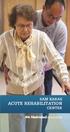 SAM KARAS ACUTE REHABILITATION CENTER 1 MEDICAL CARE Sam Karas Acute Rehabilitation The Sam Karas Acute Rehabilitation Center is a comprehensive and interdisciplinary inpatient unit. Medical care is directed
Perkins Cancellation
 FEDERAL STUDENT AID HANDBOOK Volume 6 Managing Campus-Based Programs, 2011 2012 http://ifap.ed.gov/fsahandbook/attachments/1112fsahbkvol6ch5.pdf THIS IS AN EXCERPT FROM VOLUME 6, CHAPTER 5 CHAPTER 5 Perkins
[Adapted from Fed. Reg. 52530; NAIC Glossary of Health Insurance and Medical Terms: 3]
![[Adapted from Fed. Reg. 52530; NAIC Glossary of Health Insurance and Medical Terms: 3]](/thumbs/26/7933094.jpg "[Adapted from Fed. Reg. 52530; NAIC Glossary of Health Insurance and Medical Terms: 3]") New York State Benchmark Plan Recommendations Introduction The Patient Protection and Affordable Care Act (ACA) includes Rehabilitative and Habilitative Services and Devices as one of the ten categories
New York State Benchmark Plan Recommendations Introduction The Patient Protection and Affordable Care Act (ACA) includes Rehabilitative and Habilitative Services and Devices as one of the ten categories
Critical Review: Is the integration of mobile device apps into speech and language therapy effective clinical practice?
 Critical Review: Is the integration of mobile device apps into speech and language therapy effective clinical practice? Julie Sidock M.Cl.Sc. SLP Candidate University of Western Ontario: School of Communication
What is aphasia? Aphasia is a language disorder. It can cause problems with. Thinking (cognitive) skills are usually good.
 Adult Aphasia What is aphasia? Aphasia is a language disorder. It can cause problems with understanding speaking reading writing Thinking (cognitive) skills are usually good. What causes aphasia? Aphasia
Preparation "Speech Language Pathologist Overview"
 Speech Language Pathologist Overview The Field - Preparation - Day in the Life - Earnings - Employment - Career Path Forecast - Professional Organizations The Field Speech-language pathologists, sometimes
Admission/Discharge Criteria in Speech- Language Pathology
 Admission/Discharge Criteria in Speech- Language Pathology Ad Hoc Committee on Admission/Discharge Criteria in Speech-Language Pathology Reference this material as: American Speech-Language-Hearing Association.
Curriculum Vitae Eileen Hunsaker
 Curriculum Vitae Eileen Hunsaker 2/27/11 PERSONAL DATA: Home Address: 29 Brewster Rd. Medford, MA 02144 781-395-3142 781-354-5173 (cell) email: [email protected] EDUCATION: University of Utah Salt Lake
Comprehensive Special Education Plan. Programs and Services for Students with Disabilities
 Comprehensive Special Education Plan Programs and Services for Students with Disabilities The Pupil Personnel Services of the Corning-Painted Post Area School District is dedicated to work collaboratively
The State of Queensland (Department of Education and Training) 2009 First published 1996 as Guidelines for Speech language Therapy Services Revised
 The State of Queensland (Department of Education and Training) 2009 First published 1996 as Guidelines for Speech language Therapy Services Revised edition 1998 as SM10 - Speech language Therapy Services
What to Expect When You re Not Expecting Aphasia
 An aphasia diagnosis is unplanned, unexpected, and frustrating, but it s not hopeless. It s a journey. What to Expect When You re Not Expecting Aphasia An ebook from There are 2 million people living with
Educating Students with Autism
 Educating Students with Autism The Rights of the Student with Autism A Child s Right to Public Education Free Appropriate Public Education (FAPE) Least Restrictive Environment (LRE) Special Education Services
Early Intervention For children ages 0-3 years
 Early Intervention For children ages 0-3 years IDEA 2004 AND CHILDREN WHO ARE DEAF OR HARD OF HEARING Early intervention, serving children from birth to age 3, is required by law. Public law 94-142 was
The Role of Occupational Therapy in Psychosocial Interventions
 The Role of Occupational Therapy in Psychosocial Interventions December 2009 Position The Alberta College of Occupational Therapists (the College) advises that the provision of psychosocial interventions
Service Delivery Models
 Service Delivery Models Anne Arundel County Public Schools (AACPS) is committed to educational excellence by "Elevating all Students, Eliminating all Gaps." To that end, AACPS offers a full continuum of
SPECIAL EDUCATION AND DISABILITY STUDIES
 SPECIAL EDUCATION AND DISABILITY STUDIES GRADUATE Master's programs Master of Arts in Education and Human Development in the field of early childhood special education (http:// bulletin.gwu.edu/education-human-development/mastersprogram/education-human-development-early-childhoodspecial-education)
Grace Fleming, School of Graduate Studies
 MEMORANDUM To: From: Graduate Curriculum Committee Grace Fleming, School of Graduate Studies Date: 2/11/2008 Subject: Minutes for January 30, 2008 The Graduate Curriculum Committee met in Victor 219, Wednesday,
HOPKINTON PUBLIC SCHOOLS CONTINUUM OF ALTERNATIVE SERVICES AND PLACEMENTS
 HOPKINTON PUBLIC SCHOOLS CONTINUUM OF ALTERNATIVE SERVICES AND PLACEMENTS Hopkinton Public Schools provides programs for students in need of special education from the ages of three through twenty-one,
SAULT COLLEGE OF APPLIED ARTS AND TECHNOLOGY SAULT STE. MARIE, ONTARIO COURSE OUTLINE
 SAULT COLLEGE OF APPLIED ARTS AND TECHNOLOGY SAULT STE. MARIE, ONTARIO COURSE OUTLINE COURSE TITLE: Communication Disorders CODE NO. : SEMESTER: 3 PROGRAM: AUTHOR: Occupational Therapist Assistant and
How To Run An Acquired Brain Injury Program
 ` Acquired Brain Injury Program Regional Rehabilitation Centre at the Hamilton General Hospital Table of Contents Page Introduction... 3-4 Acquired Brain Injury Program Philosophy... 3 Vision... 3 Service
The Road to Rehabilitation
 The Road to Rehabilitation Part 5 Crossing the Communication Bridge: Speech, Language & Brain Injury Written by Jean L. Blosser, EdD, CCC/SCLP Roberta DePompei, PhD, CCC/SCLP Content reveiwed by Gregory
roviaence Neurodevelopmental Center for Children
 ROVIDENCE Health & Services roviaence Neurodevelopmental Center for Children Autism Parent Training Program Teaching social-communication skills to children with autism and related disorders: A parent-implemented
TORONTO STROKE FLOW INITIATIVE - Outpatient Rehabilitation Best Practice Recommendations Guide (updated July 26, 2013)
 Objective: To enhance system-wide performance and outcomes for persons with stroke in Toronto. Goals: Timely access to geographically located acute stroke unit care with a dedicated interprofessional team
POLICY MONITOR #6. Children with Special Educational Needs in Early Childhood: Concept Paper prepared for the Atkinson Centre Early Years Task Force
 POLICY MONITOR #6 Children with Special Educational Needs in Early Childhood: Concept Paper prepared for the Atkinson Centre Early Years Task Force Prepared by Kathryn Underwood and Rachel Langford School
Marcia E. Humpal, M.Ed., MT-BC Ronna S. Kaplan, M.A. MT-BC. Journal of Music Therapy
 American Music Therapy Association 8455 Colesville Rd., Ste. 1000 Silver Spring, Maryland 20910 Tel. (301) 589-3300 Fax (301) 589-5175 www.musictherapy.org Annotated Bibliography of Articles from Music
TORONTO STROKE FLOW INITIATIVE - Inpatient Rehabilitation Best Practice Recommendations Guide (updated January 23, 2014)
 TORONTO STROKE FLOW INITIATIVE - Inpatient Rehabilitation Best Practice Guide (updated January 23, 2014) Objective: To enhance system-wide performance and outcomes for persons with stroke in Toronto. Goals:
Schools for All Children
 Position Paper No. Schools for All Children LOS ANGELES UNIFIED SCHOOL DISTRICT John Deasy, Superintendent Sharyn Howell, Executive Director Division of Special Education Spring 2011 The Los Angeles Unified
Programs and Services Offered at Surrey Place Centre. April 2013 Collaboration Accountability Innovation Respect Responsiveness
 Programs and Services Offered at Surrey Place Centre April 2013 Collaboration Accountability Innovation Respect Responsiveness About Us.................... 2 Infancy and Early Childhood Program.... 4
The Clinical Evaluation of Language Fundamentals, fourth edition (CELF-4;
 The Clinical Evaluation of Language Fundamentals, Fourth Edition (CELF-4) A Review Teresa Paslawski University of Saskatchewan Canadian Journal of School Psychology Volume 20 Number 1/2 December 2005 129-134
Section 4. Assistive Technology Consideration in the IEP
 ` Section 4 Assistive Technology Consideration in the IEP 2013 52 Implications of Assistive Technology Consideration Beginning with the reauthorization of IDEA in 1997, the IEP team is required to consider
Related Services: How Do Special Needs Education Relate to Your Child?
 Related Services: How Do Special Needs Education Relate to Your Child? Family Driven Non-Profit 501(c)3 What makes FND unique is that the majority of our Board of Directors, all of our Management Staff
Advocating for Services: How a Parent Can Access a Special Education Program, Special Education Teacher Support Services and/or Related Services
 Advocating for Services: How a Parent Can Access a Special Education Program, Special Education Teacher Support Services and/or Related Services Applied Behavioral Counseling Applied ABC Presented by Joan
The Role and Scope of Occupational Therapy and Physiotherapy Services in State Schools Revised edition
 The Role and Scope of Occupational Therapy and Physiotherapy Services in State Schools Revised edition 2 Contents Purpose 3 1. Definitions 3 Occupational Therapy 3 Physiotherapy 3 Relationship between
References and Resources. Glossary of Assistive Technology Implementation Terms
 References and Resources Glossary of Assistive Technology Implementation Terms Abandonment The act of abandoning, deserting, or relinquishing. In assistive technology, this refers to the failed attempt
General Therapies for Individuals with Autism
 General Therapies for Individuals with Autism Speech and Language Pathology Speech- language therapy entails the assessment, diagnosis, treatment, and helping to prevent speech, language, cognitive, communication,
PART I DEPARTMENT OF PERSONNEL SERVICES 6.347 STATE OF HAWAII 6.348... 6.349 6.350 Class Specification for the SPEECH PATHOLOGY SERIES
 PART I DEPARTMENT OF PERSONNEL SERVICES 6.347 STATE OF HAWAII 6.348............................. 6.349 6.350 Class Specification for the SPEECH PATHOLOGY SERIES This series includes all classes of positions
03/02/2012. The Role of the School Nurse in Special Education. Child Find. Verification Process- Identification. Verification Process- Identification
 TESH: TelehealthEducation for School Health presents: The Role of the School Nurse in Special Education Jill Weatherly Kathy Karsting September 7, 2011 Objectives 1. Discuss the basic right and responsibilities
Implementing AAC in Classrooms, Homes, and Therapy Settings for Children Who are Deaf or Hard of Hearing
 ara Robinson, M.A., CCC-P peech-anguage Pathologist Implementing AAC in Classrooms, s, and Therapy ettings for Children Who are Deaf or Hard of Hearing 1 Questions? For any questions during this broadcast,
Post-Acute Rehab: Community Re-Entry After Stroke? Sheldon Herring, Ph.D. Roger C. Peace Rehab Hospital Greenville Hospital System
 Post-Acute Rehab: Community Re-Entry After Stroke? Sheldon Herring, Ph.D. Roger C. Peace Rehab Hospital Greenville Hospital System 2014 Neurocognitive Deficits After Stroke: The Hidden Disability Sheldon
www.projectlearnet.org WHAT IS COGNITIVE INTERVENTION/REHABILITATION?
 Tutorial: Cognitive Intervention/Rehabilitation (See Tutorials on Cognition; Transfer/Generalization; Instructional Routines; Attention; Memory and Memory Problems; Organization; Problem Solving; Concrete
FOR more than 3 decades now, the field
 Infants & Young Children Vol. 18, No. 3, pp. 174 185 c 2005 Lippincott Williams & Wilkins, Inc. Augmentative Communication and Early Intervention Myths and Realities MaryAnn Romski, PhD, CCC-SLP; Rose
SECTION 9: SPECIAL EDUCATION PROGRAMS AND SERVICES SPECIAL EDUCATION PLACEMENTS PROVIDED BY THE BOARD
 SECTION 9: SPECIAL EDUCATION PROGRAMS AND SERVICES SPECIAL EDUCATION PLACEMENTS PROVIDED BY THE BOARD The RCDSB continuously reviews its Special Education programs and services. Input is received from
CALIFORNIA SPECIAL EDUCATION MANAGEMENT INFORMATION SYSTEM (CASEMIS) SERVICE DESCRIPTIONS. San Diego Unified SELPA
 210 Family training, counseling, and home visits(ages 0-2 only): This service includes: services provided by social workers, psychologists, or other qualified personnel to assist the family in understanding
2015-16 Rubric for Evaluating Colorado s Specialized Service Professionals: Audiologists
 2015-16 Rubric for Evaluating Colorado s Specialized Service Professionals: Audiologists Definition of an Effective Audiologist Effective audiologists are vital members of the education team. They are
Good Samaritan Inpatient Rehabilitation Program
 Good Samaritan Inpatient Rehabilitation Program Living at your full potential. Welcome When people are sick or injured, our goal is their maximum recovery. We help people live to their full potential.
Tool for Analysis of Language and Communication (TALC)
 Tool for Analysis of Language and Communication (TALC) Language Sampling Tool for Multimodal Communicators Student: Date: Partner Name / Relationship Activity: Learning Context: SG= Small Group, LG= Large