
DOTS STRATEGY IN INDIA
|
|
|
- Gary Benson
- 9 years ago
- Views:
Transcription
1 DOTS STRATEGY IN INDIA - THE CHALLENGES Prof. V.K. Arora*, Dr. Rajnish Gupta, LRS Institute of TB and Allied Diseases, Sri Aurobindo Marg, New Delhi. INTRODUCTION The DOTS strategy has emerged as a possible solution to the rising number of TB cases in different parts of the world and has been incorporated in India s Revised National Tuberculosis Control Programme as well. The strategy assures a compulsory and free availability of good quality drugs to all TB cases and necessitates drug administration under direct supervision, thereby ensuring the requisite regimencompliance. RNTCP has already covered 450 million population of the country and has succeeded in achieving an overall cure rate of 80% for new smear-positive TB cases. Yet, there is an urgent need to widen the programme coverage not only for meeting the other challenges of programmeimplementation but also to achieve RNTCP objectives at the national level. [email protected] * Director of the Institute M, ycobacterium tuberculosis (TB) has played havoc with the mankind for ages. It has destroyed the families and adversely affected the societies. It has been reported to infect one-third of the world s population. The number of globally prevalent TB cases "is million of which, one-third is contributed by the Indian sub-continent (with the figures ever increasing). Financial burden of treating TB costs the country about Rs crore per year. Lately, the multi-drug resistant tuberculosis (MDR- TB) and the human immunodeficiency virus (HIV) infection have threatened to worsen the existent global TB scenario. CHARGING TREATMENT TRENDS Later half of the last century has witnessed significant changes in the management of this killer disease. The unscientific beliefs of cure such as touching the king s feet, drinking goat s milk etc. and the traditional open air sanatorium treatment have gradually given way to a more rational method of management, which has consisted of the chemotherapy constituted by the anti-tb drugs such as Streptomycin (S), Para-amino salicylic acid (P), Isoniazid (H), Thiacetazone (T), Ethambutol (E), Rifampicin (R) and Pyrazinamide (Z). Last two drugs have brought down 19

2 the treatment duration from 1-2 years to 6-9 months and made a Short Course Chemotherapy (SCC) really possible. Subsequent to these drug-discoveries, National Tuberculosis Programmes (NTPs) all over the world began to employ the daily regimens of for TB control (comprising of 446 District TB Centres [DTCs], 330 TB Clinics, 16 State TB anti-tb drugs. The programme largely remained a Training and Demonstration Centres [STDCs] and failure in the developing countries like India, which 47,000 TB beds), but remained a failure in terms of has had the scarcity of finances and resources. the case finding (around 30% only) and the treatment Other developing countries of world also witnessed completion rates (between 35 and 40%). An Expert quite the similar scenario. When multi-drug resistance Committee, set up in 1992 by the Government of and HIV infection resulted in a rise of TB cases in India to review the NTP, highlighted programmedeficiencies and recommended the corrective the developed countries as well, a need was globally felt for the review of existent TB control policies. REVELATION OF DOTS 20 EVOLUTION OF RNTCF IN INE In India, the NTP had already been in place for 3 decades, and though created an infrastructure measures, based upon which, the Revised National Tuberculosis Control Programme (RNTCP) was framed for the entire country. Essentials of the RNTCP are as follows: Soon a revised strategy for TB control came into existence. This was based upon the research conducted Cases should be detected by sputum in India in the early 1960s, which showed that 1. microscopy than radiologically and atleast 3 intermittent regimens were highly effective as sputum smears should be examined for compared to the daily regimens. The revised strategy diagnosis. Sputum microscopy facilities was also made possible with realisation of the need for a Directly Observed Treatment (DOT), following the observations of Fox, Moodie and many other workers should be strengthened by ensuring the availability of good quality equipments, training of the laboratory technicians, over a period of time. Results were highly encouraging, establishing sputum microscopy centres per one when trials with Directly Observed Treatment - lakh population and creating appropriate crosschecking mechanisms for quality control Short Course 1 or DOTS were carried out in Tanzania, China, USA and other countries of the world, assurance. which showed a decline in the TB cases alongwith an Highest priority should be accorded for increase in the cure rates. There-after in 1993, the WHO 2. treating smear positive patients with Short laid down broad guidelines for National TB Course Chemotherapy (SCC) under the direct supervision in intensive phase and the Control Programmes, classifying the TB cases into appropriate supervision in continuation phase various categories and recommending a use of either through the involvement of most peripheral the daily or the intermittent regimens. Most health functionaries (such as multi-purpose countries gradually began to incorporate DOTS in their workers, anganwadi workers, trained dais, NTPs. village health guides, community volunteers NOTE : SCC : Short Course Chemotherapy etc.) closest to the patient s residence. DOTS : Directly Observed Treatment-Short Course 3. A regular and an uninterrupted supply of NTPs : National Tuberculosis Programmes DTCs : District TB Centres drugs should be assured right upto the STDC : State TB Training and Demonstration Centres periphery. DOTS STRATEGY IN INDIA, P:

3 4. Training capabilities of all the health personnel should be improved. 5. Capabilities of the DTCs and the STDCs should be enhanced for an effective implementation, monitoring and evaluation of the programme. 6. Non-Governmental Organisations (NGOs) and private practitioners should be involved in RNTCP, in view of the fact that a large number of patients visit them. 7. A sub-district supervisory level (termed as the Tuberculosis Unit f or TU) should be created for every 0.5 million population for registration of cases at the unit instead of a district. The team should consist of one Senior Tuberculosis Supervisor (STS) and one Senior Tuberculosis Laboratory Technician (STLT), under the supervision of a medical officer designated as Medical Officer - TB Control (MO-TC). 8. Recording and reporting system should be strengthened for ensuring the accountability and emphasis be laid on the monitoring of treatment outcomes. 9. Operational research should be encouraged for improvement of the programme efficiency. 10. Professionally designed Information, Education and Communication (IEC) activities should be established for supporting the programme. RNTCP OBJECTIVES Whereas, overall objectives of the revised TB programme are to reduce the morbidity and mortality from the disease and interrupt the chain of transmission of infection, the operational objectives are : NOTE : STS : Senior Tuberculosis Supervisor STLT : Senior Tuberculosis Laboratory Technician MO- TC : Medical Officer - TB Control (i) To provide SCC to all detected TB patients for the recommended duration of treatment till they are cured. (ii) To treat annually on an average about 750 sputum positive cases per million population as against the existing rate of 375 per million population. (iii) To cure, atleast 85% of all newly detected cases of pulmonary tuberculosis. (iv) To detect atleast 70% of the estimated incidence of smear-positive pulmonary cases. Efforts targeted at the case-detection should be made only after achieving 85% cure rates in the already detected cases, which is the prime target of RNTCP. PROGRAMME COVERAGE The country saw an implementation of RNTCP in 1993 as a pilot-phase (Phase I) in 5 project areas (Delhi, Bombay, Calcutta, Bangalore and Mehsana district of Gujarat) covering a population of 2.35 million. Following its success, it was extended in 1995 (Phase II) to cover a 14 million population in 13 States. Again, the results were highly encouraging and led to the formal launching of RNTCP in the country (Phase III) in The programme has achieved atleast 80% of the cure rates, whereas certain areas have consistently achieved even higher cure rates. Following a rapid programme expansion in the late 1998 and early 1999, a population of 450 million was covered by the end of The Government plans to cover half of the country by 2002, 80% by 2004 and the entire country as soon as feasible. STRUCTURAL ORGANISATION OF RNTCP The structural organisation of RNTCP consists of : 21 DOTS STRATEGY IN INDIA, P:

4 i) Central TB Division (headed by the Deputy Director General of TB) at the Central level; ii) STDC, under the charge of a State TB Officer (STO) at the State level; iii) DTC, led by a District TB Officer (DTO) and comprising of a Medical Officer (MO), Statistical Assistant and other paramedical staff at the District level; iv) TU, headed by an MO-TC and the team consisting of an STLT and STS at the Subdistrict level; v) The rural hospital, a dispensary or a peripheral health facility at the Health Unit level, that comprises of peripheral health functionaries under the charge of an MO. All the centres, as stated above, are involved in supervision, monitoring and evaluation of the TB control activities within their areas of operation and also co-ordinate with the centres in their jurisdiction. The TB control activities may include the supply of anti-tb drugs, laboratory equipments and study material related to disease and the training of nodal personnel. COMPONENTS OF DOTS The DOTS comprises of five essential components : 1. Political and administrative commitment: This component makes available the financial resources which are necessary for success of the programme. 2. Good quality diagnosis: A good quality microscopy is essential for an accurate diagnosis of patients. NOTE : STO : State TB officer TU : Tuberculosis Unit DTO : District Tuberculosis Officer CURRENT MEDICAL JOURNAL NORTH ZONE; VOL. VIII, NO.4, JULY, Good quality drugs: The component ensures a compulsory and free availability of medicines to the patients. 4. Directly observed treatment: This component is the core of the DOTS programme and basically means that a patient takes SCC drugs directly in the presence of health workers or other trained persons. 5. Systematic monitoring and accountability: The component ensures the shifting of responsibility for cure from a patient to the health system. WHEN TO SUSPECT TB IN A PATIEN Pulmonary TB may be suspected in a person, who has persistent cough for 3 weeks or more with or without associated respiratory or constitutional symptoms. Such a person should have his sputum examined for acid-fast bacilli (AFB) on 3 consecutive days. Similarly, a person with extra-pulmonary TB may have organspecific disease along with constitutional symptoms. Contacts of a smear-positive patient r wst also be examined for the presence of disease, f symptoms are suspected. SPUTUM MICROSCOPY Sputum examination for AFB,he easiest and the most accurate method for diagnosis of pulmonary TB, but its collection should be done very meticulously in a labeled container after explaining the correct method of bring ng out the sputum. The method consists of 2-3 deep inhalations with an open mouth followed by a deep coughing from the chest. At least 3 sputum specimens should be collected for microscopic examination in a suspected case of pulmonary TB. These include a SPOT specimen on the first day, followed by the EARLY MORNING and SPOT specimens on the second day. If a centre is not equipped with microscopy,

5 there is a need for the container to be transported to another centre with such laboratory facilities. In the case of a delay, it should be stored in a refrigerator and sent to the laboratory as soon as feasible, but definitely within a week. CLASSIFICATION AND CATEGORISATION OF TB CASES If at least 2 out of 3 sputum specimens are positive for AFB, the patient is classified as smearpositive and put on appropriate treatment. If one specimen is smear-positive for AFB and the radiographic abnormalities determined by an MO are consistent with the active pulmonary TB, the patient is still diagnosed as having smear-positive TB and put on appropriate treatment. If all 3 sputum specimens are negative and the symptoms persist despite giving antibiotics for 1-2 weeks, an X-ray examination is carried out. If radiographic abnormalities are consistent with active pulmonary TB and the MO decides to treat the patient with ATT, a diagnosis of smearnegative TB is made and an appropriate treatment started. In either case, the patient s TB Treatment and Identification Cards are prepared. He is given a thorough information about the various aspects of disease, the instituted treatment, the possible unpleasant effects and the need for a regular follow-up. Various categories of TB cases and their treatment regimens under the RNTCP are specified in Table 1. TREATMENT The treatment in Category I consists of an intensive phase of H, R, Z and E administered under a direct supervision thrice weekly on alternate days for 2 months (24 dosages), followed by a continuation phase of H and R thrice weekly on alternate days for 4 months (18 weeks, 54 TABLE NO. 1 CATEGORIES OF TB CASES* AND TREATMENT REGIMENS UNDER RNTCP Category Category I Characteristic of a TB case New sputum smear-positive Seriously ill, sputum smear-negative Seriously ill, extra-pulmonary Intensive phase Treatment regimen Continuation phase 2 ( HRZE ) 3 ** 4 ( HR ) 3 Category II Relapse Failure Treatment after default Others 2 ( SHRZE ) 3 *** followed by 1 ( HRZE ) 3 5 ( HRE ) 3 Category HI Sputum smear-negative Not seriously ill, extra-pulmonary 2 ( HRZ ) 3 4 ( HR ) 3 NOTE: * Various definitions under the RNTCP may be referred in annexure I. ** A prefix denotes the number of months and the subscript 3 indicates thrice in a week. *** Abbreviations have been mentioned in the text. 23

6 dosages) appropriately supervised, with the first dose of each week given directly supervised and the patient self-administering next two doses of the week, at home. The intensive phase of Category II, consisting of S, H, R, Z and E for 2 months followed by 1 month of H, R, Z and E (total 36 dosages), is administered in the same supervised manner as Category I and is followed by an appropriately supervised continuation phase consisting of 5 months (22 weeks, 66 dosages) of H, R and E. Category III treatment is similar to that of Category I, but is executed without an inclusion of ethambutol. Drug dosages as recommended under the RNTCP are mentioned in Table 2. For the sake of convenience, the drugs are dispensed in category-wise boxes that are prepared at the start of therapy itself. Each box contains drugs in different blister packs. The pack for an intensive phase consists of one day s medications, while that for the continuation phase contains one week s supply. The drug administration days are fixed for a particular patient Drug Isoniazid Rifampicin Pyrazinamide Ethambutol ** Streptomycin and either a Monday-Wednesday-Friday or a Tuesday-Thursday-Saturday schedule is followed. If the patient misses a dose, he must be contacted within a day of the missed dose during an intensive phase and within a week of the missed dose during the continuation phase. In case of drug noncollection due to whatever reasons, the patient and the peripheral health functionary may agree on a mutually convenient location for the drug collection/administration. A Specialised model exists in certain metropolitan cities, where diagnosis is done in the Chest Clinics and patient is referred to the area treatment centre for DOTS (that is nearest to the residence of a patient). Both the General and the Special (Metropolitan) models follow similar patterns in the continuation phases of treatment, with the first dose of each week being administered under direct supervision, and the next 2 doses of week supplied to the patient (following his presentation of the empty blister pack of consumed drugs of the previous week). FOLLOW-UP As in the diagnosis of pulmonary TB, sputum examination remains the method of choice in the TABLE NO. 2 RECOMMENDED DRUG DOSAGES UNDER THE RNTCP Dose in mg (thrice a week) in adults * *** Dose in mg per kg body weight (thrice a week) in children NOTE : * Patients weighing > 60 kg are given an additional 150 mg of Rifampicin. ** Ethambutol is not given to children < 6 years of age. *** Patients > 50 years of age or weighing < 30 kg are given 500 mg of Streptomycin DOTS STRATEGY IN INDIA, P:

7 follow-up during treatment as well. Two specimens are examined at specified treatment intervals. In the Category 1 follow-up, sputum examination is done at 2, 4 and 6 months of treatment. If smear is positive after 2 months, the intensive phase is extended for one more month and sputum examinations done at 3, 5 and 7 months. In the follow-up of Category II, sputum smear examination is performed at 3, 5 and 8 months of treatment. If smear is positive after 3 months, the intensive phase is extended for 1 more month and the sputum examinations there-after, carried out at 4, 6 and 9 months. In the case of Category III follow-up, sputum is examined at 2 and 6 months of treatment. If the result is positive at 2 months, patient is re-registered and put on Category II treatment. Any patient treated with Category I or III, who has a positive smear at 5, 6 or 7 months of treatment, should be considered a failure and started on Category II treatment afresh. Followup is not required for the patient who has completed treatment and has been declared cured. At all times in the subsequent visits, communication is done with patients to ensure a regular and correct drug-intake, provide remedial measures in case of minor unpleasant drug-effects, motivate them for treatmentadherence and provide them health education. SPECIAL SITUATIONS Extremely ill patients with significant haemoptysis, pneumothorax, large pleural effusions (leading to breathlessness) and tubercular meningitis should be referred to a chest specialist in a hospital. Streptomycin should be avoided, while other drugs can be used safely during pregnancy. Breast-feeding should continue regardless of the mother s TB status. In the presence of renal disease, H, R and Z are relatively safe for administration, while S and E are avoided. In liver disease, the reverse procedure is followed i.e. S and E are considered to be safe, whereas H, R and Z should be stopped. Children under 6 years of age, having a family member with smear-positive TB, should be screened for symptoms. CHALLENGES IN IMPLEMENTATION Major challenges that stand in the implementation of RNTCP are as follows : 1. Expansion: Achievement of National Targets is a great challenge in the programmeimplementation, since the current overall cure rate of 80% for new smear-positive patients is still below the targeted cure rate of 85%. Further, the default rate at many centres continues to be high. 2. Private sector involvement: Involvement of the private practitioners, from whom 80% of the patients seek medical attention, constitutes a big challenge, as it would require them to cooperate with the programme guidelines and even possibly incur initial losses in the earnings. 3. IEC and health education: Religious practices of people, such as the Muslims keeping fasts during Roza days and the Hindus during festivals or on particular days of a week, largely hinder the drug administration to them. Active IEC campaigns and health education are necessary to remove superstitions prevalent in the society. 4. Multiplicity of control programmes: It leads to a prevalence of confusion in the minds of treatment providers. Therefore, a uniform practice needs to be evolved with respect to the control programmes all over the country. 5. MDR-TB : Efforts are on to gradually CU RRENT MEDICAL JOURNAL NORTH ZONE; VOL. VIII, NO.4, JULY,

8 introduce the DOTS plus, a complementary DOTS based therapy, comprising of the second line drugs, to tackle the MDR-TB problem. 6. Migratory population: Difficulties may be experienced in getting migratory population registered under the RNTCP. 7. Social stigma: Notions restricting the acceptance of TB patients, are still prevalent in the minds of people and require a propagation of frequent IEC campaigns to remove the superstitions amongst the people. 8. Integration: Priorities need to be instituted in respect of the TB control programme in minds of the health staff and doctors, so that RNTCP takes a higher status of execution from the present level, in comparison to the other diseases of national interest. 9. Involvement of medical colleges: The medical college fraternity needs to be integrally involved in the implementation of DOTS at the national level. CLINICAL FOCUS * Treating physicians should strictly follow the guidelines recommended by WHO in respect of the categorisation of TB cases, the institution of appropriate drug-regimens in correct dosages and the required protocol of sputum examination before treatment and during follow-up of patients. * The patient should be adequately educated and motivated about the treatment, so as to ensure the requisite regimen-compliance. * A clear message should be perceived by the patient that a non-compliance of therapy would be detrimental to his CURRENT MEDICAL JOURNAL NORTH ZONE; VOL. VIII, NO.4, JULY, health and may result in making him a case of MDR-TB, which is much difficult to treat and requires a prolonged treatment with the costlier second-line drugs. * Special situations, like diabetes, HIVinfection, pregnancy, renal and liver disease, demand modifications in the drug-regimens. CONCLUSION Acceptance of DOTS strategy in the Indian RNTCP has certainly brought encouraging success in the management of TB cases within the country. However, there are challenges to be met in the programme-implementation, before the RNTCP objectives are finally realized. REFERENCES 1. Smith I. Stop TB : Is DOTS the answer? Ind J Tub 1999; 46 : Central TB Division. Managing the Revised Tuberculosis Control Programme in your area - A " training course. Modules 1-4. Directorate General of Health Services, New Delhi, July 2001: WHO, Research for action. Understanding and controlling tuberculosis in India. WHO, Regional Office for South-East Asia, New Delhi, 2000 : Bayer R, Wilkinson D. Directly observed therapy for tuberculosis: history of an idea. Lancet 1995; 345: Chaulk CP, Moore-Rice K, Rizzo R, Chaisson RE. Eleven years of community-based directly observed therapy for tuberculosis JAMA 1995; 274 : WHO. Treatment of tuberculosis - Guidelines for National Programmes. WHO, Geneva, 1993 : Sarin R, Dey LBS. Indian National Tuberculosis Progamme: : Revised Strategy. Ind J Tub 1995; 42: Arora, VK, Sarin R, Revised National Tuberculosis Control Programme: Indian Perspective Ind J Chest Dis Allied Sci 2000; 42 : Central TB Division. Involvement of private practitioners in the Revised National Tuberculosis Control Programme. Directorate General of Health Services, New Delhi, April 2002 ; 1-40

Revised National Tuberculosis Control Programme (RNTCP) Dr. NAVPREET
 Revised National Tuberculosis Control Programme (RNTCP) Dr. NAVPREET Assistant Prof., Deptt. of Community Medicine GMCH Chandigarh Problem Statement of TB in India India accounts for nearly 1/4 th of global
TUBERCULOSIS CONTROL INDIA
 TUBERCULOSIS CONTROL INDIA In terms of population coverage, India now has the second largest DOTS (Directly Observed Treatment, Short course) programme in the world. However, India's DOTS programme is
Management of Tuberculosis: Indian Guidelines
 Chapter 105 Management of Tuberculosis: Indian Guidelines Kuldeep Singh Sachdeva INTRODUCTION Tuberculosis (TB) is an infectious disease caused predominantly by Mycobacterium tuberculosis and among the
MANAGEMENT OF TUBERCULOSIS
 MANAGEMENT OF TUBERCULOSIS Dean B. Ellithorpe, M.D. Clinical Professor of Medicine Section of Pulmonary Diseases, Critical Care and Environmental Medicine Tulane University School of Medicine INTRODUCTION
DIRECTLY OBSERVED TREATMENT SHORT-COURSE (DOTS)
 DIRECTLY OBSERVED TREATMENT SHORT-COURSE (DOTS) Protocol for Tuberculosis Demonstration Projects in Russia U.S. Centers for Disease Control and Prevention and U.S. Agency for International Development
TB Prevention, Diagnosis and Treatment. Accelerating advocacy on TB/HIV 15th July, Vienna
 TB Prevention, Diagnosis and Treatment Accelerating advocacy on TB/HIV 15th July, Vienna Diagnosis Microscopy of specially stained sputum is the main test for diagnosing TB (1 2 days) TB bacilli seen in
GUIDELINES FOR TUBERCULOSIS PREVENTIVE THERAPY AMONG HIV INFECTED INDIVIDUALS IN SOUTH AFRICA
 GUIDELINES FOR TUBERCULOSIS PREVENTIVE THERAPY AMONG HIV INFECTED INDIVIDUALS IN SOUTH AFRICA 2010 1 TB prophylaxis GUIDELINES FOR TUBERCULOSIS PREVENTIVE THERAPY AMONG HIV INFECTED INDIVIDUALS Background
Treatment of tuberculosis. guidelines. Fourth edition
 Treatment of tuberculosis guidelines Fourth edition Treatment of tuberculosis Guidelines Fourth edition WHO Library Cataloguing-in-Publication Data: Treatment of tuberculosis: guidelines 4th ed. WHO/HTM/TB/2009.420
Clinical description 2 Laboratory test for diagnosis 3. Incubation period 4 Mode of transmission 4 Period of communicability 4
 Tuberculosis Contents Epidemiology in New Zealand 2 Case definition 2 Clinical description 2 Laboratory test for diagnosis 3 Case classification 3 Spread of infection 4 Incubation period 4 Mode of transmission
Tuberculosis Exposure Control Plan for Low Risk Dental Offices
 Tuberculosis Exposure Control Plan for Low Risk Dental Offices A. BACKGROUND According to the CDC, approximately one-third of the world s population, almost two billion people, are infected with tuberculosis.
Tuberculosis and HIV/AIDS Co-Infection: Epidemiology and Public Health Challenges
 Tuberculosis and HIV/AIDS Co-Infection: Epidemiology and Public Health Challenges John B. Kaneene, DVM, MPH, PhD University Distinguished Professor of Epidemiology Director, Center for Comparative Epidemiology
The Role of the Health Service Administrator in TB Control. National Tuberculosis Control Programme
 The Role of the Health Service Administrator in TB Control Goal/Objectives of NTP Mandate: To provide leadership for the health sector response to combat Tuberculosis in Ghana. Goal: To reduce the burden
General Information on Tuberculosis
 General Information on Tuberculosis ON THE MOVE AGAINST TUBERCULOSIS: Transforming the fi ght towards elimination World TB Day 2011 SAARC Tuberculosis & HIV/AIDS Centre GPO Box No 9517, Kathmandu, Nepal
Pregnancy and Tuberculosis. Information for clinicians
 Pregnancy and Tuberculosis Information for clinicians When to suspect Tuberculosis (TB)? Who is at risk of TB during pregnancy? Recent research suggests that new mothers are at an increased risk of TB
TREATING DRUG-SENSITIVE TB IN INDIA: IMPLEMENTATION OF DAILY THERAPY WITH FIXED DOSE COMBINATIONS
 TREATING DRUG-SENSITIVE TB IN INDIA: IMPLEMENTATION OF DAILY THERAPY WITH FIXED DOSE COMBINATIONS Policy brief, March 2015 Tuberculosis (TB), a communicable disease that affects 9 million people worldwide,
TB preventive therapy in children. Introduction
 TB preventive therapy in children H S Schaaf Department of Paediatrics and Child Health, and Desmond Tutu TB Centre Stellenbosch University, and Tygerberg Children s Hospital Introduction Children are
U.S. DEPARTMENT OF HEALTH AND HUMAN SERVICES Public Health Service Centers for Disease Control and Prevention
 U.S. DEPARTMENT OF HEALTH AND HUMAN SERVICES Public Health Service Centers for Disease Control and Prevention National Center for HIV, STD, and TB Prevention Division of Tuberculosis Elimination Public
MANAGEMENT OF TUBERCULOSIS IN PRISONS: Guidance for prison healthcare teams
 MANAGEMENT OF TUBERCULOSIS IN PRISONS: Guidance for prison healthcare teams Document control Title Type Author/s Management of tuberculosis in prisons: Guidance for prison healthcare teams Operational
Guidance on how to measure contributions of public-private mix to TB control
 Guidance on how to measure contributions of public-private mix to TB control Project report to the Tuberculosis Control Assistance Programme (TB CAP) Project number: APA4, C3-01 The World Health Organization
Tuberculosis Care with TB-HIV Co-management
 WHO/HTM/HIV/2007.01 WHO/HTM/TB/2007.380 April 2007 Tuberculosis Care with TB-HIV Co-management INTEGRATED MANAGEMENT OF ADOLESCENT AND ADULT ILLNESS (IMAI) T B HIV WHO Library Cataloguing-in-Publication
New York City Department of Health Protocols for Latent TB Infection Treatment
 New York City Department of Health Protocols for Latent TB Infection Treatment CONTENT A. Medical evaluation for latent TB infection (LTBI) treatment 1. Medical history and physical examination 2. Chest
TB CARE EARLY DETECTION AND PREVENTION OF TUBERCULOSIS (TB) IN CHILDREN. Risk factors in children acquiring TB:
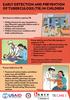 EARLY DETECTION AND PREVENTION OF TUBERCULOSIS (TB) IN CHILDREN Risk factors in children acquiring TB: Children living in the same household as a lung TB patient (especially children under 5) Children
AMBULATORY TREATMENT AND PUBLIC HEALTH MEASURES FOR A PATIENT WITH UNCOMPLICATED PULMONARY TUBERCULOSIS
 AMBULATORY TREATMENT AND PUBLIC HEALTH MEASURES FOR A PATIENT WITH UNCOMPLICATED PULMONARY TUBERCULOSIS (UPDATE 2004) Internal guidelines of the Tuberculosis & Chest Service of the Department of Health
Recent Advances in The Treatment of Mycobacterium Tuberculosis
 Recent Advances in The Treatment of Mycobacterium Tuberculosis Dr Mohd Arif Mohd Zim Senior Lecturer & Respiratory Physician Faculty of Medicine, Universiti Teknologi MARA [email protected]
Tuberculosis Prevention and Control Protocol, 2008
 Tuberculosis Prevention and Control Protocol, 2008 Preamble The Ontario Public Health Standards (OPHS) are published by the Minister of Health and Long- Term Care under the authority of the Health Protection
Tuberculosis And Diabetes. Dr. hanan abuelrus Prof.of internal medicine Assiut University
 Tuberculosis And Diabetes Dr. hanan abuelrus Prof.of internal medicine Assiut University TUBERCULOSIS FACTS More than 9 million people fall sick with tuberculosis (TB) every year. Over 1.5 million die
GENERAL MANNUAL FOR TUBERCULOSIS CONTROL
 GENERAL MANNUAL FOR TUBERCULOSIS CONTROL National programme for Tuberculosis Control and Chest Diseases Ministry of Health Sri Lanka January 2005 GENERAL MANUAL FOR TUBERCULOSIS CONTROL Second Edition
Chapter 6 Treatment of Tuberculosis Disease
 Chapter 6 Treatment of Tuberculosis Disease Table of Contents Chapter Objectives.... 139 Introduction.... 141 Treatment and Monitoring Plan.... 143 Adherence Strategies... 143 TB Disease Treatment Regimens....
Hawaii Administrative Rules. Title 11. Department of Health. Chapter 164. Tuberculosis
 Hawaii Administrative Rules Title 11 Department of Health Chapter 164 Tuberculosis 11-164-1 Purpose 11-164-2 Definitions 11-164-3 Reports to the department 11-164-4 Content of report 11-164-5 Examination
Referral Guidelines for TB/HIV co-management. (First Edition)
 Referral Guidelines for TB/HIV co-management (First Edition) Government of Lesotho April 2011 1 REFERRAL GUIDELINES FOR TB/HIV CO-MANAGEMENT INTRODUCTION Many TB patients are infected with HIV. Many people
TREATMENT OF TUBERCULOSIS: GUIDELINES FOR NATIONAL PROGRAMMES THIRD EDITION
 WHO/CDS/TB/2003.313 TREATMENT OF TUBERCULOSIS: GUIDELINES FOR NATIONAL PROGRAMMES THIRD EDITION World Health Organization - Geneva 2003 First edition, 1993 Second edition, 1997 Third edition, 2003 TREATMENT
Tuberculosis OUR MISSION THE OPPORTUNITY
 Tuberculosis OUR MISSION Guided by the belief that every life has equal value, the Bill & Melinda Gates Foundation works to help all people lead healthy, productive lives. Our Global Health Program is
Clinical Scenarios In Childhood TB. Josefina Cadorna Carlos M.D., FPPS, FPIDSP, FSMID Associate Professor of Pediatrics U E R M M M C
 Clinical Scenarios In Childhood TB Josefina Cadorna Carlos M.D., FPPS, FPIDSP, FSMID Associate Professor of Pediatrics U E R M M M C Objectives: To present different commonly encountered clinical scenarios
Tuberculosis. Subject. Goal/Objective. Instructions. Rationale. Operations Directorate, Health Branch Immigration Medical Examination Instructions
 Subject Instructions for the screening of clients to detect tuberculosis (TB) in the context of the Canadian immigration medical examination (IME). Goal/Objective These instructions are provided to ensure
Appendix B: Provincial Case Definitions for Reportable Diseases
 Infectious Diseases Protocol Appendix B: Provincial Case Definitions for Reportable Diseases Disease: Tuberculosis Revised August 2015 Tuberculosis 1.0 Provincial Reporting Confirmed and suspect cases
Guideline. Treatment of tuberculosis in pregnant women and newborn infants. Version 3.0
 Guideline Treatment of tuberculosis in pregnant women and newborn infants Version 3.0 Key critical points The decision to treat tuberculosis (TB) in pregnancy must consider the potential risks to mother
REVISED NATIONAL TUBERCULOSIS CONTROL PROGRAMME (RNTCP) TOR for Appointment of Individual Consultant and Contractual staff. Preferential Qualification
 REVISED NATIONAL TUBERCULOSIS CONTROL PROGRAMME (RNTCP) TOR for Appointment of Individual Consultant and Contractual staff State Level Sl.No Category/ Job title Essential Qualification/ Requirements 1
Self-Study Modules on Tuberculosis
 Self-Study Modules on Tuberculosis Treatment of Latent Tuberculosis Infection and Tube rc ulos is Disease U.S. DEPARTMENT OF HEALTH AND HUMAN SERVICES Centers for Disease Control and Prevention National
Revised National Tuberculosis Control Programme. DOTS-Plus Guidelines
 Revised National Tuberculosis Control Programme DOTS-Plus Guidelines Central TB Division, Directorate General of Health Services, Ministry of Health & Family Welfare, Nirman Bhavan, New Delhi 110011 Revised
Drug Resistant TB in Migrant and Refugee Populations. Dr. Kunchok Dorjee Director Tibetan Tuberculosis Control Programme Delek Hospital Dharamsala
 Drug Resistant TB in Migrant and Refugee Populations Dr. Kunchok Dorjee Director Tibetan Tuberculosis Control Programme Delek Hospital Dharamsala Overview United Nations High Commissioner for Refugees
IMA Knowledge June, 2015
 Tuberculosis is a major public health problem in India. Early diagnosis and complete treatment of TB is the corner-stone of TB prevention and control strategy. India's Revised National TB Control program(rntcp)
TUBERCULOSIS (TB) CASE MANAGEMENT/TEAM APPROACH. I. TITLE: Protocol for the case management of persons with suspected or confirmed active TB disease.
 REVISED (original 4/93) TUBERCULOSIS (TB) CASE MANAGEMENT/TEAM APPROACH I. TITLE: Protocol for the case management of persons with suspected or confirmed active TB disease. II. TYPE OF STANDARD: Service
Tuberculosis in Myanmar Progress, Plans and Challenges
 Tuberculosis in Myanmar Progress, Plans and Challenges Myanmar is one of the world s 22 high tuberculosis (TB) burden countries, with a TB prevalence rate three times higher than the global average and
DISTRICT HEALTH SOCIETY, SAMBALPUR REVISED NATIONAL TUBERCLOROSIS PROGRAMME (RNTCP) SAMBALPUR
 To DISTRICT HEALTH SOCIETY, SAMBALPUR REVISED NATIONAL TUBERCLOROSIS PROGRAMME (RNTCP) SAMBALPUR Applications in prescribed form are invited from the eligible candidates for filling up the following contractual
Carolyn Kavita Tauro 1 and Nilesh Chandrakant Gawde 2. 1. Introduction
 Interdisciplinary Perspectives on Infectious Diseases Volume 2015, Article ID 960131, 12 pages http://dx.doi.org/10.1155/2015/960131 Research Article Diagnosis and Treatment of Childhood Pulmonary Tuberculosis:
Chapter 8 Community Tuberculosis Control
 Chapter 8 Community Tuberculosis Control Table of Contents Chapter Objectives.... 227 Introduction.... 229 Roles and Responsibilities of the Public Health Sector Providers.... 229 Roles and Responsibilities
Management of Tuberculosis (TB)
 for Professional Health Care Providers Management of Tuberculosis (TB) USAID UNITED STATES AGENCY INTERNATIONAL DEVELOPMENT USAID FROM THE AMERICAN PEOPLE SOUTHERN AFRICA WHAT IS TB? Tuberculosis (TB)
2011 NTP Paediatric guidelines update- final draft
 Childhood TB Investigation and management of children suspected to have tuberculosis (TB) or who are close contacts of a TB case (sputum smear positive or negative) Key facts Children who are close contacts
MANAGEMENT OF COMMON SIDE EFFECTS of INH (Isoniazid), RIF (Rifampin), PZA (Pyrazinamide), and EMB (Ethambutol)
 MANAGEMENT OF COMMON SIDE EFFECTS of INH (Isoniazid), RIF (Rifampin), PZA (Pyrazinamide), and EMB (Ethambutol) 1. Hepatotoxicity: In Active TB Disease a. Background: 1. Among the 4 standard anti-tb drugs,
Maria Dalbey RN. BSN, MA, MBA March 17 th, 2015
 Maria Dalbey RN. BSN, MA, MBA March 17 th, 2015 2 Objectives Participants will be able to : Understand the Pathogenesis of Tuberculosis (TB) Identify the Goals of Public Health for TB Identify Hierarchy
In Tanzania, ARVs were introduced free-of-charge by the government in 2004 and, by July 2008, almost 170,000 people were receiving the drugs.
 ANTIRETROVIRAL TREATMENT What is ART and ARV? ART is a short form for Antiretroviral Therapy (or Treatment). Antiretroviral therapy is a treatment consisting of a combination of drugs which work against
12 Points of Tuberculosis (TB) Patient Education
 12 Points of Tuberculosis (TB) Patient Education Transmission of TB TB is a disease caused by the TB germ. The disease is mainly in the lungs (pulmonary TB), but the germ can travel to other parts of the
QUICK REFERENCE FOR HEALTHCARE PROVIDERS
 QUICK REFERENCE FOR HEALTHCARE PROVIDERS Ministry of Health Malaysia Academy of Medicine Malaysia Malaysian Thoracic Society KEY MESSAGES 1. Tuberculosis (TB) is a notifiable infectious disease. Timely
Manual on use of routine data quality assessment (RDQA) tool for TB monitoring. World Health Organization Stop TB Department, Geneva
 Manual on use of routine data quality assessment (RDQA) tool for TB monitoring World Health Organization Stop TB Department, Geneva WHO Library Cataloguing in Publication Data Manual on use of routine
ecompliance: Revolutionizing Tuberculosis Treatment Designed in collaboration with: Microsoft Research India & Innovators In Health 1
 ecompliance: Revolutionizing Tuberculosis Treatment Designed in collaboration with: Microsoft Research India & Innovators In Health 1 Overview Operation ASHA is a non-profit bringing tuberculosis treatment
DOTS at a tertiary care center in northern India: successes, challenges & the next steps in tuberculosis control
 Indian J Med Res 123, May 2006, pp 702-706 DOTS at a tertiary care center in northern India: successes, challenges & the next steps in tuberculosis control Mohammad Tahir, S.K. Sharma, Duncan-smith Rohrberg
Treatment of Tuberculosis
 Treatment of Tuberculosis 1a Taking TB Treatment 2 Learning outcomes Describe the use of TB case definitions & the management of TB patients Successfully treat TB using the appropriate regimen for the
Papua New Guinea. National Tuberculosis Management Protocol. Department of Health Disease Control Branch National Tuberculosis Program
 2011 Papua New Guinea National Tuberculosis Management Protocol Department of Health Disease Control Branch National Tuberculosis Program P.O. Box 807, Waigini, Port Moresby, Papua New Guinea Telephones:
Santa Clara County Tuberculosis Screening Requirement for School Entrance Effective June 1, 2014. Frequently Asked Questions
 Frequently Asked Questions A child has history of BCG vaccination, should they have TST or IGRA? According to the American Academy of Pediatrics Red Book (2012), Interferon Gamma Release Assay (IGRA) is
Key Performance Indicator (KPI) Matrix for Performance Measurement Framework Integrated TB Services (ITBS)
 Group Color Legend: ITBS Contact ITBS Disease ITBS Identification ITBS LTBI Pillars of Excellence (What we are measuring) Customer Satisfaction Quality and Delivery and Utilization Resource Management
Current trends in chemotherapy of tuberculosis
 Review Article Indian J Med Res 120, October 2004, pp 398-417 Current trends in chemotherapy of tuberculosis M.S. Jawahar Tuberculosis Research Centre (ICMR), Chennai, India Received August 28, 2003 After
DISCLAIMER. www.health.gov.fj
 DISCLAIMER The authors do not warrant the accuracy of the information contained in the TB Technical Guideline and do not take responsibility for any death, loss, damage or injury caused by using the information
Dennis FALZON. TB surveillance and surveys: A training workshop for consultants. Geneva, Switzerland - 26 May 2011
 Document flow and data management Dennis FALZON TB surveillance and surveys: A training workshop for consultants Geneva, Switzerland - 26 May 2011 References WHO/HTM/TB/2009.422 WHO/HTM/TB/2008.402 2 Objective
Treatment of TB a pharmacy perspective
 Treatment of TB a pharmacy perspective Colm McDonald, Antimicrobial Stewardship Pharmacist (Acting) National TB Conference, St. James s Hospital 6 th May 2011 Overview of presentation Role of the pharmacist
Tuberculousmeningitis: what is the best treatment regimen?
 Tuberculousmeningitis: what is the best treatment regimen? H S Schaaf Desmond Tutu TB Centre, Department of Paediatrics and Child Health, Faculty of Medicine and Health Sciences, Stellenbosch University
NOTICE OF PUBLIC HEARING REGARDING PROPOSED CHANGES IN HEALTH CARE SERVICES PROVIDED BY FRESNO COUNTY
 NOTICE IS HEREBY GIVEN that a public hearing will commence on Tuesday, September 23, 2008, at 9:00 a.m. (subject to continuance on that date of the hearing) at the Fresno County Board of Supervisors Chambers,
Chapter 5 Treatment for Latent Tuberculosis Infection
 Chapter 5 Treatment for Latent Tuberculosis Infection Table of Contents Chapter Objectives.... 109 Introduction.... 111 Candidates for the Treatment of LTBI.... 112 LTBI Treatment Regimens.... 118 LTBI
Massachusetts Tuberculosis Nursing Case Management Protocols. Tuberculosis Elimination Achieved through Management
 Massachusetts Tuberculosis Nursing Case Management Protocols Tuberculosis Elimination Achieved through Management TABLE OF CONTENTS Page I. Introduction Theoretical Framework 5 5 Goal of Case Management
Definitions and reporting framework for tuberculosis 2013 revision (updated December 2014)
 Definitions and reporting framework for tuberculosis 2013 revision (updated December 2014) Cover photos: WHO Photo Library Top, Nepal (C. Black); middle, Afghanistan (C. Black); bottom, China (S. Lim)
Tuberculosis: FAQs. What is the difference between latent TB infection and TB disease?
 Tuberculosis: FAQs What is TB disease? Tuberculosis (TB) is a disease caused by bacteria (germs) that are spread from person to person through the air. TB usually affects the lungs, but it can also affect
Drug-resistant Tuberculosis
 page 1/6 Scientific Facts on Drug-resistant Tuberculosis Source document: WHO (2008) Summary & Details: GreenFacts Context - Tuberculosis (TB) is an infectious disease that affects a growing number of
Key Performance Indicator (KPI) Matrix for Performance Measurement Framework
 Color Legend: TB Contact and Investigation and Identification LTBI WRHA Program: Tuberculosis Pillars of Excellence (What we are measuring) Customer Satisfaction Quality and Outcomes Delivery and Utilization
Components of a good surveillance system and future plans for improvement in the EMR
 Components of a good surveillance system and future plans for improvement in the EMR Dr Amal Bassili Stop TB unit, WHO, Regional Office for the Eastern Mediterranean Surveillance Workshop, Cairo Sheraton,
Chapter 1 Overview of Tuberculosis Epidemiology in the United States
 Chapter 1 Overview of Tuberculosis Epidemiology in the United States Table of Contents Chapter Objectives.... 1 Progress Toward TB Elimination in the United States.... 3 TB Disease Trends in the United
TUBERCULOSIS IN INDIA, PAST, PRESENT AND FUTURE*
 TUBERCULOSIS IN INDIA, PAST, PRESENT AND FUTURE* Wallace Fox Introduction It was a great honour to be invited to deliver this important oration for 1989 and I deeply regret that the change in date of the
Medical College, Raipur (C.G.), India 4 MD Community Medicine, Department of Community Medicine, Pt. J.N.M. Medical College, Raipur
 Study of Laboratory Practices at Designated Microscopic Centers Level Under Revised National Tuberculosis Control Programme In Raipur District, Chhattisgarh DHIRAJ BHAWNANI 1*, BOREGOWDA G.S 2, NIRMAL
PART III COUNSELING ON TB
 PART III COUNSELING ON TB Objectives: By the end of Part III of the training, the participants will: Understand the Cough-to-Cure Pathway and be able to successfully apply the three phases of counseling
NO MORE MISSED MDG4 OPPORTUNITIES: OPTIMIZING EXISTING HEALTH PLATFORMS FOR CHILD SURVIVAL. Polio Campaigns
 NO MORE MISSED MDG4 OPPORTUNITIES: OPTIMIZING EXISTING HEALTH PLATFORMS FOR CHILD SURVIVAL Polio Campaigns With fewer than 600 days remaining to the Millennium Development Goal (MDG) deadline, new strategies
Standards of Practice for Pharmacists and Pharmacy Technicians
 Standards of Practice for Pharmacists and Pharmacy Technicians Introduction These standards are made under the authority of Section 133 of the Health Professions Act. They are one component of the law
MODULE THREE TB Treatment. Treatment Action Group TB/HIV Advocacy Toolkit
 MODULE THREE TB Treatment Treatment Action Group TB/HIV Advocacy Toolkit 1 Topics to be covered TB treatment fundamentals Treatment of TB infection and disease TB treatment research Advocacy issues 2 Section
 This is one of a series of flipcharts on these topics : Ante Natal Care, Post Natal Care, Child Health, Child Nutrition, Family Spacing, HIV&AIDS, Tuberculosis, Malaria Tuberculosis About the flipchart
Summary of the risk management plan (RMP) for Sirturo (bedaquiline)
 EMA/16634/2014 Summary of the risk management plan (RMP) for Sirturo (bedaquiline) This is a summary of the risk management plan (RMP) for Sirturo, which details the measures to be taken in order to ensure
Haemophilus influenzaetype b (Hib) Vaccination Position Paper. July 2013
 Haemophilus influenzaetype b (Hib) Vaccination Position Paper July 2013 Hib burden-pre vaccine era In 2000, before widespread introduction of Hib vaccine in resource-poor countries, Hib caused: 8.13 million