
G20 Agriculture Ministers Meeting Communiqué
|
|
|
- Constance Stafford
- 9 years ago
- Views:
Transcription
1 G20 Agriculture Ministers Meeting Communiqué Xi an, 3 June We, the G20 Agriculture Ministers, met today in Xi an to discuss how G20 members can promote food security, nutrition, sustainable agricultural growth, and rural development worldwide and contribute towards building an innovative, invigorated, interconnected and inclusive world economy to fully achieve the 2030 Agenda for Sustainable Development, including eradicating hunger and extreme poverty. 2. We remain deeply concerned that, despite tremendous efforts, 795 million people in the world still suffer from chronic hunger and 2 billion people from malnutrition. Through our participation in the United Nations System, we, as members of the G20, are therefore determined to fulfill our commitments taken under the Sustainable Development Goals (SDGs). We reaffirm that agriculture and rural development are crucial to global food security and poverty alleviation and can contribute significantly towards inclusive economic growth, social stability and the sustainable use of natural resources. Further, through the G20 Food Security and Nutrition Framework and the G20 Action Plan on Food Security and Sustainable Food Systems, we have committed to promote innovation in institutions, policies, science and technology, in order to increase agricultural productivity in a sustainable manner. 3. We also acknowledge that food security is affected by the increasingly complex and variable factors and requires comprehensive and coordinated governance measures and a multi-tiered and multi-faceted system. We encourage coordination in this regard and support the

2 Committee on World Food Security (CFS) and international and regional organizations in their efforts to foster even closer and more effective partnerships, and promote actions by all stakeholders at global, regional and national levels, taking into account national conditions, needs and expectations. We maintain that G20 members should coordinate and continue to play a leading role in identifying issues of global concern, coordinate efforts, and in collaboration with organizations such as the Food and Agriculture Organization of the United Nations (FAO), the International Fund for Agricultural Development (IFAD) and World Food Programme (WFP), work in an innovative and prioritized manner, to further contribute to the improvement of local, national, regional, and global food security and nutrition. To strengthen global food security efforts and policy coordination, we encourage the development and optimization of national agriculture and food security strategies and plans aimed at improving effectiveness and efficiency in the agrifood sector, including through the reduction of food loss and waste. 4. Taking into consideration the central role of agriculture towards food security and even global stability, and the heavy effects of extreme food price volatility on food security, we commit to continue to tackle the issue of price volatility. In particular, we commit to pursue the implementation of the concrete initiatives of the 2011 G20 Action Plan on Food Price Volatility and Agriculture in dedicated forums: Agricultural Market Information System (AMIS) and the Rapid Response Forum, GEO Global Agricultural Monitoring Initiative (GEOGLAM) for market and production international monitoring, and risk management tools, such as the Platform for Agricultural Risk Management (PARM), and the Wheat Initiative. We acknowledge the contributions of other initiatives including the Global Agriculture and Food Security Programme (GAFSP).

3 5. We commit to continue to cooperate with international organizations and support their activities, such as those related to the International Year of Pulses 2016, which was declared by the UN and launched by FAO in November 2015, for the purpose of raising awareness about diet diversification and soil protection. We are committed to promoting the reduction of food loss and waste and supporting the G20 Technical Platform of Measurement and Reduction of Food Loss and Waste established in We stress that ensuring food security and nutrition requires global efforts with a special focus on developing countries, and it is in these countries where the multi-tiered and multi-faceted governance systems for food security should be built. We stress the importance of the Addis Ababa Action Agenda adopted in 2015, North-South cooperation, South-South cooperation and triangular cooperation in identifying sustainable agriculture as a top priority and increasing appropriate and predictable resources and relevant technologies for developing countries, in particular the least developed ones. We appreciate the South-South cooperation in the field of agriculture conducted by relevant countries and international organizations, which has provided beneficial and complementary cooperation. 7. We recognize the importance of being farsighted and the necessity of advancing agricultural development globally in a sustainable manner. We note that promoting sustainable agriculture is an important part of the 2030 Agenda for Sustainable Development. Agriculture s links with inclusive rural development, poverty reduction and environmental protection underline its importance in achieving SDGs that reflect economic, social and environmental targets. We commit to support the implementation of plans and programs regarding the agriculture-related SDGs in the 2030 Agenda for Sustainable Development, while paying due attention to the links with other SDGs. We also

4 encourage non-members to join us in doing this, and invite the Rome-based UN food and agriculture agencies and other international organizations to provide policy and technical support as required. 8. We support efforts made by the international community to exchange experiences, share knowledge and adopt technology for sustainable agricultural development, and replicate best farming practices conducive to the protection and appropriate utilization of land, forests and water resources. We welcome efforts to extend models as appropriate for the conservation and sustainable use of biodiversity, including inheriting and developing good farming practices, such as the FAO s Globally Important Agricultural Heritage Systems (GIAHS) initiative. We will support the implementation of the WHO s global action plan on antimicrobial resistance. 9. We share the idea that climate change is an important challenge in relation to agriculture. Furthermore, we reaffirm our strong support to Paris Agreement adopted at COP 21, including implementation of Intended Nationally Determined Contributions. 10. We stress that innovation can be a powerful driving force behind global economic growth and sustainable increases in productivity. To boost agricultural productivity growth sustainably and meet the demand for sufficient, safe and nutritious food in the future, we need to proactively improve farming techniques and organizational modes. We will promote innovations in technology, social organizations, institutions and agricultural business models, through scientific, evidence-based policies and programmes and sustainable use of resources. We resolve to explore innovative options for adjusting our agricultural development paths, technology systems, policy environment and resource allocations, so as to generate new opportunities for sustainable and inclusive growth, stimulate the productivity of land, capital and labor, and enhance the quality,

5 efficiency and inclusiveness of food value chain. We invite the OECD and other international organizations to continue the development of the G20 initiated analytical framework for improving agricultural productivity including that of small-scale producers in an innovative and sustainable manner. 11. Science, technology and social innovation play an important and leading role in sustainable agricultural growth. We value the fundamental significance of agricultural research and development (R&D) for the benefit of all. We commit to develop an enabling environment, so as to leverage the role of multiple stakeholders, including governments, the private sector, civil society, research institutes and producers, to advance R&D and the extension and adoption of agricultural innovation. We will expedite dissemination of R&D deliverables by building better connections between researchers and farmers. We encourage integration of agricultural scientific and technological projects and programs between countries for the purpose of coordinated innovation and joint research, and the promotion of exchanges and sharing of agricultural know-how. We welcome the decision by the Meeting of G20 Agricultural Chief Scientists (MACS) to reaffirm active support to the development of Global Research Collaboration Platforms (GRCPs) and to set up a working group led by Troika, to develop a proposal on GRCPs principles and a proposal to set up a specific MACS website as well as a working group on Agricultural Technology Sharing (ATS) led by China to map and analyze strengths and weaknesses of existing knowledge and information sharing mechanisms. We support the efforts made to carry out R&D innovation by international organizations and initiatives including the Consultative Group for International Agricultural Research (CGIAR). We encourage G20 members to participate in and recognize the importance of open data and statistics networks. We support increasing exchanges in agricultural innovations, and

6 sharing relevant policy experience and successful practices by capitalizing on relevant mechanisms of Global Forum of Leaders for Agricultural Science and Technology (GLAST), the Global Conferences on Agricultural Research for Development (GCARD) and the Tropical Agriculture Platform (TAP). 12. We will promote institutional innovation in improving agricultural production systems, giving full play to the active role of all types of food producers, enhancing the degree of sustainable agricultural intensification and organization, and better enabling family farmers and smallholders, in particular, women and young people, to integrate into the food value chain. We need to improve both public and private service system, including vocational training and foster efficient agricultural service organizations and enterprises, thus building a comprehensive service network covering all stages before, during and after production, including sustainable value chains. We need to improve access to inclusive financial services, loans or credits, in particular for family farmers, smallholders and women, to boost sustainable agricultural production, including offering innovative financial products, promoting agricultural insurance scheme and risk management tools, and develop inclusive financial system for farmers. In this regard, we recognize the work done under the Global Partnership on Financial Inclusion (GPFI), particularly in relation to SME financing and remittance-based rural financial inclusion. 13. We note the impact on rural areas from the fast pace of urbanization in terms of both challenges and opportunities and thus determine to revitalize the rural economy, harmonize urban and rural development, catalyze agricultural growth with industrialization and urbanization, improve and maintain rural infrastructure, and enhance both equal exchange and balanced allocation of production factors in urban and rural areas. We also give due attention to food security

7 for cities as recommended by 2016 Berlin Agriculture Minister s Summit (GFFA). We welcome the ongoing trend of the integrated development of primary, secondary and tertiary industries in the rural community, and encourage experience sharing in the development of innovative models, for contributing to job creation and improvement of rural income such as agricultural tourism, e-commerce and customized agriculture as well as urban farming solutions, such as high-tech, vertical and indoor farming. 14. We recognize the importance of Information and Communications Technology (ICT) and support its application in agriculture in the context of the wider digital economy agenda. Information and communications are essential to human, social and economic development. ICT has the potential to reach farmers, including smallholders and family farmers, with timely and accessible content on markets, sustainable and efficient farming practices and new technologies. Internet plus modern agriculture, which covers Internet and mobile applications, communication tools, increased connectivity with infrastructure and transport networks, and digital information banks can promote value-addition, and the distribution and sales of agricultural products globally. This will result in better integration and significant efficiency gains across the food system. We encourage sharing information and experiences in innovative ICT projects and policy approaches. We invite FAO, IFPRI and OECD to build on their assessment of existing ICT applications and platforms and make specific proposals for consideration and action by G20 Agriculture Deputies ahead of our next meeting on the best possible mechanism to improve agricultural ICT exchange and cooperation. 15. We acknowledge that family and smallholder farms manage the majority of the world s agricultural land and produce most of the world s food, underpinning global food security and

8 social stability. We stress that, smallholder farmers face crucial challenges in addressing globalization, increasingly complex food value chains, pressures on natural resources, and the adverse effect of climate change. We support efforts which aim to sustainably increase smallholder farmers productivity, enhance the enabling environment for collective action and organization and integration to markets, promote their access to innovations, appropriate inputs, finance, technology and services on gender-equal basis, and strengthen their resilience towards external shocks. Smallholder farmers competitiveness, higher productivity and incomes can contribute significantly towards food security and nutrition, but also towards poverty eradication and growth in rural areas, where the majority of the poor live. Technical skill upgrading, especially for smallholder farmers and rural workers, is crucial for sustainable agricultural development. We stress that training programmes should focus on innovative farming practices and technologies that promote sustainable production, business skills, as well as basic education and best practices to cope with downstream market concentration. We support skills development and training programmes that prepare farmers for present and future challenges, such as globalized food value chains and the adverse effects of climate change, and especially target women and young people including to assist in retaining youth in the sector. 16. We maintain that, sound agricultural policies, investment and trade are important engines for sustainable agricultural development, establishment and maintenance of food value chains, job creation, increased incomes, food security and hunger and poverty eradication. We stress the need of greater agricultural investment by the governments, consistent with the World Trade Organization (WTO) rules, and also by the private sector in developed and developing countries, so as to meet the demand of the growing world population and address the sluggish agricultural

9 growth and uneven regional development. We support the improvement of the global environment for agricultural investment including through the implementation of the Voluntary Guidelines on the Responsible Governance of Tenure of Land, Fisheries, and Forests in the Context of National Food Security and Principles for Responsible Investment in Agriculture and Food Systems endorsed by the CFS (CFS-RAI). This will catalyze and expand agricultural investment in developing countries and regions, and generate win-win outcomes for investors and host countries. We welcome the opening of the first G20 Agricultural Entrepreneurs Forum (AE20). We appreciate and encourage consistent efforts by the private sector and other stakeholders to engage in investment dialogue and exchanges, broaden channels for agricultural investment and financing, and promote agricultural investment facilitation. We attach great importance to investment in agricultural infrastructure and agricultural research and extension, to improve water management, land governance and strengthening farmer skills and knowledge, and commit to play an active role in this respect. We support the vital role of the multilateral trading system in global food security and the decisions on agriculture taken by the Tenth WTO Ministerial Conference. We also agree on the vital importance of international standard setting bodies in agriculture. 17. We believe that G20 members should convene regular meetings of Ministers of Agriculture, maintain policy coordination, and develop and implement relevant action plans, in an effort to address major challenges in agricultural and rural development. We applaud the work of the Development Working Group in food security and nutrition, and request the Agriculture Deputies Meeting to work in synergy with the Development Working Group and Trade and Investment Working Group.

Press release 11 May 2015
 Participation of the CIHEAM at the G20 Ministerial meeting on Agriculture in Istanbul Press release 11 May 2015 As the G20 Chair in 2015, Turkey focuses its efforts on ensuring inclusive and robust growth
G20 FOOD SECURITY AND NUTRITION FRAMEWORK
 G20 FOOD SECURITY AND NUTRITION FRAMEWORK G20 Food Security a nd Nutrition Framework 2 G20 Food Security and Nutrition Framework INTRODUCTION Food security and nutrition requires an inclusive economic
18.01.2014 Final Communiqué of the GFFA 2014
 18.01.2014 Final Communiqué of the GFFA 2014 "Empowering Agriculture: Fostering Resilience Securing Food and Nutrition" We, the Agriculture Ministers of 65 states of the world, assembled here in Berlin
GLOBAL ALLIANCE FOR CLIMATE-SMART AGRICULTURE (GACSA)
 GLOBAL ALLIANCE FOR CLIMATE-SMART AGRICULTURE (GACSA) FRAMEWORK DOCUMENT Version 01 :: 1 September 2014 I Vision 1. In today s world there is enough food produced for all to be well-fed, but one person
Recognizing that women smallholder farmers constitute the majority of food producers, but remain vulnerable and require targeted support;
 DECLARATION OF THE HIGH-LEVEL MEETING Toward African Renaissance: Renewed Partnership for a Unified Approach to End Hunger in Africa by 2025 under the Framework the Comprehensive Africa Agriculture Development
FAO COMMITTEE ON FISHERIES (COFI) - 30th SESSION OPENING STATEMENT BY THE FAO DIRECTOR-GENERAL. 9 July 2012
 FAO COMMITTEE ON FISHERIES (COFI) - 30th SESSION OPENING STATEMENT BY THE FAO DIRECTOR-GENERAL 9 July 2012 SALUTATIONS TO BE CONFIRMED Mr Chairperson, Excellencies, Distinguished Delegates, Observers,
MINISTERIAL MEETING OF THE BLUE WEEK 2015
 5 JUNE 2015 MINISTERIAL MEETING OF THE BLUE WEEK 2015 We, Ministers responsible for Ocean/ Fisheries/ Maritime Affairs, having met in Lisbon on June the 5 th, 2015, at the invitation of the Minister of
THE XVI GLOBAL CHILD NUTRITION FORUM ON SCHOOL FEEDING COMMUNIQUÉ
 THE XVI GLOBAL CHILD NUTRITION FORUM ON SCHOOL FEEDING COMMUNIQUÉ Post 2015 Agenda: Role of Nutrition in Sustainable School Feeding Programmes linked to Local Agriculture South Africa from 29 September
HLPE report on Nutrition and Food Systems
 HLPE report on Nutrition and Food Systems e-consultation on an Issues Note proposed by the HLPE Steering Committee From 9 December 2015 to 15 February 2016 Short Summary by the HLPE Secretariat 1 There
Revista Relaciones Internacionales Nº 42 (Segmento Digital) Instituto de Relaciones Internacionales (IRI) Segundo semestre de 2012
 APEC Kazan, Russia, 30-31 May 2012 2012 APEC Ministerial Meeting on Food Security Kazan Declaration on APEC Food Security Preamble 1. We, the APEC Ministers responsible for food security, met in Kazan,
World Summit on Food Security. Rome, 16-18 November 2009 DECLARATION OF THE WORLD SUMMIT ON FOOD SECURITY
 November 2009 E World Summit on Food Security Rome, 16-18 November 2009 DECLARATION OF THE WORLD SUMMIT ON FOOD SECURITY We, the Heads of State and Government, or our Representatives and the Representative
Communiqué. G20 Finance Ministers and Central Bank Governors Meeting 14-15 April 2016, Washington D.C.
 Communiqué G20 Finance Ministers and Central Bank Governors Meeting 14-15 April 2016, Washington D.C. 1. The global recovery continues and the financial markets have recovered most of the ground lost earlier
*Principles for Responsible Investment in Agriculture and Food Systems*
 Updated 11/08/14 *Principles for Responsible Investment in Agriculture and Food Systems* *INTRODUCTION*... 2 *BACKGROUND AND RATIONALE*... 2 *OBJECTIVE*... 4 *PURPOSE*... 4 *NATURE AND SCOPE*... 4 *INTENDED
Seeing the Forest for the Trees Making the Most of Synergies to Achieve SDGs in a Constrained Environment By Mahmoud Mohieldin and Paula Caballero
 Goal 15 Protect, restore and promote sustainable use of terrestrial ecosystems, sustainably manage forests, combat desertification, and halt and reverse land degradation and halt biodiversity loss Seeing
DRAFT PROPOSAL on Science and Technology for Development. Matters calling for action by the Economic and Social Council or brought to its attention
 DRAFT PROPOSAL on Science and Technology for Development Matters calling for action by the Economic and Social Council or brought to its attention A. Draft resolution for adoption by the Council 1. The
FAO and the 17 Sustainable Development Goals
 FAO and the 17 Sustainable Development Goals FAO/Asselin Key FAO messages: The Sustainable Development Goals offer a vision of a fairer, more prosperous, peaceful and sustainable world in which no one
Research to improve the use and conservation of agricultural biodiversity for smallholder farmers
 Research to improve the use and conservation of agricultural biodiversity for smallholder farmers Agricultural biodiversity the variability of crops and their wild relatives, trees, animals, arthropods,
Climate-Smart Agriculture - Science for Action 24-26 October 2011 - Ede / Wageningen - The Netherlands
 The Wageningen Statement: Climate-Smart Agriculture - Science for Action 24-26 October 2011 - Ede / Wageningen - The Netherlands The Wageningen Statement: Climate-Smart Agriculture Science for Action The
Education 2030: Towards inclusive and equitable quality education and lifelong learning for all. ED/WEF2015/MD/3 Original: English
 Education 2030: Towards inclusive and equitable quality education and lifelong learning for all ED/WEF2015/MD/3 Original: English 1. We, Ministers, heads and members of delegations, heads of agencies and
Forum on Communication for Development & Community Media for Family Farming
 FOOD AND AGRICULTURE ORGANIZATION OF THE UNITED NATIONS (FAO) Office of Partnerships, Advocacy and Capacity Development (OPC) Forum on Communication for Development & Today, with more than 500 million
ANNEX FRAMEWORK OF COOPERATION FOR AFRICA TURKEY PARTNERSHIP
 ANNEX FRAMEWORK OF COOPERATION FOR AFRICA TURKEY PARTNERSHIP The Heads of State and Government and Heads of Delegation of Africa, representing the Continent and the African Union and its Institutions;
Agricultural Growth Is the Key to Poverty Alleviation in Low-Income Developing Countries
 International Food Policy Research Institute 2020 Brief 15, April 1995 Agricultural Growth Is the Key to Poverty Alleviation in Low-Income Developing Countries by Per Pinstrup-Andersen and Rajul Pandya-Lorch
DRYLAND SYSTEMS Science for better food security and livelihoods in the dry areas
 DRYLAND SYSTEMS Science for better food security and livelihoods in the dry areas CGIAR Research Program on Dryland Agricultural Production Systems The global research partnership to improve agricultural
Hong Kong Declaration on Sustainable Development for Cities
 Hong Kong Declaration on Sustainable Development for Cities 1. We, the representatives of national and local governments, community groups, the scientific community, professional institutions, business,
Perspective. The Hanoi Communiqué
 The Hanoi Communiqué The Ministers, representatives of countries, practitioners, scientists, civil society, private sector, and all other participants present at the 2 nd Global Conference on Agriculture,
CLIMATE-SMART AGRICULTURE. Executive Summary
 CLIMATE-SMART AGRICULTURE Sourcebook Executive Summary Why is climate-smart agriculture needed? Between now and 2050, the world s population will increase by one-third. Most of these additional 2 billion
E Distr. LIMITED E/ESCWA/2015/EC.2/4(Part IV) 17 November 2015 ORIGINAL: ENGLISH
 UNITED NATIONS ECONOMIC AND SOCIAL COUNCIL E Distr. LIMITED E/ESCWA/2015/EC.2/4(Part IV) 17 November 2015 ORIGINAL: ENGLISH Economic and Social Commission for Western Asia (ESCWA) Executive Committee Second
Resolution adopted by the General Assembly on 19 December 2014. [on the report of the Second Committee (A/69/465)]
![Resolution adopted by the General Assembly on 19 December 2014. [on the report of the Second Committee (A/69/465)]](/thumbs/40/21877235.jpg "Resolution adopted by the General Assembly on 19 December 2014. [on the report of the Second Committee (A/69/465)]") United Nations A/RES/69/204 General Assembly Distr.: General 21 January 2015 Sixty-ninth session Agenda item 16 Resolution adopted by the General Assembly on 19 December 2014 [on the report of the Second
United Nations A/RES/69/204 General Assembly Distr.: General 21 January 2015 Sixty-ninth session Agenda item 16 Resolution adopted by the General Assembly on 19 December 2014 [on the report of the Second
Web Annex 6: Output indicators and targets 2016-17
 CL 153/3 Web Annex 6 1 Web Annex 6: Output indicators and targets 2016-17 SO1: Contribute to the eradication of hunger, food insecurity and malnutrition 1.1 Member countries and their 1.1.1 Improving capacities
6 Key Financing for Development Initiatives for the Addis Conference and Beyond Issue Brief
 6 Key Financing for Development Initiatives for the Addis Conference and Beyond Issue Brief Prepared by the SDSN Secretariat May 7, 2015 A successful outcome of the Addis Ababa Conference on Financing
Regional and Subregional Input to UNFF9
 Regional and Subregional Input to UNFF9 Regional/ Sub-regional Organization: The Montreal Process Working Group on Criteria and Indicators for the Conservation and Sustainable Management of Temperate and
Communiqué Global Bioeconomy Summit 2015
 Communiqué Global Bioeconomy Summit 2015 Making Bioeconomy Work for Sustainable Development Communiqué of the Global Bioeconomy Summit 2015 Making Bioeconomy Work for Sustainable Development The first
Draft Resolution on Science, technology and innovation for development
 Draft Resolution on Science, technology and innovation for development The Economic and Social Council, Recognizing the role of the Commission on Science and Technology for Development as the United Nations
United Nations Programme on Youth. Interagency Expert Group Meeting on. Goals and Targets for Monitoring the Progress of Youth in the Global Economy
 BACKGROUND PAPER United Nations Programme on Youth Interagency Expert Group Meeting on Goals and Targets for Monitoring the Progress of Youth in the Global Economy New York, 30-31 May 2007 INTRODUCTION
www.busanhlf4.org 1 December 2011
 BUSAN PARTNERSHIP FOR EFFECTIVE DEVELOPMENT CO-OPERATION FOURTH HIGH LEVEL FORUM ON AID EFFECTIVENESS, BUSAN, REPUBLIC OF KOREA, 29 NOVEMBER-1 DECEMBER 2011 1. We, Heads of State, Ministers and representatives
Milan Urban Food Policy Pact
 Milan Urban Food Policy Pact 15 October 2015 Acknowledging that cities which host over half the world s population have a strategic role to play in developing sustainable food systems and promoting healthy
Tsukuba Communiqué. G7 Science and Technology Ministers Meeting in Tsukuba, Ibaraki 15-17 May 2016
 Tsukuba Communiqué G7 Science and Technology Ministers Meeting in Tsukuba, Ibaraki 15-17 May 2016 Introduction We, the Science and Technology Ministers of Canada, France, Germany, Italy, Japan, the United
REPORT OF THE CONFERENCE OF THE PARTIES ON ITS SEVENTH SESSION, HELD AT MARRAKESH FROM 29 OCTOBER TO 10 NOVEMBER 2001 Addendum
 UNITED NATIONS Distr. GENERAL FCCC/CP/2001/13/Add.1 21 January 2002 Original: ENGLISH CONFERENCE OF THE PARTIES REPORT OF THE CONFERENCE OF THE PARTIES ON ITS SEVENTH SESSION, HELD AT MARRAKESH FROM 29
Environmental governance
 Environmental governance United Nations Environment Programme An overview Governing our planet s rich and diverse natural resources is an increasingly complex challenge. In our globalised world of interconnected
Draft Resolution on Science, technology and innovation for development
 1 Draft Resolution on Science, technology and innovation for development The Economic and Social Council, Recognizing the role of the Commission on Science and Technology for Development as the United
Okinawa Charter on Global Information Society
 Okinawa Charter on Global Information Society 1. Information and Communications Technology (IT) is one of the most potent forces in shaping the twenty-first century. Its revolutionary impact affects the
PACIFIC ISLANDS FORUM SECRETARIAT. FORUM TRADE MINISTERS MEETING Rarotonga, Cook Islands. 29 October 2015 OUTCOMES DOCUMENT
 PACIFIC ISLANDS FORUM SECRETARIAT FORUM TRADE MINISTERS MEETING Rarotonga, Cook Islands 29 October 2015 OUTCOMES DOCUMENT The Forum Trade Ministers Meeting (FTMM) was held in Rarotonga, Cook Islands on
09 Our Strategy. Part 2: Strategy, areas of action, practical info
 09 Our Strategy Part 2: Strategy, areas of action, practical info 09 Our Strategy Connect 2020 Agenda for global telecommunication/ict development Connect 2020 Vision An information society, empowered
Bulgarian Innovation Policy: Options for the Next Decade
 Bulgarian Innovation Policy: Options for the Next Decade The political changes in the EU the entry into force of the Treaty of Lisbon, the new composition of EU institutions, as well as the development
Eliminating child labour in agriculture
 Eliminating child labour in agriculture Gender, Equity and Rural Employment Division Economic and Social Development Department Food and Agriculture Organization of the United Nations May 2010 The following
Message from the Prime Minister of Republic of Turkey
 TURKISH G20 PRESIDENCY PRIORITIES FOR 2015 Message from the Prime Minister of Republic of Turkey The Great Recession in 2008-09 taught us that the solution to global challenges rests in global actions.
IFAD s purpose. Where we work 1. How we work
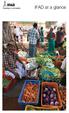 IFAD at a glance IFAD s purpose The goal of the International Fund for Agricultural Development (IFAD) is to enable poor rural people to improve their food and nutrition security, increase their incomes
How To Help The World Coffee Sector
 ICC 105 19 Rev. 1 16 October 2012 Original: English E International Coffee Council 109 th Session 24 28 September 2012 London, United Kingdom Strategic action plan for the International Coffee Organization
A/HRC/31/L.14. General Assembly. United Nations
 United Nations General Assembly Distr.: Limited 21 March 2016 Original: English A/HRC/31/L.14 Human Rights Council Thirty-first session Agenda item 3 Promotion and protection of all human rights, civil,
Ministerial Declaration of The Hague on Water Security in the 21st Century
 Ministerial Declaration of The Hague on Water Security in the 21st Century 1. Water is vital for the life and health of people and ecosystems and a basic requirement for the development of countries, but
CELAC ACTION PLAN 2015
 CELAC ACTION PLAN 2015 FOOD SECURITY AND HUNGER AND POVERTY ERADICATION 1. Implement CELAC s Plan for Food Security, Nutrition and Hunger Eradication 2025, developed by FAO, ECLAC and ALADI following up
The New Delhi Commitment: Delivering Inclusive, Relevant Quality Education for All. New Delhi, India 8th 10th November 2012
 ED/EFA/2012/ME/1 Original : English The New Delhi Commitment: Delivering Inclusive, Relevant Quality Education for All New Delhi, India 8th 10th November 2012 Ninth E-9 Ministerial Review Meeting: Inclusive,
FAO-Adapt. Framework Programme on Climate Change Adaptation
 FAO-Adapt Framework Programme on Climate Change Adaptation Food security and climate change FAO s vision for the future is a world free of hunger and malnutrition where food and agriculture contribute
Nurture Our Planet. Nourish Our People. Recommendations from the High Level Roundtable on Food and Nutrition Security and Sustainable Agriculture
 Recommendations from the High Level Roundtable on Food and Nutrition Security and Sustainable Agriculture 15 16 March 2012, New York Nourish Our People Nurture Our Planet Women in Ethiopia showing cabbage
Second International Conference on Nutrition. Rome, 19-21 November 2014. Conference Outcome Document: Rome Declaration on Nutrition
 October 2014 ICN2 2014/2 Second International Conference on Nutrition Rome, 19-21 November 2014 Conference Outcome Document: Rome Declaration on Nutrition Welcoming the participation of Heads of State
ASEAN INTEGRATED FOOD SECURITY (AIFS) FRAMEWORK AND STRATEGIC PLAN OF ACTION ON FOOD SECURITY IN THE ASEAN REGION (SPA-FS) 2009-2013
 ASEAN INTEGRATED FOOD SECURITY (AIFS) FRAMEWORK AND STRATEGIC PLAN OF ACTION ON FOOD SECURITY IN THE ASEAN REGION (SPA-FS) 2009-2013 BACKGROUND The sharp increase in international food prices in 2007/2008
Driving Sustainable Development: the role of Science, Technology and Innovation
 G-SCIENCE ACADEMIES STATEMENTS 2013 Driving Sustainable Development: the role of Science, Technology and Innovation 1. Introduction The framework of Millennium Development Goals has led to several in-depth
Edital Faperj n.º 38/2014 RCUK CONFAP RESEARCH PARTNERSHIPS CALL FOR PROJECTS
 Edital Faperj n.º 38/2014 RCUK CONFAP RESEARCH PARTNERSHIPS CALL FOR PROJECTS Research Councils UK (RCUK) (http://www.rcuk.ac.uk/) and the Brazilian Council of State Funding Agencies (CONFAP) (www.confap.org.br;
The United Nations Environment Programme and the 2030 Agenda. Global Action for People and the Planet
 The United Nations Environment Programme and the 2030 Agenda Global Action for People and the Planet Unemployment, resource scarcity, climate change, food insecurity and inequity all signal the need for
APEC Food Security Roadmap Towards 2020 (Version 2014 Draft Track)
 2014/SOM3/PPFS/008 Agenda Item: 9 APEC Food Security Roadmap Towards 2020 (Version 2014 Draft Track) Purpose: Consideration Submitted by: PPFS Chair Policy Partnership on Food Security Meeting Beijing,
Summary of ExCo 15 Discussion and Recommendations to the CGIAR on CGIAR Change Management Process 1
 Summary of ExCo 15 Discussion and Recommendations to the CGIAR on CGIAR Change Management Process 1 Integrated CGIAR Reform Proposal Change Steering Team (CST) Chair, Rodney Cooke and Co-Chair, Jonathan
VACANCY ANNOUNCEMENT: EVIDENCE, LEARNING & ACCOUNTABILITY COORDINATOR NO.VA/NPCA/16/05
 VACANCY ANNOUNCEMENT: EVIDENCE, LEARNING & ACCOUNTABILITY COORDINATOR NO.VA/NPCA/16/05 The African Union (AU), established as a unique Pan African continental body, is charged with spearheading Africa
The Healthy Asia Pacific 2020 Roadmap INTRODUCTION: THE HEALTHY ASIA PACIFIC 2020 INITIATIVE
 The Healthy Asia Pacific 2020 Roadmap INTRODUCTION: THE HEALTHY ASIA PACIFIC 2020 INITIATIVE In the 2014 APEC Leader s Declaration and Joint Ministerial Statement, it is recognized that the prospect of
Ministerial Statement. Beijing, China, 2 Sep 2014. 2014 - APEC Energy Ministerial Meeting. Beijing Declaration
 Ministerial Statement Beijing, China, 2 Sep 2014 2014 - APEC Energy Ministerial Meeting Beijing Declaration Joining Hands Toward Sustainable Energy Development in the Asia-Pacific Region 1. We, the Energy
How To Be Sustainable With Tourism
 QUÉBEC DECLARATION ON ECOTOURISM In the framework of the UN International Year of Ecotourism, 2002, under the aegis of the United Nations Environment Programme (UNEP) and the World Tourism Organization
SUMMARY OF NATIONAL VOLUNTARY REVIEW PROCESS INDEPENDENT STATE OF SAMOA
 SUMMARY OF NATIONAL VOLUNTARY REVIEW PROCESS INDEPENDENT STATE OF SAMOA The Government of the Independent State of Samoa strongly supports the launch of the United Nations Sustainable Development Goals
FINAL DECLARATION OF THE MINISTERS OF AGRICULTURE
 Euro-Mediterranean Conference on Agriculture FINAL DECLARATION OF THE MINISTERS OF AGRICULTURE Palermo, 28 November 2014 At the invitation of H.E. Maurizio Martina, the Italian Minister of Agriculture,
THE FUTURE WE WANT. I. Our Common Vision
 THE FUTURE WE WANT I. Our Common Vision 1. We, the heads of State and Government and high level representatives, having met at Rio de Janeiro, Brazil, from 20-22 June 2012, with full participation of civil
G20 Labour and Employment Ministers Declaration Moscow, 18-19 July 2013
 G20 Labour and Employment Ministers Declaration Moscow, 18-19 July 2013 1. We, the Ministers of Labour and Employment from G20 countries met in Moscow on July 18-19, 2013 to discuss the global labour market
TST Issues Brief: Food Security and Nutrition 1
 TST Issues Brief: Food Security and Nutrition 1 I. Stocktaking Food security and nutrition are essential dimensions of sustainable development. Inadequate food security and nutrition take an enormous toll
Corporate Sustainability in The World Economy. Global. united nations. Compact
 Corporate Sustainability in The World Economy united nations Global Compact What Is the UN Global Compact? Never before has there been a greater alignment between the objectives of the international community
The common fund-raising strategy
 Substantive Officer: LB Agenda item: 8 (a) Implementation of paragraphs 1 to 3 and 5 to 8 of decision 6/COP.9 The common fund-raising strategy The Conference of the Parties, Recalling that strategic objective
THE FUTURE WE WANT. I. Our Common Vision
 THE FUTURE WE WANT I. Our Common Vision 1. We, the heads of State and Government and high level representatives, having met at Rio de Janeiro, Brazil, from 20-22 June 2012, with full participation of civil
For a Green Economy Tomorrow, Private Sector Development Today will Tip the Scales!
 DCED Green Growth Working Group For a Green Economy Tomorrow, Private Sector Development Today will Tip the Scales! The Rio+20 summit in June 2012 will further substantiate the concept of sustainable development
THE MASTERCARD FOUNDATION: RURAL AND AGRICULTURAL FINANCE STRATEGY
 THE MASTERCARD FOUNDATION: RURAL AND AGRICULTURAL FINANCE STRATEGY SEPTEMBER 2015 The MasterCard Foundation works with visionary organizations to provide greater access to education, skills training and
Overview of food security projects funded by EKN Addis Ababa in 2016
 Overview of food security projects funded by EKN Addis Ababa in 2016 Each project is described under one of the three pillars in the Multi-Annuals Strategic Plan 2014-2017 to which it contributes most.
Ninth session. Intergovernmental Council for the Information for All Programme
 IFAP-2016/COUNCIL.IX/Inf 7 Paris, 4 April 2016 Original : English Distribution limited Ninth session Intergovernmental Council for the Information for All Programme 30-31 May 2016 UNESCO House, Paris (Fontenoy
G20 LABOUR AND EMPLOYMENT MINISTERIAL DECLARATION MELBOURNE, 10-11 SEPTEMBER 2014
 Introduction G20 LABOUR AND EMPLOYMENT MINISTERIAL DECLARATION MELBOURNE, 10-11 SEPTEMBER 2014 Preventing structural unemployment, creating better jobs and boosting participation 1. We, the Ministers of
Weather, Climate and Water Services for the Least Developed Countries
 Weather, Climate and Water Services for the Least Developed Countries The WMO Programme for the Least Developed Countries (LDCs) was established in 2003 in response to the call of the Third United Nations
expanding bilateral cooperation in research and development, especially in renewable energy higher education
 VII EU-Mexico Summit Brussels, 12 June 2015 Joint Statement 1. We, the leaders of the European Union and the United Mexican States, met today in Brussels and agreed to foster a closer and stronger Strategic
SUSTAINABLE DEVELOPMENT, POVERTY AND THE ENVIRONMENT: A CHALLENGE TO THE GLOBAL COMMUNITY
 SUSTAINABLE DEVELOPMENT, POVERTY AND THE ENVIRONMENT: A CHALLENGE TO THE GLOBAL COMMUNITY 1. BACKGROUND The World Summit on Sustainable Development is an important occasion for the world community to assess
Berlin Recommendations for the Cities of Tomorrow
 Berlin Recommendations for the Cities of Tomorrow Berlin, 2 June 2016 The German Habitat Forum took place in Berlin on 1-2 June 2016 and brought together more than 1000 attendees from 74 countries. The
FOSTERING DIALOGUE AND MUTUAL UNDERSTANDING
 FOSTERING DIALOGUE AND MUTUAL UNDERSTANDING The crucial role of young women and men in advancing intercultural dialogue and understanding is increasingly recognized within the global development agenda.
Corporate Citizenship in The World Economy. Global. united nations. Compact
 Corporate Citizenship in The World Economy united nations Global Compact What Is the UN Global Compact? Never before in history has there been a greater alignment between the objectives of the international
SHANGHAI CONSENSUS. Building skills for work and life
 United Nations Cultural Organization Third International Congress on Technical and Vocational Education and Training Shanghai, People s Republic of China, 14-16 May 2012 SHANGHAI CONSENSUS Transforming
Resolution on ''Science and Technology for Development''
 UNITED NATIONS ECONOMIC AND SOCIAL COUNCIL (ECOSOC) July 2009 Session 2009/8 Resolution on ''Science and Technology for Development'' Resolution 2009/8 Science and technology for development The Economic
COMMITTEE ON FISHERIES
 May 2016 COFI/2016/Inf.15 E COMMITTEE ON FISHERIES Thirty-second Session Rome, 11-15 July 2016 ADVANCING KNOWLEDGE ON RIGHTS-BASED APPROACHES FOR FISHERIES: A GLOBAL WORK PROGRAMME FOR ENHANCING FOOD SECURITY
Y20 Australia 2014 Delegates Declaration
 Y20 Australia 2014 Delegates Declaration We, the delegates of the 2014 G20 Youth Summit; Convened in Sydney on 12-15 July 2014 to discuss growth and job creation, global citizenship and mobility, and sustainable