
Italy s biodiversity at risk
|
|
|
- Shauna Paul
- 9 years ago
- Views:
Transcription


1 Italy s biodiversity at risk A call for action Italy hosts a large proportion of the species that are threatened at the European level, and has the important responsibility for protecting these species within its territory. Species in Italy require greater action to improve their status. While many species already receive some conservation attention, others do not. Species can be saved from extinction but this requires a combination of sound research and carefully coordinated efforts. Italy as an EU Member State has committed to halting biodiversity loss by 2020 but urgent action is needed to meet this target and better monitoring capacity is required to measure if the target is met. Considerable conservation investment is needed from Italy to ensure that the status of European species improves in the long term. This document provides an overview of the conservation status of species in Italy based on the results of all European Red Lists completed to date. It does not provide the status of the species in the country, therefore we invite the reader to cross check national and sub-national Red Lists. Together, they can be used to help guide policies and local conservation strategies. THE IUCN RED LIST OF THREATENED SPECIES

2 The European Red List The European Red List of Species is a review of the conservation status of more than 6,000 species in Europe according to the IUCN Red List Categories and Criteria and the regional Red Listing guidelines. It identifies species that are threatened with extinction at the European level so that appropriate conservation actions can be taken to improve their status. The geographical scope is continent-wide, including European parts of the Russian Federation and Turkey as well as the Macaronesian Islands. The Caucasus region is not included. To date, European regional assessments have been completed for all mammals, reptiles, amphibians, butterflies, dragonflies, freshwater fishes and freshwater molluscs and a selection of saproxylic beetles, terrestrial molluscs, and vascular plants. Assessments of pollinators, medicinal plants, birds and marine fishes are currently under development. The European Red List is compiled by IUCN Global Species Programme, with funding from the European Commission. Conservation status Italy is host to an estimated 67,500 species of animals and plants. This number represents 43% of the total species described for Europe and could represent around 4% of the species in the world. According to the table below, approximately 35% of the species assessed by the European Red List of Species are present in Italy. For some of the taxonomic groups, the percentages of European species that occur in Italy are particularly high; such as dragonflies, butterflies and saproxylic beetles. European status of species in Italy Of the 2,059 species assessed that occur in Italy, the groups comprising the highest number of species are vascular plants, terrestrial molluscs, butterflies and saproxylic beetles. Of the total number of species assessed in the country around 11%* are considered threatened and at least 10% are Near Threatened at the European level and two species are already Extinct. Many of these species are endemic to Europe and are found nowhere else in the world. Species that are considered threatened at the European level and occur in Italy are found mostly in wetlands, forests, rocky areas and shrublands. These ecosystems require particular attention in order to ensure the habitats of these sensitive species remain. Number of species assessed within each IUCN Red List category at the European level Species group No. of sp. in Europe No. of sp. in Italy % of European sp. occurring in Italy No. of threatened sp. in Italy (status at European level) CR EN VU Mammals % Reptiles % Amphibians % Freshwater fishes % Butterflies % Dragonflies % Saproxylic beetles** % Terrestrial molluscs** 1, % Freshwater molluscs % Vascular plants** 1, % TOTAL 5,894 2,059 35% **Not comprehensively assessed, selected species only. This table does not include the Not Applicable (NA) species in Europe (species introduced after AD 1500 or species of marginal occurrence). The data are based on the results of the European Red List (European region wide assessment). 2


3 Major threats Habitat loss, fragmentation and degradation are the most significant threats at the European level to species that occur in Italy. For freshwater species, major threats include changing water flow patterns and over-extraction, which in many cases is further exacerbated by increasing droughts due to climate change, pollution and the introduction of alien species. Other major threats come from farming and ranching as a result of agricultural expansion and intensification, urbanization and tourism. Major threats at the European level to species occurring in Italy 3

4 Mammals Italy hosts 47% of all the mammals that occur in Europe. Of these 110 species of mammals, 10%* are threatened at the European level and at least an additional 10% are considered Near Threatened. The major threats at the European level that can possibly (or potentially) affect mammals in Italy are invasive and other problematic species, both native and non-native. Mammal populations are also highly threatened mainly by agricultural and forestry effluents and noise pollution. Hunting, trapping, logging and wood harvesting also pose serious threats to mammals in the country. Reptiles Reptile species in Italy represent 31% of all the reptiles in Europe. Approximately 5%* of the reptile species that occur in Italy are considered threatened at the European level. Habitat loss, fragmentation and degradation especially due to agricultural intensification and urbanization are the main threats to this group at the European level. It is also interesting to note that at least 32% of the reptile species in Italy may be threatened by human persecution and control, especially snakes and vipers. 4

5 Amphibians Amphibians in Italy represent 49% of all amphibians occurring in Europe. This group shows high endemic species richness in the Italian Peninsula, which also has one of the greatest concentrations of threatened species of amphibians. Twenty-two percent* of the amphibian species that occur in Italy are threatened at the European level and an additional 10% of the species are Near Threatened. The main threat to this group at the European level is the loss and degradation of suitable breeding habitat mainly due to urban development and agricultural activities through excessive water withdrawal and water pollution by agrochemicals. Freshwater fishes Freshwater fishes are one of the most threatened groups at the European level. Sixteen percent* of the species that occur in Italy are threatened at the European level. This group has a high percentage of endemism in the European region: up to 80%. Although areas with the highest species richness clearly coincide with the lower parts of large rivers flowing to the Black and Caspian Seas, some of the highest concentrations of threatened freshwater fish species are found in the northern Mediterranean coast, which includes Italy. The most important threat to this group at the European level is the change of water flow patterns due to dam construction and operation and the abstraction of water from underground or from the streams and rivers themselves. Invasive alien species also pose serious threats to freshwater fishes in the country. 5

6 Butterflies Italy hosts 60% of all butterfly species in Europe and 4%* of them are considered threatened at the European level. The mountainous areas of Italy (Alps and Apennines) have a rich variety of butterfly species as well as a high number of endemic species. The conservation status of butterflies in Italy based on the European Red List data is relatively good since approximately 86% of the species are classified as Least Concern. However, butterflies have very specific food and habitat requirements at different stages of their life cycle so they are very sensitive to changes in their environment, especially to habitat management such as overgrazing, undergrazing or changes in forestry practices. Dragonflies Sixty-four percent of all the dragonflies in Europe are present in Italy. After France, Italy hosts the highest number of dragonflies in Europe. In this country, 7%* of dragonfly species are considered threatened at the European level. This group is adversely affected by desiccation caused by dry weather, fires and increased water extraction for irrigation and human consumption. River species are also affected by ecosystem modifications such as the construction of dams and reservoirs and water quality deterioration. 6


7 Saproxylic beetles Fifty-nine percent of the beetle species assessed by the European Red List are present in Italy. More than 7%* of the species in this group are considered threatened at the European level, which is less than half of the percentage of threatened saproxylic beetle species in Europe, and none of them are Critically Endangered. Fourteen percent of them are considered as Near Threatened. The species in this group are very dependent on the dynamics of tree aging and wood decay processes. The major threat to this group is logging and wood harvesting; therefore these beetles require sensitive conservation management of tree populations irrespective of their situation. Terrestrial molluscs Twenty percent* of the terrestrial molluscs assessed that are present in Italy are threatened and 12% are Near Threatened at the European level. The country has the third highest species richness of terrestrial molluscs in Europe. The major threat to this group at the European level is continuous destruction of suitable habitat from agriculture and mineral extraction to provide construction material. 7

8 Freshwater molluscs Nineteen percent* of freshwater mollusc that occur in Italy are threatened at the European level. One of the species assessed within this group has already gone Extinct, Heleobia spinelli, which was endemic to Italy. Declining water quality in freshwater rivers and lakes caused by urban and agricultural activities is the main threat to this group at the European level. Modification of the physical and chemical characteristics of freshwater rivers and lakes due to dam construction and water abstraction are also some of the major threats to this group. Vascular plants At European level, priority crop wild relatives, aquatic plants and all species included in the annexes of the Habitats Directive, Bern Convention and CITES have been assessed. A total of 759 species are found in Italy, which represent 42% of the total of species assessed in Europe. Ten percent* of the 759 vascular plant species assessed in Italy are considered threatened at the European level. For terrestrial plants, intensified livestock farming, especially intensive grazing activities have the worst impacts. For aquatic species, direct habitat loss caused by draining for development, agriculture and pasture is the main threat. 8


9 INTERNATIONAL UNION FOR CONSERVATION OF NATURE May 2013 Document prepared by Silvia Sánchez, Andrea Pino del Carpio, Ana Nieto and Melanie Bilz European Union Representative Office Boulevard Louis Schmidt Brussels, Belgium For more information please contact: [email protected] and The European Red List is a project funded by the European Commission. Cover photo by Roberto Sindaco (Bombina pachypus) REFERENCES Bilz, M., Kell, S. P., Maxted, N. and Lansdown, R.V European Red List of Vascular Plants. Publications Office of the European Union, Luxembourg. Cox, N.A. and Temple, H.J European Red List of Reptiles. Office for Official Publications of the European Communities, Luxembourg. Cuttelod, A., Sheddon, M and E. Neubert European Red List of Non-marine Molluscs. Publications Office of the European Union, Luxembourg. Freyhof, J. and Brooks, E European Red List of Freshwater Fishes. Publications Office of the European Union, Luxembourg. Kalkman, V.J., Boudot, J-P., Bernard, R., Conze, K-J., De Knijf, G., Dyatlova, E., Ferreira, S., Jović, M., Ott, J., Riservato, E. and Sahlén, G European Red List of Dragonflies. Office for Official Publications of the European Communities, Luxembourg. Nieto, A and Alexander, K.N.A European Red List of Saproxylic Beetles. Office for Official Publications of the European Communities, Luxembourg. van Swaay, C., Cuttelod, A., Collins, S., Maes, D., López Munguira, M., Šašić, M., Settele, J.,Verovnik, R., Verstrael, T., Warren, M., Wiemers, M. and Wynhoff, I European Red List of Butterflies. Office for Official Publications of the European Communities, Luxembourg. Temple, H.J. and Terry, A The status and distribution of European mammals. Office for Official Publications of the European Communities, Luxembourg. Temple, H.J. and Cox, N.A European Red List of Amphibians. Office for Official Publications of the European Communities, Luxembourg. *The proportion of threatened species in this document is calculated as follows: (EW + CR + EN + VU) / (total number of species assessed - EX - RE - DD). Since the number of threatened species is often uncertain because it is not known whether DD species are actually threatened or not, this formula considers that DD species are equally threatened as data sufficient species.

France s biodiversity at risk
 France s biodiversity at risk A call for action France hosts a large proportion of the species that are threatened at the European level, and has the important responsibility for protecting these species
Spain s biodiversity at risk
 Spain s biodiversity at risk A call for action Spain hosts a large proportion of species that are threatened at the European level, and has an important responsibility for protecting these species within
Facts on biodiversity
 Facts on biodiversity What is biodiversity? Biological diversity (biodiversity) comprises diversity of species and habitats as well as the genetic diversity within the individual species of fauna and flora.
The importance of biodiversity monitoring
 The importance of biodiversity monitoring Sebastian Winkler IUCN Save Biodiversity! Regional Office for Europe 18 June 2009, London The 2010 Biodiversity Target: There are limits is hard to measure fails
Lesson Overview. Biodiversity. Lesson Overview. 6.3 Biodiversity
 Lesson Overview 6.3 6.3 Objectives Define biodiversity and explain its value. Identify current threats to biodiversity. Describe how biodiversity can be preserved. THINK ABOUT IT From multicolored coral
How are people affecting biodiversity
 ? How are people affecting biodiversity The major threats to biodiversity and the role of people 2 Kieran Noonan-Mooney, CBD Christine Gibb, CBD and FAO Every day we are faced with choices. As individuals
Wetland Vocabulary Organizer
 Wetland Vocabulary Organizer Vocabulary Word Definition Wetland Picture Species Nutrients Sediment Groundwater Habitat Vocabulary Word Wetland Wetland Vocabulary Organizer Key Definition is an area that,
CHAPTER 2: APPROACH AND METHODS APPROACH
 CHAPTER 2: APPROACH AND METHODS APPROACH Given Hawaii s biological uniqueness on a global scale, the Comprehensive Wildlife Conservation Strategy (CWCS) recognizes the importance of protecting all native
Longboat Dr Noeleen Smyth. Pitcairn 24 21 41 S, 128 18 58 W. UK Overseas Territories and Crown Dependencies: 2011 Biodiversity snapshot 87
 Longboat Dr Noeleen Smyth Pitcairn 24 21 41 S, 128 18 58 W 13 UK Overseas Territories and Crown Dependencies: 2011 Biodiversity snapshot 87 Pitcairn Author: Michele Christian, Division Manager Natural
The Colorado River Delta
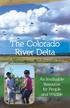 The Colorado River Delta An Invaluable Resource for People and Wildlife the colorado river delta The Colorado River Delta and its waters support a rich and diverse treasure of plants and animals in an
Monitoring the Critically Endangered Bird Species (White-shouldered Ibis) in Western Siem Pang Important Bird and Biodiversity Area (IBA)
 Monitoring the Critically Endangered Bird Species (White-shouldered Ibis) in Western Siem Pang Important Bird and Biodiversity Area (IBA) Transboundary Biodiversity Landscapes (TBLs) Knowledge Meeting
Facts on Biodiversity A Summary of the Millenium Ecosystem Assessment Biodiversity Synthesis
 Facts on Biodiversity A Summary of the Millenium Ecosystem Assessment Biodiversity Synthesis EUROPEAN COMMISSION DIRECTORATE GENERAL ENVIRONMENT BIODIVERSITY contributes to many aspects of human well-being,
ENDANGERED AND THREATENED
 ENDANGERED AND THREATENED Understand how species in the Sonoran Desert Region may become endangered or threatened and what is being done to protect them. ARIZONA SCIENCE STANDARDS SC03-S4C3-03&04, SC08-S1C3-07,
Using Aerial Photography to Measure Habitat Changes. Method
 Then and Now Using Aerial Photography to Measure Habitat Changes Method Subject Areas: environmental education, science, social studies Conceptual Framework Topic References: HIIIB, HIIIB1, HIIIB2, HIIIB3,
Creating Green Jobs within the Environment and Culture sector.
 Creating Green Jobs within the Environment and Culture sector. Matilda Skosana Environmental Programmes (ILO Definition): 1. DEFINITION OF GREEN JOB. Jobs are green when they help reduce negative environmental
Doing Business, Small & Medium Enterprise Support and Information Access
 Doing Business, Small & Medium Enterprise Support and Information Access Vietnam, a nation of 92 million people, aspires to be more fully integrated into the global economy and community and an industrialized
Required and Recommended Supporting Information for IUCN Red List Assessments
 Required and Recommended Supporting Information for IUCN Red List Assessments This is Annex 1 of the Rules of Procedure IUCN Red List Assessment Process 2013-2016 as approved by the IUCN SSC Steering Committee
The relationship of pastoralism to the SDGs. The land people livestock nexus
 1 The relationship of pastoralism to the SDGs. The land people livestock nexus Irene Hoffmann, FAO 16th Annual Mee-ng of the Inter-Agency Donor Group 18-20 November, GIZ, Berlin, Germany Global Land Cover-SHARE,
Biodiversity Concepts
 Biodiversity Concepts WHAT IS BIODIVERSITY? Biodiversity is the variety of life on Earth. For any kind of animal or plant each individual is not exactly the same as any other; nor are species or ecosystems.
SLOW ONSET EVENTS. climate change impacts on BIODIVERSITY
 Regional Gateway for Technology Transfer and Climate Change Action in Latin America and the Caribbean (ROLAC UNEP) Characterizing and addressing SLOW ONSET EVENTS climate change impacts on BIODIVERSITY
Targets in the proposed SDGs framework
 Targets in the proposed SDGs framework Goal 3. Ensure healthy lives and promote well-being for all at all ages 3.2 By 2030, end preventable deaths of newborns and children under 5 years of age 3.6 By 2020,
Monitoring for Conservation Planning and Management. Environmental Evaluators Forum EPA Headquarters, USA June 14 15, 2007
 Monitoring for Conservation Planning and Management Environmental Evaluators Forum EPA Headquarters, USA June 14 15, 2007 Key Types of Decisions Prioritization (where Status to allocate scarce conservation
1. Biodiversity: Basic Commodity or Luxury Item?... 2 2. Conclusions and Recommendations... 5 3. Key References... 6
 Page 2 of 6 CONTENTS 1. Biodiversity: Basic Commodity or Luxury Item?... 2 2. Conclusions and Recommendations... 5 3. Key References... 6 1. BIODIVERSITY: BASIC COMMODITY OR LUXURY ITEM? How is biodiversity
WILDLIFE LAW ENFORCEMENT AND GOVERNANCE IN THE PHILIPPINES
 WILDLIFE LAW ENFORCEMENT AND GOVERNANCE IN THE PHILIPPINES By Antonio C. Manila Protected Areas & Wildlife Bureau DENR, Diliman, Quezon City, Philippines TOPICS FOR DISCUSSIONS: 1. Updates on Philippine
IBAT (Integrated Biodiversity Assessment Tool)
 IBAT (Integrated Biodiversity Assessment Tool) Martin Sneary, Manager Biodiversity Risk Assessment & Corporate Decision Support (based in Washington DC) Format of session Key sources of biodiversity information
The Conservation Data Centre: For the Greatest About the Least
 The Conservation Data Centre: For the Greatest About the Least Andrew P. Harcombe Resources Inventory Branch British Columbia Ministry of Environment, Lands and Parks Victoria, BC, V8W 9M1, Canada [email protected]
Assessing risks to ecosystems - a new global standard
 Assessing risks to ecosystems - a new global standard IUCN Ecosystem Red List Working Group David Keith et al. Major scientific challenges I. What is an ecosystem? II. When is an ecosystem extinct? disappearance
Madagascar: Makira REDD+
 project focus Madagascar: Makira REDD+ Madagascar is considered to be one of the top five biodiversity hotspots in the world due to more than 75% of all animal and plant species being endemic while less
FRESHWATER COUNTRY PROFILE NORWAY
 FRESHWATER COUNTRY PROFILE NORWAY Decision-Making Programmes and Projects A. Integrated Water Resources Development and Management B. Water Resources Assessment C. Protection of Water Resources D. Drinking
A cool CAP post-2013: What measures could help adapt Cyprus farming and biodiversity to the consequences of climate change?
 A cool CAP post-2013: What measures could help adapt Cyprus farming and biodiversity to the consequences of climate change? 26 September 2012: IFOAM EU Conference Future farming in times of climate change
PROGNOSES OF SEA-FISH SPECIES CATCHES IN GREECE AT BIOLOGICAL AND BIODIVERSITY RISK
 Journal of Environmental Protection and Ecology 16, No 1, 92 97 (2015) Risk management PROGNOSES OF SEA-FISH SPECIES CATCHES IN GREECE AT BIOLOGICAL AND BIODIVERSITY RISK G. TEGOS a *, K. ONKOV b a Applied
Ecosystem perspective on ORs & OCTs
 Workshop on the Application of an Ecosystem Approach for development of Sustainable Aquaculture in Europe s Outermost Regions and Overseas Countries and Territories Session 3: Stakeholders presentations
Wildlife Habitat Conservation and Management Program
 Wildlife Habitat Conservation and Management Program Manual for Counties and Cities Oregon Department of Fish and Wildlife 2015 Table of Contents 1. Introduction Purpose of the habitat program Objective
PRESENTATION 2 MAJOR ENVIRONMENTAL PROBLEMS
 UNEP GLOBAL JUDGES PROGRAMME APPLICATION OF ENVIRONMENTAL LAW BY NATIONAL COURTS AND TRIBUNALS PRESENTATION 2 MAJOR ENVIRONMENTAL PROBLEMS OUTLINE OF PRESENTATION A) Major environmental issues B) Responses
Laws to promote environmental sustainability of oceans and seas
 Laws to promote environmental sustainability of oceans and seas Laws regulations and other measures for conservation and sustainable use of living marine resources and biodiversity including those beyond
AP ENVIRONMENTAL SCIENCE 2006 SCORING GUIDELINES. Question 4
 AP ENVIRONMENTAL SCIENCE 2006 SCORING GUIDELINES Question 4 (a) Identify the five-year period during which the greatest rate of decline in the fish harvest took place. For that five-year period, calculate
Mediterranean-Mare Nostrum Nature and Culture Common Destiny
 Mediterranean-Mare Nostrum Nature and Culture Common Destiny Marine conservation Protection and Management Alain Jeudy de Grissac Marine Conservation Programme Manager June 2010 Toulon La Garde France
Human Impacts on the World Ocean
 This website would like to remind you: Your browser (Safari 7) is out of date. Update your browser for more security, comfort and the best experience on this site. lesson Human Impacts on the World Ocean
Guidelines for Degraded Landscape Management (Deliverable #16) September 30, 2013
 Biodiversity and Agricultural Commodities Program BACP-Rainforest Alliance Grant-015 ( Applying sustainable cocoa practices through agroforestry in community forest areas as a tool for achieving biodiversity
ENVIRONMENTAL SCIENCE CURRICULUM for CLASS IX to X
 ENVIRONMENTAL SCIENCE CURRICULUM for CLASS IX to X The Royal Society for Protection of Nature (RSPN) in collaboration with Department of Curriculum Research & Development (DCRD) of Ministry of Education
Ecology 1 Star. 1. Missing from the diagram of this ecosystem are the
 Name: ate: 1. Missing from the diagram of this ecosystem are the 5. ase your answer(s) to the following question(s) on the diagram below and on your knowledge of biology.. biotic factors and decomposers.
RESTORATION & REVITALIZATION
 RESTORATION & REVITALIZATION Legal preservation has not proved to be sufficient to preserve natural communities. Restoration activities are diverse and includes revitalization of natural communities which
Research to improve the use and conservation of agricultural biodiversity for smallholder farmers
 Research to improve the use and conservation of agricultural biodiversity for smallholder farmers Agricultural biodiversity the variability of crops and their wild relatives, trees, animals, arthropods,
ENVIRONMENTAL CHANGES
 reflect How do you respond to environmental changes? Maybe you wear different types of clothes in different seasons. Maybe you only ride your bike during certain times of the year. What if you moved to
National Environment Awareness Campaign(NEAC) 2014-2015. Theme
 National Environment Awareness Campaign(NEAC) 2014-2015. Theme COMBATING DESERTIFICATION, LAND DEGRADATION AND DROUGHT Background Note Desertification is about land degradation: the loss of the land s
INTRODUCTION 1. DELAYED RESPONSE TO ENVIRONMENTAL DAMAGE. Nordic Journal of African Studies 2(2): 103 108 (1993)
 Nordic Journal of African Studies 2(2): 103 108 (1993) Resolution of Conflicts Between Agriculture and Environment Protection in Uganda VICTORIA SEKITOLEKO Ministry of Agriculture, Animal Industry and
Importance of Wildlife
 Importance of Wildlife The wildlife comprises all living organism (plants, animals, microorganisms) in their natural habitats which are neither cultivated or domesticated nor tamed. But in its strictest
NATURAL RESOURCES DEGREES AND CERTIFICATES. Environmental Conservation A.S. Degree (formerly Natural Resources)
 Area: Science and Engineering Dean: Dr. Rina Roy Phone: (916) 484-8107 Counseling: (916) 484-8572 DEGREES AND CERTIFICATES Environmental Conservation A.S. Degree (formerly Natural Resources) Environmental
Liquid Biofuels for Transport
 page 1/11 Scientific Facts on Liquid Biofuels for Transport Prospects, risks and opportunities Source document: FAO (2008) Summary & Details: GreenFacts Context - Serious questions are being raised about
REPUBLIC OF TURKEY MINISTRY OF FORESTRY AND WATER AFFAIRS
 REPUBLIC OF TURKEY MINISTRY OF FORESTRY AND WATER AFFAIRS Turkey s position in the World Prof. Dr. Veysel EROĞLU Minister of Forestry and Water Affairs The Ministry of Forestry and Water Affairs, formerly
Towards sustainable and strategic management of water resources
 European Union Regional Policy ntrum fur -^t- 111/ Towards sustainable and strategic management of water resources European Commission Bibliothek Wasser und Umwelt (TU Darm stadt) Contents EXECUTIVE SUMMARY
GLOBAL PLAN OF ACTION FOR THE CONSERVATION, SUSTAINABLE USE AND DEVELOPMENT OF FOREST GENETIC RESOURCES
 FAO, 2014 ISBN 978-92-5-108422-9 9 7 8 9 2 5 1 0 8 4 2 2 9 I3849E/1/06.14 GLOBAL PLAN OF ACTION FOR THE CONSERVATION, SUSTAINABLE USE AND DEVELOPMENT OF FOREST GENETIC RESOURCES Foreword Forest genetic
Amherst County Public Schools. AP Environmental Science Curriculum Pacing Guide. College Board AP Environmental Science Site
 Amherst County Public Schools AP Environmental Science Curriculum Pacing Guide College Board AP Environmental Science Site REV: 8/12 1 st 9 weeks AP Objectives Energy Resources and Consumption A. Energy
Integration of Forestry & Wildlife Management
 Integration of Forestry & Wildlife Management By Ken Negray Regional Certification Manager, NewPage Corp & member of the KY SIC Committee Abstract: Kentucky SIC (Sustainable Forestry Initiative Implementation
Michigan Wetlands. Department of Environmental Quality
 Department of Environmental Quality Wetlands are a significant component of Michigan s landscape, covering roughly 5.5 million acres, or 15 percent of the land area of the state. This represents about
Madagascar s exceptional biodiversity. Conservation contracts. International value attached to Madagascar s biodiversity
 Conservation Direct incentives to communities for biodiversity conservation in Madagascar Joanna Durbin Durrell Wildlife Conservation Trust Madagascar s exceptional biodiversity One of the most important
Global Environment Facility GEF OPERATIONAL PROGRAM #13 ON CONSERVATION AND SUSTAINABLE USE OF BIOLOGICAL DIVERSITY IMPORTANT TO AGRICULTURE
 Global Environment Facility GEF OPERATIONAL PROGRAM #13 ON CONSERVATION AND SUSTAINABLE USE OF BIOLOGICAL DIVERSITY IMPORTANT TO AGRICULTURE CONTENTS Introduction..1 Convention Guidance... 2 Agricultural
COMPREHENSIVE PLAN SECTION B, ELEMENT 4 WATER RESOURCES. April 20, 2010 EXHIBIT 1
 COMPREHENSIVE PLAN SECTION B, ELEMENT 4 WATER RESOURCES April 20, 2010 EXHIBIT 1 ELEMENT 4 WATER RESOURCES TABLE OF CONTENTS 4.1 INTRODUCTION 4.2 GOALS AND POLICIES 4.2.A General Goals and Policies 1 4.2.B
Extinction; Lecture-8
 I. introduction Definition Current extinction Genetic drift Extinction; Lecture-8 II. 3 types of extinction 1. background 2. mass 3. stochastic III. 5 periods of mass IV. human caused 1. on land and in
SP-472 AUGUST 2012. Feral Hog Population Growth, Density and Harvest in Texas
 SP-472 AUGUST 2012 Feral Hog Population Growth, Density and Harvest in Texas Photo courtesy Jared Timmons, Texas AgriLife Extension Service Feral hogs (Sus scrofa) are non-native, highly adaptable, and
SOKOINE UNIVERSITY OF AGRICULTURE
 SOKOINE UNIVERSITY OF AGRICULTURE FACULTY OF FORESTRY AND NATURE CONSERVATION CURRICULUM FOR MSc. (MNRSA) DEGREE PROGRAMME May 2009 MASTER OF SCIENCE IN MANAGEMENT OF NATURAL RESOURCES AND SUSTAINABLE
Environmental Law Primer. Adapted from Vermont Law School s Environmental Law Primer for Journalists
 Environmental Law Primer Adapted from Vermont Law School s Environmental Law Primer for Journalists General Categories Command and Control Liability Disclosure Ecosystem and Place-based Programs Marketable
Ecosystems and Food Webs
 Ecosystems and Food Webs How do AIS affect our lakes? Background Information All things on the planet both living and nonliving interact. An Ecosystem is defined as the set of elements, living and nonliving,
Water resources. The main problems of pollution that need to be addressed in the country are the following:
 Translated from Spanish Water resources 1. The issue of water resources At the present time, sustainable standards for the development and use of water resources are not maintained in many parts of the
GRAZING AND LAND DEGRADATION IN CIS COUNTRIES AND MONGOLIA. Mauricio Rosales, Svetlana Livinets
 GRAZING AND LAND DEGRADATION IN CIS COUNTRIES AND MONGOLIA Mauricio Rosales, Svetlana Livinets Livestock, Environment and Development Initiative (LEAD) Animal Production and Health Division FAO Viale delle
Introduction to protection goals, ecosystem services and roles of risk management and risk assessment. Lorraine Maltby
 Introduction to protection goals, ecosystem services and roles of risk management and risk assessment. Lorraine Maltby Problem formulation Risk assessment Risk management Robust and efficient environmental
Biomes An Overview of Ecology Biomes Freshwater Biomes
 Biomes An Overview of Ecology Ecology is the scientific study of the interactions between organisms and their environments. Ecology can be divided into four increasingly comprehensive levels: Organismal
STANDARDS FOR RANGELAND HEALTH ASSESSMENT FOR SAGEHEN ALLOTMENT #0208
 STANDARDS FOR RANGELAND HEALTH ASSESSMENT FOR SAGEHEN ALLOTMENT #0208 RANGELAND HEALTH STANDARDS - ASSESSMENT SAGEHEN ALLOTMENT #0208 STANDARD 1 - UPLAND WATERSHED This standard is being met on the allotment.
Sustainability and Wildlife Conservation Updates: the Malaysian Perspectives
 Sustainability and Wildlife Conservation Updates: the Malaysian Perspectives MPOC Reach & Remind Friends of the Industry Seminar: Challenges and Opportunities in 2012 Royale Chulan Hotel 16 January 2012
Biological Diversity and Tourism: Development of Guidelines for Sustainable Tourism in Vulnerable Ecosystems
 Biological Diversity and Tourism: Development of Guidelines for Sustainable Tourism in Vulnerable Ecosystems Secretariat of the Convention on Biological Diversity Foreword The rapid and often uncontrolled
Biodiversity and Climate change: Policy Framework for Response and Vulnerability Assessment Report
 Biodiversity and Climate change: Policy Framework for Response and Vulnerability Assessment Report Vhalinavho Khavhagali Biodiversity Risk Management 2012 Biodiversity Planning Forum Skukuza, Kruger National
China The Giant Panda
 China The Giant Panda China The Giant Panda Deep in a forest, a black-and-white bear sits peacefully. It chews the green leaves of a plant. The bear is alone, but there are others not too far away. Later,
Section 5: Conserve to Enhance Program Goals What is Conserve to Enhance All About?
 Section 5: Conserve to Enhance Program Goals What is Conserve to Enhance All About? Conserve to Enhance (C2E) was originally conceptualized as an approach to giving the environment a seat at the table
Broken Arrow Public Schools AP Environmental Science Objectives Revised 11-19-08
 1 st six weeks 1 Identify questions and problems that can be answered through scientific investigation. 2 Design and conduct scientific investigations to answer questions about the world by creating hypotheses;
Scientific Facts on. Biodiversity. & Human Well-being
 page 1/13 Scientific Facts on Biodiversity & Human Well-being Source document: MA (2005) Summary & Details: GreenFacts Context - Biodiversity contributes to many aspects of human well-being, for instance
THE DRIN RIVER BASIN
 Elisabeta Poci February 9 th 2012 THE DRIN RIVER BASIN CE 397 Transboundary Waters INTRODUCTION AND BACKGROUND The Drin River Basin is located in the Western Balkans and it is shared between Albania, Greece,
Green Infrastructure Case Study Template
 Green Infrastructure Case Study Template The aim of the exercise is to provide information on how the elements of the Green Infrastructure Strategy are implemented at national level and to provide case
STATE UNIVERSITY OF NEW YORK COLLEGE OF TECHNOLOGY CANTON, NEW YORK COURSE OUTLINE ESCI 101 - INTRODUCTION TO ENVIRONMENTAL SCIENCE
 STATE UNIVERSITY OF NEW YORK COLLEGE OF TECHNOLOGY CANTON, NEW YORK COURSE OUTLINE ESCI 101 - INTRODUCTION TO ENVIRONMENTAL SCIENCE Prepared By: Rajiv Narula, Ph.D. SCHOOL OF SCIENCE, HEALTH, AND CRIMINAL
biodiversity Encyclopedic Entry
 This website would like to remind you: Your browser (Apple Safari 7) is out of date. Update your browser for more security, comfort and the best experience on this site. Encyclopedic Entry biodiversity
Oregon. Climate Change Adaptation Framework
 Oregon Climate Change Adaptation Framework Oregon Environmental Quality Commission Climate Change Adaptation Framework Presentation at a glance: Purposes of the framework Participating agencies Climate
The importance of Lebanon for the migratory soaring birds & the flyway. April 2012. Bassima Khatib SPNL Assistant Director General
 The importance of Lebanon for the migratory soaring birds & the flyway April 2012 Bassima Khatib SPNL Assistant Director General Outline Who is SPNL? IBA programme Importance of Lebanon for migratory soaring
Reviewing the framework for the management of protected wildlife (animals) in Queensland
 Reviewing the framework for the management of protected wildlife (animals) in Queensland June 2016 Prepared by: Department of Environment and Heritage Protection State of Queensland, 2016. The Queensland
Restoring Ecosystems. Ecosystem Restoration Services
 Restoring Ecosystems Ecosystem Restoration Services 2 Ecosystem Restoration Services AECOM s integrated approach sciencebased planning, with innovative design and execution delivers sustainable and cost-effective
Recommended Land Use Guidelines for Protection of Selected Wildlife Species and Habitat within Grassland and Parkland Natural Regions of Alberta
 Fish and Wildlife Division Sustainable Resource Development Recommended Land Use Guidelines for Protection of Selected Wildlife Species and Habitat within Grassland and Parkland Natural Regions of Alberta
Too many reintroductions? A proposal for a decision-making system
 International workshop on proper design of avian reintroduction projects: trying to establish guidelines Baeza, 15-17 October 2012 Too many reintroductions? A proposal for a decision-making system Demasiadas
3. Which relationship can correctly be inferred from the data presented in the graphs below?
 1. Recent evidence indicates that lakes in large areas of New York State are being affected by acid rain. The major effect of acid rain in the lakes is (1) an increase in game fish population levels (3)
Draft Submitted for Publication in New Mexico Water Resources Research Institute 55 th Annual New Mexico Water Conference Proceedings
 The Benefits of Restoring Our River Ecosystems Beth Bardwell, Director of Freshwater Conservation Audubon New Mexico The residents of New Mexico derive a whole host of benefits from their state rivers
Mapping and assessment of ecosystem services in Lithuania: status, plans & means. Dr. Vytautas Naruševičius Environmental Protection Agency
 Mapping and assessment of ecosystem services in Lithuania: status, plans & means Dr. Vytautas Naruševičius Environmental Protection Agency Project name: Assessment overview Preparation of a national study
How To Improve The Health Of The Zambezi River
 Environmental Flows and Restoration of the Zambezi Delta, Mozambique Dr. Richard Beilfuss International Crane Foundation Zambeze Delta 18 000 km² 230 km coastal frontage 124 km apex to coast Hydropower
agricultural economy agriculture CALIFORNIA EDUCATION AND THE ENVIRONMENT INITIATIVE I Unit 4.2.6. I Cultivating California I Word Wall Cards 426WWC
 agricultural economy agriculture An economy based on farming or ranching. The practice of growing crops and raising animals for food, fiber, or other uses by humans. archaeological site archaeology A place
Resources, Publications, Tools, Input from AWCC
 A comprehensive review of Farm Bill contributions to wildlife conservation A comprehensive review was made of scientific literature to determine wildlife responses to conservation programs undertake as
The Gran Canaria Declaration. calling for a. Global Program for Plant Conservation
 The Gran Canaria Declaration calling for a Global Program for Plant Conservation The Gran Canaria Declaration calling for a Global Program for Plant Conservation Plants are universally recognized as a
Enhancing Biodiversity. Proactive management of biodiversity in intensive agriculture
 Enhancing Biodiversity Proactive management of biodiversity in intensive agriculture Contents Introduction Increasing food security in a sustainable way 3 The importance of biodiversity The vitality and